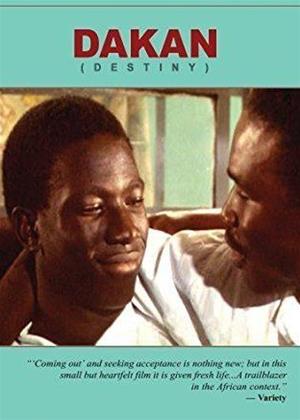
Destiny (1997)
- General info
- Available formats
- Synopsis:
Manga and Sory are still students when they fall in love. They don't mind that their classmates make fun of them. But when they tell their parents about their love, they are met with rejection and incomprehension. Sory's father, a respected businessman, wants his son to follow in his footsteps and ensures that the two lovers are placed in separate classes. Manga's mother also sees all her hopes for her only son dashed. Under pressure, both boys try to fight against their homosexuality. Manga seeks help from a traditional healer to 'cure' his love, and later unsuccessfully enters into a relationship with a young woman. Sory also moves in with a woman and becomes a father. But in the end, the two young men realize that they were only escaping from each other, and their love triumphs against all odds. - Actors:
- Cécile Bois, Mamady Mory Camara, Mohamed Camara, Koumba Diakite, Aboucar Touré
- Directors:
- Mohamed Camara
- Producers:
- René Féret
- Writers:
- Mohamed Camara
- Aka:
- Dakan
- Genres:
- Drama, Lesbian & Gay
More like Destiny

Found in these customers lists
Reviews (1) of Destiny
Quietly Defiant: West Africa’s First Queer Film Still Resonates - Destiny review by griggs
I knew Destiny was historically significant, but I didn’t expect it to hit so hard. It’s one thing to read about repression and resistance from afar—it’s another to watch it unfold through a story this intimate, this brave, and this quietly heartbreaking. The film opened a window into lives and struggles I’ll never fully understand. For 90 minutes, I felt the weight of it, not as an outsider looking in but as someone witnessing something real, raw, and still painfully relevant.
Destiny (or Dakan) isn’t the most polished film you’ll ever see, but the fact that it exists at all is remarkable. Released in 1997, it was the first West African feature to openly tackle homosexuality, and it stirred up a storm: protests, threats, and funding pulled mid-shoot. You can feel that tension throughout, but what’s surprising is how gentle and sincere the film is.
The plot’s pretty straightforward—two young men in love, parents who freak out, and a community that can’t accept it. There’s even a scene where Manga’s mum turns to witchcraft to “cure” him. It edges into the surreal but somehow still feels grounded.
Camara’s direction is simple, sometimes raw, but always heartfelt. The acting’s uneven, sure, but there’s a real emotional core. It’s not slick, but it doesn’t need to be. Destiny was—and still is—a landmark for LGBTQ+ stories in Africa. It is quietly defiant and all the more powerful for it.