The nominations for the 2026 Oscars have been announced, which means it's time for Cinema Paradiso users to make their annual predictions!
Each year, Cinema Paradiso invites members to use their film knowledge to predict the winners in the competition categories at the Academy Awards - which have been expanded to 24 this year, with the addition of Best Casting.
So, why not submit your votes before Conan O'Brien hosts the 98th edition of the world's oldest and most prestigious awards event at the Dolby Theatre in Hollywood on Sunday 15 March?
The person who correctly predicts the most winners will receive SIX MONTHS of free rentals from CinemaParadiso.co.uk.
Before you vote, though, we thought you might like to know a bit about the contenders in the six major categories, as well as past voting trends.
Cast your vote by clicking here!
BEST PICTURE
Since the first Academy Awards ceremony was held at the Hollywood Roosevelt Hotel on 16 May 1929, 621 titles have been nominated for Best Picture and the 98th winner will be announced on 15 March 2026. Things have changed a good deal since the inaugural ceremony, which was attended by just 270 people and lasted a mere 15 minutes. For a start, there were prizes for Outstanding Picture and Best Unique and Artistic Picture, with William A. Wellman's Wings and Frank Borzage's Sunrise (both 1927) taking the respective statuettes. These were both silents and only Michel Hazanavicius's The Artist (2011) has since won Best Picture without an audible word being uttered.
For the next few decades, the top prize was awarded to the sponsoring studio rather than the winning producer, with Arthur Freed being the first to claim the prize for himself for Vincente Minnelli's An American in Paris (1951). A good deal of lobbying went on by the Big Five to ensure that their films occupied the coveted Best Picture slots. But the 'For Your Consideration' campaigns run today are far more potent, as those who throw the most money at the race tend to get the best results. As a consequence, numerous acclaimed features miss out on recognition each year, which has prompted some to question whether the Academy Awards genuinely reward the highest-profile work rather than the best.
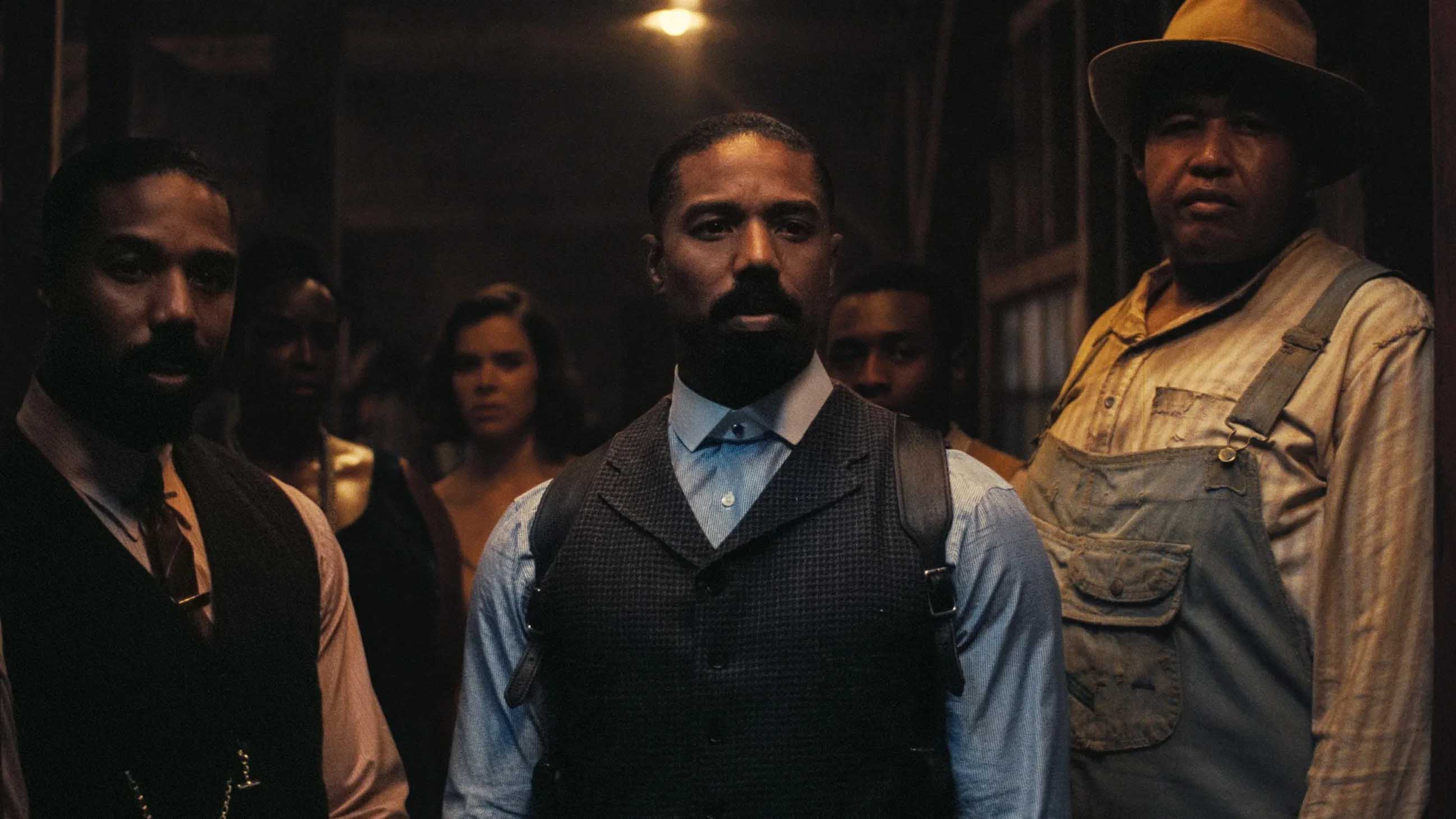
No doubt those behind Noah Baumbach's Jay Kelly, Mona Fastvold's The Testament of Ann Lee, Scott Cooper's Springsteen: Deliver Me From Nowhere, Bradley Cooper's Is This Thing On?, Derek Cianfrance's Roofman, Alex Garland's Warfare, and Lynne Ramsay's Die My Love would echo those sentiments. As would James Cameron, who missed out on joining Francis Ford Coppola as the only director to have had all three parts of a trilogy nominated for Best Picture when Avatar: Fire and Ash failed to follow Avatar (2009) and Avatar: The Way of Water (2022). Also spare a thought for the producers of Jon M. Chu's Wicked: For Good, which was overlooked in every single category, despite Wicked picking up 10 nominations the previous year.
Cameron also lost his place in the Oscar history books, as Ryan Coogle's Sinners amassed a record 16 nominations to overtake the 14 received by Joseph L. Mankiewicz’s All About Eve (1950), Cameron's Titanic (1997), and Damien Chazelle's La La Land (2016). Paul Thomas Anderson's One Battle After Another came in second, with 13 nominations, as Warner Bros. scooped 30 nominations at the end of what has been a tough year for the studio that is currently considering an $82.7 billion takeover bid from Netflix. Warners had also hit 30 in 2005 (beating its previous best of 28 in 1943 when Michael Curtiz's Casablanca had won Best Picture), when Clint Eastwood's Million Dollar Baby, Martin Scorsese's The Aviator, and Alfonso Cuarón's Harry Potter and the Prisoner of Azkaban had been its big hitters. However, the Howard Hughes biopic was co-distributed by Miramax, while Richard Linklater's Before Sunset and Jean-Pierre Jeunet's A Very Long Engagement were only added to the tally because they had been released under the Warner Bros. Independent banner. In fact, Joseph Kosinski's F1: The Movie also bears the Warner logo, but it has not been included in the 2026 statistics because the film was financed and produced by Apple, who hired the 102 year-old studio for its distribution expertise.
The surprise success of Kleber Mendonça Filho's The Secret Agent, Joachim Trier's Sentimental Value, and Olivier Laxe's Sirât has put independent distributor Neon into second place with 18 nominations, which is two more than Netflix, which had led the way for the last two years. Neon's previous best score had been eight, when South Korean Bong Joon-ho's Parasite (2019) had taken the Oscars by storm. Yet there is no sign of his follow-up, Mickey 17, or compatriot Park Chan-wook's No Other Choice. Focus Features (13) and A24 (11) managed double figures, but there is then a steep fall off to Apple (6) and Walt Disney (4), which is the only other Golden Age studio to make a significant impact on the 98th Academy Award listings.
For the first time since Andrew Adamson and Vicky Jenson's Shrek (2001) won the first Best Animated Feature award at the 74th Oscars, there will be a new category to test the powers of Cinema Paradiso predictors. Nina Gold ( Hamnet ), Jennifer Venditti (Marty Supreme), Cassandra Kulukundis (One Battle After Another), Francine Maisler (Sinners) and Gabriel Domingues (The Secret Agent) are up for Best Casting, which was added to the BAFTA slate last year. All bar the latter are women in what is something of a marquee year for female nominees. Geeta Gandbhir, for example, has become the first Indian to be double nominated at the Oscars. Nisha Pahuja had become the first to be nominated in Best Documentary Feature for To Kill a Tiger (2022), but Gandbhir has added to her nod for The Perfect Neighbour with a Best Documentary Short citation for The Devil Is Busy (which she co-directed with Christalyn Hampton), which sees her follow in the footsteps of Smriti Mundhra, who had become the first Indian woman to be nominated twice for St Louis Superman (2019) and I Am Ready, Warden (2024).
Neither is likely to catch costume designer Edith Head, who converted eight of her 35 nominations, or Meryl Streep, who has three wins from her 21 nods for Best Actress and Best Supporting Actress. But songwriter Diane Warren is still in pursuit, as she has earned her 17th nomination for Best Original Song for 'Dear Me' from the documentary, Diane Warren: Relentless. This is her ninth consecutive nomination, although she had yet to win and lags some way behind category leaders Johnny Mercer (18) and Sammy Cahn (26).
Concluding our look at firsts and records, we should note that The Secret Agent and Sentimental Value have become the 12th and 13th non-English-language films to earn nominations for both Best Picture and Best International Feature. France also notched a record 40th nomination in the latter category, even though Iranian Jafar Panahi's Cannes winner, It Was Just an Accident, isn't in French. Richard Linklater's Nouvelle Vague is, but it fell through the Oscar cracks, despite this chronicle of the making of Jean-Luc Godard's À Bout de Souffle (1960) celebrating in knowing style the pure joy of film-making.
Unlike BAFTA, which has only five slots for the main award, the American Academy of Motion Picture Arts and Sciences has 10 on offer. As we are taking the nominees for Best Picture in alphabetical order, we shall start with Yorgos Lanthimos's Bugonia. This is the Greek director's fifth collaboration with actress Emma Stone after The Favourite (2017); the short, Bleat (2022); Poor Things (2023); and Kinds of Kindness (2024). Reworking Jang Joon-Hwan's Save the Green Planet! (2003), the story centres on conspiracy theorising beekeeper, Teddy Gatz (Jesse Plemons), who is not only convinced that Michelle Fuller (Stone), the impervious CEO of the Auxolith pharmaceutical company, is responsible for mother Sandy (Alicia Silverstone) being comatose following a drug trial, but also that she is the leader of a party of Andromedan aliens that is intent on subjugating humanity.
Despite being the most commercially successful genre since the dawn of the blockbuster era, science fiction has a patchy record at the Oscars. Indeed, Stanley Kubrick's 2001: A Space Odyssey (1968) failed to make the cut. The view is slightly brighter with the addition of fantasy and comic-book titles, but not everyone would include The Lord of the Rings: The Fellowship of the Ring (2001), The Lord of the Rings: The Two Towers (2002), and The Lord of the Rings: The Return of the King (2003) or Black Panther (2018) in the sci-fi statistics. Cinema Paradiso's past nominations list would comprise of A Clockwork Orange (1971), Star Wars (1977), E.T. the Extra-Terrestrial (1982), The Curious Case of Benjamin Button (2008), Avatar, District 9 (both 2009), Inception (2010), Gravity, Her (both 2013), The Martian, Mad Max: Fury Road (both 2015), Arrival (2016), The Shape of Water (2017), Dune, Don't Look Up (both 2021), Avatar: The Way of Water (2022), Everything Everywhere All At Once (2022), Dune: Part Two, and The Substance (both 2024). If you've not seen any of these before or fancy a recap, then click the live links now.

Director Joseph Kosinski finds himself in august company among the producers of F1: The Movie. The surprise choice for this year's Best Picture includes Brad Pitt and Jerry Bruckheimer on the producing side, along with Dede Gardner, who has surpassed Kathleen Kennedy in becoming the most cited female producer, with nine nominations. She is also the only woman to have won twice, for 12 Years a Slave (2013) and Moonlight (2016), although it's unlikely she'll prevail on 15 March for the story of comeback racer Sonny Hayes (Brad Pitt), who has been in retirement since a crash ended his Formula One career in the 1990s. However, former teammate Ruben Cervantes (Javier Bardem) wants him to mentor rookie revelation, Joshua Pearce (Damson Idris), in a tilt for the title. While Hayes agrees, he finds it difficult to shed his ghosts.
With F1 lining up alongside Marty Supreme in the Best Picture stakes, it means that 19 sports films have run the race, with three coming out on top. Cinema Paradiso users can't currently access The Champ (1931) or The Pride of the Yankees (1942). But they can revel in the grassroots and elite sports depicted in The Hustler (1961), Rocky (1976), Heaven Can Wait (1978), Breaking Away (1979), Raging Bull (1980), Chariots of Fire (1981), Field of Dreams (1989), Jerry Maguire (1996), Seabiscuit (2003), Million Dollar Baby (2004), The Blind Side (2009), The Fighter (2010), Moneyball (2011), Ford v Ferrari (2019), and King Richard (2021).
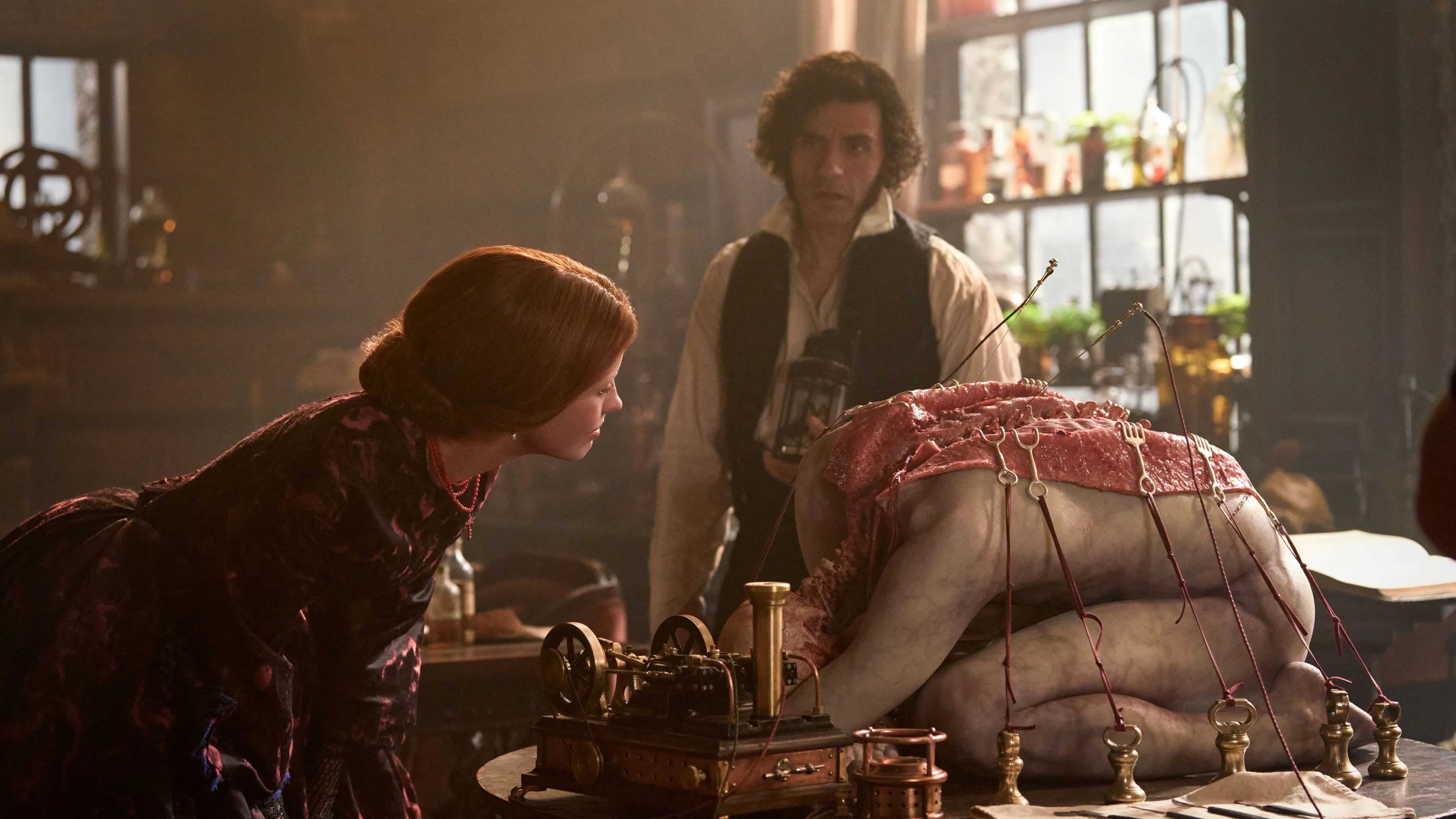
Despite being deposited in the craft categories by BAFTA (landing three awards), Guillermo Del Toro's Frankenstein has claimed nine nominations at the Academy Awards. The Mexican is now the most nominated Latino producer in Oscar history, with his reworking of Mary Shelley's Gothic classic going alongside his listings for The Shape of Water (2017), Nightmare Alley (2021), and Pinocchio (2022), with the first and last respectively securing Best Picture and Best Animated Feature.
In Del Toro's retelling, Oscar Isaac plays Baron Victor Frankenstein, the medical scientist striving to create life in the castle he had inherited from his strict physician father, Leopold (Charles Dance). When he animates a cadaver, Victor keeps the Creature (Jacob Elordi) chained in the basement, away from his younger brother, William (Felix Kammerer), and his fiancée, Lady Elizabeth Harlander (Mia Goth), whose Uncle Heinrich (Christoph Waltz), is secretly bankrolling Frankenstein's research.
Even bending genre perameters, only seven horror films have been nominated for Best Picture: The Exorcist (1973), Jaws (1975), The Silence of the Lambs (1991), The Sixth Sense (1999), Black Swan (2010), Get Out (2017), and The Substance (2024). We should also add Sinners, as it has its fair share of vampires and is much more likely to win than this visually striking remake, which elevates one of classic Universal monsters to the Best Picture ranks for the first time.
With its setting in a bygone Britain, Frankenstein overlaps with Chloé Zhao's Hamnet, which ensures that, for the seventh year running, at least one of the Best Picture contenders has been directed by a woman. Sam Mendes and Steven Spielberg are among the producers, with the latter accepting his 14th nod in the category, which extends his record as the most-nominated individual producer since the studios gave up claim to Best Picture in 1950. Zhao adapted the screenplay with source novelist Maggie O'Farrell, who had imagined the courtship of Stratford tutor William Shakespeare (Paul Mescal) and the sister of his student, Agnes Hathaway (Jessie Buckley), who is reputed to be the daughter of a forest witch. The pair marry and have three children: Susanna (Bodhi Rae Breathnach), Judith (Olivia Lynes), and Hamnet (Jacobi Jupe). However, Shakespeare's burgeoning career as a playwright starts to keep him away from his family and he is in London when tragedy strikes.
Cinema Paradiso recently posted an article on the Top 10 Performances As William Shakespeare, so regular readers will know all about the Oscar success of Laurence Olivier's Henry V (1944) and Hamlet (1948), as well as Max Reinhardt and William Dieterle's A Midsummer Night's Dream (1935), George Cukor's Romeo and Juliet (1936), Joseph L. Mankiewicz's Julius Caesar (1953), and Franco Zeffirelli's Romeo and Juliet (1968). Scripted by Tom Stoppard, John Madden's Shakespeare in Love (1998) also introduced us to Romeo and Ethel, the Pirate's Daughter. This romcomedic romp reminded us that little is known about Shakespeare the man and Hamnet can't really be called a biopic. For convenience, however, we shall bracket it with other films with biographical content that have been nominated for Best Picture, including Disraeli (1929), The Private Life of Henry VIII (1933), The Barretts of Wimpole Street, The House of Rothschild, Cleopatra (&1963), Viva Villa! (all 1934), Mutiny on the Bounty (1935 & 1962), The Story of Louis Pasteur, The Great Ziegfeld (1936), The Life of Emile Zola (1937), Sergeant York (1941), The Pride of the Yankees, Yankee Doodle Dandy (both1942), Madame Curie, The Song of Bernadette (both 1943), Wilson (1944), The Diary of Anne Frank (1959), Lawrence of Arabia (1962), Becket (1964), The Sound of Music (1965), Man For All Seasons (1966), Bonnie and Clyde (1967), The Lion in Winter (1968), Anne of the Thousand Days (1969), Patton (1970), Nicholas and Alexandra (1971), Lenny (1974), All the President's Men (1976), Julia (1977), Coal Miner's Daughter, Raging Bull (both 1980), Chariots of Fire, Reds (both 1981), Gandhi (1982), The Right Stuff (1983), Amadeus, The Killing Fields (both 1984), Out of Africa (1985), The Last Emperor (1987), Born on the Fourth of July, My Left Foot (both 1989), Bugsy, JFK (both 1991), In the Name of the Father, Schindler's List (both 1993), Quiz Show (1994), Apollo 13, Braveheart (both 1995), Titanic (1997), Elizabeth (1998), The Insider (1999), Erin Brockovich (2000), A Beautiful Mind (2001), The Pianist (2002), The Aviator, Finding Neverland, Ray (all 2004), Capote, Good Night, and Good Luck (both 2005), The Queen (2006), Milk, Frost/Nixon (both 2008), The Blind Side (2009), The Fighter, The King's Speech, 127 Hours, The Social Network (all 2010), Argo, Lincoln (both 2012), 12 Years a Slave, Dallas Buyers Club, Philomena, The Wolf of Wall Street (all 2013), The Imitation Game, Selma, The Theory of Everything (all 2014), Spotlight, The Big Short (both 2015), Hacksaw Ridge, Hidden Figure, Lion (all 2016), Darkest Hour (2017), Green Book, The Favourite, Bohemian Rhapsody, BlacKkKlansman, Vice (all 2018), Ford v Ferrari (2019), Judas and the Black Messiah, Mank, The Trial of the Chicago 7 (all 2020), King Richard (2021), Elvis (2022), Maestro, Oppenheimer (both 2023), and A Complete Unknown (2024).
Following on from Robert Zemeckis's Forrest Gump (1994), Josh Safdie's Marty Supreme provides the Best Picture category with its second table tennis-playing (anti-) hero. The screenplay by Safdie and Ronald Bronstein was inspired by Marty Reisman's 1974 memoir, The Money Player: The Confessions of America's Greatest Table Tennis Champion and Hustler. Timothée Chalamet stars as Marty Mauser, a 1950s New York shoe salesman with ambitions to become the world champion in table tennis. However, his lack of resources leads him to live on the edge of legality, while also having an affair with his married friend, Rachel Mizler (Odessa A'zion). An encounter at the Ritz Hotel in London also brings him into the orbit of Kay Stone (Gwyneth Paltrow), as stage actress whose businessman husband, Milton Rockwell (Kevin O'Leary), can't decide whether he wants to promote Marty or persecute him.
As we've already seen the sports-related films that have been nominated in this category, we'll move on to Paul Thomas Anderson's One Battle After Another, which includes a posthumous producing credit for Adam Somner, who becomes the sixth so honoured in this category after Sam Zimbalist ( Ben-Hur, 1959), Robert Alan Aurthur ( All That Jazz, 1979), Mario Cecchi Gori ( Il Postino, 1994), and Anthony Minghella and Sydney Pollack (both for The Reader, 2008).
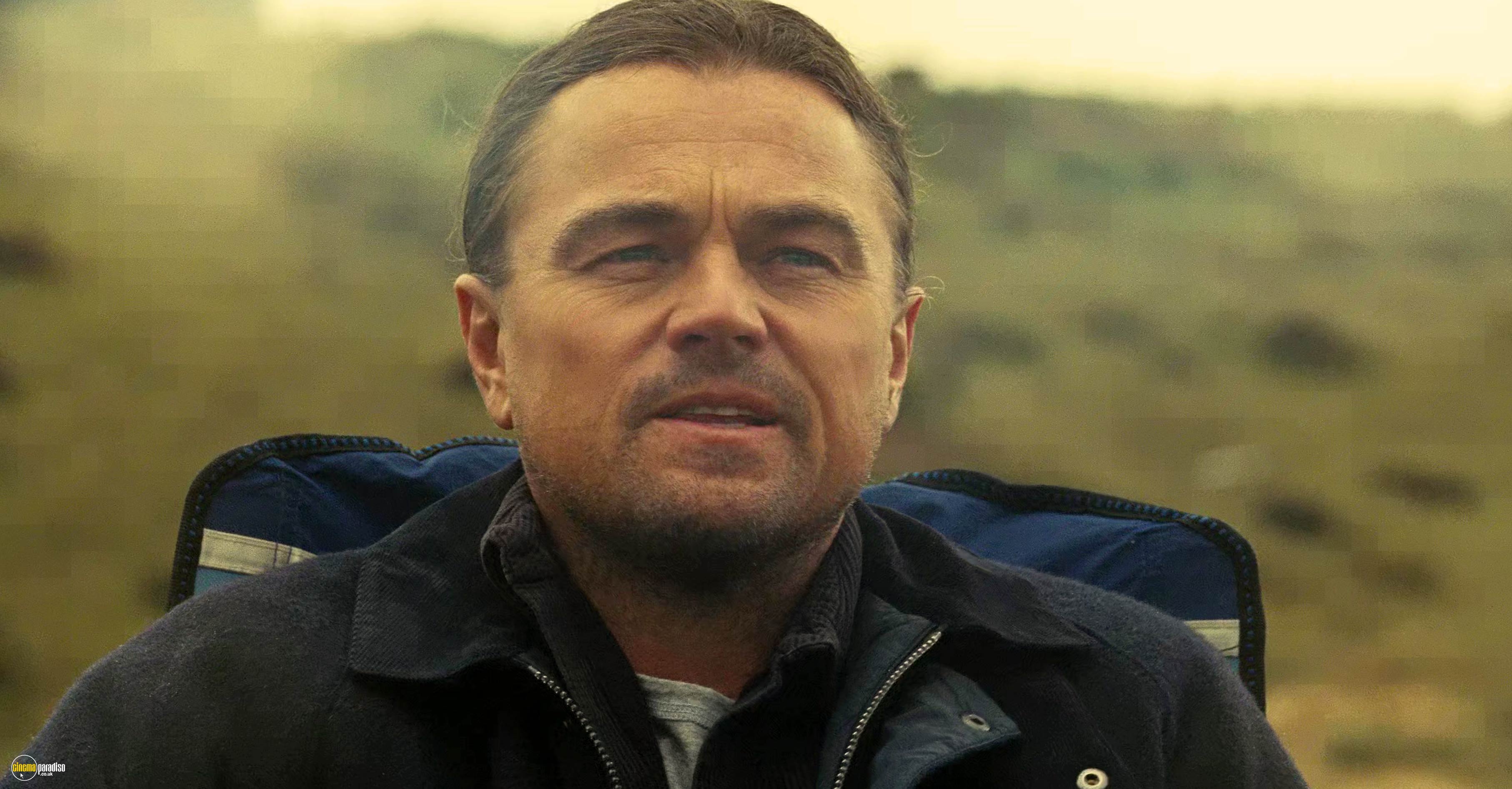
Once a member of the French 75 revolutionary cadre, 'Ghetto' Pat Calhoun lives in witness protection in Baktan Cross, California under the name of Bob Ferguson (Leonardo DiCaprio), with his teenage daughter, Willa (Chase Infiniti). While he watches Gillo Pontecorvo's The Battle of Algiers (1966) in various states of addlement, she takes karate lessons with Sensei Sergio St Carlos (Benicio Del Toro) and resents her father's stoner lifestyle. However, she has no idea that Bob is raising her in spite of the fact that her real father is Colonel Steven J. Lockjaw (Sean Penn), a corrupt army officer who had tricked her mother, Perfidia Beverly Hills (Teyana Taylor), into betraying her comrades before fleeing to Mexico, and who has now detailed a hitman to kill her.
With its focus on migrants on the border and thinly veiled references to Trumpist populism, this is a highly political film. But it's also an action film and a thriller, although it doesn't fit neatly into either category. Its closest cousin in the Best Picture back catalogue is probably Andrew Davis's The Fugitive (1993), but we can also throw The Adventures of Robin Hood (1938), The Treasure of the Sierra Madre (1948), Deliverance (1972), Raiders of the Lost Ark (1981), Gladiator (2000), The Dark Knight (2008), Inception (2010), Mad Max: Fury Road (2015), Black Panther (2018), and Top Gun: Maverick (2022) into the mix, just for the fun of it.
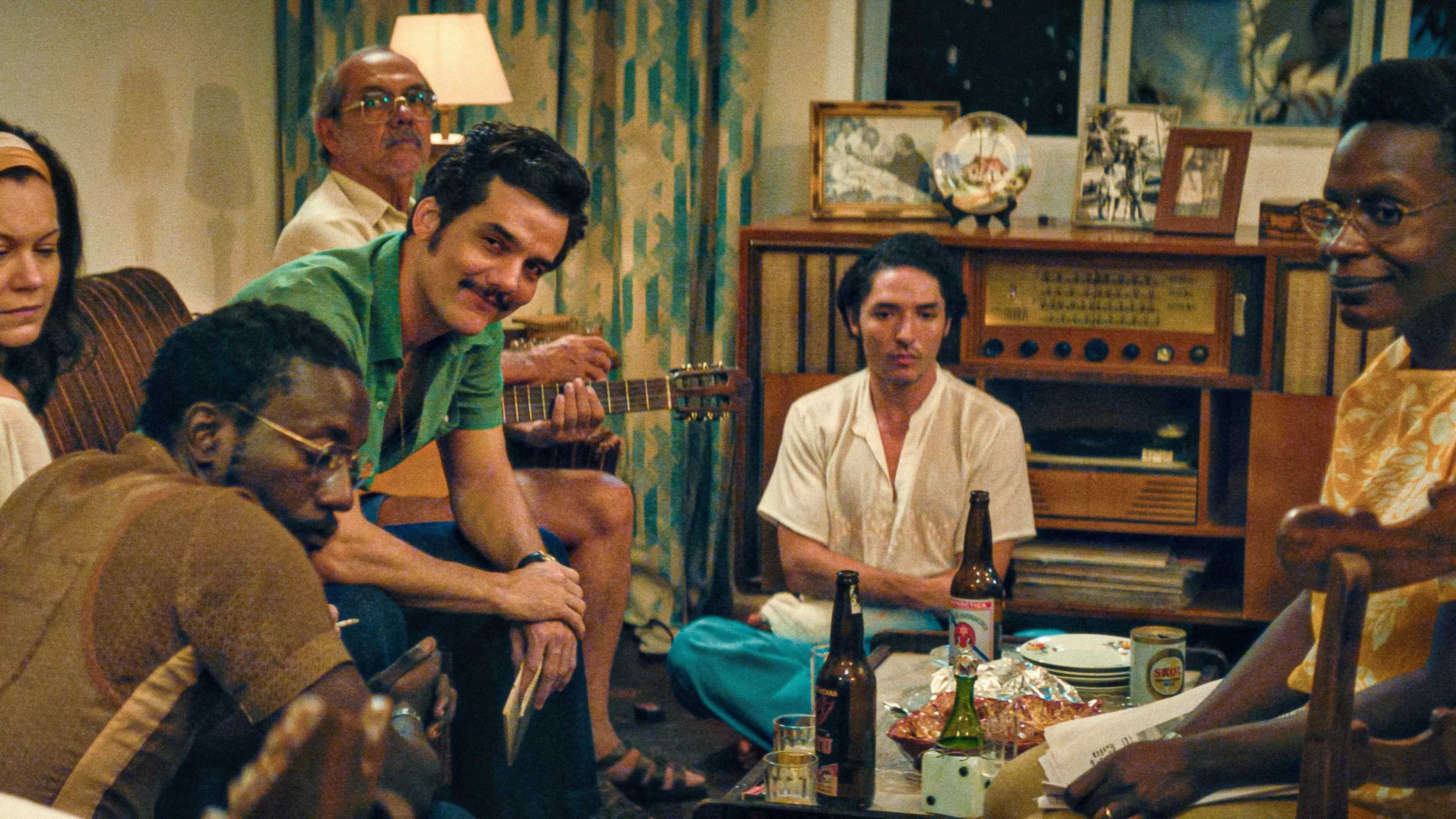
There are echoes of One Battle After Another's 'man on the run' theme in Kleber Mendonça Filho's The Secret Agent, which won Best Director at Cannes, as well as the Best Actor prize for Wagner Moura, who also took the Golden Globe, as this gripping neo-noir became the first Brazilian film to be nominated for Best Motion Picture - Drama en route to landing the award for Best Foreign-Language Film. Now, it joins Walter Salles's I'm Still Here (2024), as the second Brazilian film to compete in this Oscar category, after the subtitled path had previously been blazed by La Grande illusion (1937), Z (1969), The Emigrants (1971), Cries and Whispers (1972), Il Postino (1994), Life Is Beautiful (1997), Crouching Tiger, Hidden Dragon (2000), Babel, Letters From Iwo Jima (both 2006), Amour (2012), Roma (2018), Parasite (2019), Minari (2020), Drive My Car (2021), All Quiet on the Western Front (2022), Anatomy of a Fall, Past Lives, The Zone of Interest (all 2023), Emilia Pérez (2024), and Sentimental Value (2025).
Forced out of his university job, Armando Solimões (Moura) hides out in Recife during carnival week in 1975 after the minister whose corrupt scheme he had uncovered had dispatched two bent cops to eradicate him. Protected by the left-leaning group led by Dona Sebastiana (Tânia Maria), the widower assumes the alias Marcelo Alves and finds himself working at the department that issues identity cards. Hoping to get his young son out of the country, he tries to keep his head down. But he becomes involved with Euclides (Robério Diógenes), another bad cop, who is investigating the discovery of a severed leg inside a dead tiger shark at the very moment that Jaws has opened at the cinema where his father-in-law (Carlos Francisco) works as a projectionist.
As Moura also plays his son, Fernando, in later life, he joins Michael B. Jordan from Sinners in taking dual roles in this year's Oscar (more of which anon). However, the plot dictates that Renate Reinsve is deprived of the chance to double up in Joachim Trier's Sentimental Value. She plays Nora, an actress who turns down the chance to play her own grandmother in a film about the Nazi occupation of Norway that her director father, Gustav Borg (Stellan Skarsgård), is hoping to make in the old family home. However, Nora knows that her estranged father is seeking to exploit her fame to relaunch his flagging career. Her married sister, Agnes (Inga Ibsdotter Lilleaas), is also upset with Gustav, as he has asked her to let her young son appear in the film, thus showing that he has forgotten how unhappy she had been after having acted for him as a child (and failed to win his approval). When Nora turns down the role, Borg hires rising Hollywood star, Rachel Kemp (Elle Fanning), who has developed a crush on Borg after succumbing to his roguish charmed at a film festival.
With nine nominations, this knowing drama has become the second-most decorated subtitled picture after the controversial Emilia Pérez received 13 last year. Considering Trier’s last film, The Worst Person in the World (2021), scored only in Best Original Screenplay and Best International Feature, this represents a considerable upturn in Oscar fortunes. But it still trails a long way behind the new record holder, Sinners, whose 16-tick achievement is all the more remarkable considering it opened in the US in April and the Academy usually has a very short memory.
Ryan Coogler has become only the second Black film-maker to be nominated in the same year for Best Picture, Best Director, and Best Original Screenplay, after Jordan Peele had set the standard with Get Out (2017). Making this achievement additionally special is the fact that fellow producer, Zinzi Coogler, has become the first Filipina producer to be nominated for Best Picture, while the couple are the first Black marrieds to be nominated together in this category. She also becomes the third Black woman to be nominated for Best Picture after Oprah Winfrey for Selma (2014) and Kimberly Steward for Manchester By the Sea (2017).
Ten of the 16 nominations for Sinners have gone to Black artists, which ties the record established by Coogler's Judas and the Black Messiah (2020) in a year that saw the most individual Black nominees at a single ceremony, with four winning from 17 nominations. Shunika Terry (Best Make-up and Hairstyling) and Raphael Saadiq (Best Original Song) are joined by three history-making nominees. Since 1929, over 3100 Oscars have been presented, but only 20 have been won by Black women. Production designer Hannah Beachler is the only Black woman to have been recognised in her category and she will hope to add to the statuette won for Black Panther (2018). Having become the first female cinematographer to shoot on Imax 65mm and Ultra Panavision for Sinners, Autumn Durald Arkapaw has also become the first woman of colour to be nominated for Best Cinematography. Of Filipino and Creole descent, she is the fourth woman overall to be recognised and will hope she can better Rachel Morrison ( Mudbound, 2017), Ari Wegner (The Power of the Dog, 2020), and Mandy Walker (Elvis, 2021) and become the category's first female winner. Nevertheless, she will still trail costume designer Ruth E. Carter as the most nominated Black woman at the Academy Awards. Having moved ahead of Viola Davis, Carter has tied with Morgan Freeman and Spike Lee on five behind Quincy Jones (seven) and Denzel Washington (nine). Following nominations for Malcolm X (1992) and Amistad (1997), she became the first Black person to win Best Costume Design for Black Panther before becoming the first women to win two Oscars with Black Panther: Wakanda Forever (2022). Success on 15 March would put her level with such fabled names as Charles LeMaire, Sandy Powell, Jenny Beavan, Dorothy Jeakins, Anthony Powell, Orry-Kelly, and James Acheson and one behind Colleen Atwood and Milena Canonero and two behind Irene Sharaff. But her five is still three adrift of the all-time record holder, Edith Head, who won eight from 35 nominations, even though some of her credits were contractual rather than directly contributory.
Although Sinners is the first vampire story to be nominated for Best Picture, its stronger connection is with gangland, as identical twins, Elijah 'Smoke' and Elias 'Stack' Moore (both Michael B Jordan), return to Clarksdale in the Mississippi Delta having worked for Al Capone in 1930s Chicago. They plan to set up a juke joint and hope that blues sensation (and cousin), Sammie 'Preacherboy' Moore (Miles Caton), will get the punters rolling in. However, as most of the locals subsist on company scrip, there's not much hard cash coming in and the brothers soon have more things to worry about after Irish vampire Remmick (Jack O'Connell) turns up with his cohorts, including Stack's former girlfriend, Mary (Hailee Steinfield). Only Smoke's estranged wife, Annie (Wunmi Mosaku), seems to know how to lift the siege.
While Best Picture winner In the Heat of the Night (1967) had a pioneering African American hero, it was a crime drama rather than a gangster picture along the lines of The Racket (1928), Alibi (1929), Dead End (1937), Bonnie and Clyde (1967), The French Connection (1971), The Godfather trilogy (1972-90), Atlantic City (1980), Prizzi's Honor (1985), GoodFellas (1990), Bugsy (1991), Pulp Fiction (1994), L.A. Confidential (1997), and The Departed (2006).
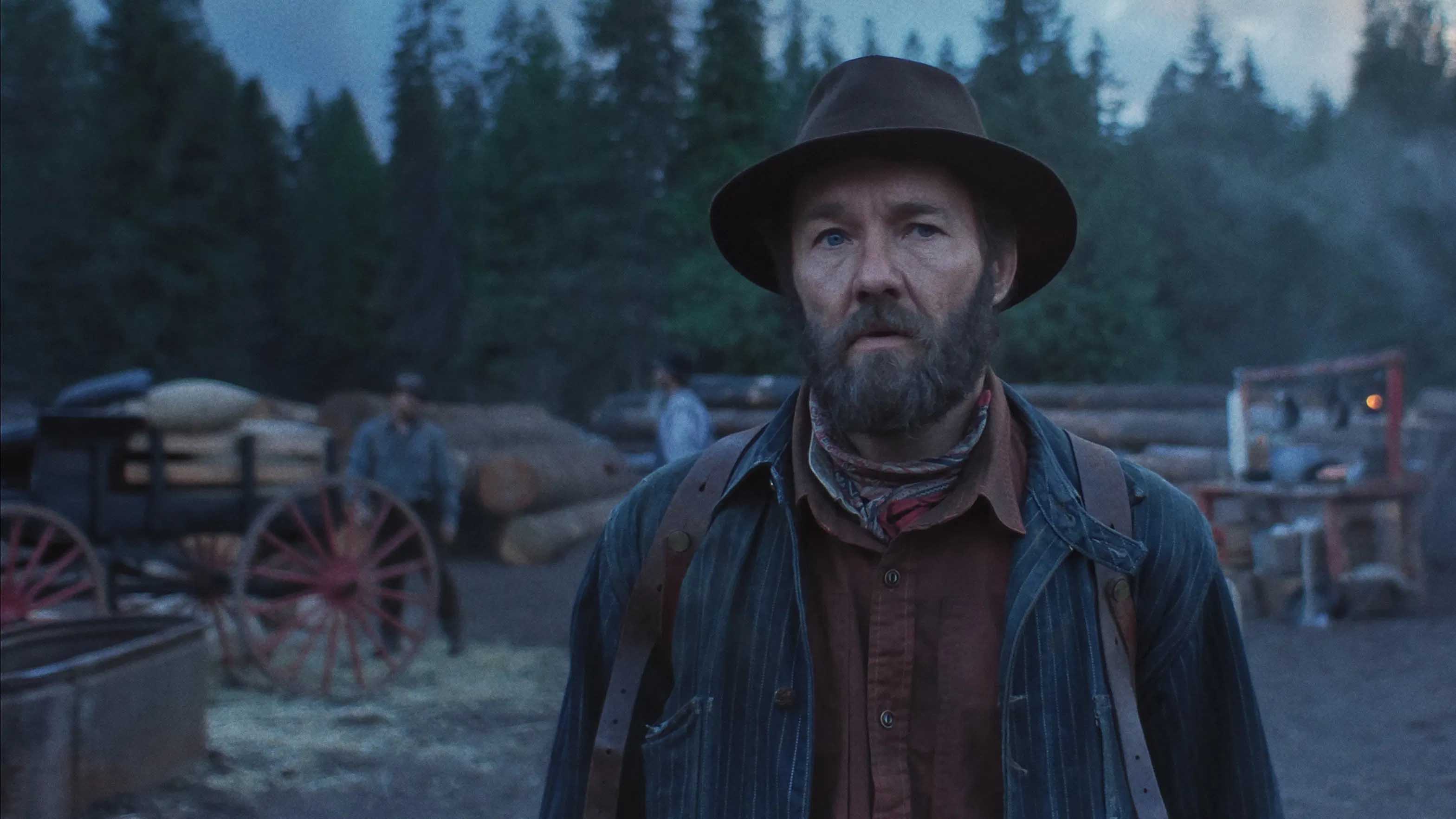
The last Best Picture contender is Clint Bentley's Train Dreams, which was based on a novella by Denis Johnson. Narrated by Will Patton, the story covers eight decades in the life of Robert Grainier (Joel Edgerton), who arrives by train in Bonners Ferry, Idaho as an orphan in the 1880s and lives long enough to see John Glenn fly into space. In between times, he works in railway construction and logging and witnesses the brutality of both mankind and the wilderness, while also finding friendship with explosives expert, Arn Peeples (William H. Macy), and love with Gladys Olding (Felicity Jones), with whom he has a daughter. However, they disappear and Grainier remains in the family cabin on the Moyie River in the hope that they will return, consoled by the kindness of forestry official, Claire Thompson (Kerry Condon).
Nominated for four awards, including Best Adapted Screenplay, Train Dreams is a Netflix production and, thus, won't be coming to disc any time soon. But it's a moving epic in the frontier tradition that lies at the core of the Hollywood Western. Only four Westerns have won Best Picture, Cimarron (1931), Dances With Wolves (1990), Unforgiven (1992), and the neo-Western, No Country For Old Men (2007). Nineteen other genre entries have been nominated, however, including a handful of other hybrids: In Old Arizona (1928); Viva Villa! (1934); Ruggles of Red Gap (1935); Stagecoach (1939); The Ox-Bow Incident (1943); The Treasure of the Sierra Madre (1948); High Noon (1952); Shane (1953); Seven Brides For Seven Brothers (1954); Friendly Persuasion; Giant (both 1956); The Alamo (1960); How the West Was Won (1963); Butch Cassidy and the Sundance Kid (1969); Brokeback Mountain (2005); True Grit (2010); Django Unchained (2012); The Revenant (2015); and Hell or High Water (2016). It's been a while since a frontier film prevailed and the wait seems likely to go on. But following some of the surprises spring by the BAFTAs, you may think it's worth a punt in Cinema Paradiso's 2026 Oscar Prediction Competition!
BEST DIRECTOR
There are always going to be disappointments and debates when 10 titles are put up for Best Picture and the remaining categories only have room for five. Cinema Paradiso recently profiled Kelly Reichardt in one of our Instant Expert articles and her struggle to impress the Academy has continued, with the much-admired heist thriller, The Mastermind, following the likes of First Cow (2019), Certain Women (2016), and Wendy and Lucy (2008) in being overlooked at Oscar time. But should we really be surprised, when only nine of the 260 nominees in the Best Director category have been women? Only two women have been nominated twice (compared to 82 men), while only three of the 76 individual winners have not been men. Unsurprisingly, there has always been a close correlation between Best Picture and Best Director, with 70 of the 91 films nominated in each category completing the double. But commentators agree that this is the closest race in a while, which makes it tricky for Cinema Paradiso members to make their call.
Paul Thomas Anderson has garnered 14 Oscar nominations over the course of his career, with One Battle After Another giving him a fourth Best Director nod after There Will Be Blood (2007), Phantom Thread (2017), and Licorice Pizza (2021). He has more nominations than his rivals, but has yet to win and, despite the acclaim for his state-of-the-nation saga, the odds might be stacked against a film with political connotations taking the award.
As the Production Code kept such stringent control over the content of Hollywood films during the Golden Age, politics was largely a taboo topic, as the studios didn't want to risk alienating potential ticket-buyers by taking sides or rocking the establishment boat, especially during the Great Depression. Thus, it wasn't until 1950 (at the height of the House UnAmerican Committee's investigation into Communism in show business) that the first overtly political film came into contention. Robert Rossen's All the King's Men (1949), was the first to be nominated for Best Director. But, while it took Best Picture, Rossen lost out to Joseph L. Mankiewicz for Letter to Three Wives. Cold War tensions kept politics off the Oscar agenda for the next quarter century, although Gillo Pontecorvo's The Battle of Algiers (1966) and Costa-Gavras's Z (1969) snuck on to the list from Europe. It seemed as though things might change after Watergate, when Sidney Lumet's Network and Alan J. Pakula's All the President's Men vied for Best Director in 1977. Yet there were no further political thrillers listed in the category until Alan Parker's Mississippi Burning (1988) and, while a number of biopics have focussed on past political figures, One Battle After Another is the first since to receive Best Director recognition. Indeed, it's the first action conspiracy film to register in the category in its 98-year existence.
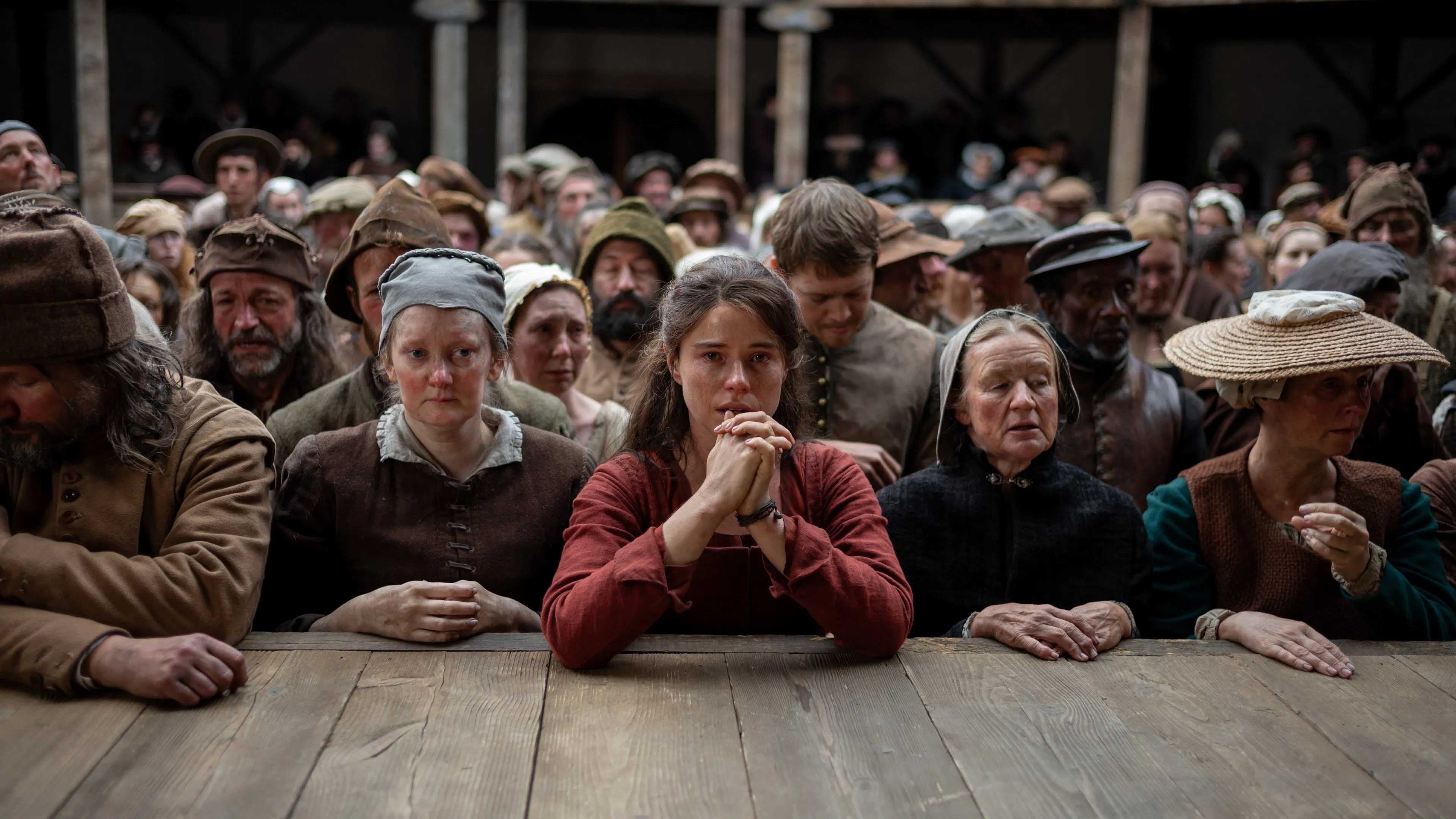
Not that horror-linked films have taken Best Director by storm, either, although Ryan Coogler's Sinners finds itself in the company of The Exorcist (1973), The Silence of the Lambs (1991), The Sixth Sense (1999), Black Swan (2010), Get Out (2017), and The Substance (2024). The situation is much brighter where gangster films are concerned, with the following nominees being worthy of a name check: Michael Curtiz's Angels With Dirty Faces (1938); Robert Siodmak's The Killers (1946); Elia Kazan's On the Waterfront (1954); Billy Wilder's Some Like It Hot (1959); Arthur Penn's Bonnie and Clyde (1967); William Friedkin's The French Connection (1971); Francis Ford Coppola's The Godfather (1972), The Godfather Part II (1974), and The Godfather Part III (1990); George Roy Hill's The Sting (1973); Louis Malle's Atlantic City (1980); John Huston's Prizzi's Honor (1985); Martin Scorsese's GoodFellas (1990), Gangs of New York (2002), The Irishman (2019); Barry Levinson's Bugsy (1991); Woody Allen's Bullets Over Broadway, Quentin Tarantino's Pulp Fiction (both 1994); Curtis Hanson's L.A. Confidential (1997); and Sean Baker's Anora (2024).
As for Coogler, he is only the third Black artist to be nominated for producing, directing, and screenwriting in the same year, after Jordan Peele (Get Out) and Spike Lee (BlacKkKlansman). He is also the seventh Black man to be nominated for Best Director after Peele, Lee, John Singleton ( Boyz n the Hood, 1990), Lee Daniels ( Precious, 2009), Steve McQueen (12 Years a Slave, 2013), and Barry Jenkins ( Moonlight, 2016). None has ever won, however, so history could be made on 15 March. By the way, Sinners has also become just the sixth feature with a Black writer to be nominated for Best Original Screenplay.
In the build-up to awards season, there was plenty of talk about Benny Safdie's The Smashing Machine, with several suggesting that Dwayne 'The Rock' Johnson might even have a shot at a Best Actor nomination. However, this lively outing had to settle for a Make-up and Hairstyling nod, while Josh Safdie's Marty Supreme made a late bid and racked up nine nominations, with the director also being cited for his efforts as a producer and screenwriter. Could he become the first person of Syrian-Russian-Jewish descent to win the Oscar?
At the first Academy Awards, Lewis Milestone's long-forgotten Two Arabian Knights (1927) won Best Comedy Picture at the expense of Ted Wilde's Harold Lloyd vehicle, Speedy, and Charlie Chaplin's The Circus (both 1928), although Chaplin was presented with a special award. Subsequently, comedies have been well represented in the Best Director category, with three men thriving in particular: Frank Capra for Lady For a Day (1932), It Happened One Night (1934), Mr Deeds Goes to Town (1936), You Can't Take It With You (1938), Mr Smith Goes to Washington (1939), and It's a Wonderful Life (1946); Billy Wilder for Sabrina (1954), Some Like It Hot (1959), and The Apartment (1960); and Woody Allen for Annie Hall (1977), Broadway Danny Rose (1984), Hannah and Her Sisters (1986), Crimes and Misdemeanors (1989), Bullets Over Broadway (1994), and Midnight in Paris (2011).
The other funnies to earn recognition for their directors are Lewis Milestone's The Front Page (1931), Gregory La Cava's My Man Godfrey (1936), Leo McCarey's The Awful Truth (1937), George Cukor's The Philadelphia Story (1940) and Born Yesterday (1950), Alexander Hall's Here Comes Mr Jordan (1941), Ernst Lubitsch's Heaven Can Wait, George Stevens's The More the Merrier (both 1943), Henry Koster's The Bishop's Wife (1947), John Ford's The Quiet Man (1952), William Wyler's Roman Holiday (1953), Mike Nichols's The Graduate (1967), Miloš Forman's One Flew Over the Cuckoo's Nest (1975), Richard Rush's The Stunt Man (1980), Sydney Pollack's Tootsie (1982), John Huston's Prizzi's Honor (1985), Charles Crichton's A Fish Called Wanda, Mike Nichols's Working Girl (both 1987), Robert Altman's The Player (1992) and Short Cuts (1993), Chris Noonan's Babe (1995), Joel Coen's Fargo (1996), Peter Cattaneo's The Full Monty (1997), John Madden's Shakespeare in Love (1998), Sam Mendes's American Beauty (1999), Alexander Payne's Sideways (2004), The Descendants (2011), and Nebraska (2013), Wes Anderson's The Grand Budapest Hotel (2013), Adam McKay's The Big Short (2015) and Vice (2018), Paul Thomas Anderson's Licorice Pizza (2021), Daniel Kwan and Daniel Scheinert's Everything Everywhere All At Once, Martin McDonagh's The Banshees of Inisherin (both 2022), and Sean Baker's Anora (2024).
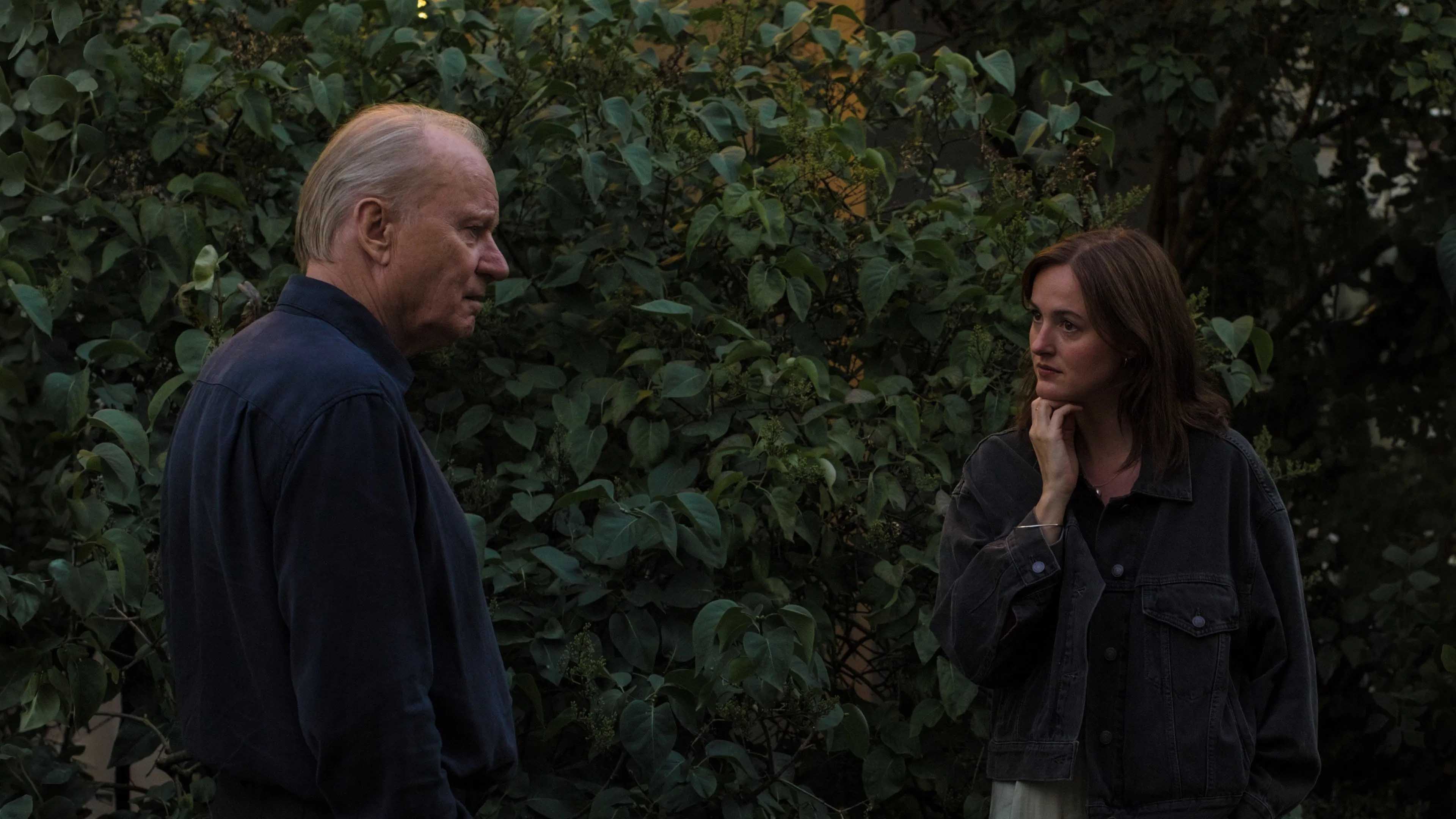
Mexico lost out to Norway, as three-time Oscar winner Guillermo Del Toro (Frankenstein) was shunted out of Best Director by Joachim Trier, whose Sentimental Value is one of only a clutch of nominated titles to centre on the film-making process, alongside Federico Fellini's 8½ (1963), François Truffaut's Day For Night (1973), Bob Fosse's All That Jazz (1979), Richard Rush's The Stunt Man (1980), Robert Altman's The Player (1992), Michel Hazanavicius's The Artist (2011), Damien Chazelle's La La Land (2016), Quentin Tarantino's Once Upon a Time...in Hollywood (2019), and David Fincher's Mank (2020). And before anyone mentions Martin Scorsese's Hugo (2011), it depicts Georges Méliès after the pioneering cinema career recalled in MCU - The Méliès Cinematic Universe: Projection was over.
No one has been nominated more in this category than Italian Federico Fellini, whose La dolce vita (1960), 8½, Fellini Satyricon (1969), and Amarcord (1974) are all available to rent from Cinema Paradiso, as are Ingmar Bergman's Cries and Whispers (1972) and Fanny and Alexander (1982), although Face to Face (1976) is currently unavailable. Among the other subtitled pictures to make the Best Director shortlist are Pietro Germi's Divorce Italian Style (1961), Hiroshi Teshigahara's Woman in the Dunes (1964), Claude Lelouch's Une homme et une femme (1966), Gillo Pontecorvo's The Battle of Algiers (1966), Costa-Gavras's Z (1969), Jan Troell's The Emigrants (1971), Truffaut's Day For Night, Lina Wertmüller's Seven Beauties (1975), Édouard Molinaro's La Cage aux Folles (1978), Wolfgang Petersen's Das Boot (1982), Akira Kurosawa's Ran (1985), Lasse Hallström's My Life As a Dog (1987), Krzysztof Kieslowski's Three Colours: Red, Michael Radford's Il postino (both 1994), Roberto Benigni's Life Is Beautiful (1997), Ang Lee's Crouching Tiger, Hidden Dragon (2000), Pedro Almodóvar's Talk to Her (2001), Fernando Meirelles's City of God (2002), Clint Eastwood's Letters From Iwo Jima, Alejandro González Iñárritu's Babel (both 2004), Julian Schnabel's The Diving Bell and the Butterfly (2007), Michael Haneke's Amour (2011), Alfonso Cuarón's Roma, Pawel Pawlikowski's Cold War (both 2018), Bong Joon-ho's Parasite (2019), Lee Isaac Chung's Minari, Thomas Vinterberg's Another Round (both 2020), Ryusuke Hamaguchi's Drive My Car (2021), Ruben Östlund's Triangle of Sadness (2022), Jonathan Glazer's The Zone of Interest, Justine Triet's Anatomy of a Fall (both 2023), and Jacques Audiard's Emilia Pérez (2024).
A record 74 women have been nominated at the 98th Oscars, with Chloé Zhao equalling Jane Campion's record of being up for Best Director on two occasions. If she follows up Nomadland (2020) with a triumph for Hamnet, she will become the first female dual winner of the award. Zhao is also the first person of colour to be nominated twice for Best Director and now holds the record for being the most-nominated Asian woman in Oscar history. Her seven nods also puts her second behind 10-time nommed cinematographer James Wong Howe, who won the Oscar for The Rose Tattoo (1955) and Hud (1963).
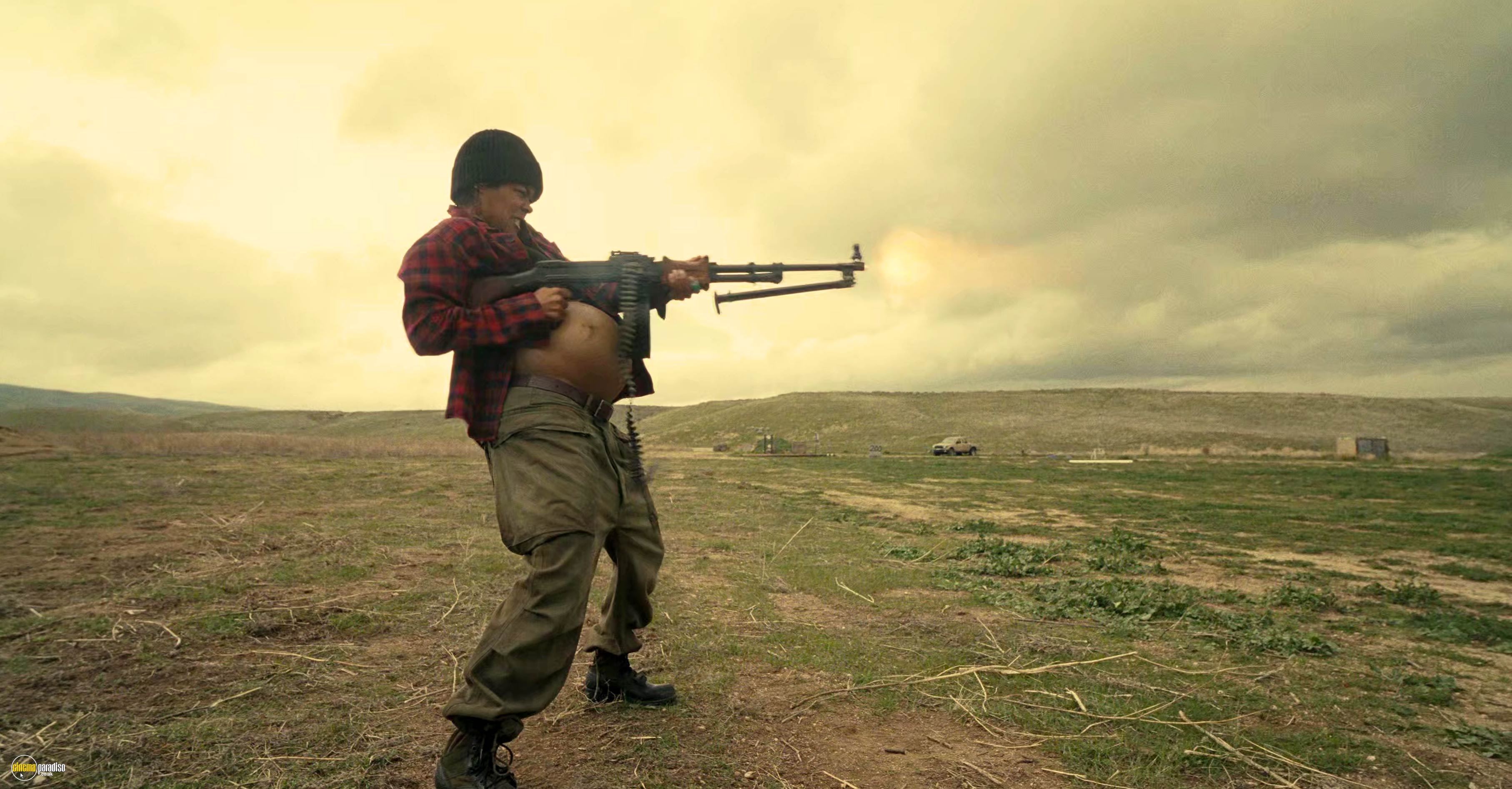
Set during the reign of Elizabeth I, Hamnet is the latest of several Best Director-nominated titles to be set in Britain in pre-cinema times, with the others being Frank Lloyd's The Divine Lady (1928) and Mutiny on the Bounty (1935), William Wyler's Wuthering Heights (1939), David Lean's Great Expectations (1946), Tony Richardson's Tom Jones (1963), Peter Glenville's Becket (1964), Fred Zinnemann's A Man For All Seasons (1966), Anthony Harvey's The Lion in Winter (1968), Stanley Kubrick's Barry Lyndon (1975), Roman Polanski's Tess (1979), David Lynch's The Elephant Man (1980), Kenneth Branagh's Henry V (1989), Mel Gibson's Braveheart (1995), Ang Lee's Sense and Sensibility (1995), and Yorgos Lanthimos's The Favourite (2017). Only Richardson and Zinnemann have managed to win, however, and there is more bad news for Zhao, as while Shakespeare in Love won Best Picture, John Madden lost out to Steven Spielberg for Saving Private Ryan (both 1998).
BEST ACTOR
According to the statistics, nominees in the Best Actor and Best Supporting Actor categories are most often drawn from Best Picture contenders and are, therefore, likely to have an improved chance of winning the Oscar. The percentages drop dramatically when it comes to Best Actress and Best Supporting Actress, although winners with a Best Picture connection are more likely to come from the latter category. This year, there is no overlap at all between Best Actor and Best Actress, which means there will be no addition to the select band of films with Oscar-winning co-stars that includes It Happened One Night (1934), One Flew Over the Cuckoo's Nest (1975), Network (1976), Coming Home (1978), On Golden Pond (1981), and The Silence of the Lambs (1991).
Three of the five Best Actor nominees are the sole acting representatives of their films, whereas it's five in the case of Best Actress. In the Best Supporting lists, there is a single non-allied performance in each category. All of which makes selecting the winners in each more difficult, although there is a clear leader when it comes to Best Actress. Things are tighter in the Best Actor grouping that could easily have contained Jesse Plemons for Bugonia and Joel Edgerton for Train Dreams.
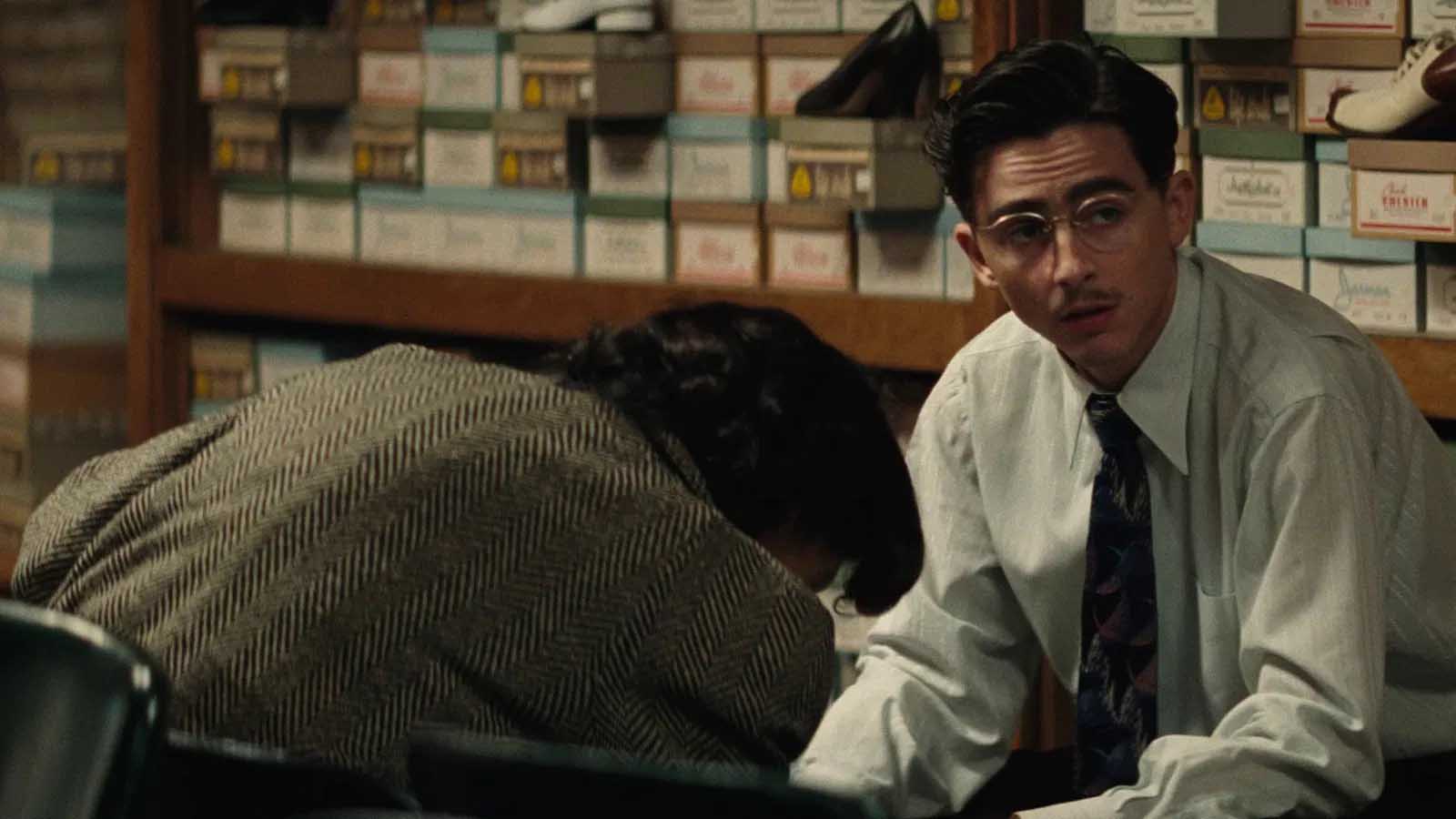
Despite James Aramayo defying the prediction trends by taking the BAFTA for I Swear, the bookmakers continue to make Timothée Chalamet the Oscar favourite for his mesmerising turn as 1950s table tennis maverick, Marty Mauser, in Marty Supreme. At the age of 30 years and 26 days, he has become the youngest man to earn three acting nominations this century, thanks to Call Me By Your Name (2018) and A Complete Unknown (2024). However, Marlon Brando was still only 29 when he racked up nods for A Streetcar Named Desire (1951), Viva Zapata! (1952), and Julius Caesar (1953). However, he was 30 years and 361 days
when he finally won for On the Waterfront (1954), so Chalamet could pip him on that score if he prevails. Jennifer Lawrence remains the youngest performer to land three Oscar nominations, however, as she was 23 when she added a Best Supporting citation for American Hustle (2013) to the Best Actress nominations earned for Winter's Bone (2010) and Silver Linings Playbook (2012), for which she won.
Chalamet is also nominated for Best Picture, as a producer alongside Eli Bush, Ronald Bronstein, Josh Safdie and Anthony Katagas. This makes him the youngest person ever to be double-nominated for producing and acting in the same year, surpassing a record that Warren Beatty had held for 58 years when he received his nominations for Bonnie and Clyde (1967). But it doesn't end there. The New Yorker is also the youngest actor to star in eight Best Picture nominees: Call Me By Your Name, Interstellar (2014), Lady Bird (2017), Little Women (2019), Don't Look Up (2021), Dune (2021), Dune: Part 2, A Complete Unknown (both 2024), and Marty Supreme.
Tom Hanks has already won Best Actor by playing ping pong. But Forrest Gump is not the only sporty type to have been nominated for Best Actor. Richard Barthelmess was the first of many boxers for The Patent Leather Kid (1927), with Wallace Beery featuring in the category's only tie as The Champ opposite Fredric March's Dr Jekyll and Mr Hyde (1931/32). Robert Montgomery was another pugilist in Here Comes Mr Jordan (1941), while Gary Cooper excelled as tragic baseball hero, Lou Gehrig, in Pride of the Yankees (1942). Continuing Oscars love-in with boxing were John Garfield in Body and Soul (1947), Kirk Douglas in Champion (1949), Marlon Brando in On the Waterfront, James Earl Jones in The Great White Hope (1970), Sylvester Stallone in Rocky (1976), Robert De Niro in Raging Bull (1980), Denzel Washington in The Hurricane (1999), and Will Smith in Ali (2001). Elsewhere, Paul Newman shot pool in The Hustler (1961) and The Color of Money (1986), Richard Harris bulldozed in rugby league in This Sporting Life (1963), Warren Beatty tossed the pigskin in Heaven Can Wait (1978), Mickey Rourke roamed the ring in The Wrestler (2008), Brad Pitt's old pro ran a baseball team in Moneyball (2011), Steve Carell coached wrestling in Foxcatcher (2014), and Will Smith mentored Venus and Serena Williams in King Richard (2021).
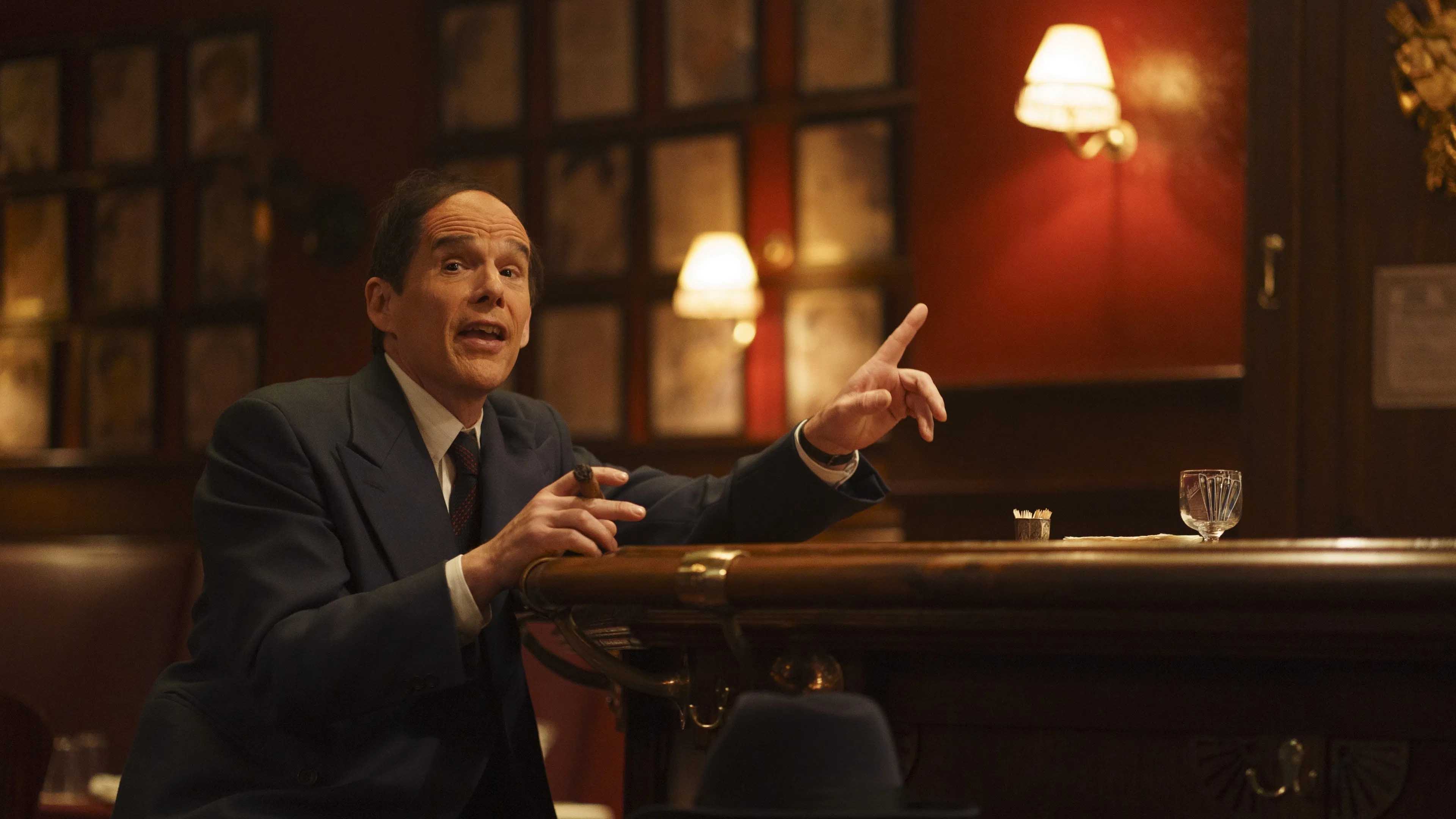
Perhaps the biggest rival to Chalamet is Leonardo DiCaprio, who doubles up as Pat Calhoun hiding under the name Bob Ferguson in One Battle After Another. This is DiCaprio's eighth Oscar nomination and he's now one behind Robert De Niro in having had 12 outings nominated for Best Picture: Titanic (1997), Gangs of New York (2002), The Aviator (2006), The Departed (2006), Inception (2010), Django Unchained (2013), The Wolf of Wall Street (2013), The Revenant (2015), Once Upon a Time...in Hollywood (2019), Don’t Look Up (2021), and Killers of the Flower Moon (2024). The two nominations that didn't feature in that list are What's Eating Gilbert Grape (1994), which brought his sole Best Supporting nod, and Blood Diamond (2007), which didn't make the Best Picture list.
In playing a man on the lam, DiCaprio joins Paul Muni in I Am a Fugitive From a Chain Gang (1932), Victor McLaglen in The Informer (1935), Charles Boyer in Algiers (1938), Alec Guinness in The Lavender Hill Mob (1951), Tony Curtis and Sidney Poitier in The Defiant Ones (1958), Jack Lemmon in Some Like It Hot (1959), Warren Beatty in Bonnie and Clyde (1967), Laurence Olivier in The Boys From Brazil (1978), Stephen Rea in The Crying Game (1992), Adrien Broday in The Pianist (2002), and Hugh Jackman in Les Misérables (2012).
After 40 years on the screen, Ethan Hawke follows up his Best Supporting Actor nominations for Training Day (2001) and Boyhood (2014) with a Best Actor nod for his performance as lyricist Lorenz Hart in Richard Linklater's Blue Moon. This has been a profitable collaboration for Hawke, who also has Best Adapted Screenplay notches for Before Sunset (2004) and Before Midnight (2013).
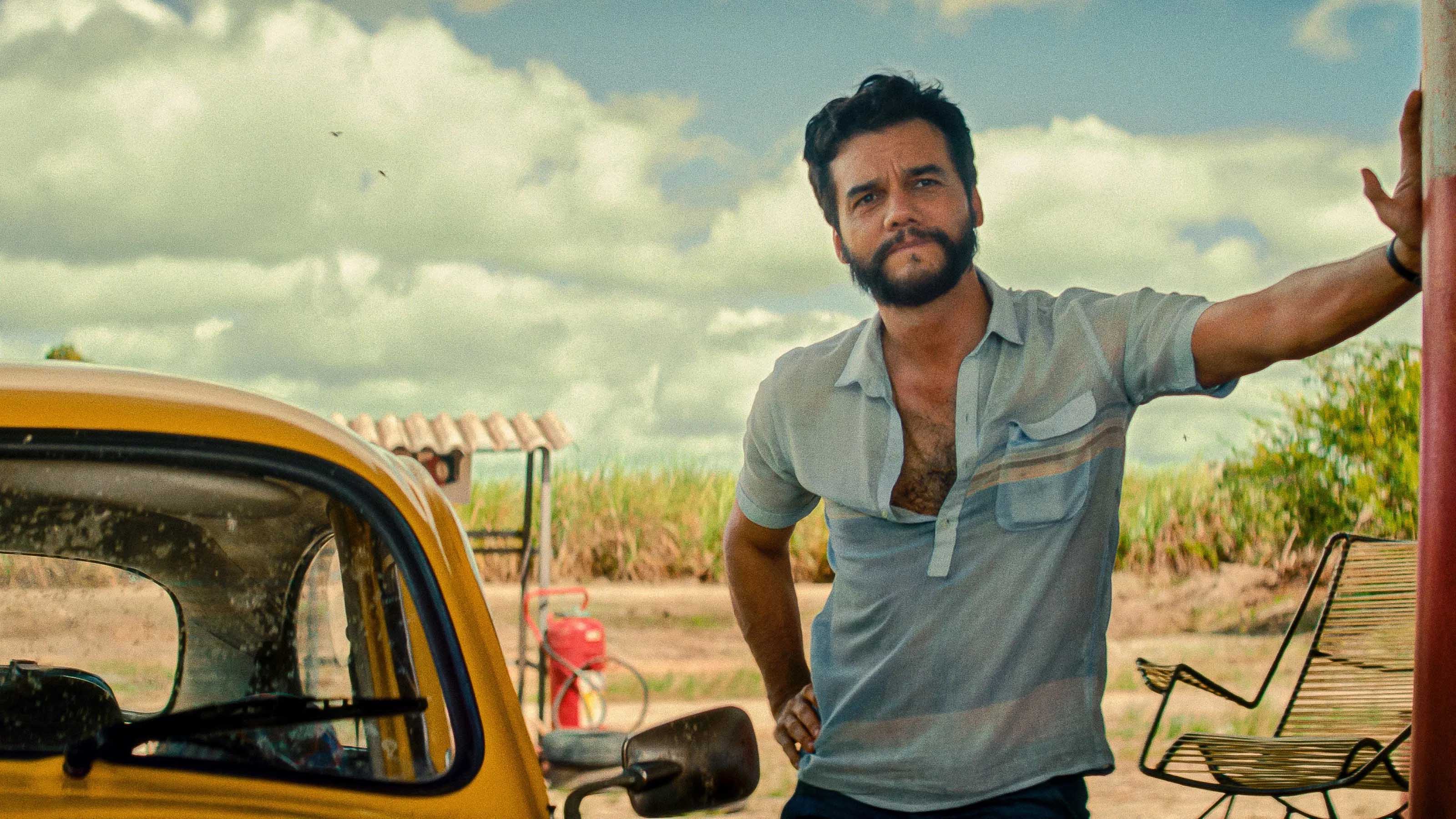
Hart was the first songwriting partner of Richard Rodgers (Andrew Scott) before he forged a bond with Oscar Hammerstein II (Simon Delaney). Mickey Rooney had taken the role opposite Charles Drake in Words and Music (1948), but neither had been recognised by the Academy. Despite having his champions, Hawke is also unlikely to win, although he will have the consolation of standing alongside several fine acting nominees who have also played singers or composers, namely James Cagney as George M. Cohan in Yankee Doodle Dandy (1942), Cornel Wilde as Frédéric Chopin in A Song to Remember (1945), Larry Parks as Al Jolson in The Jolson Story (1946), Gary Busey as Buddy Holly in The Buddy Holly Story (1978), F. Murray Abraham as Antonio Salieri and Tom Hulce as Wolfgang Amadeus Mozart in Amadeus (1984), Laurence Fishburne as Ike Turner in What’s Love Got to Do With It (1993), Geoffrey Rush as pianist David Helfgott in Shine (1996), Jamie Foxx as Ray Charles in Ray (2004), Joaquin Phoenix as Johnny Cash in Walk the Line (2005), Rami Malek as Freddie Mercury in Bohemian Rhapsody (2018), Javier Bardem as bandleader-cum-actor Desi Arnaz in Being the Ricardos (2021), Andrew Garfield as songwriter Jonathan Larson in Tick, Tick...BOOM! (2021), Austin Butler as Elvis Presley in Elvis (2022), Bradley Cooper as Leonard Bernstein in Maestro (2023), and Timothee Chalamet as Bob Dylan in A Complete Unknown (2024).
Rewarded for his work as Elijah 'Smoke' Moore and Elias 'Stack' Moore in Sinners, Michael B. Jordan Michael B. Jordan is the second actor to be nominated for playing twins after Nicolas Cage in Adaptation (2002) and the first for playing a vampire since Willem Dafoe's Max Schreck in Shadow of the Vampire (2000). He also joins Fredric March in Dr Jekyll and Mr Hyde (1932), Charlie Chaplin as Adenoid Hynkel and The Barber in The Great Dictator (1940), José Ferrer as Henri de Toulouse-Lautrec and Comte Alphonse de Toulouse-Lautrec in Moulin Rouge (1952), Jack Lemmon as Jerry and Daphne in Some Like It Hot (1959), Peter Sellers as Group Captain Lionel Mandrake, President Merkin Muffley, and Dr Strangelove in Dr Strangelove or: How I Learned to Stop Worrying and Love the Bomb (1964), Lee Marvin as Kid Shelleen and Tim Strawn in Cat Ballou (1965), Warren Beatty as Joe Pendleton, Leo Farnsworth, and Tom Jarrett in Heaven Can Wait (1978), Dustin Hoffman as Michael Dorsey and Dorothy Michaels in Tootsie (1982), Joaquin Phoenix as Arthur Fleck and Joker in Joker (2019). Leonardo DiCaprio as Pat Calhoun and Bob Ferguson in One Battle After Another, and Wagner Moura as Armando Solimões, Marcelo Alves, and Fernando Solimões in The Secret Agent (both 2025).
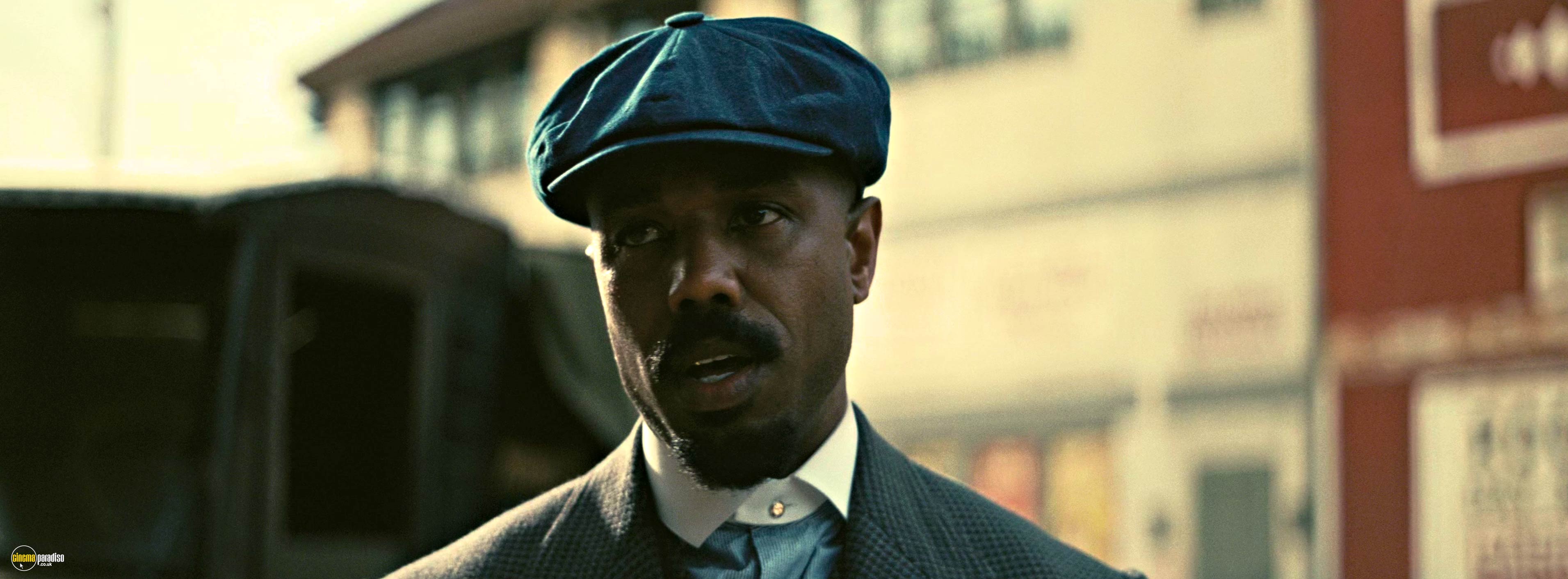
Jordan also joins the Black Best Actor Club, whose founding member was Sidney Poitier, who followed a nomination for The Defiant Ones with a win for Lilies of the Field (1963). Denzel Washington has since amassed seven nominations for Cry Freedom (1987), Malcolm X (1992), The Hurricane (1999), Training Day (2001), Flight (2012), Fences (2016), Roman J. Israel, Esq. (2017), and The Tragedy of Macbeth (2021), while Morgan Freeman has three for Driving Miss Daisy (1989), The Shawshank Redemption (1994), and Invictus (2009), as does Will Smith for Ali (2001), The Pursuit of Happyness (2006), and King Richard (2021). Also in the ranks are James Earl Jones for The Great White Hope (1970), Paul Whitfield for Sounder (1972), Dexter Gordon for Round Midnight (1986), Laurence Fishburne for What's Love Got to Do With It (1993), Jamie Foxx for Ray, Don Cheadle for Hotel Rwanda (both 2004), Terrence Howard for Hustle & Flow (2005), Forest Whitaker for The Last King of Scotland (2006), Chiwetel Ejiofor for 12 Years a Slave (2013), Daniel Kaluuya for Get Out (2017), Chadwick Boseman for Ma Rainey's Black Bottom (2020), Jeffrey Wright for American Fiction, and Colman Domingo for Rustin (both 2023) and Sing Sing (2024).
Having already taken the Golden Globe for his performance as Armando Solimões/Marcelo Alves and Fernando Solimões in The Secret Agent, Wagner Moura is a good outside bet to win the Oscar. Puerto Rican José Ferrer became the first Latino winner for Cyrano de Bergerac (1950) and he was also nominated for taking a dual role in Moulin Rouge (1952). Mexican Anthony Quinn was also nominated for Wild Is the Wind (1957) and Zorba the Greek (1964), while compatriot Demián Bichir was recognised for A Better Life (2011) after Mexican American Edward James Olmos had been nominated for Stand and Deliver (1988). Born in Philadelphia, the aforementioned Colman Domingo is an Afro-Latino actor of Belizean and Guatemalan descent. But Moura is the first Brazilian and the first South American to be nominated for Best Actor. The only other two Brazilians to feature in the acting categories are mother and daughter, with both Fernanda Montenegro for Central Station (1998) and Fernanda Torres for I'm Still Here (2024) being nominated for Best Actress. Could Moura make history for playing another fugitive (see above) and both a character with an assumed identity and his son in later life? Make your choice now and, if your luck holds, you could use part of your six months of free rentals to catch up on the Moura back catalogue, which includes Behind the Sun (2001), The Three Marias, The Man of the Year (both 2002), Carandiru (2003), Lower City (2005), The Elite Squad (2007), The Elite Squad: The Enemy Within (2010), The Man From the Future (2011), Father's Chair (2012), Elysium (2013), Futuro Beach, Trash, Rio, I Love You (all 2014), Narcos (2015-18), and Civil War (2024).
BEST ACTRESS
Thanks to Wagner Moura, Renate Reinsve and her co-stars Stellan Skarsgård and Inga Ibsdotter Lilleaas, the 98th Academy Awards are the first to have four non-English-language performances nominated in the same year. This comes half a century after Marie-Christine Barrault ( Cousin, Cousine ), Liv Ullmann (Face to Face), and Giancarlo Giannini (Seven Beauties) had set the record at three, which is the number of Norwegian speakers nominated for Sentimental Value, which can also add Elle Fanning to the 2026 roll of honour, although she speaks English throughout.
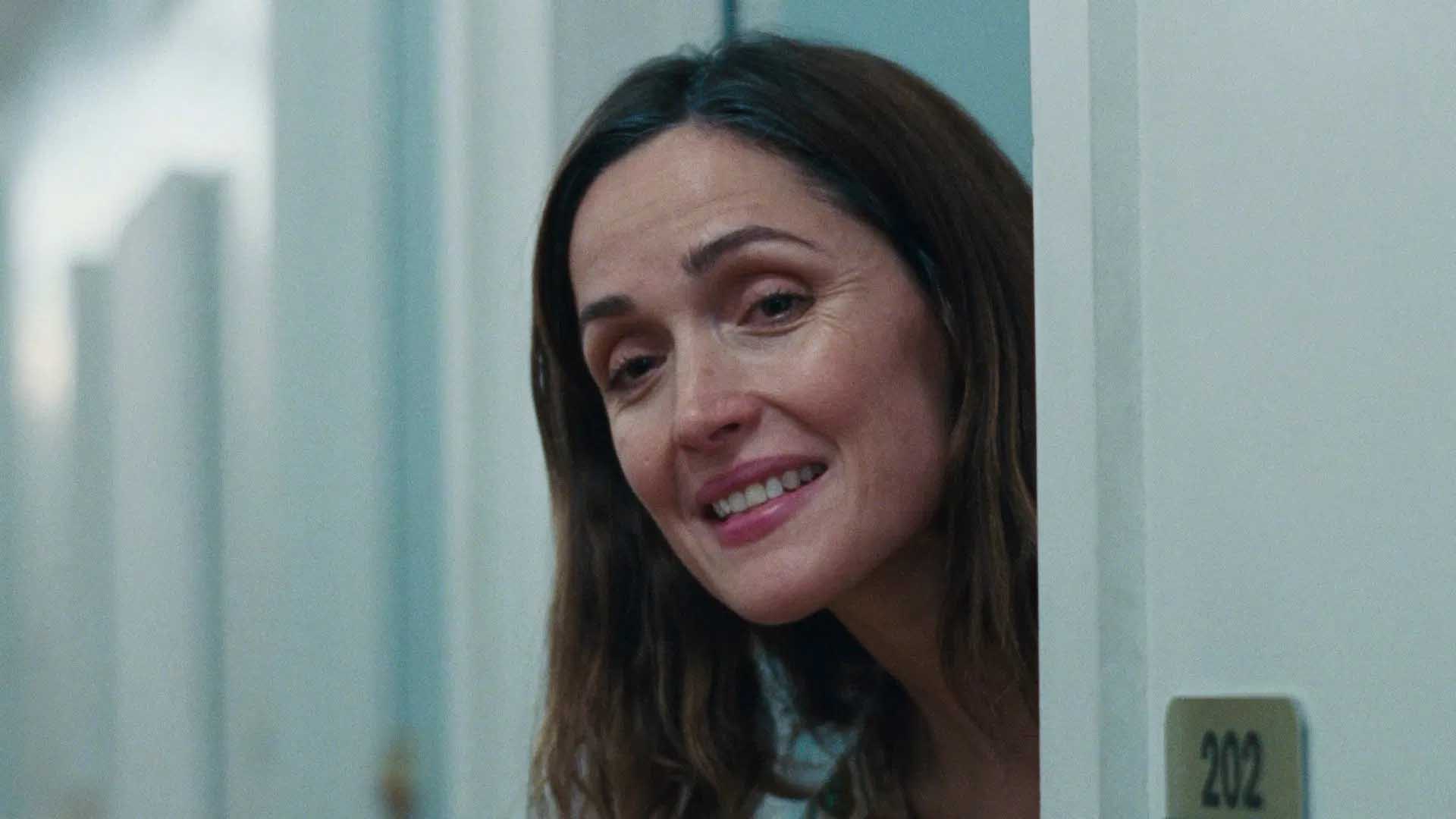
The surprise omission from the Best Actress category is Chase Infiniti, who had been nominated for a Golden Globe for her work in One Battle After Another. Wise heads also lamented the absence of Tessa Thompson, who also landed a Globe nod for Nia DaCosta's Hedda, and Jennifer Lawrence, who failed to add to her tally of four nominations after being overlooked for her well-received performance in Lynne Ramsay's Die My Love. Also missing was Cynthia Erivo, who was prevented from matching Cate Blanchett's unique achievement of being nominated for playing the same character in two different films ( Elizabeth, 1998 and Elizabeth: The Golden Age, 2007). Indeed, by being unable to follow up her nomination for essaying Elphaba Thropp in Wicked with a second nod in Wicked: For Good, Erivo was unable to prevent the first shut-out of British actresses since 2017, when the line-up was winner Emma Stone (La La Land), and Isabelle Huppert ( Elle ), Ruth Negga ( Loving ), Natalie Portman ( Jackie ), and Meryl Streep ( Florence Foster Jenkins ).
Ireland, however, is represented by Jessie Buckley, who follows up her Best Supporting tick for Daughter (2022) with her first Best Actress nomination for playing Agnes Hathaway in Hamnet. Despite the best efforts of Ruth Negga (Loving) and Saoirse Ronan ( Brooklyn, 2015; Lady Bird, 2017; and Little Women, 2019), no one from the Republic has ever won the Oscar in this category. However, Northern Ireland's Greer Garson was chosen for Mrs Miniver (1942) and it's a travesty that only Goodbye, Mr Chips (1939) is available to rent in the UK from her other nominated pictures, as Garson is one of the country's finest film actresses and her work in Blossoms in the Dust (1941), Madame Curie (1943), Mrs Parkington (1944), The Valley of Decision (1945), and Sunrise At Campobello (1960) deserves to be seen.
The RADA-trained 38 year-old from Killarney, County Kerry already has a Golden Globe and a BAFTA to her name and Buckley will be hoping to follow Gwyneth Paltrow, who won the Oscar as Viola de Lesseps in Shakespeare in Love. She is also the latest nominee to play the partner of a great writer, after Jane Fonda had played Lillian Hellman (a fine playwright in her own right), who lived with hard-boiled crime writer, Dashiell Hammett (Jason Robards, Jr.) in Fred Zinnemann's Julia (1977). Debra Winger had also essayed Joy Gresham opposite Anthony Hopkins's C.S. Lewis in Shadowlands (1993), while Miranda Richardson had played Vivienne Haigh-Wood. the first wife of poet T.S. Eliot (Willem Dafoe), in Tom & Viv (1994).
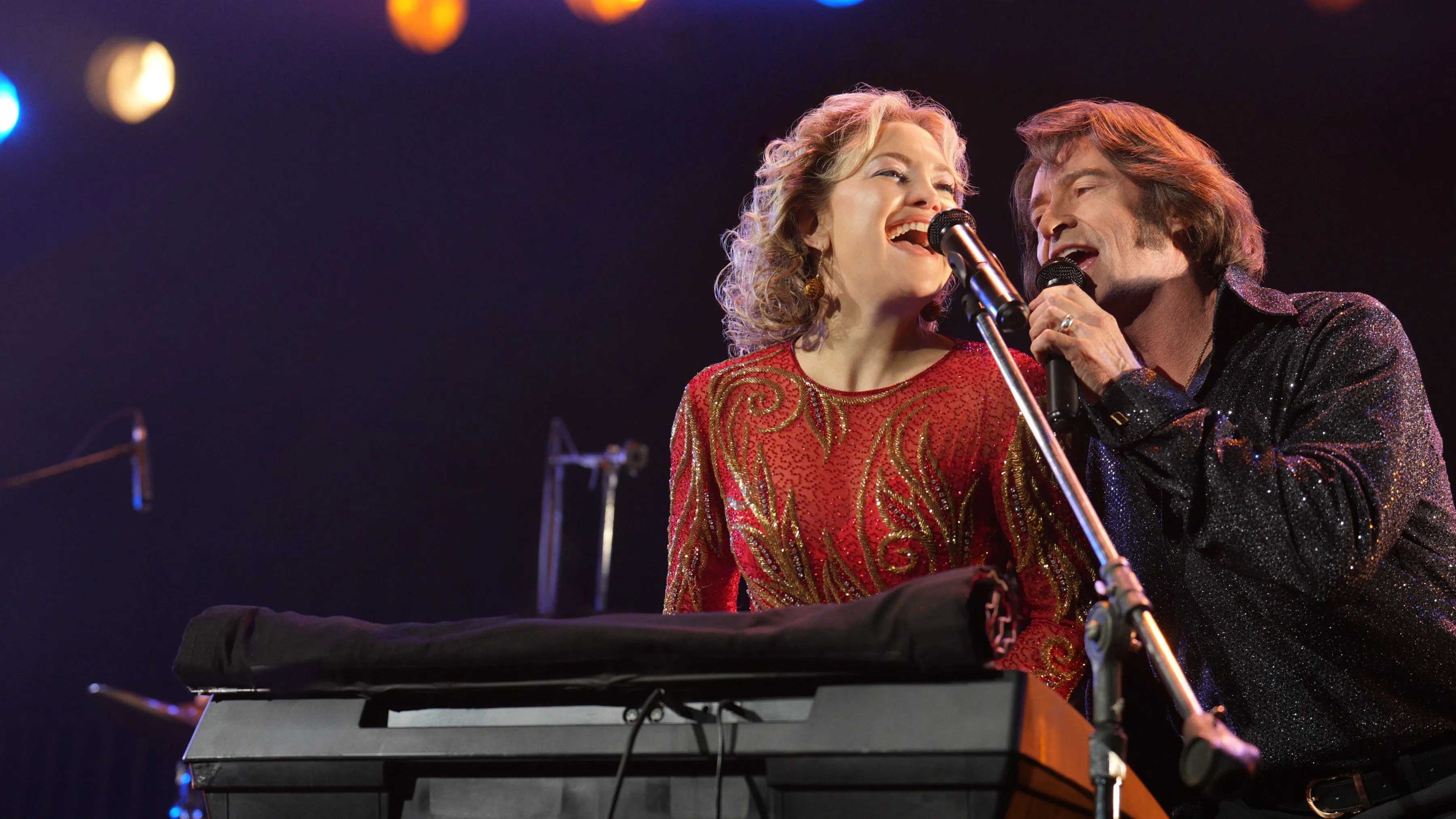
The wife of William Shakespeare also qualifies as a significant historical figure and, thus, Buckley joins a list that includes Corinne Griffith as Emma Hamilton in The Divine Lady (1929), Norma Shearer as Elizabeth Barrett in The Barretts of Wimpole Street (1934), Norma Shearer in the title role of Marie Antoinette (1938), Jennifer Jones as Bernadette Soubirous in The Song of Bernadette, Greer Garson as Marie in Madame Curie (both 1943), Ingrid Bergman in Joan of Arc (1948) and Anna Koreff in Anastasia (1956), Greer Garson as Eleanor Roosevelt in Sunrise At Campobello (1960), Katharine Hepburn as Eleanor of Aquitaine in The Lion in Winter (1968), Geneviève Bujold as Anne Boleyn in Anne of the Thousand Days (1969), Vanessa Redgrave in Mary, Queen of Scots, Janet Suzman as Empress Alexandra of Russia in Nicholas and Alexandra (both 1971), Judi Dench as Queen Victoria in Mrs Brown (1997), the aforementioned Cate Blanchett as Elizabeth I, Helen Mirren as Elizabeth II in The Queen (2006), Meryl Streep as Margaret Thathcer in The Iron Lady (2011), Natalie Portman as Jacqueline Kennedy in Jackie (2016), Cynthia Erivo as Harriet Tubman in Harriet (2019), and Kristen Stewart as Diana, Princess of Wales in Spencer (2021).
If Rose Byrne wins for playing Linda in Mary Bronstein's If I Had Legs I'd Kick You, she would become the third Australian to win Best Actress after Nicole Kidman for The Hours (2002) and Cate Blanchett for Blue Jasmine (2013). The Hawaiian-born Kidman also has nominations for Moulin Rouge! (2001), Rabbit Hole (2010), Lion (2016), and Being the Ricardos (2021), while Blanchett was recognised for Elizabeth (1998), Notes on a Scandal (2006), I'm Not There (2007), Elizabeth: The Golden Age (2007), Carol (2015), and Tár (2022). She also has the distinction of being the only person to win an Oscar (for Best Supporting Actress) for playing an Oscar winner (Katharine Hepburn) in The Aviator (2014). Other Best Actress nominees from Down Under include May Robson for Lady For a Day (1933), Judy Davis for A Passage to India (1984), and Naomi Watts for 21 Grams (2004). In addition to her BAFTA nomination, Byrne already has a Silver Bear at Berlin for her performance in a film that has been produced by Marty Supreme's Josh Safdie and Ronald Bronstein (the director's husband) and it's surprising that more hasn't been made of the potential Chalamet/Byrne double win.
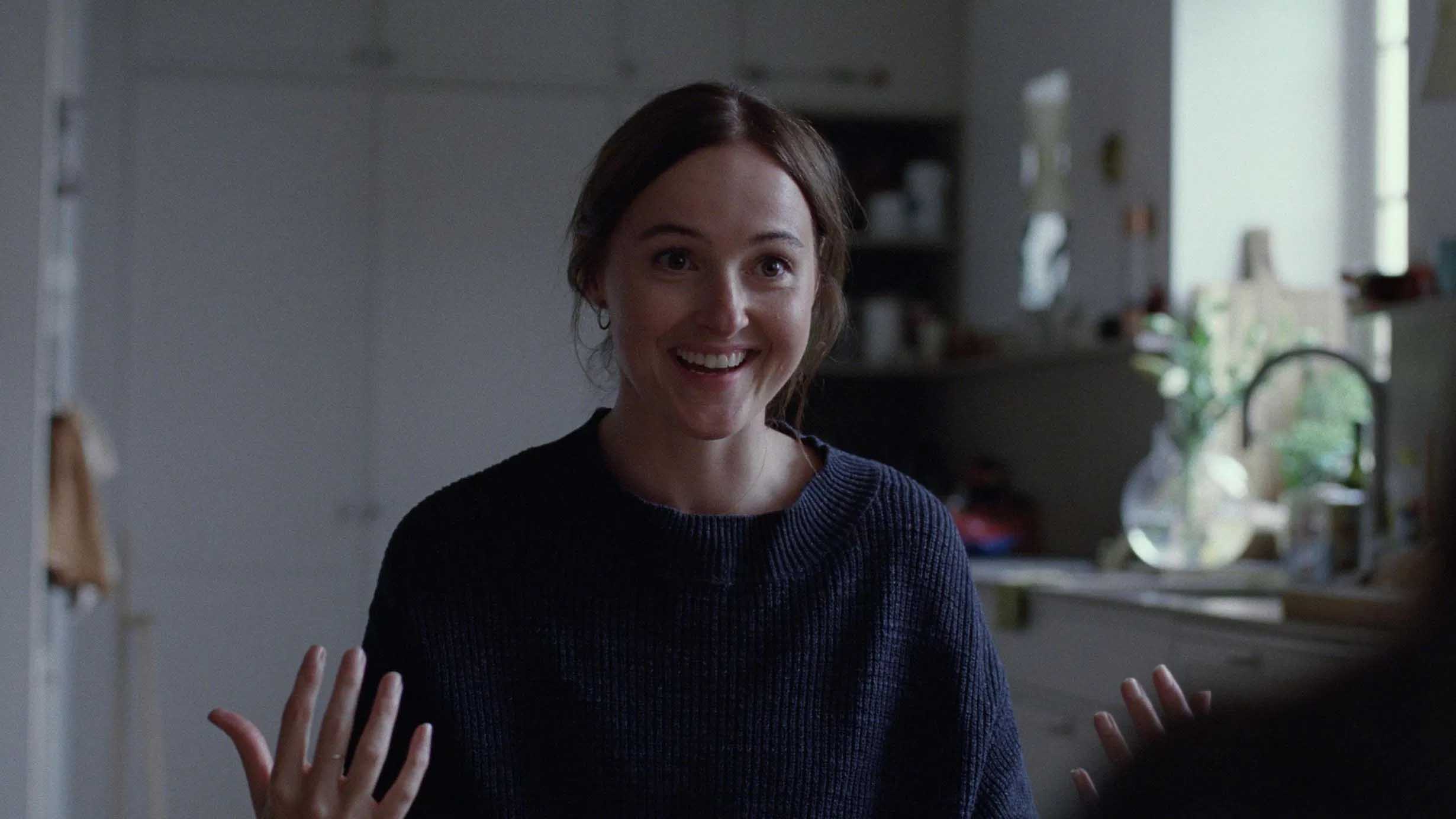
With her husband (Christian Slater) absent and her daughter suffering (off screen) from a mysterious ailment, Linda is forced to move to a motel after a hole opens up in her apartment. She works as a therapist and tries her best to help people who often don't want to help themselves. But she starts to fray because no one seems to want to support her. This intense drama puts Byrne in the company of a number of Oscar nominees who have played mothers in extremis, including Ruth Chatterton (Sarah and Son, 1930), Claudette Colbert (Since You Went Away, 1944), Joan Crawford ( Mildred Pierce, 1945), Irene Dunne ( I Remember Mama, 1948), Deborah Kerr (Edward, My Son, 1949), Katharine Hepburn ( Suddenly, Last Summer, 1959), Sophia Loren ( Two Women, 1961), Anne Bancroft (The Pumpkin Eater, 1964), Joanne Woodward (Summer Wishes, Winter Dreams, both 1973), Ellen Burstyn ( Alice Doesn't Live Here Anymore, 1975), Mary Tyler Moore ( Ordinary People, 1980), Meryl Streep ( Sophie's Choice, 1982), Shirley MacLaine (Terms of Endearment, 1983), Sally Field ( Places in the Heart, 1984), Meryl Streep ( A Cry in the Dark, 1988), Susan Sarandon ( Lorenzo's Oil, 1992), Holly Hunter ( The Piano, 1993), Brenda Blethyn ( Secrets & Lies, 1996), Sissy Spacek (In the Bedroom, 2001), Kate Winslet ( Little Children, 2006), Angelina Jolie ( Changeling, 2008), Sandra Bullock (The Blind Side, 2009), Judi Dench (Philomena, 2013), Brie Larson ( Room, 2015), Frances McDormand ( Three Billboards Outside Ebbing, Missouri, 2017), Cynthia Erivo (Harriet), Scarlett Johansson (Marriage Story, both 2019), Vanessa Kirby ( Pieces of a Woman, 2020), Olivia Colman (The Lost Daughter), and Penélope Cruz (Parallel Mothers, 2021).
Having been nominated for playing Claire Sardina in Craig Brewer's Song Sung Blue, Kate Hudson will hope to follow Goldie Hawn's win for Cactus Flower (1969) to become the first mother and daughter to win Best Actress. Judy Garland ( A Star Is Born, 1954) and Liza Minnelli ( Cabaret, 1972) also had one between them, but Fernanda Montenegro and Fernanda Torres each missed out (26 years apart) for Central Station and I'm Still Here. Hawn was also nominated for Best Actress in Private Benjamin (1980), while Hudson was up for Supporting Actress for Almost Famous (2000). Ingrid Bergman (with three wins) and Isabella Rossellini ( Conclave, 2024) and Janet Leigh ( Psycho, 1960) and Jamie Lee Curtis (Everything Everywhere All At Once, 2022) have also been down this route. But Diane Ladd and Laura Dern remain the only mother/daughter pair to receive acting nominations for the same film, with their Best Supporting and Best Actress nods for Rambling Rose (1991).
Hudson already has Golden Globe and BAFTA recognition for her work, but she is something of a long shot for a drama that was inspired by Greg Kohs's 2008 documentary, Song Sung Blue, about about Milwaukee marrieds, Mike (Hugh Jackman) and Claire Sardina, and their Neil Diamond tribute group, Lightning & Thunder.
Michael Imperioli co-stars as a Buddy Holly impersonator named Mark, while Mustafa Shakir plays a James Brown act called Sex Machine. Claire starts out doing Patsy Cline covers, which lets Hudson follow in the footsteps of Sissy Spacek, as she won the Oscar for playing Loretta Lynn in Coal Miner's Daughter (1980). Other nominated for playing singers include Bessie Love (The Broadway Melody, 1929), Marlene Dietrich ( Morocco, 1930), Irene Dunne ( Love Affair, 1939), Barbara Stanwyck ( Ball of Fire, 1941), Susan Hayward ( Smash-Up, the Story of a Woman, 1947; With a Song in My Heart, 1952; and I'll Cry Tomorrow, 1955), Judy Garland (A Star Is Born), Eleanor Parker (Interrupted Melody, 1955),
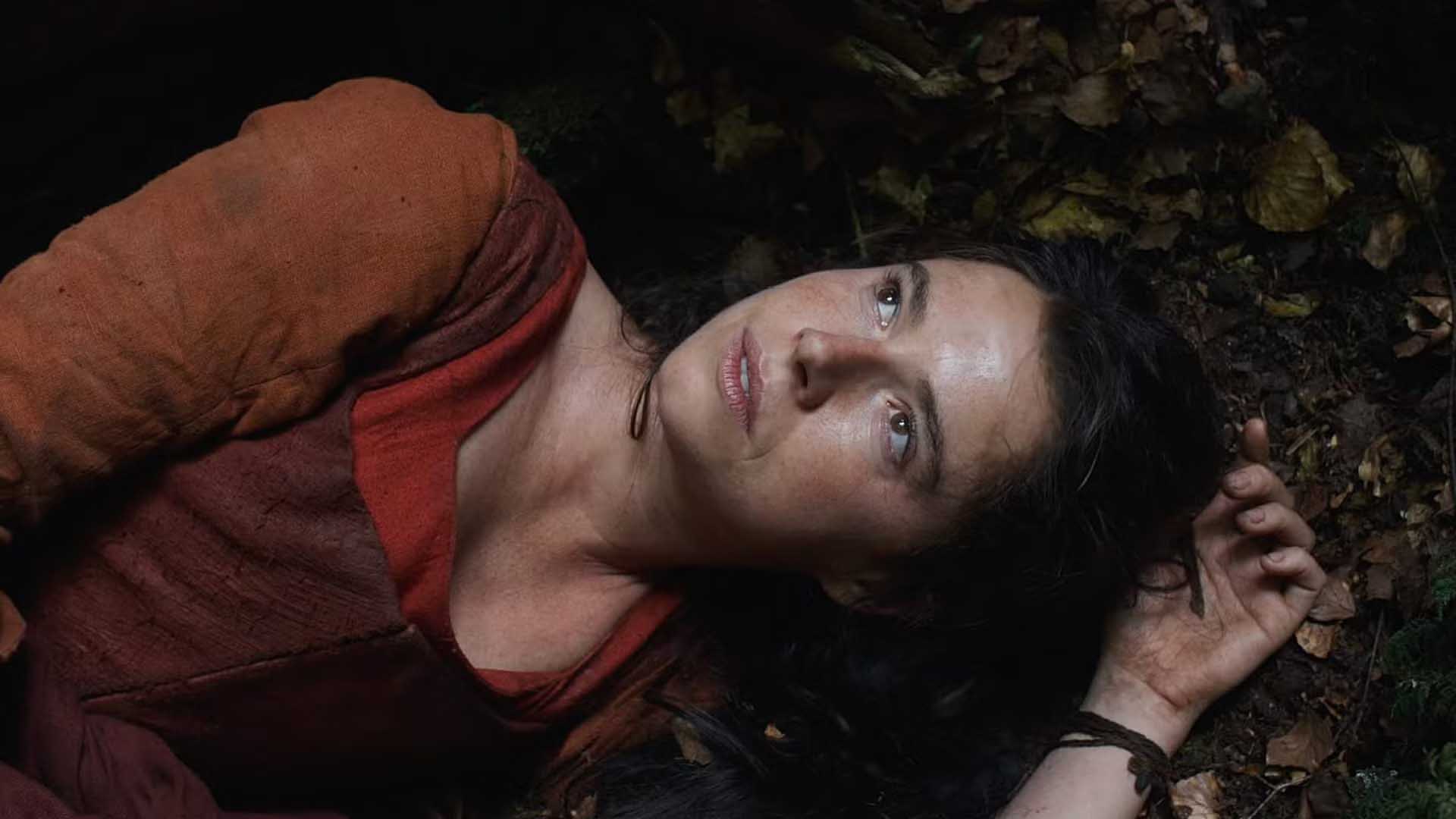
Julie Andrews ( The Sound of Music, 1965 and Victor/Victoria, 1982), Barbra Streisand ( Funny Girl, 1968), Liza Minnelli (Cabaret), Diana Ross (Lady Sings the Blues, both 1972), Bette Midler ( The Rose, 1979 and For the Boys, 1991), Jessica Lange ( Sweet Dreams, 1985), Michelle Pfeiffer ( The Fabulous Baker Boys, 1989), Angela Bassett (What's Love Got to Do With It, 1993), Reese Witherspoon (Walk the Line, 2005), Marion Cotillard ( La Vie en Rose, 2007), Meryl Streep (Florence Foster Jenkins, 2016), Lady Gaga (A Star Is Born, 2018), Renée Zellweger ( Judy, 2019), Viola Davis (Ma Rainey's Black Bottom), and Andra Day ( The United States vs Billie Holiday, both 2020).
Norway's Renate Reinsve is the second from her country - after Liv Ullmann (The Emigrants and Face to Face) - to be nominated for Best Actress for her turn as Nora Borg in Sentimental Value. Several other Scandinavians have been up for the award, most notably Greta Garbo ( Anna Christie, Romance, both 1930; Camille, 1937, and Ninotchka, 1939) and Ingrid Bergman (For Whom the Bell Tolls, 1943, Gaslight, 1944, The Bells of St. Mary's, 1945, Joan of Arc, 1948), Anastasia, 1956, and Autumn Sonata, 1978). Lest we forget, Ann-Margret was also nominated for Tommy (1975).
Having won the Best Actress prize at Cannes for Joachim Trier's The Worst Person in the World (2021), Reinsve is hoping to become only the third Best Actress winner for a subtitled role, after Sophia Loren for Two Women (1961) and Marion Cotillard for La Vie en Rose (2007). In all, 66 performers have been nominated for non-English performances, with a third going on to win. The other nominees in this category are Anna Magnani (The Rose Tattoo, 1955), Melina Mercouri ( Never on Sunday, 1960), Sophia Loren ( Marriage Italian Style, 1963), Ida Kaminska ( The Shop on the High Street, 1965), Anouk Aimée (Un homme et une femme, 1966), Isabelle Adjani ( The Story of Adèle H., 1975 and Camille Claudel, 1989), Marie-Christine Barrault (Cousin, cousine, 1976), Ingrid Bergman (Autumn Sonata, 1978), Catherine Deneuve ( Indochine, 1992), Fernanda Montenegr (Central Station, 1994), Catalina Sandino Moreno ( Maria Full of Grace, 2004), Penélope Cruz ( Volver, 2006 and Parallel Mothers, 2021), Emmanuelle Riva (Amour, 2012), Marion Cotillard ( Two Days, One Night, 2014), Isabelle Huppert (Elle, 2016), Yalitza Aparicio (Roma, 2018), Michelle Yeoh (Everything Everywhere All At Once, 2022), Sandra Hüller (Anatomy of a Fall, 2023), and Karla Sofía Gascón (Emilia Pérez, 2024).
As she plays an actress in Trier's dramedy, Reinsve also joins the ranks of Demi Moore ( The Substance, 2024), Carey Mulligan (Maestro), Ana de Armas (Blonde, 2022), Nicole Kidman (Being the Ricardos, 2021), Renée Zellweger (Judy), Lady Gaga (A Star Is Born), Emma Stone (La La Land), Michelle Williams (My Week With Marilyn), Marion Cotillard (La Vie en Rose), Annette Bening ( Being Julia, 2004), Gwyneth Paltrow (Shakespeare in Love, 1998), Mary McDonnell (Passion Fish, 1992), Meryl Streep ( Postcards From the Edge, 1990 and The French Lieutenant's Woman, 1981), Jessica Lange (Frances, 1982), Marsha Mason (Chapter Two, 1979), Diane Keaton ( Annie Hall, 1977), Barbra Streisand (Funny Girl, 1968), Bette Davis ( What Ever Happened to Baby Jane? and The Star, 1952), Geraldine Page (Sweet Bird of Youth, both 1962), Judy Garland (A Star Is Born), Bette Davis and Anne Baxter (both All About Eve ), Gloria Swanson ( Sunset Boulevard, all 1950), Janet Gaynor ( A Star Is Born, 1937), Luise Rainer ( The Great Ziegfeld, 1936), Katharine Hepburn ( Morning Glory, 1933), and Lynn Fontanne (The Guardsman, 1931).
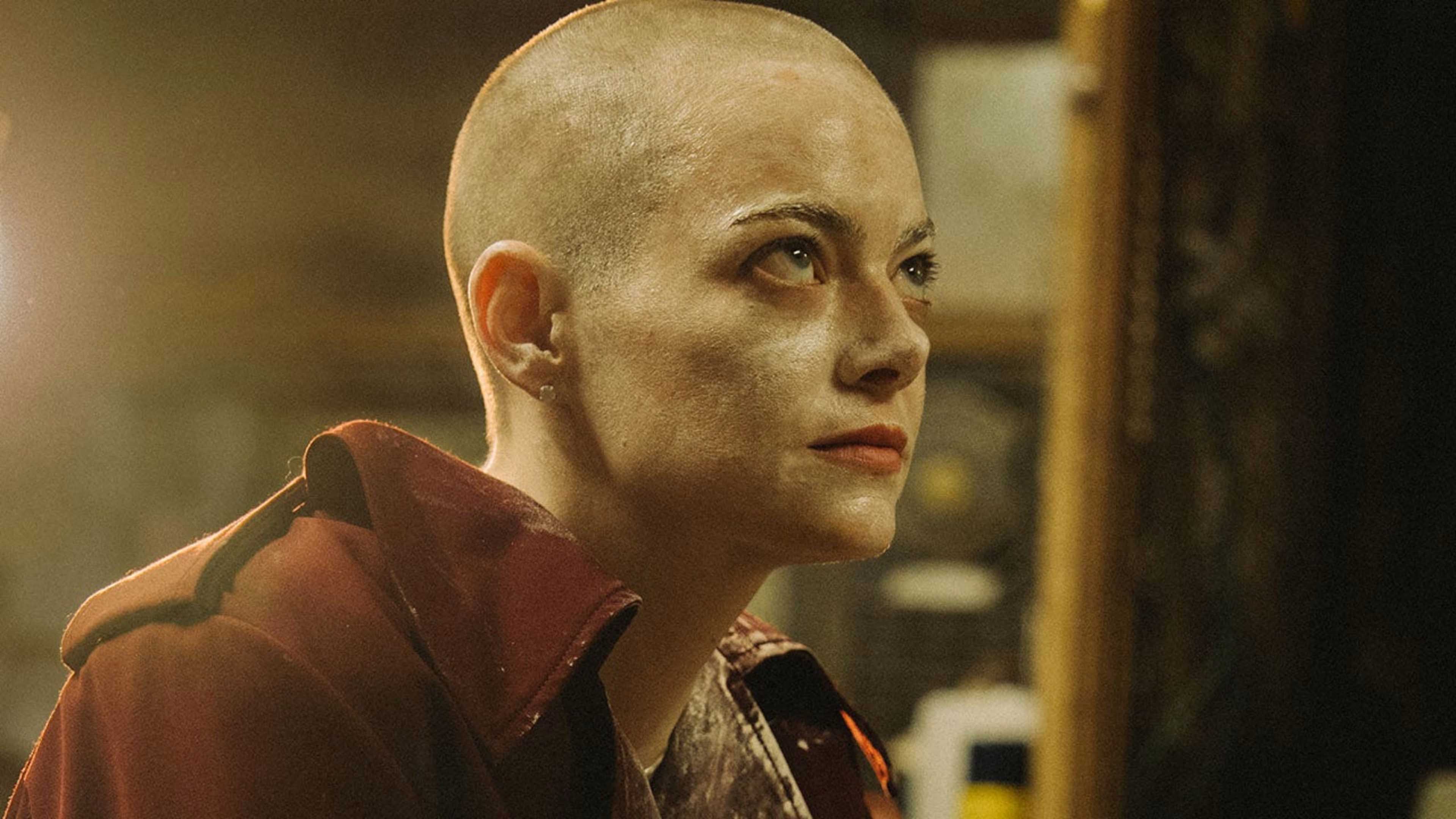
By being nominated as both producer and actress for Yorgos Lantimos's Bugonia, 37 year-old Emma Stone has become the second-youngest person in Oscar history to accrue seven nominations after Walt Disney. She might even have added an extra nod for Best Supporting Actress this year - to go with past ticks for Birdman or (The Unexpected Virtue of Ignorance) (2013) and The Favourite (2017) - as the critics enthused over her work alongside Joaquin Phoenix in Ari Aster's Eddington. She already has statuettes for La La Land and Poor Things (2023) and could tie with Frances McDormand for her three victories for Fargo (1996), Three Billboards Outside Ebbing, Missouri (2017), and Nomadland (2020). However, they would both still trail Katharine Hepburn, who converted a third of her 12 nominations in winning for Morning Glory (1933), Guess Who's Coming to Dinner (1967), The Lion in Winter (1968), and On Golden Pond (1981). Like Luise Rainer (The Great Ziegfeld and The Good Earth, 1937), Hepburn also had consecutive wins, while she and Barbra Streisand shared the spoils in the category's only tie in 1969.
Speaking of onlys. Stone's Michelle Fuller is the first alien to feature in this category. Indeed, the only previous citation for a science fiction film went to Sigourney Weaver for Aliens (1986), although some would point to a sci-fi element in Everything Everywhere All At Once, which earned the Oscar for Malaysia's Michelle Yeoh, and The Substance, which put Demi Moore back in the spotlight. Stone also plays a kidnap victim, which puts her on a par with Samantha Eggar ( The Collector, 1965) and Brie Larson ( Room, 2015), while Kim Stanley strove to kidnap a child in Séance on a Wet Afternoon (1964) and Jodie Foster sought to free an abduction victim in The Silence of the Lambs (1991). Weaver would shave her head for Alien 3 (1992), but one suspects such drastic depilating won't bring Stone victory. But one can only admire her commitment to her craft.
BEST SUPPORTING ACTOR
Despite having made the BAFTA shortlist, Paul Mescal has been denied the chance to become the first actor to be nominated for an Oscar for playing William Shakespeare. He misses out for Hamnet, along with the equally fancied Adam Sandler for Jay Kelly and Miles Caton for Sinners. Instead, we get two men named for the same film, which puts them in a coterie along with Claude Rains and Harry Carey in Mr Smith Goes to Washington (1940), Leo Genn and Peter Ustinov for Quo Vadis (1951), Brandon De Wilde and Jack Palance for Shane (1953), Lee J. Cobb, Karl Malden, and Rod Steiger for On the Waterfront (1954), Arthur Kennedy and Russ Tamblyn for Peyton Place (1957), Arthur O'Connell and George C. Scott for Anatomy of a Murder (1959), Jackie Gleason and George C. Scott for The Hustler (1961), Gene Hackman and Michael J. Pollard for Bonnie and Clyde (1967), Ben Johnson and Jeff Bridges for The Last Picture Show (1971), James Caan, Robert Duvall, and Al Pacino for The Godfather (1972), Robert De Niro, Michael D. Gazzo, and Lee Strasberg for The Godfather Part II (1974), Burgess Meredith and Burt Young for Rocky (1976), Jason Robards, Jr. and Maximilien Schell for Julia (1977), Timothy Hutton and Judd Hirsch for Ordinary People (1980), Jack Nicholson and John Lithgow for Terms of Endearment (1983), Tom Berenger and Willem Dafoe for Platoon (1986), Harvey Keitel and Ben Kingsley for Bugsy (1991), Sam Rockwell and Woody Harrelson for Three Billboards Outside Ebbing, Missouri (2017), Al Pacino and Joe Pesci for The Irishman (2019), Daniel Kaluuya and LaKeith Stanfield for Judas and the Black Messiah, Jesse Plemons and Kodi Smit-McPhee for The Power of the Dog (both 2021), and Brendan Gleeson and Barry Keoghan for The Banshees of Inisherin (2022).
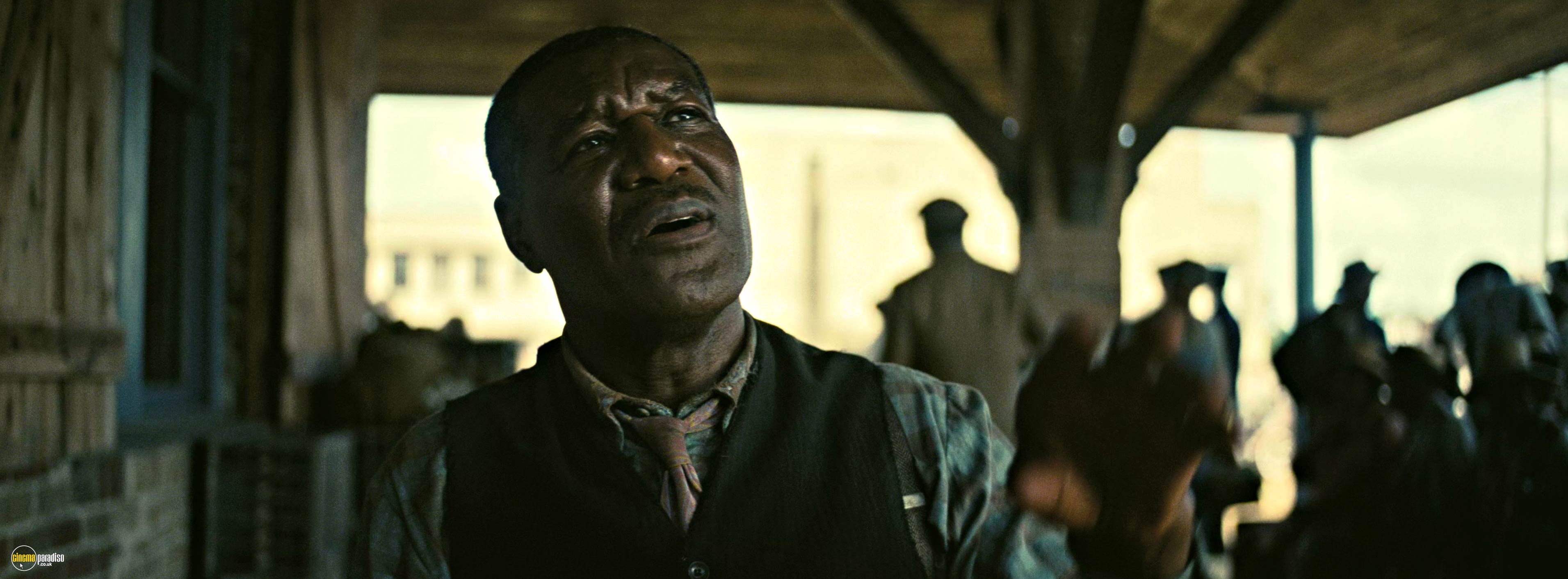
One of the 2026 pair is Benicio del Toro, who plays Sergio St Carlos in One Battle After Another. He is the first to be nominated for playing a sensei, but this is Del Toro's third nod, after he won for Traffic (2000) and was nominated for 21 Grams (2003). Sharing the berth with him on this occasion is Sean Penn, who takes the villainous role of Colonel Steven J. Lockjaw. Following on from his BAFTA win, this is Penn's sixth Oscar nomination, with the others coming in the Best Actor category, which he won for Mystic River and Milk, as well as being nominated for Dead Man Walking (1996), Sweet and Lowdown (2000), and I Am Sam (2002).
Penn is the latest to be recognised in this category for playing a military man after Akim Tamiroff in General Died At Dawn (1936), Joseph Schildkraut in The Life of Emile Zola (1937), Brian Donlevy in Beau Geste (1939), William Bendix in Wake Island (1942), Monty Woolley in Since You Went Away (1944), Robert Mitchum in The Story of G.I. Joe (1945), Harold D. Russell in The Best Years of Our Lives (1946), Dean Jagger in Twelve O'Clock High, James Whitmore in Battleground (both 1949), Frank Sinatra in From Here to Eternity, Robert Strauss in Stalag 17 (both 1953), Tom Tully in The Caine Mutiny (1954), Jack Lemmon in Mister Roberts (1955), Red Buttons in Sayonara, Vittorio De Sica in A Farewell to Arms, Sessue Hayakawa in The Bridge on the River Kwai (all 1957), Bobby Darin in Captain Newman, M.D. (1963), Christopher Walken in The Deer Hunter, Bruce Dern in Coming Home (both 1978), Robert Duvall in Apocalypse Now (1979), Lou Gossett, Jr. in An Officer and a Gentleman (1982), Charles Durning in To Be or Not to Be (1983), Adolph Caesar in A Soldier's Story (1984), Tom Berenger and Willem Dafoe in Platoon (1986), Denzel Washington in Glory (1989), Jack Nicholson in A Few Good Men (1992), Ralph Fiennes in Schindler's List (1993), Gary Sinise in Forrest Gump (1994), Christoph Waltz in Inglourious Basterds, Woody Harrelson in The Messenger (both 2009), and Brian Tyree Henry in Causeway (2022).
No one had previously been nominated for playing Mary Shelley's Creature. but Jacob Elordi has broken that particular Oscar duck with his brooding performance in Guillermo Del Toro's Frankenstein. He is only the fourth Best Supporting Actor contender to have been recognised for a horror film, following Jason Miller for Fr Damien Karras in The Exorcist (1973), Haley Joel Osment for Cole Sear in The Sixth Sense (1999), and Willem Dafoe for his splendidly eccentric Max Schreck in Shadow of the Vampire.

Australians have done reasonably well in this category since Geoffrey Rush became the first nominee for Shakespeare in Love (1998). Sadly, Heath Ledger won his award posthumously for The Dark Knight (2008). But Rush's second nod for The King's Speech (2010) has since been followed by citations for Kodi Smit-McPhee in The Power of the Dog (2021) and Guy Pearce in The Brutalist (2024). Can Elordi attain the wuthering heights of the Oscar podium? Place your vote now if you think he can.
Or perhaps you think Lewisham's Delroy Lindo is a better bet for his turn as bluesman Delta Slim in Sinners? Some feel the Academy failed Lindo for overlooking his work in Spike Lee's Da 5 Bloods (2020), but he is a surprise Oscar choice having missed out at the Golden Globes and the BAFTAs. Those of a musical bent have had mixed fortunes in the category down the years, with Mahershala Ali succeding for Green Book (2018) where Daniel Massey in Star! (1968), Laurence Fishburne in What's Love Got to Do With It (1993), Leslie Odom, Jr. in One Night in Miami… (2020), and Edward Norton in A Complete Unknown (2024) have all failed. They all played historical figures, so maybe Lindo can break new ground by winning for a fictional character.
The last Brit to be nominated for Best Supporting Actor was Daniel Kaluuya for Judas and the Black Messiah (2020) and he went home with the award. As did Donald Crisp for How Green Was My Valley (1940), Edmund Gwenn for Miracle on 34th Street (1947), George Sanders for All About Eve (1950), Hugh Griffith for Ben-Hur (1959), Peter Ustinov for Spartacus (1960) and Topkapi (1964), John Mills for Ryan's Daughter (1970), John Houseman for The Paper Chase (1973), John Gielgud for Arthur (1981), Michael Caine for Hannah and Her Sisters (1986) and The Cider House Rules (1999), Sean Connery for The Untouchables (1987), Jim Broadbent for Iris (2001), Christian Bale for The Fighter (2010), and Mark Rylance for Bridge of Spies (2015). The gallery of unlucky losers has contained some equally significant names since South African-born Basil Rathbone was recognised in the category's first year for Romeo and Juliet (1936) and again for If I Were King (1938). The others are H. B. Warner (Lost Horizon), Roland Young ( Topper, both 1937), Robert Morley (Marie Antoinette, 1938), Brian Aherne (Juarez), Claude Rains (Mr Smith Goes to Washington, both 1939), James Stephenson ( The Letter, 1940), Sydney Greenstreet ( The Maltese Falcon, 1941), Henry Travers (Mrs Miniver, 1942), Claude Rains (Casablanca, 1942; Mr Skeffington, 1944, and Notorious, 1946), Ralph Richardson ( The Heiress, 1949 and Greystoke: The Legend of Tarzan, Lord of the Apes, 1984), Edmund Gwenn (Mister 880), Leo Genn and Peter Ustinov ( Quo Vadis, all 1950), Victor McLaglen (The Quiet Man), Richard Burton ( My Cousin Rachel, both 1952), Terence Stamp (Billy Budd, 1962), Hugh Griffith (Tom Jones, 1963), John Gielgud (Becket), Stanley Holloway ( My Fair Lady, both 1964), Tom Courtenay ( Doctor Zhivago ), Frank Finlay ( Othello ), Ian Bannen ( The Flight of the Phoenix, all 1965), Robert Shaw (A Man For All Seasons), James Mason ( Georgy Girl, both 1966 and The Verdict, 1982), Jack Wild (Oliver!), Daniel Massey (Star!, both 1968), Anthony Quayle (Anne of the Thousand Days, 1969), Laurence Olivier ( Marathon Man, 1976), Peter Firth ( Equus ), Alec Guinness (Star Wars, both 1977 and Little Dorrit, 1988), John Hurt ( Midnight Express, 1978), Ian Holm (Chariots of Fire, 1981), Denholm Elliott ( A Room With a View, 1985), Ben Kingsley (Bugsy, 1991 and Sexy Beast, 2001), Jaye Davidson ( The Crying Game, 1992), Ralph Fiennes (Schindler's List), Pete Postlethwaite (In the Name of the Father, both 1993), Paul Scofield ( Quiz Show, 1994), Tim Roth ( Rob Roy, 1995), Anthony Hopkins ( Amistad, 1997 and The Two Popes, 2019), Jude Law (The Talented Mr Ripley, 1999), Albert Finney ( Erin Brockovich, 2000), Ian McKellen (The Lord of the Rings: The Fellowship of the Ring, 2001), Clive Owen ( Closer, 2004), Tom Wilkinson ( Michael Clayton, 2007), Kenneth Branagh (My Week With Marilyn, 2011), Christian Bale (The Big Short), Tom Hardy (The Revenant, both 2015), Dev Patel (Lion, 2016), Richard E. Grant ( Can You Ever Forgive Me?, 2018), and Sacha Baron Cohen (The Trial of the Chicago 7, 2020).

At the age of 74, Stellan Skarsgård has made Oscar history by becoming the first man to be nominated for Best Supporting Actor for a film not in the English language. This means that a subtitled picture has finally been recognised in each of the Academy's four acting categories. The fact it has taken nine decades is somewhat startling, but Skarsgård now finds himself alongside Melina Mercouri (Never on Sunday, 1960), Marcello Mastroianni (Divorce Italian Style, 1961), and Valentina Cortese (Day For Night, 1973) in the breakthrough ranks.
Ironically, his performance as Gustav Borg in Sentimental Value means he is only the second Swede to feature in the category, although Max von Sydow spoke English in being nominated for Extremely Loud & Incredibly Close (2012). He is also the second contender to have played a film director after Kenneth Branagh essayed Laurence Olivier making The Prince and the Showgirl (1957) in My Week With Marilyn.
Del Toro and Penn's inclusion means there are two overlaps with Leonardo DiCaprio's Best Actor nod for One Battle After Another. If either combination is announced, they will become just the sixth co-stars to win the least predictable of the acting categories after Bing Crosby and Barry Fitzgerald for Going My Way (1944), Frederic March and Harold Russell for The Best Years of Our Lives (1945), Charlton Heston and Hugh Griffith for Ben-Hur (1959), Sean Penn and Tim Robbins for Mystic River (2003), Matthew McConaughey and Jared Leto for Dallas Buyers Club (2013), and Cillian Murphy and Robert Downey, Jr. for Oppenheimer (2023). Last year, though, Timothée Chalamet and Edward Norton were nominated for A Complete Unknown, alongside Adrien Brody and Guy Pearce for The Brutalist, Sebastian Stan and Jeremy Strong for The Apprentice, and Colman Domingo and Clarence Maclin for Sing Sing (all 2024). Yet there was no doubling up. Could it happen in 2026?
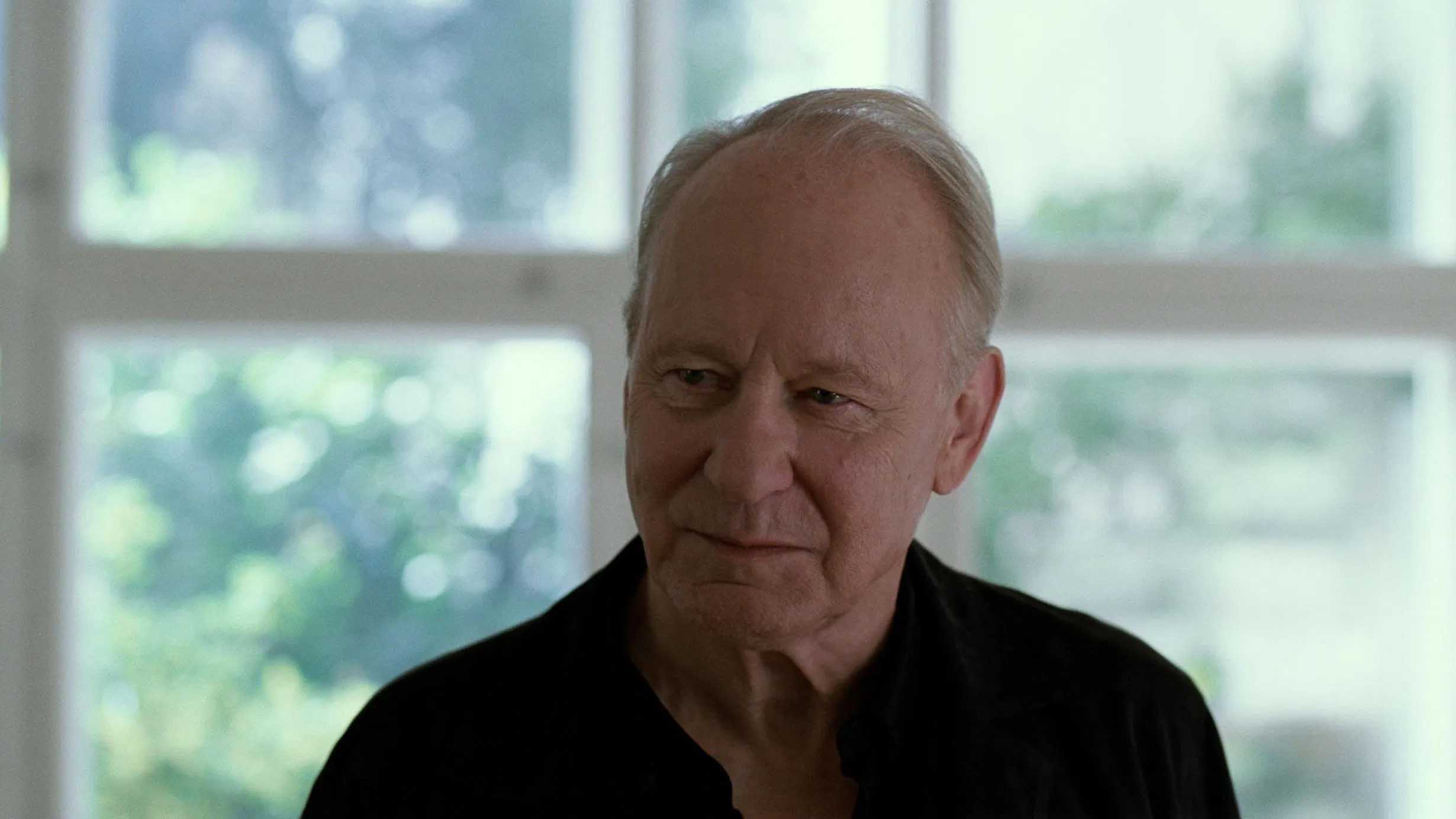
And how do you rate the chances of Skarsgård and Renate Reinsve pulling off a Best Supporting Actor and Best Actress coup? This is also a rare occurrence, with the previous twinner-uppers being Vivien Leigh and Karl Malden for A Streetcar Named Desire (1951), Patricia Neal and Melvyn Douglas for Hud (1963), Liza Minnelli and Joel Grey for Cabaret (1972), Shirley MacLaine and Jack Nicholson for Terms of Endearment (1983), Hilary Swank and Morgan Freeman for Million Dollar Baby (2004), Frances McDormand and Sam Rockwell for Three Billboards Outside Ebbing, Missouri) (2017), and Michelle Yeoh and Ke Huy Quan for Everything Everywhere All At Once (2022). Should they prevail, Reinsve and Skarsgård would be the first to take Best Actress and Best Supporting Actor for performances in a foreign-language film.
BEST SUPPORTING ACTRESS
Despite landing a BAFTA nomination, there was no room at the Oscars for Marty Supreme's Odessa A'zion or for previous Best Actress winner, Gwyneth Paltrow. Germany's Nina Hoss can also count herself unfortunate to have been overlooked for Hedda. But one thing awards watchers will know is that it's not always the calibre of a performance that counts, but the weight the distributors put behind a contender and the momentum that they can build up in the run up to the big night.
This is the first time in the 98-year history of the Academy Awards that a foreign-language film has made it into all four of the acting categories. Unusually, in the case of the Norwegian drama, Sentimental Value, one of its two citations for Best Supporting Actress is for a performance delivered entirely in English. This means that Joachim Trier's picture has become the first ever to be nominated in two different tongues in the same category.
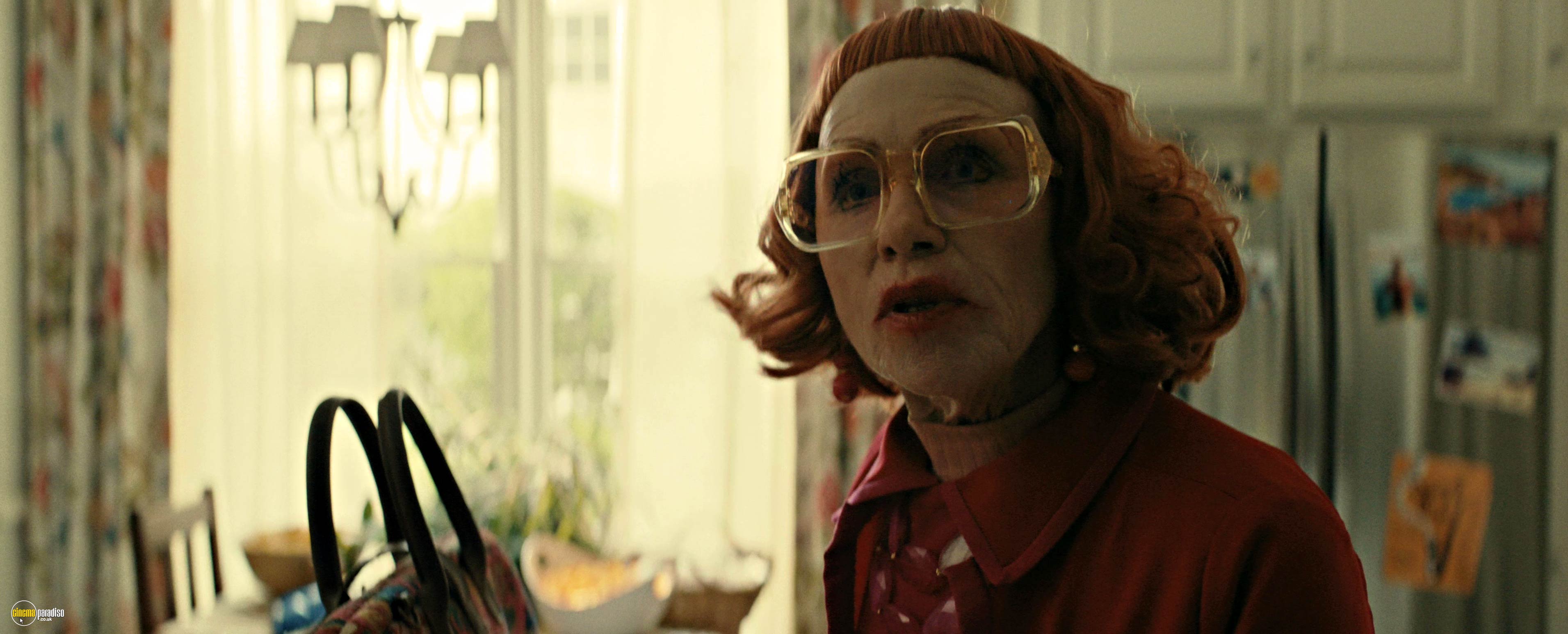
The actresses in question are Elle Fanning and Inga Ibsdotter Lilleaas, who respectively play American actress Rachel Kemp and Norewegian historian and mother, Agnes Borg Pettersen. Several nominations have gone to actress roles over the years, starting with Andrea Leeds for Stage Door (1937). Maggie Smith and Cate Blanchett respectively won for California Suite (1978) and The Aviator (2004) for playing an actress going to the Oscars and an Oscar-winning actress. Jessica Lange also prevailed, as a TV star in Tootsie (1982), which also earned a nomination for Teri Garr as a drama student, while Dianne Wiest won the first of her two Oscars for Best Supporting Actress as a struggling actress in Hannah and Her Sisters (1986). Woody Allen also wrote her scene-stealing role as a fading stage star in Bullets Over Broadway (1994). Missing out on their glory moment were Jean Hagen for Singin' in the Rain (1952), Valentina Cortese for Day For Night (1973), Elizabeth McGovern for Ragtime (1981), Julianne Moore for Boogie Nights (1997), Bérénice Bejo for The Artist (2011), and Amanda Seyfried for Mank (2020).
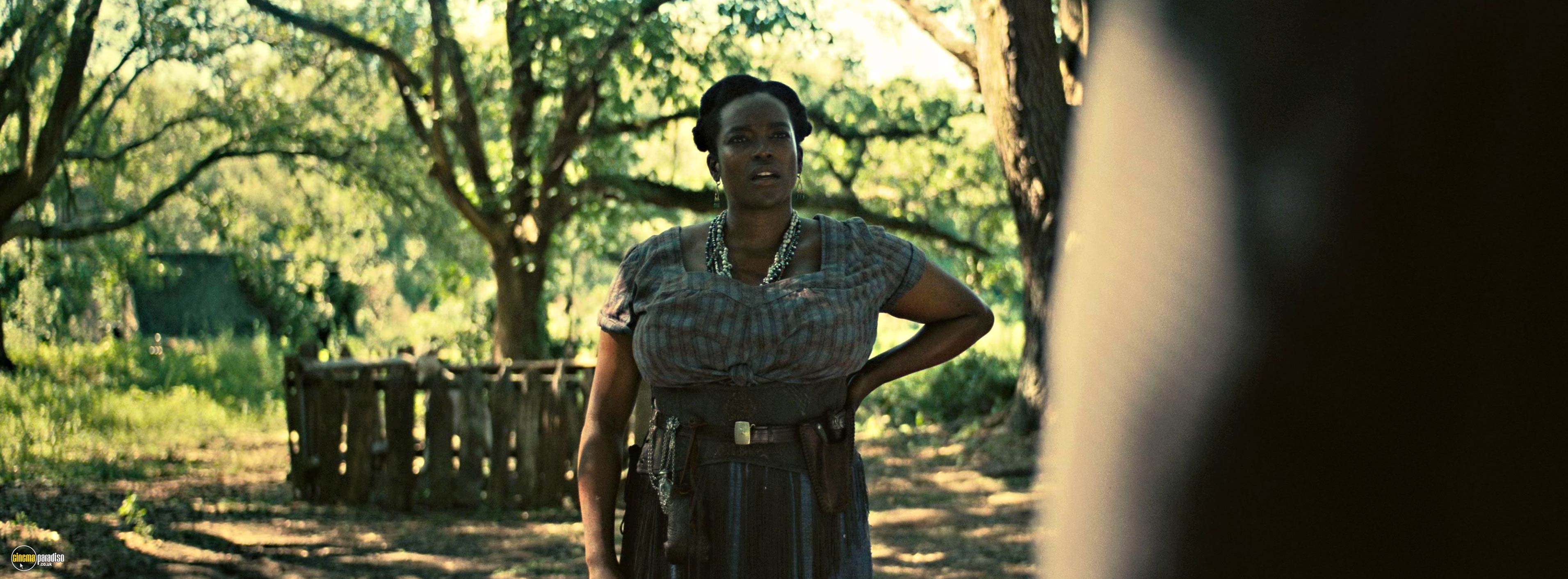
Since Cortese broke the mould in 1974, there have been a number of Best Supporting nominees who have spoken some if not all of their lines in a language other than English. Among them are Shohreh Aghdashloo for The House of Sand and Fog (2003), Adriana Barraza and Rinko Kikuchi for Babel (2006), Penélope Cruz for Vicky Cristina Barcelona (2008), Barkhad Abdi for Captain Phillips (2013), Marina de Tavira for Roma (2018), Youn Yuh-jung for Minari (2020), and Zoe Saldaña for Emilia Pérez (2024).
You'll have to cast your mind all the way back to August to recall Amy Madigan playing a witch in Zach Creggar's twisting saga, Weapons, and this places her in choice company. A relative of a schoolboy (Cary Christopher) from Maybrook, Pennylvania, Gladys uses spells to coerce people like principal Marcus Miller (Benedict Wong) into doing her murderous bidding. However, Alex eventually realises that his elderly aunt has control of his parents and has a sinister fate in mind for his classmates.
Oscar winner Ruth Gordon was certainly capable of manipulating people to her will in Rosemary's Baby (1968). But, if you consider Julie Andrews's Mary Poppins to be enchanting rather than bewitching, Meryl Streep was the first to be nominated in any category for playing a witch in Into the Woods (2014). Subsequently, only Ariana Grande's Galinda 'Glinda' Upland from Wicked (2024) has been nominated and many have cursed the fact she missed out on a repeat nod. Her loss was Madigan's gain, however, and she now has the chance to go one better than husband Ed Harris, who has been Best Supporting nominated for Apollo 13 (1995), The Truman Show (1998), and The Hours (2002). She had been up before, for Twice in a Lifetime (1985), and the 40-year gap between nominations is a new record for any actress after 39 years had elapsed between Helen Hayes's Oscar-yielding nods for The Sin of Madelon Claudet (1931) and Airport (1970).
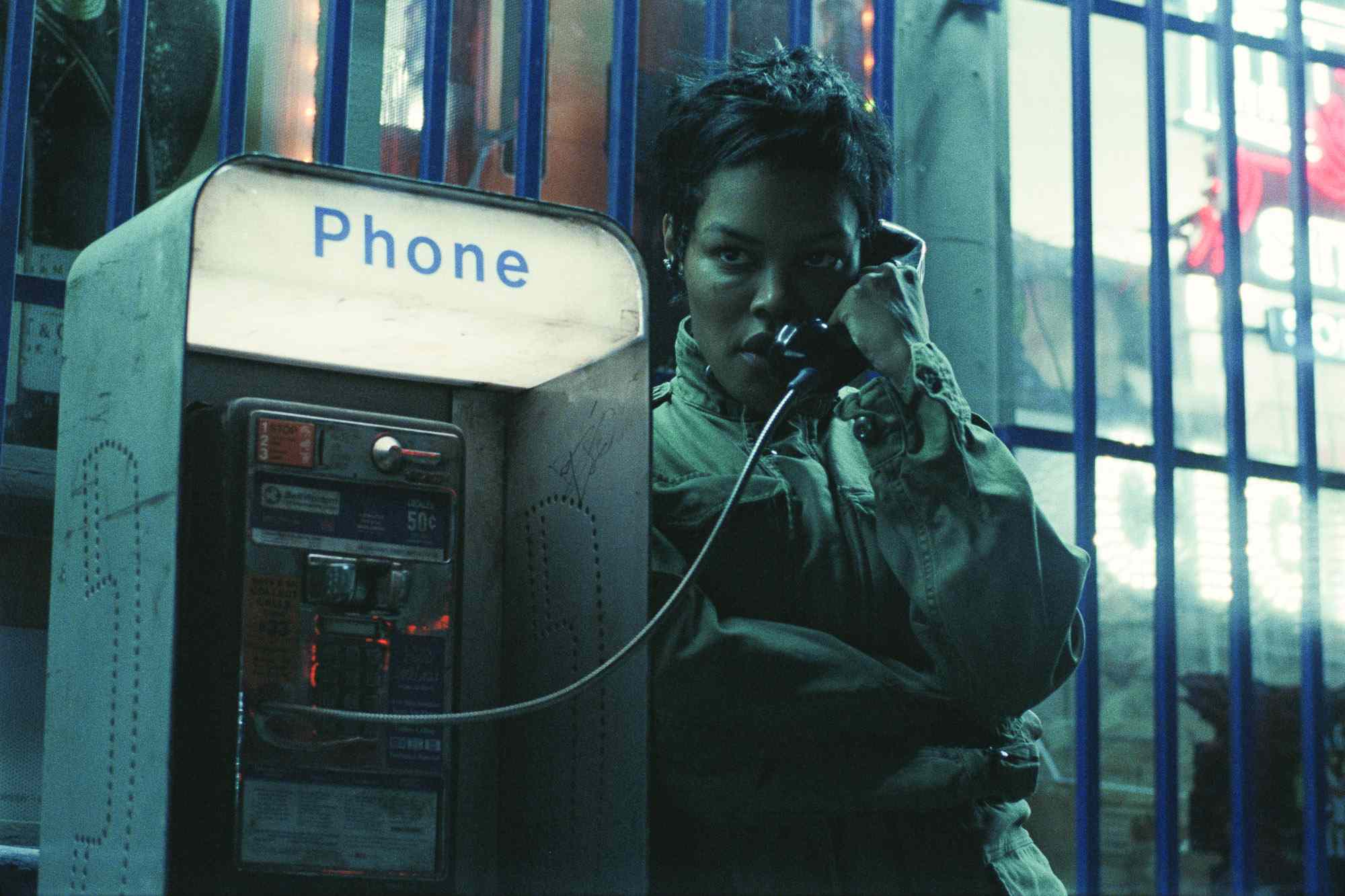
Only the second Brit to have made the acting lists this year, Nigerian-born, Manchester-raised, and RADA-trained Wunmi Mosaku is a first-time nominee for the work as Annie the Hoodoo practitioner in Sinners that has already earned her a BAFTA. We have already looked at hex casters, so we'll focus on UK winners in this category. It took 22 years and 14 nominations before Wendy Hiller won for Separate Tables (1958), although she was quickly followed by Margaret Rutherford for The V.I.P.s (1963). After Vanessa Redgrave and Maggie Smith had claimed back-to-back victories for Julia (1977) and California Suite (1978), Peggy Ashcroft's win for A Passage to India (1984) sat in glorious isolation amidst 13 more hard luck stories before Judi Dench prevailed for a few minutes' work in Shakespeare in Love (1998). Subsequently, Catherine Zeta-Jones (Chicago, 2002), Rachel Weisz ( The Constant Gardener, 2006), and Tilda Swinton (Michael Clayton, 2007) have found voter favour. But 13 further contenders have been left empty handed and Mosaku is going to have an uphill battle to become the first Black British winner after Marianne Jean-Baptiste (Secrets & Lies, 1996), Sophie Okonedo (Hotel Rwanda, 2004) and Naomie Harris (Moonlight, 2016) had all fallen short.
Mosaku and Delroy Lindo spared Britain the ignominy of having no acting nominees for the first time since 1986 (which was the year the former was born). However, Teyana Taylor is unique in being the sole US representative in a single year in an American film in the entire history of the Best Supporting category. Compatriot Elle Fanning is also in the running, but she appeared in a Norwegian film. If she wins for her display as Perfidia Beverly Hills in One Battle After Another (and she already has the Golden Globe), Taylor will become the tenth African American winner of the Oscar after Hattie McDaniel ( Gone With the Wind, 1939), Whoopi Goldberg ( Ghost, 1990), Jennifer Hudson ( Dreamgirls, 2006), Mo'Nique (Precious, 2009), Octavia Spencer ( The Help, 2011), Viola Davis (Fences, 2016), Regina King ( If Beale Street Could Talk, 2018), Ariana DeBose ( West Side Story, 2021), and Da'Vine Joy Randolph ( The Holdovers, 2023).
Or, will Taylor become part of the Not Quite Club alongside Ethel Waters (Pinky, 1949), Juanita Moore ( Imitation of Life, 1959), Beah Richards (Guess Who's Coming to Dinner), Carol Channing ( Thoroughly Modern Millie, both 1967), Alfre Woodard (Cross Creek, 1983), Margaret Avery and Oprah Winfrey (both The Color Purple, 1985), Queen Latifah (Chicago, 2002), Ruby Dee ( American Gangster, 2007), Viola Davis (Doubt), Taraji P. Henson (The Curious Case of Benjamin Button, both 2008), Octavia Spencer ( Hidden Figures, 2016 and The Shape of Water, 2017), Mary J. Blige (Mudbound, 2017), Aunjanue Ellis (King Richard, 2021), Angela Bassett (Black Panther: Wakanda Forever, 2023), and Danielle Brooks ( The Color Purple, 2023).
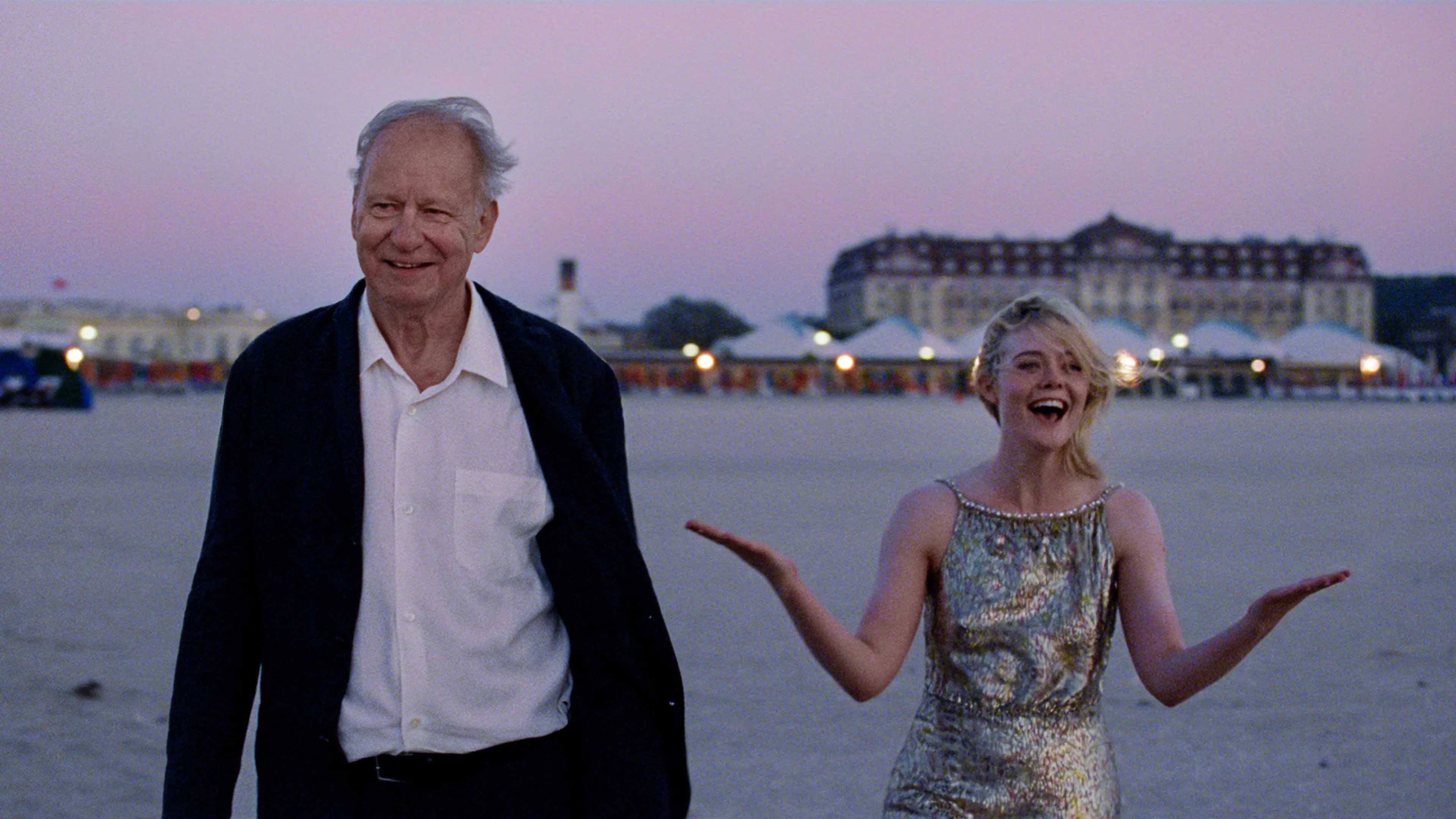
While Taylor might be on her lonesome within the category, she is the latest Best Supporting Actress nominee to have shared an Oscar nod with a Best Actor co-star. Only a handful of pictures have pulled off the double, however, since Broderick Crawford and Mercedes McCambridge surprisingly emerged triumphant for All the King's Men (1949). Marlon Brando and Eva Marie Saint followed suit in On the Waterfront (1954). Since when, only David Niven and Wendy Hiller (Separate Tables, 1958), Burt Lancaster and Shirley Jones ( Elmer Gantry, 1960), Peter Finch and Beatrice Straight (Network, 1976), Dustin Hoffman and Meryl Streep (Kramer vs Kramer, 1979), and Daniel Day-Lewis and Brenda Fricker (My Left Foot, 1989) have matched up. This means the feat has yet to be achieved this century. Could One Battle After Another, Sinners, or Sentimental Value break the hoodoo? Indeed, the Norwegian drama has a chance to equal the record of wins in three categories held by A Streetcar Named Desire (1951), Network (1976), and Everything Everywhere All At Once (2022), as no film has yet to sweep the Oscar acting board.
The same three features also have hook-ups across the Best Supporting divide. Can anyone emulate Karl Malden and Kim Hunter (A Streetcar Named Desire), Frank Sinatra and Donna Reed (From Here to Eternity, 1953), Red Buttons and Miyoshi Umeki (Sayonara, 1957), George Chakiris and Rita Moreno (West Side Story, 1961), Ben Johnson and Cloris Leachman (The Last Picture Show, 1971), Jason Robards, Jr. and Vanessa Redgrave (Julia, 1977), Michael Caine and Dianne Wiest (Hannah and Her Sisters, 1986), Christian Bale and Melissa Leo (The Fighter, 2010), and Ke Huy Quan and Jamie Lee Curtis (Everything Everywhere All At Once) ?
The categories with the most dual wins, however, is Best Actress and Best Supporting Actress and Renate Reinsve has a chance of matching up with either Elle Fanning or fellow Norwegian, Inga Ibsdotter Lilleaas. If they do work the oracle (with one pair set to become the first to do so not in the English language), they will sit alongside the following in the history books: Bette Davis and Fay Bainter for Jezebel (1938), Vivien Leigh and Hattie McDaniel for Gone With the Wind (1939), Greer Garson and Teresa Wright for Mrs Miniver (1942), Vivien Leigh and Kim Hunter for A Streetcar Named Desire (1951), Anne Bancroft and Patty Duke for The Miracle Worker (1961), Elizabeth Taylor and Sandy Dennis for Who's Afraid of Virginia Woolf? (1966), Faye Dunaway and Beatrice Straight for Network (1976), Cher and Olympia Dukakis for Moonstruck (1987), Holly Hunter and Anna Paquin for The Piano (1993), Gwyneth Paltrow and Judi Dench for Shakespeare in Love (1998), and Michelle Yeoh and Jamie Lee Curtis for Everything Everywhere All At Once (2022) - which is the only film to win three acting Oscars, as well as those for Best Picture and Best Director. How sensational would it be for a film from Norway to match that achievement?
Will Oscar follow BAFTA or go its own way? It often does, but where do you think the votes will go and which names will be drawn out of the famous envelopes on 15 March? Make your predictions now and start planning what you might order if you win six months of free discs from Cinema Paradiso!
TERMS AND CONDITIONS
That concludes our round-up of the major categories on the Oscar ballot. In all, 35 features and 15 shorts have been nominated across the categories. But you're on your own for the other 18!
To take part in this competition, all you have to do is tell us who you think will win each category at the 98th Academy Awards.
Whoever correctly predicts the highest number of winners will receive SIX MONTHS of free rentals from CinemaParadiso.co.uk.
In the result of a tie, the top predictors will be entered in a draw to find ONE lucky winner.
The competition will close at 12:00 noon on Sunday 15 March 2026 and the winner will be announced on Monday 16 March 2026.
One entry per customer and everyone with a Cinema Paradiso account is welcome to take part. Good luck!
Mentioned films