Nuremberg (2025)
3.6 of 5 from 65 ratings
2h 28min
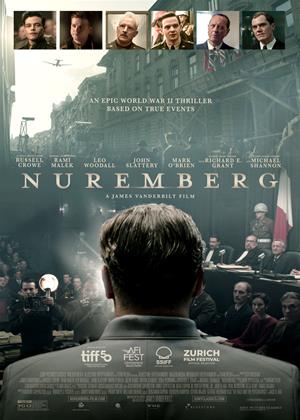
There’s something a bit off-kilter about this one — a film about one of the grimmest chapters in history that somehow ends up feeling like a very glossy courtroom drama. Nuremberg is easy enough to sit through, maybe a little too easy, because the polish keeps you at a distance. You sense it enjoying the show more than the stakes.
Malek and Crowe spend most of the film circling each other in what’s meant to be psychological fencing. Crowe mixes swagger with menace, while Malek’s psychiatrist feels too tidy, trimmed down to a point instead of allowed to unravel. Their scenes should flare; they mostly simmer.
The trial sequences move briskly, but they skim the surface. When the real camp footage appears, it hits hard — and makes everything around it feel even more staged. It never quite digs in.
In the end, it’s a sleek retelling with a strong cast, but it never finds the messy, human truth underneath. Watchable, sure — just not as raw as the story deserves
Ultimately this is a disappointing film that juggles the facts with often ridiculous side stories that effectively undermine this story. The biggest issue here is the performance of Rami Malek, An actor who always seems to play everything the same way and here he's faintly ridiculous and almost cartoonish, with the script attempting to make his character a moral hero with silly side plots. He plays Douglas Kelley, a US Army psychiatrist who is drafted in to interview the high ranking Nazis captured at the end of the Second World War and to nominally assess their ability to stand trial but really to discover what defence they may put forward at what will be the biggest trial of the times. The film focuses on his relationship with Hermann Göring played deliciously by Russell Crowe. Göring is a clever manipulative character who uses Kelley to plan his strategy to outfox the prosecutors. However the film drifts off into a plot where Kelley disobeys orders and seeks out Göring's wife and passes letters between them as he begins to feel they have developed a friendship. A friendship he is forced to betray. The film plays fast and loose with the actual events and it's very focused on American attitudes and assumptions. This is a shame as it lets the story, a potentially much more interesting one, slide. History shows Göring committed suicide before execution and this is portrayed in the film as a cause of huge rage to his American captors who feel they've been robbed of the chance to hang him. But in some unpleasant revenge of the film maker the film can't help but show the deeply nasty execution of another prisoner, a scene that is entirely gratuitous and unnecessary. Equally the film's coda gives Kelley a speech that is blatantly designed to send a warning to modern Trumpian America. All this weakens the film and makes it one that is disappointing. There is the inevitable focus on the Holocaust with some unpleasant real footage and in this the film omits other issues that were directed at the Nazis on trial. Crowe gives his role everything and is strangely very good casting. Michael Shannon also excels as the lead American prosecutor aided by Richard E. Grant as his British deputy. Overall a film that doesn't fully deliver and one that is spoilt by Malek's twitchy, over played performance.
