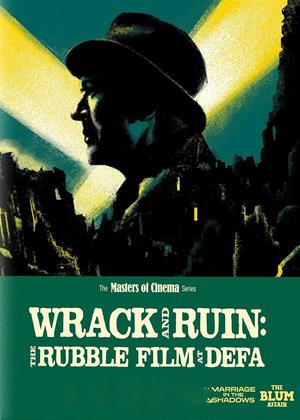
Rent Marriage in the Shadows / The Blum Affair (1948)
3.7 of 5 from 47 ratings
3h 33min
- General info
- Available formats
- Synopsis:
The first film studio to begin operating in post-war Germany, DEFA was officially authorised to begin making films in the Soviet occupation zone in 1946. Overseen by the Soviet Military Administration, one of its primary mandates was to aid in the denazification of Germany by focusing on anti-fascist themes in films that would ruminate on the literal and figurative wreckage left behind by the Third Reich. Often shot on location in the ruins of Berlin, these early DEFA productions have come to be called Trümmerfilme or "rubble films," and remain some of the most important pictures the studio ever made.
Marriage in the Shadows (1947)In Nazi Germany actor Hans (Paul Klinger) refuses to divorce his Jewish wife Elisabeth (Ilse Steppat). He is threatened to be drafted and sent to the front while she will be deported to a concentration camp. Desperate, Hans decides that suicide is their only way out.
The Blum Affair (1948)
This early postwar suspense story, based on a well-known 1926 murder trial with Dreyfus-like overtones also represents an East German reflection on Nazism. Dr. Blum (Kurt Ehrhardt), a Jewish manufacturer living in Germany, is falsely accused of killing his booker. Even when the real killer's identity becomes evident, the state prosecutor refuses to accept Blum's innocence. The film explores German reaction to the trial and investigates the relationship between the legal system, antisemitism, and fascism, providing insight into the historical context that allowed Nazism to flourish.- Actors:
- Paul Klinger, Ilse Steppat, Alfred Balthoff, Claus Holm, Willy Prager, Hans Leibelt, Lothar Firmans, Karl Hellmer, Liselotte Lieck, Gerda Mallwitz, Walter Werner, Alfred Maack, Hilde von Stolz, Lilo Nowka, Rudolf Lenel, Knut Hartwig, Karl Hannemann, Elly Burgmer, Hilde Gor, Lotte Loebinger
- Directors:
- Kurt Maetzig, Erich Engel
- Producers:
- Georg Kiaup
- Writers:
- Hans Schweikart, Kurt Maetzig, Robert A. Stemmle
- Aka:
- Brak u senci
- Genres:
- Classics, Drama, Thrillers
- Countries:
- Germany
- BBFC:

- Release Date:
- 15/09/2025
- Run Time:
- 213 minutes
- Languages:
- German LPCM Mono
- Subtitles:
- English
- Formats:
- Pal
- Aspect Ratio:
- Full Screen 1.37:1
- Colour:
- B & W
- BLU-RAY Regions:
- B
- Bonus:
- New commentary on 'Marriage in the Shadows' by DEFA historian Seán Allan
- New commentary on 'The Blum Affair' written by Rolland Man and presented by David Melville Wingrove
- From the Rubble - new interview with socialist cinema expert Claire Knight on the founding of DEFA and its early productions
- Confronting the Past - new interview with Jewish studies scholar Sue Vice on 'Marriage in the Shadows' and 'The Blum Affair'
- Rebuilding Berlin (1946) - DEFA documentary on the post-war rebuilding of Berlin
- Rebuilding Potsdam (1946) - DEFA documentary on the post-war rebuilding of Potsdam
- Death Camp Sachsenhausen (1946) - DEFA documentary on the Holocaust and Sachsenhausen concentration camp
- The Eyewitness 1946/01 - archival newsreel featuring DEFA's first animation, Underground Scare
- The Eyewitness 1947/53 - archival newsreel featuring a report on the making of 'Marriage in the Shadows'
