Top 10 Performances As William Shakespeare
Top 10 Performances As William Shakespeare
The 10 selections at a glance
Our complete selection
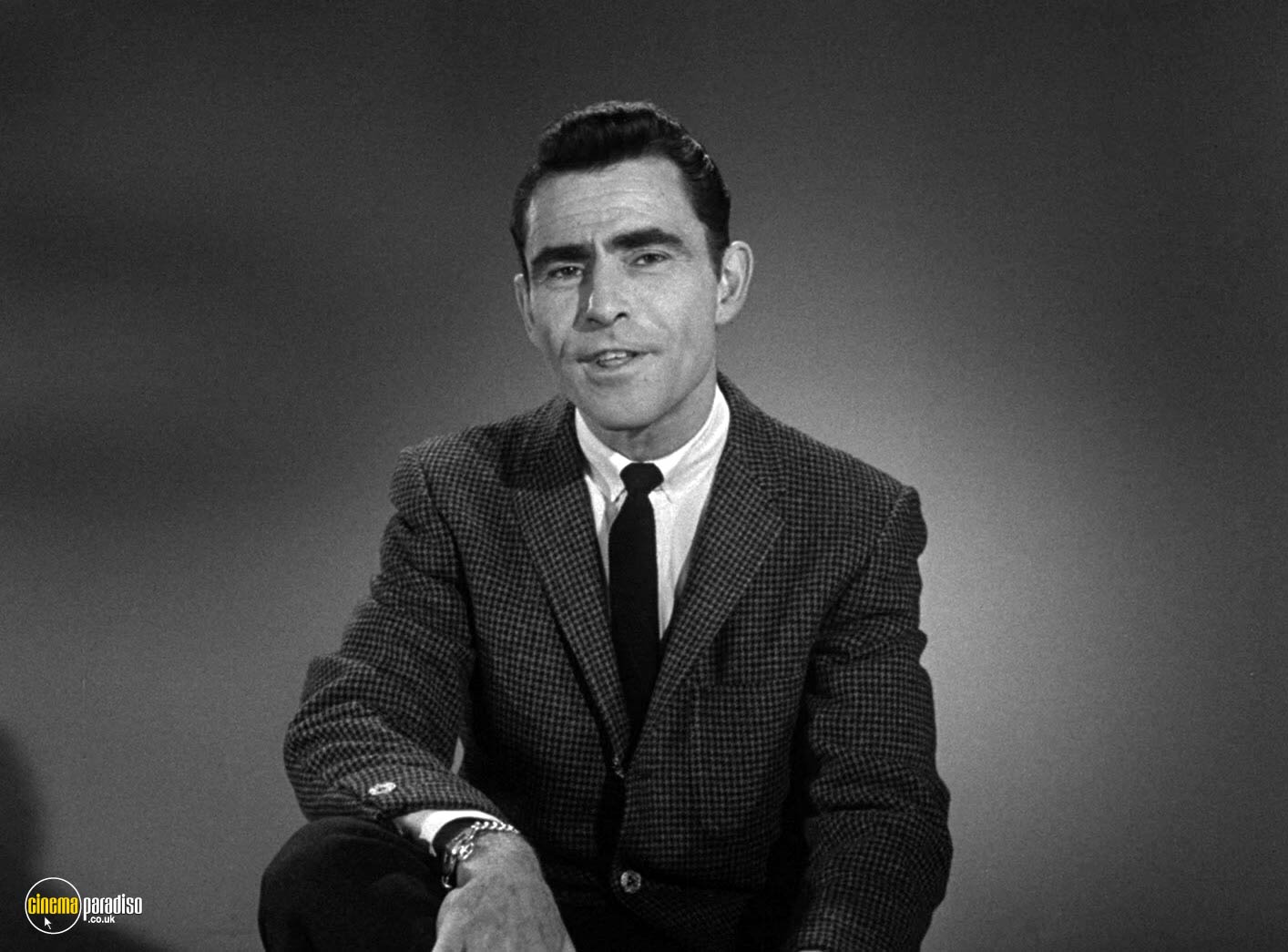
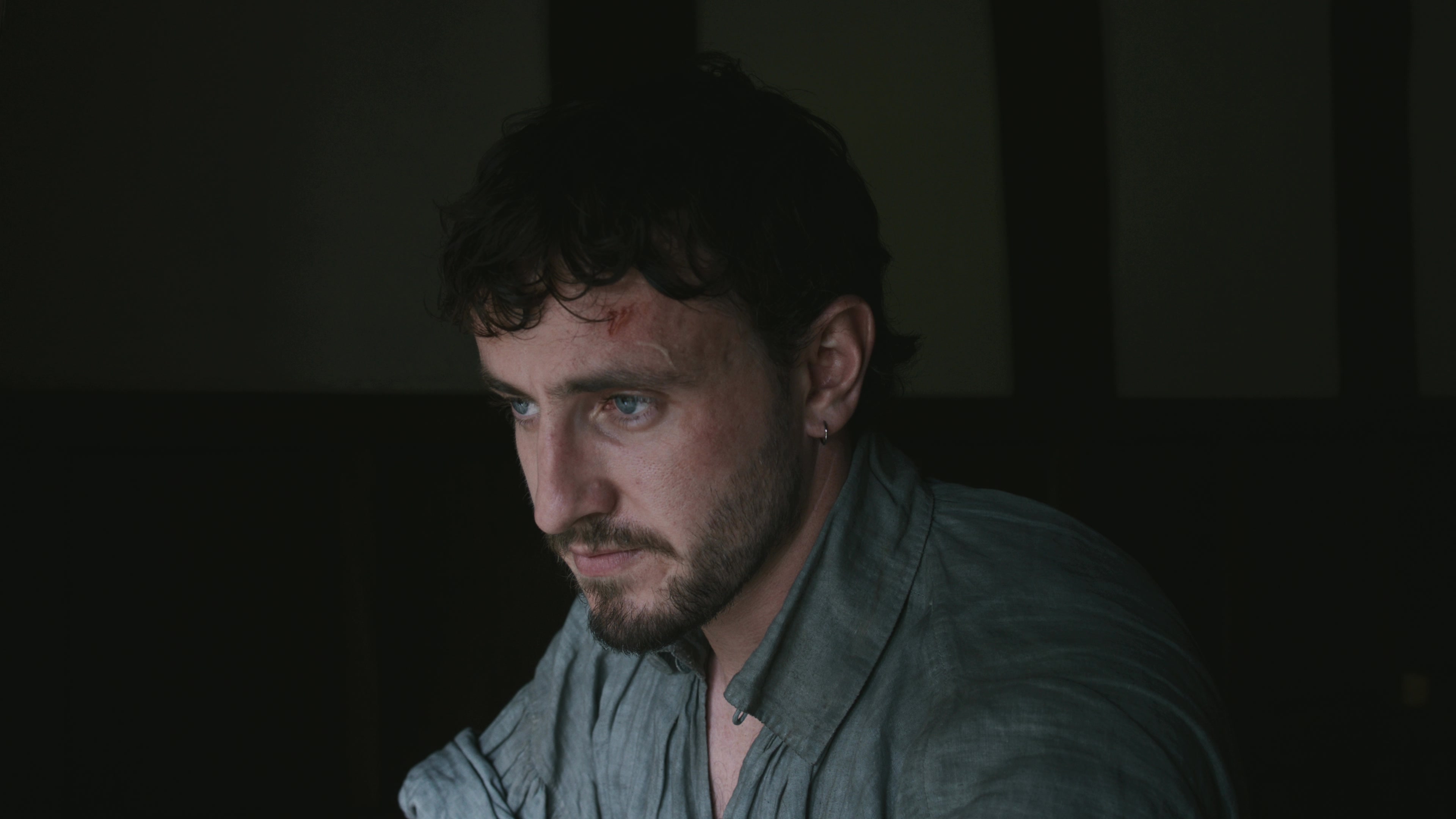
The Twilight Zone: Series 4 (1963)

Episode The Bard available on Disc 5
Julius Moomer: You never heard of Ingrid Bergman? Where ya been pal? Never mind, don't tell me.
William Shakespeare: A comely woman I take it. One fairer than my love. The all seeing sun ne'er saw her match since first the world begun.
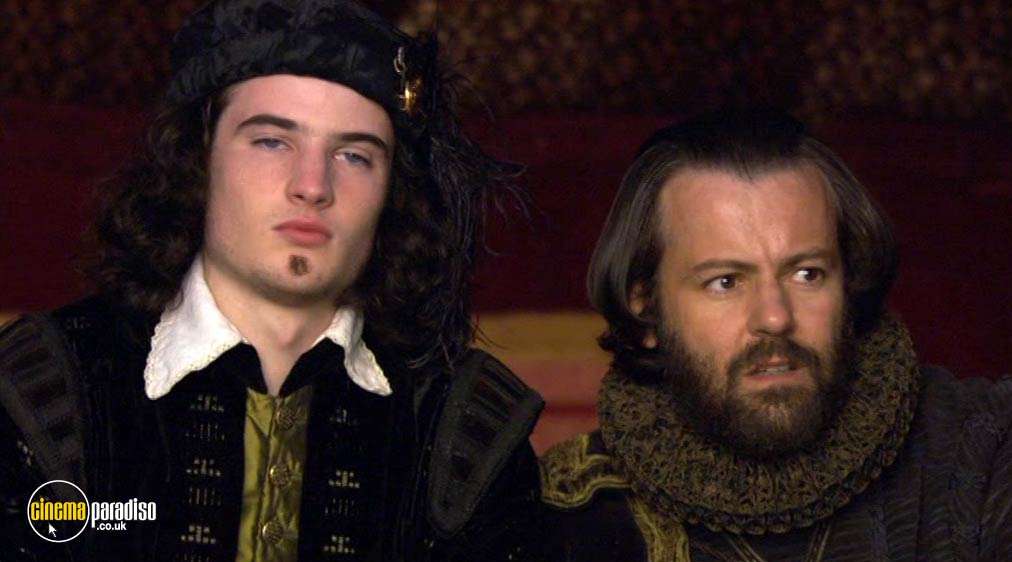
A Waste of Shame (2005)
William Herbert: Master Shakespeare. Now I know. Now I know why we were not introduced. I thought it was you.
Shakespeare: It was to be a deadly secret, sir.
William Herbert: Well, I shall feign enormous surprise when it is revealed. Still, I'm very glad she chose you.
Shakespeare: And you had no hand in it, of course?
William Herbert: Well, if I am to be importuned, I would rather be importuned by my favourite poet.
Shakespeare: Very kind.
William Herbert: No, very honest. Go you to London?
Shakespeare: Aye, my play is on.
William Herbert: Which one is that?
Shakespeare: My Comedy of Errors.
William Herbert: The theatre. I dream of London and the theatre. Perhaps I shall come and see you, one day. What is it, The Rose? The Lord Admiral's Men?
Shakespeare: We are the Lord Chamberlain's Men. We should count it an honour.
William Herbert: We must not be discovered. I will away. I look forward to reading your verses, sir. And, not a word.
Shakespeare: Not a word. Our secret's safe.

Shakespeare in Love (1998)
Viola De Lesseps: Master Shakespeare?
William Shakespeare: The same, alas.
Viola De Lesseps: Oh, but why "alas"?
William Shakespeare: A lowly player.
Viola De Lesseps: Alas indeed, for I thought you the highest poet of my esteem and writer of plays that capture my heart.
William Shakespeare: Oh - I am him too!
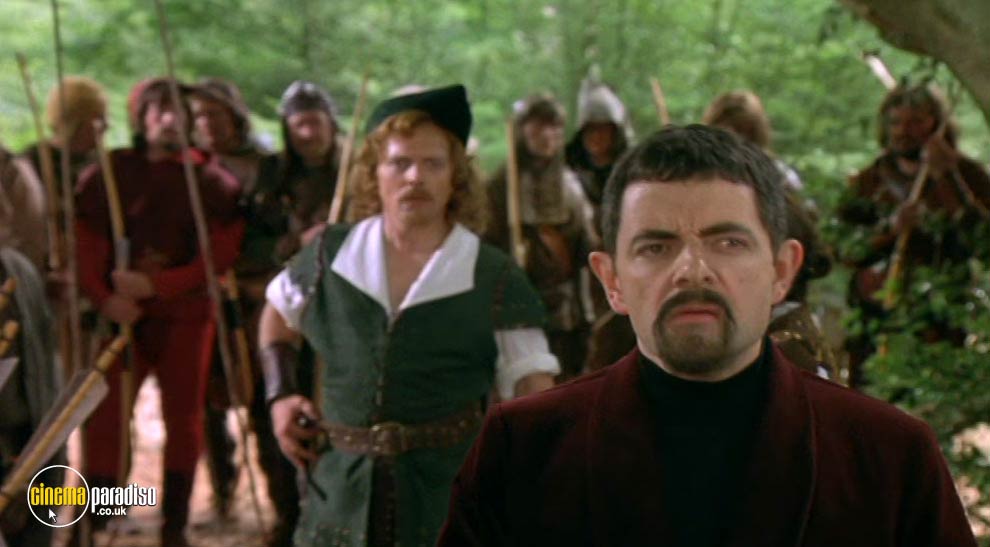
Blackadder: Back and Forth (1999)
Blackadder: [punches Shakespeare] That is for every schoolboy and schoolgirl for the next 400 years! Have you any idea how much suffering you're going to cause? Hours spent at school desks trying to find ONE joke in A Midsummer's Night Dream, wearing stupid tights in school plays and saying things like, 'What ho, my Lord,' and, 'Oh, look, here comes Othello talking total crap as usual.' [kicks Shakespeare] And THAT is for Ken Branagh's endless, four-hour version of Hamlet.
William Shakespeare: Who's Ken Branagh?
Blackadder: I'll tell him you said that, and I think he'll be rather hurt...
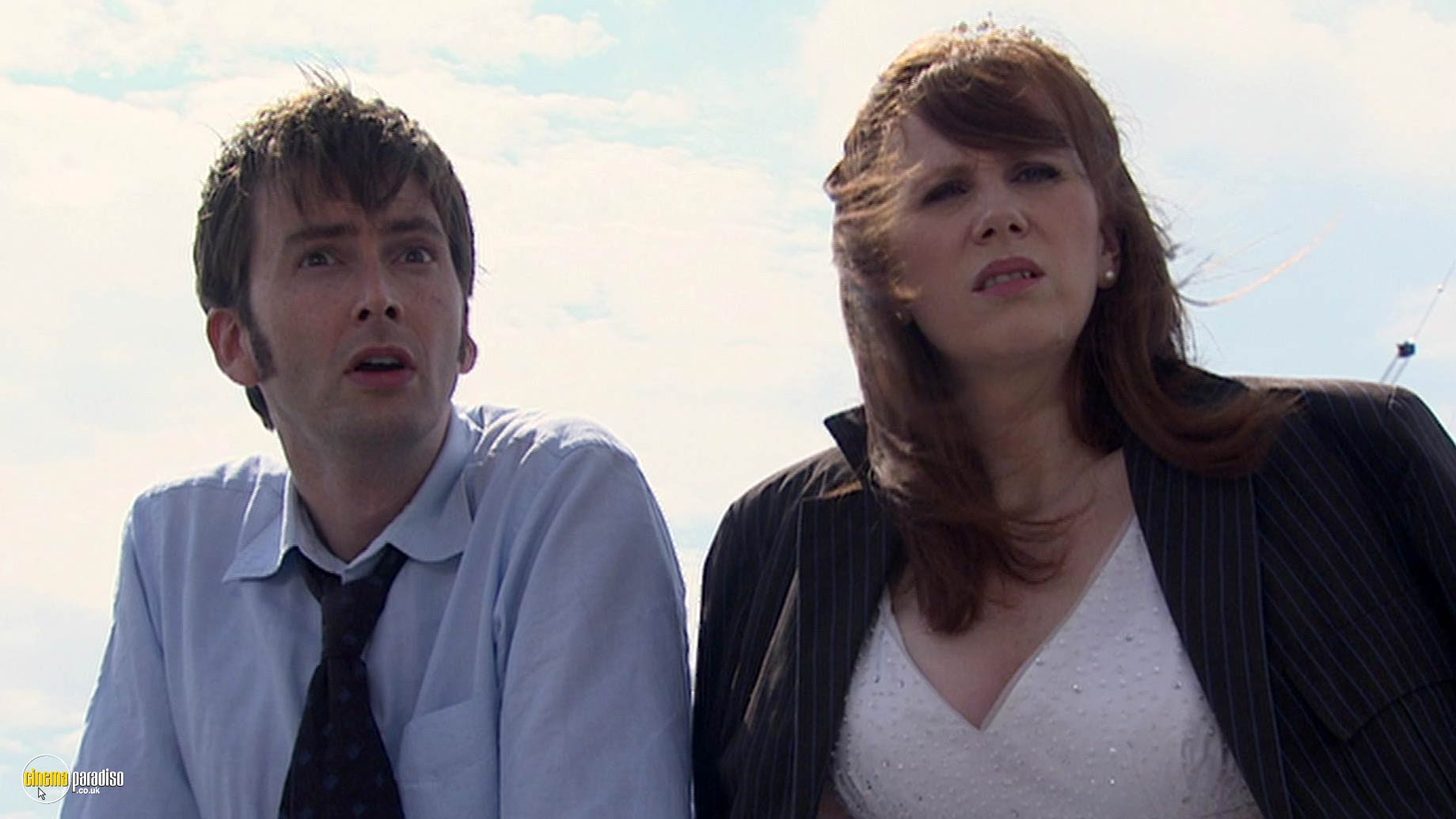
Doctor Who: New Series 3 (2007)
Episode The Shakespeare Code available on Disc 2
Shakespeare: Made me question everything, the futility of this fleeting existence, to be or not to be. [pauses]
Shakespeare: Oooh, that's quite good.
The Doctor: You should write that down.
Shakespeare: Mmm, maybe not. Bit pretentious?
The Doctor: Ehm.
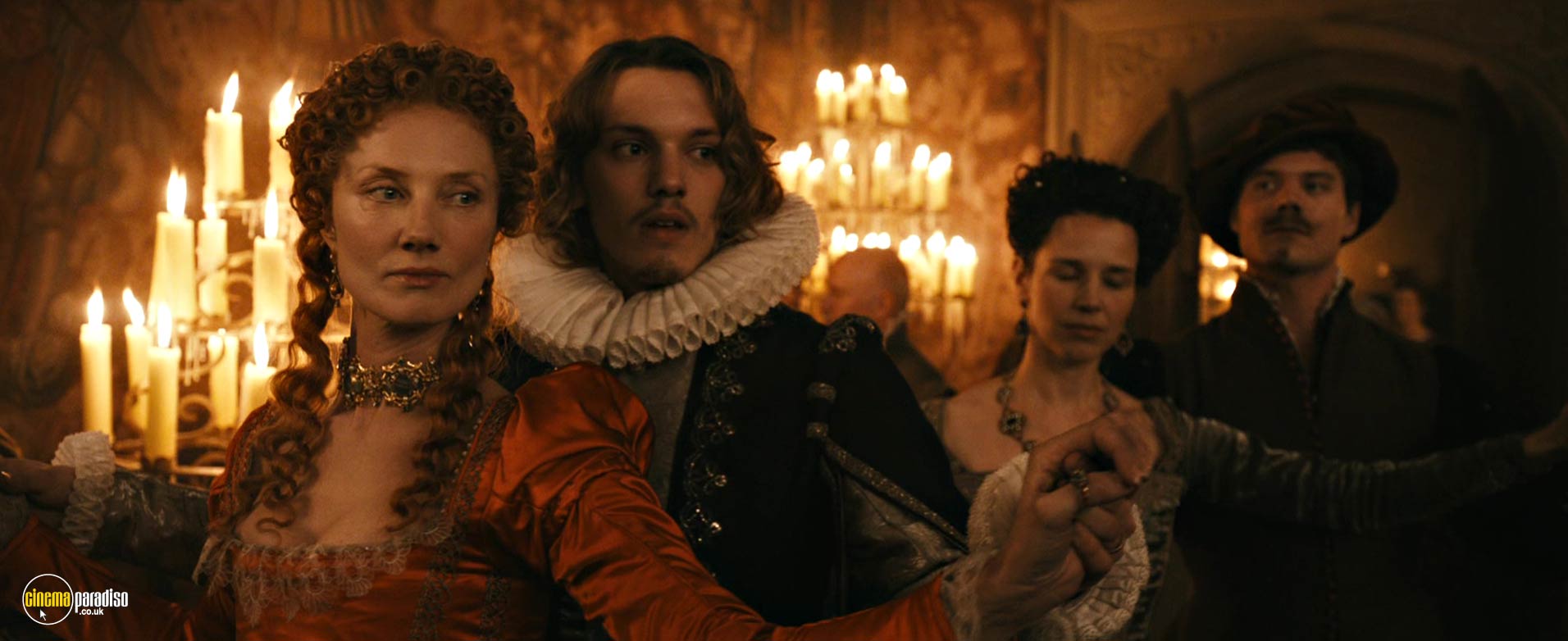
Anonymous (2011)
William Shakespeare: But soft! What light through yonder window breaks? It is the east, and Juliet is the sun...
Ben Jonson: You. Cannot. Play Romeo.
William Shakespeare: What! Why not? I'm perfect for the role. I'm perfect! I will not let that oaf Spencer have another go at one of my roles. No! Only Will Shakespeare can pump the life into Romeo's veins!... And his codpiece.
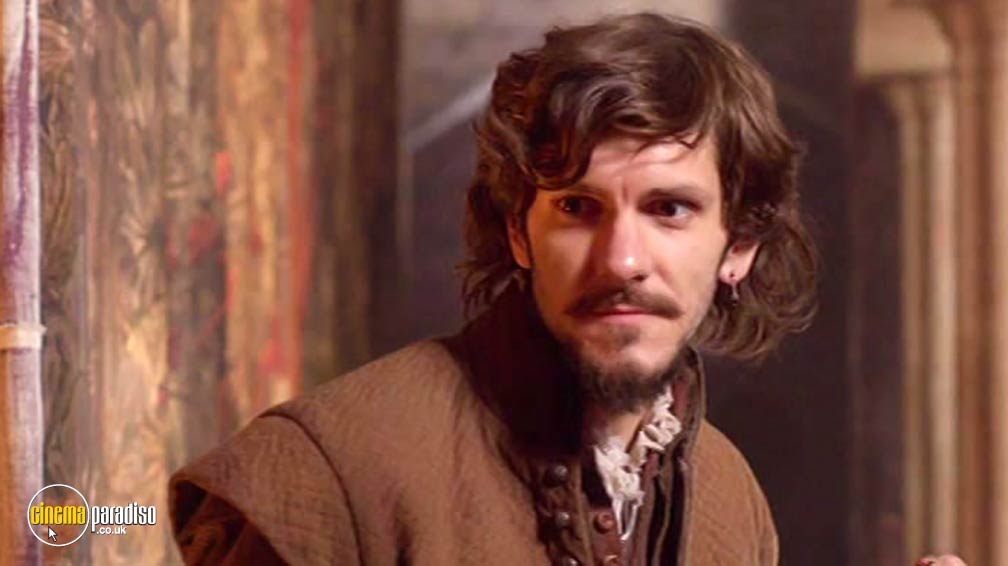
Bill (2015)
Bill Shakespeare and company (sing):
Two men who look the same
But have a different aim
It's a series of funny misunderstandings.
?Two twins each with a lover
Who mistake each for the other
Somehow fall into the service of a mad king.
Take this letter; wait there's two
And they mix up which goes to who
The comic complications keep expanding.
In a tale so confused
You can't help but be amused
By this series of funny misunderstandings.
A jilted bride; that's not funny
Pretend she died? On the money
And her poisoned body's hidden by a monk,
Until a fool who's quite smart
He's a fool, that's a start
Says, "this monk is nuts" and locks him in a trunk.
And his servant, make him thick
Then hit him with a stick
It's a series of funny misunderstandings.
?
Cue a mixed-up wedding blessing
Further vexed by more cross-dressing
Which goes on to heal two families at war.
When the bride they thought was dead
Comes back with a donkey's head
But marries anyway because her groom
Has been drugged by a whore!
Add a priest, add a lion
Add a wrangle over money
It's too much; I'm confused
Yes, that's what makes it funny.
Severed heads, star-crossed lovers,
English kings, evil mothers
With a big happy ending notwithstanding.
We think you'll agree
This has turned out to be
A series of funny misunderstandings!
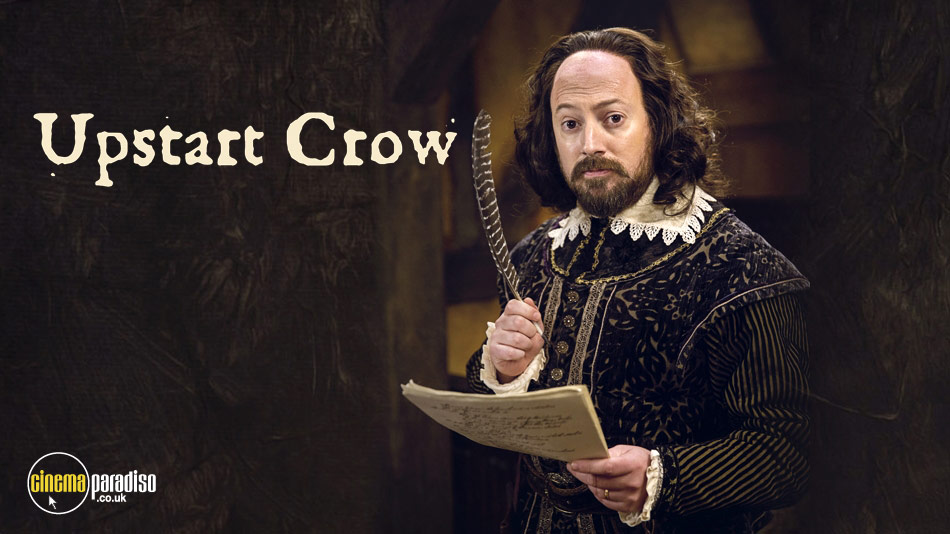
Upstart Crow (2016)
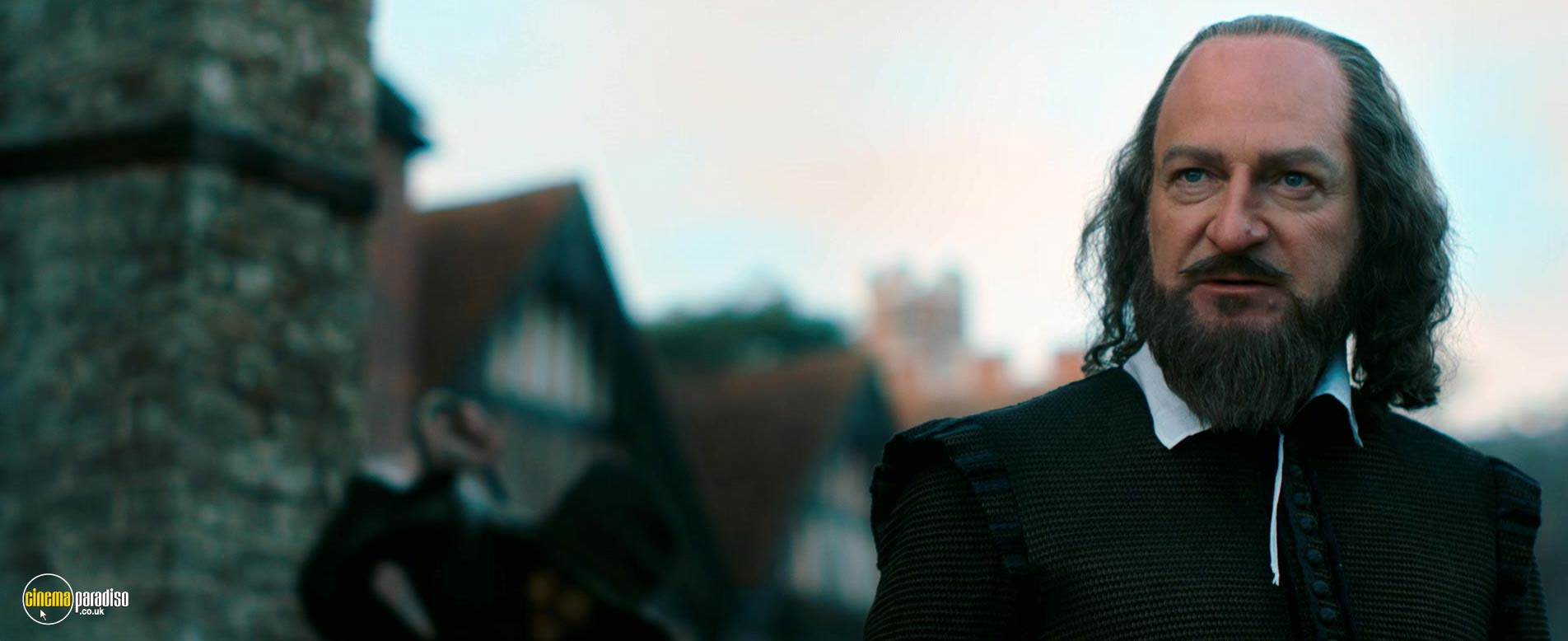
Will Shakespeare: And so do I continue my private task of sowing confusion about what I actually wrote and what people merely think I did until the day dawns when people in their ignorance and vanity will attribute any archaic sounding truism to me in the certitude that it might easily have been me and if it wasn't no one will know the diff. Thus will I eventually get credit for inventing the entire English language. So shove that up your Canterbury Tales, Geoffrey Chaucer!
All Is True (2018)
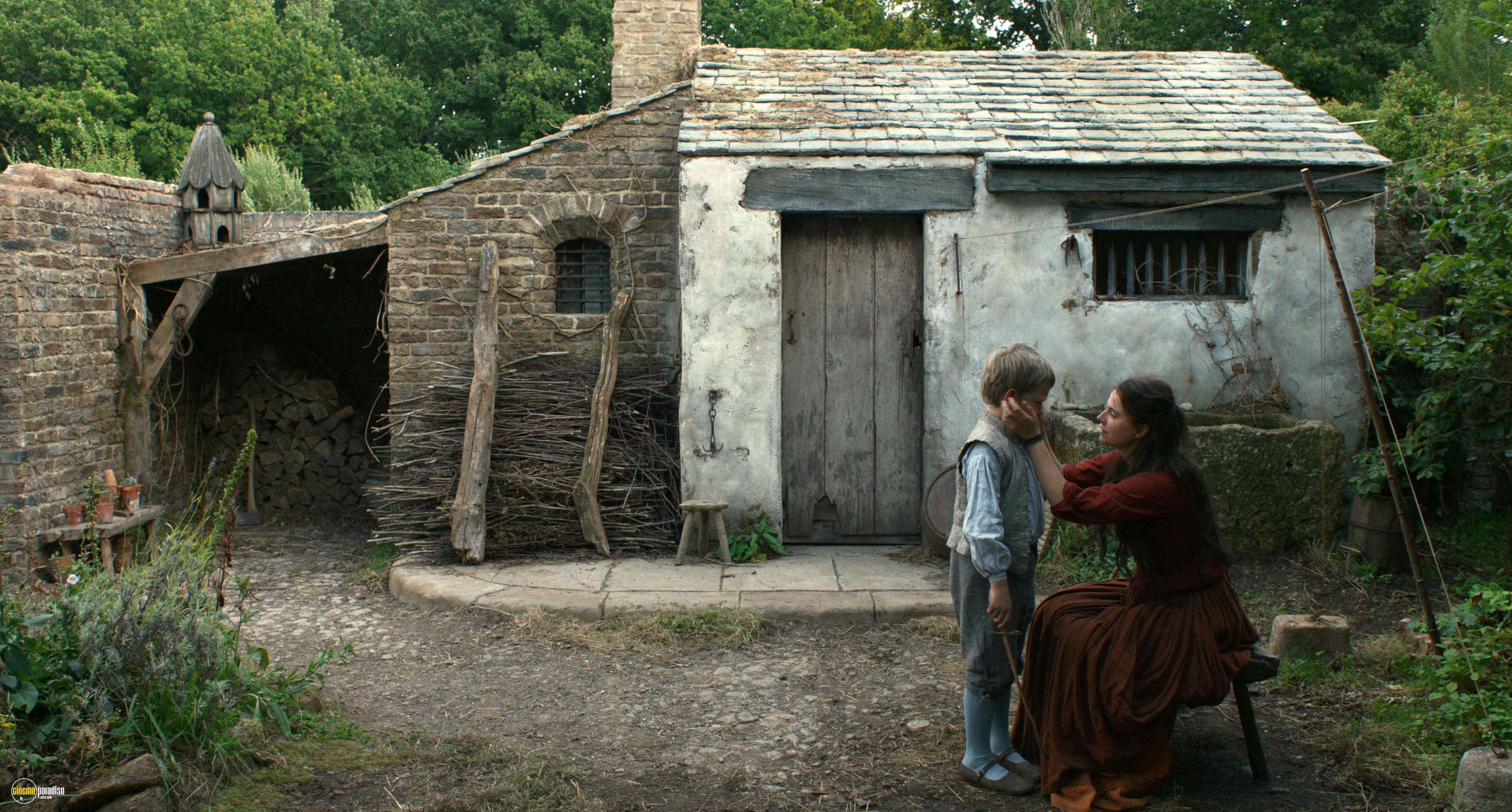
William Shakespeare: If you want to be a writer, and speak to others and for others, speak first for yourself. Search within. Consider the contents of your own soul. Your humanity. And if you're honest with yourself, then whatever you write, all is true.
Hamnet (2025)
Hamlet: Get thee to a nunnery! Why wouldst
thou be a breeder of sinners? I am myself indifferent honest but yet I could accuse me of such things that it were better my mother had not borne me. I -
Will: No. No. No. Again.
Hamlet: I am myself indifferent honest but
yet -
Will: Again.
Hamlet: I am myself indifferent honest -
Will: Again!
Hamlet: I am myself indifferent -
Will: I am myself indifferent honest but yet I could accuse me of such things that it were better my mother had not borne me.
Hamlet: I am myself indifferent honest but yet I could accuse me of such things that it were better my mother had not borne me.
More about these films
Despite Hamnet's Paul Mescal failing to become the first actor to be Oscar-nominated for playing William Shakespeare, Cinema Paradiso examines those films and television programmes that have depicted the Bard in one guise or another.
Had he been alive today, social media would be abuzz on a daily basis with the latest gossip about the world's most celebrated playwright. Yet so little is actually known about William Shakespeare (there are around 70 hard facts) that even the Wikipedia section on his life is surprisingly modest. His name crops up in parish registers and on the odd financial and legal document, as well as on some London playbills and the printed quartos of his plays. John Aubrey gave him a mention in his Brief Lives (written over half a century after Shakespeare had died), but it wasn't until 1709 that Nicholas Rowe published the first biography and started the popular parlour game of reaching plausible conclusions from sketchy facts and feasible speculations.
Based on an acclaimed bestseller by Maggie O'Farrell, Chloé Zhao's Hamnet (2025) can lay no claim to be any more authentic than dozens of other scholarly and literary tomes that have advanced theories about Shakespeare's youth, marriage, 'lost years', stage career, and 'retirement'. Indeed, the absence of verifiable veracities affords greater latitude to those seeking to fill in the gaps between 23 April 1564 and 23 April 1616 - and even then Shakespeare's birthday is a wishful St George's Day guesstimation reached because he was baptised in Holy Trinity Church in Stratford-upon-Avon on 26 April.
Novelists have been more tempted to weave narratives around the known unknowns than film-makers. But that doesn't mean - outside of the countless screen adaptations of his accepted 38 plays (or is it 39 and can all of the Apocrypha be definitively discounted?) - that William Shakespeare hasn't cropped up in the unlikeliest places in features, shorts, animations, documentaries, and TV shows alike over the last 114 years. Read on, Macduff!
This Strange Eventful History
So, what do we know about Shakespeare the man? His parents were Stratford glover John Shakespeare and Mary Arden, the daughter of his landlord, who was a member of the Warwickshire gentry. Five of their eight children survived into adulthood on Henley Street to see their father, who had once been mayor, regain his social status after a dip in his fortunes around 1576 that was possibly linked to his illegal dealings in wool. Educated at the King's New School, the 18 year-old Shakespeare married Anne Hathaway (who was eight years his senior) by special licence on 27 November 1582. They had three children, Susanna and the twins, Hamnet and Judith, who were born in 1585, the last year we have documentary evidence about their father before the posthumous publication of Robert Greene's Groats-worth of Witte, bought with a million of Repentance, which contained the famous 'upstart crow' dismissal of Shakespeare's transition from actor to playwright.
Leaving aside speculation about whether Shakespeare worked as a tutor or fled Stratford to avoid a charge of poaching deer, he seems to have found theatre work in London around 1587, having watched several plays as a youth because his father's position of High Bailiff meant he was charged with dealing with travelling players. By 1594, he was a co-owner of the Lord Chamberlain's Men, a troupe that included Richard Burbage, Will Kempe, and Henry Condell, who performed at The Theatre in Shoreditch before relocating to The Globe in Southwark, which was built using timbers from its predecessor, which had been dismantled on 28 December 1598.
Having lost his son in August 1596, possibly to the bubonic plague, Shakespeare purchased New Place, the second-largest house in Stratford. In 1613, he bought a gatehouse apartment in the former Blackfriars priory, but spent much of the next three years in his birthplace, in what some academics have claimed was retirement. It's not known whether he continued to write during this period, possibly in conjunction with others. The First Folio (1623) collected 36 plays, although some scholars have claimed conceivable connection to 42, including a lost collaboration with John Fletcher, The History of Cardenio. The Third Folio (1664) added The London Prodigal, Thomas Lord Cromwell, Sir John Oldcastle, The Puritan Widow, A Yorkshire Tragedy, and Locrine. But debates rage about these and other titles, which are surely ripe for a festival revival? However, we know for certain that William Shakespeare died in Stratford on 23 April 1616 at the age of 52. He was buried in the chancel of Holy Trinity Church, with the tombstone bearing an epitaph that he is believed to have composed himself: 'Good friend, for Jesus' sake forbear, To dig the dust enclosed here. Blest be the man that spares these stones, And cursed be he that moves my bones.'
Seven Ages
We begin our survey of Shakualities with the BBC's The Man Shakespeare (1964), which was broadcast to mark the quartercentenary of the playwright's birth. In the dramatised passages between the discussion of known facts and myths, Carlo Cura and Roger Croucher play the boy and the man. Tom Aldredge took the role in Henry Winkler Meets William Shakespeare (1977), a CBS educational programme that sought to use The Fonz from Happy Days (1974-84) to get kids interested in The Bard. In addition to shocking the visiting Tudor with news that women now act legally, Fonzie also plays Romeo in a swordfighting scene with Rob Phelps's Tybalt.
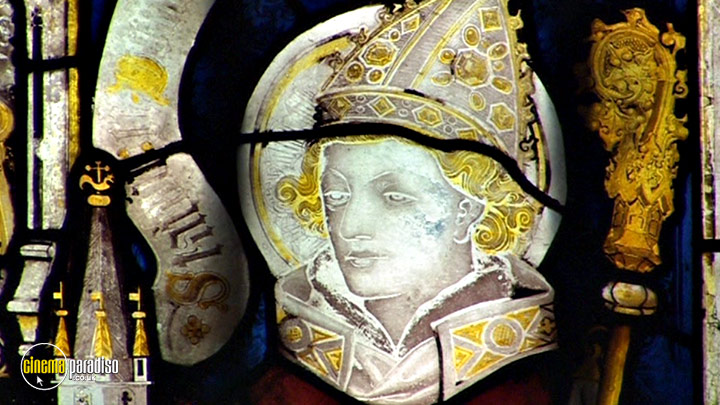
Scott Ainslie appears in Elizabethan garb among the talking heads in Michael Rubbo's Much Ado About Something (2001), which considers whether Christopher Marlowe was the real author of Shakespeare's poems and plays. This is just one of the topics raised by Michael Wood in the BBC's excellent four-parter, In Search of Shakespeare (2003), which puts biographical detail into historical context and employs members of the Royal Shakespeare Company for the classic scenes from the best-known plays.
Equally compelling is The King's Man (2012), which joins American scholar James Shapiro as he examines how the change of dynasty in 1603 impacted upon Shakespeare and his company, as they accepted the patronage of James I of England and VI of Scotland, the Stuart whose political aims were markedly different from those of his Tudor cousin.
With Philomena Cunk (Diane Morgan) largely having a digital presence, we can't bring you the amusing Cunk on Shakespeare (2016), which features Christopher Young in the secondary title role. As the year marked the 400th anniversary of Shakespeare's death, however, there were other docs on offer, including Shakespeare: The Legacy, which tasks John Nettles with tackling the unanswered questions about the poet's life, while also highlighting the sheer number of words and phrases penned by Shakespeare that have passed into the English language. Perhaps the year's most intriguing offering, however, was 'Shakespeare's Tomb', an episode of Channel Four's Secret History series, which used Ground-Penetrating Radar, for the first time, to peer beneath the ledger stone that had supposedly lain undisturbed since 1616 to discover that Shakespeare's skull appears to have been stolen (possibly in 1794) !
Remaining in the realms of the ghoulish, Graham Fletcher-Cook's Shakespeare v Jack the Ripper (2018) strives to link the Globe Theatre, a play written around 1610, freemasonry, and the Whitechapel slayings. Seeking to make a less contentious claim, Damien Ryan and Jerome Meyer's Venus & Adonis: A Film About a Play About a Poem (2022) features Anthony Gooley as Shakespeare and Adele Quero as Emilia Lanier in an exploration of the unacknowledged debt the former owed to the writings of the latter (who was essayed by Montserrat Lombard in the Ben Elton sitcom we shall discuss below).
Anniversaries are handy things when it comes to documentaries and the quatercentennial of the publication of the First Folio provided the excuse for Shakespeare: Rise of a Genius (2023), a first-rate primer that is annoyingly not available on disc when related series devoted to Wolfgang Amadeus Mozart, Jane Austen, and the Nazis are. Daniel Boyarsky plays the 23 year-old heading to London to learn his craft backstage at The Rose, while Judi Dench, Helen Mirren, Brian Cox, and Martin Freeman are among those doing justice to the insights into human nature that seem so remarkable for the partially educated son of a provincial scoundrel.
One Man in His Time
His plays have been filmed ever since Herbert Beerbohm Tree starred in a silent, four-minute version of King John for the British Mutoscope and Biograph Company in 1899. But William Shakespeare has also been appearing on screen since the silent era, with the peerless Georges Méliès playing him in Shakespeare Writing 'Julius Caesar' (1907), a sadly lost trick film, in which the Bard sinks into an armchair in frustration while writing the dictator perpetuo's assassination. As he cogitates, the scene unfolds before him, as Brutus and Cassius conspire in the Forum before raising their daggers to remove a tyrant. As Shakespeare animatedly paces the room, a servant enters with his supper and he gets so carried away with his scenario that he stabs a loaf of bread with a knife. The pair laugh at Shakespeare getting so carried away before the short ends with people with flags from around the world paying tribute to a garlanded bust of the playwright.
Having been the screen's first Dane in Clément Maurice's two-minute Hamlet (1900), Sarah Bernhardt got to meet Paul Guidé's Shakespeare as Elizabeth I following a performance of The Merry Wives of Windsor in Louis Mercanton and Henri Desfontaines's pioneering film d'art, Les amours de la reine Élisabeth (aka Queen Elizabeth, 1912). Monarch and poet never met in real life, but facts should never be allowed to ruin a good screen story. As is the case with Frank R. Growcott and J.B. McDowell's The Life of Shakespeare (aka Loves and Adventures in the Life of Shakespeare, 1914), which chronicles an early dalliance with Charlotte Clopton (Miss Bennett) and a meeting with Anne Hathaway (Sybil Hare) before Shakespeare (Albert Ward) flees Sir Thomas Lucy (George Foley) after a deer poaching incident and makes his name as a playwright in London, where he entertains Queen Elizabeth (Olympia Sumner) at the Blackfriars Theatre with Romeo and Juliet. Running 50 minutes and involving Papist plots and encounters with the great men of the age, this lost biopic concludes with Shakespeare imagining characters from his plays and a shot of his bust in Holy Trinity Church, which receives a new birthday quill each April.
Frederick Sullivan's Master Shakespeare, Strolling Player (1916) has also failed to survive, which is a shame as it transports a certain Miss Gray (Florence La Badie) back to Tudor times after she argues over the authorship of the Folio plays with sweetheart Lieutenant Stanton (Robert Vaughn). Despite befriending her beloved Francis Bacon (Robert Whittier), however, Miss Gray discovers that he hates Shakespeare (Lawrence Swinburne) and has bribed a courtier to spread the rumour that he had plagiarised Bacon's work. Thankfully, H.O. Martinek's Glastonbury Past and Present (1922) still exists, although the BFI Player is currently the only place to see it (although it is free). The first filmed history of an English town was the work of New Avalonian poet Alice Buckton and briefly features Neil Curtis's Shakespeare stopping to watch a play while passing on his travels. We are similarly indebted to the British Film Institute for the DVD collection, Silent Shakespeare (2000), which includes the aforementioned King John, as well as adaptations of The Tempest (1908), A Midsummer Night's Dream (1909), King Lear, Twelfth Night (1910), and Richard III (1911). Bryony Dixon and Jane Giles also present Play On! Shakespeare in Silent Film (2016), which draws on 24 of the c.300 Bard-related silents produced before the coming of sound in 1927 and accompanies them with a score played by musicians from the Globe Theatre. Keep an eye out for a debuting John Gielgud in Romeo and Juliet (1924).
Well worth a release on disc is Widgey R. Newman's The Immortal Gentleman (1935), a quota quickie that brings William Shakespeare (Basil Gill), Ben Jonson (Edgar Owen), and Michael Drayton (J. Hubert Leslie) to a Southwark tavern, where the customers remind the Bard of Romeo and Juliet, Hamlet and Ophelia, Shylock, Malvolio, Petruchio, and Sir Toby Belch. The landlord's son even coaxes Shakespeare into reciting Jacques's 'Seven Ages of Man' speech from As You Like It. It would also be nice to think that any future release of George Cukor's Romeo and Juliet (1936), which paired 43 year-old Leslie Howard with 34 year-old Norma Shearer, would include among the extras Jacques Tourneur's Master Will Shakespeare (1936), which cast Anthony Kemble-Cooper as a young man who broke into theatre by minding horses at the Burbages' Blackfriars Theatre before working as a prompter. According to this brief biopic, the Bard was a melancholic who considered the tale of doomed teenage love to be his favourite play.
It's 1605 in Juan de Orduña's Un drama nuevo (aka A New Play, 1946) and Yorick (Roberto Font) is badgering Shakespeare (Jesús Tordesillas) about giving him a serious role in the next production. However, the clown's jealousy when wife Alicia (Irasema Dilián) starts taking an interest in another member of the company prompts the playwright to pen a different drama. Leaping forward half a century, a novel by Jostein Gaarder provided the basis for Erik Gustavson's Sophie's World (1999), which includes Mark Tandy's Shakespeare among the Renaissance titans who try to help a teenager (Silje Storstein) understand philosophy, in what was then the most expensive picture ever produced in Norway.
Stratford vicar John Ward's c.1662 diary reference to a 'merry meeting' between Shakespeare, Ben Jonson, and Michael Drayton seems to have inspired Chuck Bentley's One Night in a Pub: Who Killed William Shakespeare? (2003), which employs flashbacks as two scholars and a TV producer try to work out whether Shakespeare (Mikey Sykes) was murdered after a heavy drinking session. Bentley (who has been producing independent features since 1980) also made the 2004 comedy, Shakespeare Stripped Bare, which centres on a radio broadcast about the Bard. A one-man show is captured in all its live glory in John Wyver's Being Shakespeare (2011), as Simon Callow uses 'The Seven Ages of Man' to reflect upon the life and works of Stratford's favourite son, while also performing extracts from over 20 plays and poems. This isn't a drama per se, but seeing a master at work makes for riveting and exhilarating viewing.
According to screenwriter John Orloff, Callow is barking up the wrong tree, as he strives to show in Roland Emmerich's Anonymous (2011) how the works usually attributed to Shakespeare (Rafe Spall) were, in fact, written by Edward De Vere, 17th Earl of Oxford (Rhys Ifans). Critics were divided as to whether Orloff's thesis made for vital cinema, but there's undeniable ingenuity in the notion that Oxford conspired with Ben Jonson (Sebastian Armesto) to let a drunken actor take authorial credit as a useful fool and tool to use against Puritan chief minister, William Cecil, 1st Earl Burghley (David Thewlis), who is scheming to have James VI of Scotland succeed the ageing (and secretly promiscuous) Queen Elizabeth (Vanessa Redgrave). The film was released with a companion documentary, Eike Schmitz's The Shakespeare Enigma, which dismisses the Oxfordian theory in positing Christopher Marlowe as the real dramatic genius, whose need to lay low after faking his murder leaves him reliant on Shakespeare as his front.
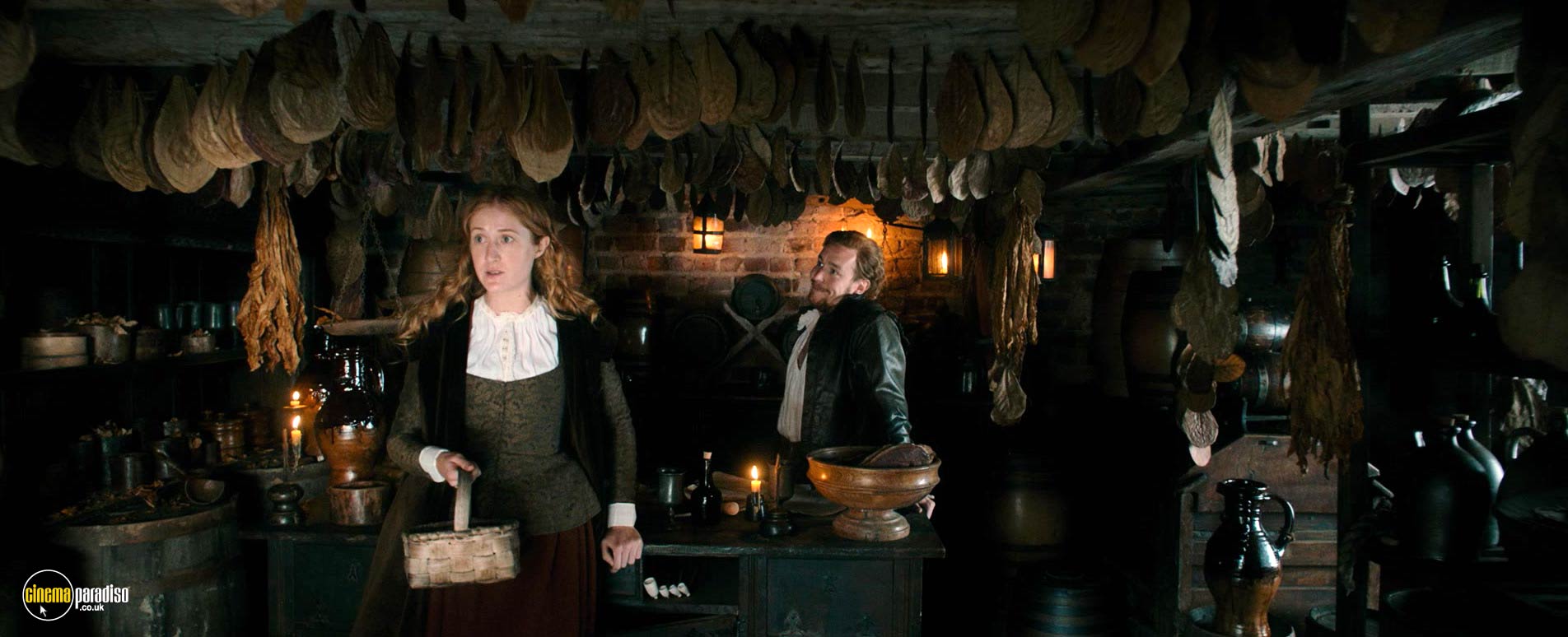
In many ways, Anonymous is the origin story of Henry Wriothesley, 3rd Earl of Southampton (Xavier Samuel). But he's a more prominent character in Kenneth Branagh's Ben Elton-scripted All Is True (2018), which was the subject of one of Cinema Paradiso's What to Watch Next articles. There's plenty there for Bardoloters to get their teeth into, so we shall content ourselves here by mentioning that the Earl (Ian McKellen) causes consternation in New Place when he pays Shakespeare (Branagh) a visit and renews the fears of Anne Hathaway (Judi Dench) that the dedicatee of the narrative poems, Venus and Adonis (1593) and The Rape of Lucrece (1594), was more than just her husband's patron. Exchanged lines from Sonnet 29 would disquiet her more, but she has plenty to preoccupy her with daughters, Susanna (Lydia Wilson) and Judith (Kathryn Wilder), who has been harbouring a secret about her lamented twin, Hamnet.
More of them anon. First, we need to detour to take in a clutch of Shakespeare-related shorts. The Bard (Jaimie Bust) goes to a Deptford lodging house with Kit Marlowe (Alec Nelson) and Robert Poley (Owen Hayden) on 30 May 1593 in Joshua Wolfsun's The Bard, which postulates how a great playwright met his untimely end. The meeting of minds is slightly more fanciful in Michael LiCastri's When Tarantino Met Shakespeare (both 2010), as QT (Michael LiCastri) summons the ghost of WS (Chris Metz) to help him finish a troublesome screenplay.
Mike Roche stars in Joe Quartararo's Will At Work With the Lord Chamberlain's Men (2017), as Shakespeare asks Globe seamstress Nell (Jenne Marie Vath) to stay behind after a performance of A Midsummer Night's Dream to help him with a tricky French scene in Henry V. The famed soliloquy from Hamlet brings Shakespeare (Jack Davenport) to the side of potential suicide Tom (Will Chase) in Chase's short, The Dagger, while any hopes that Shakespeare (Elliott Sweeney) has of a quiet weekend on a barge in the Underworld are dashed when he's accused of plagiarism by Francis Bacon (Antonio Lexerot) and Dr Samuel Johnson (Rae Serbeck) in Anthony Applegate's Up the Styx: A Disputed Authorship (both 2021).
We return to features with Vicent Monsonís's Un cercle en l'aigua (aka A Circle in the Water, 2020), which centres on the efforts of Christopher Marlowe (Raúl Navarro) to leave England having spied against the Catholic community for Queen Elizabeth (Rosa López). His best hope lies in faking his death, but he needs the co-operation of William Shakespeare (Ricardo Saiz), a mediocre actor with minimal education, who knows precisely what price to put on his services.
The idea behind Ruggero Cappuccio and Nadia Baldi's Shakespea Re di Napoli (2023) comes from Thomas Tyrwhitt via Oscar Wilde, as it seeks to reveal the identity of 'Mr W.H.', the mysterious personage to whom the Sonnets were dedicated. In this Italian saga, a Neapolitan named Desiderio (Alessandro Preziosi) describes his adventures in London and lays claim to have been Willie Hughes, the boy actor (Emanuele Zappariello) who originated such roles as Viola, Desdemona, Rosalinda, and Juliet. With Jacopo Rampini as Shakespeare, this is an atmospheric evocation of the Elizabethan theatre and Baroque Naples.
Also released in 2023, Andy Wolk's short, Rough Magic: Exit Shakespeare, considers the grief and guilt that the playwright (Tony Amendola) experienced following the death of his 11 year-old son, Hamnet. Lamenting the fact that he had remained in London to enjoy the trappings of his fame, the Bard wonders if he will ever write again. But, following a confrontation with his son's spirit on the Globe stage, he finds a way to channel his emotions into The Tempest. Of course, Maggie O'Farrell's bestselling Hamnet insists that Hamlet was the cathartic production that not only enabled Shakespeare (Paul Mescal) to deal with his feelings, but which also brought about a reconciliation with his distraught spouse, Agnes (Jessie Buckley). Co-scripted by O'Farrell (who takes considerable liberties with her 2020 text), Chloé Zhao's prize-winning feature seeks to show how the genius of a great artist was rooted in the very human qualities we all share. Some have labelled the film 'grief porn', but it has got people talking about Shakespeare again and that can only be a good thing.
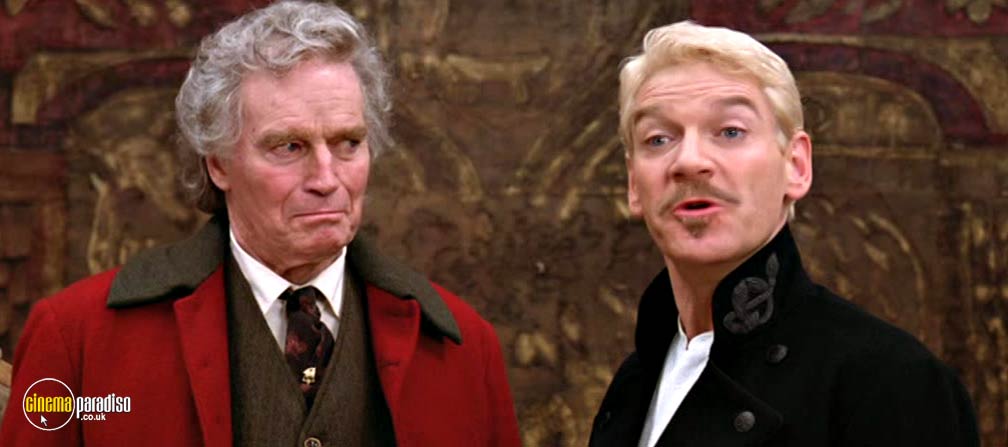
Blackadder: Back & Forth (1999), which sees Edmund (Rowan Atkinson) seek an autograph before taking Shakespeare to task for boring generations of schoolchildren with his interminable wafflings and for inflicting upon the world Kenneth Branagh's four-hour Hamlet (1996). Written by Ben Elton and Richard Curtis for screening inside the Millennium Dome, this time-travelling spin-off from the Blackadder series (1983-99) sees Miranda Richardson and Patsy Byrne reprise their roles as Queen Elizabeth and Nursie.
A few months before this sitcom special appeared, John Madden's Shakespeare in Love (1998) had won three Golden Globes, four BAFTAs, and seven Academy Awards from its 13 nominations. Tom Stoppard's screenplay had been among the recipients for concocting the romance between Shakespeare (Joseph Fiennes) and merchant's daughter Viola de Lesseps (Gwyneth Paltrow), who disguises herself as Thomas Kent (at a time when women were disbarred from acting) so that she can audition to join the Lord Chamberlain's Men in the Rose Theatre presentation of Romeo and Ethel, the Pirate's Daughter. Paltrow won Best Actress for her performance, while Judi Dench snaffled Best Supporting Actress for a six-minute (ish) turn as Good Queen Bess. In addition to being named Best Film, the romcom also took the Oscars for Best Score, Art Direction, and Costume Design, although Madden was pipped by Steven Spielberg for Saving Private Ryan and Fiennes was snubbed altogether. Grossing $289 million against a $25 million budget, this is the most commercially successful Bardpic ever made.
Shakespeare and Cervantes died on the same day and the pair are brought together in Inés París's Miguel y William (2007), which lands the former (Will Kemp) in Spain in his bid to save Leonor de Vibero (Elena Anaya) from her arranged marriage to the Duke of Obanto (Josep Marie Pou). When a missing jewel threatens to see Leonor charged with adultery, the Swan of Avon joins forces with Miguel de Cervantes (Juan Luis Galiardo), only for him also to lose his heart. Another unlikely alliance is forged in Christopher Piazza's The Adventures of Shakespeare and Watson: Detectives of Mystery (2012), a short that sees Shakespeare (David Blatt) and Dr John Watson (Chris Miskiewicz) form a detective agency in the hope of finding a way back to their respective times after they are cast into the present. Their cause is not helped, however, by the drug habit that prompts Bill to steal a bag of cocaine from some Russian mafiosi in Brighton Beach.
Anticipating part of the premise in Danny Boyle's Yesterday (2019), Debi Sue Voorhees's Billy Shakespeare (2014) imagines a world in which the Bard had never trodden the boards back in Tudor times, leaving a struggling Hollywood screenwriter (Jason D. Johnson) to pitch ideas like an all-male Macbeth to studio producers, while also trying to fathom whether his heart belongs to longtime girlfriend Anne Hathaway (Catharine Pilafas) or drag queen buddy, Wilma Hartford (Phillip David Collins).
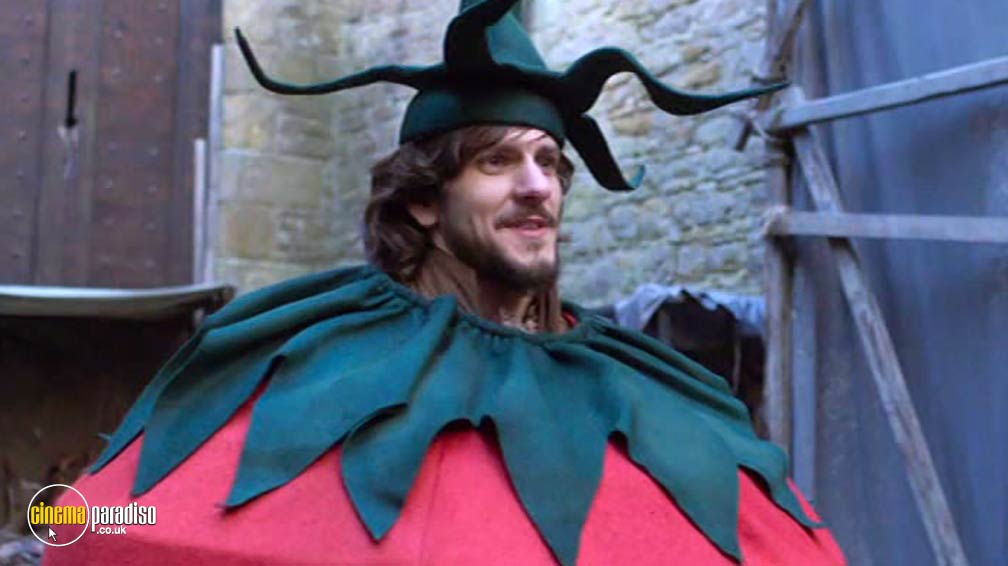
Harking back to the 'lost years', Richard Bracewell's Bill (2015) seeks to fill in the gaps by showing how Shakespeare (Mathew Baynton) is sacked from Stratford combo Mortal Coil because of his self-indulgent lute solos and takes himself off to London to find his métier. Having bumped into Christopher Marlowe (Jim Howick), he stumbles across Sir Francis Walsingham (Laurence Rickard) and becomes involved in his bid to stop a Catholic bomb plot against Queen Elizabeth (Helen McCrory). Staged by the people behind the TV adaptation of Terry Deary's Horrible Histories (see below), this wittily claims to treat the past with the same reverence as Shakespeare did himself in his history plays.
Shakespeare (Frazer Brown) and Francis Bacon (Brandon Bassham) appear in passing in Lloyd Kaufman's Shakespeare's Sh*tstorm (2020), which sees the director not only parody The Tempest, but also double as Prospero and his sister, as the mad scientist laces the seas with laxatives in order to drive a boatload of pharmaceutical executives to Tromaville. By contrast, in Mikyla Bordner's short, Cool Book Club (2022), Shakespeare (Steve Larkin) tries to teach a couple of bookish kids how to be cool. And Shakespeare (Maurizio Caste) and Walt Disney (Massimo Quadrini) are among the characters in Alessio Montini's The Last Song of Conway Twitty (2023), which concerns a quest involving two friends, a bounty hunter, and a rabbit.
Merely Players
When the BBC's television service resumed after the Second World War, George Bernard Shaw's The Dark Lady of the Sonnets was part of the programming, which featured Henry Oscar as Shakespeare and Lesley Deane as his muse, Mary Fitton. According to the 1949 'To Dream Again' episode of Kraft Theatre, however, Shakespeare (Lauren Gilbert) found himself back in wartime Blighty, where he managed to fall in love. While these shows are out of reach, Cinema Paradiso can bring you 'Johnnie Factotum', the 1961 episode of Sir Francis Drake (1961-62), which takes its title from Sir Robert Greene's infamous put-down and shows how Drake (Terence Morgan) is helped by a young actor (Philip Guard), whose literary ambitions revolve around a Dark Lady (Katherine Blake).
We can also recommend 'The Bard', David Butler's wonderful 1963, Rod Serling-scripted storyline from The Twilight Zone (1959-64), which sees hopeless hack Julius K. Moomer (Jack Weston) use a book of magic to summon Shakespeare (John Williams) and dupe him into writing tele-scripts that he can pass off as his own. However, the ruse is rumbled when Shakespeare discovers the changes being made to The Tragic Cycle by the sponsor and some talentless network executives and challenges the acting choices of Method hunk, Rocky Rhodes (Burt Reynolds), who is a parody of Marlon Brando. When The Twilight Zone was revived in the 1980s, Shakespeare made another appearance in the guise of Bob Dishy in Theodore J. Flicker's 'Act Break', in which struggling writer Maury Winkler (James Coco) is given an ancient amulet by his dying partner (also Dishy) that grants him one wish. Harry hopes Maury will use the relic to save him, but he opts instead to seek a better co-writer, only to wind up back in Tudor times, where he becomes the put-upon servant of the Bard, who exploits him as his uncredited anamanuensis.
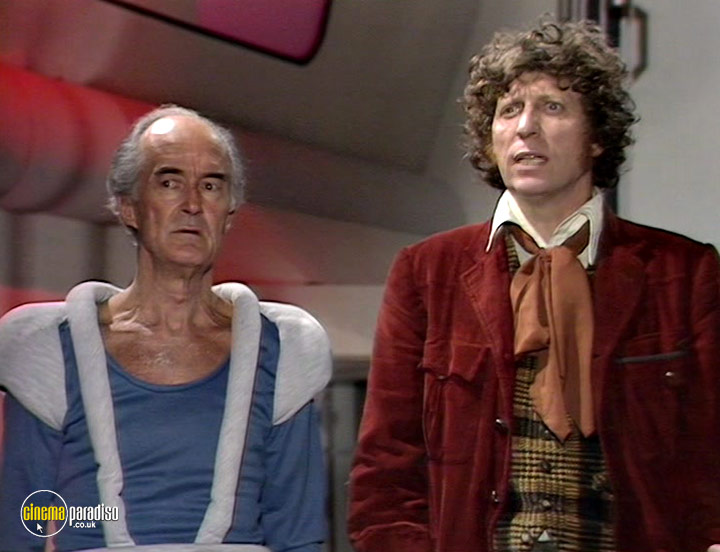
The long-running BBC sci-fi series, Doctor Who (1963-), has also had its share of dealings with Shakespeare. In 'The Executioners' - an episode in the 1965 Terry Nation storyline, 'The Chase' - The Doctor (William Hartnell) uses a Time and Space Visualizer to view Shakespeare (Hugh Walters), Abraham Lincoln (Robert Marsden), and The Beatles. However, things get sticky when the Daleks show up on a barren planet with two suns, although Fabs fans won't mind, as this is the only place to see pre-recorded footage of them in the Top of the Pops studio singing 'Ticket to Ride' for the 10 April edition, as it was wiped by the Beeb. John, George, Paul, and Ringo would return in 2024 in 'The Devil's Chord', alongside Ncuti Gatwa's Fifteenth Doctor, while the Bard was mentioned by the Fourth Doctor (Tom Baker) in both 'Planet of Evil' (1975) and 'City of Death' (1979), in which he claims to have helped transcribe the original manuscript of Hamlet. The Sixth Doctor (Colin Baker) also recalls his friendship with the Bard in 'The Mark of the Rani' (1985).
They didn't hook up again, however, until 'The Shakespeare Code', a 2007 adventure that transports the Tenth Doctor (David Tennant) and Martha Jones (Freema Agyeman) to 1599, where they hope to catch a play at the tetradecagonal Globe Theatre. However, Shakespeare (Dean Lennox Kelly) is having trouble with three weird sisters, who want him to change the ending to his new work, Love's Labour's Won. They turn out to be Carrionites plotting the release of their imprisoned race, but The Doctor manages to save the day. Writer Gareth Roberts laces the teleplay with in-jokes based on famous phrases from the plays. He also has Shakespeare write Sonnet 18 for Martha, whom he calls his 'Dark Lady', before having the Doctor joke 'Fifty-seven academics just punched the air,' when the playwright also tries to flirt with him.
Such riffing on the writing was hardly new, of course. In the 'Archaeology Today' episode of Monty Python's Flying Circus (1969-74), Shakespeare (Eric Idle) suggests the opening notes of his Fifth Symphony to Beethoven (John Cleese), who, in turn, comes up with the name 'Hamlet', which allows Shakespeare (who is seen doing the washing up) to tell Michelangelo (Terry Jones) that he is now free to use 'David' for his new statue. Several other sketches had a Bardic link, most notably in 'E. Henry Thripshaw Disease', which presents Shakespeare as a smut peddler, and 'Hamlet', which sees the indecisive Dane visit the psychiatrist. The references were even more plentiful in The Muppet Show (1976-81), but we shall limit ourselves to Shakespeare being summoned by Sam the Eagle and Joey Mazzarino pitching Romeo and Juliet as 'West Side Story without the music', although we should also mention Gonzo playing Weird Shakespeare in the third season of Muppet Babies (1984-91).
Johnnie Clayton guested occasionally as Shakespeare in Rentaghost (1976-84), most notably when he helps Messrs Mumford (Anthony Jackson), Claypole (Michael Staniforth), and Davenport (Michael Darbyshire) put on a show to raise the money to pay the agency's rent arrears to landlord Harold Meaker (Edward Brayshaw). During the run of the popular children's series, John Mortimer sought to put a more serious spin on the Bard's early life in London in Will Shakespeare (1978), a six-part ATV series that starred Tim Curry and featured Ian McShane as Christopher Marlowe, Nicholas Clay as the Earl of Southampton, Paul Freeman as Richard Burbage, and Meg Wynn Owen as Anne Hathaway. This really should be on disc, as should the 'Bingo: Scenes of Money and Death' episode of Theatre Night (1990), which was written by Edward Bond and boasts a masterly turn by David Suchet, as the ageing Shakespeare discovering that life in Straford in 1615 is just as difficult as it had been in London, where he had first met trusted friend, Ben Jonson (Kenneth Haigh).
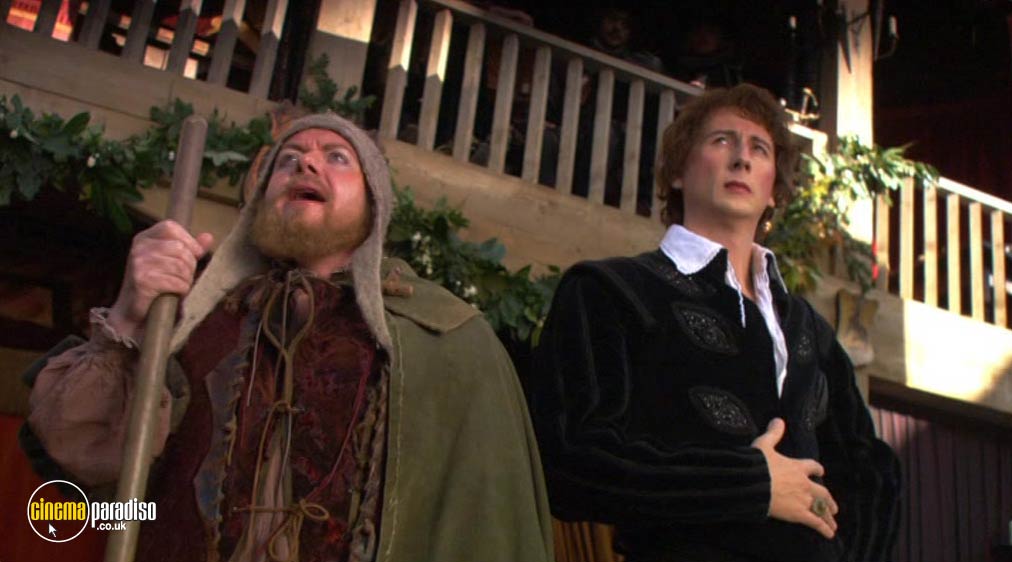
Cinema Paradiso can offer Rupert Graves in John McKay's teleplay, A Waste of Shame (2005), however, which was scripted by William Boyd, took its title from Sonnet 129, and pitched Jonson as a bitter rival. Opening in 1609, the action switches back to 1596, when Anne (Anna Chancellor) had berated her husband at the funeral of their son, Hamnet. However, the impoverishment of his father (Nicky Henson) drives Shakespeare back to London, where he is rewarded by Mary Sidney, Countess of Pembroke (Zoë Wanamaker) for the sonnets she hopes will convince son, William Herbert (Tom Sturridge), to abandon his bookkish lifestyle and wed. But they merely drive him into the arms of Lucie (Indira Varma), a French courtesan, who just happens to be Shakespeare's Dark Lady.
There's nothing so salacious about the Bard's various appearances in Horrible Histories (2009), which sees the ghost of Richard III chide him over the accuracy of his play; Shakespeare struggling to answer questions on 'Words What I Made Up' on Historical Mastermind; Bill having a battle of insults with a tavern drunk; the Bard discussing the power of language with Early Man on The Ages of Stone; and Mathew Baynton's Shakey letting rip with the song 'William Shakespeare & The Quills', in a splendid big band pastiche.
The tone is markedly more serious in 'And the Final Curtain', a 2015 episode of The Librarians (2014-17), which sends Eve Baird (Rebecca Romijn), Ezekiel Jones (John Harlan Kim), Cassandra Cillian (Lindy Booth), and Jacob Stone (Christian Kane) back to 1611 to prevent Prospero (Richard Cox) from breaking out of The Tempest and causing chaos by taking control of William Shakespeare (David Ury). Time travel is also pivotal in the Spanish series, The Ministry of Time (2015-20), which centres on the exploits of 16th-century warrior Alonso de Entrerríos (Nacho Fresneda), 19th-century bluestocking Irene Larra (Cayetana Guillén Cuervo), and modern-day paramedic Ernesto Jiménez (Juan Gea). Their paths cross twice with Shakespeare (Fran Perea), as a plot is foiled to overthrow Queen Elizabeth in 'Time of Kings' and as Shakespeare arrives in Valladolid in 1605 to settle a dispute between Cervantes and Lope de Vega that could threaten an Anglo-Spanish peace treaty in 'Time of Splendour'.
Blessed with more than a Groats-Worth of Wit, the most inspired TV series based on Shakespeare's life and works is undoubtedly Upstart Crow (2016-20). Ben Elton's familiarity with the writings ensures that each episode is full of knowing references, as well as humorous japes and lowbrow titter-wit. David Mitchell is superbly cast as the playwright carping about commuting between Stratford and London, when not getting himself into scrapes while trying to conjure up another hit play. Lisa Tarbuck provides Brummie solace as Anne, while Harry Enfield's John and Paula Wilcox's Mary are always bickering in a manner that dismays their stroppy granddaughter, Susanna (Helen Monks). At his digs in the capital, Shakespeare is attended to by Kate (Gemma Whelan) and Bottom (Rob Rouse), who constantly question his scenarios and his boastful claim to have invented every nifty phrase in the language. Players Richard Burbage (Steve Speirs), Henry Condell (Dominic Coleman), and Will Kempe (Spencer Jones, channelling Ricky Gervais) also have their doubts, although Christopher Marlowe (Tim Downie) is always ready to pass a play off as his own, while Robert Greene (Mark Heap) is hell bent on bringing down the country bumsnot for lowering the tone of Elizabethan drama by not being a Cambridge man.
Having run for 21 episodes over three series, the show was cancelled by the BBC. However, Elton revived it for the West End stage as The Upstart Crow in 2020. Set in 1605, this earned an Olivier nomination, despite falling foul of the Covid-19 pandemic before being revived for 10 weeks in late 2022. Whelan, Rouse, Monks, and Speirs reprised their roles for the initial run, with Mark Heap taking on the role of Susanna's husband, Dr John Hall.
For all his quipping, punning, and bawdiness, Elton handles the death of Hamnet with admirable sensitivity, although Tudor history does run in the family, as Uncle Geoffrey had written a key textbook on the period. He had little time for new-fangled approaches to historical study and would not have been a fan of either his nephew's sitcom or Craig Pearce's Will (2017), another excursion into the 'lost years' that was cancelled after its first 10-part season. Laurie Davidson took the title role of the bored glover who comes to London to make his mark in 1589, while trying to practice his Catholic faith in secret. His rise through the acting troupe run by Richard Burbage (Mattias Inwood) is complicated by the fact that Shakespeare falls for his daughter, Alice (Olivia DeJonge).
Despite a solid cast of British stalwarts, this series isn't currently on disc. But Cinema Paradiso can bring you Staged (2020-22), which started during lockdown to show how actors David Tennant and Michael Sheen were coping with working via Zoom. For Comic Relief's Red Nose Day in 2021, the pair appeared as Shakespeare and Marlowe in 'Staged 1592', in which they bicker about a limerick that the Bard has written for a charity event. Tennant and Sheen would reunite in Good Omens (2019-), which was scripted by Neil Gaiman from the 1990 novel he had co-written with Terry Pratchett. London in 1601 is the setting for the 'Hard Times' episode (2019), which brings the angelic Aziraphale (Sheen) and the demonic Crowley (Tennant) to the Globe Theatre, where Shakespeare (Reece Shearsmith) is sulking because he reckons it would take a miracle to get anyone to see Hamlet.
There are more plot contrivances than you could shake a stick at in the 2020 'Romeo v Juliet: Dawn of Justness' episode of the DC Comics series, Legends of Tomorrow (2016-22). As Charlie (Maisie Richards) has entrusted a ring made from a piece of the Loom of Fate with William Shakespeare (Rowan Schlosberg), the Legends have to retrieve it from a tavern in 1594. However, complications lead to the text of Romeo and Juliet being transformed into a Superhero play and Constantine (Matt Ryan) and Zari (Tala Ashe) have to take the title roles in an effort to fix the broken timeline and avoid a glitch in history.
Dense plotting is also key to the success of Sandman (2022-25), which has been spun off from Neil Gaiman's DC series. In the 2022 episode, 'The Sound of Her Wings', Dream (Tom Sturridge) travels to 1589 and meets Will Shakespeare (Samuel Blenkin), who longs to be able to write verses and stories that would inspire humankind for centuries after his death. The Bard would also feature in a couple of episodes in 2025. In 'More Devils Than Vast Hell Can Hold', Dream descends upon the Sussex Downs on 23 June 1593, where Shakespeare (Luke Allen-Gale) is about to present A Midsummer Night's Dream to the actual Faerie monarchs, Auberon and Titania. Will Keen guests as the older Shakespeare in 'A Tale of Graceful Ends', in which we learn that Dream had transformed the humble Will Shaxbeard into the greatest playwright in history.
Wise Saws and Modern Instances
As someone once said, 'brevity is the soul of wit', and the case is conclusively made by Leon Garfield in Shakespeare: The Animated Tales (1992-94), which offers half-hour versions of 12 plays, which were so deftly performed by their all-star casts that both Hamlet and The Winter's Tale won Emmys. However, the majority of Bard-inspired animations seek to extract the Michael, as is true of A Witch's Tangled Hare (1959). a Warner cartoon that begins with a writer who looks an awful like Shakespeare getting an idea for a play after seeing the name 'Macbeth' on a mailbox. Bugs Bunny and Witch Hazel ride the references to Hamlet, Romeo and Juliet, and As You Like It in a literate lampoon that is contained in the Looney Tunes Platinum Collection.
The style is more experimental in Czech animator Dagmar Doubková's Shakespeare 2000 (1988), which gathers several play characters in a modern apartment block to show how life lessons written 400 years ago are as relevant as ever. A school project to find a guest for Career Day brings Bill S. Preston, Esq. (Alex Winter) and Theodore Logan (Keanu Reeves) into contact with Stratford's finest in the 'Never the Twain Shall Meet' episode of Hanna-Barbera's Bill and Ted's Excellent Adventures (1990), which was spun off from Stephen Herek's 1989 feature of virtually the same name.
Shakespeare has proved a useful source of gags for The Simpsons since 1989, but his most notable appearance came in 'Treehouse of Horror III' (1992), as a zombified Bard asks while nearing expiration, 'Is this the end of Zombie William Shakespeare?', in imitation of Edward G. Robinson's famous line, 'Mother of mercy, is this the end of Rico?', in Mervyn LeRoy's gangster classic, Little Caesar (1931). Seth MacFarlane's Family Guy (1999-) has also made frequent use of Shakespeare's plays, although he crops up himself in a cutaway in the 'Road to India' (2016) episode, as he's forced to return a ruff that his neighbours dislike, as Brian seeks to make a point about the pressures of fame.
The writers showed scant regard for the facts in the Disney sequel, Pocahontas 2: Journey to a New World (1998), which brings the daughter of a Powhatan chief to London for a June 1616 meeting that could never have taken place because Shakespeare had already died. Nevertheless, it's fun watching him getting the idea for the 'To Be or Not to Be' soliloquy, even though Hamlet had actually been written some 13 years earlier. Shakespeare is summoned by fairies to write a campaign speech for Timmy when he runs for class president at Dimmsdale Elementary against Tad and Chad in the 'Hail to the Chief'' episode of Fairly OddParents (2001-17).
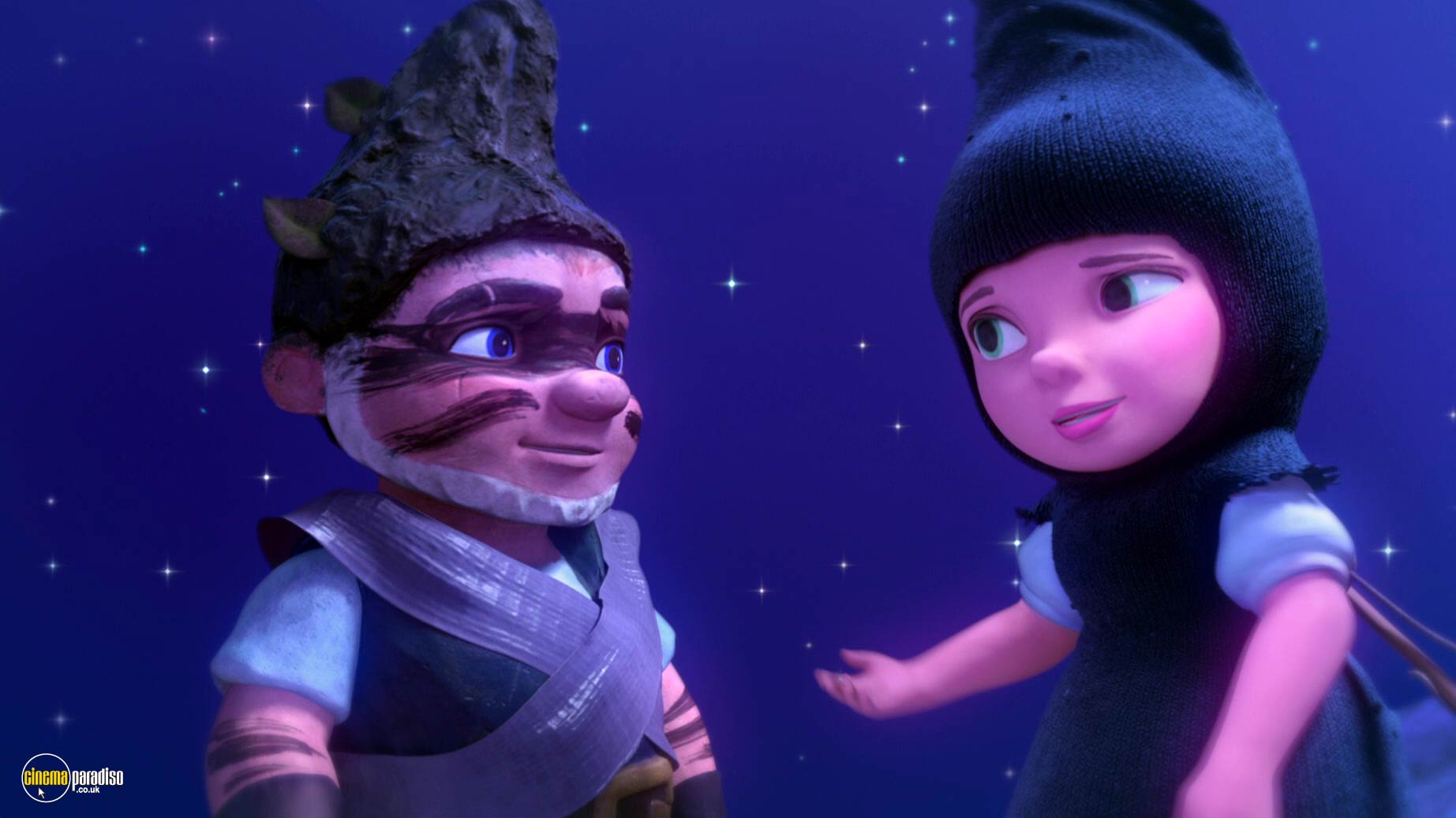
A statue of Shakespeare comes to life and speaks with the voice of Patrick Stewart when Gnomeo (James McAvoy) sits on its head while seeking advice in Kelly Asbury's Gnomeo & Juliet (2011), only to declare the ending of Romeo and Juliet to be 'rubbish'. The Bard (voiced by Jorma Taccone) uses the very same word himself in Phil Lord and Christopher Miller's The Lego Movie (2014), when Emmet Brickowski (Chris Pratt) addresses a meeting of the Master Builders in Cloud Cuckoo Land. Shakespeare is later seen getting stuck into battle and dancing 'The Worm'.
During the montage recalling past adventures in Rob Minkoff's Mr Peabody and Sherman (2014), it's suggested that the brainy hound had actually written Shakespeare's plays while he was babysitting Sherman. The trio had previously run into each other in the original animated series, Peabody's Improbable History, which formed part of The Rocky & Bullwinkle Show (1959-64). In addition to helping the Bard in his tussle with Francis Bacon, the unlikely father and son had also dropped in on him in Stratford in 1611, when he was having trouble with his latest creation, Romeo and Zelda.
In the English dub of Fate/Apocrypha (2017), an epic anime series based on the graphic novels of Yuichiro Higashide and Ototsugu Konoe, Shakespeare is voiced by Keith Silverstein, while Tetsu Inada provides the Japanese dialogue. He is a servant to the Red faction seeking to claim the Holy Grail from their Black rivals. It would take a dissertation to explain how the First Folio ties into the notion of Noble Phantasms and Shakespeare's ability to make people see their faults. So, we'll content ourselves with saying, ' When the Curtain Rises, the Applause Shall Be As Ten Thousand Thunders.'
Moving on from animation, we close with a random selection of loosely associated titles that have been included because someone would be bound to notice if we hadn't mentioned them. So, we are happy to namecheck Linus, the French bulldog who plays Shakespeare opposite Steve Martin and Queen Latifah in Adam Shankman's Bringing Down the House (2003).
We also note that in 'Ghostwriters', one of the four shorts in the portmanteau, Tales of the Fourth Dimension (2009), the Voyager space probe drops a copy of the collected works into the 16th-century garden of a certain William Shakespeare (Adrian Rawlins), who promptly claims the plays as his own without having to go to the trouble of writing them. John Geoffrion's Shakespeare is one of the 50 or so writers and poets to be lampooned in Leland Steigs's sketch anthology, Lives and Deaths of the Poets (2011).
The video game, Saints Row: Gat Out of Hell (2015), features a Bad Boy Bard, who becomes Satan's spymaster after being consigned to Hades. However, he seduces his master's daughter, Jezebel, and is banished forever. Refusing to go quietly, Shakespeare opens a nightclub named The Tempest and establishes a network of snoops to ensure he has the intel to bring the Fallen One to his knees. If this flight of dark fancy has found a following, why hasn't someone made a film version of Karey and Wayne Kirkpatrick's 10-time Tony-nominated musical, Something Rotten! (2015), which follows the efforts of struggling scribes Nick and Nigel Bottom to write the world's first musical comedy at a time when Shakespeare is dominating the London stage with such hits as Omelette? While we wait, why not enjoy Jo Joyner and Mark Benton solving crimes around Stratford-upon-Avon as Luella Shakespeare and Frank Hathaway in Shakespeare & Hathaway: Private Investigators (2019-) ? After all, didn't someone once nearly say, all the world's a crime scene?