The XXV Winter Olympics will take place in Milano-Cortina between 6-22 February 2026. Cinema Paradiso looks back at some of the films inspired by the Games over the last 102 years, as well as those featuring some of the most popular winter sports - starting with skiing.
When it comes to the Winter Olympics, Team GB has valiantly proven the old maxim that taking part counts for more than winning. In 102 years, Brits have won 41 medals in all, including 13 gold - if you factor in the results when figure skating formed part of the 1908 and 1920 Summer Games. Since the first Winter Games at Chamonix in 1924, GB has won just one medal on the snow and that only came as recently as 2014, when Jenny Jones claimed bronze in the snowboard slopestyle at Sochi.
Unsurprisingly, British films about the Winter Olympics are scarcer than medals. But other nations have thrived in the previous 24 editions and they have made movies about both the Games themselves and their component sports. Cinema Paradiso is going to bend the rules slightly to include films that feature the likes of skiing and snowboarding as leisure pursuits. So long as the characters are slippin' and a-slidin', they qualify for our two-part survey. After all, there's no business like snow business!
The Official Films
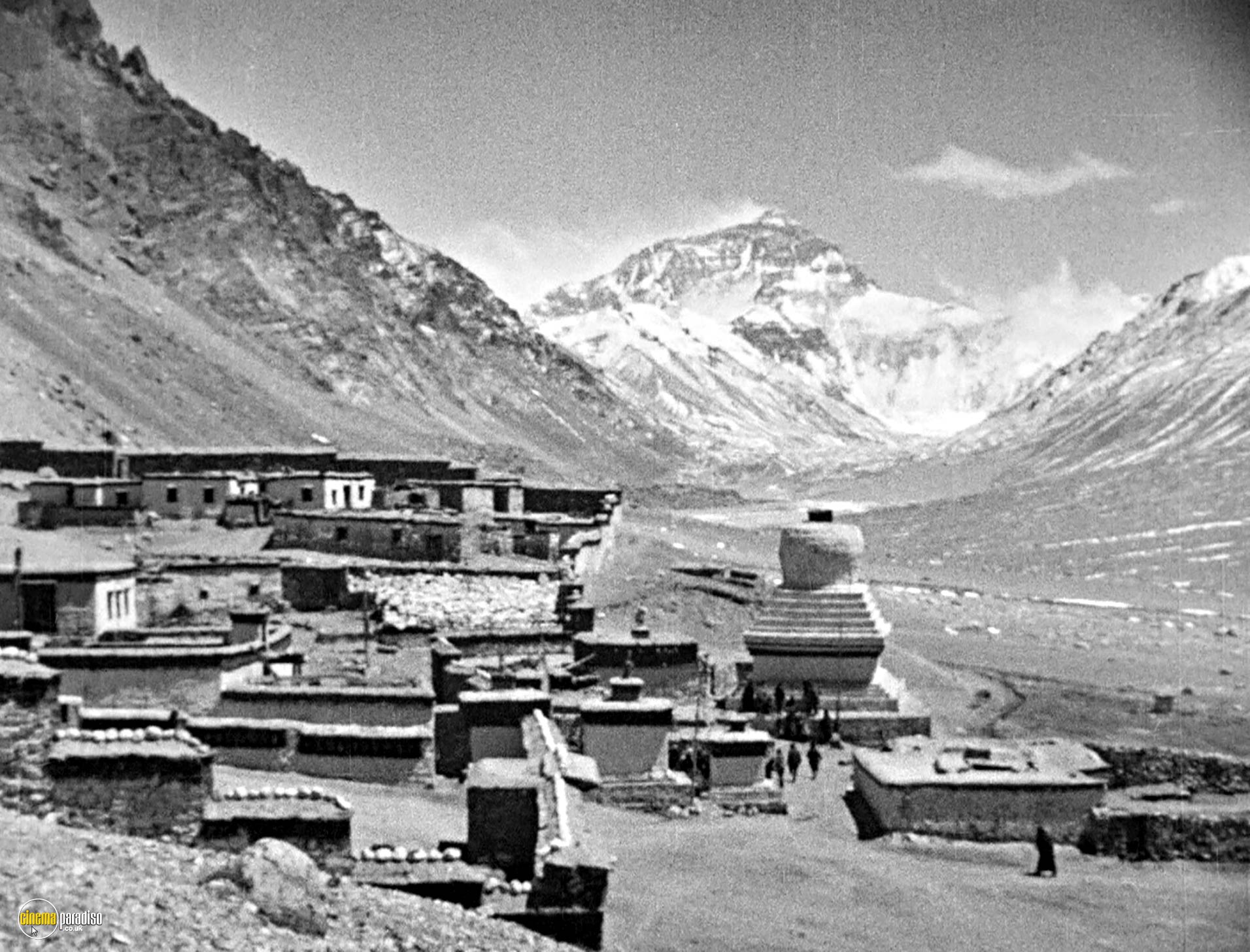
No one competing at the first Winter Games in Chamonix in 1924 knew they were Olympians, as the event was only officially recognised the following year. It had been staged as an exhibition after lengthy debate about holding a winter equivalent to the Summer Games that had been launched in Athens in 1896. During the closing ceremony, Baron Pierre de Coubertin presented special gold medals in Alpinism to the 1922 British Everest Expedition, which fared better than the 1924 tilt that cost George Mallory and Andrew Irvine their lives, as Captain John Noel records in his gripping silent documentary, The Epic of Everest (1924).
The first official winner was 50m speed-skating American Charles Jewtraw, although Swedish figure skater, Gillis Grafström, defended the gold he had won in Antwerp in the summer of 1920. The Canadian ice hockey team also retained its crown. But the most famous name on display at Chamonix was 11 year-old Norwegian skater, Sonja Henie. She came last in the ladies' figure skating, but she would return to dominate the event and, as we shall see in Part Two, become a major Hollywood star, thanks to musical extravaganzas like Sidney Lanfield's Second Fiddle (1939) and H. Bruce Humberstone's Sun Valley Serenade (1941).
Jean de Rovera recorded proceedings over 12 days for The Olympic Games Held At Chamonix in 1924 (1925), a 38-minute celebration of the 258 athletes from 16 nations who had competed in 16 events across nine disciplines. Revealing that each medal was contested outdoors in the shadow of the French Alps (which will host the next Games in 2030), the first Winter Olympic film can be viewed for free on the official Milano-Cortina website, along with its 23 successors, as finding them on disc is next to impossible, outside Criterion's 100 Years of Olympic Films 1912-2012, which doesn't come cheap, as its 32 Blu-rays contain all of the Summer and Winter films made up to London 2012.
Norway retained its place on top of the medal table in the Swiss resort of St Moritz in 1928, with Sonja Henie winning the first of her three golds and setting a record for being the youngest winner that she held for 70 years. The German studio, UFA, persuaded the International Olympic Conmmitte to let 'Bergfilm' expert, Dr Arnold Fanck, direct the official film, The White Stadium (1928), which met with surprising disfavour, considering his mountain adventures were big box-office. But he made more effort than Hollywood four years later, as the Lake Placid Games were condensed into a 15-minute short, The III Winter Olympics (1932), which didn't even have a credited director. However, Paramount, Universal, Fox, and Hearst Metrotone all sent newsreel cameras to New York State, while Victor Coty used a wind-up 16mm Bell & Howell camera to make his own amateur account, Olympics, 1932 (1933).
Again sponsored by UFA, Carl Junghans and Herbert Brieger called the shots on Youth of the World (1936), which reviewed the Games at Garmisch-Partenkirchen that would be overshadowed by the Nazi-controlled summer spectacle in Berlin that was captured by Leni Riefenstahl in Olympia (1938). This ran for almost four hours across two parts, compared to the 37 minutes required to cover winter sports that Adolf Hitler had little taste for. He remilitarised the Rhineland just 12 days after the Games ended, hastening a war that would lead to the cancellation of the 1940 event in Sapporo, Japan and the 1944 edition in Cortina d'Ampezzo.
Twelve traumatic years would elapse before the Olympic Movement reconvened in St Moritz in 1948. Gaumont-British documentarist, Castleton Knight, was tasked with squeezing the Winter and Summer Games into XIVth Olympiad: The Glory of Sport (1948). He also had to work with two types of colour stock, the Technicolor Monopack in Switzerland and Technichrome in London. Moreover, he had to have the film ready for release in cinemas within three weeks of the flame expiring at Wembley Stadium on 14 August.
Tancred Ibsen, the grandson of esteemed playwright Henrik Ibsen, directed the official record of competition in the Norwegian capital, The VI Olympic Winter Games, Oslo 1952. However, pioneering American ski film-maker, John Jay, also released Olympic Victory (both 1952), which he followed with Alpine Safari (aka Winter Paradise, 1953), which received an Oscar nomination for Best Live-Action Short. Three years later, Giorgio Ferroni opened White Vertigo (1956), with a glorious Technicolor sequence of the Olympic torch being slalomed down the slopes of Cortina d'Ampezzo (which finally got its first Games) to the sound of church bells. Seeking to outdo the units providing global television coverage for the first time, Ferroni even put a camera inside a bobsleigh. But he also did justice to the athletes, notably Austrian Toni Sailer, who won all three men's Alpine skiing golds and, as we shall see, picked up the odd film role as a consequence.
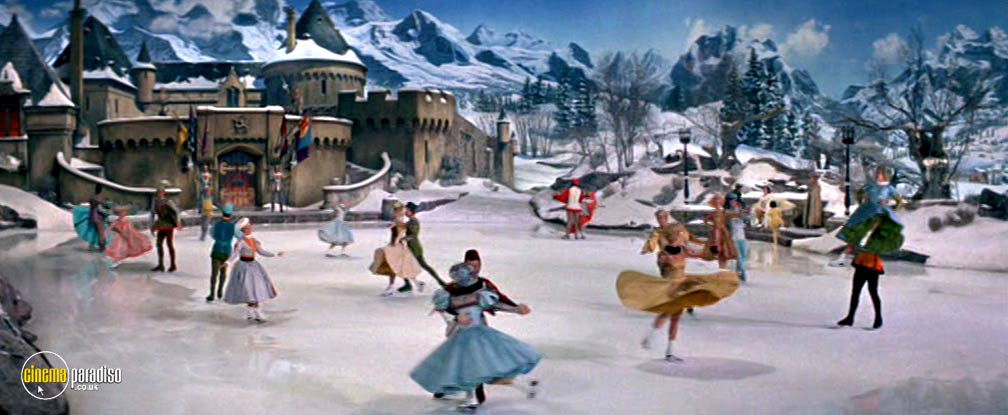
German Heribert Meisel took the helm for People, Hopes, Medals (1960). But John Jay, Frank Howard, Cody Stokes, and the US Forest Service all had cameras in Squaw Valley, California to see Swedish lumberjack Sixten Jernberg add to the nine-medal tally for cross-country skiing that made him the most decorated Winter Olympian to date. Silver medalling American figure skater, Carol Heiss, would go on to headline Walter Lang's Snow White and the Three Stooges (1961), although the 86 year-old has not made another movie since.
Although Theo von Hörmann directed the official documentary, IX Olympische Winterspiele Innsbruck (1964), French ski film specialist Jacques Lesage was also in Austria to produce the short, Victoires olympiques, as compatriot skiing siblings Christine and Marielle Goitschel, Soviet skaters Ludmila Belousova and Oleg Protopopov, and British bobsledders Robin Dixon and Tony Nash made their marks. Lesage would return in an official capacity four years later to shoot the pre-Games promotional films, Three Roses, Five Rings and Victory in Grenoble. There were no shortage of film-makers at the event itself, with ski specialist Dick Barrymore releasing The Tenth Winter, Claude Lelouch and François Reichenbach joining forces with 27 others on 13 Days in France (aka Challenge in the Snow) , and Jacques Ertaud and Jean-Jacques Languepin teaming up for the official picture, Snows of Grenoble (all 1968). French Alpine skiier Jean-Claude Killy stole the show with three golds before going on to star with Vittorio De Sica in George Englund's Snow Job (1972) and hold his own against Jim Carrey in Damien Lee and David Mitchell's comic featurette, Copper Mountain (1983).
The director of Pale Flower, Assassination (both 1964), and Silence (1971) was behind the camera for Sapporo Orinpikku (1972). A key member of the nuberu bagu that transformed Japanese cinema, Masahiro Shinoda produced the longest Winter Olympic film to date (167 minutes), as well as the artiest, as he made inspired use of CinemaScope to capture the spectacle of the events and the athleticism and intensity of the competitors. Japan would win all three men's ski jumping events, while Dutch speed skater, Ard Schenk, and Soviet cross-country skier, Galina Kulakova, achieved individual hat-tricks. However, the Games were marred by a row over sponsorship that saw Austrian skier Karl Schranz expelled. But there was less controversy, as Innsbruck became the first two-time host and James Coburn and Rick Wakeman were hired to narrate and score Tony Maylam's BAFTA-nominated White Rock (1977). Focussing in-depth on just six events, this broke the mould of Olympic film-making, most notably with its coverage of Franz Klammer's win in the men's downhill and Dorothy Hamill and John Curry taking the figure skating golds. The former would marry Dean Martin's son, while the latter's troubled life was commemorated in James Erskine's poignant documentary, The Ice King (2018). Maylam also collaborated with Tony Clegg on the companion short, Olympic Harmony, while Jack Lesage returned with his own offering, Ski, un jeu Olympique (1976).
Drummond Challis teamed with Maylam on Olympic Spirit (1980), as Lake Placid repurposed several venues from 1932 and made the first use of artificial snow. The big story, though. was the US ice hockey team's 'Miracle on Ice' victory, which was recalled in Steven Hilliard Stern's teleplay, Miracle on Ice (1981), which starred Karl Malden as coach Herb Brooks and Steve Guttenberg as net minder, Jim Craig. The roles would go to Kurt Russell and Eddie Cahill in Gavin O'Connor's Disney retelling, Miracle (2004). Elsewhere, American speed skater Eric Heiden achieved a record haul of five medals, while Swede Ingemar Stenmark and Liechtenstein's Hanni Wenzel completed slalom doubles. Robin Cousins also won figure-skating gold for Britain, while Irina Rodnina claimed a pairs hat-trick with husband, Alexander Zaitsev, with the former's career later being celebrated in Konstantin Statskiy's biopic, Rodnina (2025).
The skaters were also the talk of the town, as bad weather hampered the outdoor events at Sarajevo in 1984. Director Kim Takal's A Turning Point captures the foggy conditions, but had a clear view as Jane Torvill and Christopher Dean took gold to Ravel's 'Bolero', a routine that was recreated by Poppy Lee Friar and Will Tudor in Gillies Mackinnon's Torvill & Dean (2018) and restaged in Torvill and Dean's Dancing on Ice: The Bolero 25th Anniversary Tour (2009). East German Katarina Witt and American Scott Hamilton (who would voice Buzz the short-sighted elf in Nine Dog Christmas, 2003) also triumphed on the blades, while Senegal's Lamine Guèye became the first Black African skier to compete in the Winter Games.
One name would become synonymous with Winter Olympic documentaries over the next two decades, as Bud Greenspan directed Calgary '88: 16 Days of Glory (1989), Lillehammer '94: 16 Days of Glory (1994), Nagano '98 Olympics: Stories of Honor and Glory (1998), Salt Lake City 2002: Bud Greenspan's Stories of Olympic Glory (2003), Bud Greenspan's Torino 2006: Stories of Olympic Glory (2007), and Vancouver 2010: Stories of Olympic Glory (2010), which he co-directed with Nancy Beffa. The only Games he didn't cover during this period were hosted by Albertville and recorded by Joe Jay Jalbert and R. Douglas Copsey in One Light, One World (1992). The last time Winter and Summer events were held in the same year, the latter Games were blighted by the death of Swiss speed skiier Nicolas Bochatay during a training run.
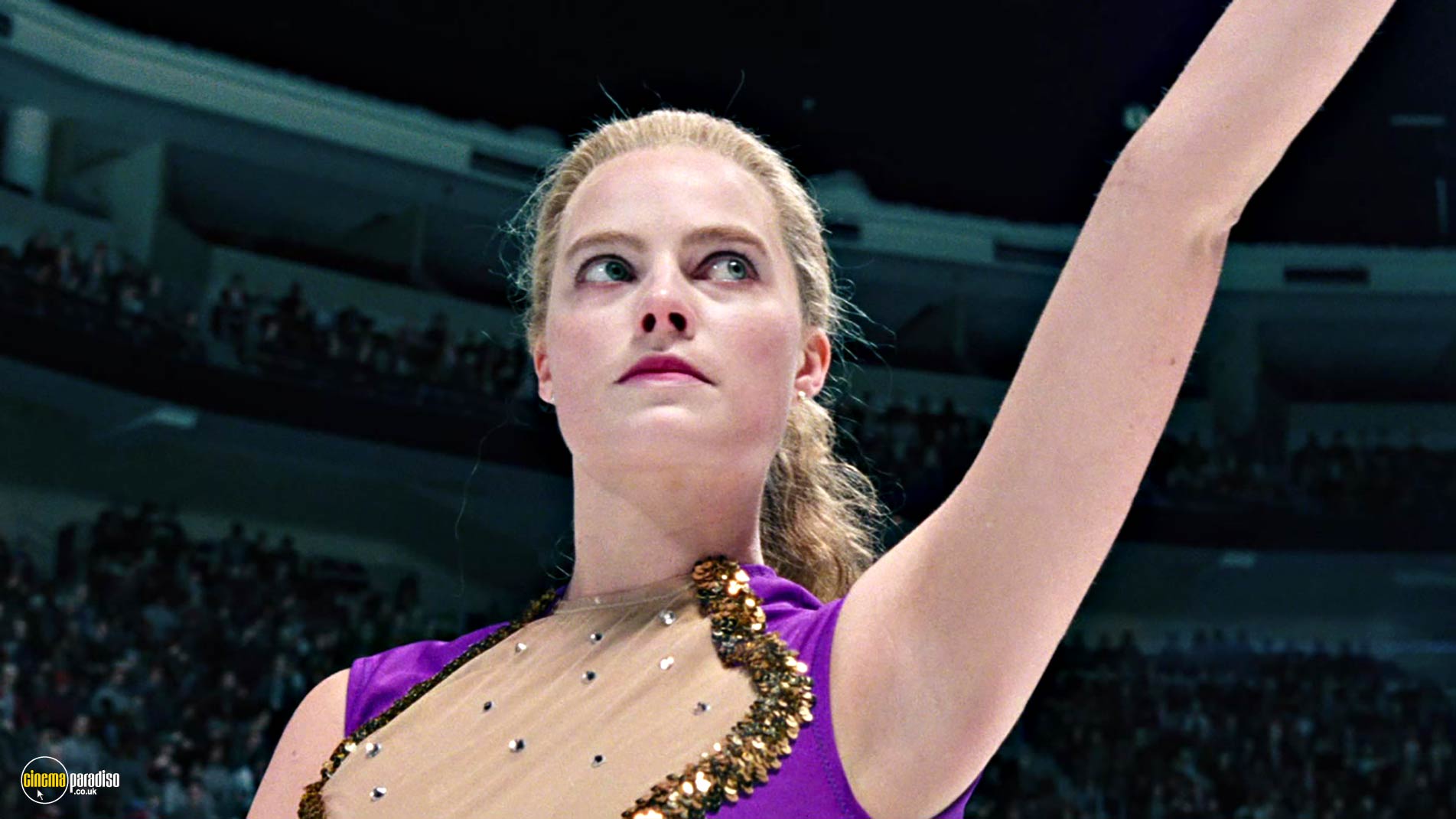
Finnish ski jumper, Matti Nykänen, competed against Michael 'Eddie the Eagle' Edwards at Calgary, as Dexter Fletcher recalled in Eddie the Eagle (2016). But this wasn't the only underdog achievement to be immortalised on film, as the efforts of Jamaican bobsledders Devon Harris, Dudley Stokes, Michael White, Freddy Powell, and Chris Stokes were fictionalised in Jon Turteltaub's Cool Runnings (1993). Cross-country skiiers Manuela Di Centa and Lyubov Yegorova won nine medals between them at Lillehamer, but American skater Nancy Kerrigan was the one to have a film made about her Olympic experience, although the focus of Craig Gillespie's I, Tonya (2017) fell on her bitter rival, Tonya Harding (Margot Robbie). At Nagano, 15 year-old figure skater Tara Lipinski took Sonja Henie's crown to become the youngest gold medal winner, while Norwegian cross-country skier Bjørn Dæhlie's four medals took his tally to 12, including a record-breaking eight golds. Swiss ski jumper Simon Ammann, Croatian skiier Janica Kostelic, Norwegian racer Kjetil André Aamodt, and the British women's curlers under skip Rhona Martin left their mark on Salt Lake City, where extreme sports came to the fore for the first time. Luciano Pavarotti gave his final public performance during the opening ceremony at Torino in 2006, where snowboarder Shaun White and speed skater Apolo Anton Ohno were among the athletes to shine, with the former going on to take roles in Will Gluck's Friends With Benefits (2011) and Joe Carnahan's Stretch (2014), while his rivalry with best friend Kevin Pearce is explored in Lucy Walker's exemplary documentay, The Crash Reel (2013).
A famous ice hockey final capped the Vancouver Games that had seen American skiier Lindsey Vonn, US figure skater Evan Lysacek, and Canadian ice dancers Tessa Virtue and Scott Moir excel. Norwegian biathlete, Ole Einar Bjørndalen, won his 13th medal at Sochi 2014, where Lizzie Yarnold took skeleton gold and David Murdoch and Eve Muirhead brought home curling medals for Team GB. Yarnold would retain her title in PyeongChang, where Czech Ester Ledecká made history by scooping gold in both skiing and snowboarding. Sergei Miroshnichenko's Rings of the World (2014) and Yi Seung-Jun's Crossing Beyond (2018) provided the film coverage, while the great Zhang Yimou executive produced Lee Chuan's Beijing 2022 (2023), which saw Norwegian Johannes Thingnes Bø and Frenchman Quentin Fillon Maillet go head to head in the biathlon, Norwegian cross-country skiier Therese Johaug and American-born Chinese freestyle skiier Eileen Gu pick up three and two golds respectively, and Scot Eve Muirhead's rink take gold in the women's curling. We wait to see what the XXV Winter Olympics will bring, with Milano- Cortina being both the first Games with dual host cities and the first to hold a ski mountaineering competition.
Skiing - Nice and Steezy
As all you Olympic aficionados will already know, there are five types of skiing events at each Winter Games. The most glamorous is the Alpine category that includes the downhill, super-G, slalom, giant slalom, alpine combined, and the mixed parallel slalom events. Since joining cross-country skiing, the biathlon, and the Nordic combined in 1992, freestyle skiing has brought a spectacular dynamic to the programme, with medals on offer in the aerial, mogul, ski cross, halfpipe, slopestyle, and big air disciplines.
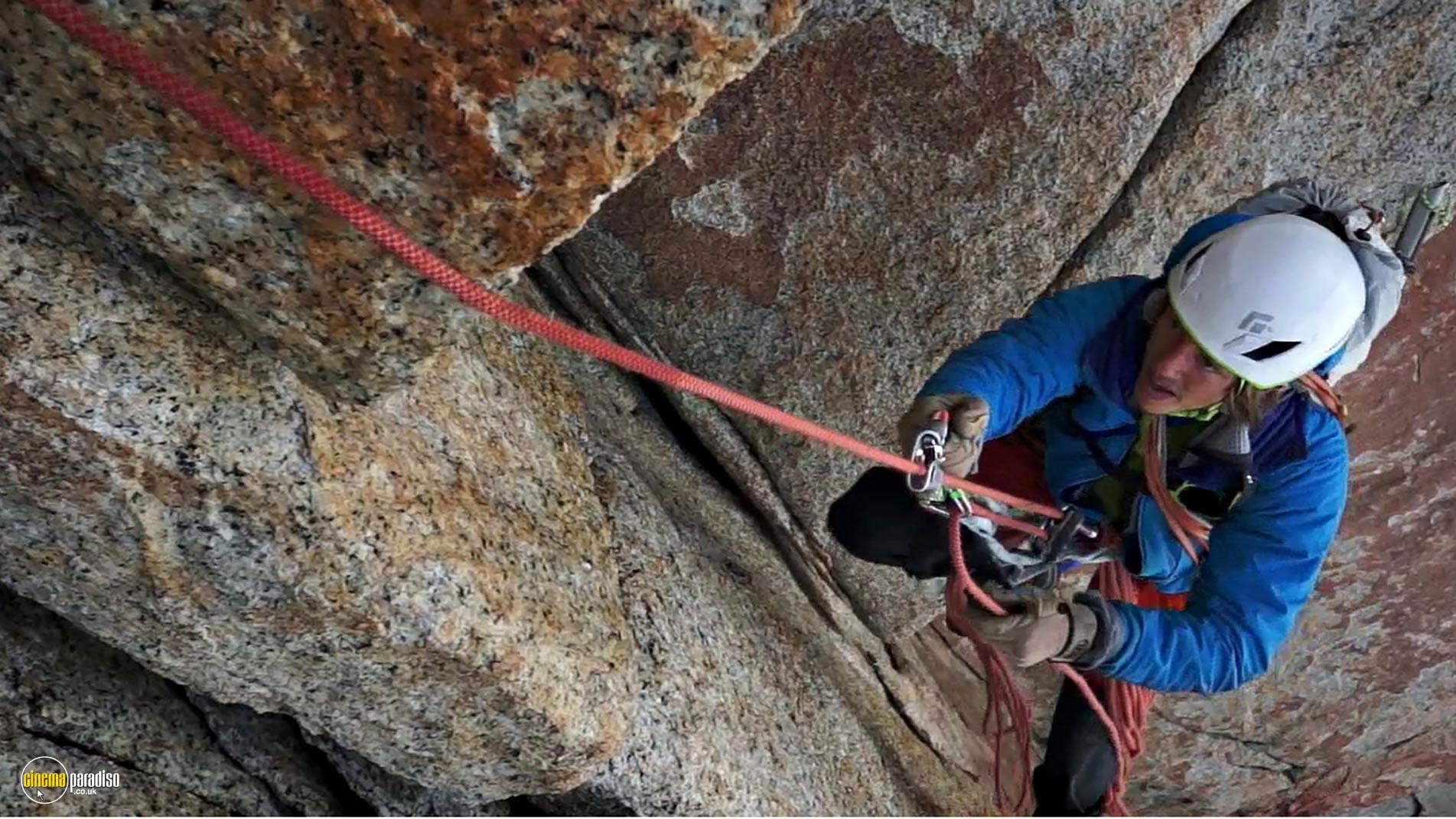
Documentary makers have seized upon the spectacular nature of these sports and there is a thriving market for extreme sport titles at specialised film festivals like the Kendal Mountain Festival. As we shall see, Dr Arnold Fanck pioneered the Bergfilm or 'mountain film' genre in the silent era. Subsequently, Otto Lang, Sidney Shurcliff, John Jay, Dick Barrymore, Roger Brown and Barry Corbet, Warren Miller, Greg Stump, Todd and Steve Jones, Geoff McDonald, Rick Moulton, Scott Gaffney, Daniel Bertolino and Gilles Parent, Noah and Jonah Howell, and Dave Mossop and Eric Crosland have all followed in his ski lines. Miller joined surf movie maverick Bruce Brown in Jon Lang's extreme sports documentary, In Search of Freedom (2015), while while Greg Stump's The Blizzard of Aahhhs (1988) can be found on the same disc as Mark Obenhaus's Steep (2007), which features some of the world's most audacious extreme skiers in action at venues including Chamonix. But Cinema Paradiso users can get a better idea of the kind of films these guys have produced down the years from Jennifer Peedom's Mountain (2017). Narrated by Willem Dafoe, this features such extreme pursuits as mountaineering, rock climbing, free soloing, high-altitude skiing, snowboarding, heliskiing, BASE jumping, mountain biking, and wingsuit gliding. Even if you're slumped in your armchair, this is not a film for those with vertigo!
Easily the best film about Olympic skiing is Michael Ritchie's Downhill Racer (1969), an adaptation of an Oakley Hall novel that follows David Chappellet (Robert Redford) from Idaho Springs, Colorado to Europe's most iconic skiing venues in his bid to impress martinet coach Eugene Claire (Gene Hackman) and make the US ski team. Superbly played, this is a gritty treatise on sacrifice, glory, and esprit de corps that is full of gruelling training and thrilling race sequences. A decent companion piece (if it were available on disc in this country) would be Larry Peerce's The Other Side of the Mountain (1975), a biopic of 18 year-old 1956 Olympic prospect, Jill Kinmont (Marilyn Hassett), and her boyfriend, daredevil skiier, Dick 'Mad Dog' Buek (Beau Bridges).
Bafflingly, that's about it for Olympic skiing pictures. But there are dozens more that include scenes on the slopes, as Cinema Paradiso has already indicated in Top 10 Winter and Snow Films and A History of Sports Films (Winter Edition) . There's bound to be a little overlap, but our focus here is on Olympic sports and how they have been treated on film from novice through to elite level.
Made the year before the first Winter Olympics, Georg Jacoby's Paradise in the Snow (1923) joins professional skiier Bruno Kastner and rookie Lona Schmidt on a run to a blizzard-hit railway station. But there's more to raise the pulse in Arnold Fanck's The Great Leap (1927), which stars Leni Riefenstahl as a Dolemite dweller who falls for ski tourist, Luis Trenker, who had set Riefenstahl's heart fluttering in Fanck's The Holy Mountain (1926), as a dancer can't decide between a dashing climber and prize-winning skiier Ernst Petersen. These romances are just two of the numerous bergfilme made in Weimar Germany, along with Rolf Randolph's Love on Skis (1928), Max Obal and Rudolf Walther-Fein's Love in the Snow, Max Neufeld's White Paradise (both 1929), and Mario Bonnard and Luis Trenker's The Son of the White Mountain (1930), the story of a ski instructor accused of murdering a tourist that was also released in a French version. Ski ace Gustav Lantschner appeared in Fanck's The White Ecstasy (1931), which contains several innovative sporting sequences filmed around St Anton am Arlberg, as Riefenstahl's Tyrolean village girl strives to improve her skiing and ski-jumping skills.
A comedy of errors set at a ski resort, Erich Kästner's novel, Three Men in the Snow, has been adapted several times for the screen since Richard Pottier's A Rare Bird (1935). In addition to Edward Buzzell's Hollywood version, Paradise For Three (1936), there has also been Swede Einar Axelson's Poor Millionaires (1936), and Czech (Vladimír Slavínský, 1936), Austrian (Kurt Hoffmann, 1955), and West German (Alfred Vohrer, 1974) variations on Three Men in the Snow. Just as jolly is Géza von Bolváry's Winter's Night's Dream (1935), which brings Magda Schneider to Garmisch-Partenkirchen to romance ski instructor Wolf Albach Retty. This musical romance was made to promote the Winter Games of 1936, which was also the year Bernard Vorhaus made Dusty Ermine, a thriller based on forger Ronald Squire's efforts to keep his nephew out of a counterfeiting gang and which climaxes in an exciting ski chase that was filmed on location in the Alps. Mary Bird, who skiied for the US at Garmisch, cameos in Christopher Young's Schlitz on Mt Washington (1937), a slippery farce that inspired the cult 1942 comedy, Dr Quackenbush Skis The Headwall.
The manager of a Swiss ski resort seeks to raise funds by forging letters from a dashing instructor in Luis Trenker and Werner Klingler's Love Letters From Engadin (1938). This comedy of errors was made at the height of the Third Reich and skiing and the war would coincide in Frank Borzage's The Mortal Storm, which follows James Stewart and Margaret Sullavan in their bid to flee the Third Reich by crossing the mountains into Austria, and Lew Landers's Ski Patrol (both 1940), which pitches two Olympic skiiers into combat and remains the only Hollywood film about the Winter War between the Soviet Union and Finland. The mood is much lighter, however, as millionaire playboy Henry Fonda crashes at doctor Barbara Stanwyck's feet during a skiing holiday in Wesley Ruggles's You Belong to Me, and Jack Kinney's The Art of Skiing (both 1941), a slapstick Disney cartoon that is available to rent on Everybody Loves Goofy (2003).
After Gregory Peck and Ingrid Bergman had bobbed awkwardly in front of a rear projection screen while skiing Gabriel Valley in Alfred Hitchcock's Spellbound (1945), ski instructor Charles Drake fell for farm girl Lynne Roberts in Bernard Vorhaus's Winter Wonderland (1946). Shortly afterwards, Esther Williams attempts to matchmake her best friend and Van Johnson in Robert Z. Leonard's Duchess of Idaho (1950), which bases a Technicolor sequence on a nocturnal torch procession that feels like something concocted by Busby Berkeley and Leni Riefenstahl. Smugglers base themselves at a ski resort on Bavaria's border with Austria in Arthur Maria Rabenalt's The White Adventure (1952), while the Swiss Alps provide the setting for Wendy Toye's All For Mary (1955), as soldier Nigel Patrick and upper-class dolt David Tomlinson's ski-slope efforts to impress hotelier's daughter Jill Day are curtailed by chicken pox.

Winter vacations beckon in the Géza von Cziffra duo, The Singing Hotel (1953) and Peter Shoots Down the Bird (1959), with the former being filmed in Oberstdorf and Kitzbühel and the latter becoming a cult musical favourite in German-speaking territories. But there was nothing cosy about the Wehrmacht snow patrol threatening to prevent a bid to sabotage a mountain bridge in Roger Corman's Ski Troop Attack (1960), which would make an ironic companion to Tommy Wirkola's Dead Snow (2009), which pits some holidaying medical students against the zombie Nazis led by General Herzog (Ørjan Gamst), who returns with revenge on his mind in Dead Snow 2: Red vs Dead (2014).
Following the success of William Asher's Beach Party movies, the vogue switched to ski resorts in Alan Rafkin's Ski Party, Richard Benedict's Winter A-Go-Go (both 1965), Lennie Weinrib's Wild Wild Winter, and Curt Siodmak's Ski Fever (both 1966). The latter featured Austrian Olympic clean-sweep skiier Toni Sailer. But we have a hankering for Sidney Miller's Get Yourself a College Girl (1964), which featured music by The Dave Clark Five, The Animals, Stan Getz, Astrud Gilberto, and Nancy Sinatra, although nothing tops the 'Ticket to Ride' sequence in Richard Lester's Help! (1965), which saw The Beatles in top hats and black mini-capes gliding on skis and riding ski-bikes on the slopes at Obertauern. Following along the same lines, Bruce D. Clark's The Ski Bum (1971), an adaptation of a Romain Gary novel that sees married resort hostess Charlotte Rampling coax ski instructor Zalman King into seducing a rich man's daughter in order to save her business.
New York accountant Dean Jones strives to rescue his Rocky Mountain hotel in Norman Tokar's Snowball Express (1972), which was released the same year as George Englund's Snow Job, which paired Cliff Potts and skiing superstar Jean-Claude Killy in a caper about a small town bank and the Alpine crevasse in which they stash their loot. The danger is increased severalfold in David Lowell Rich's Runaway! (1973), as a group of skiiers find themselves trapped on a train careering down a mountain. Keen to avoid more traditional forms of stressful situation, a millionaire checks into the Kitzbühel hotel run by the catering students seeking a rich patron in Franz Antel's Blue Blooms the Gentian (1973).
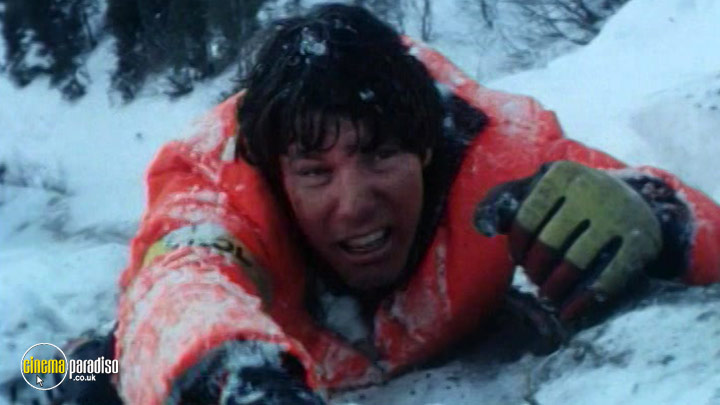
It took a while before someone realised that ski resorts make great horror movie settings. But Joseph Stefano (who scripted Psycho, 1960) sparked rumours of a yeti attack after a mauled skiier is found in the Colorado town in Herb Wallerstein's Snowbeast (1977). Sheriff Clint Walker calls for calm, but resort owner Sylvia Sidney sends hunter Robert Logan and ski champions Bo Svenson and Yvette Minieux into the Rockies to save the Brill ski centre. Also a firm favourite with ski fans is Peter Markle's Hot Dog...the Movie (1984), which was scripted by the aforementioned ski film titan, Mike Marvin, and sees veteran skiier David Naughton side with rookie Patrick Houser when arrogant Austrian John Patrick Reger tries to show him up at the Squaw Valley Freestyle Championship.
We go off piste at this juncture to recall the epic skiing sequences in the James Bond series. Mürren in Switzerland provided the backdrop for Peter R. Hunt's On Her Majesty's Secret Service (1969), which has George Lazenby's 007 lead Telly Savalas's Blofeld and his gun-toting, orange jacketed henchmen on a merry dance that sees two of them plummet into a deep ravine. Undaunted, Blofeld launches a second daylight attack by causing an avalanche to engulf Bond and Contessa Teresa di Vicenzo (Diana Rigg). Roger Moore is forced to leave a cosy chalet assignation when something comes up in the pre-credit sequence in Lewis Gilbert's The Spy Who Loved Me (1977) and he has to leap free from his pursuers and float to the ground on a Union Jack parachute.
Slalom Olympian Willy Bogner created this memorable stunt near St Moritz and he was on hand at Cortina d'Ampezzo for the exhilarating chase sequence in John Glen's For Your Eyes Only (1981), which sent Moore down a ski jump hill and on to a bobsleigh track, although 23 year-old driver Paolo Rigon was killed when he became trapped under the sled during filming. The same film also included a
duel with East German biathlete John Wyman and a battle with some of Julian Glover's henchmen wearing ice hockey gear after Moore had visited the rink to say his goodbyes to skater Lynn-Holly Johnson, a first-time actress who had once been runner-up in the US Figure Skating Championships.
Bogner won a Bambi Award for the pre-credit trip to Siberia in Glen's A View to a Kill (1985), which saw Moore in a fur-hooded white suit recover a microchip and then give some Soviet troops the slip via a combination of skis, a snowmobile, and a snowboard. Timothy Dalton took over for Glen's The Living Daylights (1987), which skirted the usual skis to send Bond and Kara Milovy (Maryam d'Abo) across the frozen Weißensee in a souped-up car and then hurtling through a forest towards the frontier on her cello case.
The first Olympic venue of Chamonix cropped up in Michael Apted's The World Is Not Enough (1999), where the crew sought to help rescue those caught in the avalanche that had delayed the shooting of the scene in which Bond (Pierce Brosnan) and Elektra King (Sophie Marceau) are chased on skis by a hit squad on parachute-carrying snowmobiles. And Daniel Craig got his snow chase in Sam Mendes's Spectre (2015), although he remained in the pilot's seat of a small plane, as it loses its wings and skids downhill towards the Land Rover carrying kidnapped scientist, Madeleine Swann (Léa Seydoux).
Back on track, we head to Val d'Isère, where Jérôme (Christian Clavier), Gigi (Marie-Anne Chazel), and Popeye (Thierry Lhermitte) from French Fried Vacation (1978) have all found work. However, a backwoods skiing trip goes seriously wrong in Patrice Leconte's French Fried Vacation 2 (aka Les Bronzés font du ski, 1979) and it's no wonder it took until 2006 for the characters to speak to each other again for French Fried Vacation 3. French director Édouard Molinaro has flautist Kristy McNichol hide a leg brace inside a plaster cast to get some peace and quiet at a ski resort in Just the Way You Are and the emphasis is also on the funny side in Charles Dennis's Reno and the Doc (both 1984), as reclusive ski bum Kenneth Welsh forms a racing team with con man Henry Ramer, only for both to fall for sports reporter, Linda Griffiths.
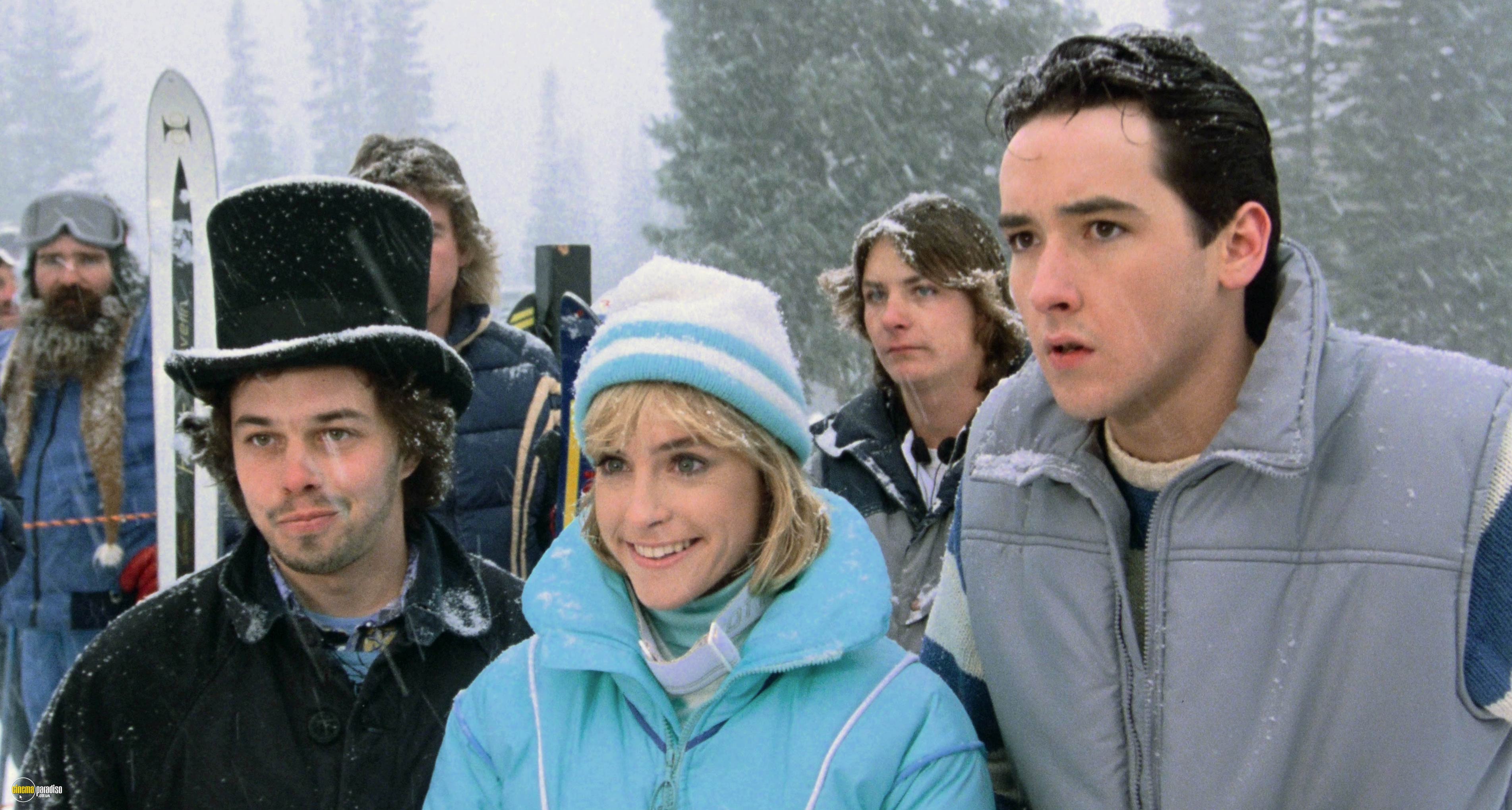
Distraught at being dumped off the school ski team by the same bully who had stolen his girlfriend, Greendale teen John Cusack contemplates suicide in Savage Steve Holland's Better Off Dead (1985). But French exchange student Diane Franklin restores his confidence and he challenges his nemesis to a winner-take-all downhill race. Proving that teenpix were all the rage everywhere in the 1980s, Lasse Åberg and Peter Hald's The Conducted Tour 2 - Snowroller (1985) sees Swede Stig Lasse Åberg and Norwegian buddy, Jon Skolmen, head to the Alps for a series of unfortunate misadventures. That said, they're luckier than the pals invited to a deserted ski resort in Jeff Kwitny's Iced (1989). as they are stalked and slain by a masked killer.
There's more dirty work afoot in Richard Correll's Ski Patrol (1990), as a developer seeks to sabotage the safety record of a ski resort. Party animal Dave Marshak (Dean Cameron) is also prepared to use foul means to win a competition against the wealthy nerds in his class in Damien Lee's Ski School (1991), which was followed by David Mitchell's Ski School 2 (aka Crazy Ski School, 1994), which sees Dean and his cronies enter a ski race in order to prevent the girl of his dreams from marrying Mr Wrong. Romance is also in the air, as Peter Berg and Paul Gross quit Detroit and meet DJ Teri Polo and affluent cougar Finola Hughes after becoming Colorado ski instructors in Patrick Hasburgh's Aspen Extreme (1993). However, their friendship is tested when they enter the prestigious Powder 8 skiing competition, with the resulting footage featuring big mountain extreme skiers Scot Schmidt and Doug Coombs as stand-ins, earning the film the reputation of being ' Top Gun on the Ski Slopes'.
Invited by his best pal to spend Christmas in Park City, Utah, Stephen Baldwin gets unwanted competition for German girlfriend, Claudia Schiffer, from ski instructor, Robert Downey, Jr. in George Haas's Friends & Lovers (1999). Ski patrol member Sean Astin is informed by wealthy Stacy Keach that he doesn't want him sniffing around his daughter in David Giancola's Icebreaker (2000). However, he gets to prove his worth when a plane carrying radioactive material crash lands near the Killington resort. Leaving Quahog for Aspen, Colorado, Stewie Griffin challenges sniffy Stanford Cordray to a downhill race in order to recover the beloved teddy bear accidentally sold in a yard sale in the 'Road to Rupert' episode (2007) of Family Guy (1999-).
Unable to face his job on Wall Street, Milo Ventimiglia also heads to Aspen in Marni Banack's Snow Job (aka Winter Break, 2003) to join college buddies, Eddie Mills and Eddie Kaye Thomas, who are larging it on the slopes for their gap year. If the pull of skiing and snowboarding to his heart's content aren't already enough to make the reluctant financier change his mind, the sight of Maggie Lawson on the piste is a game-changer. At the opposite end of the age scale, Granny is revealed to be an extreme sports nut in Cory Edwards's Hoodwinked! (2005) and she has to ski, snowboard, and even hang-glide to protect her recipes from the Evil Ski Team dispatched by Boingo the Bunny, who proves just as meddlesome in the sequel, Hoodwinked Too: Hood Vs Evil (2011), which is frustratingly unavailable to rent.
Nor is Tibor Takács's Ice Spiders (2007), which sees a group of Olympic hopefuls gather at Lost Mountain to train with skiing veteran Patrick Muldoon, only to be informed by scientist Vanessa Estelle Williams that some mutant spiders might have gotten loose from her remote research facility. Complete with a gooey halfpipe denouement, this is doomed to miss the cult acclamation that has been bestowed upon Steve Pink's Hot Tub Time Machine (2010), which transports singleton John Cusack, meekly married Craig Robinson, and party animal Rob Corddry to the Kodiak Valley Ski Resort they remember from 1986, when they all made life-changing decisions (which are still having ramifications in Hot Tub Time Machine 2, 2015).
Only one of the party of college kids heading for a mountain cabin in West Virginia gets to ski in Declan O'Brien's Wrong Turn 4: Bloody Beginnings (2011) and a fat lot of good it does her, although Ali Tataryn does manage to avoid the cannibals preying on the pals who have taken shelter in an abandoned sanatorium deep in the West Virginia wilderness after a blizzard stalls their snowmobiles. A different kind of predator spells trouble for the siblings in Ursula Meier's Sister (2012), as seasonal chef Martin Compston muscles in on 12 year-old Kacey Mottet Klein's racket of flogging the expensive skiing equipment he has stolen from rich tourists at the Swiss resort where he lives in a rundown housing complex with his older sister, Léa Seydoux.
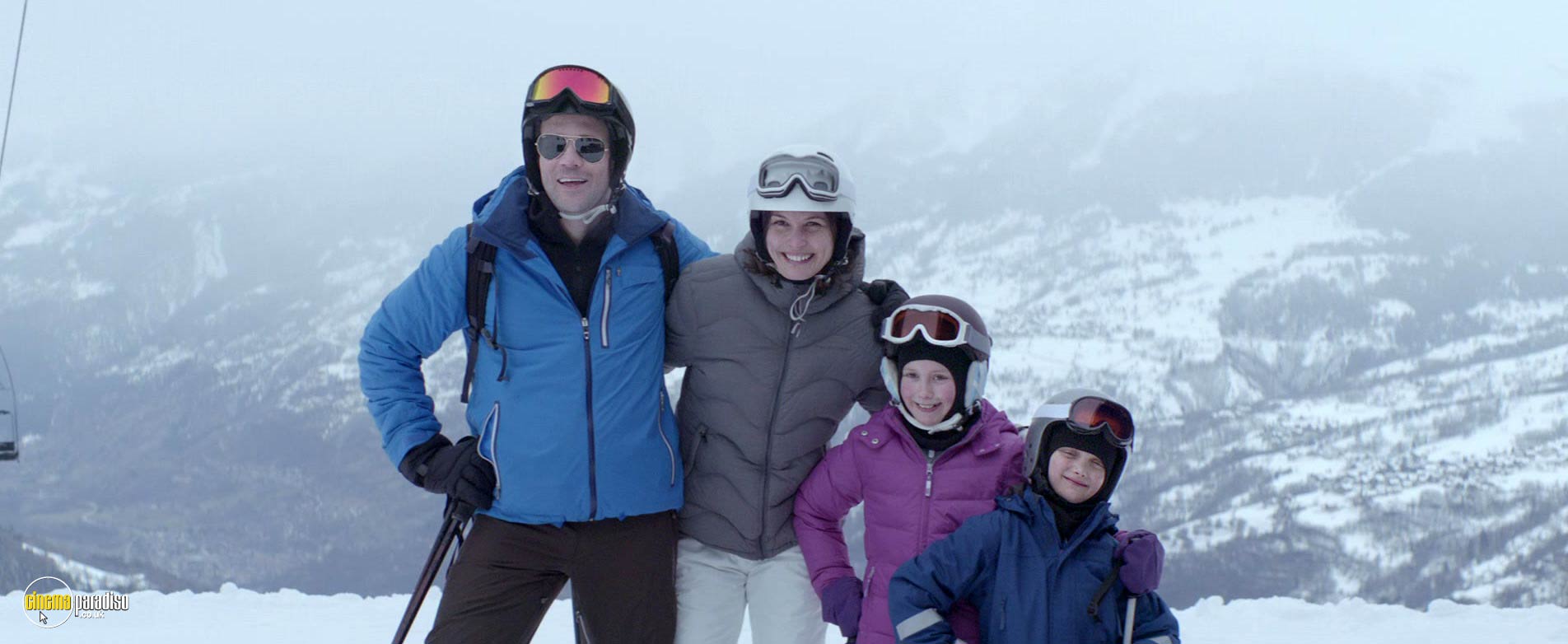
Silent rides in the ski lift encapsulate the tensions in Ruben Östlund's Force Majeure (2014), as Swedish businessman Johannes Bah Kuhnke infuriates Norwegian wife, Lisa Loven Kongsli, by abandoning his family in terror during a controlled avalanche at the French Alpine resort where they are holidaying. Nat Faxon and Jim Rash reworked the scenario and relocated it to the Austrian town of Ischgl in Downhill (2020), with Will Ferrell and Julia Louis-Dreyfus playing the couple whose marriage goes into crisis mode following a momentary lapse of judgement. Another relationship under strain is examined in Charlène Favier's Slalom (2020), which sees 15 year-old skiing prodigy Noée Abita struggle to live up to the high standards set by martinet coach Jérémie Renier, when she joins his team at a school in the French Alps.
It's a shame the latter two titles are not available on disc in the UK. But we'll point you in the direction of plenty of pictures about ski jumping, snowboarding, skating, bobsledding, curling, and ice hockey in the second part of Cinema Paradiso's unrivalled survey of films about Winter Olympic sport.
Mentioned films