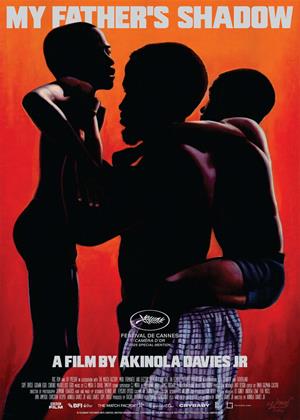
My Father's Shadow (2025)
- General info
- Available formats
- Synopsis:
- Kid brothers Remi (Chibuike Marvelous Egbo) and Akin (Godwin Egbo) get to spend a gift of a day with their estranged father Folarin (Sope Dirisu). They go on a voyage into Lagos observing the colossal city for the first time and the hoops their father must deal with to provide. All this happens in the backdrop of a huge 1993 presidential election result which calls into question his ability to get them home.
- Actors:
- Sope Dirisu, Godwin Egbo, Chibuike Marvelous Egbo, Efòn Wini, Tosin Adeyemi, Adesina McCoy Babalola, Lawrence Chu, Yetunde Coker, Akerele David, Wale Davies, Patrick Diabuah, Paul Edobor, Martha Ehinome, Adodo Emmanuel, Patrick Essien, Olarotimi Fakunle, Ikechukwu Gabriel, Fred Ideh, Ebuka Igwe, Andrew Ijeh
- Directors:
- Akinola Davies
- Producers:
- Ama Amadu, Ama Ampadu, Rachel Dargavel, Akinola Davies, Wale Davies, Moya De Young, Lucy Drury, Ed Guiney, Aoife Hayes, Nick Hayes, Anu Henriques
- Writers:
- Akinola Davies, Wale Davies
- Aka:
- 父親回來的那一天
- Genres:
- Drama
- Awards:
More like My Father's Shadow

Reviews (1) of My Father's Shadow
One Day in the Light - My Father's Shadow review by griggs
Akinola Davies Jr.’s My Father’s Shadow is a striking debut feature, a film both intimate and political. Set in Lagos in 1993, it follows two young brothers briefly reunited with their father, a man who has been more myth than presence in their lives. Over the course of a single day, they encounter not only his warmth but also the messiness of his history.
At first the reunion has the giddy energy of novelty, a childlike joy in simply being seen. But as the day progresses, their father’s world is revealed—his ideals, his failings, and the scars left by a Nigeria under military rule. Through whispered conversations, sidelong glances, and moments that slip between tenderness and discomfort, the boys begin to see him as he truly is: flawed, compromised, yet still deserving of their love.
What gives the film its weight is how deftly it balances personal revelation with political backdrop. Lagos is alive on screen: restless, uncertain, full of both danger and possibility. Some stretches drag and a few beats feel overstated, but the honesty holds firm. My Father’s Shadow is a rich, heartfelt, and rewarding coming-of-age story, one that lingers precisely because it insists that love is clearest when illusions fall away.