Seven decades ago, Ingrid Bergman was in Britain shooting her first Hollywood studio film for seven years. Cinema Paradiso explores the numerous tangled tales behind Anastasia (1956).

Telling a truly tragic story, Anastasia (1956) was a film about an exile that was directed by an émigré and starred an actress who had been banished from an enchanted kingdom. At its heart was a rumour that could not be substantiated and yet which persisted in spite of repeated denials. To understand its potency, we need to go Russia at the turn of the last century.
The History
Grand Duchess Anastasia Nikolaevna was born in the Peterhof Palace in St Petersburg on 18 June 1901. As she was the fourth daughter born to Nicholas II and his German wife, Alexandra, she was considered a disappointment and the Tsar reportedly went for a long walk before coming to see her because he so desperately wanted a male heir to the Romanov throne of Imperial Russia.
As Alexei was born three summers later, Anastasia was forgiven for letting the side down. Indeed, her father even dived into the sea when she was five to save her from drowning after she had been swept away by a wave during a holiday stay in the Crimea. Short and plump, with blonde hair and blue eyes, she was raised in spartan conditions alongside her sisters, Olga, Tatiana, and Maria. Nicknamed 'Shvybzik' because she was always getting into mischief, Anastasia had a rebellious streak that meant she had little time for tutors Pierre Gilliard and Sydney Gibbes. Indeed, the son of the court physician recalled, 'She undoubtedly held the record for punishable deeds in her family, for in naughtiness she was a true genius.'
Like her mother, however. Anastasia implicitly trusted Grigori Rasputin, a mystic who held a special place at court because Alexandra believed had a beneficial effect upon her haemophiliac son. Rasputin was considered a charlatan by the Tsar's ministers, however, who were concerned that the monarchy's position was being undermined by a spate of pornographic cartoons suggesting that the Tsarina and her daughters were all the holy man's lovers.
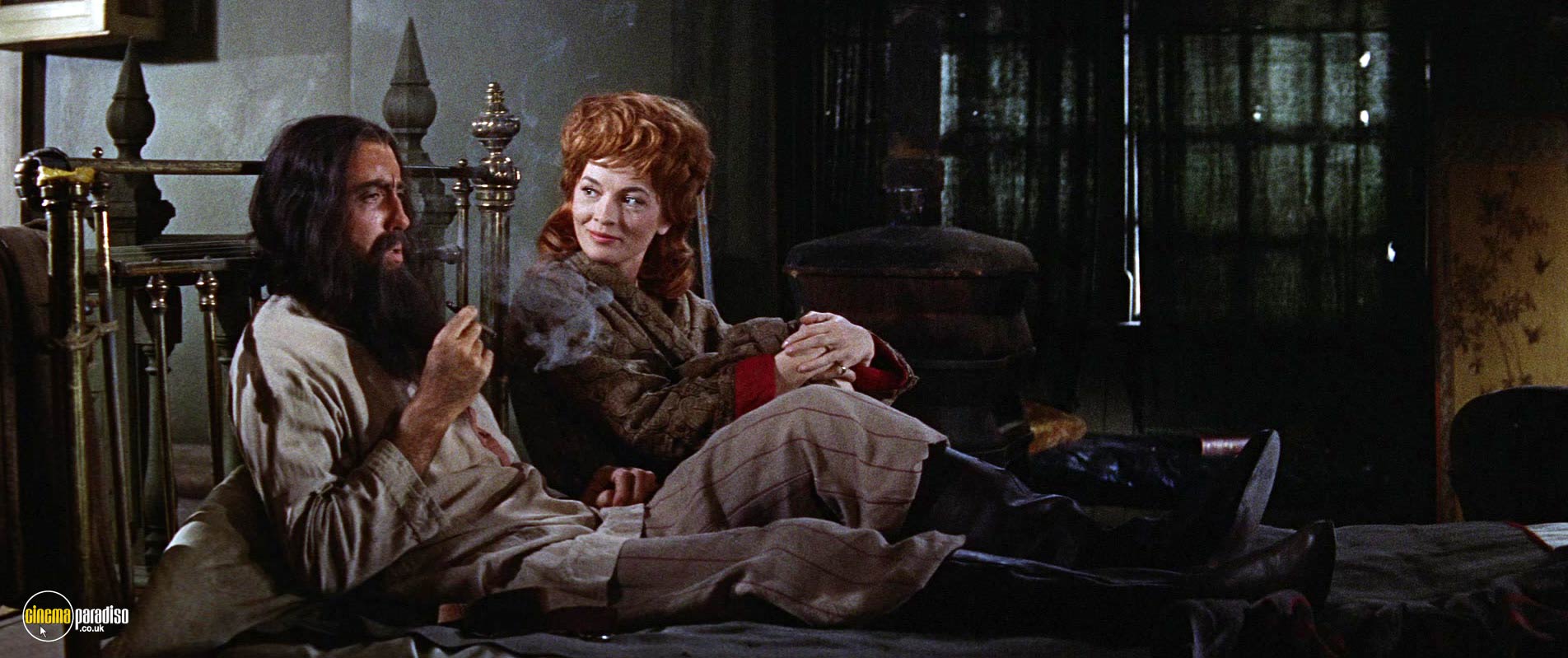
Films like Don Sharp's Rasputin the Mad Monk (1966) and Franklin J. Schaffner's Nicholas and Alexandra (1971) take markedly different approaches to the scandal, which culminated in Rasputin's murder on 17 December 1916. His demise failed to save the dynasty, however, as Russia's failures in the Great War prompted a revolution in February 1917. The royal family was placed under house arrest in the Alexander Palace at Tsarskoye Selo before Alexander Kerensky's Provisional Government billeted them in the governor's mansion in the Siberian town of Tobolsk. Following the October Revolution that brought the Bolsheviks to power, the Romanovs were moved to Ipatiev House in Ekaterinburg. They never left.
As civil war raged, White forces captured Ekaterinburg, only to be informed that the Tsar had been moved to a safer location. Efforts had been made to negotiate the family's safe passage out of Russian. But Vladimir Ilych Lenin had no intention of letting the Tsar tell his story in the West. Consequently, on 17 July 1918, the family was awoken and assembled in a small basement room. According to a record written by Yakov Yurovsky, Nicholas was informed that he was going to be executed and his family perished in a hail of bullets. Some reports claimed that Anastasia had needed to be finished off with a bayonet because the bullets had ricocheted off the jewellery sewn into her corsets. But rumours soon started to circulate that she had somehow survived.
The Mystery
As the Kremlin was eager to avoid accusations of regicide, enquiries into the fate of the Romanovs were met with assurances that they had been removed to an undisclosed location for their own safety. Most Western powers believed that the royal family had been liquidated. But the failure to confirm or deny left a vacuum and into it stepped a series of imposters of varying credibility. Several women came forward in the 1920s and 30s asserting to be Grand Duchess Anastasia, including Nadezhda Vasilyeva and Eleonora Kruger. The most famous claimant, however, was Anna Anderson and it's upon her life that Anatole Litvak's film is based.
On 27 February 1920, a Berlin police sergeant rescued a woman who had tried to kill herself by jumping off the Bendlerstrasse bridge into the Landwehrkanal. She was taken to the Elisabeth Hospital, where it was noted that she had scars on her head and torso. Speaking German in what the nurses took to be a Russian accent, she refused to give her name and was admitted to the Dalldorf mental hospital as Fräulein Unbekannt ('Miss Unknown').
Two years later, Clara Peuthert claimed that her fellow psychiatric patient had identified herself as the Grand Duchess Tatiana. She contacted émigré army officer, Captain Nicholas von Schwabe, who became convinced following a visit to the hospital. However, one of the Tsarina's ladies-in-waiting, Baroness Sophie Buxhoeveden, dismissed the suggestion because Tatiana had been much taller. Days later, Fräulein Unbekannt remarked, 'I did not say I was Tatiana.'
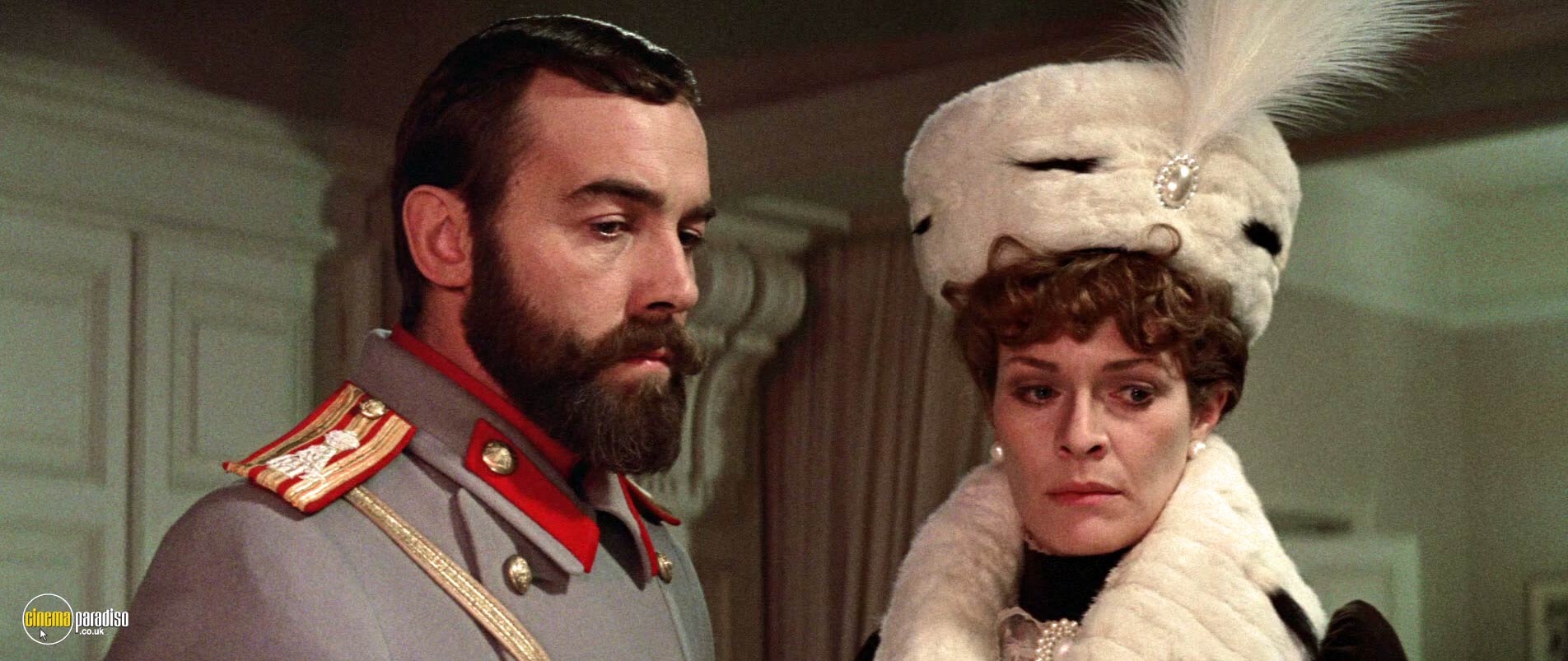
This prompted Peuthert and Schwabe to declare the mystery woman was Anastasia, who, at 5ft 2in, had been smaller than her sisters. She was installed in the Berlin home of Baron Arthur von Kleist, who had been a police chief in the Polish part of the Russian Empire. Berlin detective Franz Grünberg suspected the motives of those helping the young woman, who had started calling herself Anna Tschaikovsky. But he also played host to her at his Funkenmühle estate so that he could introduce her to her maternal aunt, Princess Irene of Hesse and by Rhine. She insisted the woman was not Anastasia and tutor Pierre Gilliard and his nursemaid wife, Alexandra Tegleva, came to the same conclusion after visiting Anna when she fell ill in 1925. Tsar Nicholas's sister, Grand Duchess Olga, swore likewise. However, Anastasia's great-uncle, Prince Valdemar of Denmark, paid for her convalescence at the Stillachhaus Sanatorium in the Bavarian Alps. He even arranged for Anastasia Tschaikovsky to receive German identity documents using Anastasia's personal details.
At Oberstdorf, Anna met Tatiana Melnik, the daughter of Dr Eugene Botkin, who had been gunned down with the Romanovs in 1918. She felt there was a physical resemblance and concluded that Anna's inability to remember details about family and court life was down to the psychological decline that had been exacerbated by her ordeals. Taking pity on Anna, Melnik started to help fill in the gaps in her memory. However, Danish funding was withdrawn in 1927 and Anna became the guest at Castle Seeon of Duke George of Leuchtenberg, a distant cousin of the Tsar. Meanwhile, Alexandra's brother, Ernest Louis, Grand Duke of Hesse, hired a private detective to look into Anna's claims and Martin Knopf revealed her to be Franziska Schanzkowska, a Polish munitions factory worker who had been declared insane in 1916 after dropping a grenade having learned of her fiancé's death at the front.
Despite Franziska's brother Felix confirming her identity and the fact she had been confined in two asylums before suddenly disappearing in Berlin in 1920, Melnik, Leuchtenberg and his daughter, Natalie, remained certain that Anna was Anastasia. A paternal cousin by marriage, Prince Felix Yusupov had no doubt that they were dealing with an impostor. He wrote, 'I claim categorically that she is not Anastasia Nicolaevna, but just an adventuress, a sick hysteric and a frightful playactress. I simply cannot understand how anyone can be in doubt of this. If you had seen her, I am convinced that you would recoil in horror at the thought that this frightful creature could be a daughter of our Tsar.'
Melnik's brother, Gleb Botkin, had taken Anna's case to the United States, where he found an ally in Xenia Leeds, the wife of a wealthy industrialist who had been born a princess. Her father and brother, as well as two cousins, had been killed by a Bolshevik firing squad in St Petersburg and she invited Anna to stay at her Oyster Bay estate near New York. En route, Anna had convinced Nicholas's cousin, Grand Duke Andrei Vladimirovich, that she was Anastasia. Composer Sergei Rachmaninoff even paid for Anna's stay at the Garden City Hotel on Long Island, where she started using the name Anderson.
For a while, Anna was the toast of New York society. But hackles were raised when Botkin and lawyer Edward Fallows responded to her claim that the Tsar had deposited a fortune abroad by forming a company to ensure Anastasia received her inheritance. In October 1928, however, the surviving members of the immediate family used the funeral of Nicholas's Danish mother, Dowager Empress Marie, to issue a statement proclaiming Anna's account to be nothing more than a fairytale. Fortunately, Park Avenue spinster Annie Burr Jennings was happy to accept Anna as her live-in companion and all went well until a series of tantrums and antic exhibitions prompted a judge named Schmuck to consign Anna to the Four Winds Sanatorium in Westchester County. In August 1931, she agreed to return to Germany, where she was declared sane at the Ilten nursing home near Hanover.
Once again, members of the old order flocked to her cause and she lived comfortably while Fallows launched a suit against the Romanovs for denying Anastasia her legacy. The case dragged on for decades and remains the longest-running lawsuit in German history. When the Nazis tried to imprison her, Gertrude Schanzkowska denied that Franziska was her sister in order to keep her safe. She spent the war years with Louise of Saxe-Meiningen in Schloss Winterstein and, when the Soviets occupied the territory, Anna was smuggled out to Bad Liebenzell in the French zone by Prince Frederick of Saxe-Altenburg. He found her a home in the Black Forest village of Unterlengenhardt, where she was denounced as a fraud by Anastasia's former tutor, Charles Sydney Gibbes.
By May 1968, Anna had become a recluse and she accepted Botkin's offer to return to America after her 60 cats were put down because she was deemed incapable of caring for them or herself. In order to remain in Charlottesville, Virginia, she contracted a marriage of convenience to history professor Jack Manahan, a wealthy man with an eccentric lifestyle who kidnapped Anna from the hospital in which she had been institutionalised in November 1983. Police from 13 states were put on the case, as the pair drove around Virginia for three days before Anna was returned to her care home. She died on 12 February 1984 and was buried at Castle Seeon, with her identity still contested by friends and foes alike. Her life would make quite a movie. But the plot of Anastasia was more focussed.
The Scenario
An opening crawl reads: 'In 1917, the Romanov dynasty - rulers of Imperial Russia - were overthrown by revolution. Some of the nobility and their followers fled to safety but the Tsar, his wife and children were imprisoned and then shot, in 1918. Shortly after, there were strange whispers that one of the family had escaped and was still alive. In the weeks, months, years that followed, the whispers grew louder and louder. And then a woman appeared, a woman who was said to be the youngest daughter of the last Tsar, her Imperial Highness, the Grand Duchess Anastasia. Only she, if she is still alive, knows the truth behind the story you are about to see.'
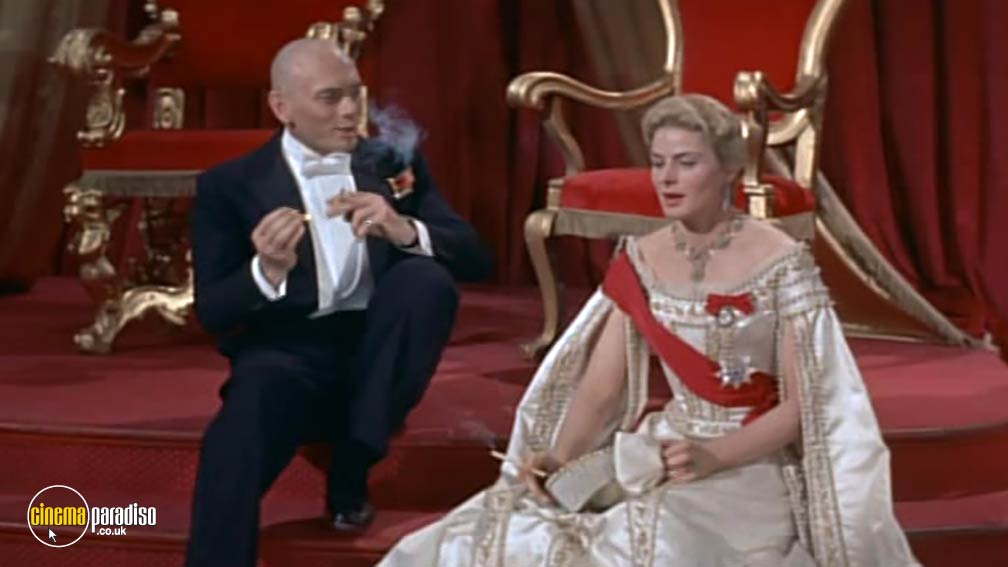
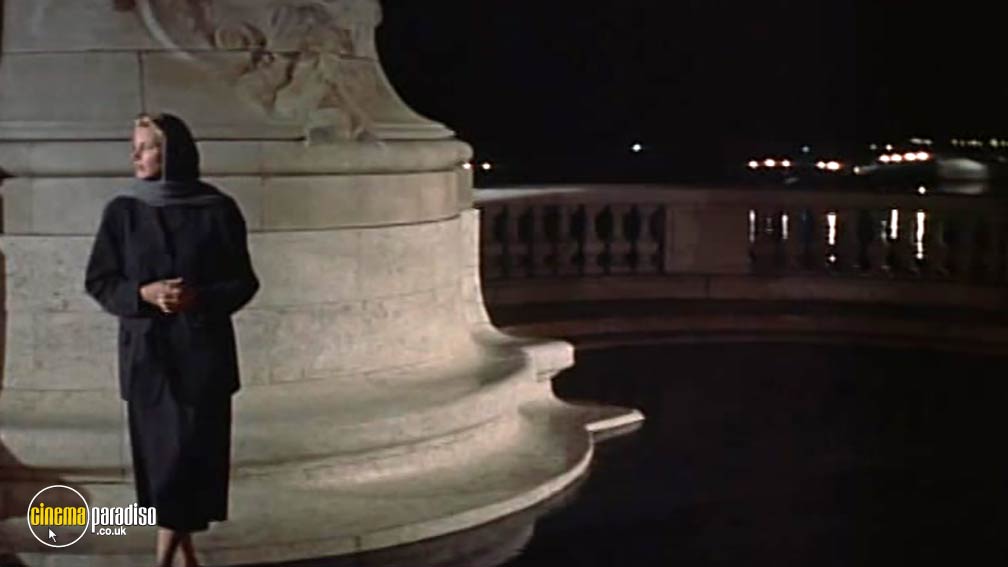
Former White Russian general, Sergei Pavlovich Bounine (Yul Brynner), runs a nightclub popular with the exiled Russian community in Paris. During the Orthodox Easter celebrations in 1928, he learns that Anna Koreff (Ingrid Bergman) bears an uncanny resemblance to Grand Duchess Anastasia, the late Tsar's youngest daughter. Intrigued by reports that she had confided her identity to a nun while being treated in the St Cloud asylum, Bounine approaches Anna, only to be rebuffed. When he persists, she runs away through the rain and tries to throw herself into the River Seine.
Bounine has heard rumours that Nicholas II had deposited £10 million in various English banks to provide dowries for his daughters and he suggests to confederates Boris Andreevich Chernov (Akim Tamiroff) and Piotr Ivanovich Petrovin (Sacha Pitoëff) that Anna might come in useful in their bid to claim part of the fortune for themselves. The stockholders in Bounine's scheme have become impatient with him because he has twice presented them with impostors and they have given him eight days to produce the real Anastasia or they will withdraw their backing. However, Bounine is convinced he can swing the deal with 'a reasonable facsimile' and he spends the week coaching Anna so that she can meet a committee of stockholders.
The assembled are politely sceptical until Anna calls her mother's lady-in-waiting, Irina Lissemskaia (Natalie Schafer) by a nickname that only an intimate could know and 'Nini' sobs at her feet. Encouraged, Bounine intensifies Anna's training, forcing her to walk with a book on her head to improve her posture. He also forces her to practice the piano and they dance a polonaise so that she is ready to dazzle at a ball. But the crash course has its effects upon Anna, who wakes in the night in a panic, as she is uncertain who she is and Bounine had to admit that he doesn't know himself. However, he convinces Anna to persevere and she agrees to attend a reception for distinguished émigrés.
The plan is to get the assembled to sign statements verifying Anna's claim, but the evening doesn't go well until a gout-ridden court chamberlain (Felix Aylmer) declares that she is nothing more than a well-trained actress. However, he is stunned into recognition when Anna snaps at someone for smoking in her presence without permission. A number of guests are persuaded to sign papers, but Bounine realises that they don't have enough to convince the Bank of England into handing over the Tsar's fortune.
He decides to risk all by taking Anna to Copenhagen in the hope they can meet the Dowager Empress, Maria Feodorovna (Helen Hayes). She refuses to see them, but lady-in-waiting Baroness Elena von Livenbaum (Martita Hunt) meets Bounine (on whom she has a crush) in the Tivoli Gardens and informs him that her mistress is due to attend a Tchaikovsky ballet with her nephew, Prince Paul von Haraldberg (Ivan Desny), who had been betrothed to Anastasia when she was 16. As the fortune-hunting prince fawns over Anna in the foyer, Bounine creeps into the Dowager Empress's box at the theatre and is frustrated when she dismisses him as an opportunist. When she catches sight of Anna in her opera glasses, however, she feels a pang of recognition.
Bounine feels jealous when Anna gets tipsy with Paul and kisses him. However, he has too much riding on the scheme to let personal feelings distract him and he absents himself when the Dowager Empress comes to the hotel to see Anna at close quarters. Initially, she is unconvinced by the latest 'resurrected Romanov'. But she is intrigued that Anna knows about an argument she had once had with Alexandra over some emeralds and melts when Anna apologises for coughing because she is frightened, a trait she shares with the young Anastasia. Clinging to her, the lonely Maria Feodorovna accepts her as her granddaughter and begs her not to tell her if she is not.
As Anna only has a 14-day visa, she returns to Paris with Bounine, who is annoyed by the fact that she is ready to marry Prince Paul. As he is committed to securing the Tsar's money, however, he organises a press conference before a grand ball, at which the Dowager Empress will announce her nephew's forthcoming marriage. She is challenged by reporter Mikhail Vlados (Karel Štepánek), who had been taken to hospital with Anna Koreff following an explosion on a train in Bucharest in 1920. Calmly, Anna agrees that she had used the name and had been caught in the blast, but she points out that there is no reason why she couldn't have been injured twice in her lifetime.
Despite being shaken by the encounter, Anna looks radiant at the ball. As she dances with Prince Paul, she asks if he would want her if she was not a grand duchess entitled to an inheritance. He insists that he loves her for herself and eagerly awaits his aunt's announcement of their nuptials. Bounine confesses to the Dowager Empress that he is not pleased with the way things have worked out and informs her that he will not wait for Anastasia's formal unveiling. Sensing that he is in love and that her granddaughter feels the same way, she schemes for them to meet in the Green Room and is unsurprised when a courtier informs her that they have gone. Undaunted, she enters the ballroom with the confused Paul and prepares to tell the guests, 'The play is over, go home.'
The Scandal
Born in Stockholm on 29 August 1915, Ingrid Bergman was named after a Swedish princess. She lost her German mother, Friedel, when she was just two years old and was raised by her father, Justus, who never missed an opportunity of taking a photograph of his beloved daughter. However, the 13 year-old had to move in with an aunt when Justus died, having given her the composure in front of a camera that would help make her famous.
She made her first film appearance as a 15 year-old extra in Gunner Skogland's Landskamp (1932) before enrolling at the Royal Dramatic Theatre School. As her florist uncle knew SF Studio director Karin Swanström, Ingrid asked him to arrange an audition and Swanström was so charmed by Bergman's poetry reading that she set up a screen test with star director Gustaf Molander. Although Edvin Adolphson guided Bergman through her first speaking role in The Count of the Old Town (1934), it was Molander who taught her to be herself on screen. He directed her in Intermezzo (1936), Dollar (1938), A Woman's Face (1938), and Only One Night (1939) and convinced her that Swedish cinema was too small to accommodate her talent.
Following a chastening experience filming Carl Froelich's The Four Companions (1938) at the UFA studio in Nazi Berlin, Bergman returned to Sweden to give birth to Pia, her daughter with dentist husband, Petter Lindström. He was content to let his wife pursue her ambitions, but felt sidelined after producer David O. Selznick took Bergman to Hollywood for a remake of Intermezzo (1939) that was directed by Gregory Ratoff, a Russian exile who had played a scheming general seeking to pass off a Parisian flowergirl as Anastasia in A. Edward Sutherland's Selznick-produced thriller, Secrets of the French Police (1932).
Selznick had wanted to change both Bergman's appearance and her name, but promoted her as a natural beauty when she refused. The outbreak of the Second World War persuaded her to accept a long-term contract and she soon became a major star following Victor Fleming's Dr Jekyll and Mr Hyde (1941), Michael Curtiz's Casablanca (1942), Sam Wood's For Whom the Bell Tolls (1943), and George Cukor's Gaslight (1944). The latter earned Bergman the Academy Award for Best Actress and she was further feted for Leo Carey's The Bells of St Mary's (1945) and Victor Fleming's Joan of Arc (both 1948). In addition to playing a nun and a virginal saint, Bergman also excelled in three pictures with Alfred Hitchcock: Spellbound (1945); Notorious (1946); and Under Capricorn (1949).
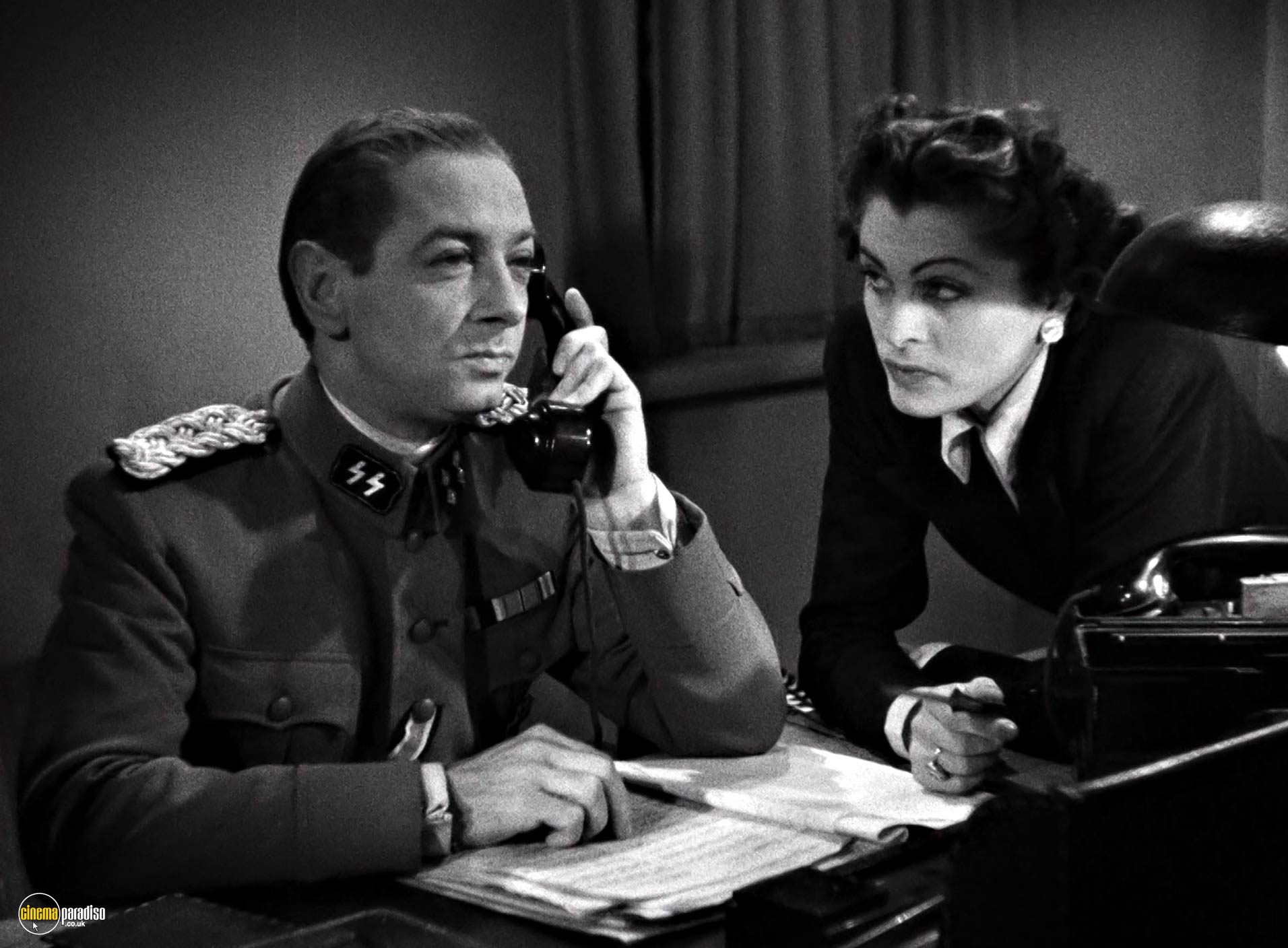
Yet, despite earning three more Oscar nominations, Bergman was becoming bored with being on the Hollywood production line. She wanted to make films that mattered as much as they entertained. Consequently, having been deeply moved by Roberto Rossllini's neo-realist masterpiece, Rome, Open City (1945), she wrote him a fan letter, in which she insisted, 'I am ready to come and make a film with you.'
Having bolstered his reputation with Paisà (1946) and Germany Year Zero (1947), Rossellini was very keen to meet with Bergman. He was living at the time in Rome's Hotel Savoy with actress Anna Magnani, who was one of the biggest stars in Italian cinema. Leaving to walk the dogs one morning, Rossellini set off for New York to discuss a collaboration with the eminently more bankable Bergman. He never returned and Magnani made sure that the press knew about her desertion.
As Francesco Patierno reveals in his intriguing documentary, Bergman & Magnani: The War of the Volcanoes (2012), Rossellini had been discussing a film about tuna fisherman on the Aeolian Islands with Renzo Avanza, who had just perfected a new underwater filming technique. Without consulting his cousin, Rossellini borrowed the idea for Stromboli and cast Bergman as Karin, a Lithuanian refugee who escapes from a displaced persons camp to marry Antonio (Mario Vitale), who promises her an idyllic life on his remote volcanic home. Not to be outdone, Magnani contacted Avanza and they concocted their own variation on the theme, Volcano, which was sponsored by Warner Bros, who loaned out German-born director, William Dieterle, to ensure it would appeal to American audiences.
In response, Bergman approached RKO chief Howard Hughes for funding and he agreed, despite having misgivings about the Stromboli scenario. He soon grew to dislike Rossellini, as the budget started to spiral because he only worked on days when he felt inspired. Over 100 days were required for the shoot, during which time Bergman fell in love with a man she felt was a genuine film artist. Feeling betrayed when Bergman announced that she was going to have to cancel the picture she had promised in return for funding, Hughes leaked news that she was pregnant with Rossellini's child to gossip columnist Louella Parsons, who filed a front-page exclusive in the Los Angeles Examiner that obliterated Bergman's wholesome image.
In fact, Bergman had already enjoyed flings with Gary Cooper, Victor Fleming, Gregory Peck, and war photographer Robert Capa, but these had been kept quiet to protect Pia and Lindström. This time, however, the press had a feeding frenzy and Lindström wasted no time in filing for divorce and blocking Bergman's access to her daughter. The press also did their bit to destroy Stromboli's chances at the American box office, although Bergman and Rossellini had a small triumph in Rome, as they not only won the race to premiere their film, but also announced the birth of son Renato Robertino on the very night that Volcano's glittering gala was disrupted by a projector malfunction.
Any hope that the scandal was going to be a seven-day wonder was soon extinguished. Not content with refusing to finalise the divorce to ensure that Renato was born out of wedlock, Lindström also took US citizenship to boost his standing in the custody court, where Bergman was registered as a resident of Italy. As a result of the case, she didn't see Pia in person for seven years. Moreover, her lucrative product endorsements were cancelled, while the studios stopped offering roles.
Branded a bad mother and a dreadful role model, Bergman had to endure a tirade by Colorado Democratic senator, Edwin C. Johnson, in a speech calling for a law to protect decent citizens from film stars with no moral compass. He proposed that the Film Control Bill should give federal licencing bodies the power to 'censor and control actors, producers, and films based on personal morality'. Speaking in the Senate, he demanded, 'Now that the stupid film about a pregnant woman and a volcano has exploited America with the usual finesse, to the mutual delight of RKO and the debased Rossellini, are we merely to yawn wearily, greatly relieved that this hideous thing is finished and then forget it?'
Denouncing Stromboli's 'disgusting publicity campaign', Johnson declared that Bergman was a schizophrenic and a 'vile free-love cultist' who had 'perpetrated an assault upon the institution of marriage'. Proclaiming her to be a 'powerful influence for evil', he lumped her with Rita Hayworth in dubbing them 'Hollywood's two current apostles of degradation.' As for Rossellini, he was denounced as 'an infamous Nazi collaborator' and a drug addict. Even the Motion Picture Association of America was castigated for issuing an exhibition certificate for a film that had been 'produced by persons who themselves are barred from setting foot on American soil on the grounds of moral turpitude'. RKO also got both barrels: 'The nauseating commercial opportunism displayed by this corporation and their partner, the vile and unspeakable Rossellini, sets an all-time low in shameless exploitation and disregard for good public morals. When they deliberately exhibited the moral turpitude of the leading lady to pack their theatres, how can they contend that since the weak, pointless and ugly film itself was not definitely immoral, no question of morality was involved?!'
Warming to his theme, Johnson stated that his bill was 'a practical method whereby the mad dogs of the industry may be put on a leash to protect public morals'. In recommending his proposals, Johnson concluded, 'Out of Ingrid Bergman's ashes will grow a better Hollywood.' The bill was voted down, but Bergman received such a backlash in the press and in hate mail that she opted to stay in Europe and her new husband.
Federico Fellinin quipped that Bergman settling in Italy felt like 'the Virgin Mary had just descended upon us from Disneyland'. She and Rossellini set up house in Santa Marinella about 40 miles from Rome, where they welcomed twins Isabella and Isotta Ingrid in June 1952. This was the year that the couple released their second collaboration, Europa '51. Like Stromboli, it was a story about a women who leaves one form of prison for another, as she fell victim to an oppressive spouse. Bergman failed to see the irony of the scenario, however, as the critics sharpened their knives. But she was happier shooting 'The Chicken', a whimsical domestic snapshot that formed part of the portmanteau picture, We, the Women (1953).

However, such assignments barely paid the bills and Bergman became frustrated that Rossellini refused to let her work with other directors. She enjoyed playing with the children, but being a home-maker didn't feel enough. In retrospect, critics would come to respect Journey to Italy, another exploration of an unhappy marriage that teamed Bergman with George Sanders. But it wasn't a happy shoot and the only critics that found anything good to say were the young cinéastes who would shortly find themselves in the vanguard of the nouvelle vague. They revered Rossellini, but Bergman was beginning to realise that his improvisatory methods didn't really suit her style and they reached an impasse after he took little pleasure in making a screen record of their stage collaboration, Joan of Arc At the Stake, and the reviewers dismissed their interpretation of Stefan Zweig's Fear (all 1954).
Rossellini let it be known that Bergman would have no role to play in the documentary he was developing, India: Matri Bhumi. Consequently, still in love with her husband and conscious of the debt they were in, she defied his diktat about working with other film-makers and accepted the title role in Jean Renoir's Elena et les hommes (1956), which concluded the 'stage and spectacle' trilogy that had started with The Golden Coach (1952) and French Cancan (1955), which had respectively starred Anna Magnani and Françoise Arnoul.
The Comeback
So many films and TV shows have been made about the Romanovs that Anastasia has 67 entries on IMDB. The first one, Coronation of Emperor Nicholas the Second (1896), is clearly a mistake, however, as her father ascended the throne five years before she was born! By contrast, Anna Anderson only has 21 archive credits, although she did appear as herself on the 1967 French TV show, Les descendants - Les grands noms de l'histoire.
Anderson was still in Europe when the first film was made about her royal claim. In Tom Terriss's Hollywood silent, Clothes Make the Woman (1928), Princess Anastasia (Eve Southern) is saved by a peasant revolutionary, who helps her escape the Bolsheviks. Many years later, he has become Hollywood star Victor Trent (Walter Pidgeon) and he suggests they co-star in a film about her life after recognising Anastasia among the extras on set.
This melodrama is still extant and it's a shame that nobody has bothered to release it on disc or place it online. It is possible to track down the aforementioned Secrets of the French Police, in which Frank Morgan plays suave Sûreté detective, François St Cyr, who prevents Anastasia from being turned into a human statue by a mad general. This was released the same year that Anne Shirley essayed Anastasia in Richard Boleslawski's MGM saga, Rasputin and the Empress (1932), which was the only feature in which Barrymore siblings, John (Prince Chegodieff), Ethel (Tsarina Alexandra), and Lionel (Grigori Rasputin) acted together. We think this should be on disc, too, but, then we would.
In 1951, French playwright Marcelle Maurette wrote Anastasia, which was performed in Paris before it came to the attention of P.G. Wodehouse's old writing partner, Guy Bolton. He translated the text for the BBC's Sunday-Night Theatre strand in July 1953, with Mary Kerridge being cast as Anna, Peter Cushing as Piotr Petrovsky, Anthony Ireland as Prince Bounine, and Helen Haye as the Dowager Empress. Such was its success that the play opened at St James's Theatre in the West End the following month before transferring to the Lyceum Theatre on Broadway in December 1954, where it ran for 272 performances.
Warner scouts had seen the play in London and Variety reported that the rights had been sought as a potential vehicle for Jane Wyman. Nothing came of this plan, however. Indeed, when the bidding war came, it was 20th Century-Fox that prevailed over Warners and MGM, although opinions vary over the amount paid. In her memoir, Maurette claimed to have received £20,000, but a note in the film's file at the American Academy of Motion Picture Arts and Sciences suggests the figure was closer to $400,000. The Hollywood Reporter announced that studio chief Darryl F. Zanuck was going to produce the picture personally in Vienna. However, the $3 million project was entrusted to Buddy Adler, who felt it would be cheaper to make a few location stops in Paris and Copenhagen before settling into the MGM Borehamwood facility at Elstree. Moreover, it was Adler who approached Ingrid Bergman about making a mainstream comeback after a seven-year hiatus.

While Arthur Laurents worked on the screenplay, Fox set about assembling a supporting cast. Having been impressed by Yul Brynner's performance in Walter Lang's The King and I (1956), he was cast as the conflicted Bounine, alongside the Russian-born Akim Tamiroff, Swiss actor Sacha Pitoëff, and Frenchman Ivan Desny, who was of Russian Chinese origin. According to rumour, an underling was instructed to contact Helen Haye after her fine performance in the BBC presentation, only to presume that there had been a spelling mistake and hire Oscar winner Helen Hayes instead.
Director Anatole Litvak hailed from the Ukraine and had worked in live theatre in Leningrad in the 1920s. However, he took the first opportunity to flee to France, where he made his name as a director with another historical tragedy, Mayerling (1936). This led to him being offered the chance to director Tovarich (1937), which follows the efforts of Prince Mikail Alexandrovitch Ouratieff (Charles Boyer) and his wife, Grand Duchess Tatiana Petrovna (Claudette Colbert), to protect the Tsar's fortune after having fled to Paris. For much of the war, Litvak was preoccupied with assisting Frank Capra on the exceptional propaganda series, 'Why We Fight' (1942-45). But he was known for his skill at directing leading ladies like Bette Davis (All This, and Heaven Too, 1940), Joan Fontaine (This Above All, 1942), Olivia De Havilland (The Snake Pit), Barbara Stanwyck (Sorry, Wrong Number, both 1948), and Vivien Leigh (The Deep Blue Sea, 1955). After her experiences with Rossellini, Bergman liked the idea of working with a director who would be more sympathetic.
Fearful that religious organisations would order a boycott if Bergman was cast, Fox president, Spyros Skouras, proposed Oscar winner Jennifer Jones for Anastasia. But Litvak, Zanuck, and Adler insisted on Bergman, whose Swedish accent would make her sound more credibly European. At 41, she was too old to play a 27 year-old, but the front office reasoned that nobody would notice, especially as 56 year-old Helen Hayes would be adding 24 years to play the Dowager Empress.
Shooting began in Copenhagen on 21 May 1956, with background shots of the royal palace, the streets, and the Tivoli Gardens. The unit then move on to Paris for coverage of the Pont Alexandre III, Montmartre and Montparnasse. When the authorities at St Alexander's Cathedral refused permission to shoot, Litvak ordered a series of detailed photographs, which were used to construct a Russian Orthodox cathedral from scratch on the Elstree backlot. It had been raining in Paris when the footage was filmed, so the fire brigade had to use hoses to water down the set. The ballroom for the denouement was also built to order and broke the record for being the largest film set ever seen in Europe. No wonder the budget rose to $3.5 million, making Anastasia the most expensive picture that Fox had ever made abroad. Seven years later, Joseph L. Mankiewicz's Cleopatra (1963) would dwarf the costs.
Filming got under way at Elstree on 11 June 1956, with dozens of extras being recruited from the Russian exile communities in London and Paris. Ironnically, Hollywood restaurateur Mike Romanoff volunteered his services to Litvak to ensure the details about his family were correct. But he was a bigger fraud than Anna Anderson, as he had been born Hershel Geguzin in Lithuania and had passed himself off as the Tsar's nephew, Prince Michael Dimitri Alexandrovich Obolensky-Romanoff. He had originally changed his name to Harry F. Gerguson while living in New York, although he had also passed himself off as descendants of the Duke of Wellington and William Ewart Gladstone.
In fairness, he did a good job on the film, although the credit should really go to production designers Andrei Andrejew and William C. Andrews, costumiers René Hubert and Cristóbal Balenciaga, and lighting cameraman Jack Hildyard, whose work ensured that Anastasia handsomely captures the look and the feel of the period. As Derek Bond explains in a 1956 Behind the Scenes documentary, assistant director Gerry O'Hara also merits a mention, as he wrangled the numerous extras in several complex set-pieces. Cinema Paradiso users should tap his name into the Searchline and treat themselves to such directorial outings as That Kind of Girl (1963), The Pleasure Girls (1965), All the Right Noises (1969), The Bitch (1979), and Fanny Hill (1983).
While the cameras were rolling, Fox discovered that Anna Anderson was still alive. Eager to avoid a lawsuit, the studio sought her permission in Germany, although her surname was only used in passing with reference to an occasional alias. Bergman never met her nor did Brynner, although he was a Russian, having been born Yuliy Borisovich Bryner in Vladivostock in July 1920. He and Bergman got along famously on the set, even though he declared her feet were as big as 'tugboats'.
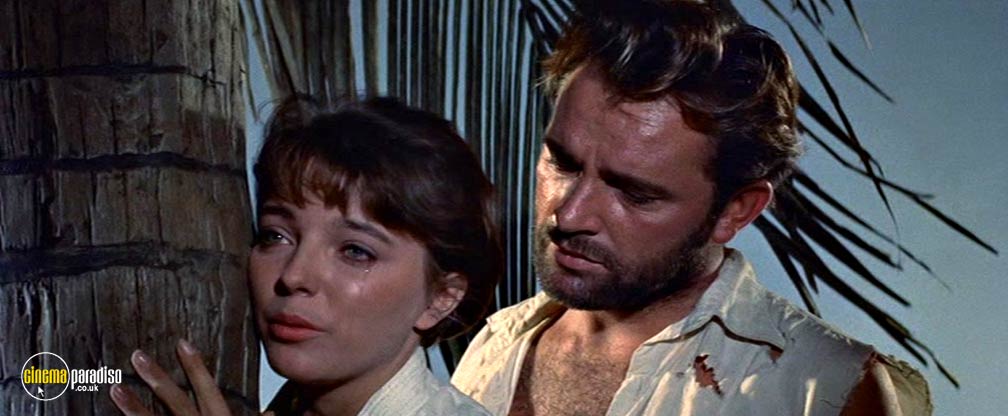
Although she missed her children, being on the set boosted Bergman's spirits after having acquiesced for seven years in Rossellini's chauvinist assumption that she was his property. On the day she signed the contract for Anastasia in December 1955, he had declared that the picture would be a disaster and threatened to kill himself by driving his Ferrari into a tree. Previously, Bergman had backed down and turned down offers like George Cukor's to headline a 1953 adaptation of Nathaniel Hawthorne's The Marble Faun. On this occasion, however, she merely ceased to quarrel and made herself a cup of tea to demonstrate that her mind was made up. Feeling slighted and frustrated that he couldn't raise the money for his Indian project, Rossellini signed on to direct Richard Burton and Joan Collins in Sea Wife (1957). After a week in Jamaica, however, he had alienated most of the cast and crew and he was fired and replaced by Bob McNaught.
Heading to London, Rossellini threatened to bar Bergman from seeing their children if she failed to obey him and quit Anastasia. Having already lost custody of Pia, she spent much of the shoot fretting that her possessive husband was plotting his revenge for disrespecting him. Yet, her experience of living with him fed into her performance, with many in the cast and crew realising that there were parallels between Bergman's plight and Anna's and it's tempting to suggest that she could never have played Anna with such conviction had she not been through the scandal and all its ramifications.
Her sacrifices were rewarded by outstanding reviews after the picture wrapped in August and was rushed through editing and scoring to be ready for an awards season release. The sometimes querulous Bosley Crowther of The New York Times enthused, 'Miss Bergman's performance as the heroine is nothing short of superb as she traces the progress of a woman from the depths of derangement and despair through a struggle with doubt and delusion to the accomplishment of courage, pride and love.' He continued, 'It is a beautifully moulded performance, worthy of an Academy Award and particularly gratifying in the light of Miss Bergman's long absence from commendable films.'
The dig at Rossellini did not go unnoticed, but there were some who refused to forgive Bergman for her affair. Sensing that awards were in the offing, the Fox publicity department had invited a unit from The Ed Sullivan Show to conduct an interview on the set. As the leading Sunday night television host, Sullivan was keen to have the scoop. But he was also wary of alienating his core audience. As a result, he gave his viewers the final word. 'I know that she's a controversial figure,' he explained, 'so it's entirely up to you if she should appear. I think a lot of you think she's had years of time for penance. Others may not think so.' He received 5826 letters in favour of Bergman's appearance, but 6433 opposing it and the idea was promptly dropped.
When shooting ended, Bergman went to Paris to start rehearsals for Robert Anderson's play, Tea and Sympathy. Rossellini had told her when she agreed to take the role that Deborah Kerr had played in London that the show was trash and would fold in a week. Aware of the need to pay the bills, she defied him and did so again when he came to Paris in a bid to force her to withdraw and take care of the children while he went to India. But she was adamant: 'I am assuming my own responsibility for a change.'
On 14 November, Bergman was rushed to hospital to have her appendix removed and she used the recuperation time to learn her lines. On opening night, Rossellini refused to leave her dressing-room and greeted his wife with snide remarks between the acts. 'Is anybody still there? Hasn't the whole audience left by now?' he said after the first. 'Have they started throwing things yet?' he enquired after the second. But Bergman enjoyed a dream debut, receiving 15 curtain calls. She even got a three-minute ovation when she acknowledged that she had mispronounced 'champion' as 'champignon' - the French for mushroom. Writing to the playwright, she had confided: 'I had a 14-minute ovation. But when I looked over and saw Roberto in the wings, I knew my marriage was over.' He drove through the night to Rome and left for India almost immediately, with the parting line, 'It won't last a week. You will kill this terrible show.'
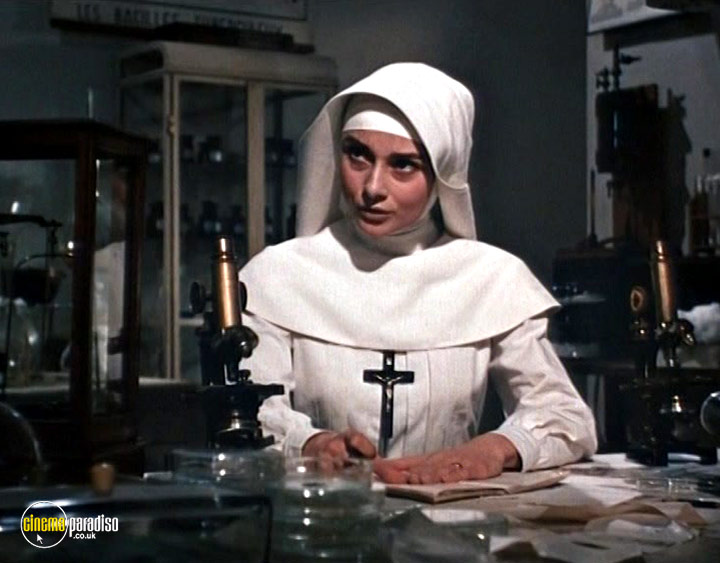
In fact, it was sold out for nine months, during which time Bergman turned down the lead in Fred Zinnemann's The Nun's Story (1959), as she knew she was too old. She also responded with dignity when the press hounded her after it was revealed that Rossellini was having an affair with his married co-scenarist, Sonali Senroy Das Gupta. But her contract terms meant that she could not resist when Fox urged her to fly overnight to the US to collect the New York Film Critics Circle award for Best Actress. As she was obliged to promote the film and recognised that Adler had gone out on a limb for her, she agreed to make the trip.
On arriving at Idlewild Airport, Bergman told the waiting throng: 'I have had a wonderful life. I have never regretted what I did. I regret the things I didn't do. My life has been rich and full of interesting things. All my life I've done things at a moment's notice. Those are the things we remember. I was given courage, a sense of adventure and a little bit of humour.'
When asked about her divorce from Lindström, she conceded, 'It was pretty tough in those days. But time takes care of everything. I don't think anyone has the right to intrude in your life, but they do. I would like people to divide the actress and the woman. I've tried hard, but I haven't succeeded. All human beings are curious to look into what other people are doing. But in Europe they believe more in live and let live.'
Delighting in the falling snow, Bergman had signed some autographs before driving to Broadway to catch a matinee of My Fair Lady, with Julie Andrews, Rex Harrison, and Stanley Holloway leading the cast. Rushing to the Roxy Theatre, she received an award from Look magazine from Joan Crawford, who had taken her role in George Cukor's 1941 remake of A Woman's Face. Thence, she attended a reception hosted by Irene Selznick before pausing for breath at Sardi's, where she was presented with the NYFCC award and was interviewed for television by comedian Steve Allen. The next morning, Bergman gave interviews in Swedish, German, Italian, and French before flying back to Paris to be ready for Monday night's performance. She must, therefore, have missed ex-senator Edwin Johnson's declaration, 'No one could be happier over Miss Bergman's comeback than I.'
At the 29th Academy Awards in the spring of 1957, Bergman found herself up against Carroll Baker for Baby Doll, Katharine Hepburn for The Rainmaker,
Nancy Kelly for The Bad Seed, and Deborah Kerr for The King and I. Yul Brynner would win Best Actor for his portrayal of King Mongkut, so his loyalties were divided, as Ernest Borgnine opened the envelope. In Bergman's absence, he presented the Oscar to Cary Grant, who made memorable use of his time at the podium: 'Well, it's a privilege to have been asked to be here in case Ingrid won this award, and now that she has, it's a privilege to try to thank her, to thank you for her. But alas, I have no way of knowing the exact depth and degree of her emotion when she finally hears the news that she's received it. So, dear Ingrid, if you can hear me now or if you see this televised film, I want you to know that each of the other nominees and all of the people with whom you worked on Anastasia, and dear Hitch, and Leo McCarey, and every one of us here tonight and in New York send you our congratulations, our love, our admiration, and every affectionate thought. Thank you for Ingrid.'
Grateful to Grant for his slyly barbed words, Bergman wrote him a letter that read: 'My dear Cary, my wonderful friend: I got the news about the award in the morning at 6 o'clock. I said on the phone: "I got it?" The answer was yes - and I fell asleep again. This seems a very indifferent way of accepting an Oscar, but I was full of sleeping pills so that I could go through the night! A couple of hours later I was awakened and what seems to me 1000 photographers. The whole day I did nothing but answer questions in all languages about how I felt. I really felt a very dull happiness and was only hoping the day would end. Finallay [sic] it was over and I went to my room to take a bath and to see Tola and celebrate - in peace - the evening. I hear a scream and my 7 year old son rushes into the bathroom with the radio in his hands, yelling "Mama, they are talking about you". He came in just as I heared [sic] my name mentioned and the roar of the public in Hollywood. It was a transmission - on wire - with a French commentator about the awards. In the back of the commentator I heared your voice. You said something about "if you can hear me now" and "wherever you are the [sic] the world" and I said "I am here, Cary, in the bathroom!"And then you gave me the good wishes and I could hear all the people cheer. That was the moment I really received the Oscar and I felt tears coming to my eyes. Having known about it all day, but still not GETTING it, I GOT it in the bathroom! What a place to get an Oscar! Nothing could have made me happier than that you took it and I thank you for the sweet words you said. How lucky that I heard them, it was all due to my little boy!'
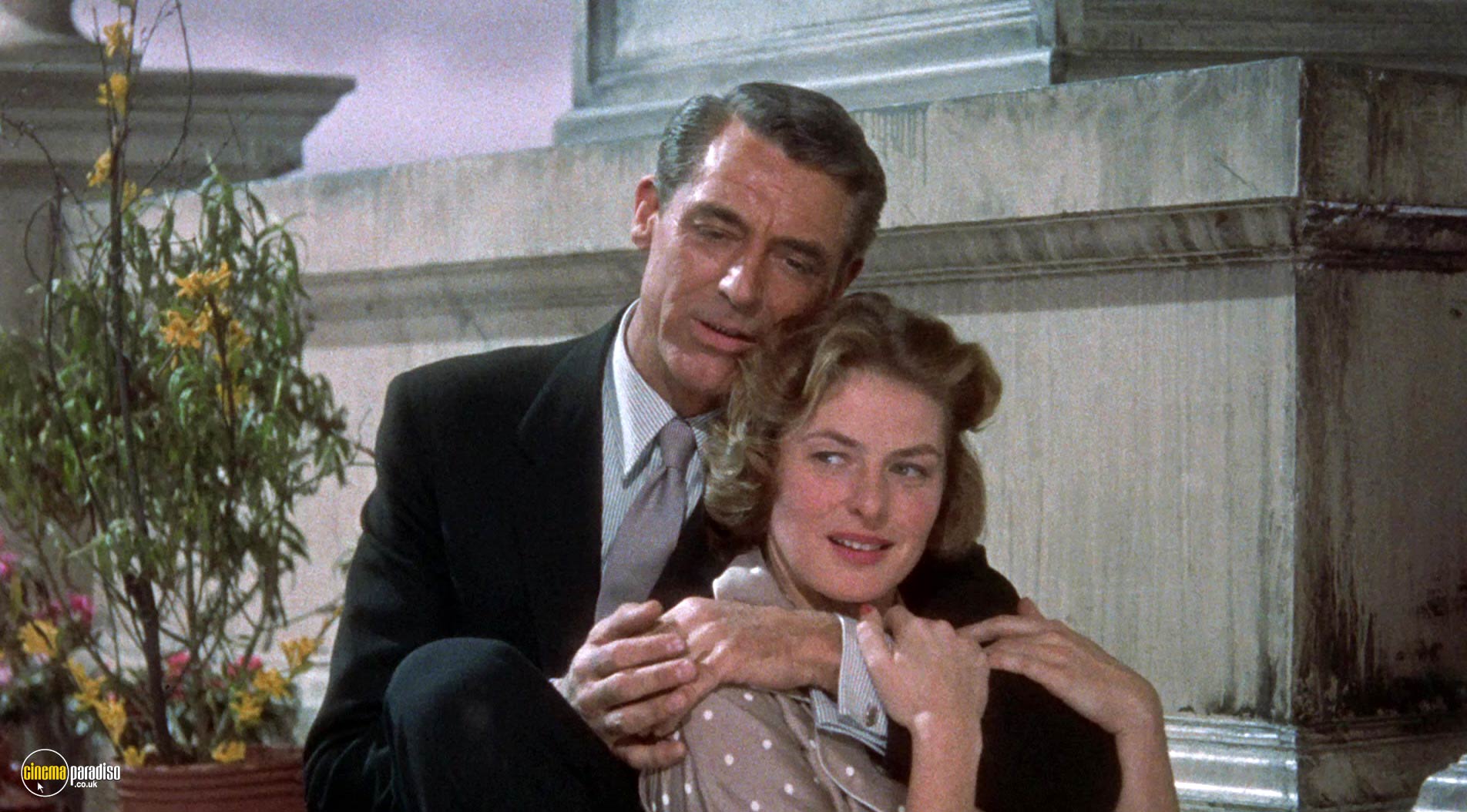
Although Anastasia was billed as Bergman's Hollywood comeback, she didn't actually set foot in an American studio until she made Gene Saks's Cactus Flower in 1969. Happily remarried to compatriot Lars Schmidt, she preferred to work in Europe after accepting Cary Grant's invitation to be his co-star in Stanley Donen's screwball romance, Indiscreet (1958). She next made for North Wales (standing in for rural China) to play missionary Gladys Aylward in Mark Robson's The Inn of the Sixth Happiness (both 1958). Cinema Paradiso users can also see Bergman win her third Oscar for playing another missionary, Greta Ohlson, in Sidney Lumet's all-star adaptation of Agatha Christie's Murder on the Orient Express (1974), as well as her pairing with Liv Ullmann in Ingmar Bergman's Autumn Sonata (1978).
By this time, she had received an official apology from Congress for the attack she had endured back in 1950. It was entered into the Congressional Record on 19 April 1972 by Illinois Republican Senator Charles N. Percy. In an open letter, he called Bergman 'one of the world's loveliest, most gracious and most talented women' and regretted that she had been 'the victim of bitter attack in this chamber 22 years ago.' Percy continued, 'Today, I would like to pay long overdue tribute to Ingrid Bergman, a true star in every sense of the word...I know that across the land millions of Americans would wish to join me in expressing their regrets for the personal and professional persecution that caused Ingrid Bergman to leave this country at the height of her career.'
Appearing on Broadway at the time in George Bernard Shaw's Captain Brassbound's Conversion, Bergman replied, 'Dear Senator Percy, my war with America was over long ago. The wounds, however, remained. Now, because of your gallant gesture with your generous and understanding address to the Senate, they are healed forever.'
A decade later, Bergman died of breast cancer on her 67th birthday. She wished that people had been able to tell the difference between 'the actress and the woman', but she had no regrets about falling for Roberto Rossellini and was immensely proud of their children. Her thoughts can be heard in Stig Björkman's poignant documentary, Ingrid Bergman: In Her Own Words (2015), which is just one of several recent actualites about the family. Isabella Rossellini paid tribute to her father in Guy Maddin's My Dad Is 100 Years Old (2005), since when grandson Alessandro Rossellini has also directed The Rossellinis (2020) and Roberto Rossellini, Living Without a Script (2025), which examines the fallout of his trip to India. Frustratingly, they are not widely available, but they are well worth seeking out.
The Truth
Ingrid Bergman's triumphant return and Oscar success meant that Anastasia was widely seen around the world. Such was its enduring appeal that Guy Bolton's source translation was dusted down in 1965 for Anya, a Broadway musical with a book by Bolton and George Abbott and music and lyrics by Bob Wright and Chet Forrest. Opening on 29 November 1965, it lasted just 16 performances before closing on 11 December.
Sixteen years later, Natalie Wood (who was of Russian extraction) signed up to play Anna in a Los Angeles stage production of Anastasia. While she was rehearsing, however, she drowned in what has become a notorious boating accident off Catalina island. The full truth about what happened aboard The Splendour may never be known. But we do now know what really happened to Grand Duchess Anastasia. However, there are still a few more screen speculations to cover before we get to the facts.
Released in the same year as Anastasia, Falk Harnack's German drama, The Tsar's Last Daughter (1956), actually shared a cast member with its Hollywood counterpart. Having played the fictional Prince Paul Von Haraldsberg, Ivan Desny was cast opposite Lilli Palmer as Gleb Botkin, the son of the Imperial family's physician, who had died alongside them in the basement room in 1918. Available on disc on the continent, this is a worthy retelling of the Anna Anderson story. She doesn't feature in Don Sharp's Rasputin: The Mad Monk (1966), although Renée Asherson does play Tsarina Alexandra opposite Christopher Lee. Alan Rickman would take the title role in Uli Edel's Rasputin: Dark Servant of Destiny (1996), which listed Patricia Kovács as Anastasia well down the credits behind Greta Scacchi as Alexandra, Ian McKellen as Nicholas II, and David Warner as Dr Botkin.
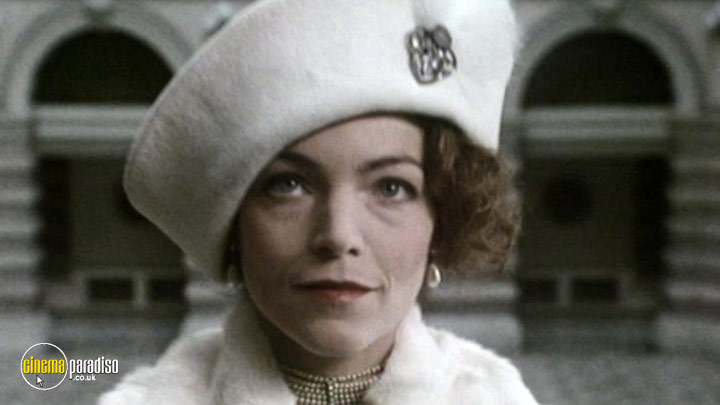
Fiona Fullerton would play Anastasia in Franklin J. Schaffner's Nicholas and Alexandra (1971), an account of the Romanovs' fate from their first encounter with Rasputin (Tom Baker) that starred Michael Jayston and Janet Suzman. Amy Irving came to the fore as Anna Anderson in Marvin Chomsky's two-part teleplay, Anastasia, The Mystery of Anna (1986), which paired Omar Sharif and Claire Bloom as Nicholas and Alexandra, while a debuting Christian Bale (as Alexei) got to watch Olivia De Havilland in action as his grandmother, the Dowager Empress.
As 20th Century-Fox retained the rights to Marcelle Maurette's play, it was used to inspire Don Bluth and Gary Goldman's Anastasia (1997), an animated retelling that had Meg Ryan and Kirsten Dunst share the lead across two decades, alongside Christopher Lloyd as Rasputin, Angela Lansbury as the Dowager Empress, and Kelsey Grammer as aristocratic con artist Vladimir Vanya Vonitsky Vasilovich. The same year saw the release of another animated Anastasia, in which Caz Adams was directed by Susan Beak, while Lawrence Foldes handled Anastasia (2007), whose voice cast included Ernest Borgnine, Richard Roundtree, and Linda Day George. This is so elusive that we can't even find out who played the lead. But we do know that Emily Carey headlines Blake Harris's Anastasia: Once Upon a Time (2020), a time-travelling variation that sees the Grand Duchess escape through a portal set up by Rasputin (Armando Gutierrez) and land in suburban America in 1989, where she is befriended by another outsider named Megan (Amiah Miller).
In the course of this splendidly far-fetched story, Anastasia learns what happened to her family and we must now face up to the truth that the 17 year-old Grand Duchess died with the rest of her family in the Ipatiev House basement along with their doctor Eugene Botkin, valet Alexei Trupp, cook Ivan Kharitonov, and maid Anna Demidova. Their remains were dumped in a disused mine shaft near Ekaterinburg and they remained there throughout the Soviet era. Following the collapse of Communism, the majority of the family was recovered in 1998 and taken to the Peter and Paul Fortress in St Petersburg. Eight decades after they had been murdered, Nicholas, Alexandra, and three of their daughters were interred in the St Catherine Chapel at Saints Peter and Paul Cathedral on 17 July 1998.
However, as reported in the 'Yurovsky Note' written by an eyewitness, the bodies of Alexei and Anastasia were missing and they only came to light on 23 August 2007. Even though Russian and American experts couldn't agree whether the female body found alongside the Tsarevich belong to Maria or Anastasia, DNA testing could finally confirm conclusively that Anna Anderson and all the other claimants had been impostors. In fact, even though Anderson had been cremated in 1984, DNA testing had been carried out on samples of her hair and surviving tissues in 1994 and found her to be unrelated to the Romanovs. As a great-nephew of Tsarina Alexandra, Prince Philip, Duke of Edinburgh had been among those who provided blood samples to the scientific team.
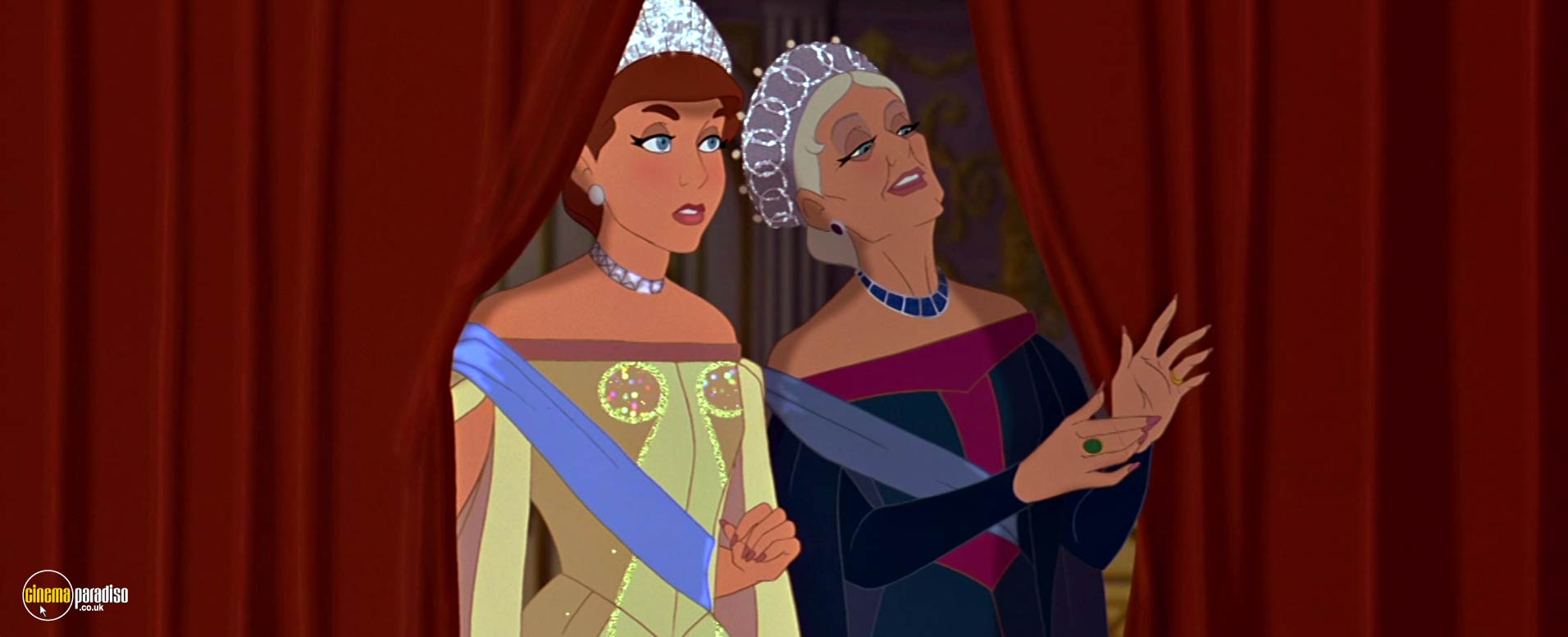
So, with Franziska Schanzkowska already consigned to history, Anastasia was canonised as a saint of the Russian Orthodox Church along with the rest of her immediate family in 2000. What are widely presumed to be her bones, and those of her brother, are still in the keeping of the Orthodox Church. One day, perhaps, she will be allowed to rest in peace.
Mentioned films