Top 10 Features By One-Shot Directors
From L’Atalante and The Night of the Hunter to Survive Style 5+, these 10 features were each their director’s only full-length film. The chronological selection also includes One-Eyed Jacks, Carnival of Souls, Wanda, The Honeymoon Killers, Johnny Got His Gun, Phase IV and Rosencrantz & Guildenstern Are Dead. Explore how Jean Vigo, Charles Laughton, Marlon Brando, Barbara Loden, Saul Bass and their fellow one-shot film-makers brought these distinctive projects to the screen, and why no second feature followed.
The 10 selections at a glance
Our complete selection


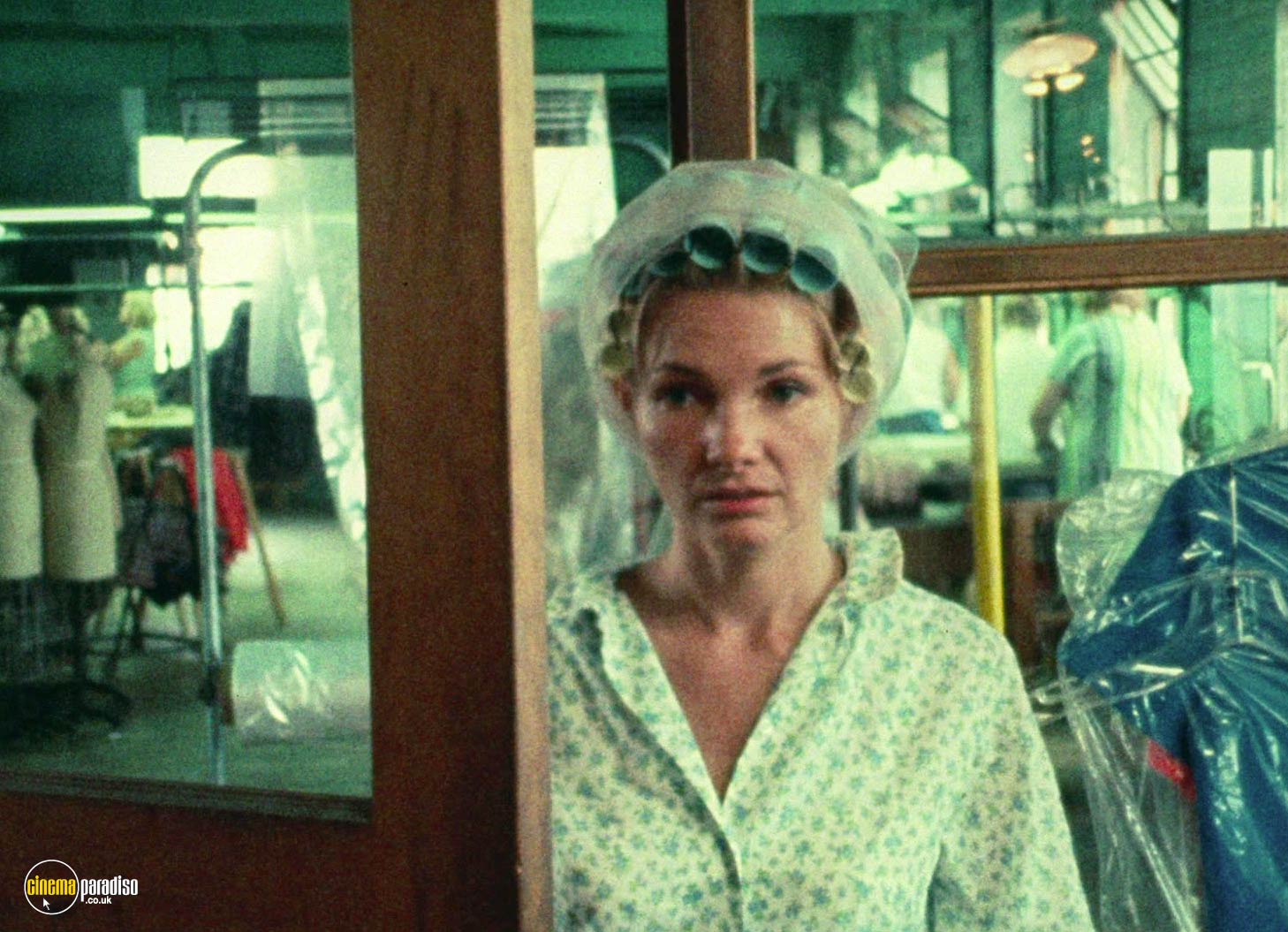
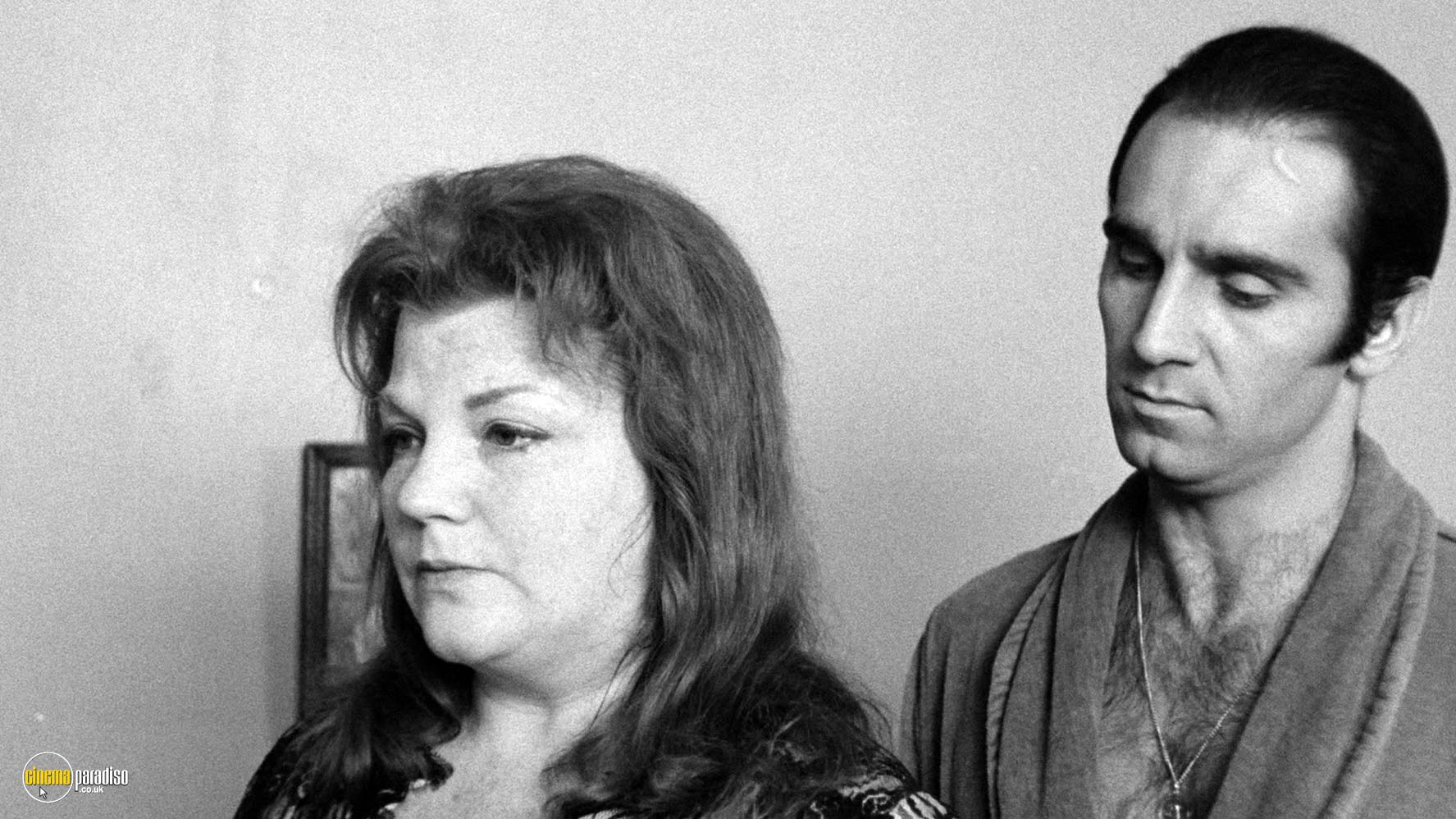
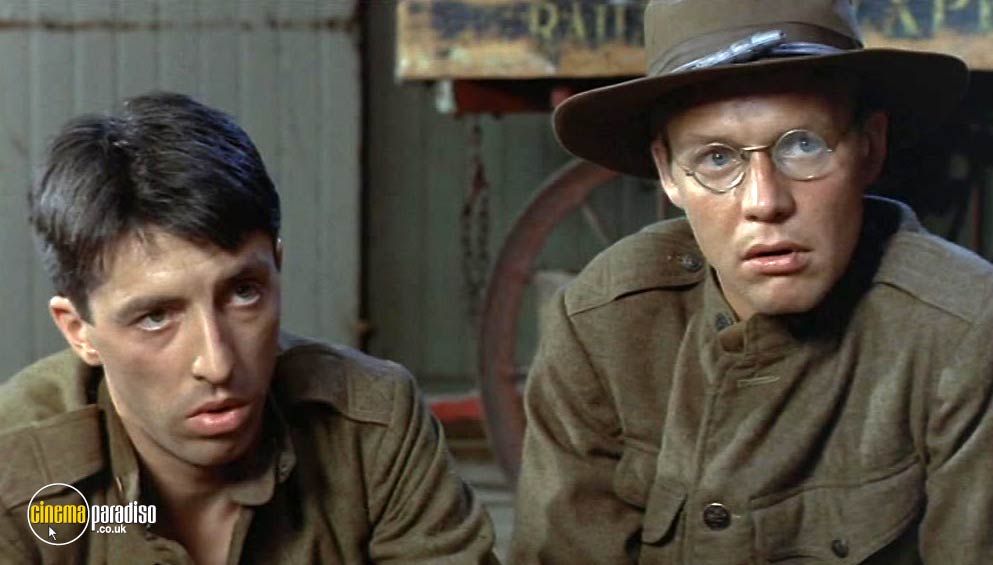
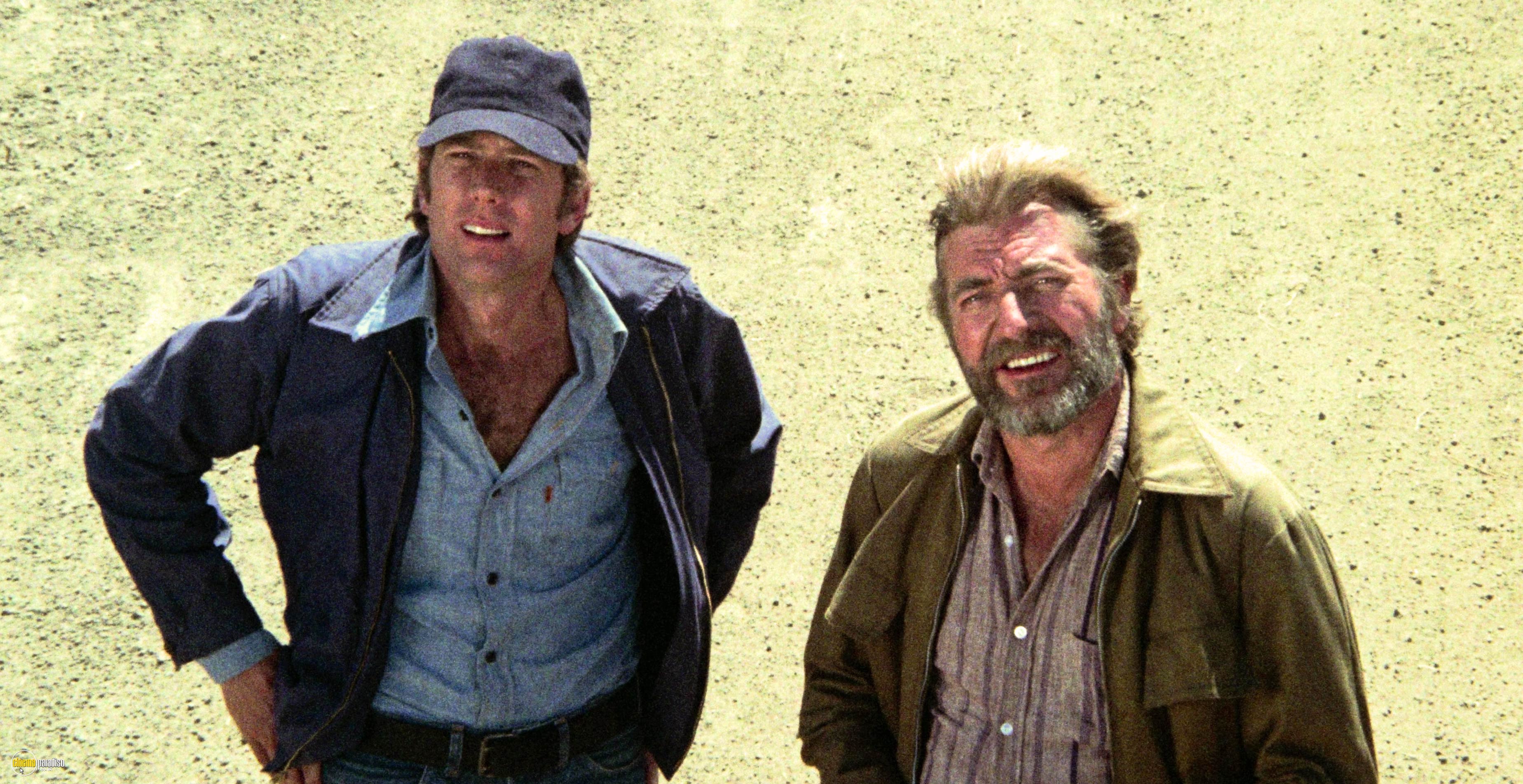
More about these films
With Gen Sekiguchi's Survive Style 5+ (2004) showing in selected cinemas ahead of the release of a new Blu-ray edition, Cinema Paradiso selects 10 directors who decided to hang up their megaphones after just one feature.
There are numerous reasons why the members of an exclusive directors club only have one feature on their CVs. Some scratched an itch, while others fulfilled a long-held ambition to complete a pet project. Others decided the stress of calling the shots wasn't for them, while others still decided they were better off returning to the day job, whether it was acting, editing, photographing, or designing. Several strove in vain to find a suitable property or to raise the funds for a sophomore outing, while a handful sadly died with just one credit to their name.
There are dozens of one-shot directors and the majority of them date from the post-studio era, when the rise of independent production allowed newcomers and mavericks alike to take a turn behind the camera. During Hollywood's Golden Age, a combination of union demarcation and front office intransigence meant that artists were considered to be jacks of one trade rather than several. There were notable exceptions, including Charlie Chaplin, Orson Welles, Ida Lupino, Laurence Olivier, and Gene Kelly. Writers like Ben Hecht and Garson Kanin were also accorded the occasional opportunity to direct. But, with the studio chiefs holding the purse strings, people tended to stick with their métier until the late 1960s, when independent production became more common.
Some big names have directed only a single feature and Cinema Paradiso shall return to them in more detail in a future article. Our focus here is on the 10 best features made by one-shot film-makers and, in a change to our usual format, we shall take an in-depth look at each entry on our chronological list to reveal how the picture came about and why the director decided to call it quits after the cameras stopped rolling.
L'Atalante (1934)
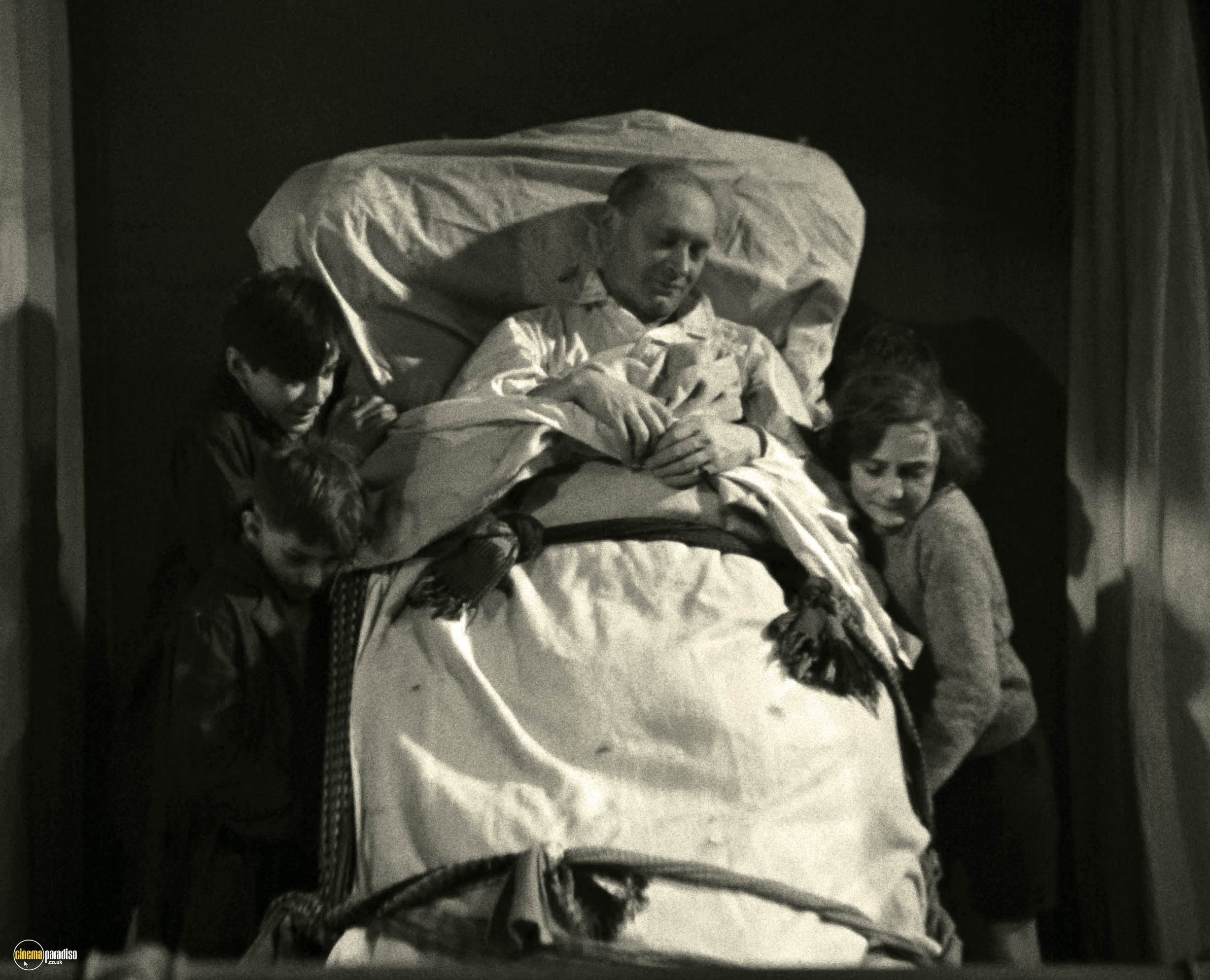
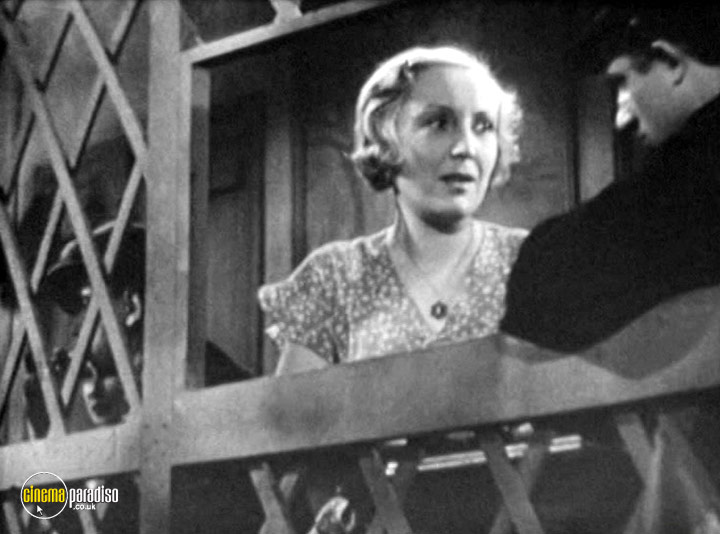
Some might feel we're cheating by including Jean Vigo's masterpiece in this list. But, while his surrealist classic, Zéro de conduite (1933), had a non-fiction narrative after the documentary shorts, À propos de Nice (1930) and Taris (1931), it only ran for 48 minutes, which makes it a medium-length film or a featurette. Cinema Paradiso members can watch all three films on The Complete Jean Vigo Collection (2004), which does what it says on the tin, as it also contains Vigo's sole feature, L'Atalante (1934).
His first intention had been to make a biopic of anarchist Eugène Dieudonné, who had been defended in a 1913 newspaper article by Vigo's father, Miguel Almereyda. As Zéro de conduite had been banned, however, producer Jacques-Louis Nounez sought to persuade Vigo to adapt Georges de La Fouchardière's L'Affaire Peau-de-Balle, or develop his own outline script about the clashes between a bourgeois father and his radical son. Eventually, they settled upon Jean Guinée's scenario set among the barge dwellers of the River Oise and Vigo extensively reworked the text with Albert Riéra, while Nounez talked Gaumont into providing a budget of one million francs that enabled them to hire the barge, Louise XVI, and secure the acting services of Michel Simon, who had just been acclaimed for Jean Renoir's Boudu Saved from Drowning (1932). Jean Dasté and Louis Lefèbvre returned from Vigo's school comedy, while Dita Parlo was signed up after she had come to Paris from her native Germany
Parlo played Juliette, who comes to live on a river barge after marrying its skipper, Jean (Dasté). He is the jealous type, however, and resents the way she chats to crew member, Père Jules (Simon), who keeps several cats in his quarters. When he and the cabin boy ( Lefèbvre) go to see a fortune teller, Juliette is denied her long-promised night out and, when Jean finally takes her to a dance hall, he gets so wound up by her flirting with a street peddler that he leaves her behind when she leaves L'Atalante without telling him to spend the day window shopping.
Despite suffering from tuberculosis, Vigo proved a hard taskmaster and often demanded repeated retakes after acting out scenes for his cast to follow. Although he had Russian cinematographer Boris Kaufman shoot plenty of evocative location footage, chunks of the action were staged on the replica barge that art director Francis Jourdain had built on a Gaumont soundstage at La Villette, so that Vigo could have complete control over every aspect of the mise en scène. There was no controlling the 10 stray cats that had been borrowed from a local animal shelter, however, although the kitten that fell asleep in the horn of Père Jules's gramophone lucked out because Simon adopted it.
The shoot proved arduous, as Vigo missed the planned summer start and production only commenced in mid-November 1933. This meant working in the bitter cold, particularly at night, and Vigo and Kaufman often had to position the camera to avoid getting snow and ice in the shot. The strain took its toll on Vigo's fragile health and editor Louis Chavance had to complete the final cut alone after the director had been confined to bed. He was powerless, therefore, when Gaumont reacted to a disastrous preview screening in April 1934 by cutting the running time to 65 minutes and adding a version of a popular song by Lys Gauty to justify changing the title to Le chaland qui passe (The Passing Barge). When this version hit cinemas in September, one critic dubbed it `amateurish, self-indulgent and morbid'.
Vigo was dismayed by the failure and died a month later at the age of 29, supposedly as a street performer started playing `Le chaland qui passe' beneath his window. His work was neglected for a decade before being rediscovered after the war, when it became a touchstone of the nouvelle vague. Various restorations of L'Atalante were undertaken before Vigo's daughter, Luce, supervised a definitive edition in 2001 and this is the one available from Cinema Paradiso.
The Night of the Hunter (1955)
Charles Laughton was one of Hollywood's most respected and least predictable actors when he directed his one and only feature. Born in Scarborough in 1899, he had trained at RADA and was an established stage star by the time he debuted on Broadway in the early 1930s. He was soon lured to Los Angeles, having acted in occasional films in Britain, such as E.A. Dupont's Piccadilly (1929). With his tendency to loom larger than life, Laughton was frequently cast in villainous roles in the likes of The Island of Lost Souls, The Old Dark House (both 1932), The Barretts of Wimpole Street (1934), Les Miserables, and Mutiny on the Bounty (both 1935).
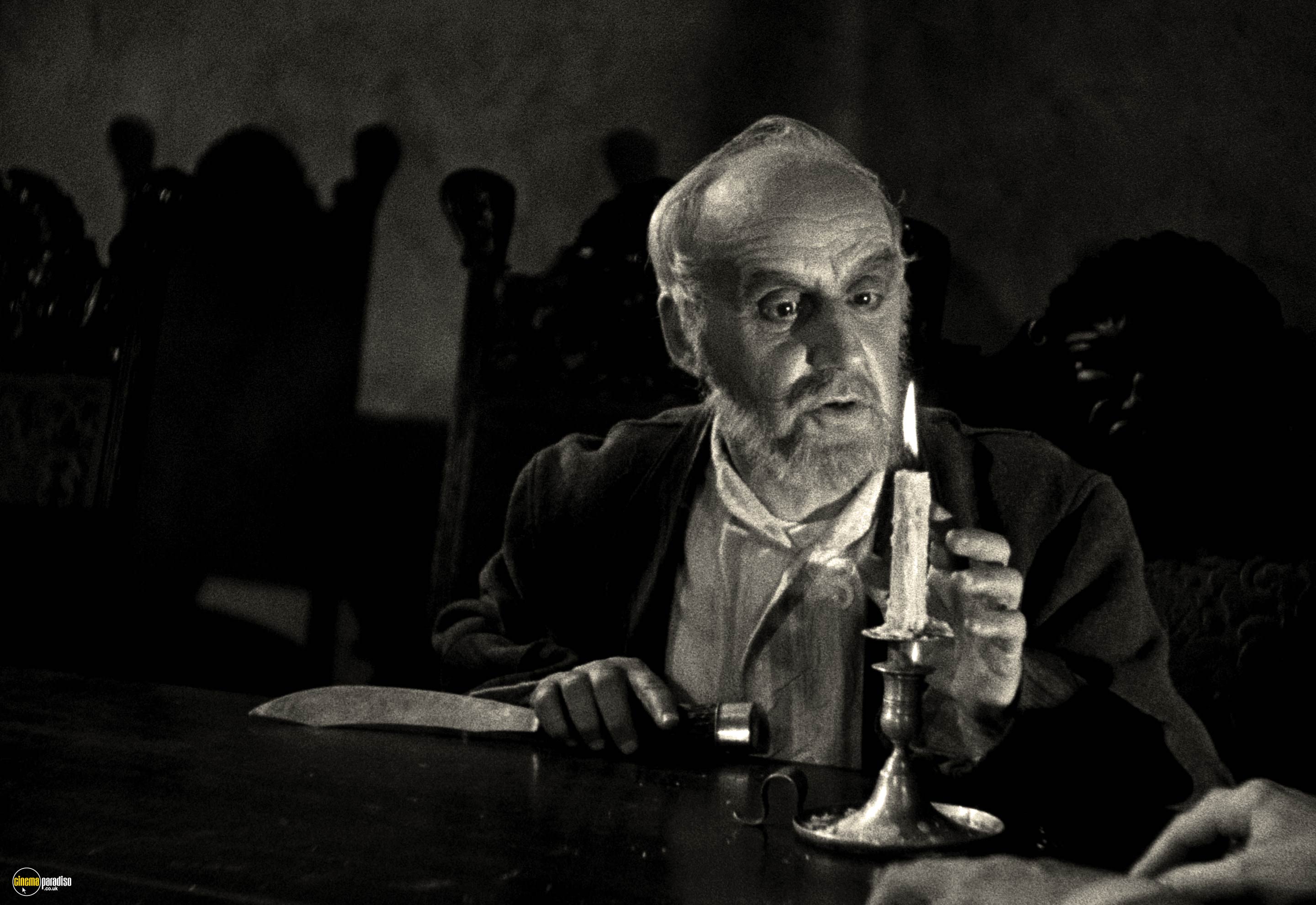
His Captain Bligh earned Laughton an Oscar nomination after he had become the first British actor to win the Academy Award for Best Actor for his priceless display in Alexander Korda's The Private Life of Henry VIII (1933) and he continued to show a mischievous side in If I Had a Million (1933) and Ruggles of Red Gap (1935). On returning to Britain, he brooded imposingly in Korda's Rembrandt (1936), but was denied the chance to give the performance of his career when Josef von Sternberg's adaptation of Robert Graves's I, Claudius (1937) collapsed in mid-shoot. Following a collaboration with Alfred Hitchcock on Jamaica Inn, Laughton defined the role of Quasimodo in William Dieterle's The Hunchback of Notre Dame (both 1939).
He was twice teamed with singing star Deanna Durbin - on It Started With Eve (1941) and Because of Him (1946) - but earned greater plaudits for playing flawed individuals in Jean Renoir's This Land Is Mine (1943) and Robert Siodmak's The Suspect (1944). Returns to villainy followed in Captain Kidd (1945), The Big Clock (1948), and The Strange Door (1951). But Laughton showed his undervalued versatility, as Judge Thomas Horfield in Hitchcock's The Paradine Case (1947), Inspector Jules Maigret in The Man on the Eiffel Tower (1949), and as Henry Horatio Hobson in David Lean's Hobson's Choice (1954).
It was at this juncture that Laughton decided to move behind the camera. He had directed plays on Broadway and had supervised a few scenes on The Man on the Eiffel Tower before Irwin Allen had been replaced by Burgess Meredith. But his imagination was fired by Davis Grubb's 1953 novel, The Night of the Hunter, which he described as `a nightmarish Mother Goose story'. It turned around Depression era serial killer Harry Powell, who discovers that his cellmate has confided the hiding place of a $10,000 robbery stash to his young children, John and Pearl. On leaving prison, Powell poses as a preacher and marries the thief's widow, Willa.
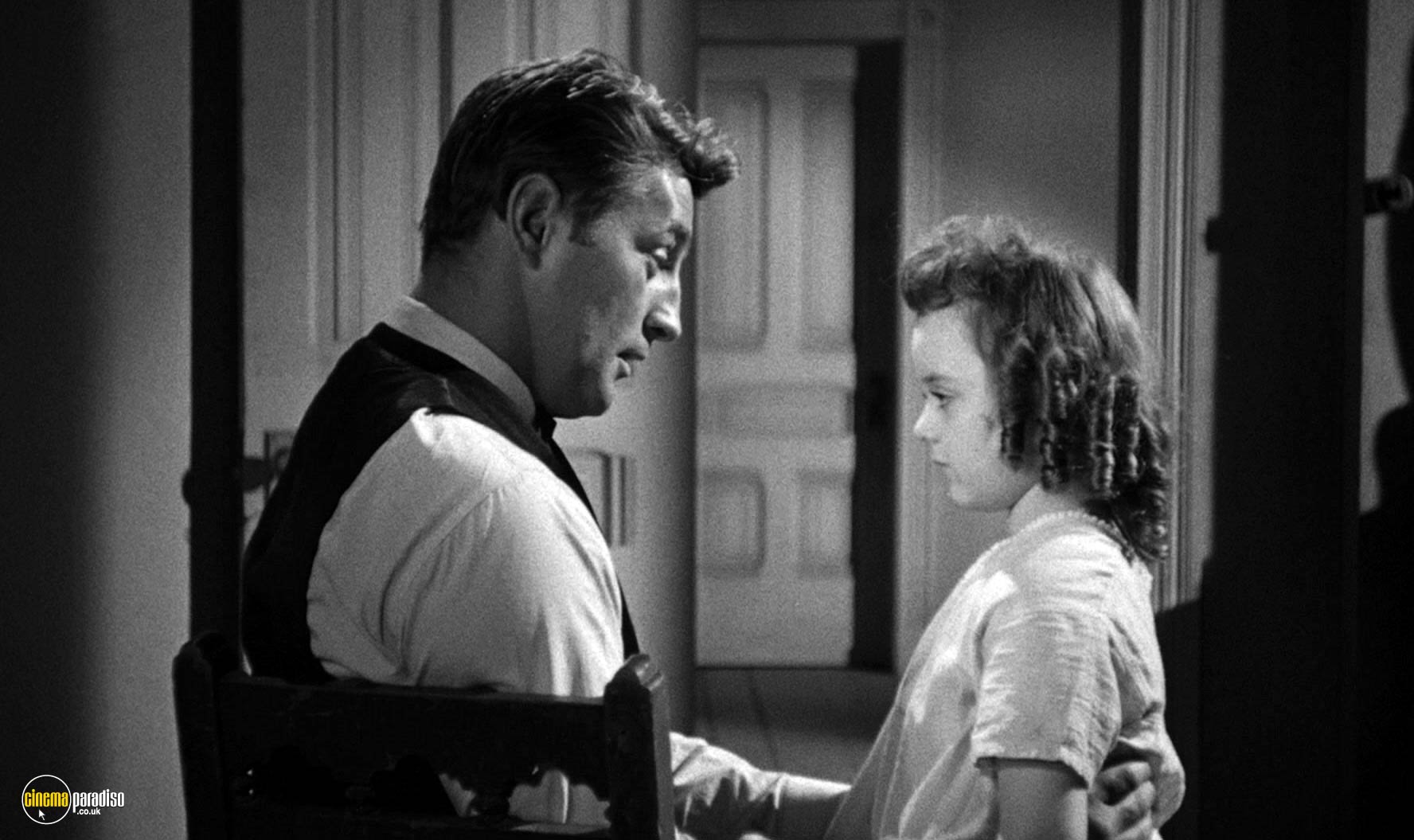
When producer Paul Gregory dissuaded him from casting himself as Powell, Laughton considered Gary Cooper, John Carradine, and Laurence Olivier before hiring Robert Mitchum alongside Shelley Winters as Willa, as he felt she would be more vulnerable than Grace Kelly, Betty Grable, or Agnes Moorehead. As the protective Rachel Cooper, he opted for Lillian Gish, after wife Elsa Lanchester had turned the role down. While in New York viewing silent classics such as D.W. Griffith's The Birth of a Nation (1915) and Intolerance (1916), Laughton had informed Gish that he wanted to restore a little silent era mystique to cinema. `When I first went to the movies,' he told her, `they sat in their seats straight and leaned forward. Now they slump down, with their heads back, and eat candy and popcorn. I want them to sit up straight again.'
Following a battle with the Production Code Administration to depict an evil preacher, Laughton spent 36 days in the autumn of 1954 shooting on soundstages at Pathé and Republic, so that he could create inky Expressionist visuals, in conjunction with art director Hilyard Brown and cinematographer Stanley Cortez. Unusually, he kept the camera rolling between takes to help young actors Billy Chapin and Sally Jane Bruce stay in the moment and readily took suggestions from others. However, Gish noted in her memoir that Laughton could be hesitant on the set, as he had such a fixed vision in his mind and didn't want to do anything to corrupt it.
Despite his best efforts, an executive at United Artists dismised the picture as `too arty' after a test screening and the studio remained so unhappy that Laughton had insisted on using the monochrome that would later be much admired rather than audience-friendly colour that it refused to promote The Night of the Hunter with any enthusiasm. With religious groups objecting to Mitchum's performance, the critics decided that Laughton had made an intriguing misfire, although The Chicago Tribune gave the film a right panning, calling it `overacted' and `overdirected' in opining that `Seldom has so much ugliness been put into one movie.'
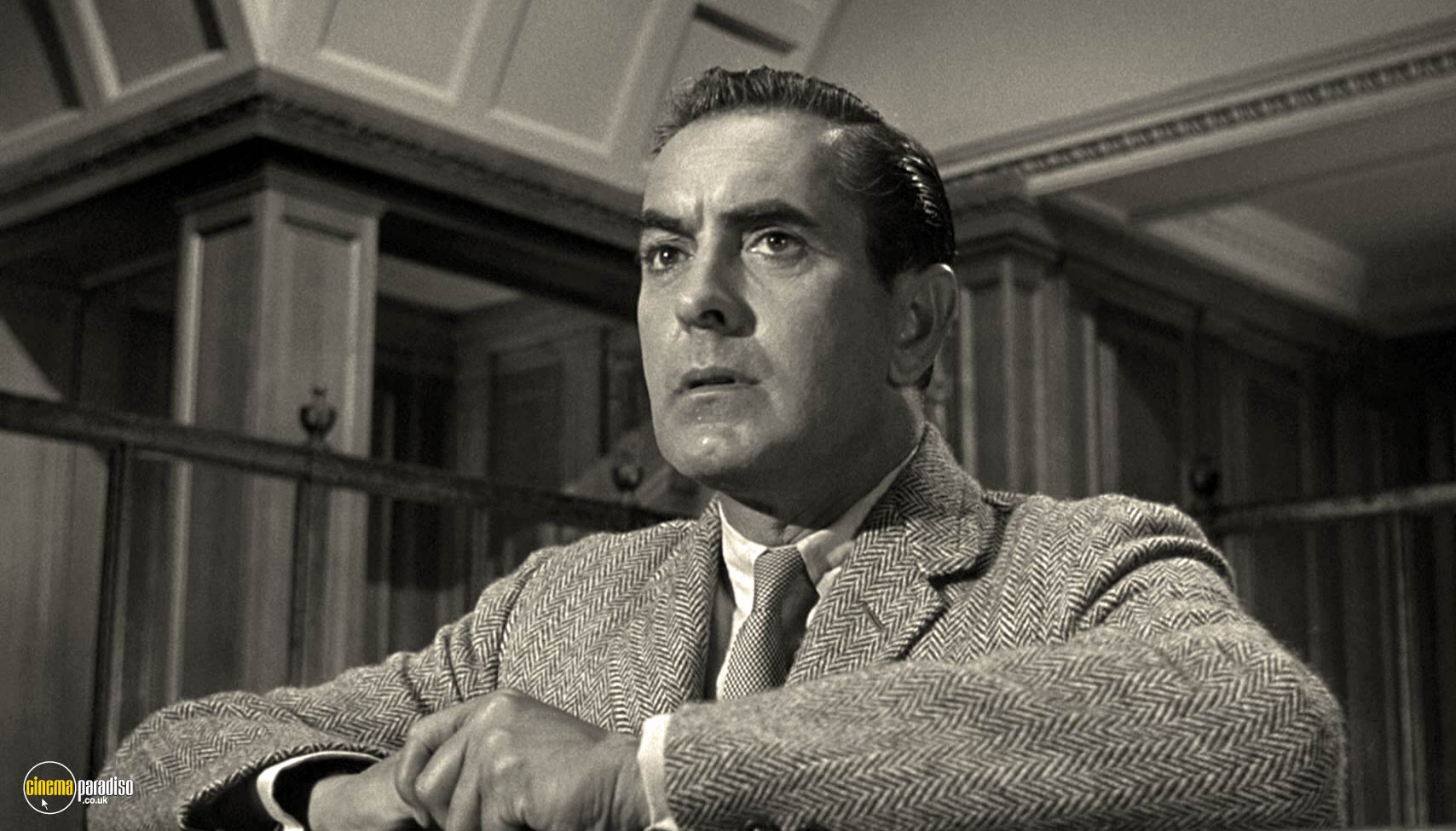
Hurt by the criticism and the poor box-office returns, Laughton shelved plans to adapt Norman Mailer's The Naked and the Dead, which was eventually filmed by Raoul Walsh in 1958. He never directed again, although he was able to take solace in the fact his performance as Sir Wilfrid Robarts in Billy Wilder's Witness For the Prosecution (1957) brought him a third and final Oscar nomination.
One-Eyed Jacks (1961)
All you need to know about the background to this 1961 Western can be found in two Cinema Paradiso articles: The Instant Expert's Guide to Stanley Kubrick and Brando: A Centenary Celebration. But we still need to see how these two titans parted ways before shooting commenced on this adaptation of Charles Neider's 1956 novel, The Authentic Death of Hendry Jones.
In mid-1957, producer Frank P. Rosenberg hired Rod Serling (of The Twilight Zone fame) to adapt Neider's book, which imparted a fresh spin on the story of Billy the Kid. When this was rejected, Sam Peckinpah was asked to take a pass at the screenplay, by which time Brando's Pennebacker Productions had acquired the rights to the novel for $40,000. Brando wanted Stanley Kubrick to direct after being impressed by Paths of Glory (1957). However, Kubrick was trying to put together a British production of Vladimir Nabokov's Lolita and he withdrew from the picture just two weeks before the shoot in November 1958. Karl Malden was asked to take over, but he declined and Brando decided to call the shots in addition to taking the Kid role.
Brando was still unhappy with the script and tasked Peckinpah with completing a second draft. This also failed to pass muster in May 1959 and Brando replaced Peckinpah with Calder Willingham, who had written Kubrick's Great War story. This scenario also failed the Brando test and he turned to Guy Trosper, who had been feted for his work on Richard Thorpe's Elvis Presley vehicle, Jailhouse Rock (1957). With the studio eager for him to start work, Brando went with this version, although when Karl Malden (who had been cast at Brando's insistence instead of Spencer Tracy) was asked who had written the film, he drawled sardonically, `There is one answer to your question - Marlon Brando, a genius in our time.'
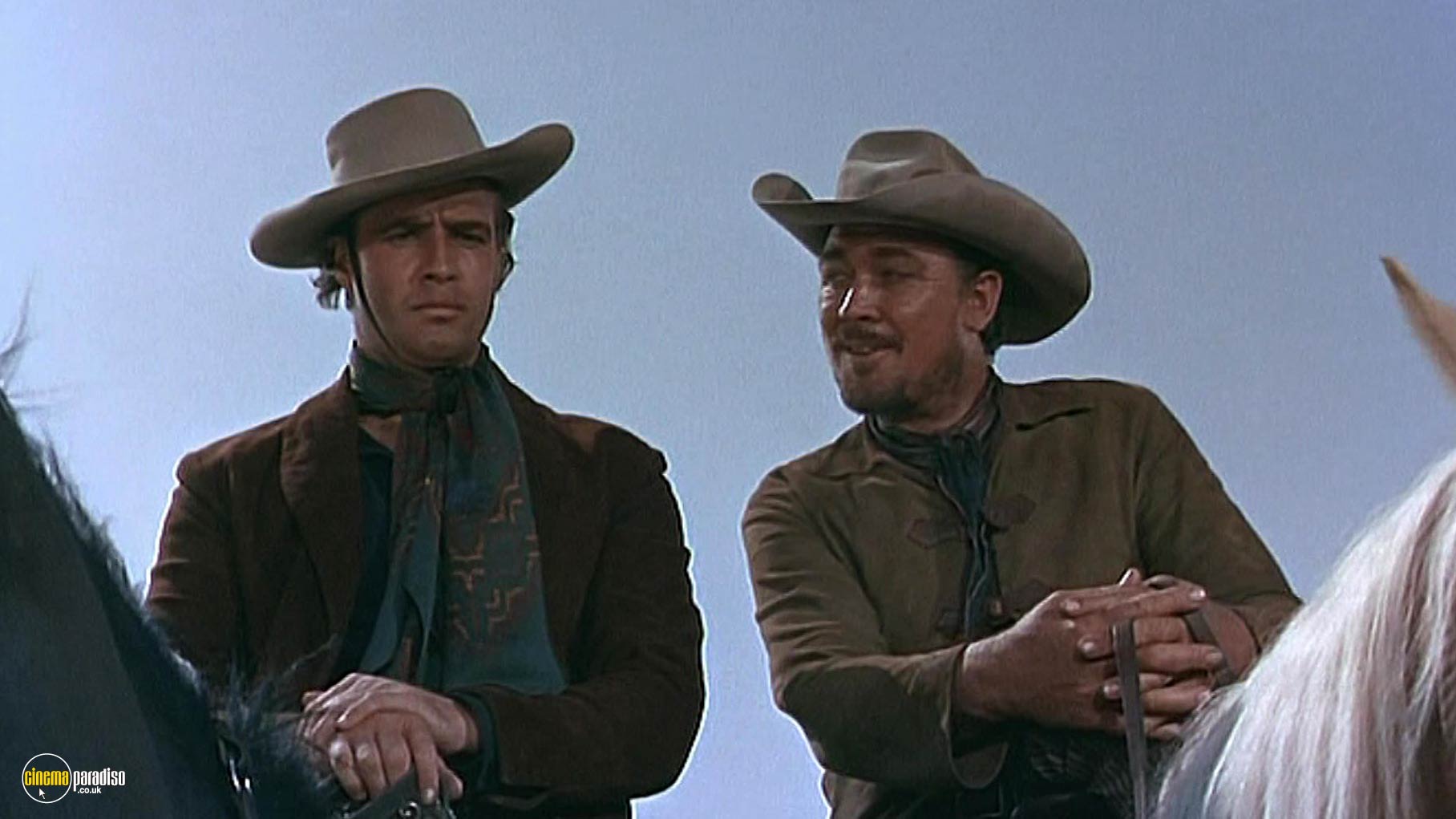
Five years after Dad Longworth (Malden) abandons Rio (Brando) to be captured by Mexican rurales after they had robbed a bank in 1880s Sonora, Rio emerges from prison bent on revenge. He discovers that Dad is now the sheriff of Monterey, California and vows to kill him after robbing the bank with his gang members, Chico Modesto (Larry Duran), Harvey Johnson (Sam Gilman), and Bob Emory (Ben Johnson). However, Rio is distracted when he falls for Louisa (Pina Pellicer), the daughter of Dad's new wife, Maria (Katy Jurado).
Never having directed before, Brando was determined to do an impeccable job. However, his perfectionism led to indecision and delay and the three-month shoot spiralled to six, as changes were made to the script on the hoof and actors were required to learn new lines and/or improvise. Together, Brando and Oscar-nominated cinematographer Charles Lang exposed one million feet of film, with the $2 million budget tripling in the process. Yet this proved to be the easy part, as the footage had to be whittled down and assembled into a cogent story. Working with Archie Marshek, Brando submitted a 4-hour, 42-minute cut that was immediately rejected by the Paramount front office. Exhausted and dismayed, Brando stepped aside and allowed the studio to trim the action down to 141 minutes, with the subplot involvion Rio and a Chinese fisherman's niece (Lisa Lu) being lost. However, he did insist on a new ending, as he thought Laura's death was too downbeat.
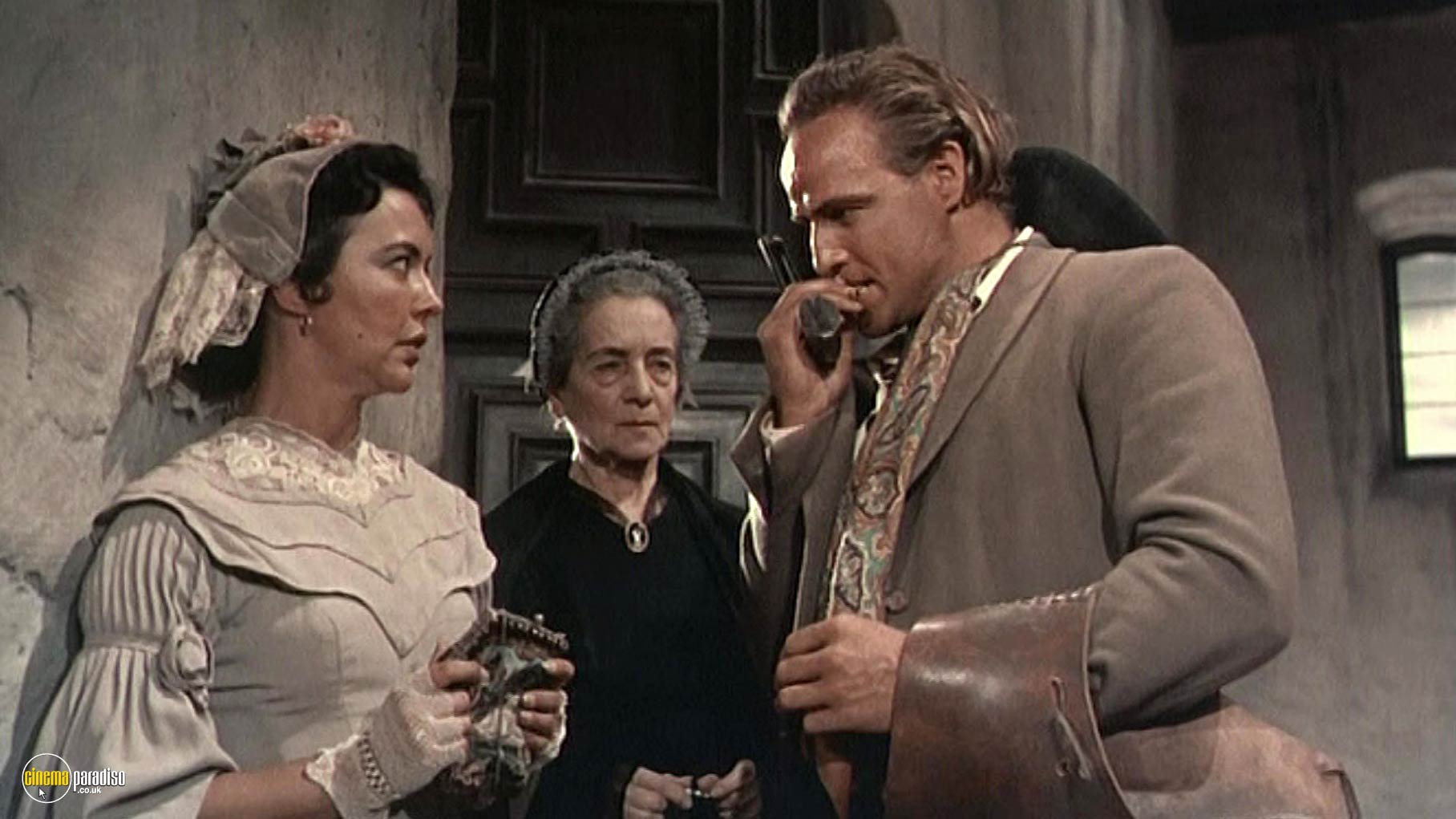
This was the last film photographed in VistaVision until Brady Corbet used it for The Brutalist (2024) and the last to be projected in the format until Paul Thomas Anderson's One Battle After Another (2025). The print was restored in 4K in 2016, under the auspices of Universal Pictures and The Film Foundation, with the assistance of Martin Scorsese and Steven Spielberg. The reviews for the restoration were much more enthusiastic than they had been in 1961, when Bosley Crowther of The New York Times had spoken for many when he lamented that the gritty realism had been `curiously surrounded by elements of creamed-cliché romance and a kind of pictorial extravagance that you usually see in South Sea island films'.
Despite being nominated by the Directors Guild of America, Brando was never tempted to direct again. Indeed, his performances dipped over the ensuing decade and his reputation was only restored by his Oscar-winning turn as Don Vito Corleone in Francis Ford Coppola's The Godfather (1972). Asked by Rolling Stone magazine in 1975 whether he might direct again, Brando grumbled, `You work yourself to death. You're the first one up in the morning...I mean, we shot that thing on the run, you know, you make up the dialogue the scene before, improvising, and your brain is going crazy.' Evidently, he simply didn't want that level of hassle again.
Carnival of Souls (1962)
Harold `Herk' Harvey was making industrial and educational films for the Centron Corporation in Lawrence, Kansas when he saw the abandoned Saltair Pavilion in Salt Lake City while driving home from a shoot in California. Convinced the edifice would make an atmospheric film setting, Harvey asked Centron writer John Clifford if he'd like to write a screenplay. `The last scene, I told him, had to be a whole bunch of ghouls dancing in that ballroom; the rest was up to him.'
Three weeks later, Harvey had his script, which drew on Robert Enrico's La Rivière du hibou, a 1961 take on Ambrose Bierce's Civil War story, `An Occurrence at Owl Creek Bridge', which won the Best Short Film prize at both Cannes and the Academy Awards. Enrico would complete a Bierce trilogy with Chickamauga and The Mockingbird (both 1962), which were less seen. But Harvey however, was more influenced by Jean Cocteau and Ingmar Bergman and sought to emulate their distinctive visual senses of place.
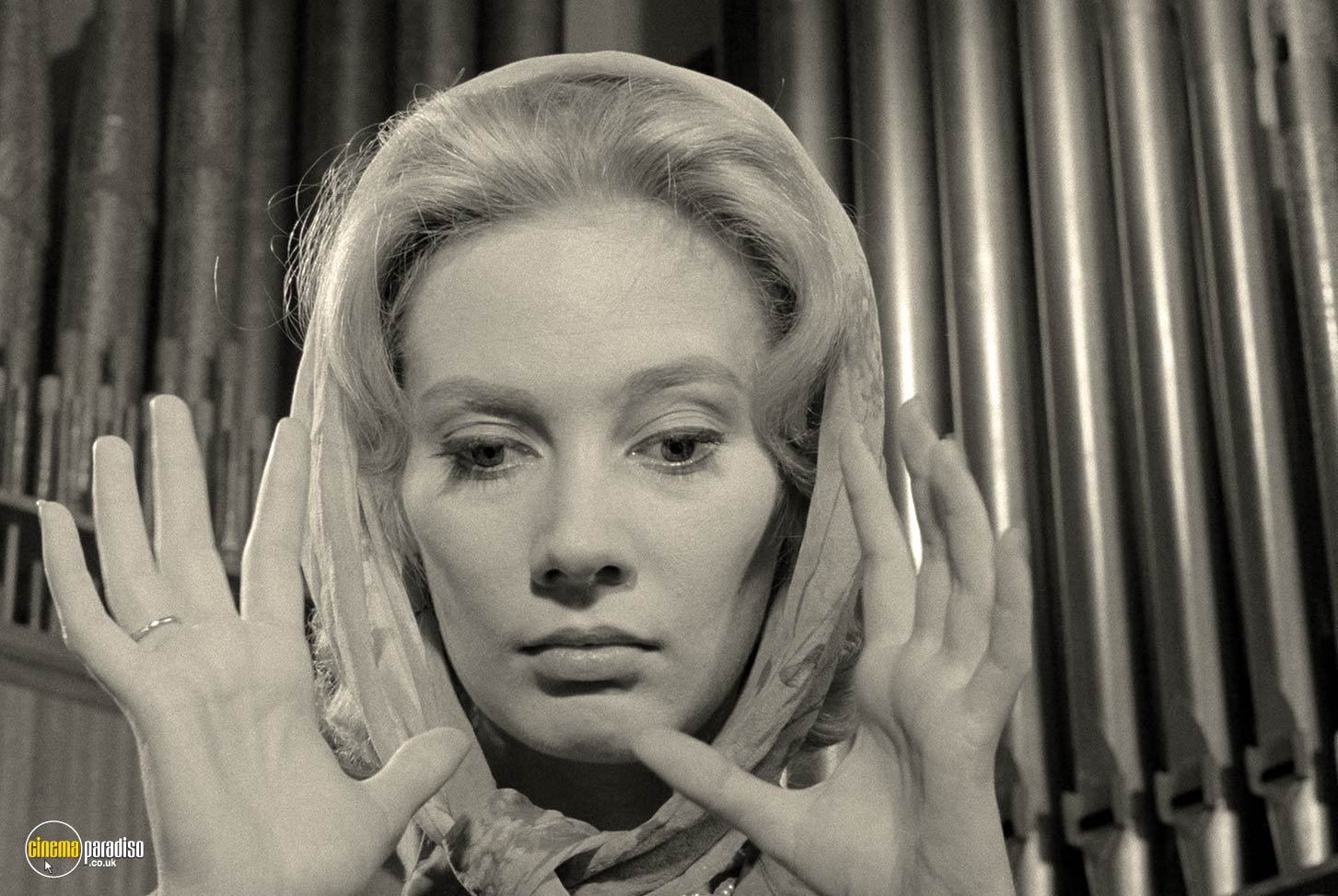
The sole survivor when a car crashes off a Kansas bridge into a river, Mary Henry (Candace Hilligoss) takes up the post of organist at a church in Salt Lake City. She becomes obsessed with a deserted pavilion that had been a boathouse and a dance hall before becoming a carnival. The minister (Art Ellison) warns her to stay away, but Mary is haunted by visions of a spectral figure (Harvey) and both Dr Samuels (Sam Levitt) and the socially awkward John Linden (Sidney Berger) offer to help, as Mary becomes more afraid.
Candace Hilligoss had studied acting with Method guru Lee Strasberg in New York and the 26 year old had backed out of cult director Richard Hilliard's Violent Midnight to work with Harvey, who offered her $2000 to be his star. This was a fair portion of his $30,000 budget, over half of which he had raised by asking local businessmen to invest $500 in his project. A further $50 went on renting the Saltair Pavilion, while $12 had to be spent to repair the bridge in Lecompton, Kansas that had been damaged during the car plunge sequence.
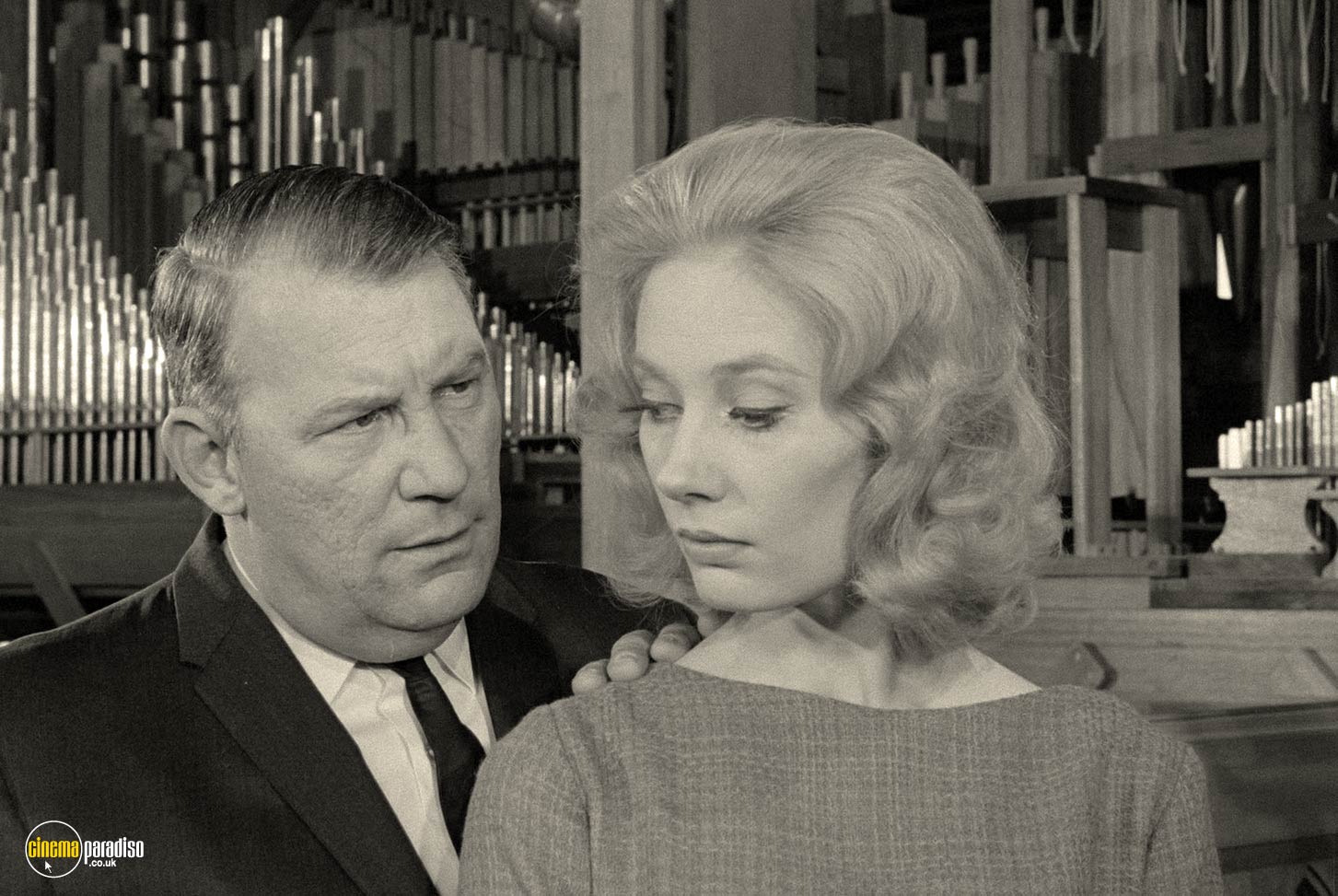
To avoid paying licence fees, Harvey shot in guerilla style during the three-week shoot, with a handheld Arriflex camera being used to spare the expense of dolly shots and rear projection in the car scenes. Despite such shoestring scrimping, Harvey and Centron cinematographer Maurice Prather managed to give the visuals a monochrome menace that was barely noticed - along with Gene Moore's brooding organ score - when Carnival of Souls was twinned with Herbert L. Strock's The Devil's Messenger, which starred Lon Chaney, Jr. as Satan.
Consequently, while fellow industrial film-maker Robert Altman went on to great things after debuting with The Delinquents (1962) - which shared future sitcom stalwart Reza Badiyi as assistant director - Harvey resumed the day job. He remained at Centron until his retirement in 1985, having worked on around 400 shorts, some of which earned awards. Indeed, the company itself won the Oscar for Best Documentary Short with Leo Beuereman (1969).
Contrary to rumours, Harvey did try to float a second feature, teaming again with John Clifford on Flannagan's Smoke, a comedy about the effects that some escaped laboratory gas has on those in the vicinity. With Centron's backing, work even began in the late 1960s on The Reluctant Witch, only for this James E. Gunn-scripted fantasy to collapse because of a shortage of funds (although unedited footage still exists). Harvey also wrote his own screenplay for a fact-based historical drama entitled Windwagon before he died in 1996. While he saw Carnival of Souls become such a Halloween favourite after a 1989 revival that it was released on video, Harvey did not live long enough to see his sole feature acquire cult status.
Wanda (1970)
`Until I was thirty, I had no identity of my own,' Barbara Loden once told a reporter. The remark has prompted many to see her sole directorial outing, Wanda (1970), as a semi-autobiographical affair. But the impetus came from a March 1960 New York Daily News article about Alma Malone, a woman who had thanked the judge who had sentenced her to 20 years for giving her a safe space and guaranteed meals after she had spent most of her life drifting before she fell into the orbit of Don Reisinger who had been killed during the 1959 bank robbery that had led to her arrest as the getaway driver. Malone referred to her accomplice as `Mr Ansley' and he had been shot by police because she had failed to arrive at the rendezvous spot at the designated time because she'd taken a wrong turning.
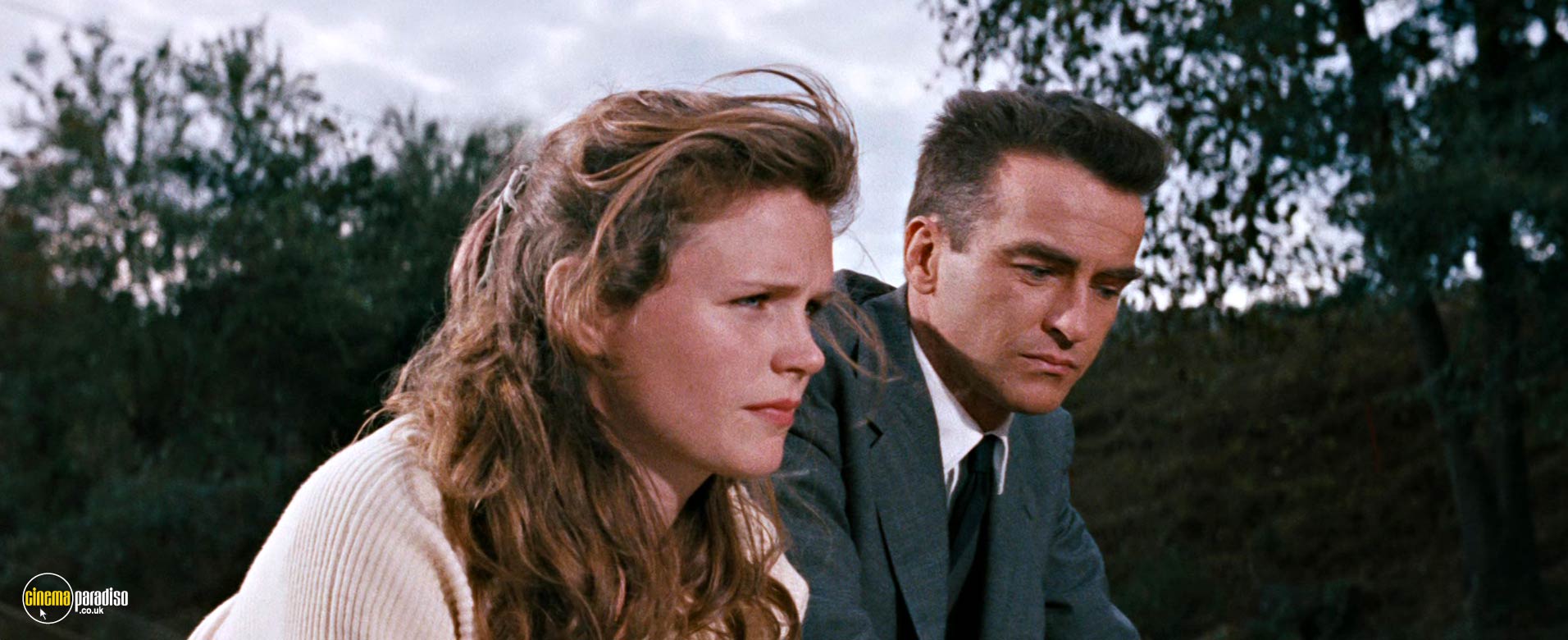
Like Malone, Loden had been raised in southern poverty. Born in Marion, North Carolina in 1932, Loden had been so desperate to flee the strict grandparents who had raised her after her parents had acrimoniously divorced that she escaped to New York at the age of 16. While working as a pin-up model, she had been spotted by film producer Larry Joachim, who had landed her a recurring role as the butt of slapstick gags on The Ernie Kovacs Show. Keen to improve herself, Loden had enrolled at the Actors Studio in 1957, where she came to the attention of Oscar-winning director, Elia Kazan, who cast her as Montgomery Clift's secretary in Wild River (1960) and Warren Beatty's promiscuous sister in Splendor in the Grass (1961).
Despite Kazan's unscrupulous claims to have scripted Wanda before handing it over to Loden to see if she could make anything of it, she had started working on the screenplay in 1962 and had seemingly completed it around the time she won a Tony for playing Maggie, the character Arthur Miller had based on Marilyn Monroe in After the Fall (1964). However, she struggled to find anyone to direct or finance the feature and, having decided to direct and star herself, she accepted maverick producer Harry Shuster's offer to invest $115,000 in the project if the rest was met by the Foundation for Filmmakers, which Loden had formed with Kazan around the time of their marriage in 1967.
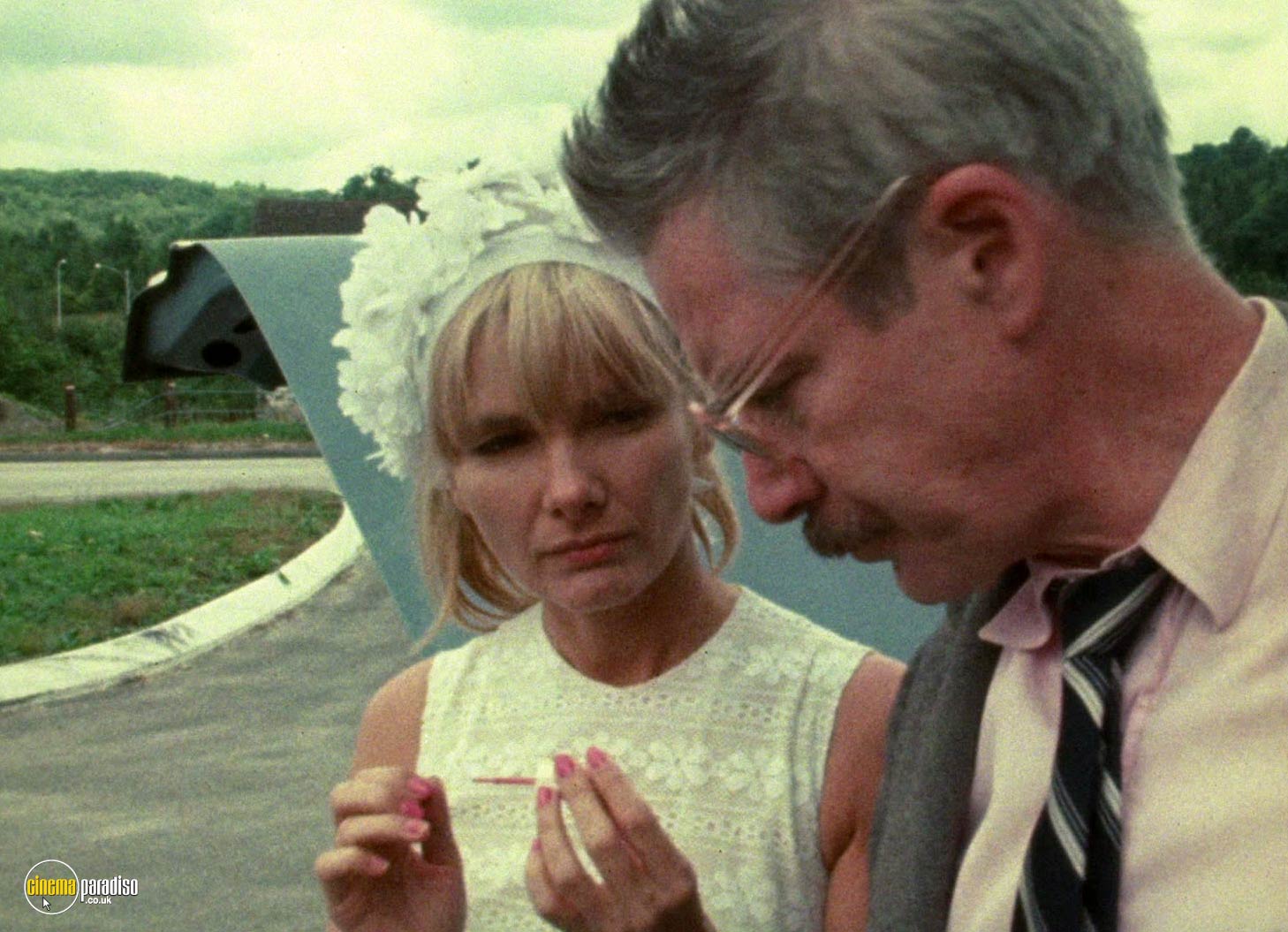
As a child, Loden had disliked movies because the actors made her feel inferior because they always looked so perfect. So, inspired by Jean-Luc Godard's À bout de souffle (1960) and the films of Andy Warhol, she set out to provide a deglamorised corrective to the crooks on the lam scenario seen in the likes of Arthur Penn's Bonnie and Clyde (1967), which had starred Warren Beatty and Faye Dunaway, who had been Loden's understudy as Maggie. She had hoped to shoot in the Deep South, but the limited budget and the need to be near the 16mm developing labs in New York meant Loden alighted upon the Pennsylvania mining towns of Carbondale and Scranton with a small crew led by Nicholas Proferes, who had photographed a few documentaries for D.A. Pennebaker and the Maysles brothers.
Offering no mitigation to the judge awarding sole custody of her two children to the husband divorcing her (`I'm just no good'), Wanda Goronski (Loden) wanders aimlessly until she's finds herself in a motel room with a travelling salesman who leaves her stranded at an ice cream parlour. Having been robbed while dozing in a cinema, she finds herself involved with a bar robbery and latches on to the thief, Norman Dennis (Michael Higgins), who takes her along, even though he despairs of her unkempt appearance and inability to do the simplest thing. For her part, Wanda puts up with Mr Dennis's indifference and insults because life on the road is better than nothing.
Often disregarding the script to improvise, Loden and Higgins were the only professionals in the cast, with supporting roles being offered to people Loden had noticed during the shoot. In addition to presenting a perspective on life that reflected her own experiences, Loden also consciously departed from Hollywood modes of depiction. Crucial to this was Proferes's vérité camerawork, which went beyond the realist style that was to become associated with independent cinema and even Elia Kazan's 1962 feature, The Visitors.
Loden had tried to visit Alma Malone while preparing for the film, but she was paroled around the time it won the International Critics' Prize at the Venice Film Festival. The award didn't translate into criticial or commercial approval, however, with Pauline Kael being among the female critics to denounce Loden for presenting Wanda as a passive victim. As Amy Taubin has since pointed out, however, Loden had instead `illuminated Wanda's humanity and that of most women all over the world, who have internalised the misogyny of family, church, and state so thoroughly that they are not able to conceive of a way to fight back'.
Indeed, Loden sought to pursue these themes by adapting Kate Chopin's novel, The Awakening, whose protagonist also abandons her family. But she couldn't find a backer and spent the last decade of her life with Kazan before dying of breast cancer at the age of 48 in September 1980. For the most part, Wanda remained forgotten until French actress Isabelle Huppert engineered a revival in 2003 and it has since come to be regarded as a feminist classic, while Loden has been hailed as the female equivalent to John Cassavetes.
The Honeymoon Killers (1970)
If Martin Scorsese hadn't directed so slowly, Leonard Kastle would be remembered solely for his music achievements. An opera composer who had attended the prestigious Juilliard School and studied under Samuel Barber, the 39 year-old Kastle was sharing digs with aspiring TV producer Warren Steibel when he was asked to help research a screenplay about Raymond Fernandez and Martha Beck, who had become a national obsession in the 1940s after acquiring the nickname, `The Lonely Hearts Killers'.
Steibel had been offered $150,000 to make a feature by Wall Street whizz Leon Levy. But it still wasn't enough to pay somebody to look into Fernandez and Beck and the court records from their trial and Kastle agreed to do so as a favour, as he shared his friend's dislike of Arthur Penn's Bonnie and Clyde. Steibel later said, `We wanted to do an honest movie about murders. These are not charming people. They are sleazy people - but fascinating. You won't come out of the theatre feeling sorry for the killers like in some movies. It is not romanticised.' Unfortunately, it's not always accurate, either, as Fernandez had killed before meeting Beck, who actually abandoned her husband and two children rather than her ailing mother. The film's backdrop is also a little wayward, as it's not always evident that events are happening in the 1940s, while the conclusion hints at a remorse that neither Beck nor Fernandez felt before they were executed at Sing Sing in 1951.
None of this would have been Kastle's problem if the shoot of Dear Martha (as the film was then known) had gone according to plan. Martin Scorsese had been hired to direct because he had studied at the Tisch School of the Arts in New York and had experience of calling the shots because he had recently been working on his first feature with actor Harvey Keitel. Indeed, he had received extra funding to beef up Bring on the Dancing Girls, which had been cordially received at the Chicago International Film Festival under the title, I Call First. However, Scorsese couldn't afford to pay the rights for the soundtrack numbers and he agreed to work for Steibel in order to raise the cash required.
During the 10 days of shooting, however, Scorsese's determination to give the action a nouvelle vague vibe convinced Steibel that he was going to blow the budget on a handful of scenes. As Kastle told The New York Times: `There was a scene in which Ray takes the train to see Martha, and on the train he picks up a woman...We started with that, and I can't tell you how long and involved that thing became. We realised we'd have a film about the train and nothing else.'
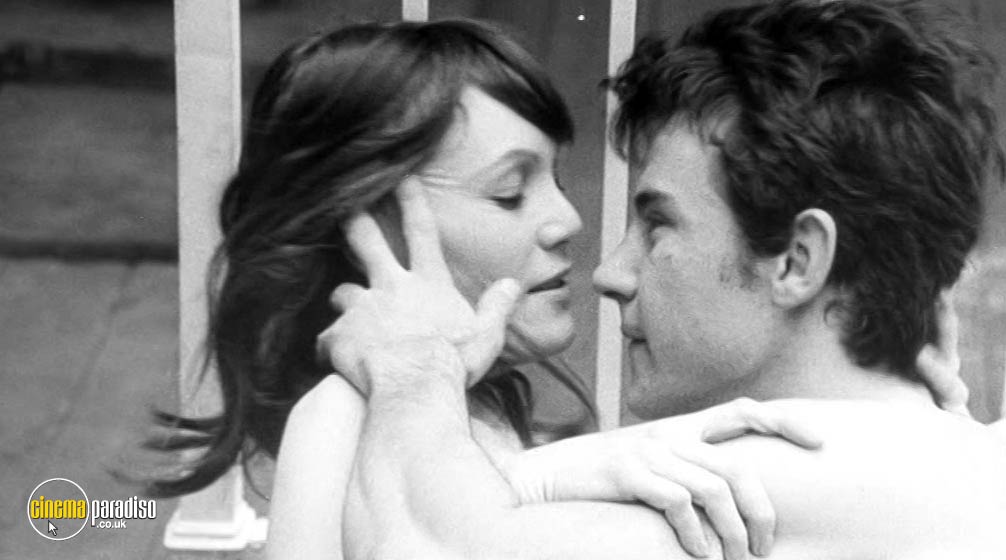
Having frightened the life out of his leading lady filming the lake scene, Scorsese next obsessed about filming a beer can falling out of Martha's shopping bag. This confirmed Steibel and Kastle's worst fears, with the latter recalling, `I realised the way he was doing it, that...we had $150,000 and we had seven weeks and that we would never, ever get through.' Scorsese had no qualms about the decision to remove him, later stating, `I had been fired with pretty good reason...It was a 200-page script and I was shooting everything in master shots with no coverage.' He would learn his lesson, although he had to wait a little while longer to raise the funds to complete his renamed first feature, Who's That Knocking At My Door (1967).
Despite only having previously directed industrial films, Donald Volkman took over Dear Martha. But Seibel wasn't happy with him, either, and, after a fortnight, he persuaded Kastle to take over, even though he had no prior film-making experience. Luckily, cinematographer Oliver Wood had learned his trade under John Boorman at the BBC's documentary unit. He had only previously photographed the shorts, Popdown in London (1967) and The White Slave (1969), but he was recruited by Steibel shortly after relocating to New York. Influenced by Raoul Coutard, Wood used natural light and high-contrast monochrome stock to give The Honeymoon Killers (1970) the vérité meets True Detective look that would help it become a cult favourite.
Actors Shirley Stoler and Tony Lo Bianco were also experienced and needed little directing, as Martha and Raymond, a nurse and a Spanish businessman who meet when her friend signs her up to a lonely hearts club and she follows him from Mobile, Alabama to New York after he tries to dupe her out of some money. Agreeing to pose as his sister, Martha becomes Raymond's accomplice. However, she gets jealous each time his eyes stray and they have to keep fleeing after Martha murders Myrtle Young (Marilyn Chris), Janet Fay (radio soap actress Mary Jane Higby), and Delphine Downing (Kip McArdle) and her daughter, Rainelle (Mary Breen).
Having wisely entrusted the score to Gustav Mahler rather than composing something himself, Kastle wrote a few more screenplays, including Wedding At Cana, Change of Heart, and Shakespeare's Dog. But he never worked in cinema again and was left to return to music in the knowledge that François Truffaut had called The Honeymoon Killers his `favourite American film'.
Johnny Got His Gun (1971)
Dalton Trumbo has been much better known since Bryan Cranston earned Oscar, BAFTA, Golden Globe, and Screen Actors Guild nominations for playing the controversial Hollywood screenwriter in Jay Roach's Trumbo (2015). Cinema Paradiso users might want to visit Peter Askin's fine documentary, Trumbo (2007), to learn more about how he used a variety of pseudonyms and fronts to defy the blacklisting imposed by the studios after he was jailed for being part of the Hollywood Ten who refused to `name names' during the nefarious investigation into Communism in the entertainment industry led by the scurrilous Senator Joseph McCarthy and his hysterical House Un-American Activities Committee.
Trumbo had endured a tough upbringing and had worked in a bakery at nights during his university days to provide for his widowed mother and siblings. He started writing in his early twenties and produced various articles and stories before publishing his first novel, Eclipse (1934), a social-realist tract based on his youth in Grand Junction, Colorado. Invited to Hollywood, Trumbo initially worked on mid-budget films, many of which have been long forgotten, including Road Gang (1936), A Man to Remember (1938), and Curtain Call (1940). However, his fortunes changed with Sam Wood's Kitty Foyle (1940), which earned Ginger Rogers the Academy Award for Best Actress and Trumbo a nomination for Best Adapted Screenplay.
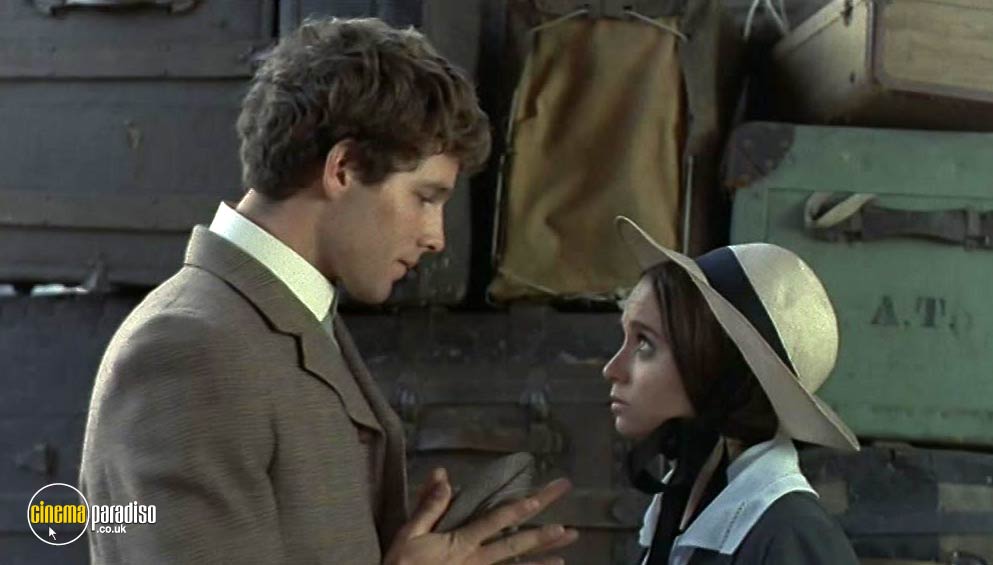
Frustratingly, few of the scripts from the period that saw Trumbo become one of Hollywood's best-paid writers are available on disc in the UK, even though there is no denying the quality of You Belong to Me (1941), I Married a Witch (1942), Tender Comrade, A Guy Named Joe, Thirty Seconds Over Tokyo (all 1944), and Our Vines Have Tender Grapes (1945). However, he raised hackles in certain circles with two of his novels, Johnny Got His Gun (1939) and The Remarkable Andrew (1942). The former was a pacifist tale that had been inspired by a newspaper article about the Prince of Wales visiting a Canadian soldier who had lost all of his limbs during the Great War, while the latter featured the ghost of President Andrew Jackson urging the United States against joining the Second World War. Trumbo had given a speech on the subject in February 1940, in which he had challenged the notion that democracy was at stake in the fight against totalitarianism. `There is no such thing as democracy in time of war,' he said. `It is a lie, a deliberate deception to lead us to our own destruction. We will not die in order that our children may inherit a permanent military dictatorship.'
Trumbo had been aligned with the Communist Party in the 1930s (although he had never become a card-carrying member) and had warned against Cold War aggression towards the Soviet Union in a 1946 essay. This prompted William R. Wilkerson, the publisher and founder of The Hollywood Reporter, to respond with `A Vote For Joe Stalin', an article in which he accused Trumbo and several others of slipping Communist propaganda into their screenplays. The HUAC inquiry summoned Trumbo and nine others to testify about the claims and their refusal led to them being jailed for contempt of Congress. Despite appealing to the Supreme Court in 1950 under the First Amendment, Trumbo served 11 months in the federal penitentiary in Ashland, Kentucky.
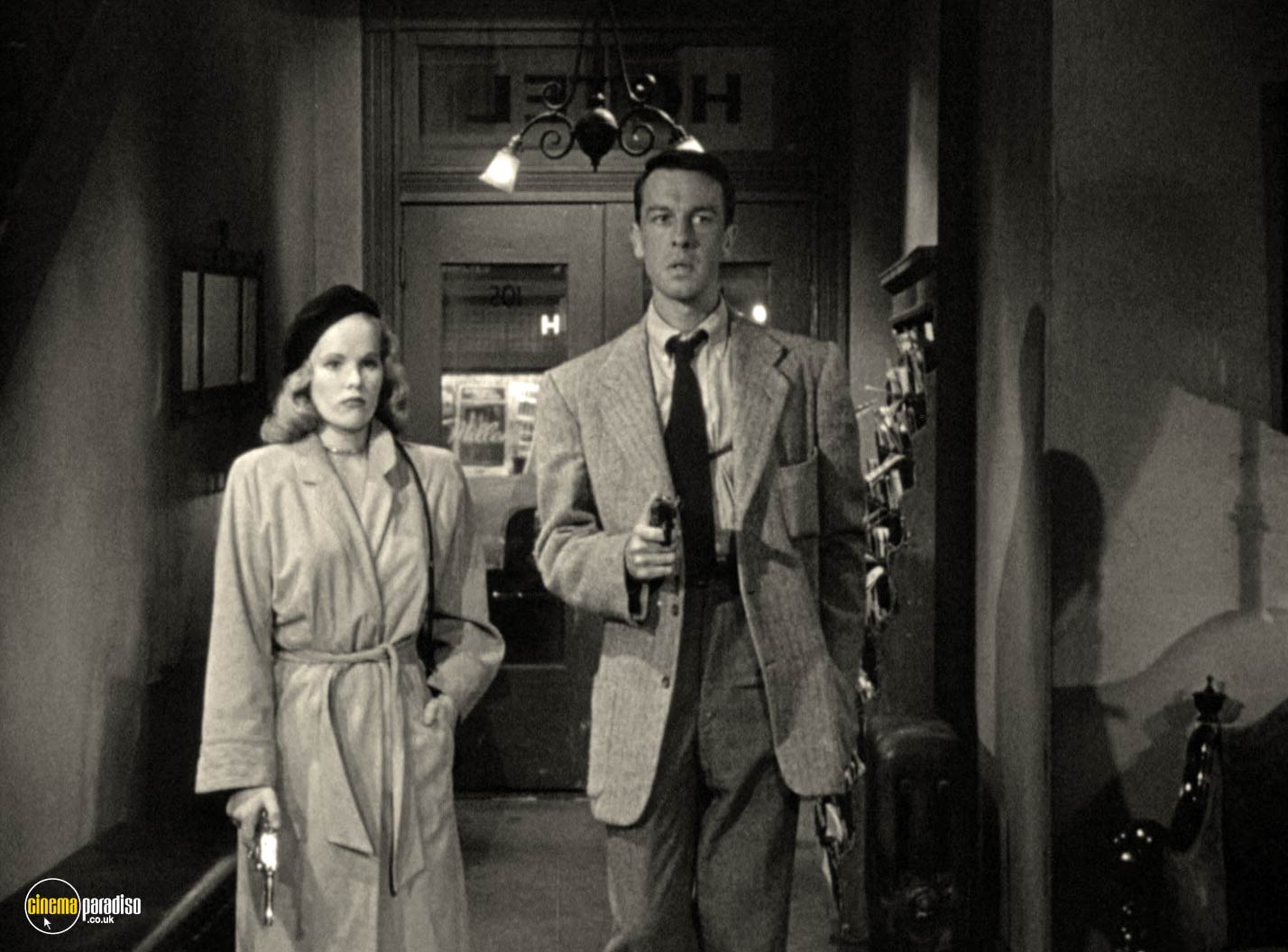
On his release, he discovered he was barred from writing for the studios and had to use fronts to take his credit on Gun Crazy (1950), He Ran All the Way, The Prowler (both 1951), The Boss (1956), The Green-Eyed Blonde (1957), From the Earth to the Moon, and Cowboy (both 1958). Front Ian McLellan Hunter won the Oscar for Best Story for William Wyler's Roman Holiday (1953) and Trumbo won the same award for Irving Rapper's The Brave One (1956) after borrowing the name Richard Rich from a producer's nephew. He used the pseudonym Felix Lutzkendorf on They Were So Young (1954) and Ben Parry on The Brothers Rico (1957) and Terror in a Texas Town (1958).
Having worked with an uncredited Trumbo on Last Train from Gun Hill (1959), Kirk Douglas was eager to smash the blacklist. So, after Otto Preminger had hired Trumbo to salvage Leon Uris's adaptation of his own novel, Exodus, Douglas had him rework Howard Fast's novel, Spartacus (both 1960), for Stanley Kubrick. The pair reunited on Town Without Pity (1961) and Lonely Are the Brave (1962), as Trumbo rebuilt his career with the screenplays for The Last Sunset (1961), The Sandpiper (1965), Hawaii (1966), and The Fixer (1968). However, no one would touch his adaptation of Johnny Got His Gun, which he had written in 1964 with an uncredited Luis Buñuel, who had planned to direct.
No one would back the Spaniard, however, just as the studios has backed away from John Garfield's bid to essay Joe Bonham on screen after James Cagney had played in him in a 1940 radio adaptation of Trumbo's award-winning novel. He was surprised, therefore, when producer Bruce Campbell agreed to negotiate a deal with Warner Bros. in 1966. This also came to nothing, but Campbell and Trumbo invested $80,000 in the project and found 25 others over the next five years to contribute $600,000 towards the shooting costs. These ended up exceeding $1 million, but the funding method afforded Trumbo the opportunity to direct the picture and also take a cameo (under the name Robert Cole) as the Orator who praises the pioneering medical techniques being used to keep Joe Bonham (Timothy Bottoms) alive after he loses his eyes, ears, mouth, nose, and limbs after being hit by an artillery shell in the Great War trenches. The doctors believe he's in a vegitative state, but a nurse (Diane Varsi) insists that he is trying to communicate in Morse Code by banging his head on the pillow. The US Army refuse Joe's request to be placed in a glass coffin to alert citizens to the horrors of war, while the hospital denies his pleas to be euthanised.
During the course of Johnny Got His Gun (1971), Joe harks back to his life before combat with his Christian Scientist parents (Jason Robards and Marsha Hunt) and his sweetheart, Kareen (Kathy Fields). In order to distinguish between reality, memory, and dream, Trumbo and cinematographer Jules Brenner switched between monochrome, colour, and intense colour, with the drug-induced conversations Joe has with his dead father and Jesus Christ (Donald Sutherland) being particularly trenchant. However, even though the Production Code had been removed, Trumbo decided against showing the extent of Joe's injuries (which would have required expensive effects make-up) and hid his torso with a blanket and his face with a mask.
When the budget ran out during post-production, Trumbo had to divert $25,000 of his own money into the editing and dubbing. With Buñuel's help, the film was accepted into competition at Cannes, where it won the Special Jury Prize and the FIPRESCI Prize. Trumbo's script was nominated for the Writers Guild awards, while Timothy Bottoms (who had been chosen over Ryan O'Neal, Jon Voight, and Robert Blake) received a Most Promising Male Newcomer nod at the Golden Globes.
Released at the height of the Vietnam War, the film failed to earn back its outlay in grossing $767,794, as few critics agreed with Roger Ebert's four-star review. Many concurred instead with the New York Times in accusing Trumbo of lacking finesse as both writer and director in producing `a mess of clichéd, imprecise sentimentalising and fantasising'. The colour shifts were particularly disdained, with the Monthly Film Bulletin claiming they left the film feeling as though Federico Fellini had remade Robert Altman's M*A*S*H (1970).
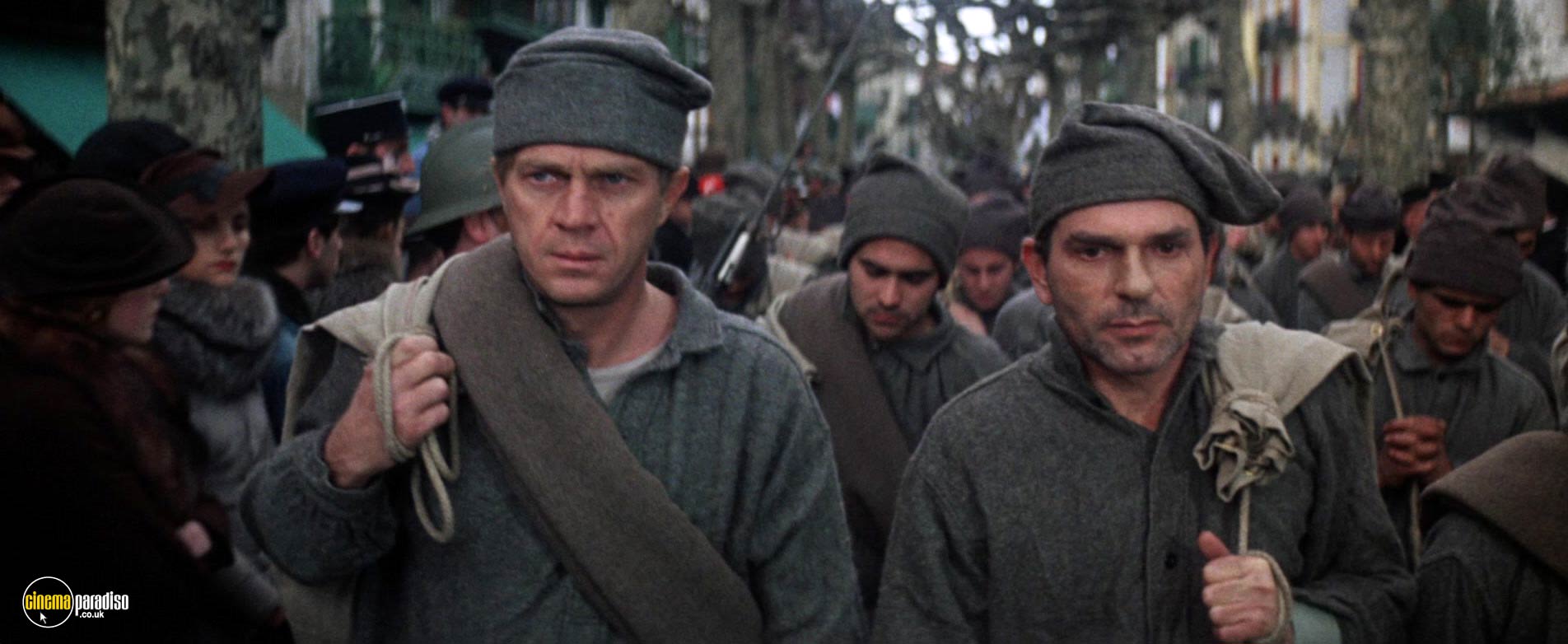
Trumbo never directed again, although he did keep writing before his death at
the age of 70 in 1976. Only Franklin J. Schaffner's Papillon
(1973) is currently available to rent, as The Horsemen (1971) and Executive
Action (1973) are off limits, even though the latter is a provocative
speculation on the assassination of President John F. Kennedy. Over time, Johnny
Got His Gun was reappraised as a bold statement on the brutality and
futility of war, with Akira Kurosawa, listing it among his favourite films.
Phase IV (1974)
Saul Bass had so much on his plate, it's amazing he found time to direct even one feature. Having started out designing print adverts for films, he so impressed Otto Preminger with his work on The Moon Is Blue (1953) that he was hired to design the poster for Carmen Jones (1954). Recognising that Bass had a unique vision, Preminger asked him to create the opening credits for The Man With the Golden Arm (1955) and he promptly changed the way in which Hollywood title sequences were produced and utilised.
Bass and Preminger would collaborate for the next decade, notably experimenting with cut-out animation for Anatomy of a Murder (1958). He also animated an epic epilogue to Michael Anderson's Best Picture winner, Around the World in 80 Days (1956), and came to the attention of Alfred Hitchcock. They worked together on Vertigo (1958), North By Northwest (1959), and Psycho (1960), for which Bass also produced the 48 storyboards that shaped the iconic shower sequence, for which, he received the credit Pictorial Consultant.
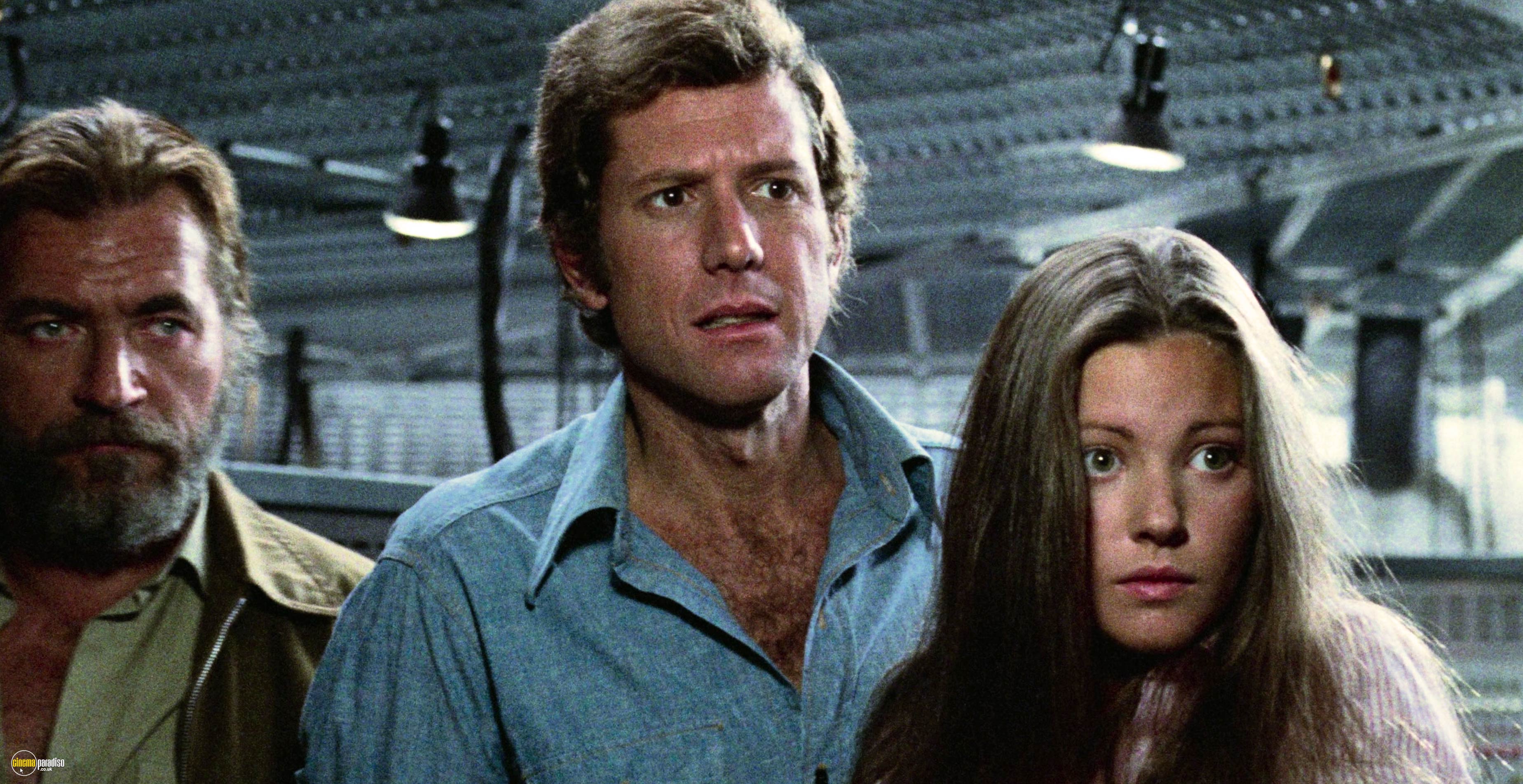
By this time, Bass had formed a team with second wife, Elaine Makatura, and they would venture into the realm of short film-making with The Searching Eye and From Here to There (both 1964). The pair would win an Oscar for Why Man Creates (1968) and would later receive further nominations for Notes on the Popular Arts (1977) and The Solar Film (1979). Their final outing, Quest (1983), was a 30-minute science-fiction fantasy based on Ray Bradbury's short story, `Frost and Fire', which is set on a distant planet in which the lifespan of the descendants of a crashed spaceship is limited to just eight days. By then, of course, Bass had already speculated upon the future of humanity in his only feature, Phase IV (1974).
Bass had always intended his credit designs to `try to reach for a simple, visual phrase that tells you what the picture is all about and evokes the essence of the story'. But he had also striven to show the audience their everyday world in unfamiliar ways and this ambition fed into the story concocted by Mayo Simon, who had helped Bass shape Why Man Creates. Taking as his inspiration the 1905 H.G. Wells short story, `Empire of the Ants', that Bert I. Gordon would bring to the screen in 1977, Simon submitted a disconcerting scenario in which the world's formic population mutates following an unexplained cosmic occurrence. As a result, the various ant species form a hive mind and collaborate to construct seven geometrically precise towers in the Arizona desert. While the majority of the population flees in terror, scientists James R. Lesko (Michael Murphy) and Ernest D. Hubbs (Nigel Davenport) set up a laboratory to study the colony, although they adopt diametrically opposite positions on how to deal with the crisis, with Lesko hoping to use mathematics to communicate with the insects, while Hubbs seeks to destroy the threat posed to human civilisation.
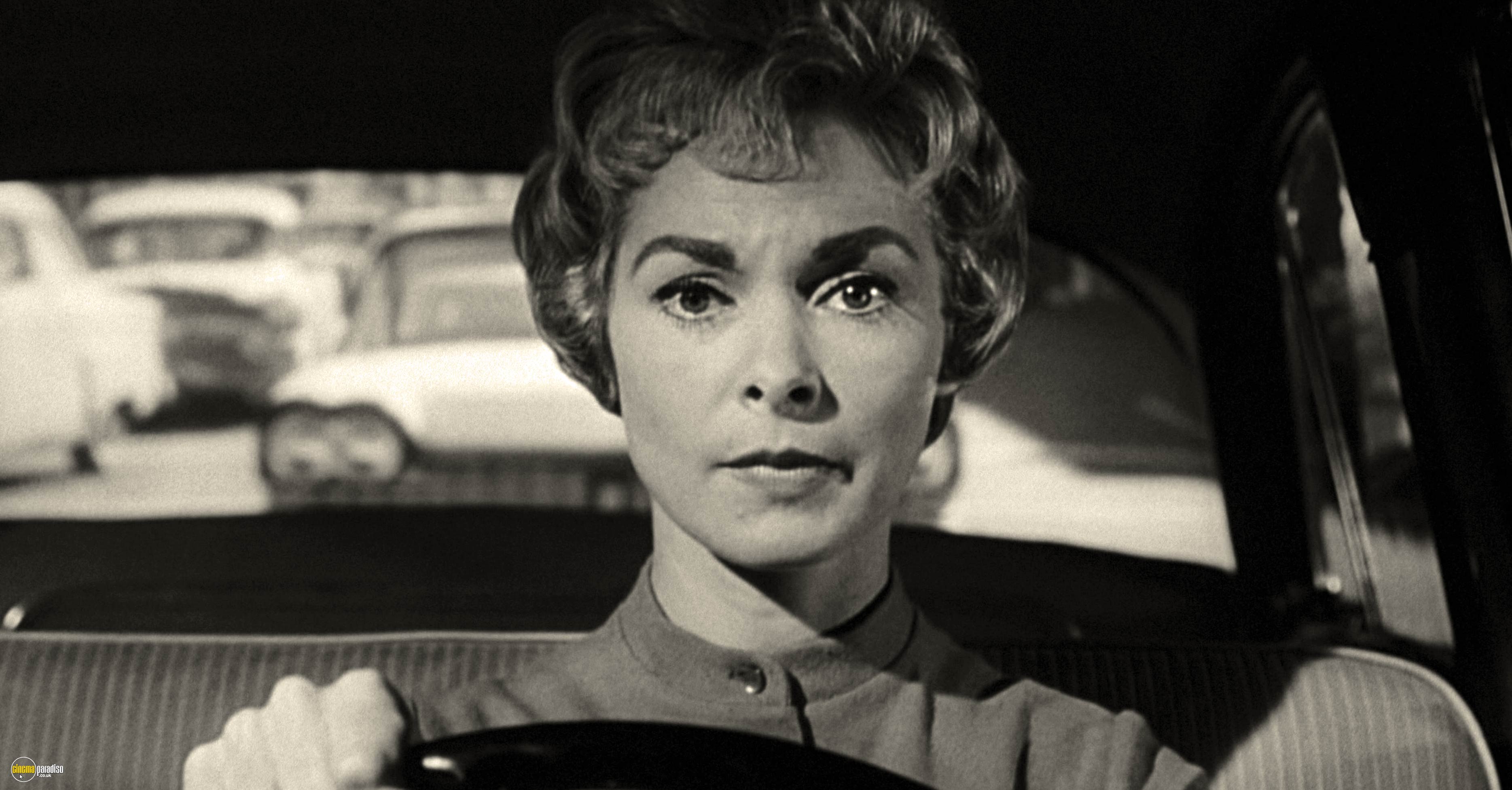
The project was initiated over cocktails between producer Paul Radin and Paramount executive Peter Bart, when the former announced that he was developing a movie about ants. As Radin knew that Bass had a friend who worked with the insects, he approached him to see if the project was even feasible. Immediately seeing beyond the kind of creature feature that had been fuelled by 1950s nuclear paranoia, including Eugène Lourié's The Beast From 20,000 Fathoms (1953), Jack Arnold's Tarantula (1955), and Robert Gordon's It Came From Beneath the Sea (1956), Bass conceived a hybrid style that managed to embrace Luis Buñuel and Salvador Dalí's Un chien andalou (1928) and Byron Haskin's The Naked Jungle and Gordon Douglas's Them! (both 1954). The result is an arthouse monster movie and, let us assure you, they are rarer than wide-mouthed frogs.
In order to make the ants seem both fascinating and forbidding, Bass hired Ken Middleham to photograph the insects, as he had done for Walon Green and Ed Spiegel's The Hellstrom Chronicle (1971), an unnerving documentary that had sought to demonstrate how humans were no match for insects in the battle for the planet, as we lack their collective intelligence, highly developed instincts, and selfless capacity for hard work. Middleham would later make micro contributions to Jeannot Szwarc's Bug (1975) and Jack Smight's Damnation Alley (1977), which explore similar themes to Bass's debut.
Although the interiors were filmed at Pinewood Studios, the exteriors were shot on location in Kenya to enable Bass to make the Arizona setting feel unfamiliar and hostile. In the course of the story, the ants are shown creating a geometric crop circle. The first allusion to this phenomenon dates back to a 1678 pamphlet entitled `The Mowing Devil', which included a woodcut showing a field the morning after a farmer had argued over wages with a mower. Bass's circle was the first seen on screen and many believe his vision inspired the rash of hoax designs in the Wiltshire and Oxfordshire countryside in the late 1970s.
The circle motif reinforced the mystical sense that Bass had tapped into in a nod to 2001: A Space Odyssey (1968), which had been directed by Stanley Kubrick, Bass' employer on Spartacus (1960). This had also echoed Christian Nyby's The Thing From Another World (1951) and Don Siegel's Invasion of the Body Snatchers (1956) in envisioning a world in which humans are punished for the individualism and egotism that prevents them from working in union. It's a chilling premise and it might have been even more discomfiting had Paramount not decided to cut a four-minute montage finale depicting what life on Earth would be like under the new ant order.
Shots from this bold coda made their way into the trailer, but it was removed from the final cut because the front office felt it would be too confusing and downbeat. Fortunately, a preview print containing the sequence was later found in the Bass archive, which had been donated to the Academy Film Archive. This guided restorers when a set of separation masters was found in the Paramount vaults and a new 35mm print premiered in 2012. This can be rented from Cinema Paradiso on both the Blu-ray and 4K versions of the film, which also include a selection of Bass's aforementioned shorts.
For some reason, Paramount decided not to have Bass design the poster and didn't consult him on a publicity campaign that emphasised the horror rather than the art in employing the strapline: `The Day the Earth Was Turned Into a Cemetery. Ravenous Invaders Controlled by a Terror Out In Space...Commanded to Annihilate the World.' Mixed reviews also contributed to the picture failing at the box office. Bass was commended in The New York Times for fashioning `a pictorially persuasive adventure. His ants - in close-up and otherwise - make their awesome potential terrifyingly real, even if his principals - Nigel Davenport and Michael Murphy, as the scientists, and Lynne Frederick, as the frightened young woman - are merely one-dimensional figures registering surface emotions. It's ungallant to reveal the denouement but, like a good deal of Phase IV, it's beclouded by enigmas. For all of its good, scientific and human intentions, Phase IV cries for a Phase V of fuller explanations.'
But the critic writing for Variety was less accommodating: `This one didn't get the bugs worked out before release...the terror is supposedly in the notion that ants are suddenly getting smarter and better organised, ready to take on all comers...One problem with a pic of this type is that it's hard to understand the ants just by watching them swarm over each other in their thousands... moreover, you can't tell what the humans are doing either. Despite endless conversation and dial twirling, Davenport and Murphy never focus the story in any dramatic direction. Joining them as an ant attack refugee, Lynne Frederick only adds to the confusion...Cinematically, the ants are never very menacing. Pic opens with an interminable segment inside an anthill. But the photography is poor quality, looking like outtakes rejected by National Geographic. Boring exposition tells how menacing the ants will be if they ever get really organised for evil, but that's the high point for expectations. During the rest of the film they mainly show up in lab one by one.'
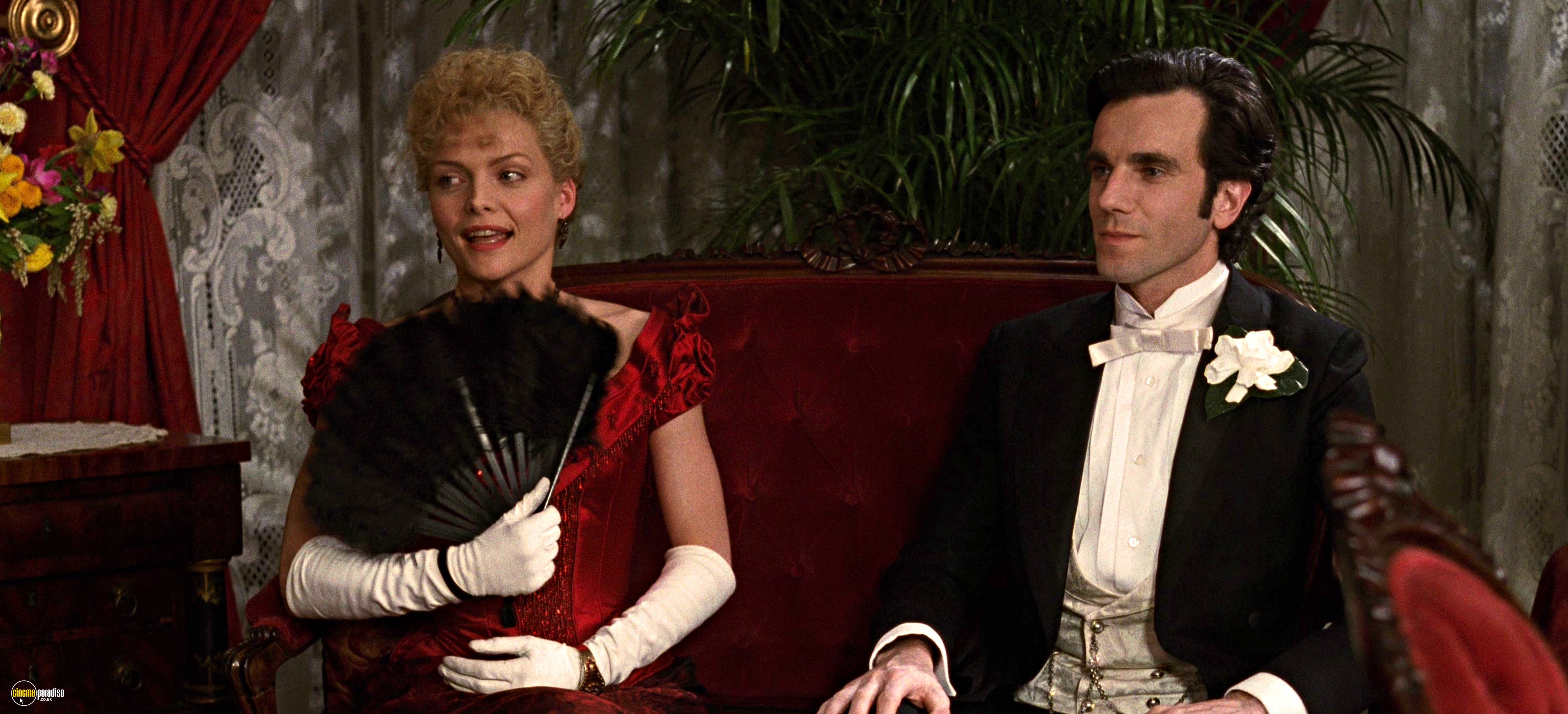
Nettled, Bass never returned to the feature format. He and Elaine completed further shorts and forged a bond with Martin Scorsese, who commissioned the title sequences for GoodFellas (1990), Cape Fear (1991), The Age of Innocence (1993), and Casino (1995). The latter proved to be his final job, as he died in April 1996 at the age of 75. His widow is still alive, although no one is quite certain whether Elaine is 98 or 99.
Rosencrantz & Guildenstern Are Dead (1990)
Almost a quarter of a century after he wrote a play about two minor characters in William Shakespeare's play, Hamlet, Tom Stoppard decided to adapt the story for the big screen. When the producers failed to find a suitable director for Rosencrantz & Guildenstern Are Dead (1990), the playwright agreed to direct himself because `it began to become clear that it might be a good idea if I did it myself - at least the director wouldn't have to keep wondering what the author meant.'
Taking its title from a line in Act V, Scene II of Hamlet, Stoppard's play was actually the idea of his agent, Kenneth Ewing, who was seeking to raise the mood in a London taxi after he and the 26 year-old writer had spent a dispiriting afternoon getting nowhere fast with a TV producer. As Ewing had just seen Peter O'Toole take the lead in an Old Vic production of Hamlet, he suggested that it might be amusing to set a comedy in the wings at Elsinore and base it upon the minor characters who have been summoned to court by King Claudius to find out why his nephew-cum-stepson, Hamlet, is behaving so oddly.
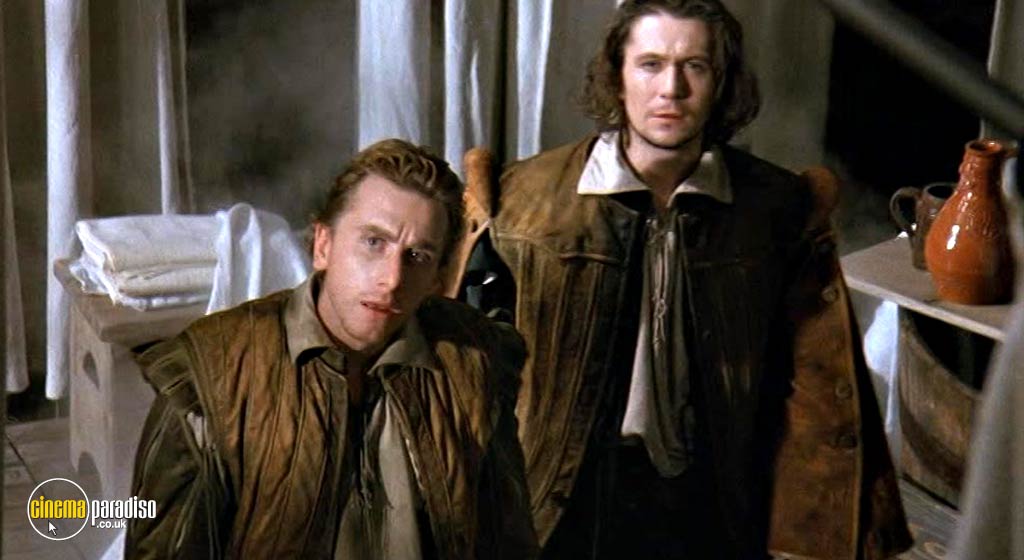
While spending New Year 1964 in Scotland, Stoppard re-read Hamlet and King Lear, as well as Francis Ferguson's 1949 tome, The Idea of a Theatre, in which the author explains that Rosencrantz and Guildenstern exist solely to serve a purpose without influencing or being aware of the narrative thread in which they are participating. As a consequence of his reading, Stoppard spent a five-month workshop on Lake Wannsee writing the one-act Rosencrantz and Guildenstern Meet King Lear, in which Hamlet and the Player King swap identities on the boat to England in order to thwart Claudius's murderous intentions. A 25-minute sample was staged at the Forum Theatre in Berlin before Stoppard reworked the text in order to direct a stage reading of Guildenstern and Rosencrantz, at Ealing's Questors Theatre.
Having expanded the action to two acts, Stoppard sent the manuscript to the Royal Shakespeare Company in March 1965. Literary Manager, Jeremy Brooks was so impressed that he took a one-year option on the play and asked Stoppard to write a third act. By the time Stoppard had completed the text, however, the RSC contract had expired and it was agreed that Trevor Nunn would include the play as part of a quartet of new works at the Jeanetta Cochrane Theatre. When this arrangement fell through, Frank Hauser, the manager of the Oxford Playhouse, got wind of the play and secured permission for the student Oxford Theatre Group to perform it at the Edinburgh Fringe in August 1966.
When the show proved a hit with critics recognising its kinship to Samuel Beckett's Waiting For Godot, Laurence Olivier and Kenneth Tynan snapped it up for the National Theatre and hired its youngest director (26 year-old David Goldby) to guide John Stride and Edward Petherbridge through the machinations and misconceptions that also engulf The Player (Graham Crowden) and Prince Hamlet (John McEnery). Once again, the reviews were enthusiastic, although Stoppard was so discouraged by an invited audience member hissing to his wife that he wished they'd get on with it that he spent much of the premiere on 11 April 1967 in the pub next door.
Nevertheless, American producer David Merrick badgered Olivier to ensure that he landed the rights for the Broadway transfer, which saw Brian Murray as Rosencrantz and John Wood as Guildenstern in a slicker version of the play that had been shorn of 45 minutes. Standing outside the theatre shortly after the rave-reviewed opening, Stoppard was asked by a passing woman what the play was about. He replied, `It's about to make me rich,' and he was mortified when the retort was reported in all the New York papers. When the production won Tony Awards for Best Play, Producer and Set and Costume Design, MGM offered $250,000 for the screen rights. On top of this, Stoppard was offered $100,000 to write the screenplay, with a 10% share of the profits to sweeten the deal. Fresh from their success with Point Blank (1967), producers Robert Chartoff and Irwin Winkler lined up John Boorman to direct. Stoppard told The Los Angeles Times in 2016, `I remember then sitting down writing a script for John and realise looking back I had no idea what a screenplay was.' However, the once legendary studio was not in good shape and restructuring led to the picture being cancelled, which was probably not a bad thing, as Stoppard believes Boorman's version `would have been a heavy number'.
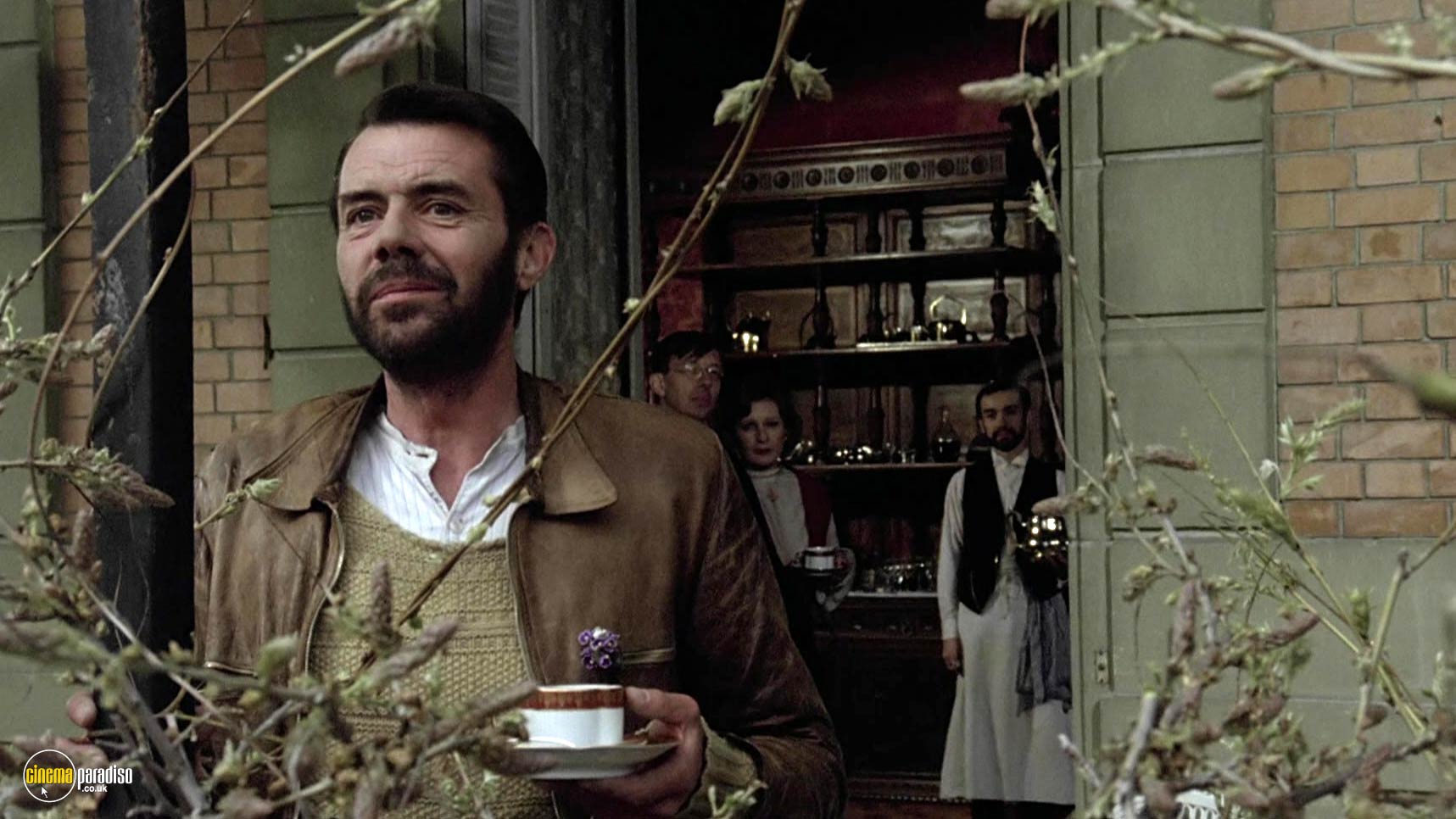
As productions hit chords in Italy, Germany, Scandinavia, and Japan, Stoppard moved on to new projects like The Real Inspector Hound (1968), Jumpers (1972), Travesties (1974), Dirty Linen and New-Found-Land (1976), Night and Day (1978), and The Real Thing (1982). Although some found their way on to television, none were filmed, although Stoppard got to write the screenplays for Joseph Losey's The Romantic Englishwoman (1975), Rainer Werner Fassbinder's Despair (1978), Otto Preminger's The Human Factor (1979), Terry Gilliam's Brazil (1985), Steven Spielbert's Empire of the Sun (1987), and Fred Schepisi's The Russia House (1990).
When approached about reviving the film version by producers Michael Brandman and Emanuel Azenberg, Stoppard had misgivings. `I think they had to ask me more than once. In my usual way I backed off. I wasn't sure about making films out of plays.' Once he agreed, however, Brandman was able to use his contacts at MGM to get the rights. He also decided that Stoppard was the best person to direct, even though he had no previous experience.
`It's hard to explain why I ended up doing it,' Stoppard told the LA Times. `My memory of this is that it made it easier to get the little money we needed if the writer was directing it. I think the theory being since I had never directed a film, I might turn out to be a great film director. I realised pretty soon that if this was going to be adjusted and adapted, I was the person who would be the least defensive about it. I felt it needed a bit of disrespect. My fear was it would be over-respected and would look like a filmed play.'
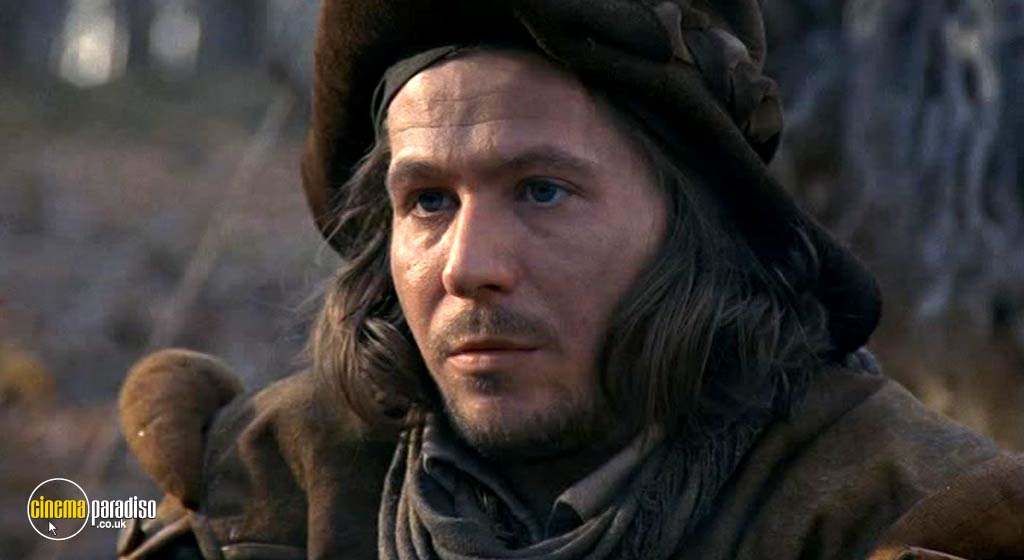
Stoppard's confidence grew once he knew he would be directing Gary Oldman and Tim Roth for 35 days on location in Brežice Castle in Slovenia and in and around the Croatian capital of Zagreb. Things might have been different, however, had Daniel Day-Lewis not had a night off when Stoppard went to see his West End production of Hamlet, as he had expressed an interest in playing Guildenstern. The Oscar-winning Richard Dreyfuss joined the cast as The Player, while Iain Glen played Hamlet, alongside Donald Sumpter's Claudius, Joanna Miles's Gertrude, and Ian Richardson's Polonius.
Retaining favourite stage elements, such as the coin flipping (which sees Rosencrantz successfully call `head's 92 times in a row), Stoppard set out to `rehabilitate' the characters he felt were `misrepresented in Hamlet. They are portrayed as black conspirators with the King, but they are just a couple of men...who are not told very much and have to get on with it.' Aware that his adaptation should not `get too wordy', Stoppard felt better prepared than he had been in 1968. `What happens when you get older,' he claimed in the LA Times, `is that you feel freer and looser about defending or protecting your original text. `I started having fun with it.'
In seeking to forefront themes like the absurdity of existence and the connection between art and reality, Stoppard still strove to make his meta-story as cinematic as possible. Thus, he opened out the action and kept Peter Biziou's camera moving to reinforce the shifting nature of the situation in which the hapless duo have landed in.

Despite believing the film was around five minutes too long, Stoppard was rewarded by Gore Vidal's jury with the Golden Lion at the Venice Film Festival, beating Martin Scorsese's GoodFellas in the process. He had no great desire to re-occupy the director's chair, however, and this remained his sole feature. As he revealed in 2016, `I didn't consider myself a film director then, and I don't consider myself a film director now. It just made life easier.' He did return to the Bard, however, for his Oscar-winning screenplay for John Madden's Shakespeare in Love (1998), as well as for the 1995 short, The Fifteen-Minute Hamlet, and a 2005 rendition of his 1979 play, Dogg's Hamlet, Cahoot's Macbeth.
Survive Style 5+ (2004)
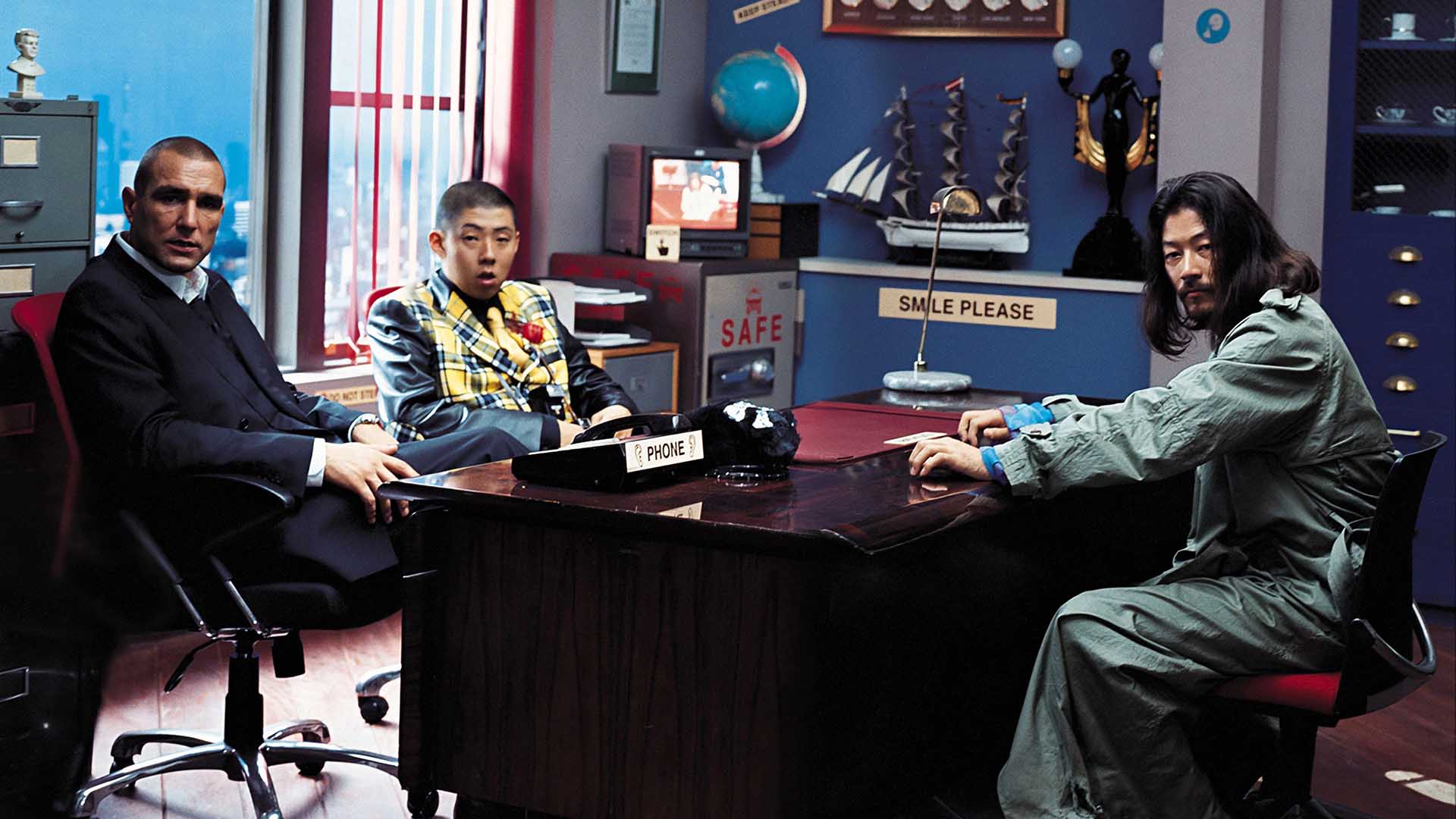
The last entry in Cinema Paradiso's Top 10 may be the least known. But Gen Sekiguchi's first and only feature is a dazzlingly daring conceit that gleefully blends satire, absurdity, farce, and pathos, while also referencing key phases in Japanese screen history. It's quite an agenda and there's a lot to take in at first sight. But teasing details emerge with each subsequent viewing and it becomes easy to see why Survive Style 5+ (2004) has become a cult favourite and why it has proved an impossible act to follow.
Born in 1968, Sekiguchi started out in advertising in 1990, during what was known as Japan's `creative revolution'. While still keen to promote a client's product, agencies in this period had started to prioritise consumer identification, with the result that the po-faced approach to commercials that had been imported from the United States in the 1950s was replaced with a greater emphasis on offbeat humour, in order to create a connection in the viewer's mind between the product and a quirky comic concept. Such was Sekiguchi's reputation within the industry that he won the Silver Lion at the 2000 Cannes International Advertising Festival. He later formed his own production company, Reinbach, and ventured into making music videos for bands such as Supercar, Polysics, and Smap.
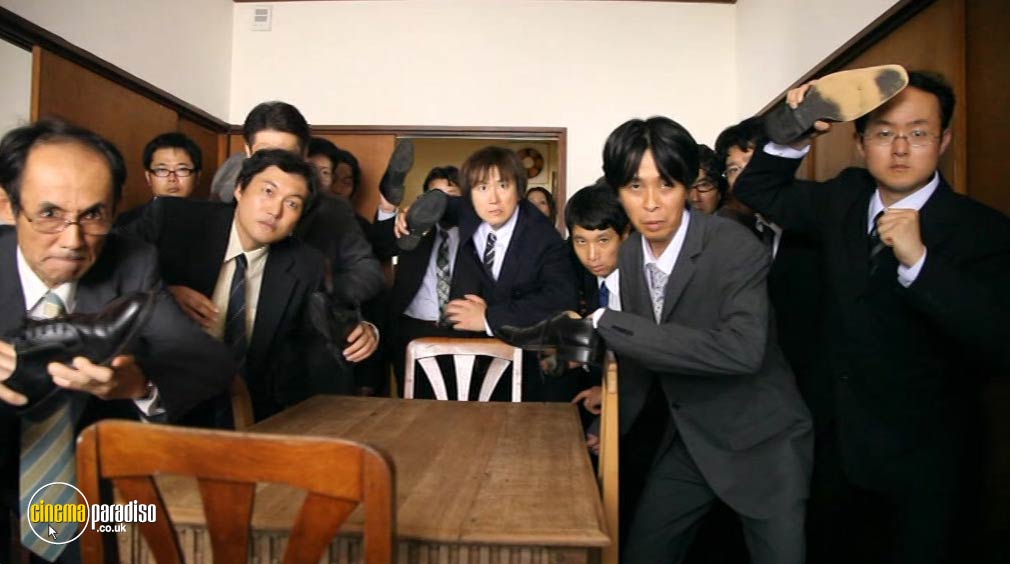
He also tried his hand at short film-making. Inspired by a play by Yasutaka Tsutsui and set in the near future, Worst Contact (2000) chronicled an experiment to billet a human and an alien in a space station to see how they get along. Chaos in confined quarters also ensued in Bus Panic!!! (2001), which centres on a showdown between a busjacker and a policeman. Sekiguchi would also go on to direct a segment in Quirky Guys and Gals (2011), which also includes Yosuke Fujita's `Cheer Girls', Tomoko Matsunashi's `Boy? Meets Girl', and Mipo O's `Claim Night'. In `The House Full of Abandoned Businessmen', housewife Mayumi Okada (Kyoko Koizumi) trawls the local parks to offer sanctuary to the various salarymen who have lost their jobs and need somewhere to go before returning home to their unsuspecting families.
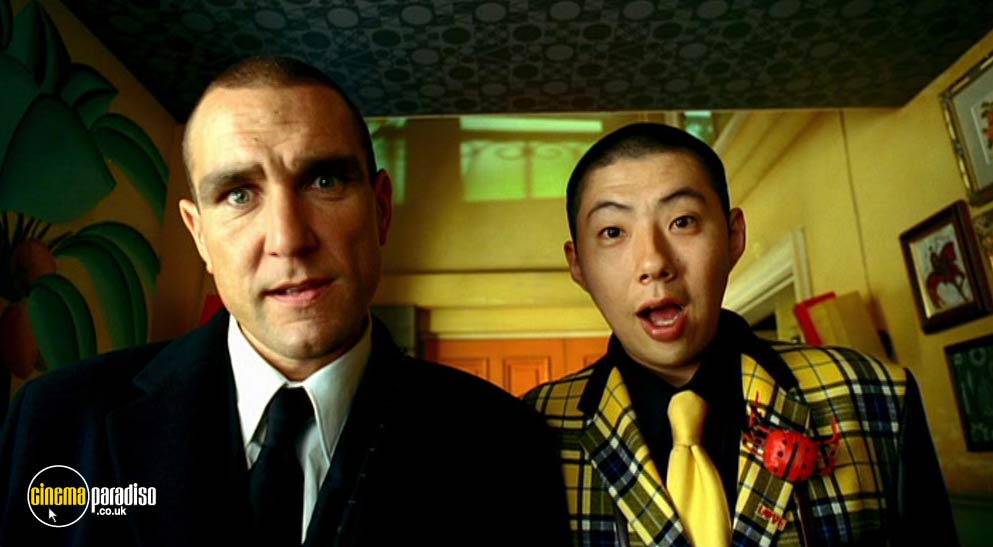
In some ways, this was a continuation of a theme addressed in one of the strands in Survive Style 5+, which interweaves five storylines that transpire to have unexpected points of connection. The first involves Cockney hitman Jimmy Funky Knife (Vinnie Jones) who is travelling with his interpreter, Katagiri (Yoshiyoshi Arakawa), when he gets into a dispute with a flight attendant (Tae Kimura), who doesn't understand when he asks her, `What's your function in life?'
This becomes a regular refrain, as Jimmy goes about his business as an assassin for hire. One of his clients is Yoko (Kyoko Koizumi), who is tired of her arrogant and self-centred boyfriend, Aoyama (Hiroshi Abe). When he fails to satisfy her in bed, Yoko mocks him in an idea for a commercial, which is shown in a stylised cutaway. We shall see several more of these dictaphoned ad concepts, which often prove puzzling, despite Yoko sniggering with satisfaction at her own ingenuity. Her idiosyncratic approach doesn't always pay off, however, and she has to endure a nightmare meeting with the boss of Non-Non Aspirin (Sonny Chiba), whose response to her ad is hardly helped by the fact that he keeps being disturbed by his wife's phone calls about a sparked-out light bulb that cause him to lose face.
Jimmy will kill Aoyama in the middle of a stage show. However, he has just put salaryman Tatsuya Kobayashi (Ittoku Kishibe) into a trance and wife, Misa (Yumi Aso), and children Kaho (Shihori Kanjiya) and Keiichi (Ryunosuke Kamiki) have to take him home still under the impression that he is a bird. They are so concerned about his condition when they get home that they don't notice that three burglars are hiding in a wardrobe after they had become so distracted with a board game that they had lost track of time. Obsessed with trendy fashions and gadgets, Tsuda (Kanji Tsuda) and J (Jai West) think driver Morishita (Yoshiyuki Morishita) is a bit of a doofus. But he is willing and loyal, while also hiding the fact he's smitten with J.
This fixation will lead to a contretemps in a sauna with the homophobic Jimmy, who is already in a foul mood having discovered that he has failed to kill a target. He's in good company, however, as Masahiro Ishigaki (Tadanobu Asano) has frequently tried to murder his wife, Mimi (Reika Hashimoto). But, even though he buries her in a deep hole in the forest after each ferocious tussle, she keeps coming back from the dead (always in a new outfit and with a new power) and insisting on cooking him large meals, which she watches him eat with silent malevolence from across the table in their eccentrically furnished home.
Production designer Osamu Yamaguchi did a fabulous job in filling the Ishigaki's secluded art nouveau retreat with designer objects whose saturated colours make the interiors feel like opulent stage sets that testify to the power of advertising and the folly of fetishising possessions. Costumier Ikuko Utsunomiya also explores the link between status and taste, which is just one of the themes examined by feature first-timer, Taku Tada, who had also scripted Bus Panic!!! and doubles up here as co- editor. Despite these valuable contributions and the excellence of a cast that expertly treads the line between deadpan and excess, this is very much the self-deprecating Sekiguchi's picture.
It's his ad man's instinct that enables him to condense complex narrative and aesthetic concepts into bite-size chunks, while he also knows how to pitch each vignette to make it seem simultaneously eccentric and accessible, familiar and baffling. He also succeeds in fashioning a mini-history of Japanese screen style, from the classical shomin-geki domestic dramas of Yasujiro Ozu, Mikio Naruse, Kenji Mizoguchi, and Masaki Kobayashi through the nuberu bagu subversiveness of Nagisa Oshima, Masahiro Shinoda, and Yoshishige Yoshida, and on to the neo-wave antics of Sion Sono and Takashi Miike. There's even a nod towards J-Pop and J-Horror, as Sekiguchi riffs on the social, political, and cultural contradictions that have shaped modern Japan.
Managing to be both affectionately nostalgic and modishly postmodern in its celebration of breaking the mould and embracing change, this is a bravura piece of work. It's full of stylistic flourishes, canny details, cartoonish violence, nudge-winking symbolism, and incisive psychological insights that will ring bells with those with even the most limited knowledge of Japan's recent history and current preoccupations. Oh, and it also has a punch-the-air denouement that lampoons our ongoing obsession with superheroes. What's not to like? Moreover, as Sekiguchi is the only extant director on our list, might we still not hope for more?