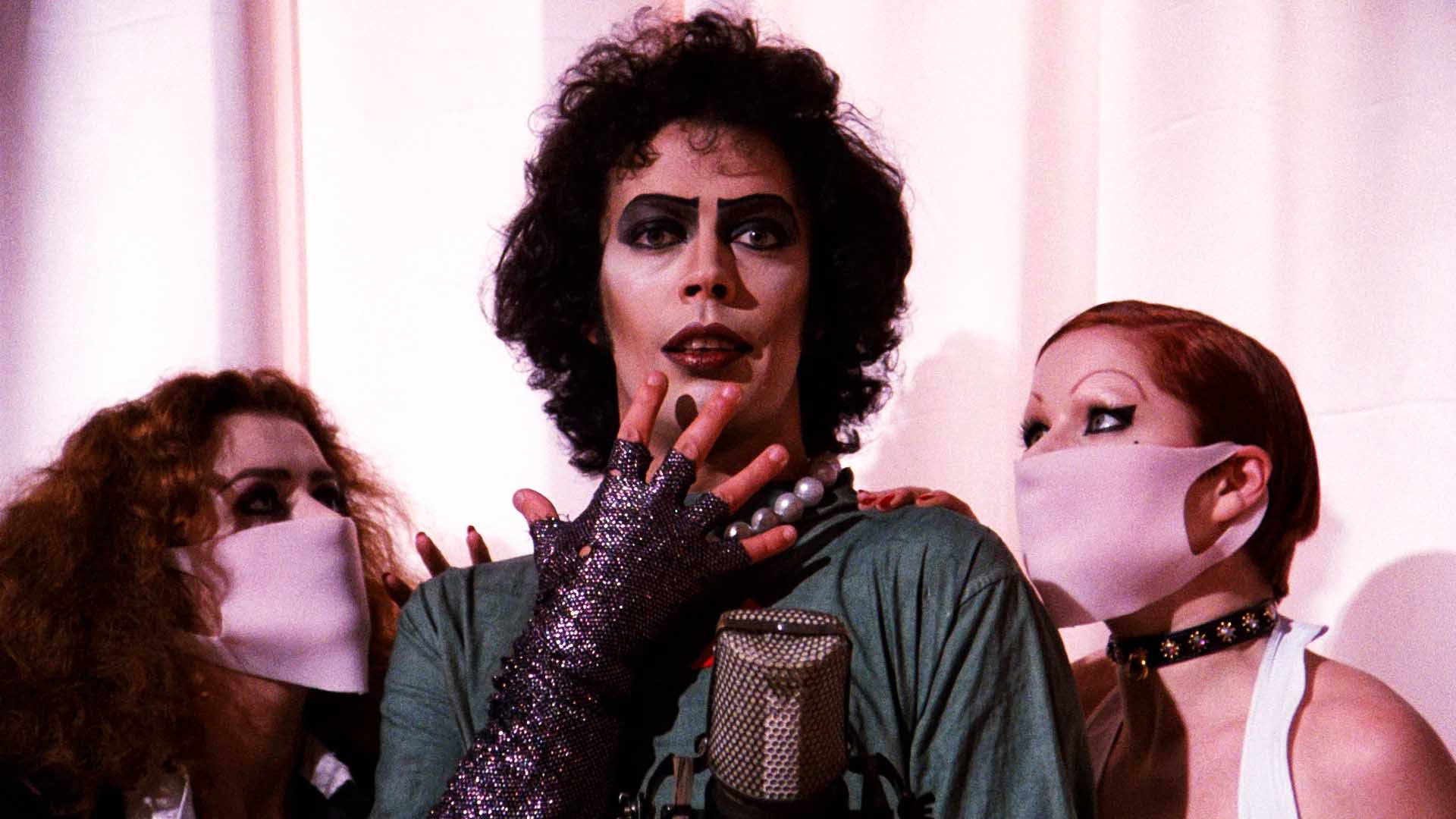
One of the most distinctive talents Britain has ever produced, Tim Curry stood out on stage and screen. Cinema Paradiso recalls a decidedly singular career.
When Tim Curry died on 25 August at the age of 80, the vast majority of the tributes and obituaries lead with his definitive displays as Dr Frank-N-Furter. Yet, during a career that lasted almost 60 years, Curry amassed over 240 credits, both as a stage and screen actor and as a voiceover artist. Not even a debilitating stroke in 2012 could keep him down.
Cinema Paradiso members have access to dozens of the titles that Curry graced - many of which were overlooked in the write-ups following his passing. As is our wont, we shall go into more depth in highlighting the features, animations, and TV shows that may be your next watch.
The Son of a Preacher Man
According to Vagabond: A Memoir (2025), Timothy James Curry was possibly conceived in South Africa. But he was most certainly born in the Cheshire village of Grappenhall on 19 April 1946. Not that he stayed there long. As his father was a Methodist Royal Navy chaplain, the family lived a peripatetic existence.
Jim Curry had met Maura Patricia Langmead in Malta, where her father was working on the docks. He was also the wandering sort and Pat had spent some of her childhood in the Harlem district of New York. She had given birth to daughter Judy in Port Said four years before Tim came along. But the siblings were soon whisked off to Hong Kong, where Tim won a 'Most Beautiful Baby' competition run by a local newspaper.
Curry reckoned that his parents moved to a different seaside town every 18 months and only came to a halt in Plymouth when he was at boarding school. In his memoir, he puts his readiness to live on the edge down to the fact that he spent so much time beside the sea, wondering what lay on the other side. His desire to perform, however, came from singing in the chapel choir and from watching how his usually taciturn father could hold a room when he preached.
At the age of 10, Curry was sent to board at Prior Court, the prep wing of Kingswood School in Bath, which had been founded by John Wesley. Although he missed being at home with his father, from whom he inherited the gift for empathy that he would later channel into his acting, Curry developed as a boy soprano and enjoyed singing with the choir, as it gave him a sense of belonging. While still at prep school, however, he lost his 45 year-old father to a stroke and came to depend upon his sister for emotional and moral support, as he never felt close to his mother. Indeed, Curry confides in Vagabond the belief that he was able to play his darkest characters because of her cold intensity, which taught him how to turn being frightened into being frightening.
Two years after being widowed, Patricia got a secretarial job with the Methodist Education Committee in Croydon and the siblings moved once again. But Curry remained at Kingswood, where he first tried acting around the age of 13, as Tobit, the father of the hero in a biblical story entitled Tobias and the Angel. He also featured in school productions of Luigi Pirandello's Henry IV and Nikolai Gogol's The Government Inspector, with the star of the former being Jonathan Lynn, who would later direct Curry in one of his most celebrated screen roles.
Leaving Bath, Curry spent a gap year touring Europe and North Africa in a battered camper van with his friend, Richard Cork. They picked up odd jobs en route to keep the coffers filled, but Cork (who would become a leading art critic) declined Pablo Picasso's suggestion that he should buy food with a sketch that the artist had dashed off in the teenager's notebook following a chance encounter in Cannes. Curry also remembers being impressed by Rex Harrison when they saw him by the harbour. Although work prevented regular contact, Curry remained indebted to Cork for the vow they had taken during their expedition to explore their contradictions, as he believed that this motto shaped his choice of roles and the way he developed his best-known roles, because it taught him that even the most despicable character had to have a hint of mischief or charm somewhere.
Citizen of the Stage
Although he was supposed to be reading for a combined degree in English and Drama, Curry spent much of his time at the University of Birmingham acting. His role model was Alec Guinness, who had the ability to disappear into a range of characters. But Curry had no intention of going to drama school, as he knew he would rebel against formal training because he was an instinctive performer who lacked a process and rarely did lengthy research for a part.
On graduating, Curry was informed that the placement he had been promised with a local rep company was no longer available. So, he took off for London, where he fibbed about having earned an Equity card in a touring production of Cabaret to land an ensemble slot in the original 1968 West End production of Hair, a zeitgeisty musical with a book and lyrics by James Rado and Gerome Ragni and a score by Galt MacDermot. Starting out as a hippie who got naked each night, Curry wound up playing numerous parts, including the free-spirited Woof Donovan. Elaine Page, Paul Nicholas, and Marsha Hunt were all part of the ensemble, as was Richard O'Brien, who would put his downtime to good use during the 1972 run of Jesus Christ Superstar (for which Curry had been rejected by director Jim Sharman) by writing a musical of his own. Cinema Paradiso users can see John Savage, Treat Williams, and Beverly D'Angelo in Miloš Forman's 1979 big-screen version of Hair, which had the misfortune of being released after the musical's moment had been and gone.
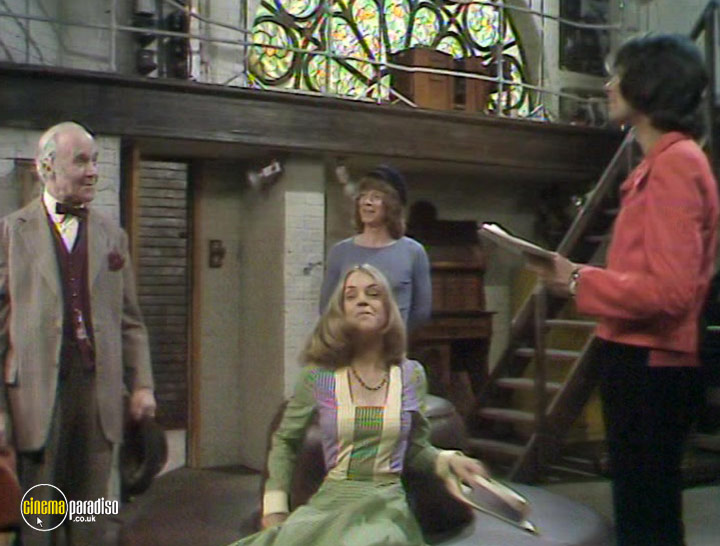
Curry enjoyed the benefits of being in a hit show, as his face became known on the London theatre scene. He even made his television debut, as a waiter in the teleplay, Sinking Fish Move Sideways (1968). But when Hair closed in 1969, Curry had to move into a Notting Hill squat while seeking employment in the likes of David Mercer's After Haggerty (1969), which was staged by the Royal Shakespeare Company. But he derived less satisfaction from such plays as Lie Down I Think I Love You... (1970), Titus Andronicus, or Man Is Man (both 1971), although he found the Royal Court Theatre a more atmospheric venue for The Sport of My Mad Mother (1970) and The Baby Elephant (1971). He also added a couple more TV credits, with Cinema Paradiso members being able to see him play a cashier in Part 1 of the 'Now You See It, Now You Don't' episode of Ace of Wands in 1970.
Tired of living a hand-to-mouth existence in the capital, Curry joined the Glasgow Citizens Theatre, where he came under the influence of Lindsay Kemp, whose mime theories had such an impact on David Bowie. Although he resisted Kemp's impositional approach, Curry seized the opportunity to play sizeable roles in The White Devil, Life of Galileo, Loot, and Danton's Death. He even got to play Buttons in the annual pantomime. But his most significant part was Solange in Jean Genet's The Maids, for which Sue Blane dressed him in a flea market corset that was to loom large in his legend.
While in Glasgow, Curry learned how to channel energy into a role in order to win over the audience and he brought a new sense of confidence back to London that was evident in his performance as Puck in the 1972 Regent's Park production of A Midsummer Night's Dream. None of the four tele-credits that Curry garnered over the next couple of years are on disc, but we should mention his first recurring role, alongside Ian Holm and Billie Whitelaw, as Eugène de Beauharnais in Napoleon and Love and, his work as Glen, opposite Anna Cropper, in Dennis Potter's Play For Today contribution, 'Schmoedipus' (both 1974). By this time, however, Curry had landed the role that would not only define his career, but also, to a large extent, his life.
Don't Dream It, Be It
Cast your mind back to Halloween 2025 and you may remember Cinema Paradiso's 50th anniversay special, What to Watch Next If You Liked The Rocky Horror Picture Show. There you can find all you need to know about how an experimental musical staged in a 60-seat auditorium became the hottest ticket in town after its opening on 19 June 1973. But we need to pick out a few choice titbits that specifically concern Tim Curry and the role of his lifetime, Frank-N-Furter.
Curry discovered the project booked into The Theatre Upstairs at the legendary Royal Court Theatre in Sloane Square when he bumped into O'Brien near his home. 'I'd heard about the play,' he recalled, 'because I lived on Paddington Street, off Baker Street, and there was an old gym a few doors away. I saw Richard O'Brien in the street, and he said he'd just been to the gym to see if he could find a muscleman who could sing. I said, "Why do you need him to sing?" And he told me that his musical was going to be done, and I should talk to Jim Sharman. He gave me the script, and I thought, "Boy, if this works, it's going to be a smash."'
Having rocked a Little Richard number in silver-sprayed boots, Curry landed the role of Dr Frank-N-Furter, 'a sweet transvestite from Transexual, Transylvania', in what was still called, They Came From Denton High. During rehearsals, the title changed to The Rocky Horror Show and Curry persuaded Sharman that even though the production had a sense of 'anything goes', it could only work if everyone agreed that Frank was in charge, as well as being mad, bad, and dangerous to know.
Initially, Curry had envisaged Frank as a German scientist in a white lab coat. He had even dabbled with an American accent. But everything changed when her heard a woman on a London bus pronouncing the words 'house' and 'town' in a cut-glass accent. 'I thought, "That's the voice. That's who he really is. He's a hostess without any guests who wants to sound like the Queen and be like the Queen...or be a queen."' No hostess with the mostest dressed quite like Frank, however, as Sue Blane recycled the Solange corset and added fishnests and heels to give Frank the iconic look that Curry reinforced with his own make-up design and instinctive understanding of the role.
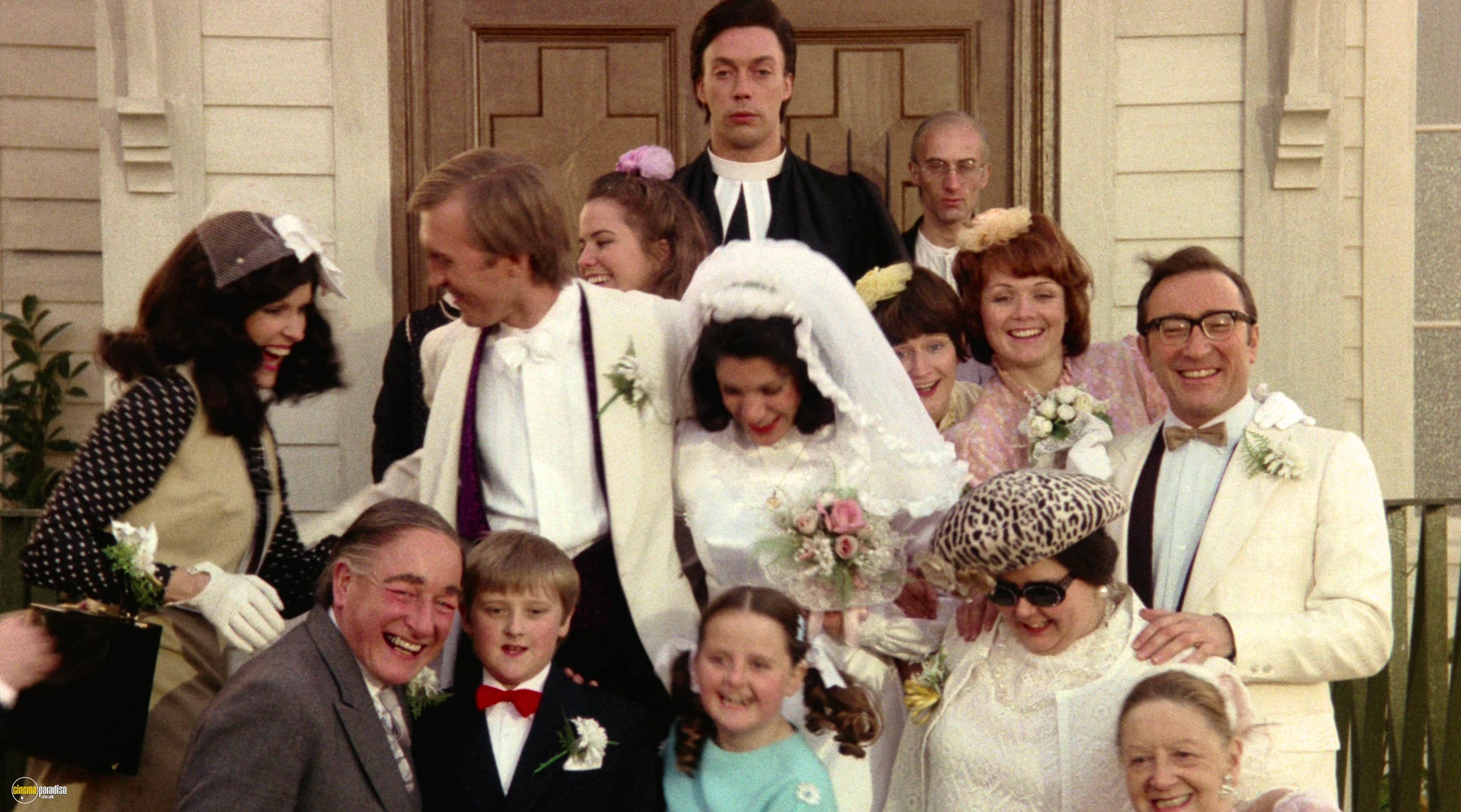
Details of the show's success in three London venues, its triumph in Los Angeles, and its flop in New York can be found in the Halloween What to Watch article. As can the information about the show's conversion into The Rocky Horror Picture Show (1975) and how its disappointing opening was salvaged by such astute midnite matinee marketing that it now sits in The Guinness Book of World Records as the longest-running film in cinema history, complete with its own dress codes, rituals, and audience comebacks. Such was the impression that Curry had made during the stage phase that 20th Century-Fox went along with Sharman's insistence that he should be the screen Frank rather than Rolling Stone, Mick Jagger.
Curry wasn't happy about the make-up changes, though. For the stage show, he had wanted Frank 'to look like he'd been dragged through a hedge backwards. All the eye make-up, of which there was a lot, was smudged. I didn't want him to be too clever with the make-up - to still look like a man underneath. When we did the movie, a guy called Pierre La Roche did the make-up. He had famously done a look for David Bowie - he invented Ziggy Stardust, the look of Ziggy. His make-up for me was a lot more polished and runway-ready. I didn't like it at first. I suppose I could have smudged it with a finger, but I respected his work, and I respected that Jim Sharman, the director, whom I admired enormously, wanted me to look like that.' Fifty-one years later, that look would adorn thousands of obits, op eds, and tributes. Time might have warped much else since, but it has remained timeless.
Reaping the Rocky Reward
Stephen Frears offered Curry his first post-Rocky role while he was still on Broadway and it started something of a domino run. Frears wanted Curry to play Jerome K. Jerome in a tele-version of Three Men in a Boat (which had been filmed by Ken Annakin in 1956 ). Michael Palin and Stephen Moore would be his fellow oarsmen, while the writer was Tom Stoppard. He got on so famously with Curry during the shoot that he offered him the part of dadaist Tristan Tzara in Travesties (both 1975), a Tony-winning 'comedy of ideas' that ran in London and New York for two years. The play was directed by Peter Wood, who promptly cast Curry in the title role of Will Shakespeare (1978), a six-part ITV life of the Bard that had been written by John Mortimer. Wood would also hire Curry for three West End productions at the National Theatre in the early 1980s: Richard Brinsley Sheridan's The Rivals and Love For Love, and Kurt Weill and Bertolt Brecht's The Threepenny Opera. However, Curry considered his Macheath to be a career low-point, as he struggled to nail his swaggering sense of underworld anarchy and authority.
Among Peter Wood's friends was the playwright, Peter Shaffer, who persuaded director Peter Hall to offer Curry the role of Wolfgang Amadeus Mozart in the Broadway transfer of Amadeus (1980) that would co-star Ian McKellen as rival composer, Antonio Salieri. Completely rethinking Simon Cowell's West End interpretation, Curry earned his first Tony Award nomination, although McKellen would win the award for Best Actor and Salieri would complete the double when Tom Hulce and F. Murray Abraham went up against each other for in the same category at the Oscars for Miloš Forman's Amadeus (1984).
In 1982, Curry followed in the footsteps of Kevin Kline as The Pirate King in a rock-inflected updating of Gilbert and Sullivan's Savoy operetta, The Pirates of Penzance. Once again, however, he missed out on the film version, as Kline returned for the 1983 musical that has not been released on disc in the UK. He found consolation, however, in enjoying a brief period as a recording artist. Mixing both cover versions and original songs, Curry released the albums Read My Lips (1978), Fearless (1979), and Simplicity (1981) and even toured North America and parts of Europe with a band between 1978-80. His first LP, however, spent 34 years on the shelf and was only released as From the Vaults in 2010.
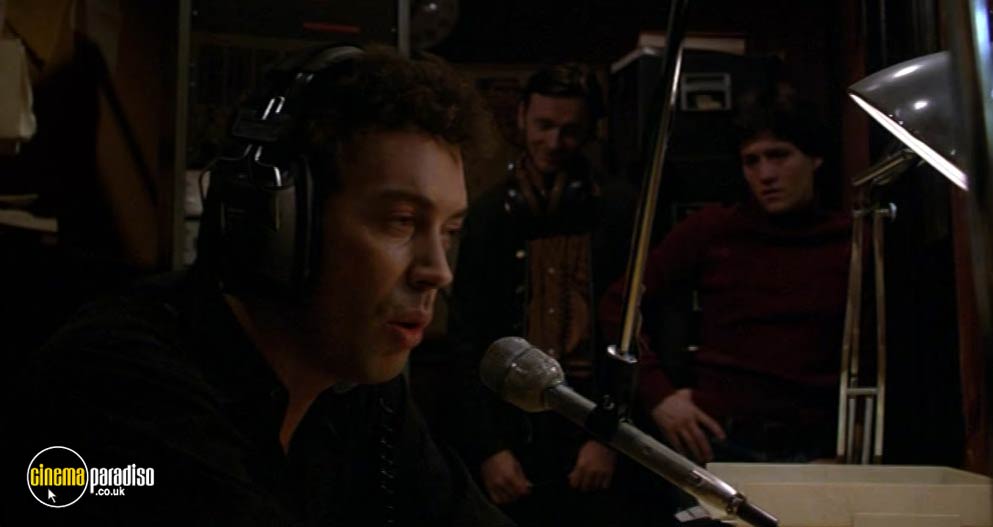
In his autobiography, Curry admits that he took a liking to cocaine around this time and it was only during a woozy performance as Mozart that he realised it was impeding his work. Not that he was short of options during this period, as the Rocky bounce led to a guest appearance in Rock Follies (1977) alongside Julie Covington, who had played Janet in the original Royal Court show. He also essayed poet Robert Graves in Jerzy Skolimowski's chilling horror, The Shout, and Leonard Brazil in Stephen Poliakoff's TV play, City Sugar (both 1978). Curry also appeared as Johnny LaGuardia in Allan Moyle's rather overlooked Times Square (1980) and hosted a 1981 edition of Saturday Night Live with Rocky co-star Meat Loaf.
In 1982, Curry made a snarling, but not entirely unempathetic Bill Sikes in Clive Donner's 1982 tele-adaptation of Charles Dickens's Oliver Twist. He relished the villainy more, as Daniel Francis 'Rooster' Hannigan in John Huston's take on the hit Broadway musical, Annie. However, he was also excited at getting to do a Hollywood musical, as the only films his parents had approved of during his youth had been classics like Singin' in the Rain (1952), Lili (1953), Seven Brides For Seven Brothers (1954), Guys and Dolls, Daddy Long Legs (both 1955), South Pacific (1958), and West Side Story (1961).
In his memoir, Curry barely mentions young lead Aileen Quinn, but he found Huston and co-stars Carol Burnett and Bernadette Peters very much to his liking, even though they had to reshoot their big number, 'Easy Street', as the director felt the original staging had been too splashy. Curry also enjoyed playing Oxford-educated TV journalist Jeremy Hancock in Richard Eyre's political satire, The Ploughman's Lunch (1983), which was written at the expense of Margaret Thatcher and her ideology by Ian McEwan. The same period also saw Curry as aspiring actor-singer Larry Gormley in Blue Money (1985) and the Grand Wizard in The Worst Witch (1986). Neither merits a mention in Vagabond, but Robert Young's playful adaptation of Jill Murphy's bestseller is available to rent from Cinema Paradiso.
Pure Evil
Curry once claimed he had more fun with villains because they were usually better written than heroes. They also offered more scope for him to round the character out with bits of self-devised business that were designed to give a baddie a flicker of humanity in order to make them relatable rather than simply hissable. This had certainly been the case with Frank-N-Furter and it was this performance that persuaded Ridley Scott to cast Curry as the Lord of Darkness in Legend (1985). According to his memoir, Curry thought that Scott was too preoccupied with the visuals to devote much time to his actors. So, he was left to his own devices to fashion the embodiment of evil, although he had to agree to having his voice modified in order to sound more terrifying. But Curry found his options limited by the daunting amount of prosthetic make-up he had to wear.
Having suffered during the making of his body cast, Curry even had to endure special contact lens and fang fittings. Moreover, he had to put up with almost six hours in a make-up chair each time he was on call (for a seven-hour day) and a further 90 minutes were required to soak off the soluble spirit gum after everyone else had gone home. This made it difficult to socialise with the cast and crew and, as a result, Curry barely got to know Tom Cruise (who, he felt, was in his own bubble anyway). Wearing enormous horns and cloven feet added to Curry's difficulties, as the 5ft 9in actor had to cope with towering at an imposing 8ft 1in and the physical exertion involved meant that he could only work two days a week. It didn't help that production at Pinewood had to be halted after a firel, which Curry's mother blamed on one of his cigarette butts. But the character inspired by William Blake's 'The Ghost of a Flea' proved indelibly memorable and earned designer Rob Bottin an Oscar nomination, although Curry declared at the time, 'I look like 200lb of condemned tandoori.'
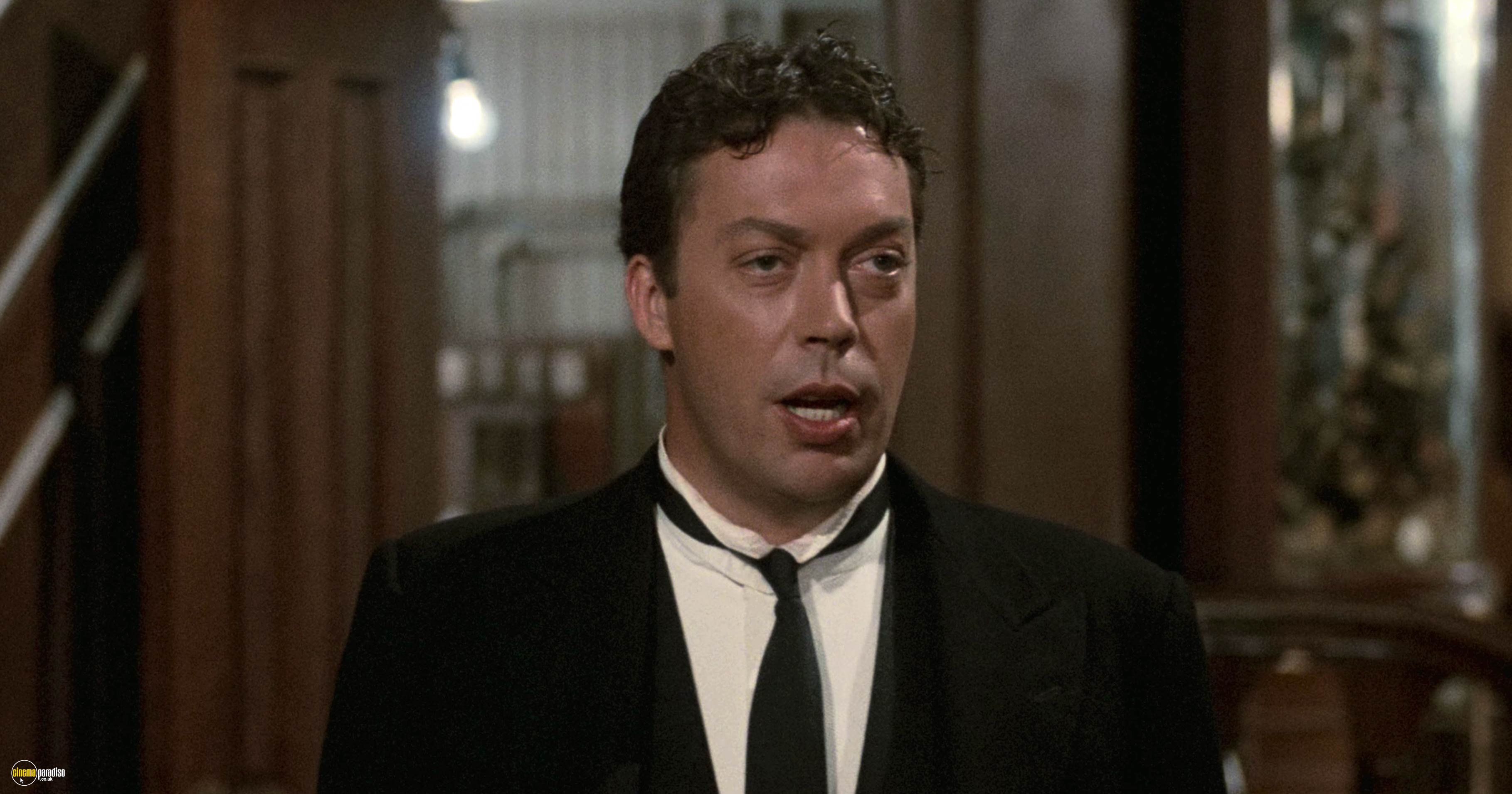
Playing Wadsworth in Clue (1985) seemed like a breeze by comparison. Based on the Cluedo board game, the action centres around the murder of Mr Boddy (Lee Ving) at the remote mansion to which suspects Mrs Peacock (Eileen Brennan), Mrs White (Madeline Kahn), Mr Green (Michael McKean), Colonel Mustard (Martin Mull), Miss Scarlet (Lesley Ann Warren), and Professor Plum (Christopher Lloyd) have been invited. It was an amusing conceit, but what attracted Curry was the fact it reunited him with writer-director Jonathan Lynn, who had been a few years ahead of him at Kingswood. Inheriting the concept from director John Landis, Lynn had resisted studio pressure to cast John Cleese, Rowan Atkinson, or Leonard Rossiter as the butler and Curry responded by throwing himself into a taxing role. Four endings were filmed and prints with three different outcomes went into circulation and you can see them all if you rent the DVD, Blu-ray, or 4K versions from Cinema Paradiso. But contemporary critics were not amused, as they hadn't been with the equally droll, Murder By Death (1976) and The Cheap Detective (1979).
The notices weren't great for David Beaird's Pass the Ammo (1987), either, even though Curry had his moments as televangelist Roy Porter. He then played Winston Newquay in six episodes of the crime drama, Wiseguy (1989), which was broadcast around the time that he settled permanently in the United States. He had been busy on stage, as Bill Snibson in the touring version of Me and My Girl (1987-88), while also playing painter William Hogarth in The Art of Success (1989) and The Prosecutor in Roger Waters's The Wall - Live in Berlin (1990), which was released on disc. Furthermore, Curry got to act opposite Sean Connery, as Soviet submarine physician Yevgeniy Petrov in John McTiernan's adaptation of Tom Clancy's The Hunt For Red October (1990). But one role stood out from all of the others.
Billions of years old, Pennywise is the shape-shifting cosmic being who terrorises the members of The Losers Club in Stephen King's It. His most infamous manifestation is as a dancing clown in Tommy Lee Wallace's two-part 1990 tele-adaptation and Tim Curry (who hated clowns) embodies him to chilling perfection, because he doesn't try too hard to frighten the kids or the audience. He insinuates and ingratiates with a killer appreciation for human weakness that gets under the skin and burrows into the recesses of the mind. Yet, as Curry was no fan of the horror genre, he avoided talking about the character or the impact that it has had on generations of unsuspecting viewers.
Originally planned as an eight-part series running some 10 hours, the series was linked with George. A. Romero, while Roddy McDowall and Malcolm McDowell were suggested for the lead. But Wallace - who had edited John Carpenter's Halloween (1978) and directed Halloween III: Season of the Witch (1982) and Fright Night Part 2 (1988) - knew exactly who he wanted to wreak havoc by returning to Derry, Maine to end his 27-year fast. 'My job was to give Tim the stage,' Wallace told The Hollywood Reporter in 2017, 'and not get in his way too much. He was like Robin Williams in the way he brought a spontaneous improvisation to the part.'
Curry's experience on Legend had put him off heavy-duty prosthetics. As Wallace recalled, 'We had these exaggerated cheekbones and chin, and a bulbous forehead, but Tim objected - he just wanted to use his face. I conceded to his request except for the forehead, which isn't intrusive, but makes him surreal in a way. But Tim working with nothing other than his white make-up and red nose...You can't beat a good performance from a fine actor.'
The raspy Brooklyn accent only made Pennywise more disconcerting and, good though the CGI-assisted Bill Skarsgård is in It (2017), It: Chapter Two (2019), and It: Welcome to Derry (2025), Curry's will always be the definitive reading. Not that he looked back on his performance with much pride. 'I haven't had much to say about it publicly for many years,' he wrote in Vagabond, 'which many people misread as my carrying some sort of deep conflict about the role. That's really not the case, but I didn't revel in the role, either. I have great respect for Stephen King and think it's a strong adaptation, but it wasn't exactly a Stoppard experience. Nor did I expect it to be.'
Jobbing
By the early 1990s, Curry was so established in America that he could take his pick of the roles offered to him and he rarely had to audition. He didn't always rate his co-stars (as his candid memoir demonstrates), but he often became fond of characters like Dr Thornton Poole, the bashful elocution teacher to Angelo 'Snaps' Provolone (Sylvester Stallone) in John Landis's Oscar (1991). Although it flopped, this proved one of Curry's most enjoyable film experiences, even though his dressing room burned down on the first day of shooting and, once again, his mother had checked to see if one of his cigarettes had been the cause.
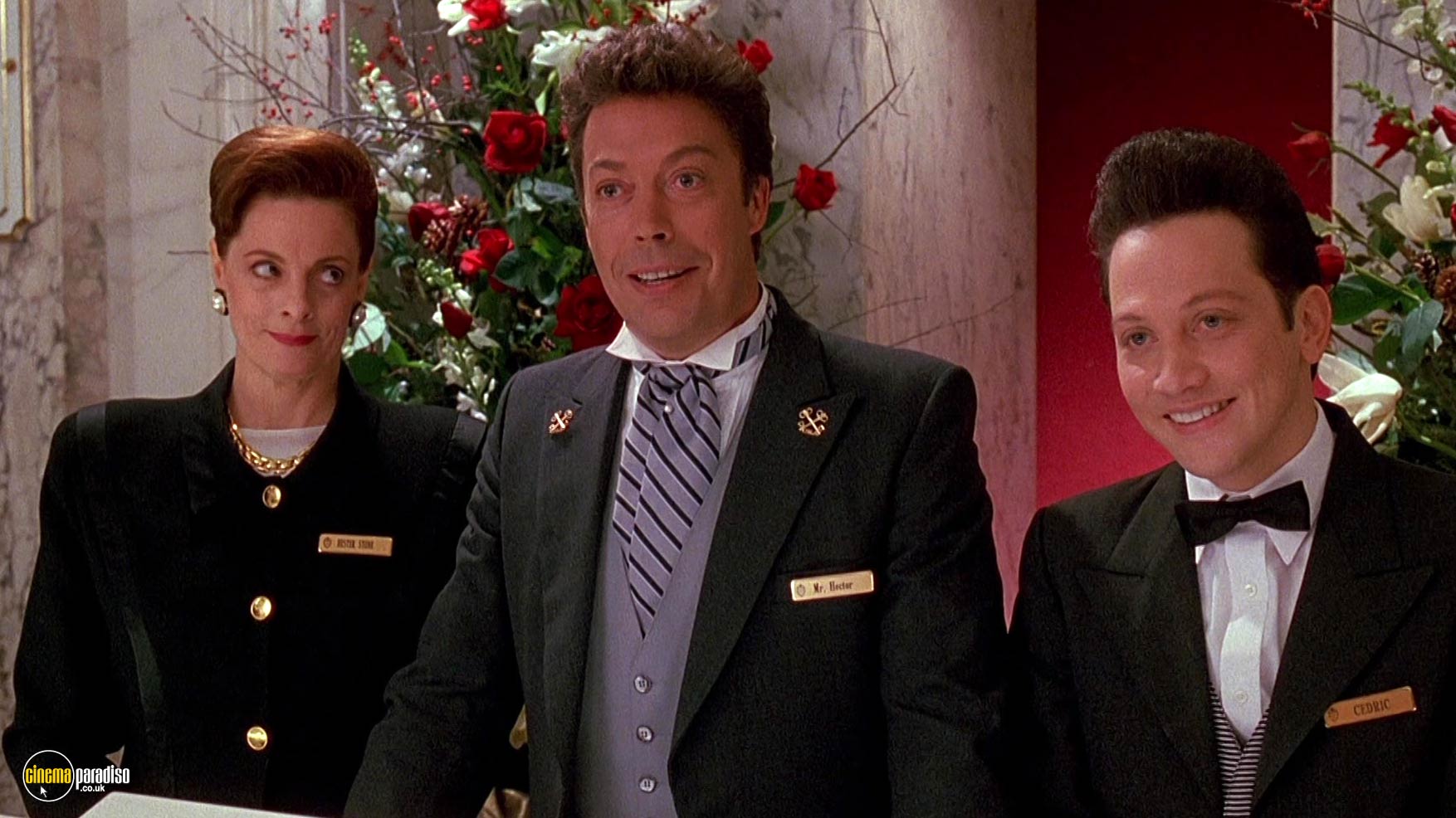
Curry appreciated the way in which Chris Columbus left him alone to develop Mr Hector, the suspicious Plaza Hotel concierge in Home Alone 2: Lost in New York (1992). Yet, while this has become one of his most beloved roles, he disliked working with Joe Pesci and was irritated by the way he felt Macaulay Culkin garbled his lines without seeming to know exactly what he was saying. But he probably had few good memories of a year in which his cameo was cut from Robert Altman's The Player and nobody picked up his sitcom pilot, Topper, in which he played the Cosmo Topper character that Roland Young had originated in Topper (1937), Topper Takes a Trip (1938), and Topper Returns (1941). Even his deft turn as Boyd Pinter in Charlie Peters's Passed Away went under the radar, despite there being much to like about this all-star comedy centring on a dysfunctional family's reunion.
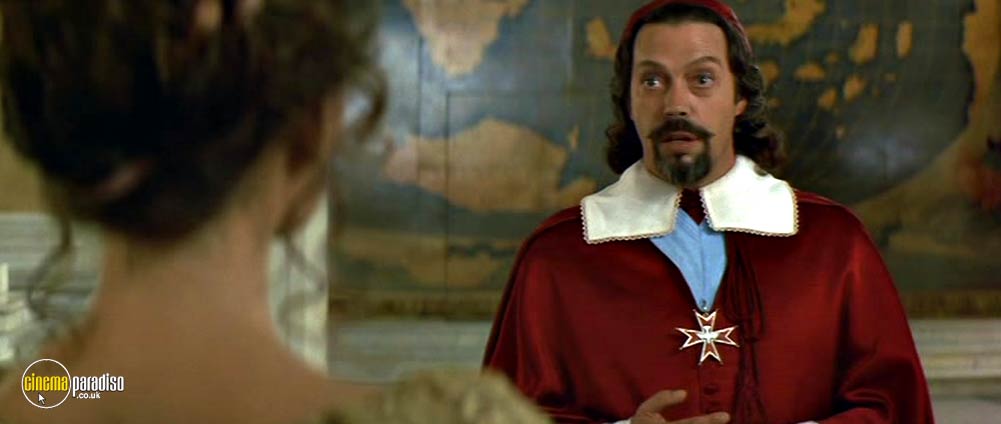
Following a couple of guest appearances as Roger in Roseanne, Curry launched into a busy 1993 by playing Ma, Pa, and Winona Brackett in the 'Death of Some Salesman' episode of Tales From the Crypt, for which he received a Primetime Emmy nomination for Outstanding Guest Actor in a Drama Series. On the big screen, he was Jigsaw in National Lampoon's Loaded Weapon 1 and had a ball swanning around Vienna in the red robes of Cardinal Richelieu, as he did battle with Aramis (Charlie Sheen), Athos (Kiefer Sutherland), Porthos (Oliver Platt) and D'Artagnan (Chris O'Donnell) in Stephen Herek's Disneyfied take on Alexandre Dumas's The Three Musketeers. Curry didn't like Sheen, but channelled any antipathy into his villainy, which he admitted did sometimes become so addictive that he had to remember to temper it with charm in order to ensure the audience saw a person not a cartoon.
Returning to the stage, Curry took on the Alan Swann role that had brought Peter O'Toole an Oscar nomination in My Favorite Year. Yet, while he earned a second Tony nomination (for Best Performance by a Leading Actor in a Musical), Curry found the role exhausting and he began to wonder if he was not better off taking screen roles like Farley Claymore in The Shadow (1994) or Cupid's caseworker in Lover's Knot (1995), which commanded decent money for much less work. As a consequence, he didn't tread the boards for almost a decade, although he didn't always find his film assignments agreeable. He was disappointed that Frank Marshall's Congo (1995) was shot in Costa Rica rather than Africa and found it a struggle to play stressed philanthropist Herkermer Homolka opposite Laura Linney because he had such little faith in the adaptation of Michael Crichton's bestseller. Indeed, he sniffed in his memoir, 'I do not consider it a script that anyone would rush to bind in leather.'
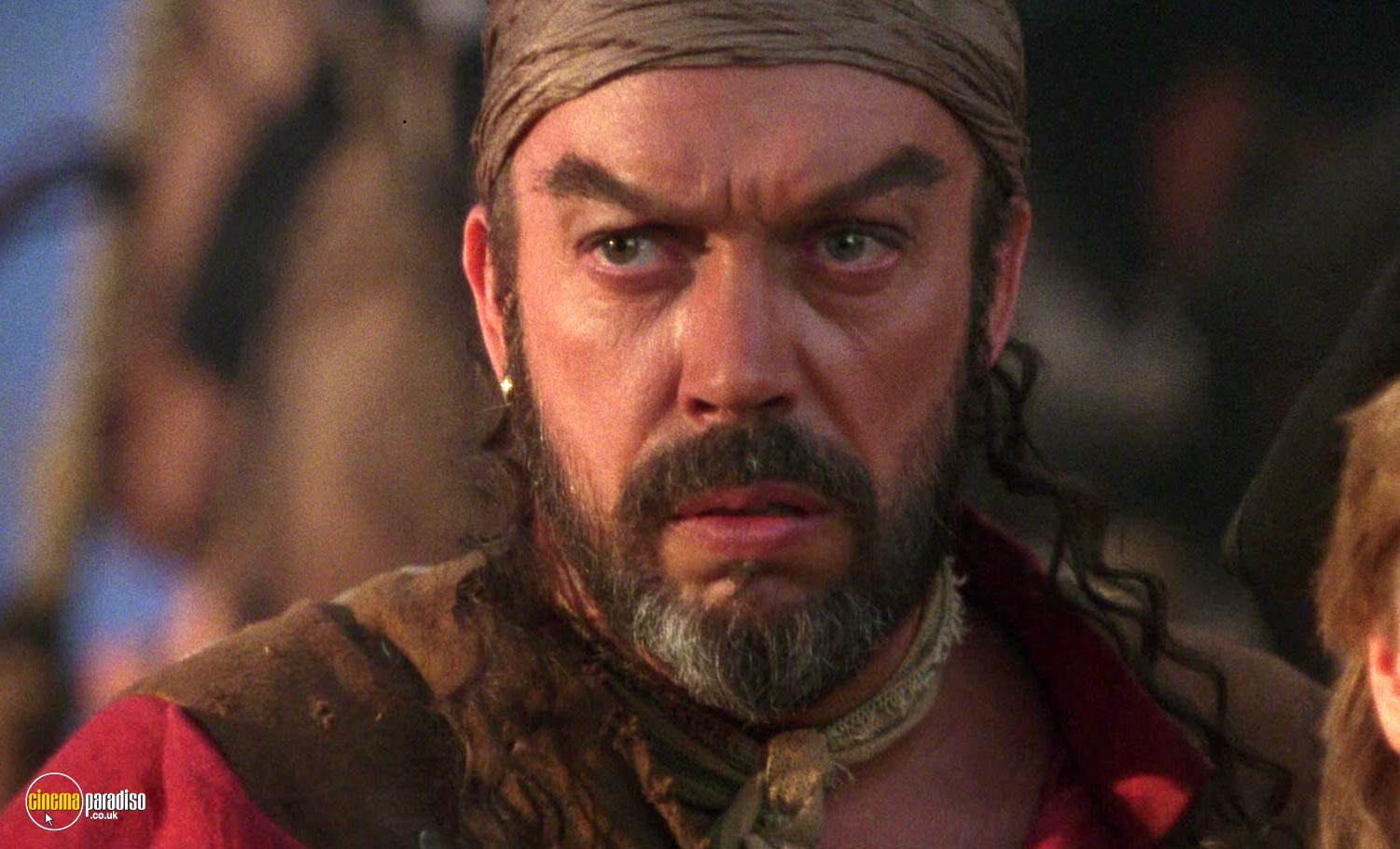
Fortunately, he got to follow this unfulfilling excursion with his favourite film experience. He had loved Robert Louis Stevenson's adventure novel as a boy and threw himself into the role of Long John Silver. But what made Muppet Treasure Island (1996) such a joy was working with director Brian Henson and the ingenious puppeteers, who managed to ad lib lines while hitting their marks while operating the likes of Kermit, Miss Piggy, and (Curry's hero), Gonzo. The picture also took on a personal aspect, as Curry had lost his own father around the same age that Jim Hawkins does in the story and he tried to make Silver subtly protective of the boy because no one had done the same for him as a grieving 11 year-old.
Improvising wasn't Curry's strong suit, but he enjoyed having to think on his one foot during this shoot, although a line suggesting that Silver and Benjamina Gunn (Piggy) had once had an affair had to be snipped from the final cut. He had modelled Silver's voice on his grandfather and it came in handy again when he played Jezebel Jack, who is thrown overboard by his mutinous crew in 1732 and hurtles through a time vortex to land on a farm in modern-day Nebraska in Pirates of the Plain (1999). Beforehand, he had set sail again, as larcenous White Star steward Simon Doonan in the mini-series, Titanic (1996), and as the archvillainous Major Vladakov in McHale's Navy (1997).
Outer space proved the destination in a couple of small-screen sci-fi assignments, as Gaal in Earth 2 (1995) and the hologrammatical Poet Man in Lexx (1997). The same year also saw Curry menacing post-apocalyptic children as Dr Kao in the little-seen Australian film, Doom Runners. He also tried his hand at producing, as he played washed-up soap actor Simon Ferguson in 12 episodes of the cult sitcom, Over the Top, which co-starred Steve Carell as a psychotic Greek chef.
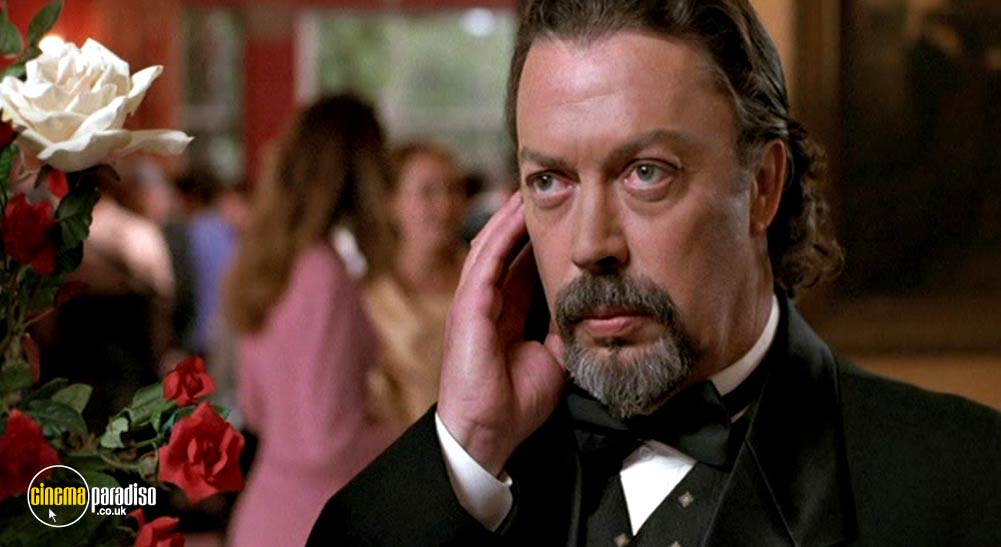
Frustratingly, a good deal of Curry's work from this period is unavailable on disc, including Addams Family Reunion (1998), a direct-to-video comedy that intrepidly paired him with Daryl Hannah as Gomez and Morticia Addams. Also out of reach are the unpicked-up pilots for Madness Reigns (1998) and The Unbelievables (1999), as well as Curry's six episodes as Martin Crisp in Rude Awakening (1999-2000), and his funny display as documentarist Edward Whatsett St John chronicling an R&B singer's return to the spotlight in Robert Townsend's undervalued TV-movie, Jackie's Back (1999). But Cinema Paradiso can bring you such eclectic Curry items as Four Dogs Playing Poker, in which he plays Felix the crooked bar owner; Sorted, which cast him as sleazy, Shakespeare-quoting London club owner, Damian Kemp; and Charlie's Angels (all 2000), the McG reboot that pitched Redstar communications tycoon Roger Corwin against Natalie Cook (Cameron Diaz), Dylan Sanders (Drew Barrymore), and Alex Munday (Lucy Liu).
Voiceover Artist
In 1988, while on the road in Me and My Girl, Curry was approached by Gordon Hunt, the father of actress Helen Hunt and the dialogue director at the Hanna-Barbera animation studio. He was invited to voice The Serpent in an episode of The Greatest Adventure: Stories From the Bible and enjoyed the job so much that he later returned to portray Judas Iscariot. As he had spent a lot of his childhood listening to the radio, Curry had heard his first acting rather than watched it. Realising that audio was an art in itself, he overcame initial resistance from full-time voice artists who felt he was trespassing on their turf to become prolific in films, TV series, video games, and audiobooks.
As Curry accrued dozens of credits over the decades, we shall focus on those available to rent from Cinema Paradiso and other recurring gigs of note, such as playing grouchy neighbour, Mr Curry, in Paddington Bear (1989). He became firm friends with Charlie Adler, who played his ursine Peruvian co-star and who would go on to direct Curry in his favourite and longest-running animated role, Sir Nigel Archibald Thornberry in The Wild Thornberrys (1998-2004), which ran for five seasons on Nickelodeon and was spun off into The Rugrats Movie (1998), Rugrats in Paris, The Wild Thornberrys: Call of the Wild, The Wild Thornberrys: Heroes of the Animal Kingdom (all 2000), The Wild Thornberrys: The Origin of Donnie (2001), The Wild Thornberrys Movie (2002), and Rugrats Go Wild (2003).
Having won a Daytime Emmy Award for his 46 episodes as Captain Hook in Peter Pan and the Pirates (1990-91) and been nominated for Skullmaster in Mighty Max (1993-94), Curry reunited with Adler on Aaahh!!! Real Monsters (1994-97), for which he adopted the voice of 'an Argentinian gigolo' for Zimbo, a one-legged, one-toothed wasp. He also spent 28 episodes voicing Ronald Chump in Wake, Rattle & Roll (1990-91) before a two-show stint as Thaddeus E. Klang in TaleSpin (1990). Further bookings followed as Konk in The Pirates of Dark Water (20 episodes), Sir Gawain in The Legend of Prince Valiant (39), and MAL in Captain Planet and the Planeteers (26).
He was disappointed to lose The Joker to Mark Hamill after the producers decided that his performance was so intense that it would frighten children. But he got to play a henchman in the 'Fear of Victory' episode of Batman: The Animated Series (1992). Moreover, he was cast as such recurring characters as Evil Manta in The Little Mermaid, Skullmaster in Mighty Max, King Chicken in Duckman, Kilokahn in Superhuman Samurai Syber-Squad, The Atrocimator in Turbocharged Thunderbirds, Pretorius in The Mask: Animated Series, Dr Anton Sevarius in Gargoyles, Lord Dragaunus in Mighty Ducks, and Lazlo Gigahurtz in Bruno the Kid - and these are just the multi-episode credits recorded between 1992-97, as there were a fair few stand-alone guest contributions, too.
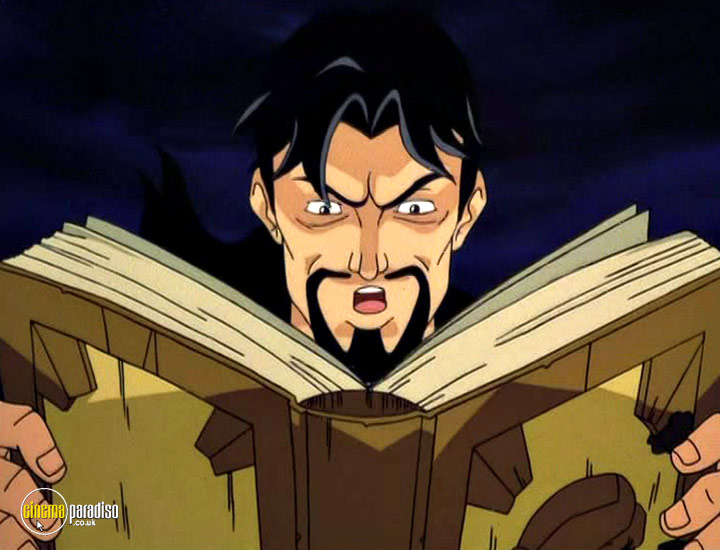
As there was so much work going as television entered the cable/satellite era and because deadlines were often tight, Curry sometimes found himself summoning voices in the recording booth. The schedules were more leisurely where features were concerned, however, and he can be heard as Hexxus, the evil spirit of pollution and destruction, in FernGully: The Last Rainforest (1992), the bullying Drake in The Pebble and the Penguin (1995), Forte the musical conductor in Beauty and the Beast: The Enchanted Christmas (1997), Ben Ravencroft in Scooby-Doo! and the Witch's Ghost, The Skull in Bartok the Magnificent (both 1999), and The Mouse King in Barbie: In the Nutcracker (2001).
Back on television, Curry voiced Trader Slick in 18 episodes of Jumanji: Animated (1996-98) before taking on The Sorceror in The Net, Prince Lotor in Voltron: The Third Dimension, King Renard in Xyber 9: New Dawn, and Mutro Botha in the 'Final Cut' episode of Batman Beyond. For 13 episodes, he was Slagar the Cruel, the cunning masked fox, in Redwall before he had fun as Professor Finbarr Calamitous in six episodes of The Adventures of Jimmy Neutron: Boy Genius (2003-05), as well as its spin-offs, Jimmy Neutron: Boy Genius: Sea of Trouble (2003), Jimmy Neutron: Boy Genius: Attack of the Twonkies (2005), and The Jimmy Timmy Power Hour 2: When Nerds Collide (2006). He also turned up as the Hot Dog Leader and Master Prank Caller #2 in Regular Show (2010).
In 2002, Curry won the Grammy for Best Spoken Word Album for narrating Lemony Snicket's A Series of Unfortunate Events: The Bad Beginning, which also featured Meryl Streep, Jim Carrey, and Jude Law. He was also asked to voice The Cat King in the English dub of Hiroyuki Morita's anime, The Cat Returns, before revelling in playing eye-patched German, General Von Talon, in Valiant (both 2005). Curry also excelled as Peccary the metrosexual buttling pig in Queer Duck and as Prince XII, the English feline doppelgänger to Bill Murray's lasagne-munching cynic, in Garfield 2: A Tail of Two Kitties (both 2006). A busy patch led to Yegor the Soviet agent in Fly Me to the Moon being followed by the eponymous antagonist in Scooby-Doo! and the Goblin King (both 2008), while circus magician Trevor Piccadilly in Curious George 2: Follow That Monkey! presaged Philippe, the estranged and highly untrustworthy cousin of Prince Louis, in Barbie and the Three Musketeers (both 2009).
Following the death of his onetime Glasgow flatmate, Ian McDiarmid, Curry inherited the role of Chancellor Palpatine (aka Darth Sidious) in 10 episodes of Star Wars: The Clone Wars (2012-14). In Vagabond, however, he dismissed this as just another job, as he had never seen the appeal of a franchise that had transformed American popular culture. No one told it like he saw it quite like Tim Curry.
A Lot of Spam
With voiceover work and gardening taking up more of his time now that he had settled in California, Curry became more selective in his feature choices. In 2001, he played Professor Oldman, who tricks some students into spending the night in Hell House in Keenan Ivory Wayans's Scary Movie 2. He was also cast as the Roman emperor, Theodosius II (opposite Gerard Butler), in Dick Lowry's mini-series, Attila the Hun, as well as Harley Dune, the owner of a travelling freak show, in Thom Fitzgerald's Wolf Girl.
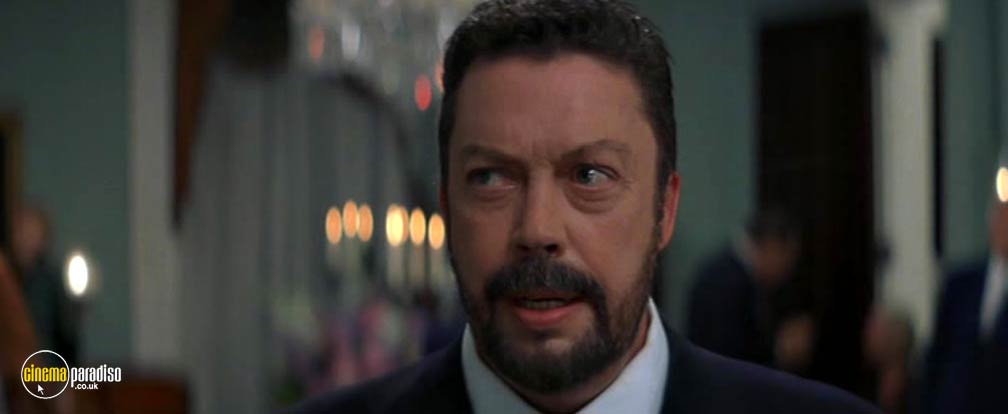
Neither Ritual nor The Scoundrel's Wife (both 2002) is on disc in the UK, but Cinema Paradiso users can catch Curry at the high-pitched end of the Worm in Samurai Jack (2002). They can also access Bill Condon's Kinsey, in which Curry played Dr Thurman Rice, the conservative medic and hygiene specialist who opposed the theories of sexologist Alfred Kinsey (Liam Neeson). They can also find him on fine form as Dale 'The Whale' Biederbeck, the nemesis of Adrien Monk (Tony Shalhoub), in an episode of Monk (both 2004).
However, Curry's most tasking role of the year was King Arthur in Mike Nichols's staging of Eric Idle's musical, Spamalot. Drawn from Monty Python and the Holy Grail (1975), this riotous comedy transferred from Chicago to Broadway after some last-minute rewrites and brought Curry his second Tony nomination for Best Performance by a Leading Actor in a Musical. The show came to the West End in October 2006, with a shattered Curry bowing out on 6 January 2007 after having received an Olivier Award nomination. Curry and Idle used to greet each other with the words, 'Butlers and villains', because they epitomised the kind of stereotpical parts that British actors were invariably offered in the United States. They would pair for a final time in 2007 for a recorded script reading of Idle's very funny play, What About Dick?
Mike Nichols was keen to film Spamalot, but various factors (some legal, some financial) confounded the project. But Curry returned in front of the camera as Caspar Pennington in Bailey's Billion$ (2005) before taking the roles of Gordon McLoosh in Christmas in Wonderland (2007) and Sir William de Noir (aka Coeur de Noir), the leader of the Black Merryweathers, in Gábor Csupó's adaptation of Elizabeth Goudge's 1946 novel, The Secret of Moonacre (2008).
He also came home for a string of TV engagements, playing the sinister wizard Trymon in Vadim Jean's adaptation of Terry Pratchett's The Colour of Magic, Lord Greville Boynton in the 'Appointment With Death' retelling in Agatha Christie's Poirot (both 2008), and as the flamboyant Italian magician, Signor Brunoni, in the BBC Christmas special, Return to Cranford (2009). Back Stateside, Curry guested as Nigel St Nigel, a reality show judge who thinks someone is out to kill him in the 'American Duos' episode of Psych (2007), which was directed by John Landis, who also oversaw his performance as Dr Alexander Monro in Burke & Hare (2010). He led the Wonderland Resistance as Dodo in Alice (2009) and gave a terrifying insight into the psyche of a serial killer beset by childhood traumas as Billy Flynn, 'The Prince of Darkness', in two episodes of Criminal Minds (2010).
This turned out to be Curry's final television role, but he had another reliable revenue stream, as he been voicing video game characters since the early 1990s. He would rack up over 30 roles in 22 interactive titles, including Melek the Kilrathi in Wing Commander 3: Heart of the Tiger (1994), the mad scientist in Frankenstein: Through the Eyes of the Monster (1995), Count Nefarious in Toonstruck (1996), Gray Walden in Dragon Quest: Origins, and Doviculus, Emperor of the Tainted Coil, in Brütal Legend (both 2009). He also played Gabriel Knight in Sins of the Fathers (1993), The Beast Within (1998), and Blood of the Sacred, Blood of the Damned (1999). Far and away Curry's most celebrated gaming role, however, was Soviet Premier Anatoly Cherdenko in Command & Conquer: Red Alert 3 (2008). It wasn't the game that made headlines, though, but a cut scene that went vital because Curry could barely suppress his own laughter, as he hammed up the line, 'I'm escaping to the one place that has not been corrupted by capitalism...SPACE!'
A Vagabond to the End
Despite his profile, Curry always managed to prevent journalists from delving into his private life, even during his early days when drink and drugs could easily have left him in the odd awkward situation. Rumours abounded about relationships, but all the snoops had to go on was conjecture. It came as a surprise, therefore, when Curry made a sudden departure from the Chichester Festival in May 2011. He had been cast as The Player King in Trevor Nunn's take on Tom Stoppard's Rosencrantz and Guildenstern Are Dead. But he simply couldn't learn his lines and he stepped down to avoid causing any embarrassment.
Undaunted, Curry returned to the dubbing studio to record his parts as Kevin's father, Eric, in Back to the Sea (2012), the title role in Gingerclown, Nevil Baddington in Saving Santa (both 2013), and Terence the colourful toucan in Ribbit (2014). On 13 July 2012, however, he had a stroke during a massage and only the prompt actions of the masseur and brain surgery saved him. Confined to a wheelchair, he had restricted use of his left arm and suffered from short-term memory loss. 'I had to learn how to speak again,' he later revealed. 'That was very weird. I hated not being able to speak because I speak a lot. I have to be told to shut up a lot. I love words, I love to communicate.'
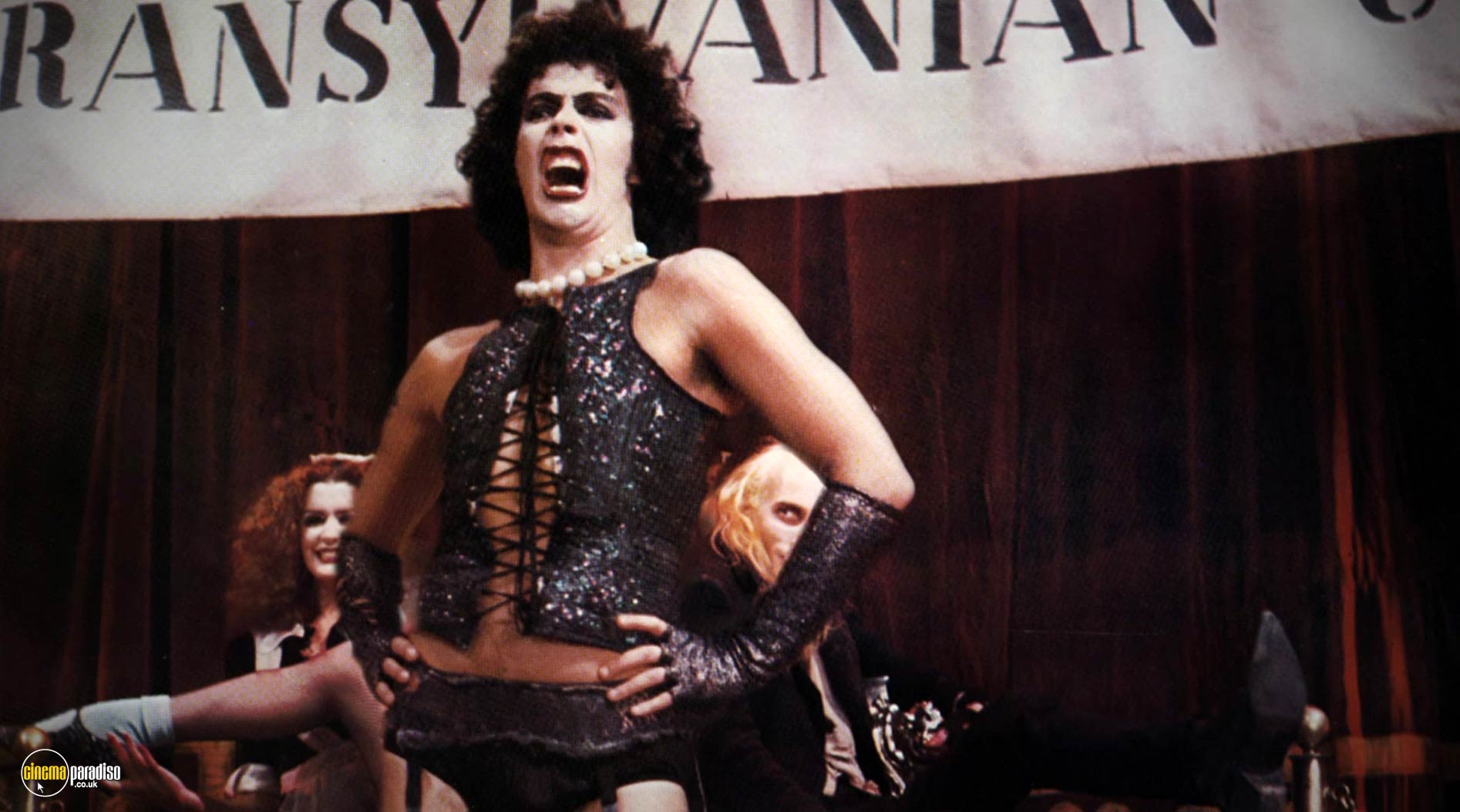
Manager Marcia Hurwitz kept the news out of the media for a year, as Curry worked his way back into voiceover roles. He played Auntie Whispers in an episode of the Emmy-winning mini-series Over the Garden Wall (2014) and bravely took on the role of The Criminologist in The Rocky Horror Picture Show: Let's Do the Time Warp Again (2016). Having featured in the documentaries Midnite Movies (2005), Pennywise: The Story of It (2021), and Strange Journey: The Story of Rocky Horror (2025), Curry returned to his most iconic role when he played Frank-N-Furter during a livestream read-through in October 2020 to raise funds for Joe Biden's presidential campaign. He also attended a 50th anniversary celebration of the The Rocky Horror Picture Show at the Academy Museum of Motion Pictures.
In 2020, Curry voiced Necrofer the Death Bringer for the yet to be released Dagon: Troll World Chronicles. He also appeared briefly in a wheelchair, wearing a hooded coat, computer gloves, and a plague mask to voice the sadistic Lockwood in Stream (2024) and had reprised the role for Stream 2: Sudden Death (2026) before he died at his home in Toluca Lake on 25 August at the age of 80. When asked if he was afraid of death, Curry had replied, 'No, I'm not. I don't fear death. I try to avoid it, as I think we all do, but I suspect that in the end I will welcome it.' He was one of a kind and will be much missed. But his CV is filled with titles waiting to be discovered and savoured - even the quirkier ones.
Mentioned films