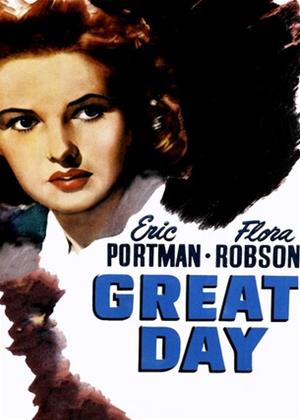
Great Day (1945)
- General info
- Available formats
- Synopsis:
- In the English village of Denley, the Women's Institute (a wartime program channelling village products to the troops) is electrified to hear that they'll be visited by Eleanor Roosevelt. As the women struggle to get ready while bursting with the great secret, we glimpse their home lives in subplots, notably the problematic love life of young Margaret Ellis (Sheila Sim) and the travails of her proud, but impoverished father. How will their lives change before the Great Day?
- Actors:
- Eric Portman, Flora Robson, Sheila Sim, Isabel Jeans, Walter Fitzgerald, Philip Friend, Marjorie Rhodes, Maire O'Neill, John Laurie, Kathleen Harrison, Leslie Dwyer, Margaret Withers, Beatrice Varley, Irene Handl, Patricia Hayes, Jacqueline Clarke, Norman Pierce, Pauline Tennant, John McLaren, Joan Maude
- Directors:
- Lance Comfort
- Producers:
- Victor Hanbury
- Writers:
- Lesley Storm, John Davenport, Wolfgang Wilhelm
- Aka:
- Corazones intrépidos
- Genres:
- Classics, Drama
More like Great Day

Reviews (1) of Great Day
Postwar Anxiety - Great Day review by Steve
This is staged in one of those studio set villages so beloved of '40s British cinema. It was produced as a tribute to the voluntary work of the Women's Institute towards the war effort. Now WWII is over and thoughts turn to what peace will mean. But what is stark is that the social fabric of this community has been torn apart.
Relationships between men and women have changed irrevocably. Traditions have been swept aside. The function of the class system has broken down. In the 24 hours the WI have to prepare for the visit of Eleanor Roosevelt, this rural backwater is in crisis. And the men who return home from combat must not be abandoned like the soldiers of the last war.
Like the absurd drunkard played by Eric Portman, still holding onto his old regimental rank because he never found another role. He is shored up by his heroic wife (Flora Robson) and his sensible but anxious daughter (Sheila Sim) who is marrying for security, and not for love or with optimism. Their intense performances are the film's main strength.
But for a patriotic title card, this would hardly be a tribute to a stalwart institution at all, but a reflection on the psychological frailties of a country coming out of war. Hope is most potently expressed through the continued support of the Americans. The villagers assemble at the end to wave flags at Mrs. Roosevelt. Britain has survived. But what now?