With the XXV Winter Olympics taking place in Milano-Cortina between 6-22 February 2026, Cinema Paradiso presents the second part of its Brief History, with the emphasis falling on films about ice sports like figure and speed skating, ski jumping, bobsledding, and curling.
In Part One, we looked at the official films that have been made on behalf of the International Olympic Committee between Chamonix 1924 and Beijing 2022. We also took to the slopes to recall the great skiing movies from the silent Bergfilme produced in Weimar Germany to those comedies and dramas set on and off the piste at the most popular ski resorts in Europe and North America.
Now, we turn to those Winter Olympic events that take place on the ice, whether they involve grace, pace, power, or guts. In addition to speed and figure skating, we shall also take in pictures about bobsledding, ski jumping, and curling, which keeps viewers of all ages hooked to the television when Team GB's men's and women's rinks are competing.
However, we'll have to content ourselves with this passing mention of skijoring, bandy, and speed skiing, which were demonstration sports at St Moritz (1928), Oslo (1952), and Albertville (1992) respectively. The first two have featured in a couple of documentaries, Matthew Cossett's Ice Cowboys and Anders Helgeson and Karin af Klintberg's Nice People (both 2015). But the best we can do with the thrilling (but dangerous) sport of hurtling down a hill in a straight line at the fastest speed possible are the relevant segments in Ticket to Ride (2013) and Chasing Shadows (2015), which were both produced for Warren Miller, the doyen of winter sport cinema who directed, produced, or narrated a reputed 750+ films between Deep and Light (1950) and Impact (2004).
Get Your Skates On
The first Winter Olympics were held at Chamonix in France in 1924. However, one winter sport had already appeared on the five-ring schedule, as figure skating events had been held at both London in 1908 and Antwerp in 1920 (which even hosted an ice hockey tournament). An 11 year-old made a few headlines in coming eighth and last in the 1924 ladies' figure skating final. But Sonja Henie would go on to become the most successful skater in the sport's history, as well as one of the highest-paid stars in Golden Age Hollywood.
Born in 1912, when the Norwegian capital was still known as Kristiana, Henie was the daughter of a wealthy furrier who had once won the world cycling championship. She started skating at the age of five, although she was also a talented skier, tennis player, and horsewoman. Having won hearts at Chamonix, Henie returned to claim gold at St Moritz, Lake Placid, and Garmisch-Partenkirchen (1928-36), with her hat-trick remaining unique. She also won 10 world and six European titles and remained the youngest female winner in any Winter Olympic event for over 70 years. But her sporting achievements have been overshadowed by her film career, which began with a guest slot in Gustav Lund's travelogue, See Norway (1929). It started in earnest, however, after Twentieth Century-Fox's Darryl F. Zanuck saw Henie perform in an ice show in Los Angeles, an episode memorialised in Anne Sewitsky's Sonja: The White Swan (2018), in which Ine Marie Wilmann excels in the title role. Despite her thick Norwegian accent, Henie's skating in Sidney Lanfield's One in a Million (1936) proved so popular that she was given carte blanche in choreographing the routines in all of her future films, as she sought to 'do with skates what Fred Astaire is doing with dancing'. Once upon a time, these musical delights were shown regularly on terrestrial television. But now only a couple of Henie's features are on disc, which is a shame, as London was her training base during her competitive heyday.
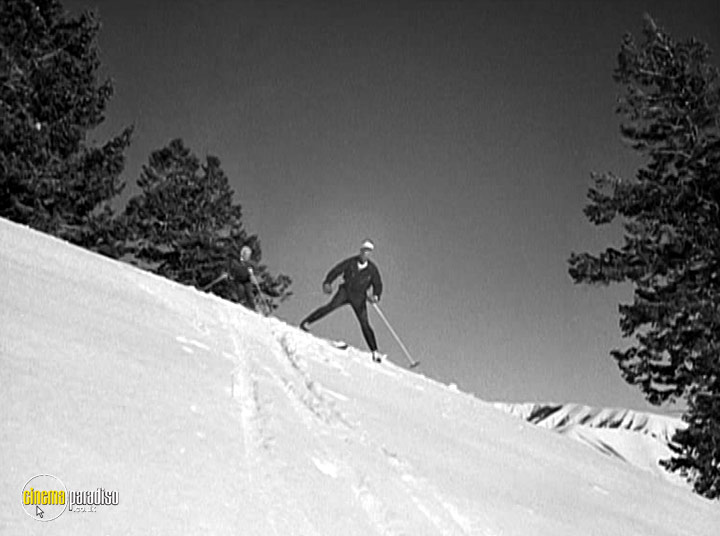
Growing into a deft comic actress, Henie co-starred with Tyrone Power in Thin Ice (1937) and Second Fiddle (1939) and with John Payne in Sun Valley Serenade (1941) and Iceland (1942), while she also charmed with her balletic poise and winning grin in Happy Landings, My Lucky Star (both 1938), Wintertime (1943) and It's a Pleasure (1945). However, Henie sought to show a more serious side in Everything Happens At Night (1939), which boasted an uncredited script contribution by F. Scott Fitzgerald and cast Henie as the daughter of a fugitive from Nazi Germany. Some believed, however, that she was trying to salvage her reputation after having been castigated in the Norwegian press for saluting Adolf Hitler at a 1934 exhibition event in Berlin (although she had not acknowledged the Führer during the 1936 Olympics) and lunching with him at his Bavarian retreat, Berchtesgaden. She compounded her problems by refusing to donate to her homeland's cause during the war, although she regularly entertained the troops and Norwegian sevice personnel based in North America.
Leaving Hollywood after The Countess of Monte Cristo (1948), Henie performed in ice shows before bowing out after playing herself in the 1960 docudrama, Hello London, which co-starred Michael Wilding. She died nine years later, at the age of 57, while her 1936 rival, Belita Jepson-Turner, lived to 2005. Known solely by her first name, Belita hailed from Nether Wallop in Hampshire and had trained as a ballerina before strapping on her skates. She had debuted on screen alongside fellow skater Dorothy Lewis in Ice-Capades (1941) and appeared as herself in Silver Skates (1943) and Lady, Let's Dance (1944). However, she didn't enjoy skating and sought to go legit in such Monogram thrillers as Suspense (1946), The Gangster (1947), and The Hunted (1948). Having co-starred with Charles Laughton in The Man on the Eiffel Tower (1949) and Clark Gable in Never Let Me Go (1953), Belita had the distinction of dancing with both Gene Kelly (Invitation to the Dance, 1956) and Fred Astaire ( Silk Stockings, 1957) before bowing out of pictures as the uncredited canteen hostess in Carol Reed's The Key (1958).
Reigning US figure skating champion Eugene Taylor was destined for the Olympics when they were cancelled because of World War II. However, he got to partner Sonja Henie in Iceland and double for Cary Grant in the skating sequence in Henry Koster's The Bishop's Wife (1947). He also doubled for Patric Knowles in Charles Lamont's Hit the Ice (1943), which brings shutterbugs Bud Abbott and Lou Costello to Sun Valley, as they seek to lay low after witnessing a crime. However, trouble follows them in the lugubrious form of Sheldon Leonard and the boys find themselves on the skids in the frantic ice rink finale.
Another US champ to make her way into showbiz was Lynn-Holly Johnson, who was nominated for the Golden Globe New Star of the Year Award for her performance as Alexis Winston in Donald Wrye's Ice Castles (1978). Under coach Beulah (Colleen Dewhurst), Lexie is heading to the Olympics until she incurs a terrible injury and relies on the love of childhood sweetheart Nick Peterson (Robby Benson) to pull her through. Taylor Firth and Rob Mayes assumed the roles in Wrye's remake, Ice Castles (2010), while Johnson went on to play Jan Curtis opposite Bette Davis in John Hough's Disney chiller, The Watcher in the Woods (1980), and Bibi Dahl alongside Roger Moore's James Bond in John Glen's For Your Eyes Only (1981).
Calgary 1988 provides the starting point for Paul Michael Glaser's The Cutting Edge (1992), as figure skater Kate Moseley (Moira Kelly) and ice hockey skipper (D.B. Sweeney) suffer disappointments that push them together to tilt for the Olympic crown at Albertville. The Soviet pair standing in their way were played by Canadian skaters Christine Hough and Doug Ladret, but Kelly and Sweeney trained hard to make their routine as polished as possible. The picture proved a success and was followed by three sequels, Sean McNamara's The Cutting Edge 2: Going For Gold (2006), Stuart Gillard's The Cutting Edge: Chasing the Dream (2008), and Stephen Herek's The Cutting Edge: Fire & Ice (2010). The respective pairings were Jaclyn Dorsey (Christy Carlson Romano) and Alex Harrison (Ross Thomas), Alexandra Delgado (Francia Raisa) and Zack Conroy (Matt Lanter), and the returning Alex Delgado and James McKinsey (Brendan Fehr) - each and every one of which takes an instant dislike to the other before the competitive spirit kicks in.
Bashful amateur skater Natalie (Charlotte Avery) takes some persuading to join Black lesbian journalist Steffi (Sabra Williams) at the Gay Games in New York in Fiona Cunningham-Reid's Thin Ice (1995). But love blossoms, as they train and Steffi works on a magazine piece with her friend, Greg (James Dreyfus). Ian McKellen cameos as himself, but it's Olympic skaters Tara Lipinski and Nancy Kerrigan who provide the stardust in George Erschbamer's Ice Angel (aka On Thin Ice, 2000), which sees a deceased ice hockey player (Aaron Smolinski) reincarnate as a figure skater (Nicholle Tom) who has a shot at Olympic glory.
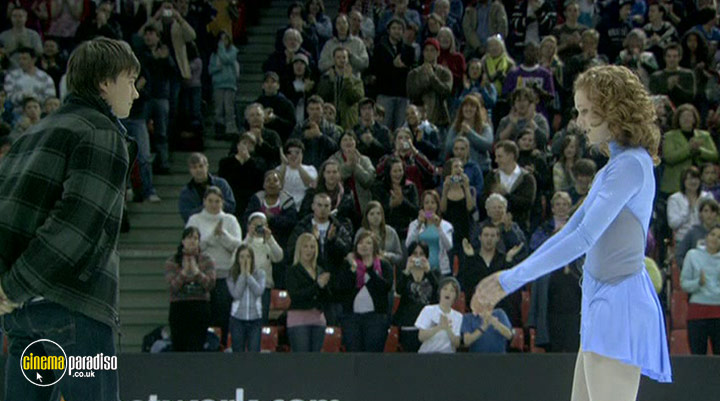
A story by Princess Diaries creator Meg Cabot underpins Tim Fywell's Ice Princess, a Disney comedy that sees skating friends Casey Carlyle (Michelle Trachtenberg) and Gennifer Harwood (Hayden Panettiere) being pushed apart by the tensions between their respective mothers, Joan (Joan Cusack) and Tina (Kim Cattrall), a disgraced ex-skater who now works as a coach. Staying with the Disney Channel, teenage skater Katelin Kingsford (Jordan Hinson) is frustrated that her parents can't afford to send her to the private school where Russian champion Natasha Goberman (Cristine Rose) runs the team in Francine McDougall's Go Figure (both 2005).
When it comes to icecapades, however, nothing matches Josh Gordon and Will Speck's Blades of Glory (2007), which sees Chazz Michael Michaels (Will Ferrell) and Jimmy MacElroy (Jon Heder) being banned for life after they brawl on the podium after tying at the World Winter Sports Games. However, a loophole allows them to compete in a pairs competition, where they come up against siblings Stranz and Fairchild Van Waldenberg (Will Arnett and Amy Poehler). But fact proves stranger than fiction in Craig Gillespie's I, Tonya (2017), which charts the rivalry between Olympic hopefuls Tonya Harding (Margot Robbie) and Nancy Kerrigan (Caitlin Carver) in the run-up to the Lillehammer Olympics of 1994. Bouncing back from finishing fourth at Albertville, Harding turns to mother LaVona Golden (Oscar winner Allison Janney) for support, but ends up having to rely on boyfriend Jeff Gillooly (Sebastian Stan) and his mate, Sean Eckardt (Paul Walter Hauser), who hatch a devastatingly dumb plan to sabotage Tonya's opposition.
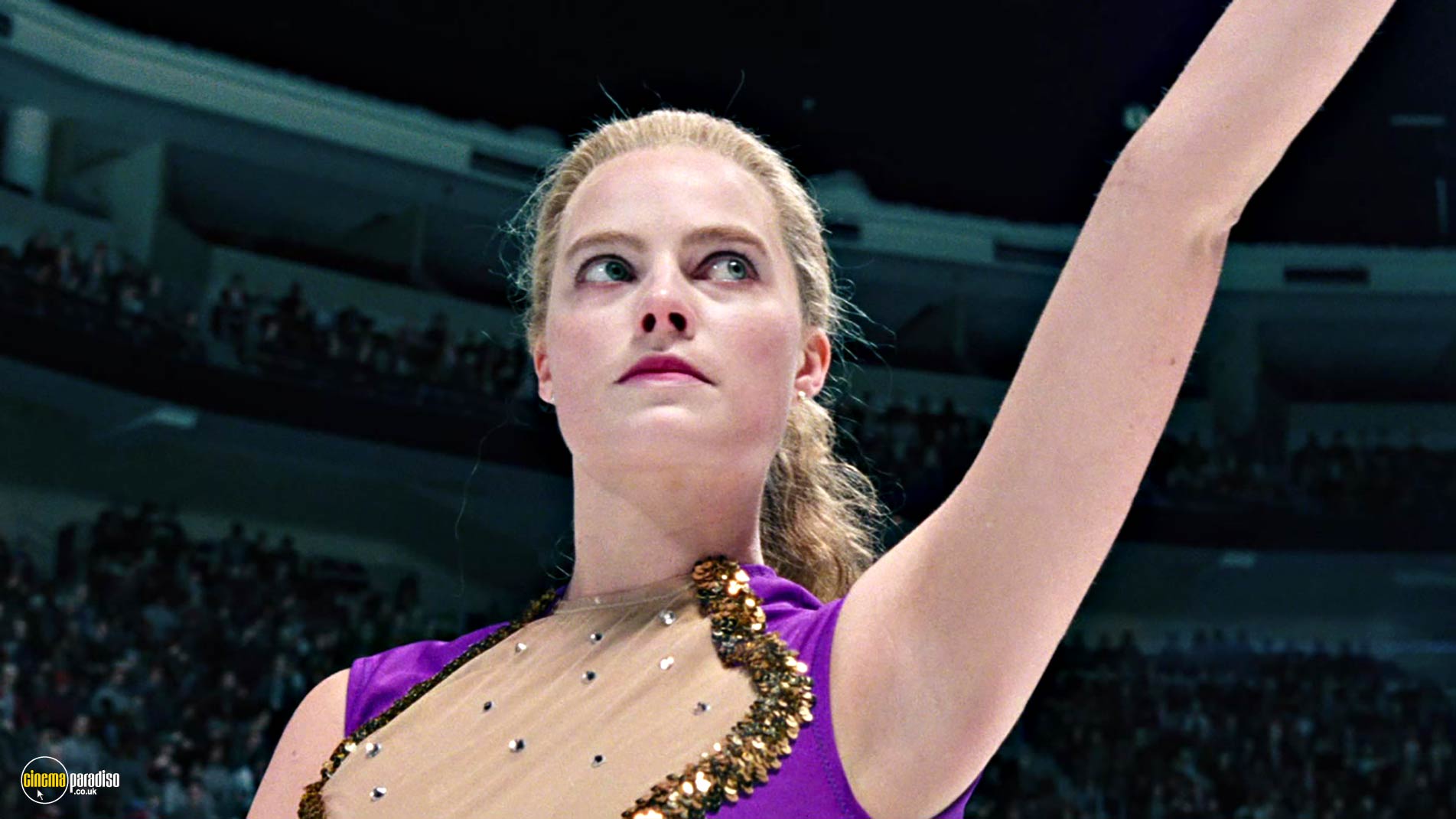
TV director Larry Shaw had told the story with more restraint in Tonya and Nancy: The Inside Story (1994), which had starred Alexandra Powers and Heather Langenkamp and focuses on the fallout from the 1994 baton attack on Kerrigan's knee at the Cobo Arena in Detroit. Facing up to injury is also the theme of David Burton Morris's Ice Dreams (2009), which sees ice rink owner Brady Smith help injured Olympian, Jessica Cauffiel, regain her zest for life by coaching Noelle Bruno, a talented teenager whose mother can't afford to pay for lessons. Another wounded skater features in Damian Lee's Ice Girls (2016), as Michaela du Toit's hopes of being coached by Elvis Stojko seem to have been dashed because he is working with Taylor Hunsley, whose mother (Natasha Henstridge) was the great rival of her own mom, Lara Daans.
The mother living vicariously in Bradley Walsh's Love on Ice (2017) is spikily played by Anna Golja, as she drives daughter Gail O'Grady to become a champion skater. However, coach Andrew W. Walker is more interested in Julie Berman. a 27 year-old who quit the rink after her mother died, but who still believes that she can make it to the top. Released the same year, Sean Cisterna's Kiss and Cry (2017) stars Sarah Fisher as Carley Allison, the 18 year-old skater-cum-singer who battled bravely against a rare type of sarcoma. Also striving to be heartwarming, Peter Paul Basler and Maddison Bullock's Ice: The Movie (2018) centres on Bailey (Maddison Bullock), who is given the chance to work with noted Russian coach Gavin Veerak (Michael Monks), who is already preparing the ambitious Peyton Shaw (Lisa Mihelich) for a major challenge.
No skating competition is more difficult to win than the one at the Winter Olympics, as James Erskine reveals in The Ice King, which shows how John Curry put a new artistic spin on men's figure skating in taking gold at the 1976 Games at Innsbruck. However, Curry was a pioneer in other regards, as he was the first openly gay Olympian and he sought to create a new form of ice spectacle in the shows he staged after he stopped
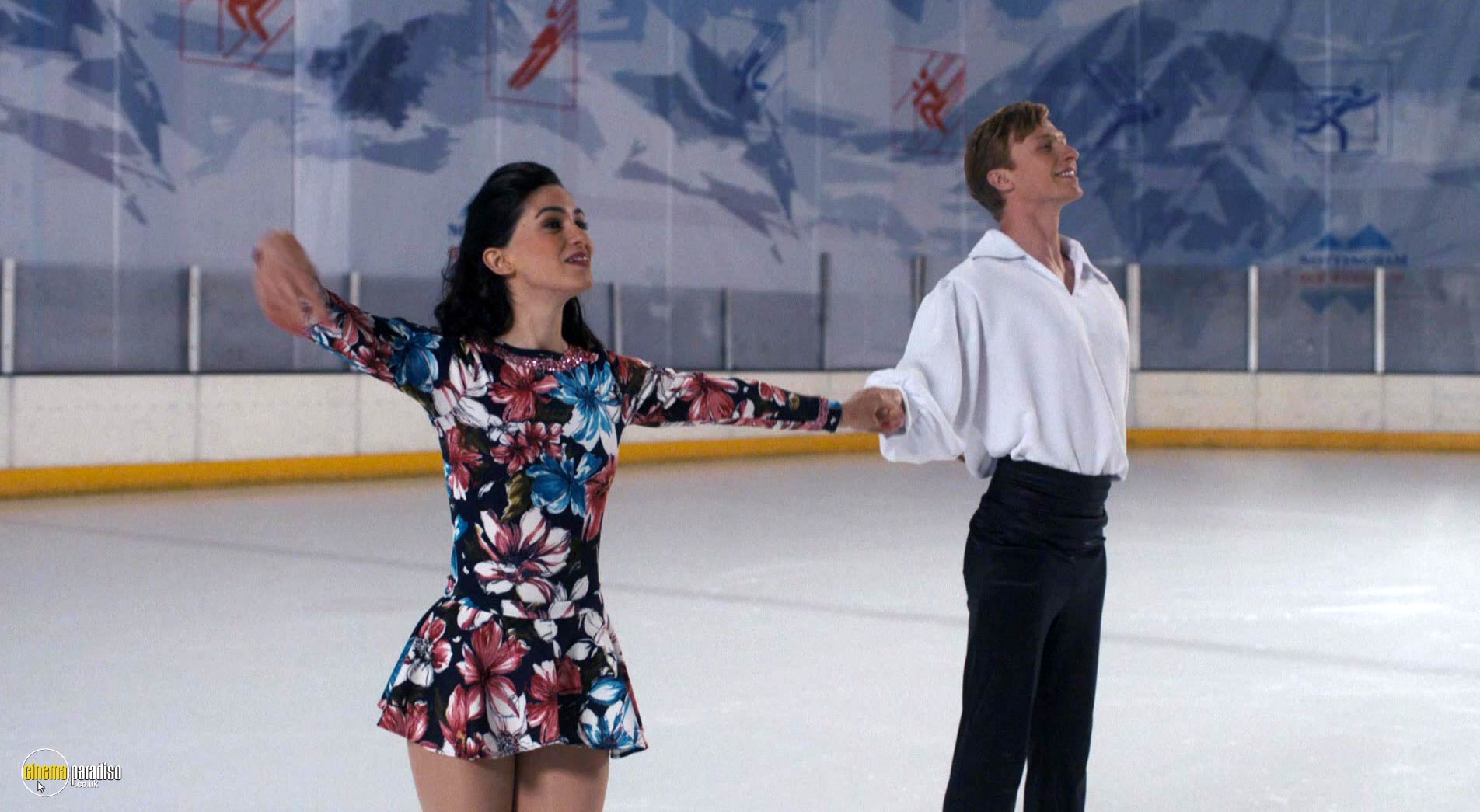
competing. But he was also a man haunted by demons that could make him difficult and demanding as both a performer and a person. As the film explains, Robin Cousins followed in Curry's slipstream. But he has yet to be the subject of a biopic, although he did choreograph the skating action in The Cutting Edge. Completing a golden age for British skating were the future mentors of the celebrities in skates on the reality show, Dancing On Ice (2006-25). As Gillies Mackinnon's Torvill & Dean (both 2018) reveals, Jayne Torvill and Christopher Dean met as children at Nottingham Ice Rink, where she sought refuge from her strict parents (Stephen Tompkinson and Jo Hartley) and he got used to the skates that had been bought for him by his new stepmother (Christine Bottomley). A new family forms around rink regulars Miss Perry (Anita Dobson) and Ted (Mark Benton) before Chris (Will Tudor) and Jayne (Poppy Lee Friar) start reaching for the stars under coach Janet Sawbridge (Jaime Winston) and mentor Betty Calloway (Annabelle Apsion) en route to wowing the world with their interpretation of Maurice Ravel's 'Bolero' at the 1984 Winter Olympics at Sarajevo.
Speaking of biographies, a Soviet great is commemorated in Konstantin Statsky's Rodnina (2025), which traces the rise of Irina Rodnina (Vladislava Samokhina), who started skating for health reasons at the insistence of her parents and became the only pairs skater to have won 10 consecutive World Championships (1969-78) and a hat-trick of Olympic gold medals (1972-80). Ivan Kolesnikov co-stars as Alexander Zaitsev, who partnered Rodnina after Alexei Ulanov and became her husband. Moving forward to the present day, Olga Korsak plays a Russian skater whose will to win has been dimmed following two competition meltdowns. However, at the age of 30, she is coaxed back on to the ice by her onetime idol, Igor Rusky (Aleksei Serebryakov), in Junga Song's The Petrichor (2020).
Since the collapse of the USSR, China has emerged as a major force in figure skating, although not all of the films featuring rinks are sports-centred. Take, Diao Yinan's murderous Golden Bear-winning thriller, Black Coal, Thin Ice (2014), which includes a chilling scene at a large outdoor skating arena in the north-east of the vast country that's floodlit in the fog. Yanji, on the northern border with North Korea, provides the setting for Anthony Chen's The Breaking Ice (2023), as Haofeng (Liu Haoran) arrives from Shanghai for a friend's wedding and discovers that tour guide Nana (Zhou Dongyu) was once a promising figure skater, who disappeared following the death of her coach. Jiang Ning (Zhang Zifeng) also has problems with her coach in Zhou Jinghao's Girl on Edge (2025). But Wang Shuang (Ma Yili) just happens to be the mother who has never forgiven Jiang for being born when she was at the peak of her own career. In a bid to teach her daughter a lesson, Wang offers to train Zhong Lind (Ding Xiangyua), a rookie who works at the rink.
Slippin' and A-Slidin'
The Dutch are streets ahead when it comes to speed skating medals, although South Korea have proved to be the masters of the short track format since it was introduced at Alberville in 1992. American Charles Jewtraw took 500m gold to become the first Olympic speed skating champion at Chamonix and, three years later, the sport featured in the silent comedy, The Red Mill (1927). The woefully underrated Marion Davies stars as Tina, the humble cleaner who enters an all-girls skating race in order to win first prize - a kiss from Prince Dennis (Owen Moore). With her cumbersome skates, she doesn't seem to have a hope. But, when a cat bolts across the course, Tina hitches a lift with the dog in hot pursuit. Fun though it is, the film's main interest lies in the fact it was directed by William Goodrich, which was the pseudonym used by Roscoe 'Fatty' Arbuckle after his reputation as a performer was ruined by his association with the tragic death of Virginia Rappe in 1921.
Hopping forward to 1953, we find Norwegian trucker Lasse Kolstad defying his father by passing up a place at college to win big races in Nils R. Müller's The King of Skating (1953). However, he realises that there's more to life than success and press attention and the same moral emerges from Bill Corcoran's A Brother's Promise: The Dan Jansen Story (1996), a tele-biopic of the American speed skater (Matt Keeslar) who lost two Olympic finales in Calgary in 1988 after learning of the death of his beloved sister, Jane (Jayne Brook). Having set up a foundation to research into leukaemia, Jansen also left Albertville medalless. But he kept going and achieved redemption at Lillehammer in 1994.
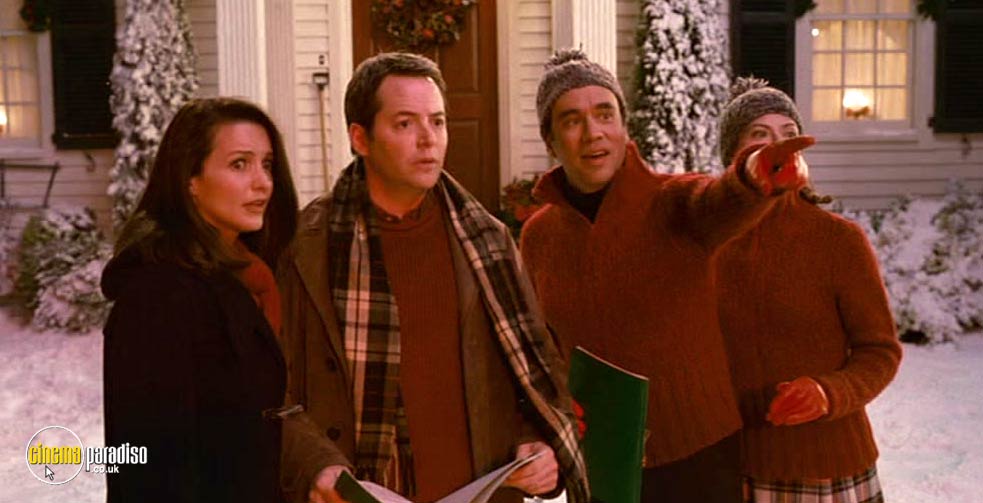
In a lighter vein, Matthew Broderick underwent special training before filming the big skating sequence in John Whitesell's Deck the Halls (2006), which sees neighbours Steve Finch (Broderick) and Buddy Hall (Danny DeVito) compete in the WinterFest speed race to settle their dispute over some Christmas lights. Cinema Paradiso users can enjoy this comedy all year round. but they can't currently see Fang Fang Wang's Breaking Through, which charts the journey of the short track team that won China's first Olympic gold at Salt Lake City in 2002. Sadly, the same goes for Adam Berg's Black Crab (both 2022), a Swedish actioner that sees speed skater Noomi Rapace being forcibly recruited for a dangerous mission in a post-apocalyptic world to deliver some canisters to a secret research base that lies across a frozen stretch of sea.
Hurtling along winding tracks at breakneck speeds on a tin tray has been Britain's best hope of Winter Olympic glory in recent times, with Alex Coomber's bronze in Salt Lake City in 2002 and Shelley Rudman's silver in Torino. four years later, being followed by golds for Amy Williams (2010) and Lizzy Yarnold (2014-18), with Laura Deas taking bronze in the latter's successful defence at PyeongChang. No one has thought to make a film about any of this quintet, even though Coomber competed with a broken wrist. But Jaime Ballada and Torres Vergé Daniel's Skeleton's Serious Kids (2024) have recorded the efforts of Ander Mirambell to train the nine hopefuls that he hopes will succeed him (after a 17-year career) by forming Spain's first Olympic skeleton team. A similar theme was explored in Ryan Sidhoo's The Track (2025), the only major documentary about the luge, which shows how coach Senad Omanovic spent five years training Bosnians Mirza Nikolajev, Zlatan Jakic, and Hamza Pleho on the bullet-riddled concrete run that had been built for the 1984 Winter Olympics in what was then the Yugoslavian city of Sarajevo,
By contrast, a clutch of films have been made about bobsledding. A squealing Claudette Colbert clearly doesn't enjoy her experience of a Swiss bobsleigh run in Wesley Ruggles's I Met Him in Paris (1937), a screwball comedy that sees Mervyn Douglas strive to prevent Colbert from making a mistake with either fiancé Lee Bowman or married cad, Robert Young, during a winter sports holiday. But the nine year-old hero of Gerry Anderson's Joe 90 (1968-69) has no fears about receiving the brain patterns of a bobsleigh champion in order to deliver the $1 million ransom demanded for the kidnapped Canadian prime minister in the 'Breakout' episode of the popular Supermarionation series.
Staying on the small screen, the bobsleigh is one of the events that Graeme Garden, Tim Brooke-Taylor, and Bill Oddie have to master after the Minister of Sport asks them to represent Britain at the North Pole in the 'Winter Olympics' episode (1973) of The Goodies (1970-82). Business executive Wayne Rogers also decides to drop everything, including wife Adrienne Barbeau, to become part of the US bobsleigh team at Lake Placid in Walter Grauman's two-parter, Top of the Hill (1980), which was based on a story by Irwin Shaw.
We encountered Willy Bogner, Jr. in the first part of this Brief History, as the former Alpine athlete who devised the skiiing sequences for a number of James Bond films. He was in the director's chair for Fire, Ice and Dynamite (1990), a sequel to Fire and Ice (1986) that boasts cameos by Steffi Graf, Niki Lauda, Buzz Aldrin, Dennis Conner, and Isaac Hayes. The story centres around the would-be heirs of Roger Moore's indebted suicide, who tackle such sports as bobsledding, skiing, and white water rafting in a winner-takes-all battle for his estate. A bobsleigh run also features in Isao Takahata's My Neighbours the Yamadas (1999), a classic Studio Ghibli anime that sees newlyweds Matsuko and Takashi leap into action after exchanging vows in a sled that turns into a wedding cake in a surreal start to a sublime study of the ups and downs of family life.
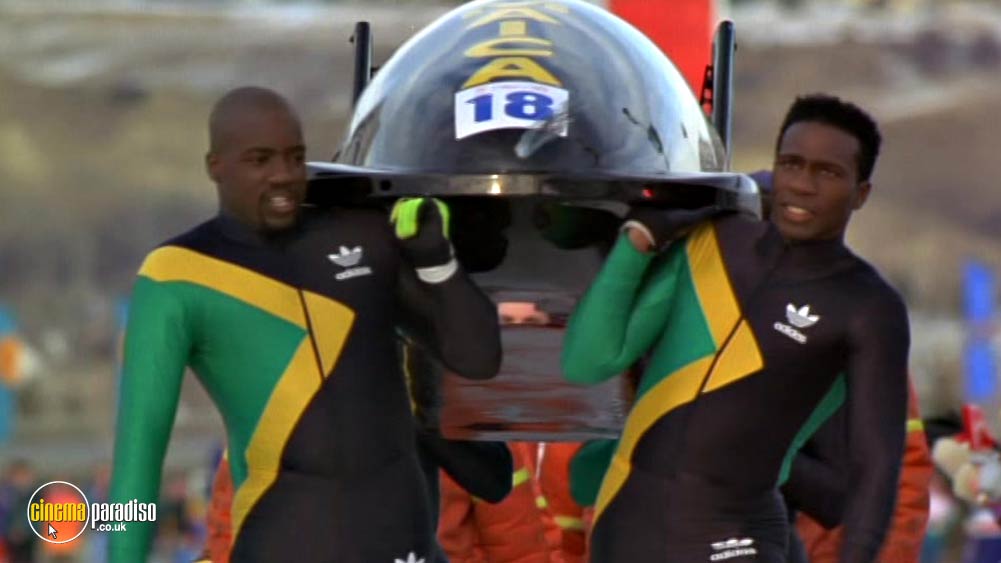
But there's only one bobsleigh movie when it comes to the Winter Games and that's Jon Turteltaub's Cool Runnings (1993). However, the story of the Jamaican squad that competed at Calgary in 1988 has recently come under scrutiny for being a 'white saviour' film, as the story puts the team's underdog heroics down to the efforts of their coach, Irving Blitzer (John Candy). In fact, he's a fictional character, as the real Olympic bid was backed by American businessmen, George Fitch and William Maloney, who believed that sprinters would make good bobsleigh crewmen. In the story, the quartet are Sanka Coffie (Doug E. Doug), Derice Bannock (Leon Robinson), Yul Brenner (Malik Yoba), and Junior Bevil (Rawle D. Lewis) and they are applauded from all corners after completing their final run after a horrendous crash. The reality is, however, Devon Harris, Dudley Stokes, Michael White, and Chris Stokes failed to finish (despite walking to the line) after the first two had come a creditable 30th out of 41 teams in the two-man bob. But the film version (which was based on a story co-written by Michael Ritchie of Downhill Racer fame) is much more conducive to feel-good fist pumping.
It's back to the Oslo Games of 1952 for Marcus H. Rosenmüller's Heavyweights (2006), as Gamser (Sebastian Bezzel), a carpenter from Garmisch-Patenkirchen, forms a four-man squad to do battle with his childhood rival, brewery owner, Dorfler (Nicholas Ofczarek), in a bobsleigh showdown. Striving to be the best is also the theme of Brandt Wille's award-winning documentary, Citizen Athlete (2023), which chronicles the sacrifices made by Kaillie Humphries and Elana Meyers Taylor during the intense training period for the two-woman bob event in Beijing in 2022.
Slowing things down, we come to the sport of curling, which has done Team GB proud over recent years. They won the first gold in the event at Chamonix, but it fell off the schedule until Nagano in 1998, since when Scots Rhona Martin and Eve Muirhead have skipped the women's four to victory at Salt Lake City in 2002 and Beijing two decades later. And don't forget the Muirhead rink's bronze at Sochi, when David Murdoch led the men's team to a hard-won silver. Tomas Leach's A Brilliant Curling Story (2022) recalls the achievement of Martin, Fiona MacDonald, Janice Rankin, Debbie Knox, and Margaret Morton, as they pulled of the 'Stone of Destiny' win over Switzerland.
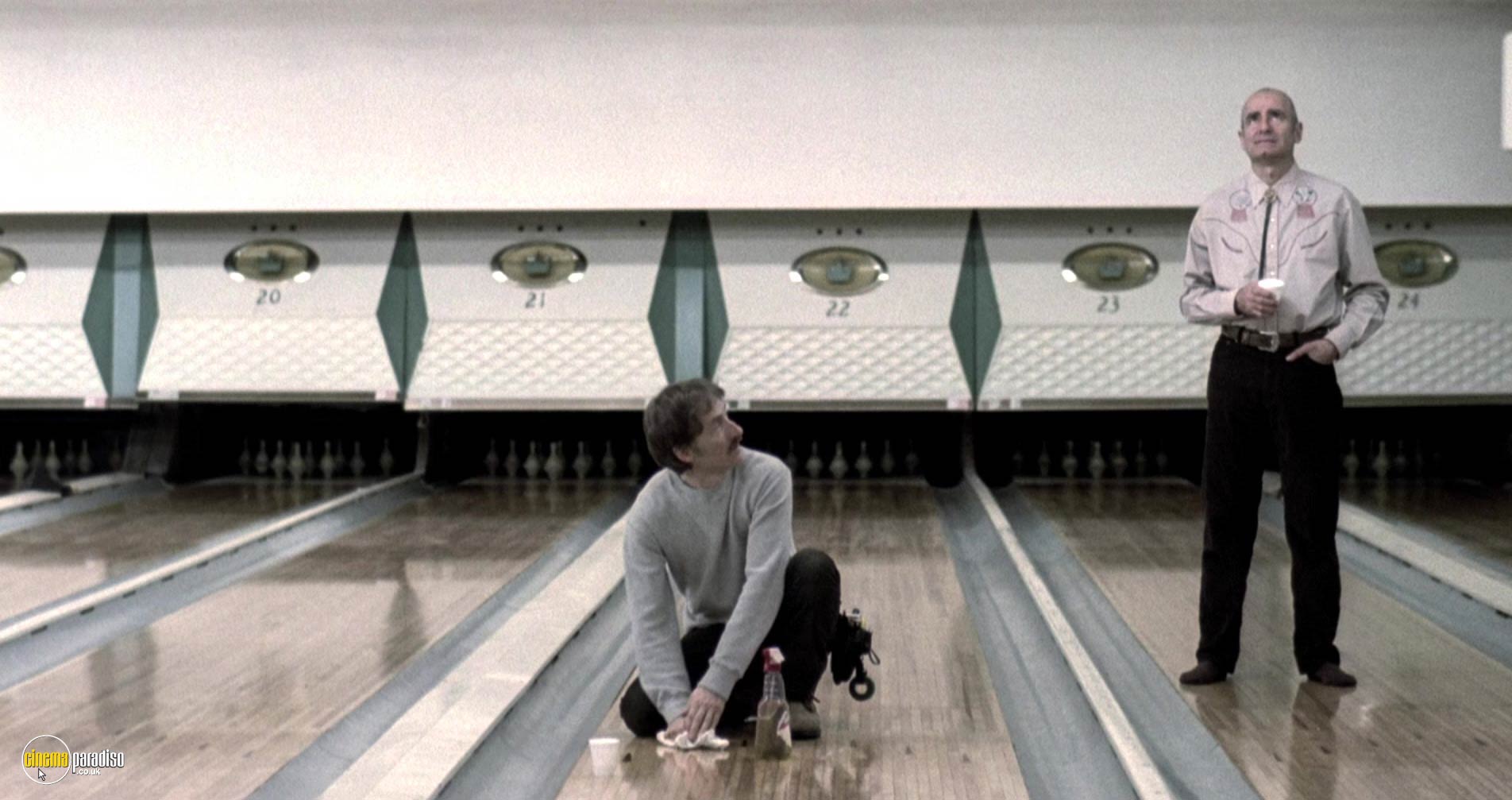
Ever since John Howe released the short, Gone Curling (1963), about the sport's grip on Eston, Saskatchewan, Canada has been the home of the curling movie. Paul Gross's Men With Brooms (2002) sees the director also star as Chris Cutter, who seeks to recover from a string of disasters by winning the prestigious Golden Broom bonspiel against his Olympian rival, Alexander 'The Juggernaut' Yount (Greg Bryk). Leslie Nielsen is on fine form as the estranged father who agrees to coach the rink, while Barbara Gordon and Molly Parker essay the sisters causing Cutter some romantic problems. Staying north of the 49th Parallel, Denis Côté's Curling (2010) takes us to Québec, where loner Jean-François Sauvageau (Emmanuel Bilodeau) and his 12 year-old daughter, Julyvonne (Philomène Bilodeau), live apart from their remote community. Resisting the efforts of neighbours to interest him in curling, Jean-François spends time at the local bowling alley when not doing odd jobs at a motel. But, as the deeply unsettling story unfolds, it emerges that he may also harbour a dark secret.
Norway provides the setting for Ole Endresen's Curling King (2011), which stars Atle Antonsen as Truls Paulsen, whose name is a play on that of Olympic champion, Pål Trulsen. Truls was also a star player before his behaviour became dangerously compulsive. But now, after a decade away, he returns to the ice in a bid to raise money for his mentor's medical treatment. An even less likely foursome forms in Claudio Amendola's The Move of the Penguin (2013), which sees a serial loser from Rome recruit a factory worker, a pensioner, and a bully for The Assault Penguins curling team that he hopes can represent Italy at the 2006 Winter Olympics in Torino. Finally, it's back to Canada for Patricia MacDowell's Sweeping Forward (2014), which sees former curling champion Anne-Marie Saheb continue her battle against the anxiety disorder caused by her abusive father by agreeing to coach four young women from a safe shelter, who all have troubles of their own.
The last of our ice events is ski jumping, which sees competitors reach speeds of between 75-95 mph, depending on weather conditions, equipment, and physique. Until 1956, a single hill was used for what was a male-dominated sport until women's competitions were added to the roster at Sochi in 2014. Yet our first film centres on Genevieve 'Ginger' King (Olive Thomas), a 16 year-old whose senator father sends her to Miss Paddle's boarding school in New York in the hope that she'll quieten down. However, she's soon skiing, skating, sledding, and ski jumping with her new classmates in Alan Crosland's silent classic, The Flapper (1920).
Two years before the first Winter Olympics, ski jumping was one of the sports celebrated in Erkki Karu and Eero Leväluoma's Finlandia (1922), a travelogue promoting the newly independent nation, which was also responsible for Valentin Vaala's Laveata tietä (aka The Broad Way, 1931), which stars Finnish Valentino, Teuvo Tulio, as a violinist who steals hearts wherever he goes. Amidst footage of the first world ski championships at the Salpausselkä Ski Jump Hill in Lahti, Tulio seduces country girl Regina Linnanheimo, only for Parisian lover Hanna Taini to come looking for him.
The winter sports sequence in Alfred Hitchcock's The Man Who Knew Too Much isn't the Master of Suspense's finest hour, as he relies on stock footage of events like the ski jump to use in back projection for action staged in the studio. However, the sequence establishes the exotic life of French spy, Louis Bernard (Pierre Fresnay), who is shot in St Moritz while dancing with Jill Lawrence (Edna Best). Filmed in authentic locations nearby, Herbert Selpin's The Champion of Pontresina (1934) centres on Sepp Rist, a ski jumper who is supposed to be refining his technique while training in Switzerland. But he allows himself to be distracted by English rose, Vivigenz Eickstedt. This is one of the films that got Selpin into trouble with Nazi Propaganda chief, Joseph Goebbels, for being overly sympathetic towards the British. When he did it again when shooting Titanic (1943), he was arrested and died in suspicious circumstances in his cell.
West Germany and Japan were absent from the Winter Olympics at St Moritz in 1948. But the Games were a symbol of the world returning to normality and the ski jump played a significant part in André Michel's documentary, Flight Without Hate (1948). The Swiss resort also provided the setting for Hans Albin and Harry R. Sokal's White Carnival (1952), as engineer Adrian Hoven's bid to build a new ski jump hill are deflected by local girl, Charlotte Kerr, who incurs the suspicion of his fiancée, Hannelore Bollmann.
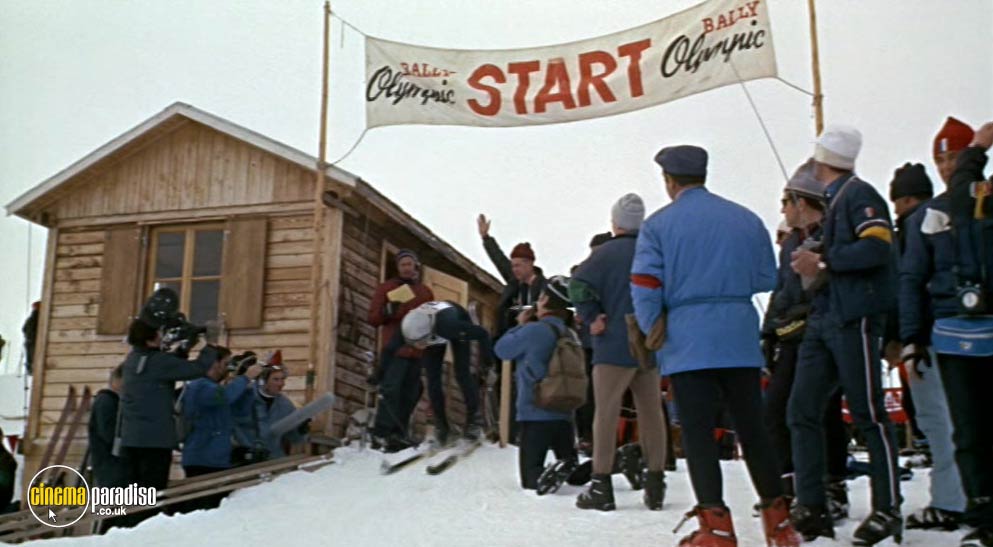
Werner Herzog becomes fascinated by the personality of Sapporo silver medallist Walter Steiner in his landmark documentary, The Great Ecstasy of Woodcarver Steiner (1974). He films the Olympian on 16mm in such iconic places as Garmisch-Partenkirchen, Bad Aussee, and Planica, where Steiner competes in a ski flying competition. But, while he is prepared to risk life and limb in the spiritual quest 'to master death', the Swiss carpenter also brings the same intensity to ice fishing and sculpting wood. Herzog also films in Oberstdorf, which is where Finnish ski jumper Jari Puikkonen trained en route to taking medals in consecutive Games at Lake Placid, Sarajevo, and Calgary. No wonder he's the idol of young Konsta Mäkelä in Hannu Kahakorpi's teleplay, Raamit ränniin (1985). His parents worry about his obsession, even after he rescues Puikkonen's infant from a car that slips its handbrake. And we stay in Finland for Anssi Mänttäri's Mestari (1992), which follows magazine journalist Eero Tyrni (Kari Väänänen) on a quest to find legendary ski jumper, Teemu Kimpilä (Konsta Mäkelä), who vanishes after fluffing a competition in Austria, leaving behind his wife, Sari (Eeva-Maria Mutka), and his stepsons.
Ha Jung-woo plays an adopted Korean American who joins the first South Korean ski jumping squad in Kim Yong-hwa's Take Off (2009), which draws on the travails of the actual quintet who made history at Nagano in 1998. A similar tale is told for real in William A. Kerig's Ready to Fly (2012), while profiles Sarah Hendrickson, Jessica Jerome, and Lindsey Van, who formed the first US women's ski jumping team at Sochi in 2014. Jasper Pääkkönen plays four-time Olympic gold medalist, Matti Nykänen, in Aleksi Mäkelä's Matti: Hell Is For Heroes (2006). However the Finnish legend struggled to cope with retirement, as his bid to become a pop star stalled and he became an alcoholic who served two prison terms, for stabbing a relative in 2004 and for assaulting his wife five years later.
Retiring also proves a problem for 40-year train driver, Odd (Bård Owe), in Bent Hamer's O'Horten (2007). However, he decides to conquer the fears that are stopping him from embracing his new life by following in the tracks of his ski-jumping mother, who appears in a vision as he prepares to leap off the hill at Holmenkollen. This Norwegian gem shares a quirky sense of humour with Wes Anderson's The Grand Budapest Hotel (2014), which contains an eccentric ski jumping scene, as Monsieur Gustave (Ralph Fiennes) and Zero (Tony Revolori) take a leap into the unknown on a sledge, while following the fleeing Jopling (Willem Dafoe).
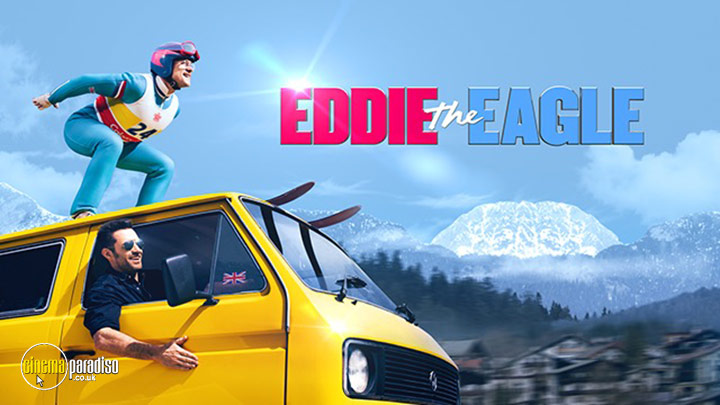
Everyone loves an underdog and there are few who deserved their moment in the spotlight more than Michael Edwards (Tarin Egerton), who decides in Dexter Fletcher's Eddie the Eagle (2015) to give ski jumping a go after failing in all his other attempts to master an Olympic discipline. Training himself at Garmisch-Partenkirchen, Edwards catches the eye of Bronson Peary, a washed-up American jumper who had fallen out with his mentor, Warren Sharp (Christopher Walken). Nettled by the snootiness of the British Olympic Committee, Peary helps Edwards improve his technique and distance, but advises against him going to Calgary in 1988. He goes anyway and, despite being robbed of a chance to attend the opening ceremony, becomes 'Eddie the Eagle' after celebrating wildly on landing a jump on the 70m hill. Shamed by Peary's admonition, Edwards enters the 90m and is encouraged by Flying Finn, Matti Nykänen (Edvin Endre). While great fun, this is even less authentic than Cool Runnings, as Peary never existed and plasterer dad, Terry Edwards (Keith Allen), was as supportive as wife, Janette (Jo Hartley), rather than continuously sceptical. Nevertheless, it's hard not to get borne away by the fabrication because Eddie's actual achievements are forever in the record books. Indeed, we can even forgive him for being a judge and commentator on Channel Four's reality show, The Jump (2014-17), whose winners - Joe McElderry, Joey Essex, Ben Cohen, and Spencer Matthews - were lauded on the companion show, On the Piste.
Much more inspiring is Ken Iizuka's Jump!! The Heroes Behind the Gold (2021), which is based on the experiences of Jinya Nishikata (Kei Tanaka), the ski jumper who loses gold in the team event at Lillehammer when Masahiko Harada (Takayuki Hamatsu) blows the final jump. Determined to try again at his home Games in Nagano, Nishikata is distraught when he gets injured and Harada takes his place. However, he agrees to work as a test jumper on the hills, along with fellow injured teammate, Takashi Minamikawa (Gordon Maeda), the hearing-impaired Ryuji Takahashi (Yuki Yamada), and schoolgirl Yoshiko Kobayashi (Nao Kosaka), who has been denied her chance at glory because the host nation doesn't have a women's ski jumping team. China didn't repeat the mistake and sent a squad to Finland to train from scratch for Beijing 2022, as is recalled in Jukka Tallinen's Hatching Eagles (2024). And, completing our ski jumping survey is another documentary, Martina Di Lorenzo's Seven Seconds - The Dream of Flying (2025), which follows two-time Olympic silver medalist Katharina Schmid and 2023 overall World Cup winner Eva Pinkelnig, as the German and the Austrian train to maximise the time they are airborne after pushing off from the bar and shooting down the ski slope. Also featuring in a title that is exclusively free to view on the Milano-Cortina website are Sochi gold medallist, Carina Vogt, and Eva Ganster, who was the first woman to have jumped from a ski flying hill.
Mentioned films