Three days after Christmas in 1895, the first moving images were projected on to a screen for a paying audience. Having harked back to film's prehistory, Cinema Paradiso celebrates the 130th anniversary of going to the pictures by recalling those inventors, showmen, and eccentrics who created a new artform by daring to dream.
As we saw in Part One, there's a long road from Plato's Cave of Shadows to the Salon Indien in the Grand Café on the Boulevard des Capucines in Paris. So, let's plot a new timeline to chronicle the key stopping points from the 1860s to 28 December 1895.
The First Flickering Images - A Timeline
1861 - A year after Sir John Herschel had mused upon the possibility of sequential photographic images creating the illusion of movement, Frenchman Henri Désiré du Mont took out a patent for a 'a photographic device for reproduction of the successive phases of movement'. His unnamed apparatus was designed to feed 10-12 photographic plates through a light-proofed box fitted with a lens and a moving shutter that controlled the light hitting the plates. Du Mont demonstrated his theories to the Société Française de Photographie in January 1862, two years before compatriot Louis Arthur Ducos du Hauron patented designs for a camera 'for reproducing photographically any scene with all the transformations it underwent during a determined time', as well as a projector for exhibiting the moving scenes.
1876 - On 9 November, British barrister Wordsworth Donisthorpe patented the Kinesigraph, which he claimed could take 'a succession of photographic pictures at equal intervals of time, in order to record the changes taking place in or the movement of the object being photographed, and also by means of a succession of pictures so taken of any moving object to give to the eye a presentation of the object in continuous movement as it appeared when being photographed'. In 1878, Donisthorpe proposed marrying moving images with Thomas Alva Edison's Phonograph and a journalist named Phipson dubbed this audiovisual device the Kinétiscope. Donisthorpe never succeeded in filming Liberal leader William Ewart Gladstone giving a speech, but he and cousin William Carr Crofts did record the passing scene in Trafalgar Square in 1890 and 10 frames of their footage survive for viewing online.
1874 - French astronomer Pierre Jules César Janssen employed his 'revolver photographique' in a bid to record the transit of Venus. A disc fitted with a dozen shutters and one with a single slot were calibrated to pass over a sensitised plate and expose a new image every 18 seconds. Although no original images survive, this is recognised as the earliest example of 'chronophotography' or the recording of phases of movement.
1882 - The term 'chronophotography' was coined by French scientist Étienne-Jules Marey, who built his own 'fusil photographique' to record 12 consecutive images per second. Nicknamed 'the Birdman of Beaune' after the 1890 publication of Le Vol des Oiseaux (aka The Flight of Birds), Marey also studied animal and human locomotion, famously providing evidence that cats always land on their feet. British photographer Eadweard Muybridge was inspired by Marey, while a visit to his workshop prompted Thomas Edison and his engineer, William Kennedy Laurie Dickson, to abandon their efforts to record moving images on cylinders and use roll film instead.
1878 - A colourful character with a chequered history, Eadweard Muybridge took up photography in the early 1860s in Kingston-upon-Thames. Touring the United States in the horse-drawn darkroom he dubbed 'Helios's Flying Studio', he acquired a reputation for 'time-lapse' photography that prompted Governor Leland Stanford of California to hire Muybridge in 1872 to determine whether a trotting horse ever had all four hooves off the ground at once. Experiments with Occident proved inconclusive in 1873, but, over the next few years, Muybridge developed faster photographic emulsions and hit upon the idea of placing a series of tripwires across the racetrack that were connected to a battery of 12 cameras. On 18 June 1878, at the Palo Alto racetrack, Muybridge and a mare named Sallie Gardner helped Leland win his $25,000 bet by revealing airborne galloping hooves. On 8 July, Muybridge used a magic lantern at the San Francisco Art Association to project moving images from slides depicting the Palo Alto photographs. Having fallen out with Leland, Muybridge continued to produce sequential studies of humans and animals, with The Kiss (1882), featuring two naked women, seemingly being the first embrace captured on camera. He also projected his moving images using a machine known as the Zoographiscope and the Zoogyroscope before Muybridge decided upon the Zoopraxiscope. Although he demonstrated a single photographic disc, the remaineder (71 of which survive) used images handpainted on to glass by unidentified artists. In 1887, Muybridge published 20,000 photographs in the 781 plates contained within the 11-volume Animal Locomotion: An Electro-photographic Investigation of Consecutive Phases of Animal Movements, and would issue two further tomes, Animals in Motion (1899) and The Human Figure in Motion (1901), which remain in print and proved hugely influential. Indeed they even merited a mention in Jordan Peele's Nope (2022). Staying with film, Michael Eklund took the title role in Kyle Rideout's Eadweard (2015), which also features screenwriter Josh Epstein as Thomas Edison, while his career is also charted in a fine pair of documentaries, Thom Andersen's Eadweard Muybridge, Zoopraxographer (1974) and Mark Shaffer's Exposing Muybridge (2015).
The Race to Project - Another Timeline
1877 - Taking his inspiration from the Zoetrope, Charles-Émile Reynaud fitted the Praxinoscope spinning drum with 12 mirrors to offer brighter, sharper moving images than those produced by its predecessor's slots. Several Parisian department stores did a brisk trade in this new optical toy, but Reynaud was convinced that his device would be able to project moving pictures on to a screen so that paying audiences could watch in a darkened room. In December 1888, he patented the Théâtre Optique, which added perforations to the image strips so that the illustrations could be pulled through the mechanism more smoothly. It's believed that both Thomas Edison and Auguste and Louis Lumière latched on to the notion of perforated strips when they saw Reynaud demonstrating his simple hand-drawn films at the Paris Exposition Universelle of 1889. On 28 October 1892, Reynaud introduced his Pantomimes Lumineuses at the Musée Grévin's Cabinet Fantastique. A hit with audiences over the next three years, titles such as Un bon bock (1888), Pauvre Pierrot! (1891), Le Clown et ses chiens (1892), Autour d'une cabine (1893), and the sadly lost, A rêve au coin du feu (1894), were shown by Reynaud himself, with Gaston Paulin accompanying him on the piano. Tickets cost 50 centimes, although Reynaud's contract with the venue meant that he never got rich by presenting the first projected images to paying patrons. Losing custom to moving photographic pictures from December 1895, he tried to respond by screening Photo-Peinture Animées with his Photo-Scenographe. But neither Guillaume Tell (1896) nor Le Premier cigare (1896) improved business and Les Clowns Price (1898) went unshown. In March 1900, after over 12,800 shows, Reynaud left the Musée Grévin and sank into obscurity, even though half a million people had paid to see him. Some time around 1913, he smashed the last extant Théâtre Optique with a hammer and tossed five of his seven films into the River Seine.
1886 - Having already made his name as a chromophotographer with some 1884 images of white storks in flight (see Tamara Kotevska's bewitching The Tale of Silyan, 2025), German inventor Ottomar Anschütz started experimenting with sequence photography using up to 24 cameras to record animals in motion. In order to show the results to audiences, he patented the Elektrische Schnellseher or Electrotachyscope, which fitted 24 glass plate photographs around the rim of a 1.5m wheel, which was handcranked to a speed of 30 frames per second to cast images on to a small screen using a spiral Geissler tube to create a spark behind the image when it passed the projecting lens. Up to seven spectators could view the images at any one time, but, around 1891, Anschütz also perfected a cylindrical coin-operated peepshow. This was fitted with six small screens, but those at the Postfuhramt in Berlin on 25 November 1894 saw the first ever projection of life-sized motion pictures using a newly patented Electrotachyscope, with two large intermittently rotating discs and a continuous light source. Moreover, 300 paying customers at a time could witness the 90-minute presentation of 40 scenes given at the Reichstag between 22 February and 30 March 1895. However, these shows are not seen as the birth of cinema because the apparatus used proved a dead-end.
1888 - The son of a close friend of Louis Daguerre, Louis Aimé Augustin Le Prince applied for a patent for an apparatus to produce animated images from life on 2 November 1886. The described camera could be fitted with up to 16 lenses to record negative images on two strips of sensitised film that were transported past shutters and through the casing to take-up drums. Operating at 16 frames per second, a full-sized camera could record 960 images per minute and Le Prince used it to record 16 sequential frames of a man walking around a corner in Paris in August 1887. However, he had also been working on a single-lens camera and this was employed to shoot Roundhay Garden Scene in Leeds on 14 October 1888, as well as Traffic on Leeds Bridge and Accordion Player a short time later. In 1889, he refined a single-lensed projector (or 'deliverer') to cast moving images on to a white screen and bought lengths of celluloid from the Lumière factory in Lyon to continue his experiments. However, Le Prince disappeared mysteriously from a train bound from Dijon to Paris on 16 September 1890 and he was finally declared dead seven years later. His life has been examined in such different films as Christopher Rawlence's The Missing Reel (1990), Mamoru Oshii's Talking Head (1992), and David Nicholas Wilkinson's The First Film (2015). Frustratingly, none is available for Cinema Paradiso users to rent.

1889 - The cinematic achievements of William Friese-Greene are keenly debated. But all agree that fanciful prevails over the factual in John Boulting's The Magic Box (1951), which starred Robert Donat and was examined in depth in one of Cinema Paradiso's What to Watch Next articles. A successful photographer with studios in Bath and Bristol, Friese-Greene began dabbling in moving images in 1885. Four years elapsed before he patented the chronophotographic camera built by Mortimer Evans, which purportedly recorded 10 pictures per second using perforated celluloid. While he claimed to have projected the footage at home, Friese-Greene's projection device malfunctioned during a public demonstration in Chester in June 1890 and he had to resort to a Phenakistoscope built by John Arthur Roebuck Rudge to present a short looped sequence of possibly posed stills. Friese-Greene sent details of his work to Thomas Edison and later turned his attention to stereoscopic images (with Frederick Varley) and colour (with Willian Norman Lascelles Davidson). Son Claude would perfect the Friese-Greene Natural Colour Process and, as Annabel Hobley reveals in The Lost World of Friese-Greene (2006), he used it to shoot The Open Road (1924), a record of his motoring trip from Land's End to John O'Groats.
1891 - Thomas Alva Edison was known as 'the Wizard of Menlo Park' before he moved to bigger premises in West Orange, New Jersey. When it comes to moving images, however, he should be dubbed 'the magpie', as he continually borrowed the ideas of others after a meeting with Eadweard Muybridge prompted him to follow up his 1877 phonograph by devising 'an instrument which does for the Eye what the Phonograph does for the Ear'. Company photographer W.K.L. Dickson was entrusted with the project and he initially pursued the Phonograph model by wrapping a cylinder in a celluloid sheet (provided by John Carbutt) containing 42,000 microscopic pinhole photographs, which were viewed through a magnifying glass. This was replaced by a rotating disc system similar to Anschütz's Electrotachyscope before Edison copied Marey in using film strips, which he perforated in imitation of the reels in Reynaud's Théâtre Optique. But it was Dickson who settled on Eastman's 35mm celluloid rolls, which were to remain the global standard for the next half century. While working on the Kinetograph camera, with its intermittent shutter mechanism, Dickson and William Heise made Monkeyshines, No.1, which is widely regarded as the first motion picture produced in the United States. It's not known, however, whether the footage was filmed with Fred Ott in June 1889 or with Giuseppe Sacco Albanese in November 1890. Dickson also developed a Kinetoscope viewer and this was demonstrated for the first time when members of the National Federation of Women's Clubs watched the three-second-long Dickson Greeting at the West Orange laboratory on 20 May 1891. However, the machine only received its public debut in 9 May 1893 at the Brooklyn Institute of Arts and Sciences.
1894 - Polish exile Kazimierz Prószynski combined a camera and a projector in the Pleograph, which stored images in parallel rows on a rectangular piece of celluloid. Having made short studies like Children Playing in the Garden (1894), he would use an improved version to capture scenes of life in Warsaw and would invent the first successful handheld camera, the Aeroscope, in 1910. However, Prószynski was arrested by the Gestapo during the Warsaw Uprising and perished in the Mathausen concentration camp in the spring of 1945.
1894 - Edison had fitted coin slots to his Kinetoscope viewers as early as 1892, the year in which he had the Black Maria film studio constructed at West Orange. Made from tar paper and fitted with a hinged roof, the prototype studio was placed on a revolving track to ensure a ready supply of sunlight. The earliest picture filmed there was Blacksmith Scene, although the first copyright claim was made later in 1893 for Fred Ott's Sneeze, which would become one of the most famous early American films, along with Heise's The Kiss (1896), which starred Broadway actors John Irwin and May Rice. Ten films were made available when the Holland Brothers opened the first Kinetoscope parlour at 1155 Broadway on 14 April 1894. They were Barber Shop; Ena Bertoldi (mouth support) ; Bertoldi (table contortion) ; Blacksmith Scene; Roosters; Highland Dance; Horse Shoeing; Eugen Sandow Strongman; Trapeze; and Wrestling. Patrons could either see five for 25 cents or the complete programme for 50 cents. During its first 11 months, the Vitascope earned Edison $85,000. Things didn't always run smoothly, however, with Carmencita: Spanish Dance becoming the first film to be censored after James A. Bradley, the founder of the New Jersey town of Asbury Park, was so shocked by the sight of Carmen Dauset Moreno's ankles that he ordered Mayor Ten Broeck to impose a ban. Edison replaced the offending short with Boxing Cats.
1894 - Awarded a contract in August 1894 to sell Kinetoscopes, Norman C. Raff and Frank R. Gammon hired Alfred Clark to make exclusive films for their machines. When the peepshow fad began to fade, the pair looked to invest in a projector and, in 1896, won the rights to use C. Francis Jenkins and Thomas Armat's Phantoscope. Edison was so impressed by these devices that he began to manufacture them under the new name of the Edison Vitascope and Raff and Gammon passed into history.
1894 - In December 1894, brothers Grey and Otway Latham, who ran a Kinetoscope parlour in New York, formed the Lambda Company with their Civil War veteran father, Major Woodville Latham. Eager to develop a projector to show boxing bouts to large audiences, the Lathams hired former Edison technician Eugène Lauste, who received covert help from W.K.L. Dickson, who was still employed at West Orange. Together, they developed the Pantoptikon (aka Panoptikon), which used 51mm film stock to produce the first widescreen images (with an aspect ratio of 1.85:1). Renamed the Eidoloscope before being revealed to the press on 21 April 1895, the camera-projector was unique in including a 'Latham loop', which relieved the strain on the perforated celluloid passing through the intermittent mechanism and allowed for longer strips of film to be used. On 20 May 1895 at 156 Broadway, the Lathams sold tickets to see projected footage from the fight between Young Griffo and Battling Charles Barnett that had taken place 16 days earlier on the rooftop of Madison Square Garden. Note the date, as it has been airbrushed out of the race to project to paying punters.
1894 - Prone to moonlighting, W.K.L. Dickson had teamed with Herman Casler and Harry Marvin to develop a watch-sized spy camera called the Photoret. However, Dickson had an idea for a viewer to rival the Kinetoscope and with Casler built the Mutoscope to handcrank photographic flip cards to create the illusion of movement. To avoid infringing Edison's copyrights, the Mutograph camera used rollers to pass the 68mm film strip throught the lens mechanism. Casler also designed the Biograph projector in 1896 and the American Mutoscope and Biograph Company (founded in 1899) became a major player in early US cinema.
1894 - Max Skladanowsky started out in 1879 by presenting a magic lantern show with his father, Carl, and brother, Emil. However, he started working on a moving picture camera in the early 1890s and claimed to have finished his prototype in August 1892. Most historians would shift the date forward two years, but they concur that his Bioskop projector borrowed from the lanternist's dissolving view technique by having two reels of 44.5mm film project alternately when handcranked past twin lenses. Emil featured in the first Skladanowsky film, which was shot on a Berlin rooftop in May 1895. As the Kinetoscope had come to the German capital in March, the siblings took their inspiration from peepshow subjects and they presented their 15-minute programme at the Wintergarten music hall, giving 23 shows to paying audiences from 1 November, with the most popular item featuring Black Canadian circus star, Ephraim Thompson, and his three trained elephants. Plans to exhibit at the Folies Bergère in Paris were scrapped after the Skladanowskys attended the second Lumière brothers presentation on 29 December and realised their images were vastly inferior. They did tour Europe, however. with Comical Encounter in Djurgården, Stockholm being the first film made in Sweden in August 1896. But the Bioskop show in Stettin on 30 March 1897 proved to be the end of the line, with Max devoting his later years to flip books and lantern shows, although younger brother, Eugen, directed some films of his own. As an enthusiastic National Socialist, Max was hailed a national hero, with Adolf Hitler having a private screening of his films in 1935. Six decades later, Wim Wenders cast Udo Kier as Max in A Trick of the Light (1995), a celebration of the Skladanowsky contribution to the development of moving pictures.
1895 - American Birt Acres came to Britain in 1880 and established himself as a photographer. He was approached by Robert William Paul some time after the Kinetoscope first arrived in London in October 1894 to work on a moving picture camera. The Birtac was a 35mm camera-projector and it was used to shoot the first British film, Incident At Clovelly Cottage (Acres's home in Barnet), in March 1895. Together Paul and Acres produced such titles as Oxford and Cambridge Boat Race, Rough Sea At Dover, The Arrest of a Pickpocket, The Carpenter's Shop, Boxing Kangaroo, The Comic Shoeblack, Performing Bears, and The Derby for Kinetoscope consumption. But they fell out when Acres patented their joint design in his own name, leaving Acres to give the first UK film show with his Kineopticon device to the Lyonsdown Photographic SocietyNew Barnet on 10 January 1896 and Paul to launch the Theatrograph (which was later renamed the Animatograph) at Finsbury Technical College on 21 February, the very day that the first Lumière show was projected in London. Paul would give his own first commercial presentation at the Alhambra Music Hall in Leicester Square on 25 March 1896. In addition to causing a sensation by showing the Prince of Wales's horse, Persimmon, winning the 1896 Derby on the day of the race, Paul also directed what is considered to be the first British narrative film, The Soldier's Courtship (1896), which starred his wife, Ellen, as well as stage stars Fred Storey and Julie Seale.
Paris, 28 December 1895
Born in Besançon, Auguste and Louis Lumière were the sons of a portrait photographer, Antoine, who moved to Lyon in 1870 and opened a factory producing photographic plates in the suburb of Monplaisir. He was the first member of the family to see a Kinetoscope and he encouraged his sons to build their own camera and make films for projection so that they could capitalise on what Antoine believed would be a short-term novelty. While Auguste conducted the initial research, it was Louis who suggested advancing a perforated film strip through the camera in a similar manner to the way cloth moved intermittently through a sewing machine. The siblings shared the credit on the device built by Charles Moisson and patented on 13 February 1895 as the Cinématographe, a name that had previously been used by Léon-Guillaume Bouly for a different kind of sequence camera in 1892.
Combining a camera, a printer, and a projector, the Cinématographe had its claw-pulling mechanism improved in March 1895 and this version was used for the first public presentation, to the Société d'Encouragement de l'Industrie Nationale, in Paris on 22 March. They only had one film to show, La Sortie des Usines Lumière (aka Workers Leaving the Lumière Factory), which had been shot by Louis. However, those in attendance at the Sorbonne on 17 April and at the Congrès des Sociétés Françaises de Photographie on 10 June got to see up to seven short subjects, including Pêche aux Poissons Rouge (aka Fishing For Goldfish) and Pompiers: Attaque du feu (aka Firefighters: Tackling the Fire). Indeed, Auguste even filmed the delegates arriving by riverboat for the conference at
Neuville-sur-Saône, with Pierre Jules César Janssen and the Consul-General of Rhône. Monsieur Legrange, recreating their filmed conversation from the previous day during what was the first 'live' cinema show.
Following a presentation to the Association Belge de Photographie in Brussels on 10 November, Louis sensed that the Cinématographe was going to have a curiosity value and commissioned engineer Jules Carpentier to build 25 replicas so that Lumière agents could demonstrate the machine across Europe. An order for 200 more was placed in early 1896, as the phenomenon of projected moving pictures caught the imagination of fin-de-siècle society.
Yet, as the year ended, neither Auguste nor Louis believed that the Cinématographe was ready to be shown to the public. Antoine disagreed and had photographer Clément Maurice Gratioulet book the Salon Indien at the Grand Café on the Boulevard des Capucines for 28 December 1895. Convinced that moving images would only be a passing fad, the owner demanded a daily flat fee of 30 francs for the use of the room rather than accepting 20% of the takings. Clément-Maurice took the tickets at the evening presentation, but Antoine Lumière insisted on collecting the invitations at an exclusive afternoon preview, while Charles Moisson cranked the handle that brought the images to life and Jacques Ducom tended to the electric arc light casting them on to a screen. Among those who witnessed this curtain raiser was the magician-manager of the nearby Théâtre Robert-Houdin, which was situated at 8 Boulevard des Italiens. Regular readers of Cinema Paradiso's Collections will readily recognise the name of Georges Méliès, more of whom anon.

The programme on 28 December was comprised of La Sortie de l'usine Lumière à Lyon/Workers Leaving the Lumière Factory (46 seconds); La Voltige/Horse Trick Riders (46 seconds); La Pêche aux poissons rouges/Fishing For Goldfish (42 seconds); Le Débarquement du congrès de photographie à Lyon/The Photographical Congress Arrives in Lyon (48 seconds); Les Forgerons/The Blacksmiths (49 seconds); L'Arroseur Arrosé/The Sprinkler Sprinkled (49 seconds); Repas de bébé/ Baby's Breakfast (41 seconds); Le Saut à la couverture/Jumping on to the Blanket (41 seconds); Place des Cordeliers à Lyon (44 seconds); and La Mer/The Sea (38 seconds).
Showing a young boy pranking a gardener by standing on his hosepipe, L'Arroseur arrosé has been claimed as the first film comedy, while Repas de bébé was a prototype home movie that featured Auguste, his wife Marguerite, and their daughter, Andrée. The brothers were absentees on 28 December, but they must have been thrilled by the response to their labours (even though they received little press coverage). The Skladanowskys, the Lathams, and Armat and Jenkins had all previously presented their films to paying customers, but historians have alighted upon the Grand Café as the birthplace of cinema.
The first, fourth, sixth, and seventh titles can be rented from Cinema Paradiso as part of the BFI's excellent Early Cinema: Primitives and Pioneers (1895-1910) (2005). This dual-disc set also includes such later Lumière titles as Barque sortant de port/Boat Leaving the Port, Démolition d'un mur/Demolition of a Wall, Partie d'écarte, and Arrivée d'un train en gare á la Ciotat/The Arrival of a Train, which were all filmed in 1895 and presented early the following year. According to screen legend, patrons were so terrified by the approaching steam engine in the latter that they hid under their seats or fled the Salon Indien.
Sometimes having had to queue for a quarter of a mile, patrons paid a franc each to watch the 15-minute show. Such was the word-of-mouth that the Lumières were squeezing in 20 shows a day between 10am and one o'clock in the morning, with a two-hour intermission for lunch and an hour-long dinner break. Within three weeks, takings reached 2500 francs a day, which equates to £42,000 when adjusted for inflation.
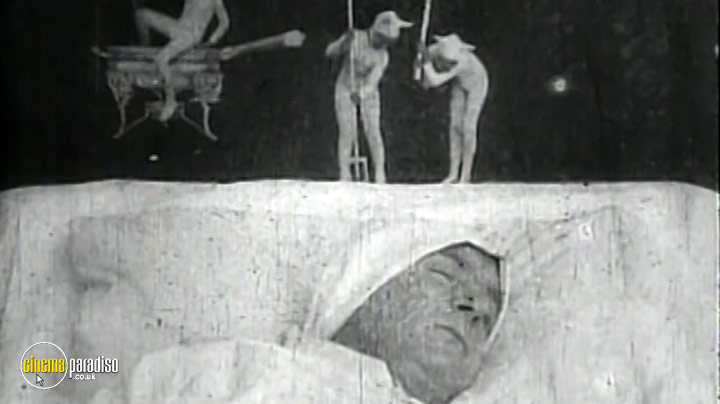
Magician Felicien Trewey gave the first British Cinématographe show at the Royal Polytechnic Institution's Malborough Hall on Regent Street on 21 February 1896, which just happened to be the same day that R.W. Paul had demonstrated his Theatrograph projector at Finsbury Technical College. Only 54 punters saw Trewey's debut, but moving pictures proved so popular that he moved to the Empire Theatre in Leicester Square on 7 March 1896 and this remains a popular venue for major movie premieres and Royal Film screenings.
A few weeks later, on 29 June 1896, the Cinématographe caused a sensation at Keith's Union Square Theatre in New York and the Lumières set up an agency in the city to sell projectors and film strips. However, they fell victim to a combination of piracy and competition, as American film-makers plumped for rival designs and Edison's brand of sprocketed film stock. The brothers tried to fight back with a new projector, the Cinématographe Model B, while they presented a 75mm camera in 1900. But the business/artform they had helped create had rapidly outgrown them and they quit to focus on the Autochrome colour process in 1905. However, they survived long enough to see cinema become a global medium, as Louis lived to the age of 83 and Auguste reached 91 before they respectively passed away in June 1948 and April 1954.
Neither brother seems to have been played in a film or television series, although Éric Rohmer was joined by Jean Renoir and Henri Langlois to discuss their achievement in the tele-film, Louis Lumière (1968). This has never been released on disc in this country, although an interview with the great man is included in Volume 1 of the wonderful six-part Retour de Flamme series, which we can't recommend highly enough, as they offer an eclectic mix of documentary, drama, animation, and slapstick from cinema's first two decades.
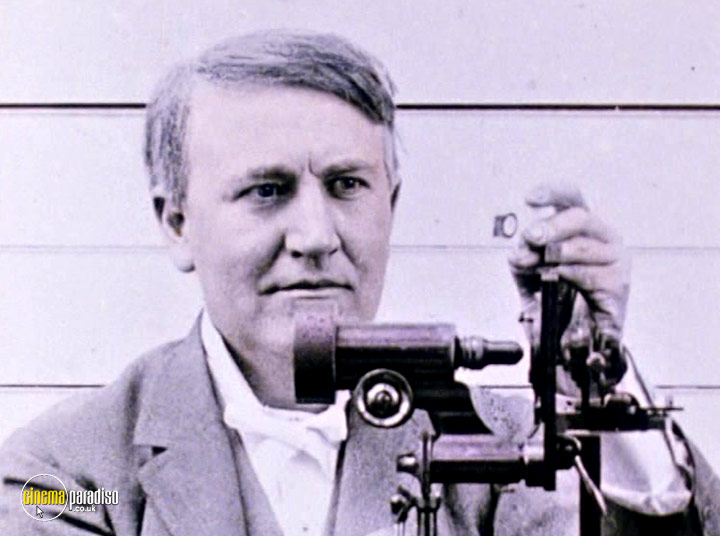
It's also a shame that we can't get hold of such comprehensive American compendiums as The Lumière Brothers' First Films (1895-1897) (1999), Gaumont Treasures: Volume 1 1897-1913 and Volume 2 1908-1916, The Movies Begin: A Treasury of Early Cinema 1894-1913 (2002), and Edison: The Invention of the Movies (2023). However, Cinema Paradiso users can enjoy R.W. Paul: The Collected Films 1895-1908 (2006), The Before the Nickelodeon: The Cinema of Edwin S. Porter (2006), Fairy Tales: Early Colour Stencil Films From Pathé (2012); and Be Natural: The Untold Story of Alice Guy-Blaché (2018).
The Magician of Montreuil
You may be wondering why it's taken so long to get to the man whose name is included in the title of this article. As we're celebrating cinema's 130th birthday, a meander through its prehistory seemed appropriate. But we have definitely left the best to last, as Georges Méliès is one of the most innovative, ingenious, and impish film-makers in screen history. Martin Scorsese paid affectionate homage to his life and work in Hugo (2012), an adaptation of Brian Selznick's The Invention of Hugo Cabret, which starred Ben Kingsley as the ageing genius whose influence on nearly every aspect of pre-digital cinema was confirmed by the fact that Charlie Chaplin was photographed reading his autobiography on the set of Monsieur Verdoux (1947). Jean-Luc Godard also cited Méliès as a key influence and he crops up in the Swiss auteur's final outing, The Image Book (2018).

The son of a former bootmaker to the Dutch court, Marie-Georges-Jean Méliès was born in Paris and started building model theatres (like the one seen in Ingmar Bergman's Fanny and Alexander, 1983) at the age of 10. He was also fascinated by marionettes, but dutifully joined the family shoe firm after leaving school. During a trip to London, however, Méliès saw magicians John Nevil Maskelyne and George Alfred Cooke at the Egyptian Hall and became hooked on stage magic. Back in Paris, he frequented the theatre founded by magician Jean Eugène Robert-Houdin and took lessons from Emile Voisin, who found him slots in shows at the Cabinet Fantastique of the Grévin Wax Museum and the Galerie Vivienne.
As he learned his craft, Méliès invented around 30 tricks, including his most famous, which saw Professor Clodien Borbenfouilles keep talking, even though he had been decapitated and had his head placed in a bowl of water. Using his inheritance from the shoe shop, Méliès bought the 200-seat Théâtre Robert-Houdin in 1888 and not only retained the services of chief mechanic Eugène Calmels. but also performer Jehanne D'Alcy, who would become his mistress and second wife. In his new position as a member of the Parisian entertainment fraternity, the 34 year-old Méliès found himself in such august company at the directors of the Folies Bergère and the Grévin Wax Museum at the Salon Indien on 28 December 1895. He was less than impressed when he was shown to his seat in front of a large screen. 'Have we been brought here to see projections?' he asked his neighbour. 'I've been doing these for 10 years.' (which he had, as he had long ended his shows with spooky magic lantern effects).
However, Méliès was so amazed by what he witnessed over the ensuing 15 minutes that he offered to buy a Cinématographe for 10,000 francs. As he had also been offered 20,000 by the Musée Grévin and 50,000 by the Folies Bergère, Antoine Lumière was in no mood to listen. Perhaps because Jehanne d'Alcy had seen the Theatrograph while performing in London, she told Méliès to seek out Robert Paul and he not only sold him a projector, but also a selection of films by Edison and himself and Birt Acres. By April 1896, Méliès was presenting moving pictures as part of his act. Moreover, he had his Theatrograph modified so it could double as a camera and he taught himself to develop and print images. His first film, Un partie de cartes/Playing Cards, was a one-minute knock-off of the Lumière Partie d'ecarté, which had captured Antoine Lumière, Félicien Trewey, and Antoine Féraud playing cards outdoors.
In September 1896, Méliès shared a patent with Lucien Korsten and Lucien Reulos for the Kinétographe Robert-Houdin, a cast iron camera-projector that he nicknamed the 'coffee grinder', although he also dubbed it 'the machine gun' because its whirring mechanism was so noisy. It was soon replaced by a more sophisticated device, as the Star Film company based in a glass studio in Montreuil-sous-Bois started to attract an audience with its slogan, 'The Whole World Within Reach'.
Initially thinking as a magician, Méliès produced numerous 'scènes à transformation' that relied upon stop-frame substitutions and multiple in-camera exposures to create trick effects. However, he also started to produce 'vues composées', 'scènes comiques', and fantasy films called 'féeries', which told simple stories and helped move the new medium away from the Lumière documentation of reality to create what has been termed 'a cinema of attractions', which offered spectacle and escapism. In all, he would direct over 500 films running from 60 seconds to 50 minutes between 1896-1913. Jacques Meny made a selection for his 1997 tribute, Méliès the Magician, which is available to rent from Cinema Paradiso. The titles he chose are: Un homme de tête/Four Troublesome Heads (1898); L'homme orchestre/The One Man Band; Nouvelles luttes extravagantes/The Fat and the Lean Wrestling Match (both 1900); Barbe-Bleue/Bluebeard; L'Homme á la tête en caoutchouc/The Man With the Rubber Head (both 1901); Le Cake-walk infernal/The Infernal Cake Walk (1902); Le Chaudron infernal/The Infernal Cauldron; Le Melomane/The Melomaniac; Le Roi du maquillage/The Untamable Whiskers (all 1903); Le Thaumaturge chinois/Tchin-Chao, the Chinese Conjurer (1904); Le Tripot clandestin/The Scheming Gambler's Paradise; Les Cartes vivantes/The Living Playing Cards (both 1905);
Les Affiches en goguette/The Hilarious Posters (1906); and Le Locataire diabolique/The Fiendish Tenant (1909).

The pick of the bunch, however, is Le Voyage dans la lune/A Trip to the Moon (1902), the cornerstone of screen science-fiction that is so significant in screen history that Tom Hanks cast himself as an assistant to Méliès (Tchéky Karyo), as he corrals his cast in an episode of the space race series, From the Earth to the Moon (1998). Méliès took the role of Professor Barbenfouillis in a story that was inspired by Jules Verne's From the Earth to the Moon (1865) and its sequel, Around the Moon (1870), and saw fellow members of the Astronomy Club (Nostradamus, Alcofrisbas, Omega, Micromegas, and Parafaragaramus) blast off in a rocket, land in the Man in the Moon's eye, and come face to face with Phoebe, the goddess of the moon (Bleuette Bernon), and the hostile Selenites, who live on the lunar surface.
Costing 10,000 francs, photographed by Théophile Michault and Lucien Tainguy, and taking three months to complete, this was the most ambitious production in cinema's short history and can be compared to the blockbusters that are so popular today. However, as American distributors were not averse to piracy, Méliès only saw a fraction of the box-office take that included the world's first purpose-built cinema, Thomas Lincoln Tally's Electric Theatre in Los Angeles. Undaunted, he would return to sc-fi with Voyage à travers l'impossible/The Impossible Voyage (1904), Le Dirigeable Fantastique/The Inventor Crazybrains and His Wonderful Airship (1905), and La Conquête du Pole/The Conquest of the Pole (1912). However, as Cinema Paradiso has pointed out in so many of its 400 articles to date, Méliès was responsible for launching or establishing so many of the film forms we would now call 'genres'.
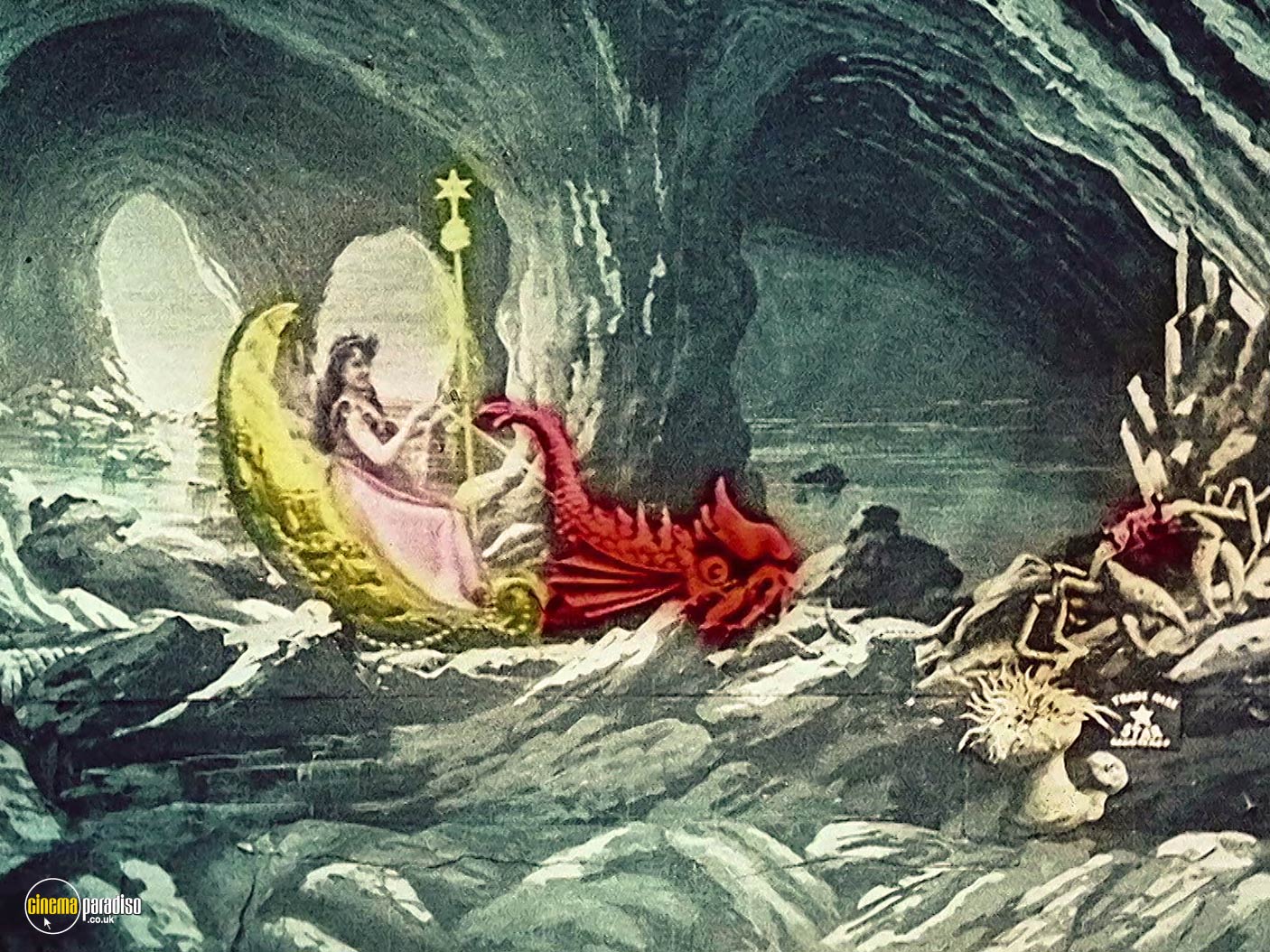
He dabbled in horror with Le Manoir du diable/The House of the Devil (1896); La Danse Du Feu/The Pillar of Fire (1899), Les Quat'cents farces du Diable/The Merry Frolics of Satan, and La Fée carabosse ou Le Poignard fatal/The Witch (both 1906); recreated news items in L'Affaire Dreyfus (1899) and The Coronation of King Edward VII (1902); concocted fairy stories like Cendrillon/Cinderella (1899), Le Petit chaperon rouge/Little Red Riding Hood (1901), and Le Royaume des fées/The Kingdom of Fairies (1903); fashioned such historical sagas as Jeanne d'Arc (1900) and La Tour de Londres et les derniers moments d'Anne de Boleyn/The Tower of London (1905); attempted literary adaptations with Les Aventures de Robinson Crusoe and Le Voyage de Gulliver à Lilliput et chez les Géants (both 1902); pioneered topical satires with Le Raid Paris-Monte Carlo en deux heures/The Adventurous Automobile Trip (1904) and Le Tunnel sous la Manche/ Tunnelling the Channel (1907); offered social critique in Les Incendiaires/A Desperate Crime (1906) and La Civilization à travers les ages/Humanity Through the Ages (1908); and précised Shakespeare in Hamlet and La Mort de Jules César (both 1907). He even made advertisements and stag films like L'Indiscret aux bains de mer/Peeping Tom At the Seaside and Après le bal/After the Ball (both 1897).

Sadly, Star Film proved unable to combat plagiarism and piracy, while Méliès's static camera style (which was crucial for his in-camera effects) started to look staid after American director David Wark Griffith began moving Billy Bitzer's camera in his earliest shorts from 1907. Méliès did occasionally push in the camera to achieve a magnifying effect and experimented with reverse shots and superimposition. But, while he remained prolific, the old spark had gone by the time he presided over the 1909 Congrès international des Fabricants de Films, which had been convened to try to end the monopoly that Edison and the Motion Picture Patents Company had imposed upon the film world - which would drive independent producers to Hollywood and inspire Peter Bogdanovich's undervalued comedy, Nickelodeon (1976).
A distribution with Pathé further clipped Méliès's wings, while Great War regulations led to the closure of the Théâtre Robert-Houdin. Moreover, the army confiscated over 400 Star Film prints to melt them down to recover the silver and celluloid. Having lost wife Eugénie Génin in 1913, Méliès came to rely on Jehanne D'Alcy (who was played by Helen McCrory in Hugo), who became his second wife and helped him raise his two children. In 1923, bankruptcy forced him to sell his studio, as well as all the scenery, props, and costumes he had amassed. Furthermore, as he had nowhere to store his surviving films, many were simply destroyed. Indeed, his name had largely been forgotten by the time film critic Léon Druhot discovered him selling toys and sweets in a kiosk on the platform at Gare Montparnasse. His articles restored Méliès's reputation and Louis Lumière presented the medal when he was made a Chevalier de la Légion d'honneur in October 1931.
The following year, Méliès and D'Alcy found sanctuary in La Maison de Retraite du Cinéma, the home for cinema veterans situated in the Chateau d'Orly. Here, he continued to write and draw and worked on a number of film scripts with devoted acolytes, developing a version of the Baron Munchausen story with Hans Richter and collaborating with Henri Langlois, Marcel Carné, Jacques Prévert, and Georges Franju on Le Fantôme du métro. The latter made the 1952 short, Le Grand Méliès, which saw son André playing his father.
Georges Méliès died on 21 January 1938, a matter of hours after animation pioneer, Émile Cohl. He was buried in the Père Lachaise Cemetery and his tomb is still visited by cinéastes. Walt Disney claimed he had discovered 'the means of placing poetry within the reach of the man in the street', while Terry Gilliam, who examined Méliès's legacy as part of his excellent 1995 TV series, The Last Machine, called him 'the first great film magician'. The first ever virtual reality interactive Google doodle featured Méliès on 3 May 2018 and was nominated for an Emmy, while his photograph orbited the Moon aboard Artemis I in November 2022.
It was a fitting mission for a man who had aimed for the stars and ensured that what many believed would be a short-lived novelty became a new mode of artistic expression and a enduring source of entertainment, escapism, and exhilaration.
Mentioned films