Three days after Christmas in 1895, the first moving images were projected on to a screen for a paying audience. Cinema Paradiso celebrates the 130th anniversary of going to the pictures by harking back to film's prehistory and recalling those inventors, showmen, and eccentrics who created a new artform by daring to dream.
There's a long road from Plato's Cave of Shadows to the Salon Indien in the Grand Café on the Boulevard des Capucines in Paris. So, let's plot the key stopping points on a timeline that will bring us to 28 December 1895.
Cinema's Prehistory - A Timeline
c.420 BC - Possibly aware of the writings on light contained in the Zhoubi Suanjing (which seems to have been written in the 11th century BC by the Duke of Zhou), the Chinese philosopher, Mozi, noted the ability of a pinhole to gather and refocus rays of light. It has been suggested that this phenomenon inspired Paleolithic cave paintings.
c.375 BC - In his masterwork, The Republic, Plato describes the movement of shadows cast on to a cave wall. His Greek compatriot, Aristotle, noticed 'afterimages' after looking into the sun. This is the earliest reference to the phenomenon of 'persistence of vision', which was further discussed by the Roman poet and philosopher Titus Lucretius Carus (65 BC) and the Greek astronomer and geographer Ptolemy of Alexandria (130 AD).
c.350 BC - Aristotle is believed to have used a 'camera obscura' to view a solar eclipse. Translating as 'dark chamber', this device used a small hole in the side of a box to project light from an external object or view so that it forms an inverted image on the box's opposite wall. The Greek mathematician, Euclid, discussed the principles behind this effect in Optics (c.300 BC), and later insights were provided by Byzantine-Greek mathematician, Anthemius of Tralles (555 AD); Egyptian astronomer and mathematician Ibn Yunus (c.1000 AD); 10th-century Chinese scholar Yu Chao-Lung; Arab physicist Ibn al-Haytham (aka Alhazen), who provided proffered the first experimental and mathematical analysis of the camera obscura in his Book of Optics (c.1027); and Chinese scientist Shen Kuo, who explained why the pinhole image was upside down in his 1088 book, Dream Pool Essays.
c.200 BC - Cloth puppets had been used to cast shadows in China and India since the first millennium BC. The Indian forms of 'tholu bommalata', 'tholpavakoothu', and 'rabana chhaya' used flat, intricately perforated puppets to relate mythological tales by firelight, while the 'wayang kulit' of Java and Bali brought a new sophistication with jointed puppets made of colorfully painted transparent leather adding spectacle to the shadow show. Eventually reaching Europe, shadow puppetry has featured in such diverse films as Peter Weir's The Year of Living Dangerously (1983), Zhang Yimou's To Live (1994) and Shadow (2018), Jennifer Yuh Nelson's Kung Fu Panda 2 (2011), Garin Nugroho's Setan Jawa (2017), Chloé Zhao's Hamnet, and Dain Said's Kulit Wayang (both 2025).
 A still from Kung Fu Panda 2 (2011)
1267 - English Franciscan philosopher, Roger Bacon, got into a pickle trying to explain the shape of the image projected inside a camera obscura in De Multiplicatione Specerium (1267). He was one of many medieval thinkers to consider the subject, along with compatriots Robert Grosseteste and John Peckham; Polish philosophising friar, Vitello (Perspectiva, c.1270-78); French astronomer Guillaume de Saint-Cloud (Almanach Planetarum, 1292); Persian scientist Kamal al-Din al-Farisi (The Revision of the Optics, 1309); and French polymath Levi ben Gershon (The Wars of the Lord, c.1329).
1502 - Leonardo Da Vinci describes a workable camera obscura in Codex Atlanticus, although he sketched around 270 variations on the device during his lifetime. The first published drawing, however, was contained in Dutch mathematician Gemma Frisius's De Radio Astronomica et Geometrica (1545), with an alternative being proposed by Sicilian mathematician Francesco Maurolico in Photismi de lumine et umbra (1521-54).
1550 - Italian polymaths, Gerolamo Cardano (De subtilitate, 1550) and Giambattista della Porta (Magia Naturalis, 1558) proposed the use of lenses to focus the camera obscura image. Venetian nobleman Daniele Barbaro (La Pratica della Perspettiva, 1567), German mathematician Friedrich Risner (Opticae thesauru,1572), and German Jesuit Athanasius Kircher (Ars Magna Lucis et Umbrae, 1645) proceeded along similar lines, although Venetian mathematician Giambattista Benedetti proposed using a mirror to upright the image in Diversarum Speculationum Mathematicarum (1585).
1604 - German mathematician and astronomer Johannes Kepler uses the term 'camera obscura' for the first time in Ad Vitellionem Paralipomena. Borrowing from the ideas of Benedetto Castelli and Galileo Galilei, Jesuit priest Christoph Scheiner built the first boxed helioscope in the 1620s in order to study sunspots.
1622 - Dutch artist Constantijn Huygens used a boxed camera obscura designed by Cornelis Drebbel to improve his sense of perspective and French scholar Jean-François Nicéron explained how concave lenses could be used to sharpen the image in La Perspective Curieuse (1652).
1659 - Claims have been made that Giovanni Fontana (c.1420), Leonardo da Vinci (c.1515), and Cornelis Drebbel (1608) projected images from a 'laterna magica'. However, the first published diagram of a feasible magic lantern depicted the 'Steganographic Mirror' in Athanasius Kircher's Ars Magna Lucis et Umbrae. Dutch mathematician Christiaan Huygens had knowledge of the Jesuit's work when he built the first working magic lantern in 1659. As Huygens included in his notes 10 drawings of a skeleton removing and replacing his head, it's possible that he might even have projected moving images. Jointed figures animated by rods, levers, or clawed wheels became known as 'fantoccini slides'.
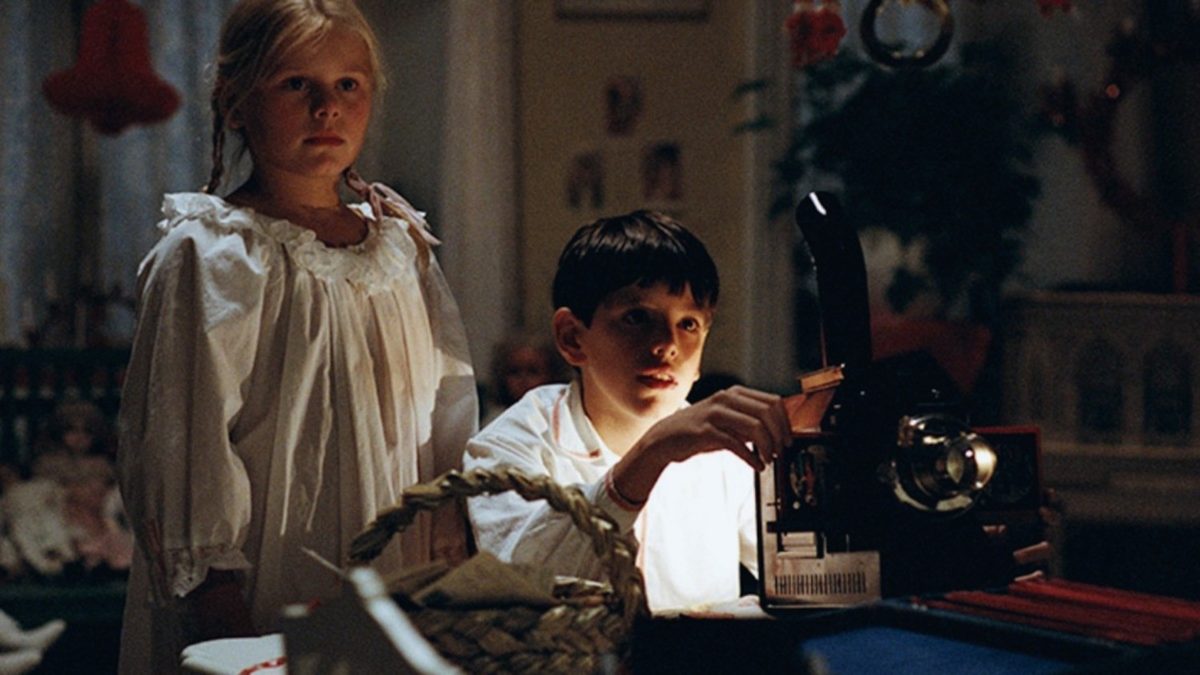
c.1660 - In an edition of the gazette burlesque that was the forerunner of modern newspapers, French poet Jean Loret recorded his impressions of a magic lantern show. Twelve years later, English physicist Robert Hooke described seeing 'apparitions' projected from a lantern appear and vanish on the air, while German scholar Johann Zahn not only produced detailed diagrams of a lantern for Oculus Artificialis Teledioptricus Sive Telescopium (1685), but he also described how slides were utilised in projection and how peepshow boxes worked. Moreover, the handheld camera obscura that Zahn fitted with a mirror-reflex mechanism proved the inspiration for the photographic camera.
1664 - Dane Thomas Rasmussen Walgensten started demonstrating a lantern based on the Huygens model, with his shows in Paris and Rome making a considerable impact. Around this time, Johann Franz Griendel of Nürnberg and Johann Wiesel of Augsburg started making and selling lanterns of some repute. In London, Richard Reeve sold one of his lanterns to diarist Samuel Pepys in 1666.
c.1666 - Sir Isaac Newton discovers that white light is composed of different colours and describes in Opticks (1704) how a wheel with segments of red, orange, yellow, green, blue, indigo, and violet would turn white when spun at a suffiecient speed. According to Joseph Plateau, the first 'Newton Disc' was demonstrated by Pieter van Musschenbroek in 1762.
1720 - Willem Jakob Storm van's Gravesande described the magic lantern he had created with Jan van Musschenbroek in Mathematical Elements of Natural Philosophy Confirm'd By Experiments. He also included an illustration of
a wooden box containing a lamp, a concave mirror, and a convex lens fitted in a hole in the casing to project the image of a monster on to a screen.
1727 - German polymath Johann Heinrich Schulze discovered that silver nitrate darkened upon exposure to light. This realisation was crucial to the development of photography.
1739 - In the second edition of Beginsels Der Natuurkunde, Dutch mathematician Pieter van Musschenbroek described the various mechanical slides that had been devised by his lanternist brother, Jan, to create wave effects or to more a figure across the projected 'frame'. These 'slipping slides' used a variety of techniques to create movement, with drawbars, pulleys, levers, rack and pinion mechanisms, but the lanternist could also enlarge or diminish images by moving the lantern by hand or along rails (thus, anticipating moving camera shots in cinema). While itinerant lanternists (who were known as 'Savoyards') - such as the one in Bill Douglas's Comrades (1987) - set out to entertain, others put lanterns to scientific and educational purposes.
1760 - French painter Philip James de Loutherbourg created the first 'flip book', which animated a series of corner drawings when the pages of a notebook where flipped in rapid succession. While working as a set designer at the Theatre Royal in Drury Lane, the Alsatian was inspired by actor David Garrick to devise the Eidophusikon, which translated from the Greek for 'image of nature'. Originally situated off Leicester Square, this three-dimensional stage presentation opened in February 1781 and used hidden mechanisms to recreate 'the Beauties of Nature and Wonders of Art', as well as such dramatic scenarios as 'The Storm & Shipwreck' and 'A Grand Scene From Milton'.
1765 - Inspired by ancient theories of afterimages, Chevalier Patrick D'Arcy demonstrated how a whirling coal leaves the impression of a circle of light on the air. The Irishman's experiment would become the cornerstone of the concept of 'persistence of vision', the optical illusion that the eye retains a visual perception of an object or a source of light even after the rays emanating from it have ceased to reach the eyeball.
1770 - Optical illusionist Edmé-Gilles Guyot hit upon a way of projecting lantern images on to smoke. (Nine years later, he would employ transformation slides to animate static images.) Over the ensuing decade, French audiences were treated to the 'Ombres Chinoises' (or 'Chinese Shadows') of François Dominique Séraphin, which borrowed techniques from Asian shadow puppetry. However, a magician named Paul Philidor recognised that projecting on to smoke, as well as on to a screen, could lend atmosphere to a show in which he exposed the ghost-summoning claims of charlatans Johann Georg Schröpfer and Alessandro Cagliostro (who was played by Orson Welles in Black Magic, 1949). Operating in Paris as Paul Philidort in 1790, he also enjoyed success in Britain as Paul de Philipsthal, where his shows took on a supernatural feel.
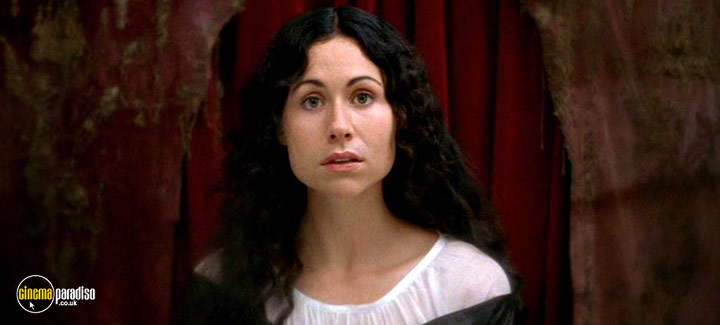
1790s - English photographic pioneer Thomas Wedgewood claimed to have had success using light-sensitive chemicals to fix silhouetters cast on the inner wall of a camera obscura. He conducted further experiments using white leather coated with silver nitrate and compatriot Joseph Bancroft Reade followed the advice of Sir John Herschel in using sodium hyposulfite to attempt fixed images. Sandra Goldbacher fictionalised a similar photographic experiment in The Governess (1997).
1792 - Irish painted Robert Barker exhibited 'Panorama of Edinburgh From Calton Hill', which employed six engravings to give a 360° view of the Scottish capital. The show was equally popular in London, where Robert Mitchell designed the first purpose-built panorama venue on Leicester Square to show 'London From the Roof of Albion Mills'. The Russian artist, Franz Roubard, started a trend for depicting historical events and military scenes, while cycloramas in the United States presented the images inside a cylindrical platform. The Moving Panorama was introduced in the 1840s and used large winding cores to progress the scene past the audience. Such devices were the forerunners of the Hale's Tours that were copied in Max Ophüls's Letter From an Unknown Woman (1948), in which Louis Jourdan and Joan Fontaine ride inside a mock railway carriage.

1798 - Inspired by Philidor's Phantasmagorie shows, Belgian physicist Étienne-Gaspard Robert started giving his own demonstrations in Paris using a moving Fantoscope lantern to create ghostly apparitions of such famous people as Voltaire, Jean-Jacques Rousseau, and Jean-Paul Marat. On 3 January 1799, Robertson (as he was known) took over the crumbling Gothic ruins of the Convent des Capucines near the Place Vendôme to terrify his audiences with optical illusions and trompe-l'œils, as well as sound effects and ventriloquism. Having survived the French Revolution, Robertson later took his show to the United States.
1803 - The Dutch probably took magic lanterns to Japan in the 1760s, but the distinctive 'utsushi-e' show was pioneered in Endo by Kameya Toraku I, who used a light wooden 'furo' so that he and his fellow lanternists could move around to give the projected images a semblance of life.
c.1803 - While touring Ireland, Paul de Philipsthal is credited with inventing the 'dissolving view' by using two magic lanterns to make a figure emerge out of the mist in a scene depicting the Witch of Endor. Some historians, however, insist that the technique was devised by Henry Langdon Childe in 1807 and there are records from 1827 of each man presenting shows with transformational effects. These became easier to achieve after the introduction of dual lens or 'biunial' lanterns after an optician named Clarke had demonstrated his Biscenascope device at London's Royal Adelaide Gallery on 5 December 1840. Triunial lanterns came much later, with J.H. Steward pipping J. Ottway to produce the first around 1890.
1814 - Joseph Nicéphore Niépce begins using a camera obscura fitted with light-sensitive paper coated with muriate or chloride of silver to make impermanent images of his workroom. In 1822, he perfected the heliographic photographic process that utilised bitumen hardening in sunlight. He used a primitive camera (with an exposure time estimated between eight hours and three days) to take the earliest surviving photorealistic image, 'View From the Window At Le Gras' in either 1826 or 1827.
1822 - Louis Jacques Mandé Daguerre and Charles Marie Bouton launch their diorama (from the Greek for 'transparent image') in Paris with a show entitled, 'The Valley of Sarnen'. A three-dimensional effect was created by setting paintings on giant pieces of partly translucent material at intervals inside a long, box-shaped room. Natural and artificial light was then used to create effects like sunrise, moonlight, dramatic weather conditions, and rainbows. The pair opened a specially designed diorama on London's Regent Street in 1823, with the first exhibit borrowing from the works of Sir Walter Scott to show the interior of Rosslyn Chapel in Edinburgh.
1824 - Twenty-eight years before he published his famous Thesaurus, Peter Mark Roget considered the phenomenon of afterimages in the snappily titled paper, 'Explanation of an Optical Deception in the Appearance of the Spokes of a Wheel Seen through Vertical Apertures'. It was long believed that the effect known as 'persistence of vision' was key to the understanding of the working of the motion picture camera. But the common view now is that the stroboscopic effect similar to Roget's wagon wheel observation underpins the illusion of sequences of static images appearing to move when passed through a projector mechanism.
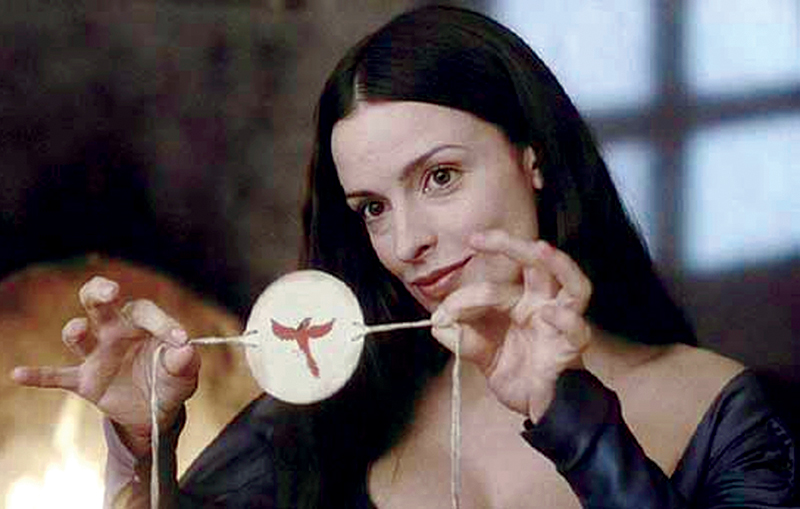
1825 - British physician John Ayrton Paris invents the 'Thaumatrope' ('wonder turner'), an optical toy that appears to merge images on either side of a cardboard disc when it is twirled between the fingers on side strings. For example, a bird would appear inside a cage or a bunch of flowers would slot into a vase. Several recent films have included Thaumatropes, including Tim Burton's Sleepy Hollow (1999), Christopher Nolan's The Prestige (2006), Martin Scorsese's Hugo (2011), Sebastián Lelio's The Wonder (2022), and Pavan Kirpalani's Gaslight (2023).
1829 - Joseph Niépce forms a company with Louis Daguerre to develope a workable photographic process. In around 1834, the first 'daguerrotype' was achieved using an iodine-sensitised silvered copper plate and mercury vapour. Daguerre presented his invention at a joint session of the Académie des Sciences
and the Académie des Beaux Arts on 7 January 1839. He has been played on film by Gérard Depardieu in Agnès Varda's Daguerréotypes (1976), James Cromwell in The Phantom of the Opera (1990), and by Jean-Luc Bideau in Varda By Agnès (2019).
1832 - Having already invented the 'anorthoscope' that used a slotted counter-rotating disc to reveal the true image of an anamorphic picture on a spinning disc, Belgian scientist Joseph Antoine Ferdinand Plateau was inspired by an 1830 paper on spinning discs by British scientist Michael Faraday to create the 'Phenakistoscope' ('deceptive view'). Exploiting 'flicker fusion' and alternatively known as the 'Fantoscope', this was the first optical toy to create the illusion of moving pictures. Looking into a mirror, users turned a cardboard disc fitted to a wooden handle with sequential images at its centre and evenly spaced rectangular apertures around its outer edge. As the disc rotated, the viewer looked through the slits to see the illustrated figures or shapes move. See the Wikipedia page for the Phenakistoscope to see a selection of charming examples. Austrian mathematician, Simon Ritter von Stampfer, independently introduced the 'Stroboscope' around the same time.
1832 - Using reflecting mirrors and refracting prisms, Sir Charles Wheatstone created the first stereoscopic viewer using hand-made drawings. In 1849, having already invented the kaleidoscope in 1816, Sir David Brewster borrowed the theories of an Edinburgh teacher named Taylor to create the lenticular stereoscope, which created a three-dimensional effect when stereographic photographs were viewed through lenses in a handheld device. The design was refined in Paris around 1851 by Jules Duboscq, whose Stéréoscope-fantascope (aka Bïoscope) is known only from an illustration in an 1853 advertisement.
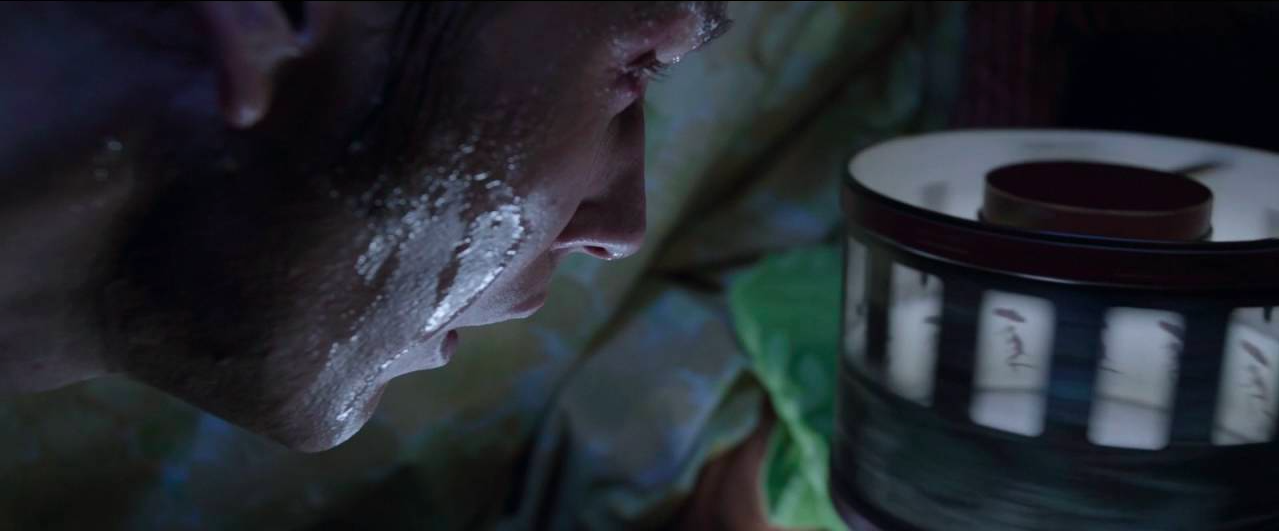 A still from The Conjuring 2 (2016)
1834 - Although Simon Stampfer had suggested the idea of viewing images through a slotted cylinder, it was British mathematician William George Horner who first demonstrated the 'Daedalum' ('wheel of the devil'), which made sequential images on a long paper strip appear to move when they were viewed at the centre of a spinning slotted drum. Variations on the theme included Johann Nepomuk Czermak's Stereophoroskop (1855), the Mimoscope patented by Pierre-Hubert Desvignes (who also devised the 'Folioscope flip-book), and William Ensign Lincoln and Milton Bradley's Zoetrope (1865), which became the most popular name for the toy, which was improved by the addition of concave lenses by James Clerk Maxwell in 1868. Zoetropes have appeared in such films as William Malone's House on Haunted Hill (1999) and James Wan's The Conjuring 2 (2016), while characters from Hayao Miyazaki's My Neighbour Totoro (1988) and John Lasseter, Ash Brannon, and Lee Unkrich's Toy Story 2 (1999) have featured in giant zoetropes. This and many other items included on this timeline are demonstrated by German collector Werner Nekes in Film Before Film (1986) and his five-part series, Media Magica (1995). What a shame these are not available to rent, as they are filled with wonders that sometimes take the breath away.
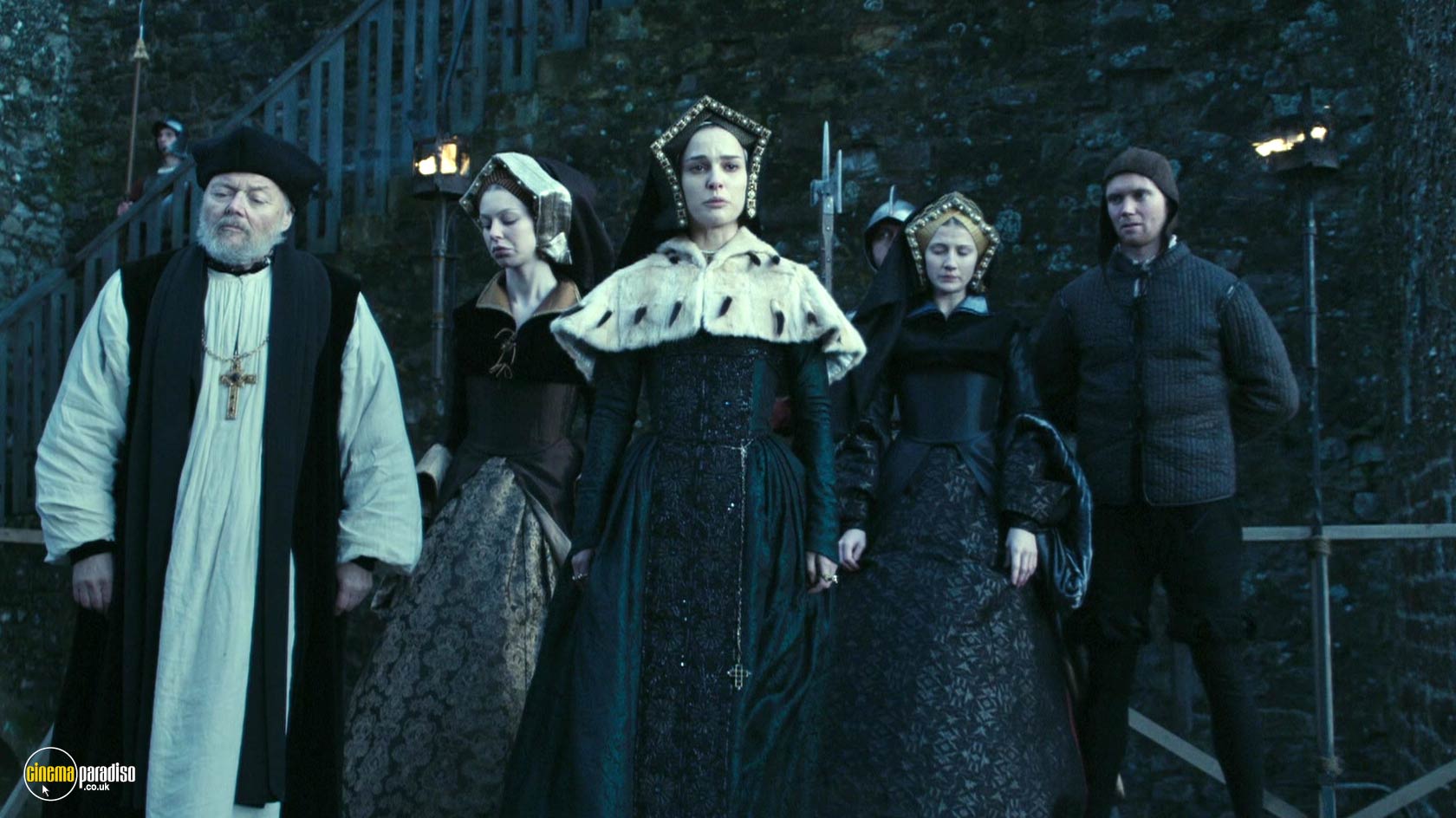
1839 - In Some Account of the Art of Photogenic Drawing, William Henry Fox Talbot outlined a photographic process that created impressions of objects placed on paper sensitised with sodium chloride and silver nitrate. Two years later, he refined his 'negative-to-positive' process to create the 'calotype' (aka 'talbotype'), which reduced exposure times by using more sensitive silver iodide-treated paper. Calotypes were less sharply defined than daguerrotypes, but their translucent negatives made it easy to produce copies by contact printing. Fox Talbot has yet to be played on screen, but there is a museum dedicated to his achievements at his former home, Lacock Abbey, which has provided the setting for Pride and Prejudice (1995), Cranford (2007), The Other Boleyn Girl (2008), Galavant (2015-16), and His Dark Materials (2019-22).
1840 - Alexander Wolcott and John Johnson took out the first American patent for photography after they created a daguerrotype camera that focussed light using a concave mirror rather than a lens.
c.1844 - British glass painter and showman Henry Langdon Childe invented the Chromatrope, a lantern slide that produces dazzling geometrical patterns by rotating colourfully painted glass discs in opposite directions. Similarly ingenious pattern-projecting slides included Hungarian engineer S. Pilcher's Astrometroscope (c.1858); Charles Wheatstone's Eidotrope (1866); Birmingham inventor A. Pumphery's Cycloidotrope (c.1865); and the unattributed Kaleidotrope (c.1870), which was demonstrated at the Royal Polytechnic Institution on Regent Street.
1847 - On 15 January, Austrian magician Ludwig Döbler used a Phantaskop to give the first exhibition of projected stroboscopic animation at the Josephstadt Theatre in Vienna. The machine required a lens for each of the 12 pictures contained on a disc that was cranked with two further lenses that cast light through the images. The show was seen in several European cities, but Döbler failed to find a way to prevent his living pictures from flickering.
1851 - Frederick Scott Archer's Collodion process meant that photographic images only required two or three seconds of light exposure. In 1868, John Wesley Hyatt invented celluloid, which would prove invaluable in the production of motion pictures, while George Eastman refined his flexible paper-based film to launch the Kodak roll-film camera in 1888.
1859 - After Johann Czermak had described his 1855 Stereophoroskop device for making stereoscopic moving images and Joseph-Charles d'Almeida had published an 1858 paper on his alternative anaglyph and stroboscopic principles, Belgian inventor Henri Désiré du Mont filed nine patents in April 1859 for his Omniscope, which he claimed could show stereoscopic animation from either stroboscopic discs or picture-bearing cylinders. Later variations would include Antoine Claudet's nameless stereoscopic animation viewer (1851), Joseph-Charles d'Almeida's unnamed combinaiton of a magic lantern and a Phenakistoscope (1858), Peter Hubert Desvignes's Mimoscope (1860), Coleman Sellers II's Kinematoscope (1861), James Laing's Motororoscope (1864), and Henry Renno Heyl's Phasmatrope (1870).
1866 - Greenwich engineer John Beale (and not Dr Lionel Smith Beale as some sources state) patented the Choreutoscope (aka Chorentoscope), which was a lantern slide fitted with a Maltese Cross gear that allowed the lanternist to hand-crank six images on a single slide while a synchronised guillotine shutter closed the pane between them to create the illusion of movement. A skeleton dancing was among the most popular views, but the slide's significance lies in the fact that its mechanism anticipated that used in the Lumière Cinématographe that historians have decided won the 1890s race to project.
Mentioned films