One hundred years ago, director Alfred Hitchcock cropped up in two scenes of his new film, The Lodger. As Cinema Paradiso has already discovered in Hitchcock's Cameos 1926-49, he became a familiar figure in his British and early Hollywood pictures. Can you now spot the cameos he made during the last 25 years of his career?
Alfred Hitchcock made 36 self-referential cameos in his 53 feature films. In all, they amount to just over five minutes of screen time. Yet these fleeting appearances have been eagerly anticipated by movie-goers since the first was filmed 100 years ago. They have also been much debated by critics, with some insisting that they are merely a bit of impish fun, while others argue that they offer insights into Hitchcock's personality and artistic preoccupations.
In the first part of this comprehensive survey, we saw how Hitchcock used cameos to set the tone, lighten the mood, and cue up major plot developments. He was never on screen for long and rarely interacted directly with the principal characters. But his walk-ons were never simply for self-promotion and, while several of them were highly amusing, they were always much more than a throwaway gimmick. Indeed, during the 1950s, Hitchcock's cameos became increasingly sophisticated and significant.
The Fifties
As daughter Patricia had spent time at the Royal Academy of Dramatic Art while her father was making Under Capricorn, Hitchcock hit upon the idea of making a RADA student the heroine of Stage Fright (1950). Based on Selwyn Jepson's novel, Man Running, the story was tweaked so that Eve Gill (Jane Wyman) could pose as a maid in order to gain access to the household of stage star, Charlotte Inwood (Marlene Dietrich), and prove her friend, Jonathan Cooper (Richard Todd), innocent of the murder of her husband.
Given the theatrical setting and the significance of role playing to the action, Hitchcock decided to get in on the act at 39:49, by passing Eve on the street, as she is getting into her new character of Doris Tinsdale. He turns to give her a funny sideways look at hearing her unlikely Cockney accent. As he had never been shy of airing his views on actors, there's no reason why Hitchcock couldn't actually have been playing himself here (as he's not wearing a hat or coat to disguise himself); a great film director despairing at the staginess of the acting process. He could also, of course, have been having a little fun at his daughter's expense, by mocking the efficacy of a RADA education. Pushing the joke a bit further, he also gave Pat her screen debut, as one of Eve's classmates, Chubby Bannister. Speaking to The New York Times, he said: 'In Stage Fright, I have been told that my performance is quite juicy. I have been told this with a certain air of tolerance, implying that I have now achieved the maximum limits of directorial ham in the movie sandwich. It isn't true. There may have been a "MacGuffin" in my film appearance, but not a ham.'
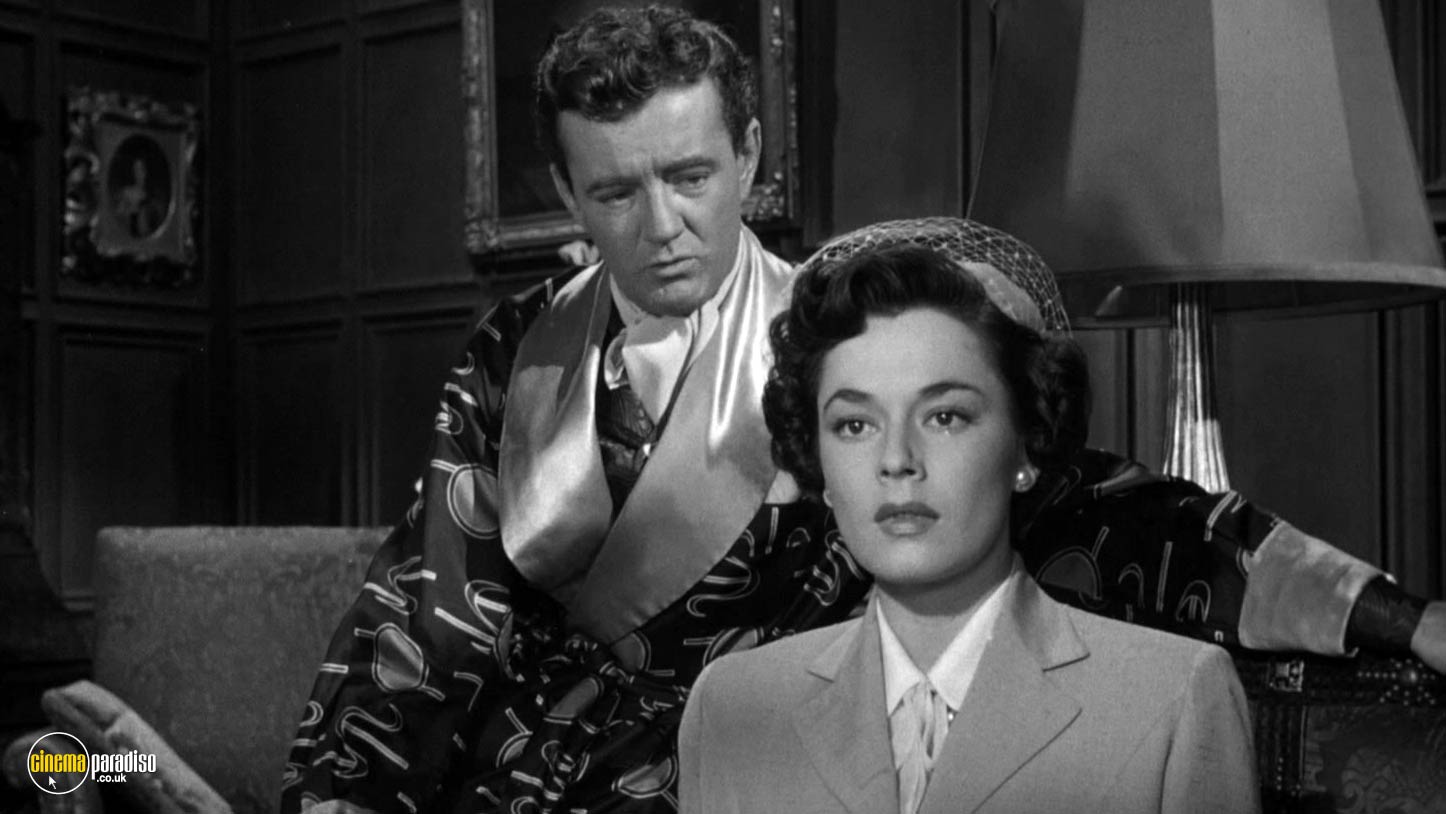
Hitchcock bought the rights to Patricia Highsmith's Strangers on a Train (1951) because she was insufficiently well known to charge a high price. He also liked the premise, however, and cast Robert Walker and Farley Granger as psychopath Bruno Antony and tennis player, Guy Haines, who agree to solve a problem in their lives by swapping murders, so that neither could ever be suspected. In addition to casting Pat as Barbara Morton, the bespectacled younger sister who resembles Haines's loathed wife, Miriam (Laura Elliot, aka Kasey Rogers), Hitchcock also slotted himself into the scene in which Haines disembarks at Metcalf, Connecticut after meeting Antony on the train. He descends with a suitcase and his tennis racket in a press and Hitchcock waits in a pale suit and hat for him to step on to the platform before clambering aboard with a double bass in a protective cover.
Much has been made of the fact that the instrument resembles Hitchcock's physique. But there's a reason he is carrying a bass fiddle because Miriam works in a music store in the town and Hitch passing Haines and getting on to the locomotive with Antony still aboard marks a key juncture in the storyline. Some have insisted that, in a film full of doubles, Hitch has a second cameo at 02:22, on the cover of the book Haines is reading when he sits down opposite Antony and their feet accidentally touch. This has yet to be confirmed, however.
Having very briefly been linked with The Wages of Fear (1953) before it passed to Henri-Georges Clouzot, Hitchcock chose a 1902 French play, Paul Anthelme's Nos deux consciences, to be the basis of his next feature, I Confess (1951). Raised a Roman Catholic, he was fascinated by the idea that a priest would be bound by the secrecy of the confessional, even if it imperils him. Montgomery Clift was cast as Fr Michael Logan, the Québec curé who becomes a murder suspect because his conscience won't let him break his vows. Maintaining the high moral ground, Hitchcock cameos in long shot at 01:33, walking across the top of L'Escalier Casse-Cou, the landmark known as Breakneck Steps, that connect the Upper and Lower Town in Old Québec. It's a sly reference, but it also suggests that Hitchcock wasn't quite as connected with the material as he usually was, as he deeply resented the studio cutting plot elements that had been central to the scenario that he and Alma had been tinkering with since 1948. One sequence did remain, however, and it's perhaps the most poignant of Hitchcock's entire career. Listen out for the killer apologising to his wife (who just happens to be called Alma) for abusing her kindness during their marriage. Apparently, Hitchcock wrote the speech himself as a kind of audio-biographical cameo that was delivered for him by O.E. Hasse.
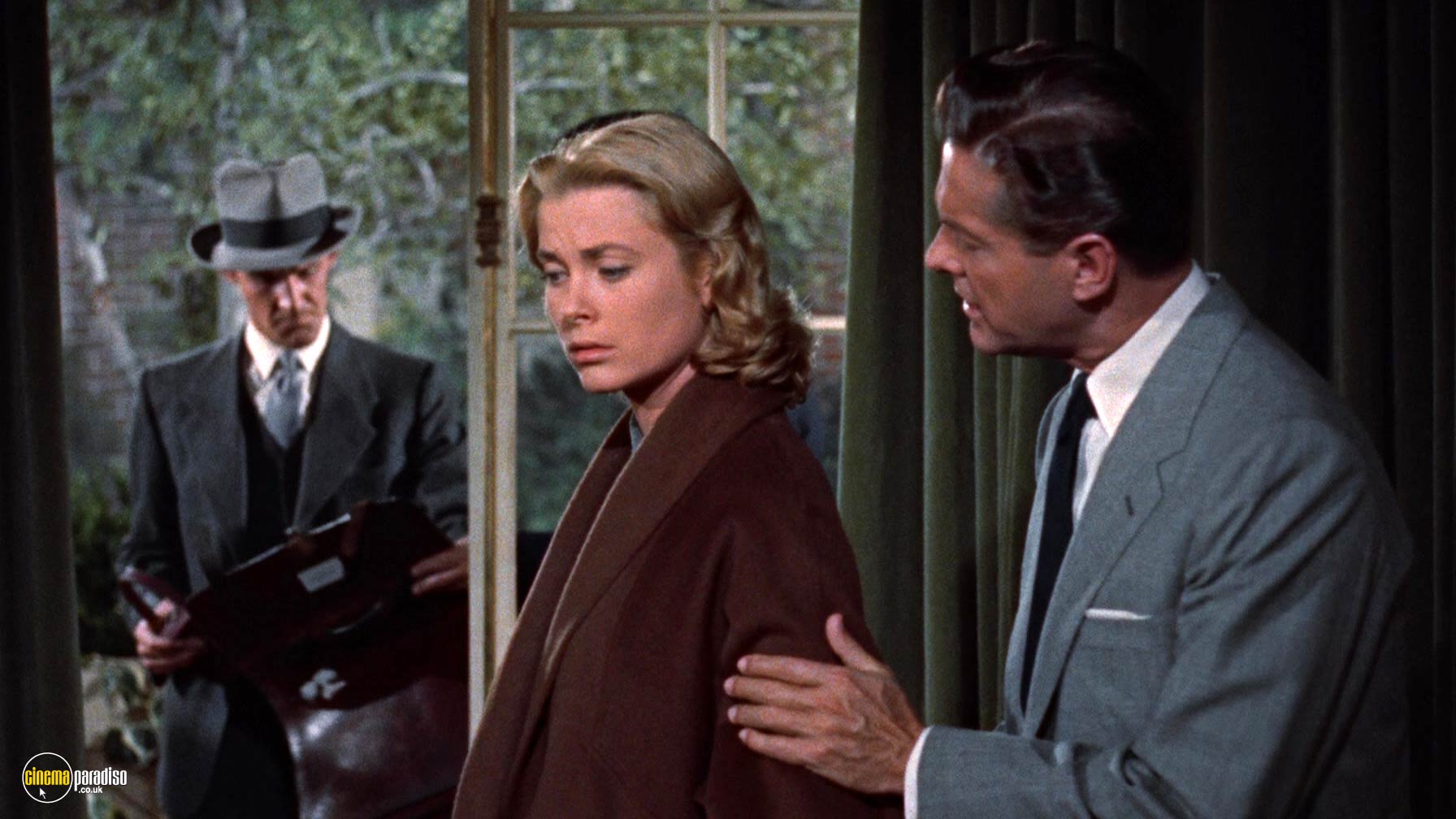
When plans to adapt David Duncan's wrong man saga, The Bramble Bush, fell through, Hitchcock seized on Frederick Knott's hit play, Dial M For Murder (1954). He was delighted to sign Grace Kelly to play socialite Margot Wendice, who is charged with murder after defending herself against the killer hired by her retired tennis player husband, Tony (Ray Milland). However, he was less enamoured of the fact that Jack Warner insisted on shooting the film in 3-D and it's possible that Hitch's 13:13 cameo, on the left side of a Cambridge class reunion photo with Wendice and Charles Swann (Anthony Dawson), was his comment on the technology, as it could only be shown in two dimensions. Moreover, it's a clumsily rendered monochrome image in an Eastmancolor picture that appears as though the three men have been matted into it.
For all that it might have been a protest gesture, however, the shot of Hitchcock places him right in the middle of the Maida Vale scene in which Wendice blackmails the small-time con into strangling the spouse who has been cheating on him with American crime novelist, Mark Halliday (Robert Cummings). Even when he was sulking, Hitchcock was still the consummate film artist.
Cornell Woolrich's Dime Detective short story. 'It Had to Be Murder', inspired Rear Window (1954), a metaphor for cinema that centres on incapacitated photographer L.B. 'Jeff' Jeffries (James Stewart), as he uses his long-lensed camera to spy on his neighbours in a Greenwich Village courtyard to pass the time between visits from his model girlfriend. Lisa Freemont (Grace Kelly). The set designed by Hal Pereira and Joseph MacMillan Johnson turned each apartment window into a screen and prompted critic Laura Mulvey to devise the notion of the 'male gaze', as Hitchcock and Jeffries turn their lens on female residents like the dancer nicknamed, Miss Torso (Georgine Darcy).
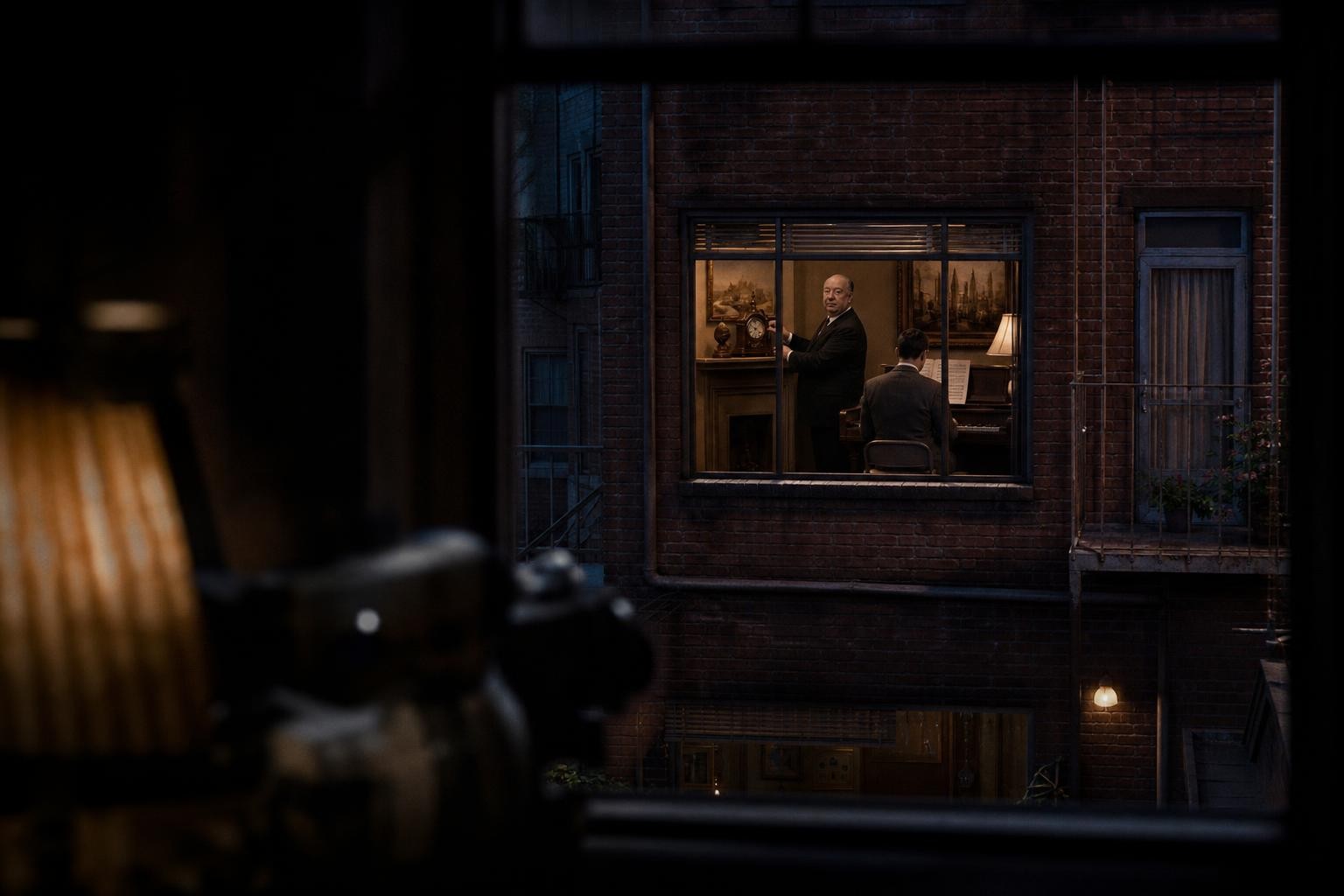
As the action was largely confined to the view from Jeff's apartment, Hitchcock had to be creative in contriving his cameo appearance and it comes at 26:12, as he stands by the mantelpiece to wind a clock while chatting to the songwriter (Ross Bagdasarian). It's one of the few occasions in which Hitch actively interacts with another character, although, by looking through the window, he is also returning the audience's gaze. Apparently, he says, 'B, B Flat', and this implies that he is calling the tune, which is, of course, what he does as the director. Having slimmed down from 340lbs to 189lbs, he exudes the confidence of a man in control, as goes about making his most self-reflexive picture. He would be rewarded with another Oscar nomination for Best Director, only to lose out to Elia Kazan, who had tried to persuade Kelly to co-star with Marlon Brando in On the Waterfront (1954). By declining, she missed out on the Academy Award won by Eva Marie Saint, but compensation came in the form of becoming Princess Grace of Monaco after meeting Prince Rainier during the shoot of her next collaboration with the Master of Suspense.
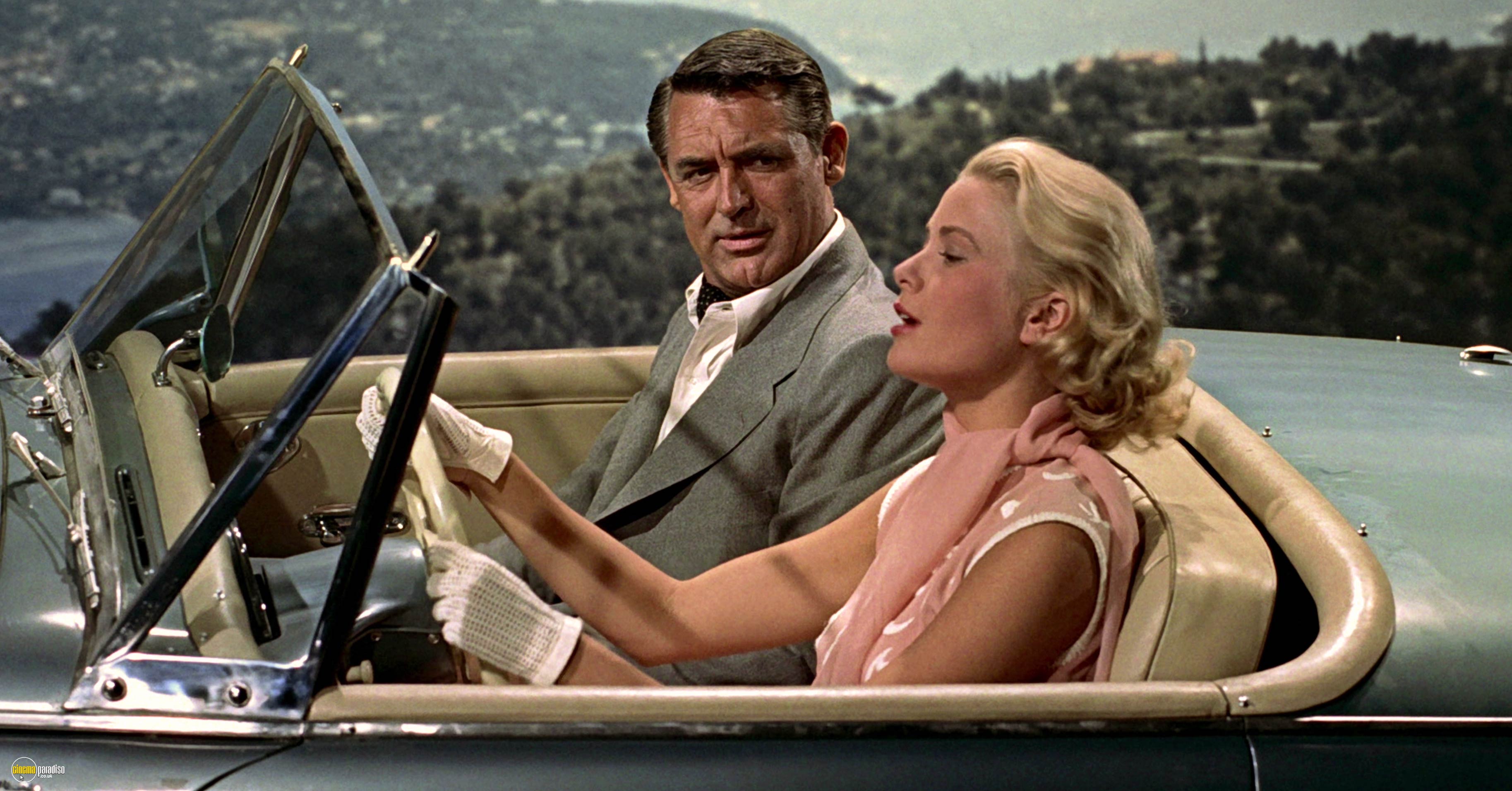
Hitchcock was still in the same frame of mind when he cropped up at 9:40 in To Catch a Thief (1955). Cat burglar John Robie (Cary Grant) has just given the Monte Carlo police the slip by boarding a bus. As he sinks on to the back seat, he notices the woman to his right (Adele St Mauer) is carrying two birds in a cage. Amused to be sharing his seat with them, Robie turns to his left and sees a balding, jowly man staring forward, with half of his face in shadow. Grant was famous for his double takes and he seems to step out of character here to regard Hitchcock quizzically as though he couldn't understand why the director of the film he's in would be sitting beside him so impassively. There's no mention of either travelling companion in David Dodge's source novel, although little of the text made it into John Michael Hayes's script.
As Hitchcock was shooting in VistaVision for the first time, it's likely that he chose a close-up for his cameo to demonstrate how intimately they could be photographed at a time when other directors were struggling to come to terms with the extra dimensions of a widened screen. Indeed, he even slipped in a slight pan to show that it was still necessary to move the camera to get the full picture, even in such a tight space. In his excellent book, Hitchcock's Motifs (2005), Michael J. Walker notes that the only other character on the bus in the book was Texan tourist Francie Stevens (Grace Kelly) and he speculates that Grant's expression may reflect his disappointment at his elegant co-star being replaced by a rotund, balding 55 year-old male.
The sense of mischief that had characterised the flawed. but decidedly entertaining Riviera caper extended into Hitchcock's next venture, The Trouble With Harry (1955), an adaptation of a Jack Trevor Story novel that was set in an autumnal New England. The Harry of the title is a corpse that Captain Albert Wiles (Edmund Gwenn) thinks he has winged while hunting in the woods. However, he turns out to be the estranged husband of Jennifer Rogers (Shirley MacLaine), who believes she killed him by beaning him with a milk bottle, and several burials and exhumations are required before the pair reach their respective happy endings with artist Sam Marlowe (John Forsythe) and hiking spinster, Miss Ivy Gravely (Mildred Natwick).
Despite downpours disrupting the shoot in Vermont, Hitchcock managed to record his walk past on 22:14, as he bustles off screen behind the parked limousine of the millionaire (Parker Fennelly) who has stopped to examine some of Sam's paintings in a roadside display. Coming after a string of ingenious cameos, this seems a bit prosaic. But it forms part of a pair with the 25:42 appearance in the Hollywood remake of The Man Who Knew Too Much (1956), as he stands with his back to the camera and puts his hands into the pockets of his pale grey suit while watching some acrobats in the Marrakesh marketplace, just before the murder of Louis Bernard (Daniel Gélin), the Frenchman who had befriended American tourists, Dr Ben McKenna (James Stewart), and his singer wife, Jo (Doris Day). The thriller contains a second and entirely unique cameo, as composer Bernard Herrmann makes his sole film appearance as the conductor in the Royal Albert Hall. This was also the only Hitchcock film to win the Oscar for Best Song and Jay Livingston and Ray Evans's 'Que Será, Será (Whatever Will Be, Will Be) ' became Doris Day's signature tune.
It's possible that Hitchcock decided to adopt such a low profile in these films because he had become a familiar face on American television following the launch on 2 October 1955 of the anthology series, Alfred Hitchcock Presents. Over seven seasons, he would introduce each episode in the same jaunty manner of the show's theme tune, Charles Gounod's 'Funeral March of a Marionette'. which would play as a silhouetted Hitchcock stepped into a caricature ouline (which he had drawn himself). By blending into the background in the two films released as the series got underway, Hitchcock may well have been suggesting that he took his features more seriously than his TV gig and took less gimmicky cameos to underline the point. He did direct for the small-screen, however, and Cinema Paradiso users can see all 17 episodes (and every monologue) by renting the seven series collections. Although he was behind the camera for Breakdown, Revenge, The Case of Mr Pelham (all 1955), Back For Christmas, Wet Saturday, Mr Blanchard's Secret (all 1956), One More Mile to Go, The Perfect Crime (both 1957), Lamb to the Slaughter (from a Roald Dahl teleplay), Poison (both 1958), Banquo's Chair, Arthur, The Crystal Trench (all 1959), Mrs Bixby and the Colonel's Coat (1960), The Horseplayer, and Bang! You're Dead (both 1961), he only appeared in A Dip in the Pool (1958), on the cover of the magazine being read by Mr Renshaw (Philip Bourneuf).
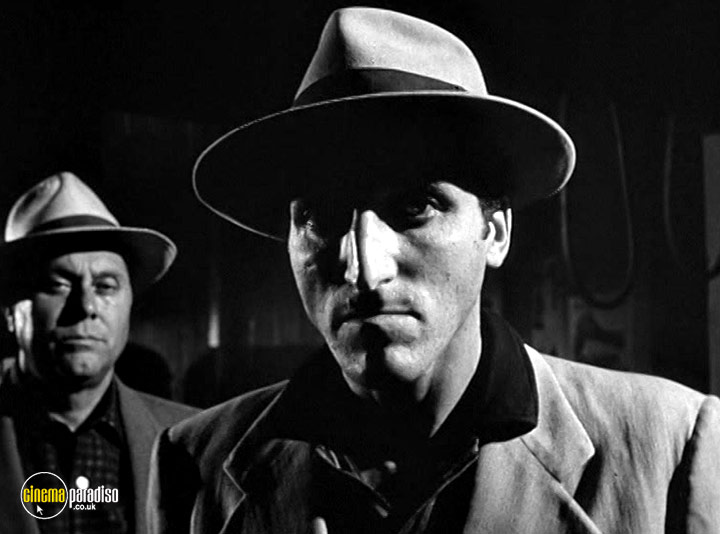
Curiously, he only directed a single episode of The Alfred Hitchcock Hour (1962-65), I Saw the Whole Thing (1962). This is also available to rent, as are the episodes he directed for hire on Suspicion ( 4 O'Clock, 1958) and Startime ( Incident At a Corner, 1960), which appear among the extras on the boxed set available from Cinema Paradiso. In his opening spiels, Hitchcock variously appeared as his own brother (complete with a moustache), a scarecrow, a genie in a bottle, and a mop-topped Beatle. But the highlight of Hitchcock's entire televisual oeuvre are the opening words of the very first episode: 'Good evening. I'm Alfred Hitchcock. And tonight, I'm presenting the first in a series of stories of suspense and mystery called, oddly enough, Alfred Hitchcock Presents. I shall not act in these stories, but will only make appearances. Something in the nature of an accessory before and after the fact - to give the title to those of you who can't read, and to tidy up afterwards for those who don't understand the endings.'
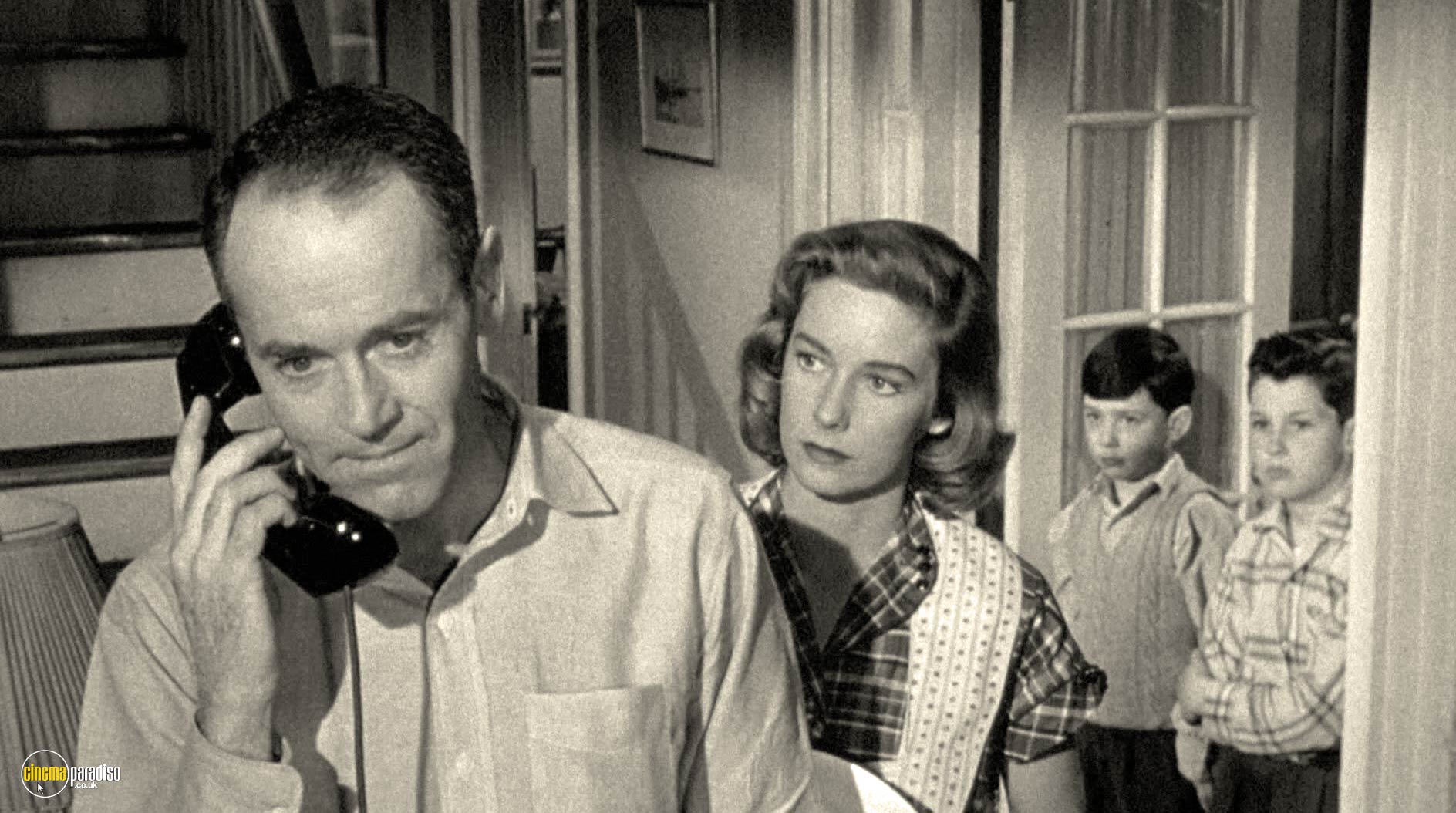
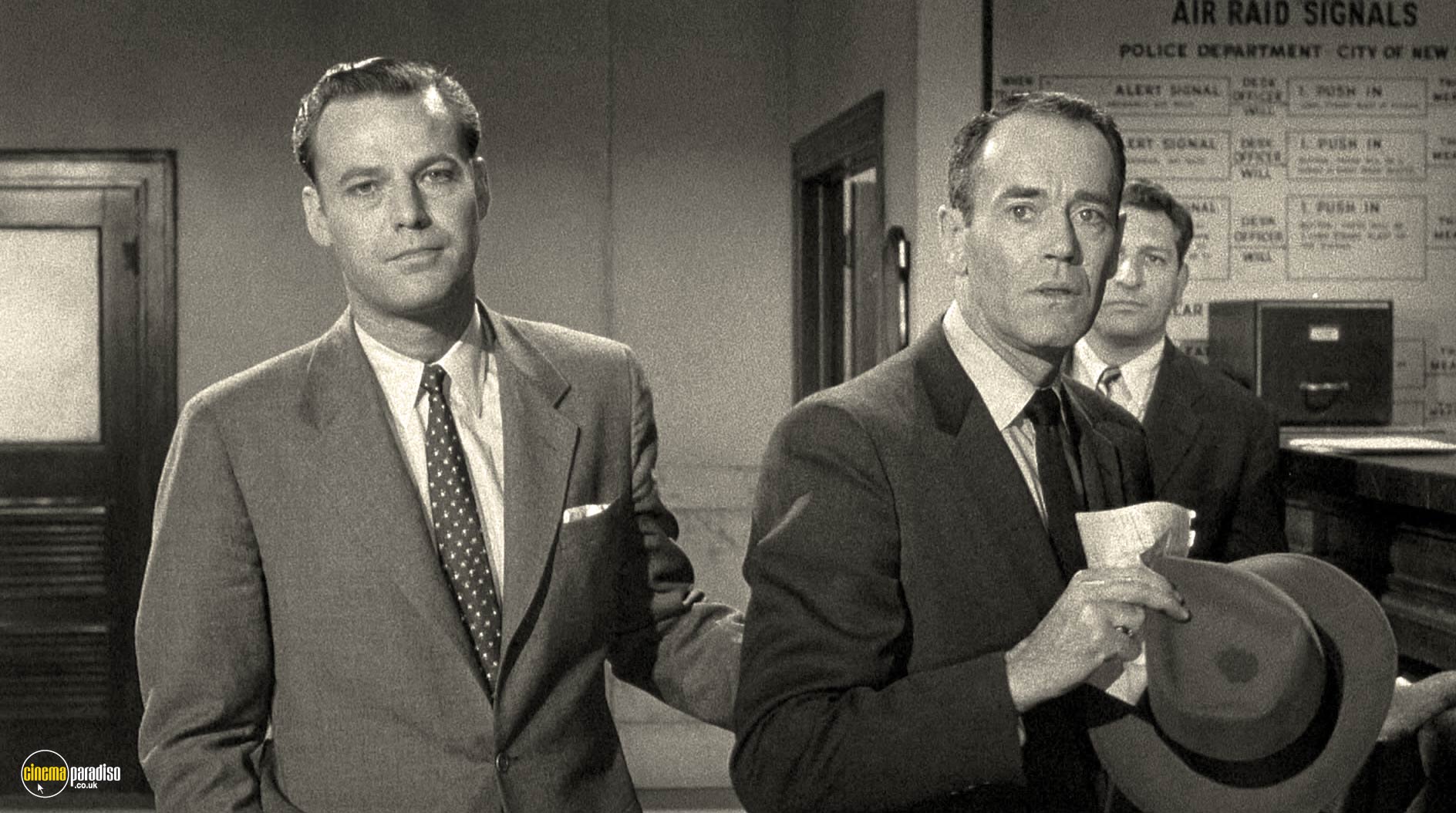
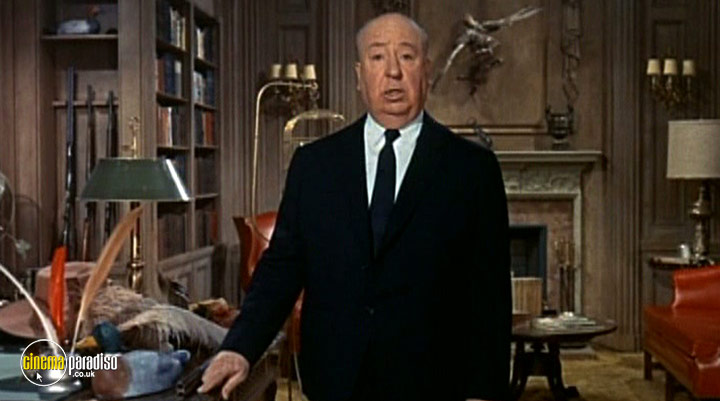
Michael J. Walker notes that Hitchcock's entry in The Man Who Knew Too Much coincides with the action kicking into thriller mode, as Bernard is murdered and Hank McKenna (Christopher Olsen) is abducted by Lucy Drayton (Brenda De Banzie). Walker also notices that she tells Hank that the man beside them in Arab robes is 'a storyteller' - and he stands in exactly the same spot in the frame that Hitchcock had been occupying before the cross-cut. This is film-making of the most intricate and calculated kind. No wonder Hitchcock said of the two versions in the Truffaut interview, 'Let's say the first version is the work of a talented amateur and the second was made by a professional.' But don't go looking for the director in The Wrong Man (1956) beyond the 00:18 prologue, in which he appears as himself in silhouette in an arc of light within a darkened film studio in order to introduce the story of Stork Club musician Manny Balestrero (Henry Fonda), who is mistakenly accused of holding up an insurance bureau. Hitchcock decided it would be inappropriate to make one of his customary cameos, as Emmanuel Balestrero had actually endured the injustices depicted in the film, which had been based on Herbert Brean's June 1953 Life magazine article. 'A Case of Identity'. Nevertheless. this is still the act of a consummate showman, as Hitchcock knows that his voice is now as familiar as his physique because of his television vignettes. Moreover, he draws attention to his reputation and back catalogue in declaring: 'This is Alfred Hitchcock speaking. In the past, I have given you many kinds of suspense pictures, but this time I would like you to see a different one. The difference lies in the fact that this is a true story, every word of it. And yet, it contains elements that are stranger than all the fiction that has gone into many of the thrillers that I've made before.'
The familiar voice can also be heard in the trailer for the first time. 'Alfred Hitchcock speaking. In the past I have introduced you to many kinds of people, murderers, thieves, swindlers, many of them geniuses at the business of crime. Now I'd like you to meet an entirely different person. An average sort of fellow, who leads a very normal life. The big difference is that his story is true. This is Manny Balestrero, tucked away at the rear of the bandstand at the Stork Club in New York. He lived in a simple routine world. When the lights went out, the fiddle was put away. Then the same subway, the newspaper, home to Rose and the kids. Yes, Manny's life was straight and narrow, until the night of January the fourteenth, 1953, when...'
As the prologue figure in the pool of light is filmed in long shot, there's a possibility that Hitchcock might have played a sly joke on the audience by using a stand-in taking a vocal cameo only. However, he's back and identifiable in a grey suit at 11:22 in Vertigo (1958), which had been adapted from the French novel, D'entre les morts, by Pierre Boileau and Thomas Narcejac. Indeed, by carrying a horn case while passing the shipyard owned by Gavin Elster (Tom Helmore) in the Mission District of San Francisco, one might think he was blowing his own trumpet, at the start of what he knew was his most visually and psychologically complex and sophisticated picture. It turned on the obsession that engulfs acrophobic detective John 'Scottie' Ferguson when he tries to turn Judy Barton (Kim Novak) into a replica of his lost love, Madeleine Elster. There's a newspaper stand beside the entrance and this could be an allusion to the fact that Hitch had recently signed up for Alfred Hitchcock's Mystery Magazine (1956-), a bi-monthly story digest that is still going strong and will celebrate its 70th anniversary in December.
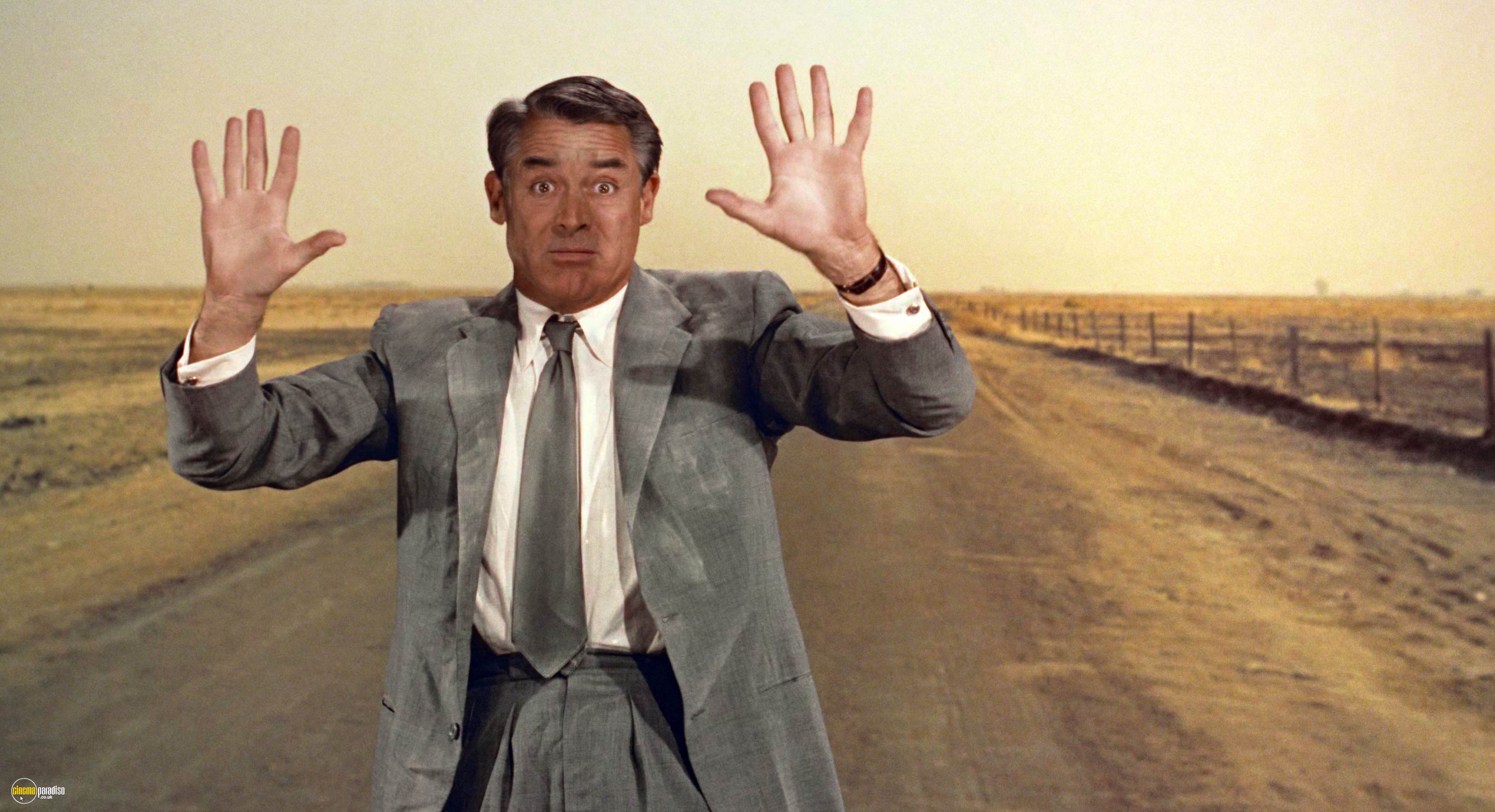
Vertigo had been made in preference to Laurens van der Post's Flamingo Feather, an African thriller with a Buchanesque feel. But Hitchcock remained in a caper mood in embarking upon North By Northwest (1959), which he made with screenwriter Ernest Lehman after he had admitted he had no idea how to adapt Hammond Innes's The Wreck of the Mary Deare. Taking its title from a speech by Hamlet, North By Northwest fulfilled the director's long-cherished ambition to build a film around the concept of 'The Man on Lincoln's Nose' that had been rattling around in his brain for seven years. The Mount Rushmore finale would go down in screen history, along with the crop duster scene that sees advertising executive Roger O. Thornhill (Cary Grant) fleeing for his life after having been mistaken for George Kaplan by a couple of heavies in a New York hotel.
Hitchcock shuffles into shot at 02:09, just as his name slides off the screen at the end of the opening credits. He's on Madison Avenue and has the indignity of having a yellow and green bus close its doors in his face. This is amusing enough, as it punctures the block-capitalled announcement of the director's name. But it also signals that this is going to be such a fast-moving thriller that there's not even time to pause to let the director aboard. Moreover, the incident anticipates the appearance of two buses in rural Indiana. One deposits Thornhill in the middle of nowhere for a supposed rendezvous with Kaplan. However, Hitchcock playfully ratchets up the tension by having a man in a hat (Malcolm Atterbury) emerge from a blue car to wait at the bus stop. Thornhill crosses to speak to him, but he's preoccupied with a plane dusting a field without crops before he boards an outgoing bus and leaves the stranger to his ponder his plight.
Some over-eager cameo spotters have claimed that Hitchcock can be seen on the train in drag around the 45-minute mark. A woman in a turquoise dress has her ticket punched by the conductor and then looks in the direction of the camera before giving a slight shrug. In the original screenplay, she even had some dialogue:
Conductor: Do I have your ticket, madam?
Woman: Why, yes...I gave it to you an hour ago.
Conductor: And that space was...?
Woman: Bedroom F in Car 1801.
Conductor: [Consulting his chart] Thank you.
Woman: [A little huffy] You're welcome.
By all accounts, the scene was filmed, only for the dialogue to be cut. But this was never part of an elaborate jape, as the female passenger was played by Jesslyn Fax, who had graced Rear Window and Four O'Clock before making a number of appearances on Alfred Hitchcock Presents and The Alfred Hitchcock Hour.
Given that Hitchcock had battled ill health for a couple of years (as had Alma), North By Northwest was a remarkably sprightly diversion and it did brisk business at the box office. But this was the last time that the Master of Suspense laced the action with quite so much good-natured humour. As the 1960s dawned, things were about to get a good deal darker.
The Sixties Onwards
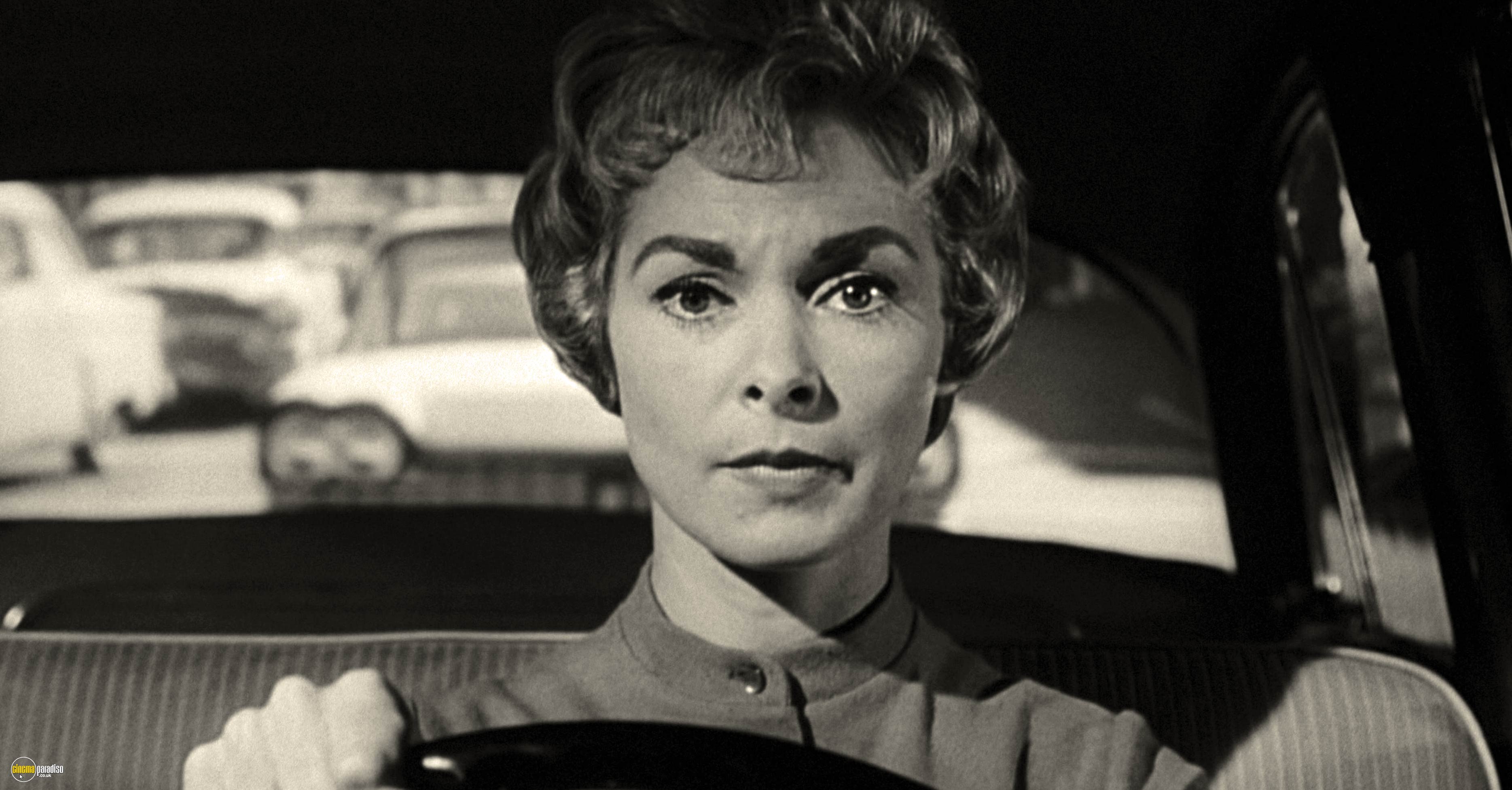
According to biographer Donald Spoto, the sombre turn in Hitchcock's film-making coincided with a series of clashes with prominent actresses. He had always fawned over his leading ladies, but he tried to become proprietorial over his first contracted star, Vera Miles, and resented the independence shown by Kim Novak during the filming of Vertigo and the refusal of Audrey Hepburn to headline Henry Cecil's No Bail For the Judge because of a rape scene that the director insisted on keeping. Rather than recast the project, Hitchcock decided to ditch it and channelled his fury into an adaptation of a Robert Bloch novel about a murderous motel owner. Scripted by Joseph Stefano, Psycho (1960) introduced a new sort of on-screen violence against women that pushed the boundaries of the Production Code and reflected Hitchcock's seething recognition of his own senescence and mortality.
Seeking to send a shot across the bows of the declining studio system, Hitchcock opted to shoot Psycho like one of his TV episodes. Indeed, he used some of his crew and worked quickly in monochrome for the first time since The Wrong Man, when he had eschewed colour for realist effect. This time, he wanted to depict a black-and-white world of good and evil, as Marion Crane (Janet Leigh) repents of having stolen $40,000 from her employer, only to be murdered in the shower at the out-of-the-way motel run by Norman Bates (Anthony Perkins) before she can return it.
Designer Saul Bass and composer Bernard Herrmann made major contributions to the picture, most notably in the infamous shower scene. But it was Hitchcock who set the tone for a film whose horror overtones echoed those in Peeping Tom (1960), which was made in the same year by his former assistant, Michael Powell. Aware that his contemporaries were beginning to drift away from Hollywood, Hitchcock sought to demonstrate that he was still relevant, as both a storyteller and a stylistic innovator. Yet, he also allowed himself a moment of sentiment in his cameo at 06:59. Daughter Pat was now the mother of three and hadn't acted for some time. However, Hitchcock coaxed her into playing Marion's co-worker, Caroline, and tied himself into the scene in which the pair deal with flirtatious Texan tycoon, Tom Cassidy (Frank Albertson) by standing outside the window in a large Stetson, just as Marion returns to her real estate office in Phoenix, Arizona after an illicit lunchtime tryst with lover Sam Loomis (John Gavin). While wanting to share the screen with his daughter, Hitchcock also cast himself as a warning angel, whose appearance marks the start of the narrative sequence that will lead to the Bates Motel.
Having become used to introducing TV episodes, Hitchcock had monologue writer James Allardice script the trailer for Psycho, which takes the form of a six minute 40 second guided tour of the scene of the crime. Steeped in gallows humour, the recce eventually reaches the bathroom in Cabin 1. 'Well, they've cleaned all this up now,' Hitchcock purred with macabre delight. 'Big difference. You should have seen the blood. The whole, the whole place was...Well it's, it's too horrible to describe. Dreadful. And I tell you, there's a very important clue was found here [pointing to the toilet]. Down there. Well the murderer, you see, crept in here very slowly, of course the shower was on, there was no sound, and, uh...' - at which point Hitchcock whisks back the shower curtain and Herrmann's strings begin to shriek.
In days gone by, Hitchcock would have been keen to cash in on a box-office success, especially as it had brought him another Oscar nomination. But three years passed before he directed another feature. Since arriving in Hollywood, he had made 24 features, two shorts, and 15 television shows, while also fronting many more. However, he would only make another six features and five tele-episodes in the last two decades of his life. During this period, he travelled widely with Alma and enjoyed being installed alongside Jean Renoir and Roberto Rossellini as a patron saint of the nouvelle vague. He also toyed with the notion of adapting M. Robert Thomas's play, Trap For a Solitary Man; Fredric Brown's sci-fi novel, The Mind Thing; Paul Stanton's atomic bomb story, Village of Stars; and with making a thriller about a blind musician who receives the eyes of a murder victim in a pioneering transplant. The diversity of these items confirmed that the 60 year-old Hitchcock still had a lively mind. However, the chance viewing of a diet drink commercial persuaded him that he had found the perfect woman for two other projects he had been contemplating, Daphne Du Maurier's The Birds and Winston Graham's Marnie.
Model and single mom Nathalie 'Tippi' Hedren was less convinced. But she signed a seven-year contract and acquiesced in the makeover that transformed her into an ersatz Grace Kelly. The story of how their relationship frayed while making The Birds (1963) is told by Julian Jarrold in The Girl, which paired Toby Jones as Hitchcock and Sienna Miller as Hedren. This would make a disconcerting double bill with Sacha Gervasi's Hitchcock (both 2012), which recalled the shooting of Psycho, with Anthony Hopkins and Helen Mirren as the Hitchcocks. Yet, while the tale of San Francisco socialite Melanie Daniels's romantic pursuit of lawyer, Mitch Brenner (Rod Taylor), would become increasingly bleak as Bodega Bay is inexplicably besieged by murderous birds, Hitchcock's cameo is a mischievous gem. He's seen at 02:18 leaving Davidson's pet shop as Melanie enters to buy some lovebirds for Mitch's younger sister. However, he's having some trouble controlling his snowy Sealyham terriers, in spite of the fact that they were played by his own beloved pets, Geoffrey and Stanley. Talk about never working with children or animals. However, their eager tugging on their leads provides the first intimation that the natural world is not as easy to tame as humankind might wish to think and, thus, the seemingly harmless cameo forewarns the audience of what is to come.
Hitchcock riffed on a similar theme in the James Allardice-scripted speech for the film's trailer. 'How do you do?' he began. 'My name is Alfred Hitchcock and I would like to tell you about my forthcoming lecture. It is about the birds and their age-long relationship with man. It will be seen in theatres like this across the country. In my lecture I hope to make you all aware of our good friends, the birds. Theirs is a noble history and through it all man has played a conspicuous part.'
The hundreds of effects shots required to make the avian assault so terrifying made The Birds Hitchcock's most expensive and most experimental work. It would also be his last commercial success (albeit modest), although that doesn't mean that he didn't continue to make cinematically intricate and intellectually intriguing work. He had hoped to lure Grace Kelly out of retirement for Marnie (1964). But he decided to take the risk of entrusting the complex character of a frigid kleptomaniac to Tippi Hedren and hoped that Sean Connery could help her through, as Margaret 'Marnie' Edgar's frustrated publisher spouse, Mark Rutland. Jay Presson Allen was hired to write the screenplay, while cinematographer Robert Burks, editor George Tomasini, and composer Bernard Herrmann were all hired for what would be their last collaborations with Hitchcock and he would struggle to find dependable replacements. Even they couldn't improve his mood on the set, however, as he strove to turn Hedren into Marnie and grew increasingly resentful at her resistance. In this light, the cameo at 05:00 could be seen as Hitchcock asking the audience to bear with the picture because it was clear to him that his leading lady wasn't up to the task. Still in the guise of the brunette Marion Holland (who has just stolen $10,000 from her employer), Marnie is seen sashaying down a hotel corridor with a heavily laden bellhop in tow. Hitchcock emerges from a room on the landing and, having caught sight of the woman disappearing into the distance, turns and looks directly into the camera. As he quickly turns away, however, it's possible that Hitchcock was portraying himself as a voyeur who had been caught in the act of eyeing up a shapely form. Regardless of which interpretation you choose, this remains one of the most discomfiting cameos, as there's something misogynist about the way in which Marnie is subjected to a gaze that echoes the close-up of Rutland (the husband who will rape her on their wedding night) in the previous scene.
Once again, the darkness described by Spoto appears to have descended and McGilligan reports how Hitchcock ended the shoot addressing Hedren through intermediaries after he had offended her with a proposition whose nature is still the subject of dismayed speculation. Yet, he had regained his equilibium by the time he graced the trailer. This time, however, he also wrote the spiel, which begins: 'How do you do? I'm Alfred Hitchcock and I would like to tell you about my latest motion picture, Marnie, which will be coming to this theatre soon. Marnie is a very difficult picture to classify. It is not Psycho, nor do we have a horde of birds flapping about and pecking at people willy-nilly. We do have two very interesting human specimens, a man and a woman. One might call Marnie a sex mystery, that is, if one used such words. But it is more than that. Perhaps the best way to tell you about the picture is to show you a few scenes. This is Mark coming down the stairs of his family home outside Philadelphia. He is a thoughtful man, dark and brooding. He is, in a sense, a hunter. And this is what he is hunting, Marnie. Seeing her in her mother's modest house, one wonders how two such different people could cross paths. It was certainly not Marnie's idea. Marnie was going about her own business, like any normal girl. Happy, happy, happy. [A shot showing Marnie robbing a safe.] Suddenly into this colourful life comes Mark. At first, he didn't know what to make of Marnie, she does seem a rather excitable type. What would account for this strange behaviour?'
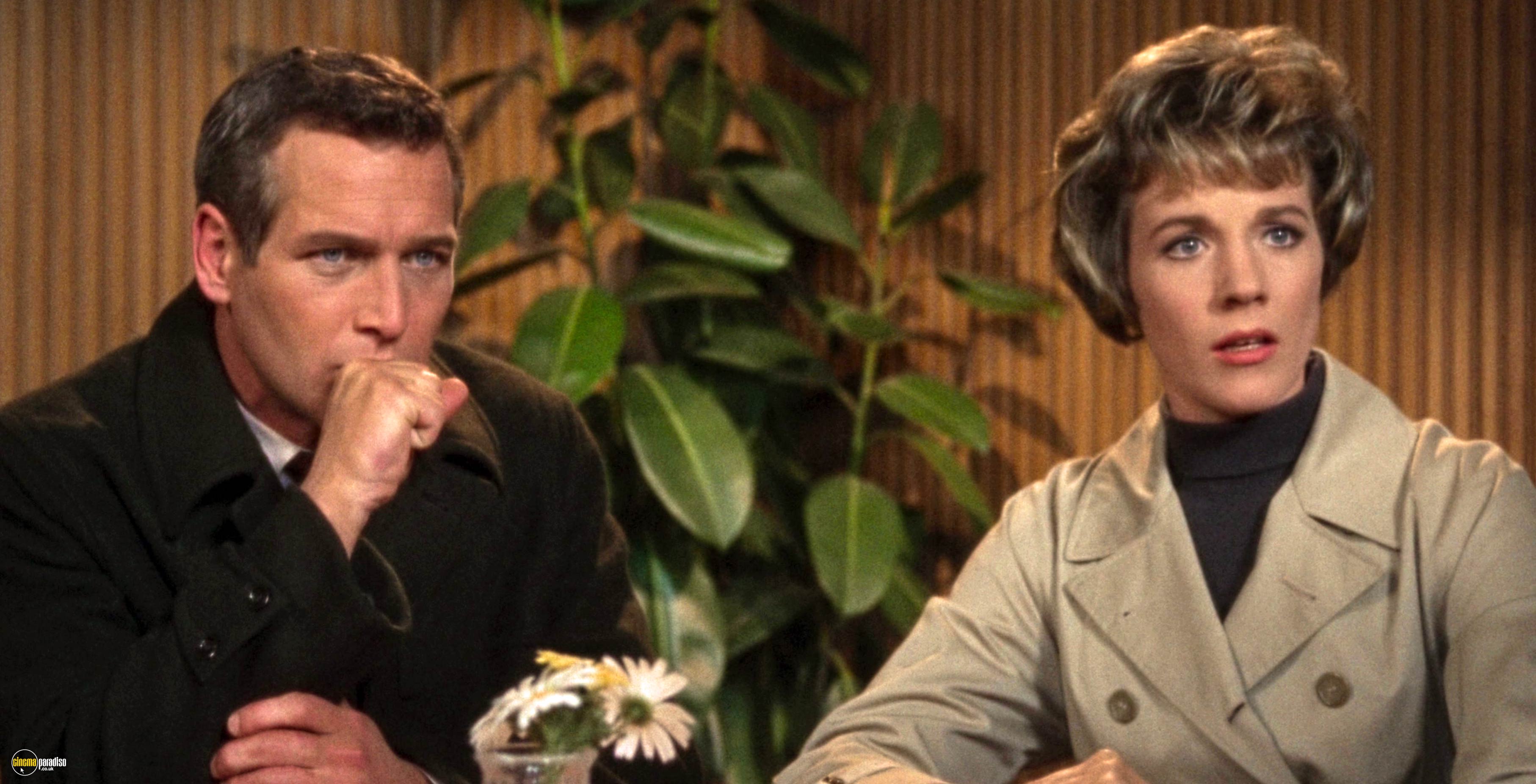
As press reports suggested that Hitchcock had lost touch with the cinema-going audience, he learned that his TV series had been cancelled. Searching for a project to prove the doubters wrong, he dusted down Mary Rose again, toyed briefly with adapting John Buchan's Three Hostages, and set Italian screenwriters Agenore Incrocci and Furio Scarpelli to work on RRRR, a heist caper centring on a hotel full of crooks. Unmoved by the James Bond films, but recognising their popularity, Hitch pondered something about the Cambridge spy ring and hired novelist Brian Moore to work up a screenplay. Despite enjoying the collaboration, Moore became frustrated when Hitchcock departed from their proposed storyline and Torn Curtain (1966) became a rehash of ideas from his previous spy thrillers. Paul Newman and Julie Andrews were hired to play the American scientist who fakes his defection to the Soviet sphere and the adoring fiancée who puts his mission in jeopardy by following him. But they soon sensed their lack of chemistry and their dwindling engagement in a project whose only memorable sequence demonstrated the difficulty of killing someone.
Perhaps Hitchcock himself felt detached, as there's a larky feel to his 08:00 cameo, which was accompanied by his Gounod theme tune and presented him sitting in the lobby of the Hotel d'Angleterre in Copenhagen with a baby on his knee. Nevertheless, he's at the heart of the action, as the hotel is hosting the International Congress of Physicists that will lead to Michael Armstrong (Newman) making his way to East Berlin. Keith Waterhouse, who was hired to tweak the screenplay with Willis Hall, remembers Hitchcock taking the scene very seriously. 'I should be seen sitting in an armchair in the lounge with a nine month-old baby on my knee,' he told them, 'and I'm looking around rather impatiently for the mother to come back. This impatience could be underscored by shifting the baby from one knee to the other, and then with the free hand, surreptitiously wiping the thigh. Having this shot would enable us to show the sign announcing the presence of the convention members in the hotel. We might even show some of the delegates crowding around the elevator, which, of course, would then lead us to the corridor scene on page 10.'
Despite such meticulous planning, the press sneered that Hitchcock's 50th film was little cause for celebration and he virtually disappeared for a year before emerging at the Oscars to receive the Irving G. Thalberg Memorial Award. Reaching the microphone to the sound of Gounod's march, an emotionless Hitchcock left few in any doubt that he felt this was merely a consolation for past snubs when he restricted himself to two words, 'Thank you,' before leaving the stage after adding, 'indeed,' as an afterthought.
Unable to interest Universal in an Antonioni-influenced serial killer picture entitled Kaleidoscope (aka Frenzy), Hitch agreed to direct an adaptation of Leon Uris's Cold War thriller, Topaz (1969). Despairing of the screenplay, Hitchcock confided that he would much rather put his spin on another espionage tome, Ronald Kirkbride's The Short Night. But he was stuck with an unwanted project and it's tempting to read his cameo at 33:36 - which sees him rising from a wheelchair being pushed by a nurse at LaGuardia International Airport in order to greet an acquaintance with a warm handshake and stroll off with him unaided - as being a coded message not to write him off, as there was still life in the old dog yet.
It took Hitchcock a while to get his confidence back, however, and it was only when he read Arthur La Bern's Goodbye Piccadilly, Farewell Leicester Square that he felt sufficiently inspired to ask Anthony Shaffer to write a screenplay that he could film around his old childhood haunts in London. Aware his budget was limited, he determined to enjoy shooting Frenzy (1972) and dotting it with references to the notorious British killers who had always intrigued him. Barry Foster played the Covent Garden lothario whose loathing of women turns lethal, while Jon Finch was cast as the best friend accused of the crimes. The strangulation of Barbara Leigh-Hunt was one of Hitchcock's most gruesome scenes, but his cameo was a simple shot at 02:24 of a bowler-hatted man listening to a speech in a small crowd on the Embankment outside County Hall. Clearly, he wanted to present himself as a man of the people. But the fact he listens so impassively while others around applaud and heckle suggests an awareness that he had become a man out of his time, who had little in common with those around him.
Once again, however, the cameoing Hitchcock is in the midst of the action. As the speaker announces a clean-up campaign for the River Thames, someone spots the naked body of a woman in the water and Hitchcock joins the rubberneckers, as murmurs spread that there has been another 'necktie murder'. He turns, as the white-bearded man (Joby Blanshard) standing next to him brings up the subject of Jack the Ripper. 'He used to carve 'em up,' he says. 'He sent a bird's kidney to Scotland Yard once, wrapped in a bit of violet writing paper.'
This is a highly effective way to bind the director into the narrative. But one wishes Hitch had gone with his original idea of fitting a replica of his head to a shop dummy and have it float downstream. The Hitch-mock did turn up in the trailer, however, as a cut in from the floating corpse reveals a very alive Hitchcock speaking directly to the camera: 'I dare say you are wondering why I am floating around London like this. I'm on the famous Thames river, investigating a murder. Rivers can be very sinister places and in my new film, Frenzy, this river you may say, was the scene of a very horrible murder.' At another point in the trailer, he appears at the Convent Garden fruit and vegetable market and has to push a protruding foot back into a sack of spuds. He also emerges from behind a tree at the side of the road to reclaim his tie from a body that has fallen out of the back of a lorry. 'How do you like my tie?' he asks, tightening the knot? A cut to the film reveals Barbara Leigh-Hunt whispering, 'My God, the tie!', before emitting an ear-piercing scream.
What had started as a pleasurable exercise became something of a trial after Alma suffered a mini-stroke and had to be flown home. When the picture was released, however, Pat refused to allow her daughters to see it.
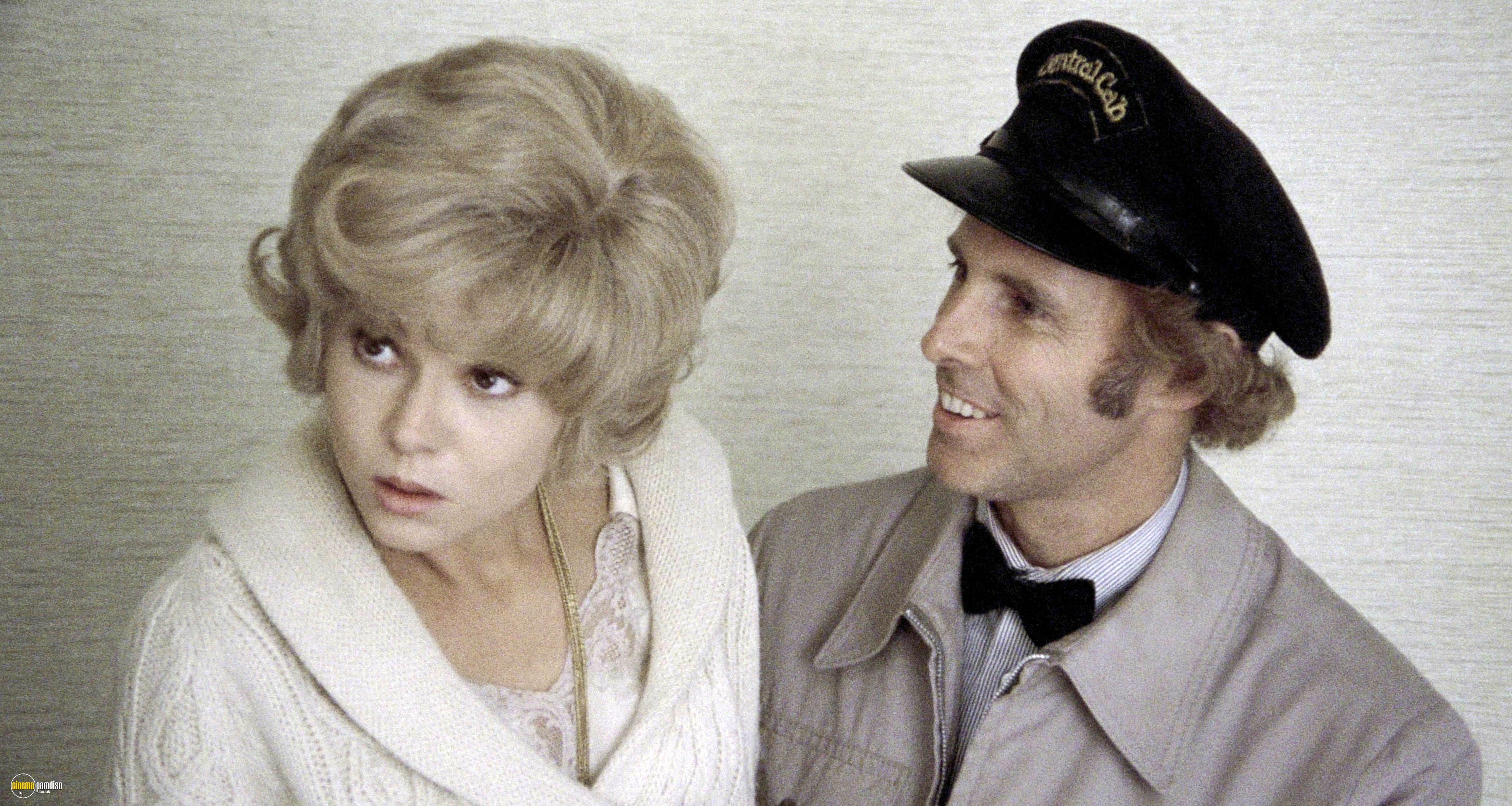
Lamenting the fact that he had become a prisoner of his own success, Hitchcock vowed to keep working as his schedule became a whirl of honours, retrospectives, interviews, and tributes. He had discovered Victor Canning's The Rainbird Pattern and teamed with North By Northwest's Ernest Lehman to shape it into a comedy of errors, deception, theft, and murder. By the time Barbara Harris and Bruce Dern and Karen Black and William Devane were assembled to play couples on either side of the law, the 78 year-old Hitchcock was suffering from arthritic knees and the after-effects of being fitted with a pacemaker. Heavily overweight and further bloated by cortisone injections, he decided not to face the camera for his cameo in Family Plot (1976). Instead, he can be seen on 40 minutes in silhouetted profile through the frosted glass of the door of the Barlow Creek Registrar of Births and Deaths. He's engaged in a finger-jabbing argument with a middle-aged woman on the opposite side of the screen. The shot is held for a couple of seconds before the camera pans right to reveal the scene in the next-door office. But the image lingers in the mind because the director seemed to painfully aware that his health was deteriorating and that his own name would soon be registered as a matter of course.
And that was Hitchcock's cameo career over. He had delayed the moment until late in the shoot, perhaps in the hope that he might have gotten away without doing one. After all, he had once remarked, 'I don't like these small appearances at all. I hate it. It's an ordeal every time. But somehow I feel I have to go through with it. Superstition, I suppose.' Recognising that this would probably be the last Hitchcock picture that they would review, old guard critics and dyed-in-the-wool auteurists cut him plenty of slack and the box-office business delighted the suits at Universal. Buoyed by the reception, Hitchcock continued to develop ideas, one of which concerned some gangsters in possession of the wrong body. He also consider Elmore Leonard's Unknown Man No.89 before returning to The Short Night, a thriller that had been inspired by the escapades of British spy, George Blake. Walter Matthau, Sean Connery, Clint Eastwood, and Steve McQueen were considered for the lead, with Liv Ullmann and Catherine Deneuve being lined up to play the wife hidden away on the Finnish-Soviet border. But Hitchcock knew the picture would never be made, even telling old faithful Norman Lloyd (before they fell out) that it was 'not necessary'. He struggled on for a while longer, even joking that his knighthood made him 'the short knight'. Once he had informed Universal that he couldn't go on, however, he deteriorated quickly and died on 29 April 1980. Alma would follow two years later, unaware that she had been widowed, but still 'happy as a clam', according to her devoted daughter. Pat would live to be 93, dying in 2021, over a century after her father had joined Famous Players-Lasky in 1919, just 24 years after the first moving picture show. His career had stretched from the silent era to the blockbuster age and, even though his reputation has suffered because of the unacceptable on-set behaviour during his final decade, it's safe to say that few directors have had such a lasting impact on cinema, as both a form of entertainment and as an art. There won't be another Alfred Hitchcock, but his films will be watched forever.
What's It All About, Alfie?
Writing around the time of Hitchcock's centenary, the esteemed British critic, David Thomson, claimed 'he never allowed his own appearances to carry a glimmer of meaning - either directly or through some framework of symbolism'. Academic Dan North opined that the cameos give 'a comforting reminder of the fabrication that is being presented to you,' while 'spotting them was a reward for attentiveness, an in-joke for the aware and an auteur's signature'. He continues, 'They usually come at points in the narrative where they won't break the tension of a suspenseful set-piece, at moments of downtime, transitions between locations.' While there's truth in some of these assertions, they still do the Master of Suspense a disservice, as volumes like Michael M. Walker's Hitchcock Motifs (2005) and Monkia Timm's Bit Parts: Hitchcock and His Cameos (2011) have shown.
As we have seen, several of Hitchcock's cameos reflected events happening in his life, while a fair number were timed to coincide with pivotal moments in the storyline. Yet, he was always quick to deny that they were anything more than a bit of business. Speaking to The New York Times in October 1945, he explained: 'It all started with the shortage of extras in my first picture. I was in for a few seconds as an editor with my back to the cameras. It wasn't really much, but I played it to the hilt. Since then I have been trying to get into every one of my pictures. It isn't that I like the business, but it has an impelling fascination that I can't resist. When I do, the cast, grips, and the camera men and everyone else gather to make it as difficult as possible for me. But I can't stop now!'
In 1966, Hitchcock told François Truffaut that the first cameo in The Lodger 'was strictly utilitarian; we had to fill the screen. Later on it became a superstition and eventually a gag. But by now it's a rather troublesome gag, and I'm very careful to show up in the first five minutes so as to let the people look at the rest of the movie with no further distraction.' In fact, he often turned up later in the action and this reinforces the notion that there was often method in the cameo madness.
The sheer amount of repetition also implies that Hitchcock gave his appearances a good deal of thought. He carried musical instruments in Spellbound, The Paradine Case, Strangers on a Train, and Vertigo, and is seen smoking in The Lady Vanishes, Mr & Mrs Smith, Spellbound, and The Paradine Case, while he tosses an empty fag packet away in The 39 Steps. In Blackmail and Torn Curtain, he was inconvenienced by a troublesome child, with the former being one of a clutch of train-related instances, along with The Lady Vanishes, Shadow of a Doubt, The Paradine Case, and Strangers on a Train. Hitch rides a bus in Number Seventeen and To Catch a Thief and misses one in North By Northwest, while he's pushed through an airport concourse in a wheelchair in Topaz.
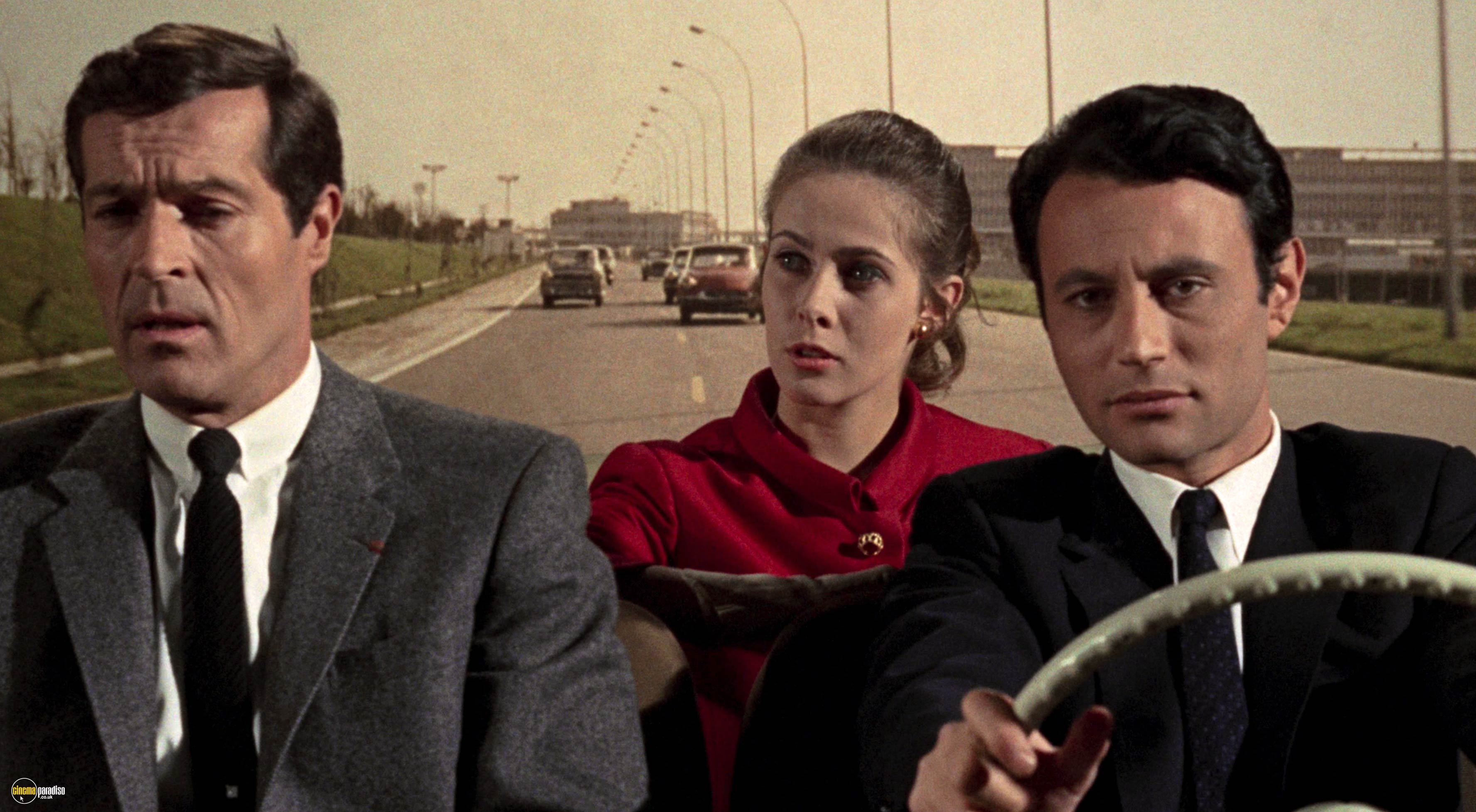
When confronted with a limited space, Hitchcock found ingenious ways to squeeze into shot, most notably in Lifeboat, Rope, and Dial M For Murder. Yet, only once does he make a self-reflexive reference, when he's seen holding a camera outside the courthouse in Young and Innocent. This is one of several cameos in which Hitchcock is the butt of the joke, as he also was in Blackmail, Lifeboat, Rope, North By Northwest, and Torn Curtain. For the rest, he's largely involved in street scenes, although, for all his seemingly benign detachment, he's rarely just another passer-by. By simply walking through the shot, he imparts a sense of momentum. But he also stands in for the viewer at the heart of a scene and his arrival usually alerts them to the fact that something significant is about to occur that will lead the protagonist into the situation that will take the narrative in a new direction, as is the case with Easy Virtue, Blackmail, The 39 Steps, Young and Innocent, Saboteur, Spellbound, Stage Fright, Strangers on a Train, To Catch a Thief, Vertigo, Psycho, The Birds, Torn Curtain, and Topaz.
The sheer number of examples suggests that Hitchcock was entirely aware that his presence stamps his mark on the proceedings. The characters might be victims of capricious fate, as they are being tested or tempted, but he is totally in control and wants everyone to know it. In a way, he became a human MacGuffin, although he never trapped a single lion in the Scottish Highlands.
Mentioned films