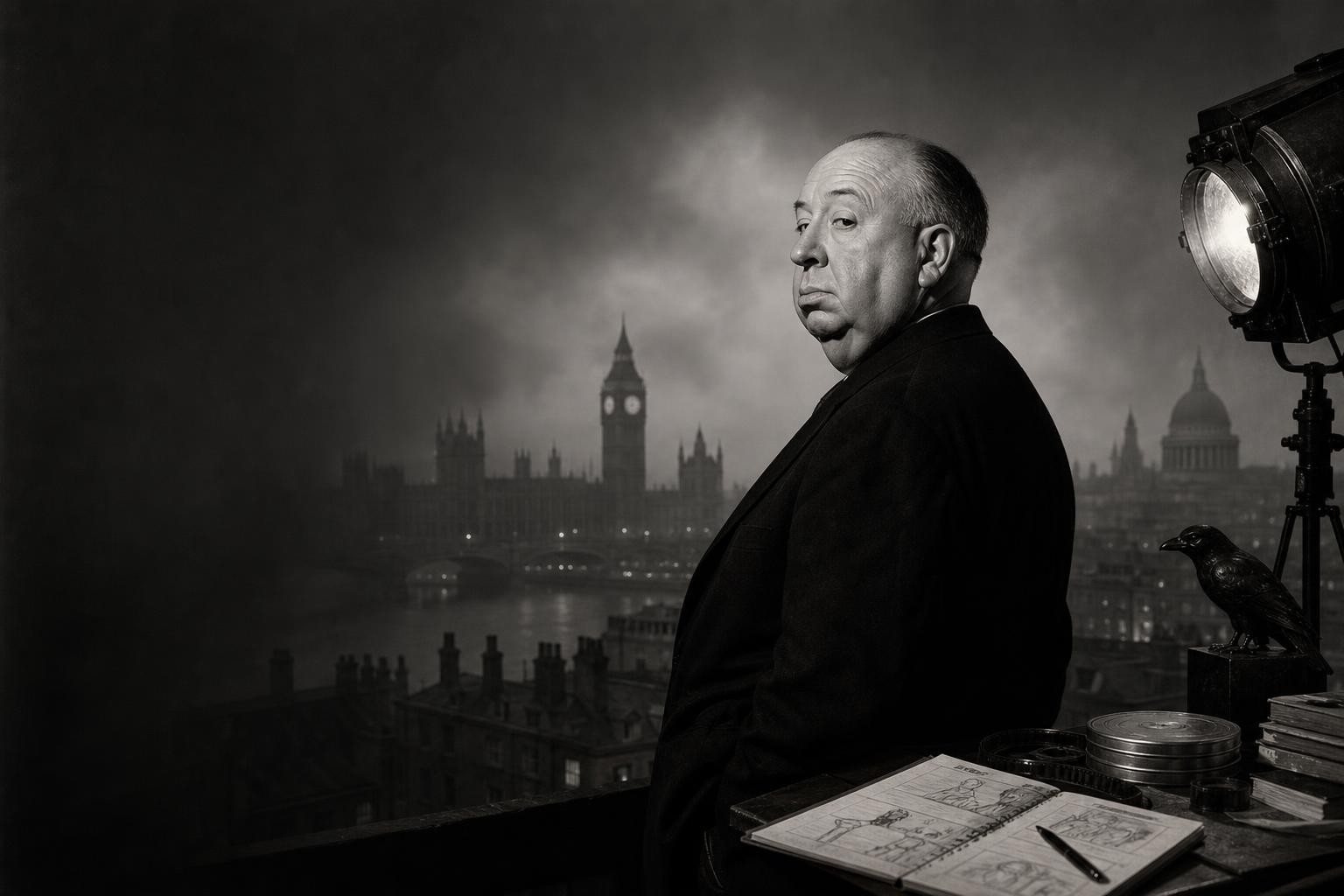
Eighty years ago, Alfred Hitchcock left Britain to work for independent producer David O. Selznick in Hollywood. Ironically, his American debut, Rebecca (1940), was among his most typically English films and it's this phase of Hitch's remarkable career that Cinema Paradiso invites you to explore.
The youngest of three, Alfred Hitchcock was born on 13 August 1899 in the flat above the Leytonstone greengrocery leased by his parents, William and Emma. Raised as a Roman Catholic, Hitchcock had highly developed notions of right and wrong and his fear of transgression was exacerbated when his father sent him to the local police station with a note asking for the five year-old Alfred to be locked in a cell so that he could learn what happens 'to naughty boys'.
A few months later, the family relocated to Limehouse and lived above their fish and chip shop before moving to Stepney when Hitchcock was 11. He attended St Ignatius College in Tottenham, where he was regularly beaten by the Jesuit teachers, who instilled the senses of dread and discipline that remained with Hitchcock for the rest of his life. But, shortly after he enrolled at the London County Council School of Engineering and Navigation in Poplar, the 14 year-old Hitchcock was forced to find work after the sudden death of his father.
A Varied Apprenticeship
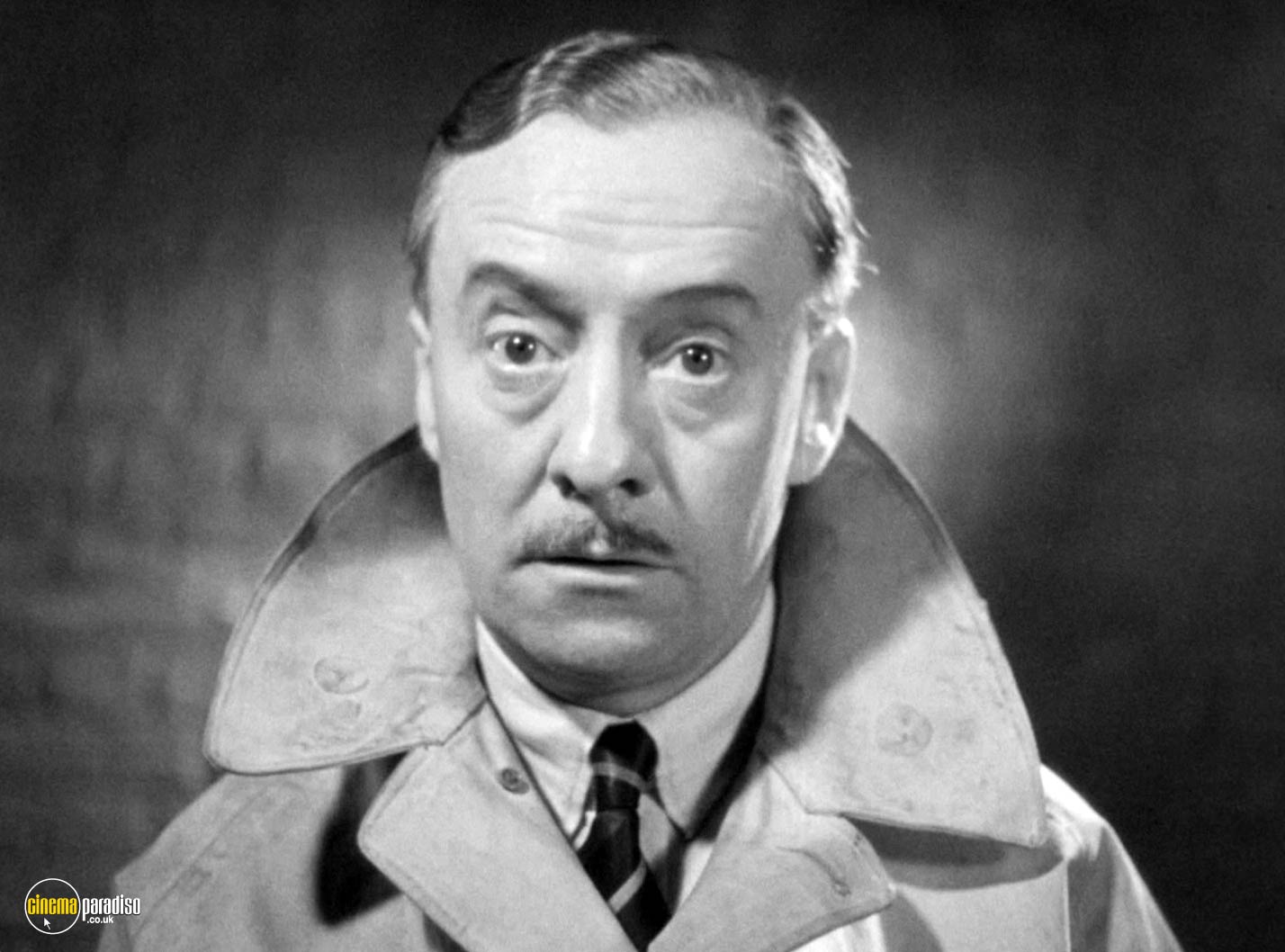
Hired as a technical clerk at the Henley Telegraph and Cable Company, Hitchcock continued his education through evening classes. At the height of the Great War, he also joined a volunteer corps of the Royal Engineers but saw no more action than the odd field exercise in Hyde Park. From June 1919, however, much of his spare time was taken up with The Henley Telegraph, the in-house publication that Hitchcock founded and edited when not at the cinema developing a love of DW Griffith, Fritz Lang, Charlie Chaplin and Buster Keaton. Moreover, he started writing short stories like 'Gas' and 'Sordid', which he published in the Telegraph.
Despite enjoying his new job in Henley's advertising department, Hitchcock had been bitten by the film bug, So, when Paramount's production unit, Famous Players-Lasky, announced that it would be shooting an adaptation of Marie Corelli's The Sorrows of Satan in London, he submitted some illustrated intertitles on spec and was engaged to work at Islington Studios in 1919. When the Corelli project was cancelled, Hitchcock was assigned to design title cards for Hugh Ford's The Great Day (1920) and he would serve a similar function on 11 further features by such British and American directors as Donald Crisp, Paul Powell, John S. Robertson and George Fitzmaurice.

He graduated to art director on the latter's Three Live Ghosts (1922) and was retained by Michael Balcon when the company he had formed with director Victor Saville moved into Islington after Paramount curtailed its London experiment. Assigned to star director Graham Cutts, Hitch tried his hand at scriptwriting and producing, as well as designing sets for Woman to Woman (1923), which would be distributed in the United States by Lewis Selznick, the father of Hitchcock's Hollywood sponsor. While filming at UFA's Babelsberg Studios in Berlin, Hitchcock got to watch FW Murnau shooting his Expressionist masterpiece, The Last Laugh (1924), and picked up visual tropes and camera techniques that would stand him in good stead during his first decade as a director.
Calling the Shots

In 1922, while Hitchcock was part of the skeleton staff keeping Islington Studios operational, he was entrusted with a script by Anita Ross entitled, Number 13. It was also known as Mrs Peabody, as the story centred on the residents of a low-rent tenement founded by philanthropist George Foster Peabody. Actress Clare Greet and Hitchcock's Uncle John invested in the production. But Hitch only had enough money for a few scenes and the project collapsed, although he remained so grateful to Greet that she became his most cast actress in The Ring (1927), The Manxman (1929), Murder! (1930), The Man Who Knew Too Much (1934), Sabotage (1936) and Jamaica Inn (1939).
Hitchcock got a second crack at directing when actor Seymour Hicks arrived at Islington to make Always Tell Your Wife, a comedy of marital manners he had previously filmed with director Leedham Bantock in 1914. It's not known whether Hicks fell out with frequent collaborator Hugh Croise or the latter fell ill, but Hitchcock was promoted from assistant director to complete the two-reel farce. Hicks seemingly had little faith in the 'fat youth who was in charge of the property room' and there's no evidence that the film (which only survives in a single reel) ever reached cinemas. But Hitchcock did enough to persuade Balcon to offer him a full-time post with Gainsborough Pictures.
By the time Hitchcock assisted Cutts for the final time on The Prude's Fall (1925), Balcon decided he had learned enough from his mentor to make his full directorial debut. Allowing Hitchcock to appoint fiancée Alma Reville as his assistant and editor, Balcon packed the 25 year-old off to the Geiselgasteig studios near Munich to make The Pleasure Garden (1925) as a co-production with the German firm, Emelka. Adapted from an Oliver Sandys novel by Eliot Stannard (who would remain a key collaborator throughout the silent era), the story centred on the fate of chorine Virginia Hill after she meets the caddish Miles Mander through her friend Carmelita Geraghty.
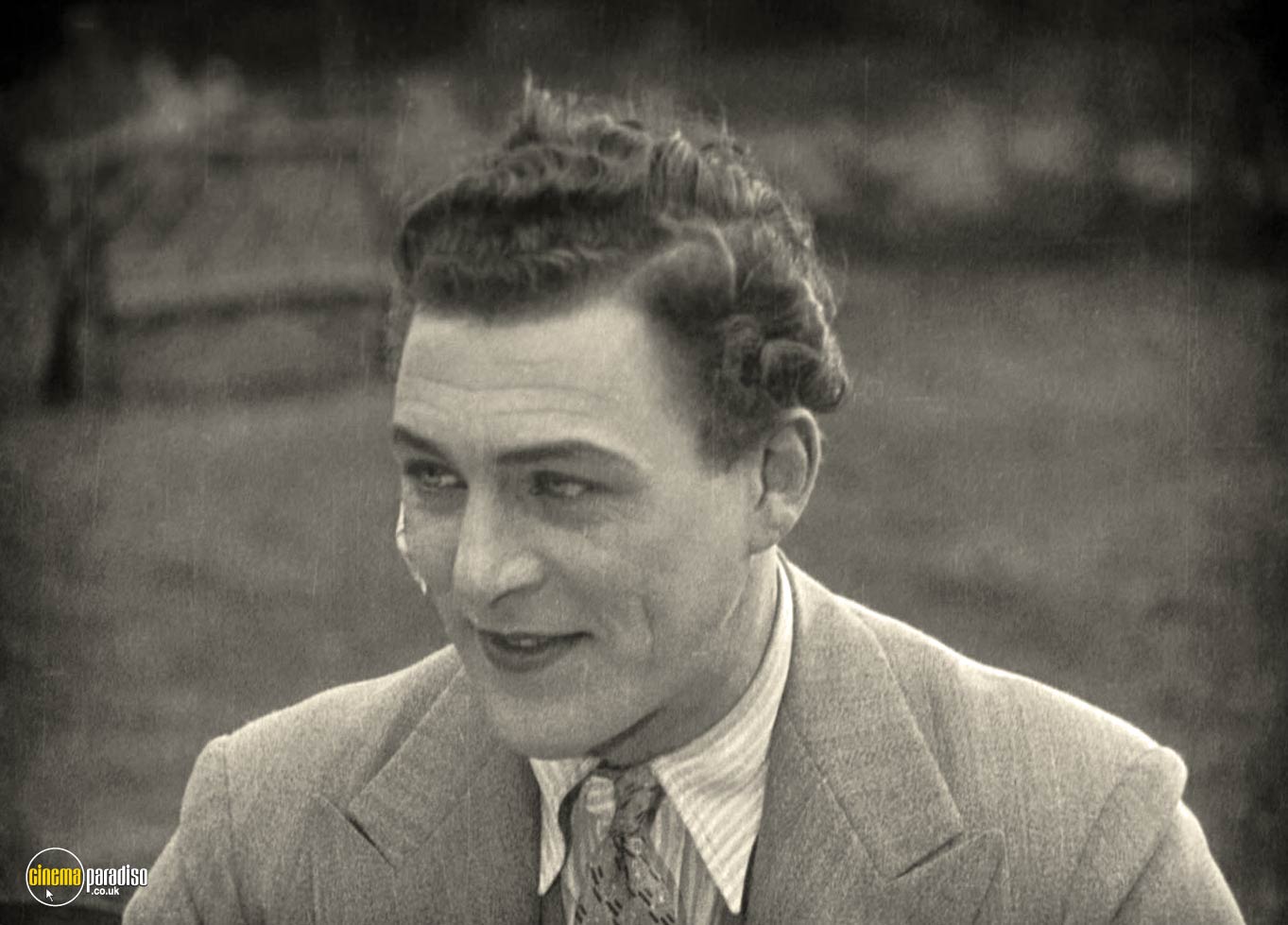
Containing scenes shot on location in Italy, this was a daring enterprise for a first-timer and Balcon was sufficiently impressed to send his protégé back to Emelka to make The Mountain Eagle (1926). Following the misfortunes of Kentucky teacher Nita Naldi after she spurns shopkeeper Bernhard Goetzke to marry hermit Malcolm Keen, the film has long been lost. But Gainsborough backer CM Woolf had a very low opinion of Hitchcock's first three films, including The Lodger (1926), and delayed their release until the early months of 1927.
Seeking a Style

This 'Story of the London Fog' proved to be Hitchcock's breakthrough and set the trend for staging key scenes at famous landmarks and including amusingly brief cameos. In fact, Hitch appears twice, as he sits in the newsroom reporting on the murders spreading terror across the capital and as a member of the crowd watching chief suspect Ivor Novello being arrested. Yet, while this box-office hit gave an early demonstration of Hitchcock's mastery of suspense, he didn't make another out-and-out thriller for three years. Instead, having moved on to British International Pictures at Elstree, he alternated between such melodramas as The Ring (1927) and The Manxman (1929) and comedies like The Farmer's Wife and Champagne (both 1928).
Even after he confirmed his talent to unsettle with the early talkie, Blackmail (1929), Hitchcock continued to shuffle between the genres. Having contributed a couple of sketches to the sound revue and made a rare excursion into short subjects, he adapted Sean O'Casey's play about the Irish Civil War, Juno and the Paycock (1930). Novelist and playwright Clemence Dane provided the inspiration for Murder! (1930), before Hitchcock collaborated with revered author John Galsworthy on The Skin Game (1931).

In 1932, he moved into producing prior to seeing out his BIP contract with a pair of underrated and decidedly offbeat offerings, Rich and Strange (1931) and Number Seventeen (1932). To contemporary critics, however, it seemed as though the great hope of British cinema had lost his way and they were far from reassured when he launched his career at Michael Balcon's Gaumont-British with the Strauss biography, Waltzes From Vienna (1934).
The Master of Suspense
Everything changed, however, when Balcon gave Hitchcock the creative freedom he required. Joining forces with Charles Bennett, Hitch and Alma fashioned the original screenplay for The Man Who Knew Too Much (1934), which dared to reflect the developing diplomatic crisis in Europe while reaffirming Hitchcock's penchant for creating suspense by letting the audience know what was going to happen and making them wait to see how the action would pan out. Only rarely did Hitchcock jolt viewers out of their seats. Instead, he preferred to keep them in a state of heightened tension that often became deliciously unbearable.

He confirmed that he had found his métier by adapting bestsellers by John Buchan (The 39 Steps, 1935), W. Somerset Maugham (Secret Agent, 1936), Joseph Conrad (Sabotage, 1936) and Josephine Tey (Young and Innocent, 1937). The theme of espionage loomed large in these critically acclaimed and commercially successful pictures and Hitchcock further exploited audience concerns about the rise of fascism in The Lady Vanishes (1938), which was adapted by the young writing team of Frank Launder and Sidney Gilliat from Ethel Lina White's novel, The Wheel Spins.
This witty and gripping thriller earned Hitchcock the New York Film Critics Circle Award for Best Director and convinced David O. Selznick to offer him an exclusive contract. Honouring a promise to make the period smuggling saga, Jamaica Inn (1939), Hitchcock arrived in Hollywood to adapt another Daphne Du Maurier novel, Rebecca (1940). By the time the film was released, however, the Second World War had broken out and Hitchcock was heavily criticised by colleagues for not returning to Britain to help the war effort. He did direct a couple of shorts for the Ministry of Information, Bon Voyage and Aventure Malgache (both 1944), but Hitchcock reasoned that he could be of greater propagandist value convincing Americans to support the battle against the Axis.

Keen to help Hitchcock salvage his reputation, producer Sidney Bernstein asked him to advise on a documentary about the Holocaust. Despite being unwilling to make the dangerous crossing while working on Notorious (1946), Hitchcock did offer editorial and structural advice on Project F3080. However, problems with Allied collaborators meant that the footage remained on a shelf in the Imperial War Museum vaults between 1952-84. The five reels were shown on PBS under the title Memory of the Camps, although a fuller version was finally released in 21014 as German Concentration Camps Factual Survey.
It made sense for Bernstein to rehabilitate Hitchcock, as the owner of the Granada cinema chain had become his partner in Transatlantic Pictures, a production company that would make Rope (1948) in Hollywood and Under Capricorn (1949) at the MGM studio at Borehamwood. Hitch would switch to Elstree to make Stage Fright (1950) for Warners Bros. But this proved to be his last homemade movie until his penultimate offering, Frenzy (1972), which took him back to his roots, as the killer was a greengrocer.

Mentioned films