As Baz Luhrmann's Strictly Ballroom returns to UK theatres in a new 4K restoration, Cinema Paradiso looks back at how a quirky underdog comedy from Down Under succeeded in making ballroom dancing cool.
One of the finest dancers in Hollywood history, Gene Kelly, loved sport. His father used to flood the backyard of his Pittsburgh home so that he could skate when it froze over. Yet, although Kelly had turned out for the semi-professional ice hockey outfit, the Pittsburgh Yellow Jackets, by the age of 15, his great ambition was to play baseball for the Pittsburgh Pirates. While reading economics at university in the mid-1930s, he featured on the American Football and gymnastics teams. But he was also developing a dance style that harnessed the rhythmic movements that came so naturally while playing sport.
His distinctive 'wide open' step technique was directly linked to his ice skating style and, almost as soon as he was snapped up by Hollywood, Kelly set out to revolutionise screen dance by placing less emphasis on ballet and ballroom and adopting a muscular athletic approach that set him apart from great friend and rival, Fred Astaire.
When Kelly broke an ankle playing volleyball, he coaxed Astaire out of retirement to take his place opposite Judy Garland in Charles Walters's Easter Parade (1948). It would be fascinating to know how Kelly would have choreographed the solo slot, 'Steppin' Out With My Baby' (on which Astaire used slow motion). But he gave an insight into his approach in the 1958 TV special, Dancing: A Man's Game, which explained the connection between modern dance and sport.
Ballroom dancing is considered a sport by its millions of practitioners worldwide. Attempts have been made to have it included in the Olympic Games and its notable that cricketers Darren Gough (2005) and Mark Ramprakash (2006), gymnast Louis Smith (2012), and footballer Karen Carney (2025) have all won Strictly Come Dancing. The beloved BBC show took the second part of its title from the long-running TV dance competition, Come Dancing, which racked up 424 episodes on the Beeb between 29 September 1950 and 29 December 1998. The first part, of course, was lifted from Baz Luhrmann's Strictly Ballroom (1992), which transformed the status of ballroom dancing by reinforcing Gene Kelly's contention that there should be room for personal expression and creative freedom alongside the officially recognised footwork patterns that have been taught in dance schools since Ukraine-born Moses Teichman started giving lessons in Boston in 1912 under the name Arthur Murray - a name that's still familiar in ballroom circles, as it's appended to dance studios in 320 locations across 19 countries, including Sydney, Australia.
Brushes With Basil
Basil Brush looms large in the legend of Mark Anthony Luhrmann. His classmates at St Paul's Catholic College gave him the nickname 'Baz' because his naturally curly hair reminded them of the famous fox and he changed his name to 'Bazmark' by deed poll when he was 19. Luhrmann was born in Sydney in September 1962, but he was raised in Herons Creek, a tiny New South Wales rural outlet some 180 miles from the big city. His father, Leonard, had served in Vietnam with the Royal Australian Navy and returned to run the local petrol station and cinema. Mother Barbara was a seamstress who taught ballroom dancing in her own studio and Luhrmann drew on his memories of the people he had encountered when he came to write a short play in the early 1980s.
Having become interested in acting while appearing in a school production of William Shakespeare's Henry IV, Part 1, Luhrmann found a kindred spirit in Craig Pearce when he transferred to Narrabeen Sports High School. By this time, his parents had separated and he had run away from home around the age of 15. On graduating, he made for Sydney, where he met Steve Mason, who recalled the time in Australian Cinematographer. 'I met Baz when he was 18,' he said. 'My father [Richard] was a producer in Sydney and helped Baz, gave him a place to sleep and keys to his office at Kings Cross. During the day, people would be working there on film productions. Baz also played a role in one of my father's films, Winter of My Dreams (1981). ' This was directed by John Duigan, but it didn't help Luhrmann secure a place at the National Institute of Dramatic Art. So, he formed The Bond Theatre Company with fellow rejectees, Nell Schofield, Gabrielle Mason, and Julia Little.
Having staged American Days at the pavilion on Bondi Beach, Luhrmann agreed to go undercover with some Kings Cross street kids for Steve Mason's TV documentary, Kids of the Cross (1983). As Mason recalled, 'We lived on the streets with children as young as 12 and did an exposé telling the stories of these runaway children. Most of them had come from abusive families. It was told from the children's point of view.' Causing something of a stir, the film won an Australian Film Institute award, but it's now virtually impossible to see.
Shortly afterwards, Luhrmann secured a place on an acting course at NIDA and graduated two years later, alongside actresses Sonia Todd and Catherine McClements and writer-producer Justin Monjo. However, Luhrmann had been so disappointed with the course and its rulebook mentality that he decided to celebrate resisting creative oppression in a short play, which he co-wrote with Craig Pearce.
Another influence on the storyline was Keith Bain, who had grown up not far from Herons Creek in the NSW town of Wauchope. He was teaching at a high school when he came across the iconoclastic choreography of Gertrud Bodenwieser and was so bowled over that he quit his job to train under her in Vienna. Bain became a key member of her company and he returned to Sydney to set up the Bodenwieser Dance Centre, with Margaret Chapple. Together, they introduced new dance styles and Bain was invited to became an instructor at the Arthur Murray Studios. Promoted to dance director, he paired with Joyce Lofts to enter ballroom and Latin competitions, only to find that the judges and their fellow competitors frowned upon the innovative variations on the prescribed steps that had invariably been greeted with such enthusiasm by the audience.
Running for 30 minutes, Strictly Ballroom was first performed at NIDA in 1985 by Luhrmann, Todd, McClements, Schofield, Tony Poli, Helen Mutkins, Glenn Keenan, and Jamie Robertson. Encouraged by the reception, Luhrmann and Pearce expanded the narrative and the new version went down a storm at the Czechoslovak Youth Drama Festival in Bratislava in 1986. Returning to Sydney to focus on directing for the stage, Luhrmann was invited to form the Six Years Old experimental ensemble by the Sydney Theatre company, as part of Australia's bicentenary celebrations.
Based at The Wharf Theatre, the group included Catherine McClements, as well as production designer Catherine Martin, set dresser Bill Marron, and costume designer Angus Strathie, who would all become key collaborators when Lurhmann moved into cinema (with Martin becoming his wife in 1997). New to the acting troupe was NIDA graduate Tara Morice, who became involved in a new stage version of Strictly Ballroom in 1988. As she told The Guardian, 'We talked a lot in rehearsals about the paso doble, and from that came Fran's Spanish immigrant background. I thought up the name Frangipani because Sydney has frangipani trees everywhere. On my walk to rehearsals, I'd often pick one of the flowers to put in my hair.'
Following a trial run at the Brisbane Expo, the musical comedy opened at the Wharf Studios on 24 September 1988. Among those who saw the production was record producer and music publisher, Ted Albert, who had discovered 1960s Australian pop group, The Easybeats, as well as supporting John Paul Young and AC/DC. He had been persuaded to see the show by his wife, Antoinette (aka Popsy), and he immediately recognised its cinematic potential. Albert had just started branching out into film production with producer, Tristram Miall, and M&A Productions managed to track down Luhrmann and make him the offer that would change his life.
One Step Forward, Two Steps Back
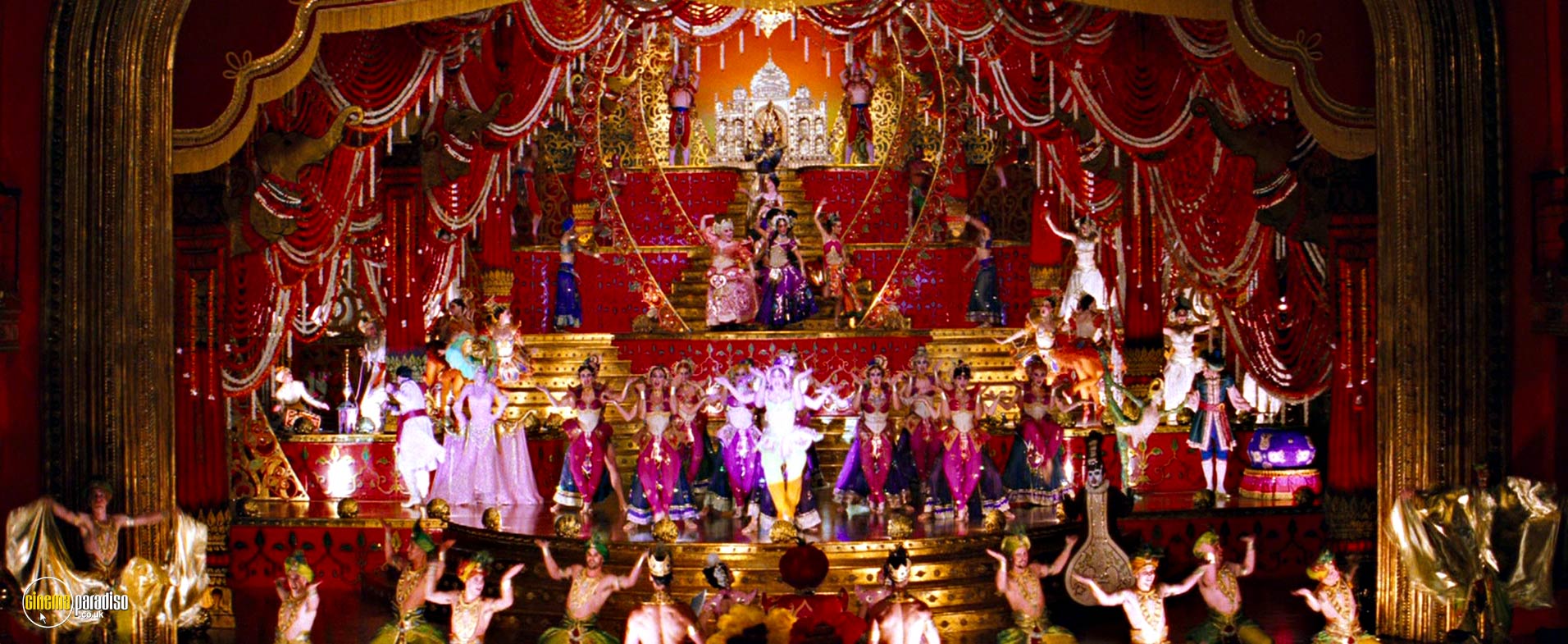
With his producers seeking funding, Luhrmann set about turning his stage play into a screenplay. Andrew Bovell was hired to assist him, but Luhrmann soon felt uneasy about the inclusion of a realist subplot about trade union activity at the Newcastle Steelworks. As a consequence, Bovell was replaced by Craig Pearce, who already understood what Luhrmann was trying to achieve. As he told the Irish Film Institute: 'All our films we make have this cinema form which we call theatricalised cinema, red curtain cinema, Strictly Ballroom, Romeo + Juliet and Moulin Rouge. Strictly Ballroom is very curious, and this students may find interesting in that it began a journey...The thing is though, when I set out to write it the producers wanted me to work with a legitimate screenplay writer, and I did but our first step there was naturalising it, we were making it a natural cinematic form. The problem with that was it became like Dirty Dancing, which is not to denigrate that film but you lost the metaphorical power, it just became a film about dancing. So I then had to wrest the process back, confront the reality that the best person to write with was my best friend who understood what I had been doing, and we then began the first steps in what we might call this theatricalised cinematic form.'

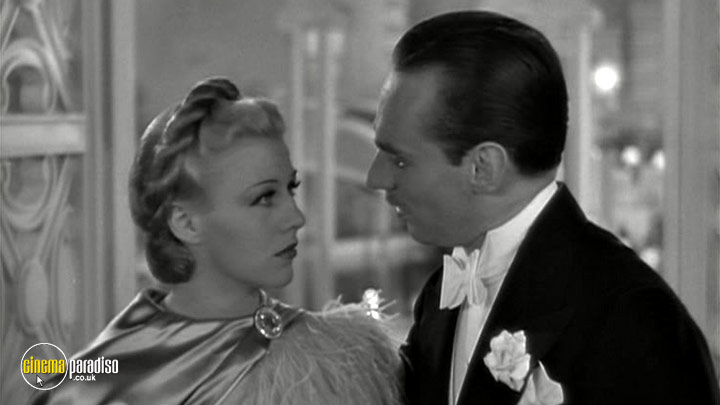
Luhrmann continued: 'We then had to look back to the movies of the 1940s and 1950s, musicals, because they were metaphorical, they were heightened creative films...If you take Top Hat for example, there is no question there is no social or economic reality to Venice in Top Hat. It's a heightened fantastical world. And the audience has to participate in the cinematic form, they can't be passive, they have got to accept the conventions and notions that are going on. So with that at play we were able to combine this idea of a metaphor that had meaning to us in a cinematic form. So it was both old and new in its form and we progressively developed that further and further with Romeo + Juliet and Moulin Rouge.'
While Luhrmann and Pearce were fashioning a new approach to cinema, Albert and Miall were struggling to convince backers to fund a feature with a rookie director and a cast of newcomers. The only 'bankable' names they had signed were Bill Hunter and Barry Otto, while potential investors were concerned that Sydney Dance Company star, Paul Mercurio, had never acted before. Others were put off by the left-field nature of a story that centred on the steps that could be performed at a dance competition. Consequently, the producers had to cut the proposed AU$5 million budget and instructed Luhrmann to drop a subplot and pare back the main storyline.
The important Film Finance Corporation told Albert and Miall to ditch Luhrmann, as no one was going to entrust a first-timer with such a large budget. They responded by making AU$2 million's worth of cuts, while also agreeing to find AU$1 million and secure a local distributor in return for the FFA putting up around 65% of the budget. In an effort to rustle up some overseas interest, Luhrmann was dispatched to Cannes, but found no takers. Looking back, Miall said, 'All the financiers we approached shook their heads and said: "You've got to be mad...Get yourself a new director." We said "No, we'll get ourselves a new budget." And Baz famously said: "Just tell me how much money you can raise and I'll make it for that." That was wonderful, that can-do, roll-up-your-sleeves attitude.'
Fortunately, Andrew Pike, the head of the independent distribution company, Ronin Films, was so taken by the set miniatures, costume samples, and various sketches that Luhrmann had done that he agreed to bankroll a limited release (although he would later confess that he hadn't been entirely sold on the script). On 11 November 1990, however, Ted Albert died of a heart attack, putting the FFC money in jeopardy. Suddenly faced with having to raise two daughters alone, Popsy decided to honour her husband's commitment. As she later stated, 'I had two choices, yes or no, and no wasn't an option. This film was so special to Teddy and a big part of our lives. Letting go of that meant letting go of a big part of him and I couldn't do that. I had to make that decision overnight.' However, she admits that she also had a personal reason for taking on the role of executive producer. 'It also gave me a reason to get up every day,' she said, 'and put a smile on my face, somebody had to. And it gave our family a focus that was around Ted but not connected with sadness.' Strictly Ballroom was dedicated to his memory.
Time After Time
Since the age of six, Scott Hastings (Paul Mercurio) has been obsessed with ballroom dancing. Mother Shirley (Pat Thomson) runs a dance studio with Les Kendall (Peter Whitford), who is Scott's coach. Father Doug (Barry Otto) does odd jobs around the place, when not watching old home movie footage of his own dancing days and his son's best moves. However, Scott has grown tired of the steps approved by Barry Fife (Bill Hunter) of the Australian Dancing Federation and tries to convince partner Liz Holt (Gia Carides) to incorporate some new elements into their routine at the Southern Districts Waratah Championships.
The furious Fife ensures that Scott and Liz lose and condemns the 'crowd-pleasing' steps and lifts that are not 'strictly ballroom'. Distraught at being beaten, Liz abandons Scott for star dancer Ken Railings (John Hannan), who needs a replacement after partner Pam Short (Kerry Shrimpton) breaks both legs in a car crash. With only three weeks to go until the Pan-Pacific Grand Prix Dancing Championship, Shirley and Les frantically search for Scott's new partner. However, they don't know that he has been rehearsing in secret with Fran (Tara Morice), a beginner at the dance studio, who dresses modestly and seems to lack the glamour to be a ballroom star.
As Fran is willing to learn Scott's special steps, they strike up a rapport while dancing in front of a neon Coca-Cola sign on a Sydney rooftop. But Fife is determined to interfere and announces that he has arranged for Scott to dance with proven winner, Tina Sparkle (Sonia Kruger). Shirley and Ken are delighted, as is Scott's younger sister, Kylie (Lauren Hewett), who dances in the juniors with Luke (Steve Grace). Seeing everyone so happy, Fran presumes that they have discovered her secret. She is crushed, however, when she realises that Scott has been paired with Tina and she runs off. Chasing after her, Scott persuades her to dance with him backstage and each feels the special connection Shirley and Les witness the scene, however, and seek to convince Fran that she's not up to the required standard and that she owes it to Scott to step aside and let him dance with Tina. On learning what has happened, Scott declares that he will only dance with Fran and he finds out where she lives to ask her to come back. She resides in a poor part of town, where her father, Rico (Antonio Vargas), owns the rundown Toledo Milk Bar. He is fiercely protective of his daughter and confronts Scott when he comes to the house. Hoping to make a good impression, Scott dances a paso doble with Fran. But the neighbours laugh at their timid steps and Rico demonstrates the bullfighting fervour of the dance with Fran's grandmother, Ya Ya (Armonia Benedito).
Transfixed, Scott agrees to be coached by Rico. But Fife is hell bent on imposing his authority and informs Scott (via a stylised flashback) that Doug had once had the potential to become a champion, only to blow it by insisting on using his own steps and Fife urges Scott not to repeat the mistake. He even pressurises his best mate, Wayne Burns (Pip Mushin), and his partner, Vanessa Cronin ( Leonie Page), to convince Scott of the error of his ways. Reluctant to drive a wedge between his parents, Scott agrees to resume his partnership with Liz, after Tina defects to join Ken. Feeling betrayed, Fran tells Scott: 'You're just like the rest of them. You think you're different but you're not because you're just really scared, you're really scared to give someone new a go because you think, you know, they might just be better than you are. Well, you're just pathetic and you're gutless. You're a gutless wonder. Vivir con miedo, es como vivir a medias!' (which translates as ' A life lived in fear is a life half lived.')
At the Pan-Pacifics, Doug takes Scott aside and tells him that Fife had forced Shirley to dance with Les all those years ago because he was set on winning the championship by sticking to the rulebook. He also reveals that Fife has already decided to nobble Scott by ensuring the judges give Ken and Tina better marks. So, Scott seeks out Fran and apologises for being a fool and asks her to be his partner so they can dance their way. They make a dramatic entrance and soon have the audience on their side. Bellowing into his microphone, Fife tries ordering them to stop. But Wayne pulls the plug, while Kylie and Luke prevent Fife from turning off the music. Eventually, Fife's girlfriend, Charm Leachman (Kris McQuade), manages to silence the speakers. Fife disqualifies Scott and Fran. But Doug starts clapping out a paso doble beat and the audience joins in, as the pair resume their dance. Defying Fife, Liz switches the music back on and Scott and Fran receive a wild ovation. As the audience spills on to the dance floor, Doug asks Shirley to accompany him and Fran and Scott kiss.
Achieving Status Quo Vadis
When Baz Luhrmann and choreographer John 'Cha Cha' O'Connell auditioned 300 people for the film in Melbourne, they were uncertain whether they were looking for dancers who could be taught to act or vice versa. Paul Mercurio fell into this category. He told The Guardian: 'I got a call from this eccentric person called Baz, who said he was making a film about ballroom dancing. He needed someone to choreograph Scott's unconventional steps. I said: "No probs." Then he rang back a year later when he finally had the money to make the film. He wanted me to audition to play Scott.'
Despite having been in the play and being Craig Pearce's partner, Tara Morice was never quite sure what was happening. Producer Tristram Miall later admitted, 'We put poor Tara Morice through the mill,' and she agrees. She revealed to The Guardian: 'It was while doing the play that I met Craig Pearce; he and Baz were ancient friends and ended up working on the screenplay. Craig and I were together for 13 years, and we have a daughter. But it was never a foregone conclusion that I would play Fran in the film. I did seven screen tests over the course of a year. Craig would say to me, "I'm only ever thinking of you when I write Fran." Meanwhile, I was wondering: "What's going to happen with me and him if I don't get the part?" I felt this ownership of Fran because I'd worked on her for so long.'
She continued: 'I was only told I'd been cast the night before we started. Even once we were filming, I had this sense of doubt: I'm not pretty enough, I can't dance well enough - which is 100% Fran...Baz had already got me doing pre-production work with Paul Mercurio, who played Scott. Paul was an extraordinary dancer with the Sydney Dance Company but he hadn't done any acting, whereas I'd done the play but had less experience dancing. We sort of met in the middle. Fran and Scott are the centre of their own naturalistic world surrounded by all these larger-than-life characters. That's typical of Baz's peculiar, unique style.'
Following the various compromises to secure the budget, it was agreed that Luhrmann had just 32 days to complete the film. He had never directed for the camera before and he reeceived a real baptism of fire, as the big finale was filmed during lunch hours and session breaks at the actual Pan-Pacific Dancing Championship in Melbourne. Although the audience of around 3000 agreed to be filmed, some people got bored and Popsy Albert had to join production assistants in draping costumes over empty seats to create the illusion they were occupied. 'It was go, go, go,' Miall remembered, 'we couldn't afford much overtime, but we needed that crowd and venue. If you look very closely, you see big gaps in the crowd!'
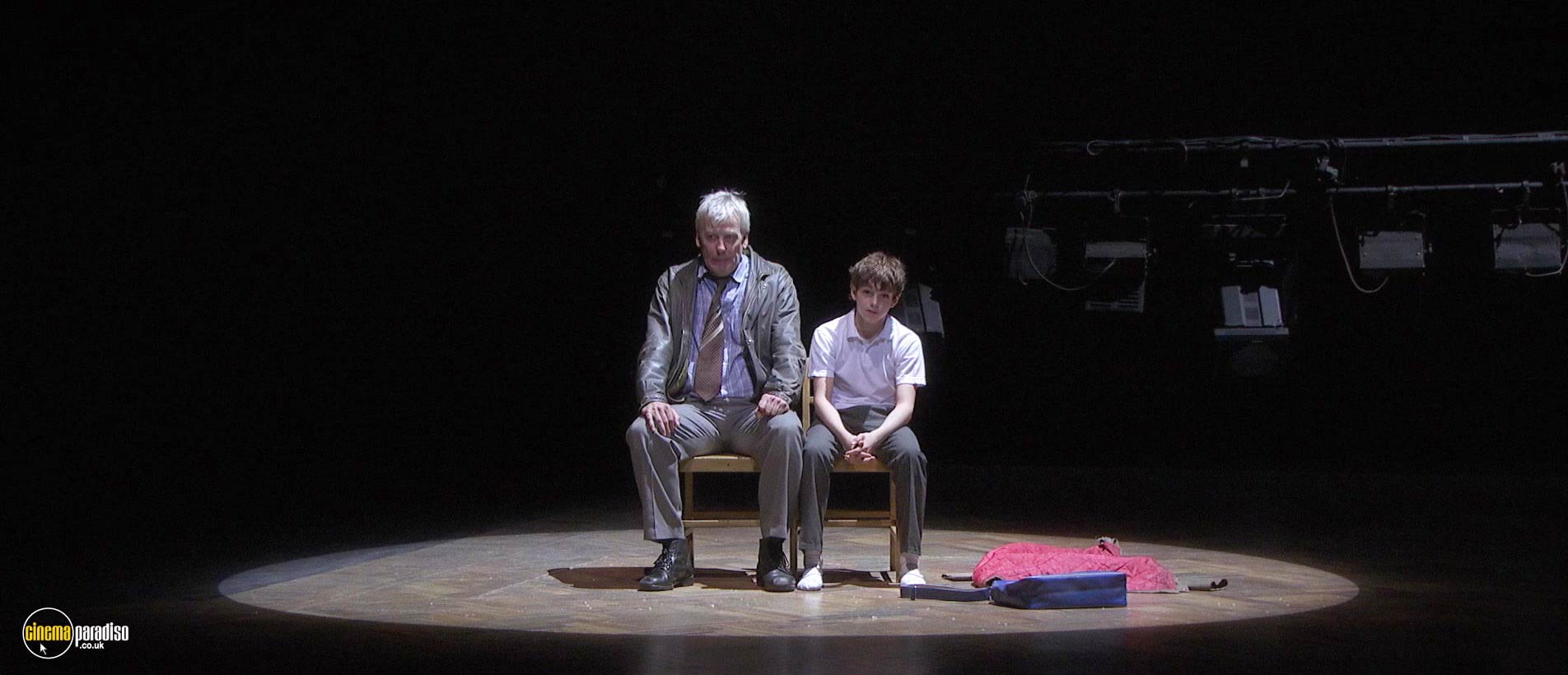
Not helping matters was the fact that Mercurio had sprained his ankle while practicing in the Spanish boots that had been custom made for him. As Miall recalled, 'Paul spent every minute of the first part of the shoot with his ankle up being iced when he wasn't being filmed. It was a disaster.' However, Mercurio proved to be a trouper and danced the paso doble through the pain. He told The Guardian: 'I always loved watching Baz work. He was so considered but also a genius: a little bit loopy, a bit out there. I have that line from the film on my fridge: "Dance your own steps." I'd always done that myself, even as a young kid doing ballet in the 1970s. I had friends at primary school who wanted to beat me up. There was that attitude: boys don't do ballet. Billy Elliot was kind of my story.'
Learning on the job, Luhrmann relied a lot on cinematographer Steve Mason when it came to lighting, lens selection, and camera placement. He also owed a good deal to Catherine Martin, who worked wonders as production designer at a time when most Australian films were made on location. She suggested building Shirley and Les's dance school on a soundstage because it could be used for numerous scenes to cut costs. She visited several studios in the Sydney area to ensure it looked authentic and was delighted when some loaned her trophies to fill the display cabinets. Considering the good-natured ribbing that the ballroom community endures in the film, it couldn't have been more co-operative during the shoot and responded with huge enthusiasm when the picture was released.
Coca-Cola was initially reluctant to let Luhrmann use the iconic sign for Fran and Scott's dance to 'Time After Time', but they eventually agreed, while imposing strict rules about its depiction. Cinema Paradiso users might want to check out Merian C. Cooper and Ernest B. Schoedsack's King Kong (1933) and Ridley Scott's Blade Runner (1982), as they also contain key scenes with a Coke sign at their heart.
Martin also designed the milk bar and adjoining house, where Fran lives on the wrong side of the tracks with her father and grandfather. In the original play, Scott's partner had been named Jennifer and was known as 'Jennifer Wallflower'. However, she became Francesca after it was decided that the signature dance should be a paso doble. As Luhrmann explained, 'The Anglo world took the paso doble, which is a dance of expression, and put a whole lot of rules on it, and made it about winning. Whereas in Fran's family, dancing is a tradition, it comes from life, it is an expression of life.'
O'Connell reveals on the commmentary that he hadn't known much about flamenco before he started choreographing for the film. He was aided by Antonio Vargas, however, who was a renowned dancer, who had come to Luhrmann's attention when he had accompanied someone trying out for Fran to the auditions. In addition to accepting the role of Rico (for which he wore his own clothes), Vargas also trained Mercurio and Morice. Armonia Benedito had no dance background, however, and Luhrmann jokes on the commentary that he had to pat her on the bottom so that she got the rhythm during the scene in which Ya Ya taps out the pulse of the paso doble on Scott's white vest.
This scene was filmed at a specially built set that Martin positioned to the side of some railway lines, so that Luhrmann could get the shot of the train rumbling past, as Scott is given an impromptu dance lesson by Fran's friends and family. Martin recalls that the house and milk bar were so realistically decrepit that a health and safety inspector turned up while they were shooting and threatened to close the milk bar down unless Martin came up with up-to-date certificates. Morice loved the set and told The Guardian: 'None of us could believe we were making the film. It had been so hard to get funding, and everyone had told Baz it wouldn't work. But I'll never forget stepping on to the set. Fran's house was so perfect. It was winter and frangipani wasn't in flower so Catherine Martin had some made and stuck them in the trees. We stayed up doing those scenes until 2am because they needed the goods train to go past Fran's house.'
While Martin also designed the everyday outfits, the dance costumes were the work of Angus Strathie, who took his inspiration from actual styles worn by competitive dancers. The hair and make-up designs were also borrowed from life, as Luhrmann sought to achieve the blend of heightened reality and cinematic theatricality that characterises Strictly Ballroom and its companions in the Red Curtain Trilogy.
Following the opening shot of some stage curtains, the action centres on a clutch of talking-head interviews, as fantasy and actuality are juxtaposed to set both the scene and the tone. Luhrmann told the Irish Film Institute about the conscious choices to make the ballroom world seem closed and insular, while Fran's is more open and accepting. 'You come into the world,' the director explained, and it's claustrophobic, very artificial, I mean their world is halls and funny dresses. When Scott and Fran first dance together...the moment she takes off her glasses we're suddenly shooting exterior, we're on a rooftop and the classic transformation moment, and they're dancing in front of a Coke sign, and we're wide, we're outside in the real world. So it makes the film breathe a little more...So that what Fran represents, what Fran brings to it is related to exteriors, wide shots, whereas the oppressive world is very artificial, controlled and enclosed.'
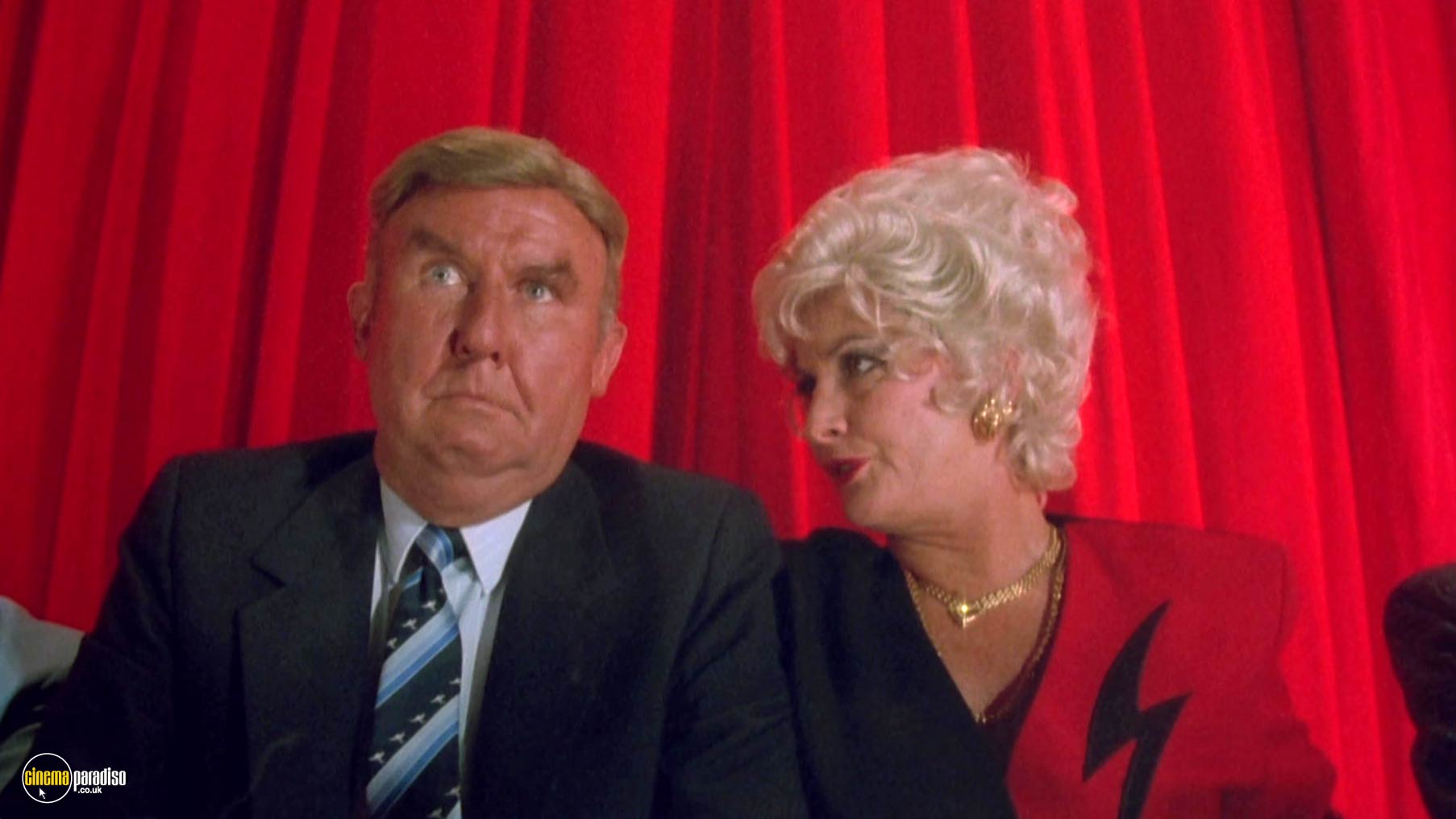
Luhrmann reinforces this sense by shooting Barry Fife in unflattering upward-pointing close-ups. He also used high-contrast light to give Fife's skin a ruddy look that makes him look as artificial in the real world as the rictus smiles, lacquered hair, and fake tans sported by the dancers under his command. This is all a ploy to lure viewers into accepting what Luhrmann calls 'audience participation cinema'.
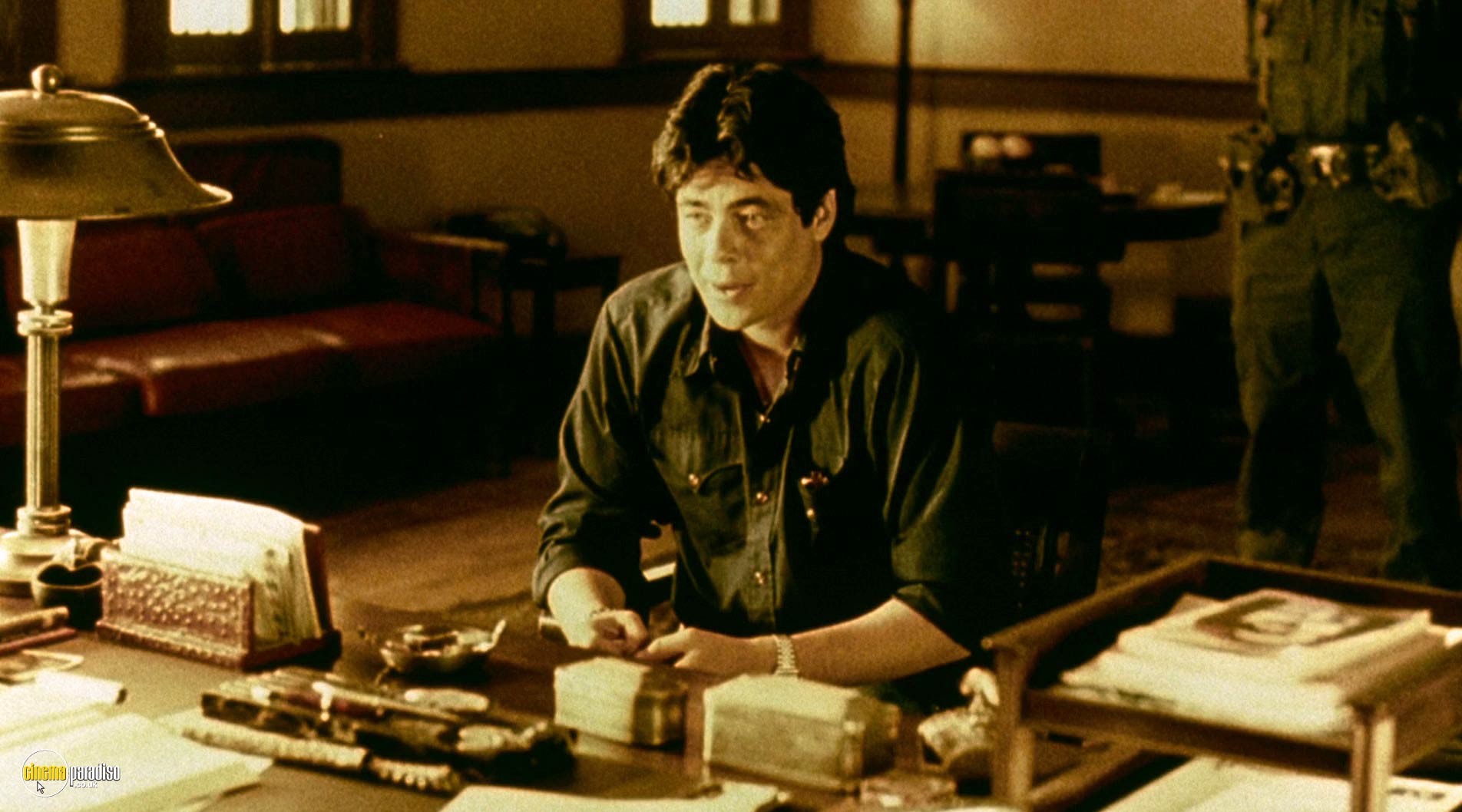
'Basically and very simply,' he told the IFI, 'audience participation cinema is the antithesis of natural cinema. Natural cinema is where you're seduced into believing through a whole lot of devices and tricks that you're watching a real life story…In the old movies of the Forties and Fifties or in the musical form of cinema, or in a film like you know Les Enfants du Paradis, or in Indian cinema, say Bollywood Cinema, there's no question that you're always watching a movie. The film itself continues to remind you that. Once you agree that you're always watching a movie, you're happy to accept one moment of very high comedy like stand up comedy, then tragedy - brother kills brother - then break out into song. It allows you to celebrate the use of devices...It's very Brechtian. I like to think of it as "Brecht with heart", kind of warm Brecht or "Disco Brecht". I think the thing about Disco Brecht is that it's about participating. You can't be passive. It's not to denigrate naturalistic film, I mean I love for example, Traffic, it's a great naturalistic film. It's a lot of devices though - like shaky cam, to give the impression that you're watching reportage about the drug problem. Now it's not real. What we do is reverse that and say that it's always a movie, very Brechtian as you say, and you must participate. So it's not about quietly sneaking up on you, it's about going bang! Wake up wake up, get involved…And that form, it has some rules.'
'No.1. We looked to Greek myth for this. In the case of Strictly Ballroom it's David and Goliath, in Moulin Rouge it's the Orphean myth. No.2. It's set in a heightened creative world, a world that you might think is funny and exotic like ballroom dancing, but you kind of understand if it's a football club, or it's a political world that's universal. The president of the football club or President of the United States and the President of the Dance Federation all have the same vernacular, which is you know, "We've got a rebel out there who's speaking freedom through steps - we've gotta crush him! And thirdly and finally, I guess the best comparison is a sporting match. You go to watch soccer, you know the rules of the game, but you're nudging and winking at everyone and going yay! if you score. You have to keep the audience awake at all times, so you use device. And dancing was in Strictly Ballroom, in Romeo and Juliet it's language, they're always speaking in iambic, and in Moulin Rouge they sing. So you know, it is a different kind of experience, more like playing an album or a record or something where you hear music. It's not about revealing plot. Most naturalism usually buries plot and then secretly sort of reveals it, whereas basically you know what the plot is at the beginning of the movie, you know the girl's gonna get with the boy and they're gonna win, but you go, how are they going to do it? It's the resonance of the way you tell it that becomes the kind of participating factor.'
Steve Mason recalled the daily routine required to ensure Luhrmann got what he wanted when there was little time to spare. 'Baz and I would get to set an hour early every day and walk through the scenes and talk through the story. I was fortunate enough to go to acting school for some years. I really wanted to learn what the process was of acting which helped me greatly as a cinematographer. I like to know what each actor is saying in the scene and why they are saying it because it really affects the way we photograph a scene. Baz and I would get together and talk about the structure of each scene and what he wanted the scene to say.'
Time was always of the essence and there was always plenty going on. 'I suggested to Baz that, for the pace of film he wanted we would need a lot of coverage. We would have to do a lot of setups. We averaged 40 set ups per day. We agreed on doing just three takes per shot. It was very difficult with these complex dance moves Baz choreographed. We couldn't use Steadicam because when the dancers stopped the camera would need to come to a dead stop. With the technology at the time, the weight of a Arri BL it would have been just too unsteady and taken away from the dance and reactions of the actors.'
In order to follow the dancers, Mason placed the camera on a dolly mount with highly inflated wheels that could absorb any bumps in the flooring of the sets and locations. He also had to improvise with the lighting, as he couldn't afford the larger lamps that would allow him to capture the glossy milieu in which every dancer creates an idealised version of themselves. There isn't a single digital image in the entire film, which was edited with great finesse by Jill Bilcock to switch between establishing and full-figure shots and close-ups of feet and faces, as the characters feud, fight, flit, and fall in love.
Given the inexperience of the creative team and the restrictions imposed by the budget, Mason remains proud of what was achieved. 'We had 32 days to shoot the film,' he concludes, 'and we had a lot of locations. We had a wonderful experience doing it, which created a whole ensemble feeling and everyone felt part of it - we were all just working really hard together. We were exhausted. Baz said at the end of the shoot, "I will never do a film at this pace again, it's too hard."'
Keep Dancing
Completing the picture was the easy bit. Australia's major distributors were far from convinced of its quality or commerciality. Even the team's backers at the Film Finance Corporation responded to a test screening with gloomy silence. Worse was to follow, as Luhrmann recalls. 'When we screened it for one exhibitor at Greater Union, they left before it ended and said: "You're ruined, you'll never work again."' He admits that he threw up on hearing this verdict and cut off his long hair and left Sydney because 'I thought I'd failed.'
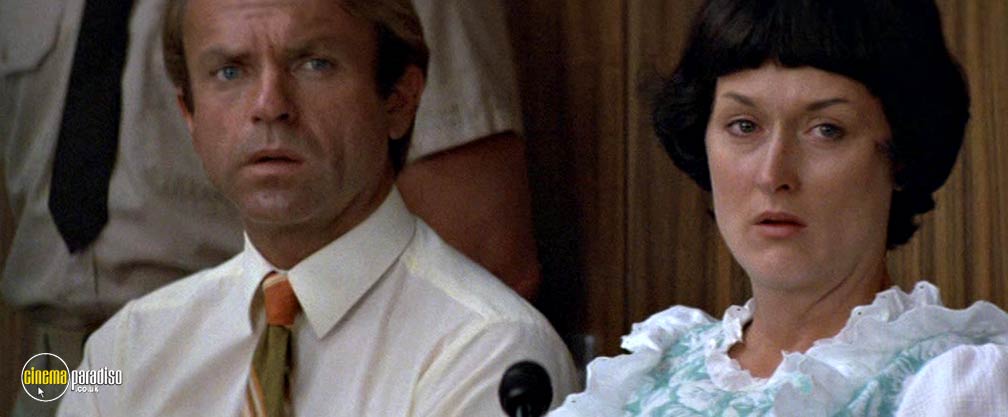
However, Strictly Ballroom was invited to Cannes as part of the Un Certain Regard programme. A few weeks before the premiere, however, Pat Thomson, the Londoner who had played Shirley Hastings, died of an aneurysm at the age of 51. She would receive a posthumous Best Supporting Actress prize at the Australian Film Institute Awards. Cinema Paradiso users can also see her guesting in The Flying Doctors (1986-92) and as Sandra Kambouri Fred Schepisi's A Cry in the Dark (1988).
Given a midnight slot, Luhrmann and co. were overwhelmed by a 15-minute ovation and were just as warmly greeted at a second screening the following day. 'There was a crush towards us,' Luhrmann remembered, 'and a security guard grabbed me and said: "From this day on, your life will never be the same again."' The receipt of the Prix De Jeunesse sparked a bidding war for overseas rights, with Miramax becoming the US distributor. Following another lauded showing at the New York International Film Festival, Strictly went nationwide on 12 February 1993. The critical response was far from unanimous, however, with the revered Jonathan Rosenbaum declaring this 'wretched' offering 'one of the more horrific and unpleasant movies I've seen in quite some time'.
Australian counterpart Adrian Martin was just as scathing in drubbing the film as 'amateurish and badly pitched in many respects'. Few compatriots agreed, however, as word of mouth from the 35 venues showing the film in its opening week increased to 51 in the second and 85 in the next. Only Philip Noyce's Patriot Games outperformed on twice the number of screens and Strictly hit No.1 while raking in AU$1.3 million. Despite losing top spot to Richard Donner's Lethal Weapon 3, it reclaimed it six weeks after its release, only to be supplanted by Geoffrey Wright's controversial Romper Stomper, which made a star of Russell Crowe. By the end of the year, it had grossed AU$21,760,400, a total only exceeded at that time by Peter Faiman's Crocodile Dundee (1986) and John Cornell's sequel, Crocodile Dundee II (1988).
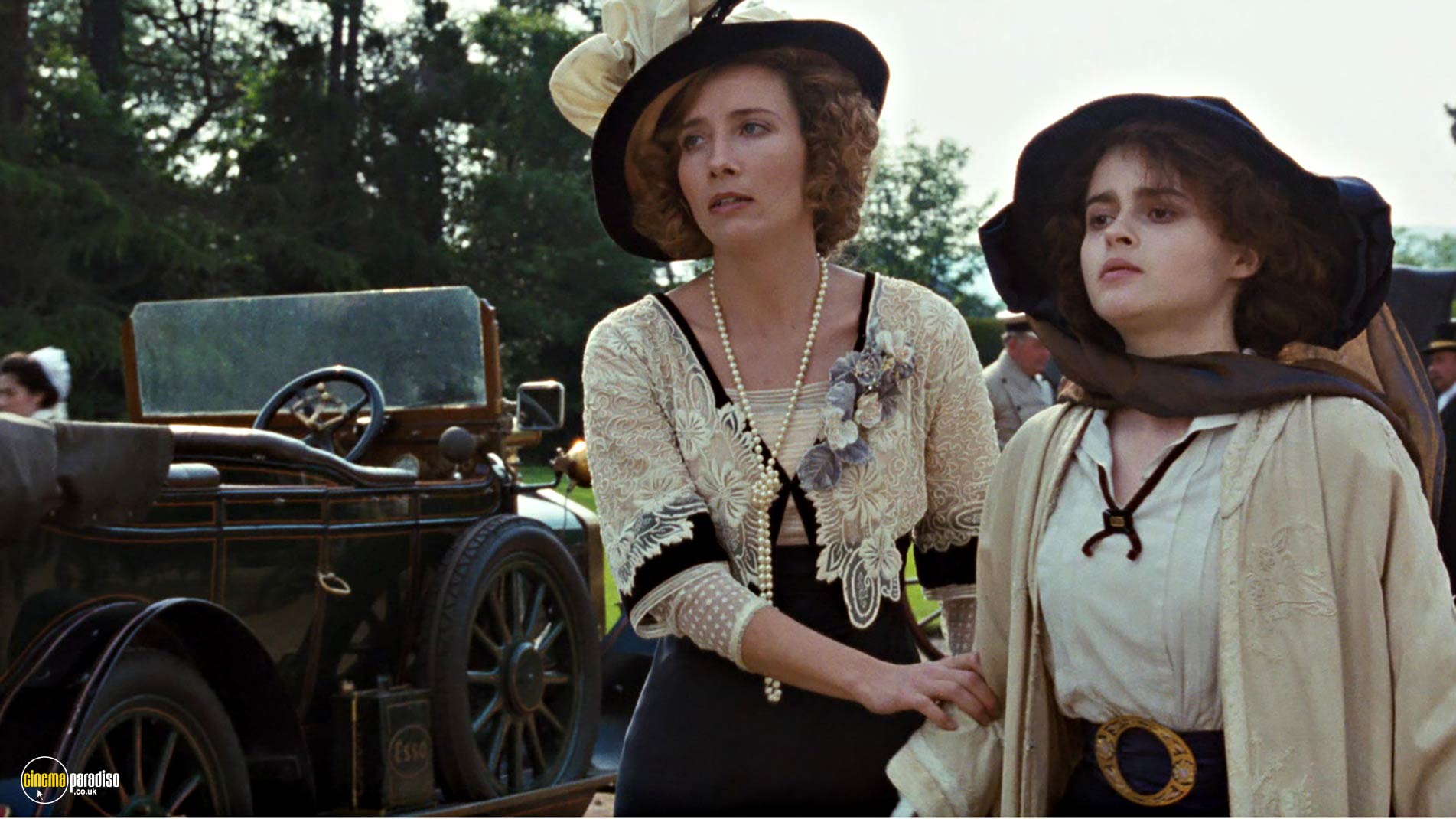
Selling to 86 countries, it amassed $11,738,022 in the United States and Canada, making it one of the most successful Australian films in history. As a consequence, it was nominated for Best Motion Picture - Musical or Comedy at the 51st Golden Globe Awards, while it also earned eight BAFTA nominations, with Catherine Martin winning for Best Production Design and Best Costume (with Angus Strathie), while David Hirschfelder won for Best Original Film Music. James Ivory's Howards End took Best Film, while Tara Morice was beaten to Best Actress by Emma Thompson. Robert Altman's The Player took Best Adapted Screenplay, while the sound crew and editor Jill Bilcock both lost out Oliver Stone's JFK.
At the AFI Awards, Strictly converted eight of its 13 nominations, including Best Film. Luhrmann won for his direction and screenplay, while Barry Otto joined Pat Thomson (pipping Gia Carides) in landing the Best Supporting prize. Paul Mercurio and Tara Morice missed out, however, to the aforementioned Russell Crowe and Lisa Harrow for Gillian Armstrong's The Last Days of Chez Nous.
Martin and Bilcock won for their production design and editing, while Angus Strathie was presented with the Best Costume gong. Cinematographer Steve Mason and the sound team lost out to Bruce Beresford's Black Robe and Romper Stomper respectively.
Buoyed by the acclaim and success, Luhrmann completed the Red Curtain Trilogy with William Shakespeare's Romeo + Juliet (1996) and Moulin Rouge! (2001). Cinema Paradiso users can also discover some of his secrets in Baz Luhrmann: Behind the Red Curtain (2001), while also renting his subsequent outings, Australia (2008), The Great Gatsby (2013), and Elvis (2022) and EPiC: Elvis Presley in Concert (2025).
In April 2014, Strictly Ballroom returned to the stage from whence it had come, when a new musical opened at the Lyric Theatre in Sydney. It moved on to Melbourne and Brisbane before premiering in the UK at the West Yorkshire Playhouse in Leeds on 30 November 2016. Trivia nuts will be delighted to know that around 200 costumes were required for the show, as well as 84 wigs, while the cast went through five litres of spray tan each week.
By this stage, Strictly Come Dancing had been running for 12 years on the BBC. Initially introduced by Bruce Forsyth and Tess Daly, the show made stars of judges Craig Revel Horwood, Arlene Phillips, Len Goodman, and Bruno Tonioli, with the latter pair shuttling across the Atlantic to work on Dancing With the Stars from 2005. When the Australian version was launched, Sonia Kruger, who had portrayed Tina Sparkle, was one of the presenters. With the departure of Daly and Claudia Winkleman last December, the new trio of Emma Willis, Josh Widdicombe, and Johannes Radebe will debut in the autumn as the 24th season is set to see the episode count pass 500.

Strictly has also had an impact on how dance is presented on the big screen, with 'dancicals' now being as varied as Billy Elliot (2000), Step Up (2006), and Magic Mike (2012). In keeping with the Strictly tradition, many focus on working-class characters who dance to escape and are rewarded with love, social mobilty, and vindication. As Luhrmann noted, 'In Australia at the time, it also aligned itself with a struggle for self-definition. The fact that we could take our urban, suburban culture and we could be ironic about it and enjoy in it, laugh at it, see it as an art form, kitsch and camp and twist it, really struck a profound chord. And it also set free a lot of other creatives to go down that same road.'
Indeed, he had no doubt that Australian cinema got a new lease of life from the film's success. When asked by the IFI if he thought Strictly Ballroom had influenced subsequent Australian films, he replied, 'Pretty much no question about that. I mean some of them have gone further and are more sophisticated. I mean Muriel's Wedding and Priscilla, Queen of the Desert and that kind of suburban celebration cinema if you like. I mean, it's impossible to have made a film that was made for a couple of million dollars that made $80 million worldwide, and won British Academy Awards and for that not to have an impact on the culture of Australia.'
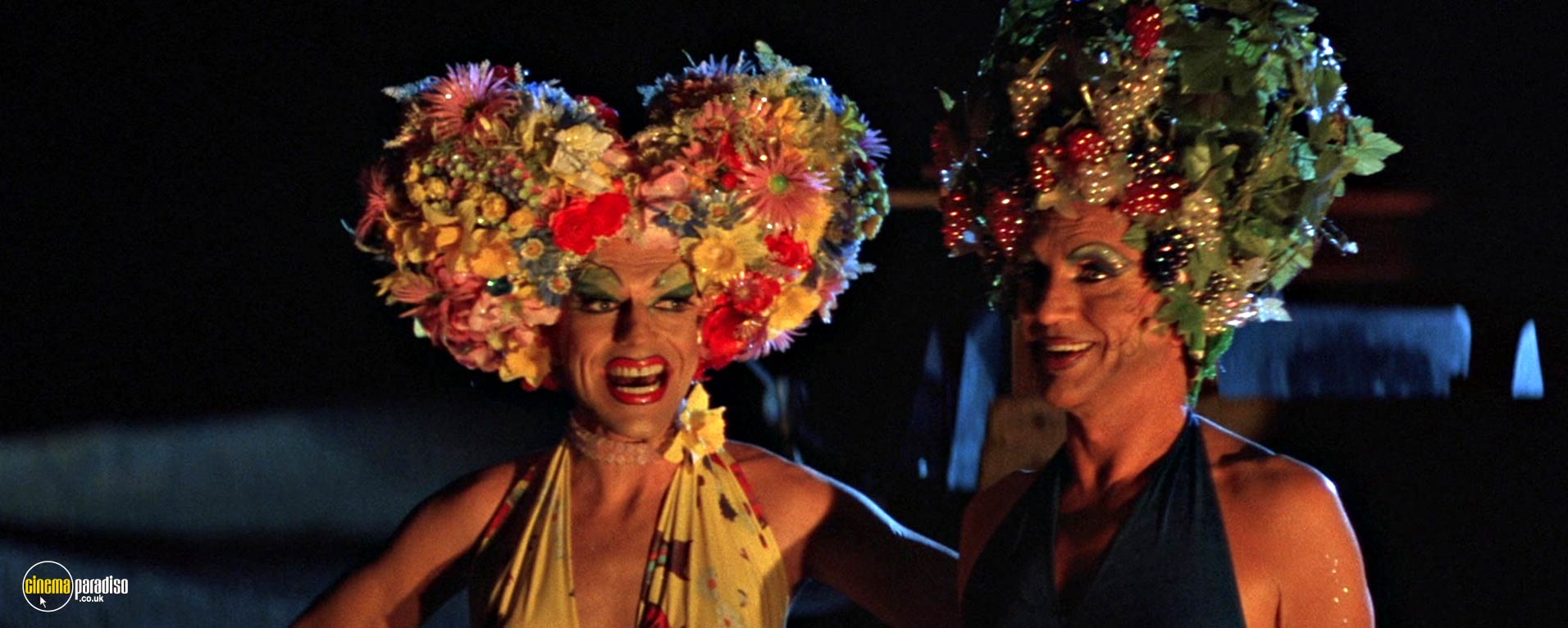
No doubt, someone seeing the 4K restoration in cinemas will be inspired to dance or tell a story of their own. Maybe the same will be true among Cinema Paradiso members. And why not? That's the beauty of the movies. They don't just entertain and educate, they also enthuse and we are proud to do our little bit by making over 100,000 titles available on DVD, Blu-ray, and 4K - and no one else in the UK can make the same claim. So stick with us and keep clicking!
Mentioned films