Rent Hot Milk (2025)
3.0 of 5 from 79 ratings
1h 29min
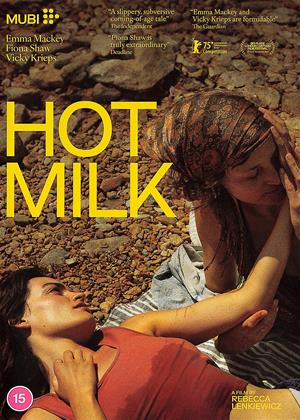


Less a film to be understood than felt Hot Milk drifts between the real and the symbolic, tracing a mother-daughter bond that’s equal parts love, dependency, and quiet sabotage. Rose (FIona Shaw) may be suffering from a genuine illness, or she may be using it to keep her daughter tethered; the film never quite decides, and that ambiguity is its lifeblood.
Sofia (Emma Mackey), caught in this emotional undertow, stumbles toward a kind of awakening through Ingrid (Vicky Krieps), whose aloof seduction pries open desires she can barely admit to herself. The encounters feel charges, but also a little mechanical — as if meaning has been imposed rather than uncovered.
Visually, it’s beautifully crafted, the sun-scorched Spanish coast giving everything a hallucinatory sheen. But the refusal to resolve leaves the film adrift. Hot Milk is tender and strange, yet like seawater slipping through hands, it’s easier to admire than hold onto.
This is an emotional relationship drama that is riddled with ambiguity that makes it a challenging film albeit a compelling one too. It's a story of mother and daughter, Rose and Sofia, who are in Spain where Rose is attending a clinic in order to get to the bottom of her mysterious illness which confines her to a wheelchair and may be psychosomatic. Fiona Shaw gives a fierce performance as Rose, a cantankerous and somewhat selfish woman hiding past traumas. She relies fully on Sofia, played with equal conviction by Emma Mackey. Sofia is tired and lonely, simmering with anger, but she finds herself on an emotional journey when she meets the free spirited Ingrid (Vicky Krieps) and they begin a slow sexual relationship. In many ways this is a story of Sofia's sexual awakening as she yearns for the human connection that she has never apparently experienced especially with her parents. The film gives no easy answers to either woman's journey and at times it's deliberate skirting of resolution feels frustrating but this is an interesting film dominated by two formidable lead performances.