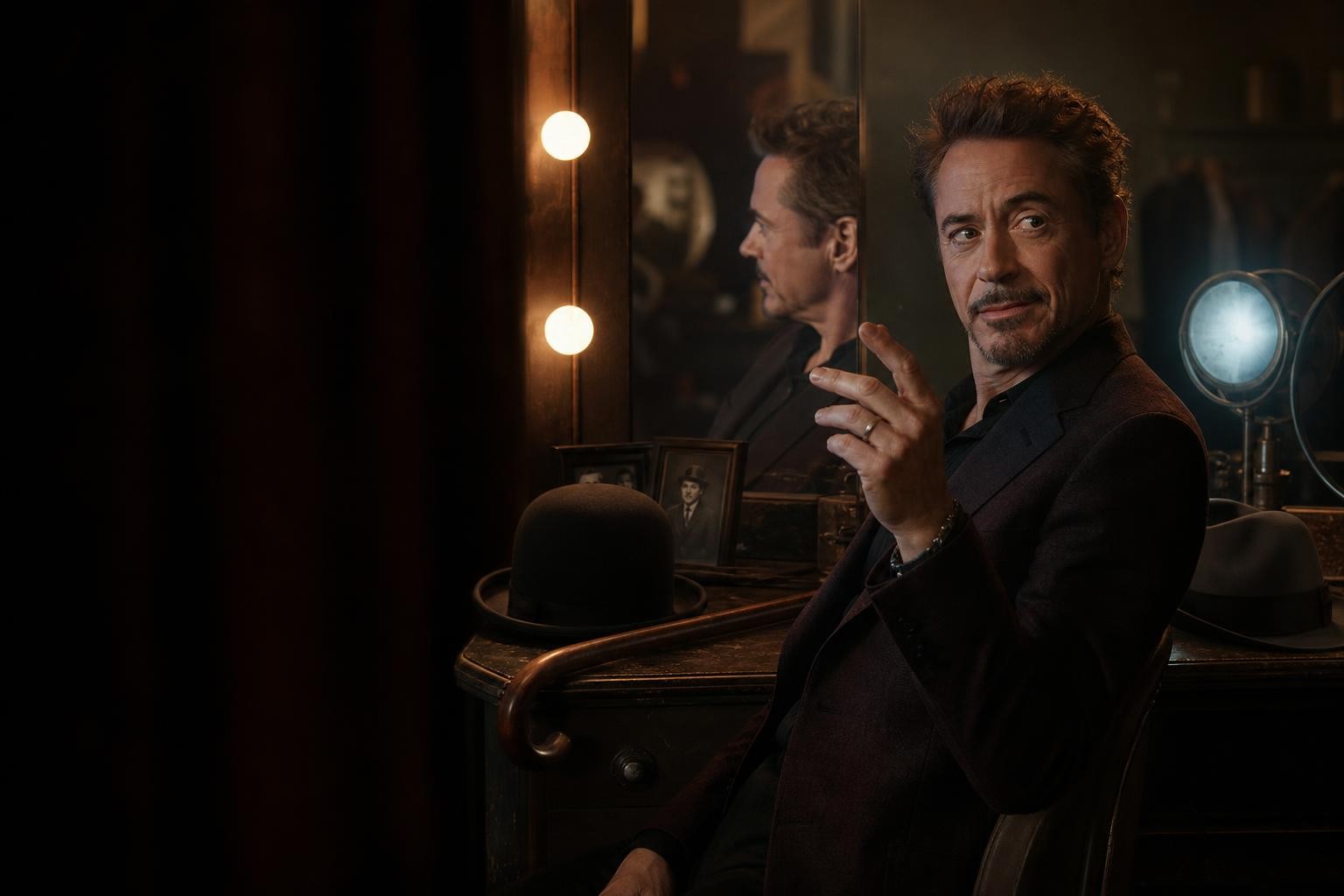
As Robert Downey, Jr. celebrates his 61st birthday, Cinema Paradiso looks back on a career quite unlike any other.
Robert Downey, Jr. once described himself as an 'incredibly gifted faker' who knows 'very little about acting'. Adept at creating characters within characters, his approach errs on the spontaneous side, as he finds scripts restricting. The result is that no two takes are ever the same because Downey's goal is to 'try to improve things as you go along' by making 'a well-written scene seem like it's improvised'.
The esteemed critic Roger Ebert noticed that Downey tends to go for 'irreverent, quirky, self-deprecating, wise-cracking' characters, whose charm and intelligence hide the flaws emanating from a darker, more complex side. As a consequence, even after half a century on the screen, Robert Downey, Jr. remains hard to pin down because, like the elusive individuals he plays, he is something of an enigma.
Like Father, Like Son
Two years younger than his sister, Allyson, Robert John Downey was born in New York's Greenwich Village on 4 April 1965. His father, Robert Downey, had changed his surname from Elias because he felt an Irish name would serve him better as a film-maker than a Lithuanian Jewish one. In order to pay the medical bills for his son's delivery, he directed the sexploitation drama, The Sweet Smell of Sex (1965). Mother Elsie Ann (née Ford) was an actress who frequently appeared in her husband's films. Indeed, she had been carrying Junior while making Chafed Elbows (1966).
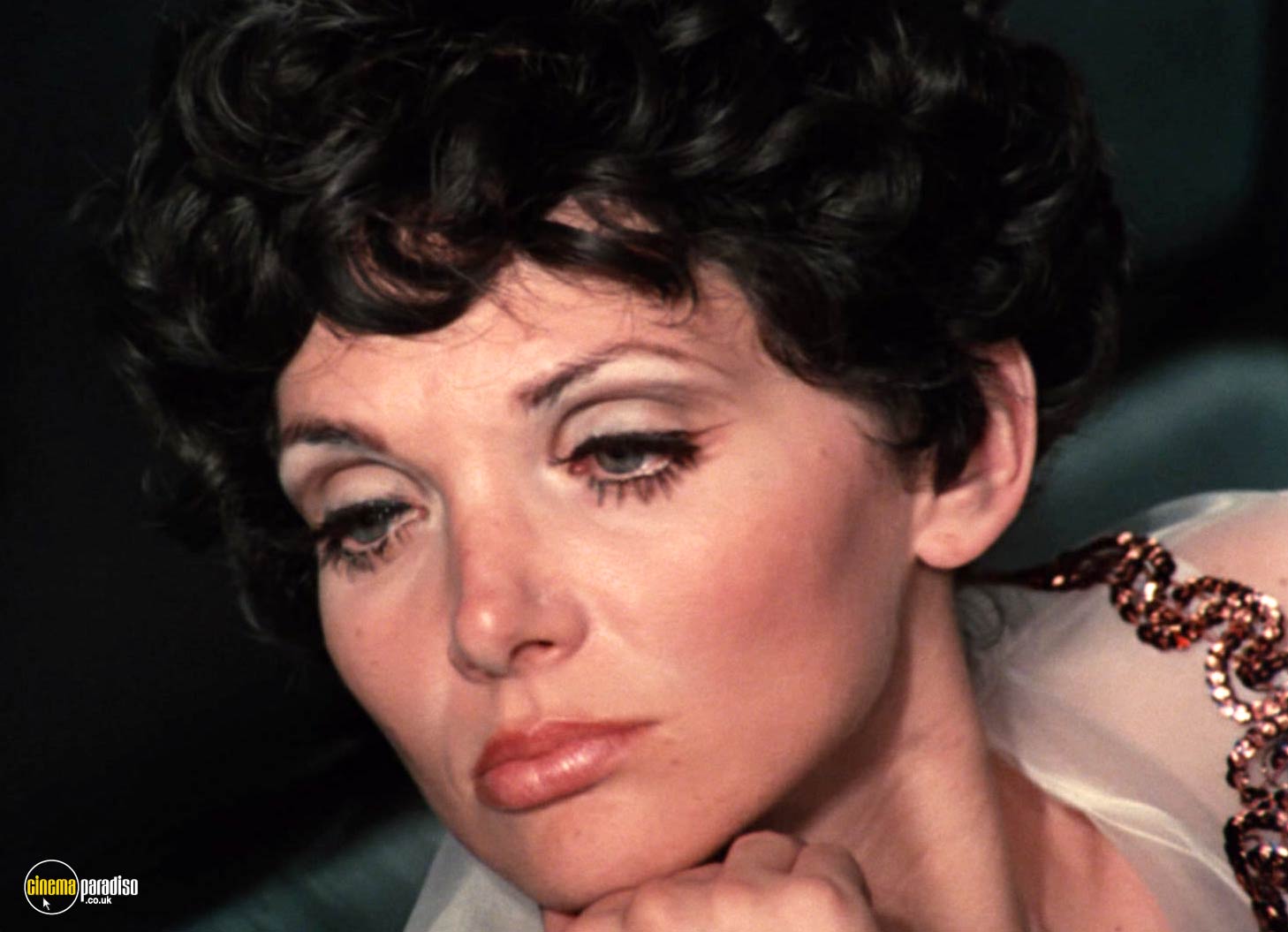
Robert, Jr. made his acting debut at the age of five in Pound (1970), playing a puppy waiting in a cage to be put down. Everyone on the set reckoned he was a natural and he also appeared in the mock Western, Greaser's Palace (1972), and Two Tons of Turquoise to Taos Tonight (aka Moment to Moment, 1975), a surreal comedy that had been scripted by his mother under the name L.C. Downey. But Junior didn't feature in Senior's most notable achievement, Putney Swope (1969), a prototype blaxploitation satire that starred Arnold Johnson, as the eponymous African American who is unexpectedly elected chair of a Madison Avenue advertising agency and promptly replaces the all-white workforce at the renamed Truth and Soul with iconoclastic young rebels.
As Senior was an independent director, he went wherever work opportunities presented themselves. Consequently, the family moved around a lot, with spells in Mexico, California, and London disrupting Allyson and Robert's education. Aged 10, he attended Perry House School in Chelsea, where he was bullied for his American accent and forced to take classical ballet lessons, and later recalled 'the truth is that I spent my whole time there with my nose in the corner, being a moron'. Falling behind with his studies, as a result of his many moves, Downey became an attention seeker in an effort to hide his academic shortcomings.
Among his classmates in Connecticut was Richard Hall, who would find fame as Moby. Yet. while their parents smoked pot together, the pair didn't stay in touch. Much to his later chagrin, Senior introduced Junior to marijuana when he was around six years old, while Elsie's alcoholism also left an impression. Downey, Jr. would later claim that Senior hadn't intended to corrupt a minor or sow the seeds of a decades-long battle with addiction. 'When my dad and I used drugs together,' he claimed, 'it was his way of showing love for me in the only manner he knew.' But Senior also took his son to see such radical films as Perry Henzell's The Harder They Come (1972) and Marco Ferreri's La Grande bouffe (1973). He also encouraged him to express himself and Junior spent two pre-teen summers at the Stagedoor Manor acting camp in upstate New York, directing a play in his first year and playing Nels in a production of The Red Shoes in the second.
When he was 12, however, his parents divorced and Senior left for Los Angeles with Allyson, leaving Robert and Elsie to make do in fifth-floor apartment in New York. Although trying to be cool made him a hit with the girls, Downey was picked on by the boys and started bunking off in order to smoke dope with his friends. Having received his first DUI ticket after stealing a car belonging to a friend's mother at a party, he decided he wanted to become an actor and joined his father in California. He enrolled at Lincoln Junior High School, but left after a year to attend Santa Monica High School. Ex-classmates speaking to biographer Ben Falk remember him as being certain of his ability and destiny, even though he wasn't necessarily the brightest.
In addition to singing madrigals at school, Downey also played a scientist falling for a robot in a sci-fi play based on a story by Isaac Asimov and featured in a production of Richard Rodgers and Oscar Hammerstein's epochal musical, Oklahoma! But, when Senior quit Hollywood after the unhappy experience of making his sole studio picture, Up the Academy (1980), Junior (who had briefly appeared in the film during a football match) found himself without a guardian and decided to quit school and become a full-time actor.
Non-Nepo Blues
At the age of 17, Downey returned to his home city to be informed by his father that he had to make his own way, as Senior was not prepared to let Junior live with him, let alone appears in his films. Needing cash, Downey waited tables at a Central Falls restaurant, worked in a shoe shop, and performed as a 'living art' mime at the Area nightclub. Deciding against going to drama school, as he already knew that he had his own unique technique, he put himself up for lots of theatre auditions and his stage debut came in 1983 during a three-week run in Stoo Hample's Alms For the Middle Class at the Geva Theatre in Rochester, New York. He then appeared in Fred Burch and Willie Fong's off-Broadway musical, American Passion, which was staged at the Joyce Theater by his father's old friend, Norman Lear. Unfortunately. it closed after a single night and Downey found himself in the short-lived gay-themed drama, Fraternity.
Following a series of uncredited bits in Senior's movies, Downey received his first credit (without Jr. being appended to his name) as Stewart in John Sayles's Baby, It's You (1983), which also saw Matthew Modine make his screen debut. Downey spent four weeks on the shoot, only for much of his performance to wind up on the cutting-room floor and he later complained that a canny bit player kept edging in front of him during his main scene, so that she was more noticeable than he was. He was completely visible in Michael Apted's Firstborn (1984), as Lee, the best friend of teenager Jake Livingston (Christopher Collet), whose rebounding mother (Teri Garr) is led astray by her new boyfriend (Peter Weller). From Downey's perspective, the role mattered less than the fact he met Sarah Jessica Parker on the set. She had already played Annie on Broadway, headlined the TV series, Square Pegs (1982-83), and appeared in Herbert Ross's Footloose (1984). But she fell heavily for Downey and, despite his growing drug and alcohol use, they remained an item for the next seven years.
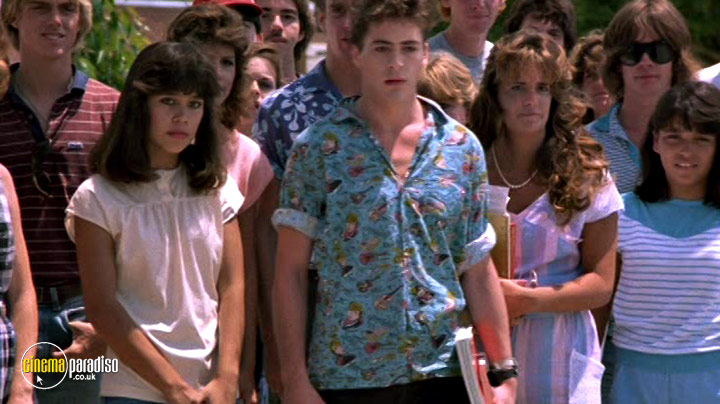
Indeed, they were cast together in Alan Metter's Girls Just Want to Have Fun, as Downey took an uncredited walk-on as a gatecrasher at a party. He was soon off to Hollywood, however, to film Fritz Kiersch's Tuff Turf, in which he played Jimmy Parker, the punk drummer who befriends outsider Morgan Hiller (James Spader), who falls foul of a local gang when he moves to a new town. At one point, Parker gets shot in the leg, but there was also plenty of wild partying away from the set. Nevertheless, Downey's reputation as a night owl didn't prevent him from being cast as Bruno Mussolini, opposite George C. Scott, in William A. Graham's mini-series, Mussolini: The Untold Story. However, Downey also demonstrated that he was willing to help up-and-coming directors by starring in Sam Hurwitz's short, Deadwait (all 1985).
As he had played his share of misfits in coming-of-age sagas, Downey had been linked to the Brat Pack long before John Hughes hired him to play Ian the bully in Weird Science (1985). This proved to be his breakthrough, although he was nearly dropped for a backfiring bathroom joke on Kelly LeBrock. However, he made it through the shoot and became best friends with co-star Anthony Michael Hall. Thanks to another co-star, Randy Quaid, Downey's edgy antics had also come to the attention of Lorne Michaels, who was about to return as showrunner on Saturday Night Live. Quaid and Jon Lovitz were also hired, as Michaels strove to reach a younger demographic. However, the ratings dipped, as audiences missed previous regulars like Billy Crystal, Christopher Guest, and Martin Short, and Downey was dumped after a single season.
Undaunted, he sighed up to play Derek Lutz, the radical socialist pal of Jason Melon (Keith Gordon), whose father, Thornton (Rodney Dangerfield), comes to class to keep tabs on him at university in Alan Metter age-gap comedy, Back to School (1987). The director was impressed by his rising star, but was frustrated by the fact that he was always so electric while riffing in rehearsals and then stiffened up when he had to stick to Harold Ramis's scripted dialogue. He was also miffed when Downey went on a bender and missed a day's shooting. As punishment, Metter had the crew gaffer tape him to the floor when he dozed off on the set.
High and Higher
Despite Downey gaining a reputation for his excesses, he rarely allowed it to affect his work and he was rewarded with his first lead, Jack Jericho, in James Toback's The Pick-up Artist (1987). Critics complained about the film being 'sexually irresponsible' during the AIDS crisis, while Brat Packers were unhappy at seeing Molly Ringwald playing a promiscuous museum guide. But it landed Downey an even bigger opportunity, as rich addict Julian Wells loses control of his life in Marek Kanievska's Less Than Zero (1987), which was adapted from Bret Easton Ellis's shocking 1985 novel. This was the first time that he was credited as Robert Downey, Jr., as his father had joined the Screen Actors Guild after being offered some minor movie roles and Junior thought it was respectful to change his name rather than force his father to become Robert Downey, Sr, when he was already known for his directing work.
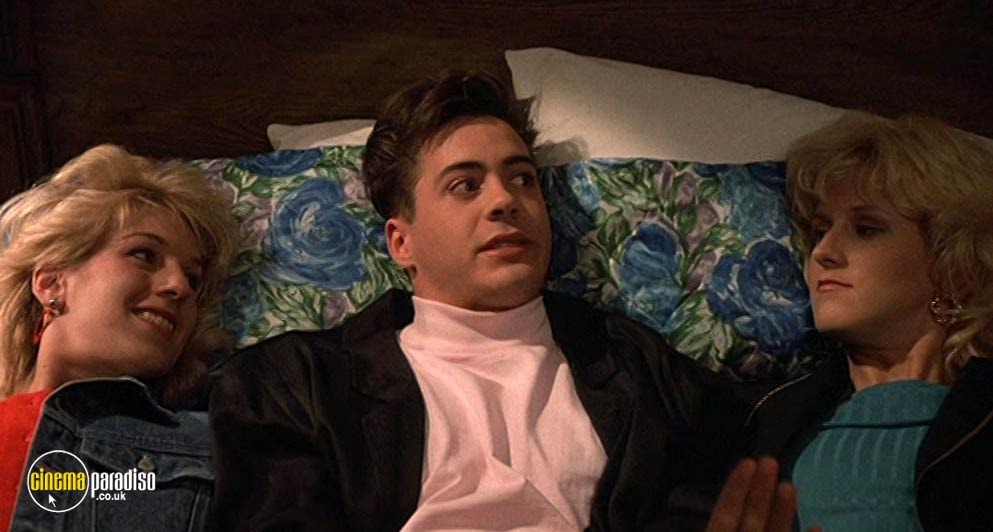
The reviews raved about Downey, Jr.'s insight into the sensations of the highs and lows of a junkie's existence and he admitted that the scenario made him feel he was being accompanied by the Ghost of Christmas Future. Yet, despite Sarah Jessica Parker's encouragement, he was unable kick his habits. Deciding he needed help, he checked into a rehab facility and emerged to join old pal Anthony Michael Hall in Bud S. Smith's Johnny Be Good (1988), which centres on promising gridiron footballer, Johnny Walker, and his rascally pal, Leo Wiggins. Downey wrote the 'Seth and McGuigan' song used in the film, as he never missed the opportunity to sing on screen.
Having reunited with his father to play porn actor Wolf Dangler in the typically madcap, but critically mauled romp, Rented Lips. Downey teamed up with Kiefer Sutherland and Winona Ryder as Ralph Karr facing the Vietnam draft in 1969 (both 1988), which was written and directed by Ernest Thompson, who had scripted Mark Rydell's On Golden Pond (1981). Completing a busy year, Downey cropped up as Albert Einstein in Harry Hurwitz's That's Adequate (1988), a mockumentary about Adequate Studios that was narrated by Tony Randall and included cameos by Jerry Stiller and Anne Meara. Ina Balin, James Coco, and Bruce Willis.
In Joseph Ruben's fact-based legal drama, True Believer, Downey essayed idealist Roger Baron, who strives to get cynical lawyer Eddie Dodd (James Woods) to help a wrongly convicted Korean man. Following this change of pace, he took on the dual role of Alex Finch and Louie Jefferies in Emile Ardolino's Chances Are (both 1989), in which he discovers he is the reincarnated spirit of Cybill Shepherd's deceased husband, who sets out to woo her away from Ryan O'Neal. He then turned down Andrew Bergman's The Freshman, with the role going to Matthew Broderick (who would end up marrying Sarah Jessica Parker), and Tim Burton's Edward Scissorhands, which made a star of Johnny Depp. Instead, Junior hooked up with Senior again to play Reed Richmond, who conspires to swindle an inheritance, in Too Much Sun (all 1990), which co-starred Eric Idle and was co-scripted by Downey's new stepmother, Laura Ernst.
Downey had been keen to appear in an action movie and fire off a few guns and he got his chance as helicopter pilot Billy Covington, who is recruited for a covert operation in Laos for a CIA-linked outfit in Roger Spottiswoode's Air America (1990). As it happened, he disliked being on set in Thailand and felt overshadowed by co-star, Mel Gibson. But he became one of Downey's closest friends and would frequently support him in hours of need. Coming back down to earth, Downey's David Seton Barnes forms a wicked partnership with Cathy Moriarty's Montana Moorehead to ruin The Sun Also Sets soap star, Celeste Talbert (Sally Field), in Michael Hoffman's Soapdish (1991). The show's producer had initially been in his fifties, but Hoffman reshaped the role to suit Downey, with whom he had earlier been set to collaborate on the collapsed Back East project.
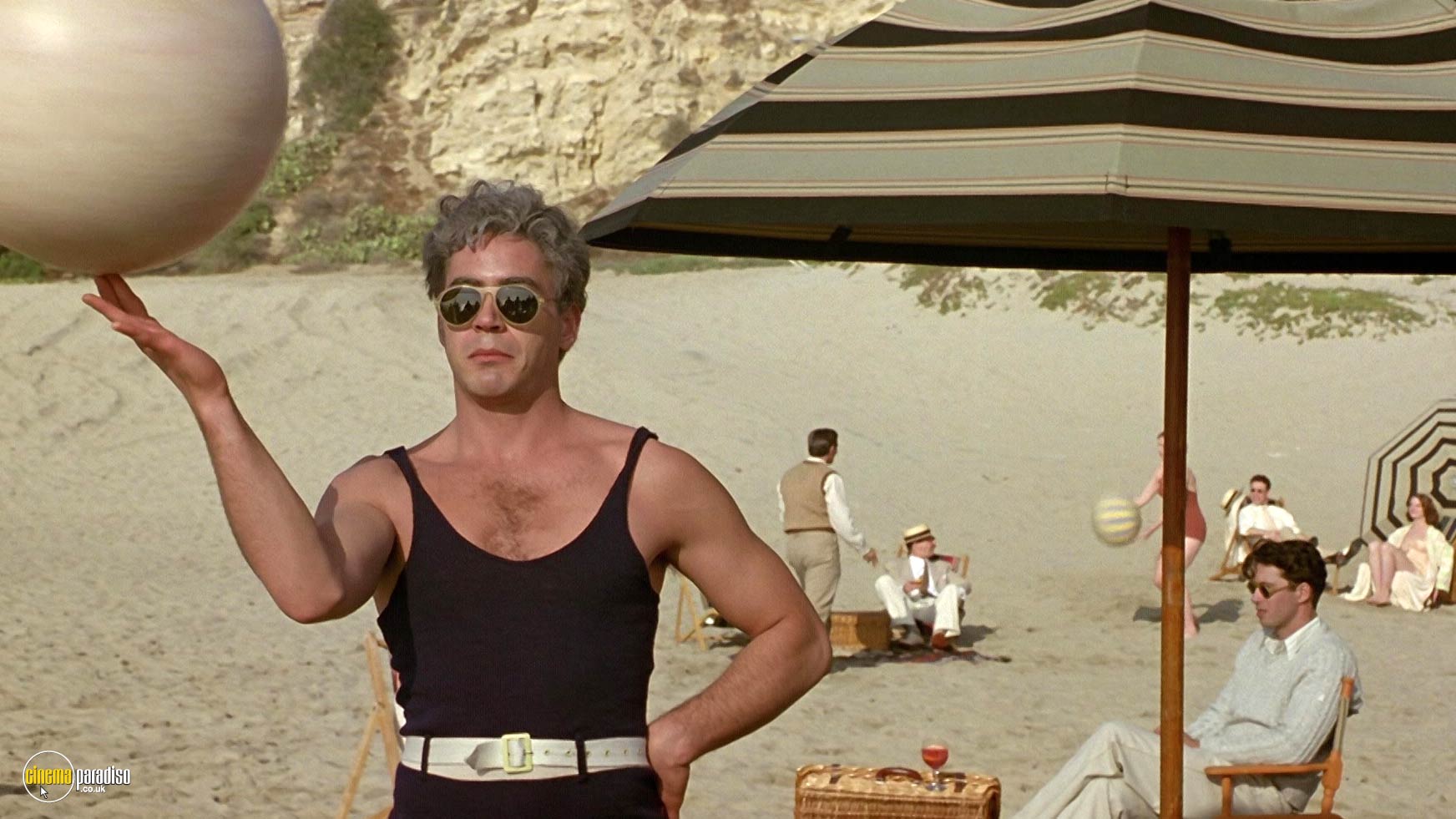
Around this period, Sarah Jessica Parker returned to New York, as she was exhausted and could no longer cope emotionally with Downey's addiction. But he pulled himself together to beat Kenneth Branagh, Dustin Hoffman, Robin Williams, and Billy Crystal to the part of Charlie Chaplin, after director Richard Attenborough had overriden studio objections having witnessed during auditions a slapstick routine with a step ladder that convinced him he had the right man for Chaplin (1992). He even persuaded the Museum of the Moving Image in London to let Downey try one of the Little Tramp's suits and it seemed like an auspicious omen when the boots fitted perfectly. Moreover, Downey just happened to living in Chaplin's 1926 Spanish-style house in the Hollywood Hills.
Honing his accent with dialect coach Andrew Jack and Attenborough's Cockney chauffeur, Bill Gadsdon, the 27 year-old Downey learned to play tennis and the violin left-handed, while endlessly watching old films to capture Chaplin's gait and mannerisms. Yet, even though this was the biggest role of his career to date, he couldn't stop himself from taking drugs and drinking heavily after hours. Occasionally, Attenborough worried that the after-effects could be seen in Downey's face, but he was doing such a superb job of playing another flawed film star that the director concluded that Downey was adult enough to life the way he wanted and that reprimanding him risked doing the picture more harm than good. The gambit paid off, even though the reviews were lukewarm and the box office fell short of expectations, Downey's performance, however, was regarded as a triumph of impression and interpretation. In addition to the BAFTA Award for Best Actor, he was also nominated for a Golden Globe and an Oscar, only to be swept away the sentimental tide behind Al Pacino for Martin Brest's Scent of a Woman (1992). The project made him a Chaplin fan, though, and he would later appear in Richard Schickel's documentary, Charlie: The Life and Art of Charles Chaplin (2003).
On a natural high after his experience, Downey married singer Deborah Falconer in May 1992 after a whirlwind 42-day romance. They would have a son, Indio, who became the apple of his father'e eye. But he still couldn't kick his partying habit and continued to hold his demons in check in front of the camera, as he played Thomas Reilly, a yuppie who is asked by his childhood guardian angels from childhood (Charles Grodin, Kyra Sedgwick, Alfre Woodard, and Tom Sizemore ) to help them get a chance to rectify things left unfinished in Ron Underwood's underrated comedy, Heart and Souls (1992), which prompted Rolling Stone's Peter Travers to declare that Downey had 'an explosive talent for physical comedy'. This was rather wasted as make-up artist Bill Bush in Robert Altman's Short Cuts (1993), which was accompanied by John Dorr and Mike Kaplan's documentary, Luck Trust and Ketchup, while there was no room for it as Downey appeared as himself in Mark Benjamin and Marc Levin's The Last Party (1993), an account of the 1992 presidential election that was dismissed as a vanity piece rather than an insightful political tract and is notable now primarily for Junior's two revealing meetings with his father, who was nursing Laura Ernst through Lou Gehrig's Disease.
As a favour to a pal, Downey appeared as Jerry, a mailroom clerk who poses as a record producer, in Anthony Michael Hall's directorial debut, Hail Caesar. He also fulfilled a long-held ambition to work with Oliver Stone as Wayne Gale, the presenter of American Maniacs in the Quentin Tarantino-scripted Natural Born Killers (both 1994), which saw Downey hang out with television shock journalist Steve Dunleavy in order to hone the Australian accent needed to report on fugitives Mickey and Mallory Knox (Woody Harrelson and Juliette Lewis). Sweet nothings were what Downey was required to utter in Only You (all 1994), in which dancer Peter Wright poses as the man teacher Faith Corvatch (Marisa Tomei) believes she's destined to marry. Director Norman Jewison claimed he chose Downey for the part because he reminded him of Tony Curtis and he received his biggest payday to date for his efforts, $2.25m.
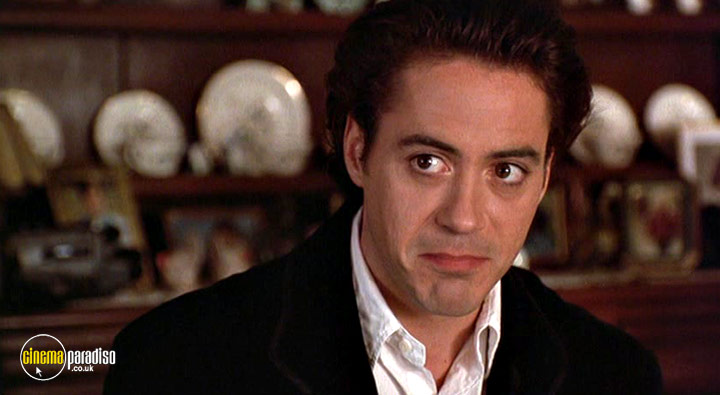
Reuniting with Michael Hoffman, Downey came up with another English accent to play Robert Merivel, the doctor who hopes to become part of the inner circle around King Charles II (Sam Neill), in Restoration, which was adapted from a novel by Rose Tremain. Despite becoming friends with Ian McKellen, who played his valet, Downey fell out with his director over excessive improvising and the picture completed in early 1994 was shelved for 18 months. Jodie Foster also had words while directing Downey in Home For the Holidays, in which he plays Tommy Larson, the gay brother of Holly Hunter's art restorer, who returns with trepidation to Baltimore for a family Christmas. Foster had no complaints about his acting, but she was worried by his level of drug use during the shoot and pleaded with him to seek assistance.
There was less pressure when McKellen invited Downey to play Earl Rivers, the protective brother of Queen Elizabeth Woodville (Annette Bening) in Richard Loncraine's screen version of the Lancastrian's stage tour de force, Richard III (1995), in which the climax to the War of the Roses was updated to the 1930s. Before the following year was out, however, events would conspire to expose Downey's dark secrets and place everything he had worked for in jeopardy.
A Sea of Troubles
In early 1996, shortly after Deborah Falconer had moved out of the family home, Sean Penn and Dennis Quaid visited Downey out of concern for his condition. They took his car keys and delivered him to a rehab facility in Tucson, Arizona. However, he checked himself out a few days later and managed to reach the nearest airport, where he called an assistant to buy him a ticket home. Deciding to leave the country for a while, he flew to South Africa to join pal Billy Zane in Allan Eastman's Danger Zone (1996), in which he played Jim Scott, a rogue CIA agent loose in the fictional country of East Zambezi
Downey's only other film in 1996 was a deeply personal one, as he helped his father pay tribute to his second wife, Laura, who had died of Amyotrophic Lateral Sclerosis at the age of 36. Patrick Dempsey plays a character living with ALS in Hugo Pool (aka Pool Girl, 1996), which saw Junior play Dutch director Franz Mazur, who is a client of the pool-cleaning business run by Hugo Dugay (Alyssa Milano). Mazur's behaviour is as erratic as his accent, but Downey, Jr. looked painfully thin on camera, as he had started using heroin. Indeed, on 23 June 1996, he was arrested for possession of black tar heroin, cocaine, crack cocaine, and an unloaded. 357 Magnum handgun after having been stopped for speeding on Sunset Boulevard.
Bailed for $10,000, he found himself in trouble again on 16 July, when he fell asleep in a child's bed after having entered a neighbour's house through an unlocked front door. The family declined to press trespass charges, but the fact that Downey had been under the influence of a controlled substance meant that he hit the headlines following the leak of the 911 call reporting the so-called 'Goldilocks incident'. Having been confined in a private rehab facility, Downey pleaded no contest when he appeared in court in September 1996. Two months later, following a period in a court-approved clinic, he received a further six months of live-in rehabilitation, three years of probation, and mandatory drug testing.
Despite his mounting troubles, Downey was still keen to work. He joked about his situation while hosting Saturday Night Live and accepted the part of Charlie, a man living with AIDS, in Mike Figgis's One Night Stand. James Toback also bagged him for Blake Allen in Two Girls and a Guy (1997), in which a cheating actor who convinces both Heather Graham and Natasha Gregson Wagner that she's his only love. In one poignant scene, Allen had to take a long, hard look in a mirror and he found this much harder to do than a speech from Hamlet or an erotic sex scene with Graham that had to be toned down to avoid a ruinous NC-17 certificate.
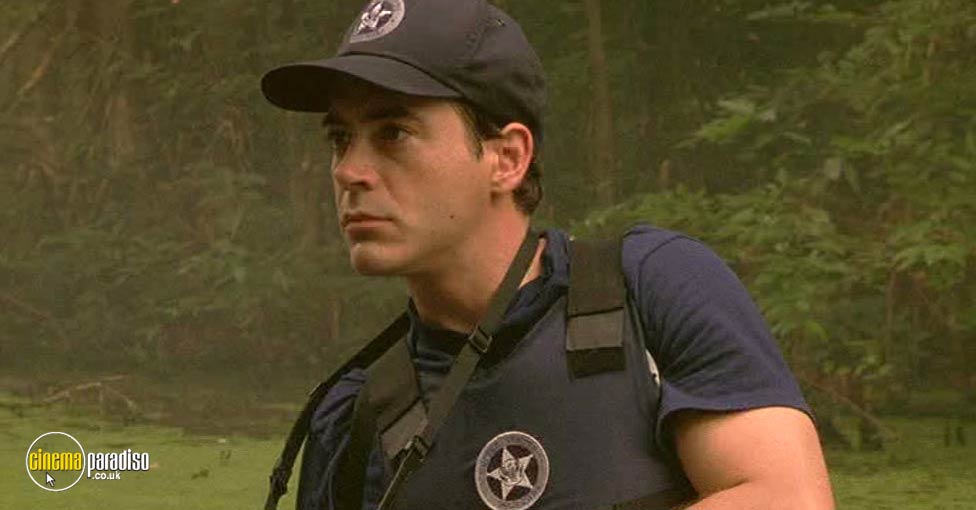
Another director who kept faith with Downey was Robert Altman, who cast him as Clyde Pell, an investigator working for anti-heroic Savannah lawyer Rick Magruder (Kenneth Branagh), in The Gingerbread Man. However, having missed a court-sanctioned drug test, Downey was sentenced to six months in Los Angeles County Jail, although he was briefly released in January 1998 to film Stuart Baird's U.S. Marshals, a sequel to The Fugitive (1993) that sees Special Agent John Royce help Sam Gerard (Tommy Lee Jones) track down double murder suspect, Mark Roberts (Wesley Snipes).
For some reason, Downey hated the assignment and suffered a four-day relapse during the shoot. Nevertheless, he was given permission to complete work on Neil Jordan's In Dreams (1999), in which he was cast as serial killer Vivian Thompson, who is seeking to regain his lost childhood through his interaction with children's illustrator, Claire Cooper (Annette Bening). Returning to court in Malibu, Downey was told by Judge Lawrence Mira that he had run out of non-custodial ways to rehabilitate him. Therefore, he was sentenced to 111 days in the Twin Towers Correctional Facility in Los Angeles. Downey served four months before being released on 31 March 1998, although he still had 67 days to spend in residential rehab.
Once again, Downey was allowed leave to work and he sported a spiky bleached rinse to play German ski instructor, Hans, in George Haas's Friends & Lovers, which saw him compose in a matter of minutes on the set the song Hans sings to Claudia Schiffer. James Toback also stood by his friend by casting him in Black and White (both 1999), as Terry Donager, the gay husband of a documentary film-maker (Brooke Shields), who is making a film about white kids who emulate their hip-hop heroes. In one scene, Downey has to hit on Mike Tyson, whose furious reaction reportedly wasn't entirely make-believe.
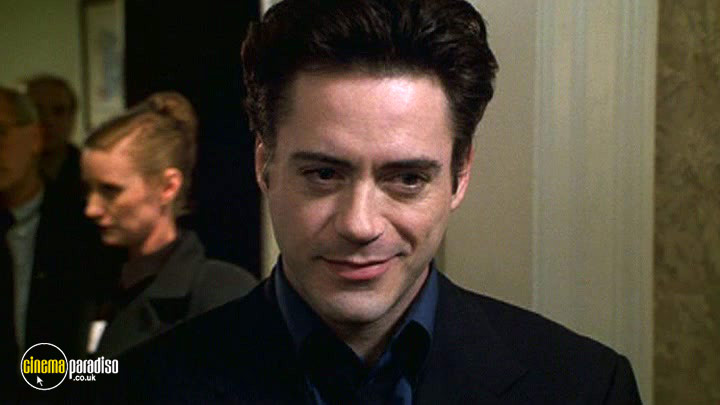
A cameo followed in Frank Oz's Bowfinger (1999), as Universal Pictures executive Jerry Renfro tells Bobby Bowfinger (Steve Martin) that he will only finance his film if he gets Kit Ramsey (Eddie Murphy) to star in it. Having appeared with James Cameron and Allison Janney in Lorraine Bracco's short, Auto Motives (which would find its way into the 2010 anthology, Love and Distrust ), Downey joined Michael Douglas and Tobey Maguire in Curtis Hanson's Wonder Boys (both 2000), in which he plays the former's book editor, Terry Crabtree.
Shortly afterwards, Downey violated his parole again and Judge Mira wondered whether there might be a psychological reason for his need to use. As a result, he ordered tests in confining Downey to the rehab unit of the local prison. But worse was to follow, as he was arrested for missing another compulsory drug test. Lawyer Robert Shapiro assembled the same legal team that had successfully defended O.J. Simpson. But, in August 1999, after seven court-ordered drug rehabilitation programmes and 201 days behind bars, Judge Mira ruled that Downey had failed too many times before in sentencing him to three years at the California Substance Abuse Treatment Facility and State Prison in Corcoran. As Downey himself admitted, 'It's like I've got a shotgun in my mouth with my finger on the trigger and I like the taste of gun metal.'
Forced to relinquis the chance to voice the devil in NBC's animated series, God, the Devil and Bob (the gig went to Alan Cumming), Prisoner P50522 found himself sharing a cell with four others when not on kitchen detail. After nearly a year inside, he was adjudged to have served sufficient time to qualify for early release. Posting $5000 bail, he walked straight into another plum role, as showrunner David E. Kelley cast him as lawyer Larry Paul, opposite Calista Flockhart, in the hit TV series, Ally McBeal (1997-2002). In addition to being nominated for a Primetime Emmy, he also won the Golden Globe for Best Supporting Actor in a Series, Miniseries, or Television Film. Yet he would later claim his work on the show was overrated and dub this his 'lowest point in terms of addictions'.
Eager to build on Downey's change in fortunes, Mel Gibson offered to direct him on stage in Hamlet, while Joe Roth sought him for a role in America's Sweethearts (2001). But, before the end of his first season on Ally McBeal, Downey was arrested on Thanksgiving in 2000, after police received an anonymous 911 call and discovered the actor in his room at Merv Griffin's Hotel and Givenchy Spa in Palm Springs under the influence of a controlled substance. while in possession of cocaine and valium.
The ordeal still wasn't over, however, as in April 2001, Downey was found wandering barefoot in Culver City and was arrested on suspicion of being under the influence. In spite of testing positive for cocaine, he was released a few hours later. But the producers of Ally McBeal had had enough and Downey was written out of the series, despite his character having boosted the ratings and him having committed to a further eight episodes.
Opting not to contest the Palm Springs charges in July 2001, Downey was sentenced to three years' probation and ordered to enter another rehab programme. During his year-long involvement with Wavelengths International, Downey was at a low ebb, as he was unable to work because he was considered too great an insurance risk, although he had been given leave to appear in Sam Taylor-Wood's video for Elton John's 'I Want Love', in which he had wandered around lip-synching to the lyrics.
Senior's new wife, Rosemary Rogers, revealed that her stepson had been diagnosed as bipolar and when psychiatrist Manijeh Nikakhtar asked Downey if he had the condition, he had replied, 'Oh yeah. There are times I spend a lot of money and I'm hyperactive, and there are other times I'm down.' Having hit rock bottom, the only way now was up.
Bouncing Back
Released in July 2002, Downey made a low-key return to film-making by playing an animal therapist in Lethargy (2003), which was directed by two USC students, Josh Safdie and David Gelb - and, yes, that is the same Safdie who has just received four Oscar nominations for Marty Supreme (2025). Evidently, Downey enjoyed the experience, as he next popped up in another short, Whatever We Do (2003), which was scripted by Nick Cassavetes for Kevin Connolly, as Bobby shows up at the home of friends Tim Roth and Amanda Peet with new girlfriend, Zooey Deschanel. Why does nobody ever release shorts of this calibre on disc?
Meaning well, Mel Gibson sought out Downey for the role of Dan Dark in Keith Gordon's The Singing Detective (2003), which was based on the BBC's 1986 Dennis Potter series with Michael Gambon as the psoriasis-stricken flic. Although it afforded him the opportunity to sing, Downey felt deeply uncomfortable in the effects make-up (as he had playing the older Chaplin) and felt that this prevented him from giving a better account of himself. It was certainly inferior to the original series and Downey was only marginally more effective as psychiatrist Pete Graham assessing Halle Berry's murder suspect in Mathieu Kassovitz's Gothika (2003). To ensure his star remained clean throughout the shoot, producer Joel Silver withheld 40% of Downey's salary until he had completed his scenes. Despite this indignity, this could be seen as the most important picture in the actor's entire career, as he fell for co-producer Susan Levin and they married on 27 August 2005.
Downey's life was starting to turn around, although Woody Allen famously couldn't get insurance for either him or Winona Ryder (who had just been arrested for shoplifting) for Melinda and Melinda (2004). But he channelled his frustration into his album, The Futurist, which blended jazz, folk, and soft rock and received largely favourable reviews. He also took the role of advertising executive Nick Penrose, who is haunted by a recurring dream in 'Equilibrium', Steven Soderbergh's contribution to the triptych anthology, Eros (2004), which also contained episodes by Wong Kar-wai and Michelangelo Antonioni.
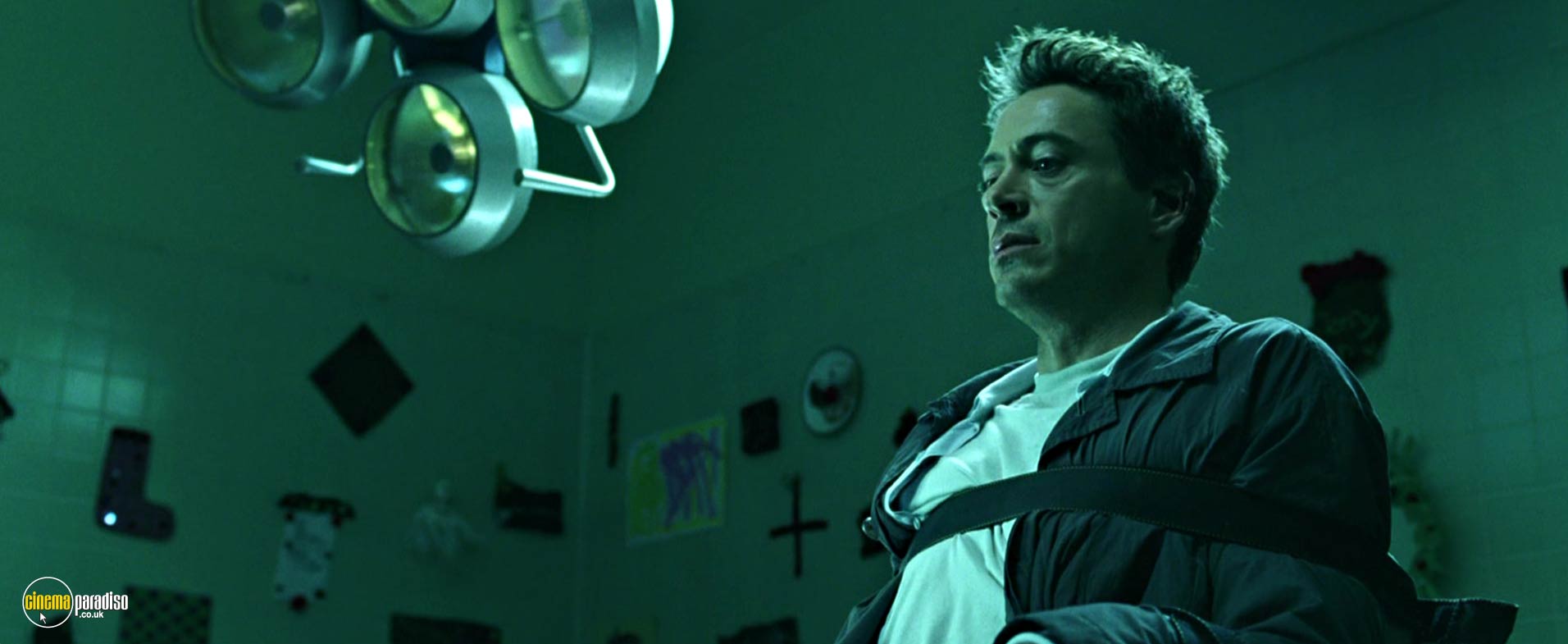
Next, Downey played drama critic Steven Schwimmer in Michael Hoffman's Game 6 (2005), which drew on Don DeLillo's first screenplay about a playwright who gets nervous on an opening night that coincides with a big baseball game. But Downey announced he was back on peak form when Silver and Levin secured him to co-star with Val Kilmer in Shane Black's directorial debut, Kiss Kiss Bang Bang (2005), an edgy comic thriller in which fugitive thief Harry Lockhart is mistaken for an actor and winds up in Hollywood with 'Gay' Perry von Shrike, as his mentor. Wittily parodying the hardboiled literary style found in tomes like Brett Halliday's Bodies Are Where You Find Them (1941), this dark neo-noir also gave Indio Downey the chance to make his acting bow, as the young Harry Lockhart.
Having narrated Michael W. Dean and Kenneth Shiffrin's Hubert Selby Jr.: It/ll Be Better Tomorrow, Downey paid tribute to a loyal mentor in Nicholas Jarecki's The Outsider: A Film About James Toback (both 2005). The same year also saw him voice Lois Griffin's long-lost brother, Patrick Pewterschmidt, in 'The Fat Guy Strangler', a standout episode of Family Guy, and portray Joe Wershba, the secretly married CBS journalist and editor who finds the evidence that enables Edward R. Murrow (George Clooney) to take down Senator Eugene McCarthy in Clooney's Good Night, and Good Luck.
The year also saw Robert Downey's directing career come to an end with the documentary, Rittenhouse Square. However, Senior also started acting and took roles in Paul Thomas Anderson's Magnolia (1999) and Brett Ratner's The Family Man (2000). Daughter Allyson also appeared in Nick Davis's 1999 (1997) and Jeff Oppenheim's Funny Valentine (2005), with her brother's mate, Anthony Michael Hall.
Following a turn as the villainous Dr Marcus Kozack, opposite Tim Allen, in Brian Robbins's Disney remake, The Shaggy Dog, Downey stood in for the director returning to Queens to see his dying father and relive old memories in Dito Montiel's autobiographical drama, A Guide to Recognising Your Saints (which Downey also produced). He then became shaggy himself, thanks to Stan Winston's hirsute make-up, in order to play Lionel Sweeney, alongside Nicole Kidman as photographer Diane Arbus, in Steven Shainberg's Fur. And a busy 2006 drew to a close with Downey being rotoscoped in order to play Substance D addict James Barris in Richard Linklater's dystopian animation, A Scanner Darkly, which critic J. Hoberman considered the performance of the year.
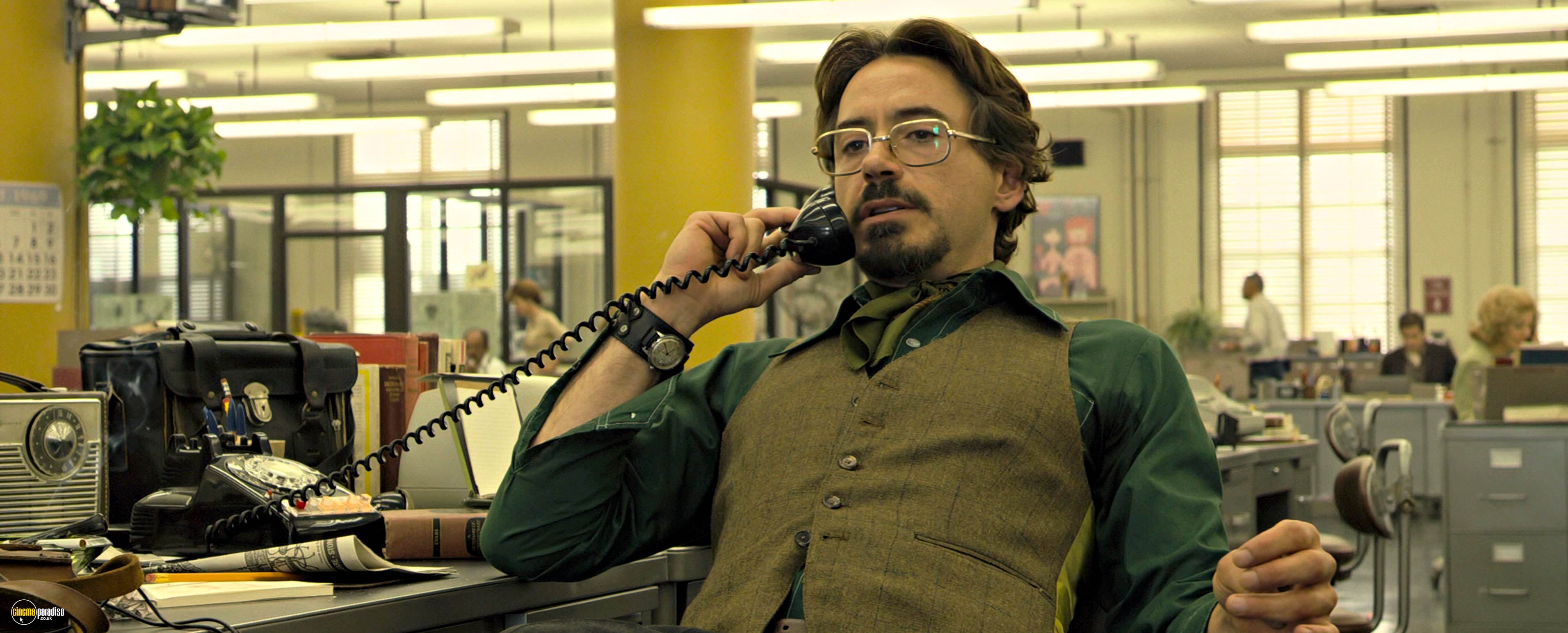
One that got away in 2006 was a deal with HarperCollins for a candid memoir of his life and work. Two years later, however, Downey returned the advance without an explanation and the project has yet to be revived. In between times, he starred in David Fincher's fact-based thriller, Zodiac, which followed the efforts of San Francisco Chronicle journalist Paul Avery and cartoonist-writer Robert Graysmith (Jake Gyllenhaal) to crack the Zodiac Killer case. Then, having cameo'd as Telephone Jack in Curtis Hanson's Lucky You, Downey played Principal Nathan Gardner dealing with Anton Yelchin's tricky student in Jon Poll's Charlie Bartlett (all 2007). While these were all interesting pictures that gave Downey scope to explore a range of characters and genres, none were boffo box office and he knew his career would ultimately be judged by Hollywood insiders by the numbers he racked up. To put it simply, he needed a hit.
Simply Marvellous
Downey had never particularly enjoyed auditioning, after having supposedly been intimidated by Susan Sarandon while trying out for Luis Mandoki's White Palace (1990). Indeed, he had not been through the ordeal since Chaplin. But the producers of Iron Man (2008) needed to see that the 41 year-old was right for both the tormented Tony Stark and his ferrous alter ego. Created by Stan Lee, Stark is the boy genius who takes over the family munitions firm after his parents perish when he's 21. However, he's changed forever when he's captured during a war and a bomb blast embeds shards of metal around his heart. Having resisted enemy threats to build a new weapon and escaped while wearing a special suit, Stark vows to atone for the fact that he has been the bad guy in his own story rather than the hero.
Various attempts been made to bring this Marvel strand to the screen, with Universal trying around 1990 and Nicolas Cage and Tom Cruise being linked with Stark before it was rumoured that Quentin Tarantino was working on an origins story. Joss Whedon and Nick Cassavetes had also tried to get projects greenlit before the rights reverted to Marvel in 2005 and it was announced that the comic-book publisher would launch its own studio, with Jon Favreau directing Iron Man.
It's easy to see why such a character would have appealed to Downey at this time in his career and he was fortunate that it landed when he was most ready to accept the challenge. He was certainly left-field casting. But, as Favreau revealed, 'he understood what makes the character tick. He found a lot of his own life experience in Tony Stark.' Downey also put a good deal of physical effort into preparing for the role, as he added 20lbs of muscle in the five months before the shoot. The exertions paid off, as Iron Man raked in over $585 million worldwide on its $130 million budget. Critics agreed that Downey brought a new sophistication and depth to the superhero genre and, by the end of the year, he had agreed to headline two sequels and put in an uncredited cameo in Louis Leterrier's The Incredible Hulk (2008), which confirmed the studio's plan to create the Marvel Cinematic Universe.
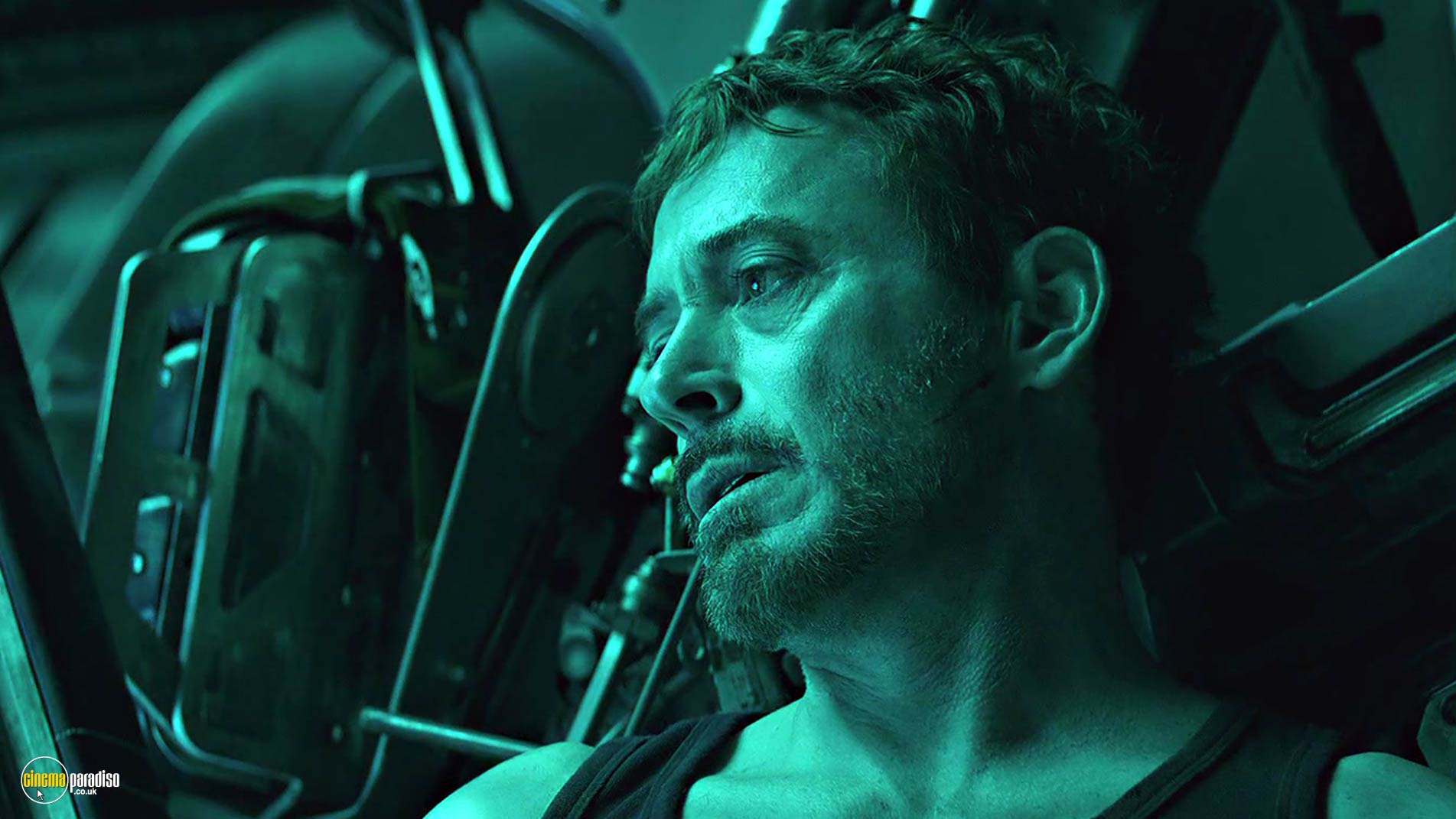
Over the next decade, Downey would reprise his dual role in Jon Favreau's Iron Man 2 (2010), Joss Whedon's The Avengers (2012), Shane Black's Iron Man 3 (2013), Anthony and Joe Russo's Avengers: Age of Ultron (2015), Whedon's Captain America: Civil War (2016), Jon Watts's Spider-Man: Homecoming (2017), and the Russo pairing of Avengers: Infinity War (2018), and Avengers: Endgame (2019). With his salary rising from $500,000 for the first to $75 million for the final three, the Stark films have earned Downey between $435-$500 million, while the Iron Man trilogy has netted Marvel $2.42 billion. Endgame became the first superhero picture to gross over $2 billion and topped the list of the all-time highest-grossing films until a 2021 Chinese reissue enabled James Cameron's Avatar (2009) to clamber to the summit.
These are phenomenal numbers and helped turn the one-time problem child into one of the most sought-after stars in Hollywood. But Downey wasn't content to sit back and count his cash. He remained an actor who needed to take risks and he put his new-found fame on the line by playing Aussie Method actor Kirk Lazarus in Ben Stiller's Tropic Thunder (2008), who undergoes a skin pigmentation process in order to play African American platoon sergeant, Lincoln Osiris, in a big-budget Vietnam picture. Stiller had first hatched this audacious satire while making Steven Spielberg's Empire of the Sun (1987) and his screenplay not only lampooned action movie stereotypes, but also savaged the entire studio film-making system. For playing the dementedly self-absorbed five-time Oscar winner, Downey received Best Supporting Actor nominations from the Golden Globes, BAFTA, and the Academy, only to lose out in each instance to Heath Ledger (who had died from an accidental overdose of prescription medication) for his work as The Joker in Christopher Nolan's The Dark Knight. No doubt each ceremony gave Downey pause for thought.
Following a guest appearance in Barbara Leibovitz's Annie Leibovitz: Life Through a Lens (2008), Downey portrayed Steve Lopez in Joe Wright's biopic The Soloist (2009), in which the Los Angeles Times columnist discovers Nathaniel Ayers (Jamie Foxx), a homeless man who plays a violin with virtuosic skill. But it was wife Susan who convinced her husband to take on Sir Arthur Conan Doyle's iconic consulting detective, while Downey himself talked Jude Law into playing Dr Watson in Guy Ritchie's Sherlock Holmes (2009). Departing radically from the interpretations of Basil Rathbone, Jeremy Brett, and Benedict Cumberbatch, Downey acknowledged the flaws of the 221B Baker Street resident, but added an all-action resourcefulness to his sleuthing acuity. Critics and audiences lapped it up and Downey unexpectedly won the Golden Globe Award for Best Actor in a Motion Picture - Musical or Comedy. A sequel, Sherlock Holmes: A Game of Shadows, duly followed two years later, and those hoping for a third case should be buoyed by rumours currently whirling around Tinseltown that the game is soon to be afoot.
Problems with travelling companion, wannabe actor Ethan Tremblay (Zach Galifianakis), hamper the efforts of architect Peter Highman to get from Atlanta to Los Angeles in time for his wife's scheduled C-section in Todd Phillips's Due Date (2010), which was a surprise success in grossing $211 million on a $65 million budget. The same year saw Downey and wife Susan launch their Team Downey production outfit. But Marvel duties kept him busy for the next few years and he only broke ranks with a cameo in Jon Favreau's Chef and the role of Chicago lawyer Hank Palmer opposite Robert Duvall in David Dobkin's The Judge (both 2014), which Team Downey also executive produced.
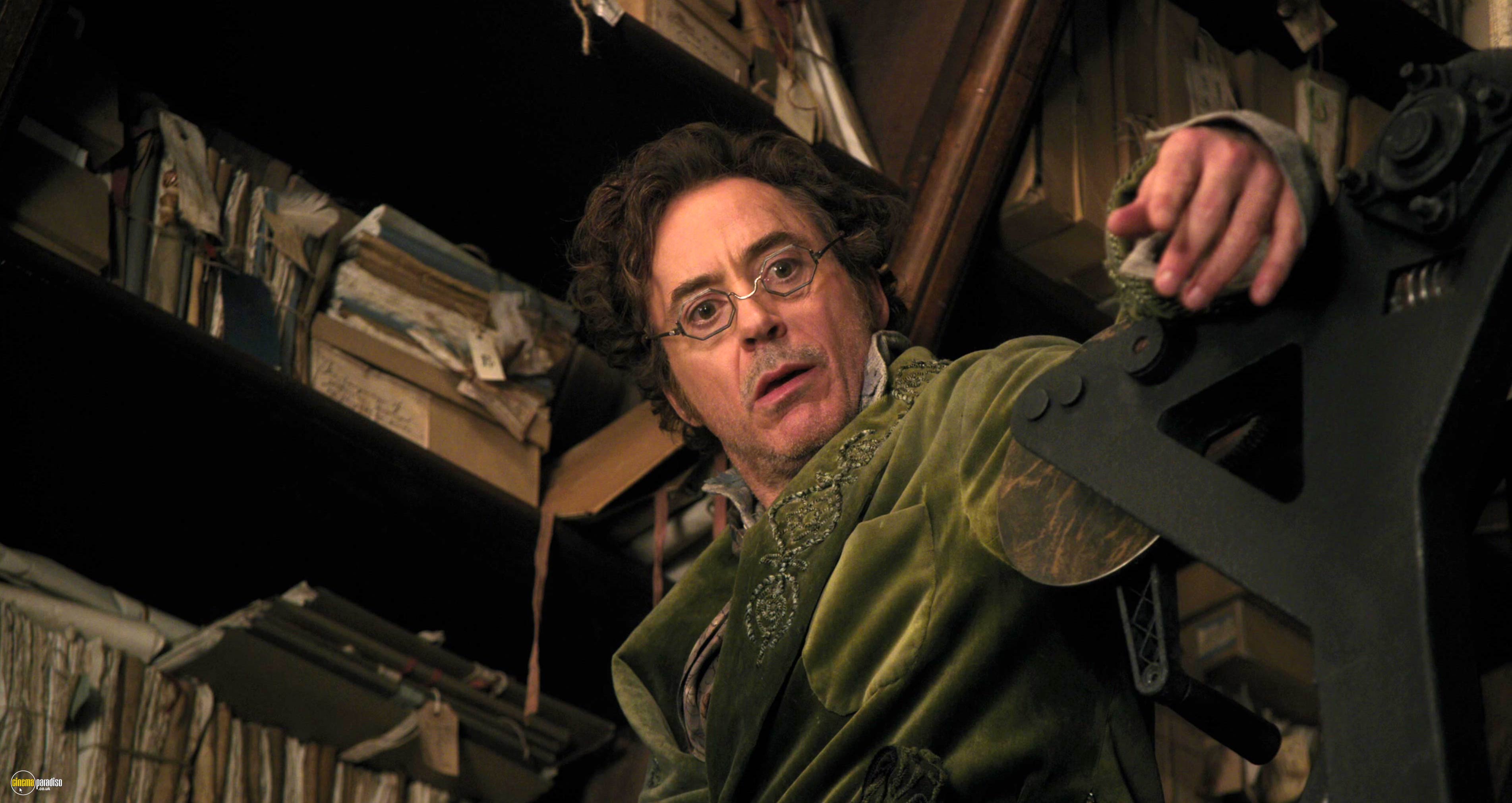
With the rest of the decade being take up by Marvel assignments, Downey didn't take on his next new role until 2020, although the character created by Hugh Lofting had been played by Rex Harrison in Richard Fleischer's Doctor Dolittle (1967), Eddie Murphy in Betty Thomas's Dr Dolittle (1998) and Steve Carr's Dr Dolittle 2 (2001), and by Kyla Pratt in Dr Dolittle 3 (2006) and Craig Shapiro's Dr Dolittle 4: Tell It to the Chief (2010). Downey's vet could also talk to the animals in Stephen Gaghan's Dolittle (2020), although Dr John employed a Welsh accent, which didn't go down well with some critics and earned him a Golden Raspberry nomination for Worst Screen Combo to go with his Worst Actor nod. In all, the second Team Downey venture picked up six Razzie citations, winning for Worst Prequel, Remake, Rip-off or Sequel. Yet, the CGI creatures are rather good, as is the all-star vocal cast. But you can see why the film lost between $50-100 million.
This was Downey's first misstep in a long time and he took a year out to spend time with his father, who has been diagnosed with Parkinson's Disease. They decided to make a film together, with each Downey getting to present his own cut in Chris Smith's documentary, "Sr." (2022), which is a monochrome delight that captures the bond between father and son and their mutual obsession with cinema. It's a great shame this can't be released to disc, as it's a gem.
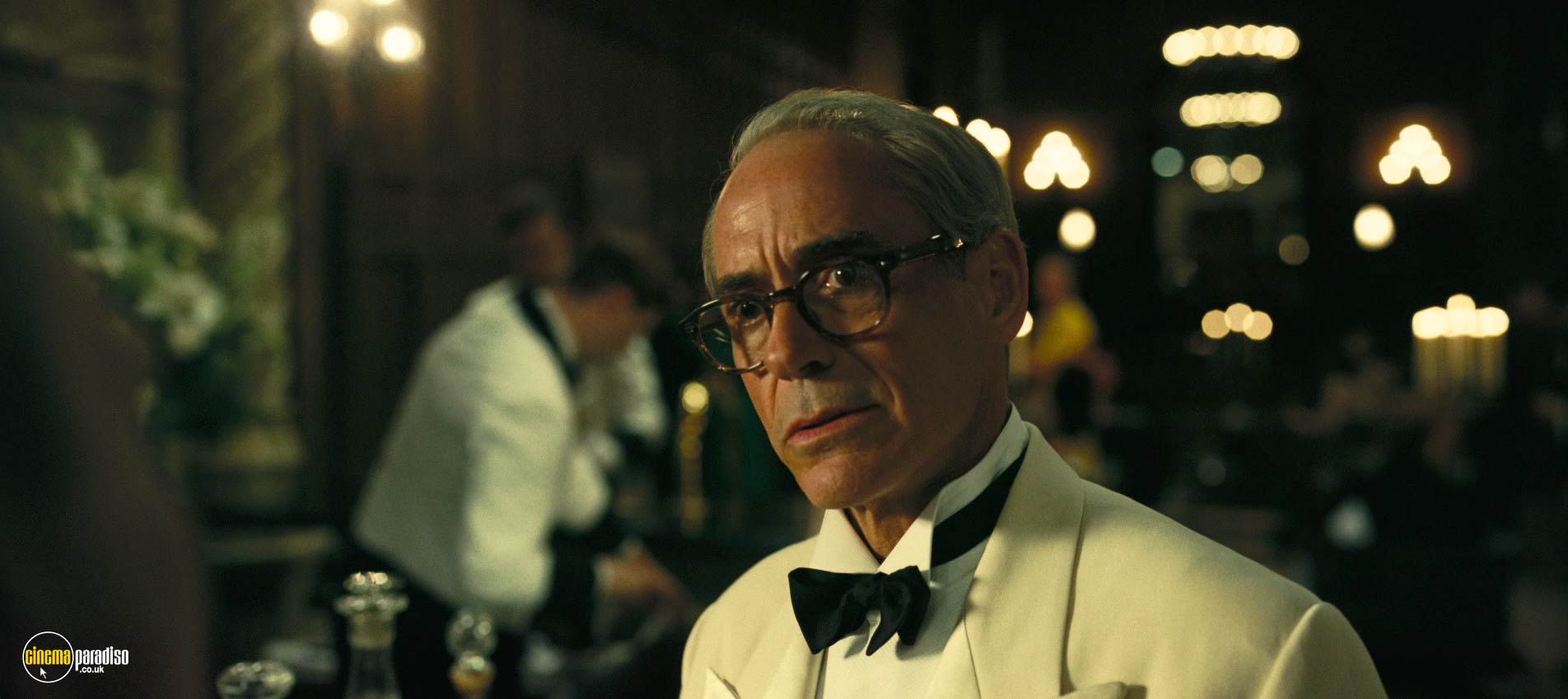
When he returned to acting, Downey was cast as Lewis Strauss, a key figure in the wartime development of the atomic bomb and a founder member of the US Atomic Energy Commission in Christopher Nolan's Oppenheimer (2023). Taking $4 million for the role opposite Cillian Murphy, Downey received some of the best notices of his career. He also won the Golden Globe, the BAFTA, the Screen Actors Guild, the Critics' Choice, and the Academy awards for Best Supporting Actor. In a change of pace, he then hosted Downey's Dream Cars, a television series in which a specialist team helped him convert several of his vehicles from petrol to electric. This was his second attempt at fronting a series, as he had appeared in all eight episodes of The Age of A.I. (2019). But the awards kept coming, as the motor show won the Daytime Emmy for Outstanding Lifestyle Programme.
He remained on the small screen to take multiple roles in Park Chan-wook and Don McKellar's adaptation of Viet Thanh Nguyen's Pulitzer Prize-winning novel, The Sympathizer (2024), which earned Downey a Primetime Emmy nomination for Outstanding Supporting Actor in a Limited or Anthology Series or Movie for portraying Claude, Niko Damianos, Professor Robert Hammer, Ned Godwin, and The Priest. That September, Downey went in search of EGOT status by making his Broadway debut in Ayad Akhtar's McNeal, which centred on a novelist whose difficult family life is exacerbated by his growing fixation with artificial intelligence.
He didn't land a Tony, but he did taken comic fans by surprise by announcing that he would cameo as Victor von Doom and his alter ego, Doctor Doom, in Matt Shakman's Avengers: Doomsday (2026), the 37th entry in the MCU franchise and the second reboot of the Fantastic Four strand. Alongside Pedro Pascal as Reed Richards and Mister Fantastic will be Vanessa Kirby as Sue Storm and The Invisible Woman, Ebon Moss-Bachrach as Ben Grimm and The Thing, and Joseph Quinn as Johnny Storm and The Human Torch. There are those who believe the superhero bubble has burst, but Downey has already signed to reprise the roles in Avengers: Secret Wars (2027). We can also expect to see him some time soon as the Mexican Strangler in Jamie Foxx's sports comedy, All-Star Weekend. One thing is for sure, Downey's name will keep cropping where it's not expected, whether he's exec producing items like Shane Black's Play Dirty (2025), guesting in documentaries like Judd Apatow's The Zen Diaries of Garry Shandling (2018) and Ting Poo and Leo Scott's Val (2021), or finding new on-screen ways to bely the fact that he is now into his seventh decade.
Mentioned films