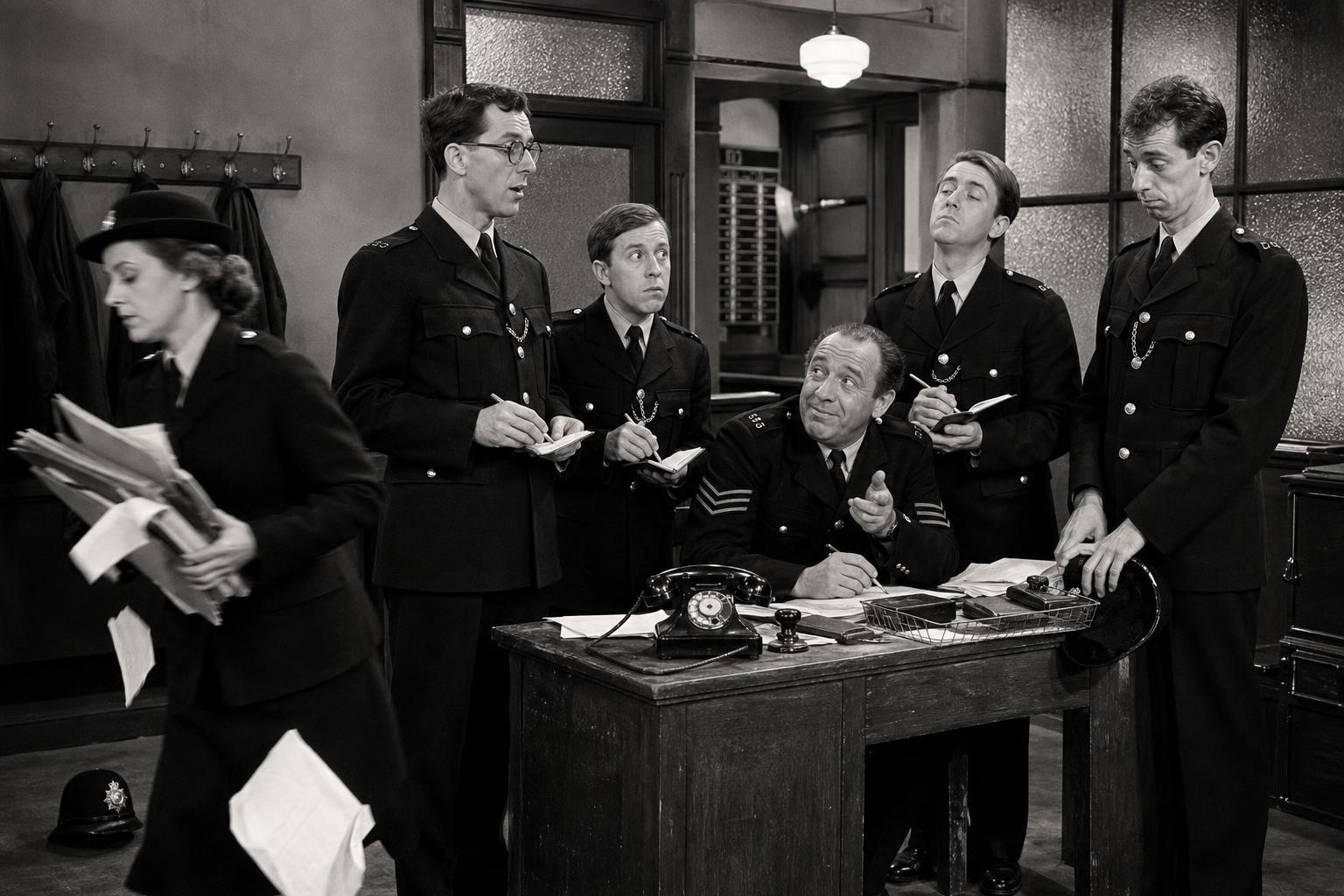
To mark the 50th anniversary of the death of Sid James, Cinema Paradiso harks back to the heyday of the Carry On films in a unique three-part survey.
Everybody knows the Carry On films, even though not everyone loves them in this day and age. Critics fell over themselves to dismiss them as tripe, yet audiences in Britain, Australia, and, initially, the United States couldn't get enough of the silly situations, the cheeky innuendos, and the knowing playing of some of the finest comic actors in the business. Only one of the first 25 films failed to make back its money within weeks of release.
But the makers struggled to keep pace with the increased permissiveness of society and cinema and their efforts to do so in the mid-1970s fell short of the standards they had established with both their workplace sitcoms and their movie pastiches. Moreover, public attitudes had started to change and the Carry Ons began to look tired and tacky. They had always delighted in being risqué, but, as political correctness took hold, they began to cause offence with a younger generation that had grown up in a Britain that had changed significantly since the time the Carry Ons were produced.
While the use of brownface in films reminiscing about Britain's imperial past became as unpardonable as the flagrant objectification of women, it would be foolish to dismiss the Carry Ons out of hand, however. Times may change, but human nature has a stubborn habit of staying the same and the subversive lampooning of the foibles of those in authority or labouring under delusions of grandeur remain as acute and amusing as ever. They're more Marmite in 2026. But don't give up on the Carry Ons just yet, as they can still sneak up on you and cause a snigger.
Everything Has to Start Somewhere
The Carry On films were something of an accident, but they became an institution. They were the brainchild of producer Peter Rogers and director Gerald Thomas, who had first worked together for the Children's Film Foundation, after taking very different routes into the British film industry.
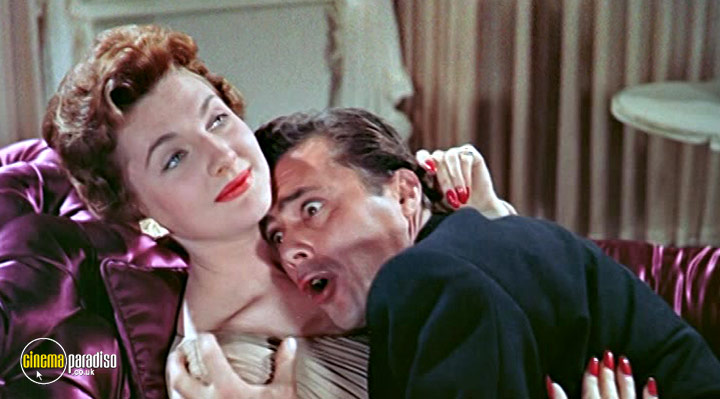
Born in Rochester in 1914, Rogers had joined the Kentish Express on leaving school and had spent time at the Picture Post after working as West End actress-producer Auriol Lee's assistant in the late 1930s. Following a stint writing scripts for BBC radio, Rogers joined J. Arthur Rank's Religious Films unit in 1942, after being excused war service because of the effects of spinal meningitis. He moved to Gainsborough Studios after the war and - as Cinema Paradiso regulars might remember from Introducing a British Film Family - married rising producer Betty Box, with whom he collaborated on Marry Me, Don't Ever Leave Me (both 1949), Appointment With Venus (1951), and Venetian Bird (1952). However, Box struck gold alone with a series of comedies adapted from the bestselling medical novels of Richard Gordon. Starring Dirk Bogarde, Doctor in the House (1954), Doctor At Sea (1955), and Doctor At Large (1957) were directed by Ralph Thomas, who had helped his younger brother gain a foothold in the film business.
Born in Hull in 1920, Gerald Thomas had been training to become a doctor when he was called up for war service. Feeling too old to return to his studies in 1945, he had joined the editorial department at Denham Studios, where he had worked on Laurence Olivier's Oscar-winning adaptation of William Shakespeare's Hamlet (1948). Having served as associate editor on Carol Reed's The Third Man (1949), Thomas cut his editing teeth on The 20 Questions Mystery (1950) - which can be rented from Cinema Paradiso on The Crime Collection (2017) - Thomas abetted his brother as editor on A Day to Remember (1953), Mad About Men (1954), and Above Us the Waves (1955), as well as the first romp set at St Swithin's Hospital.
Keen to try his hand at directing, Thomas joined his brother's producer's husband on the CFF comedy, Circus Friends (1956), which is available on Children's Film Foundation: Bumper Box, Vol. 5 (2024). Getting along well, Rogers and Thomas reunited as producer and director on a pair of neatly staged thrillers, Time Lock and The Vicious Circle (both 1957), the former of which gave a young Sean Connery an early feature break. The pair hooked up with screenwriter Norman Hudis on the Tommy Steele vehicle, The Duke Wore Jeans (1958), and he offered them his reworking of R.F. Delderfield's play, The Bull Boys, as a project for future Doctor Who, William Hartnell.
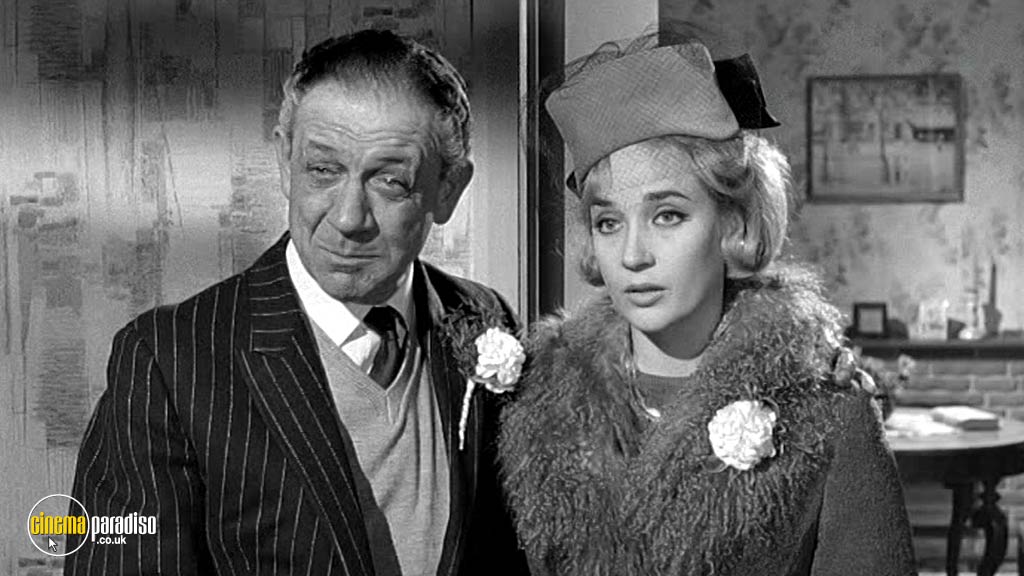
The rest, as they say is history. However, Rogers and Thomas continued to detour outside the Carry On enclave, with Chain of Events and The Solitary Child (both 1958) being made before the duo decided to follow up their box-office hit about National Service with a lark about the National Health Service. While the series was still establishing itself, they also teamed on Please Turn Over, Watch Your Stern, No Kidding (all 1960), Raising the Wind (1961), The Iron Maiden (1962), and Nurse on Wheels (1963), which featured members of what was becoming the Carry On stock company. Indeed, Twice Round the Daffodils (1962) even recycled Ring For Catty, the Patrick Cargill and Jack Beale play that had inspired their first medical comedy, while The Big Job (1965) was a Carry On in all but name.
They wouldn't moonlight again until Bless This House (1972), which was spun off from the hit ITV Sid James sitcom of the same name (1971-76). In fact, Thomas would only direct one more non-series feature, The Second Victory (1987), an adaptation of a Morris West thriller set in postwar Vienna that was produced not by Peter Rogers, but Melaleuka North Investments. Perhaps that explains why it has become so difficult to find, apart from a dubbed German version that occasionally crops up on online auction sites. But we digress. To continue our story, we must return to 1955, when Sydney (brother of Betty) Box approached novelist Ronald Frederick Delderfield to write something about compulsory conscription.
On the Job
In the same year that Ealing Studios released the last of its trademark comedies celebrating the quirks of the British character, Anglo-Amalgamated started to mine similar territory with the Carry Ons. Michael Relph's Davy (1958) can be rented from Cinema Paradiso on Volume 4 of the Ealing Rarities Collection. Check out the cast list, as it contains a few names that we shall encounter frequently in the course of our Carry On odyssey.
Overcoming the odds through team work, ingenuity, and personal growth had been a common happenstance in the Ealing comedies and Peter Rogers and Gerald Thomas harnessed the formula in their take on R.F. Delderfield's The Bull Boys. This had centred on a couple of ballet dancers being called up the Army. But, in polishing a first draft by John Antrobus, screenwriter Norman Hudis landed newlywed Charlie Sage (Bob Monkhouse) in the platoon being trained by the soon-to-retire Sergeant Grimshaw (William Hartnell) at the Heathercrest National Service Depot. Grimshaw has hopes of winning a competition for the best new recruits, but his chances don't look good with hapless privates as Peter Golightly (Charles Hawtrey), James Bailey (Kenneth Williams), and Horace Strong (Kenneth Connor) under his command.
Eric Sykes, Spike Milligan, Ray Galton, Alan Simpson, and Alfred Shaughnessy all turned down the chance to write the screenplay, which would bear the influence of Carol Reed's The Way Ahead (1944), John Boulting's Private's Progress (1956), and the popular ITV sitcom, The Army Game (1957-62). Val Guest had also declined the invitation of Anglo-Amalgamated's Nat Cohen and Stuart Levy to direct, as he refused to complete the assignment in six weeks on a budget of just £74,000. Aided by a company sergeant major provided by the War Office, Thomas took up the challenge and started shooting at Stoughton Barracks and Pinewood Studios on 24 March 1958.
Performing by night in the cult West End revue, Share My Lettuce, Kenneth Williams earned £800 for his efforts and he would spend the next two decades complaining to his diary about the size of his pay packet (despite the average annual wage at the time being £250) and the quality of the scripts.
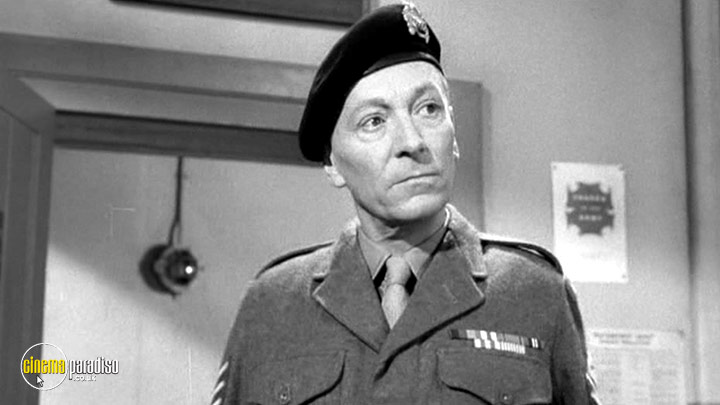
Disliking Delderfield's title, Levy had suggested following the lead of Val Guest's Carry On Admiral (1957), although there had been a Carry On London back in 1937 (which, sadly, is now near-impossible to see). No one thought that Carry On Sergeant (1958) would be anything more than a one-off. But it took everyone by surprise when it became a major box-office draw in grossing £500,000, in spite of lukewarm reviews like the one carried in The Monthly Film Bulletin, which deemed it 'a traditionally English mixture of old farcical situations, well-worn jokes, and comic postcard characters. Charles Hawtrey, as a weedy incompetent, and Kenneth Williams, as a condescending intellectual, provide some genuine laughs. The rest of the humour is either overdone or half-baked.'
Rogers had wanted George Cole to play Charlie Sage, but Bob Monkhouse did a fine job, alongside Shirley Eaton, as the bride who joins the NAAFI to be near him. As a prank, Williams greased the rope while filming the assault course scene, so that Monkhouse kept landing in the mud pit. But it wasn't all sweetness and light on the set. Hartnell was renowned for being tetchy and he fell out so badly with Bernard Kay (playing an injured recruit) that he asked for him to be fired. Taking to barking orders at his cast mates, Hartnell was commended by an officer visiting the Guildford barracks for his no-nonsense approach to discipline.
The score was provided by Bruce Montgomery, who wrote crime novels under the pen name of Edmund Crispin. Indeed, Alfred Hitchcock had borrowed the merry-go-round sequence in Strangers on a Train (1951) from the 1946 Gervaise Fen whodunit, The Moving Toyshop. Montgomery would become a fixture of the early Carry Ons, along with Hudis, who took pride in the fact that Sergeant 'set the style, to a great extent, of the ones I wrote: the incompetent, the uninterested or the plain unlucky, seen at their worst for most of the story, but triumphing in the end, against all expectation, and to rousing effect'.
National Service had just been scrapped, but the escapades of Grimshaw's rookies clearly rang bells with audiences still feeling the effects of postwar Austerity. Sensing that topicality was the way forward, Rogers proposed a follow-up and the series took wings when that proved to be an even bigger commercial success.
Adapted by Hudis from Patrick Cargill and Jack Beale's play, Ring For Catty', Carry On Nurse (1959) was set at Haven Hospital and followed Staff Nurse Dorothy Denton (Shirley Eaton) on her rounds. Hattie Jacques made her first appearance as Matron, while Joan Sims played the accident prone student nurse, Stella Dawson. Kenneth Williams, Terence Longden, Kenneth Connor, Charles Hawtrey, and Leslie Phillips were among the patients, although Wilfrid Hyde-White got to steal the show as a testy colonel who discovers a new use for a daffodil.
The atmosphere on set was convivial. When Williams vehemently denied that he kept dozing off in his bed, Thomas hung a sign around his neck and took a photo to prove his case. He also had to keep a supply of sweets handy in order to coax Kenneth Connor's three year-old son, Jeremy, into saying his lines. Thomas also introduced Bernard Bresslaw to the series, although all you can see are his feet, as he was used as a stand-in when Longden wasn't available for a covering shot. Peter Rogers also proved creative behind the scenes, as he offered Connor, Phillips, Williams, Jacques, Longden, Sims, and Hawtrey a percentage in lieu of a flat fee. But they declined and the producer would always remind them of their decision whenever they complained about their stingy wages and the fact that he and Thomas made tidy fortunes from their cut of the profits, with Rogers eventually treating himself annually to a new Rolls Royce.
A Variety notice enthused about 'the second in what should be a golden series...It is an unabashed assault on the patrons' funnybones. The yocks come thick and fast.' For once, the other reviews were similarly positive and Nurse topped the 1959 box-office chart in Britain, while also doing well in the United States. However, there was a more provincial feel to Carry On Teacher (1959), which channelled the spirit of such Will Hay school comedies as Boys Will Be Boys (1935), Good Morning, Boys! (1937), and The Goose Steps Out (1942), which had co-starred a young Charles Hawtrey. Eric Barker was originally cast as William Wakesfield, the headmaster of Maudlin Street Secondary Modern, while Dora Bryan was pondered for gym mistress Sarah Allcock before Ted Ray and Joan Sims landed the parts. In his original screenplay, Hudis included American educationalists Ellis Hackenschmidt and Cornelia Wheeler, who were to have been played by Michael Medwin and Hattie Jacques. However, they were replaced by Leslie Phillips and Rosalind Knight, when the pair were turned into child psychologist Alistair Grigg and school inspector Felicity Wheeler.
The storyline has Wakefield apply for another post after 20 years at Maudlin Street (whose motto, 'Continua O Domine' translates as 'Carry On, O Lord'). But science master Gregory Adams (Kenneth Connor), music specialist Michael Bean (Charles Hawtrey), and English master Edwin Milton (Kenneth Williams) persuade him to change his mind after showing previously unsuspected aptitude in the classroom. The Kenneths pranked each other with a stink bomb in a laboratory jar and some real itching powder during the comic scratch finale. But Hawtrey demonstrated the most coolness under pressure when his mother visited the set and dropped hot ash into her handbag while having a smoke. When Joan Sims noticed the flames, Hawtrey unfussily doused them with his cuppa. Talk about keeping calm and carrying on.
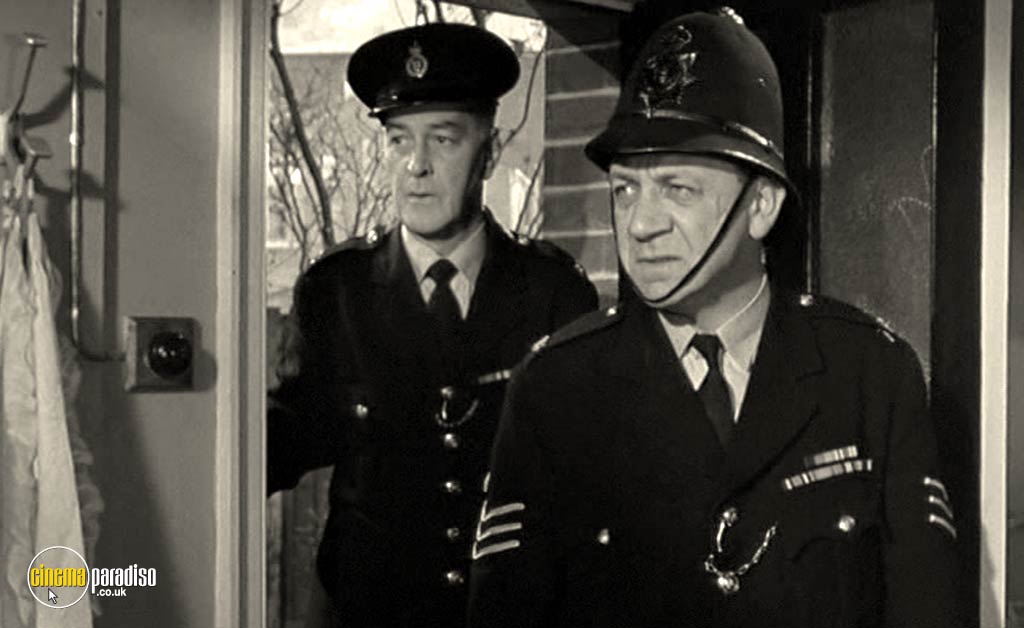
Rogers and Thomas were keen to work with Ray again. But his contract with ABC Pictures prevented him from playing the desk sergeant in Carry On Constable (1960), although the trio did reunite for Please Turn Over (1959), which sees a teenage girl publish a salacious bestseller based on the behaviour of her neighbours in a supposedly quiet town. Norman Hudis adapted Basil Thomas's play, Book of the Month, while Leslie Phillips, Charles Hawtrey, and Joan Sims took key secondary roles.
The fourth Carry On very nearly didn't happen, as Hudis was so dismayed by what he witnessed during a fact-finding day at Slough police station that he informed Rogers that there was nothing funny about police work. He had second thoughts, however, as did Rogers over the original title of Carry On Copper. With Ray unavailable, Sid James was cast against type as Frank Wilkins, who despairs when the training school sends him Stanley Benson (Kenneth Williams), Tom Potter (Leslie Phillips), and Charlie Constable (Kenneth Connor) to fill in during a flu epidemic, alongside Special Constable Timothy Gorse (Charles Hawtrey) and novice WPC, Gloria Passworthy (Joan Sims).
As those familiar with Getting to Know Sidney James will be aware, the South African-born actor was best known for playing small-time crooks, most notably in Hancock's Half Hour (1954-61). But this would be the first of a 19-film association with the Carry On gang, although Leslie Phillips would duck out of the series before making a cameo comeback 32 years later. Perhaps he felt it was a bit of a cheek being required to bare his bottom, alongside Connor, Hawtrey, and Williams during a shower scene that provided the franchise with its first bit of nudity. Williams confided in his diary that the film was 'mediocre & tired' and he felt everyone involved knew it. The Monthly Film Bulletin tended to agree, in opining 'The "Carry On" series looks like becoming an anthology of all the slap-and-tickle music-hall jokes that have ever been cracked. The laughter here centres on dropped trousers, ample bosoms, innuendo, female impersonation, lingerie and male nudity. Out of this frayed material a little comedy is coaxed by the familiar cast as they grapple with the random situations that pass for a plot.' Yet Geoffrey M. Warren of the Los Angeles Times was more enthusiastic, albeit with caveats, when he wrote: 'Most of the gags are visual in the tradition of Laurel and Hardy, the Marx Bros. and others, though no individual performer is of this caliber of comic performer.'
But only Doctor in Love and Sink the Bismarck! made more money at the UK box office and the series trundled on in Carry On Regardless (1961), for which Ralph Thomas directed a few uncredited scenes to help out his brother (as he would on the next entry). Maybe that's why there's a parody of The 39 Steps, as Ralph had just directed Kenneth More in a remake of the John Buchan espionage classic that had been so memorably filmed by Alfred Hitchcock in 1935.
This put a new spin on the work comedy format by having Bert Handy (Sid James) set up the Helping Hands agency to provide solutions for people with problems. Among the labour exchange stragglers signing up are Sam Twist (Kenneth Connor), Francis Courtenay (Kenneth Williams), Gabriel Dimple (Charles Hawtrey), and Lily Duveen (Joan Sims). When Leslie Phillips turned down the part of Montgomery Infield-Hopping for fear of being typecast, it was remodelled for Terence Longden, while Liz Fraser steeped in as Delia King after Hattie Jacques fell ill (although she recovered in time to make a cameo).
Nicholas Parsons paid the price for having the temerity to ask Thomas for a second take, as the penny-wise Rogers never asked him back. Williams was also restless on the set, as he considered the film to be 'quite terrible. An unmitigated disaster.' However, he's on peak form while translating the row between a man and his German wife and hosting the chimps' tea party, even though a stellar simian named Yoki had gone ape and smashed ornaments on the set. Joan Sims's reaction was more sanguine when she discovered that Thomas had laced her glass with gin while shooting the wine-tasting scene.
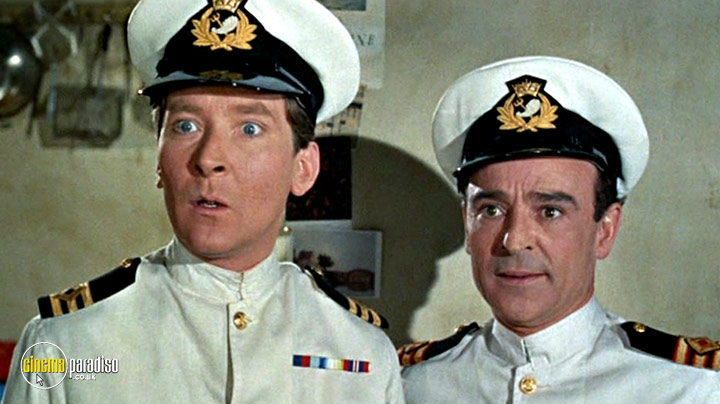
Alcohol would also play a key part in Carry On Cruising (1962), which was the first title to be photographed in colour. Lance Perceval had been due to play a drunk before an ill-judged demand for star billing and a pay rise had led to Charles Hawtrey being removed from the role of cook Wilfred Haines. Ronnie Stevens propped up the bar manned by Jimmy Thompson, whose bid to produced an Aberdeen Angus cocktail provides one of many subplots, as the new recruits to the crew of S.S. Happy Wanderer seek to make a good impression on Captain Wellington Crowther (Sid James). Haines tries to bake an international cake, but the scene didn't go according to plan, as Perceval later recalled: 'They were trying to get the cake to blow up in my face. It was done with a pressure pump underneath with the cake mixture sitting on top of an air pipe. When they pressed a button the mixture was to shoot all over my face. However, every time I leaned over to "smell the aroma" just before it exploded, I blinked as it actually shot up, i.e. I knew it was coming! Therefore, it took nine takes to get a scene that lasts ten seconds - unheard of in a Carry On.'
Eric Barker had initiated the vacation idea by suggesting a road movie set on a touring coach. Reasoning that it would be cheaper to set the action aboard a ship that could be mocked-up in the studio, Rogers was happy to purloin the plot (although he would include coach trips in two later Carry Ons) and didn't even have the courtesy to offer Barker a part in compensation. Joan Sims had been set to play Flo Castle alongside Liz Fraser's Glad Trimble, but she fell ill four days before shooting commenced and Dilys Laye stepped into the breach. Kenneths Williams and Connor returned as First Officer Leonard Marjoribanks and Dr Arthur Binn, while Esma Cannon stole scenes for fun as the adorably dotty, table tennis-playing Bridget Madderley. Watch her response to the lovesick Connor serenading Laye, although that's not his voice, as the singing was done by Roberto Cardinali, who had just played an Italian crooner in Ken Hughes's The Small World of Sammy Lee (1963).
Although he had just submitted a screenplay for a spy spoof, Hudis decided that Cruising would be his last Carry On, as offers were coming in from Hollywood. He was replaced by Talbot Rothwell, who had been shot down over Norway during the war and had formed a POW camp double act with future Carry On legend, Peter Butterworth, at one point performing the song 'The Letter Edged With Black' with extra gusto to distract the guards during an escape bid. Tolly (as he was known) would break out of the workplace and initiate the run of movie parodies that we shall discuss in the next part of Cinema Paradiso's Carry On bonanza. Initially, however, he stuck with the day job format with Carry On Cabby (1963), which was based on an idea by Morecambe and Wise writers Dick Hills and Sid Green and was originally planned as a non-series venture entitled Call Me a Cab.
As Sid James was headlining the BBC sitcom, Taxi! (1963-64), at the time, it made sense to cast him as Speedee Taxis boss, Charlie Hawkins. As a fellow Hancock alum, Hattie Jacques was also ideally cast as his wife, Peggy, who punishes her workaholic spouse for missing their 15th wedding anniversary by setting up the rival GlamCabs to teach him a lesson. Esma Cannon, Liz Fraser, and Amanda Barrie played her cohorts, while a returning Charles Hawtrey (Terry 'Pintpot' Tankard) and Kenneth Connor (Ted Watson) made up Charlie's staff. Kenneth Williams, however, thought the part of Allbright was beneath him and he opted out, leaving Rothwell to reassign his best lines to Hawtrey (who had to be given driving lessons on the Pinewood lot) in reducing Allbright to a minor character, who was nevertheless splendidly played as a rulebook stickler by Norman Chappell.
No relation to his producer, Eric Rogers took over as the Carry On composer and he became renowned over the next 23 pictures for the musical puns he would insert into his scores, which took the form of snatches of classical pieces with titles related to the action. Speaking of sampling, Cabby fans might also want to rent Dan Zeff's Hattie (2011), which has Ruth Jones in the title role, as it includes a scene set during the filming of Carry On No.7.
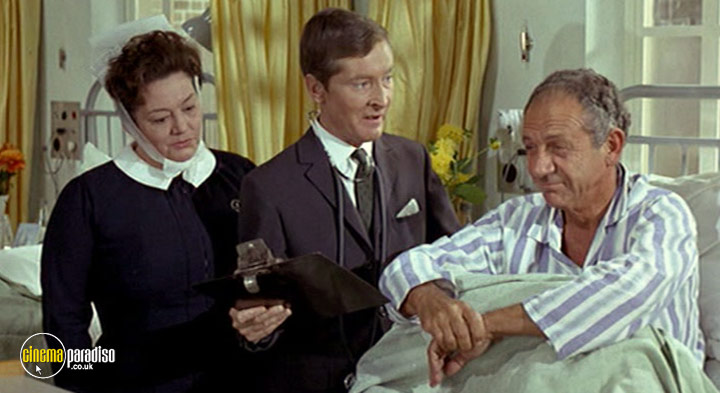
Staying with the work movies, we drop out of sequence for the 15th film in the series, Carry On Doctor (1967), which saw the Rank Organisation adopt the famous prefix after not having used it on the two parodies it had made in the immediate wake of succeeding Anglo-Amalgamated as the series sponsor. Indeed, Rothwell's original title had been Nurse Carries On, which became Carry On Again Nurse before Rogers cut a percentage deal with his wife in order to use the 'Doctor' part of her ongoing medical franchise. In an effort to sweeten the deal, a portrait of James Robertson Justice (who had played Sir Lancelot Spratt in seven of the Doctor romps) was placed between the lifts in the lobby of the Borough County Hospital.
Frankie Howerd had misgivings about playing fraudulent faith healer, Francis Bigger, and the part had been given to Kenneth Williams. However, he decided he was better suited to playing the unpopular Dr Kenneth Tinkle and Howerd was coaxed into changing his mind - leaving Williams to grumble to his diary, 'a v. good vehicle for Frankie Howerd but all the other parts are lousy'. Having just recovered from a heart attack, Sid James was content to lie in bed as hypochondriac Charlie Roper, while Charles Hawtrey revelled in playing Mr Barron, who is so worried about becoming a father that he develops sympathetic pregnancy pains.
Bernard Bresslaw makes up the contingency, as the hobbling Ken Biddle, who is forever sneaking off to meet Mavis Winkle (Dilys Laye) in the women's ward. Flitting between the two are Dr James Kilmore (Jim Dale) and Nurse Sandra May (Barbara Windsor), who is forever falling foul of Matron (Hattie Jacques), whose strict regime prompts the patients to revolt. Penelope Keith, however, had her turn as a 'plain nurse' cut from what the BFI called a 'Bedpanorama of hospital life.' It proved as popular as its medical predecessor, as only Disney's The Jungle Book and Roger Vadim's Barbarella out-performed it at the UK box office. Yet, Rogers was pessimistic about the future of the series and Williams had noted on 6 May that the producer 'would like to do a Carry On Doctor as the last, and then "say goodbye to the Carry Ons" rather sad really'.
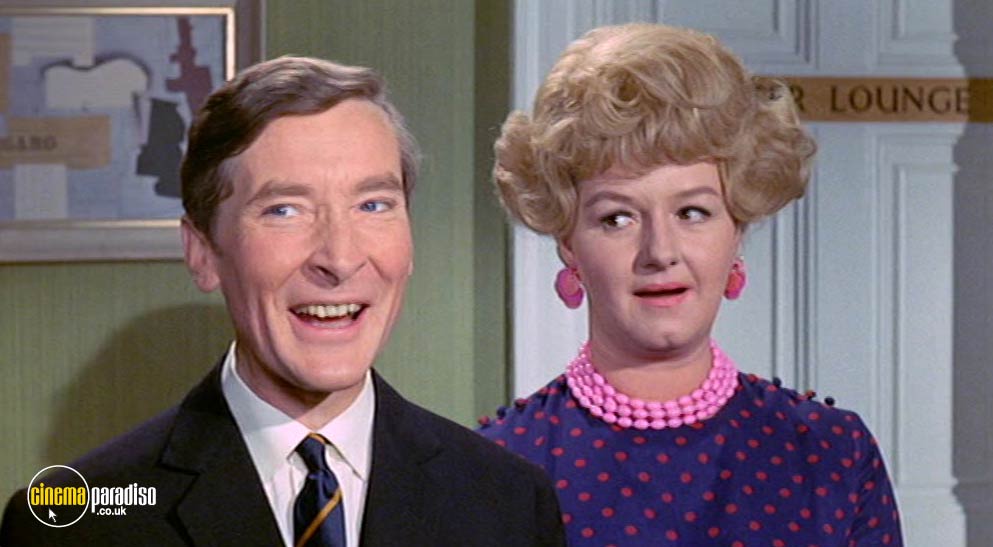
But the series lived on and checked into the Long Hampton Hospital for Carry On Again Doctor (1969), the 18th entry that came with the alternative titles, 'Where There's a Pill There's a Way' and 'Bowels Are Ringing'. Rothwell's script seemed as if it might prove problematic, however, as he had been commissioned to write Doctor in Clover for Betty Box and the Rank lawyers were concerned that he had recycled the material about a far-flung mission and a slimming serum, even though his script for Mrs Peter Rogers had not been used. Ultimatrly, the project went ahead and Jim Dale got to play Dr Jimmy Nookey, who is banished to the Beatific Islands after falling foul of Sir Frederick Carver (Kenneth Williams), his sidekick Dr Ernest Stoppidge (Charles Hawtrey), Matron (Hattie Jacques), and their patron, Mrs Ellen Moore (Joan Sims). With Sid James on corking form as medicine man Gladstone Screwer, and Barbara Windsor as film star Goldie Locks (aka Maud Boggins), this is fun throughout, right down to Hawtrey dragging up to play Lady Puddleton when Nookey sets up an exclusive weight loss clinic and Carver needs a spy on the inside.
Dale did his own stunts in the scene in which Nookey bounces down some stairs on a gurney, while he also leapt into the hammock on the tropical island. But he incurred a back problem that plagued him for years, during which he steered clear of the Carry Ons, returning only to take the title role in the 1992 swan song. Patsy Rowlands made the first of her nine appearances, as Carver's secretary, Miss Fosdick, while Shakira Baksh, who plays Scrubba, the Beatific woman undergoing a slimming treatment, went on to marry Michael Caine. Composer Eric Rogers can be spotted as the clarinet-playing bandleader during the hospital dance. Listen out for the moment he weaves the Steptoe and Son theme into the score when Wilfrid Brambell cameos silently as a dirty old man (for which he received £100).
As running the Wedded Bliss dating agency is a full-time job for Sid Bliss (Sid James) and longtime girlfriend, Sophie Plummett (Hattie Jacques), Carry On Loving (1970) qualifies as a work comedy. The 20th film in the series has much in common with Regardless, as the focus falls on the clients seeking the match of the dreams. Having opted against using the title, Carry On Courting, Rothwell outdid himself when it came to alternative monikers: 'Love Is a Four Letters Word', 'It's Not What You Feel, It's the Way That You Feel It', 'Two's Company But Three's Quite Good Fun Too', and 'It's Just One Thing on Top of Another'. Rogers had also registered the title, Girls That Go Bump in the Night. But it's perhaps as well that this never got made.
Among the lovelorn residents of Much-Snogging-on-the-Green are bachelor marriage counsellor Percival Snooper (Kenneth Williams), the bashful Bertrum Muffet (Richard O'Callaghan), and the luckless Terry Philpott (Terry Scott), who respectively find romance (more by luck than judgement) with secretary Miss Dempsey (Patsy Rowlands), model Sally Martin (Jacki Piper), and her madeover roommate, Jenny Grubb (Imogen Hassell). But all is not well between Sid and Sophie and she hires shamus James Bedsop (Charles Hawtrey) to spy on his dealings with Esme Crowfoot (Joan Sims), even though she's dating green-eyed wrestler Gripper Burke (Bernard Bresslaw).
With the dialogue being noticeably bawdier than the usual innuendo in an effort to appeal to a younger audience, the film falls between two stools and ends rather crassly with a food fight. Nevertheless, there are some good jokes at the expense of automation, while the picture scored a mother-son first, as Richard O'Callaghan was the son of Patricia Hayes, who had played Mrs Beasley in Carry On Again Doctor. Missing from the final cut, however, is James Beck (Private Walker from Dad's Army ), whose cameo with Danish actress Yutte Stensgaard wound up on the cutting room floor (your minds, honestly!).
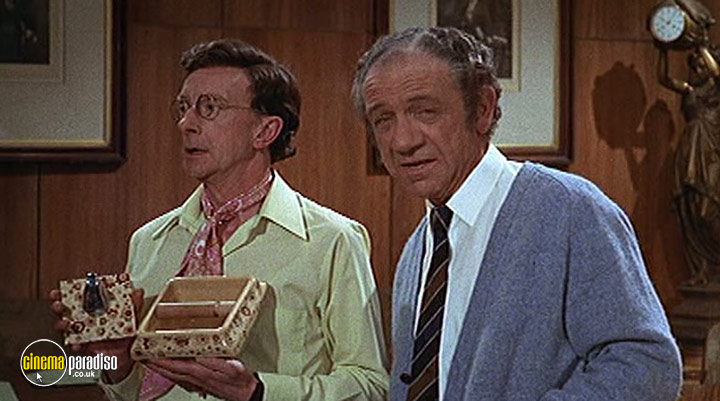
Titled Carry On Comrade by Talbot Rothwell and shot as Carry On Working, the 22nd entry in the series was released as Carry On At Your Convenience (1971), although overseas audiences unfamiliar with British bathroom idioms got to see Carry On Round the Bend. It was designed to mine the same kind of trade union humour as the Boulting classic, I'm All Right Jack (1959). But Brits were more militant in the 1970s and hindsight has it that they spurned a comedy that depicted them as being as bolshie and workshy as shop steward Vic Spanner (Kenneth Cope) and his doltish oppo, Bernie Hulke (Bernard Bresslaw). As a consequence, this became the slowest series entry to meet its production costs, as it was 1976 before international and television sales took it into the black.
Critics decided that the works outing to Brighton was nothing more than padding, although some noted that the three days spent on the Sussex coast amounted to lavish location excess for a Carry On. The sequence in which the coach stops off at various pubs on the way home was filmed around Iver Heath and featured the speeded-up footage gambit that had been a series stand-by since the early days. Kenneth Williams excelled himself, as stuffy bathroom fixtures manufacturer, W.C. Boggs, came out of himself beside the seaside while downing countless beverages. After complaints about him being too old to lech after young women, Sid James also showed well, as he pitched foreman Sid Plummer closer to his Bless This House persona and there was something sweet about his flirtatious fondness for neighbour Chloe Moore (Joan Sims), even though he's married to Beattie (Hattie Jacques), who only has eyes for her budgie, Joey, who keeps picking winners in big horse races.
Including an amusing parody of sex education films, this is funnier than contemporary critics gave it credit for. But it was released without a boardroom showdown, in which Terry Scott had played a union stuffed shirt named Allcock. He was paid £500 for his day's work and Thomas wrote him a note to explain that the decision to cut the scene was 'in no way any reflection on you or your performance but the film finished 50 minutes over length and we felt rather than cut your sequence down so that you were only on the screen for a flash it would be kinder to remove the entire scene as really it had no effect one way or the other on the story, such as it is'. Sadly, this has never cropped up in any DVD extras and no one seems to know if the footage has survived.
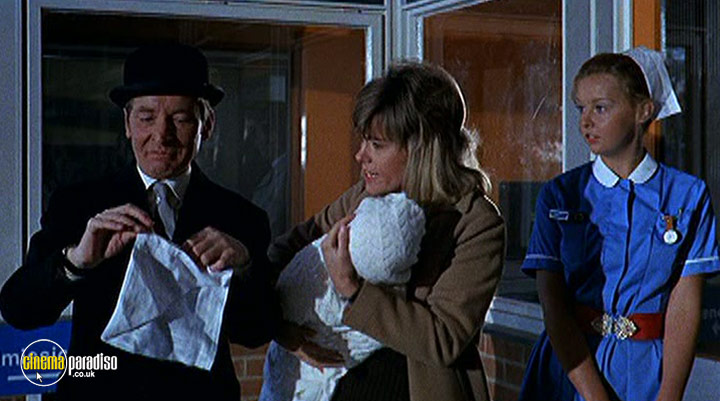
The final workplace scenario took the gang to the Finisham Maternity Hospital for Carry On Matron (1972). In recognition of the fact he had scripted the comedy that had given the series commercial cachet, Rogers invited Norman Hudis to write it. However, the need to contribute towards his Screenwriters Guild pension and healthcare scheme made him too expensive to hire and Hudis was quietly detached from the project in favour of Tolly Rothwell. He repaid the faith shown in him by slipping in a couple of in-jokes to reflect his affection for Hattie Jacques and Sid James. The book that Matron and Dr F. A. Goode (Charles Hawtrey) read during their secret assignations is Christianna Brand's Green For Danger, the wartime hospital thriller that had afforded Jacques her screen debut (as the sinister propagandising radio announcer) when it was filmed by Sidney Gilliat in 1946. Rothwell also shaped the robbery to recall Mario Zampi's Too Many Crooks (1959), in which Sid had co-starred with Terry-Thomas and George Cole.
Sid Carter has short-armed his son, Cyril (Kenneth Cope), into posing as a nurse at Finisham in order to steal its supply of contraceptive pills and sell them abroad. However, Cyrille attracts the attention of the pesky Dr Prodd (Terry Scott), who is also on the case of nurse Susan Ball (Barbara Windsor), who is forever in matron's bad books, along with Mrs Tidey (Joan Sims), who would rather gorge on hospital grub than give birth, much to the consernation of her stressed railwayman husband (Kenneth Connor).
With Kenneth Williams playing Sir Bernard Cutting, the registrar who decides to woo matron in order to dispel concerns that he is insufficiently manly, CO23 shares the distinction of having the biggest number of series regulars in its cast with the other title released in 1972 (see Part 3). Peter Butterworth had been booked to play gang member Freddy, but a schedule cast meant that he had to be replaced by Bill Maynard. Jack Douglas came aboard for the first time, however, as the twitching father waiting for baby news. He was only paid £25 for his cameo, but Peter Rogers had been so pleased with him that he sent Douglas a crate of Dom Perignon champagne and a note that read, 'Welcome to the Carry On team.' One wonders what he gift Rogers gave Gerald Thomas, as he wrapped six and a half days early on a film that earned the series some of the best reviews of the decade.
Keep an eye out for Part 2 of Cinema Paradiso's Carry On cornucopia, as we shall celebrate the costume comedies that provided many of the franchise's highlights. But we're not even done there, as Part 3 will focus on the unpigeonholeable entries, as well as some unrealised scenarios, the various stage and TV spin-offs, and the place of the Carry Ons in a British cultural landscape that has changed considerably since the series started some seven decades ago.
Mentioned films