When it came to comedy, few could match Penelope Keith, who has died at the age of 86. Cinema Paradiso looks back on a career that took several unexpected turns.
'Humour is power and a force for good,' Penelope Keith once said, 'because if you can laugh, particularly at yourself, you are some way to being able to make sense of things.' Drama critic Michael Billington recognised the value of her comic talent. 'What we treasured,' he wrote in a Guardian tribute, 'was her ability to make us laugh and to suggest that under the starched conventionality of upper-class English womanhood lurked impishness, mischief and a desire for adventure.'
Although she frequently triumphed on stage and, in the later years, became a genial presenter of factual programmes, Keith will best be remembered for her work in the much-maligned field of situation comedy. She starred in seven series that were written specifically for her. But her finest role was considered so tangential to the main plotline that she didn't even appear in the first episode. She could only be heard through an open bedroom window in the middle of the night. Co-star Richard Briers saluted her growing importance to the show and opined that, she 'would go down in the hall of fame, in fact I think she will be remembered forever'. One can but hope so, as Keith created a character who is still recognisable in all parts of the country nearly half a century later.
The Nun That Never Was
Penelope Anne Constance Hatfield was born on 2 April 1940 in the Surrey town of Sutton. Her father, Frederick A.W. Hatfield, was an army officer who reached the rank of major before the end of the Second World War. However, he had already abandoned her mother by then and Keith told Gyles Brandreth in a podcast chat that she couldn't remember ever meeting him, as he was a bit of a gadabout. Connie who was forced to look for work to support her child and Penny was often billeted with her grandmother, Ethel Nutting, as Connie took on the role of organising entertainments for children at various hotels in Clacton-on-Sea. 'Sounds awful, doesn't it?' Keith told an interviewer. 'Mummy made absolutely certain I spent all my summer hols at Clacton, it was jolly good fun.'
Once the war was over, the pair moved to Clapham in South London and Penny was enrolled at La Ratraite, a French convent school, where she made her stage debut as a fairy in a ballet showcase. She was so anxious to see her mother in the audience that she spent much of the routine peering into the seating. As she told Brandreth, this happened whenever her mother came to see her perform and, when she made her debut at Stratford, Connie wore a hat so that Keith could spot her more easily.
Penny was clearly happy with the sisters, even though she wasn't a Roman Catholic. 'I apparently came home from school one day,' she told Michael Parkinson in 1977, 'and sat in the bath and said to my mother that when I grow older I was going to be either a nun or an actress. She was a bit taken aback and said, "Darling, nuns can't wear pretty clothes." So I said, "Well, I'll be an actress then."'
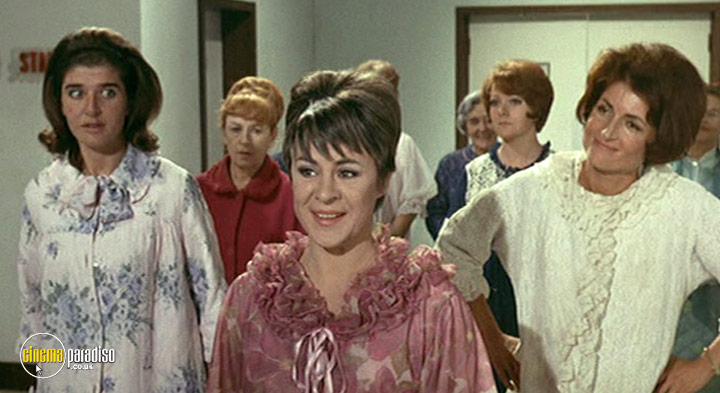
At the age of six, however, Penny was sent to the school run by the Sisters of Providence at the Annecy convent in Seaford, East Sussex. Although she missed her mother and grandmother, she enjoyed boarding, where Judy Cornwell was one of her classmates. She was also encouraged to perform by Sister Celestine and, at the age of 13, she won her class at the Brighton Festival by reciting William Shakespeare's 'Crabbed Age and Youth'. Invited to choose a prize, she picked a copy of The Complete Works of Shakespeare, which she kept for the rest of her life.
Holidays back in London were less fun, as Penny had no friends outside school. However, she became a voracious reader and Jane Austen and the Brontës remained firm favourites. She also started going to theatre matinees in the West End with her mother, who had remarried when her daughter was eight. Although she adopted her stepfather's surname, Keith refused to discuss him or even reveal his first name. Connie remained 'a rock of love' and supported Penny when Sister Celestine suggested that she relocated to a school in Bayeux in 1955. Living with just three other English girls, she was shunned by her French classmates and felt the nuns were cold. She told Gyles Brandreth that she also found postwar Normandy to be terribly depressing, as the Mulberry harbours and German gun emplacements were still on the D-Day beaches and she was saddened by the endless rows of graves in the military cemeteries that had yet to become the well-tended memorials they are today. She even found the Bayeux Tapestry boring!
By now standing 5ft 10in, Keith returned to Blighty with the intention of applying to drama school. She was rejected by the Central School of Speech and Drama for being too tall for leading roles. She would later say in interviews that this was more the fault of leading men being too titchy, but she landed a place at the Webber Douglas Academy of Dramatic Art and spent two years there, while living with Connie in Putney.
Keith also worked evenings at the Hyde Park Hotel, where she perfmorned secretarial and administrative tasks and introduced a filing system that no one else could understand, thus, making herself invaluable. 'When I was at drama school,' she recalled, 'I would go to the theatre two or three times a week, and I would get into the gods for four shillings. I had a job which paid four pounds ten shillings a week, and a gallery seat was four bob, which was 1/25th of my salary.'
While at Webber Douglas, Keith won the Douglas Cup, the Principal's Cup, and the Shakespeare Cup. However, she kept being informed that her height and looks would prevent her from being considered for the plum roles. 'I was very tall and very plain,' she told Parkinson. 'I think this is where the comedy came from because I wasn't going to get very far on my looks. So I thought I'd better be the "gag girl".'
From 19 to 90
On leaving Webber Douglas, Keith wrote numerous letters to the BBC and regional repertory companies looking for work. She was offered an assistant stage manager's role for the eight-strong weekly rep troupe at Chesterfield Civic Theatre, which meant that she had to make the tea and help shift scenery when not taking bit parts on stage. Her professional bow came in 1959 as Alice Pepper, a pregnant character in The Tunnel of Love, a comedy that had just been directed for the big screen by Gene Kelly, with Doris Day and Richard Widmark.
Keith later claimed that the decline of the repertory system had a deleterious effect upon developing actors. 'I think television gave everybody access to superb drama. But we have lost that amazing training. Now, when you are 25 you have done a couple of fringe things and a line or two in television, but when I was 24, I had played 40 or 50 roles in everything from Shakespeare to Shaw and I had been exposed to the different ways writers worked. And, yes, it would be difficult to accept some of the acting that went on. My first role I had to play a 40 year-old and I had more lines drawn on my face than an Ordnance Survey Map. I was stooping because I was playing this awfully old character, but it was extraordinary. And weekly rep was a nightmare! Actually it wasn't, I loved every minute of it. Young actors are missing so much of that experience.'
She particularly enjoyed playing shady maid Lily Thompson in Peter Coke's Breath of Spring, but took something from every role in which she was cast while in rep in Lincoln, Manchester, and Salisbury. She also found a way to turn her height to her advantage, as she explained in the 2000 TV tribute, Lady of the Manor: 'It meant I had a good bash at all the character parts from 19 to 90, so one broadened one's range.'
Following such productions of Gigi and Flowering Cherry, Keith was invited to join the Royal Shakespeare Company in 1963, performing at both Statford and the Aldwych Theatre in London. Having been a bit player in The Tempest, Keith incurred the wrath of director Peter Hall as a crowd member in Julius Caesar. One night, when Kenneth Haigh's Mark Antony asked his friends, Romans and countrymen to lend him their ears, she piped up, "'Ere you are then, 'ave an ear, 'ave one of mine."
Fortunately, she was forgiven after a dressing down and played Simpcox's wife in Henry VI and the mayor's wife in Richard III, which formed part of the celebrated War of the Roses trilogy. At the end of her three-year stint with the RSC, Keith drifted into television. She had debuted as a librarian named Primrose in a live episode of The Army Game in 1960 before being cast as Miss Nash in Dixon of Dock Green and Lady Pandora Brewster in Six Shades of Black (both 1965). The following year, she was Iris Bedford in three episodes of Emergency Ward 10 and WPC Ritchie in two episodes of Vendetta. However, she was denied her film bow, when her role as a 'plain nurse' was cut from Gerald Thomas's Carry On Doctor (1967).
Undaunted, Keith kept plugging away on stage, as Robin Phillips cast her as Big Molly in Colin Spencer's farce, The Ballad of the False Barman (1966). The same year saw her among the chorus of workers in Bertolt Brecht's Saint Joan of the Stockyards, which she found incredibly tedious and convinced her that weighty drama was not her forte. Television continued to provide more amusing opportunities, although she was told by Graham Evans, the director of the ITV Summer Playhouse production, 'Difference of Opinion' (which starred John Gregson), that she was annoying because she was too tall to fit in the shot. Consequently, she had to bend her knees and shuffle around the set so as not to disappear out of the frame.
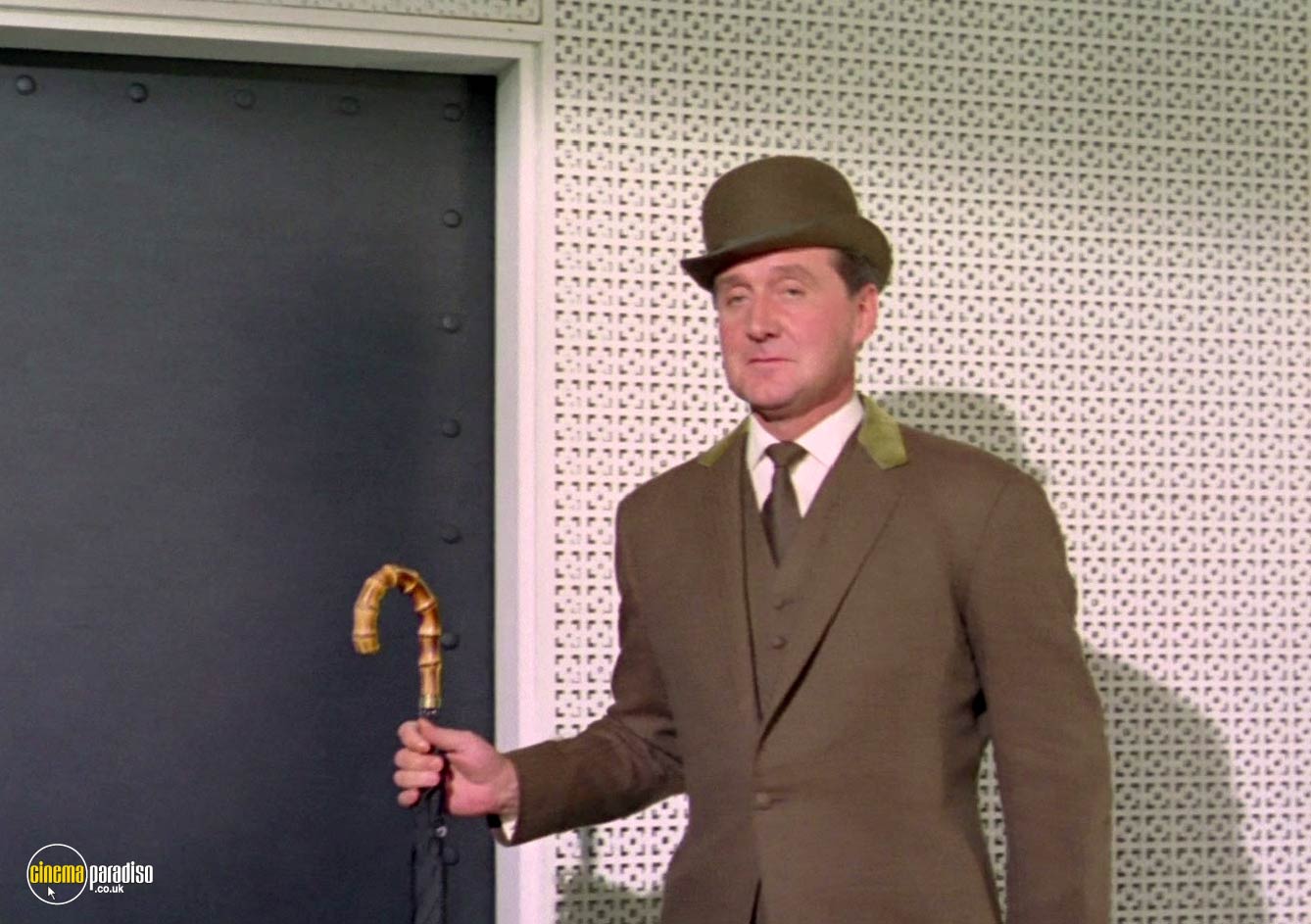
Having made her feature debut as an uncredited hotel assistant opposite Elizabeth Taylor, Mia Farrow, and Robert Mitchum in Joseph Losey's Secret Ceremony (1968), Keith played Frankie in two episodes of the early soap opera, The Market in Honey Lane. She also made the last of her three appearances in The Avengers (1961-91). Initially seen as a monochrome bride tossing her bouquet into Steed's top hat in 'The Murder Market' (1965), she got into a fight (with a little help from stunt double Cyd Child) with Diana Rigg's Emma Peel as Nanny Brown in 'Something Nasty in the Nursery' (1967) and emitted an ear-piercing shriek as dance teacher Audrey Long in 'Take Me to Your Leader' (1969).
Keith finally got to play a nurse alongside Ian McKellen and Sandy Dennis in Waris Hussein's A Touch of Love, while also portraying her first screen snob, Angela Frampton, in 'The Dinner Party' episode of Hadleigh (1969-76), which starred Gerald Harper as a debonair country squire. Back on the big screen, Keith donned leathers to play a motorcycle-riding German lesbian nanny named Lotte in Jim Clark's Marty Feldman vehicle, Every Home Should Have One (1970), which reunited Keith with Judy Cornwell. She was also paired with Sheila Steafel in Bob Kellett's Grounds For Suspicion (1969), a training film in which the owners of a coffee shop receive some handy hints for improving their service.
Back on stage, after having cropped up as a Tory Lady in Jonathan Miller's take on Kingsley Amis's Take a Girl Like You (1970), Keith played murder victim Maggie Howard in the Francis Durbridge thriller, Suddenly At Home (1971). One night, she had the indignity of having a young boy on the front row inform his parents in a loud voice that she wasn't dead, as he could see her breathing. She also impressed as Magdalena in Frederick Lorca's The House of Bernarda Alba (1973) and partnered Fenella Fielding as Julia and Jane in Noël Coward's Fallen Angels (1974). But the screen was now competing with the stage for Keith's time and she became more familiar to audiences as no-nonsense magazine editor Wanda Padbury, alongside Phyllis Calvert's eponymous agony aunt, in Kate (1970). An article in the TV Times was headlined, 'Make-up of a Super Bitch', and Keith relished the fact that she had taken over from Ena Sharples in Coronation Street as TV's most disliked character. As she told Lady of the Manor, there was something fun about being, 'Penelope, the woman you love to hate.' This is one of those ITV shows that really should be on disc, along with Shades of Greene (1975), which presented 18 hour-long stories from the pen of Graham Greene. C'mon, someone!
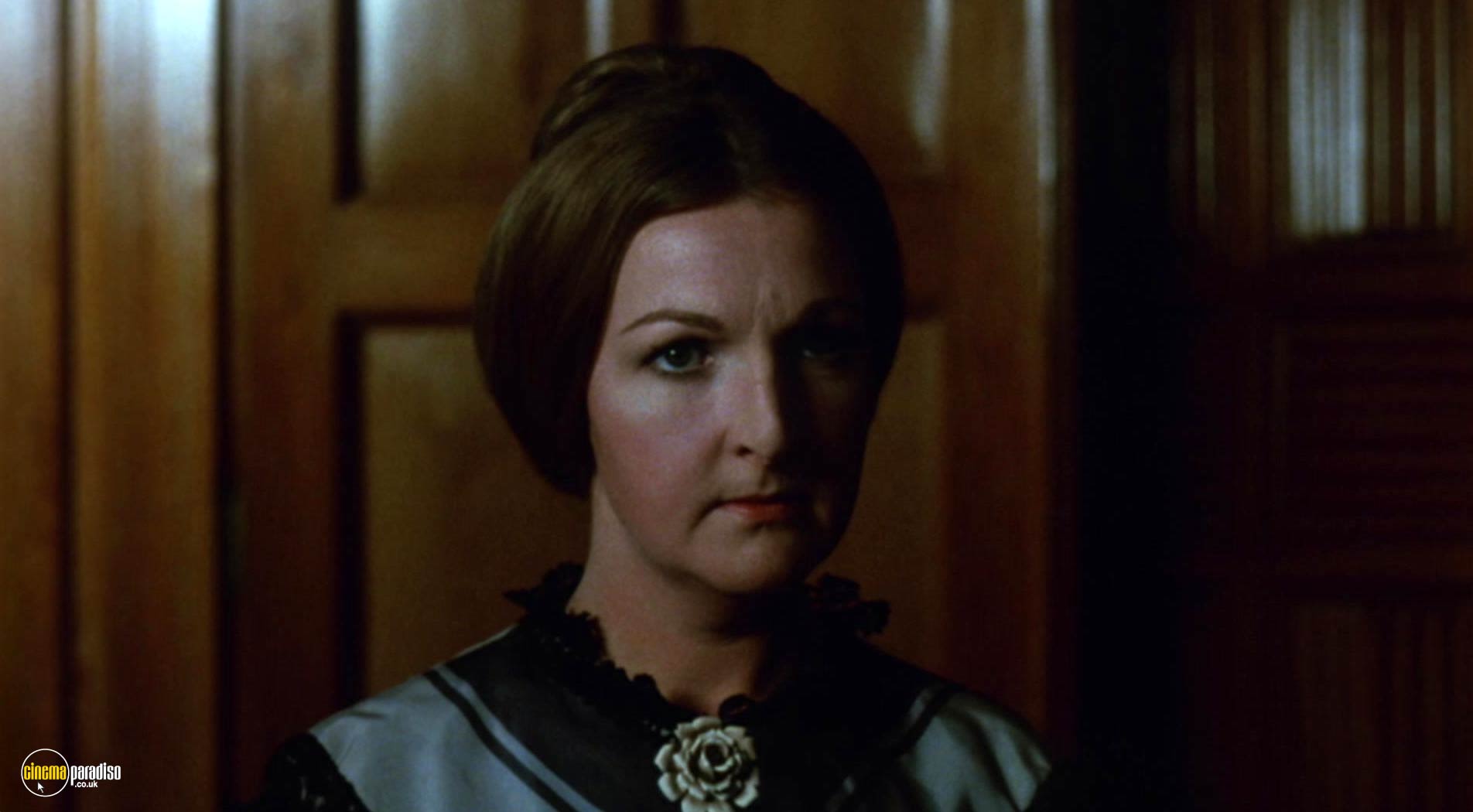
Following a brief turn as a reporter in Jim Clark's Rentadick (1972), Keith reunited with James Booth as Miss Hartridge being quizzed about the murder of a stamp dealer in Jack Cardiff's Penny Gold (1973). She then got to haunt Murray Melvin's McFadyen alongside Marianne Faithfull's Sophy Kwykwer, as Rennie and her Victorian mistress haunt a 1930s manor house in Stephen Weeks's Ghost Story (1974). Later that year, she donned period costume again, as Mrs Hittaway, in two episodes of The Pallisers, which was adapted for the BBC from the novels of Anthony Trollope by Simon Raven. But Keith's next role would change her life forever.
Margo and Audrey
In 1974, Penelope Keith was cast as Sarah in the West End transfer of Alan Ayckbourn's The Norman Conquests at The Globe Theatre. Her co-stars were Tom Courtenay (Norman), Bridget Turner (Ruth), Mark Kingston (Reg), Felicity Kendal (Annie), and Michael Gambon (Tom). Under the direction of Eric Thompson, of The Magic Roundabout fame, the action was divided across three plays, which are set in different parts of the same house and can be performed in any order. Table Manners takes place in the dining room, Living Together in the living room, and Round and Round the Garden in the garden.
Annie cares for her elderly mother and wants siblings Reg and Ruth to help her out by holding the fort while she has a weekend away. She has actually planned to slope off with brother-in-law Norman for an illicit tryst. But circumstances conspire to keep all six characters in the same place for the entire time, with the neurotic and controlling Sarah striving to impose some order while struggling against falling under the suave Norman's spell.
Cinema Paradiso members can see Thames Television's 1977 adaptation, in which Keith reprises her role alongside Tom Conti as Norman, Penelope Wilton (who had briefly played Ruth in London) as Annie, Richard Briers as Reg, Fiona Walker as Ruth, and David Troughton as Tom. Keith so excelled, as she had done on the stage, that she won the BAFTA for Best Actress.
Richard Briers saw the play and realised that Keith and Kendall were perfect for the key female roles in the sitcom he was developing with the BBC. He sent producer John Howard Davies to The Globe and he concurred that they were perfect, even though Keith's most recent experience of situation comedy had seen her replaced by Pat Coombs after starring with Barbara Windsor in the Comedy Playhouse pilot for Wild, Wild Women (1966). During the two-year run of the play, though, she also guested as Mrs Phillips in 'The Patient', a 1975 episode in Two's Company (1975-79), which starred Elaine Strich and Donald Sinden.
Margo Leadbetter is simply a voice emanating from a bedroom window in the opening episode of The Good Life (1975-77). She is married to Jerry (Paul Eddington), who had worked at a company supplying plastic toys for cereal boxes with his next-door neighbour, Tom Good (Briers). On his 40th birthday, however, Tom decides to quit the rat race and turn his garden into an allotment so that he and wife Barbara (Kendal) can live self-sufficiently. As a fearful snob and a dogged social climber, Margo is appalled by the prospect of living alongside pigs, goats, and chickens and dreads to think how the stigma will impact upon her relationships at the pony club and the music society with Mrs Dooms-Patterson and Miss Dolly Mountshaft.
Writers John Esmonde and Bob Larbey had only intended Margo to become a secondary character. But, after some initial lukewarm reviews, critics and viewers alike warmed to Mrs Leadbetter (née Sturgess), her kooky Conservative convictions, and her determination to save Barbara from her foolish husband's revolt against the system. As she begins to accept the situation, however, Margo even becomes fond of Tom and his impudent ways, with the 1977 'Silly, But It's Fun...' Christmas episode being particularly cherishable. It was fitting, therefore, that Keith won that year's BAFTA for Best Light Entertainment Performance. Asked by Michael Parkinson whether Margo was the bitch the press claimed her to be, Keith insisted, 'She has a heart of gold, but says a lot of the things we'd like to say ourselves.'
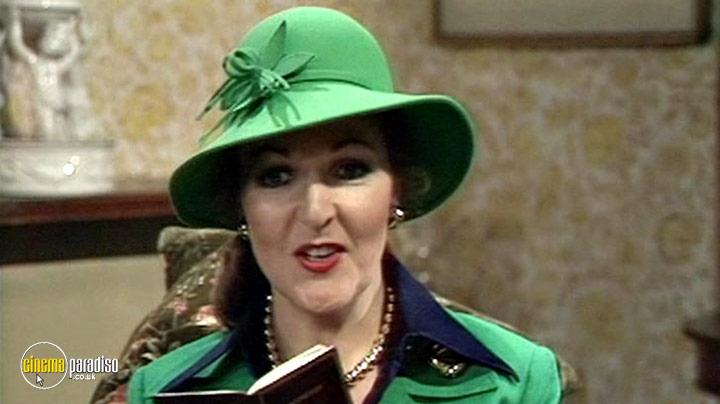
Peter Bowles and Hannah Gordon had been lined up to play Jerry and Barbara, but it's hard to see how the chemistry between Briers, Kendal, Eddington, and Keith could have been bettered. They reassembled in 1978 for a one-off episode, 'When I'm Sixty-Five', after The Good Life was chosen as the first sitcom to be recorded in front of a reigning monarch to mark (a little belatedly) Elizabeth II's Silver Jubilee. Yet, despite the late Queen proclaiming this to be her favourite TV show, she had no idea who Felicity Kendal was when she was presented to the cast after the taping at BBC Television Centre.
Keith and Eddington turned down a Leadbetter spin-off series, although the latter seized the opportunity to play Jim Hacker MP in Yes Minister and Yes, Prime Minister (1980-88), while Briers settled into two further Esmonde and Larbey series, The Other One (1977-79) and Ever Decreasing Circles (1984-89). Kendal bounced between Carla Lane's Solo (1981-82) and The Mistress (1985-87), and the cosy thriller series, Rosemary & Thyme (2003-07), in between which, she reunited with Eddington in the Channel Four adaptation of Mary Wesley's The Camomile Lawn (1992).
As for Keith, she took her time before committing to a new series. Having provided the voice of Mrs Hollander in Lewis Gilbert's Seven Nights in Japan (1976), she took to the stage again to win a Laurence Olivier Award for her performance as Lady Driver, the wife of an Oxbridge college master who gets caught up in the shenanigans during a wild gaudy night in Michael Frayn's Donkeys' Years (1976). The following year, she had a dual festive triumph, as she played Cynthia Bracegirdle receiving 364 gifts from Algernon Fotherington-Smythe in Brian Sibley's BBC radio comedy, ...And Yet Another Partridge in a Pear Tree. But she topped this with her guest appearance on The Morecambe and Wise Christmas Show (1977), in which she played Roxanne in Ernie's version of Cyrano de Bergerac before having to hitch up her frock to clamber down the scaffolding holding up a giant staircase that had abruptly ended six feet from the ground.
Keith's stage commitments took her to Chichester that summer, where she played Orinthia, the king's mistress, opposite Keith Michell in George Bernard Shaw's The Apple Cart. When Princess Margaret attended a gala performance as part of the Silver Jubilee celebrations, Keith noticed a particularly handsome policeman among the security detail. Twice divorced, Rodney Timson had signed up for the assignment in the hope of meeting Angela Rippon. However, he became smitten with the 37 year-old Keith and, in spite of him being eight years her junior, they married in 1978 and he left the force to become her manager. He was renowned for being a tough negotiator, but he provided Keith with support and stability at the height of her fame. As she explained when revealing that she had been suffering with depression when she had met him, 'Not many men found me attractive. If I hadn't married Roddy when I did, I'd be in the la-la farm by now.' Basing themselves in Milford in Surrey, they became keen gardeners and adopted two brothers in 1988, working hard to keep them out of the limelight.
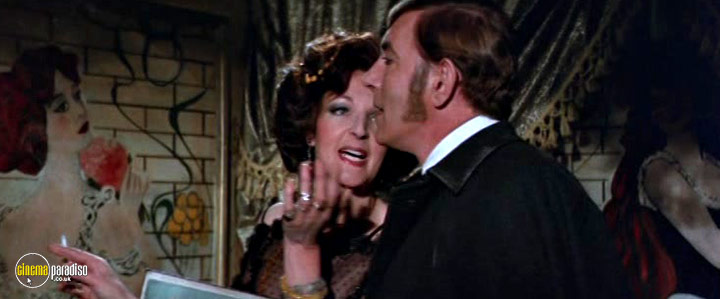
When The Good Life ended, Paul Eddington told Keith to 'go over to the other side of the world and do something completely unsuitable'. She sort of took him at his word by playing a massage receptionist in Paul Morrissey's The Hound of the Baskervilles (1978), which cast Peter Cook and Dudley Moore as Sherlock Holmes and Dr Watson. But she would only make one more feature, Christopher Miles's Priest of Love (1981), in which she played painter Dorothy Brett alongside Ian McKellen's D.H. Lawrence and Janet Suzman as his wife, Frieda. But she stayed on more familiar ground as Amanda Prynne, opposite Alec McCowen's Elyot Chase, in John Gorrie's BBC adaptation of Noël Coward's post-divorce romcom, Private Lives (1976). She also revisited Lady Driver for an ITV take on Donkeys' Years (1980). But her pairing with Michael York, as Beatrice and Benedick in Much Ado About Nothing (1978), was never transmitted, even though it had been intended to launch the BBC Television Shakespeare. It was replaced in the series by Stuart Burge's 1984 retelling, with Cherie Lunghi and Robert Lindsay.
Alternative comedy had burst on to the scene in the late 1970s and The Good Life would come in for some particular stick with a rant by Vyvyan (Adrian Edmondson) in the 'Sick' episode of The Young Ones (1982-84): 'It's so bloody nice! Felicity 'Treacle' Kendal and Richard 'Sugar-Flavoured Snot' Briers! What do they do now?! Chocolate bloody button ads, that's what! They're nothing but a couple of reactionary stereotypes, confirming the myth that everyone in Britain is a lovable middle-class eccentric. And I hate them!' Keith escaped the ire, even though she had ventured into another Middle England sitcom. This time, she was the star and she broke viewing records as Audrey fforbes-Hamilton in Peter Spence's To the Manor Born (1979-81).
In the opening scene, Audrey appals best friend Marjory Frobisher (Angela Thorne) by throwing her black hat in the air while walking home from her husband's funeral. However, the exhilaration of being a merry widow doesn't last long, as Audrey discovers the extent of her debts and accepts that she will have to move into a lodge house on the estate and sell Grantleigh Manor (which had been in the family for 400 years) to Bedrich Polouvicek (Peter Bowles), a nouveau riche supermarket tycoon from Czechoslovakia who styles himself, Richard DeVere. They immediately strike up a love-hate relationship, with Audrey sharing her frustrations with Marjory, Bertie the beagle, Brabinger the butler (John Rudling), Ned the odd-job man (Michael Bilton), and the local rector (Gerald Sim). DeVere's confidante is his mother, Maria (Daphne Heard), who had brought him to Britain in 1939 to escape the Nazis.
Peter Spence was writing gags for BBC radio shows in the late 1960s when he had the idea of a sitcom about a coarse Cockney comedian buying a snooty widow's country pile. The arriviste had become an American by the time Bernard Braden headlined a radio pilot. However, this was never broadcast, as the BBC's TV bods had decided that the scenario would make a perfect vehicle for Penelope Keith. Reasoning that Margo had been a bourgeois social climber, Spence and script associate Christopher Bond concluded that Audrey should be a toff striving to cushion her drop in status. This would make her both waspish and vulnerable, which were precisely the characteristics that had made Margo so popular with armchair audiences.
The exteriors were filmed at a manor belonging to Spence's father-in-law in the Somerset village of Cricket St Thomas, which added to the charm of the series. As did the gaggle of villagers, who set the template for The Vicar of Dibley (1994-2000). By the third series, viewers were so hooked on whether DeVere would sell Grantleigh to keep Cavendish Foods afloat that 20 million regularly tuned in, with the splendidly contrived final episode being one of the most watched shows of the decade. Keith, Bowles, Thorne, and Sim returned in 2007 for a Christmas special to mark the couple's silver wedding anniversary. However, Audrey discovers that DeVere is the secret owner of the Farmer Tom company that has been putting her tenants out of business. Alexander Armstrong was cast as Audrey's nephew-by-marriage.
Four years earlier, Margo's enduring popularity had prompted the BBC to commission Beyond the Box: Margo Leadbetter (2003), a mockumentary that cast Rita Tushingham as Celia Fishwick, who reminisces about being Margo's best friend, while revealing what she has been up to in the years since she lived next door to the Goods on The Avenue in Surbiton. Richard Madeley, Judy Finnegan, Raj Persaud, John Sergeant, and Judith Chalmers were among the talking heads. A companion to Life Beyond the Box: Norman Stanley Fletcher, this has never appeared on disc, when, perhaps it ought to have done, if only for the clips of Penelope Keith in her pomp.
Crossing Over
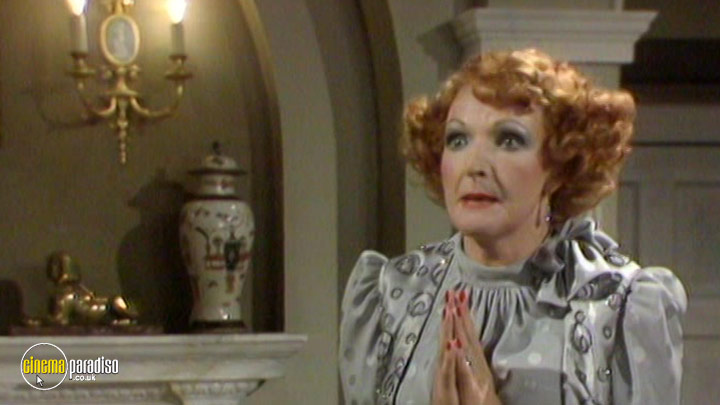
As she had done following The Good Life, Keith used her time after the ending of To the Manor Born to deliver some exemplary performances in a string of teleplays. She gave Jeremy Brett a run for his money as Maria Wislack in an adaptation of Frederick Lonsdale's On Approval, which had been filmed with Clive Brook and Beatrice Lillie in 1944 (which should also be on disc in the UK). Next, she followed in the footsteps of Glynis Johns by excelling as diplomat's wife and ditzy amateur sleuth Clarissa Hailsham-Brown in Basil Coleman's breezy take on the overlooked Agatha Christie romp, The Spider's Web (both 1982). Alongside Virginia McKenna, Joan Sims, and Ronald Pickup, Keith was on equally imperious form as Helen Lancaster in Piers Haggard's version of N.C. Hunter's 1951 play, Waters of the Moon (1983), while she revelled in her reunion with Paul Eddington, as Judith and David Bliss, in Cedric Messina's adaptation of the Noël Coward classic, Hay Fever (1984). One wonders why no one has gathered these and similar gems into a Penelope Keith at the BBC collection to go with the ones honouring the likes of Judi Dench and Helen Mirren.
Finding a new sitcom proved a trickier assignment, however, especially after the critics had turned on Keith for making Sweet Sixteen (1983), which centred on 41 year-old businesswoman Helen Walker discovering that she's pregnant by a younger employee (Christopher Villiers). Producer John Howard Davies would later claim that Douglas Watkinson's scripts had been ahead of their time, but the series was canned after just six episodes.
Keith decamped to ITV, where she put in eight appearances as Dora the Driver in Bill Oddie's children's series, Tickle on the Tum (1984-87). However, she had no more luck with Moving (1985), which paired her with Ronald Pickup as Frank and Sarah Gladwyn, who decide to relocate to France after their children leave the nest.
She had more success in George Layton's Executive Stress (1986-88), in which she played Caroline Fielding, a middle-aged woman who defies the husband who had bought out her publishing company by returning to work. Geoffrey Palmer co-starred in the first series, but he was unavailable for the second and Peter Bowles was drafted in, despite having once stated, 'There's no way I could have played Penelope Keith's screen husband in two separate sitcoms.' Following a third series, however, everyone agreed that the concept had run its course.
After replacing the late Eamonn Andrews for the 1988 season of What's My Line? and playing Miss Robson in a couple of episodes of the long-running ITV children's series, Woof! (1989-97), Keith entered politics, as Labour MP Jean Price in No Job For a Lady (1990-92), which reunited her at Thames Television with John Howard Davies. George Baker sparred amusingly, as Tory rotter Sir Godfrey Eagan, but the series felt familiar after Yes Minister and tame after Rik Mayall's outstanding display as Alan B'stard in The New Statesman (1987-92). Ploughing on, Keith put her mellifluous tones to good use in voicing Queen Elisa in the English-language version of the French animated half-hour, Santa and the Tooth Fairies (1991), and Madame Bonbec and Madam Dim Sum in low-budget animated versions of Beauty and the Beast and Aladdin (both 1992).
Keith next undertook her most obscure project, as she played Aunt Tanya investigating a missing corpse on a train bound for Moscow in Alain Bonnot's teleplay, La Treizième voiture (aka The Secret of Coach 13, 1993). Subsequently, she reunited with John Howard Davies and writer Alex Shearer for Law and Disorder (1994), another misfiring sitcom that failed to make a second series, in spite of a knowing performance as Phillippa Troy, the sharp-tongued barrister who writes children's stories in her spare time. Among her clients are a yachtsman accused of cannibalism and a football fan with a wonky tattoo. The critics were unkind, but Cinema Paradiso reckons this is worth another look, as is its successor.
Seeing Keith return to the BBC, Next of Kin (1995-97) cast her as Maggie Prentice, who is planning to retire to the South of France with husband Andrew (William Gaunt) when she learns that her estranged son and his wife have been killed in a car crash. This means they have to abandon their getaway plans in order to adopt their grandchildren, 13 year-old vegetarian Georgia (Ann Gosling), 11 year-old Spam fanatic Philip (Matthew Clarke), and seven year-old Jake (Jamie Lucraft), who refuses to eat anything round. Referring to their mother only as 'Boot Face', Maggie is unwilling to put up with any nonsense. However, the bonds tightened over the course of the three series and Keith was reportedly livid when the Beeb cancelled a show that had divided audiences and critics alike with its views on generational perspectives and tough love. She wouldn't do another sitcom and, with her best small-screen days behind her, she decided to return to where it had all began.
Back to the Boards
Although she voiced the Bear with Brown Fuzzy Hair in a couple of episodes of Teletubbies (1997-98) and played Aunt Louise in an episode of Giles Foster's adaptation of Rosamund Pilcher's Coming Home (1998), Keith stayed off our television screens until after the millennium. Instead, she devoted her talents to the theatre, as she had done at regular intervals throughout her busiest TV period.
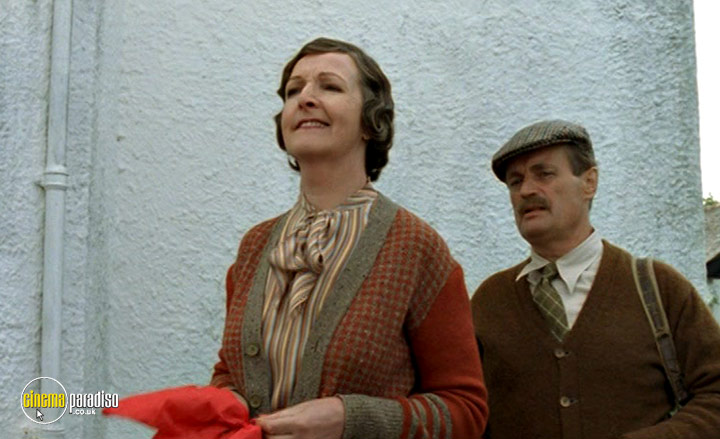
In 1978, she had played Epifania Ognisanti di Parerga Fitzfassenden in George Bernard Shaw's The Millionairess and she reacqainted herself with the Irishman as Lady Cicely Wayneflete in Captain Brassbound's Conversion (1982). The same year saw her essay Maggie Hobson in a revival of Harold Brighouse's Hobson's Choice before she spent the next two years as Judith Bliss in Hay Fever. Around this time, she founded her own Pencon production company with her husband. Her turn as an alcoholic scold in The Dragon's Tail (1985) found little favour, but she was feted for her sensitive portrayal of Hester Collyer in Terence Rattigan's The Deep Blue Sea (1988), which had not been seen in the West End since its 1952 premiere with Peggy Ashcroft. Vivien Leigh and Rachel Weisz took the role in the 1955 and 2011 screen versions.
The early 1990s saw Keith play Lady Bracknell in Oscar Wilde's The Importance of Being Earnest (1991), while she tried her hand at directing with Relatively Speaking (1992) and How the Other Half Lives (1994), which were staged in Windsor. Following returns to Shaw in Mrs Warren's Profession (1997) and Coward in Star Quality (2001), she went all Yorkshire to play the mother of the family in J.B. Priestley's Time and the Conways (2003). Another triumph followed, as Madame Arcati in Coward's Blithe Spirit (2004-05), which she followed by letting rip as liberated vicar's widow Grace in Richard Everett's Entertaining Angels (2006). She returned to the role in 2009 after a second stint as Lady Bracknell in the West End.
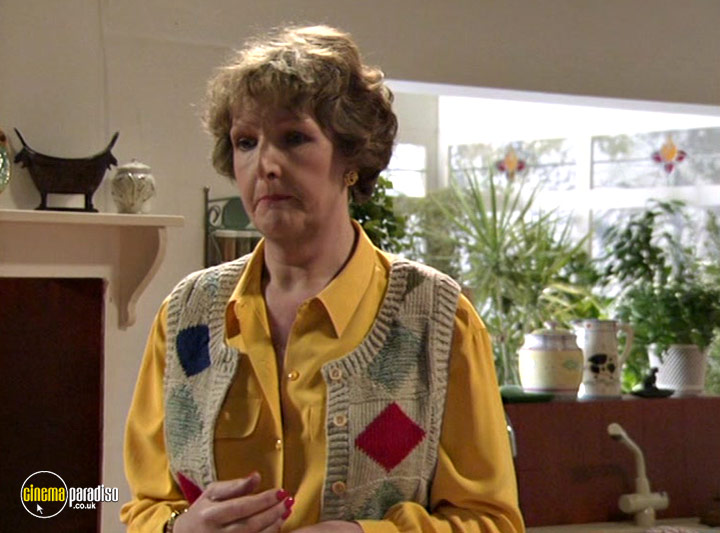
The chance to play Mrs Malaprop in Richard Brinsley Sheridan's The Rivals (2010) brought about a reunion with Peter Bowles that Keith told the Daily Telegraph felt like 'putting on an old glove'. The same paper described her 'as an actress whose art becomes more subtle, and captivating, with age'. But Keith felt there was nothing remarkable about what she did and she expected others to match her standards. She also insisted that her craft was respected. 'What isn't technical,' she once said, 'about getting on a platform, eight times a week, saying exactly the same thing, doing it, moving to the same place, and getting people to pay money for snake oil? If it isn't technical I don't know what is. It's all artifice! I worked with a girl once who said "Oh, I'm going for realism" and I thought "What is real about this?" People often ask before a show "Are you in the zone" and I think "What zone?" The only zone to be in is to be aware of everything. Everything.'
Keith had returned to television in an unlikely alliance with June Brown in Geoffrey Sax's Margery & Gladys (2003). She had also embarked upon a 10-strong series of radio dramatisations as M.C. Beaton's amateur detective, Agatha Raisin (2003-06). But, having reprised in 2012 the role of June Pepper that she had played in the inaugural run of Keith Waterhouse's Good Grief (1998), her Chichester Festival displays as Lady Wishfort in William Congreve's The Way of the World (2012) and Mrs St Maugham in Enid Bagnold's The Chalk Garden (2018) would prove to be her final stage outings.
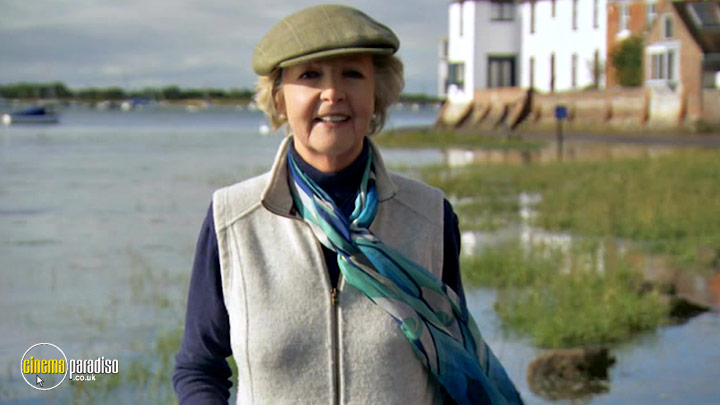
She made a suitably haughty Lady Catherine de Bourgh in Daniel Percival's adaptation of P.D. James's Death Comes to Pemberley (2013), which took Jane Austen's Pride and Prejudice into whodunit territory. But this would be Keith's final TV acting job, as she reinvented herself as a presenter on such series as Penelope Keith and the Fast Lady (2008), The Manor Reborn (2011), 4 Extra Goes Gardening (2014), Penelope Keith's Hidden Villages (2014-16), Penelope Keith At Her Majesty's Service (2016), Penelope Keith's Coastal Villages (2017-18), Village of the Year With Penelope Keith (2018), and Saving Country Houses With Penelope Keith (2026).
These mostly Channel Four series kept Keith busy until the last few months of her life. She had also succeeded Laurence Olivier as President of the Actors' Benevolent Fund in 1990 and retained the post until it was snatched from her in a hurtful coup in 2022. Two years later, she received an apology from the Charity Commission over its handling of the affair. The recipient of an OBE (1989), a CBE (2007), and a damehood (2014), Keith was also only the third women to serve as High Sheriff of Surrey.
During the Covid-19 pandemic, Keith went to a London studio to green-screen her performance as the Ghost of Christmas Past for an online Guildford Shakespeare Company production of Charles Dickens's A Christmas Carol (2020). Four years later, she made her swan song as retired actress Lotta Bainbridge, alongside Susan Jameson's Mary Davenport, in a BBC radio version of Noël Coward's Waiting in the Wings, which aired on Christmas Day. She wouldn't act again before her death from cancer on 29 June 2026. She was 86. The tributes were glowing and affectionate, as she had won the hearts of the nation. Yet, the most salient encomium had been written many years before on the BFI Screenonline page for The Spider's Web by the late cultural historian, Tise Vahimagi: 'Keith's expertise was in the art of performing comedy as if it wasn't comedy at all.'
Mentioned films