Robert Duvall has died at the age of 95. Cinema Paradiso pays its respects to one of the finest character actors in recent Hollywood history,
Robert Duvall took huge pride in being a character actor. He confided in one interview, 'Somebody once said that the best life in the world is the life of a second leading man. You travel, you get a per diem, and you've probably got a better part anyway. And you don't have the weight of the entire movie on your shoulders.' Rooting his performances in close observation and a readiness to go with the flow when the camera started to roll, Duvall caught the complexity, introspection, vigour, and vulnerability of the various historical and fictional figures he played over six decades.
Such intricacy and intensity required great skill, but you never saw Duvall acting, unlike some of his more vaunted peers. Daniel Day-Lewis once revealed, 'One of the reasons so many actors of my generation have been drawn to actors in America - Brando first, Clift, De Niro, Pesci, Duvall - is the way in which poetry is created out of the life of someone who can't express himself.' It's interesting that the three-time Oscar winner should bracket Duvall with four Method actors, as he had no time for the technique. Instead, he relied on his own instincts, while his refusal to be typecast led to the Guinness Book of World Records declaring him The World's Most Versatile Actor in 1998. Given that the same volume established that Jan Leighton amassed 3395 film and television roles between 1951 and his death in 2009, it's hard to say who deserved the title more. However, there's no disputing that Duvall was an actor's actor who left an impression on viewers with every role he took.
The Sailor's Son
Robert Selden Duvall was born in San Diego, California on 5 January 1931. He was the middle of three brothers raised by career naval officer, William Duvall, and his wife, Mildred Virginia Hart, who was related to the Confederate general, Robert E Lee, whom Duvall would play in Robert F. Maxwell's Gods and Generals (2003). He was also distantly related to Wallis Simpson and President Harry S. Truman.
Older brother William would go on to teach music at the University of Wisconsin, while Jack would become an entertainment lawyer. However, Duvall confided in a reporter that they had gone their separate ways and he often proved evasive about his childhood in interviews. However, William told Vanity Fair, that his sibling was 'a problem child in some areas; he didn't always conform to the usual mother-father rules of the house. He had the rebel in him.'
Howard would see action during the Second World War, which necessitated the family moving to Annapolis, Maryland when Robert was 10 years old. He later reflected, 'I was a late bloomer in a lot of things. I had a lot of blocks. We spent eight years in Annapolis during the war, then I went to several different high schools. I never was a great student, but I was good enough until the eighth grade, when I got a little overwhelmed. It was adolescence; you never know what you're gonna do. My parents kind of pushed me into acting. I wasn't doing well in school.'
Frequently moving around when he was a young boy, Robert became fascinated by regional accents and often amused his parents by acting out the tics and mannerisms gleaned from people watching. Particularly remembered was the time the four-year old reduced a table of hard-bitten cowboys to tears at his uncle's ranch by imitating an old sheepherder gulping down his food. He would later claim, 'I hang around a guy's memories', in explaining his gift for remembering behaviours for future use. A frequent film-goer as a kid, Duvall became such a fan of Laurence Olivier that he adopted his hairstyle and tried to do 'my own corny version of his Hamlet' in the mirror.
'I was a loner somewhat,' Duvall said of his time at Severn School in Severna Park, Maryland and The Principia in St Louis, Missouri, where he was a defensive back on the American football team. He was a fan of the Clemson Tigers college team, despite being a graduate of Principia College, a Christian Scientist school in Elsah, Illinois, where he started out majoring in government and history. However, he felt directionless and later remembered his sense of youthful confusion. 'You don't know where to go,' he said, 'what's gonna happen. You feel lost. It was like, "What's next? In my life? The next day?"' Then, he fell under the spell of former dancer Frank Parker, who had once performed with Anna Pavlova. He convinced Duvall to switch to the drama programme after he had taken part in a production of Arthur Miller's All My Sons, which had been filmed by Irving Reis in 1948, with Edward G. Robinson and Burt Lancaster.
He later remembered feeling 'totally at peace' on the stage and thinking, 'Oh, wow, maybe I have something here.' Brother Jack recalled, 'When the acting thing occurred, it was like a light switch turned on. Then he knew where he was going. You could see the talent then.' His father had hoped that Robert would enrol in the US Naval Academy. But his mother, who had been an amateur actress, recognised his talent, although Duvall would later joke, 'I was terrible at everything but acting - I could barely get through school.'
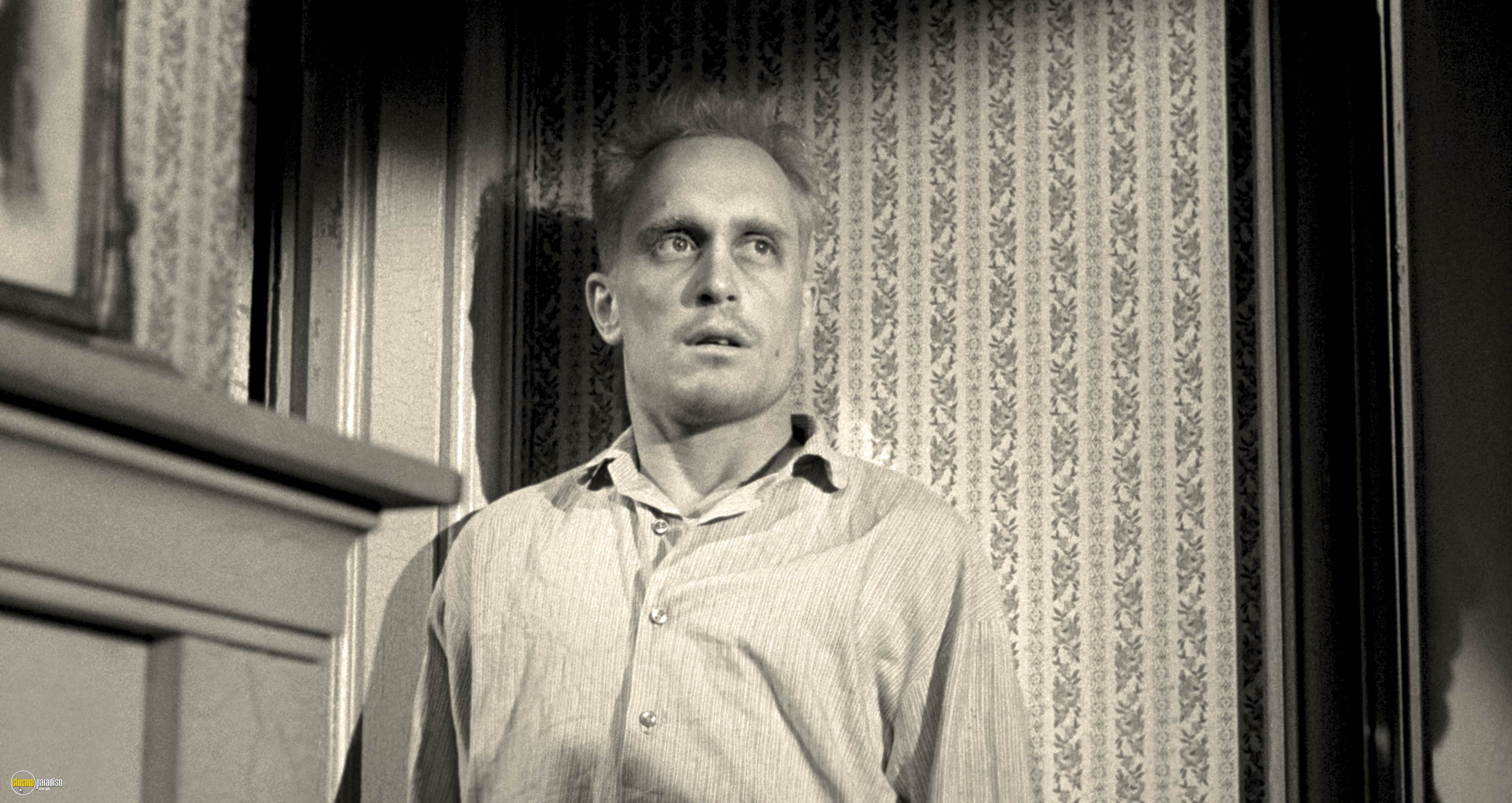
Naked City episode of Alfred Hitchcock Presents (1955-62) and the 1963 'Blues For a Gone Goose' episode of The Untouchables (1959-63). But he made a deeper impression without saying a word, after Horton Foote had convinced director Robert Mulligan to cast the 31 year-old Duvall as Boo Radley in his 1962 adaptation of Harper Lee's To Kill a Mockingbird. The author sent him a congratulatory telegram that read, 'Hey, Boo.' It was the only contact he ever had with her, but his haunted look after rescuing Jem and Scout Finch is one of the most harrowing moments of a landmark film that earned Gregory Peck the Oscar for Best Actor for his work as lawyer Atticus Finch.
'The feeling was that Bobby was the new Brando,' Dustin Hoffman recalled in 2013 about Duvall's breakthrough. 'I felt he was the one, and probably I wasn't.' Hackman also expected big things. 'Bobby already had this kind of physical thing that he was doing - like an animal,' he told Vanity Fair in 2013, 'kind of glided across the stage.' Yet Duvall remembered himself and Hackman being told by various agents that they didn't have the faces for films. Clearly dancer Barbara Benjamin disagreed, as she met Duvall during the shooting of his first film, having herself appeared in Joseph L. Mankiewicz's Guys and Dolls (1955) under the name Barbara Brent. She had two daughters from a previous marriage and the family stayed together until 1975.
Despite his auspicious start in cinema, Duvall returned to the boards, teaming with Hoffman in a 1964 Boston repertory version of Waiting For Godot and, most notably, winning an Obie for reprising the role of Eddie Carbone opposite Jon Voight and Susan Anspach in A View From the Bridge (1965). He also enjoyed a long run on Broadway, as the conman terrorising the blind Lee Remick in Wait Until Dark, which was filmed by Stanley Donen with Alan Arkin and Audrey Hepburn in 1967. However, with film and television offers coming in, Duvall decided to stop acting on stage, even though he recognised it was 'an investment in the long run - it makes you a better actor'.
Television proved more important in helping Duvall develop the diversity for which he would become renowned. As the 1960s progressed, he landed roles in such hit shows as Route 66, Combat!, Shane, The Wild Wild West, The F.B.I., and Mod Squad. But Cinema Paradiso members can watch him in the following episodes: as Charley Parkes in 'Miniature' (1963) in The Twilight Zone (1959-64); Johnny Keel in 'The Golden Door' (1963) in The Virginian (1962-71); as Zar in 'The Invaders' in Voyage to the Bottom of the Sea (1964-68); as Joe Wyman in 'The Roarer' in Cimarron Strip (1967-68), and as Raul Nimon in 'Pirates of Deadman's Island' and 'Chase Through Time' in The Time Tunnel (all 1967). He also guested in three episodes of The Fugitive (1963-67) and in a further trio from The Outer Limits (1963-64).
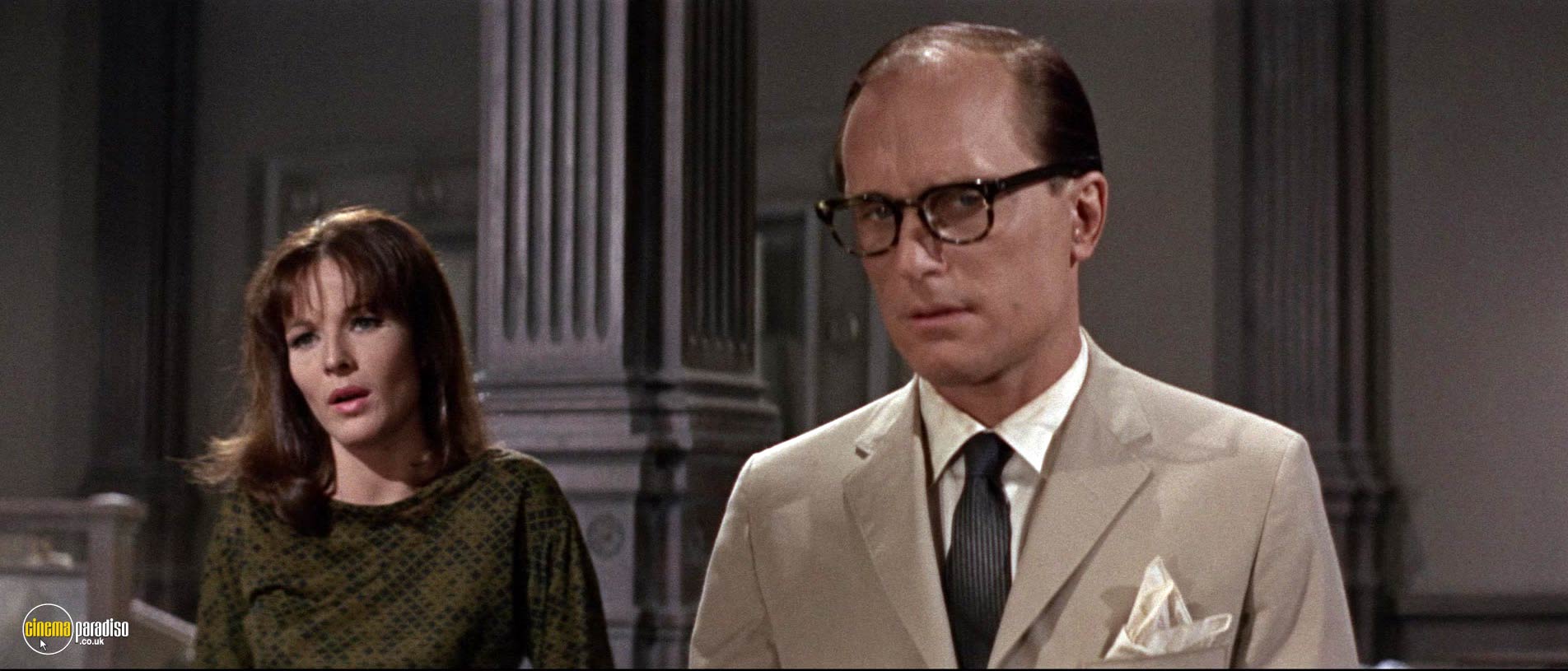
He would return to TV at various stages during his career. But Duvall will always be remembered as a film actor, even though he got off to a sluggish start after having been reunited with Gregory Peck as disturbed officer Paul Cabot Winston in David Miller's Captain Newman M.D. (1963). After he had been barely noticeable as a motorcyclist in Marc Lawrence's Nightmare in the Sun (1965), Horton Foote got him the chance to work with Brando as the cuckolded Edwin Stewart in Arthur Penn's The Chase (1966), which also co-starred Jane Fonda and Robert Redford. Few had more influence on Duvall than Foote, who once shrewdly claimed, 'He has an enormous affinity for the non-metropolitan type. He has this sensational ear. He's the master of the inner voice.'
In Gordon Douglas's The Detective, Duvall played his first cop, Nestor, opposite Frank Sinatra. Peter Yates also cast him as Weissberg, the taxi driver who ferries Steve McQueen around, in Bullitt (all 1968). But he was also learning that Hollywood could be a tough school, as he fell out spectacularly with Henry Hathaway, while essaying outlaw 'Lucky Ned Pepper in True Grit (1969). Indeed, John Wayne (en route to his Oscar for playing Rooster Cogburn) threatened to punch Duvall after he lost his rag with the veteran director and stormed off the set after being given the bawled instruction, 'When I say, Action! Tense up, Goddam you.'
While admitting that he didn't always see eye to eye with his directors, Duvall defended his corner. 'It's hard to be diplomatic when you're using yourself, your own temperament, to give what the character calls for,' he told one interviewer. On another occasion, he insisted; 'I don't try to be a hard guy to work with. But I decide what I'm going to do with a character. I will take direction, but only if it kind of supplements what I want to do. If I have instincts that I feel are right, I don't want anybody to tamper with them. I don't like tamperers, and I don't like hoverers.'
'He doesn't suffer fools,' Horton Foote once said of his friend. 'What gets him going is the lack of respect for the craft. I've seen him really go off when he's not treated with dignity or respect.' But we'll give the last word on the subject to Duvall himself: 'Directors say actors are difficult to work with. Well, what about directors? It's our face that goes up there; it's only their name.'
New Hollywood's No.1 No.2 Lead
Duvall was still paying his dues when he landed his first film lead, alongside James Caan, in Robert Altman's Countdown (1967). He played Charles 'Chiz' Stewart, the military-trained astronaut who reluctantly agrees to prepare civilian Lee Stegler (Caan) when the White House picks him to be the first American to walk on the Moon. The picture caught the national fixation with NASA's Apollo programme, but it was nowhere near as significant at Alman's follow-up, M*A*S*H (1970), in which he cast Duvall as Major Frank Burns, the Korean War surgeon who is tormented by captains Benjamin Franklin 'Hawkeye' Pierce, Jr. (Donald Sutherland), John Francis 'Trapper John' McIntyre (Elliott Gould), and Augustus 'Duke' Forrest (Tom Skerritt) over his illicit romance with Major Margaret 'Hot Lips' Houlihan (Sally Kellerman).
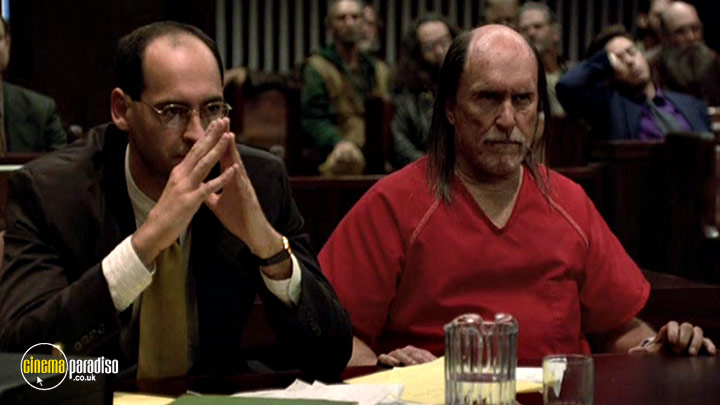
With its irreverent humour at the expense of the establishment, the film was a cornerstone of the New Hollywood wave that had broken following the abandonment of the Production Code in 1968. Larry Linville would take over as Burns in the spin-off TV series, M*A*S*H (1972-83), but Duvall blotted his copybook with Altman when he turned down a role in Nashville (1975) and was only forgiven a quarter of a century later, when Duvall played the angrily eccentric Dixon Doss in the John Grisham thriller, The Gingerbread Man (1998).
Fortunately, Duvall had found an alternative champion in Francis Ford Coppola, who had chosen him for The Rain People (1969) to play Gordon, the motorcycle highway patrolman who has an ulterior motive for protecting pregnant runaway Natalie Ravenna (Shirley Knight) from brain-damaged college footballer, Jimmy 'Killer' Kilgannon (James Caan). First seen in sunglasses, Duvall demonstrated his gift for playing tightly wound characters, as he shifts between being supportive and sinister in his dealings with Knight. He would later explain his secret for tackling such conflicted characters: 'You should find some aspect of vulnerability in yourself. And the anger sits there. A sense of danger.'
The same sense of seething informed his performance as Despard, the Marxist leading a factory strike in Paul Williams's The Revolutionary (1970). However, Duvall also impressed as the eponymous reluctant rebel in George Lucas's THX 1138 (1971), a dystopian drama set in a robot-controlled future in which a production line maker of police androids is duped into exploring his drug-suppressed sexual urges by LUH 3417 (Maggie McOmie). He enjoyed working with the debuting Lucas, whom he recognised as a consummate film-maker. But he had less time for Michael Winner, who had a horse slaughtered on the set of Lawman (1971), in which Duvall played Vernon Adams, one of the drunken cowboys responsible for the accidental death of an elderly Bannock man who are brought to justice by Marshall Jered Maddox (Burt Lancaster).
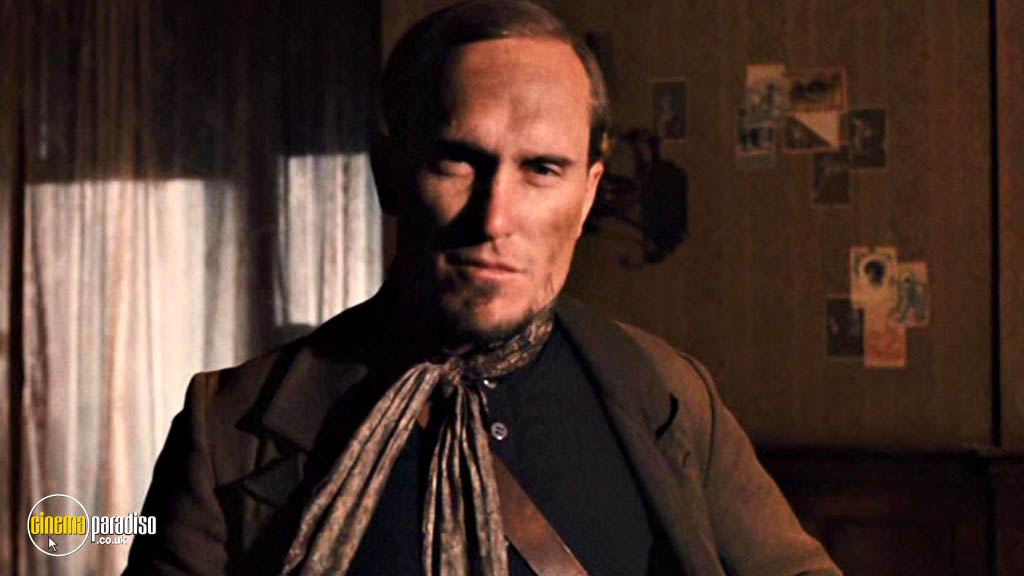
The West beckoned again, as Duvall made a pugnacious Jesse James alongside Cliff Roberton's Cole Younger in Philip Kaufman's The Great Northfield, Minnesota Raid and as Frank Harland, the landowner who hires Clint Eastwood's bounty hunter to track down John Saxon's Mexican land reform activist in John Sturges's Joe Kidd (both 1972). Released the same year, but largely forgotten in spite of being Duvall's favourite of his own films, was Joseph Anthony's Tomorrow (1972), a drama that was produced in conjunction with the Actors Studio and scripted by Horton Foote from a William Faulkner story that cast Duvall as farmer
Jackson Fentry, the one jury member holding out for a guilty verdict in a murder trial.
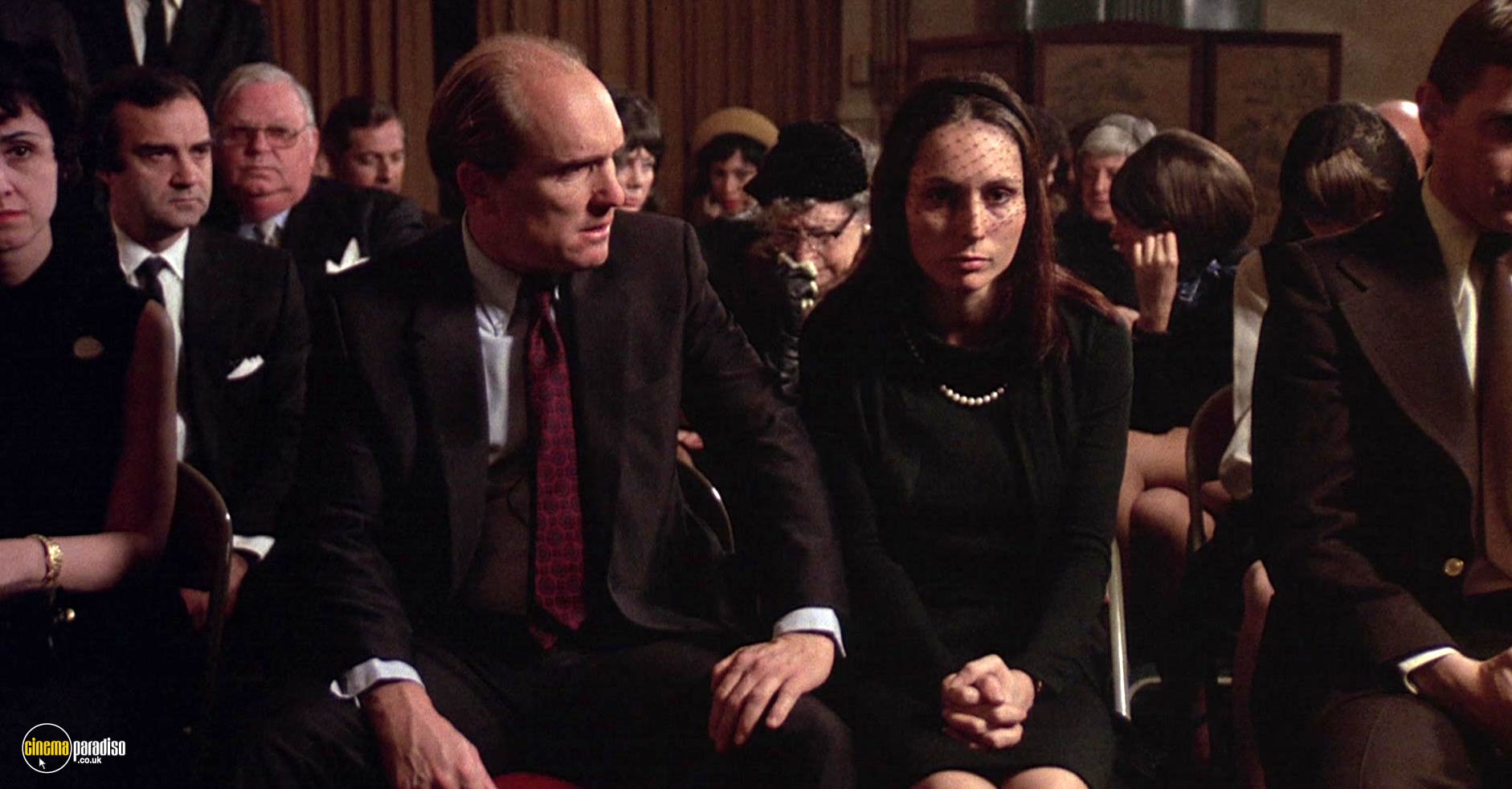
Good though Duvall is in these three films, they were overshadowed by another 1972 release, which remains an undisputed New Hollywood's masterpiece. Producer Robert Evans wanted Steve McQueen or Paul Newman to play Corleone consigliere, Tom Hagen, in The Godfather. But director Francis Ford Coppola insisted that Duvall's slow-burning intensity would be more effective and he prepared for the part by hanging out with East Harlem hoodlums in order to study their mannerisms, speech patterns, and attitudes. He was pleased to be cast alongside old friend James Caan as Sonny, but was in no way awed by co-starring with Marlon Brando as Don Vito Corleone. Indeed, he mooned the Method icon during a take and later shrugged, 'Hey, you have fun. It's harmless.'
Having been nominated alongside Caan and Al Pacino for Best Supporting Actor (and losing out to Joel Grey for Cabaret ), Duvall returned as Hagen in The Godfather Part II (1974), in which he upstaged Pacino in the scene in which Hagen chastises Michael Corleone for betraying him. However, Duvall opted out of The Godfather Part III (1990), after being offered what he considered a derisory fee. 'My theory,' he later explained, 'was that if someone like Pacino would get twice as much as I did, maybe that's OK. But three times as much was unacceptable. If we were all doing this for money, I should have got a bigger piece of the pie. I was willing to take less, but not that much less.'
In between times, Duvall took an uncredited cameo in Coppola's The Conversation (1974), as the client known only as The Director who hires surveillance expert Harry Caul (Gene Hackman) to eavesdrop on a couple on a San Francisco street. He also, of course, took the scene-stealing 11-minute role of Lieutenant Colonel Bill Kilgore, who orders the bombing of a beach so he can go surfing in Apocalypse Now (1979). Duvall told Roger Ebert in 1983 that the scene in the Philippines had to be done in a single take. 'There wasn't any time to think. I heard over the intercom that we only had the use of the jets for 20 minutes. One flyby and that was it. I just got completely into the character, and if he wouldn't flinch, I wouldn't flinch.' Kilgore's speech about napalm in the morning smelling like victory would go down in screen history and earned Duvall his second Oscar nomination for Best Supporting Actor. This time, he was beaten by Melvyn Douglas for Hal Ashby's Being There (1979).
A busy 1973 followed Duvall's breakout year, as he fizzed with pent-up rage as jailbird Earl Macklin seeking revenge on the Chicago mobsters who had killed his brother in John Flynn's The Outfit. However, he proved just as edgy on the right side of the law as racist Irish cop Eddie Ryan in Howard W. Koch's Badge 373, which, like William Friedkin's The French Connection (1971), was inspired by the career of NYPD officer, Eddie Egan. Despite achieving cult status in Europe, this uncompromising vigilante thriller flopped Stateside, and the takings were equally disappointing for Tom Gries's Lady Ice, a jewellery fencing caper starring Donald Sutherland and Jennifer O'Neill that cast Duvall as Justice Department official, Ford Pierce.
A reunion with old pal James Caan created sparks, as Communications Integrity agents George Hanson and Mike Locken fall out during a covert operation for the CIA in Sam Peckinpah's The Killer Elite. Staying in macho mode, Duvall got to play the grandson of John Huston, as Jay Wagner is imprisoned to stop him from revealing family secrets in Tom Gries's Breakout (both 1975), only for wife Ann (Jill Ireland) to hire pilots Nick Colton (Charles Bronson) and Hawk Hawkins (Randy Quaid) to bust him out of his supposedly impregnable jail.
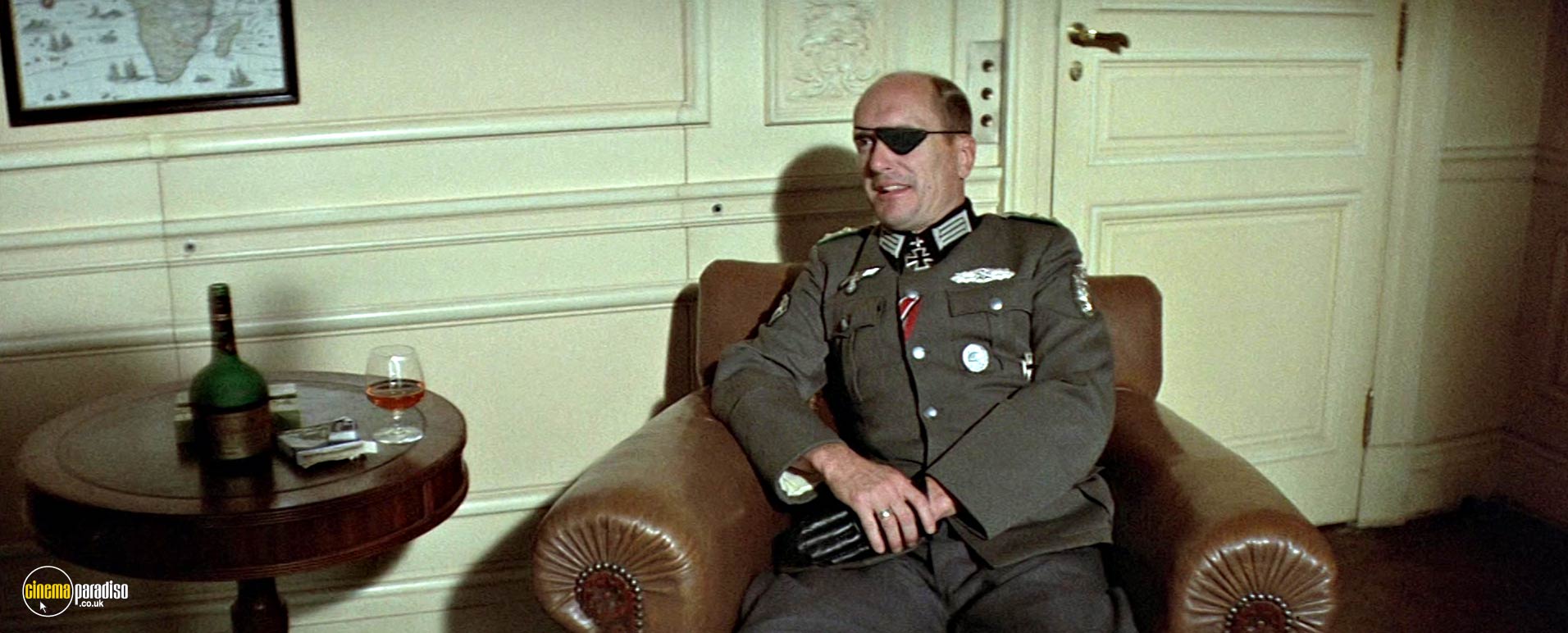
In another world, the last paragraph might also have included Steven Spielberg's Jaws (1975), as the director wanted Duvall to play Chief Brody. As he later revealed: 'I've turned some things down. They offered me the lead in Jaws. I wanted to play the other part, the one that the guy from England played, Robert Shaw, but I was too young. I had a talk with Spielberg. But I don't feel bad that I turned down the part or the lead, 'cause I like more character parts.' One of the ones he took to fill the gap in his schedule was Colonel Max Radl, the Nazi intelligence officer behind the audacious plot to kidnap Winston Churchill in John Sturges's gripping take on the Jack Higgins bestseller, The Eagle Has Landed. Proving just what a versatile actor he had become, Duvall followed this key role by adopting a far from convincing Scottish accent to play Dr John Watson alongside Nicol Williamson's Sherlock Holmes in Herbert Ross's The Seven-Per-Cent Solution (both 1976), which co-starred Alan Arkin as Sigmund Freud and Laurence Olivier as Professor Moriarty. Duvall would reunite with his childhood hero as grandson Loren Hardeman III in Daniel Petrie's adaptation of Harold Robbins's steamy tale of the Detroit motor industry, The Betsy (1978).
Before that, however, Duvall excelled as Channel UBS executive Frank Hackett in Sidney Lumet's Network (1976) and could have counted himself unlucky not to have joined co-stars Peter Finch, William Holden, Faye Dunaway, Ned Beatty, and Beatrice Straight in landing an Oscar nomination. He next battled valiantly to avoid being upstaged by Muhammad Ali as seedy boxing promoter Bill McDonald in Tom Gries's The Greatest before surprising many by turning director on the little-seen documentary, We're Not the Jet Set (both 1977), which profiled a family of rodeo riders from Nebraska. Duvall also popped up as a priest on a swing in old friend Philip Kaufman's Invasion of the Body Snatchers (1978), a variation on Don Siegel's 1955 adaptation of Jack Finney's sci-fi classic about alien replicants.
By now, New Hollywood had folded into the blockbuster era that had been launched by Coppola, Spielberg, and Lucas. But Duvall wasn't to be seen in any of their teen-pleasing concoctions. Indeed, while Star Wars and Close Encounters of the Third Kind (both 1977) were re-inventing American cinema, Duvall returned to the stage in Ulu Grosbard's Broadway production of David Mamet's American Buffalo, which was eventually filmed by Michael Corrente in 1995, with Dustin Hoffman in Duvall's role of Walter 'Teach' Cole.
Yet Duvall ended the decade that transformed Hollywood with one of the most potent performances of his career. Drawing partly on memories of his father, he earned his first Oscar nomination for Best Actor as US Marine Lieutenant Colonel 'Bull' Meechum in Lewis John Carlino's The Great Santini (1979), which was based on Pat Conroy's memoir of his Marine aviator father. It's a travesty that this isn't available on disc in the UK, as Duvall's display of toxic masculinity is disconcertingly chilling, most notably in the driveway basketball scene, in which he repeatedly bounces the ball off his son's head. Old roomie 'Dustbone' Hoffman beat him to the prize for his work in Robert Benton's Kramer vs Kramer. But Duvall received some of the best notices of his career. Vincent Canby of the New York Times dubbed him 'the American Olivier', with Herbert Ross concurring that Duvall and George C. Scott 'have the range and variety of Laurence Olivier'. People magazine ranked him as 'Hollywood's No. 1 No. 2 lead', while Francis Ford Coppola proclaimed him 'one of the four or five best actors in the world'. The shrewdest insight, however, came from The Village Voice's Andrew Sarris. 'He's part of a new breed of actor that came up through that whole Godfather group and after,' he wrote. 'He's a brilliantly realistic actor and I think the reason he isn't even more prominent in the public eye is that he came along at a time when film construction became so disheveled that a film needed a vaudevillian to hold it together. He won't overplay. De Niro has a fantastic reputation, but he's uneven. Duvall is subtler and better.'
Highs and So-Sos
As the new decade began, Duvall started to move away from angry characters and delivered a series of restrained studies of troubled American masculinity. He also returned to television for the first time in 10 years to play General Dwight D. Eisenhower in Boris Sagal and Melville Shavelson's Ike: The War Years (1979), which he followed by essaying Bill Vigars, the publicist behind the Marathon of Hope undertaken by Canadian amputee athlete, Terry Fox (Eric Fryer), in Ralph L. Thomas's The Terry Fox Story (1983). This HBO production made screen history by becoming the first TV-movie to be made for a cable network.
On the big screen, Duvall won the Volpi Cup at the Venice Film Festival for his performance as Detective Sergeant Tom Spellacy, the older brother of Robert De Niro's Monsignor Desmond Spellacy, who investigates the murder of a young porn actress in 1948 Los Angeles in Ulu Grosbard's True Confessions. He proved equally dogged as insurance investigator Bill Gruen on the tail of the plane hijacker with whom he had served in the military in Roger Spottiswoode's The Pursuit of D.B. Cooper (both 1981). Shortly after this, Duvall married his second wife, Gail Youngs, and spent the next four years as the brother-in-law of actors John Savage, Robin Young, and Jim Youngs.

Determined to play a character with some good in him, Duvall turned producer to secure the role of Mac Sledge in Tender Mercies (1983), the Horton Foote-scripted story of an alcoholic country singer finding redemption, for which Duvall performed his own songs. Known for his Hank Williams impressions, he proved so convincing opposite Tess Harper as the Texan war widow who gives him something to live for that he won the Academy Award for Best Actor against the all-British opposition of Michael Caine ( Educating Rita ), Tom Conti (Reuben, Reuben), and Albert Finney and Tom Courtenay ( The Dresser ). In preparing for the part, Duvall joined a touring band in East Texas in the hope of finding Mac's accent.
He didn't enjoy making the film, however, as he was forever at loggerheads with Australian director, Bruce Beresford. In addition to their clashes on set, the pair also disagreed about Duvall's acting style. According to Beresford, 'Duvall has the ability to completely inhabit the person he's acting. He totally and utterly becomes that person to a degree which is uncanny.' He continued, 'He is the character. He's not Duvall at all.' Tess Harper concurred, as she felt she had only got to know Mac Sledge during the shoot. But Duvall thought they were both talking nonsense. 'What do you mean?' he scoffed in the New York Times in 1989. 'I don't become the character! It's still me - doing myself, altered.' On another occasion, he confided: 'You can't concoct or push ahead something other than what you have at that moment as yourself, as that character. It's you at that moment in time...Between action and cut, it's a nice world, but you can't force that any more than you can force it in life.' He went on, 'I have a certain confidence But this is an unforgiving milieu. You have to approach it by being unforgiving of yourself. You always start with zero, starting with the simplest things. I talk, you listen. You talk, I listen. With each part, you begin with the basics. How do you judge what's good, better, best? Is Pat Metheny as good a guitarist as Segovia? I don't know. All I know is, a moment's a moment.'
Having matched old pals Hackman and Hoffman in bagging an Oscar, Duvall made his debut as writer, director, and producer with Angelo My Love (1983), a slice of New York neo-realism that starred 10 year-old Romani boy, Angelo Evans, whom Duvall had encountered five years earlier when he had been handing out leaflets promoting the family's fortune-telling business on the streets of the Upper West Side. Despite premiering at Cannes, the film (which Duvall also financed) was barely seen, although he remained immensely proud of it. He returned to the day job, however, to play disillusioned sportswriter Max Mercy opposite Robert Redford's 1930s baseball sensation in Barry Levinson's The Natural (1984). But several of his post-Oscar pictures failed to register with audiences and, consequently, many of them are not available on disc in the UK.
In Chrisopher Cain's The Stone Boy (1984), he was Joe Hillerman mourning the son killed by his younger brother in a hunting accident, while Stuart Rosenberg's Let's Get Harry saw him playing Norman Shrike, a mercenary offering rudimentary training to a family at war with a Colombian drug lord after the kidnap of their son. Rosenberg was so unhappy with this thriller that he credited it to Alan Smithee, the alias used by directors disowning compromised work. Equally negligible was Glen Pitre's Belizaire the Cajun, in which Duvall appeared down the cast list from wife Gail Youngs as the preacher who comes to Arcadiana in Southwest Louisiana in 1859 to convert Belizaire Breaux (Armand Assante). Jerzy Skolimowski's The Lightship (both 1985) was a more compelling affair, as the effetely psychotic Calvin Caspary (Duvall) engages in a battle of wits with Miller (Klaus Maria Brandauer), the skipper of the vessel they have commandeered off the coast of Norfolk, Virginia. But it failed to find an audience and Duvall's run of misfires continued with Cinzia Th. Torrini's Hotel Colonial (1986), in which he appeared with brother-in-law John Savage as Roberto Carrasco, the Colombian drug baron who may know something about Italian-American Marco Venieri's deceased terrorist brother.
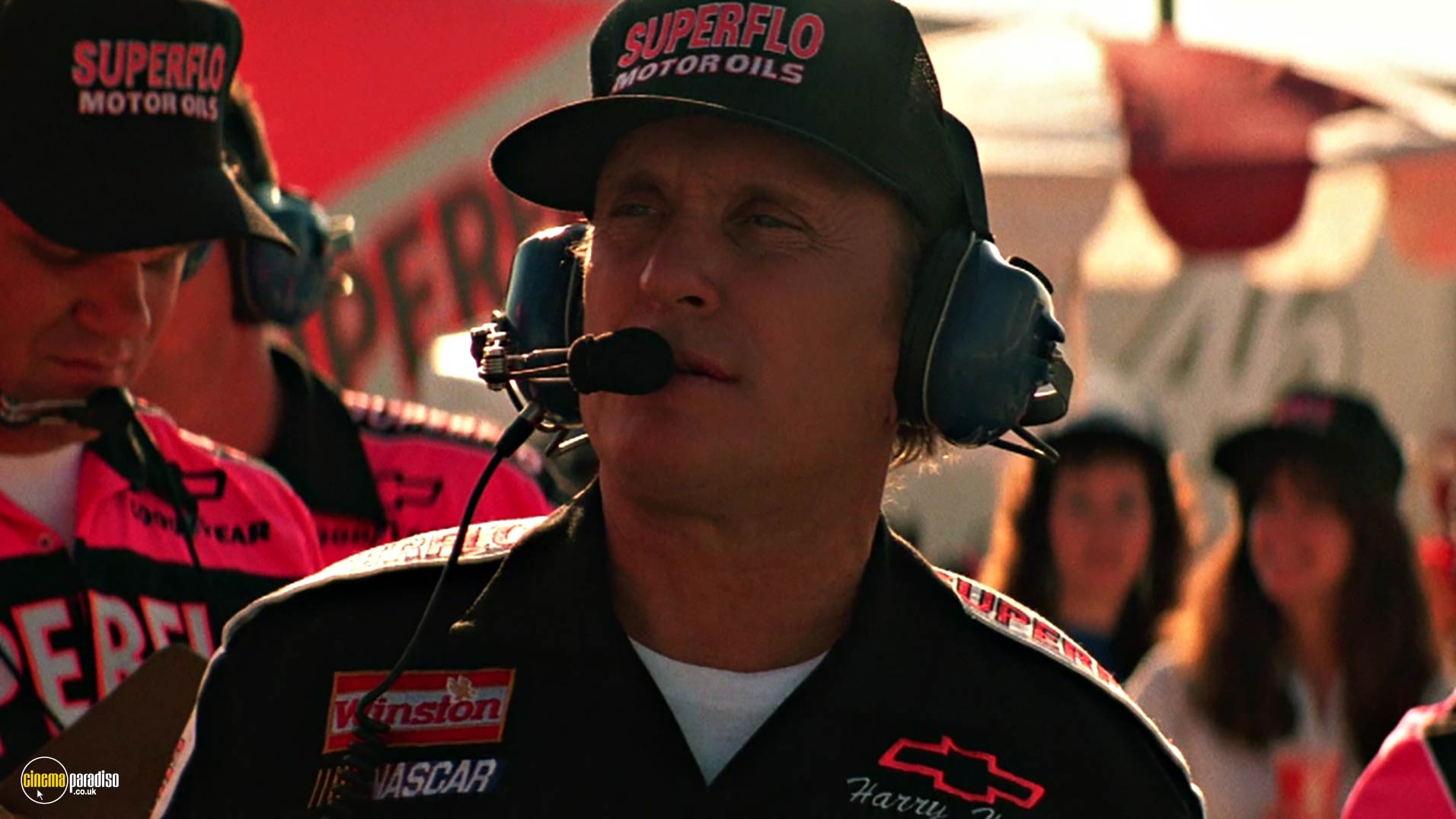
Divorced for a second time, Duvall took stock for a couple of years after playing Bob Hodges, the LAPD officer who takes rookie Danny McGavin (Sean Penn) under his wing while trying to prevent a gang war in Colors (1988), which marked Dennis Hopper's first return to the director's chair since Easy Rider (1969). Penn got 33 days for punching an extra who photographed him without permission and it's ironic that Duvall's first film after his brief hiatus was called A Show of Force. Directed by Bruno Barreto, it follows the efforts of TV reporter Kate Melendez (Amy Irving) to uncover a conspiracy surrounding the death of two Puerto Rican activists. Duvall plays station manager Howard Baslin, but he's much more central to the action as Harry Hogge, the ace mechanic who is brought out of retirement to guide hot shot driver Cole Trickle (Tom Cruise) through a tilt at the NASCAR championship in Tony Scott's Days of Thunder (both 1990). Duvall decided to take the part after being messed around by the producers of Jonathan Demme's The Silence of the Lambs (1991) over the role of Hannibal Lecter. 'They offered me one part,' he later explained, 'and then the other, and I said, "I'd rather work with Tom Cruise than wait around for these people to make up their minds."' He would similarly turn down Terry Gilliam's invitation to play Don Quixote.
Duvall saw out the year as Fred Waterford (aka The Commander), who welcomes concubine Kate (Natasha Richardson) to his home in the Republic of Gilead in The Handmaid's Tale, Volker Schlöndorff's adaptation of the Margaret Attwood novel that would be reworked for television (2017-22) by Bruce Miller, with Joseph Fiennes as Fred and Elisabeth Moss as June Osbourne.
Speaking of the small screen, Duvall found his favourite role in Simon Wincer's Lonesome Dove (1989), a mini-series adapted from the Pulitzer Prize-winning novel that Larry McMurtry had written after the abandonment of the screenplay that he and Peter Bogdanovich had been writing to reunite John Wayne and James Stewart for the first time after John Ford's The Man Who Shot Liberty Valance (1962). Set in a border town on the Rio Grande in the 1870s, the story revolves around Augustus McCrae (Duvall) and Woodrow F. Call (Tommy Lee Jones), a pair of retired Texas Rangers who decided to leave their livery stable to drive a herd of cattle across the plains to Montana Territory.
Inheriting the role of Gus because James Garner didn't think he could cope with so much time in the saddle, Duvall was able to draw on the equestrian skills he had acquired on his uncle's Montana ranch as a boy. Having missed out on an Emmy (among the 18 nominations the series accrued), he won the Golden Globe for Best Actor in a Miniseries. 'When I finished,' he later recalled, 'I really felt like I did something complete and good at that exact moment.' Elsewhere, he enthused, 'Let the English play Hamlet and King Lear and I will play Augustus McCrae, a great character in literature.' He went on, 'The Western is our genre in the United States of America. The English have Shakespeare, the French have Molière, the Russians have Chekhov, but we have the Western.'
Duvall's next televisual excursion saw him make more screen history, as Ivan Passer's Stalin (1992) was the first production to film in the Kremlin in Moscow. Premier Mikhail Gorbachev had his given permission and toiled to prevent the collapse of the Soviet Union while Duvall was playing Joseph Stalin just a few doors away. The mini-series chronicles the life of Georgian Ioseb Dzhugashvili from the 1917 Bolshevik Revolution to his death behind the Iron Curtain in 1953, with Maximilian Schell playing Lenin, Daniel Massey as Trotsky, and
Julia Ormond as the wife of 'the Man of Steel', Nadezhda Alliluyeva.
Frustratingly, despite Duvall earning Emmy recognition, this considered character study isn't available to rent and the same goes for William Graham's The Man Who Captured Eichmann (1997), which brought another Emmy nod and a Screen Actors Guild citation for his work as Nazi war criminal Adolf Eichmann, who was living in Buenos Aires as Ricardo Klement when he was abducted by Mossad agent Peter Malkin (Arliss Howard) in 1960. Recalling the experience, Duvall said, 'It's interesting to play a guy like Eichmann. You can't play him bad from his point of view, because he isn't bad from his point of view. You have to try to find vulnerability - like his love for his son...which is about the only thing I could find.'
Mr Dependable - Right to the End
As an old school actor, Duvall had no interest in coffer-swelling cameos in SFX-laden blockbusters. He preferred human dramas that enabled him to create characters based on his observation of everyday life. In the early 1990s, he even founded his own production company, Butcher's Run Films, to produce the kind of pictures he believed in. 'I go by instinct.' he told one reporter. 'I do something if I like it. And maybe if I could do something a little different than I did in a prior role. Also, you know, if it's a good director. Also if they pay well, but if it's a smaller project then I don't worry about the money. So there's independent and big films. But no matter whether they're independent or big, I always try to find a character that maybe I can do something different than I did before. And maybe I can bring something to that.'
He enjoyed playing Daddy Hillyer in Martha Coolidge's Rambling Rose, a Depression-era rite of sexual passage story that saw Laura Dern and Diane Ladd become the first mother and daughter to receive Oscar nominations for the same film. He reunited with co-star Lukas Haas in Peter Masterson's Convicts (both 1991), another Horton Foote collaboration, which cast Duvall as Soll Gautier, an eccentric Texan plantation owner at the turn of the last century, who employs prisoners on his land. He followed this by playing Joseph Grand, the municipal clerk who helps Dr Bernard Rieux (William Hurt) fight contagion in a South American town, in Luis Puenzo's adaptation of Albert Camus's The Plague. But Duvall could also be lured into mainstream projects, as he took on the role of newspaper publisher, Joseph Pulitzer, in Newsies (both 1992), Kenny Ortega's Disney musical about the 1899 newsboys' strike in New York. The Broadway show had been nominated for numerous Tony Awards, but the film flopped badly that it's not currently available to rent.
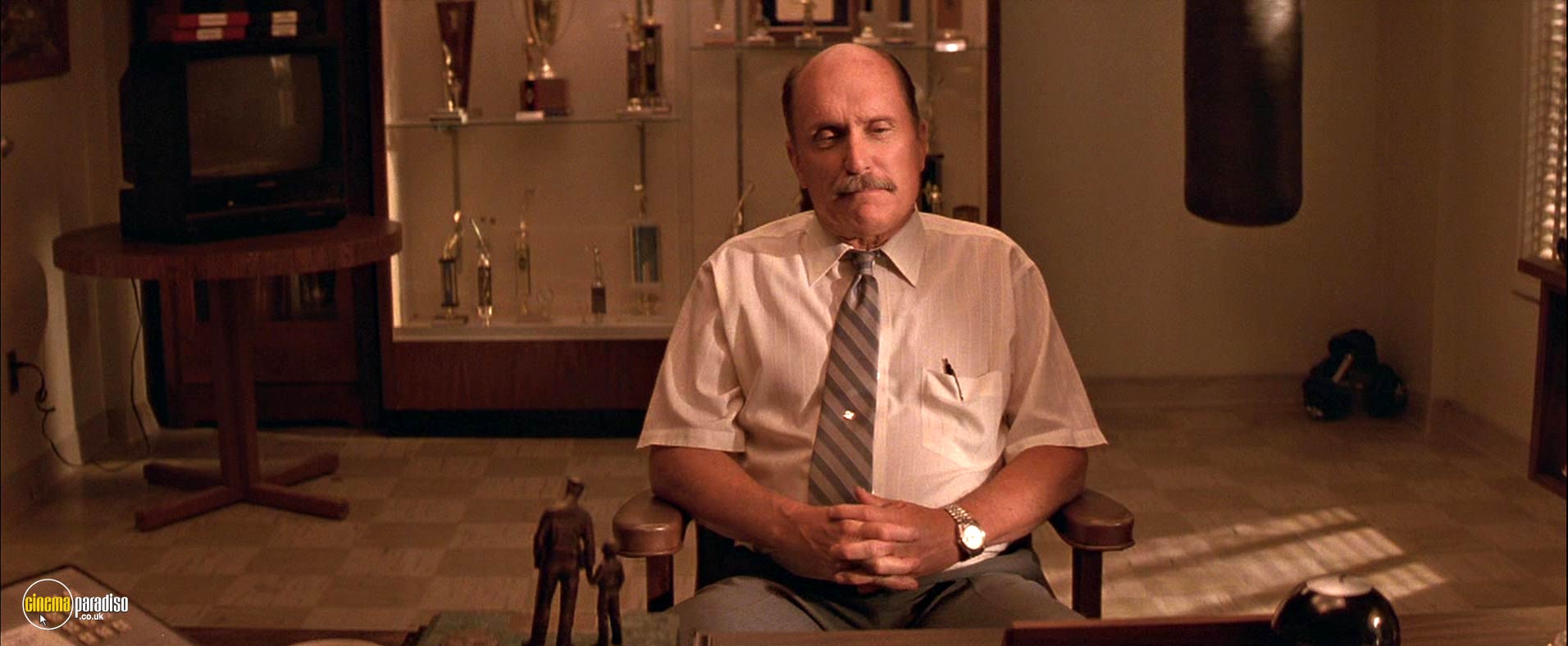
Duvall next defined the role of the world-weary cop on his last day before retirement in Joel Schumacher's Falling Down, as LAPD sergeant Martin Prendergast and partner Sandra Torres (Rachel Ticotin) strive to track down William Foster (Michael Douglas), a white collar family man who goes on the rampage after boiling over in a traffic jam. The reviews were lukewarm because of the film's violence and mixed political messages, but the strength of the performances has ensured this a certain cult status. The same should have been true of Randa Haines's Wrestling Ernest Hemingway (both 1993), in which Duvall excels as a dapper Cuban barber named Walter, who befriends coarse Irish sailor, Frank Joyce (Richard Harris), and learns to ride a tandem while having a quiet crush on the waitress (Sandra Bullock) who serves him his daily bacon sandwich.
Also in 1993, Duvall returned to the frontier to play murderous army scout Al Sieber in Walter Hill's Geronimo: An American Legend (1993), which featured Wes Studi as the Apache warrior captured by US Cavalry officers Charles B. Gatewood (Jason Patric) and Britton Davis (Matt Damon), as well as Gene Hackman who cameos as the humane Brigadier General George Crook. Duvall also found himself back in the print industry, as Bernie White, the irascible New York Sun editor-in-chief trying to reconnect with his grown-up daughter after receiving a terminal cancer diagnosis in Ron Howard's The Paper (1994). Fabled critic, Roger Ebert, said of the performance: 'Robert Duvall plays the paper's editor with such depth that he turns an essentially supporting role into the man's life story - a story of broken marriages, estranged children, nightly drinking and hidden desperation, all contained in a package of unbending journalistic integrity.'
Ever eager to make films about his pastimes, Duvall was cast as show jumping trainer Wyly King in Lasse Hallström's Something to Talk About. a Callie Khouri-scripted family saga, in which Duvall and Gena Rowlands play the parents of Kyra Sedgwick and Julia Roberts, who has separated from husband, Dennis Quaid. But his restless mind took him back to the Dustbowl era of his childhood in James Keach's The Stars Fell on Henrietta (both 1995), a Clint Eastwood-produced drama in which an oil man named Cox convinces a hardscrabble farmer (Aidan Quinn) that his land has untapped resources of black gold.
It's a shame so many of these titles are out of reach, as Duvall's innate professionalism shines through each one. He's also on scene-stealing form as Dr Richard Chillingworth (aka Roger Prynne) in Roland Joffé's take on Nathaniel Hawthorne's The Scarlet Letter, a drama set in the Massachusetts Bay Colony during the late 1660s, which cast Demi Moore as his wronged wife, Hester, and Gary Oldman as her Puritan pastor lover, Arthur Dimmesdale. Duvall had to settle for being upstaged as the sickly father of the Oscar-nominated Billy Bob Thornton's Karl Childers in Sling Blade. But, as co-producer, he managed to snag himself the choice role of Earl Pilcher, Jr. in Richard Pearce's Thornton-scripted drama, A Family Thing (both 1996), in which an Arkansas farm equipment dealer travels to Chicago to meet the African American half-brother he never knew he had (James Earl Jones).
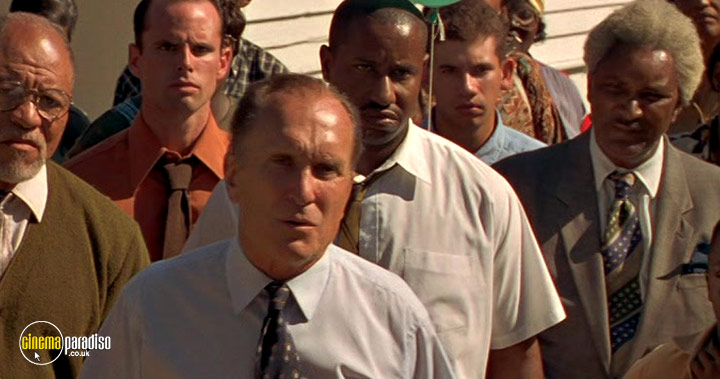
Slipping back into selfless support following the end of his third marriage (to dancer Sharon Brophy), Duvall essayed Doc Brunder trying to fathom how Californian everyman, George Malley (John Travolta), has turned into a genius with telekinetic powers after an unwitnessed close encounter in Jon Turteltaub's Phenomenon (1996). However, he was back in the title role in The Apostle (1997), which took him six weeks to write and 13 years to bring to the screen. As the studios refused to back the project, Duvall financed it himself and doubled as director and star in the story of Pentecostal preacher Euliss F. 'Sonny' Dewey who reinvents himself as 'The Apostle E.F.' after going on the run into Louisiana after killing his wife's lover back in Texas.
'Everything I did,' Duvall explained after being nominated for Best Actor, 'write, direct, it was all an extension of myself as an actor. So what I know as an actor, it all came out of that. And I worried about it, but once we started it was much more harmonious than I thought. It went very smoothly. When you act, it's a wonderful thing, but almost it's more fulfilling overall when you direct.' Much as he would have liked to have directed more films, Duvall respected his craft as an actor and remained open to offers from all sources, including the forgiving Robert Altman, who cast him for the first time in three decades in The Gingerbread Man. Duvall also reunited with John Travolta in Steven Zaillian's A Civil Action, as Boston lawyer Jan Schlichtmann locks horns with Jerome Facher (Duvall), the wily attorney for Beatrice Foods, after the residents of Woburn, Massachusetts claim that the company has polluted its groundwater. Notwithstanding the latter earning him another Best Supporting Oscar nomination, two legal dramas in a row proved enough to send Duvall into orbit, as veteran astronaut Spurgeon 'Fish' Tanner boards The Messiah on a mission to shatter a speeding comet with nuclear bombs in Mimi Leder's Deep Impact (all 1998).
This turned out to be Duvall's last film of the 20th century and he marked the millennium by teaming up with Nicolas Cage and Angelina Jolie in Dominic Senna's Gone in 60 Seconds, which sees car thief Randall 'Memphis' Raines turn to mentor Otto Halliwell when he is faced with having to steal 50 vehicles to save his kidnapped brother's life. Restless as ever, Duvall next accepted the role of Dr Griffin Weir in Roger Spottiswoode's The 6th Day, a sci-fi thriller in which the sinister scientist conducts illegal cloning experiments that involve snowboarding charter pilot, Adam Gibson (Arnold Schwarzenegger). Few, however, would have anticipated that Duvall's next picture, Michael Corrente's A Shot At Glory (all 2000), would take him to Scotland in order to play Gordon McLeod, the manager of second division Kilnockie, who hopes that son-in-law Jackie McQuillan (Ally McCoist) can take the team to the Scottish Cup Final against Glasgow Rangers.
Duvall became intrigued by Scottish football, as he produced the underdog story and developed his Bill Shankly-like accent. He became particularly fond of the jinking Celtic winger profiled in Jimmy Johnstone: Lord of the Wing and he was more than happy to share his thoughts in Jamie Doran's 2004 documentary. Duvall had always been a keen sports fan and played tennis regularly, winning the occasional tournament, while also becoming involved in show jumping. 'A young actor once asked me,' he told an interviewer, 'what do you do between jobs? I said, hobbies, hobbies, and more hobbies. It keeps you off dope.' He also became a keen student of the tango and would regularly visit Argentina to learn about the dance. Indeed, he had met his third wife at a class and his fixation led him to write, produce, and direct Assassination Tango (2002), in which he also played John J. Anderson, a ponytailed hitman who is injured in a riding accident in Buenos Aires and falls for Manuela (Luciana Pedraza) when he signs up for her tango lessons. The mostly negative reviews questioned the political message the Republican-supporting Duvall was trying to peddle, but there was no denying the fact that the actor could dance, as could co-star Luciana Pedraza, who would become his fourth wife, in spite of a 41-year age gap.
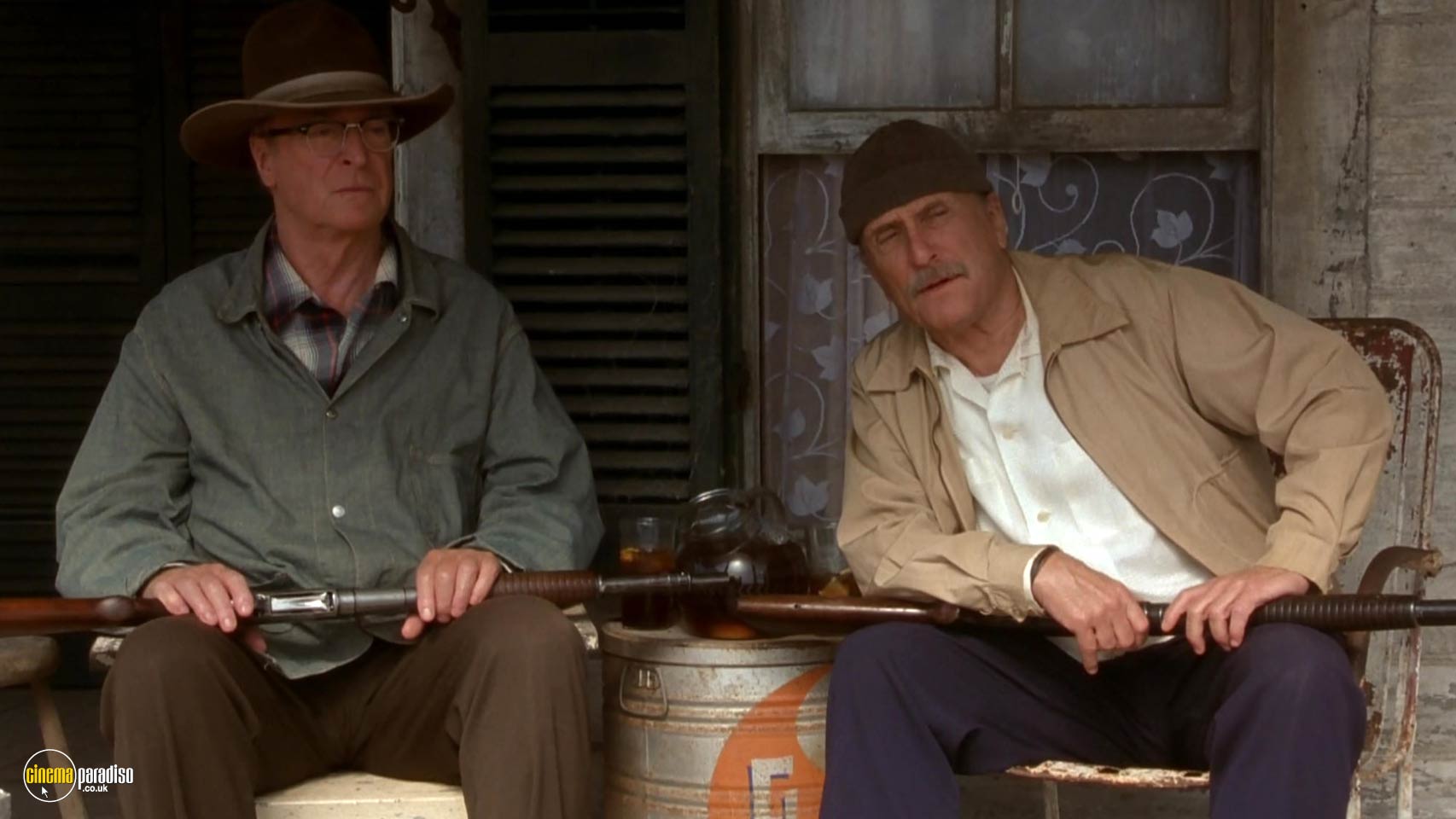
Back as an actor for hire, Duvall played police negotiator, Frank Grimes, in Nick Cassavetes's John Q. (2002), which centred on the attempt of factory worker, Frank Quincy Archibald (Denzel Washington), to hold staff and patients at a Chicago emergency room at gunpoint in order to coerce the hospital into performing a life-saving heart operation on his young son. The following year, Duvall delved into distant family history to play Robert E. Lee opposite Stephan Lang's Thomas 'Stonewall' Jackson in Ronald F. Maxwell's mini-series, Gods and Generals, before joining forces with Michael Caine to play great uncles Hub and Garth McCann, who welcome 14 year-old Walter Caldwell (Haley Joel Osment) to their 1960s Texas farm in Tim McCanlies's Secondhand Lions. Remaining in a rural milieu for his third film of 2003, Duvall relished the role of Boss Bluebonnet Spearman in Kevin Costner's Open Range (all 2003), which sees Irish landowner, Denton Baxter (Michael Gambon), take exception to the Montana cattleman driving his herd across his land.
Now in his seventies, Duvall showed no signs of slowing down. 'All the time in the sixties and early seventies,' he said in an interview, 'I always figured that I was a sort of a "late bloomer" - I felt my time was later than guys like Jimmy Caan, De Niro, Pacino. It's later now...I guess I'm still around! In fact, I'm getting more offers than ever - that's fine with me. I'm gonna be around for a few years, I hope. I'm not gonna quit for a while.' True to his word, he returned to soccer as Buck Weston, the pee-wee coach out to better the efforts of his underachieving son (Will Ferrell) in Jesse Dylan's Kicking & Screaming, which he followed by playing Captain, the founder of the Academy for Tobacco Studies, in Jason Reitman's Thank You For Smoking (both 2005), which centres on the crisis of conscience facing Big Tobacco advocate, Nick Taylor (Aaron Eckhart), after he realises he's setting his young son a bad example.
Butcher's Run played a part in financing Walter Hill's mini-series, Broken Trail (2006), which starred Duvall as Prentice Ritter, an Oregon cowby who embarks upon a trek with nephew Tom Harte (Thomas Haden Church) to deliver 500 horses to the British Army in Wyoming. En route, however, they rescue some Chinese woman from a slave trader and are pursued by the gunmen hired by 'Big Rump' Kate Becker (Rusty Schwimmer), who wants her property back. Duvall had envisaged the story as a feature, but it proved easier to raise funds for a small-screen production, although there were plenty of problems with adapting the screenplay to the new format. Nevertheless, he was pleased with the outcome, which affirmed his affinity with the old frontier and his penchant for manly subject matter. He was even more delighted when he won both the Primetime Emmy for Best Actor and (as executive producer) for Best Limited Series.
In Curtis Hanson's Lucky You, Duvall played L.C. Cheever, the two-time World Series of Poker champion, who has become estranged from his Vegas-based hustler son, Huck (Eric Bana). And he played another conflicted father in the form of Burt Grusinsky in James Gray's We Own the Night (both 2007), as the 1980s NYPD Deputy Chief is not enamoured of the fact that son Bobby (Joaquin Phoenix), manages a nightclub owned by a Russian fur importer, whose nephew is a vicious drug dealer. More parenting followed, as Duvall poked fun at the kind of crusty coot he had become associated with essaying, in Seth Gordon's Four Christmases (2008), a festive comedy that turns on the last-minute decision of Brad McVie (Vince Vaughn) and girlfriend Kate Kincaid (Reese Witherspoon) to spend the holidays with his eccentric father, Howard, his cage-fighting siblings, Denver and Dallas (Jon Favreau and Tim McGraw), and their other offbeat relations.
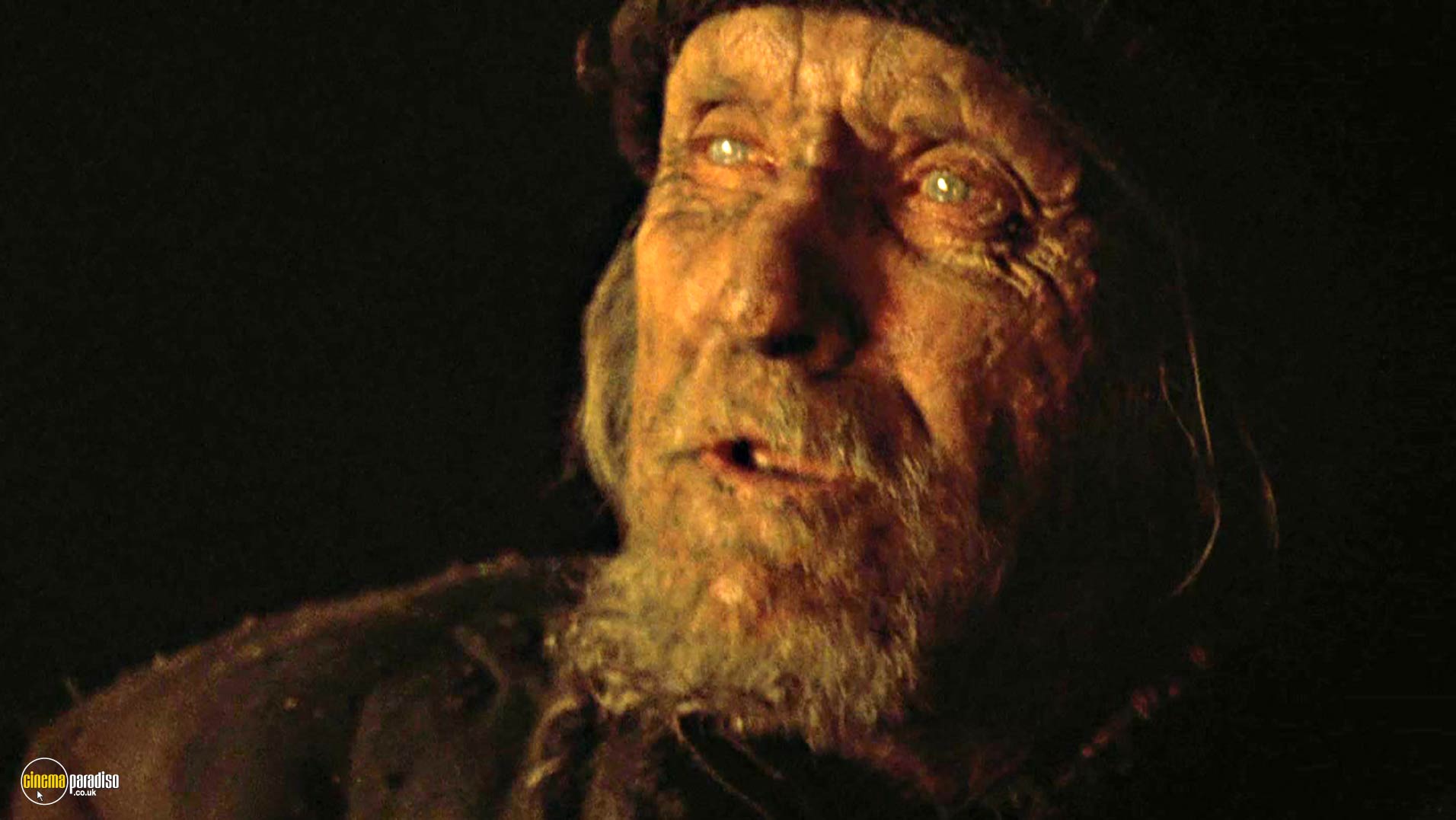
Few missed the echoes of Tender Mercies, as Jeff Bridges strummed his way to the Academy Award for Best Actor as alcoholic singer, Otis Blake, in Scott Cooper's Crazy Heart (2009), which Duvall co-produced in addition to taking the role of Wayne Kramer, who helps 'Bad' sober up and accept a second chance of happiness with journalist and single mom, Jean Craddock (Maggie Gyllenhaal). Duvall is the one receiving assistance as the near-blind Ely, who is offered food by the father and son played by Viggo Mortensen and Kodi Smit-McPhee in John Hillcoat's adaptation of Cormac McCarthy's post-apocalyptic saga, The Road. But Duvall went back to multi-tasking in Aaron Schneider's Get Low (all 2009), as he executive produced a drama about 1930s Tennessee hermit, Felix Bush, who stages his own funeral with the help of a grasping undertaker (Bill Murray) in order to confess to an affair to his onetime sweetheart, Mattie Darrow (Sissy Spacek).
Following a year off, Duvall returned to the screen as Johnny Crawford, a retired Texas golfer giving struggling pro Luke Chisholm (Lucas Black) a few pointers in Matt Russell's little-seen sports drama, Seven Days in Utopia (2011). A reunion with Billy Bob Thornton followed on Jayne Mansfield's Car, a 1960s drama about feuding Alabama families that sees Great War veterans Jim Caldwell and Kingsley Bedford (John Hurt) cross the divide in order to see the vehicle in which the eponymous blonde bombshell had been decapitated. Then, having appeared in Tom Donahue's documentary, Casting By, and having been uncredited as a Russian general in Philip Kaufman's Hemingway and Gelhorn (with Clive Owen and Nicole Kidman as Ernest and Martha), Duvall joined Tom Cruise as former US Marine Gunnery Sergeant Martin Cash in Christopher McQuarrie's Jack Reacher (all 2012), an adaptation of a Lee Child bestseller about an ex-Army Military Police Corps investigator who delves into the conspiracy behind a mass-shooting by a service sniper.
A script by Lonesome Dove's Bill Wittliff was enough to persuade Duvall to play Red Bovie, the cantankerous Texas rancher who is forced to give up his lands and embark upon a road trip beyond the Rio Grande with his grandson (Jeremy Irvine) in Emilio Aragón's A Night in Old Mexico (2013), a project that had once been earmarked for Dennis Hopper. Now in his eighties, Duvall continued to rise above the material in playing mostly stubborn men who prize their independence and don't mind hurting people's feelings in sticking to their guns. The part of Joseph Palmer perfectly fitted the template in David Dobkin's The Judge (2014), which sees the head of the court in Carlinville, Indiana refuse to admit to Chicago lawyer son, Hank (Robert Downey, Jr.), that he had been an abusive father. However, the relationship changes when Hank discovers that Joseph is dying of cancer and offers to defend him after he is charged in a hit-and-run case. Nominated for Best Supporting Actor at the Golden Globes, the Oscars, and the Screen Actors Guild Awards, Duvall admitted that he had been glad he had had second thoughts about a part he had initially considered showily melodramatic. He lost out on his seventh and last Oscar nomination to J.K. Simmons for Whiplash and quippred, 'I didn't mind losing to him. I lost to others where I thought it was a joke, but he was very good, and I liked the movie a lot.'
Any thoughts the 84 year-old might be thinking of retiring were quickly dashed when it was announced that Duvall was going to write, direct, and headline Wild Horses (2015). He plays rancher Scott Briggs, who has summoned prodigal son Ben (James Franco) back to the property he shares with oldest boy, KC (Josh Hartnett), just as Texas Ranger Samantha Payne (Luciana Duvall) is reopening the cold case of a teenage boy who had disappeared 15 years earlier, on the very night that Briggs had sent the bisexual Ben packing.
We can't pretend this is a masterpiece, but it's fascinating to watch Duvall in ornery patriarch mode jousting with his real-life wife. He settled back into the thesping routine with James Franco's In Dubious Battle (2016), an adaptation of a 1936 John Steinbeck novel that sees workers Mac McLeod (Franco) and Jim Nolan (Nat Wolf) strive to form a union after factory owner Chris Bolton (Duvall) reneges on a deal to pay $3 an hour. Although not on screen for long, Duvall gives by far the most authentic performance and he is just as credible as Tom Mulligan in Steve McQueen's Widows (2018), as he warns son Jack (Colin Farrell) not to lose to crime boss Jamal Manning (Brian Tyree Henry) in the forthcoming election to become alderman for the South Side of Chicago.
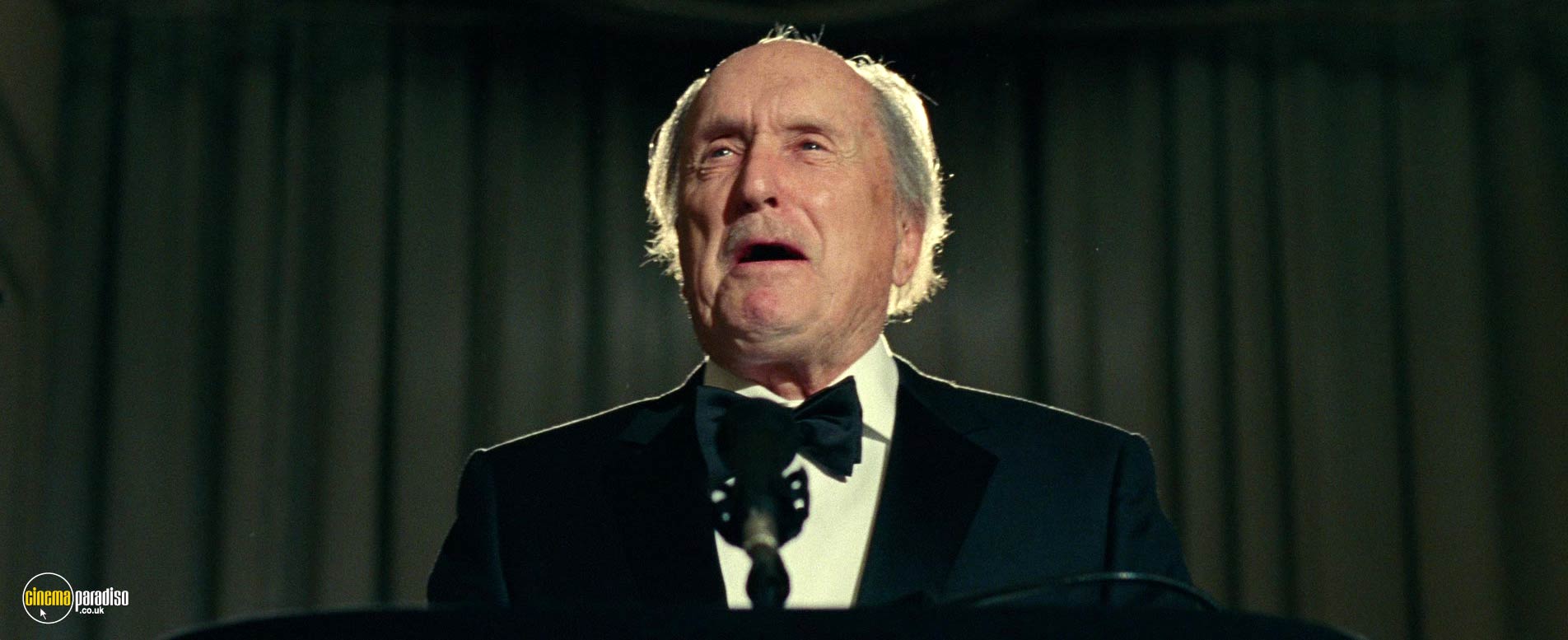
But this is the last that Cinema Paradiso uses can currently see of Duvall in action, as none of his final three features has been released on disc. He was Mason Hawk in Ty Roberts's 12 Mighty Orphans (2021), which centres on the orphanage football team coached by Luke Wilson and Martin Sheen; Philadelphia 76ers owner Rex Merrick in Jeremiah Zagar's Hustle, in which Adam Sandler plays a jaded basketball scout who becomes convinced he's found the next big thing in Spanish street player, Juancho Hernangómez; and, finally Duvall was supernatural scholar Jean Pepe in Scott Cooper's The Pale Blue Eye (both 2022), in which veteran detective Augustus Landor (Christian Bale) enlists the help of cadet Edgar Allan Poe (Harry Melling) to solve a series of murders at the West Point Military Academy in the winter of 1830.
As the offers ceased to appeal, Duvall kept busy with his horses on Byrnley Farm in Fauquier County, Virginia. It was here that he died on 15 February 2026 at the age of 95. Robert De Niro hoped that he could live to be the same age, while Al Pacino opined, 'He was a born actor as they say, his connection with it, his understanding and his phenomenal gift will always be remembered.' Widows co-star Viola Davis said, 'I was in awe. I've always been in awe of your towering portrayals of men who were both quiet and dominating in their humanness. You were a giant...an icon. Greatness never dies. It stays...as a gift. Rest well, sir. Your name will be spoken.' But the last word should go to Luciana Duvall, who wrote, 'To the world, he was an Academy Award-winning actor, a director, a storyteller. To me, he was simply everything. His passion for his craft was matched only by his deep love for characters, a great meal, and holding court. For each of his many roles, Bob gave everything to his characters and to the truth of the human spirit they represented. In doing so, he leaves something lasting and unforgettable to us all.' He does, indeed, and he will continue to do so as long as his films are seen.
Mentioned films