With the animated feature, The King of Kings, currently on general release, Cinema Paradiso takes a two-part look at the films that have been adapted from the writings of Charles Dickens.
In the first part of this overview of the films adapted from Charles Dickens's novels and short stories, we covered works published between 1836 and 1846. We met such unforgettable characters as Mr Pickwick, Oliver Twist, Nicholas Nickleby, and Little Nell, as well as such lesser filmed figures as Barnaby Rudge, Martin Chuzzlewit, and Paul Dombey.
Now, we take up the story in 1849 and consider the pictures made from some of Dickens's best-known novels. We shall also examine the novel left unfinished at his untimely death at the age of 58 on 9 June 1870, as well as the films that have been based on some of his minor works. And don't forget, Cinema Paradiso has already recalled the various versions of A Christmas Carol in 12 Scrooges of Christmas.
David Copperfield
Often considered to be Dickens's most autobiographical novel and the one that restored him to critical and commercial favour after a fallow patch, David Copperfield is one of the author's most adapted works. Among the earliest examples are Edwin S. Porter's Love and the Law (1910) and Frank Powell's Little Emily (1912), between which came three 1911 films directed by Theodore Marston and produced by Edwin Thanhauser: The Early Life of David Copperfield; Little Em'ly and David Copperfield; and The Loves of David Copperfield.
These were surpassed two years later by Thomas Bentley and Cecil Hepworth's eight-reel David Copperfield (1913), an extract from which is on the excellent BFI collection, Dickens Before Sound. The wonderful Alma Taylor plays Dora, while the young David is Eric Desmond, a pseudonym used by Reginald Sheffield, whose son, Johnny, would appear as Boy alongside Johnny Weissmuller in MGM's Tarzan series.
This two-hour telling was bettered by A.W. Sandberg's 1922 Danish version, which ran to 140 minutes and can be viewed on the film's Wikipedia page. However, the most celebrated retelling is George Cukor's David Copperfield (1935), which featured Freddie Bartholomew in the title role and W.C. Fields as Wilkins Micawber. Producer David O. Selznick excelled himself in casting Basil Rathbone as Edward Murdstone, Edna May Oliver as Betsey Trottwood, Lionel Barrymore as Daniel Peggotty, Maureen O'Sullivan as Dora Spenlow, and Roland Young as Uriah Heap. Having the distinction of being the first Dickens adaptation to be nominated for Best Picture at the Academy Awards, this offers fascinating insights into Hollywood's approach to prestige properties during the Golden Age.
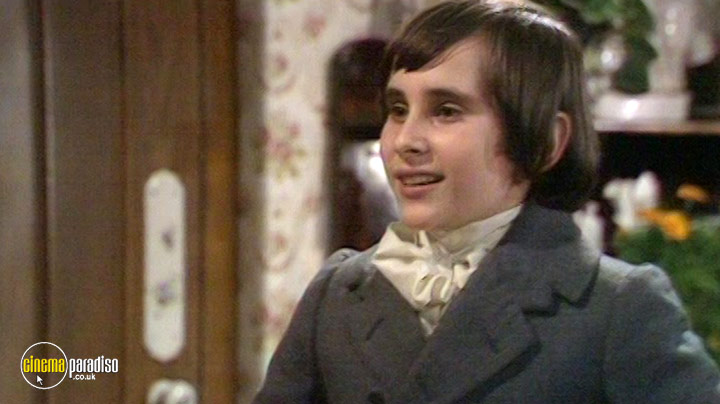
Such was the film's reputation that the novel didn't return to the big screen for several decades, by which time Robert Montgomery had brought it to television in 1954. The BBC cast Robert Hardy and Ian McKellen in the leads of its 1956 and 1966 versions, which were respectively directed over 13 episodes by Stuart Burge and the ever-reliable Joan Craft. She would return to the fray for the 1974 edition, which cast David Yelland as the hero of his own life, alongside Martin Jarvis's Heap and Arthur Lowe's Micawber. The latter alone makes this an essential rental.
Twentieth Century-Fox sponsored Delbert Mann's feature, David Copperfield (1969), which cast such luminaries as Ralph Richardson (Mr Micawber), Laurence Olivier (Mr Creakle), Richard Attenborough (Mr Tungay), Edith Evans (Betsey Trotwood), Michael Redgrave (Daniel Peggotty), and Ron Moody (Uriah Heap). A decade after Burbank chipped in with a 1983 animated version, NBC broadcast its own cartoon version featuring singing cats. Sheena Easton and Julian Lennon were among those contributing vocals.
Meanwhile, back at the Beeb, Simon Callow played Micawber in a 1986 10-parter, which was followed by Simon Curtis's two-part David Copperfield (1999), which is noteworthy primarily for the casting of 10 year-old Daniel Radcliffe as the young hero, which led to him being offered the part of Harry Potter. Of course, it helped to have Maggie Smith as Aunt Betsey, Bob Hoskins as Micawber, and Ian McKellen as Creakle.
This Peabody Award winner was quickly followed by Peter Medak's David Copperfield (2000), whose stellar cast included Sally Field as Betsey, Hugh Dancy as David, and Michael Richards as Micawber. Made for Hallmark, this isn't the most imaginative vision and, like Ambrogio Lo Giudice's 2009 Italian translation, it can't compete with the exuberance and intelligence of Armando Iannucci's The Personal History of David Copperfield (2019), which was feted by critics for its satirical insights and for the performances of Dev Patel as David, Tilda Swinton as Aunt Betsey, Hugh Laurie as Mr Dick, Peter Capaldi as Micawber, and Ben Whishaw as Heap. Putting a modern spin on an early Victorian classic, this bold adaptation demonstrates the continuing relevance of Dickens's understanding of human nature and social injustice.
Bleak House
Dickens had always been aware of the power of fiction to shape public attitudes and political policy. As he turned 40, his output took on a more pronounced socio-critical bent, with Bleak House censuring class inequality, the lowly status of women, and the iniquities of the legal system. Yet, the first film spun off from the text, G.A. Smith's The Death of Poor Joe (1900/1), simply stages the death of the young crossing sweeper to highlight the depravities of Victorian Britain. Thought lost until 2012, this is the oldest surviving Dickens-related film and it stars Laura Bayley (the director's wife) as the misspelt Jo.
An unsigned 1910 variation, Jo the Crossing Sweeper, was followed in 1918 by Alexander Butler's film of the same name, in which he plays crooked lawyer Tulkinghorn opposite Unity More's Jo, Rolf Leslie's Inspector Bucket, and Dora de Winton's Lady Dedlock. The latter role was taken by Constance Collier in Maurice Elvey's Bleak House (1920) and by Sybil Thorndike in Henry Broughton Parkinson's adaptation for his series, 'Tense Moments From Great Plays' (1922). The pick of the silent versions, however, is Grandfather Smallweed (1928), a nine-minute experimental talkie that used the Phonofilm sound-on-film process and was directed by its star, Bransby Williams. It can be found on Dickens Before Sound.
Playwright Constance Cox scripted the BBC's 11-part Bleak House (1959), which is available to rent from Cinema Paradiso. Andrew Cruickshank stars as John Jarndyce, with Diana Fairfax as ward Esther Summerson, Iris Russell as Lady Dedlock, Richard Pearson as Inspector Bucket, John Phillips as Tulkinghorn, and a pre-Steptoe Wilfrid Brambell as Krook.
In May 1962, Agatha Christie submitted an adaptation of Bleak House to MGM, around the time that Margaret Rutherford was playing Miss Marple in Murder, She Said (1961), Murder At the Gallop (1963), Murder Most Foul, and Murder Ahoy (both 1964). Regrettably, the studio rejected the script and we're unlikely to ever see how the Queen of Crime tackled one of the first detective stories in English fiction.

As it was, the next version of Bleak House (1985) was produced by the BBC and kept the nation gripped over eight episodes, as the Case of Jarndyce vs Jarndyce stubbornly refused to resolved. What a shame this isn't available, as Denholm Elliott suffered as John Jarndyce, Peter Vaughan menaced as Tulkinghorn, and Diana Rigg excelled as Lady Dedlock. The role passed to Gillian Anderson in Susanna White and Justin Chadwick's 15-episode Bleak House (2005), which was adapted by Andrew Davies and won a Peabody Award, as well as being nominated for 10 Primetime Emmys. Charles Dance essayed Tulkinghorn, while Carey Mulligan was Ada, Timothy West was Sir Leicester Dedlock, and Alun Armstrong was Inspector Bucket.
Spoofing the Dickensian oeuvre, Ben Gosling Fuller's four-part BBC comedy, The Bleak Old Shop of Stuff (2011), featured such characters as Jedrington Secret-Past (Robert Webb), Harmswell Grimstone (Tim McInnerny), Primly Tightclench (Sarah Hedland), Jolliforth Jollington (David Mitchell), and Malifax Skulkingworm (Stephen Fry). And, while we're on the subject of ribaldry, check out the At Last the 1948 Show (1968) sketch in which Marty Feldman drives bookseller John Cleese mad with his requests for Dickensian-sounding tomes by Edmund Wells and Charles Dikkens, the well-known Dutch author.
Hard Times
The shortest of Dickens's novels and the first to be published without illustrations painted an uncompromising picture of equality, education, and entertainment in Victorian Britain. Perhaps not surprisingly, adaptations have been few and far between since Thomas Bentley visited Coketown in 1915.
Bransby Williams took the role of hypocritical MP Thomas Gradgrind, who was played by Patrick Allen in Granada's four-part Hard Times (1977), which was directed by John Irvin from an Arthur Hopcraft script and also featured Alan Dobie as hapless worker Stephen Blackpool, Timothy West as mill owner Josiah Bounderby, and Edward Fox as aspiring politician James Harthouse.
As a backlash to 15 years of Conservative rule, Hard Times was dusted down in 1994, six years after auteur João Botelho had transferred the action to modern-day Portugal for a much-admired monochrome drama. Peter Barnes wrote and directed the 2005 four-part mini-series, which cast Bill Paterson as Blackpool, Alan Bates as Bounderby, Bob Peck as Gradgrind, and Richard E. Grant as Harthouse.
Little Dorrit
Dickens was 12 years old when his father, John, was sent to the Marshalsea Debtors' Prison and the psychological scars are still evident in the novel he wrote 43 years later. James Kirkwood was the first to adapt Little Dorrit for the screen, as part of Thanhauser's sadly lost series of adaptations. Maude Fealy played Amy Dorrit, while Joan Morgan benefited from the fact that the 1920 British silent version was directed by her father, Sidney. A surviving fragment is available on YouTube, but there's little chance currently of seeing Karina Bell in A.W. Sandberg's 1924 Danish adaptation or Anny Ondra in Czech director Karel Lamac's 1934 German take, Klein Dorrit.
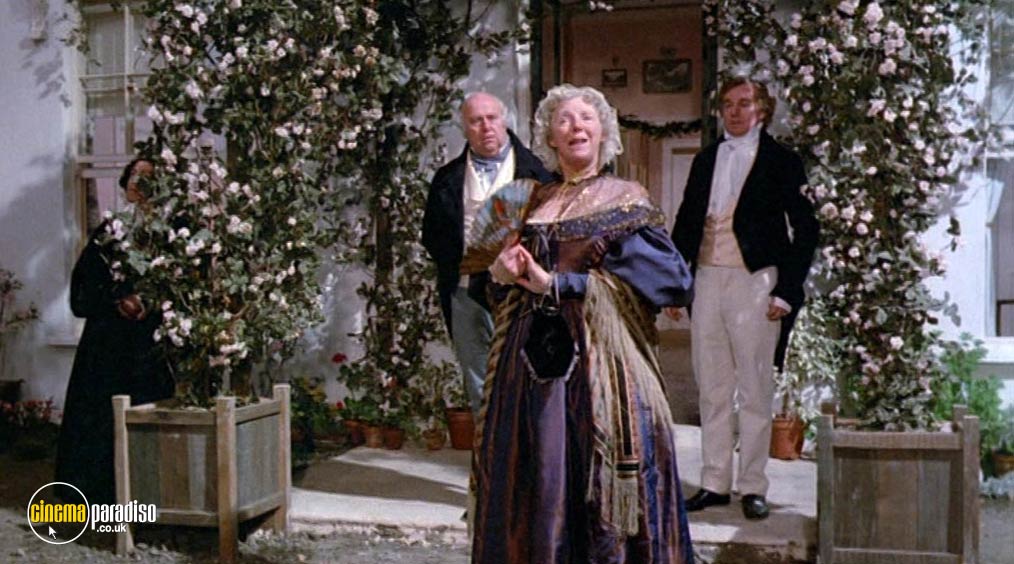
Cinema Paradiso users can, however, rent Christine Edzard's Little Dorrit (1987), a six-hour masterpiece that is divided into two sections, 'Nobody's Fault' and 'Little Dorrit's Story'. Sarah Pickering took the title role, while Alec Guinness stole the show as William Dorrit from Derek Jacobi as Arthur Clennam, Joan Greenwood as Mrs Clennam, and Miriam Margolyes as Flora Finching. In his third Dickens adaptation, Guinness received a Best Supporting Oscar nomination, while Edzard was cited for her screenplay, which also drew a BAFTA nod.
Undaunted by inevitable comparisons, Andrew Davies wrote a 14-part BBC serialisation of Little Dorrit (2008). Claire Foy was cast as Amy opposite Tom Courtenay as Dorrit, Matthew Macfadyen as Clennam, and Alun Armstrong as twins Jeremiah and Ephraim Flintwitch in a gripping adaptation that converted seven of its 11 Emmy nominations. Also keep an eye out for Andy Serkis as Rigaud, Judy Parfit as Mrs Clennam, and Ruth Jones as Flora Finching.
A Tale of Two Cities
Written during the fallout from his affair with actress Ellen Ternan that is covered in Ralph Fiennes's The Invisible Woman (2013), A Tale of Two Cities was a remarkable achievement given Dickens's psychological state and precarious social situation. It also proved his popularity with the public, as the scandal of his divorce from Catherine cost him many friends and associations.
Set during the French Revolution, the story of Sidney Carton's redemption partially reflected Dickens's view of his own situation. However, with its rousing action, it became a favourite of film-makers after Selig Polyscope released the first screen adaptation in 1907, which had the title of The Only Way, which had been used for a stage adaptation. This is now lost, but a little Googling should bring readers to Vitagraph's 1911 version, which was produced by J. Stuart Blackton and directed by Charles Kent and William J. Humphrey. In this 30-minute epic, Maurice Costello played Carton, with Florence Turner as the beloved Lucie Manette and Norma Talmadge as the Seamstress.
Made for Fox, Frank Lloyd's 1917 feature-length A Tale of Two Cities can be found on the film's Wikipedia page. Casting William Farnum as Carton and Charles Darnay, his rival for the love of Lucie (Jewel Carmen), this visually ambitious drama was followed by Walter Courtney Rowden's 1922 British outing, which teamed Clive Brook and Ann Trevor in an entry in H.B. Parkinson's 'Tense Moments From Great Authors' series.
Also made in Britain, Herbert Wilcox's The Only Way (1925) saw 62 year-old John Martin Harvey reprise his 1899 stage role of Carton, alongside wife Madge Stuart as Mimi the maid, a part written specially for her. The BFI has a copy of this commercial success and should release it on disc. Similarly, the first sound version, Jack Conway's A Tale of Two Cities (1935), should also be made available, especially as it was nominated for Best Picture at the Academy Awards. Produced by David O. Selznick, this lavish interpretation cast Ronald Colman as Carton opposite Basil Rathbone's Marquis St Evremonde, Blanche Yurka's Madame Defarge, and Edna May Oliver's Miss Pross.
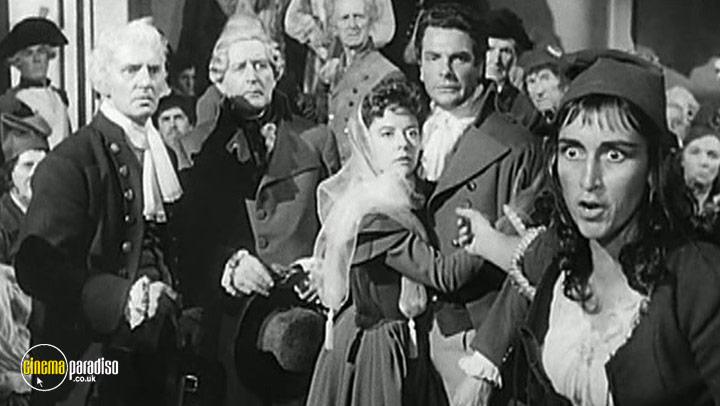
Television stepped in with a 1948 BBC version of The Only Way and a 1953 ABC rehash of A Tale of Two Cities. The BBC used this title for its eight-part 1957 serial, with Peter Wyngarde as Carton. He was followed on the big screen by Dirk Bogarde in Ralph Thomas's A Tale of Two Cities (1958), which was adapted by Ealing comedy scribe, T.E.B. Clarke. Dorothy Tutin played Lucie, while Christopher Lee made a hissable St Evremonde. Insisting on shooting in monochrome because the book 'was written in black and white', Thomas took his visual cues from Jacques Becker's Casque d'or (1952).
Hugely popular with British audiences, this is the last feature version to date, with all subsequent adaptations being for television. Transmitted the same year, Robert Mulligan's teleplay cast James Donald as Carton and Agnes Moorehead as Madame Defarge. Across the pond, Constance Cox and Joan Craft worked their customary magic on a 10-part BBC serial in 1965, which had John Wood doing the far, far better thing. When the corporation returned to the text in 1980, Paul Shelley doubled up as Carton and Darney in a 13-part A Tale of Two Cities that Cinema Paradiso users can rent as part of the imposing Charles Dickens Collection.
That year also saw Jim Goddard direct Chris Sarandon in the same dual role in a Hallmark teleplay that boasted Kenneth More (Jarvis Lorry), Flora Robson (Miss Pross), Billie Whitelaw (Madame Defarge), Alice Krige (Lucie), and Peter Cushing (Dr Manette) in a splendid supporting cast. Another variation that might well be on disc is the 1984 Burbank animation, which does a better job of compressing the novel than Al Guest and Jean Mathieson's 1990 cartoon.
Marking the bicentenary of the French Revolution, Philippe Monier's A Tale of Two Cities (1989) was made in two parts by Granada and paired James Wilby's Carton with John Mills's Lorry, Jean-Pierre Aumont's Dr Manette, and Anna Massey's Miss Pross. This remains the last reworking of Dickens's story, although Christopher Nolan has revealed that the 1859 novel influenced the screenplay of The Dark Knight Rises (2012).
Great Expectations
Published with a hastily tacked-on happy ending, Great Expectations is one of Dickens's most frequently filmed works. Focussing on Philip Pirrip's encounter with Abel Magwitch, David Aylott's The Boy and the Convict (1909) is the earliest screen incarnation and it can be found on the BFI's silent Dickens collection. While this has survived, Robert G. Vignola's 1917 Paramount version starring Jack Pickford as Pip has disappeared, while A.W. Sandberg's 1922 take is safely hidden away in a Danish archive.
The first sound adaptation, Stuart Walker's Great Expectations (1934), took liberties with the text and cast Phillips Holmes as Pip alongside Jane Wyatt as Estella, Florence Reid as Miss Havisham, and Francis L. Sullivan as Jaggers. The latter would reprise his role in David Lean's Great Expectations (1946), which cast Anthony Wager and Jean Simmons as Pip and Estella under the jaundiced gaze of Martita Hunt's Miss Havisham. John Mills and Valerie Hobson took the roles in the bulk of the film, which co-starred Alec Guinness as Herbert Pocket, Finlay Currie as Magwitch, and Bernard Miles as blacksmith Joe Gargery.
With the opening marshland scene being photographed with noirish menace by Robert Krasker (before the Oscar-winning Guy Green took over), this Cineguild version is by far the pick of the bunch. Working without illustrations to guide them, John Bryan and Wilfred Shingleton set the visual tone for future adaptations and thoroughly merited their Academy Awards for Best Art Direction, Black and White. Lean was also nominated for Best Director and for his share of the screenplay, as this enduringly evocative drama went up for Best Picture.
Eight years later, the novel came to television as a two-part presentation in the Robert Montgomery Presents series, with Roddy McDowall playing Pip and Estelle Winwood being Miss Havisham. The BBC responded with a 13-part series in 1959 (of which Episode 8 is now missing), with Dinsdale Landen essaying Pip opposite Helen Lindsay's Estella. Coming between these small-screen retellings, Chu Kei's An Orphan's Tragedy (1955) is more unusual, as its setting is Hong Kong and the Pip character is called Frank Wong - and he's played as a boy by a young Bruce Lee! Josephine Siao co-stars as the older Polly (Estella), while Ng Cho-fan was cast as Dickson Fan, who is the counterpart to Magwitch in a crime saga about counterfeit medicine.
Alan Bridges directed the 1967 adaptation of Great Expectations, which paired Gary Bond and Francesca Annis alongside Richard O'Sullivan as Herbert Pocket, Peter Vaughan as Jaggers, Hannah Gordon as Biddy, and Maxine Audley as Miss Havisham. When Joseph Hardy brought the book back to the big screen for Great Expectations (1974), Michael York took on Pip, while James Mason made a malevolent Magwitch, Sarah Miles a coquettish Estella. Robert Morley a genial Uncle Pumblechook, and Margaret Leighton a tragic Miss Havisham. This was slated to be a musical entitled Pip!, but Hardy decided to drop the tunes and we should all be duly thankful.
When the BBC asked producer Barry Letts to make a 12-part serial in 1981, Statford Johns (Magwitch) and Joan Hickson (Miss Havisham) overshadowed Gerry Sundquist (Pip) and Sarah-Jane Varley (Estella). This was followed by another of Burbank's animated distillations (1983), which came up with its own unique ending. Two years later, Tim Burstall put his own spin on the story in the six-part mini-series, Great Expectations: The Untold Story (which was re-edited as a feature), by focussing on Magwitch (John Stanton) after he had been transported to New South Wales.
Forty-three years after she had played Estella, Jean Simmons returned as Miss Havisham in Kevin Connor's six-hour Disney Channel adaptation. Anthony Hopkins contributes a terrifying Magwitch, while the supporting cast deserves better than the rather prosaic teleplay. At least the makers retained the period setting, unlike Alfonso Cuarón's Great Expectations (1998), which chose modern-day Manhattan for the story of Finn (aka Pip; Ethan Hawke) and his dealings with Estella (Gwyneth Paltrow), Nora Dinsmoor (aka Havisham, Anne Bancroft), and Arthur Lustig (aka Magwitch; Robert De Niro).
Purists will prefer Julian Jarrold's four-part Great Expectations (1999), which can be rented from Cinema Paradiso as part of the BBC's Charles Dickens Collection. Ioan Gruffudd's Pip and Justine Waddell's Estella are fine, but the standout performances come from Bernard Hill as Magwitch and Charlotte Rampling as Miss Havisham. Those still seeking an alternative take, however, might want to check out 'Pip', the 14th episode of Season Four of South Park (1997-), which sees creators Matt Stone and Trey Parker voice Pip and Miss Havisham.
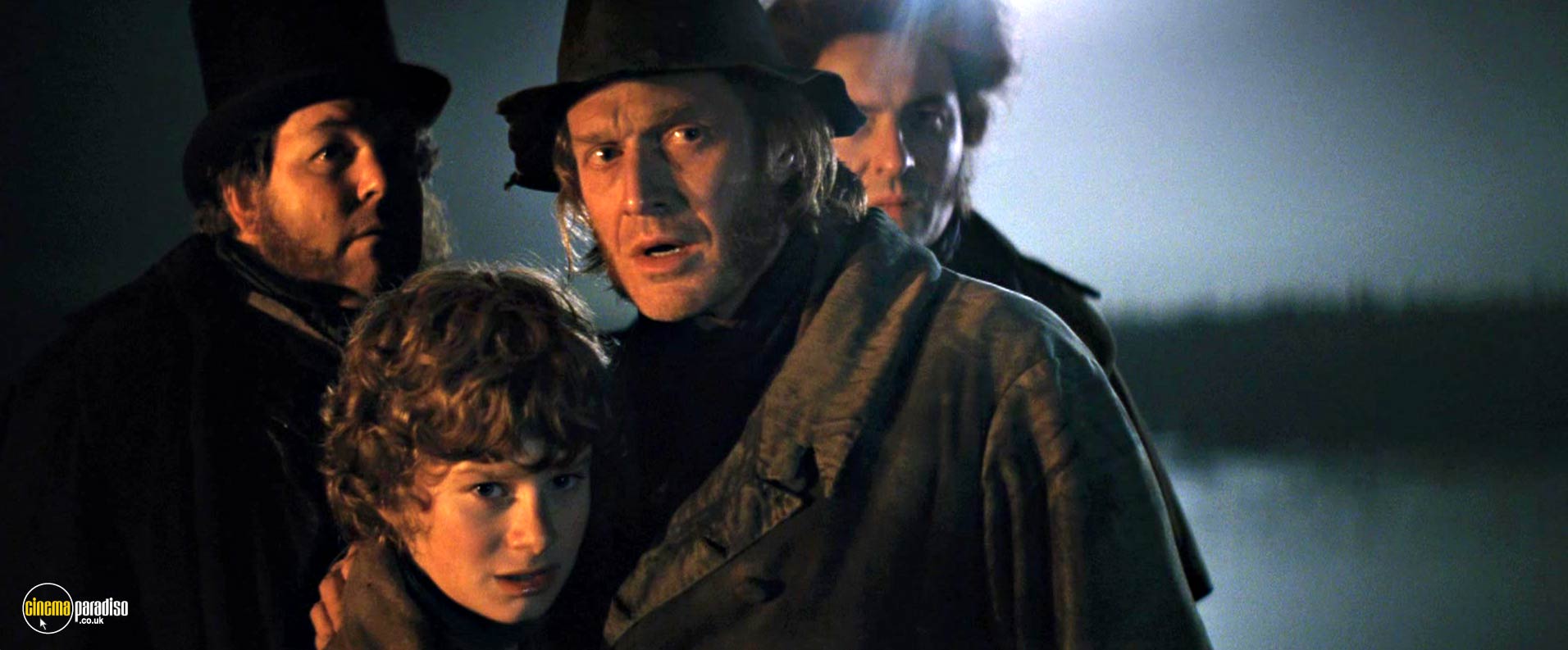
Gillian Anderson took on the role for Brian Kirk's three-part BBC revision of Great Expectations (2011), which cast Douglas Booth as Pip, Vanessa Kirby as Estella, David Suchet as Jaggers, and Ray Winstone as Magwitch. Despite tinkering with the ending, the series was well received and won Emmys for Outstanding Art Direction, Cinematography, Costumes, and Main Title Design. Hot on its heels came Mike Newell's Great Expectations (2012), which confronted Jeremy Irvine's Pip with Ralph Fiennes's Magwitch, Holliday Grainger's Estella, Robbie Coltrane's Jaggers, and Helena Bonham Carter's Miss Havisham. This is the most recent cinematic translation, although curio seekers might want to look out for Samuel Supple's Magwitch (2012), which stars Samuel Edward Cook in a bicentenary prequel, and Bollywood director Abhishek Kapoor's Fitoor (2016), which relocates Dickens's story to Kashmir.
The original retains its fascination, however, and it would be nice to be able to bring you Steven Knight's six-part BBC Great Expectations (2023), which stars Fionn Whitehead as Pip, alongside Shalom Brune-Franklin as Estella, Johnny Harris as Magwitch, and Olivia Colman as a desolate Miss Havisham. One day, perhaps.
Our Mutual Friend
The last novel that Dickens completed was rather rushed to the presses after he survived a train crash in Kent in 1865. It has not found particular favour with film-makers, although Edison sought to separate out its two love stories in How Bella Was Won, which starred George Soule Spencer as John Harmon (aka Rokesmith), and Eugene Wrayburn (both 1911), which saw the title character and Lizzie Hexam being played by Darwin Karr and Bliss Milford.
Both films are lost and only half of A.W. Sandberg's Nordisk take on Our Mutual Friend (1921) has survived. Surprisingly, this is the last film based on the book, which means there has never been a sound feature. There have, however, been three TV serialisations and each is available to rent from Cinema Paradiso.
Adapted by Freda Lingstrom and directed by Eric Tayler, Our Mutual Friend (1958) was staged in 12 episodes for the BBC, with Paul Daneman playing Harmon/Rokesmith opposite Bella Wilfer (Zena Walker), who he was due to marry before his inheritance passed to her guardians, Mr and Mrs Boffin (Richard Pearson and Marda Vanne), who are preyed upon the unscrupulous Silas Wegg (Esmond Knight). Meanwhile, Eugene Wrayburn (David McCallum) and Bradley Headstone (Alex Scott) compete for the affections of Lizzie Hexam (Rachel Roberts), whose waterman father has pulled a battered corpse out of the Thames.
Deciding it needed a colour version, the BBC hired Peter Hammond to direct Our Mutual Friend (1976) in seven episodes scripted by Donald Churchill and Julia Jones. John McEnery was Rokesmith, while Jane Seymour was Bella, Leo McKern was Boffin, Lesley Dunlop was Lizzie, Nicholas Jones was Wrayburn, Alfie Bass was Wegg, and Warren Clarke was Headstone. This epitomised the Beeb's approach to classic literature at the time and it's interesting to contrast it with the most recent revisitation.
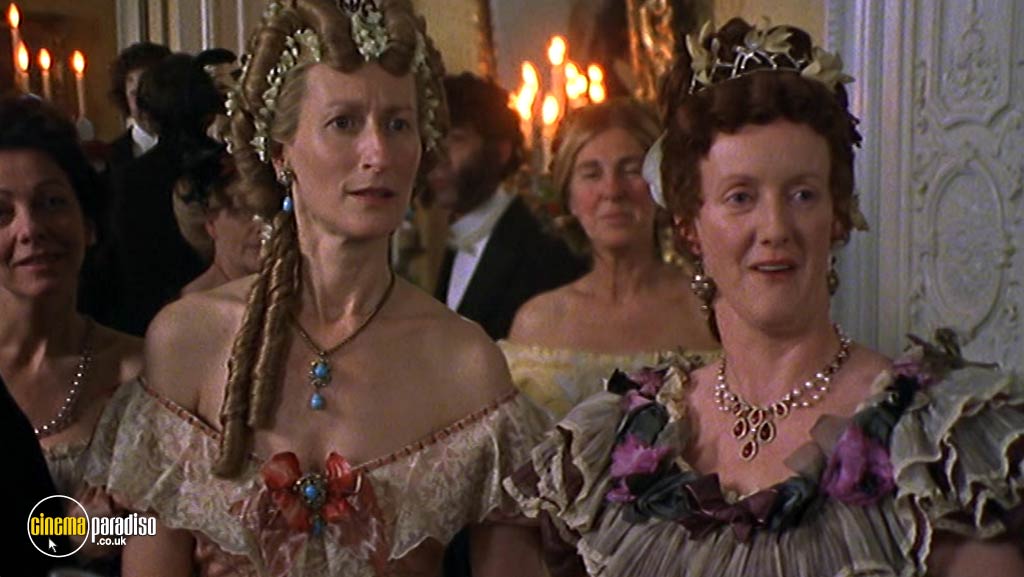
Scripted by Sandy Welch and directed by Julian Farino, Our Mutual Friend (1998) was broadcast in four 90-minute episodes. Winning four BAFTAs, including Best Drama Serial, this impeccably cast saga paired Steven Mackintosh and Anna Friel as Harmon and Bella, while Paul McGann's Wrayburn and David Morrissey's Headstone locked horns over Keeley Hawes's Lizzie. Elsewhere Peter Vaughan and Pam Ferris played the Boffins, Doon Mackichan and Andrew Calf were Sophronia and Alfred Lammle, Kenneth Cranham was Wegg, and Timothy Spall appeared as Venus the taxidermist. We heartily recommend, although the other versions undoubtedly have their strengths.
The Mystery of Edwin Drood
Dickens didn't live to finish The Mystery of Edwin Drood. Such was his popularity, however, that the serialised chapters became a bestselling novel. The first film versions had to content themselves with selected episodes, although neither of Arthur Gilbert's 1909 Gaumont or Herbert Blaché and Tom Terriss's 1914 World Film Company versions appears to have survived.
In 1935, Universal took a tilt at the text, with Stuart Walker's The Mystery of Edwin Drood, which starred Claude Rains as opium-addicted Rochester choirmaster John Jasper, David Manners as his murdered nephew, Douglass Montgomery as love rival Neville Landless, Valerie Hobson as his twin, Helena, Heather Angel as Rosa Bud, and Francis L. Sullivan as Septimus Crisparkle. This should be on disc in the UK, as so many of the cast were British.
Initial TV outings are presumed lost, including the 1953 two-part Suspense presentation and ITV's eight-part 1960 live adaptation, with Donald Sinden as Jasper. Two decades later, Alexander Orlov directed a multi-episode series for Soviet television. But it's as difficult to find as Timothy Forder's 1993 cinema adaptation, The Mystery of Edwin Drood. Relatively minor characters like Durdles (Andrew Sachs), Sapsea (Freddie Jones), Mrs Crisparkle (Nanette Newman), Miss Twinkleton (Gemma Craven), and Grewgious (Glyn Houston) were played by famous faces alongside Jonny Phillips and Robert Powell as Drood and Jasper.
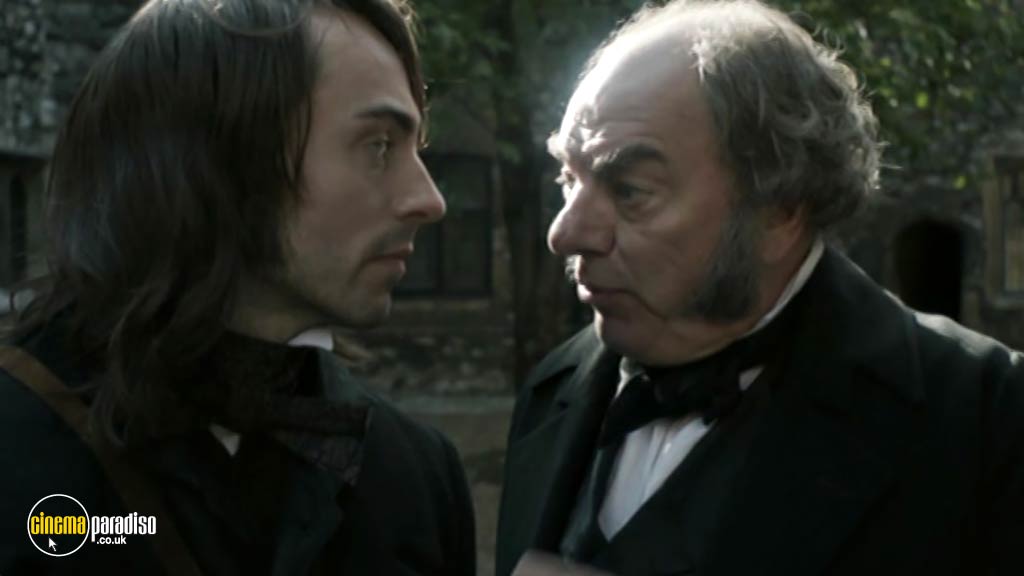
With an audience vote to determine the ending, Rupert Holmes's 1985 Broadway musical, Drood, converted five of its 11 Tony nominations. Phone votes on a QR code should make this William Castle-like gimmick possible in the age of digital projection. But no one has yet attempted a screen adaptation, leaving Diarmuid Lawrence's BBC rejig of The Mystery of Edwin Drood (2012) as the most recent attempt to provide a satisfactory denouement. Matthew Rhys played Jasper, with Freddie Fox as Drood and Tamzin Merchant as his fiancée, Rosa. Made to mark the bicentenary of Dickens's birth, this was scripted by Gwyneth Hughes, who had also written the 1993 film version. How frustrating that it's currently nigh on impossible to compare her readings of Dickens's swan song.
Minor Works
Such has been the focus on the novels that there has been a curious lack of interest in Dickens's supposedly minor work, since Van Dyke Brook drew on Sketches By Boz for the 1912 Vitagraph short, Mr Horatio Sparkins, which he followed with the later stories, Mrs Lirriper's Lodgers and Mrs Lirriper's Legacy. There have been radio versions of Dickens's first tome, but nothing on the screen since Lamont Johnson directed 'The Mating of Watkins Tottle' for the Matinee Theater show in 1956.
Written in the hope of emulating the success of A Christmas Carol, The Chimes was twice filmed in 1914, by Cecil Hepworth and Thomas Bentley in Britain and by Herbert Blaché in the United States. Born in London, the latter was married to Alice Guy, the pioneering woman director whose career is traced in Pamela B. Green's documentary, Be Natural: The Untold Story of Alice Guy-Blaché (2018). Subsequently, Dickens's story has been ignored by everyone bar South African Lindsay van Blerk, who made a short, Derek Jacobi-narrated claymation version in 2000.
Dickens's third Yuletide tale was first brought to the screen by D.W. Griffith in 1909. Available on the BFI's silent compilation, The Cricket on the Hearth runs for around 10 minutes and contains some experimental cross-cutting between scenes and a cameo as a jester by future slapstick maven, Mack Sennett. Biograph released a longer version by Lawrence Marston in 1914, which competed with a rival take by Lorimer Johnston, who took the role of Tackleton in the sole silent feature adaptation in 1923.

Almost three decades later, Grace Kelly played May Fielding in a seemingly lost 1952 television outing before Arthur Rankin, Jr. and Jules Bass produced a charming animated version of Cricket on the Hearth in 1967. Curiously, however, neither of Dickens's other festive novellas, The Battle of Life and A Haunted Man, has ever been filmed.
More popular was his post-train crash tale, 'The Signal-Man', which was adapted for Boris Karloff as part of the Suspense series in 1953. This has not been preserved. However, Lawrence Gordon-Clark's Andrew Davies-scripted The Signalman (1976), with Denholm Elliott, can be rented from Cinema Paradiso on the BFI's Ghost Stories For Christmas, Volume 2. Furthermore, those renting Orson Welles's Great Mysteries (1973-74) will find an adaptation of Dickens's 'The Trial For Murder', with Ian Holm as the jury member with a troubled conscience. Also available as part of the 1989 Storyboard series is 'Hunted Down', which sees insurance agent Aeneas Sampson (Alec MacCowan) become suspicious when Julius Skipton (Stephen Moore) drops into his office.
In addition to these short stories, Dickens also wrote a number of travel books. Miriam Margolyes followed the route of the 1842 US sojourn that resulted in American Notes in the 10-part series, Dickens in America (2005). Contrast this with Frank Miller and H.B. Parkinson's Dickens' London (1924), which toured places of inspiration around the capital. This is available to Cinema Paradiso users via Dickens Before Sound.
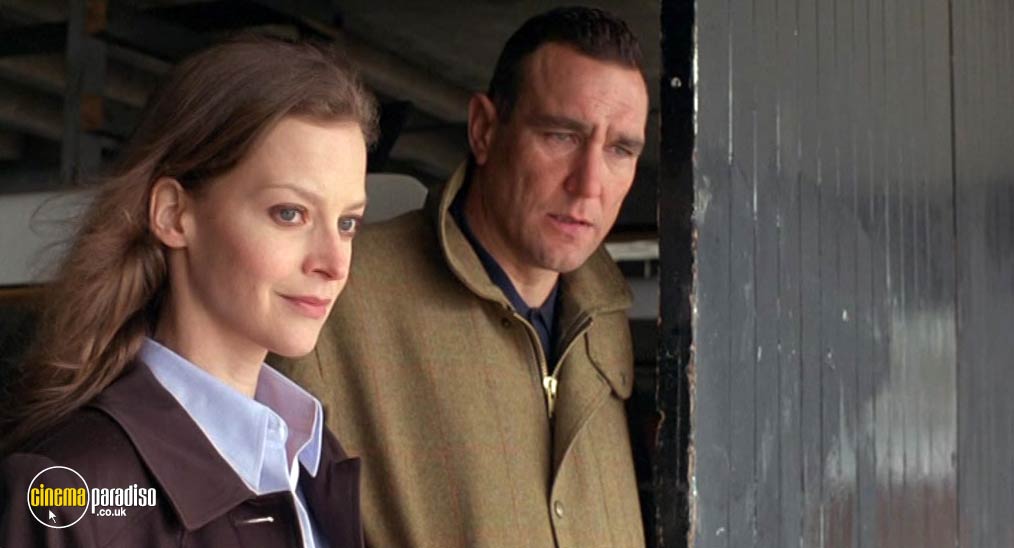
London is just one of the locations visited in Julian Richards's travelogue, Charles Dickens's England (2009), which shows how the author took inspiration from places from Yorkshire to the Isle of Wight. Derek Jacobi is our guide and he also crops up as a mysterious tramp helping journalist Vinnie Jones and cop Julie Cox track down an unpublished Dickens manuscript in Brendan Foley's The Riddle (2007), which calls in on some of the writer's old haunts. It's hardly maintains his storytelling standards. But, once seen, this rough-and-ready thriller is hard to forget.
Mentioned films