Michael Curtiz's White Christmas (1954) has always been regarded as more of a seasonal favourite than a cinematic classic. But Cinema Paradiso believes there's more than meets the eye about the first film made in VistaVision.
Russian-born songwriter Irving Berlin wrote 'White Christmas' some time in 1940. It's not known whether he was in Palm Springs, California or Phoenix, Arizona at the time, but there was certainly no snow to inspire him. Some believe that he composed the song in memory of the three-week-old son who had died on 25 December 1928 and that it reflected the fact that, as far as Berlin was concerned, Christmas could never be the same again.
Bing Crosby first performed the song on his NBC radio show, The Kraft Music Hall, on Christmas Day in 1941, by which time, the United States had entered the Second World War. He recorded 'White Christmas' in May 1942 and it was included in Mark Sandrich's Holiday Inn, as a duet with Marjorie Reynolds (although her voice was dubbed by Martha Mears). Already a sentimental favourite with troops overseas and their families, the tune topped the charts for 11 weeks. Then, at the 15th Academy Awards on 4 March 1943, Berlin had the unique distinction of presenting the Oscar for Best Song to himself. He joked to the audience at the Cocoanut Grove at the Ambassador Hotel in Los Angeles, 'I'm glad to present the award. I've known him for a long time.'
Having topped the charts again in 1945 and 1947, 'White Christmas' was declared the bestselling song in the short history of recording. Remarkably, it held the title for the next 50 years and it was only overtaken by the version of 'Candle in the Wind' that Elton John sang at Princess Diana's funeral in 1997. But how did the 1954 film bearing its name come about?
Just Like the Ones
During the course of his career, Irving Berlin composed around 1500 songs. So, Paramount had plenty to choose from when it decided to make a follow-up to Holiday Inn in 1949. The initial plan was to recycle an unproduced musical called Stars on My Shoulders that Berlin had written with Norman Krasna. Bing Crosby and Fred Astaire would be reunited for a Technicolor extravaganza that would help lure American audiences back into cinemas following the rapid postwar rise of television.
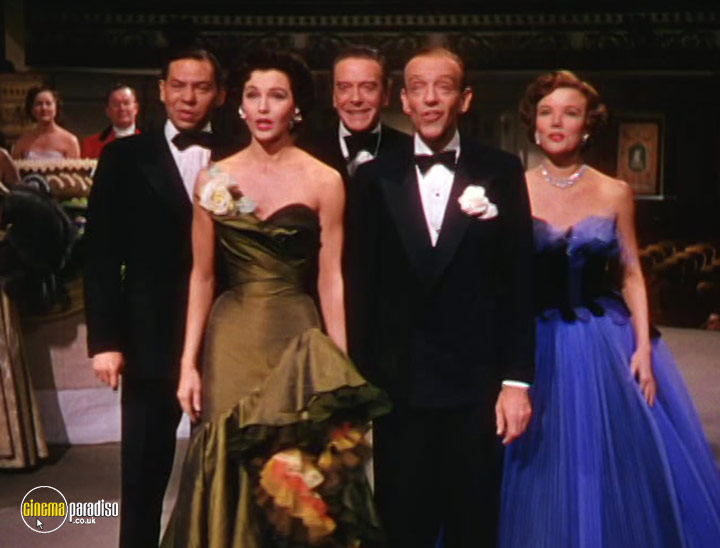
In addition to the title tune, Berlin standards like 'Blue Skies', 'Heat Wave', and 'Let Me Sing and I'm Happy' would get an outing alongside seven new songs. But Crosby and Astaire were busy men and getting their schedules to line up proved problematic, as Bing followed Billy Wilder's The Emperor Waltz (1948) with Tay Garnett's A Connecticut Yankee in King Arthur's Court (1949), the Frank Capra duo of Riding High (1950) and Here Comes the Groom, and Hal Walker's Road to Bali (1952) cluttered his schedule. Even though he had announced his retirement after Blue Skies, Astaire had also been busy, with Charles Walters's Easter Parade (1948) and The Barkleys of Broadway (1949), Richard Thorpe's Three Little Words (1950), Stanley Donen's Royal Wedding (1951), and Vincente Minnelli's The Band Wagon (1953) keeping him on his toes.
As we shall see, events would conspire to keep Astaire and Crosby apart. In the meantime, Krasna toiled over a screenplay for which he had been paid $100,000. But his efforts weren't universally appreciated and, when Danny Kaye came aboard the project, he insisted that Melvin Frank and Norman Panama reworked his scenes so they suited his distinctive style. By all accounts, they were on $5000 a week and Paramount needed shooting to commence because it had invested so heavily in getting the story right. 'It was a torturous eight weeks of rewriting,' Panama later explained, while Frank revealed 'writing that movie was the worst experience of my life. Norman Krasna was a talented man but...it was the lousiest story I'd ever heard. It needed a brand new story, one that made sense.' This is what they came up with.
Where the Treetops Glisten
Somewhere in Europe on Christmas Eve, 1944, the 151st Division of the US Army is treated to a special show in honour of its departing commander, General Tom Waverly (Dean Jagger). Private Phil Davis (Danny Kaye) plays second fiddle to Captain Mike Wallace (Bing Crosby), a renowned showbiz celebrity, who has every man thinking of home during his poignant rendition of 'White Christmas'. Arriving midway through the performance, General Waverly tries to hide his emotions at bidding farewell to his men by criticising them. But everyone breaks out into a chorus of 'The Old Man', as he drives away in his jeep.
No sooner has he gone than the base is hit by German shelling and Davis saves Wallace from being buried beneath a falling wall. When he drops into the medical tent to see Davis with his arm in a sling, Wallace insists that he owes him one for his bravery. Quick as a flash, Davis produces a song he has written and suggests that he and Wallace could make a splendid double act. Protesting that he's strictly solo, Wallace finds himself being guilt-tripped into giving Davis a try and a montage of clips and Variety headlines chronicles their rise to being the best song-and-dance men on the circuit.
One December night, after their Playing Around revue has gone down big in Florida, Phil tries to matchmake Bob with chorus girl Doris Lenz (Barrie Chase), as keeping up with the older man's hectic schedule has worn him out and he reckons the only chance he has of getting a little time off is to ensure his partner is preoccupied. Bob politely declines, but he feels dutybound to check out an act appearing at a nearby nightclub, as Betty (Rosemary Clooney) and Judy (Vera-Ellen) are the sisters of their old army buddy, Freckle-Faced Haynes (Carl Switzer).
In fact, Judy had written the old pals letter and Betty chides her for trying to force fate. However, their 'Sisters' routine - complete with blue feather fans - goes down a storm, leaving Phil smitten with Judy and Bob mooning over Betty. The younger pair flit on to the dance floor, but watch in dismay as Betty confesses that Judy had written to them and Bob jokingly accuses her of 'having an angle'. Taking exception to his tone, Betty snaps back, but their bickering is interrupted by the manager, Novello (Herb Vigran), who has Betty and Judy's landlord (Sig Ruman) in his office insisting that they owe him $200 for a damaged rug.
Stalling the sheriff accompanying the landlord by giving him a free feed, Novello helps the Haynes sisters pack their bags and head for the station, where they are due to catch a train to Vermont, where they have a booking for the holidays. Without telling Bob that he has given the girls their sleeper tickets to New York, Phil talks him into donning hair bows and garters to lip synch to a recording of 'Sisters' to keep the supper crowd amused while Betty and Judy make their getaway.
Just about making the train north, Bob is furious with Phil for giving away their tickets. But his mood improves when Betty and Judy join them in the club car and they sing 'Snow' while contemplating a few days of relaxation at a ski lodge in snowy Vermont. On arriving at Columbia Inn, however, they discover that unseasonably high temperatures have prevented the big freeze and caused guests to cancel their reservations. Housekeeper Emma Allen (Mary Wickes) explains that Betty and Judy's engagement has been cancelled (although they will still be paid), as there is no one to perform to.
While they debate what to do, Bob and Phil recognise General Waverly, who runs the inn with his granddaughter, Susan (Anne Whitfield). Dismayed to see such a noble man on his uppers after sinking his savings into the business, Bob decides to help him by bringing Playing Around to Vermont and he convinces Waverly that the cast could do with a few days out of town to sharpen the show before its Broadway opening. Betty is touched by the gesture and admits that she might have misjudged Bob, which is music to the ears of Phil and Judy, who celebrate the fact that romance might be back on the cards with a duet on 'The Best Things Happen When You're Dancing'.
During rehearsals, Bob, Phil, and Betty combine on 'Minstrel Number', Phil spoofs Martha Graham's brand of modern dance in 'Choreography', and Judy cuts a rug with Johnny (John Bascia) on 'Mandy'. Emma and Susan are thrilled by the buzz around the place, but the general takes it hard when his application to rejoin the service is tactfully declined. Realising that he needs to be reminded of what he means to the men who had served under him, Bob asks variety host, Ed Harrison (Johnny Grant), if he can make an appeal on his television show. However, the eavesdropping Emma gets the wrong end of the stick and thinks that Bob is planning to cash in on the general's reduced circumstances. She confides her fears to Betty, who starts giving Bob a wide berth.
Concerned that Bob and Betty are going to break up, Judy convinces Phil to pretend that they are engaged and they break the news at a party for the cast and crew. Happy that her sister has found a husband, Betty announces that she is breaking up the act and is returning to New York to start out on her own. Bob is cross with Judy and Phil for their deception and agrees to drop in on Betty while he's in New York. He admires her performance of 'Love, You Didn't Do Right By Me', but she greets him coolly and feels ashamed when she sees him on the Harrison show singing 'What Can You Do With a General?' and appealing to veterans of the 151st to come to Vermont on Christmas Eve in order to show their appreciation for their former commander.
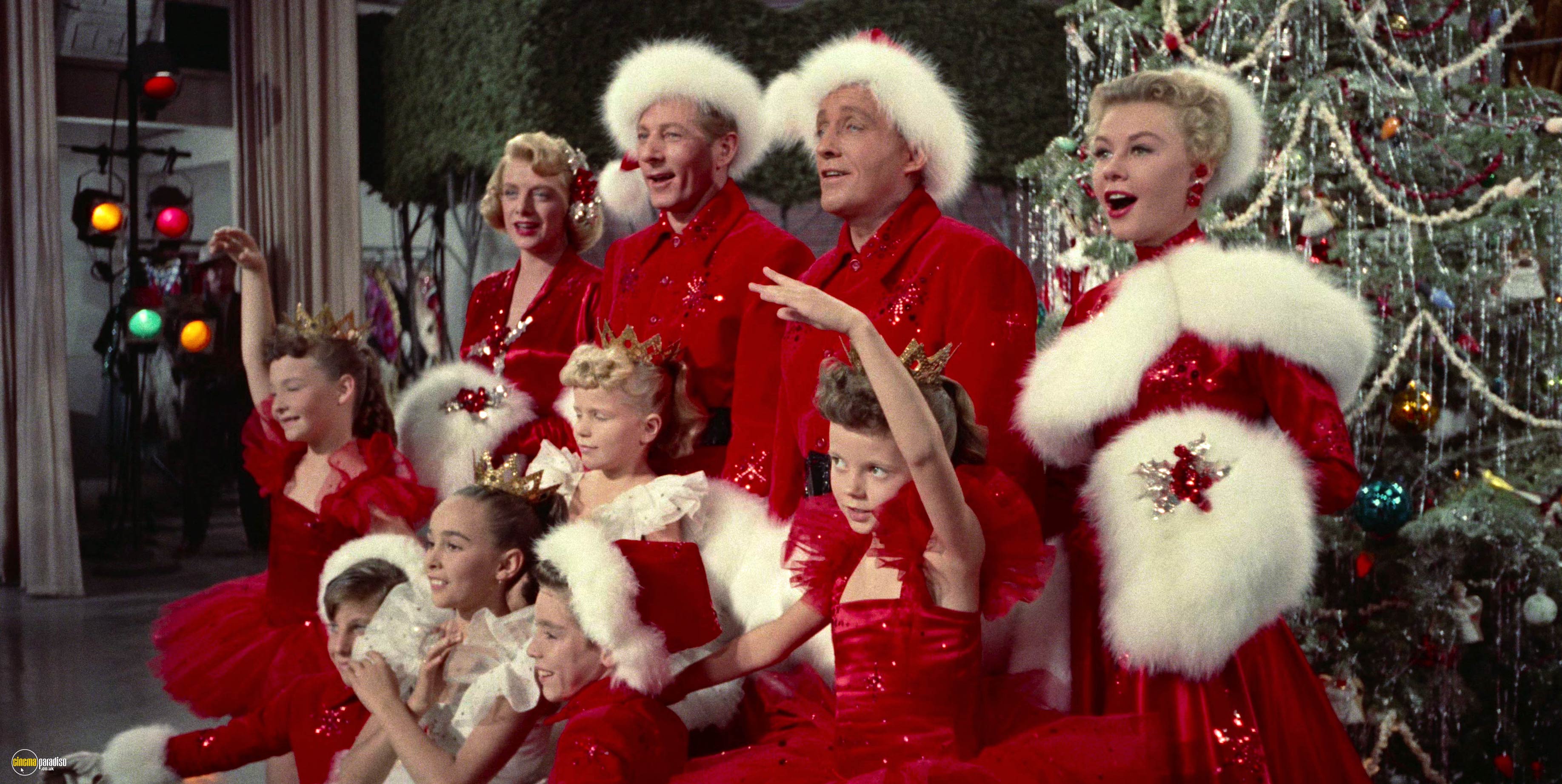
He doesn't see the show, however, as Phil feigns a leg injury to keep Waverly away from the TV set. So, he has no idea why all his suits mysteriously disappear on Christmas Eve, forcing him to attend the show in his old uniform. He is deeply touched when he hears the strains of 'The Old Man' and sees so many of his former charges in the ballroom. Once again, he tries to bluff out the situation by accusing the men of being a shower. But he is grateful for their support and, as snow starts to fall outside, he joins Susan and Emma to watch the reunited Bob and Betty accompany Phil and Judy in a 'White Christmas' finale.
Merry and Bright
Paramount was convinced it was on to a winner when it announced that Bing Crosby and Fred Astaire would team for a third time after Holiday Inn and Blue Skies (1946). However, Crosby pulled out of White Christmas after his wife, Dixie Lee, died on 1 November 1952 and he announced that he needed time to grieve and tend to his children. By the turn of the year, however, he felt ready to get back to work. But Variety reported on 2 January 1953 that Astaire was withdrawing from the picture and had asked the studio to cancel his contract. Rumours flew that the dancer had injured a leg or his back, but he seemingly didn't like the script and felt that he was too old in his mid-50s to be playing second banana to a crooner who was four years his junior.

Pushing back the starting date, the studio replaced Astaire with Donald O'Connor, who was on a high after his acrobat turn as Cosmo Brown in the 'Make 'Em Laugh' number in Gene Kelly and Stanley Donen's Singin' in the Rain (1952). A few weeks before shooting was due to commence, however, O'Connor was diagnosed with Q Fever, which he probably caught from his 'talking mule' co-star in Francis Joins the WACS (1954). Realising that rising costs meant they couldn't afford to wait for O'Connor to recover, the front office sought out Danny Kaye, who was on the Paramount lot making Melvin Frank's Knock on Wood (1954).
Kaye initially declined the invitation because he was negotiating a two-picture deal with another studio and felt a commitment to White Christmas would complicate matters. When the studio persisted, however, Kaye boldly demanded a $200,000 fee and 10% of the gross in order to play Phil Davis. Much to his astonishment, the suits agreed, even when he demanded that his scenes were rewritten to suit his style, with Crosby and Irving Berlin each agreeing to sacrifice 5% of their own 30% cut in order to get the cameras rolling.
As there was so much dancing involved in the story, director Michael Curtiz had taken the unusual step of requesting a six-week rehearsal period so that both the performers and the camera crew had each routine off pat. Although he was known for films as different as The Mystery of the Wax Museum (1933), Captain Blood (1935), Angels With Dirty Faces, The Adventures of Robin Hood (both 1938), Santa Fe Trail (1940), Casablanca (1942), Mildred Pierce (1945), and Life With Father (1947), the Hungarian-born director had also done his share of musicals, including Go Into Your Dance (1934), Yankee Doodle Dandy (1942), This Is the Army (1943), Romance on the High Seas (1948), Young Man With a Horn (1950), and a remake of The Jazz Singer (1952).
As Kaye had not been able to join the rehearsals and was nowhere near as good a dancer as O'Connor, it was decided to promote ensemble member John Bascia to partner Vera-Ellen in the more demanding 'Mandy' and 'Abraham' routines. He excels in each case, although he was overshadowed by a young George Chakiris, who received bagfuls of fan mail after Rosemary Clooney and her little black dress draped themselves over him during 'Love, You Didn't Do Right By Me'. He would go on, of course, to win the Oscar for Best Supporting Actor for his display as Sharks leader, Bernardo, in Robert Wise and Jerome Robbins's West Side Story (1961). He and fellow dancer Barrie Chase (who would memorably partner Fred Astaire in a 1960 TV special) are the last surviving members of the principal cast of White Christmas.
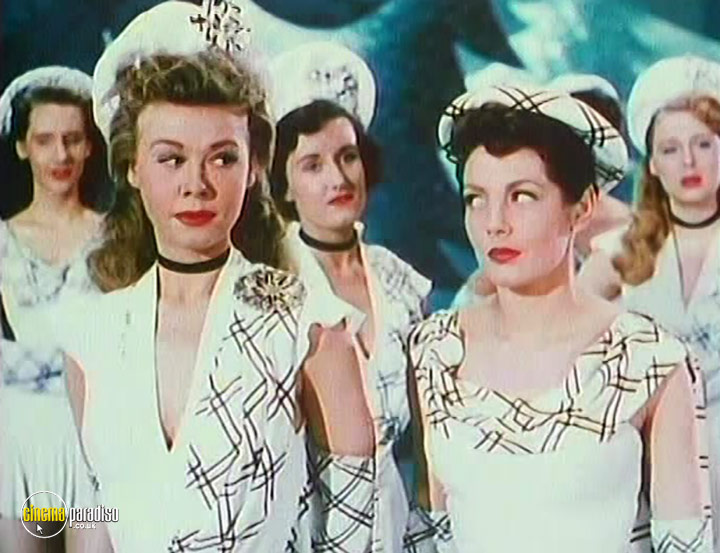
Born Vera-Ellen Westmeier Rohe, Vera-Ellen had carpooled to dance classes in the Norwood district of Cincinnati with Doris Mary Ann Kappelhoff, who would become better known as Doris Day. Known solely as Vera-Ellen, she had become one of the youngest Radio City Rockettes before making her name on Broadway. Cinema Paradiso users can catch her in David Miller's Love Happy, Gene Kelly and Stanley Donen's On the Town (both 1949), and H. Bruce Humberstone's Happy Go Lovely (1951). Although Rosemary Clooney was cast as Vera-Ellen's older sister, the 26 year-old was actually seven years younger. However, she knew all about being in a sister act. Indeed, sibling Betty had selflessly taken a part in a show in Cincinnati in order to free up Rosemary to accept a recording contract in New York. Her idol was Bing Crosby and she spent the entire shoot in awe of him.
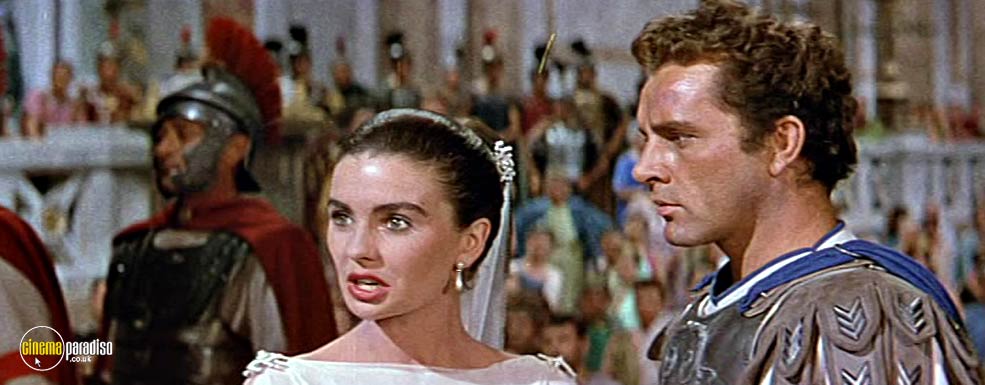
Der Bingle was 25 years older than Clooney, while the 43 year-old Kaye had a decade on Vera-Ellen. Dean Jagger, who plays General Waverly, was actually eight months younger than Crosby. He had won the Academy Award for Best Supporting Actor for Henry King's Twelve O'Clock High (1949) and, by being cast after Millard Mitchell had died of cancer during one the delays in pre-production, he achieved the unique double of having been in both the first feature filmed in CinemaScope, Henry Koster's The Robe (1953), and the first in VistaVision, White Christmas.
As Paramount was reluctant to pay 20th Century-Fox to use CinemaScope, it had devised its own widescreen process. This passed Technicolor or Eastmancolor film horizontally through a camera with a 70mm frame. This doubled the size of the image area, while also increasing the resolution, so that the grain was finer and the detail within each shot was sharper. The negative was optically printed on to 35mm stock so it could be projected in the normal upright manner, which meant that exhibitors didn't incur any additional expense in showing VistaVision films.
As Variety noted, the process produced a 'consistent picture quality in the various wide-screen projection ratios…from the standard 1.33 up to 2 to 1. The quality carries over into 2.55-1 when the VV negative is printed anamorphically for that aspect ratio.' So now you now. Moreover, Paramount also employed its Perspecta directional sound system for the first time on the shoot, which began in September 1953 and lasted until the end of the year.
Relieved that filming was finally underway, Irving Berlin confided in a friend, 'It is the first movie that I've been connected with since Holiday Inn that has the feel of a Broadway musical. Usually there's little enthusiasm once you get over the first week of a picture. But the change in this setup has resulted in an excitement that I am sure will be reflected in the finished job. In any event, as of today I feel great and very much like an opening in Philadelphia with a show.' Work began each day at 7am, with Curtiz welcoming such visitors as Humphrey Bogart to the set. Free to play golf in the afternoons, Crosby enjoyed the relaxed atmosphere and ad-libbed the 'liverwurst sandwiches and buttermilk' speech when Bob and Betty find themselves alone one night in the lounge. However, as Charlotte and Adam Barker reveal in the splendid 'Dreaming in VistaVision' episode of their Perf Damage podcast, Crosby also required hospital treatment after a car crash that totalled two vehicles. Fortunately, he had completed his dance numbers, not that he was ever an accomplished hoofer. Amusingly, Clooney wished that her dance steps could have been dubbed like Vera-Ellen's singing. Trudy Stevens (who was married to bandleader Dick Stabile) had been personally recommended for the job by Clooney herself after Gloria Wood had been forced to drop out. But it was decided not to pre-record the harmonies for 'Snow' and Clooney reportedly became frustrated when Vera-Ellen kept missing her cues. Perhaps she was thrown by the fact that Berlin's original song had been called 'Free' and had been composed for the Broadway hit, Call Me Madam, in which Vera-Ellen had starred when it was filmed by Walter Lang in 1953?
It didn't help that Danny Kaye kept quipping during takes and causing his co-stars to flub. Crosby was highly unamused by having to gussy up with a bow and garters to lip sync 'Sisters'. But he almost corpsed when Kaye kept whacking him with his feathered fan and you can see Crosby burst out laughing as the number ends. Curtiz opted to keep the take after having insisted on adding the unscripted scene after watching Kaye and Crosby fooling around on the set with the props.
He also left in the moment that Vera-Ellen nearly tripped over Kaye's foot during 'The Best Things Happen While You're Dancing'. This had been moved to the end of the shoot in order to give Kaye time to rehearse, but he still managed to turn his ankle while twirling around the scaffolding, while Vera-Ellen damaged a finger while gliding over the walkway on an overhead rail. Kaye also found himself having to do extra prep after the producers realised he was going to be off screen for almost half an hour during the rehearsal segment. So, he was asked to goof around in 'Choreography', in which dance director Robert Alton cheekily parodied the modern methods of Martha Graham.

Speaking of distinctive dance styles, it has long been the subject of debate whether Bob Fosse - the future director of Sweet Charity (1969), Cabaret (1972), and All That Jazz (1979) - was part of the dance troupe. Official sources deny he was involved, so one can only presume that there was a lookalike on the set when Curtiz filmed the 'Mandy' routine. Another familiar face who goes uncredited is Our Gang stalwart, Carl Switzer, who posed for the photo of Betty and Judy's brother, 'Freckle-faced Haynes, the dog-faced boy'.
The song 'What Can You Do With a General?' was dusted down after sitting on Irving Berlin's shelf followed the stalling of Stars on My Shoulders. Crosby wasn't particularly enamoured of it, while he insisted on a lyric change for 'Gee, I Wish I Was Back in the Army', as he felt self-conscious about singing the original line about seeing 'Crosby, Hope and Jolson all for free' in wartime troop shows and his name was replaced by that of Jack Benny.
When Crosby had been due to co-star with Fred Astaire, Berlin had written them a duet entitled, 'A Singer, a Dancer'. Rather than scrap it when Donald O'Connor signed up, it was rejigged as 'A Crooner, a Comic'. This version would also have worked with Danny Kaye, but it was decided to cut the ditty altogether. Another number to bite the dust was 'Sittin' in the Sun (Countin' My Money) ', which Berlin withdrew from the songbook, while Kaye and Crosby's opening sequence rendition of 'Santa Claus' was dropped because it was felt it slowed down the action. The song has since been released on a compilation CD, but contractual issues meant that it wasn't possible to release an official soundtrack album. As Clooney was signed to Columbia, she recorded her songs with another cast for her label, while Peggy Lee took her place on a Decca LP that featured Crosby and Kaye.
Interestingly, Paramount showed that it had learned something about social responsibility in the 12 years since Crosby had appeared in blackface to sing 'Abraham' in Holiday Inn. The lyrics were removed for Vera-Ellen's dance routine, while Crosby, Clooney, and Kaye managed to sock over 'I'd Rather See a Minstrel Show' and 'Mister Bones' without blacking up. Many still question the inclusion of songs that glorified a debased showbiz tradition and many have questioned whether they should have been edited out of the various home enterainment cuts.
We end this section on a more positive note, howerver. As the former King and Queen of Greece were visiting Paramount, Curtiz decided to put on a show for their benefit. He had spent the morning filming the big finale and he asked the cast to stay in costume so they could run through the number again for the distinguished visitors. Everyone reported for duty except Bing Crosby. He'd booked a round of golf and had no intention of missing it, royal guests or not!
And May All Your Christmasses
As no one had edited a feature in VistaVision before, post-production on White Christmas took longer than expected. As a result, it sat in the vaults for several months before premiering at Radio City Music Hall on 14 October 1954. Somewhat predictably, Bosley Crowther, the irascible critic of The New York Times found little to commend it. 'Oddly enough,' he grumbled, 'the confection is not so tasty as one might suppose. The flavoring is largely in the line-up and not in the output of the cooks. Everyone works hard at the business of singing, dancing and cracking jokes, but the stuff that they work with is minor. It doesn't have the old inspiration and spark. For one thing, the credited scriptwriters - Norman Krasna, Norman Panama and Melvin Frank - have shown very little imagination in putting together what is sometimes called the "book".' Canby continued, 'the use of VistaVision, which is another process of projecting on a wide, flat screen, has made it possible to endow White Christmas with a fine pictorial quality. The colors on the big screen are rich and luminous, the images are clear and sharp, and rapid movements are got without blurring - or very little - such as sometimes is seen on other large screens. Director Michael Curtiz has made his picture look good. It is too bad that it doesn't hit the eardrums and the funnybone with equal force.'
Variety's William Brogdon was slightly more enthusiastic. 'White Christmas should be a natural at the box office,' he pronounced, 'introducing as it does Paramount's new VistaVision system with such a hot combination as Bing Crosby, Danny Kaye and an Irving Berlin score...Crosby and Kaye, along with VV, keep the entertainment going in this fancifully staged Robert Emmett Dolan production, clicking so well the teaming should call for a repeat...Certainly Crosby has never had a more facile partner than Kaye against whom to bounce his misleading nonchalance.'
The Hollywood Reporter's Jack Moffitt offered some suggestions to improve the picture. 'Miss Clooney is an attractive girl,' he declared, 'but she's also the weak spot in the picture, for she lacks the photographic glamour and change of pace necessary to sustain a love story. This element of the film might have been better if Vera-Ellen had been entrusted with the principal romantic interest. It might also have been better if Kaye and Crosby had exchanged parts, with Bing playing the conniving "Mr. Fixit" (as he's done so magnificently in Hope-Crosby pictures). Kaye's romantic dancing with Vera-Ellen then would have strengthened the love story.' He also felt it was a shame that Curtiz didn't make more of Crosby's nonchalance as a straight man and Kaye's gift for the zanily unpredictable.
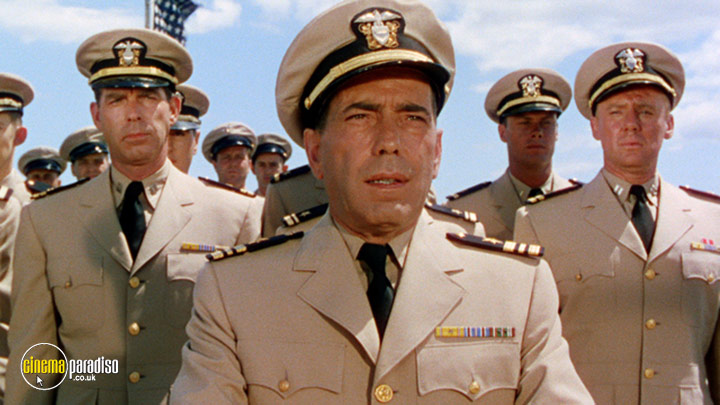
Yet, despite the misgivings of the media sages, White Christmas was the highest-grossing film of 1954, as it racked up $12 million at the domestic box office, making it the highest-grossing musical in Hollywood history to that time. Trailing behind in the end-of-year chart were Richard Fleischer's 20,000 Leagues Under the Sea, Delmer Daves's Demetrius and the Gladiators, Alfred Hitchcock's Rear Window, Edward Dmytryk's The Caine Mutiny, Victor Fleming's reissued Gone With the Wind, Michael Curtiz's The Egyptian, William A. Wellman's The High and the Mighty, Elia Kazan's On the Waterfront, and Henry Koster's Desiree.
Having just arrived at Paramount after two decades at Warners, Curtiz scored the biggest hit of his career, with a film that would struggle to make a Top 10 of his best work. Cinema Paradiso users can follow him around Hollywood, as he completed almost 50 years as a director with such diverse and variable titles as We're No Angels (1955), The Helen Morgan Story (1957), The Proud Rebel, King Creole (both 1958), The Hangman (1959), A Breath of Scandal (1960), The Comancheros, and Francis of Assisi (both 1961).
After two decades as Paramount's most bankable star, Bing Crosby's film fortunes dwindled over the next few years, as he divided his time between television studios and golf courses. He teamed with Frank Sinatra on High Society (1956) and Robin and the Seven Hoods (1964) and reunited with Bob Hope in The Road to Hong Kong (1962). But his best performance came as Doc Josiah Boone in Gordon Douglas's remake of Stagecoach (1966). As for Danny Kaye, he excelled in Melvin Frank and Norman Panama's The Court Jester (1955), held his own against some jazz greats as trumpeter Red Nichols in Melville Shavelson's The Five Pennies (1959), and had fun with his lookalike in the same director's On the Double (1961). But his big-screen days were also numbered and he focussed instead on TV and cabaret, although he impressed as an anti-Nazi activist in a racist Chicago neighbourhood in Herbert Wise's Skokie (1981).
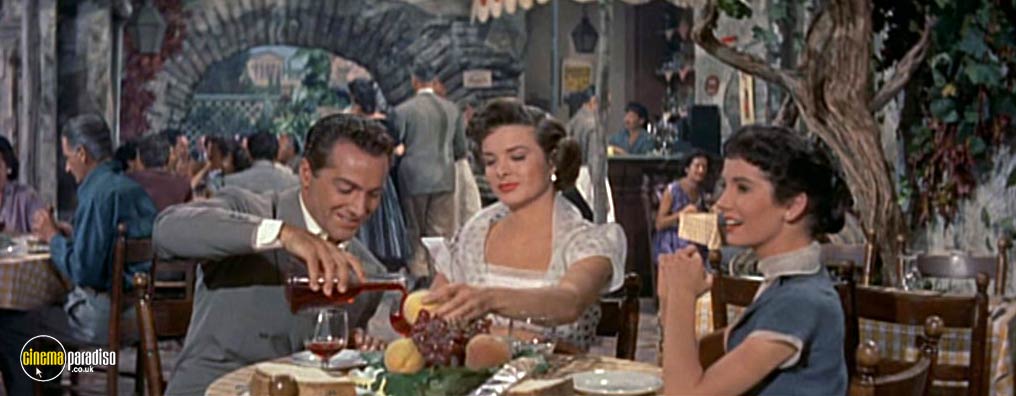
Irving Berlin received another Oscar nomination for 'Count Your Blessings Instead of Sheep'. It lost out to the title song of Jean Negulesco's Three Coins in the Fountain (1954), which was sung by Frank Sinatra. He would only write songs for one more film, Joshua Logan's Sayonara (1957), but he lived to be 101, knowing that peers like George Gershwin and Jerome Kern considered him the best in the business. Broadcaster Walter Cronkite summed it up when he said Berlin 'helped write the story of this country, capturing the best of who we are and the dreams that shape our lives'. He also left us the most popular festive song of the modern era, although he had to be reassured by Bing Crosby before the White Christmas finale was filmed, 'there's nothing we can do to hurt this song, Irving. It's already a hit!'
Mentioned films