As The Rocky Horror Picture Show turns 50, Cinema Paradiso has only one choice for its Halloween special!
On its release in August 1975, The Rocky Horror Picture Show was declared a flop. Fifty years later, it features in the Guinness Book of World Records for being in continuous release for longer than any other film in screen history. The stage show on which Jim Sharman's movie was based has been translated in 23 languages and has been seen by 30 million people worldwide.
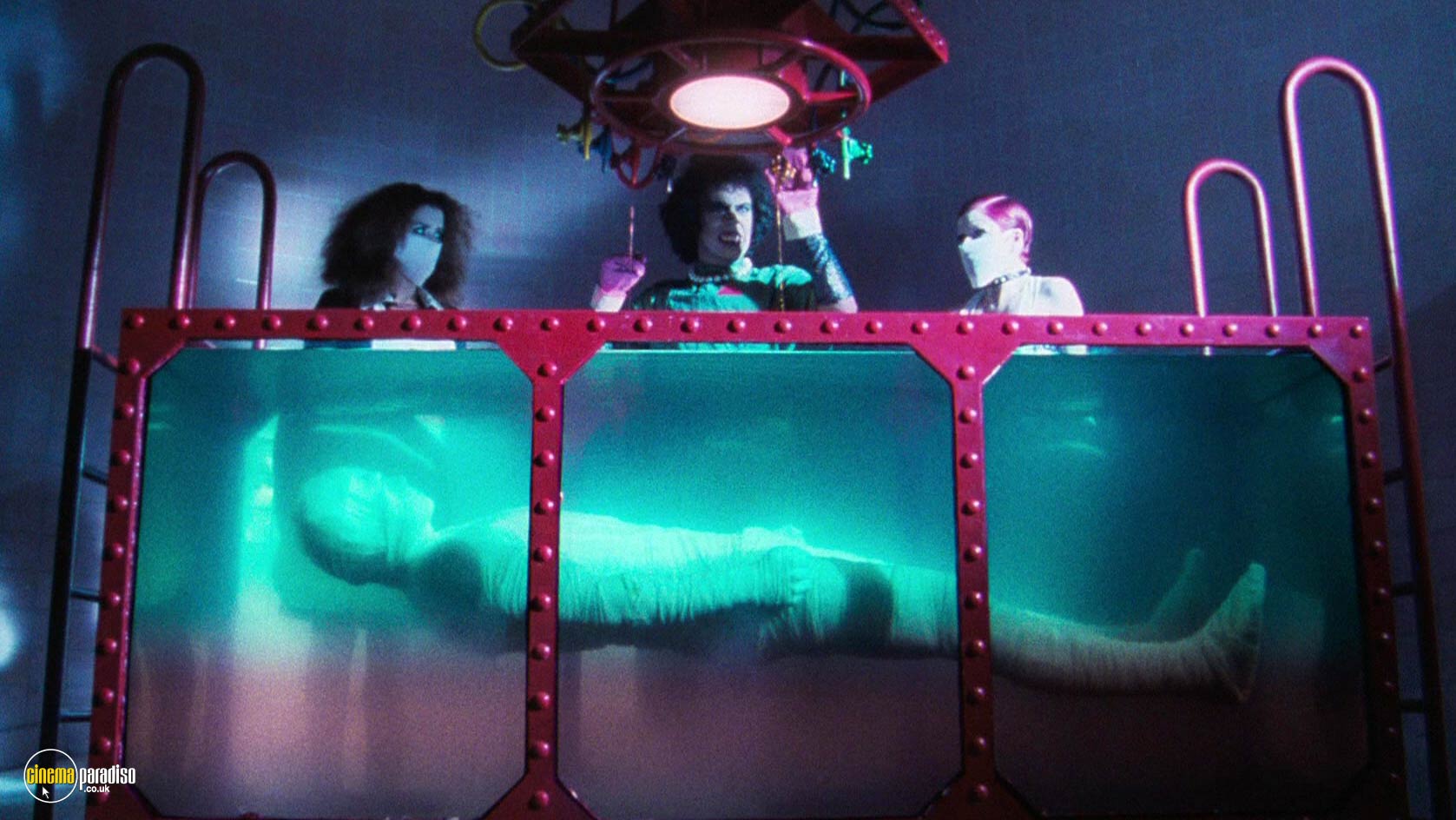
Many of that number will have seen the show and the picture more than once, as no film has a greater fan following. Most attend in fancy dress and bring props to use during the story of two all-American kids who run into some kinky extra-terrestrials one dark and stormy night. Veterans and virgins join in with the songs, as well as the talkback to the characters on screen. And, of course, everyone does 'The Time Warp' - again.
It's still debated how this maverick musical became the subject of such enduring devotion. In his new documentary, Strange Journey: The Story of Rocky Horror, Linus O'Brien chronicles how his father, Richard, came to fashion a creature that has taken on a life of its own. Cinema Paradiso seeks to follow the trail...
Let's Put the Show on Right Here
By all accounts, Richard Timothy Smith was lucky to survive the night after he had been born in Cheltenham on 25 March 1942. Curiously, James David Sharman's entry into the world, a year earlier in Sydney on 12 March, had been equally precarious. Perhaps that's why the pair would come to work so intuitively together on a story with life and death at its heart?
When Richard was nine, his accountant father decided to become a sheep farmer and the family relocated to New Zealand in 1952. Although he became an accomplished rider, Richard didn't fancy a life on the farm and became an apprentice hairdresser at the Stan Osborne salon in Hamilton that was located next to the Embassy Theatre, where he saw the double features that would fire his imagination.
At the age of 22, Richard returned to Cheltenham to live with his grandparents. He didn't stay long, however, as he had decided that he wanted to act and, while taking drama lessons, he secured his Equity card using his mother's maiden name. As Richard O'Brien, he landed a role as a stunt rider on Gerald Thomas's Carry On Cowboy (1965) and can be seen attacking the stagecoach bringing Annie Oakley (Angela Douglas) to Stodge City.

Heading to the West End, O'Brien landed a part in the groundbreaking musical, Hair (1968), which would be filmed in 1979 by Miloš Forman. During the run, he met Tim Curry, who would become a key figure in the development of a B-movie-inspired musical that took its first tentative step toward being when O'Brien and new wife, Kimi Wong, hosted a party at their Maida Vale flat and he started to improvise a song after noticing an old monochrome horror film playing on the television in the corner.
While working on some more songs in the same vein, O'Brien was cast in the original 1972 run of Tim Rice and Andrew Lloyd Webber's Jesus Christ Superstar (which would be filmed by Norman Jewison in 1973). Directing the show was Jim Sharman, whose first taste of show business had been the travelling boxing tent run by his father and grandfather. Prior to leaving Australia, he had made his feature debut with Shirley Thompson Versus the Aliens (1972), in which invading extra-terrestrials pose as a biker gang in a bid to take over Luna Park.
Sharman took a shine to O'Brien and offered him the chance to play King Herod, only for producer Robert Stigwood to be so unimpressed by his performance that he was fired. Undaunted, O'Brien was encouraged by the feedback when he played 'Science Fiction/Double Feature' at the EMI Christmas party and he started working on a rough storyline into which he could drop his growing number of songs. It's not clear whether O'Brien was aware of the 1967 musical, I'm Sorry the Bridge is Out, You'll Have to Spend the Night, which had been written by Sheldon Allman and Bobby 'Boris' Pickett after the latter had enjoyed chart success in 1962 with 'Monster Mash' (which was the title Joel Cohen and Alec Sokolow used for their 1995 adaptation). But O'Brien has acknowledged several sources of inspiration for Frank-N-Furter, including the Wicked Queen and Cruella De Vil from Disney's Snow White and the Seven Dwarfs (1939) and One Hundred and One Dalmatians (1961), the tsar in Sergei Eisenstein's Ivan the Terrible (1944), and the king in Laurence Olivier's Richard III (1955).
O'Brien has also referenced such Hollywood divas as Gloria Swanson, Joan Crawford, and Bette Davis, as well as such Glam Rockers as Marc Bolan, David Bowie, Lou Reed, and Alice Cooper. It's possible that he might also have been influenced by Grease, which had come to London in 1973 with Richard Gere as Danny Zuko after Barry Bostwick had originated the role on Broadway a year earlier. This classic musical would, of course, be brought to the screen by Randal Kleiser in 1978.
While playing Willie, an alien from Nogoland in the 1973 production of Sam Shepard's one-act allegory, The Unseen Hand, O'Brien mentioned the project he was working on to his director. Sharman was captivated by the idea of a rock musical that took its cues from 1950s science fiction films, B horrors, and Steve Reeves muscle movies. He thought that the show would be perfect for the very venue in which they were working: The Theatre Upstairs at the legendary Royal Court Theatre in Sloane Square, which had played such a crucial role in the rise of social realism in the late 1950s. Enlisting the help of production designer Brian Thomson and composer Richard Hartley, Sharman and O'Brien envisaged slotting Rock Horroar into a three-week gap in the venue's calendar.
They managed to secure £3000, in return for the West End rights, from Michael White, the fabled producer whose career would be chronicled in lively fashion by Gracie Otto in The Last Impresario (2013). Designer Sue Blane had just £200 of this to create what would become the iconic costumes, with Frank's famous corset being 'borrowed' from a production of Jean Genet's The Maids, on which she and Curry had worked for the Citizens Theatre in Glasgow. Janet's equally well-known outfit was taken from a catalogue for The Undie World of Lili St Cyr, which was the stage name Marie Frances Van Schaack had used during her career as a burlesque dancer and stripper.
Another catalogue provided Frank's motto, 'Don't dream it, be it', a phrase that would have been familiar to such clients of Frederick Mellinger's Hollywood lingerie company as Greta Garbo, Ava Gardner, and Elizabeth Taylor. Fading echoes of old flickers also inspired Brian Thomson, as he set about utilising every available space in the 63-seat auditorium to create the interior of an old movie house, where the opening number, 'Science Fiction/Double Feature', would be sung by an usherette with a refreshment tray.
But, before we go any further, let's pause to outline the action, so that what follows, on stage and screen, will (hopefully), make some kind of sense.
Over At the Frankenstein Place
After Janet Weiss catches the bouquet at the wedding of friend Betty Monroe to Ralph Hapschett, she receives a proposal of marriage ('Dammit Janet') from her beau, Brad Majors. As they are near Denton, they decide to drive over to the home of science teacher Dr Everett V. Scott, in whose high school classroom they had first met. But, as they listen to President Richard Nixon making his resignation speech on the car radio, the couple realise they have missed their way. With a flat tyre, and darkness and rain descending, they agree to walk to a nearby castle ('Over At the Frankenstein Place') and ask to use the phone.
At this juncture, the action cuts away to the office of a Criminologist, who explains why Brad and Janet felt a kind of apprehension, as they approached the old dark house. They are greeted at the door by Riff Raff, the butler who observes that they are wet, as he invites them inside, much to the amusement of his sister and fellow servant, Magenta. He declares that it's going to be a big night for his master, Dr Frank-N-Furter and leads Brad and Janet into a large room, where Columbia and various Transylvanians are doing 'The Time Warp' - a dance whose steps are explained by both the lyrics and some diagrams in the Criminologist's office.
Janet is frightened and wants to leave. But she and Brad are now wearing only their underwear because Riff Raff and the minions have removed their clothing and offered them towels. They are still fussing when a lift descends and Frank-N-Furter emerges in corset and stockings to introduce himself ('Sweet Transvestite') as a transvestite from Transexual in Transylvania.
Asking his visitors if they would like to see what he has on the slab, Frank takes Brad and Janet to his laboratory. Riff Raff helps him animate a strapping blond male in a large tank ('The Sword of Damocles') Frank is delighted with the way Rocky has turned out. However, as he ponders ways in which he can improve him ('I Can Make You a Man'), Frank is interrupted by Eddie the delivery boy, who has busted out of deep freeze storage on his motorbike ('Hot Patootie - Bless My Soul'). Much to Brad and Janet's consternation, the furious Frank butchers Eddie with an axe and declares it a mercy killing before retiring to the bridal chamber with Rocky.
Brad and Janet are shown to separate rooms, only for Frank to disguise himself and seduce them in turn in silhouette. Upset at being taunted by Riff Raff and Magenta, Rocky returns to his birthing bath, where Janet - who has been appalled by Brad sleeping with Frank - comes on to him ('Touch-a, Touch-a, Touch-a, Touch Me') while tending to his wounds. A sniggering Magenta and Columbia spy on them via a monitor in their room, but their viewing is disturbed by the arrival of Dr Scott.
Now a government agent monitoring UFOs, he has come to the castle after receiving a smuggled letter from his nephew, Eddie, who claims that part of his brain has been removed by aliens. Angry at having caught Janet and Rocky together, Frank invites the wheelchair-bound Scott to supper and Brad and Janet join them. Riff Raff serves a hunk of roasted meat, which Frank carves for his guests ('Eddie'). Realising what she's eating, Janet seeks Rocky's protection, provoking Frank, who chases them to the laboratory. He uses his Medusa Transducer to turn Brad, Janet, Rocky, and Scott into naked statues ('Planet Schmanet Janet/Wise Up Janet Weiss/Planet Hotdog').
Dressing the statues in cabaret costumes, Frank unfreezes them and leads them through a floor show ('Rose Tint My World') in front of a large screen bearing the RKO Radio Pictures logo, complete with its radio mast. Frank ushers everyone into a swimming pool, where they proceed to fondle each other ('Don't Dream It, Be It') and he revels in his power over them ('Wild and Untamed Thing'). However, Riff Raff and Magenta have had enough of Frank's excesses and confront him in their alien unforms. They announce that they are going to return to their planet, Transsexual, Transylvania, and Frank sings nostalgically about going back to his roots ('I'm Going Home'). However, Riff Raff has no intention of taking him and Columbia is zapped when she tries to protect Frank from a laser gun. When Frank is hit, a distraught Rocky picks up his body and climbs the RKO mast, only to plunge downwards when the laser beams srike him.
Helping Dr Scott, Brad and Janet just manage to escape before the castle (which is a disguised spaceship) blasts off into space. As the survivors clamber out of the crater ('Super Heroes'), the Criminologist laments that humans are like insects on the face of the Earth, who are 'lost in time, and lost in space...and meaning'). As the film ends, 'Science Fiction/Double Feature' plays over the closing credits.
The Play's the Thing
Through much of the rehearsal period, changes kept being made to They Came From Denton High (as it was now called). Two late additions to the songbook would rank among the showstoppers. Sharman wanted to delay the arrival at the castle and asked O'Brien to write a proposal ditty. Such was the songwriter's appreciation of the need to integrate numbers into the narrative, however, that 'Dammit Janet' also contained exposition, as it explained how the couple came to be lost in a downpour. Similarly, when Sharman requested a song to show the bond between the servants, O'Brien composed 'The Time Warp', whose dance element was based on the hip routine performed by Anna Karina, Sami Frey, and Claude Brasseur's in Jean-Luc Godard's Bande à part (1964).

O'Brien had wanted to play Eddie, so that he could do his big number and then monitor the rest of the show from the wings. But Sharman insisted he played Riff Raff, who was originally known as Joe Vitus. As he could play a saxophone, the role went to Paddy O'Hagan, while Christopher Malcolm and Julie Covington were cast as Brad and Janet. The latter would become known for Rock Follies (1976-77), with Charlotte Cornwell and Rula Lenska, before she topped the charts with 'Don't Cry For Me Argentina' from Tim Rice and Andrew Lloyd Webber's Evita, which Alan Parker filmed with Madonna in 1996.
The son of a Methodist Royal Navy Chaplain, Tim Curry was determined to land the role of Frank-N-Furter. He later recalled, 'I'd heard about the play because I lived on Paddington Street, off Baker Street, and there was an old gym a few doors away. I saw Richard O'Brien in the street, and he said he'd just been to the gym to see if he could find a muscleman who could sing. I said, "Why do you need him to sing?" And he told me that his musical was going to be done, and I should talk to Jim Sharman. He gave me the script, and I thought, "Boy, if this works, it's going to be a smash."'
Accounts vary whether as to which Little Richard track Curry sang in silver sprayed boots at his audition. But, whether it was 'Tutti Frutti' or 'Rip It Up', it got him the nod over rival Jonathan Kramer and changed his life forever. Jonathan Adams was cast as the Narrator (who became The Criminologist in the film), who had been modelled on Edgar Lustgarten, the host of such popular crime shows as Scotland Yard (1953-61) and The Scales of Justice (1962-67), which can both be rented from Cinema Paradiso.
Having impressed Sharman with her busking outside the Palace Theatre, compatriot Laura 'Little Nell' Campbell, was given the role of Columbia. According to Rocky Horror mythology, Marianne Faithfull wanted to play the Usherette and the part was expanded to double with Riff Raff's possibly incestuous sister, Magenta. Ultimately, she was played by Patricia Quinn, who had auditioned with 'Over My Shoulder' from the Jessie Matthews musical, Evergreen (1934), which is also on Cinema Paradiso's books. As is Russ Meyer's Beyond the Valley of the Dolls (1970), which Sharman took his cast to see in order to show them the tone he wanted to strike.
During the five weeks of workshopping, Sharman encouraged his actors to contribute their own ideas. He agreed with Curry that he had to be the dominant character in order to convey Frank's menace and took O'Brien's point that everyone had to play the piece dead straight to allow the satire at the expense of old movie clichés and caricatures to come through. O'Brien dubbed his approach 'Peyton Place acting', after the long-running US soap (1964-69) that had been spun-off from Mark Robson's 1957 adaptation of Grace Metalious's bestselling novel. There was still room for a little camp, however. During rehearsals, Curry had played Frank with a German accent. But everything changed when her heard a woman pronouncing 'town' in a posh accent on a London bus. 'I thought, "That's the voice. That's who he really is. He's a hostess without any guests who wants to sound like the Queen and be like the Queen...or be a queen."'
After two previews, The Rocky Horror Show premiered on Tuesday 19 June 1973. As the four-piece band was so noisy, the show started at 10:30pm so as not to disturb The Sea, which was playing at the Royal Court. Intrigued by what was going on in the attic upstairs, star Coral Browne came to see the show and brought her new partner, who just happened to be Vincent Price. Fittingly, there was a storm that night and lightning jagged through the auditorium like an omen from the heavens.
It must also have struck the first-night critics, who fell over themselves to praise the show. The Guardian opined, 'it achieves the rare feat of being witty and erotic at the same time' in singling out Curry for giving a 'garishly Bowiesque performance as the ambisextrous doctor'. Such was the word of mouth that record producer Jonathan King came along to the second night and hastily prepared contracts so that The Rocky Horror Show Original London Cast album could be rush-released on his own record label.
King also invested in the show, as it sought a new location, as it could only remain at the Theatre Upstairs until 20 July. The 230-seat Chelsea Classic Cinema on nearby King's Road provided a temporary home between 14 August and 20 October. The larger space necessitated a few tweaks to the set, while Brenda Sinclair had to take over Janet because Julie Covington had another gig. As the crowds kept coming, it became obvious that the show would need a more permanent home and the 400-seat Essoldo Cinema (soon to become the King's Road Theatre) further down Chelsea's coolest thoroughfare opened its doors on 3 November. This was situated close to Malcolm McLaren and Vivienne Westwood's shop and cultural commentators have noted the impact that The Rocky Horror Show had on punk.
Having won the Evening Standard Award for Best Musical, the show hunkered down for the remainder of the decade. A final transfer, to the 820-seat Comedy Theatre (now the Harold Pinter Theatre) in Panton Street, occurred on 6 April 1979 and the show (now with an interval for the first time) remained in the West End until the end of its 2960-performance run on 13 September 1980. Not bad for an experimental oddity that was only due to last for 20-odd days.
Keen to take the show to Australia, Sharman agreed to direct a version in April 1974, with Reg Livermore basing his Frank on Bette Davis. The Sydney cast recorded its own album, which became one of eight produced around the world, with translated editions being recorded in Brazil, Mexico, and Norway. The show also opened in Japan with a largely British cast, while Gary Glitter played Frank in New Zealand.

Having created hern piece of horror history with her performance in Robin Hardy's The Wicker Man (1973), Britt Ekland was so smitten with The Rocky Horror Show that she took new boyfriend, producer Lou Adler, to what all the fuss was about in January 1974. Richard O'Brien happened to be standing in for Tim Curry that night, but Adler was sufficiently impressed to snap up the American rights within 36 hours. He had made his fortune with D.A. Pennebaker and Chris Hegedus's rockumentary, Monterey Pop (1968), and the Ode Records label and was the part-owner of The Roxy Theatre on Sunset Strip in West Hollywood.
Adler's plan was to take Curry to Los Angeles and build an American cast around him. The main principals were Abigail Haness as Janet, Bill Miller as Brad, and Bruce Scott as Riff Raff. But the standout name was Meat Loaf as Eddie and Dr Scott and he proudly remembered meeting Elvis Presley backstage after the show opened to rave reviews 24 March 1974. Michael Jackson, Elizabeth Taylor, and Dustin Hoffman were among the other celebrities seen at The Roxy. However, the most important visitor was Gordon Stulberg, as his teenage children were so bowled over that the 20th Cenury-Fox executive did a rapid $1 million deal for the film rights.
As Curry and Meat Loaf were needed for the UK shoot, Adler closed the show after nine months, with a plan to re-open on Broadway shortly before the film premiere. However, the scheme backfired, as, even though O'Brien joined the LA cast as Riff Raff, the New York critics took against the boast that they were about to be treated to a musical masterpiece and the stay at The Belasco Theatre lasted just 45 performances between 10 March and 5 April 1975.
It says much for the times that esteemed critic Rex Reed could get away with a review that deemed the show to be 'only for homosexuals'. But the Broadway pack missed the point that The Rocky Horror Show was as much about politics, the abuse of authority, and human rights, as it was about sexual identity, gender fluidity, and women's liberation. The fans who kept flocking to productions elsewhere in the world understood this and the producers hoped that The Rocky Horror Picture Show would spread the message even further.
Hanging At the House of Horror
Rolling Stone Mick Jagger was keen to play Frank-N-Furter, while Keith Moon, the drummer of The Who, hoped to be Riff Raff. However, Jim Sharman insisted on using as many members of his original cast as possible and rejected a bigger budget that would have necessitated the inclusion of more star names. As Richard O'Brien recalled: 'I was approached by Mick Jagger's people to buy the rights because he wanted to play Frank. I spoke to Jim, and he went: "No, don't do that." I said: "Why not?" He said: "Well, that means we won't be able to make it." It had never occurred to me that we'd be allowed to. By the time we got to Los Angeles, Lou Adler was the producer, and he made the overture to 20th Century-Fox. Suddenly we were allowed not only to make the movie, but all be in it. The kids were allowed into the sweet shop.'
As Fox wanted famous faces to play Brad and Janet, it was agreed that the casting of Barry Bostwick and Susan Sarandon made sense, as they were outsiders having not been part of the theatrical experience. Spurned duo, Christopher Malcolm and Brenda Sinclair, were offered the roles of Ralph Hapschatt and Betty Monroe, but they declined. On the other hand, original Narrator, Jonathan Adams, accepted the role of Dr Scott. This left Meat Loaf to play Eddie, although he was disappointed not to have doubled up (as he had done on stage) because he had enjoyed shocking audiences with his stockinged legs.

He does still appear in drag, however, in The Criminologist's scrapbook, in a picture pastiche of 'Whistler's Mother'. As a scheduling conflict meant that Vincent Price was unavailable, this role was given to Charles Gray, who had impeccable horror credentials having played Mocata in Terence Fisher's The Devil Rides Out (1968), as well as Ernst Stavros Blofeld in Guy Hamilton's Diamonds Are Forever (1971). His scenes were filmed in December 1974 and he didn't get to meet any of his castmates. Moreover, as he hated watching himself on screen, Gray never got to see the finished film. Finally, model Peter Hinwood was chosen for Rocky, having taken bit parts in Roddy McDowall's The Ballad of Tam Lin (1970) and Derek Jarman's Sebastiane (1976), which also featured with Patricia Quinn and Nell Campbell. However, Hinwood was voiced by Australian singer, Trevor White
Production designer Brian Thomson had originally thought of setting the action in a drive-in theatre. But, once it was decided to use Bray Studios, it made sense to make use of the former home of Hammer Films and nearby Oakley Court, which had featured in so many classic chillers starring Peter Cushing and Christopher Lee. A number of props were recycled, with the tank and dummy used for Rocky's birth having originally appeared in Terence Fisher's The Revenge of Frankenstein (1958). However, Oakley Court had fallen into disrepair and the combination of a leaky roof and wintry weather meant that Sarandon contracted pneumonia, as she would do on her only other UK assignment, when she co-starred with Catherine Deneuve and David Bowie in Tony Scott's The Hunger (1983).
The entrance hall at Oakley, complete with the staircase that Magenta slides down, were used in the film. But the ballroom and Frank's laboratory were constructed on the soundstage at Bray. The Sistine Chapel's 'The Creation of Adam' was mischievously recreated for the swimming pool floor to enable Sharman to parody the aquacades that Busby Berkeley had concocted for Esther Williams - which can be sampled from Cinema Paradiso in Hollywood Singing and Dancing: The 1940s (2009). Keen eyes will also notice the reference to the pool scene in Billy Wilder's Sunset Boulevard (1950).
Barry Bostwick had not enjoyed working in the pool. As he told The Guardian: 'We ended up on the stage, wet, in high heels, trying to do the high kicks. It took every bit of balance, energy and camaraderie to do that. Everybody was kissing and fondling underwater. And then when we got out, we went into a little warming booth. We had a cup of tea, and as we were leaving, it caught on fire. Everybody was afraid it was going to burn down the whole set, and we would be shut down. We got out just in time.'
In the same paper, Patricia Quinn reflected on how chaotic the shoot often was. 'Everything was a bit of a surprise on this film,' she said. 'Nothing was explained. [The dining table scene didn't have] anything to do with the play. Tim Curry was told to pull the tablecloth off the table in one fell swoop. Underneath was Meat Loaf. I thought: "Oh my God," because nobody told us. I got hysterics. Richard said to me: "Shut up." It was hilarious, and it's all in the film. There was no time to make mistakes.'
Like other cast members, Quinn got to wear different costumes to their stage garb, with Magenta getting a French maid's uniform, while Columbia got to tap dance in a gold sequined swallow-tail coat and top hat. Costume designer Sue Blane later admitted that she hadn't done much research when designing for either the stage show or the film. 'When I designed Rocky,' she explained, 'I never looked at any science fiction movies or comic books. One just automatically knows what spacesuits look like, the same way one intuitively knows how Americans dress. I had never been to the United States, but I had this fixed idea of how people looked there. Americans wore polyester so their clothes wouldn't crease, and their trousers were a bit too short. Since they're very keen on sports, white socks and white t-shirts played an integral part in their wardrobe. Of course, since doing Rocky, I have been to the United States and admit it was a bit of a generalisation, but my ideas worked perfectly for Brad and Janet.'
Of course, Tim Curry retained his trademark uniform. But he had to accept that he could no longer do his own make-up. For the stage show, he had wanted Frank 'to look like he'd been dragged through a hedge backwards. All the eye make-up, which there was a lot of, was smudged. I didn't want him to be too clever with the make-up - to still look like a man underneath. When we did the movie, a guy called Pierre La Roche did the make-up. He had famously done a look for David Bowie - he invented Ziggy Stardust, the look of Ziggy. His make-up for me was a lot more polished and runway-ready. I didn't like it at first. I suppose I could have smudged it with a finger, but I respected his work, and I respected that Jim Sharman, the director, whom I admired enormously, wanted me to look like that.'
Although he had conceived the show, O'Brien also recognised that Sharman was in charge on the studio floor. He had sat in on director's reworking of the script, as he knew he had a specific vision, and he was content to be one of the ensemble when shooting began. Nevertheless, he had misgivings, as he disliked the introduction of Nixon's resignation speech on the car radio, as it set the action too specifically in time. Moreover, its inclusion led to a blooper, as the speech occurred on 8 August 1974, when the Criminologist states that Brad and Janet's misadventures occurred on a late November night.

Aficionados have found ways to explain the slip away, but some agree with O'Brien that the addition of the Transylvanians was a mistake, even though they doubled as the wedding guests and included such luminaries as Henry Woolf and Christopher Biggins, as well as Kimi Wong. O'Brien was better disposed, however, to Grant Wood's 'American Gothic' (1930) providing the inspiration for his and Quinn's contribution to 'Dammit Janet'. Indeed, the pitchfork even returned in the shape of the trident laser that Riff Raff wields during the denouement (in which Magenta's hairdo pays tribute to Elsa Lanchester's Bride with its bolt of lightning). The co-writers were also in agreement over the need to show that Frank and Rocky loved each other, as James Whale had not been able to explore the dynamic between creator and creature in Frankenstein (1931) and Bride of Frankenstein (1935). Bill Condon would later have more success in this regard in Gods and Monsters (1998), which earned Ian McKellen an Oscar nomination for his portrayal of the Dudley-born director.
Interestingly, despite being the film's backers, 20th Century-Fox refused to let Thomson use of its famous searchlight logo for the floor show sequence. Consequently, RKO's radio mast was used instead and this was neatly tied into the reference to Merian C. Cooper and Ernest B. Schoedsack's King Kong (1933), as Rocky climbs up the scaffolding carrying Frank in much the same way that the giant ape had clambered to the summit of the Empire State Building with Fay Wray in its paw.
This stop-motion gem is one of the pictures referenced in 'Science Fiction/Double Feature' and Cinema Paradiso members can create a wishlist comprising Robert Wise's The Day the Earth Stood Still (1951), Ford Beebe's Flash Gordon Conquers the Universe (1940), James Whale's The Invisible Man (1933), Jack Arnold's It Came From Outer Space (1953) and Tarantula! (1955), Michael Curtiz's Doctor X (1932), Fred M. Wilcox's Forbidden Planet (1956), Steve Sekely's The Day of the Triffids (1962), Jacques Tourneur's Night of the Demon (1957), and Rudolph Maté's When Worlds Collide (1951).

Clips from these titles were originally going to be montaged over the opening credits. But, on the last day of shooting, Thomson and Sharman fashioned an iconic (and cheaper) alternative, which had been inspired by Man Ray's 1966 painting, 'A l'heure de l'observatoire, les Amoureux'. In order to achieve the effect, Patricia Quinn had her lips heavily rouged, while her head was clamped against a black background to ensure only her mouth was visible, as it lip-synched to O'Brien's singing voice. Naturally, she was disappointed to lose her standout song, but her lips have since become as celebrated as Salvador Dalí's Mae West Lips Sofa and the Rolling Stones logo. Yet, when it came to producing the poster, it was model Lorelei Shark's mouth that was photographed rather than Quinn's, although there was something fitting about this, as the artwork slyly mocked the poster for Steven Spielberg's Jaws (1975).
Fittingly, an old haunt of the Stones was used to record the soundtrack, with the fortnight at Olympic Studios coming in September 1974 after Sharman had assembled the cast for two weeks of rehearsal. Shooting commenced on 21 October 1974, with the debuting Tim Curry having to learn how to modulate the imposingly sensual menace that Frank had exhibited on stage. At least he was spared having to have a full body cast made for the Medusa Transducer sequence, as his co-stars found the process decidedly uncomfortable.
Principal photography ended on Friday 13th December and editor Graeme Clifford set about assembling the footage, complete with scene wipes shaped like a keyhole, a question mark, and a lightning bolt. O'Brien and Curry have since opined that the film was too slow, camp, and polished compared to the brisker, rougher, and edgier stage show. The former recalled, 'We had our first viewing of the movie. We all left a little bit depressed. It seemed slow to me. It was a fast 90 minutes on stage. The film seemed more dreamlike, languid. I thought: "God, people should have picked up their cues a bit quicker."'
O'Brien also felt the picture version missed making it clear that they were paying homage to old B movies rather than ridiculing them by making a B movie of their own. But the overriding feeling in the run-up to the film's premiere was that a wild, three-year ride was coming to an end. In fact, an even crazier story was just about to begin.
The Sword of Damocles
Despite earning a Tony nomination and three more for the Drama Desk Awards, The Rocky Horror Show had lived down to its name on Broadway. As a result, following a change of guard in the front office, the new brooms at Fox under Alan Ladd, Jr. convinced themselves that The Rocky Horror Picture Show was doomed and put little expense or effort into promoting it. Accompanied by a new soundtrack album, the film premiered at The Rialto Theatre on Coventry Street on 14 August 1975, while the US run started at the UA Westwood in Los Angeles on 26 September. It did reasonable business here, but the reviews were not kind.
Variety declared the 'campy hijinks' to be 'laboured', while the San Francisco Chronicle felt the film lacked 'charm and dramatic impact'. The Chicago Reader castigated the feeble wit and lamented that 'the songs all sound the same'. Most damningly, Newsweek wrote the picture off as 'tasteless, plotless and pointless'.
Although the show was still thriving in the West End, O'Brien's mind started to turn towards a sequel. The opening scene for Rocky Horror Shows His Heels was to have shown Rocky emerging from the castle crater with Frank's lifeless body in his arms. He would ask Dr Scott and his new assistant, Brad, to regenerate his creator. Meanwhile, Janet has given birth to Frank's baby, only for it to be abducted by Riff Raff and Magenta posing as hospital orderlies. While some of the old gang liked the idea, Sharman was entirely unimpressed.
Returning to the drawing board, O'Brien started work on Revenge of the Old Queen. In this scenario, Brad becomes a Las Vegas go-go dancer and falls to his death from a trapeze wearing only six-inch heels and a rhinestone choker, thus prompting his brother, Steve, to wreak revenge on the Transylvanians. A subplot was to centre on Sonny, the child of Frank and Janet, who has become heir to the throne of Transexual. This outline also failed to find favour with Sharman, but drafts of the screenplay can be found on online fansites.
As Sharman felt it would be a shame to waste the 10 songs that O'Brien had written, he agreed to collaborate on a storyline without Frank and Rocky. This resulted in The Brad and Janet Show, which lampooned small-screen celebrity and anticipated the popularity of Reality Television. In this outline, Dr Scott runs a Denton TV channel on which the divorced Betty Hapschatt presents a social affairs show. She has disovered that Janet and Brad are having domestic problems and that millionaire Farley Flavors is the latter's long-lost twin brother, who seeks to avenge his neglected childhood by stealing Janet.
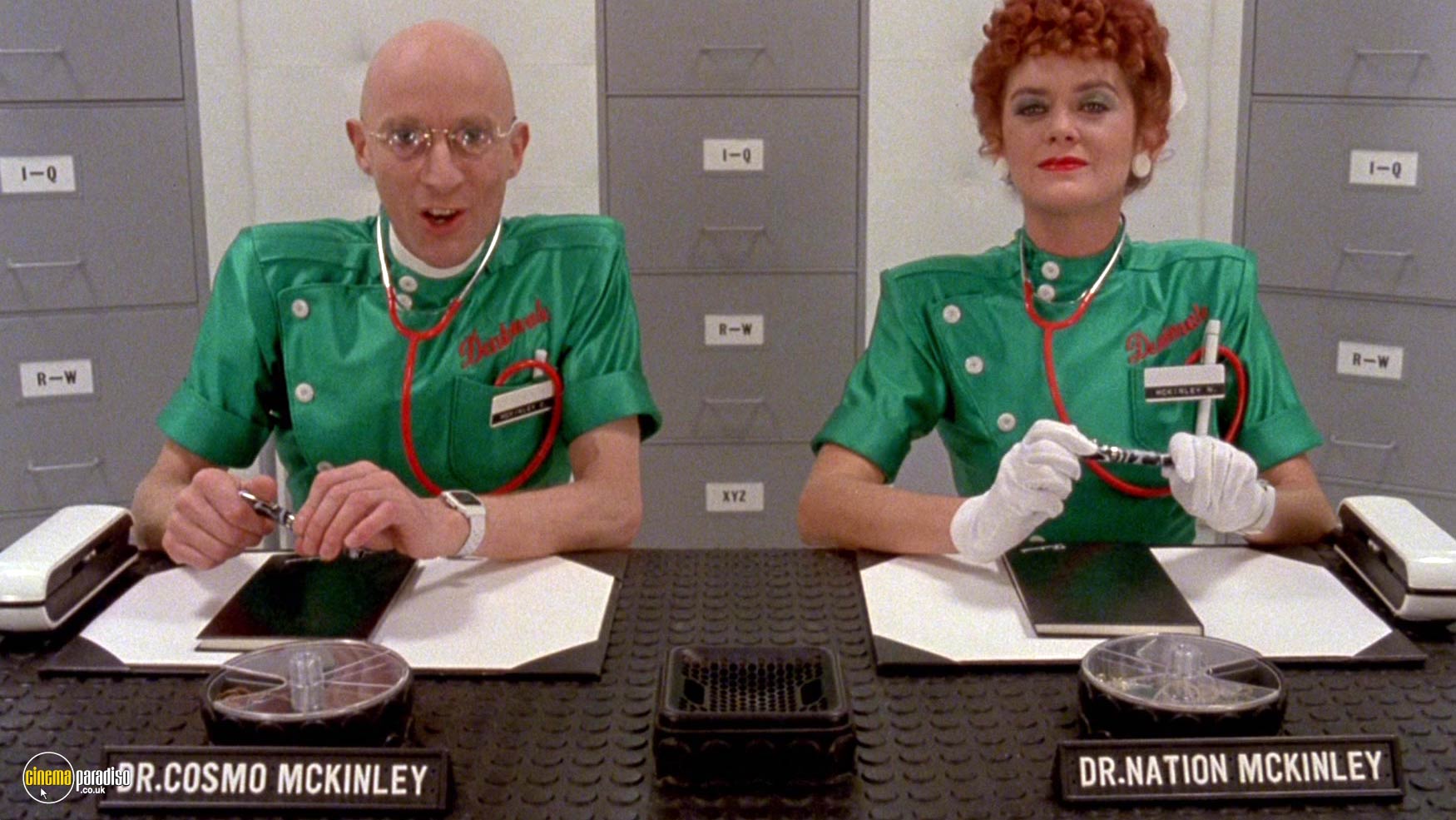
Everything seemed set to go on a soundstage designed to resemble a TV studio, when the $5 million budget was frozen during the 1979 Screen Actors strike. The shoot was abandoned, but Rocky fans will know that Sharman and O'Brien finally got to make their movie, under the title, Shock Treatment (1981). As Susan Sarandon had priced herself out by asking for a $500,000 fee, Jessica Harper was cast as Janet, while Cliff De Young stepped in to play the Majors twins after Tim Curry and Barry Bostwick declined. Jeremy Newsom returned as Ralph, while Charles Gray took on the new role of Judge Oliver Wright, alongside Nell Campbell as Nurse Ansalong, and Richard O'Brien and Patricia Quinn as Cosimo and Nation McKinley. With Ruby Wax as Betty and Barry Humphries as TV host, Bert Schnick, the picture underwhelmed on its release, although it has also since acquired its cult cachet.
While Shock Treatment was in the pipeline, however, Doris Finsecker (Maureen Teefy) caused a minor sensation in Alan Parker's Fame (1980). While attending a screening of The Rocky Horror Picture Show, Doris is so taken by 'The Time Warp' that she rushes on to the stage to join in the audience participation and, in the process, she overcomes her inhibitions and realises she has what it takes to become a performer. The scene revived interest in Frank and his cohorts, with the result that a 1980 theatrical tour was announced. Moreover, in New Zealand, a young Russ Le Roq had landed the role of Eddie in a new production and he would become better known as Russell Crowe. From the ashes, smoke was starting to rise...
The Rocky Horror Shadow Show
When noted critic Roger Ebert reviewed Jim Sharman's film, he opined that Rocky Horror worked better as a theatrical rather than a cinematic experience. Early figures suggested he was right, as the picture was pulled after short runs in several major US cities, while a Halloween premiere in New York was cancelled. Fox executive Tim Deegan kept the faith, however, and bundled Rocky with Brian De Palma's Phantom of the Paradise (1974) for the college campus crowd. Nevertheless, the numbers were still disappointing.

It was then suggested that the film might follow such cult gems as Louis J. Gasnier's Reefer Madness (1936) and John Waters's Pink Flamingos (1972) on to the midnight matinee roster. The first New York showing was, fittingly, on 1 April 1976. But it was the engagement at the Waverly Theater that gave the first intimation that something remarkable was happening. Fans started returning to the cinema in large numbers, some dressed in costumes. Others started bringing props and talking back to the screen, as the Clinton Street Theater in Portland, Oregon embarked upon a weekly screening spot that is now in its 47th year!
According to legend, Angie Bowie was the first to shout out during a performance when she implored, 'No, don't do it!', when Riff Raff was about to laser Rocky during the London stage run. Mild-mannered teacher Louis Farese, Jr. set the trend at the Waverly, when he yelled at Janet, as she used a newspaper to shelter from the rain, 'Buy an umbrella, you cheap b*tch.' Others followed suit until audiences knew the 'counter point dialogue' as well as they knew the screenplay. New shout-outs were published in magazines like The Transylvanian, which was produced by the official fan club, which had formed in 1977.
Much to the frustration of cinema staff who had to clear up the mess, patrons also started showing up with props. Among the most popular were rice for the wedding scene; water pistols to replicate the rain and newspapers to provide cover; candles and torches for the light in the Frankenstein place; rubber gloves for the laboratory sequence; toilet roll to unfurl when Brad shouts 'Great Scott!; toast to throw when Frank raises his glass at the table, party hats to wear during the cannibalistic dinner party; a bell to ring during 'Planet Schmanet Janet'; and some cards to toss in the air during 'I'm Going Home'.
It has been known for hot dogs and prunes to be chucked during screenings, but these play havoc with costumes and cinema furnishings. They're also not popular with the members of the shadow shows that started happening in New York at the instigation of teacher-turned-stand-up Sal Piro, who choreographed characters to mirror the action on the screen. The Double Feature/Celluloid Jam troupe took things even further at the Strand Theater in San Francisco and, soon, every self-respecting Rocky venue had its own shtick. In 1983, Adler produced and Piro MC'd Say It! The Rocky Horror Picture Show: Audience Par-tic-i-pation Album, which captured a Halloween screening in New York.
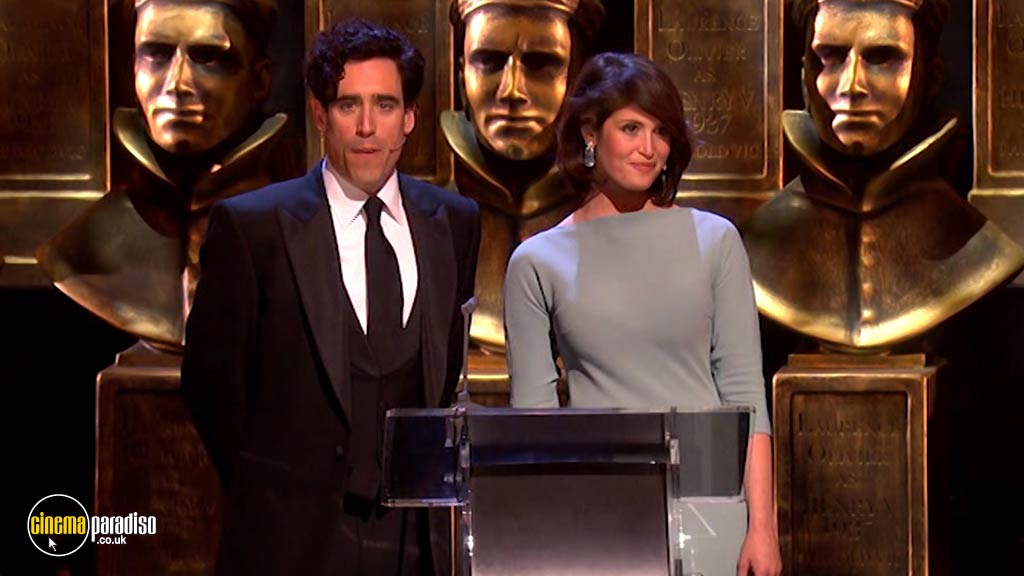
The film was released on VHS in the UK in 1984, which prompted a revival of the stage show under the auspices of the Theatre Royal in Stoke. Touring productions could get a little wild, with saboteurs turning up at certain shows and unleashing water bombs filled with drawing pins. O'Brien was reported to be unhappy with some of the gimmicks at these licenced gigs and he decided to halt them by bringing the show back to London, where it received an Olivier nomination for Best Musical Revival in 1991.
Nell Campbell told The Guardian that the cast had mixed feelings about the Rocky cult. 'In the beginning,' she said, 'there weren't that many things [they would call out to the screen]. Now they pretty much call out after every line. The original things were very witty and hilarious. But now - and I know that my fellow cast members agree - it's too much because you can hardly hear anything without them screaming out.'
Things did fall silent during the pandemic, however, although not for long. Fan club president, Larry Viezel, launched The Rocky Horror Experience: The Live Lockdown Edition! on Facebook and it was quickly followed by The Zoomy Horror Quarantine Show, which contained such health-conscious reboots as 'Don't-cha Touch-a, Touch-a Touch Me'.
The 50-Year Time Warp
After a slow start at the box office, The Rocky Horror Picture Show has now racked up over $160 million worldwide. In addition to being the longest-running release in film history, it has also been released in various video, laser disc, DVD, Blu-ray, and 4K formats. The latter was used for the 50th anniversary restoration undertaken by the Walt Disney Company after it had acquired 20th Century-Fox in 2019 and decided to leave Rocky in release so that its cult status could continue to grow. Some wags even joked that Frank had become a Disney princess.
In accumulating dedicated followings, the stage show and the motion picture have helped change attitudes towards sexual identity and gender tolerance. Sue Blane also insists that her costumes helped pave the way for punk. But some aspects of the scenario have not dated as well as others, notably the discussion of all things trans, the reinforcement of social, gender, and physical stereotypes, and the deflowering of Brad and Janet by the insatiable Frank. Apologists have argued that he was never supposed to be a role model, as he's the antagonist in a horror movie. Moreover, the intention was always to satirise conventional attitudes not commend them. It's not surprising that, over the course of half a century, that views have changed. But it should never be forgotten that Rocky was in the countercultural vanguard when it came to re-calibrating public perceptions of several previously taboo topics.
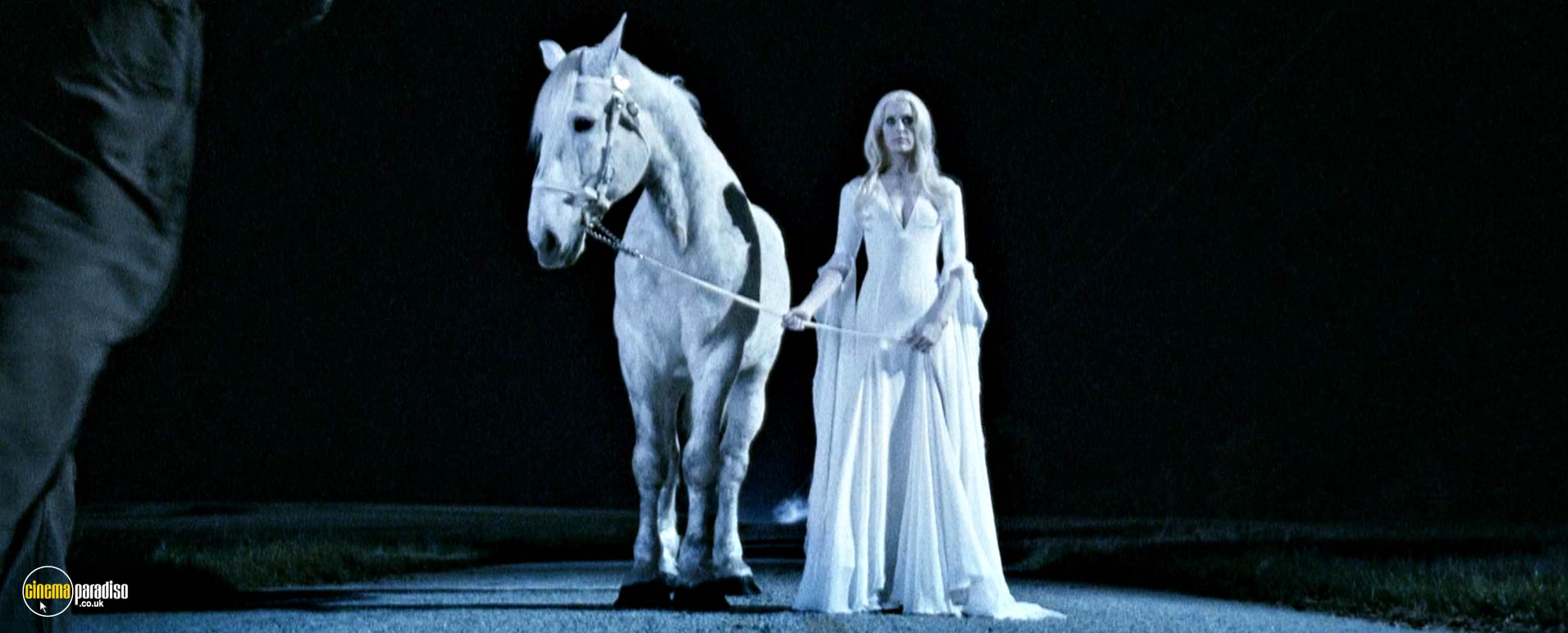
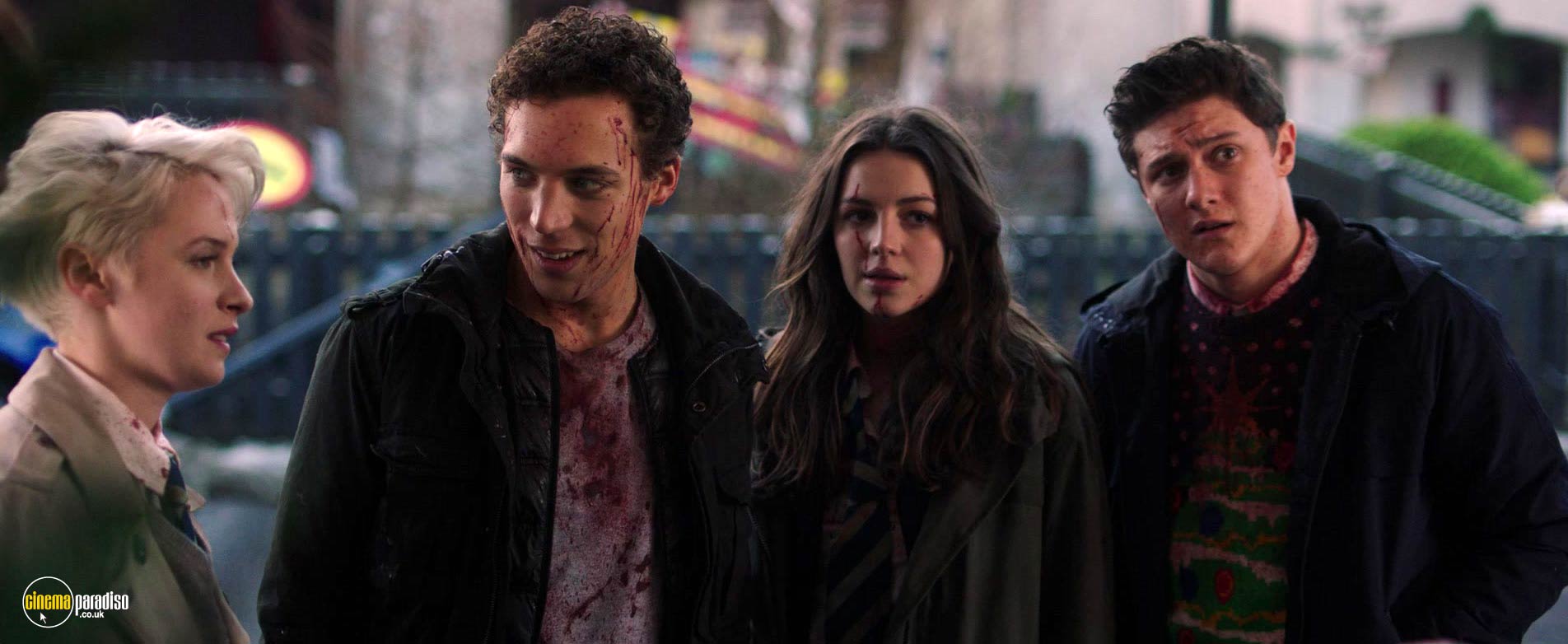
Numerous TV shows have referenced Rocky down the years, including The Simpsons (1989-), That '70s Show (1998-2006), American Dad! (2005-), and Glee (2009-15), the latter coming complete with cameos by Barry Bostwick and Meat Loaf. Films like Gary A. Sherman's Vice Squad (1982), Rob Zombie's House of 1000 Corpses (2003) and Halloween 2 (2009), Stephen Chbosky's The Perks of Being a Wallflower (2012), and John McPhail's Anna and the Apocalypse (2017) have also paid their dues, while, in 2016, Kenny Ortega directed a small-screen update, The Rocky Horror Picture Show: Let's Do the Time Warp Again (2016), which starred transgender actress Laverne Cox as Frank-N-Furter and featured Tim Curry as the Criminologist, in spite of him having suffered a debilitating stroke in 2012.
In many ways, his courageous determination to carry on as a voice actor echoes the struggles that The Rocky Horror Show and The Rocky Horror Picture Show have endured in endlessly defying expectations over half a century. With cosplay outfits now being readily available and boy band alumni headlining stage revivals, Richard O'Brien's creation has edged towards the mainstream. Yet, one of the reasons why it may no longer be as edgily subversive as it once was is that it had shifted the dials and helped usher in a braver new world in which difference was something to be respected not feared.
Mentioned films