As David Lean's Brief Encounter reaches its 80th anniversary, Cinema Paradiso reflects on the making and the legacy of one of the most popular British films ever made.

David Lean had made his name as an editor in the 1930s, having worked on such diverse films as Bernard Vorhaus's The Ghost Camera (1933), J. Elder Wills's Tiger Bay, J, Walter Ruben's Java Head (both 1934), Anthony Asquith's Pygmalion (1938) and Major Barbara (1941), and Michael Powell and Emeric Pressburger's 49th Parallel (1941) and One of Our Aircraft Is Missing (1942). He had moved into directing to help Noël Coward realise his much-cherished wartime project, In Which We Serve (1942), and the pair had collaborated again on This Happy Breed (1944) and Blithe Spirit (1945). But Brief Encounter (1945) would bring about a parting of the ways, as Lean sought to establish himself as a director in his own right with the Charles Dickens adaptations, Great Expectations (1946) and Oliver Twist (1948).
Still Life in the Old Play Yet
Keen to keep tighter control over their films and the revenues they generated, David Lean and producer Anthony Havelock-Allan ended their partnership with Filippo Del Giudice and his Two Cities operation in 1944 to form Cineguild, in conjunction with cinematographer Ronald Neame. Their first production had seen them re-team with Noël Coward on an adaptation of his spectral romcom, Blithe Spirit. However, the trio were keen to try something without The Master and had started work on an historical saga about Mary, Queen of Scots. Coward mocked the project by asking, 'What do you know about costumes?', and persuaded the Cineguild team to tackle instead one of the 10 one-act plays in his Tonight At 8.30 cycle.
Coward had conceived the idea of rotating three bills of one-act plays in a single theatre in 1935 and had reunited with former co-star Gertrude Lawrence to debut Still Life, Ways and Means, and Family Album at The Phoenix Theatre in London in May 1936. When the slate went down well in New York, MGM acquired the rights to Tonight At 8.30, only to abandon the series after the teaming of Norma Shearer and Melvyn Douglas in Robert Z. Leonard's We Were Dancing (1942) had failed to find an audience.
Hearing that MGM wanted a quick sale, British producer Sydney Box bought the rights to Tonight At 8.30 and sold each play individually to the Rank Organisation. As a consequence, Cineguild had to pay £60,000 for Still Life and Lean was less than amused when he read the scenario, which he summed up with a degree of scorn: 'This woman arrives at a railway station and gets some soot in her eye, meets this man, and they arrange to meet next Thursday, and it goes on, and in the end they part. It's got no surprises in it. You're not saying to the audience, "Watch carefully. This is interesting."'
He proposed an alternative and what he considered to be more cinematic opening. 'A busy waiting room,' he began. 'There are two people sitting at a table, talking, a man and a woman. Through the door comes another woman, who sits down at the table. As she sits, talking and talking, you realise there's something not quite right going on, and a train comes into the station. "That's your train," says the woman. "Yes," says the man, "I must go. Good-bye." He shakes hands with the other woman, and then you go back and explain that this is the last time they see each other. They were never going to see each other again. And you play once more the first scene in the picture - it made no sense to you at all, and you didn't hear half the dialogue - and that's the end of the film, with an added piece, perhaps, with the husband.'
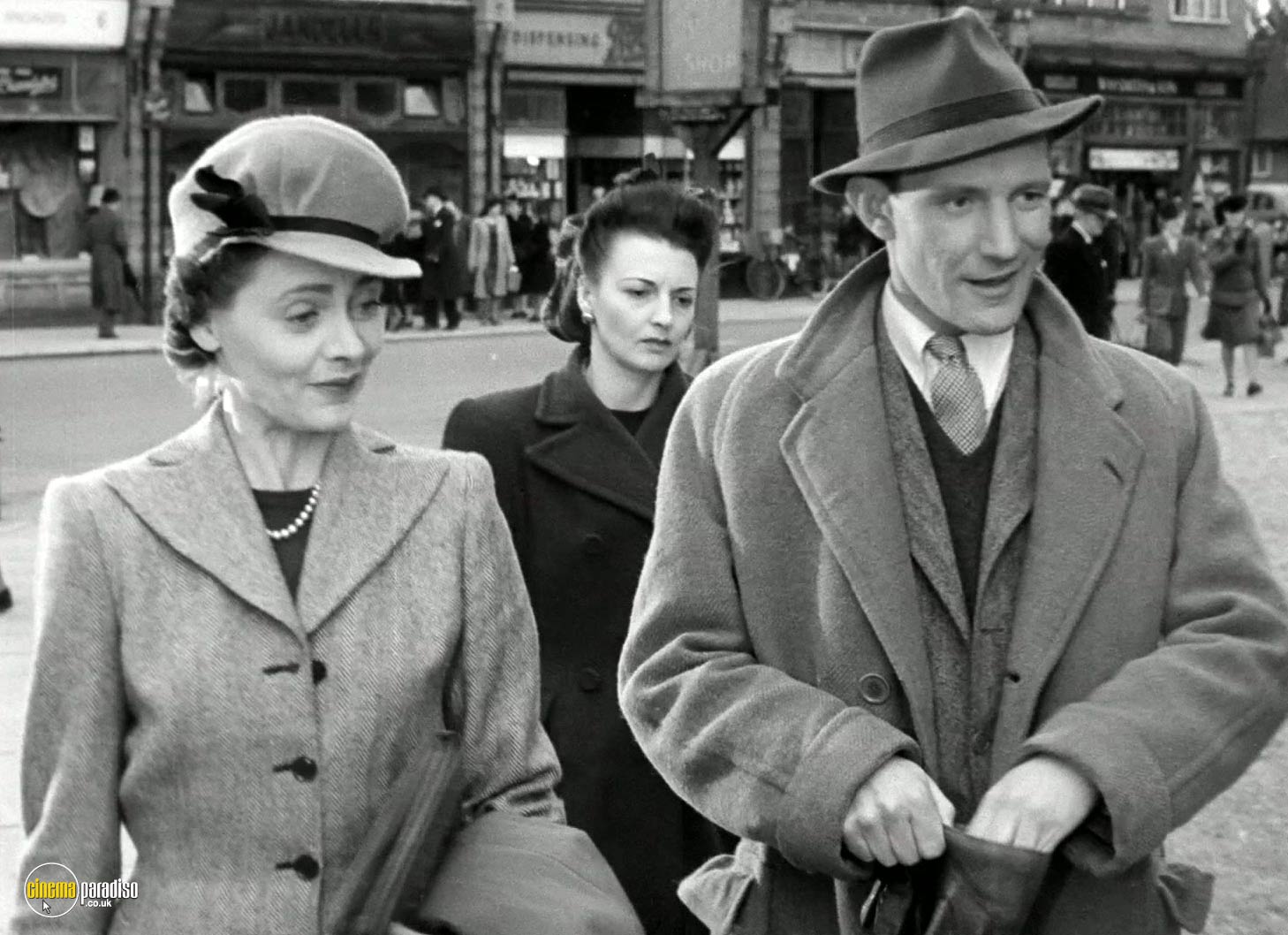
By all accounts, Coward responded, 'Say no more,' and returned after four days with the basic screenplay for Brief Encounter. However, Havelock-Allan remembered things slightly differently. 'The script was written,' he insisted, 'by David and myself and Ronnie. You realise that Still Life was a half-hour playlet which takes place entirely in the waiting room of a station. We had to invent scenes that were not there. And there were lots of places where there was no dialogue. We said, "Could they go for a row in the lake? Could they go to the cinema?" Noël said, "Only if they go to a bad film."' And go to a bad film they did, although we only see them laughing at the trailer for Fires of Passion, which they give a miss the following Thursday in order to be alone together.
In fact, all of the action that takes place away from Milford Junction was added for the film. Intriguingly, Coward took a bolder approach to the assignation at the borrowed flat, as the film plays it out, while the play had left it more ambiguous about how far the married Alec and Laura had gone towards consummating their relationship before the owner's unexpected return. Coward also cleverly used the flirtations between Myrtle and Albert the ticket inspector and waitress Beryl and her beau Stanley to comment on the differing attitudes of the working and middle classes to flouting convention and showing their emotions in public.
In his 2003 memoir, Straight From the Horse's Mouth, Ronald Neame explained how the Cineguild triumvirate had taught themselves how to write in Coward's style. 'We all knew pretty well the way Noël wrote,' he said, 'and so we would fill in scenes. We would put stand-in dialogue until we saw Noël, and I remember on one occasion he said, "Which of my little darlings wrote this brilliant Coward dialogue?"' In fact, Neame was in America catching up on the latest film-making techniques when the script was written, but his name appears in the credits when Coward's doesn't.
Coward's artistic supervisor, Gladys Calthrop, came up with the new title after it was decided that audiences would be put off by Still Life. Yet while most people remember Brief Encounter rather than its source, Still Life has had an afterlife of its own. In 1947, Ingrid Bergman and Sam Wanamaker took the roles of Laura and Alec in an ABC radio broadcast, while David Niven and Helen Hayes were paired two years later. BBC Radio 4 got round to the play in 1998, when Amanda Root and John Duttine were cast. It has also been performed on television, with Margaret Sullavan and Wendell Corey essaying the couple in a 1951 American transmission. Four decades later, Joan Collins starred in a BBC revival of Tonight At 8.30, although she opted to play Myrtle the canteen manager in Still Life, while Jane Asher and John Alderton were paired as the conscience-stricken lovers. Sadly, the series has never been released on disc, but Cinema Paradiso members can choose between viewing Brief Encounter, with its atmospheric monochrome photography, on either high-quality DVD or Blu-ray.
We Must Be Sensible
In the busy refreshment room at Milford Junction some time in the late 1930s, hoity manageress Myrtle Bagot (Joyce Carey) is scolding ticket inspector Albert Godby (Stanley Holloway) when Dolly Messiter (Everly Gregg) bustles in and spots her friend, Laura Jesson (Celia Johnson). She is sitting with Alec Harvey, a doctor who is shortly to embark upon a new life in South Africa, and he fetches Dolly a cup of tea, while Laura tries not to feel awkward. With a reassuring squeeze of Laura's shoulder, Alec hurries off to catch his train and Dolly is surprised to return from the counter to find Laura is missing. Mumbling that she had merely gone to watch the express pass by, Laura looks unsteady and is still feeling unwell when she arrives back at the Ketchworth home she shares with husband Fred (Cyril Raymond) and their two children. Bobby (Richard Thomas) and Margaret (Henrietta Vincent) are arguing about whether they should go to the circus or the pantomime. Fred suggests that Laura could take them to both, so they got the best of both worlds. However, realising that his wife is out of sorts, he settles her in the library and invites her to help him with the Times crossword.
As she listens to Rachmaninov's Second Piano Concerto on the radiogram and fiddles with her embroidery, Laura thinks back to how she had first met Alec, when he had removed a piece of grit from her eye with his handkerchief. They had exchanged pleasantries in the town the following week, but had got chatting in earnest when Alec had shared Laura's table at the Kardomah café. He had explained that he came to town each Thursday to cover at the local hospital for his friend, Stephen Lynn (Valentine Dyall), and had coaxed her into going to the pictures, where they had been amused to discover that the organist was also the over-enthusiastic cellist (Irene Handl) from the café's all-female string trio. Faced with a choice between The Loves of Cardinal Richelieu and Love in a Mist, they had plumped for the latter, which had been adapted from Gentle Summer by the fictitious novelist, Alice Porter Stoughey.
While waiting for their trains, Alec had told Laura about his interest in preventative medicine and she had been so taken by his boyish enthusiasm that she had agreed to another meeting, even though she knew he was also married. Arriving home to find that Bobby had been slightly injured after being bumped by a car, Laura had been stricken with remorse. She had tried to tell Fred about her rendezvous, but he had been preoccupied with his crossword and she had burst out laughing at the folly of her girlish crush.
She had been relieved when Alec had failed to come to the Kardomah the next week. But he had tracked her down to the station to apologise for being unavoidably detained at the hospital and had talked her into another tryst. Ditching the cinema the following Thursday, the pair had taken a rowing boat on to the lake at the Botanic Gardens and Alec had got his feet wet after a contretemps with a bridge. Laura had dried his socks in the boatman's hut and they had admitted that they were falling in love with each other. Despite her apprehension, they had kissed in the dimly lit walkway under the platforms at Milford and, rather than feeling abashed, she had lied to Fred about her day and had called her friend, Mary Norton (Marjorie Mars), to back her in the deception on the pretext that she was keeping a secret about an expensive gift for her husband.
Smitten with the idea of travelling the world curing diseases with Alec, Laura had agreed to lunch at the swanky Royal Hotel. However, she had bumped into Mary and her cousin and had been embarrassed by the feebleness of her attempt to pretend that Mary and Alec had met before. Hoping to cheer her up, Alec had borrowed a car from Stephen, and they had motored into the country for an idyllic afternoon. At the station - where Albert had come to Myrtle's rescue after she had been cheeked by a couple of lairy soldiers - Alec had told Laura that he was planning to spend the night in Stephen's flat while he was away and she had jumped off the train at the last moment in order to join him. No sooner had she arrived, however, than Stephen had returned unexpectedly and a chastened Laura had been forced to scuttle down the kitchen stairs.
Stephen had been disappointed by Alec's ungallant behaviour and has asked for the return of his latchkey. But Laura had been so distraught at the sordid episode that she had wandered around the town for several hours and had called Fred with an excuse about comforting the librarian at Boots the Chemist over her mother's illness. A policeman had checked up on Laura at the rain-soaked war memorial and she had sought to warm herself up by ordering a brandy from waitress Beryl Walters (Margaret Barton) at the station buffet. Alec had found her there and, despite Laura confessing to her shame at their indiscretion, he had implored her to spend one last Thursday with him before he left to take up a post in Johannesburg, because he had realised it was better for both of them to make a clean break.
On their final afternoon, they had driven back to the country bridge where they had been so happy. But the mood had been sombre and they had been eking out the last few precious moments together when Dolly had barged in. Laura had been so miserable that she had rushed on to the platform with the intention of throwing herself under the express. However, she had refrained and returned home, where Fred had sensed that something was wrong. He sits beside her and Laura clings to him when he expresses his gratitude that she has come back to him after having recently been so dreamily distant.
Up the Junction
Celia Johnson once said that she went into acting because 'I thought I'd rather like it.' She joked, 'It was the only thing I was good at. And I thought it might be rather wicked.' This was the one thing the RADA graduate wasn't, as she was a model wife and mother by the time her career started to take off on the West End stage. However, the war intervened and she had to rethink her options after the theatre in which she was playing the second Mrs De Winter in Daphne Du Maurier's Rebecca was bombed by the Luftwaffe in 1940.

Johnson joined the Women's Auxiliary Police Corps and moved in with her widowed sister and sister-in-law and they rallied round to care for their combined eight children. As she couldn't commit to a play, Johnson agreed to make her film debut as the captain's wife in Noël Coward and David Lean's In Which We Serve (1942) and they were so impressed with her that she was cast as London housewife Ethel Gibbons opposite Robert Newton in This Happy Breed (1944).
Coward and Lean had no doubts about casting Johnson as Laura Jesson, although she had misgivings about accepting the role, especially as it would entail filming away from home. However, she confided in a letter to husband Peter Fleming (whose younger brother would go on to create James Bond): 'There is no getting away from the fact that it is a very good part and one which I should love to play. I have found myself already planning how I should play bits and how I should say lines...'
At that time, the plan was for Johnson to co-star with Roger Livesey as Dr Alec Harvey. However, Lean felt that he had become too well known after starring in Powell and Pressburger's The Life and Death of Colonel Blimp (1943) and he persuaded producer Anthony Havelock-Allan to accept the relative newcomer he had spotted in a preview screening of Anthony Asquith's The Way to the Stars (1945). Having been invalided out of the army in October 1943, Howard had made his screen debut in Carol Reed's The Way Ahead (1944), although he was considered something of a risk in such a pivotal role. Howard almost lost the part without knowing he had it, as he often left his post unopened and he only discovered he had been cast when Havelock-Allan phoned to confirm a costume fitting. In the event, they had to re-schedule, as Howard had already promised to take his new wife, actress Helen Cherry, to the pictures.
Production was due to start in January 1945, with the Milford Junction scenes to be filmed in London. However, as stations had become targets for the V-1 rockets nicknamed 'doodlebugs', it was decided to move the shoot to Carnforth in Lancashire, a station on the London, Midland and Scottish Railway, where air raid blackouts were less likely to occur. The switch had unexpected continuity consequences, however, as while the fictional destinations announced over the tannoy (by an uncredited Noël Coward) suggested that the action was set in the Home Counties, the places shown on a platform sign are Hellifield, Skipton, Leeds, and Bradford, which are all in Yorkshire. Moreover, the bridge on which the couple stand during their drive into the countryside is Middle Fell Bridge, which can be found at Dungeon Ghyll in Cumbria, although the boating lake is in London's Regent's Park, the shopping street is in Beaconsfield in Buckinghamshire, while the cinema combines the interior of The Metropole in Victoria and the facade of Denham Studios.

The latter also housed the refreshment room set, although this has now been recreated at Carnforth, which has become a tourist destination because of Brief Encounter. Trainspotters might also be interested to know that the footage Lean and cinematographer Robert Krasker captured at Carnforth later cropped up in films as different as Michael Barry's Stop Press Girl (1949), Alexander Mackendrick's Mandy (1952), John Gilling's Escape By Night (1953), and Charles Crichton's The Battle of the Sexes (1960). What's more, an unused clip of the Ketchworth branch train pulling into the station cropped up in Douglas Peirce's Love in Waiting (1948), complete with an uncredited Celia Johnson in the shot!
Tellingly, there isn't a northern accent to be heard, with even Myrtle, Albert, Beryl, and Stanley all speaking in slightly Cockneyfied variations on the Received Pronunciation used by everyone else, including Laura's children, who were played, somewhat stiffly, by Richard Thomas and Henrietta Vincent. The latter was Johnson's niece and she recalled her sole film outing in a recent BBC radio programme, which also hears from Margaret Barton, whose performance as Beryl had enabled Lean to contrast how the working-class characters approach their relationships with less circumspection than their supposed bourgeois betters.
Howard found Laura and Alec's reserve equally puzzling. Indeed, he asked Lean why the pair didn't go straight to the borrowed flat to consummate their relationship. When the director tried to explain how the sudden prospect of intimacy had made them bashful, Howard had tutted, 'I must say, you are a funny chap.' However, he occasionally struggled with the pressure of being a leading man and kept flubbing the list of the diseases his character was hoping to cure. The more he had to repeat the litany, the less spontaneous Johnson's responses became, but Lean kept shooting until he had what he was looking for.
As Carnforth was still a working station, shooting could only commence at 10:30 at night and had to cease at 6:30 in the morning. One session overran to 7:30, however, and Johnson recalled filming a scene with the whiff of herring in her nostrils after the morning fish train from Aberdeen had rattled by. Nocturnal shooting helped contribute to the noirish look that Robert Krasker gave to the scenes on the platform and in the underpass, which anticipated his Oscar-winning work in Carol Reed's The Third Man (1949). He also perfected a way of lighting the steam pouring out of the funnels of the speeding locomotives, although the train drivers sometimes had problems with the brightness of the illumination and, much to Lean's frustration, slowed down when they passed through the station.
Lean took a liking to the station clock and had a false face made so he could adjust the time to fit with the scene. He was less pleased with the location of the refreshment room, however, and had another tacked on to the platform for external shots. Nevertheless, he asked production designer Lawrence P. Williams to produce a close replica of the interior on a Denham soundstage. Moreover, he was so grateful to waitress Elaine Maudsley for bringing tea at all hours for the cast and crew that he rewarded her with the walk-on part of the woman who passes Stanley Holloway when he first enters the buffet.
Celia Johnson also got on well with the Carnforth staff and was invited to keep warm in the stationmaster's office between takes. When not doing a crossword, she could often be found playing poker with members of the crew. As she told her husband, however, her favourite part of the shoot was living in the lap of luxury in a hotel near Lake Windermere, where she was brought breakfast in bed. The locals cast as extras also had reasons to be grateful, as the film unit provided them with nightly meals that enabled them to save on their rationing coupons.
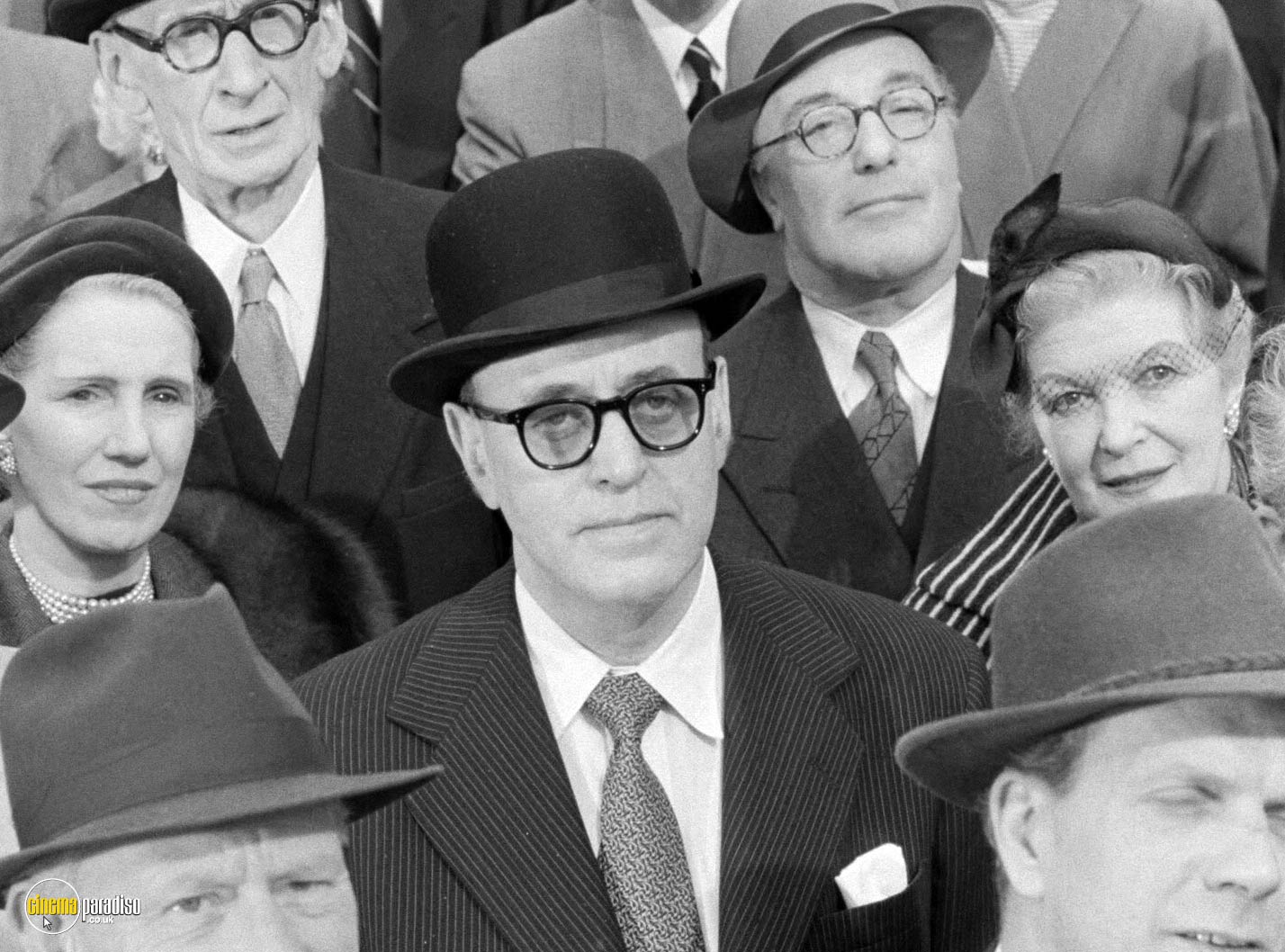
Filming was completed in May, with everyone being given a day off to celebrate VE Day. While Lean worked with editor Jack Harris, Muir Mathieson completed his score. He had been so put out when Coward had asked Lean to use his favourite piece of music on the soundtrack that he had insisted on Laura being shown turning on the radiogram to reinforce the fact that Sergei Rachmaninoff's 'Second Piano Concerto' was diegetic music. Nevertheless, Mathieson conducted the National Symphony Orchestra accompanying pianist Eileen Joyce and one wonders what his views might have been on the inclusion of Moritz Moszkowski's 'Spanish Dance No.5 (Bolero) ', which was played by Irene Handl and her companions with a vigour that one suspects might have inspired the scene between assassin Harry Hawkins (Alastair Sim) and the trio of elderly female musicians in Robert Day's The Green Man (1956).
To Each His Own (1946). Unfortunately for Johnson, the British Academy Film Awards had yet to be instigated, as she would have been a shoo-in
Following a gala premiere on 13 November, Brief Encounter went on general release on 25 November. The reviews were polite rather than effusive, but the storyline provoked debate about marital morality, with Lean being accosted at a railway station by a man who blustered, 'I am exercising the greatest restraint in not hitting you...Do you realise, sir, that if Celia Johnson could contemplate being unfaithful to her husband, my wife could contemplate being unfaithful to me?' Many feminist critics would have disputed the fellow's claim, as they declared that the film sought to restore the sanctity of marriage after the war years and reinforce the social status quo that demanded that women prioritised husband and hearth over career and affairs of the heart. Indeed, the film was banned in Ireland for making adultery seem so tempting.
Perhaps, unsurprisingly, Brief Encounter came in for much criticism in the 1960s, as new attitudes towards sexual liberation and approaches to cinematic realism made its 'No Sex, Please, We're British' tone feel old-fashioned. Critic Raymond Durgnat distilled the story's essence down to 'Make tea, not love.' Yet, it found a new audience among gay men, who could identify with the theme of forbidden love, even after homosexuality among consenting adults was made legal in 1967. The world has continued to change over the eight decades since Laura agonised over duty and desire. But, as Richard Dyer points out in his excellent BFI Classic, the themes of 'betrayal and deception, divided loyalties, the pull between safety and excitement, and cosiness and abandon' remain relevant to modern audiences, as does the snapshot that Brief Encounter offers of a very specific period and place.
American radio audiences couldn't get enough of the scenario. Greer Garson and Carl Harbord played Laura and Alec for Adademy Award Theater on 20 November 1946 before the Belfast-born actress was paired with Van Heflin on 29 November 1948 for Lux Radio Theater, who returned to the story on 14 May 1951, with Olivia De Havilland and Richard Basehart in the leads. Meanwhile, Screen Guild Theater starred Herbert Marshall with Lilli Palmer (12 May 1947) and Irene Dunne (12 January 1948) before Stewart Granger and Deborah Kerr were brought together on 11 January 1951. Three years later, Trevor Howard revisited the station buffet alongside Ginger Rogers for an American television version and Dinah Shore and Ralph Bellamy followed suit in 1961.

This was a year after Billy Wilder had recycled the idea of a borrowing a bedroom for an illicit tryst in The Apartment (1960), which won the Academy Award for Best Picture. Eight years earlier, three of the other playlets from Coward's Tonight At 8:30 had been filmed under the title, Meet Me Tonight (1952), with Valerie Hobson ('Ways and Means'), Stanley Holloway ('Fumed Oak'), and Lean's ex-wife, Kay Walsh ('Red Peppers') headlining each segment. Several of Coward's other plays have since been revived on screen, but none has the enduring appeal of Brief Encounter, as it encapsulates a kind of Britishness that has never quite gone away. Hence the fact that the film is forever being fondly parodied.
As early as 1958, Mike Nichols and Elaine May had included a spoof sketch in their cabaret routine. David Croft and Jimmy Perry put a poignant spin on the storyline in 'Mum's Army', the ninth episode in the fourth series of Dad's Army (1968-77), as Captain Mainwaring (Arthur Lowe) becomes smitten with Fiona Gray (Carmen Silvera), while debating whether to include women in the Walmington-on-Sea Home Guard platoon, and they enjoy cosy meetings at Anne's Pantry before she realises that their amour fou can go no further. Also in 1970, Alan Parker pastiched the station adieu for 'Dinner For One', a monochrome commercial for Birds Eye Roast Beef Dinner.
Series as different as Butterflies (1978-83) and Cheaters (2022) have since riffed on the forbidden love aspect of the scenario. But several sketch writers have also found innovative ways to lampoon its stiff upper-lippery. In the very first episode of Goodness Gracious Me (1998-2001), for example, Sanjeev Bhaskar and Meera Syal play the doomed lovers seeking to savour their last moments together in 'Briefly Encountered'. As they are standing on Jodhpur Station in 1947, however, they are variously interrupted by a chaiwala, a food vendor, a blind beggar, and a woman selling novelties. The following year, in the 'Grief Encounter' episode of Goodnight Sweetheart (1993-2016), Phoebe (Elizabeth Carling) is offered a part in his latest film by Noël Coward (David Benson), who has a flat in the same apartment block where she lives with Gary (Nicholas Lyndhurst). However, Celia Johnson disapproves of the proposed nightclub scene and Phoebe has to settle for being an extra in the refreshment room.
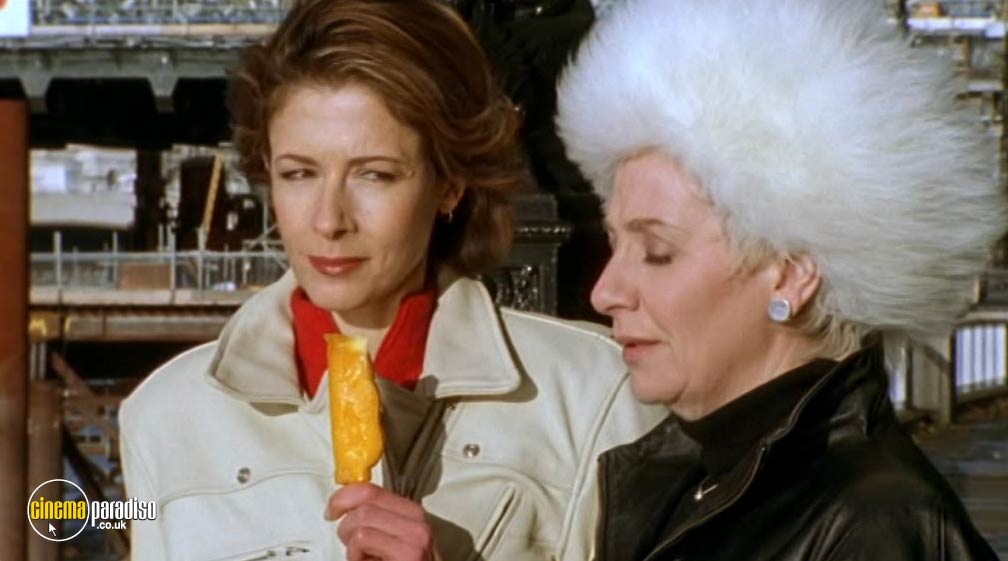
Victoria Wood was on peak form as both writer and performer with the four-minute spoof that formed part of her 2000 Christmas special, Victoria Wood With All the Trimmings. She played Laura to Bill Paterson's Alec, while Celia Imrie, Richena Carey, and Michael Parkinson revelled in scene-stealing support. Four years later, Alan Bennett would include a reference to the final scene between Laura and Fred in The History Boys, which was played by Samuel Barnett and Jamie Parker as Posner and Scripps in Nicholas Hytner's 2006 film version.
Brief Encounter pops up in both Anthony Minghella's Truly Madly Deeply (1991) and Barbra Streisand's The Mirror Has Two Faces (1996), while it serves as a plot device in Dan Ireland's adaptation of Elizabeth Taylor's Mrs Palfrey At the Claremont (2005), as aspiring writer Ludovic Meyer (Rupert Friend) learns that it's the favourite film of the eponymous widow (Joan Plowright) and meets future girlfriend, Gwendolyn (Zoë Tapper), when they reach for the same copy of the film at the local video store. No wonder Brief Encounter ranked second only to The Third Man in a 1999 BFI poll to determine the greatest British film of all time.
In some ways, David Lean and Noël Coward were rather like Laura and Alec themselves. Kay Walsh summed up the situation when she said, 'When David left Noël, Noël was magnificent. He could have said, "I've done all this for you and put you on the map." He did no such thing. He understood that this was a man who didn't want to put the camera in the stalls. David more or less indicated that he was trapped, and he was right. Noël set him free.'
This would have been a suitable place to fade, with the score swirling to its crescendo. But, while this article was being written, Carnforth Station hosted the premiere of a short documentary about Brief Encounter's best-kept secret. In Briefest Encounters, Joanna Crosse reveals how Cyril Raymond (who plays Fred Jesson) had a son named John following an adulterous affair with actress Janet Morrison after they had acted together on Broadway in 1930. Four years later, Morrison gave up the child for adoption and his name was changed to Nicholas. But it was only when he died that documents about his biological parentage came to light. As Crosse discovers, he once acted in a York Mystery Play alongside Judi Dench, while his granddaughter, Sedona Rose, is an actress who made her stage debut at the same Theatre Royal in Bath where Raymond and Morrison had once performed. Now there's a happy ending if ever there was one!
Mentioned films