As Gary Oldman brings Samuel Beckett's Krapp's Last Tape back to the Royal Court Theatre, where it premiered in 1958, Cinema Paradiso explores how Irish plays have been adapted for the screen over the last 125 years.
The first plays staged in Ireland date from the early 14th century and mostly dealt with religious themes. Opened in 1637 and 1662 respectively, the Werburgh Street Theatre and the Theatre Royal offered Irish playwrights a base in Dublin, but most were forced to relocate to London to make their fortunes. Indeed, it wasn't until 1899 that a concerted effort was made to mount Irish plays for Irish audiences.
The Exiles
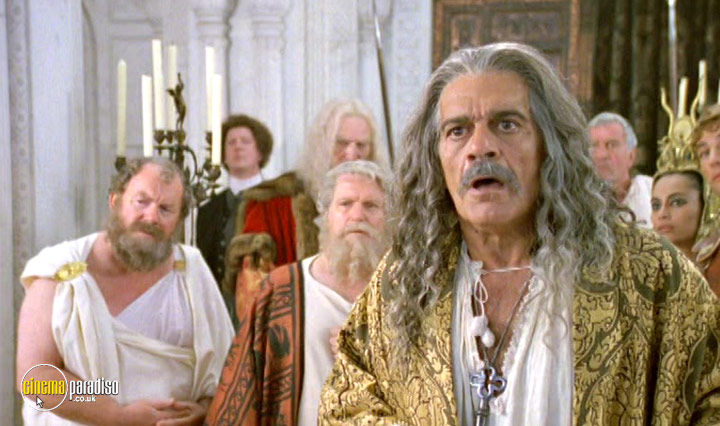
With Dublin being something of a theatrical backwater in the late Stuart period, many Irish playwrights made for London. Yorkshireman William Congreve (1670-1729) had grown up in Ireland and had befriended Jonathan Swift at Kilkenny College. Swift, of course, is renowned for his satire about Lilliput and Cinema Paradiso users can take their pick of several versions of Gulliver's Travels, with animations by Dave Fleischer (1939) and Charles Sturridge and Leif Gram (1979) being complemented by Hayao Miyazaki's Studio Ghibli variation, Laputa: Castle in the Sky (1986). There are also live-action renditions starring Ted Danson (1996) and Jack Black (2010) , as well as Jack Sher's ambitious The 3 Worlds of Gulliver (1963) and Czech director Pavel Jurácek's darkly surreal A Case For a Rookie Hangman (1969), which was also influenced by Lewis Carroll and Franz Kafka.
Congreve's first two plays, The Old Bachelor and The Double Dealer (both 1693) boasted incidental music by Henry Purcell, while The Mourning Bride (1697) introduced the phrase 'hell hath no fury like a woman scorned'. But his best-known comedy is The Way of the World (1700), although it has never been filmed, despite being performed on the BBC in 1951, 1967, 1975, 1977, and 1984. This supremely witty play has also been broadcast in Italy in 1975, while West German audiences got to enjoy Love For Love (1695) in 1967 and 1973. Bruce Coughran filmed a five-minute version in 2001, which can be viewed via his website.
The coiner of the phrase 'kiss and tell', Congreve quit the theatre to focus on politics, although he is buried in Poets' Corner in Westminster Abbey. He outlived another key figure in the world of Restoration comedy, the Derry-born George Farquhar (1677-1707). Having given up acting on the Dublin stage after accidentally stabbing a cast member with a sword, he moved to London, where he found his voice as a writer. Once upon a time, drama showcases like the BBC's Play of the Month would feature productions like The Constant Couple (1699) and The Recruiting Officer (1706), which were transmitted in 1973 and 1979 respectively. But they are rarely adapted for the small screen nowadays, with Farquhar's The Beaux' Stratagem (1707) not being seen on telly since 1965. However, it was filmed for a National Theatre Live presentation in cinemas in 2015.
Three years earlier, She Stoops to Conquer (1773) had been similarly showcased after stagings from 2003 and 2008 had been released on discs that are sadly out of our reach. This hilarious comedy of errors by Oliver Goldsmith (1728-74) has appeared on television eight times (1939, 1946, 1952, 1956, 1960, 1961, 1966, 1971), but only three times on film (1910, 1912, 1923), and they were all silent. Curiously, there has yet to be a sound version of The Vicar of Wakefield (1766), as it has never been dramatised for television in this country after being filmed in 1910, twice in 1913, and again in 1916 and 1917.
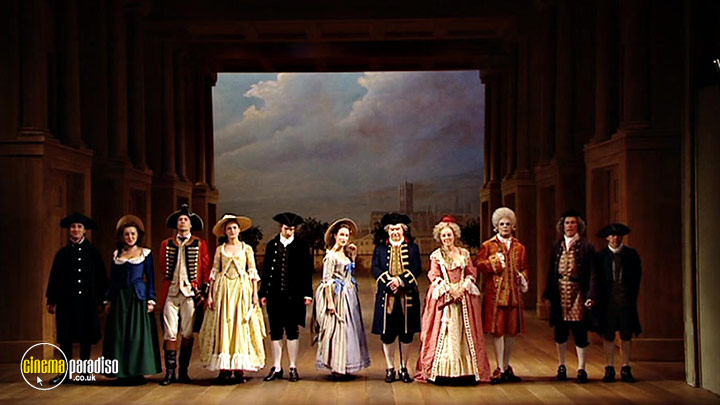
Dubliner Richard Brinsley Sheridan (1751-1816) had been equally neglected by film-makers, despite being a caustically witty satirist, the owner of the Theatre Royal in Drury Lane, and a resident of Poets' Corner. He was played by Barry Stanton in Nicholas Hytner's The Madness of King George (1994) and by Aidan McArdle in Saul Dibb's The Duchess (2008), while his milieu was mocked by Ben Elton and Richard Curtis in the 'Sense and Senility' episode of Blackadder the Third (1987), in which Kenneth Connor and Hugh Paddick excelled as foppish actors Enoch Mossop and David Keanrick. Sheridan's first play, The Rivals (1775), was filmed in 1913, but has since been confined to the small screen (1938, 1948, 1950, 1955, 1961, 1962, 1970, 1988), with the odd translated version cropping up overseas. Adaptations of The Duenna (1775; 1938, 1953) and The Critic (1779; 1963, 1982) have been rarer still. But his masterpiece, The School For Scandal (1777), has proved popular since silent versions from 1914 and 1923 were followed by Maurice Elvey's 1930 talkie. Yet this is the sole feature version to have been made, while there have only been six English-language TV tellings (1938, 1950, 1953, 1959, 1967, 1975). Shockingly, no Sheridan play has been broadcast in Britain since 1988 and, frustratingly, we can't lay a hand on filmed stage versions directed by John Gielgud in 1963 and Elizabeth Freestone in 2003. Happily, however, Cinema Paradiso uses can order Rachel Kavanaugh's Bristol Old Vic staging of The Rivals (2004).
The last of our exiles for now, Dion Boucicault (1820-90), left Dublin to find acclaim in London and New York. He favoured melodrama to comedy and his influence on David Belasco (who was nicknamed 'The Bishop of Broadway') would filter through into D.W. Griffith's approach to filming drama in such landmark pictures as The Birth of a Nation (1915), Intolerance (1916), and Broken Blossoms (1919). Boucicault's Rip Van Winkle (1903, 1912, 1921) was the first play to reach the screen, but Sidney Olcott's Arrah-na-Pogue (1911) was more impressive, while the same director's The Shaughraun (1912) was remade as Conn, the Shaughraun (1912) in Australia and My Wild Irish Rose (1922) by Vitagraph in New York. Both The Octoroon (1912) and The Streets of London (1934) were adapted in Australia, with the latter being directed by pioneering indie, F.W. Thring. Having been filmed silently in 1906 and 1919, Kathleen Mavourneen (1930) became the first Boucicault talkie, with Sally O'Neil in the title role. But this is as forgotten today as Grimaldi (1914), After Dark (1915), and The Streets of New York (1922).
However, Boucicault's most enduring work, The Colleen Bawn (1860), has retained its place in the annals. Filmed in 1911 by American Sidney Olcott and Gaston Mervale in Australia, this sentimental saga was adapted silently in London by W.P. Kellino in 1924 and as Lily of Killarney by George Ridgwell in 1929. Maurice Elvey's Lily of Killarney (1934) features an early turn by Stanley Holloway, as the priest trying to protect country girl Eileen O'Connor (Gina Malo) from landowners Sir Patrick Creegan (John Garrick) and Sir James Corrigan (Leslie Perrins) and possessive smuggler Myles-Na-Copaleen (Dennis Hoey).
Wilde About Oscar
The next Dubliner to become the talk of London remains the most celebrated Irish playwright of them all. Oscar Fingal O'Fflahertie Wills Wilde (1854-1900) studied at Trinity College, Dublin and Magdalen College, Oxford, where he came under the influence of aesthetes Walter Pater and John Ruskin. The majority of screen biopics, however, only concentrate on the latter years of Wildes's chequered career, with Ken Hughes's The Trials of Oscar Wilde (1960) and Gregory Ratoff's Oscar Wilde (1960) focussing exclusively on his downfall, with the title roles being respectively taken by Peter Finch and Robert Morley, who had played Wilde on stage in 1936. Following Hansgünther Heyme's Oscar Wilde (1972), with Klaus Maria Brandauer, Peter Egan toured the United States with Francesca Annis's Lillie Langtry in the ITV series, Lillie (1978), while Michael Gambon headlined the BBC2 serial, Oscar (1985). Subsequently, Stephen Fry and Rupert Everett have distinguished themselves in Brian Gilbert's Wilde (1997) and Everett's The Happy Prince (2018). However, those seeking a different walk on the Wilde side should see Todd Haynes's Velvet Goldmine (1998), which opens in Dublin in 1854, as an alien spaceship delivers the infant Oscar (Luke Morgan Oliver), who promptly declares his desire to be a 'pop idol'. Keep an eye on the green brooch pinned to his blanket.
Wilde served a lengthy apprenticeship in London, with two plays being overlooked during a period where he earned his living writing magazine articles. His circle was satirised in a sketch in Series 3, Episode 13 of Monty Python's Flying Circus (1969-74), as Wilde (Graham Chapman), James McNeill Whistler (John Cleese), and George Bernard Shaw (Michael Palin) try to land each other in trouble with the Prince of Wales (Terry Jones).
As a family man, Wilde felt inspired to write some stories for children, which were published in The Happy Prince and Other Tales (1888). Orson Welles latched on to the title story for the 1941 Mercury Theatre on the Air Christmas show, with music by Bernard Herrmann. Clearly the story resonated with Welles, who had made his stage bow at the age of 16 at the Gate Theatre in Dublin, as he revisited it in the company of Bing Crosby (as the Prince) and Lurene Tuttle (as the Swallow) on The Philco Radio Hall of Fame on 24 December 1944. In Michael Mills's short animation, The Happy Prince (1974), Christopher Plummer narrated, as a royal statue comes to life and asks a swallow (Glynis Johns) to peck off its gold in order to relieve the suffering of the poor.
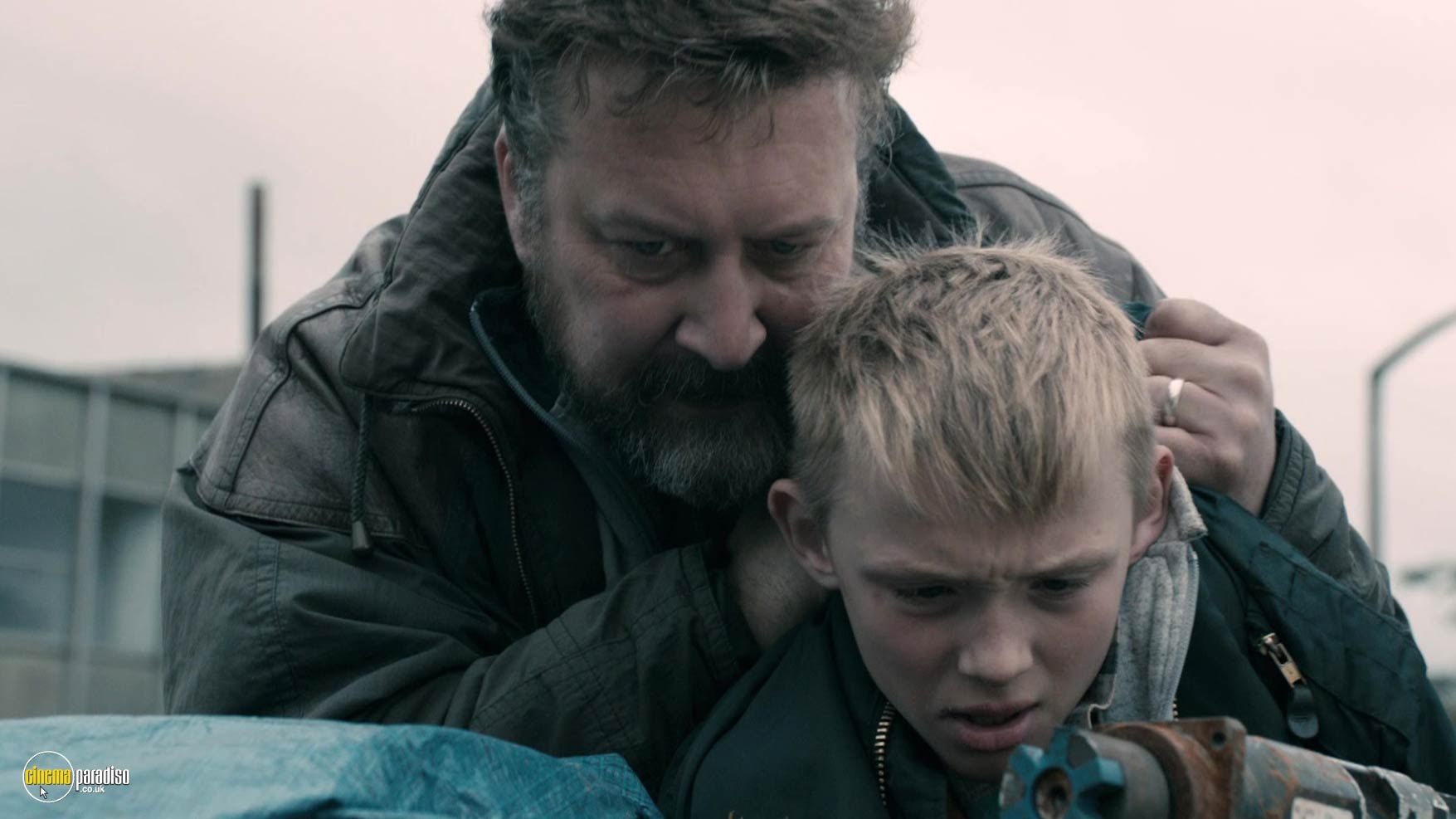
British animator Gerald Potterton followed this charming item with The Selfish Giant (1971), a Christian allegory that sees a giant build a wall around his garden to keep children out. In addition to winning the Silver Bear at the Berlin Film Festival, this musical parable was also nominated for the Academy Award for Best Animated Short and Potterton followed it was a cartoon version of The Remarkable Rocket (1975). Channel Four animated the collection's other two tales, 'The Nightingale and the Rose' (which had inspired the 1967 short, Slavík a ruze, Story of the Red Rose, 1997, and Die Nachtigall und die Rose, 2010) and 'The Devoted Friend' for Wilde Tales (2003), which also included 'The Selfish Giant'. Director Clio Bernard took a markedly different approach in The Selfish Giant (2013), which was set in Bradford and pitted teenagers Conner Chapman and Shaun Thomas against scrap merchant, Sean Gilder. Having won prizes at Cannes and the British Independent FIlm Awards, this inspired slice of social realism was nominated for Outstanding British Film at the BAFTAs.
Originally published in 1887, the story of a wife killer who was walled up by his in-laws doesn't sound particularly child-friendly. But the various screen adaptations have been pitched as family entertainments. Charles Laughton hams up delightfully as Sir Simon in Jules Dassin's The Canterville Ghost (1944) and his lead was followed in 1985 and 1986 teleplays starring Richard Kiley and John Gielgud. Patrick Stewart took the lead in Syd McCartney's The Canterville Ghost (1996), which cast Neve Campbell as Virginia Otis, the daughter of the American family that moves into the haunted castle. Ian Richardson took over for a 1997 TV-movie before Yann Samuell's The Canterville Ghost (2016) reworked the narrative with Audrey Fleurot as Aliénor de Canterville. Anthony Head held court for four episodes in The Canterville Ghost (2021), while Stephen Fry did voiceover duty in Kim Burdon's The Canterville Ghost (2023), a CGI animation that includes Freddie Highmore, Toby Jones, Hugh Laurie, Imelda Staunton, Miranda Hart, David Harewood, and Meera Syal in its all-star cast.
Only 'The Young King' has yet to be filmed from Wilde's second book of fairytales, A House of Pomegranates (1891). 'The Fisherman and His Soul' was adapted as a short in both 1961 and 1996 (as Odoiá), while 'The Birthday of the Infanta' has materialisd as Black and Silver (1981), The Princess and the Dwarf (1989), and Infantkine narodeniny (1991). Following Leonard Nachaev's two-part 1983 Soviet adaptation, 'The Star-Child' was turned into an animated short by Ted Berenson in 1989. 'The Canterville Ghost' was reproduced alongside the yet-to-be-filmed trio of 'The Sphinx Without a Secret', 'The Model Millionaire', and 'The Portrait of Mr W. H.' in Lord Arthur Savile's Crime and Other Stories (1891). The eponymous yarn was adapted as a silent by Swede Gunnar Klintburg in 1919, Hungarian Pál Fejös in 1920, and Frenchman René Hervil in 1922. Compatriot Julien Duvivier recycled it for the second section of Flesh and Fantasy (1943), in which palmist Septimus Podgers (Thomas Mitchell) informs sceptical lawyer Marshall Tyler (Edward G. Robinson) that he will commit murder. Ronald Howard and Sebastian Cabot assumed the roles in a 1958 episode of Suspicion, while Arthur Lowe got under Terry-Thomas's skin in a 1960 presentation that is available on disc from Cinema Paradiso on Armchair Theatre, Volume 4 (2013). Since a 1961 Canadian teleplay, the cautionary tale has been made for Czech, Polish (both 1967) and French (1968) television, while Charles Di Meglio released a French featurette version in 2011.
Published in 1890, Wilde's only novel has been brought to the screen several times to show how a painting grows older and uglier as its rakish sitter goes about his caddish business. The Picture of Dorian Gray was filmed seven times in the 1910s - 1910, 1913, twice in 1915 (one American, one Russian), 1916, and 1917. Most intriguingly Hungarian Alfréd Deésy's Az élet királya (aka The Royal Life, 1919) paired Norbert Dán's Dorian Gray with Bela Lugosi's Lord Henry Wotton. George Sanders played the latter opposite Hurd Hatfield in Albert Lewin's The Picture of Dorian Gray (1945), a monochrome feature with a terrifying Technicolor reveal that really should be on disc in the UK.
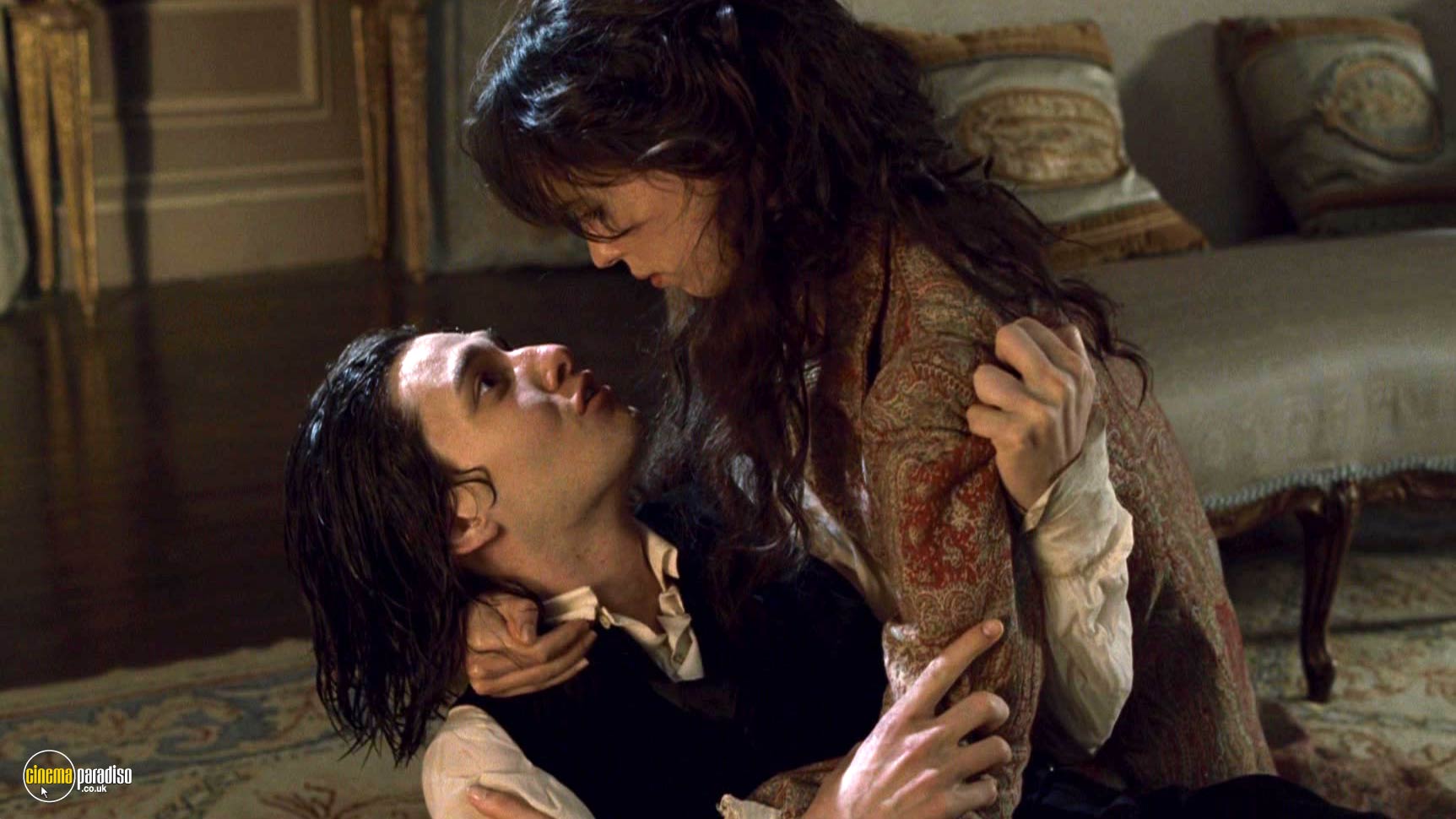
Helmut Berger took the lead in Massimo Dallamano's Dorian Gray (1970), while Shane Briant headlined Glenn Jordan's 1973 teleplay and Tony Maylam's The Sins of Dorian Gray (1983) had aspiring actress Belinda Bauer witness her screen test bear the ravages of age and decadence. In 2004, the debuting Josh Duhamel starred in Dave Rosenum's The Picture of Dorian Gray, while Ethan Erickson was caught in the climactic twist in Allan A. Goldstein's Pact With the Devil (2004), which features Malcolm McDowell in fine form as Henry Wooten. Ben Barnes and Colin Firth assumed the roles for Oliver Parker's Dorian Gray (2009), which was followed by Ansel Faraj's Three Shadows (2010) in which Kevin Shayer essays Dorian Gray, Nosferatu, and H.P. Lovecraft's Abner Whateley in an unsettling triptych. And don't forget that Stuart Townsend also played Gray in Stephen Norrington's The League of Extraordinary Gentlemen (2003).
Wilde has 367 credits on the Internet Movie Database and several of his plays have been adapted for TV stations around the world. We shall focus on the cinema releases, while also noting that Léon Boedels and Caroline van Dommelen's De bannelingen (1911) is the sole adaptation of his first play, Vera, or The Nihilists (1880), while the unfinished A Florentine Tragedy (c.1894) has been adapted for television three times (1964, 1967, 2024) since J. Farrell MacDonald shot a short film version back in 1913. As far as we can tell, neither The Duchess of Padua (1883) nor La Sainte Courtisane (1894) has been adapted for a screen of any size.
Written in 1891, published two years later, and first performed in 1896, Salome revisits the New Testament story of the efforts of Salome to persuade stepfather Herod Antipas to execute the prophet Jokanaan (aka John the Baptist) by performing the Dance of the Seven Veils. This set-piece proved irresistible to actresses like Florence Lawrence and Jean Angelo, who appeared in 1908 shorts, respectively directed by J. Stuart Blackton and Albert Capellani. Theda Bara took the lead in J. Gordon Edwards's Salomé (1918). Sadly, Henri Langlois turned down a chance to buy the last remaining copy for the Cinematheque francaise in the early 1940s and all that survives is a two-minute jumble of fragments unearthed in 2021.
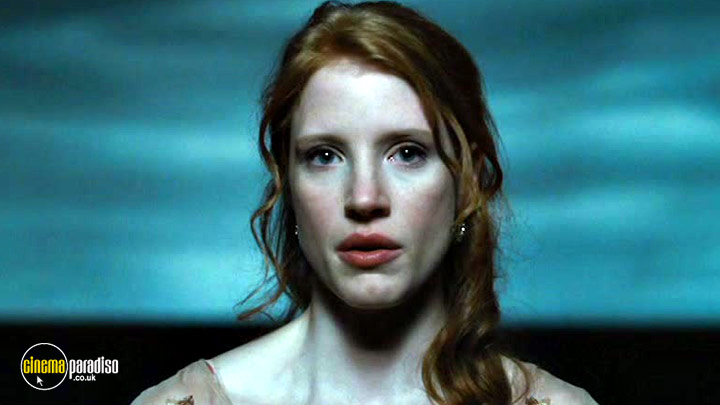
Leonce Perret's A Modern Salome (1920), with Hope Hampton, is also lost. But Charles Bryant's Salomé (1923) survives and has become a classic of both feminist and queer cinema, with the enigmatic Alla Nazimova in the title role and Nigel De Brulier as Jokanaan. Half a century later, Lydia Mancinelli gyrated in Carmelo Bene's psychedelic Salome (1972), while Jo Champa took over for Claude d'Anna's Salomé (1986). Although Imogen Millais-Scott landed the title role in Ken Russell's Salome's Last Dance (1988), the focus fell on Glenda Jackson doubling as Lady Alice Fitzkensington Windsor and Herodias, while Stratford Johns played Herod and Nickolas Grace cropped up as Oscar Wilde. Following Maria Ewing's turn in Derek Bailey's Salome (1992), with Maria Ewing, Jessica Chastain did the honours in the Al Pacino twosome, Wilde Salomé (2011) and Salomé (2013), with Jessica Chastain, with the former winning the Queer Lion at the Venice Film Festival. Pacino appeared as Herod, himself, and Wilde in the documentary, although he simply presented the play in the companion piece.
Premiering in 1892, Lady Windermere's Fan was the first of Wilde's celebrated drawing-room comedies. The key action takes place during the birthday ball to which Lord Windermere has invited Mrs Erlynne, the woman his wife believes to be his mistress. Humiliated, Lady Windermere decides to take the adoring Lord Darlington at his word. But Mrs Erlynne makes her move first to protect the daughter she had given up two decades earlier. Following Fred Paul's 1916 adaptation, Ernst Lubitsch produced the seminal Lady Windermere's Fan (1925), with May McAvoy as Lady Windermere, Ronald Colman as Lord Darlington, and Irene Rich as Mrs Erlynne. The first sound version was directed in Nazi Germany by Heinz Hilpert in 1935, with Lil Dagover as Mrs Erlynne and Walter Rilla as Lord Windermere. Juan José Ortega's 1944 Mexican version, with Susana Guízar as Lady Margarita Windermere, was followed by Argentinian director Luis Saslavsky's Story of a Bad Woman (1948), with Dolores del Río.
Cinema Paradiso users can enjoy Otto Preminger's The Fan (1949), with Jeanne Crain as Lady Windermere, Madeleine Carroll as Mrs Erlynne, and the ever-urbane George Sanders as Lord Robert Darlington. Also on offer is Mike Barker's A Good Woman (2004), with Scarlett Johansson as Meg Windermere and Helen Hunt as Mrs Erlynne. But we can't bring you Egyptian Hassan Ramzy's Two Women (1975), Karl Golden's Dublin-set Belonging to Laura (2009), or the team-directed Lady Windermere's Fan (2014), which paired Julia Farino as Mrs Erlynne and Sarah Navratil as Lady Windermere.
Similarly satirising the upper classes, A Woman of No Importance (1893) has proved the least popular Wilde comedy over the years. Denison Clift's 1921 version starred Fay Compton as Rachel Arbuthnot, who is bent on preventing her son from working for Lord Illingworth (Milton Rosmer), the man who had seduced her 20 years earlier. With its risqué plotline, it was considered too racy for Hollywood during the Production Code era and there has never been a British sound adaptation. Even BBC television hasn't touched it since 1948. But Thea von Harbou scripted Hans Steinhoff's A Woman of No Importance (1936), with Gustaf Gründgens as Lord George Illingworth, while Charles Spaak wrote Jean Choux's 1937 interpretation, with Pierre Blanchar as Lord Illingworth. There was then quite a gap between Argentine Luis Bayón Herrera's 1945 collaboration with Mecha Ortiz as Raquel Miramar and Ross MacGibbon's filmed version of Dominic Dromgoole's 2017 stage version, with Eve Best as Mrs Arbuthnot.
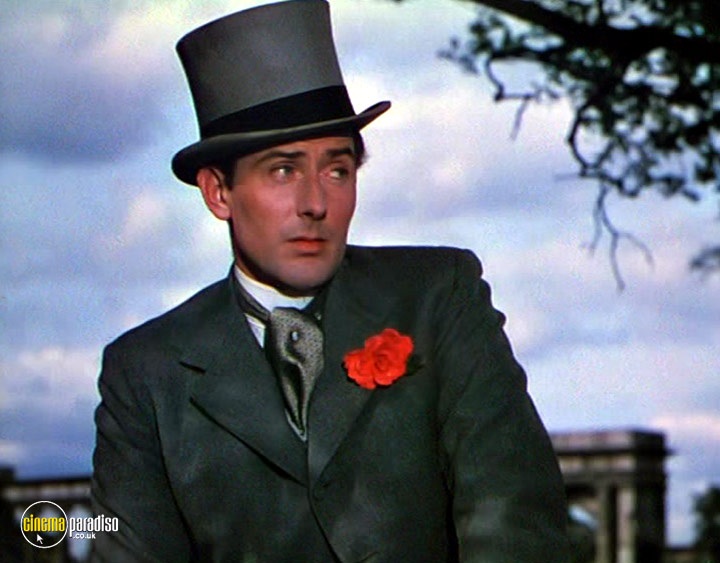
We have more luck when it comes to An Ideal Husband (1895), which centres on the efforts of Mrs Cheveley to blackmail politician Lord Chiltern into backing a dubious canal-building scheme or she will ruin his career and marriage by exposing the fact that he once sold a state secret. This fiendishly witty narrative was first adapted in the sound era by Thea von Harbou (the estranged wife of Fritz Lang) for Herbert Selpin's An Ideal Spouse (1935), with Brigitte Helm as Lady Gertrud Chiltern and Sybille Schmitz as Gloria Cheveley. Luis Bayón Herrera delivered an Argentinian version in the same year that Alexander Korda's An Ideal Husband (1947) teamed Hugh Williams and Diana Wynyard as the Chilterns with Paulette Goddard as Mrs Cheveley and Michael Wilding as the selfless Lord Arthur Goring. After Viktor Georgiyev's 1980 Soviet version, Oliver Parker's An Ideal Husband (1999) paired Jeremy Northam and Cate Blanchett as the Chilterns, while Julianne Moore's Mrs Cheveley sought to evade the scrutiny of Rupert Everett's Goring. Coming hard on its heels, William P. Cartlidge's An Ideal Husband (2000), saw Sadie Frost's Laura Cheveley confronting James Wilby's Sir Robert Chiltern after they are introduced at a surprise party by Lady Markby (Prunella Scales).
No Wilde play can match The Importance of Being Earnest (1895), in which Lady Bracknell, Miss Prism, and Canon Chasuble are all taken aback by the behaviour of Jack Worthing and Algernon Moncrieff, who have respectively invented a rascally brother called Ernest and an ailing friend named Bunbury in order to live double lives. Their boulevardiering is curtailed, however, by their meeting with Gwendolen Fairfax, who is Algernon's cousin, and Cicely Cardew, who is Jack's wealthy ward. However, this 'Trivial Comedy for Serious People' was closed after just 86 performances because of the scandal the Marquess of Queensberry insisted on causing because his son, Lord Alfred Douglas, had become Wilde's lover at a time when homosexuality was illegal. The play survived Wilde's death in Paris in 1900 at the age of 46, although it was confined to radio and television (1937, 1938, 1946, 1947, 1949) until the appearance of Franz Wenzler's Liebe, Scherz und Ernst (1932), with Georg Alexander as Ernst.
Maurice Champreux's Touchons du bois (aka Let's Touch Wood, 1933) was followed by Hector Canziani's tango variation, Al compás de tu mentira (1950). Two years later, Anthony Asquith's The Importance of Being Earnest (1952) made the bold move of relegating Margaret Rutherford from the 1946 TV role of Lady Bracknell to that of Miss Prism to accommodate Edith Evans, whose delivery of the line, 'A handbag!' remains unsurpassed. The casting was impeccable, with Michael Redgrave as Jack, Michael Denison as Algernon, Dorothy Tutin as Cecily, Joan Greenwood as Gwendolen, and Miles Malleson as Chasuble. Neva Carr Glyn played Lady Bracknell in The Importance of Being Earnest (1957), which was the first Wildean broadcast in Australia and the country's longest TV programme to that time. ITV's Armchair Theatre assembled a magnificent cast for its 1964 presentation, with Ian Carmichael as Jack, Susannah York as Cecily, Irene Handl as Miss Prism, and Wilfrid Brambell as Canon Chasuble. When the BBC returned to the play in 1988, Paul McGann played Jack and Joan Plowright was Lady Bracknell.
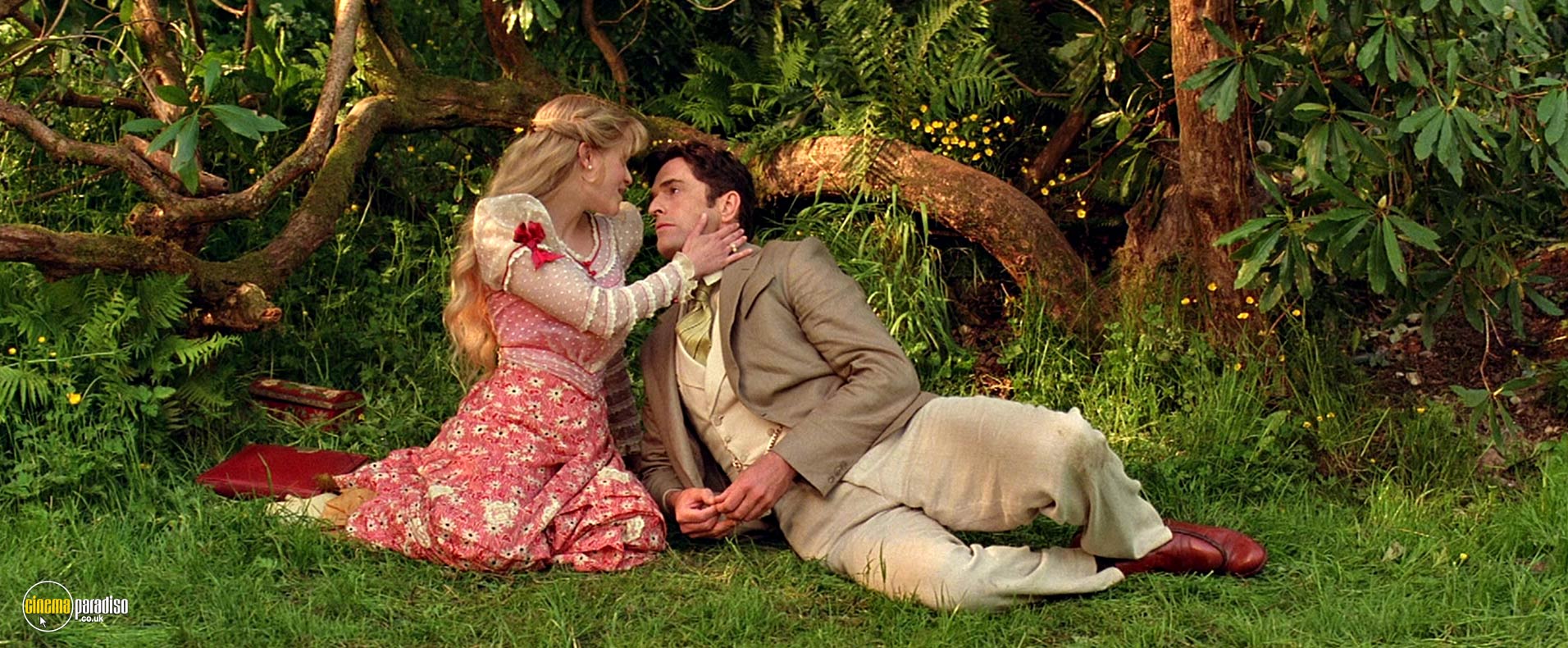
Back on the big screen, Kurt Baker's The Importance of Being Earnest (1992) utilised an all-Black cast in a modern-day American setting, with Brock Peters as Dr Chasuble and CCH Pounder as Miss Prism. More recently, Oliver Parker's The Importance of Being Earnest (2002) teamed Colin Firth and Rupert Everett as Jack and Algernon, while Reese Witherspoon played Cecily, and Judi Dench stole the show as Lady Bracknell. Rather boldly, Parker interpolated about twenty lines of his own into the screenplay and restored the episode that had been cut by Wilde before the play's premiere, in which a solicitor attempts to serve a writ on the mysterious Ernest. The 2011 Broadway revival was filmed with director Brian Bedford playing Lady Bracknell, a gambit that has since been followed by 2015 and 2025 stage productions, with David Suchet and Stephen Fry dragging up to the delight of London audiences.
Further afield, Mohana Krishna Indraganti's Ashta Chamma (2008) was a Telegu version named after a Ludo-like board game that earned Swathi Reddy two major film awards for her performance as Lavanya, as the focus fell on the female characters. Released nine years later, Al Jafree Md Yusop's Mencari Rahmat (aka Finding Rahman) was shot in the Malay language. Maybe Gwendolen had it right when she said, 'In matters of grave importance, style, not sincerity is the vital thing.'
A Shaw Thing
Born in the Portobello district of Dublin, George Bernard Shaw (1856-1950) became the first Nobel Prize laureate to win an Oscar. However, his early career was littered with setbacks, as his bid to become a novelist in London was frustrated after he had self-educated himself in the British Museum Reading Room. Once he became famous, though, even overlooked tomes like Cashel Byron's Profession were adapted for the screen (1921, 1952).
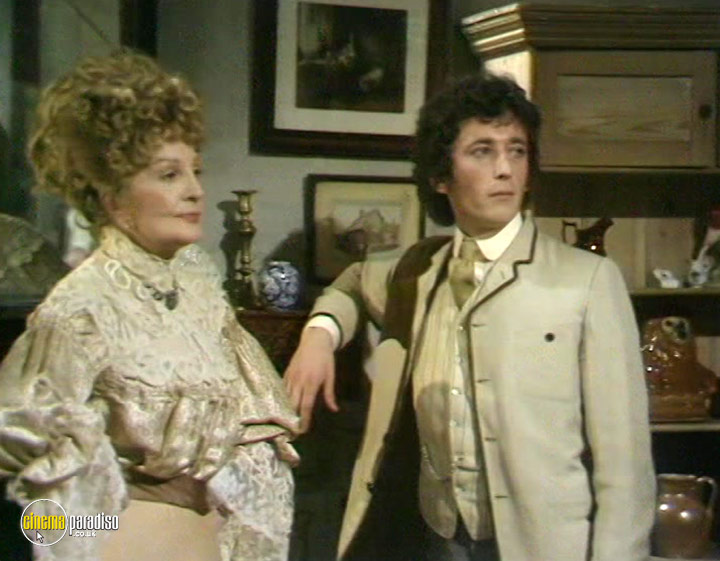
Around the time he attempted his first play, Widowers' Houses (1892) - which was broadcast by the BBC in 1949 and later elsewhere in 1955, 1960, 1965, 1975, 1985, and 1991 - Shaw joined the Fabian Society and his socialist worldview would impact upon his writing. Following stints as a music and a theatre critic, he completed Mrs Warren's Profession (1893), a bawdy comedy that was banned by the censor for eight years, and Arms and the Man (1894), a Ruritanian parody which became a popular success in spite of critical disdain. Curiously, they were both filmed in West Germany, in 1960 and 1958 respectively, before Mrs Warren was televised in 1962, 1964, 1977, and shown in UK cinemas in 2025 as part of the National Theatre Live initiative. One of two adaptations broadcast in 1972, Herbert Wise's BBC version cast Coral Browne as the prosperous brothel madam who has to hide the truth when her daughter (Penelope Wilton) comes to visit.
Having been reworked as the operetta, The Chocolate Soldier, by Oscar Strauss in 1908 (which was filmed in 1955), Arms and the Man has been adapted as a feature by Cecil Lewis in 1932, although it has since been confined to small-screen outings in 1946, 1948, 1955, 1957, 1971, 1975, 1976, 1982, and 1989. Richard Briers played Swiss captain Bluntschli opposite Alice Krige's Raina Petkoff in a 1983 BBC presentation that is twinned with a 1981 production of The Man of Destiny, an 1897 one-act comedy that centres on a battle of wits between Napoleon Bonaparte (Simon Callow) and the mysterious woman (Delphine Seyrig), who is trying to steal his papers. One of the four 'Plays Pleasant' that Shaw wrote, this has been televised on 15 other occasions (1939, 1947, 1950, 1953, 1955, 1958, 1959, 1960, 1963 (thrice), 1966, 1969, 1973, 1987).
Shaw wrote over 60 plays and has 266 citations on IMDB, with 11 of them coming for the BBC's Sunday Night-Theatre (1950-59), nine for ITV's Play of the Week (1956-66), and a further 10 for the BBC's Play of the Month (1968-77). Yet the dates betray the fact that programme makers in this country no longer consider GBS to be a tempting prospect for the sofa crowd (although he's still a draw for armchair radio listeners). Consequently, we shall restrict ourselves to listing the minor works with their screen dates from around the world, as none has been released on disc in this country: Candida (1894; 1939, 1946, 1953, 1956, 1958, 1960, 1961, 1962, 1963, 1964 (twice), 1967 (twice), 1969, 1970, 1973, 1974, 1978, 1982, 1983, 1984); The Philanderer (1898; 1955, 1957), Captain Brassbound's Conversion (1899; 1953, 1956, 1960, 1962, 1967); How He Lied to Her Husband (1904; 1931, 1937, 1960, 1963, 1969, 1988); John Bull's Other Island (1904; 1964); Passion, Poison, and Petrifaction (1905; 1939); Getting Married (1908; 1957, 1966, 1985), The Shewing-Up of Blanco Posnet (1909; 1969, 1976, 1997); Misalliance (1910; 1954, 1956, 1959); The Dark Lady of the Sonnets (1910; 1939, 1946); Fanny's First Play (1911; 1947, 1956, 1967), Overruled (1912; 1971); Great Catherine (1913; 1948, 1953, 1958, 1968); The Inca of Perusalem (1915; 1955); O'Flaherty VC (1915; 1967); Annajanska, the Bolshevik Empress (1917; 1939, 1969); Back to Methuselah (1921; 1952); A Village Wooing (1933; 1946, 1948, 1953, 1958, 1961, 1962, 1967, 1975, 1979); The Simpleton of the Unexpected Isles (1934; 1966); Geneva (1938; 1939); and Buoyant Millions (1948; 1949).
A profound influence on Noël Coward, You Never Can Tell (1895) is regarded as a minor effort. But it has been televised several times (1955, 1960 1963 (twice), 1967, 1973, 1980, 1986), with James Cellan Jones's 1977 BBC version having Judy Parfitt play Mrs Clandon, the mother of three who returns to Blighty after 18 years in Madeira, only for her innocent offspring unknowingly to invite their father to lunch. Robert Powell essays an amorous dentist, while Cyril Cusack steals scenes for fun as the waiter with a ready quip. Set during the American War of Independence, The Devil's Disciple (1897) was televised in 1949 and 1955 before Guy Hamilton directed Kirk Douglas as accidental rebel Dick Dudgeon, Burt Lancaster as the Reverend Anthony Anderson, and Laurence Olivier as General John Burgoyne in a 1959 feature version that has rather slipped from view. Further small screen adaptations followed (1964, 1965, 1973 [twice]) before Mike Gwilym, Patrick Stewart, and Ian Richardson took on the roles for a 1987 BBC production, which is available to rent from Cinema Paradiso.

Considered a riposte to William Shakespeare's Antony and Cleopatra (which was filmed in 1972, 1974, and 1983 and adapted by the BBC in 1981 ), Caesar and Cleopatra (1898) was one of several Shaw plays to be reworked for the big screen by producer Gabriel Pascal. Claude Rains and Vivien Leigh took the title roles in a 1945 Technicolor feature that was claimed to have been the most expensive made anywhere in the world to that time. John Bryan was Oscar-nominated for his art design, which included sand imported specially from Egypt. This was the first Shaw play to be photographed in colour and the last to be made during his lengthy lifetime. But it performed poorly at the box office and Leigh never recovered from the miscarriage caused by tripping on the set, as it triggered the manic depression that she battled for the rest of her life.
TV and short film versions of the play followed (1945, 1956, 1958, 1959, 1964, 1969, 1970, 1976, 2009, 2022), but it has never been particularly popular, with the same being true of Man and Superman (1902), which was adapted in 1956, 1960, 1967, 1982, 1984, 1987, and 2015 under its own title and in 1960, 1962, 1963, 1975, and 1984 as Don Juan in Hell, which was the name given to the third-act dream sequence that was omitted from early productions of this sly treatise on the theories of German philosopher, Friedrich Nietzsche. Neither version is currently available to rent, but we can bring you Major Barbara (1905), which was filmed during the Blitz by Gabriel Pascal, with a little help from an uncredited Harold French and David Lean, who edited the 1941 feature that starred Wendy Hiller as Barbara, the daughter of munitions manufacturer Andrew Undershaft (Robert Morley), who becomes a major in the Salvation Army, much to the chagrin of lovestruck Greek philosopher, Adolphus Cusins (Rex Harrison). This proved such a definitive interpretation that the play has only been adapted on three further occasions (1958, 1964, 1966).
Sadly, it's not possible to bring you any screen takes on The Doctor's Dilemma (1906). The 1963, 1966, and 1977 versions have long been forgotten, but Anthony Asquith's 1958 features should really be on disc, as it stars Dirk Bogarde as Louis Dubedat, the tubercular artist who is so worshipped by his wife (Leslie Caron) that she pleads with Dr Blenkinsop (Michael Gwynn) to save his life, even though the chances are slim. We are able to offer users two versions of Androcles and the Lion (1912), although not the ones produced in 1938, 1946, 1948, 1951, 1958, 1960, 1967, 1969, or 1983. Produced by Gabriel Pascal for RKO and directed by Chester Erskine (with uncredited help from Nicholas Ray), the 1952 feature adaptation stars Alan Young, as the Roman tailor who removes a thorn from the paw of the Barbary lion he names 'Tommy' and who repays the kindness when the Christian Androcles is sent to the Colosseum. A fine supporting cast includes Jean Simmons, Victor Mature, Elsa Lanchester, and Robert Newton, and, while the BBC's 1984 teleplay can't match such star wattage, it does boast Billy Connolly in the title role.
This version shares a disc with a 1973 BBC production of Pygmalion (1912), which pairs James Villiers and Lynn Redgrave as phonetics professor Henry Higgins and Eliza Doolittle, Cockney flower girl he wagers he can pass off as a lady. Leslie Howard and Wendy Hiller had taken the roles in Anthony Asquith's 1938 feature reading, which was the first of Gabriel Pascal's screen involvements. Howard took a co-director's credit and joined Hiller in landing an Oscar nomination. But, while Pygmalion was pipped to Best Picture by Frank Capra's You Can't Take It With You (1938), Shaw shared the Best Adapted Screenplay award with W. P. Lipscomb, Cecil Lewis, and Ian Dalrymple. There have been numerous variations (1935, 1937, 1942, 1947, 1950, 1954, 1956, 1957, 1958, 1959 (twice), 1960, 1962, 1963, 1964, 1967, 1968, 1976, 1977, 1982, 1983, 1988, 1994, 2005, 2017, 2020). Using the pseudonym Henry Paris, Radley Metzger rejigged Shaw's story for the porno chic classic, The Opening of Misty Beethoven (1976), in which sexologist Seymour Love (Jamie Gillis) turns Parisian prostitute Dolores Beethoven (Constance Money) into the winner of a magazine contest to find the most exciting woman. Four years later, Basu Chatterjee's Man Pasand (1980) put a Bollywood spin on the story with ev Anand and Tina Munim.

But the most celebrated reboot is George Cukor's My Fair Lady (1964), which won eight Academy Awards (including Best Picture and Director) in bringing Alan Jay Lerner and Frederic Loewe's hit Broadway musical to the big screen. An Oscar-winning Rex Harrison reprised his stage role of Higgins, although he was less than amused that co-star Julie Andrews was replaced by Audrey Hepburn. She had the last laugh, however, as she took home that year's Best Actress prize for Robert Stevenson's Mary Poppins. The show was also filmed to lesser acclaim for Egyptian (1969) and German (2002) television. In the teenpic era, Pygmalion was twice given a makeover. Robert Iscove's She's All That (1999), had Californian high schooler Zack Siler (Freddie Prinze, Jr.) being so cut up by his girlfriend dumping him for reality star, Brock Hudson (Matthew Lillard), that he makes a bet that he can turn nerdy Laney Boggs (Rachel Leigh Cook) into a prom queen. When R. Lee Fleming, Jr. reworked his script for Mark Waters's Netflix update, He's All That (2021), Lillard returned as Principal Bosch, while Cook played the divorced nurse mother of Padgett Sawyer (Addison Rae), a social media influencer from the wrong side of the tracks who strives to transform anti-social shutterbug Cameron Kweller (Tanner Buchanan) into the prom king at her posh school.
The 1919 play, Heartbreak House, also received a title change when Alexander Sokurov reworked the premise for Mournful Unconcern (1983), which was withheld by the Soviet authorities for four pre-perestroika years. Adaptations date from 1958, 1964, 1967, 1968, 1975, 1984, and 1992. But Cinema Paradiso can bring you the 1977 BBC Play of the Month version of a social satire set on the eve of the Great War that sees Ellie Dunn (Lesley-Anne Down) accept an invitation to a bohemian dinner party thrown by Hesione Hushabye (Siân Phillips). John Gielgud co-stars as Captain Shotover, who was self-mockingly based on Shaw himself.
The tone is markedly more sombre in Saint Joan (1923), which was filmed as a short with Sybil Thorndike the year before Renée Falconetti made screen history in Carl Theodor Dreyer's The Passion of Joan of Arc (1928). Out-ranking the numerous other adaptations (1946, 1956, 1962, 1967 (twice), 1969, 1971, 1978, 1979, 1997, 2006, 2017, 2020) is Otto Preminger's Saint Joan (1957), for which novelist Graham Greene recast the narrative as a flashback. Richard Widmark (The Dauphin) led a fine supporting cast that included Richard Todd (Dunois), Anton Walbrook (the Bishop of Beauvais), John Gielgud (Earl of Warwick), and Felix Aylmer (The Inquisitor). But all eyes were on 17 year-old Iowan debutant, Jean Seberg, who had been chosen by Preminger after a widely reported search for a Joan who was closer to the historical figure's own age.
Ensconced at Shaw's Corner in the Hertfordshire village of Ayot St Lawrence, Shaw himself was not averse to courting publicity, even if not all of it was positive. His views on the Great War and Irish independence had caused consternation, while he expressed admiration for the European dictators. Yet his standing in British society was enhanced after he was awarded the Nobel Prize for Literature in 1925 and, three years later, he became one of the first celebrities to be heard in a talking picture, when he directed himself in a short piece for Movietone News. The following year saw the premiere of The Apple Cart (1929), a dissertation on the value of the monarchy that was televised in 1959 and 1962 before the BBC's 1975 version revealed King Magnus (Nigel Davenport) seeking solace from Queen Jemima (Prunella Scales) and mistress Orinthia (Helen Mirren) when Prime Minister Joe Proteus (Peter Barkworth) starts conspiring to remove his few remaining powers in the name of democracy.
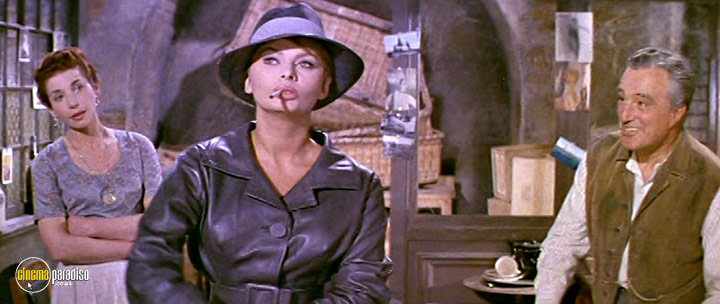
Despite being unimpressed with Hollywood during a 1933 visit to the United States (which he considered 'an awful country' that was 'illiberal, superstitious, crude, violent, anarchic and arbitrary'), Shaw wrote a screen adaptation of Saint Joan, as well as Pygmalion, which he insisted was filmed at Pinewood Studios. He was appalled when it won an Academy Award, which he considered an insult to his artistry. During his voyage back to Britain in 1933, Shaw started work on The Millionairess (1936), which was filmed in 1960 by Anthony Asquith, who teamed Sophia Loren and Peter Sellers as heiress Epifania Ognissanti di Parerga and Ahmed el Kabir, the Indian doctor who pulls her out of the Thames after she jumps into the river in frustration at not being able to find a worthy partner. Maggie Smith and Tom Baker (playing an Egyptian) assumed the roles for producer Cedric Messina's 1972 BBC version. Following renditions released in 1969, 1974, and 1984, Michael Philip upped the stakes in The Billionaire (2020), which saw South African heir Victor Ognisanti di Parerga find a soulmate in a male French doctor (Randy Wayne).
By now in his eighties, Shaw endured air raids during the Second World War and mourned the death of his wife, Charlotte. Focussing more on journalism than drama, he received the freedom of Dublin in 1946. Yet he continued to write occasional plays, including Shakes versus Shav (1949), a 10-minute puppet piece that sees Shakespeare and Shaw trade insults, which is surely ripe for animation? Shaw died at the age of 94 in November 1950. He has yet to be the subject of a biopic, although Dear Liar (1964) was based on Jerome Kilty's play about the correspondence between Shaw (Barry Morse) and actress Mrs Patrick Campbell (Zoe Caldwell), which was remade for television in 1981, with Edward Herrmann and Jane Alexander. A decade later, Alvin Rakoff adapted Hugh Whitemore's play, The Best of Friends (1991), about the friendship between Shaw (Patrick McGoohan), museum curator Sydney Cockerell (John Gielgud), and Dame Abbess Laurentia McLachlan (Wendy Hiller). The fact that there isn't even a decent documentary suggests the extent to which Shaw's stock has fallen. But he remains a towering figure in Irish literature, even though he rarely returned home after leaving Dublin at the age of 19 in 1876.
Mentioned films