As The Mastermind is announced among the marquee titles at the 69th BFI London Film Festival, Cinema Paradiso explores the career of its acclaimed director, Kelly Reichardt.
Thirty-one years have passed since Kelly Reichardt made her feature bow. The fact that she has only been able to complete eight more in that period speaks volumes for the inherent sexism of the American film industry, as she had to wait 12 years to raise the money for her sophomore outing. Yet Reichardt is also among the most feted independent film-makers, with her distinctive pictures regularly featuring in annual best film lists.
Cinema Paradiso members can follow her career by clicking on the titles that reveal the acknowledged influence of such screen masters as Hal Ashby, Robert Altman, Anthony Mann, Kenji Mizoguchi, and Satyajit Ray. But it's also possible to detect shades of Robert Bresson, Yasujir Ozu, and Vittorio De Sica in a minimalist style that feels simultaneously sedate and gritty.
Reichardt is primarily interested in characters 'who don't have a net, who if you sneezed on them, their world would fall apart'. But while critics have picked up on her eye for everyday detail and her acute socio-political insight in labelling her a 'neo-neo-realist' and a key exponent of 'slow cinema', Reichardt's work is marbled through with humanist compassion and a delicately deceptive wit that makes it both distinctive and irresistible.
At the Scene of the Crime
Kelly Reichardt was born in Miami, Florida on 3 March 1964. She was raised in Dade County by parents who worked for the local police force. Her mother was a narcotics agent, while her father was a crime-scene investigator and Reichardt first became interested in photography by looking at the forensic (and sometimes gruesome) images that he brought home. When her parents separated when she was eight, she remained with her mother, while her father moved in with four other divorced cops. Eventually, however, both parents married again and had new families.
Reichardt has often complained that she grew up in 'a cultural desert'. She later wrote for the online archive, This Long Century, 'Despite my parents' line of work, despite the influx of Cuban exiles and boatloads of Haitian refugees floating up on the shores and despite Miami being the murder capital of the country - it seemed a pretty dull place to grow up.'
The article continued: 'I grew up in Miami in the 1970s. My father used to come home early in the mornings after a long night of overtime, unclip the holster from his belt, pour himself a tall glass of milk and say, "Ah crime pays."
'My mom carried her holster in her purse and in a pinch was as likely to pull out a ratty hairbrush as a 38. My dad worked the midnight shift. His car had Dade Country Crime Scene painted on the sides. My mom was an undercover narcotics agent and always had a different car - ones that were nondescript and which apparently you were not supposed to transport children in. I know this because my sister and I did a lot of crouching on the floor when we would enter certain parking lots. We would stay hunched over - mind you I was probably three feet tall at the time and my hunching was unnecessary - and move quickly into our own car where we again would lay low until we were outside the parking lot. Suitcases might appear from a trunk and be moved to another waiting car.'
As she grew up, Reichardt endured the frustration of 'being a teenager in an endless string of sunny days in a city of retired people'. She continued: 'Throughout the late 60s and all through the 70s, I spent a lot of time on Miami Beach - first with my grandparents and later as a teenager taking my first photos. Somewhere in the early 80s, having secured a job at Peaches Records and Tapes, I quit The Clog Shop on 163rd Street and dropped out of high school. I was no longer living at either of my parent's houses (they divorced when I was eight) but was bouncing around between my friends' parents houses, my grandmother's condo in a retirement village and pretty much blowing it in every situation I landed.'
Having obtained her General Educational Development certificate, Reichardt enrolled at Miami Dade Community College. As she had started taking pictures with her father's crime-scene camera, she also took classes at the Bob Rich School of Photography on West Dixie Highway, which would become the biggest video porn store in Miami. Armed with $16 after winning a college snapshot competition, Reichardt decided to leave the city and hitched a ride to Boston, where she crashed with friends after registering at the Massachusetts College of Art and Design. As she recalled, 'I ended up going to the Museum School in Boston. There was a small film - you couldn't really call it a department - it was like 10 students making non-narrative Super-8 films. I did a trilogy of road movies while I was there.'
Deeply influenced by the photography of Andy Sweet (who would be murdered in his twenties), Reichardt realised that the pictures she had taken in Florida had been sub-standrd and she tore them all up. Her sole ambition by the late 1980s was to make movies.
Rivers of Grass
Desperate to work in films, Reichardt shot the videos for two songs by Dumptruck, 'Back Where I Belong' and 'Secrets' (both 1986). She then landed the job of wardrobe supervisor on Hal Hartley's The Unbelievable Truth before helping out with the props for Norman René's pioneering AIDS drama, Longtime Companion (both 1989). She would also serve as art director on Jan Oxenberg's documentary, Thank You and Good Night (1991), and assistant set decorator on David Burton Morris's Jersey Girl (1992). But her props master gig on Todd Haynes's Poison (1991) - in which she also played a townsperson in the 'Horror' segment - proved to be much more significant, as they became firm friends, with Haynes (who is also the subject of a Cinema Paradiso Instant Expert's Guide ) going on to produce five of Reichardt's pictures.
While working together on a video for the heavy metal band, Helmet, director Jesse Hartman suggested that Reichardt should return to Florida to make a crime drama in the Everglades. He offered to produce the project and, despite not being keen to return home, she eventually agree. 'To me,' she remembered, 'it was like, Anywhere but there! It took me 19 years to get out of Miami; I didn't want to go back. Anyway, a month later we were living in my father's house with his wife and my 12 year-old sister. We spent all our days driving around the Everglades and all over Broward county. We talked about the idea of updating the rebel character in the context of a road movie. We wondered how the lone-rebel, a fixture in every road movie, could exist in the '90s when even the Burger King slogan tells you to "Break the Rules".'
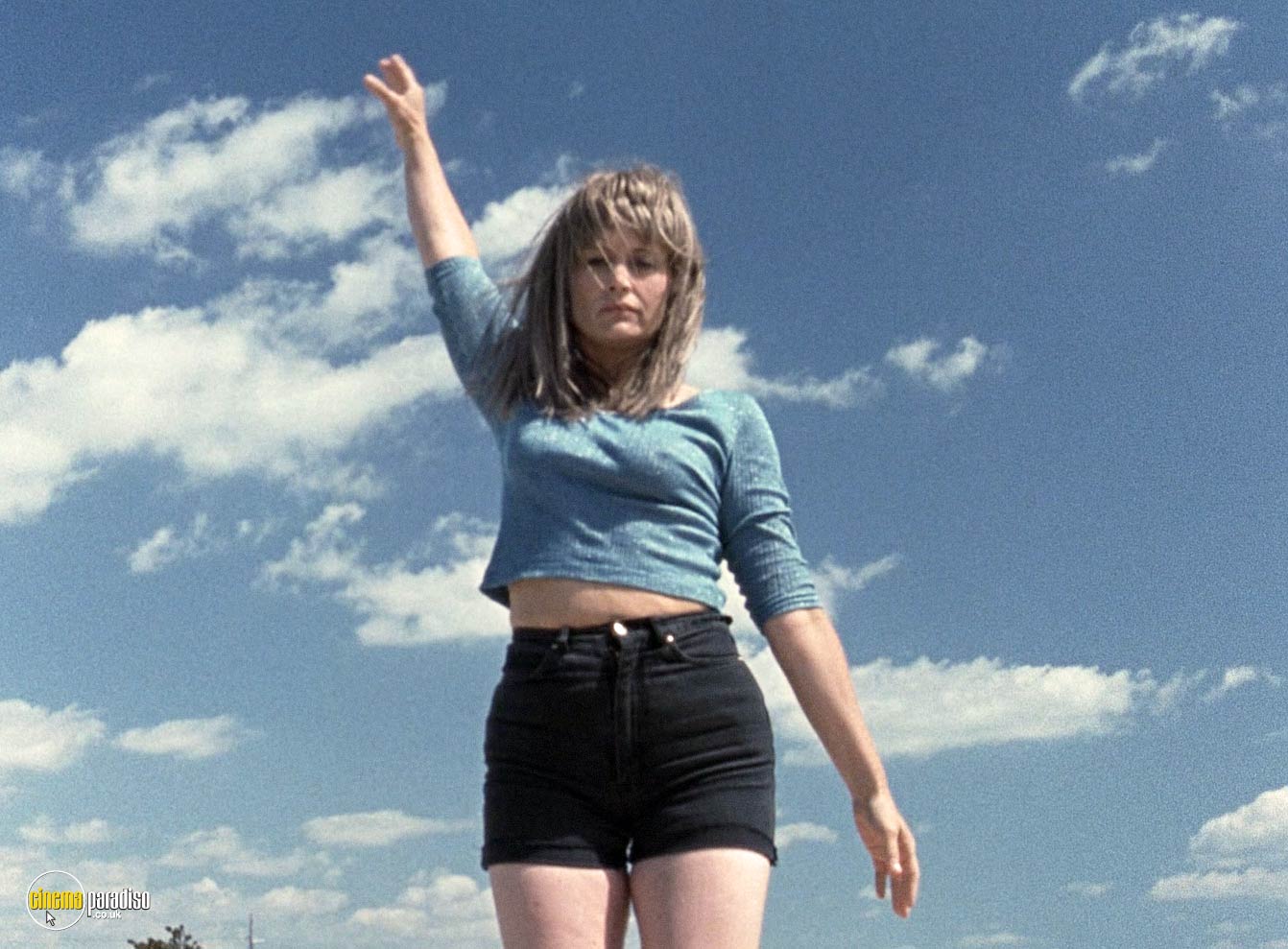
Seeking to subvert the comventions in such fleeing fugitive features as Joseph H. Lewis's Gun Crazy (1949), Jean-Luc Godard's À bout de souffle (1960), and Terrence Malick's Badlands (1973), River of Grass took its name from Marjory Stoneman Douglas's famous 1947 guide to the Everglades and drew on Reichardt's father's police experience. Indeed, Cozy (Lisa Bowman) is even the daughter of a cop, Jimmy Rider (Dick Russell), who has been suspended for losing his gun. Emotionally detached from her children, Cozy is bored and seeks excitement with Lee Ray Harold (Larry Fessenden), a bar bum who persuades Cozy to break into his friend's house so that they can use the pool. He shows her a gun that he has found and she jumps out of the water to admire it. However, the owner is disturbed, and when he comes down to investigate, the gun goes off.
Working on a minuscule budget, Reichardt had cinematographer Jim Denault shoot in 16mm and the boxy 1.33:1 aspect ratio. She also had him keep the camera relatively still, with the odd handheld sequence being supplemented by travelling shots within vehicles. But the square frame serves to reinforce the limited options of the couple on the lam, while also harking back to the aesthetic of so many postwar B noirs.
Money was so tight that Reichardt gave editor Larry Fessenden little creative space, as she was virtually operating on a 1:1 shooting ratio. However, he gave the action an offbeat rhythm and later cast Reichardt as a party girl on the phone in his 1995 horror flick, Habit. This is the only one of her films that Reichardt has not edited herself, but she still touched on such recurring themes as the everyday problems facing working people, the status of women, and the impact of progress upon the landscape. She also gave the story an ambiguous ending, a trait that has become so associated with Reichardt that it's been claimed her narratives 'dissolve' rather than 'resolve' themselves.
Looking back, Reichardt opined, 'I don't feel like it's totally my voice yet. My references feel close to the surface. I don't remember seeing Godard at that point, though I must have. But, clearly, I was taking from Paul Morrissey [particularly, Trash, 1970],'
Yet, despite the encouraging reviews, a nomination for the Grand Jury Prize at the Sundance Film Festival, and three Independent Spirit nods (including for Best Director), Rivers of Grass was barely seen. Moreover, it did little to raise Reichardt's profile in movie circles and she spent much of the next few years taking teaching jobs to pay off her credit cards. She did have irons in the fire, although nothing came of them. 'I had a script,' she told one reporter. 'Jodie Foster had a company, and I went out to L.A., and she was going to produce it.' But finding funding proved a problem and a deal was never struck. As Reichardt mused, 'I could go to Jodie Foster's office during the day, but I had nowhere to sleep at night.'
After spending six week's on a producer friend's couch, Reichardt returned to New York and spent time assisting a friend who booked bands. She recalls Pussy Galore guitarist Julia Cafritz telling her that no one would give her money for a film because she 'reeked of desperation'. Deciding to play the long game, she started teaching at the School of Visual Arts, and, later, at New York University. But the hiatus left its mark, as she later revealed: 'I had 10 years from the mid-1990s when I couldn't get a movie made. It had a lot to do with being a woman. That's definitely a factor in raising money. During that time, it was impossible to get anything going, so I just said, "F**k you!" and did Super 8 shorts instead.'
Based on Herman Raucher's 1977 novel, Ode to Billy Joe, and running for 48 minutes, Ode (1999) is more of a featurette than a short. It centres on Bobbie Lee (Heather Gottlieb), an innocent member of a Mississippi Baptist community who takes a shine to Billy Joe (Kevin Poole), a local rebel who adopts a bristling attitude to mask his sexual insecurity. With producer Susan Stover recording the sound and Reichardt operating the Super-8 camera, this crew-of-two saga examines societal pressure to conform and the psychological impact of a crisis of self-identity.
Folk musician Will Oldham contributed a catchy guitar score and he would be rewarded with a plum role when Reichardt finally returned to features after 12 years. In the meantime, she made two more shorts, Then a Year (2001) and Travis (2004). The former juxtaposed bucolic Super-8 footage with an audio collage of snippets gleaned from true-crime TV shows, while the latter was a more abstract work that criticised President George W. Bush for launching the Iraq War in 2004. None of these experimental triptych is widely available, even online. But Reichardt is happy to leave them in the shadows. 'It's alright,' she told Alex Heeney and Orla Smith, the editors of an e-book of essays on her oeuvre, Roads to Nowhere. 'It's good they are lost. They were just learning tools. I was trying to find ways to keep learning and keep working. I realised that the feature world in the '90s was just not a welcoming place. I think you could talk to any of my female contemporaries and find that to be true.' But the new millennium would bring new options and opportunities.
Oregon With the Wind
Despite her eagerness to leave Florida behind, Reichardt planned to return to the state to make her second feature. She told Todd Haynes in an interview for Bomb magazine: 'It's called The Royal Court. It's one location, an apartment complex in Miami. It begins with this homicide detective who comes home and finds there's been a suicide in his neighbour's apartment. The detective ends up taking the widow back to his place. Which is actually the true story of how my father and stepmother met.'
While she was striving to raise funds, Reichardt drove Haynes to Portland, Oregon after his film, Safe (1995), had played at the Seattle Film Festival. He introduced her to producer Neil Kopp and writer Jonathan Raymond, who would play a key part in transforming her fortunes. However, another decade would pass before the pair finally collaborated and Reichardt committed herself to making pictures in the Pacific Northwest.
She had read Raymond's debut novel, The Half-Life, and become convinced that it would make a wonderful film. As, she didn't have the money to tell a story across three time zones, she asked if she could adapt one of his short stories for Old Joy (2006), although she didn't know until she started shooting whether she was going to make another medium-length offering or her long-delayed second feature. While amassing funds for the project, she worked as an associate producer on the TV series, America's Next Top Model.
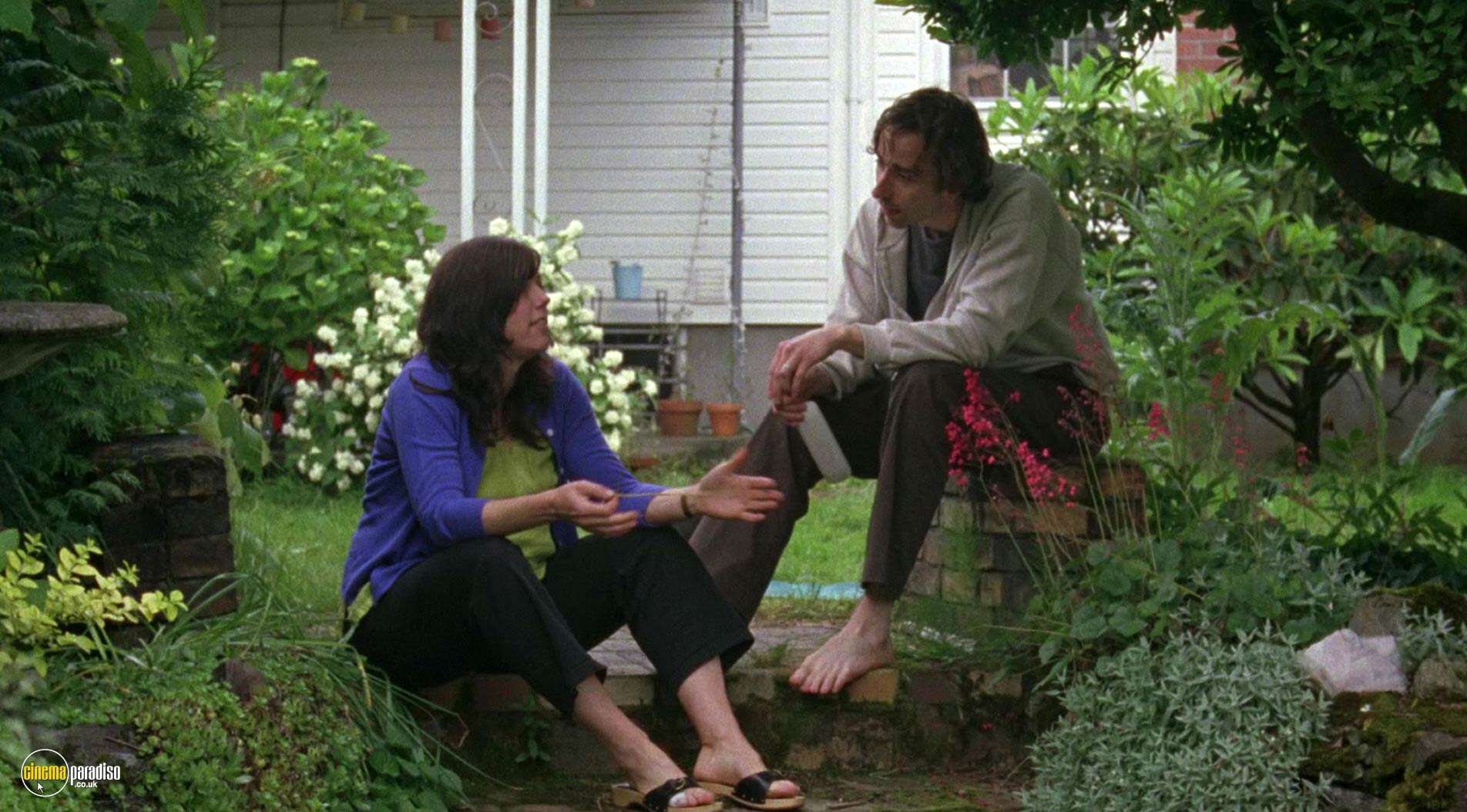
Living in a small town outside Portland and expecting his first child with wife Tanya (Tanya Smith), Mark (Daniel London) is surprised when an old friend from his chequered past calls out of the blue. An old hippie who has yet to put down roots, Kurt (Will Oldham) suggests that they go camping close to the Bagby Hot Springs in the Cascade Mountains. Taking Mark's dog (actually Reichardt's pet, Lucy), the pair make camp and spend a lazy couple of days drinking and taking pot shots at beer cans with pellet guns.
Eventually, after consciously skirting any topics that would force them to confront the realities of their contrasting situations, the pals open up while soaking in the warm spring water. For all his outsider posturing, Kurt proves to be surprisingly astute in his observations and Mark returns home with a new perspective on his existence. Kurt, however, has nowhere to go and simply drifts away.
With Todd Haynes serving as executive producer, Old Joy is a quiet rumination about the impact of time upon friendship. A guitar and piano score by Yo La Tengo reinforces the sense of melancholy that runs through the picture, as Kurt indulges in the deceptively sagacious philosophical musings about sorrow being nothing more than worn out joy that help Mark reconcile himself to his wild past and the new responsibilities of his future.
Shooting in natural light on Super 16mm stock, cinematographer Peter Sillen makes evocative use of the woodland around Estacada, as Reichardt dispenses with traditional narrative to observe two men shedding their inhibitions in order to share their innermost hopes and fears. Raymond's story may provide the basis, but it's Reichardt's insights into human nature - specifically male insecurity and fragility in the face of societal expectation - that makes this both moving and amusing.
With sound man Gabriel Fleming being the only other person involved, the entire cast and crew could fit into the station wagon that took them from their lodgings to the set. Reichardt was the only woman and she would not return to the theme of masculinity in crisis for another 15 years. But her deliberations found favour with a number of influential critics, who compared her use of long takes and loquacious conversation to Robert Bresson. Yet, while Reichardt became the first American to win the Tiger Award at the Rotterdam Film Festival, Old Joy received only a limited release.

Nevertheless, Reichardt had been noticed and she was able to raise $300,000 for her next venture (which represented a 10 times budgetary increase). Filmed in just 18 days, Wendy and Lucy (2008) was again drawn from a story in Jon Raymond's Livability collection, 'Train Choir'. This time, he helped with the screenplay, while Kopp and Anish Savjani were joined as producers by Larry Fessenden.
Hailing from Indiana, Wendy Carroll (Michelle Williams) is driving through Oregon with her dog, Lucy (again Reichardt's own pet), en route to Alaska, where she hopes to land a job in a cannery. However, her trusty Honda breaks down in a hardscrabble town on the outskirts of Portland and she is dismayed to learn from the mechanic (Will Patton) that it will be expensive to repair. Short of money, Wendy tries to shoplift a couple of cans of dog food from a supermarket and is held in the manager's office until the police come. By the time they release her, however, Lucy has disappeared.
Forced to sleep in her vehicle in a Walgreen car park, Wendy befriends the store's ageing security guard (Walter Dalton). But she is unable to find Lucy and is viewed with suspicion in certain quarters when she makes enquiries. Eventually, after encounters with a nomadic hipster (Will Oldham) and an angry man in the woods (Larry Fessenden), she discovers that Lucy was caught by the dogcatcher and has been rehoused by the local pound. Wendy finds the house and promises her pet that she will return to claim her before she dejectedly catches a slow train north, with a few dollars in her pocket donated by the elderly security guard, who can barely afford the gift.
Released in the middle of the economic downturn that followed the Credit Crunch, Wendy and Lucy could not have been more timely in its depiction of single women trapped in poverty. However, it came at a time of personal tragedy for Williams, as partner Heath Ledger had died earlier in the year. Adopting an androgynous appearance to play against the persona she had developed in winning two Golden Globes and an Emmy as rebel Jen Lindley in Dawson's Creek (1998-2003), Williams conveys both vulnerability and mettle in facing disappointment and distress.
Once again, critics felt that this Super 16mm study of a character struggling on the margins of society had the feel of Bressonian minimalism. But New York Times critic, A.O. Scott, declared it to be a work of 'Neo-Neo-Realism'. As debate raged about the validity of the term, Reichardt proved reluctant to be identified with any kind of movement and insisted that her films were 'just glimpses of people passing through'
Debuting in the Un Certain Regard strand at Cannes, the film earned Lucy the Palm Dog award that has been celebrated in a Cinema Paradiso article. Independent Spirit nominations for Best Feature and Best Female Lead followed, as global box-office receipts passed the $1 million mark and the American Film Institute proclaimed it the film of the year. But, while critics penned earnest articles about the Reichardt aesthetic, she started work on picture that was very different to anything that had come before - while also being curiously similar.
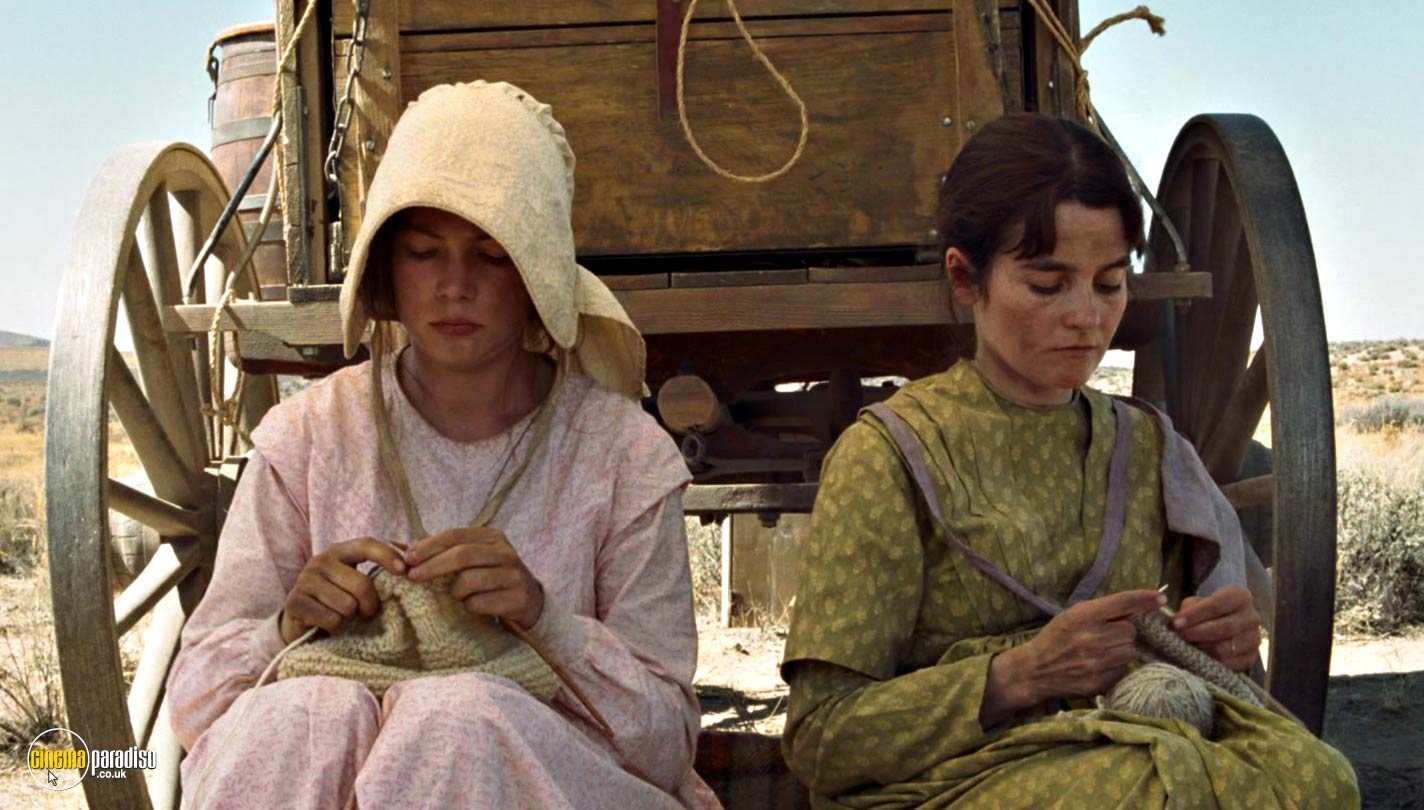
In 2007, Jon Raymond was tasked with finding a suitable name for a new golf course in Oregon. During the course of his research, he came across the name of Stephen Meek, a frontier guide who had led a wagon train of pioneers from Fort Laramie to the Willamette Valley. In following the Oregon Trail across the High Desert in 1845, Meek had decided to take a horse trail that would later bear his name and, as a result, several of his charges perished because of the arduous nature of the terrain. Scripted by Raymond alone, Meek's Cutoff (2010) would be Reichardt's first period picture and the first she shot in 35mm with new cinematographer, Christopher Blauvelt, who has been behind the camera of all of her subsequent features.
When Stephen Meek (Bruce Greenwood) is hired to lead a wagon train on a two-week trek across the desert, concerns are raised about his suitability for the task. No objections are raised by Solomon Tetherow (Will Patton), Thomas Gately (Paul Dano), or William White (Neal Huff) when Meek proposes an alternative route, but their respective wives - Emily (Michelle Williams), Millie (Zoe Kazan), and Glory (Shirley Henderson) - have to suffer in silence as their menfolk prevaricate, as food and water supplies start to dwindle.
Even though Meek captures a Cayuse Indian (Ron Rondeau) in the hope he can lead the party to some fresh water, he proves unable to communicate with him. Losing patience, Emily tries to make herself understood, as some accuse the captive of secretly signalling to his tribe so that he can lead them into an ambush. However, the Cayuse merely wanders away, leaving Emily to seize the reins in the hope that she can find a way back to the trail.
Viewing a true story from the perspective of the women who were forced to look on powerlessly, as their opinions were disregarded by the arrogant menfolk, this was seen by many as a feminist Western. However, while Reichardt revealed that she had employed the 1.33:1 Academy ration to place events within 'the view from inside a bonnet', she disliked the term and let slip that she had been influenced in her depiction of a leader out of his depth by President George W. Bush's handling of the war in Iraq. As she told an interviewer, 'Here was the story of this braggart leading a bunch of people into the desert without a plan and becoming completely reliant on the locals who are socially different from him and who he is suspicious of. All of which seemed relevant to the moment.'
Exploring the need to maintain moral standards during a desperate struggle for survival, Meek's Cutoff echoed Reichardt's earlier studies of those on the fringes of society, while also drawing parallels between the historical belief in America's Manifest Destiny and the rise of populist nationalism that would ultimately propel Donald Trump into the White House. It also broke with generic convention in removing the heroic element from the frontier movie myth and suggesting that the country was founded on blunders and butchery rather than gloriously decisive actions.
Once again stopping short of a resolution, Reichardt left the audience to reach its own conclusions. The film was positively received at Venice, but it struggled at the domestic box-office and had to be content with cult status. Executive producer Todd Haynes was certainly impressed and hired Raymond to script his five-part HBO adaptation of James M. Cain's Mildred Pierce (2012), with his Emmy nomination echoing Ranald MacDougall's Oscar nod for the 1945 Michael Curtiz version that had earned Joan Crawford the Academy Award for Best Actress.
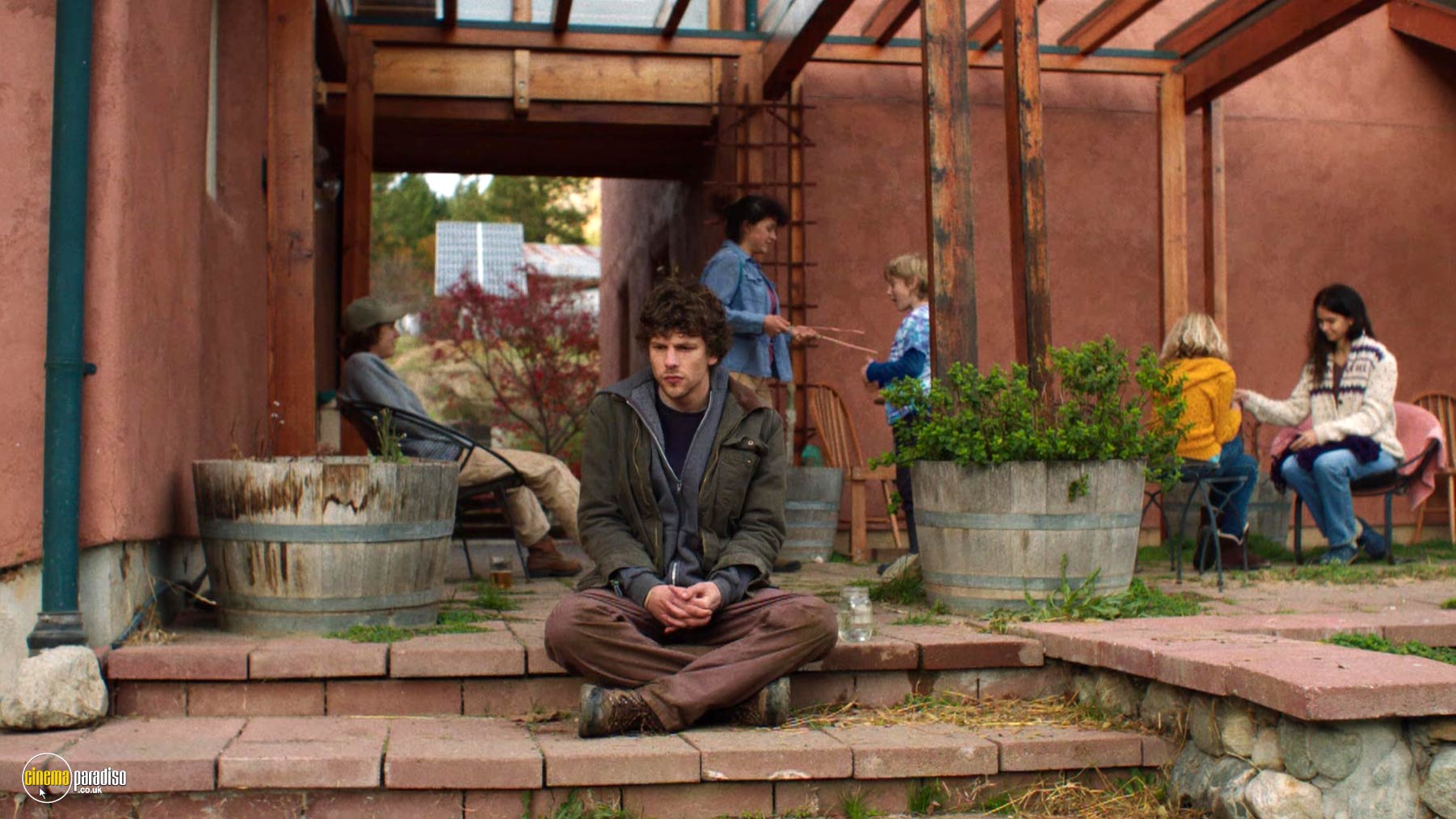
Haynes and Fessenden also signed on as execs alongside producers Neil Kopp and Anish Savjani for Reichardt's next feature. The first to be shot in a digital format and her first attempt at a political thriller, Night Moves (2013) found itself in trouble when producer Edward R. Pressman sued because Reichardt and Raymond's original screenplay reportedly overlapped with Edward Abbey's 1975 novel, The Monkey Wrench Gang, which Henry Joost and Ariel Schulman were planning to bring to the screen. In fact, Raymond got the idea for the screenplay when he began wondering about the impact of environmental issues on the landscape while staying on the farm of some friends. The suit was dropped after negotiations behind the scenes, but it cast a pall over what many consider to be Reichardt's least complete mid-period picture.
Josh (Jesse Eisenberg) lives off the grid in a yurt on an organic farm collective alongside Surprise (Alia Shawkat) and Anne (Katherine Waterston). He is furious that a hydroelectric dam is having an effect on the land around the farm and joins forces with eco activist Dena (Dakota Fanning) and ex-Marine Harmon (Peter Sarsgaard) to buy a boat and plant a homemade bomb at the base of the dam wall.
Following the mission, Josh orders the others never to contact him again. But Harmon becomes concerned that Dena will go to the police after she learns that a camper had been drowned in the rush of water following the explosion. Urging Harmon not to panic, Josh seeks out Dena at the sauna where she works. He silences her and tries to start a new life, but realises that re-integrating into a consumerist surveillance society might be easier said than done.
Shot in darkness and accompanied by Jeff Grace's brooding score, the boat raid is unbearably tense, as Josh, Dena, and Harmon's terrorist inexperience threatens to kybosh their plans. But, after it debuted at Venice, Night Moves drew mixed reviews, with some critics averring that Reichardt had strayed too far out of her comfort zone in seeking to connect with the mainstream. This was certainly her most stylistically conventional film, but it still centred on the marginalised and the difficulty of living according to one's principles in a world in which it's becoming increasingly difficult for individuals to make a difference.
Despite winning the Grand Prix at the Deauville Film Festival, the picture grossed only $858,500. Taking stock, Reichardt returned to teaching at Bard College in New York. Todd Haynes had made Superstar: The Karen Carpenter Story (1988) here and it provided Reichardt with a way to recharge her creative batteries, while also supporting emerging talent. During this stint, however, she decided to take a break from Oregon and from collaborating with Jon Raymond. in order to explore pastures new.
Venturing Further Afield
Although Reichardt was looking to spread her wings, she retained the services of producers Neil Kopp and Anish Savjani and trusted execs Larry Fessenden and Todd Haynes. However, she turned to Montana author Maile Meloy for a fresh source of inspiration and found what she was looking for in her 2009 short story collection, Both Ways Is the Only Way I Want It.
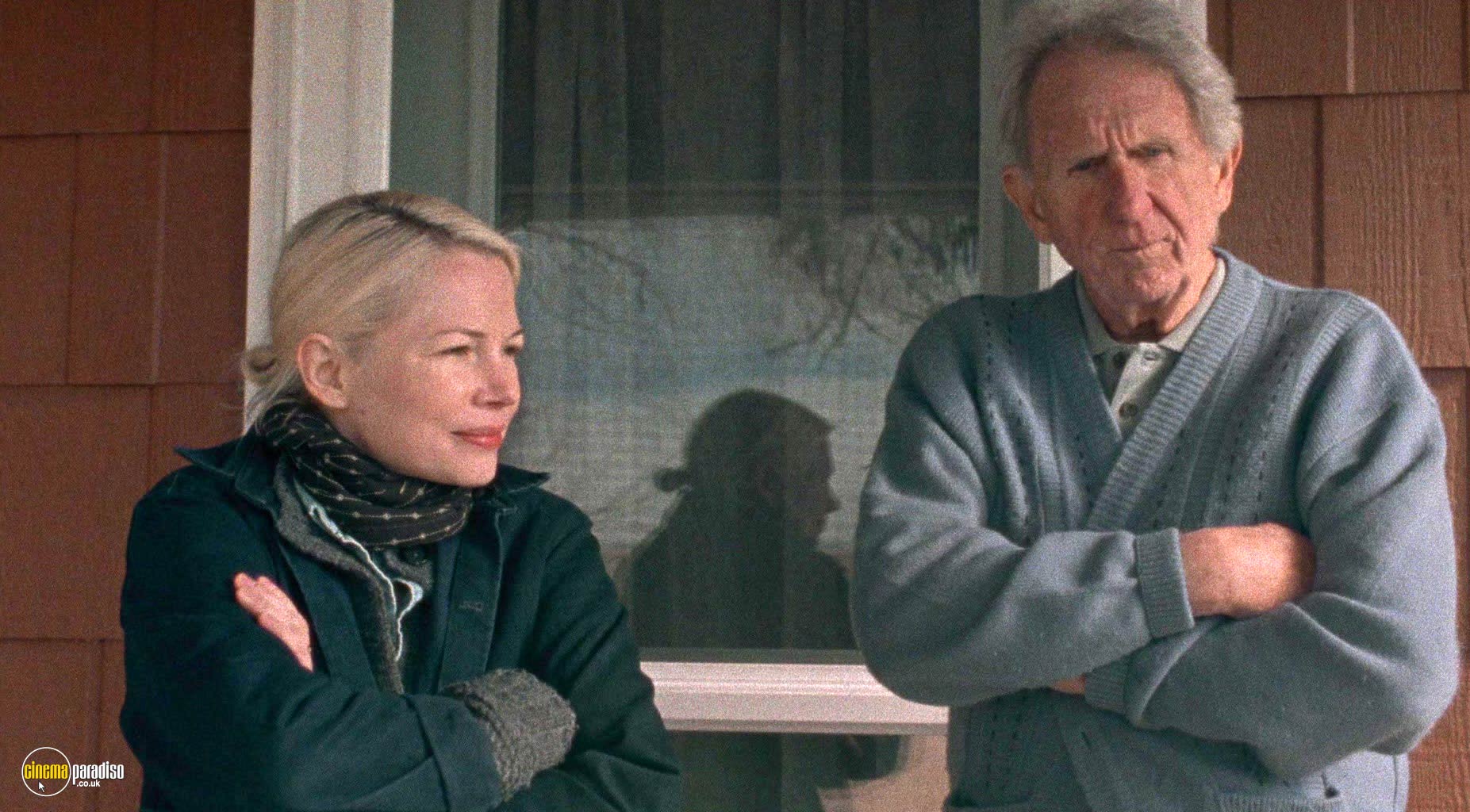
The three vignettes in Certain Women (2016) are based on 'Tome', 'Native Sandstone', and 'Travis, B,' - although they are not named on screen. Although Jeff Grace composed a guitar piece, it's only heard over the closing credits, as Reichardt dispensed with non-diegetic music and made repeated use of framing and detaching strategies to present the principal female characters in an isolation that reinforces how difficult it is for women to be seen and heard clearly in the modern world.
In the first story, Livingston lawyer Laura Wells (Laura Dern) has to tell client William Fuller (Jared Harris) that his claim for a disability allowance following an accident at work has been denied. Refusing to believe a woman, Fuller insists on consulting a male lawyer, who confirms that he disqualified himself from future compensation by accepting a small payout shortly after he was injured. That night, Fuller takes the security guard hostage at his old place of employment and the police persuade Laura to enter the building to negotiate with him. She reads him his case file and he decides to end the siege on hearing that he has been duped. He asks Laura to stall at the front door so that he can escape round the back, but she betrays him.
Laura is having an affair with Ryan Lewis (James LeGros), who is in the process of building a new house in the country with his wife, Gina (Michelle Williams). Their teenage daughter, Guthrie (Sara Rodier), despises both her parents and can barely hide her disgust when they pay a call on Albert (René Auberjonois), an elderly man who has tentatively agreed to let them have the pile of sandstone blocks in his front garden. Gina (who is secretly recording the conversation) is annoyed that Albert will only speak with Ryan and she chides him on the way home for not including her in the deal. Albert watches from the window, as the stones are loaded on to a truck. He ignores Gina's wave, but she can't bring herself to admit that she isn't sure how she will be able to use the old school blocks in her new build.
Living alone, Jamie (Lily Gladstone) cares for the horses at a stable outside Belfry. One night, she sees cars pulling into the church hall and finds herself in a night school class on education law being given by Livingston lawyer, Beth Travis (Kristen Stewart), She asks for directions to the diner at the end of the session and Jamie sits with her as she complains about the eight-hour round trip to teach a class she doesn't want to do. Jamie is intrigued by the city slicker and falls into a pattern of attending the seminar and watching Beth eat. Beth is taken aback when Jamie brings one of her horses along and insists on trotting them to the diner. But Jamie is the one who is astonished when Beth quits without warning and she is hurt when Beth shrugs off a surprise visit in the big town.
On her way back to Belfry, Jamie falls asleep at the wheel and careers into a field. She seems okay and no charges appear to be laid. But Fuller is locked up and Laura comes to apologise for snitching on him and agrees to write to him because he's so lonely. Jamie keeps tending her horses, while Ryan fusses over Gina for hosting a barbecue at the house site. She looks at the sandstone blocks that sit untouched in the yard and rues her pyrrhic victory.
Having premiered at Sundance, Certain Women won the prize for Best Film at the London Film Festival. Reichardt and Gladstone were also nominated at the Independent Spirit Awards. The reviews largely expressed relief that Reichardt was back on firm ground and she celebrated her biggest box-office success to date, as the film recouped three-quarters of its $2 million budget. Shooting in Super 16mm again, she shifted her viewpoint slightly to reflect on the fact that growing numbers are being pushed to the margins, as diverging pay scales and divisive millennial attitudes corrode the American Dream by ensuring that the US is no longer a land of opportunity for all.
In October 2016, Reichardt announced that she was going to team with Patrick DeWitt on an adaptation of his Europe-set Gothic novel, Undermajordomo Minor. Almost a decade later, however, the project seems to have stalled permanently, but she did make the four-minute experimental documentary, Owl (2019), which centres on the efforts of a crew to get a close-up of bird in the woods.
She also bought a house in Portland. 'I'm 49 years old,' she told a reporter, 'and I've gone out to Oregon and in the course of eight months I stayed in 21 different places. And I thought: Jesus, I'm nearly 50 and here I am still couch-hopping. I'm so pathetic; this is such a pitiful existence. I've finally outdone the Kurt character in Old Joy.' Her commitment to Oregon also prompted a reunion with Jon Raymond, as they returned to The Half-Life, the novel that had first captured Reichardt's imagination almost two decades earlier.
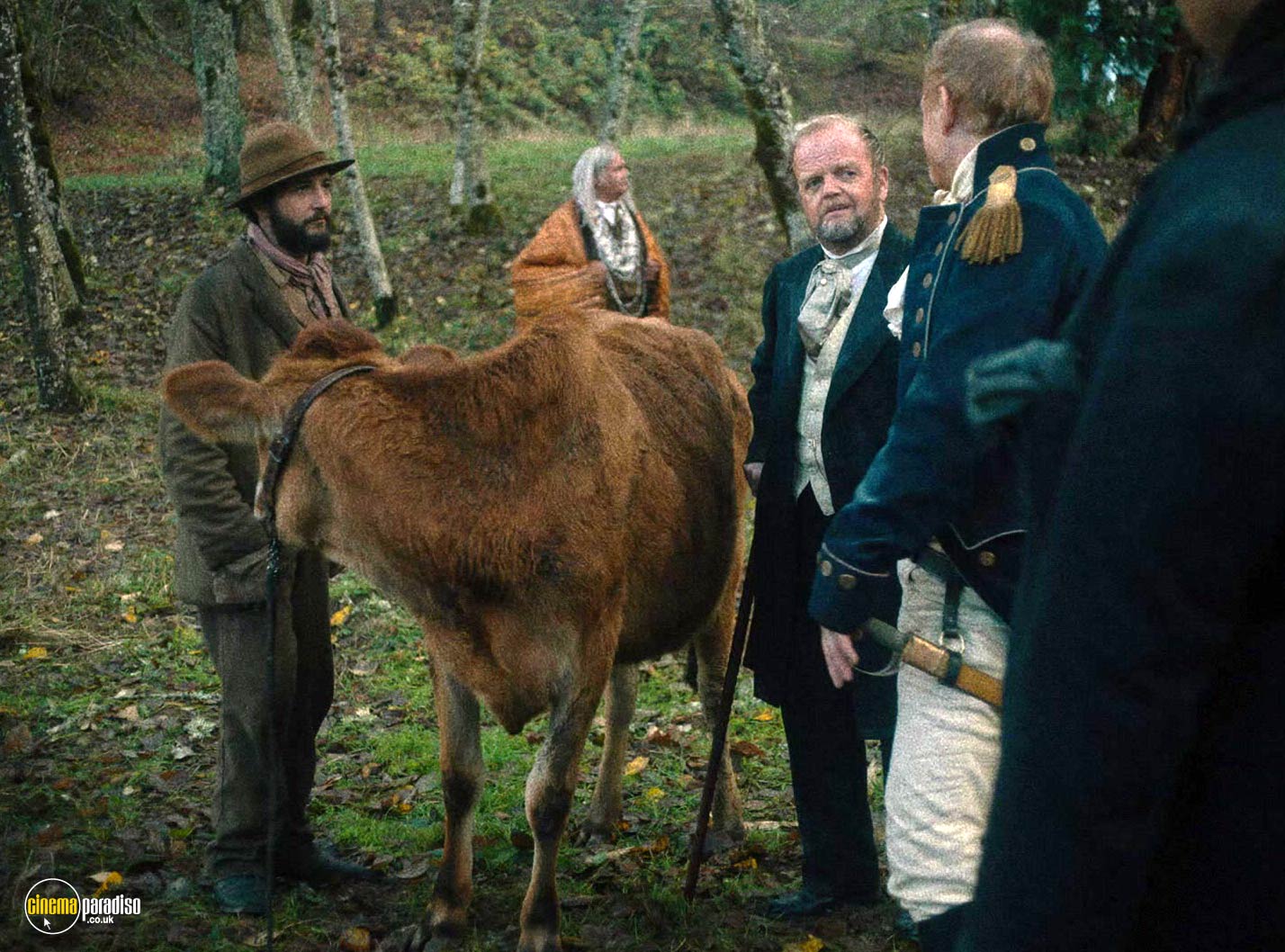
As the original text has dual storylines that spanned 160 years, Reichardt and Raymond decided to focus on one aspect in First Cow (2019). He wrote the first draft and passed it over to his director to let her work on the characters and start visualising the look of the film and what she will require of her craft departments. 'When I get the first pass of the script,' Reichardt told Smith and Heeney in Roads to Nowhere, 'I immediately break it all down, going back to note cards. Film is really all about time and space, so I have to figure things out beat to beat. Making a film, from beginning to end, it's building things up and breaking them down, and building it up again.'
The story is set in a small Oregon County town in 1820, where Otis 'Cookie' Figowitz (John Magaro) becomes friends with Chinese immigrant, King-Lu (Orion Lee), when they start an illegal baking business and steal milk for the delicious buttermilk biscuits from a cow belonging to wealthy English trader, Chief Factor (Toby Jones), who lives in a large house away from the squalor and bustle of the town, where Cookie and Lu find their customers. Cookie works for a band of rowdy fur trappers, while Lu is on the run for killing a Russian. They decide to make a fast buck with their cakes and head for San Francisco. But things start to go wrong when the Chief Factor asks Cookie to make him a clafoutis in order to impress an important guest.
Working with her biggest budget to date, Reichardtt had to contend with shorter shooting days, as her crew was unionised. However, she enjoyed the process and working again with Lily Gladstone (who plays the Chief Factor's wife), Alia Shawkat (who cameos as a woman with a dog), and René Auberjonois, whose appearance as a man with a raven proved to be his swan song.
Influenced by Frederic Remington's series of paintings entitled The Color of Night, the visuals and tone of the film also owed much to Kenji Mizoguchi's Ugetsu (1953) and Satyajit Ray's Apu trilogy, which Cinema Paradiso users will know is made up of Pather Panchali (1955), Aparajito (1956), and The World of Apu (1959). Reviews after screenings in Telluride, New York, and Berlin were glowing and Reichardt hoped for her biggest success. But A24 was forced to pull the film from cinemas during the Coronavirus lockdown and it was mostly seen on streaming sites. Nevertheless, it brought Reichardt another Independent Spirit nomination for Best Director, while the picture featured in many critics' end-of-year lists.
During the pandemic, Reichardt contributed two shorts to the 'Artists on Artists' series curated by This Long Century, with Bronx, New York, November 2019 showing Michelle Segre working on sculptures in her studio, and Cal State Long Beach, CA, January 2020 (both 2021) was a wordless profile of sculptor Jessica Jackson Hutchins. Much to the frustration of completists, neither film is easy to find and the same goes for the efforts of fellow contributors, Albert Serra, Deborah Stratman, and Tuan Andrew Nguyen.
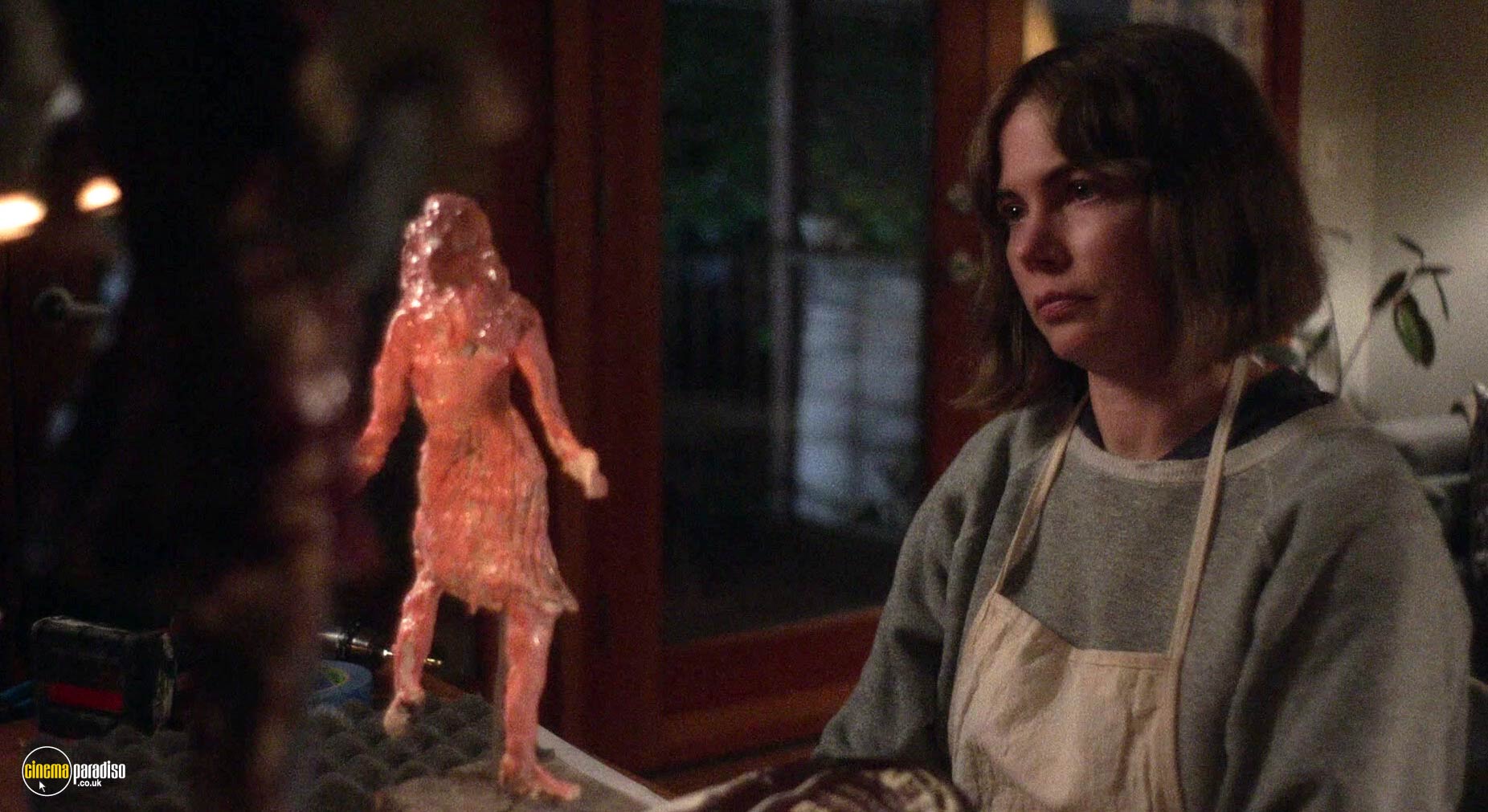
Clearly, this commission left an impression, as artists working would be the subject of Reichardt's eighth feature, Showing Up (2022). Initially, she and Jon Raymond had intended to base the action on the life of Canadian artist, Emily Carr. They were particularly interested in a prolonged fallow period, during which she ran a boarding house in Vancouver. On scouting for locations, however, Reichardt was dismayed to discover a statue to the artist, who had been something of a local cult figure. So, because Reichardt has an aversion to celebrity, the project was scrapped and a new scenario was devised.
When not hunching over her figurine sculptures, Lizzy (Michelle Williams) works as an assistant to her mother, Jean (Maryann Plunkett), at the Oregon College of Art and Craft in Portland. She is trying to prepare for a forthcoming show, but the water heater is broken and landlady and fellow artist, Jo (Hong Chau), is too preoccupied to get it fixed. They are further distracted when Lizzy's cat, Ricky, mauls a pigeon and she is disappointed by the indifference of the vet when she pays for a consultation the pet hospital. With the bird nestled in a cardboard box, Lizzy tries to focus on her work. But she is concerned by the eccentric behaviour of her artist father, Bill (Judd Hirsch), who is hosting a pair of complete strangers, and her brother, Sean (John Magaro), who has starting digging a large hole in his garden.
With its focus on people working and the processes of creation, this amusing insight into the artistic temperament feels like a Howard Hawks remake of Chantal Akerman's Jeanne Dielman, 23 quai du Commerce, 1080 Bruxelles (1975). There are also echoes of Henry Jaglom and Alan Rudolph's erudite dramedies, although Reichardt has cited Elaine May's A New Leaf (1971), Jonathan Demme's Citizens Band (1977), and Claudia Weill's Girlfriends (1978) as her primary influences.
The action was filmed in the real Oregon College of Art and Craft, which had been closed down in 2019 after 112 years of service. With Williams and Chau excelling as the neighbours who are anything but equals, the film premiered in competition in Cannes before earning Reichardt and her ensemble the Robert Altman Award at the 39th Independent Spirit Awards.
Cannes also saw the launch of The Mastermind in May 2025, which Reichardt scripted alone. This will reach UK cinemas through Mubi in October and audiences are set to be surprised by Reichardt putting a minimalist spin on the heist format perfected by Jules Dassin's Rififi (1955) and Jean-Pierre Melville's Le Cercle Rouge (1970). Inspired by a theft at the Worcester Art Museum, the action is set in the 1970s and centres on JB (Josh O'Connor), an unemployed carpenter who becomes obsessed with stealing some Arthur Dove paintings from the museum in his small Massachusetts town. With Bill Camp as JB's judge father, Hope Davis as his sympathetic mother, Alana Haim as the mother of his two children, and John Mangaro and Gaby Hoffmann as the friends who give him sanctuary, this is Reichardt's most stellar cast to date and has drawn comparisons with Woody Allen's Small Time Crooks (2000) rather than Steven Soderbergh's Oceans Eleven (2001).
Reichardt recently said, 'when I go to the movies and I sit through the previews, I literally feel assaulted'. But she has mastered a measured style that allows the audience to acclimatise to a film's storyline and setting and reach its own conclusions about what is going to happen to the characters in the future. 'Maybe I'm suspicious of absolutes,' she pondered in an interview. 'I mean, yes, there is something satisfying about watching an old film when the music rises up and the words come at you: The End. But it would seem absurd to do that at the end of one of my films. It would just make them feel lopsided, because they're all so short, they cover so little time. We don't know where these people were before. We spent a week with them and then on they went.'
She also favours a brand of moral ambiguity, as she refuses to judge her characters. She has defined her approach with the phrase, 'The lies are in the dialogue. The truth is in the visuals.' Cinema Paradiso members can follow Reichardt's 31-year journey, as all her features are available to rent, with The Mastermind being sure to follow. It may seem curious to say about someone who has been producing fine films for so long, but she is one of cinema's best-kept secrets and her distinctive humanist miniatures are just waiting to be discovered.
Mentioned films