With the passing of Joy Harmon at the age of 87 (she fibbed that she was born in 1940), Cinema Paradiso looks back at her most famous film.
Times have changed and the car-washing scene in Stuart Rosenberg's Cool Hand Luke (1967) has come to be regarded as a prime example of the 'male gaze' at its most shameless and chauvinistic. When it was filmed in 1966, however, it was designed to highlight that while the inmates of an American road prison had been incarcerated and physically intimidated into compliance, the guards could not control their thoughts. Moreover, the inclusion of the footage of Joy Harmon inflaming passions while covering a car and herself in soap suds was intended as an act of provocation, a shot across the bows of the Production Code Administration from a new generation of film-makers who believed that the rules and regulations drawn up in 1930 to govern the content of motion pictures were an outdated hindrance to their freedom of artistic and political expression.

So, while modern reviewers are right to have misgivings about a scene that would certainly not be so brazenly sexist if filmed today, it's worth remembering that, six decades ago, this was an audacious moment in a feature whose goal was to persuade audiences to question the assumptions underpinning an American system that was no longer fit for purpose in an age of changing attitudes, gender and generational shift, and civil discontent.
Love Letters and Old Sandwiches
Born in Brooklyn in August 1927, Stuart Rosenberg became a television editor on leaving New York University. Graduating to director, he made episodes of Alfred Hitchcock Presents, The Twilight Zone, Rawhide, The Untouchables, and Espionage, many of which are available from Cinema Paradiso. His feature debut, Question 7 (1961), focussed on religious persecution in Communist East Berlin, but it was little seen and Rosenberg was keen to find an intriguing subject for his sophomore outing.
He found what he was looking for by chance, while browsing in a Los Angeles bookshop. Published in 1965, Donn Pearce's Cool Hand Luke had been turned down by 16 editors before Scribner's finally took a chance on what was essentially a prison memoir. Hailing from Croyden, Pennsylvania, Pearce had left home at 15 and lied about his age to join the US Army in 1944. Frustrated by what he considered petty rules, he went AWOL, only to turn himself in three days later. Shortly into his 30-day sentence in the stockade, Pearce learned he was going to be dispatched to a combat zone and wrote to his mother for help. She contacted the authorities to confirm that her son was under age and he was thrown out of the Army.
Eager for adventure, Pearce joined the Merchant Marine and made his first voyage to Europe when he was 18. Realising there was easy money to be made on the postwar black market, Pearce became involved in counterfeiting American currency. He was arrested, however, after dealing with an undercover cop in Marseilles. Assigned to work outside the prison walls, he escaped and made his way to Italy, where he forged new sailing papers and blagged his way on to a ship bound for Canada.
Crossing back into the United States, Pearce teamed with an older man and become a safe-cracker. He later claimed that he usually only found 'love letters and old sandwiches' in the safes he blew. But he wound up in the custody of the Florida Department of Corrections after he boasted to a waitress that he was going to break into a cinema in Tampa in 1949. Her ex-husband was a cop and Pearce was sentenced to five years. Following a stint at Raiford State Prison, where he worked in the print shop, he was transferred to Road Camp 40A in Tavares Lake County, where he spent the next two years toiling on a road gang.
During this period, Pearce heard about a fellow prisoner who excelled at poker and playing the banjo. He was also an inveterate escaper, although his fame rested on his refusal to buckle under a cruel regime that Pearce labelled 'a chamber of horrors'. Still in his twenties, Pearce confided his desire to write to a fellow inmate, who was a Stanford graduate with a penchant for Proust. He encouraged Pearce to put pen to paper and he continued to write stories after rejoining the Merchant Marine after serving two years of his sentence.
Having written around half-a-dozen novels that had all been rejected, Pearce based Cool Hand Luke on his prison experiences, including a bet he had himself taken to eat 50 eggs in an hour. This had been called off when his dorm-mates realised how much he could pack away. But anti-hero Lucas Jackson was based on the legendary prisoner he had never met, despite the insistence of cracksman Donald Graham Garrison that he had been Pearce's inspiration. In the course of his criminal career, Garrison claimed to have stolen between $4 and $5 million. Pearce was adamant, however, that Garrison was not the model for Luke and it later transpired that the book's finale had drawn on the fate of 22 year-old escapee, Luther Catrett, who was shot in an African American church near Lisbon. Prison guard A.R. Hampton revealed that a man with a flashlight had told him about two men seeking sanctuary inside the chapel. 'One one of them,' Hampton had testified, 'was laying on the floor and the other one got up with an organ stool, or piano stool, some kind of stool in his hand, and was standing up with it and he said some curse word about getting the light out of his eyes, and he flinched with the stool like he was going to throw it at somebody, throw it through the window at us, and that was when I shot him.'
In 1957, Pearce had been fortunate to survive a motorcycle crash, but it took two years for him to recover. Indeed, he was still on crutches when he ran into a girl in a New York street playing Johnny Horton's 'The Battle of New Orleans' on her transistor radio. The lyrics, 'Yeah, they ran through the briars, And the ran through the brambles, And they ran through the bushes, Where the rabbit couldn't go,' made him think of a fugitive fleeing a road gang with the guards in pursuit. According to Pearce, he hobbled home and began writing feverishly and had the bulk of the text written within a few days.
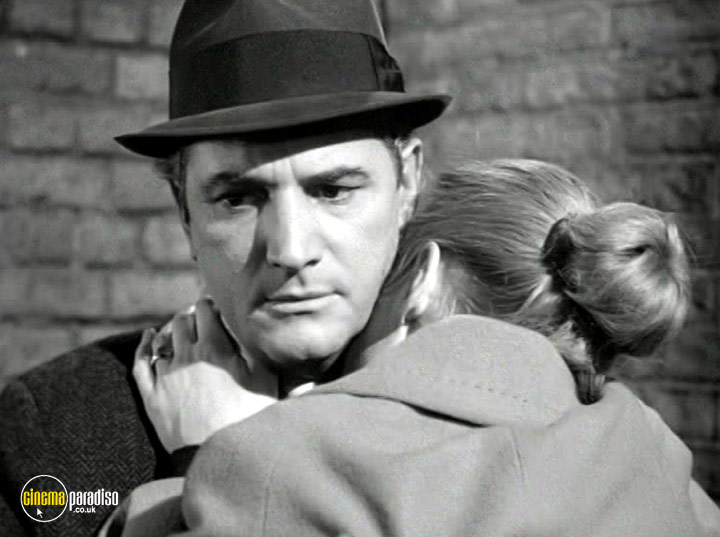
Over the next five years, Pearce rewrote the text five times and he appears to have been paid $2500 for paperback publication by Fawcett Books before an editor at Scribner's decided to offer him a hardback deal after his wife had recommened the manuscript she had found among a pile at home. Kirkus Reviews called it 'a kind of classic small tall story (in latrine language) ', although Publisher's Weekly lauded Pearce's 'extraordinary gift for rhythmic prose, tragic drama, and realism made larger than life'. Yet, the book sold only 1100 copies. Fortunately, one had been acquired by Stuart Rosenberg.
A Natural Born World-Shaker
Some time in the early 1950s, Lucas Jackson (Paul Newman) chugs on beer in a small Florida town, while using a pipe wrench to cut the heads off parking meters, as they pop up with the word 'Violation'. He's arrested and sentenced to two years at a road camp prison, where the Captain (Strother Martin) warns him that his exceptional Second World War record will count for nothing. Floor Walker Carr (Clifton James) gives Luke his uniform, while reciting a long list of minor offences that will earn him 'a night in the box'. Entering the dormitory, he's taunted by Clarence Sidell (George Kennedy), who issues nicknames to everyone in his detail, with his own being 'Dragline'.
Smiling to himself, Luke makes it quietly clear that he's not one for rules or hierarchies. But he joins the work party the next day, tidying a long stretch of overgrown verge under the impassive gaze of Walking Boss Godfrey, who is known as 'The Man With No Eyes' because he never removes his mirrored sunglasses, even when calling for his rifle from the truck so he can bag a bird flying overhead.
Keeping to himself in the dorm, Luke watches Dragline lauding it over fellow newcomers like Tramp Potter (Harry Dean Stanton) and Alibi Gibson (Ralph Waite), as well as such old lags as Society Red (J. D. Cannon), Koko (Lou Antonio), Loudmouth Steve (Robert Drivas), Rabbit (Marc Cavell, Blind Dick (Richard Davalos), Tattoo (Warren Finnerty), Babalugats (Dennis Hopper), Gambler (Wayne Rogers), Dog Boy (Anthony Zerbe), Dynamite (Buck Kartalian), Sleepy (James Gammon), and Fixer (Joe Don Baker). As he weighs up the pecking order, Luke notices how his fellow inmates play up to the guards they call 'boss' when requesting permission to perform even the smallest task, whether on the roadside or in the camp.
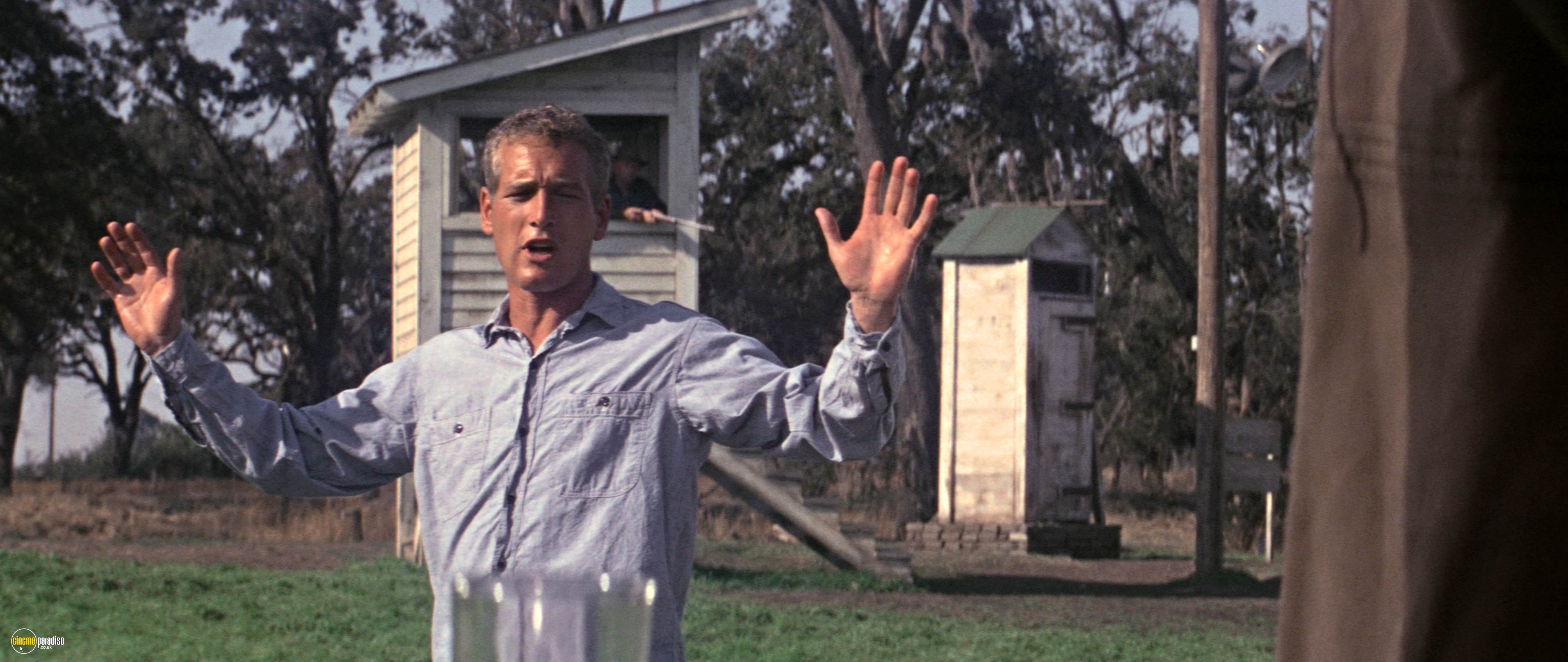
Shortly after everyone gets hot under the collar while watching a buxom woman in a tight, short dress wash a 1941 DeSoto, Luke annoys Dragline by teasing him about his crush on the stranger he has dubbed, 'Lucille'. As it's permitted to settle grievances in the boxing ring on Saturdays, Dragline calls out Luke for a fight, only to become frustrated when he keeps scrambling back to his feet after repeated haymakers. With the Captain recognising that Luke's refusal to quit poses him a problem, Dragline also realises that he's got a bit about him and starts treating Luke with bear-like respect. When he later wins at poker by bluffing with a lousy hand, he wins over the entire dorm. Dragline taunts the loser that he was beaten by nothing and, when Luke claims that ' sometimes nothin' can be a real cool hand', Dragline bestows the nickname, 'Cool Hand Luke'.
A few days later, Luke gets a visit from his mother, Arletta (Jo Van Fleet), who lies in the back of his brother John's pick-up truck because she's too sick to sit up. As she smokes, a halo forms around her son's head and she laments that he never got to meet his father. She also informs him that she's going to give her money to his brother, as she had given Luke all her love, although she now wishes she was like a dog that could forget its offspring after they've left home.
Feeling more upbeat about life in the camp, Luke accepts Dragline's friendship and becomes more popular with the other inmates as a result. The Captain's suspicion that Luke needs watching is confirmed when he persuades the chain gang to tar a stretch of road in record time so that they can relax before heading back to camp. He also accepts a challenge that he can eat 50 hard-boiled eggs in a minute and Dragline starts training him and taking bets. On the day of the contest, the dorm is split over the outcome, but there's begrudging respect when Luke swallows the final egg without once vomiting and he lies on the dorm table with his arms stretched out and his feet crossed, like the crucified Christ.
Luke doesn't get to enjoy his triumph for long, however, as news comes that his mother has died and he sits on his bunk and plucks along to 'Plastic Jesus' on a banjo. The Captain has him spend the night in the box to dissuade him from trying to escape in order to attend the funeral. But this boorish action serves only to make Luke more determined to escape and he takes advantage of some noisy Fourth of July celebrations to saw through the wooden boards beneath his bunk and disappear along a short passage way and over the fence.
Crossing waterways to throw the bloodhounds off the scent, Luke follows the railway line into town. But he is eventually recaptured and the Captain has him put in leg irons. When Luke talks back to him, the Captain kicks him down a slope with the words, 'What we've got here is failure to communicate.'
Undaunted, Luke escapes again and sends Dragline a magazine that contains a photograph of him beaming into the lens with a girl on each arm. This makes Luke a legend amongst the prisoners, who are crushed when he's brought back to camp to have a second set of leg irons fitted and receive the warning that he will be killed if he tries to escape again. He is also made to endure a lengthy spell in the box and the dorm is further disenchanted when Luke insists that the magazine picture is a fake. Nevertheless, the inmates still rally to his cause when he is given a large helping of boiled rice in the mess hall and each man takes a heaped spoonful to help him finish the punishment.
Keeping on Luke's case, Boss Paul (Luke Askew) tells him to remove his dirt from a hole belonging to Boss Kean (John McLiam). No sooner has Luke finished digging the grave-shaped pit than Boss Paul upbraids him for making a mess and orders him to refill the hole. This goes on for some time until an exhausted Luke pleads to be spared further digging. He swears that they have broken him and that he will give the guards no further trouble. Watching through the dorm windows, the lags are dismayed that Luke seems so cowed and crushed.
Shuffling in his double chains, as he obsequiously does the bidding of the bosses on the next road detail, Luke refuses to react to the grumblings of the other prisoners. Then, one day, after he has fetched the Walking Boss's rifle so that he can shoot a turtle in the river, Luke jumps into a transport truck and speeds off, having stolen the keys from the two support vehicles. Relieved that his pal had only been feigning compliance, Dragline runs after Luke and clambers into the cab. He chatters about the things they could do, as he camouflages the truck, while Luke removes his irons. But Luke insists on going solo and a dejected Dragline sidles away, as night falls.
Entering a village church, Luke asks God if he's around because he needs to have words with him about the bad hand he's been dealing him. He continues, 'It's beginning to look like You got things fixed so I can't never win out. Inside, outside, all of them...rules and regulations and bosses. You made me like I am. Now just where am I supposed to fit in? Old Man, I gotta tell You. I started out pretty strong and fast. But it's beginning to get to me. When does it end? What do You got in mind for me? What do I do now?'
As Luke falls to his knees to pray, he hears cars pulling up outside and Dragline enters the church. He suggests they surrender, as they are surrounded, and hopes that the Captain will go easy on them for not resisting. But Luke has no faith in the system and Boss Godfrey shoots him in the neck after he repeats the Captain's 'failure to communicate' remark at the door of the church. Dragline charges at Godfrey and tries to strangle him, but he is overpowered. The Captain puts Luke in his car and insists on taking him to the prison infirmary, as he knows he won't survive the journey. Looking back through the window, Luke smiles reassuringly at Dragline, who is seen telling the newcomers on the chain gang that his friend had been 'a natural-born world-shaker', as the camera pulls away and the magazine photo is superimposed over the aerial view of the crossroads.
Failure to Communicate

Having worked with Felicia Farr on television, Stuart Rosenberg was encouraged to approach her husband's Jalem Productions when he started seeking backing for his feature adaptation of Donn Pearce's novel. Jack Lemmon was keen to produce a picture without appearing in it and took the project to Columbia, where he had a six-film deal. In addition to wanting Lemmon or Telly Savalas to take the lead, the studio was also opposed to Luke dying at the end. However, Rosenberg refused to alter the scenario and signed a deal with Warner Bros, who paid Pearce $80,000 for the screen rights and a further $15,000 for a draft script. As Savalas was in Europe filming Robert Aldrich's The Dirty Dozen (1966), Warners were also able to confirm Rosenberg's first-choice lead, as the studio had a contract with Paul Newman.
Never having written a screenplay before, Pearce fell short of the standard and was replaced by Frank R. Pierson, who had just received an Oscar nomination for Eliot Silverstein's Cat Ballou (1965). He was briefed to imply that the United States had become a prison, in which force was used to ensure compliance, although the Warner front office was wary about pushing too hard at a time when the country was divided over the Vietnam War, as well as along class, gender, racial, and generational lines. Noting that Luke's prison number (37) referenced the line in St Luke's Gospel, 'For with God, nothing shall be impossible,' Pierson was also asked to allude to the fact that Cool Hand Luke was a Messianic allegory, with the car-washing scene being a kind of baptism, the boxing match equating to the 40 days in the wilderness, the meeting with Luke's mother representing the Pietà, and the egg-eating wager being a Last Supper of sorts before Luke sacrifices himself after his Gethsemenesque speech in the church. Some would later suggest that Dragline assumed the Judas role by leading the cops to the church, although he could also be seen as a St Peter figure, who repents after letting Luke down in his hour of need to spread the message of his heroic resistance.
Despite being in its death throes, the Production Code Administration under Geoffrey Shurlock took exception to certain aspects of the script that were deemed 'unacceptably brutal, savage and sadistic'. The memo was most tasked, however, about the levels of profanity and counted each usage of terms like 'damn' (32), 'God damn' (6), and 'hell' (39). Rosenberg took due note and proceeded to ignore the majority of the complaints, as the PCA's refusal to grant a certificate of approval was no longer a dealmaker with the studios or the moviegoing audience, which had become considerably younger since television had claimed America's older viewers.

Newman signed on to play Luke in May 1966, having just declined an offer to join Steve McQueen in an adaptation of Truman Capote's In Cold Blood, which would eventually see Robert Blake and Scott Wilson being directed by John Boorman. He was so keen to play Luke that he didn't even bother to read the screenplay. 'It's one of the few roles I've committed myself to on the basis of the original book,' Newman later revealed, 'without seeing a script. It would have worked no matter how many mistakes were made.' While preparing for the role, he spent a weekend in Huntington, West Virginia, with businessman Andy Houvouras, in order to gauge the mindset of the people and hone his accent. His presence caused quite a commotion, although a nun who taught at the local high school had no idea who he was when they were introduced and said, 'It's nice to meet you, Mr Newman. What do you do for a living?'
Aldo Ray sought the role of Dragline, but George Kennedy beat him to it, even though he felt he had messed up his audition. He gained weight to bulk up a character for whom he created a backstory to explain how a gutsy survivor had risen up the inmate hierarchy to dominate the dormitory. Usually cast in Westerns, Strother Martin was also left-field casting for the prison warden who took Luke's insolence and determination to escape as a personal slight. A veteran of numerous TV Westerns (racking up a record 16 characters on Gunsmoke), Morgan Woodward didn't have a single line of dialogue as Walking Boss Godfrey. But he wore a pair of mirrored sunglasses, which Rosenberg used to reflect the prisoners so that they could see themselves cowering before him. In order to emphasise The Man With No Eyes's sense of calculated detachment, Woodward remained in character for the entire shoot, keeping his distance from his fellow cast members on and off the set. He was rewarded for his effort by being allowed to keep his glasses.
The role of Luke's dying mother, Arletta, was written with Bette Davis in mind. But she had no interest in such a small part and Jo Van Fleet was cast, even though she was only Newman's senior by 11 years. Such age-gapping proved to be something of an occupational hazard, as Van Fleet would also be 11 years older than screen son Peter Sellers in I Love You, Alice B. Toklas (1968), while she had earlier played Susan Hayward's mother in I'll Cry Tomorrow (1955) despite being only three years older.
Van Fleet had made her screen debut in Elia Kazan's adaptation of John Steinbeck's East of Eden (1955), alongside fellow first-timer, Richard Davalos, who had beaten Newman to land the role of James Dean's brother. He played prisoner Blind Dick, while another former Dean co-star (in Rebel Without a Cause, 1955) cropped up as Babalugats, although Dennis Hopper had no lines to learn, as he only spoke in grunts. He was one of several actors who would go on to be much better known after sharing the dorm with Newman, with Ralph Waite becoming a familiar face as the father in The Waltons (1971-81); Wayne Rogers landing the role of Trapper John in M*A*S*H (1971-75); and J.D. Cannon becoming Chief of Detectives Peter B. Clifford in McCloud (1970-77). James Gammon turned up as Don Johnson's father in Nash Bridges (1996-2001), while Anthony Zerbe, Lou Antonio, Joe Don Baker, and Harry Dean Stanton would all become dependable character actors, whose credits can be found by typing their names into the Cinema Paradiso searchline. The same goes for Rance Howard, the father of actor-director Ron Howard, who appeared uncredited in the climactic church scene as a sheriff.
Paul Newman's brother, Arthur, signed on as unit production manager and did a fine job in supervising the recreation of Prison Camp 48 in Stockton, in California's San Joaquin River Delta. A team had travelled to Tavares, Florida (although some sources claim the model was Road Prison 36 in Gainesville) to photograph and measure the compound and a dozen buildings were constructed, including barracks, a mess hall, guard houses, and some dog kennels. They were so authentic that the county building inspector came calling and, confusing the set with worker housing, slapped a condemned sign on them for area code violations. Spanish moss was imported from Louisiana to hang from the trees. However, the scene in which Luke is chased by bloodhounds was filmed at Callahan Road Prison near Jacksonville, although it was a stunt stand-in who fled dogs from the Florida Department of Corrections..
Shooting started on 3 October 1966, with the cast riding to the set from a nearby Holiday Inn in the very trucks used to transport their characters. Very much one of the ensemble, Newman bonded with the other inmates and Rosenberg occasionally left the camera running to capture their banter and a couple of impromptu moments made it into the finished film. He also shot without rehearsals and let the odd glitch slide if a take felt suitably spontaneous or had the right emotional integrity. Rosenberg also insisted on the actors working up a sweat before the cameras rolled and several cast members recalled digging trenches and tarring stretches of road in the heat of the day. Newman refused to have his clothes washed, so that the dirt and sweat stench felt authentic. Cinematographer Conrad Hall reinforced this sense of debilitating heat by letting the sun's rays bounce off the lens to create light flares. He also shot directly into the sun to suggest the scorching dazzle with which the prisoners had to contend. When the studio complained that Rosenberg wasn't making enough of Newman's famous blue eyes, Hall had him stare directly into an arc lamp to highlight the seductive brilliance of the colour.
Newman filmed the opening sequence in the nearby city of Lodi, whose council decided not to replace the decapitated parking meters so that they could become a tourist attraction. During the scene, Luke claims he has committed the crime to exact a little bit of revenge. although he doesn't reveal against whom. Perhaps it's Uncle Sam, as Lucas Jackson had won two Purple Hearts during the war, only for him to fail to find his feet on Civvy Street. To many, postwar America was not a land fit for heroes, as anti-Communist paranoia swept a country in which racial segregation was still the norm in several states. Luke had witnessed atrocities on the battlefield and Newman played him as someone who refused to be intimidated by the cruelty of the Captain and his staff, as he had seen much worse in confronting dehumanising Axis barbarity. Thus, Luke is less a rebel than a man who has seen enough and resists out of a sense of self-worth rather than any notion of subversive rebellion.
As Rosenberg wanted his cast to feel withdrawn from the world, he barred visits by wives and girlfriends. Thus, by the time he filmed the car-washing sequence, they had been celibate for several weeks. However, he shot the lascivious reaction of the work detail on a freezing cold day while a cheerleader in a heavy overcoat ran through her routines in front of them. Joy Harmon was hidden away in a hotel room for two days before she appeared on the set. But she had little interaction with her male co-stars, as Rosenberg filmed her alone so that he could call out instructions to her, as she washed the car.
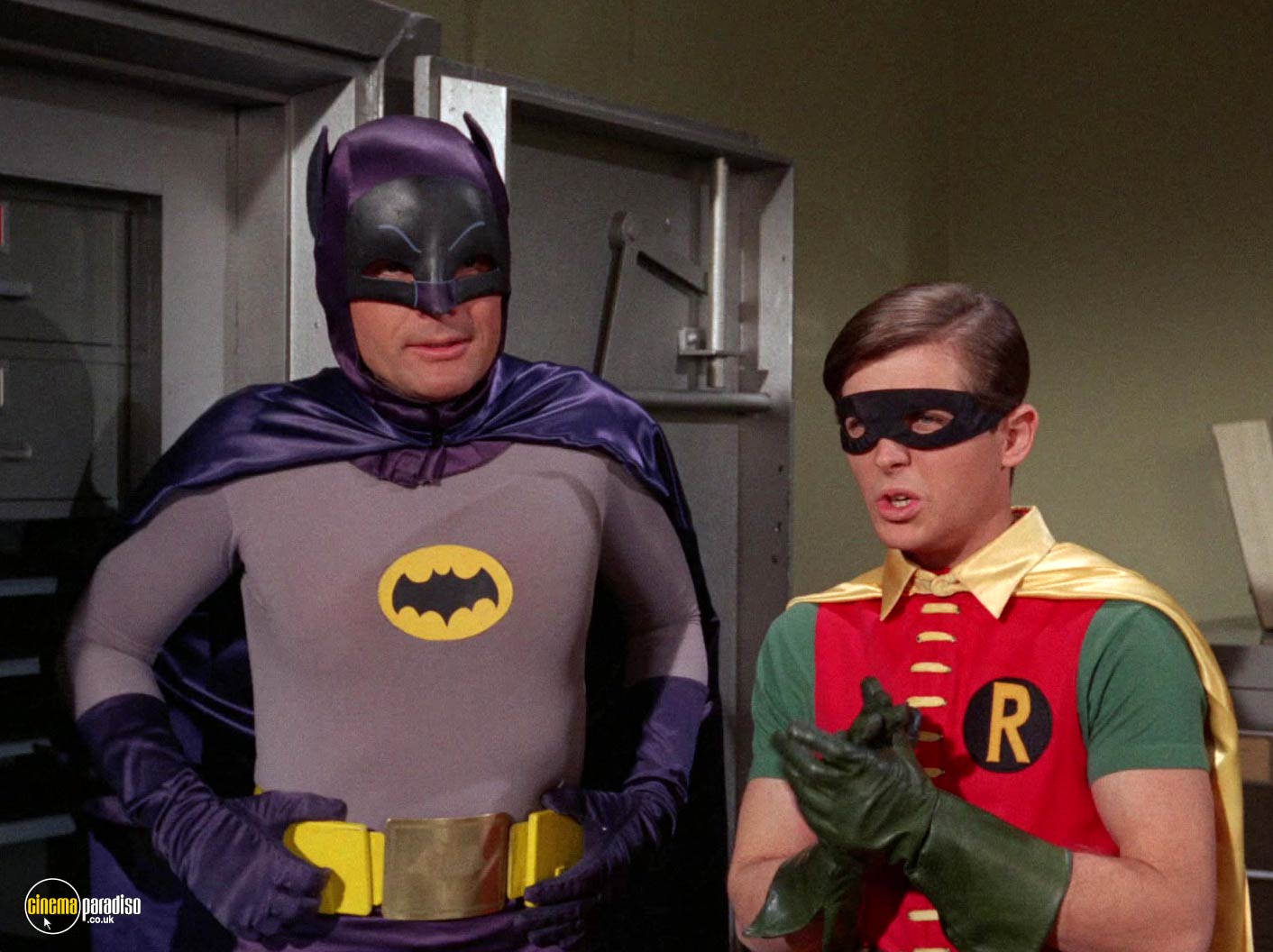
Harmon had made her name as Groucho Marx's assistant on Tell It to Groucho (1961) before she started taking bit parts in such series as The Beverly Hillbillies, My Three Sons, Burke's Law, Gidget, Bewitched, That Girl, Batman, The Monkees, and The Odd Couple. In 1965, Harmon had starred as a girl who gets caught up in a robbery in the Hawaiian beach party romp, One Way Wahine. But manager Leon Lance had to pull strings to get her an audition for Cool Hand Luke and he told her take no chances by wearing a bikini when she met Rosenberg and Newman. The latter had complimented her on her blue eyes and she claimed she took the role simply in order to say that she had worked with him.
Harmon was only supposed to be on set for a day, but the shoot took three, as she had been so nervous when she first came to the set that it was suggested that she smoked some marijuana in order to calm her down. Feeling uneasy, she had called her father and he had told her to come home. But Rosenberg persuaded her to stay with some flowers and chocolates and the promise that she wouldn't have to shoot in front of lots of ogling guys. He also reassured her that he would talk her through the scene, as they wouldn't be filming with wild sound. She later recalled the shoot in Entertainment Weekly: 'He just worked it like, "Now, get the sponge, and squeeze it, and wash the car" and so forth. I just followed. The shots were all like kind of broken up, you know, how he wanted me to do it. It was easy. It was so easy...I was just washing a car to my best ability and having fun with it, with the sponge and everything. My concept of the [scene] was not like what came out. I was not aware that there were two meanings to things that I was doing, and I'm still not really that much aware of what they all were.'
'Stuart was very specific and knew exactly what he wanted,' Harmon confided to the author of Glamour Girls of Sixties Hollywood (2007). 'I guess you can tell that by the way the scene comes off - but I didn't realise it. And I don't think I even realised it right after I did it. There were a lot of things he made me do a certain way - soaping the windows, holding the hose - that had a two-way meaning. He would tell me to look different ways, and we kept shooting it over and over again. I just figured I was washing the car. I've always been naïve and innocent. I was acting and not trying to be sexy.' She continued, 'I never had any inclination that this would be such a memorable role. Except for being in a movie with Paul Newman, I never expected this part to be so notable and get the reaction it did. After seeing it at the premiere, I was a bit embarrassed. Of all the things I've done, people know me most from this film.'
The boxing match also took three days because Newman refused a double and threw himself to the ground with such force after each 'punch' that he shook himself up on the baked dirt. The sun was also unrelenting. But at least he got to do the egg-eating contest indoors. although that also proved arduous. Newman told an interviewer, 'I never swallowed an egg.' But George Kennedy went into some detail about the scene in his memoir, Trust Me. He reckoned that his co-star consumed about eight eggs, although he would empty the contents of his mouth into a bucket the moment Rosenberg called 'Cut!' Kennedy also revealed that the cast and crew scoffed the eggs prepared for the first day of the shoot, but they were told to keep their hands off the replacement batch of 200 eggs, which proved easy, as they had started to smell by the third day and everyone fled the dormitory set between takes in order to get some fresh air. Some actors stuffed tissue paper up their noses to cope with the niff. Such was the impact of thise scene that similar contests started happening on college campuses across the country, with even soldiers in Vietnam recreating the action to pass the time. It even inspired a dare in the first series of Jackass in 2000.
Jo Van Fleet was only on the set for a single day to shoot her scene with Newman. To prepare, she sat on a tree stump some 200 yards from everyone else to go over her lines. She then asked Harry Dean Stanton to sing for her and he remembered making her cry. He got to keep the guitar he played for her and in the scene in which Tramp sings the spiritual, ' No Grave Gonna Keep My Body Down', as Luke repeatedly digs and fills the same hole.
On another day, Dennis Hopper brought avant-garde film-making buddy, Bruce Conner, to the set and he turned his single reel of 8mm footage into Luke (1967), a $3 short that was initially shown at five frames per second to give it an ethereal feel. A new version prepared for screening in a gallery in 2005 ran to 22 minutes at three frames per second, prompting critic John Perreault to describe it thus in Arts Journal: 'You get beautiful blurred images, motion streaks, bare-chested male 'zombies' shovelling dirt, moody music, behind-the-scenes views; nearly Muybridgeian, almost dancelike motion-analysis of lumbering extras, key grips, gaffers, best boys, and script girls in jagged slow-motion; punctuating shots of empty canvas chairs and big reflectors; all in chalky and/or glowing colours, plus Paul Newman. Who could ask for anything more?'
Stanton was a good guitarist, but Newman insisted on learning how to play the banjo to accompany himself on 'Plastic Jesus'. Lessons went so badly, however, that Rosenberg had to keep postponing the scene until the penultimate day of the shoot. When Newman kept flubbing, the pair had a furious shouting match and Kennedy recorded in his autobiography that a set that had been echoing with chatter and laughter suddenly became a 'tense, electrically charged, quiet' place. Composing himself, Newman tried again and was surprised when the director called, 'Print!', because he knew he had made a couple of mistakes. However, when he insisted that he could do it better, Rosenberg replied, 'Nobody could do it better.'
Grins Like a Baby, But Bites Like a Gator
Proceeds from the premiere of Cool Hand Luke at New York's Loew's State Theatre on 1 November 1967 went to various charities. But Donn Pearce missed the occasion, as he had been barred for punching someone on the set. He did, however, attend the Academy Award ceremony, after Pierson had agreed to share his screenwriting credit, only for the pair to lose out to Stirling Silliphant for Norman Jewison's In the Heat of the Night (1967).
Although he continued to write novels and articles, Pearce enjoyed mixed fortunes and worked as a process server, a bounty hunter, and a private investigator before returning to the critical good books with Nobody Comes Back (2004). To the end of his life, he loathed the film made from his best-known work. 'I seem to be the only guy in the United States who doesn't like the movie,' he told a reporter. 'Everyone had a whack at it. They screwed it up 99 different ways.' He was still raging in 2011, when he declared, 'They did a lousy job and I disliked it intensely.' Pearce was most condemnatory about Newman, who he insisted 'was so cute looking. He was too scrawny. He wouldn't have lasted five minutes on the road.'

Audiences disagreed, as Cool Hand Luke racked up $16,217,773 at the US box office. The critics also demurred, as they likened Luke to the year's other anti-heroic iconoclasts, Clyde Barrow, Benjamin Braddock, and Virgil Tibbs. For Roger Ebert, Cool Hand Luke completed a series of films - The Hustler (1961), Hud (1963), Harper (1966), and Hombre (1967), all of which are available to rent from Cinema Paradiso - in which Newman had critiqued contemporary America and found it wanting in many different ways. This run failed to bring Newman an Oscar, however, although he didn't help his own cause by telling the press, 'I didn't have to act...I simply read the lines from the script page,' and he was not unhappy to lose to Sidney Poitier for his groundbreaking performance in In the Heat of the Night.
Recognising that he might never get another shot a the Academy Awards after missing out at the Golden Globes, George Kennedy decided to take matters into his own hands when he was nominated for Best Supporting Actor alongside Cecil Kellaway for Guess Who's Coming to Dinner, John Cassavetes for The Dirty Dozen, and Gene Hackman and Michael J. Pollard for Bonnie and Clyde. He spent $5000 on a full-page advertisement in the Hollywood trade papers that showed Dragline propping up Luke with the words, 'George Kennedy Supporting Cool Hand Luke.' Much to his own surprise, he won and had to extemporise after Patty Duke had presented his statuette at the Santa Monica Civic Auditorium. 'Oh, I could bust,' he began. 'I have to thank Stuart Rosenberg for giving me the opportunity to even be here. And I must simply thank the Academy for the greatest moment of my life. Thank you.'
According to Kennedy, his salary 'multiplied by ten the minute I won'. However, 'the happiest part was that I didn't have to play only villains anymore,' and Cinema Paradiso users can see where Kennedy's career path took him by typing his name into the searchline. We particularly recommend Thunderbolt and Lightfoot, Earthquake, Airport 1975 (all 1974), and his three turns as Captain Ed Hocken in "The Naked Gun" trilogy (1988, 1991 and 1994).
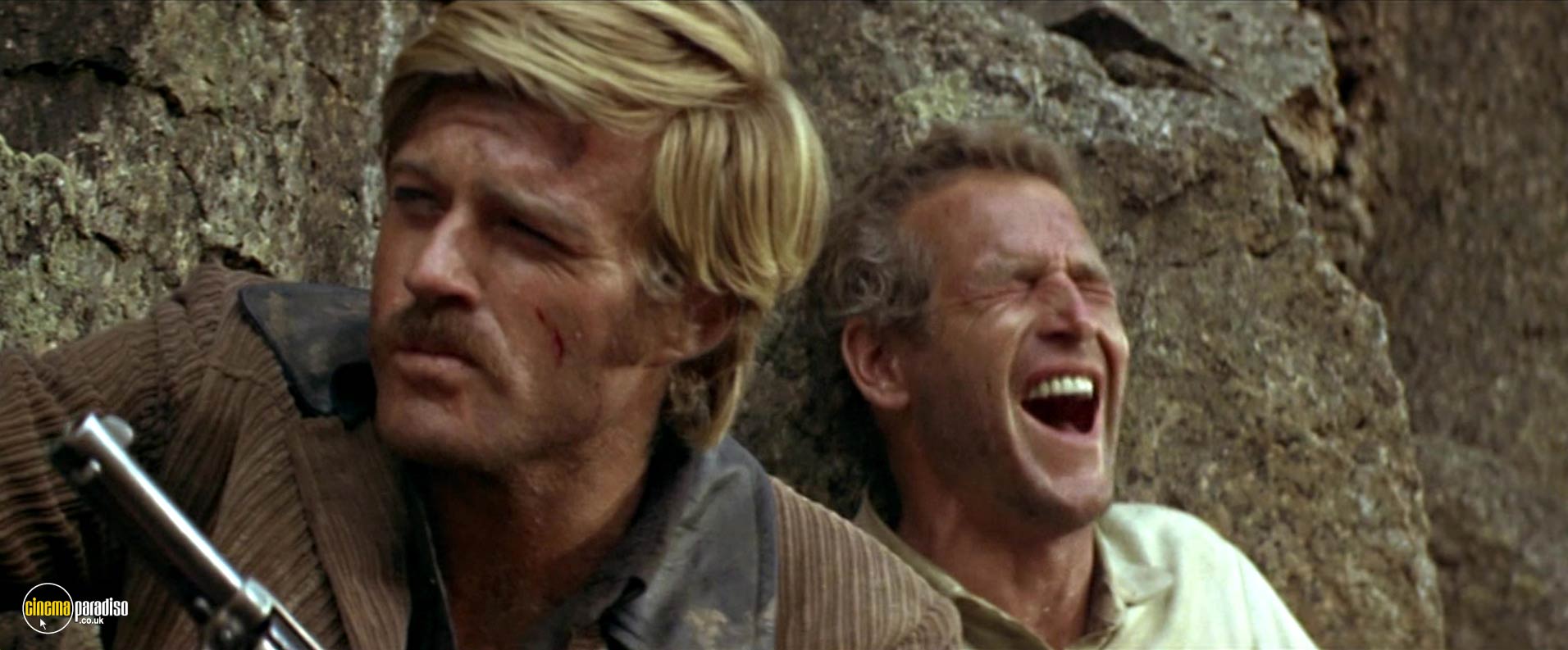
As for the 42 year-old Newman, he cast off the Method image that had shaped his early career to become an icon of 60s protest, subversion, vulnerable masculinity, and individualism. He cemented his new status alongside Robert Redford in George Roy Hill's Butch Cassidy and the Sundance Kid (1969) and further bolstered it in three more collaborations with Stuart Rosenberg, on WUSA (1970), Pocket Money (1972), and The Drowning Pool (1975), in which he reprised the role of private eye Lew Harper. It remains baffling why the first two aren't available on disc in the UK.
Despite being nomimated by the Directors Guild of America, Rosenberg was overlooked by the Academy, although it did recognise the quality of Argentinian composer Lalo Schifrin's score. Having worked with Jack Lemmon on The April Fools (1969), Rosenberg went on a meandering run that saw him direct Elliott Gould in Move (1970), Walter Matthau in The Laughing Policeman (1973), Faye Dunaway in Voyage of the Damned (1976), Charles Bronson in Love and Bullets (1979), Robert Redford in Brubaker (1980), and Mickey Rourke in The Pope of Greenwich Village (1984). Yet, his biggest success came with The Amityville Horror (1979), which was one of the clutch of films around this period that rejuvenated the genre. Rosenberg also helped pave the way for the future, as among his students at the American Film Institute, were Darren Aronofsky, Todd Field, Scott Silver, Mark Waters, and Doug Ellin.
Rosenberg was not a believer in auteur theory, as he was too aware of the contributions made to Cool Hand Luke by other talents. In addition to earning an Oscar for his screenplay for Sidney Lumet's Dog Day Afternoon (1974), Frank Pierson also went on to direct, notably locking horns with Barbra Streisand on A Star Is Born (1976). Having already made history by shooting the first film in Esperanto - Leslie Stevens's Incubus (1966) - Conrad Hall would go on to amass 10 Oscar nominations, winning for Butch Cassidy and the Sundance Kid, American Beauty (1999), and Road to Perdition (2002), with the latter coming posthumously.
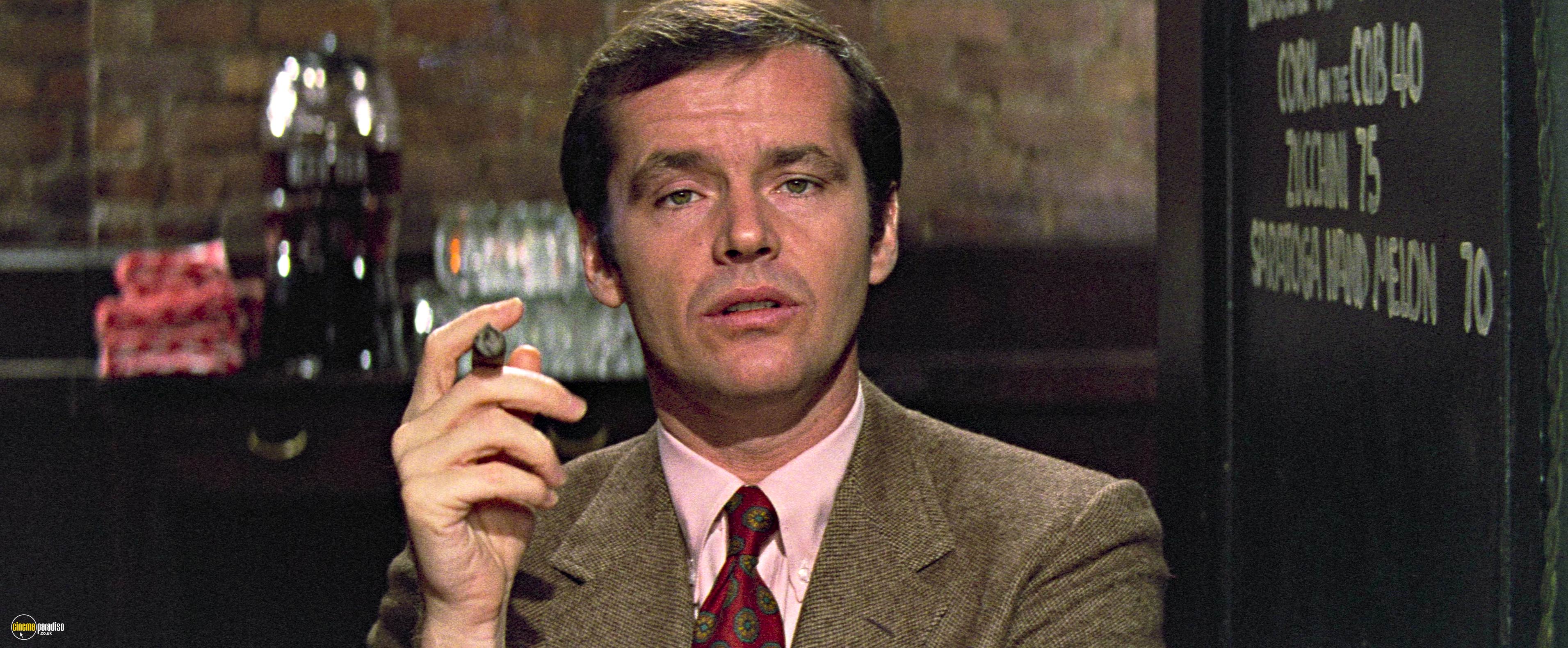
Editor Sam O'Steen and sound mixer Larry Jost would also go on to have distinguished careers, working together again on Mike Nichol's Carnal Knowledge (1971) and Roman Polanski's Chinatown (1974). Production designer Cary Odell and costumier Howard Shoup were more established when they worked on Cool Hand Luke, with the former already having earned three Oscar nominations, while the latter's tally would reach five.
According to Alex Heigl and Jordan Runtagh on their splendid Too Much Information podcast, over 200 films and TV shows are listed on IMBD for having referenced Cool Hand Luke. Many echo the Captain's infamous line, 'What we've got here is failure to communicate.' Frank Pierson claimed, 'The phrase just sort of appeared on the page...I looked at it and thought, "Now that's interesting," Then I thought, these words are going to be spoken by an actor who is playing a real redneck character who probably never went beyond high school, and it has a faintly academic feel to it, that line. I thought, people are going to question it.' In order to justify its conclusion, Pierson worked up a backstory for the Captain that involved him taking courses in criminology in order to boost his promotion chances. Donn Pearce didn't buy the idea that the warden would have been influenced by 'an academic atmosphere', but Strother Martin felt it was entirely conceivable that he would have affected to speak like the 'pointy-headed intellectuals' he had met on his courses. Whatever the rights and wrongs of the phrase, it made No.11 in the American Film Institute's 100 Most Memorable Movie Lines.
Six decades on, Cool Hand Luke can be criticised for its brief, but clumsy bid to equate the oppression of the prisoners with the prejudice and segregation experienced by America's Black population. It also hedges its political bets, as its allusions to the regimentation, kneejerk order-following, and pitiless violence of Vietnam War are rather tame. There's also little evidence of the younger generation at whom the picture was being aimed, although Luke's nephew would have been the age of 1967 cinema-goers, who would not have missed the significance of the avuncular advice, 'John-boy, lemme tell you something. You know, them chains ain't medals. You get 'em for making mistakes. And you make a bad enough mistake, and then you gotta deal with the Man. And he is one rough old boy.'
And, then, there's the car-washing scene. Showing how slowly Hollywood's ship turns, even a lauded girl power picture like Peyton Reed's Bring It On (2000) contained a scene in which the cheerleaders strip down for a fundrasing bikini car wash. As a 30ft woman, Joy Harmon had had to put up Johnny Crawford hanging from her bikini in Bert I. Gordon's Village of the Giants (1965). Like so many other of her credits, including Under the Yum Yum Tree (1963), The Loved One, Young Dillinger (both 1965), and Angel in My Pocket (1969), this is not available to rent. But Cinema Paradiso can bring you Harmon's uncredited turn opposite Elvis Presley in Roustabout (1964). We can also suggest that you seek out Sara Bravo and Molly Ingstad's short documentary, From Cheesecake to Cheesecake (2013), in which Harmon looks back on her career and the success of her bakery, Aunt Joy's Cakes, which came to supply the Disney studio at Burbank, where she had worked after she stopped acting following her marriage to Emmy-nominated producer and film editor Jeff Gourson, with whom she shared, despite divorcing in 2001, three children and nine grandchildren - all of whom are no doubt proud of her brief, but memorable career.
Mentioned films