

Christmas is coming and Cinema Paradiso has lots of screen goodies for you to enjoy over the holiday period. There are so many, in fact, that we've had to divide them into Christmas Past and Christmas Present. So, to avoid being a Cine-Scrooge, join us in celebrating the best in festive cinema.
According to Bharat Nalluri's The Man Who Invented Christmas (2017), we owe many festive traditions to Charles Dickens, who did much to shape the Victorian rituals that continue to influence the way we make merry. Opening in 1843, the film reveals how Dickens (Dan Stevens) came to write A Christmas Carol in a bid to replenish his coffers after a string of misfiring novels. He drew on the character of his own father (Jonathan Pryce) in order to create Ebenezer Scrooge (Christopher Plummer), who has been played by dozens of actors since Daniel Smith took the role in Walter R. Booth's Scrooge; or, Marley's Ghost (1901), the first-ever adaptation of this most enduring of Yuletide yarns.
Made just 31 years after Dickens's death, this four-minute saga can be found on the BFI's Dickens Before Sound compilation, which also contains DW Griffith's 1909 interpretation of The Cricket on the Hearth, which was also charmingly animated in 1967 by Jules Bass and Arthur Rankin, Jr., whose other enduringly popular Christmas creations include The Little Drummer Boy (1968), Frosty the Snowman (1969) and Santa Claus Is Comin' to Town (1970). Rankin also produced Larry Roemer's Rudolph the Red-Nosed Reindeer (1964), whose protagonist was devised by Robert Lewis May for a 1939 advertising campaign for the Montgomery Ward department store. A decade later, singing cowboy Gene Autry (who features in Phillip Dye's documentary, Christmas From Hollywood, 2003) hit the top of the American hit parade with his recording of Johnny Marks's iconic song, which will celebrate its 80th anniversary next year.
Bah Humbug!
Back in the Dickensian realm, the perennially popular story of the miser who comes to embody the spirit of Christmas after the nocturnal visits of three spectres was frequently reworked during the silent era. Rupert Julian directed himself in the first feature-length version, The Right to Be Happy (1916), while Hugh Croise's Scrooge (1928) used Lee DeForest's Phonofilm process to become the first sound adaptation.
Williams also had the distinction of being the first television Scrooge when he took the lead in a BBC presentation that aired live on 24 December 1936. But the first actor to play the old skinflint on screen twice was Sir Seymour Hicks, who followed several stage interpretations and his 1913 performance for director Leedham Bantock with the lead in Henry Edwards's Scrooge (1935). This was the first talking feature version and it's available from Cinema Paradiso in a double bill with Peter McCubbin's Home For Christmas (1990). What made this British picture so distinctive was that it was the first to cast a woman (Marie Ney) as one of the nocturnal visitors and its success prompted MGM to hire Ann Rutherford to play the Ghost of Christmas Past in Edwin L. Marin's 1938 adaptation, which saw Reginald Owen play Scrooge after Lionel Barrymore was forced to withdraw with arthritis.
Such was the brilliance of Alastair Sim's performance in Brian Desmond Hurst's wonderfully atmospheric Scrooge (1951) that no one else attempted the role for another two decades. With George Cole playing the young Ebenezer and Jack Warner in the part of Jorkin that was concocted for the film by screenwriter Noel Langley, this atmospherically designed and photographed picture has a companion in Richard Williams's 1971 Oscar-winning animation, A Christmas Carol, as Sim and Michael Hordern reprised their roles as Scrooge and the ghost of Jacob Marley.
Numerous animators have tackled the story in various guises over the last 45 years, including Jean Tych (A Christmas Carol, 1982), Toshiyuki Hiruma (A Christmas Carol, 1994) and Jimmy T. Murakami (Christmas Carol: The Movie, 2001). Moreover, the tale has frequently been adapted to allow cartoon favourites to play key roles, such as Brer Rabbit (Brer Rabbit's Christmas Carol, 1992), Fred Flintstone (A Flintstones Christmas Carol, 1994), Barbie (Barbie: A Christmas Carol, 2008) and The Smurfs (The Smurfs: A Christmas Carol, 2011).
The characters created by Jim Henson have also dipped into Dickens, with Michael Caine playing Scrooge alongside Kermit the Frog and Miss Piggy as the Critchits in Brian Henson's The Muppet Christmas Carol (1992), while Oscar the Grouch got a new perspective on the holidays in A Sesame Street Christmas Carol (2006). Even Thomas the Tank Engine received some locomotive spirits on the island of Sodor in Thomas' Christmas Carol (2016), while the latest three-dimensional image-capture technology was used to enable Jim Carrey to play both Scrooge and the ghostly trinity in Robert Zemeckis's computer-generated adventure, A Christmas Carol (2009).
Two new versions of the timeless tale are due in cinemas this year, with actor Stuart Brennan and director David Izatt giving it a Scottish makeover and Simon Callow playing all the parts in a recording of his one-man stage show. Brennan and Callow are the latest in a long line of notable actors to play Ebenezer Scrooge on screen.
Cinema Paradiso can also offer Albert Finney in the title role of Ronald Neame's musical adaptation, Scrooge (1970); the Emmy-nominated George C. Scott as the miser in Clive Donner's A Christmas Carol (1984); TV executive Bill Murray being reminded of his humble beginnings in Richard Donner's Scrooged (1988); Rowan Atkinson going from joyful to jaundiced in Richard Boden's Blackadder's Christmas Carol; Jack Palance having a change of heart during a Wild West gold rush in Ken Jubenvill's Ebenezer (both 1998); Patrick Stewart in David Jones's tele-version of his one-man stage show, A Christmas Carol (1999); talk show hostess Tori Spelling being taught a timely lesson in Matthew Irmas's A Carol Christmas (2003); Kelsey Grammer being subjected to a tuneful reformation in Arthur Allan Seidelman's A Christmas Carol: The Musical (2004); and Brian Cook being taught about where his priorities should lie by his kids and some talking farm animals in Justin G. Dyck's A Christmas Carol (aka My Dad Is Scrooge, 2014).
Santa's Mixed Bag
Father Christmas has been starring in films since they first started flickering. In 1897, the American Mutoscope company released two short subjects, Christmas Eve and Santa Claus Filling Stockings, which were followed a year later by the first British film to feature the man in the red suit, George Albert Smith's Santa Claus, or The Visit From Santa Claus.
As we saw in the article on 10 Films Set in Department Stores, a number of Hollywood movies featured store Santas. Easily the most celebrated of these is Kris Kringle, who was played with an Oscar-winning twinkle by Edmund Gwenn in George Seaton's Miracle on 34th Street (1947). But there's something decidedly dubious about the Santas indebted gambler Bob Hope sends around New York to raise funds for the Nellie Thursday Home for Old Dolls in Sidney Lanfield's spirited Damon Runyan adaptation, The Lemon Drop Kid (1951). The sight of a green creature in the famous red suit will also raise eyebrows in Chuck Jones and Ben Washam's How the Grinch Stole Christmas (1966), an animated take on Dr Seuss's beloved story that is narrated with mellifluous gravitas by Boris Karloff.
Nine year-old Peter Billingsley's faith is shaken in Bob Clark's A Christmas Story (1983) when the Santa at Higbee's Department Store in 1940s Indiana echoes parents Darren McGavin and Melinda Dillon in warning him of the dangers of owning a Red Ryder 200-shot Carbine Action Air Rifle. But David Huddleston is the one in peril in Jeannot Szwarc's Santa Claus: The Movie (1985) after disgruntled elf Dudley Moore has his head turned by a crooked toy manufacturer, John Lithgow.
Things take a darker turn in the various chillers with a festive theme. Alberto Cavalcanti serves up a good, old-fashioned festive spook story in 'The Christmas Party', a segment in the Ealing anthology. Dead of Night (1945), which sees young Sally Ann Howes embark upon a game of sardines in a strange house and wind up comforting a crying boy who had been killed by his half-sister 85 years earlier. This kind deed contrasts starkly with Joan Collins's murderous antics in 'And All Through the House', an episode in Freddie Francis's Amicus portmanteau, Tales From the Crypt (1972), which sees her cower from a homicidal maniac in a Santa suit after dispatching her husband on Christmas Eve.
Flashing forward 20 years after a blaze engulfs a mansion on the outskirts of East Willard, Massachusetts on Christmas Eve in 1950, Theodore Gershuny's Silent Night, Bloody Night (1972) follows what happens when lawyer Patrick O'Neal arrives in town to sell the old dark house. Another maniac goes on the rampage in the sorority house where Olivia Hussey and Margot Kidder are partying with their friends in Bob Clark's Black Christmas (1974), while the shock of seeing mommy kissing Santa Claus turns an innocent boy into a crazed killer deciding who's been naughty and nice in Lewis Jackson's Christmas Evil (aka You Better Watch Out, 1980).
Two more psychos discover that Santa suits don't show bloodstains in Edmund Purdom's Don't Open Till Christmas and Charles E. Seller, Jr.'s Silent Night, Deadly Night (both 1984), which was followed by the bleakly comic sequels. But Jack Deth (Tim Thomerson) is too astute to fall prey to the mall Santa he encounters after heading back from Angel City in 2247 to Los Angeles in 1985 to capture psychic mastermind Michael Stefani in Charles Band's Trancers (1984), which not only features Helen Hunt in an early role as a grotto elf, but also a throbbing punk rendition of 'Jingle Bells'.
Festive Settings and Scenes
The Yuletide setting is up front and centre in most festive favourites. But it's a little more understated in some fine films that aren't usually considered Christmas titles. The holidays feature prominently in a trio of Shirley Temple pictures, as she sings 'On the Good Ship Lollipop' to some service personnel on Christmas morning in David Butler's Bright Eyes (1934), leads a chorus of 'Silent Night' in Allan Dwan's lovely take on Johanna Spyri's Heidi (1937), and goes in search of happiness in Walter Lang's lavish adaptation of Maurice Maeterlinck's The Blue Bird (1940), which 20th Century-Fox hoped would be its equivalent of MGM's Gone With the Wind (1939).
Any hopes that Nick and Nora Charles (William Powell and Myrna Loy) might have of enjoying a festive break from sleuthing are soon dashed when they become embroiled in a missing persons case in WS Van Dyke's chic adaptation of Dashiell Hammett's hard-boiled gem, The Thin Man (1934). Prototype teenager Mickey Rooney's problem is that he has too many potential partners to take to the Carvell High Christmas Dance in George B. Seitz's Love Finds Andy Hardy (1938) and he has to choose between Lana Turner, Ann Rutherford and Judy Garland. Another musical legend, Ginger Rogers, finds herself mistaken for a single mother when she picks up a baby from the steps of an orphanage while working as a Christmas temp in Charles Coburn's department store in Garson Kanin's Bachelor Mother (1939). But the festive feature that Orson Welles was convinced could make a stone weep was Leo McCarey's Make Way for Tomorrow (1937), the Depression saga that inspired Yasujiro Ozu's Tokyo Story (1950), which opens with Victor Moore and Beulah Bondi summoning their five children to a Christmas get-together to break the news that they are about to lose their home.
A young girl's troubles come to a head on Christmas Eve under the watchful eyes of Simone Simon, the spirit of her father's deceased first wife in Robert Wise's The Curse of the Cat People (1944), which was produced by horror maestro Val Lewton. Judy Garland puts a protective arm around sister Margaret O'Brien while reassuring her with the lyrics to Hugh Martin and Ralph Blane's beautiful 'Have Yourself a Merry Little Christmas' in Vincente Minnelli's timeless Gilded Age musical, Meet Me in St. Louis (1944). A Christmas pageant and a wish for a gift add a little festive sentiment to Leo McCarey's The Bells of St Mary's (1945), which earned Oscar nominations for both Bing Crosby and Ingrid Bergman as the priest and nun teaming to save a school facing closure.
Frank Sinatra also dons a dog collar in Irving Pichel's The Miracle of the Bells (1948), which includes an affecting scene of press agent Fred MacMurray and ailing actress Alida Valli enjoying a Christmas Eve dinner at a Chinese restaurant. It's also touching to watch the prisoners of war dancing with each other to the singing of Ross Bagdasarian at the barrack party in Billy Wilder's Stalag 17 (1953), which reaches a dramatic climax on Christmas Day, 1944. Escaped convicts Humphrey Bogart, Aldo Ray and Peter Ustinov aren't so fussed about the fare on offer when they escape from Devil's Island and impose themselves on shopkeeper Leo G. Carroll as his Christmas guests in Michael Curtiz's boisterous comedy, We're No Angels (1955). The same year saw New England widow Jane Wyman presented with a television set by children Gloria Talbott and William Reynolds in the hope that she won't be lonely again and drift into the orbit of gardener Rock Hudon in Douglas Sirk's All That Heaven Allows.
Harking back a few years, Christmas 1910 sees Jim Dear give his wife Darling a Cocker Spaniel puppy in Lady and the Tramp (1955), which was directed in CinemaScope by Clyde Geronimi, Wilfred Jackson and Hamilton Luske for producer Walt Disney, who always regarded it as one of his favourite features. The studio also used widescreen for Ken Annakin's live-action adaptation of Johann Wyss's Swiss Family Robinson (1960), which sees James MacArthur and Tommy Kirk escape from pirates in time to return to their treehouse and join parents John Mills and Dorothy McGuire in a chorus of 'O Christmas Tree'. However, lift operator Shirley Maclaine had little to be cheery about after she discovers at the Christmas party that boss Fred MacMurray is a serial philanderer who exploits the hospitality of meek employee Jack Lemmon in Billy Wilder's The Apartment (1960).
A genuinely kind gesture also sparks the action in Frank Capra's Pocketful of Miracles (1961), a Capra-corn remake of his own Lady For a Day (1933) that culminates on Christmas Eve after gambler Glenn Ford helps apple seller Bette Davis put on a show of affluence to impress estranged daughter Ann-Margret. The same year saw the release of another festive remake, as Disney teamed Tommy Sands and Annette Funicello to help toymaker Ed Wynn with the Christmas rush in Jack Donohue's take on Babes in Toyland (1961), the Victor Herbert operetta that had spawned Charles Rogers's 1934 Laurel and Hardy vehicle of the same name.
George Lazenby became the first James Bond to celebrate Christmas on screen, as he pays a call on Telly Savalas's Blofeld and gets chased through the Swiss Alpine town of Piz Gloria in Peter Hunt's On Her Majesty's Secret Service (1967). Gene Hackman is the one doing the pursuing, as he hurtles through a holiday New York after some drug dealers in William Friedkin's Oscar-winning crime classic, The French Connection (1971), and Divine is being chased for equally ignoble reasons in John Waters's outlandish cult comedy, Female Trouble (1974), after she embarks upon a life of crime after trashing the Christmas tree when her parents refuse to buy her a pair of cha-cha heels.
British prisoners of war Tom Conti and David Bowie receive some unexpected Christmas clemency from brutish Japanese sergeant Takeshi Kitano in Nagisa Oshima's Merry Christmas, Mr. Lawrence (1983), but Sylvester Stallone isn't in the mood for celebrating when he comes to Hope, Washington to pay his respects to a buddy who died from the Agent Orange used in Vietnam in Ted Kotcheff's Rambo: First Blood (1982), There's still a Cold War chill in the air as American heavyweight Stallone squares up to Soviet challenger Dolph Lundgren in a Christmas Day showdown in Rocky IV (1985).
It's not exactly love at first sight, either, between John Cusack and Daphne Zuniga in Rob Reiner's The Sure Thing and matters scarcely improve when they car share to California for Christmas break. Indeed, Cusack seems to have a rotten time of it during the holidays, as he decides to end it all after being dumped by girlfriend Amanda Wyss for the bullying captain of the skiing team in Savage Steve Holland's Better Off Dead (both 1985). Moreover, the romance scarcely runs more smoothly in Reiner's masterly fairytale, The Princess Bride (1987), which is literally bookended by festive sequences, as Peter Falk tries to cheer up sickly grandson Fred Savage by reading to him.
There's little doubt that Earth could have done without the extra gift donated by the galaxy in Thom Eberhardt's apocalyptic romp, Night of the Comet (1984), and there's plenty more dystopic science fiction satire on offer in Terry Gilliam's Brazil (1985), a cautionary tale about the evils of consumerism that includes a creepy Santa, lots of crummy decorations and a sequence in which a family is attacked by the secret police for watching A Christmas Carol on television.
Even though Gary Busey blasts cop Danny Glover's television set while he's viewing Alastair Sim in Scrooge, Richard Donner's Lethal Weapon offers a more fitting Christmas coda when Glover invites once-suicidal partner Mel Gibson for a family dinner and presents him with a hollow bullet as a symbolic gift. But, while Gibson seems to be over his psychological hurdle, it's downhill all the way for Robert Downey, Jr., as best buddy Andrew McCarthy discovers when he comes home for the holidays in Marek Kanewska's Less Than Zero (1987) and learns that both Downey and girlfriend Jami Gertz have become cocaine addicts. However, Tim Burton still finds room for a little festive wonderment, as Winona Ryder marvels at the ice sculptures created by Johnny Depp in the enchanting Edward Scissorhands (1990).
Christmas Crackers
It won't come as much of a surprise to learn that a fair number of the festive favourites in this section appear in Cinema Paradiso's 12 Films of Christmas Past. So, we shall content ourselves with mere mentions here for Frank Capra's It's A Wonderful Life (1946), Henry Koster's The Bishop's Wife (1947), George More O'Farrell's The Holly and the Ivy (1952), Michael Curtiz's White Christmas (1954) and Nicholas Webster's Santa Claus Conquers the Martians (1964). Even though they are Christmas classics, we might also point you in the direction of our article on Department Stores for an in-depth look at George Seaton's Miracle on 34th Street (1947) and Don Hartman's Holiday Affair (1949).
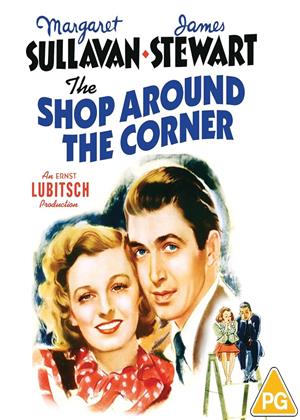
We should also mention such absent friends as Ernst Lubitsch's The Shop Around the Corner (1940), Peter Godfrey's Christmas in Connecticut (1945), Roy Del Ruth'sIt Happened on Fifth Avenue (1947) and John R. Cherry III's Ernest Saves Christmas (1988). But there are still plenty of shiny baubles to consider, including John Ford's 3 Godfathers (1948), the third remake of Peter Kyne's touching Western that sees outlaws John Wayne, Pedro Armendáriz and Harry Carey, Jr. take care of an orphaned infant after its mother dies in the Arizona wilderness. Taking its cues from the biblical story of the Magi, this strikingly photographed odyssey has since been reimagined in anime form by Satoshi Kon as Tokyo Godfathers (2003), which centres on the runaway girl, transitioning drag queen and middle-aged alcoholic who adopt the newborn they find while scavenging.
Eddie Murphy plays a homeless hustler with more attitude than conscience in John Landis's Trading Places (1983), a reworking of Mark Twain's The Prince and the Pauper that sees broking brothers Don Ameche and Ralph Bellamy conclude a holiday wager to determine whether Murphy has more street smarts than company bigwig, Dan Aykroyd, whose reputation they destroy as part of their 'nature vs nurture' experiment. When it comes to festive hard-luck stories, however, nothing can top the one told by Phoebe Cates in Joe Dante's Gremlins (1984). But friend Zach Galligan soon has much more to worry about after he breaks the strict rules about light, water and post-midnight snacks while taking care of his pet mogwai, Gizmo.
The transformation is much more poetic in Carroll Ballard's Nutcracker, The Motion Picture (1986), an enchanting take on the Tchaikovsky ballet that was inspired by the ETA Hoffmann story, 'The Nutcracker and the Mouse King', which centres on a young girl's fascination with a nutcracker that is repaired by an eccentric toymaker after it falls out of a Christmas tree. Another tree provides Chevy Chase with the first of the many problems that befall him and the other members of the Griswold family in Jeremiah S. Chechik's National Lampoon's Christmas Vacation (1989), which was written by the peerless John Hughes, who was also responsible for the screenplay for Chris Columbus's Home Alone (1990), which earned nine year-old Macaulay Culkin a Golden Globe nomination for his inspired performance as Kevin McAllister, who defends the family's Chicago home from burglars Joe Pesci and Daniel Stern after he is accidentally left behind from a Christmas trip to Paris.