With Toy Story 5 riding high in the box-office charts, Cinema Paradiso celebrates four decades of Pixar magic.
There have been few success stories in Hollywood history to match that of Pixar. The 31 features released by the animation studio have grossed over $17 billion and earned 23 Academy Awards, 10 Golden Globes, seven BAFTAs, and 11 Grammys. Since the Best Animated Feature category was inaugurated in 2001, Pixar has won 11 Oscars, including four in a row between 2008 and 2011. A remarkable three titles have also been nominated for Best Picture.
Such is the world's love of Pixar's computer-generated characters that spin-off merchandise flies off the shelves and instantly becomes a collectible classic. There's even a Wikipedia page devoted to the Easter Eggs nuggeted into Pixar movies, which not only relate to in-jokes about companies like Pizza Planet, Eggman Movers, and Dinoco, but they are also self-reflexive cross-references to other Pixar titles that create the notion that they all take place within a single universe. Academics have written weighty theses about this Pixar Connection Theory. But we shall content ourselves with discovering how it all began.
By George
Art plays a minor part at the start of the Pixar story. Instead, lots of computer boffins and executives in suits toiled in Californian laboratories and boardrooms to fashion the technical packages and corporate strategies that would enable a handful of maverick storytellers to change screen animation forever.
In 1974, Alexander Schure, the founder of the New York Institute of Technology launched the Computer Graphics Lab, as a side hustle to his traditional animation studio. He hired computer scientists Edwin Catmull and Malcolm Blanchard to consider ways of making a wholly computer-generated film and they were soon joined by Alvy Ray Smith and David DiFrancesco. Working in a converted garage, the quartet quickly realised that they needed film industry support to develop their ideas, as the research was both costly and time-consuming.
Movie brats Francis Ford Coppola and George Lucas were convinced that digital technology could revolutionise various aspects of film-making and, in 1979, Lucasfilm invited Catmull to join the Computer Graphics Lab in order to develop digital nonlinear editing and sound editing systems, as well as a laser film printer. A sub-section, known as the Graphics Group, was tasked with refining a package that could produce computer-generated imagery.
Meanwhile, at NYIT, graphics researcher Lance Williams had announced The Works, which he hoped would become the world's first 3-D computer-generated feature film. Set on a planet controlled by robots, the sci-fi scenario turned around the efforts of a drone named Ipso Facto (aka Clyde) and a female pilot called T-Square to defeat a giant robotic ant. As it had connections with NYIT, the Graphics Group became involved in the project in the early 1980s. However, the computer programmes were too slow and lightweight to produce CGI images of sufficient quality and quantity and, even though around 10 minutes of footage was completed, the project was abandoned in 1986.
Lucasfilm's involvement convinced the team to develop its own package, which was dubbed REYES for 'Renders Everything You Ever Saw'. The department also had its first success, with the 'Genesis Effect' sequence in Nicholas Meyer's Star Trek II: The Wrath of Khan (1982), which brought life to a lump of rock within the Mutara nebula. It would also later create the stained glass knight sequence in Barry Levinson's Young Sherlock Holmes (1985). But, perhaps the most significant item produced during this period was a still image entitled, 'The Road to Point Reyes' (1983), which was produced by Rob Cook, Loren Carpenter, Tom Porter, Bill Reeves, David Salesin, and Alvy Ray Smith. Depicting a tarmac road leading to a national park near San Francisco, this 2,048x2,048-pixel print achieved colours, tones, and textures that had never previously been seen in a computer-generated image. In addition to the lifelike rocks, vegetation, and skyscape, the picture also included a reflection in a puddle and a double rainbow.
Around the time of this small step forward, Kadabrascope was added to the Lucafilm portfolio. This computer-guided animation studio had been founded by Nolan Bushnell with a view to producing imagery for the emerging video game industry. However, after making only the festive special, Chuck E. Cheese: The Christmas That Almost Wasn't (1983), he was forced to sell around the same time that an occasional freelancer named John Lasseter was hired as Lucasfilm's new interface designer and he started work on the company's first animated short, The Adventures of André & Wally B. (1984). Produced by Lasseter and Catmull and directed by Alvy Ray Smith, this can be rented from Cinema Paradiso as part of The Pixar Short Films Collection: Vol.1 (2007), which we shall call 'PSFC', with the requisite volume in future references.
Depicting a battle of wits between a blue character in red trousers and a red hat and a pesky bumblebee, this was the first example of character animation in CGI history and it also made pioneering use of 'motion blur' to make the animation seem smooth. Snippets were shown at the annual SIGGRAPH computer graphics conference, which also witnessed the debut of Lucasfilm's new digital compositing computer. This laser-based device was originally named 'The Picture Maker', but it was soon changed to 'Pixar', although no one can agree on how the name came about.
Just the Jobs
President Edwin Catmull and Executive Vice President Alvy Ray Smith had approached 10 major corporations and a skullduggery of venture capitalists in the hope of bolstering Pixar's finances. However, their saviour came in an unexpected guise, not that you'd know this from Danny Boyle's biopic, Steve Jobs (2015). Having been forced out of Apple in an acrimonious power struggle, Steve Jobs was eager to invest in Pixar, although George Lucas rejected his initial offer for being too low. On 3 February, however, Jobs paid Lucasfilm $5 million for technology rights and became chair of the company after adding a further $5 million in investment.
As an animation breakthrough still seemed some way off, the core product was the Pixar Image Computer, which was directed at scientific, medical, and governmental markets. But efforts were also made to collaborate with other graphic-centric operations, including the Japanese publisher Shogakukan, which partially bankrolled Monkey, a 1985 CGI variation on the story of the Monkey King that included John Lasseter among its creatives. However, progress with under-powered computers was slow and Jobs cancelled the contract soon after taking control.
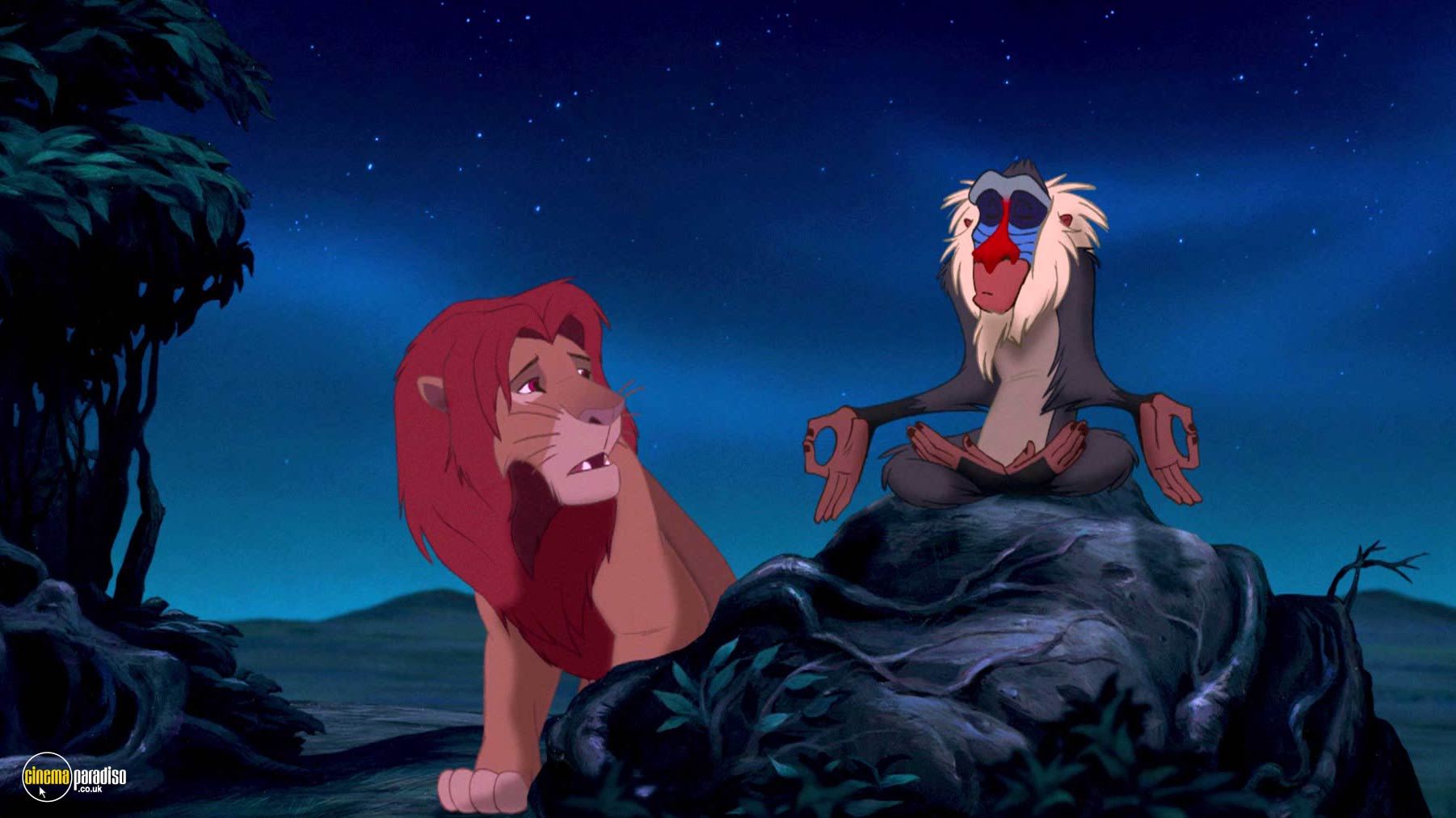
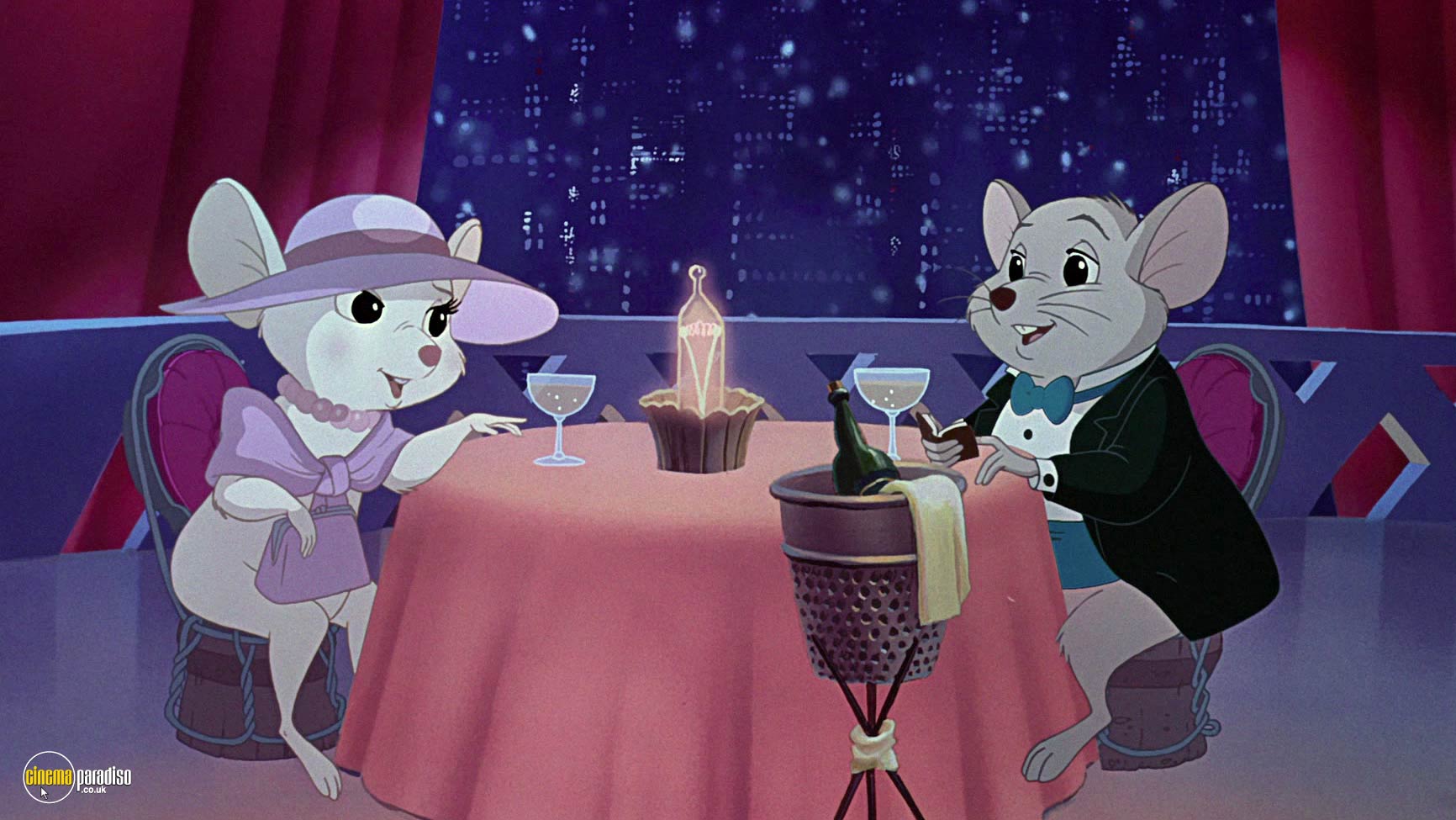
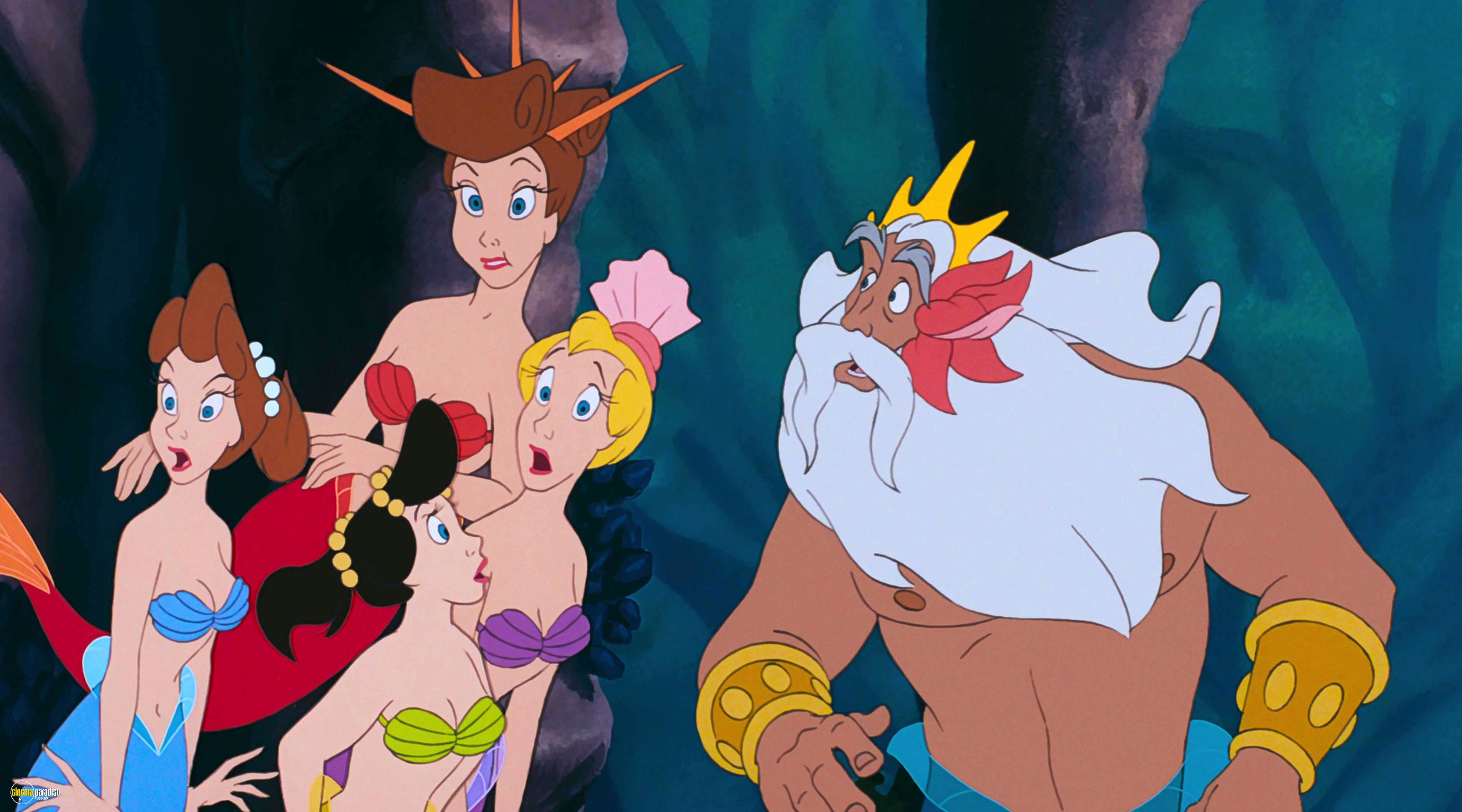
The tenative CGI progress made at Pixar had also been noted by Walt Disney Studios, which was seeking to speed up the laborious ink and painting process of its traditionally animated films. As the Pixar Image Computer and its latest software seemed to offer hope of a breakthrough, Disney entered into an agreement in May 1986 to boost its Computer Animation Production System (CAPS). The first Disney animation on which the new technology was used was Ron Clements and John Musker's The Little Mermaid (1989), but the first feature to be created entirely with CAPS was Mike Gabriel and Hendel Butoy's The Rescuers Down Under (1990). Its most spectacular use, however, was the stampede sequence in Roger Allers's The Lion King (1994), which could not have been produced using traditional cel techniques because of the complexity of the images of the charging wildlife and the sunlight glinting through the dust.
While Jobs was aware that the R&D phase had to take place behind closed doors, he was keen to show Hollywood that Pixar was making progress. Consequently, Lasseter produced Luxo Jr. (1986; PSFC Vol.1), in which an angle-poise lamp becomes irritated by a smaller lamp's obsession with a yellow-and-blue ball. This droll two-minute short became the first computer-animated film to ever receive an Oscar nomination and, in recognition, Luxo Jr. was installed as Pixar's emblem. It was followed by Red's Dream (1987; PSFC Vol.1), a four-minute charmer in which a unicycle imagines itself becoming the star of a circus.
Even more ambitious was Tin Toy (1988; PSFC Vol.1), in which a one-man band named Tinny tries to escape the sticky clutches of a baby named Billy. This five-minute knockabout utilised the Marionette animation system (known internally as 'Menv' for 'modeling environment) and the photorealistic RenderMan rendering process and sent such ripples through the studios that it became the first computer-animated film to win an Oscar when it took Best Animated Short at the 61st Academy Awards.
Had Lasseter not persuaded Jobs to sink $300,000 of his own money into this picture, the Pixar story could well have ended there. But its success convinced Jobs that money could be generated from tendering for contracts for commercials and Lasseter was joined by Bill Reeves, Eben Ostby, and Sam Leffler in a self-contained animation unit in 1989. This year saw the release of Knick Knack (PSFC Vol.1), which follows the efforts of a snowman to break out of his snow globe and join the party being enjoyed by the other residents of a souvenir shop. Owing much to Looney Tunes and Tom and Jerry, this four-minute gem failed to wow as much as its predecessors, despite being the company's first animation in 3-D. The need for quick income led to Lasseter making four Luxo Jr. shorts for Sesame Street: 'Light and Heavy', 'Surprise', 'Up and Down', and 'Front and Back' (all 1991). Further commercials followed 'Wake Up', 'Orange Kiwi Passion', and 'Three Fruits', which had all been made for Tropicana in 1989. 'The Plaque Slayer' followed for Listerine before Life Savers commissioned 'Gummie Savers Conga' and 'Life At the Beach'. Toppan Printing, California Lottery, Volkswagen, Tetra Pak, Hershey's, and Coca-Cola all came calling, but nothing could top the Toys 'R' Us promo, 'Grand Opening', which featured characters made out of building blocks.
Backs were to the wall, but Jobs decided to shift the corporate focus exclusively on to making movies and he sold Pixar's hardware division in April 1990. The following year, however, 30 staff members were made redundant and, on 6 March 1991, Jobs bought Pixar from its employees. While he sought new contracts, he still seemingly considered selling the company, with Hallmark Cards, Microsoft co-founder Paul Allen, and Oracle CEO Larry Ellison among the interested parties.
During this bleak period, animators Andrew Stanton and Pete Docter joined Pixar and respectively made a big impression with the 'Quite a Package' and 'Boxer' commercials for Trident and Listerine. Lasseter recognised that two bright talents had joined the team just as it announced a landmark $26 million partnership with Disney to produce three computer-generated animated features. The first would be Toy Story (1995), whose making is covered in full detail in the Cinema Paradiso article, Films to Watch If You Liked Toy Story.
We shall return to the pentalogy in due course, but the give and take between Lasseter, Stanton, Docter, Lee Unkrich, and Joe Ranft on Toy Story led to the emergence of the Pixar Braintrust, which afforded directors, writers, and lead storyboard artists from across the company the chance to offer constuctive criticism of ongoing projects to ensure that everyone was happy with each picture.
This film-maker-led model reduced the level of input from the studio suits and Jobs, even though he had installed himself as CEO, was beginning to see that his work with Pixar was nearly done. Released on 22 November 1995, Toy Story opened at No.1 in the box-office charts and would go on to take $192 million domestically and $362 million worldwide. When Pixar joined the NASDAQ on 29 November, it sparked a share-purchasing frenzy. Such were the revenues that Jobs closed the commercials wing in July 1996, by which time Toy Story had earned an unprecedented three Academy Award nominations for Best Song, Best Score, and Best Original Screenplay. The latter nod was the first ever given to an animated film, while Lasseter was presented with a Special Achievement Oscar for his 'inspired leadership of the Pixar Toy Story Team resulting in the first feature-length computer animated film'. With just one feature to its name, Pixar was the talk of Tinseltown.
Mouse House Malarkishness
As we shall see below, there had been bumps in the road during the production of Toy Story and there were tensions between Steve Jobs and Disney CEO, Michael Eisner. Having been surprised by the revenues derived by the film's release and the company's public offering, Jobs decided to seek a renegotiation of Pixar's arrangement with Disney. He proposed supplying 50% of the budget for future projects in return for greater creative control, a say in cinema release dates, a 50/50 profits share, and equal branding for Pixar pictures and merchandising products. Eisner was happy to go along with all the demands except the last one, as he wanted Disney's name to be appended to all Pixar's films. However, his predecessor, Jeffrey Katzenberg had formed a rival CGI operation, DreamWorks SKG, with Steven Spielberg and David Geffen and Eisner was so fearful that Pixar would see out its three-picture deal with Disney and join forces with the new kid on the block.
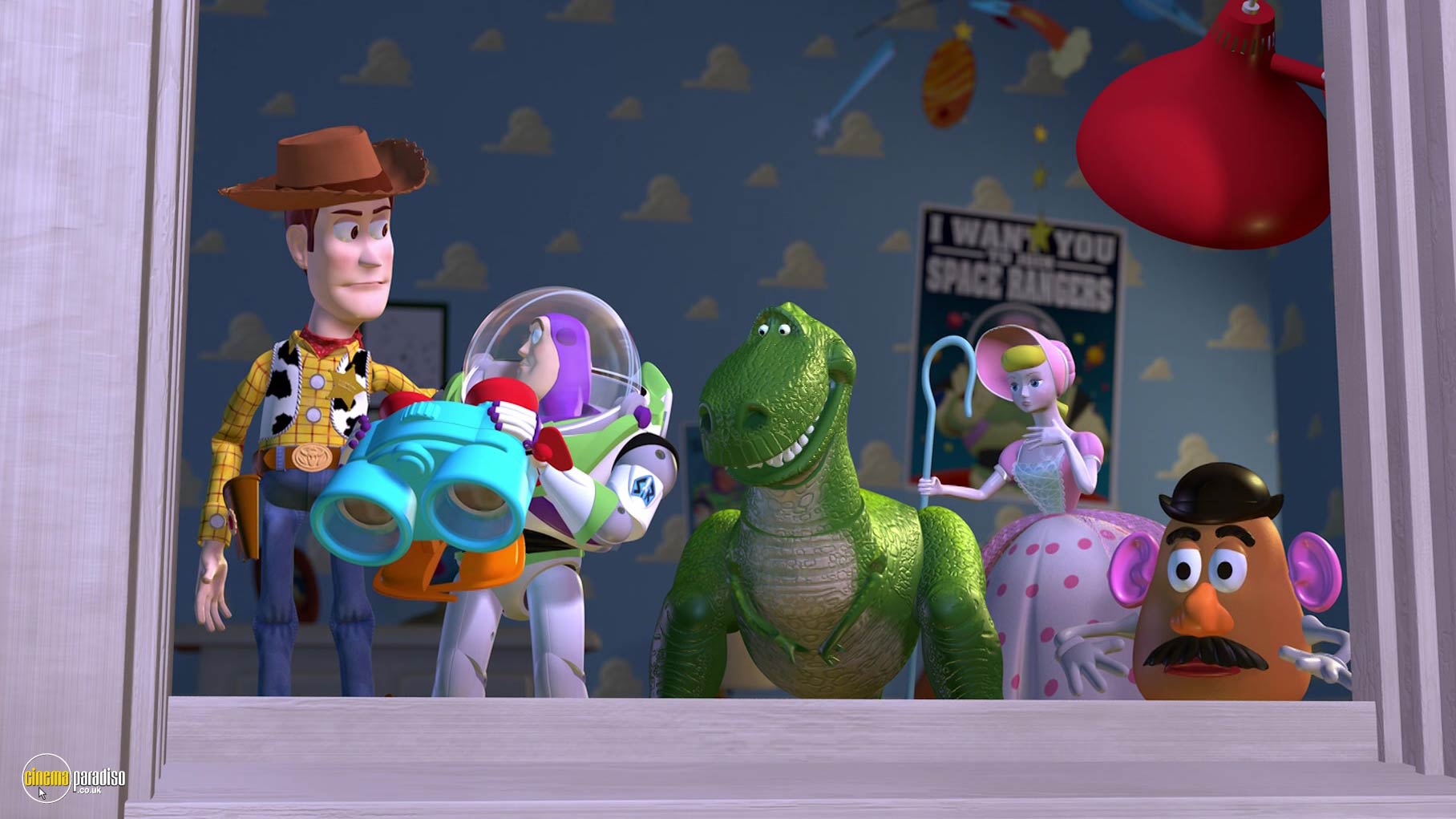
In February 1997, therefore, Disney inked a five-film deal with Pixar that would run for a decade. It was something of a triumph for Jobs, but it also meant that Disney could commission sequels for any Pixar titles on its books. This led to a feud overToy Story 2 (1999), as Disney wanted to release it straight-to-disc, which would take it outside the five-film agreement. Pixar prevailed, but neither side was willing to give an inch when talks began over a contract renewal. It suited both for Pixar to retain control over development and production, while Disney oversaw promotion and distribution. But Pixar protested at Disney owning all character, story, and sequel rights, even though it had played no role in their creation. In addition to retaining these rights, Pixar also wanted to fund its films in-house and collect 100% of the profit, leaving Disney to be satisfied with a 10-15% distribution fee.
By 2004, Jobs and Eisner were at loggerheads and Disney announced the formation of Circle Seven Animation to pursue future CGI projects. However, the company was in a weak position, as own brand features like Dinosaur, The Emperor's New Groove (both 2000), Lilo & Stitch, and Treasure Planet (both 2002) had performed poorly at the box office and concerns grew that Disney's bounceback bubble had burst. Indeed, the company's past 12 features had lost a total of $400 million. Eisner believed Pixar was also due a flop. But Finding Nemo (2003) proved to be a triumph and faith in Eisner was so shaken that Walt Disney's nephew, Roy, resigned from the board to lead a 'Save Disney' campaign. This had the effect of thwarting Eisner's bid for re-election as CEO and he was replaced by Bob Iger in 2005.
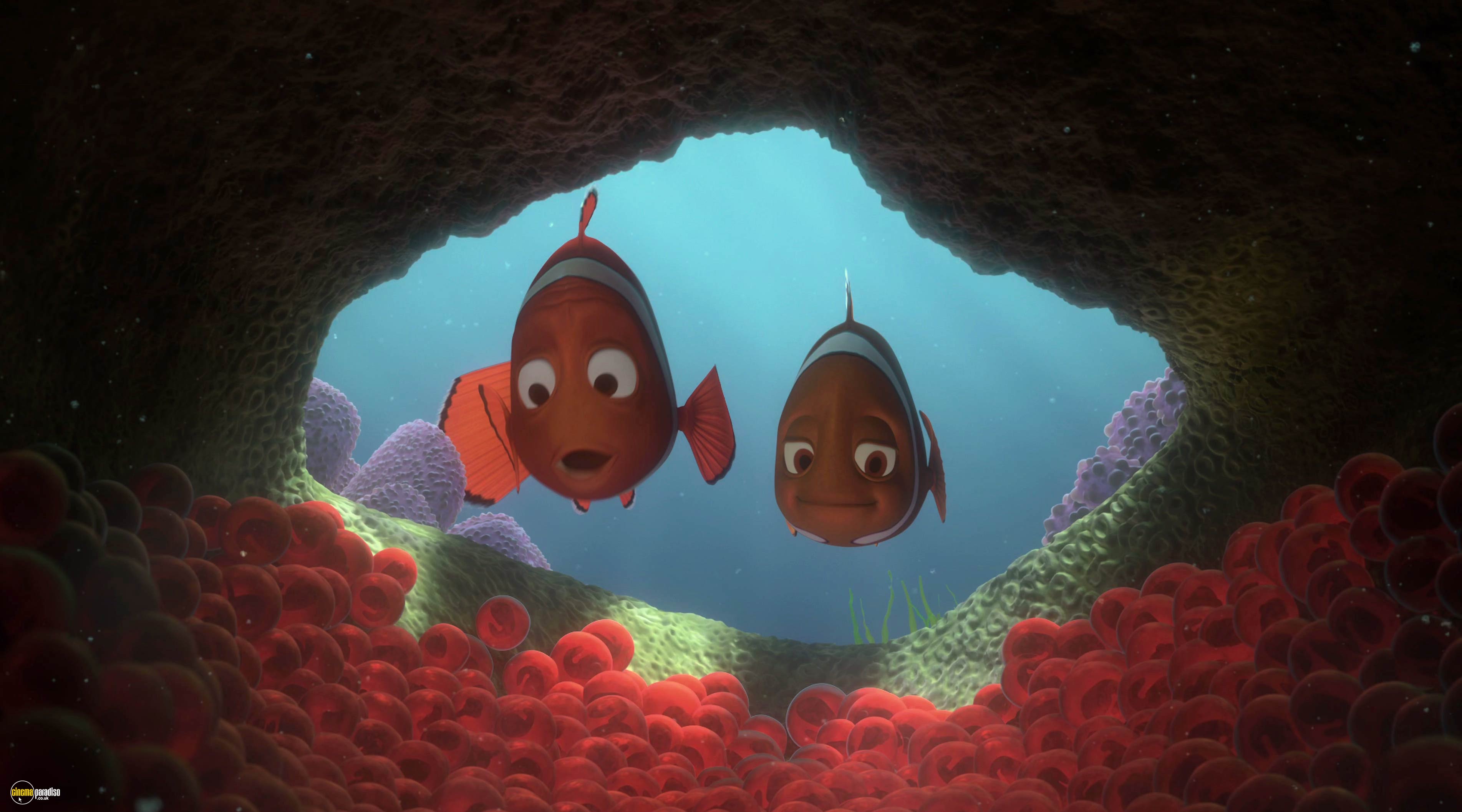
During a visit to Hong Kong Disneyland, Iger had realised that Pixar characters were rivalling the studio's traditional favourites when it came to younger patrons. He decided that the future of Disney lay in acquiring Pixar and detailing Midas men John Lasseter and Ed Catmull to revive the fortunes of Disney Animation. Pixar was not for sale, but Jobs allowed Iger to make his pitch and finessed him into agreeing that the company would remain at its new Emeryville base and retain its corporate ethos and identity. Jobs was most insistent that Pixar would not become just another branch of the Disney brand and, having been suitably reassured, he sold Pixar Animation to the Walt Disney Company for $7.4 billion in January 2006. In the process, he became Disney's largest shareholder (with 7%) and accepted a seat on the board, while Catmull was appointed head of Disney Animation and Lasseter (who had once been fired by the Burbank company) became his Chief Creative Officer.
Inheriting Meet the Robinsons (2007) and Disney's first fully 3-D computer-animated feature, Bolt (2008), the new brooms showed steady signs of improvement. In introducing the studio's first Black princess, they also revived the hand-drawn animation style for The Princess and the Frog (2009), which received an Oscar nomination for Best Animated Feature. Three years later, Wreck-It Ralph (2012) followed suit before Frozen (2013) became the first Disney title to win the new Oscar, en route to notching up $1.28 billion worldwide. After Big Hero 6 (2014) and Zootropolis (2016) had snagged the same prize, Frozen 2 (2019) became the highest-grossing animated picture in screen history. In 2022, Encanto beat Pixar's Luca (both 2021) to win Best Animated Feature and establish Disney's CGI credentials once and for all.
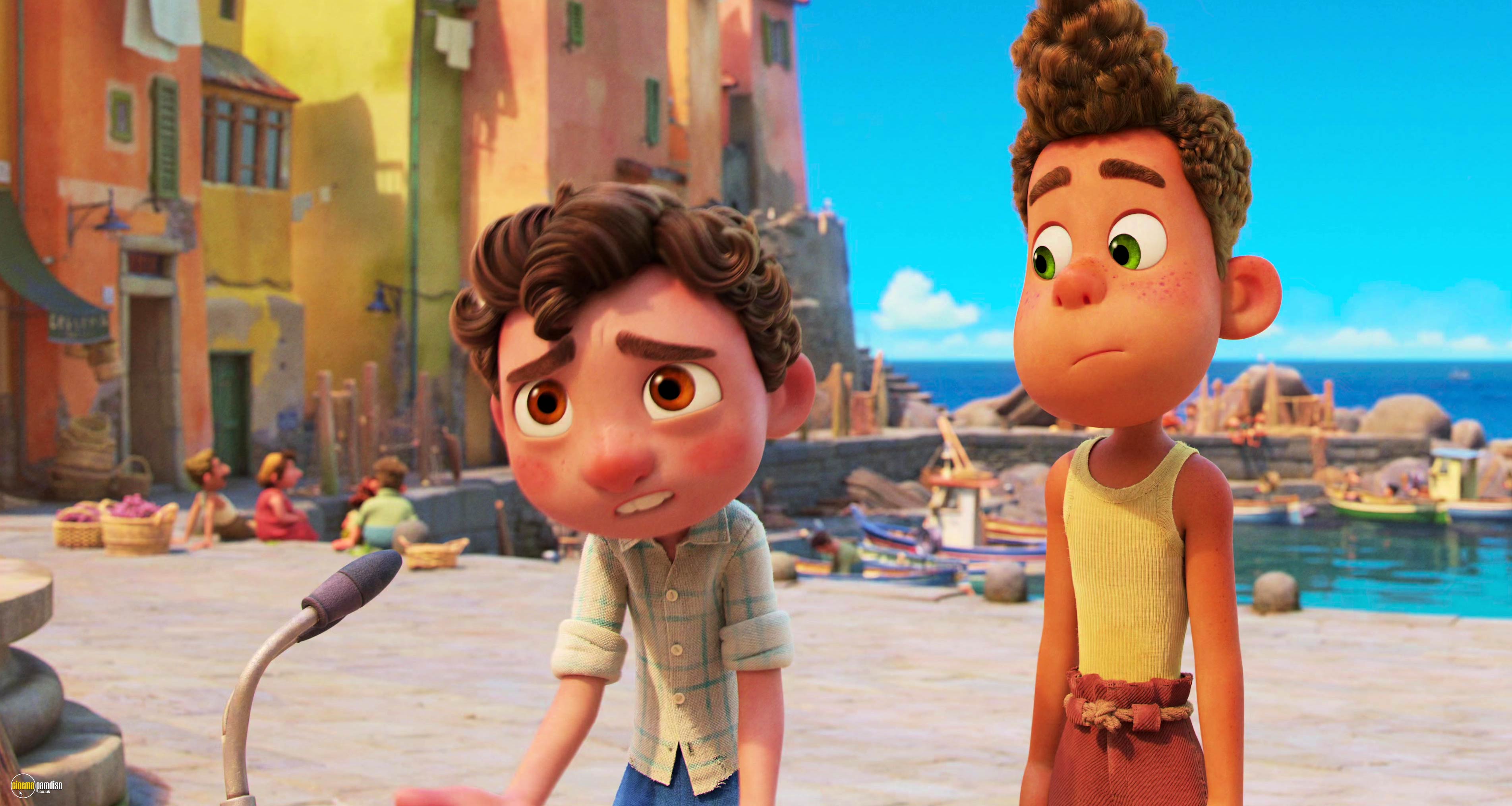
Wearing two hats, Catmull and Lasseter also ensured that Pixar maintained its steady course, as it won four consecutive Oscars for Best Animated Feature for Ratatouille (2007), WALL-E (2008), Up (2009), and Toy Story 3 (2010). Further victories came with Brave (2012), Inside Out (2015), Coco (2017), Toy Story 4 (2019), and Soul (2020). But it has not won since and is currently on its longest losing streak in the category, even though it has kept picking up nominations.
In November 2017, Lasseter announced that he would be taking a six-month break after acknowledging a series of 'missteps' in his conduct towards fellow employees. However, reports of sexual misconduct led to Lasseter leaving Pixar in June 2018, with Pete Docter taking his place. A few months later, Catmull announced his retirement, meaning that the old guard was not there to steer the company through the Covid-19 pandemic and the ruinous impact that the closure of cinemas had on the commercial prospects of Onward and Soul, even though the latter became the first streaming film to win the Oscar for Best Animated Feature. Despite going through a lean patch where mainstream movies were concerned, however, Pixar still launched SparkShorts, a series of experimental items that were shown on the new Disney+ platform. Much to the consernation of some within Pixar, Luca (2021) and Turning Red (2022) were also released free on Disney+ and they claimed that audiences had got out of the habit of going to the pictures when Lightyear (2022) reportedly cost the company $136 million after punters stayed away.
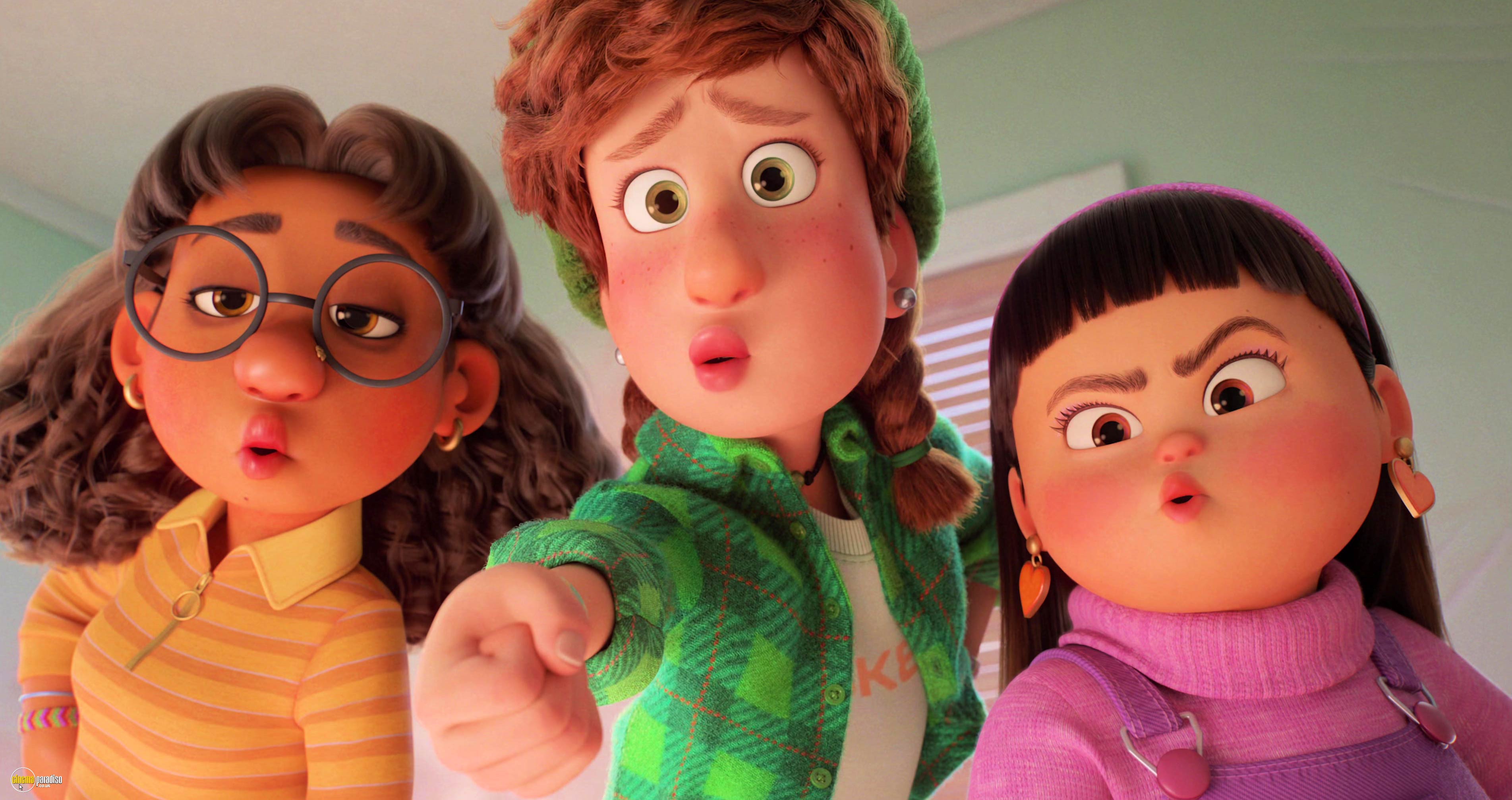
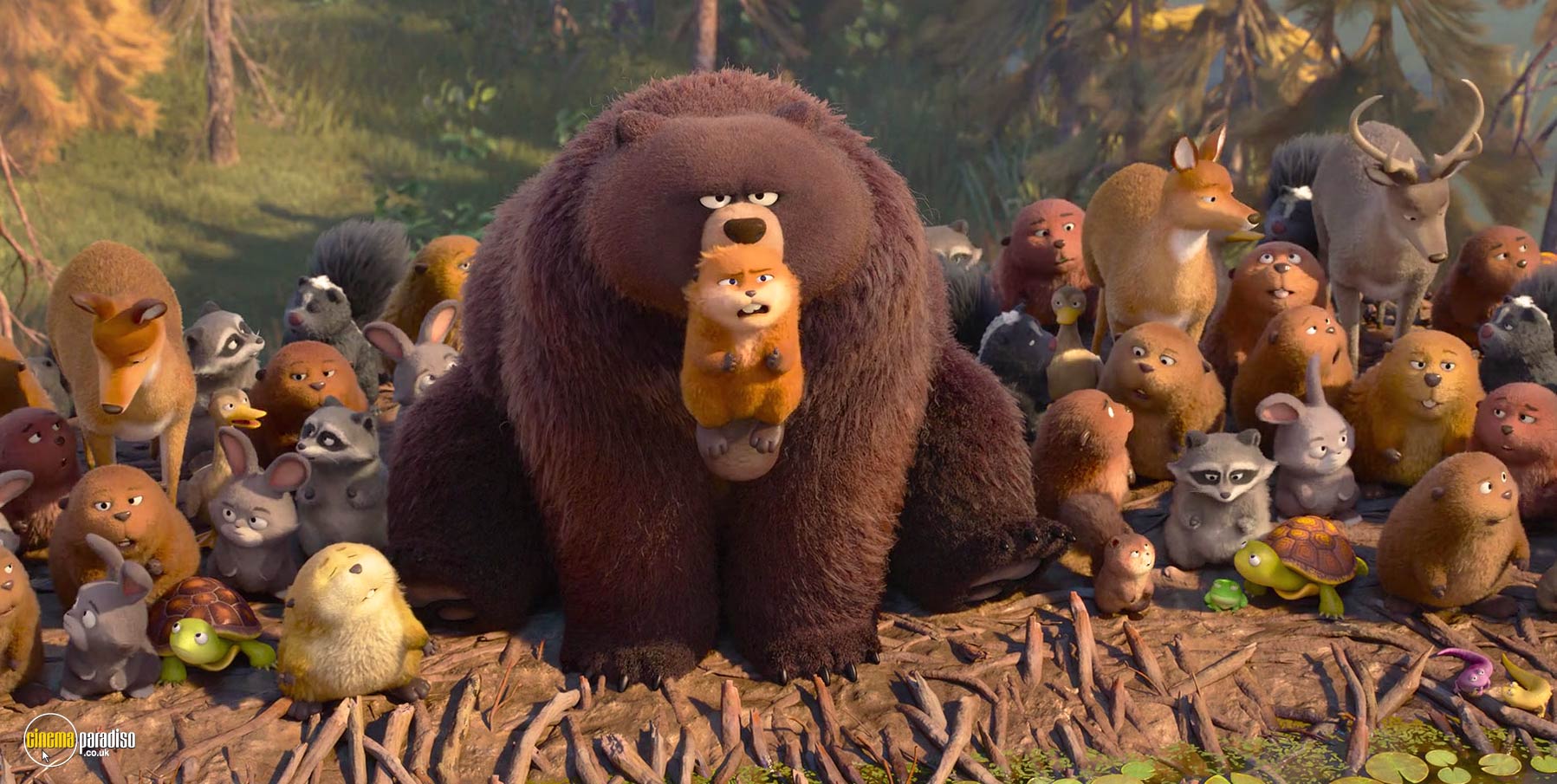
Redundancies seemed likely, but the tide turned with Elemental (2023) scooping $430 million worldwide and Inside Out 2 (2024) requiring just 17 days to become the fastest animated feature to tally $1 billion at the global box office. In addition to surpassing Incredibles 2 (2018) as Pixar's highest-grossing picture, it also went on to become the eighth most successful film of all time. Derived from Inside Out, Dream Productions, went live on Disney+ on Christmas Eve 2024 and further franchise spin-off series are reportedly in the pipeline. The disappointing box-office returns for Elio (2025) were off-set by its brisk business on Disney+, which has become a corporate safety net, as well as a creator of original content. But Pixar continues to churn out hits like Hoppers (2026), which suggests that the company's future is secure, as it enters its fifth decade.
The Toy Story Story
It's reckoned that more people with PhDs are listed in the closing crawl to Toy Story (1995) than in any previous film in Hollywood history. Evidently, it took brains to produce the 1560 pixellated shots slotted across 114,240 frames, as well as the 117 computers required to process data for 800,000 machine-hours. But the film's success was rooted in good, old-fashioned storytelling and showmanship. Cinema Paradiso has already explored the making of this landmark picture in Films to Watch If You Liked Toy Story. However, it's worth remembering that the original scenario had nothing to do with reuniting a young boy with two toys he didn't even realise had gone missing.
Although John Lasseter had been musing about a toy soldier who finds its way home after being left at a diner, the draft script presented to the Disney hierarchy concerned the rivalry between Tinny the Tin Toy and a scheming ventriloquist's dummy named Woody. Jeffrey Katzenberg disliked the idea and sent Lasseter, Andrew Stanton, and Pete Docter to watch buddy movies in order to make the rivalry between the principal toys less toxic. Yet, even though they returned with a yarn about drawstring cowboy Woody Pride and flashing-gadgeted Space Ranger Buzz Lightyear, Katzenberg remained unconvinced and it took a series of Pixar's famous brainstorming sessions to produce the outline that would forge a bond between Woody and Buzz while confounding toy-mauling neighbour, Sid Phillips.
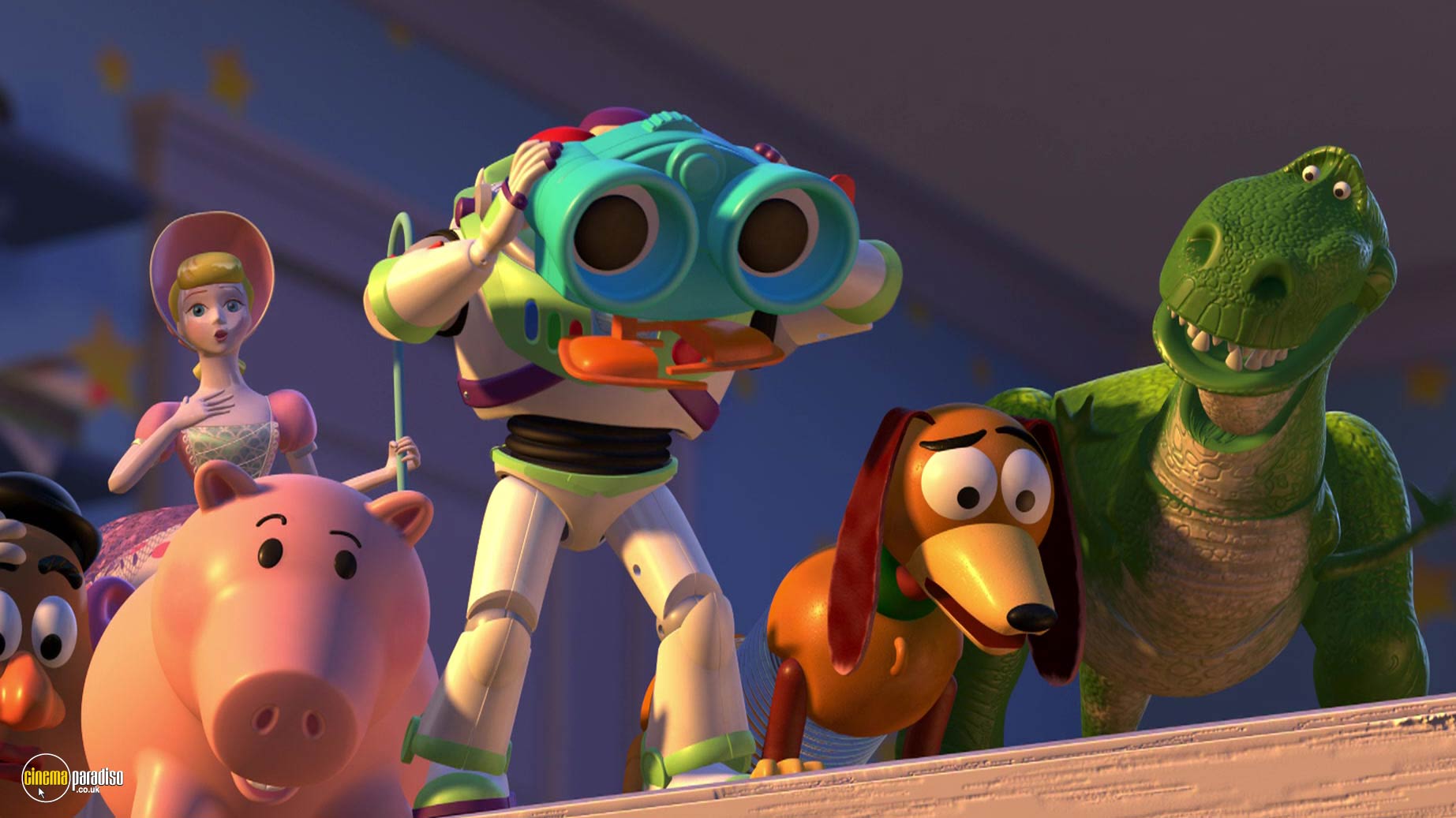
Tom Hanks and Tim Allen were hired to voice the rivals, alongside Don Rickles as Mr Potato Head, Jim Varney as Slinky Dog, Wallace Shawn as Rex the dinosaur, John Ratzenberger as Hamm the piggy bank, R. Lee Ermey as Sarge the soldier, and Annie Potts as Bo Peep. The blend of adventure, danger, wit, pathos, and positivity hit a note with younger audiences, their older siblings, and their parents and Toy Story racked up $360 million worldwide, a total only bettered to that point by Aladdin (1992) and The Lion King. Lasseter was rewarded with a special Oscar, as well as the distinction of being the co-author of the first animation scenario to be nominated for Best Original Screenplay. Randy Newman also doubled up for his score and the instant song classic, 'You've Got a Friend in Me'.
Despite the acclaim, the boost to its bank balance, and the recognition that animated hits didn't have to be based on fairytales, Disney didn't see Toy Story 2 as a big-screen release. Having changed the front office's mind, however, Lasseter junked the original storyline and the team devised a new one over a single weekend to show Woody learning his TV backstory after being stolen by unscrupulous collector, Al McWhiggin. While Buzz and the others plan a rescue, Woody gets to know fellow Woody's Roundup characters, Jessie the Cowgirl (Joan Cusack), Bullseye the Horse, and Stinky Pete the Prospector (Kelsey Grammer). Featuring a guest appearance by Tour Guide Barbie (Jodi Benson) and the introduction of Mrs Potato Head (Estelle Harris), the sequel outperformed its predecessor in amassing $485 million at the global box office. Yet, while Randy Newman won a Grammy for 'When She Loved Me', it was pipped to the Oscar by Phil Collins's 'You'll Be in My Heart' from Disney's Tarzan (1999).
Ever eager to flex its muscles where Pixar was concerned, Disney announced that its own Circle Seven division would handle the next instalment. However, the project was cancelled after Lasseter was placed in charge of all Disney and Pixar animation following the 2006 buyout. A reworked premise was devised by Lasseter, Stanton, and Lee Unkrich, who took the helm of Toy Story 3, which became Pixar's 11th feature in 2010.
Time has passed and Andy Davis is now 17 and about to go to college. He's not played with his toys in years and, when they are accidentally donated to Sunnyside Daycare, all bar Woody agree that it's better to be loved than owned. While the others become acquainted with Lots-O'-Huggin' Bear (Ned Beatty), Big Baby, and Ken (Michael Keaton), Woody sets about finding his way home, only to be picked up by Bonnie, who adds him to her other toys, Mr Pricklepants (Timothy Dalton), Trixie ( Kristen Schaal), Daisy (Bonnie Hunt), Buttercup (Jeff Garlin), and Chuckles (Bud Luckey).
Containing a furnace sequence that was as traumatic for the grown-ups as it was for their charges, the third part of the trilogy was released alongside Day & Night, which can be rented from Cinema Paradiso as part of Volume 2 of The Pixar Short Film Collection. It benefited from an IMAX 3-D boost in becoming the highest-grossing animated feature of all time, with global revenues of $1.067 billion. In addition to winning Best Animated Feature and Best Song for Randy Newman's 'We Belong Together', Toy Story 3 was also nominated for Best Picture, Best Adapted Screenplay, and Best Sound Editing. Many felt this was the perfect place to stop. But the temptation to take the story on proved too strong.
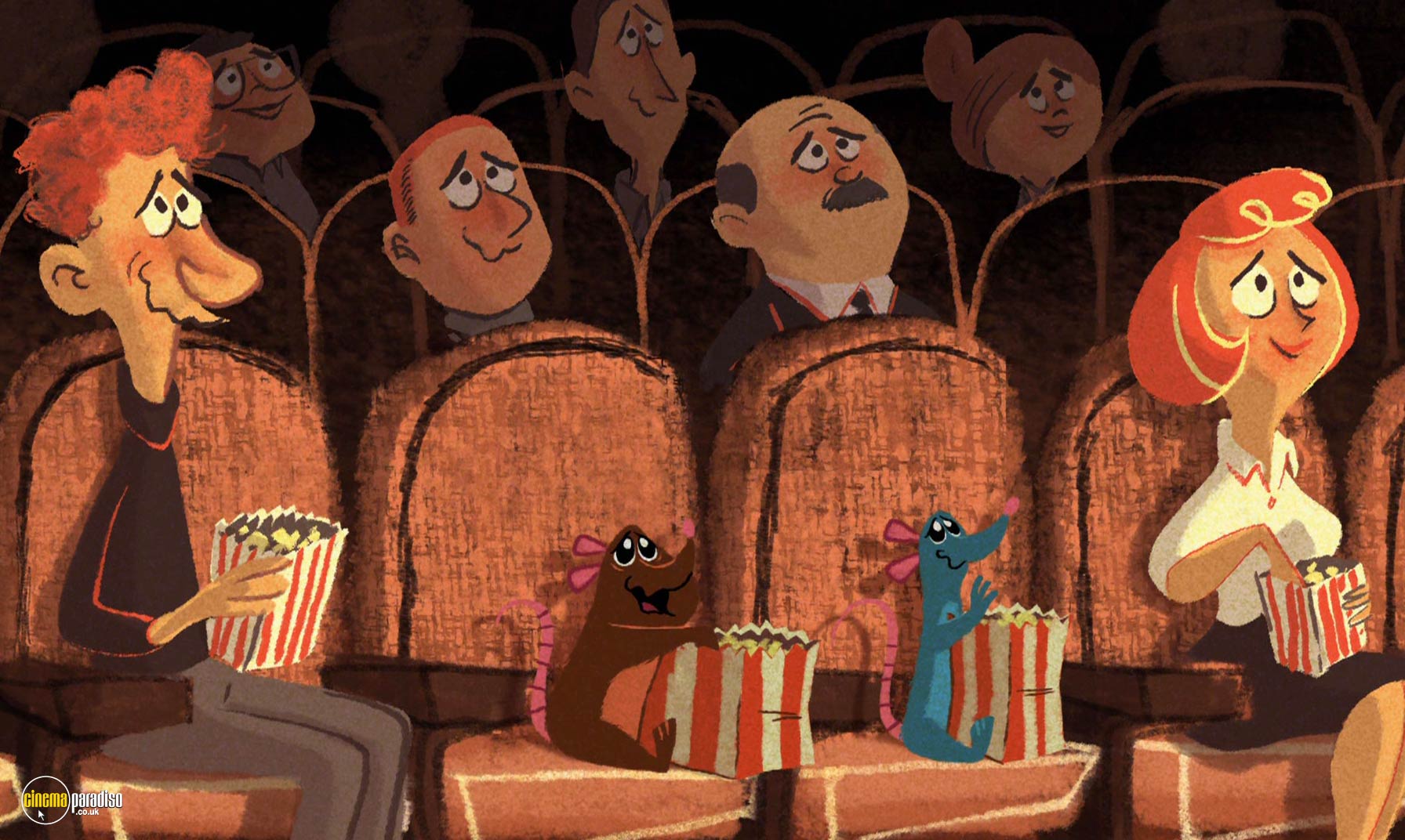
Three shorts were released under the Toy Story Toons banner. In Hawaiian Vacation, the toys chill out in Bonnie's bedroom after she takes Barbie and Ken to the 50th State, while Small Fry (both 2011; PSFC Vol. 2) sees Buzz learn about meal toys after being left behind at a fast food outlet. As Mythic Rock was never made, the series ended with Partysaurus Rex (2012; PSFC Vol. 3), which centred on Rex having fun with Bonnie's bathtime toys after he's stranded in the tub.
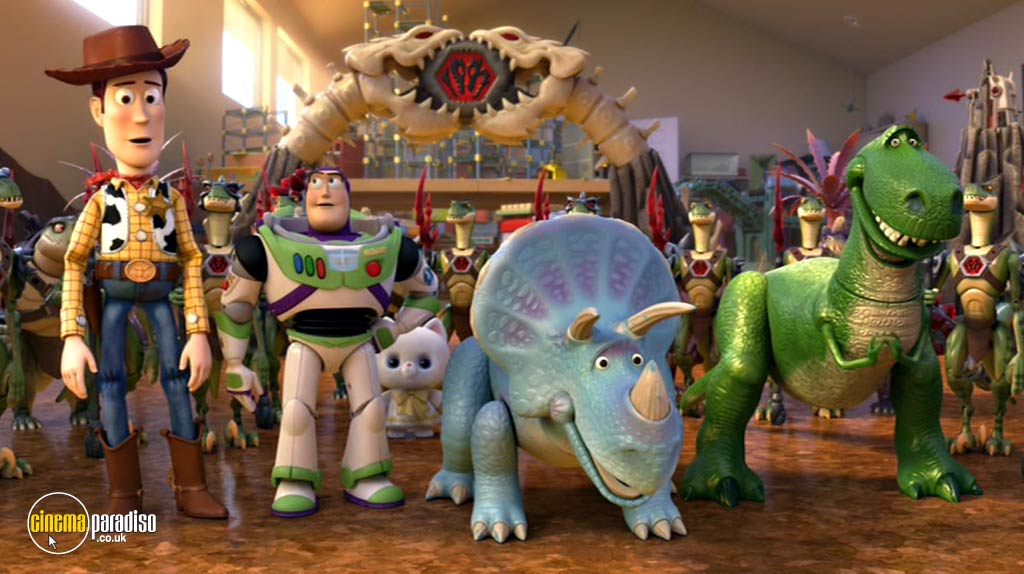
Cinema Paradiso can also bring users a pair of TV specials. A flat tyre forces the friends to spend the night in the Sleep Well motel in Toy Story of Terror! (2013). However, Mr Potato Head goes missing and Jessie meets Combat Carl (Carl Weathers) who tells her all about motel manager Ron (Stephen Tobolowsky) and his toy-stealing iguana, Mr Jones. The jeopardy is equally high in Toy Story That Time Forgot (2014), as Bonnie goes for a post-Christmas play date with her friend Mason and Trixie the triceratops (Kristen Schaal) falls under the sway of warrior Reptillus Maximus (Kevin McKidd) and a shaman named The Cleric (Steve Purcell) from Mason's new Battlesaurs playset. However, she discovers that Woody and Buzz have gone AWOL and realises that Mason's new video game is having a bad influence on his toys.
The latter theme would recur in due course, but the value of toys and play would be crop up in Toy Story 4 (2019), which had taken almost a decade to develop. John Lasseter had pushed to make a love story back in 2010, but the narrative direction shifted after he was replaced as director by Josh Cooley in 2016. Opening with a prologue in which Woody and Bo Beep had reluctantly been parted, the action returns to the present, where Bonnie is apprehensive about going to kindergarten. Woody and the toys try to reassure her, but are put out when she becomes fixated on Forky (Tony Hale), a spork she had made in class.
Convinced he's nothing but trash, Forky jumps out of the car window while on a road trip and Woody finds himself in a sinister toy shop when he tries to rescue him. Forky has been captured by a talking doll named Gabby Gabby (Christina Hendricks) and a bunch of ventriloquist's dummies and Woody joins forces with Bo Beep and daredevil toy Duke Caboom (Keanu Reeves) to set Forky free. However, in order to recover him and reunite with Bonnie, Woody needs the help of Buzz and the gang, who have been joined by carvival toys Bunny (Jordan Peele) and Ducky (Keegan-Michael Key), as well as toy cop Giggle McDimples (Ally Maki).
As if there wasn't already enough going on, Pixar included a raft of cameoing characters voiced by showbiz icons, among them Stretch the octopus (Whoopi Goldberg), Melephant Brooks (Mel Brooks), Chairol Burnett (Carol Burnett), Bitey White (Betty White), and Carl Reineroceros (Carl Reiner). They proved the cherry on the cake for critics who were pretty much unanimous in their praise, as TS4 coined $1.074 billion worldwide. Yet, while it took the Oscar for Best Animated Feature and Newman's 'I Can't Let You Throw Yourself Away' was nommed for Best Song, it failed to register in any other categories, prompting some to suggest that the Toy Story saga had reached the end of its road, even though 10 episodes of Forky Asks a Question (2019-20) went out on Disney+.
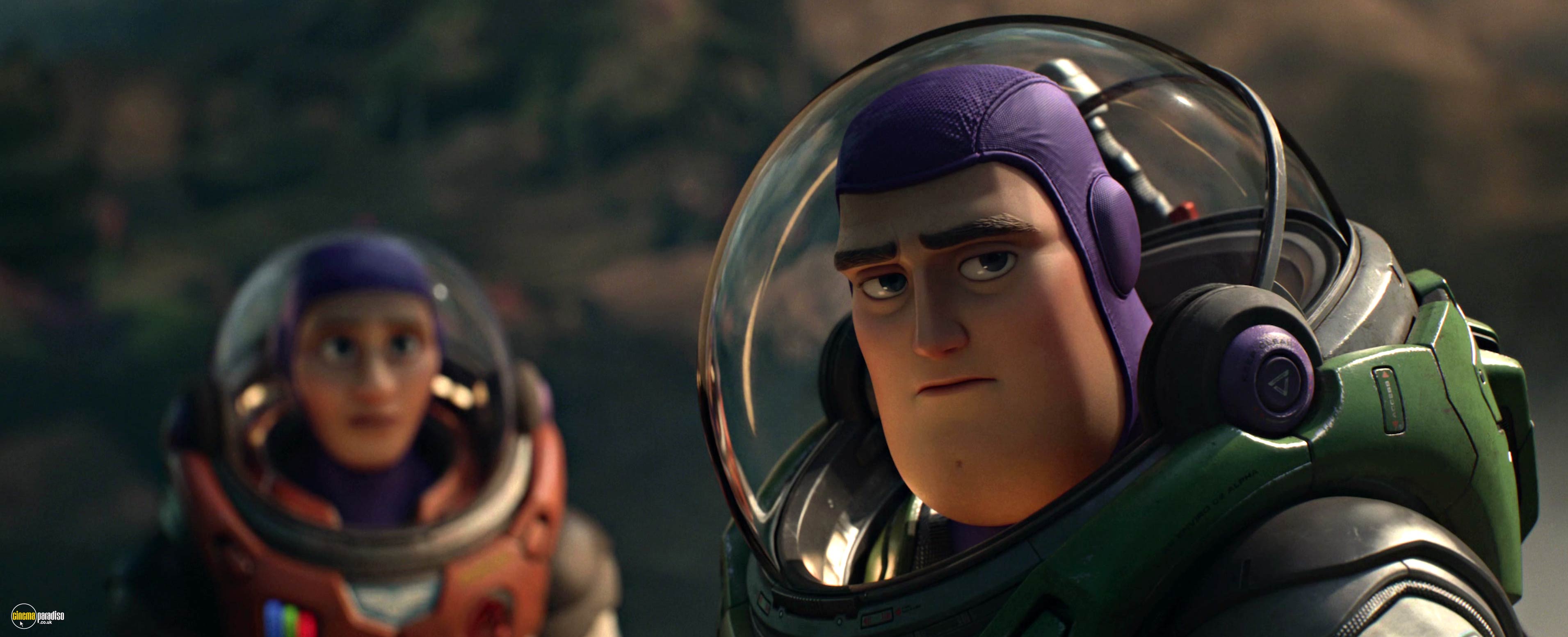
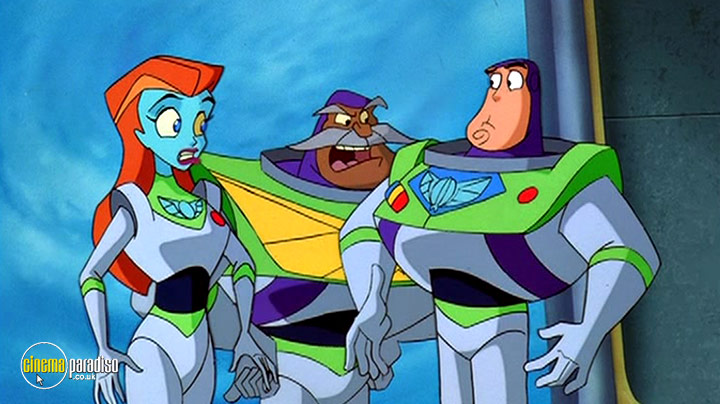
A detour didn't go down well, even though it had a small-screen precedent. In 2000, Buzz Lightyear of Star Command: The Adventure Begins had pitted everyone's favourite Space Ranger against the Evil Emperor Zurg (Wayne Knight) and his sidekick, Agent Z (Diedrich Bader). This was the pilot for the single-season TV show, Buzz Lightyear of Star Command (2000-01), which saw Jim Martin take over voicing duties from Tim Allen. Nothing more was heard of the hero who had inspired his own toy until director Angus MacLane pitched an idea in 2016, based on his own love of sci-fi movies. It took five years for the project to materialise, with Lightyear (2022) centring on a stranded spaceship on the planet of T'Kani Prime being attacked by Zurg and his Zyclops robots, while Buzz (Chris Evans) and his cat, Sox (Peter Sohn), are testing a hyperspace fuel crystal that might enable the crew to escape its exile.
The idea that four years pass each time Buzz conducts a test flight is inspired and leads him to consider his place in the universe and realise that his actions have consequences. But, despite being the first animated feature to have its aspect ratio expand from 2.39:1 to 1.43:1 for selected sequences, this $200 million adventure failed to find an audience. Critics were polite, but fretful that Pixar hadn't reached for the stars, while a furore in certain countries about a same-sex kiss between Buzz's crewmates, Alisha Hawthorne (Uzo Aduba) and her wife, Kiko, generated negative publicity at a time when cinemas were still struggling to coax audiences back after Covid.
The setback didn't deter the good people at Pixar from going ahead with Toy Story 5, however. With Andrew Stanton at the helm, wielding a budget of $250 million, expectations were high for its June 2026 release and have largely been met, as Jessie comes to terms with the fact that eight year-old Bonnie only has eyes for her new tablet, Lilypad (Greta Lee). Events conspire to return Jessie to the farm where former owner Emily had lived and she winds up huddling in a shed with toilet trainer Smarty Pants (Conan O'Brien), Snappy the camera (Shelby Rabara), and Atlas the GPS hippo (Craig Robinson). Eventually, Jessie catches the eye of the family's young daughter, Blaze. But Woody and Buzz have been alerted to the fact that Jessie is missing and they set out to bring her back to Bonnie.
A few weeks into its theatrical run, TS5 has already taken $776 million at the global box office. That figure is bound to rise, even though there were some misgivings among the critical coterie, in spite of the pertinence of the central theme about technology affecting our ability to play and interact with others. Boosting its cachet was the inclusion of Taylor Swift's 'I Knew It, I Knew You' alongside the usual Randy Newman contributions and it will be interesting to see where the moving finger lands at the 99th Academy Awards next spring. Even more intriguing is where the franchise will go next. Will there be another character spin-off or will the main strand take us further into Bonnie and Blaze's childhoods or venture into pastures new. Don't expect an answer any time soon, however, as Pixar is currently preoccupied with other assignments, as we shall discover in Part Two of this Cinema Paradiso special.
Mentioned films