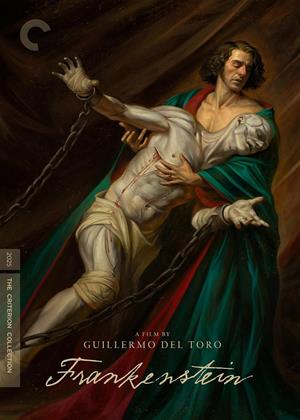
Rent Frankenstein (2025)
- General info
- Available formats
- Synopsis:
Guillermo del Toro's spellbinding take on one of the most enduring of all modern myths, Mary Shelley's 'Frankenstein', imbues the classic tale with new depths of humanity while pushing it toward dazzling heights of gothic grandeur. Shifting between the perspectives of the brilliant but callous Victor Frankenstein (Oscar Isaac) and the creature (Jacob Elordi) he fashions from flesh and then cruelly mistreats, del Toro movingly reframes the legend as a story of fathers and sons struggling to break free from cycles of trauma. A decades-in-the-making triumph of darkly ravishing visual invention and operatic storytelling, Frankenstein is a deeply personal statement from a director who has long been drawn to the realm where men and monsters merge - Actors:
- Christoph Waltz, Jacob Elordi, Mia Goth, Oscar Isaac, Ralph Ineson, Charles Dance, Christian Convery, Burn Gorman, David Bradley, Lars Mikkelsen, Nikolaj Lie Kaas, Felix Kammerer, Lauren Collins, Peter Millard, Joachim Fjelstrup, Stuart Hughes, Jason Alan Staines, Liubov Elkina, Sharon Canovas, Kyle Gatehouse
- Directors:
- Guillermo Del Toro
- Producers:
- J. Miles Dale, Guillermo Del Toro, Scott Stuber
- Writers:
- Mary Shelley, Guillermo Del Toro
- Others:
- Christian Cooke, Mike Hill, Alexandre Desplat, Tamara Deverell, Shane Vieau, Jordan Samuel, Kate Hawley, Greg Chapman, Dan Laustsen, Nathan Robitaille, Nelson Ferreira, Brad Zoern, Dennis Berardi, Nelson Ferreira, Dan Laustsen, Cliona Furey, Megan Many, Nathan Robitallie, Ayo Burgess, Ivan Busquets
- Aka:
- Dr. Frankenstein
- Studio:
- Criterion Collection
- Genres:
- Drama, Horror, Sci-Fi & Fantasy
- Collections:
- BAFTA Nominations Competition 2026, Oscar Nominations Competition 2026
- Awards:
2026 BAFTA Best Production Design
2026 Oscar Best Costume Design
- BBFC:

- Release Date:
- 26/10/2026
- Run Time:
- 158 minutes
- Languages:
- English Dolby Atmos
- Subtitles:
- English Audio Description, English Hard of Hearing
- Formats:
- Pal
- Aspect Ratio:
- Widescreen 1.85:1
- Colour:
- Colour
- BLU-RAY Regions:
- B
- Bonus:
- New audio commentary on The Reborn Cut, featuring director Guillermo del Toro
- The Anatomy Lesson: Director's Cut, a new documentary on the making of the film
- The Parlour, a collection of conversations on craft featuring del Toro; actors Jacob Elordi, Mia Goth, and Oscar Isaac; cinematographer Dan Laustsen; production designer Tamara Deverell; costume designer Kate Hawley; and creature designer Mike Hill
- Q&As moderated by filmmaker Martin Scorsese and musician Patti Smith
- Interview with composer Alexandre Desplat conducted by film-music scholar Jon Burlingame
- Trailer
- Disc 1:
- This disc includes the following:
- Theatrical version
- Special Features - Disc 2:
- This disc includes the following:
- The Reborn Cut - extended director's cut
- Special Features
- BBFC:
- Release Date:
- 26/10/2026
- Run Time:
- 158 minutes
- Languages:
- English Dolby Atmos
- Subtitles:
- English, English Hard of Hearing
- DVD Regions:
- Region 2
- Formats:
- Pal
- Aspect Ratio:
- Widescreen 1.85:1
- Colour:
- Colour
- BLU-RAY Regions:
- B
- Disc 1:
- This disc includes the following:
- Theatrical version
- Special Features - Disc 2:
- This disc includes the following:
- The Reborn Cut - extended director's cut
- Special Features
More like Frankenstein

Reviews (2) of Frankenstein
New Adaptation - Less Horror, More Drama - Frankenstein review by GI
This has all the visual style you come to expect from director Guillermo del Toro and the gothic is turned up the maximum in his passion piece and new take on the Mary Shelley novel. There's no high foreheads or neck bolts here and taking other versions of the creature here we have possibly the closest idea to the novel, a creature that represents the main theme of what it means to be human. Sadly though the film drifts too much into melodrama and anyone expecting some horror maybe in for a disappointment because it's lacking here. I also didn't quite buy into the invulnerability skills of the creature, (he has Wolverine type healing powers!) an invention by del Toro, and which leaned the story into the comic book superhero mode a little. Here though Oscar Isaac plays Victor, the scientist bereft at the death of his mother and determined to outdo his tyrannical father (a cameo by Charles Dance) who manages to put together a creature from body parts saved from a battlefield (cue some gory bits). When the creature falls short of his expectations he tries to kill it but 'it' has other ideas. Jacob Elordi is excellent as the creature who gets to tell his own story, which works well here. Overall though the film felt lacking, it's entertaining for the most part and has a great look. Mia Goth as the love interest is sadly underused but you do get Christoph Waltz as Victor's benefactor. Worth a look but I still think the 1973 TV film with James Mason takes a lot of beating.
Stitched Together, Still Alive - Frankenstein review by griggs
Studying Frankenstein for GCSE (including a comparative study of Blade Runner, of course) hard-wired a very specific creature into my head, so I went into del Toro’s version quietly braced for disappointment. What surprised me was how often it lined up with the book I remember: no comedy bolts through the neck, just a stitched-together body that looks genuinely painful to inhabit, shuffling through damp streets and candlelit rooms like something from a feverish painting.
The production design, costumes and make-up are superb – mildew, velvet and scar tissue you can almost smell – which is why the more obvious CGI flourishes feel like a step down. Whenever the film leans on pixels rather than prosthetics, it loses a bit of that bruised, tactile magic. Del Toro’s direction is as sure-footed as you’d hope: long, gliding moves, a fondness for shadows and water, and a habit of framing the creature as victim first, monster second.
Oscar Isaac plays Victor as a wounded romantic slowly curdling into obsession; Jacob Elordi’s creature gets a beautifully modulated arc – confused child, furious outcast, tragic adult, sometimes in a single scene. Mia Goth makes Elizabeth more than just a doomed fiancée, hinting at a life and intelligence the story keeps pushing to the margins. Even the arms-dealer benefactor and household hangers-on feel like people rather than just plot furniture.
The nesting-doll structure and parental responsibility are intact, but Victor’s abusive backstory, the arms-dealer patron and Elizabeth’s altered fate tilt it towards father–son dynamics and militarism. A few speeches spell out what the images already told us, yet overall this feels less like a museum piece and more like a properly alive adaptation