To mark the 50th anniversary of the death of Sid James, Cinema Paradiso harks back to the heyday of the Carry On films in a unique three-part survey.
Everybody knows the Carry On films, even though not everyone loves them in this day and age. Critics fell over themselves to dismiss them as tripe, yet audiences in Britain, Australia, and, initially, the United States couldn't get enough of the silly situations, the cheeky innuendos, and the knowing playing of some of the finest comic actors in the country. Only one of the first 25 films failed to make back its money within weeks of release.
But the makers struggled to keep pace with the increased permissiveness of society and cinema and their efforts to do so in the mid-1970s fell short of the standards they had established with both their workplace sitcoms and their movie pastiches. Moreover, public attitudes had started to change and the Carry Ons began to look tired and tacky. They had always delighted in being risqué, but, as political correctness took hold, they began to cause offence with a younger generation that had grown up in a Britain that had altered significantly since the time the Carry Ons were produced.
While the use of brownface in films reminiscing about Britain's imperial past became as unpardonable as the flagrant objectification of women, it would be foolish to dismiss the Carry Ons out of hand, however. Times may change, but human nature has a stubborn habit of staying the same and the insights into the foibles of those in authority or labouring under delusions of grandeur remain as acute and amusing as ever. They're more Marmite in 2026. But don't give up on the Carry Ons just yet, as they can still sneak up on you and cause a snigger, as we saw in Part One: On the Job. Now we turn to the movie lampoons that offer several series highlights.
Spoofing in the Sixties
Although the workplace comedies still had box-office appeal, producer Peter Rogers decided that seven in a row was enough and he branched out into film parody after Talbot Rothwell presented him with a script entitled Up the Armada. This wasn't designed as a series entry, but Rogers had it rewritten as Carry On Jack (1964) to follow press-ganged Albert Poop-Decker (Bernard Cribbins) aboard HMS Venus in a bid to reclaim his identity from Sally (Juliet Mills), a serving girl at Dirty Dick's Tavern in Plymouth, who has stolen his midshipman's uniform and convinced Captain Fearless (Kenneth Williams) that she is his new junior officer. Neither impress First Officer Jonathan Howett (Donald Houston) and his bosun, Mr Angel (Percy Herbert), however, and they contrive to relieve Fearless of his command after he persists in ducking confrontation with the enemy.
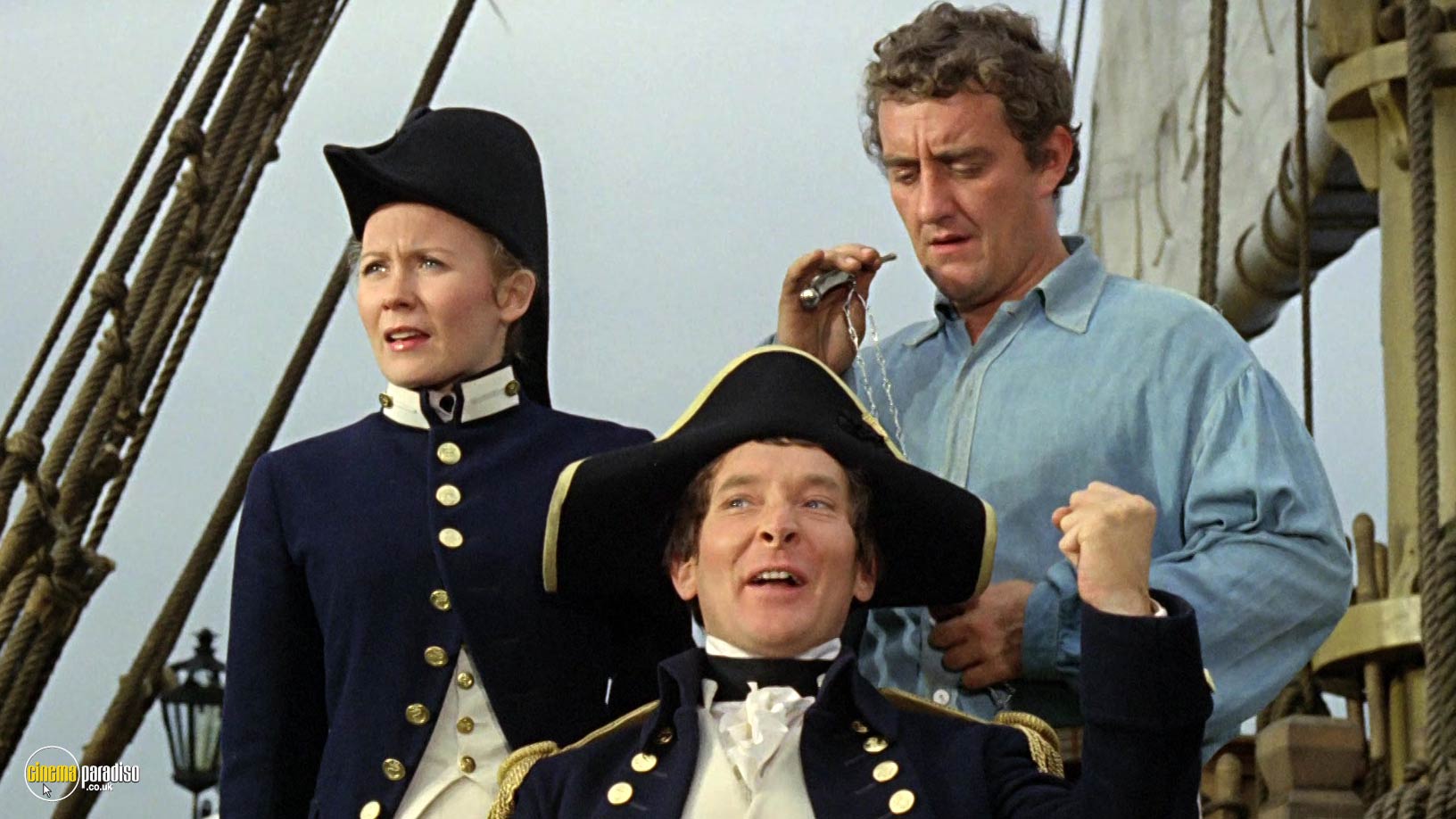
Opening with the death of Admiral Horatio Nelson (Jimmy Thompson) at the Battle of Trafalgar in 1805, Rothwell's scenario makes the Spanish fleet the principal foe, which is apt considering that he borrowed the entire Sally subplot from 'The Lost Colony of Virginia', the second episode of the ITV series, Sir Francis Drake (1961-62). In this storyline, gunner's daughter Sally (Olive McFarland) smuggles herself aboard The Golden Hind in order to reunite with her husband, Tom Brewster (Barry Foster), who has gone to the American colonies. However, Rothwell also lifted the idea of Lieutenant Howell seizing control of the ship from Carol Reed's Mutiny on the Bounty (1962), which had paired Marlon Brando and Trevor Howard in the roles of Fletcher Christian and Captain William Bligh that had been taken by Clark Gable and Charles Laughton in Frank Lloyd's 1935 account of the 1787 mutiny that remains the last Best Picture winner to land no other Oscars.
The ship is, of course, named after the bawdy song 'The Good Ship Venus', which was supposedly inspired by a mutiny caused on a prison brigantine by a female convict named Charlotte Badger. A later version of HMS Venus was the sister ship of HMS Troubridge, whose name was tweaked to HMS Troutbridge for the long-running BBC radio comedy, The Navy Lark (1959-77). This had been adapted for the screen in 1959, with Leslie Phillips's Lieutenant Pouter pairing with Cecil Parker's Commander Stanton. The latter would make his sole Carry On appearance in Jack, as the First Sea Lord, while the crew of HMS Troubridge was recruited to rescue the castaways at the end of Peter Brook's adaptation of William Golding's Lord of the Flies (1963).
The first Carry On with an historical setting is short on series regulars. In addition to Kenneth Williams's splendidly fey Fearless, Charles Hawtrey also cropped up as cess pit cleaner Walter Sweetly, who is abducted alongside Albert. He was played by Bernard Cribbins (in the first of his three Carry Ons) after Kenneth Connor had to cry off because he was committed to a play in the West End. Liz Fraser had also been lined up for Sally, but she had expressed a desire to move away from comedy and Juliet Mills had been cast in her place after Rogers and director Gerald Thomas had worked with her in Twice Around the Daffodils (1962) and Nurse On Wheels (1963). As the daughter of Sir John Mills, she gave the project a certain credibility. However, she had to hide the fact that she was three months pregnant at the start of shooting in case she was replaced. Her beloved, Roger the Lodger (who later turns up as Patch the pirate), was played by Peter Gilmore, a regular bit-part player in the Carry Ons, who went on to find fame at sea, as James Onedin in the classic BBC series, The Onedin Line (1971-80).
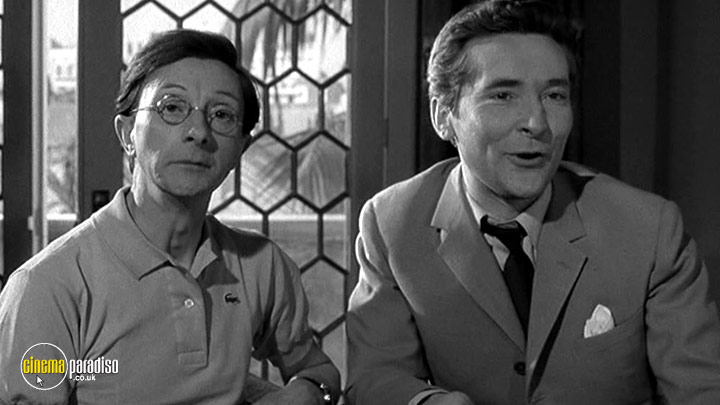
Norman Hudis wrote the original screenplay for Carry On Spying (1964), which cast Sid James as the head of a nest of spies that included Kenneth Connor as Bold, Hattie Jacques as Dauntless, and Joan Sims as Valliant. However, Peter Rogers was unhappy with a plot that centred on some secret agents posing as peaceniks in order to infiltrate a march by the Campaign for Nuclear Disarmament. This was a hot topic in Britain at the time, as several CND protests had taken place at the Atomic Weapons Research Establishment at Aldermaston in Berkshire. However, Rogers was hoping for something more like a parody of Terence Young's Dr No (1962) and From Russia With Love (1963), which had starred Sean Connery as James Bond. Consequently, the characters of Lucky Dexter (James), Janie May (Sims), Art Accleston (Kenneth Connor), Fingers Allen (Charles Hawtrey), and Amelia Barley (Esma Cannon) were consigned to the archives and Talbot Rothwell was asked to come up with something a little more 007ish.
Led by the evil Dr Crow (Judith Furse, voiced by John Bluthal), the Society for the Total Extinction of Non-Conforming Humans (STENCH) steals a top secret formula and The Chief (Eric Barker) is ordered to retrieve it by the British government. Unfortunately, the only Secret Service agent available is the bungling Desmond Simpkins (Kenneth Williams) and he has to rely on raw trainees Harold Crump (Bernard Cribbins), Daphne Honeybutt (Barbara Windsor), and Charlie Bind (Charles Hawtrey) in his pursuit, from Vienna to Algiers, of the Fat Man (Eric Pohlmann) and his sidekick, Milchmann (Victor Maddern).
Discarding Rothwell's title, Come Spy With Me, Rogers decided to go down the Carry On route, even though several regulars were otherwise engaged. He also decided against shooting in colour because he had been offered a cheap consignment of monochrome stock and cinematographer Alan Hume was asked to copy the chiaroscuro effects that Robert Krasker had created for Carol Reed's The Third Man (1949). And, in case anyone had failed to spot the similarities, composer Eric Rogers was also tasked with dropping a little Anton Karas-like zither into the music for the Austrian sequence.
Veteran Viennese character actor Eric Pohlmann had played a waiter at Smolka's café in The Third Man en route to voicing Ernst Stavro Blofeld in the Bond movies, From Russia With Love and Thunderball (1965), so he was perfect casting as the villain. Jim Dale also enjoyed himself as Carstairs, the contact who is a master of disguise, while Dilys Laye made the most of a cameo as Lila, a double agent working for the Society for the Neutralising of Germs (SNOG). Also keep an ear out for British Operational Security Headquarters (BOSH) and the Society for the Monopoly of Universal Technology (SMUT).
Bond producer Albert R. Broccoli took exception to Hawtrey's character being called James Bind, with the code name '006½'. Responding to the threat of legal action, Rogers had Bind's first name changed to Charlie, while his code number became 'Double 0 - ohh'. The agents were also given the operational names Red Admiral, Bluebottle, Brown Cow, and Yellow Peril, while Daphne was additionally given a photographic memory. Liz Fraser (who had decided that comedy wasn't a bad thing after all) had been all set for the role. But Rogers had noticed Windsor sashaying through the Pinewood commissary and awarded her the first of her nine Carry Ons. She wouldn't return, however, until Carry On Doctor (1967), by which time the series had added another five film-inspired lampoons.

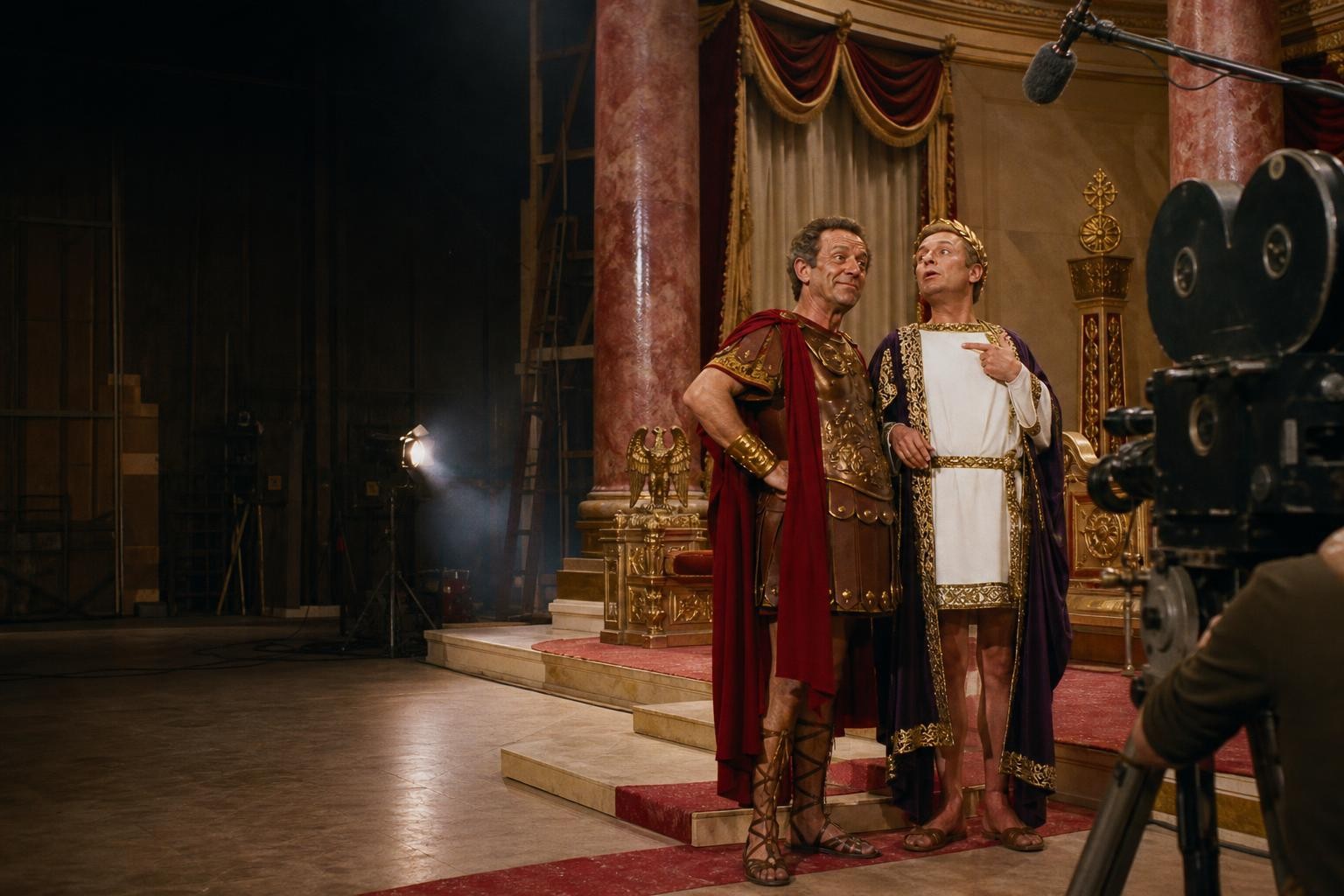
After the budget for Spying had increased by £11,000 after Kenneth Williams had been injured by a piece of metal falling from the studio rafters, Rogers was no doubt delighted to save a few bob in recycling the sets abandoned by Joseph L. Mankiewicz's Cleopatra (1963) after the ill-fated 20th Century-Fox epic had cut its Pinewood losses and relocated to Cinecittà in Rome. Elizabeth Taylor's adulterous affair with co-star Richard Burton might have left the Fox publicity unit in denial, but it made so many headlines that Carry On Cleo (1964) became a no-brainer. And the whole team rose to the levels set by the sets and costumes by delivering one of the finest entries in the entire series.
Originally constructed in 1960, the sets for Rome and Alexandria merely had to be dusted down while Talbot Rothwell worked on a screenplay that included narration by E.V.H. Emmett, the veteran voice of Gaumont British News. Rothwell has been credited with coming up with the classic line, 'Infamy! Infamy! They've all got it in for me!' But it was also secondhand, as pals Frank Muir and Denis Nordern had written it for Dick Bentley to deliver in the Jimmy Edwards radio series, Take It From Here (1948-60), some years earlier. Ancient wisdom was in the air, however, as Kenneth Connor had to juggle playing cowardly Briton Hengist Pod (who is depicted as a caveman long after civilisation had moved passed such prehistoric dwellings) with appearing alongside Frankie Howerd in the West End production of Stephen Sondheim's A Funny Thing Happened on the Way to the Forum, which was filmed by Richard Lester in 1966 before it inspired Howerd's hit BBC sitcom, Up Pompeii! (1969-70), which Bob Kellett brought to the big screen in 1971.
Having endured the British weather during his successful invasion, Mark Anthony (Sid James) returns to Rome with cavemen Horsa (Jim Dale) and Hengist (Kenneth Connor) amongst a group of slaves to be sold at the market of Marcus and Spencius. Horsa and Hengist manage to escape and hide out in the temple of Vesta, where Horsa thwarts an assassination attempt on Julius Caesar (Kenneth Williams). However, Hengist is mistakenly credited with slaying the conspirators and he is installed as Caesar's bodyguard, much to the derision of his wife, Calpurnia (Joan Sims), and her father, Seneca (Charles Hawtrey).
Caesar dispatches Anthony to Egypt to depose Queen Cleopatra (Amanda Barrie). However, she seduces him and convinces him to kill Caesar and join her in ruling a vast empire. On coming to Alexandria, Caesar is again spared by Horsa (who had escaped from being a galley slave) and he decides it would be safer to swap places with Hengist to foil any future plot. More by luck than judgement, he survives to meet his fate on the Ides of March, leaving Anthony to dally with Cleo ('O puer, o puer, o puer!').
Adopting a lisp, Barrie delivers a kittenishly scatty parody of Taylor's Cleopatra for which she was paid the miserly sum of £550. James and Williams received £5000 for their efforts, while Dale took home £1000. Returning after three years away. Joan Sims pocketed £125 a day for her scenes, but she would go on to become an ever-present to the end of the original run in 1978. Anglo-Amalgamated paid Rogers and Thomas £7500 each for bringing the picture in for £73,000. It would go on to take eight times as much at the box office and would be one of the biggest hits of 1965, which perhaps explains why Fox launched a lawsuit claiming that artist Tom Chantrell had plagiarised Howard Terpning's poster for their misfiring blockbuster. They lost the suit and were probably not amused to learn that Burton and Taylor loved Carry On Cleo so much that (according to Michael Caine) they showed it to guests on their yacht in the Mediterranean.
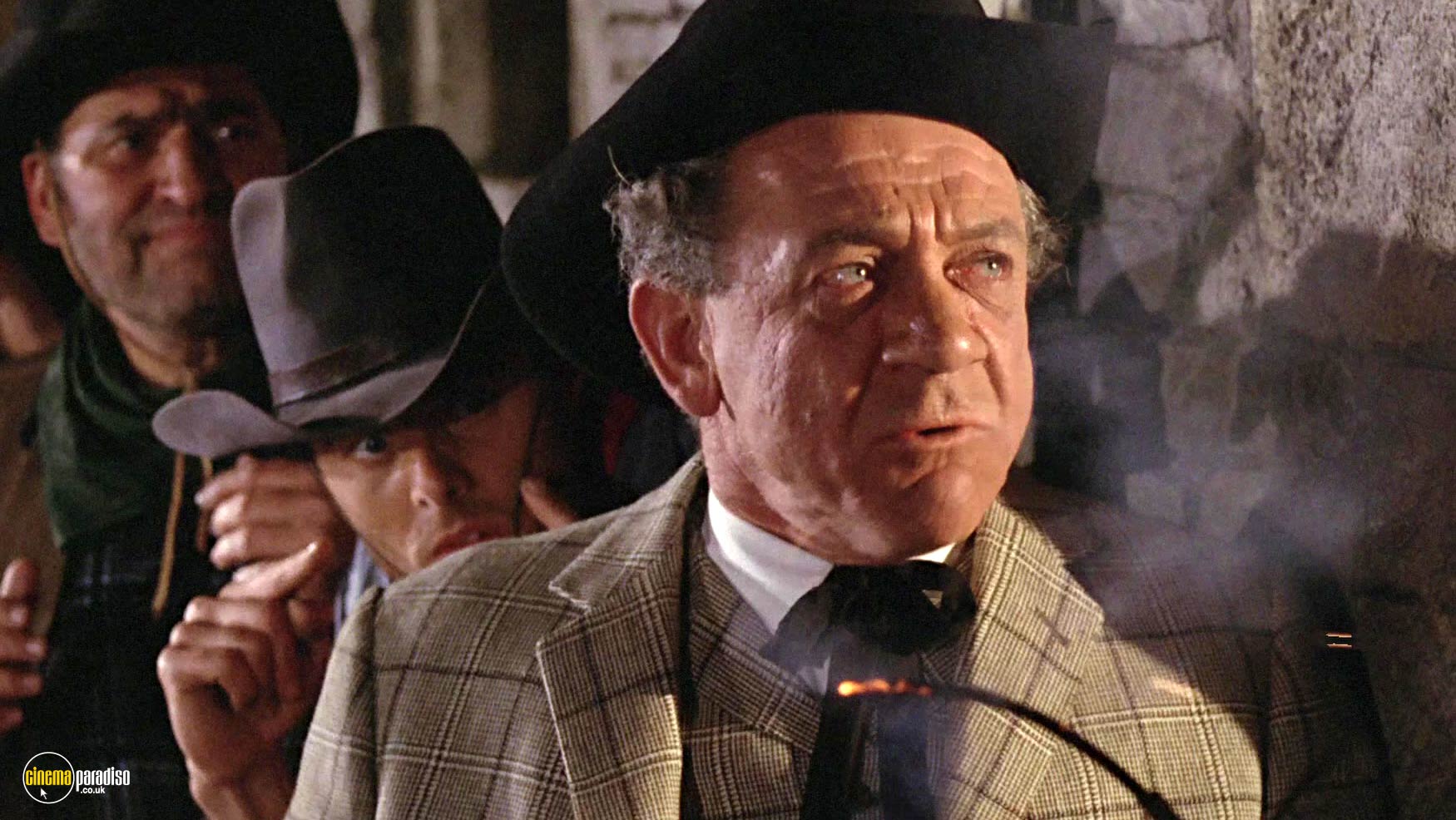
Hollywood had long cornered the market when it came to Westerns. There had been a handful of Sauerkraut oaters featuring Apache chief Winnetou and a frontiersman named Old Shatterhand, while the Soviet Union had produced a number of 'Osterns' or Borscht Westerns set during the 1920s Civil War between the Tsarist White Russians and the Bolshevik Reds. The Italian Spaghetti Western was also approaching its peak in the mid-1960s, with Sergio Leone releasing the Dollars trilogy that Cinema Paradiso will be exploring in more detail in a forthcoming What to Watch Next article. But the British contribution had been limited to one Anglo-American collaboration, Raoul Walsh's The Sheriff of Fractured Jaw (1958), which had co-starred Kenneth More and Jayne Mansfield. Clearly, Talbot Rothwell had been a fan, as there's more than a hint of its opening premise in Carry On Cowboy (1965). We can also reveal a debt to Fred Zinnemann's Oscar winner, High Noon (1952), right at the end, too.
Victorian sanitation engineer, Marshal P. Knutt (Jim Dale) is mistaken for a lawman in Washington, DC and sent to Stodge City, the lawless frontier town that has fallen under the control of Johnny Finger (Sid James). Also known as The Rumpo Kid, he has set himself up in the saloon run by Belle Armitage (Joan Sims), much to the chagrin of Judge Burke (Kenneth Williams). Further misunderstandings lead to Knutt being installed in the jailhouse. But he has a guardian angel in the form of sharpshooter Annie Oakley (Angela Douglas), who has come West to avenge the death of Sheriff Albert Earp (Jon Pertwee).
Art director Bert Davey and costume designer Cynthia Tingey worked minor miracles to make Stodge City look authentic on a shoestring budget. However, it became the only Western town in screen history to have a left turn out of Main Street (when all the others head right) because of the layout of the Pinewood backlot. Nevertheless, the interior of Belle's saloon is splendid, as is the gown in which Douglas sings 'This Is the Night For Love', which was written by composer Eric Rogers's brother, Alan. This is also the first Carry On to have a song sung over the opening credits.
Eric has a cameo as the pianist, while the eagle-eyed will spot among the stunt riders one Richard O'Brien, the creator of The Rocky Horror Picture Show (1975). It's also hard not to notice the make-up used to turn Charles Hawtrey and Bernard Bresslaw into Native Americans, Chief Big Heap and his son, Little Heap. We shall address issues like this one, that make it problematical to watch the Carry Ons today, at the end of the final entry in this three-part survey.
The prairie sequences were improbably shot on Chobham Common in Surrey and at Black Park near Fulmer in Buckinghamshire. Torrential rain on the first day caused Gerald Thomas to overrun for the only time in all 31 Carry Ons. But the film quickly recouped its costs, as it was a solid hit at the box office. Even the usually sceptical Kenneth Williams had to inform his diary that he had been impressed in calling Cowboy 'a success on every level'. He continued, 'It's got laughs, and pathos, some lovely people and ugly people.' But he concluded on a note of caution: 'Mind you, it's an alarming thought that they'll never top this one.'
Luckily for us, his pessimism proved ill-founded, as the series still had a clutch of classics to come, starting with Carry On Screaming! (1966), which was the 12th and final picture produced under the auspices of Anglo-Amalgamated. The impetus came from the Hammer horrors that had been spooking audiences since Terence Fisher's The Curse of Frankenstein (1957). But the plot also borrows from André De Toth's House of Wax (1953), while the humour owes much to the American sitcom duo of The Addams Family and The Munsters (both 1964-65). The snake in the bed gag was lifted from Pat Jackson's comedy chiller, What a Carve Up! (1962), which had teamed Sid James and Kenneth Connor.
When sweetheart Doris Mann (Angela Douglas) is abducted during a date in Hocombe Woods, Albert Potter (Jim Dale) insists on helping Detective Sergeant Sidney Bung (Harry H. Corbett) and Detective Constable Slowbotham (Peter Butterworth) rescue her. The investigation brings them to Bide-a-Wee, a rest home run by Dr Orlando Watt (Kenneth Williams) and his sister, Valeria (Fenella Fielding), with the help of their butler, Sprocket (Bernard Bresslaw), and a Frankensteinian creature named Oddbod (Tom Clegg).
Acting on information supplied by Dan Dann (Charles Hawtrey), a lavatory cleaner who had worked at Bide-a-Wee as a gardener, our intrepid heroes discover that Dr Watt is turning kidnapped girls into mannequin dolls. However, Bung has become obsessed with Valeria and doesn't seem too concerned when his suspicious wife, Emily (Joan Sims), is seized by Oddbod Junior (Billy Cornelius), who had been grown from a severed finger that had been charged with electricity.
Director Gerald Thomas provided the mumblings and gurglings for Oddbod Junior, while Denis Blake was wrapped in bandages to play the re-animated Egyptian mummy, Rubbatiti. Sid James was stuck in a long-running Palladium pantomime of Babes in the Wood and had to cede Bung to Harry H. Corbett, who was made to feel at home in his only Carry On by Eric Rogers slipping a few bars of the Steptoe and Son theme into the score. Being paid £2000 probably provided solace of sorts, too.
Fantastically, Deborah Kerr had been offered the role of Valeria, but she preferred to sign up to the stage version of Daniel Keys's novella, Flowers For Algernon. Charles Hawtrey was a late addition to the cast, as an American distributor had requested his inclusion because he was so popular with Stateside audiences. He replaced Sidney Bromley as Dan Dann and, in the process, landed one of the shortest starring roles in the series. In the original screenplay, Valeria had been Dr Watt's daughter, but Kenneth Williams insisted on them being siblings because he didn't fancy wearing ageing make-up.
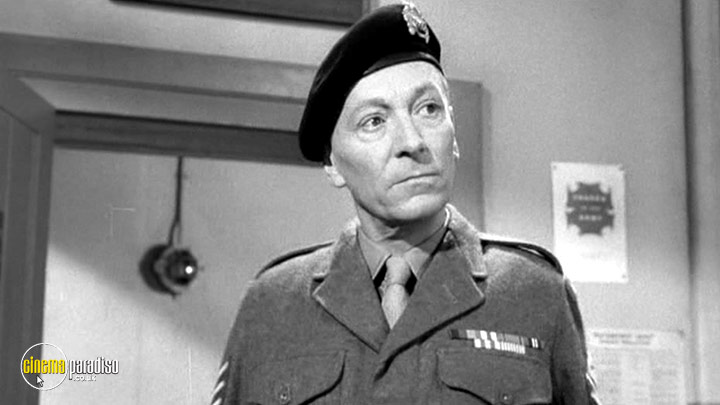
It's often supposed that Valeria is similar to Vampira, but she's more akin to Morticia Adams, complete with a shuffling gait. Fielding wouldn't return to the Carry Ons, but her 'Do you mind if I smoke?' joke remains an all-time favourite. Williams also delivered the line 'Frying tonight!' with impeccable comic timing. But a lot of contemporary reviews picked out Jim Dale, with some believing him to be the singer of the film's theme tune, when it was actually session stalwart, Ray Pilgrim. In June 2008, Royal Mail featured the posters for Carry On Sergeant and Carry On Screaming! on a pair of stamps to mark series's 50th anniversary.
The Carry Ons lost a great champion when Stuart Levy died in June 1966, as his partner in Anglo-Amalgamated, Nat Cohen, considered the comedies to be lowbrow and he severed the distribution link, even though the films had brought in a tidy sum. As Rogers had been based at Pinewood, the Rank Organisation took on the series, although its lawyers were nervous about the use of the famous prefix and, as a result, the next two features were released without it.
Studio solicitor Hugh J. Parton was also kept busy when Sid James announced in 1965 that he was going to play the Scarlet Pimpernel in Don't Lose Your Head (1967). However, as author Baroness Orczy had only passed away in 1947, her works were still in copyright and Peter Rogers had no intention of wasting money acquiring the rights. Therefore, he had Parton issue a letter that made the fine distinction that the film in question was going to be 'about an English aristocrat rescuing aristos from the guillotine but I assure you that it is not in any way based on The Scarlet Pimpernel.' Ridiculously, the ruse worked and production got underway in September 1966.
For once, Rogers pushed the boat out and paid to shoot at both Clandon House in Guildford, which had a magnificent Marble Hall, as well as the Buckinghamshire trio of Cliveden, Claydon Park, and Waddesdon Manor, which had been built to resemble a Neo-Renaissance French château by Baron Ferdinand de Rothschild. This proved the perfect setting for a story set against the French Revolution that sees Maximilien Robespierre (Peter Gilmore) managing to conduct a Reign of Terror against the aristocracy even though he has entrusted its conduct to the incompetent Citizen Camembert (Kenneth Williams) and his oppo, Bidet (Peter Butterworth).
Bored with the endless round of balls, English noblemen, Sir Rodney Ffing (Sid James) and Lord Darcy Pue (Jim Dale) decide to cross the Channel to rescue some of their French counterparts from the guillotine. Adopting the alias, 'The Black Fingernail' (whose calling card depicts 'two digits rampant'), Effing laughs in the face of danger. While rescuing the Duc de Pommfrit (Charles Hawtrey), Effing becomes enamoured of Jacqueline (Dany Robin) and gives her a locket containing his mother's false teeth. Imprisoning her, Camembert and Bidet travel to England disguised as the Comte and Comtesse de la Plume de ma Tante in a bid to lure the Fingernail into revealing his identity by having Camembert's lover, Desirée (Joan Sims), wear the Effing family heirloom while posing as the comte's sister.
Pastiching both Harold Young's The Scarlet Pimpernel (1934) and Michael Powell and Emeric Pressburger's The Elusive Pimpernel (1950), Talbot Rothwell's screenplay brims over with corny linguistic puns and saucy double entendres. He also came up with such hilarious alternative titles as Short Back and Sides, Heads You Lost, Death of a Hat Salesman, Daddy Wouldn't Buy Me a Tourniquet, and A Romance of the French Revolution by Talbot Rothwell or a Script With Cuts in it by Ivor Guillotine.
The cast is also on fine form, with Charles Hawtrey revelling in playing the lascivious Pomfritt and Joan Sims alighting upon the blowsy broad persona to which she would return for the rest of the series, as the husband-hunting Desirée. Kenneth Williams and Peter Butterworth make amusingly bungling agents of terror, with the former on nostril-flaring form as the Big Cheese. But the picture belongs to Sid James and Jim Dale, who not only slip between lisping fops and swashbuckling daredevils with convincing ease, but who also devised the gag about Pomfritt having a letter placed in the guillotine basket so he could read it after he's been beheaded.
James rather let himself down off screen, however. Co-star Dany Robin was married to his agent, Michael O'Sullivan, and while staying in their Paris apartment while O'Sullivan was away on business, James twice tried to slip into his hostess's bed. They bill and coo rather sweetly on screen, however, and it's interesting to compare this coupling with Sid's more lecherous pursuit of Barbara Windsor later in the series.
Tunesmiths Bill Martin and Phil Coulter wrote the theme tune for The Mike Sammes Singers, while Eric Rogers included a witty baroque variation on the Beatle hit, 'She Loves You', in his typically asture score. Despite all the pieces slotting into place, however, the film got off to a sluggish start at the box office before Rank decided to emphasise the franchise connection. The poster read, 'Carry On Laughing Until You Have Hysterics But Don't Lose Your Head'. Less worried about lawsuits, the American distributor insisted on the title, Carry On Pimpernel. Although the prefix has never officially been added, Don't Lose Your Head has always been considered the 13th Carry On and many critics rank it among the best.
The same is not true, however, of Follow That Camel (1967), a lampoon of P.C. Wren's 1924 tome, Beau Geste, that was known outside the UK as Carry On in the Legion. Screenwriter Talbot Rothwell's first draft was entitled Carry On, Bo!, although he also submitted the alternatives, Across the Sahara With Spade & Bucket and You've Gotta Be Tough When There's Nothing But Sandpaper. Always something of a magpie, Rothwell's scenario contains echoes of William A. Seiter's Laurel and Hardy vehicle, Sons of the Desert (1933), but it's much more consistent in its waggery than Marty Feldman's fitfully inspired, The Last Remake of Beau Geste (1977). Rothwell also referenced Scot Frank Lloyd's adaptation of Ouida's Under Two Flags (1936), in which Ronald Colman's Sergeant Victor (who had also enlisted with his manservant) romances a café chanteuse named Cigarette (Claudette Colbert). The name Corktip plays on the smoking connection, as brands like Craven A had cork-tip filters.
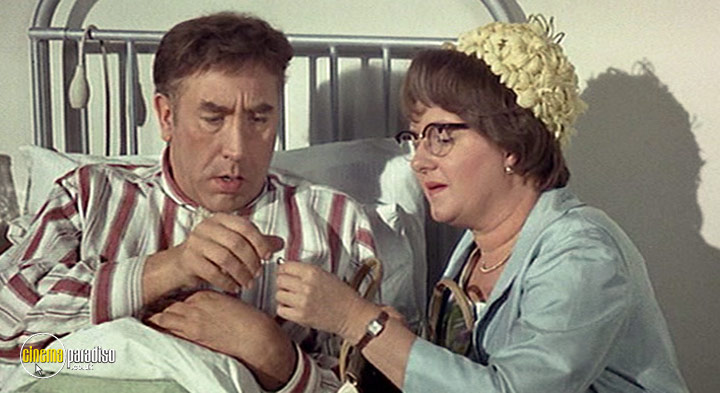
Seeking to boost ticket sales across the pond, Peter Rogers sought an American star to join the regulars. Rothwell also felt the role of Sergeant Ernie Nocker 'simply yells for Phil Silvers all the way along. I just can't get this Bilko image out of my mind.' In fact, Sid James had initially been lined up for the role, but he had to cry off as he was working on the ITV sitcom, George and the Dragon (1966-68), with Peggy Mount. Kenneth Williams recorded in his diary for 17 April 1967 that he had been at Berman's for a costume fitting when he 'met Peter Butterworth, he told me that Sid James is out! And they're having Phil Silvers in the lead!!' Although Silvers never really gelled with his British co-stars, he made it through the shoot unscathed, while James suffered a heart attack on 13 May (which meant he would remain in bed for much of Carry On Doctor, 1967).
Having had his reputation besmirched by Captain Bagshaw (Peter Gilmore), his rival for the hand of Lady Jane Ponsonby (Angela Douglas), Bertram Oliphant West (Jim Dale) joins the French Foreign Legion, with his devoted valet, Simpson (Peter Butterworth). At Fort Soixante-Neuf, he falls foul of both Commandant Maximilian Burger (Kenneth Williams) and Sergeant Ernie Nocker (Phil Silvers), who frequently ducks out of patrol duties in order to spend time with Zig-Zig (Joan Sims), the owner of a café where Corktip (Anita Harris) combines belly dancing and spying for Sheikh Abdul Abulbul (Bernard Bresslaw).
On learning that Bo was been wronged, Lady Jane sets out to find him. At the end of her eventful journey, she discovers that her sweetheart is under the command of her former fencing teacher. She also finds herself being targeted by the Sheikh, who wants to make her the 13th wife in his harem at the Oasis El Nooki. When she's abducted, Bo, Simpson, Nocker, and Burger are goaded into action following a sneak attack on their fort.
Assessed 59 years after it was made, Follow That Camel makes for discomfiting viewing. The sight of Bernard Bresslaw and others in brownface dates the picture badly, as do the attitudes towards colonialism and the supposed 'white man's burden' that would also blight the decade's last historical. The comic indignities inflicted upon the naive Lady Jane while travelling to Africa are also unforgivably chauvinist. But there are few redeeming features elsewhere in a story that is hamstrung by the mugging of Phil Silvers, whose Brooklyn accent and Sgt Bilko-like wise-cracking set him apart from the practiced farceurs in the regular troupe.
Moreover, Silvers refused to learn his lines and they had to be written on large cue cards that were positioned around the set. There was also resentment that he was being paid £30,000 for the part and was given better lodgings when the production decamped for a few days to Birkdale in Lancashire and Camber Sands near Rye in Sussex, where time was lost because the Sahara Desert was covered in snow! It was so cold that Peter Butterworth needed blankets and brandy after having been buried up to his neck in the sand. The camel borrowed from Chessington Zoo didn't have much fun, either, as it had never encountered sand before and had to be taught how to walk on it.
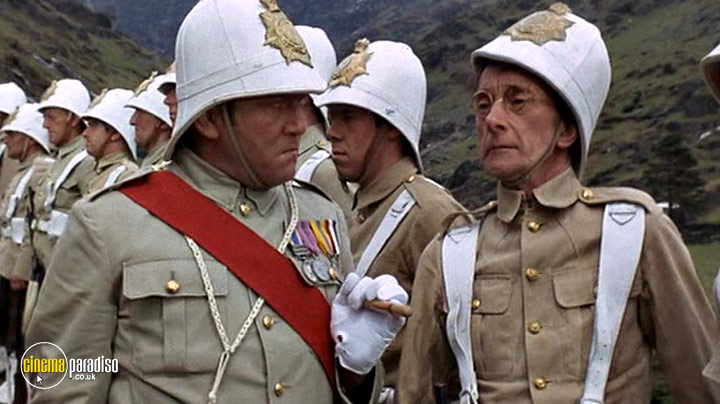
After three weeks of location shooting, with a specially erected fort, the production resumed after a single day's break at Pinewood and its environs. By now, the gang had become used to Rogers and Thomas cutting corners to keep the costs down. But their goodwill was strained even further when they were dispatched to a chilly Snowdonia in the spring of 1968 to film the outdoor sequences for Carry On Up the Khyber. The hotels at which the cast stayed for their week-long sojourn, The Royal Victoria in Llanberis and The Royal Goat Hotel in Beddgelert, are still in business and guests can wander along to the foot of Mount Snowdon to find the plaque that was unveiled in 2005 to commemorate the fact that the lower part of the Watkin Path stood in for the North-West Frontier of India, complete with a border gate that was guarded by the fearsome Devils in Skirts. Amusingly, some army veterans wrote to claim that they had recognised some of the scenery from their own time in uniform.
Rank wanted to call the film Carry On the Regiment, although no one suggested Carry On Kipling, which would have been apt, as Talbot Rothwell's inspiration appears to have come from the BBC series, The Indian Tales of Rudyard Kipling (1963-64). Ultimately, Rogers and Thomas settled on the subtly cruder Carry On Up the Khyber because the latter word was part of a Cockney Rhyming Slang term for the posterior. The keen-eyed will doubtless notice that the 3rd Foot and Mouth's kilts and insignia had done duty in Ronald Neame's Tunes of Glory (1960), while the pith helmets and webbing were used to rearguard actions, having been made for Cy Endfield's Zulu (1964).
With Jim Dale no longer interested in the series, the part designed for him passed to one-timer Roy Castle. Rogers had also informed Rank boss John Davis that the picture would star 'my usual team of goons plus, probably Frankie Howerd or someone'. Howerd, however, was on his way to Broadway in the stage play, The Wind in the Sassafras Trees. Rogers dropped hints that the 'someone' was Tommy Cooper. But the much-reduced part of the fakir eventually went to Cardew Robinson in his sole series excursion.
British control over the Indian province of Kalabar is heavily dependent upon the locals being terrified of the soldiers of the 3rd Foot and Mouth Regiment, who are reputed to wear nothing beneath their kilts. When the Khasi of Kalabar (Kenneth Williams) and Burpa warlord Bungdit Din (Bernard Bresslaw) discover that Private James Widdle (Charles Hawtrey) wears underpants, they urge the region's tribes to unite in rebellion.
While Governor Sir Sidney Ruff-Diamond (Sid James) tries to manage the crisis, his neglected wife, Lady Joan (Joan Sims), offers herself to the Khasi, along with photographic evidence that the entire regiment sports underwear. This prompts the Khasi's daughter, Princess Jelhi (Angela Douglas), to apologise to Sir Sidney for the wrong done to him and, as she falls in love with Captain Keane (Roy Castle), the Khasi's 51 wives visit the governor's residence to sleep with him in atonement. However, he soon has more than tiffin to concern him, as Afghan forces launch an attack, although Sir Sidney and his guests - with the notable exception of missionary Brother Belcher (Peter Butterworth) - refuse to allow the bombardment to disrupt a formal dinner party.
Once again, the comic depiction of British imperial rule will cause many to bridle, along with the brownface performances of Williams, Bresslaw, and Douglas. Yet, because the Brits are the butt of the joke, many have declared this the best Carry On of them all. Sid James surpasses his Sir Rodney Ffing as the wonderfully named Sir Sidney Ruff-Diamond, while Joan Sims's ad-libbed line, 'Oh dear! I seem to have got a little plastered,' during the dinner party is a series highpoint. In fact, the scene proved difficult to shoot, as debrish from the ceiling fell on to the table and Gerald Thomas insisted on the guests actually eating something rather than merely pushing the contaminated food around their plates. When Sid James finally downed tools, the director revealed that he had stopped filming several minutes earlier and had let them carry on for the fun of it.
Saucing Up the Seventies
The abandonment of the Production Code in 1968 had liberated American film-makers, who had been toiling under a list of dos and don'ts since 1934. By contrast, the British Board of Film Censors had maintained standards of decency without being so imposingly proscriptive. Indeed, the Carry Ons had been able to get away with cheeky humour since 1958. But the series became increasingly smutty in the 1970s, as producer Peter Rogers and director Gerald Thomas sought to connect with younger viewers who were less easily shockable than their parents.
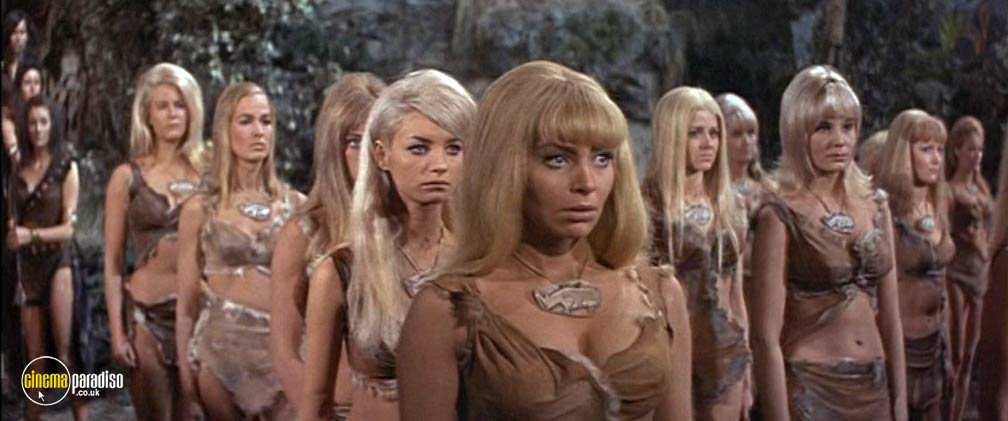
As a result, the humour is markedly less subtle in Carry On Up the Jungle (1970), which was known as Carry On Jungle Boy during its production and appeared bearing such alternative titles as The African Queens, Stop Beating About the Bush, and Show Me Your Waterhole and I'll Show You Mine. Although there was a hint of Humphrey Bogart's Charlie Allnutt from The African Queen (1951) about Sid James's Bill Boosey, the satirical targets for this outing were the various Tarzan films that had been released in the wake of Johnny Weismuller's Tarzan the Ape Man (1932) and such recent H. Rider Haggard adaptations as She (1965), with Ursula Andress. However, the Carry Ons could never resist putting a shot across the Hammer bows and the second half of Jungle is clearly designed to lampoon One Million Years B.C. (1966) and Prehistoric Women (1967). Given that he had so much to aim at, it's perhaps unsurprising that Talbot Rothwell's script was a little scattershot.
Ornithologist Professor Inigo Tinkle (Frankie Howerd) is about to embark upon an expedition to find the Oozlum bird. However, sponsor Lady Evelyn Bagley (Joan Sims) is hoping to find trace of her husband, Walter (Charles Hawtrey), who had disappeared in the jungle with their infant son years before. Leading the party is Bill Boosey (Sid James) and his African guide, Upsidasi (Bernard Bresslaw), while Tinkle is travelling with his assistant, Claude Chumley (Kenneth Connor), and Lady Evelyn is accompanied by her maid, June (Jacki Piper).
Things look bleak when the Brits stray into the territory of the cannibal Nosha tribe. But June has fallen for Jungle Boy (Terry Scott), who comes to their rescue with the help of Leda (Valerie Leon), the head of the Lubby-Dubbies, an all-female tribe from the lost world of Aphrodisia. Much to Lady Evelyn's annoyance, their king, Tonka, is none other than Walter and she soon realises that Ug is her little Cecil. However, the happy ending is jeopardised because the Lubby-Dubbies need men to procreate and they are reluctant to let their visitors leave.
Kenneth Williams had been forced to pass on Professor Tinkle, as he was preparing for his BBC project, The Kenneth Williams Show (1970-76). Frankie Howerd took over for his second and final excursion, alongside Kenneth Connor, who was returning for the first time since Cleo. Rogers tried to get Williams involved by offering him the role of Tonka. But he was insulted because he turned up so late in the story and didn't have much to say. Jim Dale similarly nixed the idea of a return as Jungle Boy, but it's hard to see him topping Terry Scott in the sequence in which Ug first sees June (no, not that one). Fortunately, there are no outtakes of the rehearsal incident that saw Scott's loincloth fail to provide adequate cover.
Rogers was so impressed by Jacki Piper that she became his first contract player and would go on to grace three further entries in the series. He was also keen to make Howerd a more frequent visitor after he had written on leaving the set 'to thank you for a very happy film, in fact, the happiest I have ever done.' However, the success of the BBC sitcom, Up Pompeii (1969-70), meant that he was too busy with the Bob Kellett trilogy of Up Pompeii, Up the Chastity Belt (both 1971), and Up the Front (1972) to make his Carry On return.
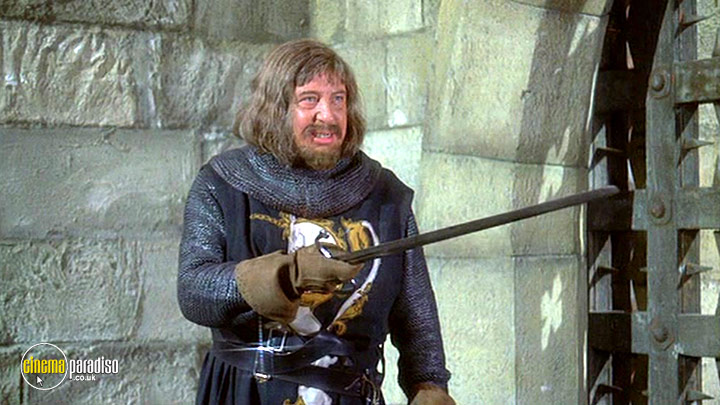
We can but abhor the fact that Bernard Bresslaw is again in blackface alongside several extras of Caribbean heritage. But his dedication to the role was admirable, as the South African Sid James recognised that he had taken the trouble to render his dialogue in Swahili. Writing in his diary six years later after catching Jungle on television, Williams couldn't be equally magnanimous towards his old sparring partner. But he commended Connor and Scott in enthusing, 'It was quite funny and at one point I was laughing aloud. I was staggered to see what they got away with!'
Williams was back with the strength for Carry On Henry (1971), which was inspired by Charles Jarrott's Anne of the Thousand Days (1969), which had earned Oscar nominations for Richard Burton as Henry VIII and Geneviève Bujold as Anne Boleyn. Indeed, Sid James got to wear a cloak that had been made for Burton, while Talbot Rothwell suggested Anne of a Thousand Lays as an alternative title. However, there were plenty of other sources of inspiration readily to hand, as Australian actor Keith Michell had made a strong impression in the BBC serial, The Six Wives of Henry VIII (1970), which was reworked for the big screen as Henry VIII and His Six Wives (1972). Glenda Jackson had also excelled in Tudor garb in Elizabeth R prior to jousting with Vanessa Redgrave in Mary, Queen of Scots (both 1971).
Peter Rogers had conceived the film as a semi-musical and had hoped to cast Harry Secombe as Bluff King Hal so that he could belt out a few madrigals. But the former Goon was unavailable and the musical interludes were dropped when James assumed the throne. He was in South Africa with a play when he heard the news and had to dash back to Blighty, making it to the set on the second day of shooting. Two of the ditties composed for the film got to have their moments in the spotlight, however, thanks to the 1972 Carry On Christmas special and the same year's stage show, Carry On London (about which more in Part 3 of Cinema Paradiso's survey of this enduringly popular series).
A still from Carry on Dick (1974)
The opening spiel ranks among Rothwell's best contributions: 'This film is based on a recently discovered manuscript by one William Cobbler, which reveals that Henry VIII did in fact have two more wives. Although it was first thought that Cromwell originated the story, it is now known to be definitely all Cobbler's...from beginning to end.'
Shortly after having his wife beheaded, King Henry VIII (Sid James) marries Marie of Normandy (Joan Sims), the favourite cousin of the French king, Francis I (Peter Gilmore). Henry is pleased with Cardinal Wolsey (Terry Scott) for arranging the match, but his mind is changed the moment Marie starts munching on garlic before bedtime. Fobbing her off on courtier Sir Roger de Lodgerley (Charles Hawtrey), Henry becomes besotted with Bettina, the daughter of the Earl of Bristol (Barbara Windsor). She refuses to surrender to him until she has a ring on her finger, however, which complicates matters because Henry discovers that Marie is pregnant and he has to get Thomas Cromwell (Kenneth Williams) to torture confessions and retractions out of Sir Roger, depending on how benevolent or bellicose King Francis feels.
Although most of the action was filmed on sets at Pinewood, production manager Jack Swinburne persuaded the Crown Estates Office at Windsor Great Park to allow Gerald Thomas to film the scene in which Henry and Sir Thomas (Julian Holloway) go hunting for a 'buxom lass' (Margaret Nolan). The scene was shot in October 1970, but Rogers had to sign papers promising not to advertise the fact that a Carry On had been filmed on royal soil.
Sadly, Brian Wilde, who would play Mr Barraclough in Porridge (1974-77), wound up on the cutting room floor after being cast as a prison warder. John Clive, who had just voiced John Lennon in George Dunning's Yellow Submarine (1968), was also snipped out after essaying a court dandy. Also failing to make the cut was the Speakers' Corner encounter between Lord Hampton of Wick (Kenneth Connor) and a young man listening to his speech opposing a sex tax. The extra was none other than David Essex, who was about to become one the country's biggest pop stars before cementing his acting credentials in Claude Whatham's That'll Be the Day (1973) and Michael Apted's Stardust (1974).
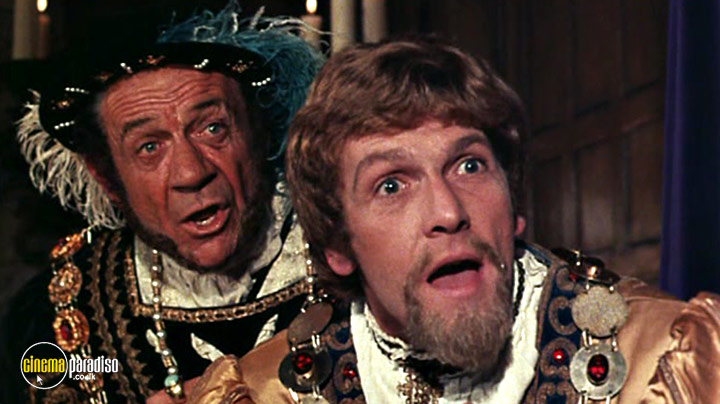
When he saw Carry On Henry on television in 1979, Williams informed his diary that the script was 'abysmal'. However, he noted it was 'amazing how well this was made! Everyone in it was competent and the sheer look of the thing was very professional.' Nine years later, he denounced the film as 'a collection of such rubbish you're amazed it could ever have been stuck together. Only an audience of illiterates could ever have found this tripe amusing.'
After four contemporary comedies, the Carry Ons dipped back into the past for Carry On Dick (1974). The production rate had started to drop to one film a year and, in May 1973, Rogers had sounded out The Navy Lark scribes, George Evans and Laurie Wyman, about writing for the series. They came up with Carry On Sailor, which was quickly shelved in favour of a caper in which Dick Turpin robs the Bank of England. This was also declined, although Rogers passed the idea on to Talbot Rothwell, who wove the highwayman angle into a reworking of Don't Lose Your Head for his 20th Carry On.
Rothwell had just signed a three-year deal with Rogers to script five further series titles. While writing Dick, however, he found himself unable to focus on his typewriter and he became confused whenever he tried to write. Diagnosed with nervous exhaustion, Rothwell tried dictating to his daughter, Jane, who used his notes to submit a screenplay in February 1974. Rogers supposedly polished the draft without taking credit, but Rothwell never wrote again.
He was not alone in parting ways with the franchise, however, as this would also be the swan song for Sid James and Hattie Jacques, while Barbara Windsor would only appear in the compilation offering, That's Carry On (1977), which we shall cover in Part 3. Along with Bernard Bresslaw, Kenneth Connor, Jack Douglas, and Peter Butterworth, Sid and Babs (whose relationship came under scrutiny in Terry Johnson's Cor, Blimey! in 2000) had to finish their scenes at Pinewood by 4:15pm in order to get to the Victoria Palace Theatre in time to headline the 6:15pm and 8:45pm performances of Rothwell's Carry On London. Rogers certainly knew how to get his money's worth out of his stars, who were still receiving meagre fees for their labours.
Cash flow was also a problem for the Reverend Flasher (James) in the 1750 village of Upper Dencher. Hence, his living a double life as Dick Turpin, a notorious highwayman who is the No.1 target for Bow Street Runner Captain Desmond Fancey (Williams) and his sidekick, Sergeant Jock Strapp (Douglas). Posing as brigands, the pair seek information at the Old Cock Inn, where Madame Desiree (Joan Sims) is performing with her daughters under the name The Birds of Paradise (Laraine Humphrys, Linda Hooks, Penny Irving, and Eva Rueber-Staier). Along with verger Tom (Butterworth) and serving girl Harriet (Windsor), Flasher repeatedly makes fools of Fancey and Strapp, as well as their boss, Sir Roger Daley (Bresslaw) and the local constable (Connor). But housekeeper Mrs Giles (Patsy Rowlands) becomes suspicious that the rector is not as saintly as he outwardly appears.
The censors in South Africa were so appalled by the fact that James was playing a villainous vicar that they banned the film outright. Ever a stickler for deadlines, Thomas completed the shoot in 39 days, 10 of which had been spent at locations like St Mary's Church in Burnham, Stoke Poges Manor, and The Jolly Woodman pub in Iver Heath. Remarkably, the carved four-poster bed on which James and Windsor are seen romping had once belonged to King Henry VII, although this was unknown at the time, as it had been used as a movie prop for so long. Similarly, no one knew at the party that Rogers threw for his cast and crew on 11 December 1974 that several of those announced for the next Carry On had already made their made their final appearances. However, most would still feature in the TV series, Carry On Laughing (1975), which really should be available on DVD in this country outside expensive boxed sets.
The show actually provided the scenario for the Second World War comedy, Carry On England (1976), as writers Jack Seddon and David Pursall had submitted a story about an anti-aircraft battery under the title, 'The Busting of Balsy'. ATV script supremo Colin Rogers had informed Peter Rogers (no relation) that the network didn't have the money to do justice to the material and he decided to purchase the rights and append a title that he had registered with the British Film Producers Association back in 1961. Rogers had also been working on a non-series war farce entitled We Haf Ways of Making You Larf, which he intended basing on Talbot Rothwell's unused prisoner of war spoof, Carry On Escaping, which had been inspired by the success of the BBC series, Colditz (1972-74).
Rank had initially been ready to bankroll both projects. However, Rogers fell out with the front office over a proposed cut in profit percentages and the company not only dropped the POW title, but also slashed its contribution to the Carry On budget, leaving Rogers to find half of the unprecedented sum of £250,000. He seemed to have found a saviour in the unlikely form of the prog rock band Pink Floyd. But their offer was withdrawn after less than a week at the end of March 1976 on receipt of a sizeable tax demand. Undaunted, Rogers and Thomas decided to fund the picture themselves, although the latter confided in a letter to Floyd's lawyers 'we have never done this in the past because we do not think it is a good policy'.
Bearing a passing resemblance to Lewis Gilbert's Light Up the Sky (1960), the action centres on an experimental unisex gun battery and its new commander, Captain S. Melly (Kenneth Connor). He is appalled by the fraternisation between the genders and orders Sergeant Major 'Tiger' Bloomer (Windsor Davies) to instil some discipline, especially where Bombardier Ready (Jack Douglas) and sergrants Tilly Willing (Sally Geeson) and Len Able (Patrick Mower) are concerned. Abetted by Gunner Shorthouse (Melvyn Hayes), Bloomer erects a fence between the dormitories to keep the sexes segregated. But he has more woman trouble to contend with in the form of amorous private, Jennifer Ffoukes-Sharpe (Joan Sims).
Kenneth Williams had been offered the role of the Brigadier, but had to pass it on to Peter Jones, as he was committed to the stage play, Signed and Sealed. Barbara Windsor was also forced to miss out on Tilly Willing, as she was booked to play Maria the maid in Twelfth Night at the Chichester Festival Theatre. With Windsor Davies and Melvyn Hayes being imported essentially to reprise their roles in the BBC sitcom, It Ain't Half Hot Mum (1974-81), regulars Joan Sims and Peter Butterworth (Major Carstairs) had to settle for minor parts, with the former replacing Penelope Keith as Ffoukes-Sharpe. As for Sidney James, he was touring in Sam Cree's comedy, The Mating Season. On the day that Rogers held England's first pre-production meeting, 26 April 1976, James died of a heart attack on stage at the Sunderland Empire. He was 62.
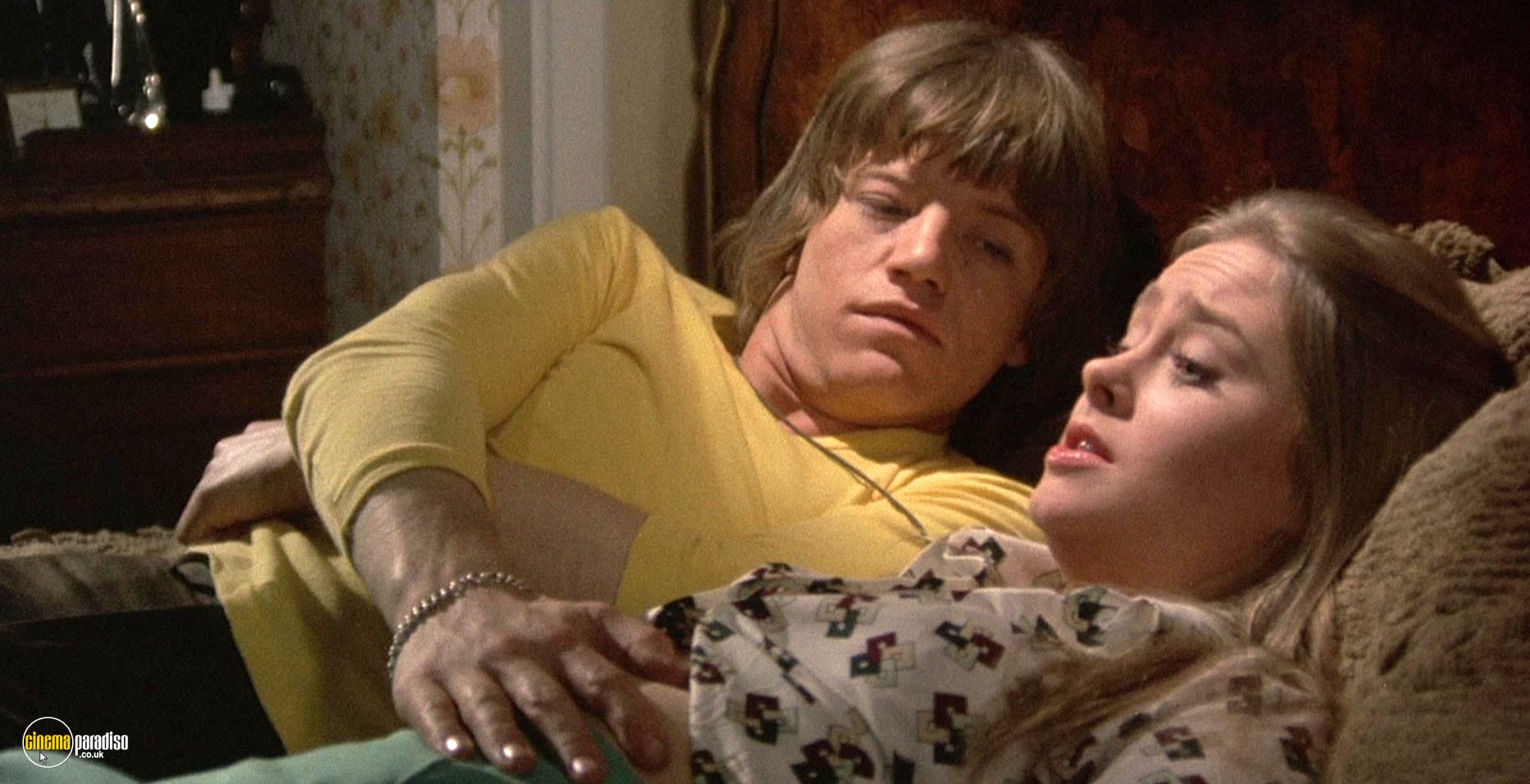
Despite loaning equipment from the Imperial War Museum at a favourable rate, Peter Rogers kept seeking ways to save money. When he proposed halfing the usual 40-piece orchestra, however, longtime composer Eric Rogers resigned on the spot and Max Harris was appointed on the strength of his work on Porridge (1974-77). Any cash saved was probably spent on re-editing the film after the BBFC slapped on an AA certificate, which would have barred under-14s from admittance. Having been impressed by the box-office performance of Confessions of a Window Cleaner (1974) and Confessions of a Pop Performer (1975) - which had both been adapted from the risqué bestsellers by Timothy Lea - Rogers and Thomas had decided to spice up the formula to entice a younger audience. But the need to secure a family-friendly A certificate prompted them to remove an instance of topless nudity and a joke about a Fokker aircraft. The changes failed to save the day, however, as the press panned the picture and word-of-mouth was so bad that several cinemas yanked it after just three days. As a result, it took several years for Carry On England to repay its costs through overseas sales and television rights. It remains one of the least loved entries in the series, but it was still greeted more enthusiastically than its successor.
Realising that they had lost the family audience, Rogers and Thomas decided to go for broke with Carry On Emmannuelle (1978), which sought to cash in (by adding an extra 'n') on the popularity of porno chic titles like Just Jaeckin's Emmanuelle (1974), Francis Giacobetti's Emmanuelle 2 (1975), and François Leterrier's Emmanuelle 3 (1977), which had all starred the Dutch actress, Sylvia Kristel, and which would later be followed by Emmanuelle Exposed (1982) and Emmanuelle 5 (1987), which were respectively directed by the respected arthouse exploitation duo of Jesús Franco and Walerian Borowczyk. This time, there was to be no escaping the AA certificate, but that was part of the master plan.
Cut adrift by Rank and facing spiralling costs, Rogers formed Thirtieth Films to produce entry No.30 in the series. With Cleves Investments divvying up most of the £350,000 budget and Hemdale Films agreeing to distribute, Rogers and Thomas set about making Lance Peters's screenplay a more acceptable shade of blue. TV writer Vince Powell helped tone things down, while satirist Willy Rushton was hired to polish the dialogue and add a couple of uncredited sequences. Sadly, a plan to incorportate some 'odd appearances by Barbara Windsor' had to be dropped, as she refused to change her holiday plans to accommodate a four-day schedule in which she would appear as different character in the fantasies of Peter Butterworth, Kenneth Connor, and Jack Douglas, as well as final scene reunion with her old nurse's uniform.
Having left her dress on an aeroplane after joining the mile-high club, Emmannuelle Prévert (Suzanne Danielle) returns to the French embassy in London, where she lives with her ambassador husband, Émile (Kenneth Williams). He is too preoccupied with body-building to notice that his spouse has a lively libido. But butler Lyons (Jack Douglas), housekeeper Mrs Dangle (Joan Sims), boot boy Richmond (Peter Butterworth), and chauffeur Leyland (Kenneth Connor) quickly twig what's going on upstairs. Following a tryst with chat show host Harold Hump (Henry McGee), Emmannuelle makes the mistake of forgetting her mid-air canoodle with Theodore Valentine (Larry Dunn) and his mother (Beryl Reid) supports his decision to exact his revenge by exposing Emmannuelle's escapades.
Williams informed his diary, 'The script left a lot to be desired and I have to admit that I found many of the jokes quite repulsive.' He claimed he made the film out of friendship for Rogers and Thomas, but he also found solace in a series-high fee of £6000.
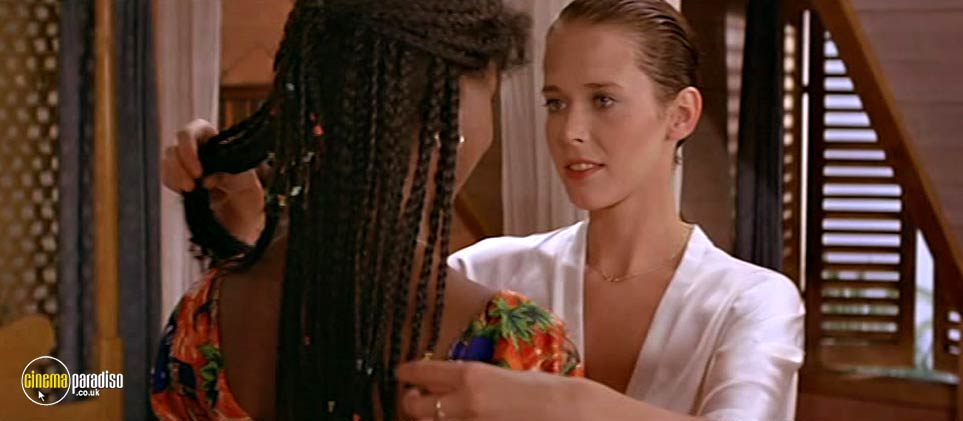
The publicity claimed that the Carry Ons were in ruder health than ever before. Yet, for all the implied naughtiness in Emmannuelle's bed-hopping, this was much more chaste than the 'Confessions' or 'Adventures of' flicks, with Suzanne Danielle never baring all. As a consequence, the BBFC stopped short of awarding an X certificate. But Observer critic Philip French was disgusted by what he saw. 'This relentless sequence of badly-written, badly-timed dirty jokes is,' he wrote, 'surely one of the most morally and aesthetically offensive pictures to emerge from a British studio.' Colleague Derek Malcolm was more wittily precise in pointing out that the extra 'n' in the title meant the film was 'misspelt as well as misconceived'. Emmannuelle lost money, recouping only £48,003 at the UK box office. Yet no one thought that the Wembley location scene in which Jack Douglas welcomes Danielle home from her travels would be the last one for 14 years. Indeed, Rogers was developing both Carry On Again Nurse and Carry On Down Under (we'll be discussing all the unmade movies in Part 3, too). The latter folded when Hattie Jacques died in October 1980 and it transpired that Douglas was the only cast member to straddle the gap and feature in the last two Carry Ons.
Eager to keep working, Gerald Thomas had approached producer John Goldstone with a view to updating the 'Road' movies that had starred Bing Crosby and Bob Hope. Cinema Paradiso users can catch up with the original classics by clicking on Road to Singapore (1940), Road to Zanzibar (1941), Road to Morocco (1942), Road to Utopia (1946), Road to Rio (1947), Road to Bali (1952), and The Road to Hong Kong (1962). They can also follow the fortunes of the Ewings in Dallas (1978-90), as Rogers spent many long hours trying to put together Carry On Dallas. In the event, however, the pair decided that their best bet of mounting a 31st entry was to lampoon the voyage whose 500th anniversary had already inspired Ridley Scott's 1492: Conquest of Paradise and John Glen's Christopher Columbus: The Discovery.
Renowned for chancy properties like The Rocky Horror Picture Show (1975) and Monty Python's Life of Brian (1979), Goldstone took the producing credit on Carry On Columbus (1992), leaving Rogers to make do with an executive producing berth. However, this meant that he didn't have to carry the can alone for a flop that a lot of people saw coming almost as soon as it was announced that the cast would combine the last remaining Carry On stalwarts with the new generation of alternative comedians.
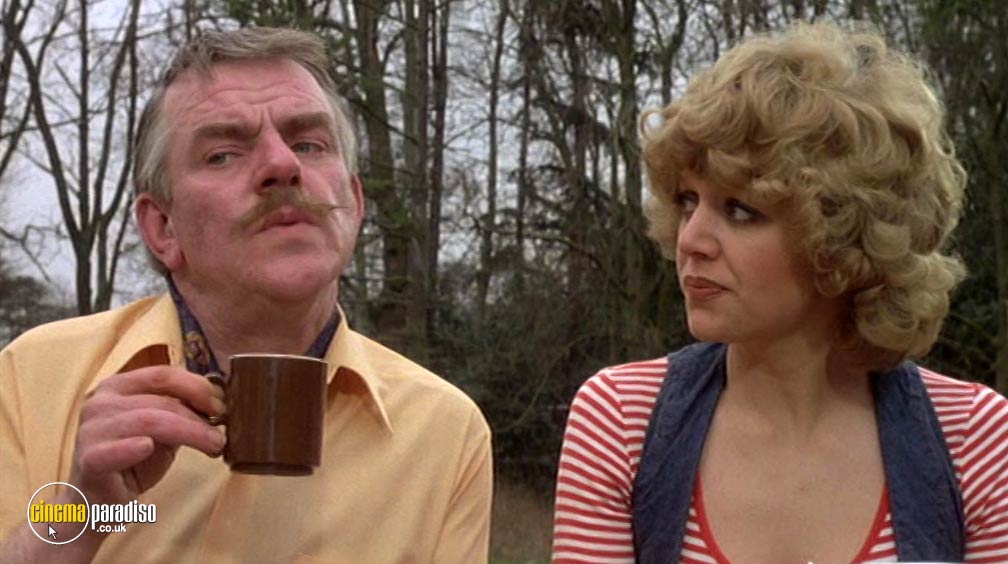
With the clock ticking, Dave Freeman was given a mere three weeks to concoct a scenario. Despite having previously written Carry On Behind in 1975, he felt the strain of having Goldstone and Thomas badgering him, while also having supplementary material being added by John Antrobus, who had worked on the script of the first film, Carry On Sergeant, back in 1958. Ironically, this would become the only one of the subsequent 30 titles not to include at least one member of the original cast.
Goldstone didn't exactly court popularity with series fans when he announced that Sid James, Hattie Jacques, and Kenneth Williams wouldn't have made the cast even had they still been alive, as he wanted to freshen things up with younger talent. Nevertheless, when Robbie Coltrane turned down the title role, Goldstone made much of Jim Dale returning to the fold for the first time since Carry On Again Doctor (1969). Moreover, when first Frankie Howerd and Joan Sims and then Bernard Bresslaw and Barbara Windsor declined the parts of King Ferdinand and Queen Isabella, Goldstone was delighted that they were taken up by Leslie Phillips and June Whitfield. Howerd had died in April 1992, while Windsor let everyone know that she felt the screenplay was 'crap'. However, she and Bresslaw were otherwise committed to the Blackpool run of Wot a Carry On from May 1992, while Sims was relieved to be able to tell Thomas that she was busy co-starring with Dennis Waterman in the BBC sitcom, On the Up (1990-92). As for Kenneth Connor, he passed on a guest slot with the assertion that he 'wanted to be remembered as a Carry On principal, not a bit-player'.
Familiar faces like Jack Douglas (Marco the Cereal Killer), Peter Gilmore (Governor of the Canaries), Jon Pertwee (Duke of Costa Brava), and Bernard Cribbins (Mordecai Mendoza) popped up periodically, alongside such newbies as Richard Wilson (Don Juan Felipe), Martin Clunes (Martin), Tony Slattery (Baba the Messenger), and Julian Clary (Don Juan Diego). Four members of The Comic Strip team also signed up, Peter Richardson (Bart Columbus), Alexei Sayle (Achmed), Rik Mayall (The Sultan), and Nigel Planer (The Wazir). Harry Enfield opted out, however, as he felt it would have been odd to have featured in a Carry On with so many of its core icons being absent. Instead, he paid his own tribute to the series in the 'Carry On Banging' segment of Norbert Smith: A Life (1989).
Tired of paying taxes to the Sultan of Turkey, King Ferdinand of Aragon and Queen Isabella of Castile hire Genoan seafarer Christopher Columbus to find an alternative route to the Near East. He assembles a crew of seadogs, convicts, and thugs and sets sail in The Santa Maria. What he doesn't know is that the Sultan has sent agents Achmed and Fatima to join the crew and sabotage the mission at every opportunity. They don't count on Columbus's incompetence, however, as he survives bad weather and mutinous threats to pitch up on completely the opposite side of the globe in the Americas.
During the course of the shoot, Sara Crowe (Fatima) met first husband Toby Dale, who was playing a Spanish Inquisitor when not being his dad's double. And, in a nice piece of series symmetry, Dale and Cribbins came ashore in the New World at exactly the same spot where Cribbins and Kenneth Williams had landed in Carry On Jack - the beach at Frensham Ponds in Surrey. What's more, they did so in the very same rowing boat.
Closing with a track written and produced by punk maven Malcolm McLaren and Bow Wow Wow bassist Leigh Gorman, Columbus shattered the record for a Carry On budget, coming in at £2.5 million, much of which went on the mock-up ship and the costumes. The reviews were atrocious, but it still out-performed its Hollywood rivals (which had cost $47 million and $45 million respectively)
in scrambling together £1,667, 249 at the box office.
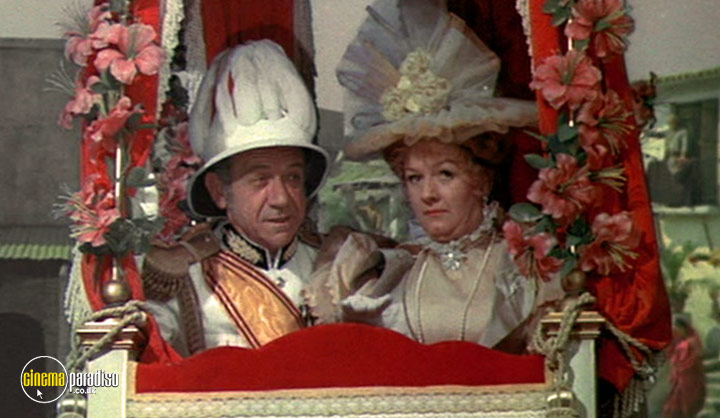
In a 2004 film industry poll, Carry On Columbus was voted the worst British film ever made. Fourteen years later, it was joined by Carry On Girls (1973), Carry on England (1976), That's Carry On! (1977), and Carry On Emmannuelle (1978) in a list of the five worst entries compiled during a 2018 BFI retrospective. Perhaps things might have been better if Thomas had allowed the young guns to improvise. But he stuck to the series rule that the screenplay was sacrosanct and, as a consequence, the Good Ship Carry On ran aground and has not been refloated ever since.
Mentioned films