Rent Killer of Sheep (1977)
3.4 of 5 from 125 ratings
1h 17min
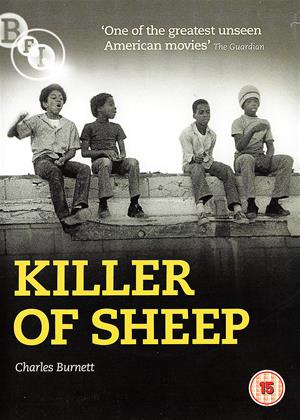

Killer of Sheep is an interesting anecdote, a diversion to the majority of American films from the 70’s. It captures the poverty and hand to mouth existence of many African-Americans of the period. Living in the ghetto it focuses mainly on one family who try to stay legal and earn enough dollars to feed and clothe. Filmed in a black n white with an almost documentary style it is very distinctive. The low budget origins of the piece are well known, as is the fact that it took 30 years to be seen after completion. This adds to the time capsule effect it clearly demonstrates; yet nostalgia isn’t everything. The soundtrack is a perfect foil for the gritty images on screen and at times dialogue is rarely heard, allowing the blues to take centre stage. Killer of Sheep is a snapshot of a bygone age, restored to its former glory and for many its reputation grew by word of mouth. Being unable to actually see the film until now added to that mystique and like the majority of video nasties of the early 80’s, hearing and actually experiencing are two entirely different things altogether.
Some films capture not just the lives but the texture of living itself. Charles Burnett’s Killer of Sheep is one of them, catching a time, a place, and a feeling with poetic precision. Shot in Watts in 1972, it reflects a community scarred by deindustrialisation, broken promises, and the shift from civil rights idealism to Nixon’s “law and order.” It feels both of its moment and eerily prescient.
The mood shifts constantly: tender, bleak, funny, and desperately sad. Children play in rubble, couples dance in kitchens, men drift between jobs that grind them down. Images of sheep in the abattoir recur throughout—a simple metaphor, perhaps, but one that cuts deep.
The soundtrack is just as vital, weaving blues, jazz, folk, and spirituals to bind the film to a wider history of endurance. Burnett never preaches; he observes. What emerges is tender, raw, and oddly hopeful. Life unfiltered, and unforgettable.