Rent The Life of Chuck (2024)
3.5 of 5 from 205 ratings
1h 47min
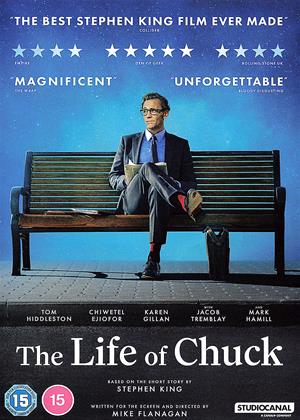
Life doesn’t usually come with a rewind button, but here it does—and under Mike Flanagan’s assured direction, the effect is oddly exhilarating. We start at the end, with the world folding in on itself, before moving backwards through moments of street-dancing abandon and into the wide-eyed promise of childhood. It’s a story about horizons: how they narrow with age, then widen again as memory unspools in reverse.
Flanagan steers this tricky structure with a light but deliberate touch, balancing warmth and melancholy without tipping into sentimentality. The apocalyptic opening plays like the shutting-down of a private universe, each scene selling off another fragment of the life lived within. The middle act, brimming with defiance in the face of decline, has a spontaneity that feels both joyous and fragile.
By the time we reach the beginning, the reverse journey feels less like an ending than a sly reminder: life’s possibilities—real or imagined—are as vast as we allow them to be, until they aren’t. Flanagan turns what could have been a gimmick into a poignant meditation on mortality, perspective, and the strange comfort of seeing it all in reverse.
A film of 3 acts, each one set earlier in time. The first act is an interesting fantasy set at the end of the world as we know it (there are even exploding planets). It’s not overly woke and it does make you want to know more. Unfortunately there will be no explanation and there’s barely any connection with acts 2 and 3, which follow the day-to-day life of a different character (the eponymous Chuck). Even worse, act 2 is mainly an overlong street dance, and act 3 also has a lot of pointless dancing in it. Probably more interesting is the set of Extras, where the cast make failed attempts to explain what it’s all about. Something to do with isn’t life wonderful etc. Still, it’s well made and keeps you watching, even if it’s ultimately pointless. They should have stuck with act 1 and followed it through.
I almost gave this 2 stars, but it is such a self-indulgent vain meandering mess of a movie it could've been something by Wes Anderson whose films I hate SO if you like those then this is for you!
There is so much flab and padding here, lengthy sequences (no spoilers, but if you like drumming and/or dancing, this is a film for you. I like neither).
The structure which I presume mirrors the short story by Stephen King is not original or groundbreaking as some seem to think. F. Scott Fitzgerald wrote THE CURIOUS CASE OF BANJAMIN BUTTON in 1922 with a life lived backwards, and there was a misfiring movie version in 2008. I've read some King short stories on vampires and boy were they boring! Long, meandering and pointless, a bit like this forgettable film.
The initial story with its effects will be considered profound by some, not doubt, though goodness knows why as we are bombarded with climate emergency propaganda 24/7 these days.
The supernatural bit is tacked on, almost literally. It';s NEVER explained, not even a bit. Such things ring alarm bells with me - it;s a sure sign of a badly written story actually. Very common in fantasy films where a magic sword or something gets our heroes out of danger. Not buying it! Work HARDER, writer! Not for me.
1 star. VERY disappointing. A shame as a like Tom Hiddleston and can see him easily as the next James Bond BUT he's wasted here.
