This autumn has seen the passing of three of Britain's finest comedy actresses. Cinema Paradiso bids adieu to Patricia Routledge, Prunella Scales, and Pauline Collins.
In truth, Patricia Routledge, Prunella Scales, and Pauline Collins didn't have much in common. Two were raised on the Wirral, while another two spent childhood time in Devon. One opted not to marry, while the other two played happy families with famous actor husbands. One enjoyed success on the big screen, while the other two were better known for their exploits in the theatre and on the television. While one had her moment on Broadway, another had her 15 minutes in Hollywood. The youngest made an exploitation movie, the oldest was equally at home in musicals and operetta, while the one in the middle fronted a successful documentary series.
Yet, all three Ps created memorable characters across costume sagas, sitcoms, sketch shows, drama showcases, and box-office hits. Each was also beloved in her own way and their passing so close together will leave many feeling nostalgic for an era of stage and screen excellence that will simply never be repeated.
Patricia Routledge
Katherine Patricia Routledge was born in Higher Tranmere on the Wirral peninsula on 17 February 1929. Father Isaac Edgar Routledge was a gentleman's outfitter and haberdasher, and, with his wife, Catherine (née Perry), he taught Patricia and her older brother, Graham, what she called 'Northern puritanism', a belief in common sense, good manners, self-control, and hard work. She later admitted that her upbringing had prevented her from pushing hard for jobs, as she had been taught to wait and be asked.
Dubbing herself a 'big, plump girl with a loud voice', Patricia took part in plays, concert parties, and poetry competitions at Mersey Park School. At her mother's insistence, she had also taken elocution lessons and spent Saturday mornings learning to sing with Miss Sleigh and her upright Steinway. At Birkenhead High School, Patricia dreamed of becoming a teacher: 'I was going to be an avant-garde headmistress,' she recalled, 'having affairs all over Europe in the holidays.' But, despite enrolling on the diploma of education course at Liverpool University in 1947, she switched courses to English Language and Literature and threw herself into the amateur productions mounted by Edmund Colledge, a tutor who encouraged Routledge to act professionally.

Having held down a backstage job at the Liverpool Playhouse, she trained at the Bristol Old Vic Theatre School and returned home to make her debut at the Playhouse as Hippolyta in a 1952 production of William Shakespeare's A Midsummer Night's Dream. Following rep stints in Guildford, Worthing, and Windsor, Routledge reached the West End in a musical comedy rewrite of John Brinsley Sheridan's The Duenna (1954), which showed off her magnificent singing voice, whose vocal range extended from mezzo-soprano to contralto. A highlight of her first decade on stage was her Mary Potts in Little Mary Sunshine (1962), although it was Roger Milner's comedy, How's the World Treating You?, that took her to New York in 1966.
Two years later, she was cast as Alice Challice opposite Vincent Price (on what would be his sole visit to Broadway) in Darling of the Day, a musical that closed after just 31 days and which not only earned her a Tony Award, but also a glowing notice from the New York Times that proclaimed her efforts, 'the most spectacular, most scrumptious, most embraceable musical comedy debut since Beatrice Lillie and Gertrude Lawrence came to this country as a package'. Richard Rodgers (of Rodgers and Hart/Hammerstein fame) promised to write a show for her. But he never got round to it, although Routledge did join Norman Wisdom and Noël Coward in his musical rendition of Androcles and the Lion (1967) for American television. But her Broadway luck ran out when Love Match (1968), in which she played Queen Victoria, underwhelmed and Leonard Bernstein and Alan J. Lerner's 1600 Pennsylvania Avenue (1976), which cast her as every First Lady from Abigail Adams to Lucy Webb Hayes, closed after just four days. This was better than Say Hello to Harvey (1981), as this musicalisation of Mary Coyle Chase's play Harvey- which had been filmed with James Stewart in 1950 - went down so badly during a Toronto tryout that the Broadway transfer was scrapped.
Routledge's stage fortunes were less precarious back in Blighty. She was feted for the Noël Coward confection, Cowardy Custard (1972), in between pairings with Alastair Sim in Arthur Wing Pinero's The Magistrate (1969) and Dandy Dick (1973). She also demonstrated her versatility as Madame Ranevskaya in The Cherry Orchard (1975), Mrs Malaprop in The Rivals (1976), Dolly Otley in Noises Off (1982), and Queen Margaret in Richard III (1984), in which she co-starred with Antony Sher in a tour de force from the Royal Shakespeare Company.
In 1980, she teamed with Kevin Kline and Linda Ronstadt in Gilbert and Sullivan's The Pirates of Penzance, which she followed by winning the Laurence Olivier Award for her turn as the Old Lady in Jonathan Miller's revival of Leonard Bernstein's Candide. She would also be nominated in the Best Supporting category And a Nightingale Sang (1979).
Her rendition of 'You'll Never Walk Alone' as Nettie Fowler in Nicholas Hytner's 1992 National Theatre revival of Carousel also drew plaudits, as did Routledge's work in the long-running one-woman shows, Admission: One Shilling (2009-19) and Facing the Music (2009-25), as well as such standout productions as The Importance of Being Earnest (1999-2001), The Solid Gold Cadillac (2004), and The Best of Friends (2006). She bade farewell to the boards at the age of 85 in a Chichester Festival production of Oscar Wilde's An Ideal Husband (2014) after a six-decade career.
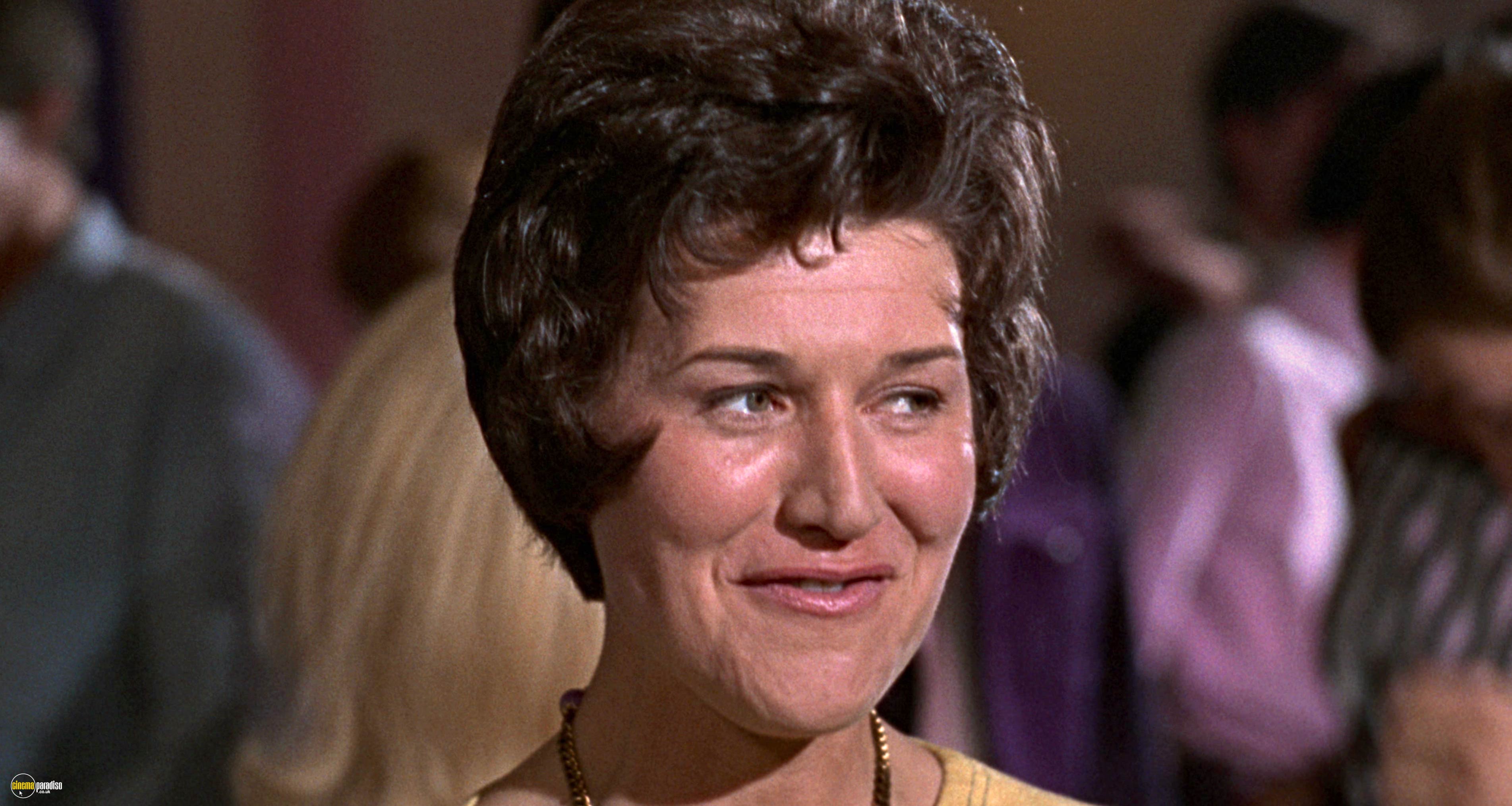
Her film odyssey was much shorter-lived, however. Indeed, it was all over in four years and all bar two of the titles are currently unavailable to rent. You should be able to spot her debut turn as Clinty Clintridge in James Clavell's To Sir, With Love (1967), which was released the same year she played Miss Gudgeon in Guy Green's Pretty Polly, which is also known as A Matter of Innocence. She was Mrs Woolley in 30 Is a Dangerous Age, Cynthia and reunited with director Joseph McGrath for The Bliss of Mrs Blossom, in which Routledge played Miss Reece. She co-starred with Jerry Lewis, as Lucille Beatty, in Jerry Paris's Don't Raise the Bridge, Lower the River (all 1968). Then, having cropped up as a nurse in Peter Coe's Lock Up Your Daughters, she joined the ensemble for Mel Stuart's If It's Tuesday, This Must Be Belgium as Mrs Featherstone. Finally, having done Children's Film Foundation duty as Janice Wentworth in Milo Lewis's Egghead's Robot (1970), she departed the big screen for good as Pamela Hovendon in Bob Kellett's saucy comedy, Girl Stroke Boy (1971).
Luckily for Cinema Paradiso users, several more of her small-screen endeavours have made it to disc. We first catch up with her as Sylvia Snape, the café owner who featured in five episodes of Coronation Street in 1961. In addition to being a regular on series like ITV Play of the Week and Armchair Theatre, Routledge also graced stand-alone dramas like Hobson's Choice (1962), in which Michael Caine played Will Mossop to her Maggie Hobson. She did Z Cars in 1962 before playing Queen Victoria in Victoria Regina (1964). In 1970, she followed playing Mrs Jennings in a BBC adaptation of Jane Austen's Sense and Sensibility by guesting as white witch Audrey Watt in an episode of Doctor At Large. She was similarly tasked in 1974, as she essayed Mrs Micawber in David Copperfield after having crossed Wendy Craig's path as Mrs Fletcher in ...And Mother Makes Five and having conned Albert (Wilfrid Brambell) and Harold (Harry H. Corbett) into believing that she was a clairvoyant in the 'Seance in a Wet Rag and Bone Yard' episode of Steptoe and Son (1962-74).
Ever up for a challenge, Routledge played dress designer Madame Mantalini in Nicholas Nickleby (1977), an ATS officer in the Play For Today take on Ian McEwan's The Imitation Game (1980), Mrs Peachum in The Beggar's Opera (1983), and Mrs Bultitude in a 1983 sketch on The Two Ronnies. She also paid two visits to Crown Court and fetched up as Milly Dobson in 'The Verger' story in Tales of the Unexpected (1988). By this time, Routledge had already played Kitty, the gloriously indiscreet gossip ('I never speak behind people's backs. If I've anything nasty to say, I pop it on a postcard.') who graced Victoria Wood: As Seen on TV (1985-87). It's confounding why this brilliant series isn't on disc, but Cinema Paradiso users are in luck where Patricia Routledge's collaborations with Alan Bennett are concerned.
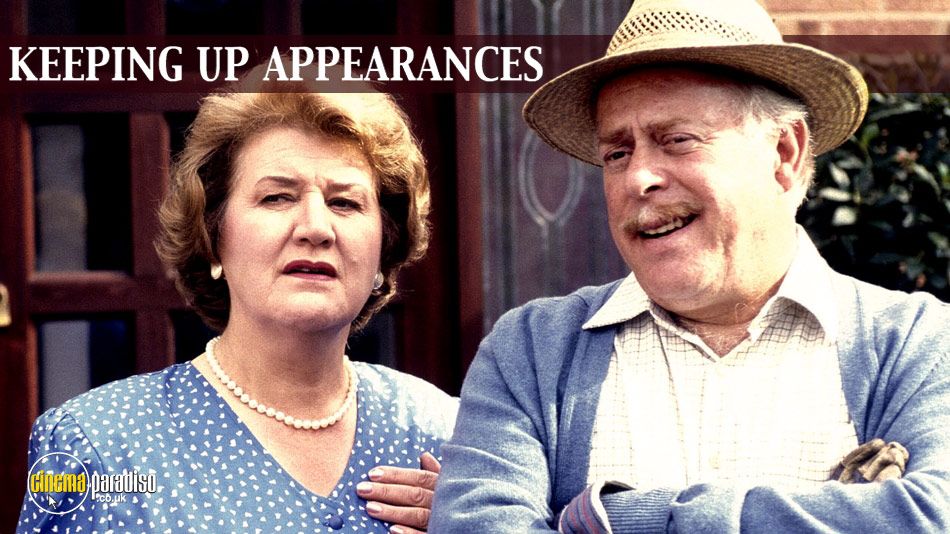 A still from Keeping Up Appearances (1990)
Sickness had prevented Routledge from pairing with Alec Guinness in Bennett's stage play, Habeas Corpus, in 1973. Five years later, she appeared in two of his finest television works, each of which were directed by Stephen Frears and both of which are available on Six Plays By Alan Bennett. She took the title role in 'A Visit From Miss Prothero', in which the retired Arthur Dodsworth (Hugh Lloyd) is outflanked by his former employee in the Warburton's accounts department. But she was less ruthless at reading the runes in ' Doris and Doreen ', a comedy of office manners in which she was cast alongside Prunella Scales. Routledge so loved the parts that she had Bennett rework them for the stage as Office Suite in 2007.
Good as she was at rapporting, however, Bennett recognised that Routledge could be even better as a monologuist. Written for the 1982 Objects of Affection series and available to rent as part of Alan Bennett At the BBC, ' A Woman of No Importance ' centres on Peggy Schofield, as she tries to make the best of things in her hospital bed while slowly succumbing to cancer. After her father had remarried following her mother's death in 1957, Routledge had become close to her stepmother and based her performance on her last illness.
If ever a BAFTA nomination was merited, but Routledge had to be content with Bennett writing two further pieces for his iconic Talking Heads series (1988-98). In ' A Lady of Letters ' (which did bring her BAFTA recognition), Miss Irene Ruddock discusses the problems she causes herself by sending vituperative missives and how she manages to turn over a new leaf in an open prison. However, a different kind of naughtiness impinges upon ' Miss Fozzard Finds Her Feet ', as an outwardly prim employee in the soft furnishings department of a city department store comes to a kinky arrangement with Mr Dunderdale, a chiropodist with a foot fetish.
Routledge would later admit that her Bennett characters 'came very close to me sometimes'. She had opted against marrying and raising a family because she knew she could never work and match the standards set by her own mother. But she did have a couple of flings, including one with a married director who died unexpectedly shortly before their play opened. Yet both of the characters Routledge played during her purple patch had milquetoast husbands, who viewed their assertive wives with a mix of affection and amusement.
Clive Swift proved the perfect stooge as Richard in Keeping Up Appearances (1990-95), as he quietly despairs of the airs and graces adopted by his snooty lower-class wife, Hyacinth, who insists that her surname is pronounced 'Bouquet' rather than Bucket. Forever falling short in her attempts to climb the social ladder, Hyacinth is never simply a figure of fun, although Roy Clarke's scripts shrewdly avoid pathos. Having won a British Comedy Award in 1991, Routledge was nominated for a BAFTA two years in succession. But her name was never called and she decided to quit the series after 44 episodes to explore other options. She told a reporter in 2017, 'I always thought of the great, great Ronnie Barker. He always left something when he was on a high, and it's much better to have people say now "Oh, why didn't you do some more?" than having them say "Oh, is that still on?"'.

Fortunately, she already had a safe haven waiting for her, as Routledge had taken the lead in the ITV pilot, Hetty Wainthropp: Missing Persons (1990). She had been disappointed when the series option was not taken up. But, in 1996, the BBC revived the character and the bluff northerner proceeded to solve 28 cases in Hetty Wainthropp Investigates (1996-98). With Derek Benfield as indulgent husbnd, Richard, and Dominic Monaghan as her lodger accomplice, Geoffrey Shawcross, Routledge relished the mysteries and complained bitterly when a fifth series was not commissioned that the BBC's drama department was was 'run by 10-year-old children'.
As is often the case, it's easier to see Routledge's series work than her one-shot credits. She was on fine form as novelist Barbara Pym in Miss Pym's Day Out (1991) and as composing nun Hildegard of Bingen for a 1994 documentary in the BBC Omnibus strand. However, Cinema Paradiso members can hear her voice Cousin Ribby in The World of Peter Rabbit and Friends (1993), which can be found in The Beatrix Potter Collection.
Amongst Routledge's radio and audio credits is Carole Hayman's Ladies of Letters (1997), in which she played Vera Small to Prunella Scales's Irene Spencer. Do try to find it if you can. It's a treat! Four years earlier, she had been appointed OBE and moved up to a CBE in 2004 before being made a dame in 2017. By this time, Routledge was essentially in retirement in Chichester and she died in the Sussex city's Wellington Grange Care Home on 3 October 2025. Let's hope she got her last wish. 'When I approach the pearly gates,' she had once said, 'I'd like to hear a champagne cork popping, an orchestra tuning up and the sound of my mother laughing.'
Prunella Scales
Prunella Margaret Rumney Illingworth was born on 22 June 1932 in the Surrey village of Sutton Abinger. Mother Catherine (née Scales), a RADA-trained actress with connections to the Liverpool Playhouse, had vowed to bestow the name upon any daughter after appearing in a Harrogate production of Prunella, or Love in a Dutch Garden.
Also hailing from Yorkshire (where his family owned a tobacco factory), father John had served with the Wiltshire Regiment in the Great War and had worked as a cotton salesman for Tootal before moving into insurance. He was careful with his pennies and Prunella and brother Timothy often had to crack the ice on the water basin at the unheated rented farmhouse in which they grew up. However, having been to primary school in nearby Dorking, Prunella found herself in Devon when the family moved to Bucks Mills near Bideford at the start of the Second World War. In 1942, she relocated to Windermere in the Lake Disrict to attend Moira House School and completed her education in Eastbourne when the school returned to East Sussex three years later.
In addition to taking piano lessons, Prunella also appeared in school productions and the prospect of spending her life playing people 'much more interesting than I am, who say things infinitely more intelligent than anything I can think of myself'' convinced the 17 year-old to opt against the Oxbridge entrance exam and seek a two-year scholarship at the Old Vic Theatre School. However, she found the course tough. 'Although I wanted to be an actress,' she told biographer Teresa Ransom, 'I was very inhibited and thought it was wrong to show off.' Nevertheless, she persevered and took her mother's maiden name in becoming Prunella Scales in 1949.
 A still from Fawlty Towers (1975)
Having become an assistant stage manager at the Bristol Old Vic, Scales made her debut as an elderly cook in Jean Anouilh's Traveller Without Luggage at the Theatre Royal in 1951. Her West End bow followed as Lucrezia in Peter Hall's Arts Theatre revival of Carlo Goldoni's The Impresario of Smyrna (1954). More impressive, however, was her casting as Ermengarde opposite Ruth Gordon in Tyrone Guthrie's 1955 production of The Matchmaker, which ran for nine months before transferring to Broadway, where Scales used her spare time to study with Uta Hagen at the fabled Herbert Berghof Studio.
Rep stints in Oxford and Dundee must have felt like a comedown, but Scales was invited to join the Shakespeare Memorial Theatre (a forerunner of the Royal Shakespeare Company) to appear in The Merchant of Venice, Measure For Measure, and Love's Labour's Lost. Yet she was never offered a romantic lead and later lamented, 'I would have loved to have played Juliet and Viola...but I never did.'
Instead, she was chosen to play Lydia Bennet in the BBC's second-ever adaptation of Jane Austen's Pride and Prejudice (1952), which co-starred her future father-in-law, Lockwood West, as Mr Collins. The same year saw Scales make her big-screen bow, as Morag McLeod in John Eldridge's Laxdale Hall. She followed this by playing Charles Laughton's daughter, Vicky, in David Lean's Hobson's Choice; Mary in Maurice Elvey's What Every Woman Wants; a department store customer in John Guillermin's The Crowded Day (all 1954); a petrol pump attendant in Peter Maxwell's Blind Spot; and a council office worker in Jack Clayton's Room At the Top (both 1958).
Having spent five episodes as bus conductress Eileen Hughes in Coronation Street (1961), Scales signed up to play Evelyn, a schoolgirl who posed awkward questions on the BBC magazine programme, Tonight. The character was not a hit with viewers, however, and was dropped after 12 episodes, leaving Scales to take a job wrapping margarine for blind tasting samples at Which? magazine. However, it also left her free to appear in the BBC play, She Died Young, where she met Timothy West. They had bonded over the morning crossword and went to the pictures to see Cary Grant and Deborah Kerr in Stanley Donen's The Grass Is Greener (1960). When the transmission was cancelled because of a strike by BBC electricians, they agreed to keep in touch after West was not recast when the 'really awful television play' was revived. Such were their busy schedules, however, that they didn't get to spend a whole day together until they found themselves in rival shows in Oxford, where a river trip started a lifelong love of messing about in boats.

Shortly before they were married in 1963, Scales was cast as newlywed Kate Starling opposite Richard Briers in Richard Waring's BBC sitcom, The Marriage Lines (1961-66), which ran for 44 episodes. This made Scales a familiar face and led to her being cast as Estella Fitzjohn opposite Peter Sellers in John Guillermin's Waltz of the Toreadors (1962). However, this would be her last feature for 14 years, as raising sons Samuel and Joseph only left enough room for stage and occasional TV assignments.
In 1973, Scales played Ronnie Barker's wife, Marion Joyce, in the 'One Man's Meat' episode of the comedy showcase, Seven of One. She also held her own as Queen Jemima in George Bernard Shaw's The Apple Cart, a Play of the Month presentation that can be rented from Cinema Paradiso as part of Helen Mirren At the BBC. But, thanks to Bridget Turner, Scales was about to land the role of a lifetime.
Sybil Fawlty is older than her husband and from a lower rung on the social ladder. But she has more idea about running a Torquay hotel and pacifying the customers who have been riled by the ever-disdainful Basil. He was played by John Cleese, who wrote Fawlty Towers (1975), with then-wife Connie Booth, who played Polly Sherman alongside Andrew Sachs's Catalan waiter, Manuel. With her wigs, tight skirts, and high heels, Sybil cut a formidable figure, with just a hissed mention of his name being enough to rein Basil in during his tirades and escapades. He mumbles insults, as Sybil ignores him while chatting to her friends on the phone ('Oh, I know!') or belittling him in front of the very guests he is most eager to impress.
Scales revealed that she had modelled Sybil on a seaside hotelier she had encountered when she was seven, as she was 'very ingratiating with customers and ruled her husband with a rod of iron. I sensed that even as a child.' Using the height difference (she was 5ft 3in, while Cleese was 6ft 5in) for comic effect, Scales also displayed a mastery of comic timing, whether she was lashing out with her hands or her tongue. She returned for the second series in 1979 and missed out again on a BAFTA nomination, even though Sybil is now considered one of the greatest comic characters and Fawlty Towers went on to top BFI and Radio Times polls of favourite British sitcoms.

'Most people seem to remember Sybil as this hideous gorgon of a woman,' Scales confided in her autobiography. 'I consider her a heroine,' and she reprised the role for Children in Need in November 2007, when Sybil became the new manager of Hotel Babylon (2006-09). There were elements of Sybil in Doris, the office worker Scales played opposite Patricia Routledge in Alan Bennett's Doris and Doreen (1978). Joan Sanderson (who had played Mrs Richards in Fawlty Towers) appears late in the piece as Dorothy Binns and Scales would team up with her again when she played the gossipy mother of the newly widowed Sarah France in Simon Brett's After Henry, which started life on BBC Radio Four in 1985 before being picked up by ITV for a four year run (1988-92) that found room for a guest slot for Timothy West.
The success of Fawlty Towers reignited Scales's film career. Having played Mrs Sandman in Charles Jarrott's Disney saga, The Littlest Horse Thieves (1976), she teamed with Peter Cook and Dudley Moore, as Glynis, in Paul Morrissey's The Hound of the Baskervilles (1978). The same year saw her co-star with Gregory Peck, as Mrs Harrington, in Franklin J. Schaffner's take on Ira Levin's bestseller, The Boys From Brazil. But the stage also kept luring Scales back and she paired with Leonard Rossiter in Michael Frayn's Make and Break (1980) before holding the Old Vic spellbound in An Evening With Queen Victoria, a one-woman show based on diaries and letters that Scales would perform some 400 times over the next three decades. Having played Mistress Page in the 1982 BBC Television Shakespeare production of The Merry Wives of Windsor, Scales went Down Under to direct West in Anton Chekhov's Uncle Vanya (1982). She would also hook up with her husband for Richard Eyre's version of J.B. Priestley's Now We Are Maried, Mel Smith's take on Bamber Gascoigne's Big in Brazil (both 1985), and Howard Davies's adaptation of Eugene O'Neill's Long Day's Journey Into Night (1991). But, while they would go on to write So You Want to Be an Actor? together in 2005, the pair were determined not to become the new Michael Denison and Dulcie Gray.

Back in Blighty, Scales found another vehicle for her comedy talents when she joined Geraldine McEwan in ITV's interpretation of E.F. Benson's Mapp & Lucia stories (1986-86). Nigel Hawthorne's Georgie also resided in 1930s Tilling-on-Sea, as Miss Elizabeth Mapp and the widowed Mrs Emmeline Lucas sought to become the town's social queen bees. So much did Scales identify with Benson's writing that she also recorded the award-winning audio books, Miss Mapp (1990), Mapp and Lucia (1990), and Lucia's Progress (1992).
When not gracing episodes of Lucky Feller, Whodunnit?, Bergerac, and Never the Twain, Scales took film roles like Miriam in Kevin Billington's Outside Edge (1982), Frau Pollert in Tony Palmer's Wagner (1983), and Lady Kingsclere opposite Faye Dunaway in Michael Winner's The Wicked Lady (1983), which revisited Leslie Arliss's 1945 Gainsborough bodice-ripper that had made a star of Margaret Lockwood. Frustratingly, several acclaimed performances are out of reach, such as those in Slimming Down (1984), Absurd Person Singular (1985), the 'Home Cooking' episode of Unnatural Causes (1986), The Index Has Gone Fishing (1987), and Natural Causes (1988).
In 1988, Alan Bennett hired Scales for two roles in Single Spies, a stage show that was comprised of two one-act plays, An Englishman Abroad and A Question of Attribution. The former saw actress Coral Browne visit Cambridge spy Guy Burgess (Simon Callow) in his Moscow exile in 1958, while latter imagines a conversation at Buckingham Palace between Elizabeth II and the Surveyor of the Queen's Pictures, Sir Anthony Blunt (Bennett), who is under suspicion for being the fourth man to pass secrets to the Soviets. This was the first time a reigning monarch had been portrayed on the English stage and Scales was such a natural in the role that she also appeared as HMQ opposite James Fox's Blunt in John Schlesinger's BBC film, A Question of Attribution (1988).
This can be rented from Cinema Paradiso as part of Alan Bennett At the BBC. Scales received Olivier and BAFTA nominations for her respective performances. Yet the board of the National Theatre had originally been against sanctioning the play and when Scales received her CBE in 1992, she was relieved that the Queen had a sense of humour about the play, as she had quipped, 'I suppose you think you should be doing this.'
Although she could never be considered a film star, Scales kept picking up choice roles in well-regarded pictures. She was Moira O'Neill in Jack Clayton's The Lonely Passion of Judith Hearne (1987), Ethel in Giles Foster's Consuming Passions (1988), and Hannah Ap Llewelyn (who is married to Anthony Hopkins and sleeps with Jeremy Irons) in Michael Winner's take on Alan Ayckbourn's A Chorus of Disapproval (1989). Moving into the next decade, Scales got to work with son Samuel, as Aunt Juley in Merchant-Ivory's version of E.M. Forster's Howards End (1992). Then, having voiced the Queen in Freddie As F.R.0.7. (1992), she lined up alongside Jack Nicholson and Michelle Pfeiffer, as Maude in Mike Nichols's refined horror, Wolf (1994).
After sharing time with William Hurt, as Margery in Chris Menges's Second Best (1994), Scales returned to comic characterisation, as Rose in Mike Newell's An Awfully Big Adventure (1995), with Hugh Grant and Alan Rickman, as Aunt Agnes in Gary Sinyor's Stiff Upper Lips (1997), as Dr Minnie Stinkler in Sara Sugarman's Mad Cows, and as Lady Markby in Oliver Parker's adaptation of Oscar Wilde's An Ideal Husband (both 1999), which co-starred Cate Blanchett and Julianne Moore.
Stage credits in this period included The School for Scandal (1990), Happy Days (1993), The Birthday Party (1999), and Carrie's War (2009), which showed her willingness to play in provincial theatres, as well as in the West End. On television, she joined West in Joe Orton's What the Butler Saw (1987), as well as appearing in The Rector's Wife, Fair Game (both 1994), Signs and Wonders, Searching (both 1995), Lords of Misrule, Breaking the Code, Dalziel and Pascoe, Late Shift, Emma (all 1996), Where the Heart Is, and Keeping Mum (both 1997). She also voiced Mrs Tiggy-Winkle in The World of Peter Rabbit and Friends (1994) and played Dotty Turnbull alongside daughter Kate Neall (Jane Horrocks) in a decade's-worth of hilarious Tesco adverts (1995-2004).
Teaching and directing when not acting, Scales entered the new millennium at full pace. Having played Sarah in Niall Johnson's The Ghost of Greville Lodge (2000) and taken an uncredited cameo as the Queen in Peter Howitt's Johnny English (2003), she settled into a run of small-screen guest spots. She was Eleanor Bunsall in the 2000 'Beyond the Grave' episode of Midsomer Murders; Anne Parker in the two-part 'Faith' episode of Silent Witness (2001); and Mrs Mackenzie in the 2008 Marple case, 'A Pocket Full of Rye'. She also appeared as Queen Victoria in Station Jim (2001), Grace in A Day in the Death of Joe Egg (2002), Lady Moping in Mr Loveday's Little Outing, and Dolly Keeling in The Shell Seekers (both 2006), which co-starred Vanessa Redgrave, She even cropped up in Casualty in 2004 and The Royal in 2011.
Amidst all this activity, Scales wound down her film career by following a scene-stealing turn as Great Aunt Greta in Nick Moore's Horrid Henry: The Movie (2011) with an uncredited cameo as a woman in a pub in Ray Cooney and John Luton's Run For Your Wife (2012). But she had one more important role to play - herself in Great Canal Journeys (2014-20), in which she and West navigated waterways in Britain and beyond in a narrowboat. Each episode made it clear that Scales had been diagnosed with vascular dementia, as the couple showed how it was still possible to enjoy a full life with a condition that slowly eroded memory. It was a wonderfully brave and beautiful series and stands as a monument to both West (who died in November 2024) and Scales, who passed away at her London home on 27 October 2025. She was 93 and had been watching Fawlty Towers with her family the day before.
Pauline Collins
Pauline Angela Collins was born in the Devon town of Exmouth on 3 September 1940. Parents William and Mary (known as Nora) had moved from Liverpool to avoid the Luftwaffe, although William, who was a headmaster, wound up as a tank instructor at Bovington Camp in Dorset. Nora juggled teaching with raising Pauline and her younger sister, Gabrielle. Once the raids on Merseyside ceased, however, the family relocated to Wallasey on the Wirral, where Mary's Callanan clan lived. Despite being bombed out of three different houses before the war ended, this would become a favourite place for Pauline over the next decade, as she spent idyllic summers in the north-west while going to school in Battersea and then at the Roman Catholic Convent of Sacred Heart in Hammersmith.
On the BBC's Desert Island Discs in December 1989, Collins revealed that her first performance had come at the age of two, when she treated the family to her impression of a chicken laying an egg. She also invented an alter ego named Maureen, who used to stomp around the house mumbling and behaving oddly. William disapproved of Enid Blyton and refused to let his girls read her books. But Nora encouraged Pauline's interest in acting and cast her as The Child in a 1948 school production of The Dear Departed. Pauline was thrilled to get laughs with her Lancashire accent and remembered not wanting to leave the stage. Two years later, she wrote her own little play based on Hans Christian Andersen's The Little Matchgirl and performed it at her school.
When the lease on the Wallasey house was cancelled through the meddling of a neighbour, the family settled in London, where Claire was born in 1953. Initially, Pauline was teased at Sacred Heart for being posh. But she played Yum-Yum in a production of Gilbert and Sullivan's The Mikado alongside her best friend, Teresa Brooke, whose mother was Patricia Hayes. Type her name into the Cinema Paradiso Searchline to discover the range of credits she amassed during a career that ran from 1937-95.
Hayes took the girls to acting haunts like The Interval Club in Soho and urged them to go to the pictures. According to Collins's memoir, her three favourite films in this period were all directed by Elia Kazan: A Tree Grows in Brooklyn (1945), On the Waterfront (1954), and East of Eden (1955). Indeed, she became so keen on acting that she decided against taking the Oxbridge entrance exam and tried to swap courses after landing a teaching scholarship at the Central School of Speech and Drama. Having worked briefly at Harrods and as a wine waitress at West London Air Terminal, the 5ft 2in Collins started looking for acting jobs, knowing she could fall back on being a supply teacher to pay the bills. As she later recalled: 'It's terrible to teach for money. You should have a real love. I was a good teacher but not one with heart. I decided that if I couldn't earn a teacher's wage within five years I'd give up acting. I just about made it but didn't really have any success until I was 30.'
Collins made her stage debut in Windsor, although she thought the director had phoned the wrong actress when she was cast as an Arabian maid-servant named Sabiha in A Gazelle in Park Lane (1962). She made her first film the following year, joining Wendy Richard as one of the youth club girls whose biker boyfriends pal up with John Hurt's disabled teenager in The Contact (1963), a short made to publicise the work of The Spastics Society, which is now known as Scope. The 15-minute film is available for free on the BFI website.
Her first experience of television came around the same time, as she played Nurse Elliott in a episode of the medical soap, Emergency Ward 10 (1957-67). Being unused to live studio sets, Collins wandered through the wrong door and found herself on camera in a bedside consultation scene. Keeping calm, she did something suitably nurse-like before exiting swiftly and earning a pat on the back from the director for not losing her head. During her day on the set, Collins noticed a handsome actor playing Dr Richard Moore, who had become a series regular. For now, however, John Alderton was merely a passing fancy, as Collins took herself to Killarney to become an an actor and assistant stage manager with the New Irish Players.
All four of her grandparents were Irish, with her great-uncle being the celebrated poet, Jeremiah Joseph Callanan. But this was her first visit and she fell in love with fellow actor Tony Rohr, whose credits can be accessed via the Searchline. It was only on returning to London, however, that Collins realised she was pregnant. Opting to keep the news from her parents, she told them she was going on tour and gave birth to a daughter at a mother-and-baby home run by nuns in Waterloo in 1964. Realising she would not be able to care for a child on her unpredictable wages, Collins gave the baby up for adoption and, when Louise got in touch in 1986, she relived the experience in Letter to Louise (1992).

Somehow pulling herself round after such an emotional upheaval, Collins made her West End bow as Lady Janet Wigton, one of the schoolgirls who open a bordello, in Passion Flower Hotel (1965). During the run of the play, Collins made her first feature, Arnold L. Miller's Secrets of a Windmill Girl (1966). Pat Lord was killed in a drunken car crash in the opening scene, but her story is told in flashback to Inspector Thomas (Derek Bond)
by best friend Linda Grey (April Wilding), to show how two shoe shop assistants pass an audition to dance at Soho's most notorious hot spot - whose history was chronicled by Stephen Frears in Mrs Henderson Presents (2005), which starred Judi Dench and Bob Hoskins.
Sparky though Collins is in this classic piece of British exploitation, she didn't make another feature for 23 years. In the meantime, she began to find her feet in television, following a spot alongside Prunella Scale in a 1966 episode of Marriage Lines with appearances in the Coronation Street spin-off sitcom, Pardon My Expression (1965-66), and the surreal detective series, The Corridor People (1966). She also essayed Marie-Therese opposite Roger Moore in 'The Better Mousetrap' entry in The Saint (1962-69). Then, having voiced Miss Peabody uncredited in the 'Dead Man's Treasure' episode of The Avengers (1961-69), she made such a good impression as Samantha Briggs over the five episodes of 'The Faceless Ones' (1967) that she was invited to become Patrick Troughton's new companion in Doctor Who (1963-). However, the prospect of 39 episodes of well-paid work didn't appeal to her, as Collins later explained, 'I thought it was like a prison sentence. Maybe it would have given me a profile early in my career, but then I would have missed so many things.'
One of these would have been the chance to play Cecily Cardew in a West End revival of Oscar Wilde's The Importance of Being Earnest and a reunion with John Alderton as Betty in the Armchair Theatre presentation, 'One Night I Danced With Mr Dalton' (both 1968). Even though Alderton was married to
Jill Browne (who had played Nurse Carol Young in Emergency Ward 10), romance blossomed during the run of The Night I Chased the Women With an Eel (1969), in which Collins played Brenda Cooper. They married in 1970 and went on to have three children - Nicholas, Kate, and Richard - while forging a successful partnership on stage and screen. More of which, anon.
Back in 1969, Collins was cast as Dawn opposite Polly James's Beryl Hennessey in Carla Lane's sitcom, The Liver Birds (1969-96). After just five episodes (none of which have survived), however, Collins decided to move on, as her schedule was becoming increasingly busy. Nerys Hughes stepped in as Sandra Hutchinson and the rest is history. Instead, Collins played Doreen Ashworth in an episode of Parkin's Patch (1969) before going on to bolster her stage credentials as Nancy Gray in The Happy Apple and as part of an ensemble that also included Glynis Johns, Denholm Elliott, and Joss Ackland in the four short John Mortimer plays gathered under the title, Come As You Are (both 1970).
Having co-created the series with Jean Marsh, Eileen Atkins was all set to play Sarah Moffat in Upstairs, Downstairs (1971-75) when her situation changed and Collins landed the role in the first episode, which was written by Fay Weldon. Such was the public response to the impish Sarah that she returned to 165 Eaton Place as a parlourmaid, much to the displeasure of butler, Mr Hudson (Gordon Jackson), who felt she was too footloose to make a good servant. Over the course of her time in Belgravia, Sarah tried her hand at being a music-hall performer and became pregnant by the son of the household, James Bellamy (Simon Williams), before she met her match in Welsh chauffeur, Thomas Watkins (John Alderton). Six years after they left in 1973, ITV bosses offered Alderton and Collins a spin-off series, Thomas & Sarah (1979). A second season was commissioned, but the 75-day strike that kept ITV off the air from 10 August-24 October 1979 led to its cancellation before a scene could be filmed.

Not that Collins and Alderton didn't have enough in their diaries, as she followed playing a Scouse teacher on stage in Judies by reuniting with her husband to play ditzy debutante Clara Burrell opposite worldly actor Charles Danby in No, Honestly (1974), which Charlotte Bingham had adapted from her own novels with her writer husband, Terence Brady. Donal Donnelly and Liza Goddard took over as composer Matthew and new girlfriend, Lily, in Yes, Honestly (1976-77), which is also available to rent from Cinema Paradiso.
Taking time out to play Lady Teazle in a BBC take on Richard Brinsley Sherdidan's The School For Scandal and Minnie Symperson in an Old Vic revival of W.S. Gilbert's Engaged (both 1975), Collins hooked up with Alderton again for Wodehouse Playhouse (1975-76), a splendid series inspired by the peerless comic writing of P.G. Wodehouse. The duo also returned to the theatre for a lengthy run in Alan Ayckbourn's Confusions (1975-77) and even left their mark on children's television by voicing 13 episodes of Little Miss (1983), an animated series based on the bestselling books by Roger Hargreaves.
Having played Eileen in 'Long Distance Information' for the BBC's Play For Today (1979), Collins guested as Pat Lewis in Roald Dahl's 'A Girl Can't Always Have Everything' for ITV's Tales of the Unexpected (1979-88). She also spent five episodes as Maggie Hewson opposite Roy Marsden in The Black Tower (1985), which was adapted from a crime novel by P.D. James. In Piers Haggard's Screen Two outing, Knockback (1985), she played single mother and prison visitor Sylvia Barker, who falls for murderer Alan Ackland (Derrick O'Connor), before she made a return to Tales of the Unexpected for 'The Colonel's Lady' (1988), in which she played Eve Peregrine.
Such variety was very much the spice of Collins's life. As she told one reporter, 'We have always been movers on. Everybody has to do a series now and stay on for 10 years or whatever. But both of us liked to change after doing one or two.' But they kept joining forces, taking on the roles of racing driver Jack Boult and his nurse wife, Harriet, who move to the country for the health of their children in Forever Green (1989-92). It was a cosy show, but the couple decided to take a break from appearing together, which was just as well, as Collins was about to become an international star at the age of 49!
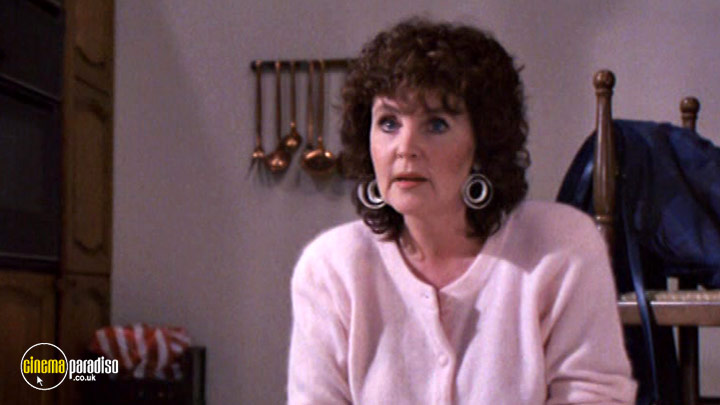
Collins enjoyed engaging with audiences, but didn't particularly relish long runs doing the same thing night after night. She had returned to the theatre to play Cyrenne in Rattle of a Simple Man (1980-81), Phoebe Craddock in Romantic Comedy (1983), and Susan in Woman in Mind (1986-87). But she found her niche in a one-woman show about a Liverpudlian housewife who escapes the drudgery of her daily routine by letting down her hair while on holiday in Greece. Playwright Willy Russell was less convinced by director Simon Callow that Collins was right for Shirley Valentine. But audiences were spellbound by her talking to the kitchen wall and a beach rock and, even though the critics were harder to please, she followed an Olivier Award for her London performance with a Tony and a Drama Desk Award for her efforts during a 10-month stint on Broadway. Even then, the suits at Paramount insisted on casting Cher in the film version until they saw the error of their ways after director Lewis Gilbert had dragged them to watch Collins on stage in London. In addition to winning a BAFTA for Best Actress, she also received Golden Globe and Oscar nominations for Shirley Valentine (1989), only to lose out to Jessica Tandy in Bruce Beresford's Driving Miss Daisy.
'What's marvelous about being here,' Collins said in accepting her Tony, 'is it's proof that miracles can happen at any time in our lives, even when you're getting on a bit. It means there's hope and you must all continue to dream your dreams, because they'll come true.' She also wished she had been younger and thinner when she had played Shirley, although she had joked, 'If I were Jamie Lee Curtis, I wouldn't have been right for the part.' But Collins found being in the limelight less enjoyable than she had anticipated and soon became disillusioned with the Hollywood way of doing things. She was frustrated by the calibre of the screenplays she was offered, as roles for women of a certain age were in short supply in the early 1990s. Moreover, she was competing with some big names for the same gigs.
In addition to rejecting Shirley Valentine-ish parts, she also turned down a British drama about serial killer Dennis Nilsen. 'It's bad for the spirit to do stuff like that,' Collins opined. 'If it's going to be worthy and hard labour, I'm not going to enjoy it and the audience won't either. I want to enjoy what I'm doing, especially when you're this old, and who knows how much life is left?' She told another reporter, 'Films came to my life very late and now I'm 56 there aren't that many leading roles. Lately I've been offered parts in some extremely violent films which I don't belong in. I'm not a Pollyanna character, but I don't think certain types of violence are good for us.'
Some parts proved irresistible and Collins showed well as feisty Irish-American nun, Joan Bethel, alongside Patrick Swayze in Roland Joffé's Kolkata-set drama, City of Joy (1992); as Jewish mother Elsa Tabori in Nazi-occupied Budapest in Michael Verhoeven's My Mother's Courage (1995); and as Australian missionary, Daisy 'Margaret' Drummond, helping to form a choir in a Japanese detainment camp in Bruce Beresford's Paradise Road (1997). It's a shame that only the latter is currently available, while it's also not possible to see Michael Whyte's Flowers of the Forest (1996), a Screen Two presentation about child abuse in a tight-knit Scottish community, in which Collins played Welsh investigator Aileen Matthews.

Cinema Paradiso users can, however, see Collins as Harriet Smith in The Ambassador (1998-99), which sees the UK representative in Dublin try to cope with diplomatic pressures while reeling from the guilt of her husband dying in a car bomb that had been intended for her. This series marked something of a departure for Collins and some of the reviews were unkind. But she was unrepentant about her choices. 'Too much security makes me nervous,' she explained, 'afraid of missing all the surprises just below the horizon. One of the terrors of a little success is the possibility of losing the ability to dare, to jump off the cliff.'
Appointed an OBE in 2001, Collins teased, 'My ambition is to be the female version of Denholm Elliot. He found himself a wonderful niche. I also want to smell the roses and travel.' But she continued to take on a range of roles that spoke volumes for her deceptive diversity. Having been part of the voice cast for Little Grey Rabbit, she found herself in the karaoke crowd in Mary Miles Thomas's One Life Stand (both 2000), which starred Maureen Carr as a mother who inadvertently pushes her son towards becoming an escort. Ironically, Peter Capaldi played a son cajoling his mother into going into a retirement home in Ian Sharp's Mrs Caldicot's Cabbage War (2002), the story of a retirement home rebellion that also featured John Alderton, who appeared with Collins and daughter Kate in Going Straight in Bath in 2004.
Television assignments otherwise dominated this period, as Collins played Betty Silver in Simon Curtis's BBC take on Tony Parsons's Man and Boy (2002), Dr Catherine Kendall in Tristram Powell's version of Agatha Christie's Sparkling Cyanide (2003), and Miss Flite in 10 episodes of the BBC's imposing adaptation of Charles Dickens's Bleak House (2005). In 2006, she made a little Tardis history by returning to Doctor Who to play Queen Victoria in 'Tooth and Claw', which was released in the same year that Collins played mother-in-law Lil Taylor in Jeremy Webb's comic teleplay, What We Did on Our Holiday.
Despite playing the fairy godmother in the 2007 Old Vic pantomime, Cinderella, Collins found herself steering clear of the stage. 'It's not difficult to get good work,' she said in an interview. 'But it's hard to get magic work. I'm a bit off the theatre at the moment. It requires a huge investment of energy and, unless it's perfect, you're stuck with it night after night. It's sad there aren't that many new plays. I'm not very drawn to the classics or revivals. There should be a moratorium placed on Shakespeare for 10 years because he's been done to death. There's an awful lot spent on a playwright who's been dead 500 years when young writers could do with the money. I know Shakespeare's our heritage and tourist industry, but he plays too large a part.'
She returned to the big screen to play cook Mrs Tweedie in From Time to Time (2009), Julian Fellowes's take on Lucy M. Boston's The Chimneys of Green Knowe, which she followed by playing Cristal the clairvoyant in Woody Allen's You Will Meet a Tall Dark Stranger (2010), which she thoroughly enjoyed, as Allen allowed her to improvise. The same year, Collins squeezed in Thyrza Grey in 'The Pale Horse' for Agatha Christie's Marple (2004-13) and Alice in the 'Love in the Time of Dragons' episode of Merlin (2008-12).
Staying on the small screen, Collins had two fun years being Sue Harris, wife of Barry (Bobby Ball) and mother of Lisa (Sally Lindsay), in Sky's Mancunian sitcom, Mount Pleasant (2011-12). But she did no more television after a 20-episode shift as Mrs Gamp in the BBC's literary spoof, Dickensian (2015-16). However, film offers kept coming in after she gave Glenn Close a hard time as Morrison Hotel boss Madge Baker in Rodrigo García's gentle, but barbed adaptation of George Moore's Dublin-set tale of secret identities, Albert Nobbs (2011).

'Surprises,' Collins once said. 'That's what I love about this business. Even at my age, you can get surprises.' And she was astonished when Dustin Hoffman called out of the blue to offer her the part of dementia-afflicted opera singer Cissy Robson after Maggie Smith and Tom Courteney had recommended her for the two-time Oscar-winning actor's directorial debut, Quartet (2012). Finally, having formed a charming attachment to Jonathan Pryce's Jewish baker, as the widowed Joanna in John Goldschmidt's Dough (2015) and visited the dressing-up box one last time to essay Lady Mawgon in Jamie Magnus Stone's The Last Dragonslayer (2016), Pauline teamed with namesake Joan Collins to play Priscilla and Helen, a housewife and an old movie star slipping out of an old people's home to attend a funeral in France in Roger Goldby's The Time of Their Lives (2017).
Collins spent her later years battling Parkinson's disease and died in a Highgate care home on 5 November 2025. She was 85 and leaves behind a body of work that is quite remarkable for its versatility and durability. Like Patricia Routledge and Prunella Scales, Pauline Collins was a one-off. They will all be missed. But, with so much brilliance on their CVs, these three Ps will never be forgotten.
Mentioned films