Such was Diane Keaton's spark, on and off the screen, that her loss at the age of 79 doesn't quite seem real. Cinema Paradiso pays its respects to a free spirit who went her own way.
Since her death on 11 October, the majority of obituaries and eulogies to Diane Keaton have focussed on the same handful of films. As these defined her screen persona and the subtle way in which she altered it, this seems fair enough. But Keaton made almost 80 films and TV shows during her six-decade career and it speaks volumes for her ability to stay the course in an industry that tends to marginalise or discard actresses when they reach a certain age.
While Keaton remained prolific in leading roles to the end, it's surprising how many of her later pictures came and went without much fanfare.
considering what a beloved actress and enduring socio-cultural icon she was. Perhaps Hollywood never truly came to terms with a woman who was deemed 'too tall and too "kooky"' by a Broadway casting director at the start of her career. In this regard, she was similar to her hero, Katharine Hepburn, who shared her idiosyncratic intelligence, unconventional dress sense, and restless energy, as well as her ability to make it feel as though she inhabited her characters rather than merely playing them.
This 'lived-in' approach to acting was complemented by a distinctive sense of style. No matter who she played, Keaton dressed in much the same way as she did in everyday life and this, together with her trademark delivery pattern and maladroit elegance made her readily relatable to viewers of across the board.
All the Hallmarks
Diane Hall was born on 5 January 1946 in Los Angeles. She would be followed by two sisters, Dorrie and Robin, and a brother, Randy, and they really did have a Grammy Hall. She was Mary, the Irish mother of John Newton Ignatius Hall, who was known as Jack and who had married Dorothy Deanne Keaton after serving as a junior officer in the US Navy during the Second World War. By the time of Diane's birth, he was working as an engineer and he attained the rank of chief engineer for the county water and power board before he decided to switch careers and become an estate agent.
Diane used to enjoy visiting properties with her father (who nicknamed her 'Perkins') and this undoubtedly led to her becoming in later life a renowned 'flipper' of dilapidated abodes in the Hollywood area. Jack was obsessed with self-improvement and organisation and devoured such books as Norman Vincent Peale's The Power of Positive Thinking and Dale Carnegie's How to Win Friends and Influence People. He also believed in the Personal and Company Effectiveness behavioural analysis system and imposed his PACE ideas on his children, although Diane would later dismiss them by noting, 'Dad was attracted to imposters, swindlers, and frauds.'
She was more taken by his hobbies of surfing, water-skiing, and scuba diving, although she insisted, in her typically self-deprecatory manner, that she didn't always enjoy herself. 'When I was a surfer,' she later joked, 'it was not a pleasant time with other surfers in the water. I've always had a little bit of trouble about swimming gear. I totally loathe and despise it.'
When not keeping house, Dorothy entered talent contests and Diane remembered with great pride seeing her mother on stage being crowned Mrs Los Angeles in a beauty pageant for homemakers. In addition to keeping diaries and scrapbooks, Dorothy also made collages and was a semi-professional photographer. Diane's fascination with images came from her mother and found an outlet in the books that she published in the second half of her career. However, she was also aware that Dorothy's fixation with re-ordering things was a sign of the depression that blighted her and Randy for much of their lives.
Although Jack was a Catholic, the Hall children followed their mother's Free Methodist faith and both Dorothy and Mary went on to appear in Keaton's documentary, Heaven (1987), in which people discussed their expectations of the afterlife. Although she was sceptical about the existence of God, Diane was awed by the beauty of the world her mother insisted He had created.

She collected rocks: 'Those little boxes from Knott's Berry Farm or Disneyland with crystals inside them - to me that was the most beautiful thing to own. When you're a kid you fantasise about gems. Beauty seems to be diamonds and rubies and emeralds. The Emerald City in The Wizard of Oz was very important - the most beautiful place that ever was, all green crystals.' At Santa Ana High School, she created a collage of monochrome images and coated them with orange shellac to give them an ethereal glow. 'I thought it was very, profoundly beautiful.' When the family visited the New York World's Fair when she was 18, Keaton was also struck by the worlds that Joseph Cornell constructed inside small boxes.
Yet, while she liked tucking herself away, the painfully shy Diane also had a need to be seen after witnessing Dorothy's triumph at the Highland Park leg of Mrs America. 'When they crowned her,' she later revealed, 'that's when I decided I was going to do that, too. "Someday," I thought, "someone's going to crown me."'
The five year-old Diane had already started putting on shows for her parents in front of the fireplace. As Dorothy later recalled, Diane would sing, dance, and ad-lib. 'She'd copy off television, things like Chuckles the Clown routines. She was always entertainment-oriented, but she was shy about it. She entertained us.' Indeed, nerves got the better of her when the six year-old forgot her lines during her public bow in a Sunday school recital. 'I just burst into tears and broke down sobbing,' Keaton admitted, 'and they had to take me off the stage.' But she eventually joined the church choir and kept performing with her siblings. As Dorothy averred, 'We never watched television because they were so much better.'
At high school, Diane was eager to join in, but reluctant to fit it. She landed a place with a choir known as The Debutantes. Dorothy remembered what she called 'an absolute panic to be different'. She continued: 'The goal in The Debutantes was that all the girls look alike, and she wouldn't do that. Her stockings would be black instead of beige. Her hair would be high, and all ratted out, instead of moderate. And her eye make-up was black and extreme.'
No wonder Diane believed the other students felt she was 'a little strange', even though she won a Miss Personality contest. She recalls being considered, 'a nice girl. But I wanted to be more than a nice girl. I felt I wasn't really interesting enough. I was a California girl - I mean, beach. I think that's one of the reasons I went into acting.' Having failed to make the cheerleading squad, Diane joined the Little Theater Guild and entered talent shows. Whenever she was rejected, she organised her own neighbourhood productions. 'I always auditioned in junior high,' she remembered, 'and everyone knew I'd been around for years trying, but I didn't seem to have much drive. I still don't really have it.' But she refused to give up, even though 'I was in Little Mary Sunshine when I was 18, and that was also terrible, because I wasn't being what I was supposed to be, which was the comedy lead.' But she did get to play Blanche DuBois in a production of Tennessee Williams's A Streetcar Named Desire - a role that had earned Vivien Leigh the Academy Award for Best Actress in 1952.
'It took a couple of years,' Keaton later joked, 'before they saw the wonderfulness of my talent, that it should be seen and shared by all.' Nevertheless, 'I was encouraged by my teacher in junior college to think I was wasting my time in Bye Bye Birdie' (which had been filmed in 1963, the year Diane Hall graduated). Following a short stint at Santa Ana College, however, Diane enrolled at Orange Coast College as an acting student.
The Dawning
Arriving in New York, Diane studied dance with Martha Graham and acting with Stanford Meisner at the Neighbourhood Playhouse. He had developed the ensemble acting technique as part of The Group in the 1930s and Keaton would always insist that she could only be 'as good as the person you're acting with...As opposed to going it on my own and forging my path to create a wonderful performance without the help of anyone. I always need the help of everyone!'
'I was looking for an audience, any audience,' she later said of the time spent learning her craft and she was rewarded when Meisner opined, 'Some day you're going to be a good actress.' Such was her desire to perform that, when not working as a cloakroom attendant, she joined a band called The Roadrunners, although she had mixed memories of being the lead singer. 'There were four plus me,' she explained. 'I was a featured sort of thing they'd bring out once in a while. I played tambourine and danced. I sang a couple of Aretha Franklin songs and 'In the Midnight Hour' - let me tell you, that was real bad. I was not, needless to say, a very good rock & roll singer. But I loved it. We'd play around, but not in the city. We'd get $10 a gig.'

When she came to register with Actors' Equity, Diane discovered that they already had a Diane Hall on their books - presumably the one who had played Jethro's daughter in Cecil B. DeMille's The Ten Commandments (1956). So, she took her mother's maiden name and became Diane Keaton. However, she struggled with stage fright and was both thrilled and daunted to be chosen for the original cast of James Rado and Gerome Ragni's hippy protest, Hair, at Broadway's Biltmore Theatre. With its controversial themes of peace and love at the height of the Vietnam War, this groundbreaking show would be filmed by Miloš Forman in 1979, with Beverly D'Angelo as Sheila.
Although she was only the understudy to Lynn Kellogg as Sheila Franklin, Keaton got to sing on the soundtrack album and eventually began appearing regularly. She made headlines, however, when she opted not to disrobe for the 'Where Do I Go' number at the end of the first act and lost her $50 nudity bonus. As she had already been told to lose weight by one of the producers, she decided ('I have definite opinions about my body') to wear a bodystocking and never forgot how little support she received from her fellow cast members, telling one reporter, 'All that peace and love - they were competitive as hell.' As a result of her experiences on the show, Keaton would develop a negative body image and would battle bulimia for several years. Back in 1969, however, her world was about to change.
La-di-da
After nine months in Hair, Keaton auditioned for the female lead in a new play by stand-up comedian and rising film force, WoodyAllen. As she appeared too tall on stage for the 5ft 6in writer and star of Play It Again, Sam, it seemed as though she was going to miss out. But Allen was prepared to overlook the two-inch height difference because he was so taken by the 23 year-old, later recalling that she was 'adorable, funny, totally original in style, real, fresh...One talks about a personality that lights up a room, she lit up a boulevard.'
More importantly, he had realised during the audition that 'it wasn't like an actress acting back...we were really relating'. But it took them a week to speak to each other off stage. 'She was shy, I was shy,' Allen wrote after her death, 'and with two shy people things can get pretty dull. Finally, by chance we took a break at the same moment and wound up sharing a fast bite at some Eighth Avenue joint. That was our first moment of personal contact. The upshot is that she was so charming, so beautiful, so magical, that I questioned my sanity. I thought: Could I be in love so quickly?'
The pair became an item while playing divorced film critic Allan Felix and his best friend's wife, Linda Christie. They even lived together for a short time, as Keaton received a Tony nomination for Best Featured Actress in a Play. Yet, she didn't receive an offer of work for a year after the play closed and she readily went blonde for a TV commercial for Hour After Hour deodorant, in which she made an impression by playfully biting her husband's ear during an embrace.
'That was the biggest job I ever had at the time,' she later declared. 'That sealed the deal. I would be nervous, anxious, try to work and then do the job. It got more and more normal.' Episodes of Love, American Style, The FBI, and Mannix also helped her find her feet in front of the camera. Cinema Paradiso users can see Keaton as Nurse Frances Nevins in the 'Room With a View' segment of the popular anthology show, Night Gallery (1970-73). Having made her feature debut as Joan Vecchio in Cy Howard's Love and Other Strangers (1970), she also reunited with Allen to play his ex-wife, Renata, in Men of Crisis: The Harvey Wallinger Story (1971), an hilarious spoof on the Nixon administration that was never aired because PBS feared a White House backlash. It can be found online, however, and the sharp-eyed will notice the presence of Louise Lasser, Allen's first wife who had teamed with him in Take the Money and Run (1969) and Bananas (1971).
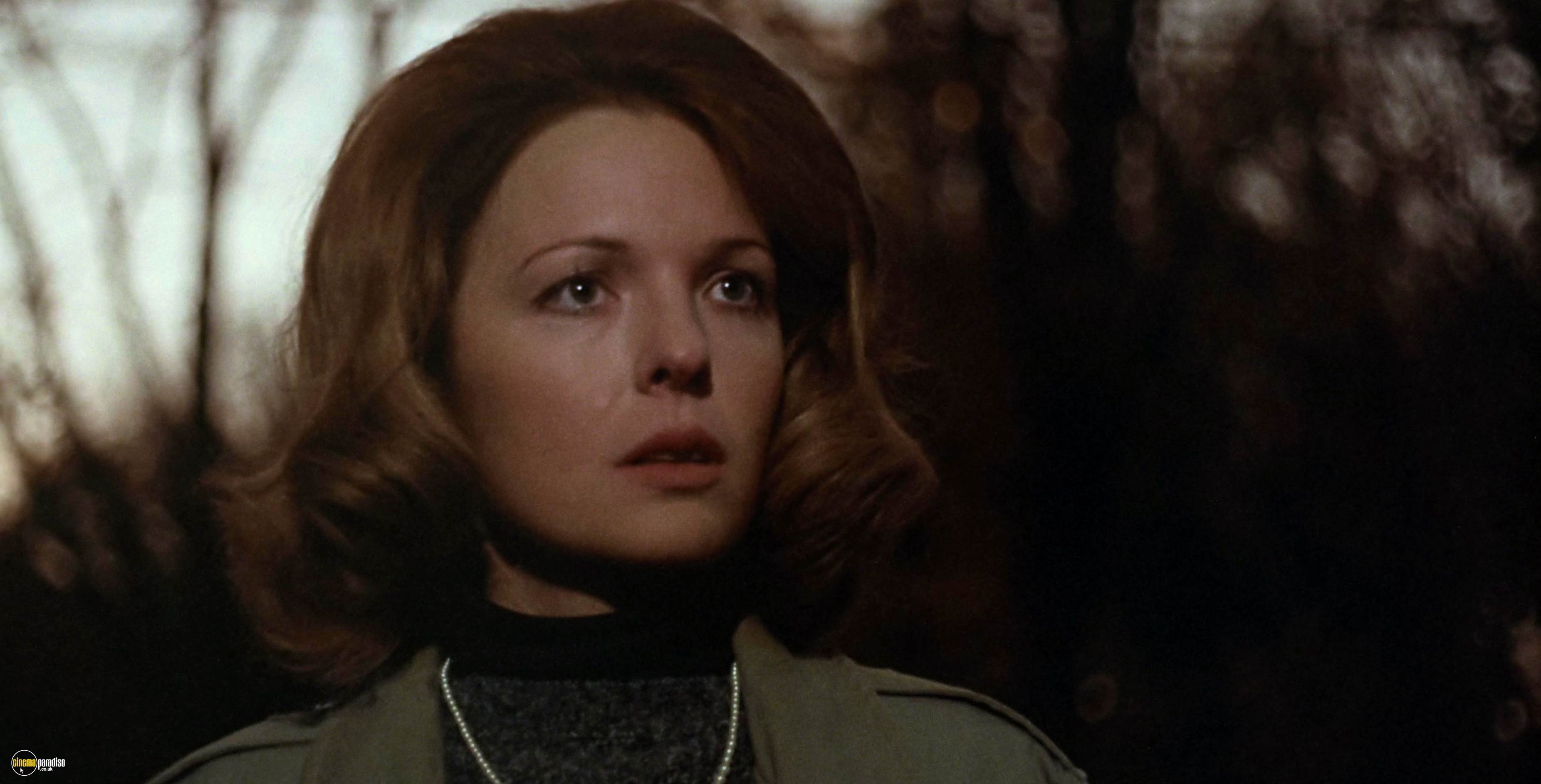
Throughout this period, Keaton struggled with self-esteem issues, as she battled bulimia. Consequently, she was baffled when Francis Ford Coppola cast her as Kay Adams, the girlfriend of Michael Corleone (Al Pacino), in The Godfather (1972). 'I didn't understand why me,' she later confided. 'I mean, I went up to the audition. I didn't even really - I hadn't read it. See, this is bad! But I needed a job, so I got up there. I'd been auditioning around for about a year, and then this happened like that. And I kept thinking, "Why me? Why would he cast me?" I didn't understand it. I still don't, really.'
She found it uncomfortable being 'the woman in a world of men', as Kay meets the Corleones - Don Vito (Marlon Brando), Sonny (James Caan), and Fredo (John Cazale) - at a family wedding in 1945 and marries into their world herself after Michael's first wife perishes in a car bombing in Sicily. Indeed, she later revealed: 'Right from the beginning I thought I wasn't right for the part. I haven't seen the film. I just decided I would save myself the pain. I had to see a few scenes because I had to loop - dub in some dialogue - and I couldn't stand looking at myself. I thought I looked so terrible, just like a stick in those '40s clothes!'
As a result, Keaton was loathe to reprise the role in The Godfather Part II (1974), explaining, 'At first, I was skeptical about playing Kay again in the Godfather sequel. But when I read the script, the character seemed much more substantial than in the first film.' She certainly made her mark in the scene in which she tells Michael (who is now the ruthless head of the family) the truth about a miscarriage. She still considered herself to be 'background music' to Pacino and Robert De Niro's Oscar-winning supporting performance. But she was in an on/off relationship with Pacino at the time and they were still close friends when they appeared together in The Godfather Part III (1990), which was recut in 2020 as The Godfather Coda: The Death of Michael Corleone, which Coppola claims is closer to his intended vision.
In between the first two Godfather features - which were edited together to form The Godfather Saga for television in 1977 - Keaton hooked up with Woody Allen for Herbert Ross's adaptation of Play It Again, Sam (1972). They were also paired in Allen's Sleeper (1973), which cast Keaton as Luna Schlosser, the 2173 socialite who shelters Greenwich Village health food clerk, Miles Monroe (Allen), after he disguises himself as a robot butler in order to avoid capture after having been cryogenically frozen in 1973 and accidentally defrosted 200 years later, when the United States is a police state.
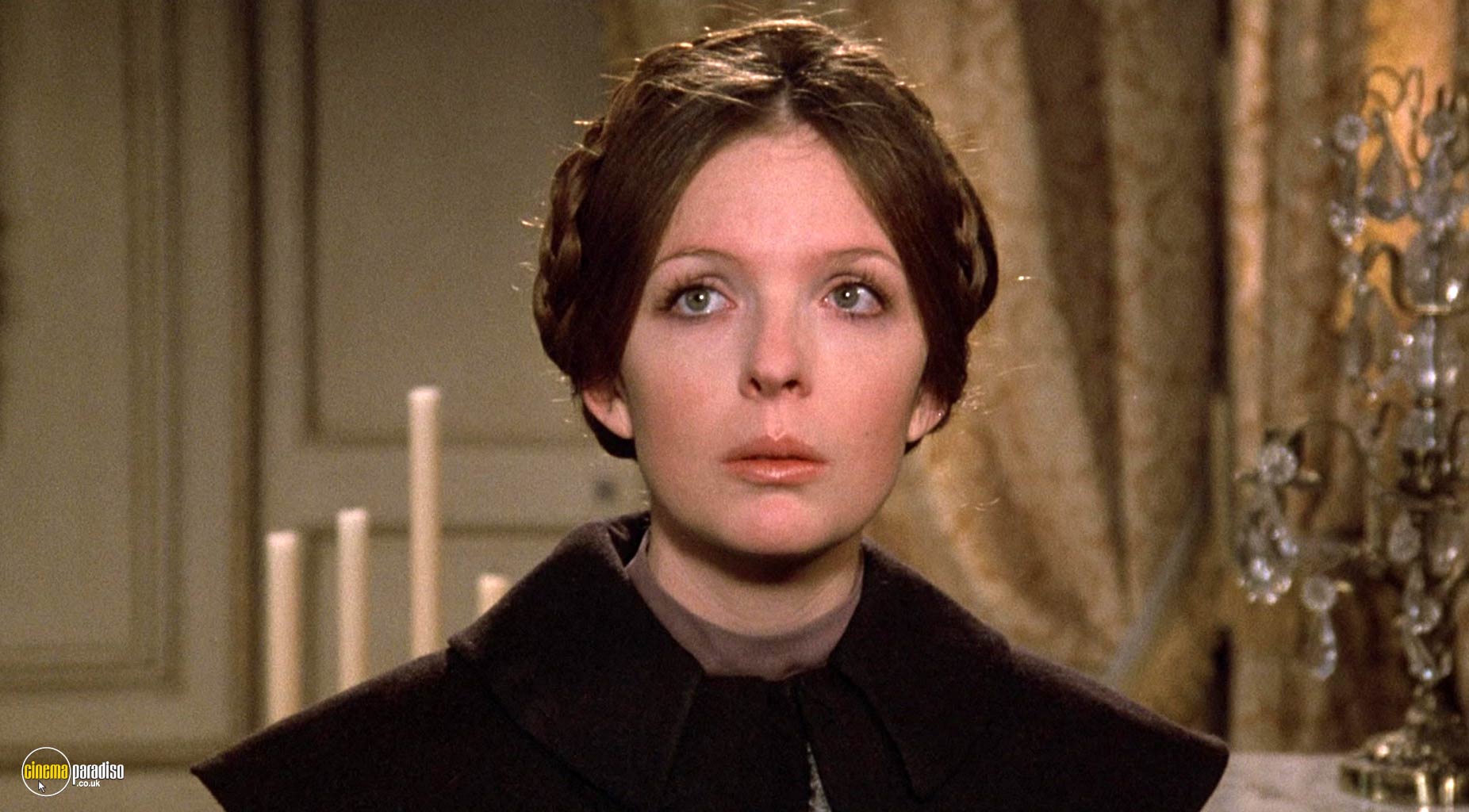
Allen also wrote the role of Sonja for Keaton in Love and Death (1975), a wonderful parody of Leo Tolstoy's War and Peace that sees Boris Grushenko go off to fight Napoleon Bonaparte (James Tolkan) after his cousin fails to realise his undying devotion and marries a herring merchant. Staying in the past, Keaton played crusading newspaperwoman Lissa Chestnut in Mark Rydell's Harry and Walter Go to New York (1976), which follows vaudevillians Harry Dighby (James Caan) and Walter Hill (Elliott Gould) after they fall in with bank robber Adam Worth (Michael Caine) in the Big Apple in the 1890s.
It's a shame this enjoyable romp isn't available on disc, especially as it's far superior to Keaton's other 1976 outing with Gould, Norman Panama's I Will, I Will...For Now, in which New Yorkers Les and Katie Bingham join a sex-therapy group in California in a bid to save their marriage. But the following year saw Keaton take the title role in the film that would transform her into a major star and with which she will always be associated.
Written with Marshall Brickman, Annie Hall (1977), was Woody Allen's love letter to Diane Keaton. Aspects of their off-screen personalities and their short-lived romance inform the relationship between struggling comic Alvy Singer and Annie Hall, an aspiring singer with a self-guyingly eccentric way of expressing herself and a distinctive approach to fashion. The mix-and-match wardrobe of baggy shirts, floppy ties, big hats, and men's trousers and waistcoats was Keaton's own and Allen later quipped, 'Let's just say Keaton always suited up with a certain eccentric imagination, as if her personal shopper was Buñuel.'
Allen revealed that he was 'trying to give the audience the view of Diane that I had - the feeling that if they can see her as I can, they will love her.' And love her they did for not only reinventing the screwball heroine by making her intelligent, idiosyncratic, and independent, but also for making it okay to be insecure and alternative. Feminist film critic Molly Haskell wrote: 'Keaton took me by surprise in Annie Hall. Here she blossomed into something more than just another kooky dame - she put the finishing touches on a type, the anti-goddess, the golden shiksa from the provinces who looks cool and together, who looks as if she must have a date on Saturday night, but has only to open her mouth or gulp or dart spastically sideways to reveal herself as the insecure bungler she is, as complete a social disaster in her own way as Allen's horny West Side intellectual is in his.'
On Oscar night, Keaton received the award for Best Actress, while Allen won for his script and direction, as Annie Hall was named Best Picture. He joked her performance was like 'a nervous breakdown in slow motion', but he would write a very different role for her in his Bergmanesque chamber drama, Interiors (1978). Renata is the eldest daughter of attorney Arthur (E.G. Marshall) and interior designer, Eve (Geraldine Page). A published poet married to Frederick (Richard Jordan), Renata resents the way her father dotes on her younger sister, Flyn (Kristin Griffith), a struggling film actress, while Joey (Mary Beth Hurt) is envious of the way her mother dotes on Renata. Earning Allen two more Oscar nominations, this attempt to prove he could be a serious dramatist failed to capture the imagination of critics or film-goers, who were relieved when he returned to form with Manhattan (1979).
Along with Jill (Meryl Streep) and Tracy (Mariel Hemingway), Mary Wilkie (Keaton) is one of the women making life awkward for wannabe writer, Isaac Davis. Ex-wife Jill is writing a book about why she left him for another woman, while he feels bad about the age gap between himself and the 17 year-old Tracy, who is still at school. He wants to romance Mary, but she is having a fling with his married friend, Yale Pollack (Michael Murphy), and is still involved with her ex-husband, Jeremiah (Wallace Shawn). Shot in gleaming monochrome by Gordon Willis and throbbing with the music of George Gershwin, this was Allen's paean to his hometown. When it came to award season, however, only Hemingway and the script were recognised by the Academy, although BAFTA gave Keaton a nod for Best Actress.
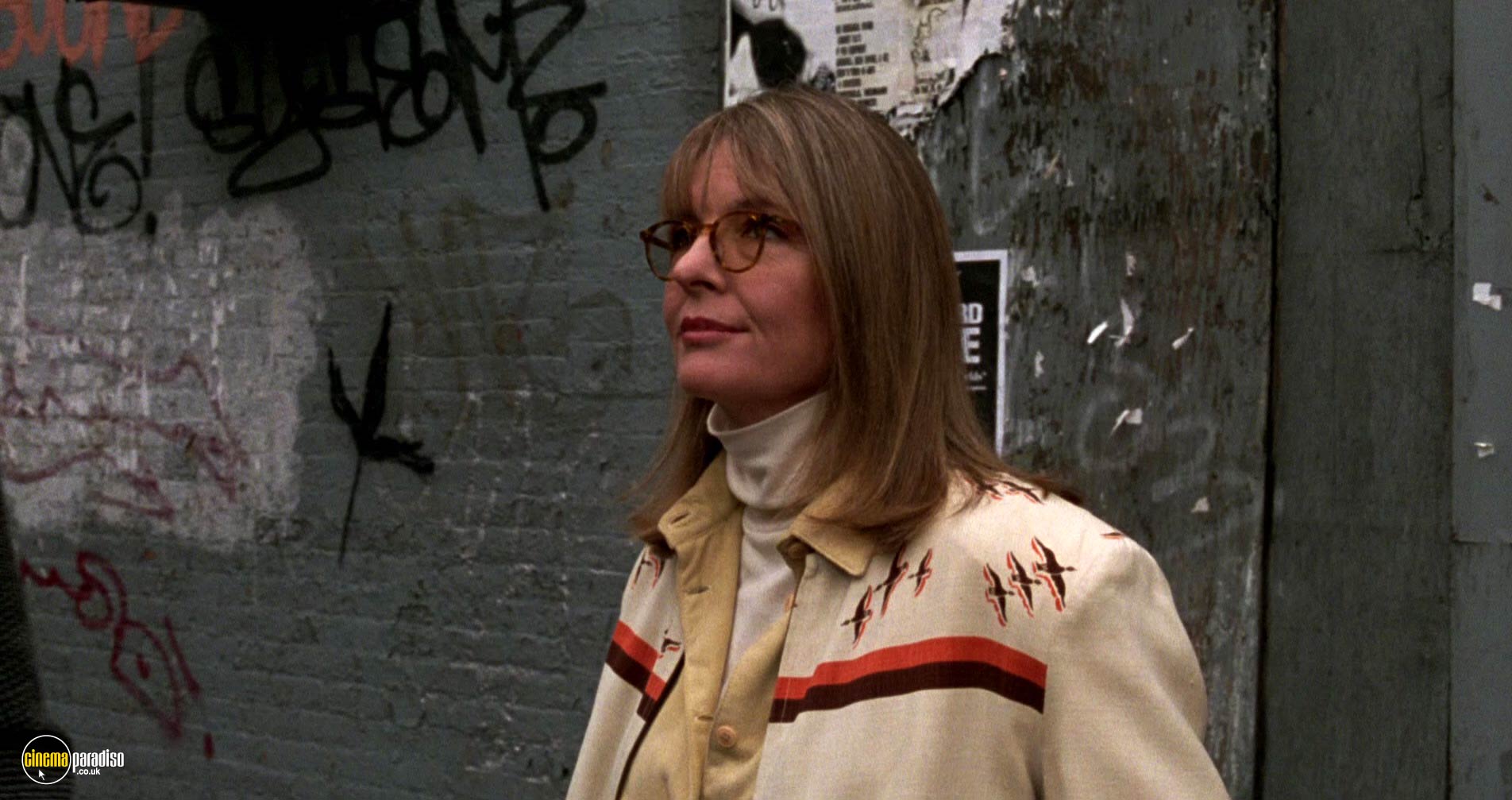
She didn't work with Allen again until she contributed a glorious cameo to Radio Days (1985), singing 'You'd Be So Nice to Come Home To' in a New Year broadcast. However, when Allen's relationship with Mia Farrow disintegrated amidst accusations of child molestation that have twice been investigated without charge, Keaton stepped into the breach to play Carol Lipton (a role that Farrow still coveted) in Manhattan Murder Mystery (1993), a comic whodunit that sees Carol and her publisher husband, Larry (Allen), try to prove that neighbour Paul House (Jerry Adler) was responsible for the sudden death of his wife, Lillian (Lynn Cohen).
Keaton received a Golden Globe nomination for her performance, but never worked with Allen again. Nevertheless, she remained a staunch defender of his reputation ('I believe my friend') and once insisted, 'He would cringe if he knew how much I care about him.' Writing in The Free Press shortly after her death from pneumonia in October 2025, Allen wrote: 'It's grammatically incorrect to say "most unique," but all rules of grammar, and I guess anything else, are suspended when talking about Diane Keaton. Unlike anyone the planet has experienced or is unlikely to ever see again, her face and laugh illuminated any space she entered.'
He went on to claim, 'As time went on I made movies for an audience of one, Diane Keaton. I never read a single review of my work and cared only what Keaton had to say about it. If she liked it, I counted the film as an artistic success. If she was less than enthusiastic, I tried to use her criticism to re-edit and come away with something she felt better about.' Riffing on Sunset Boulevard (1950), he concluded poignantly: 'I kidded Keaton that we'd wind up - she like Norma Desmond, me like Erich von Stroheim, once her director, now her chauffeur. But the world is constantly being redefined, and with Keaton's passing it is redefined once again. A few days ago the world was a place that included Diane Keaton. Now it's a world that does not. Hence, it's a drearier world. Still, there are her movies. And her great laugh still echoes in my head.'
A Difficult Decade
In 1976, Keaton made her final stage appearance in an Off-Broadway production of Israel Horovitz's Primary English Class. The press applauded her 'delightful portrait of a woman sinking slowly out of control'. But the play merely confirmed her discomfort in the theatre and she would admit, while putting an imaginary gun to her head, in a 2010 interview, 'Night after night? Doing a play? That's my idea of hell.'
Theresa Dunn would experience her own kind of descent into the depths in Richard Brooks's Looking For Mr Goodbar (1977). Barbra Streisand, Faye Dunaway, Ali McGraw and Sally Field had all been considered for the role of the Catholic teacher of deaf children who spends her nights cruising bars seeking kinky sexual encounters. Fracturing a rib during the gruelling 76-day shoot, Keaton won a Golden Globe, but audiences didn't want to see the ditzy Diane in such depraved situations.
Keaton found the response difficult to bear, but new boyfriend Warren Beatty told her, 'You're a movie star. That's what you wanted. You got it. Now deal with it.' She later revealed that she 'wanted to be Warren Beatty, not love him', but he insisted that she had an 'unfair allotment of gifts' to bring to her search for 'something that's true'. Perhaps this explains her decision to narrate Alex Roshuk's experimental short, The Wizard of Malta (1981), in which he filled a triptych screen with his interpretation of John Huston's The Maltese Falcon (1941), Victor Fleming's The Wizard of Oz (1939), and Abel Gance's Napoléon (1927). It certainly sparked her desire to direct, which resulted in the short, What Does Dorrie Want? (1982).
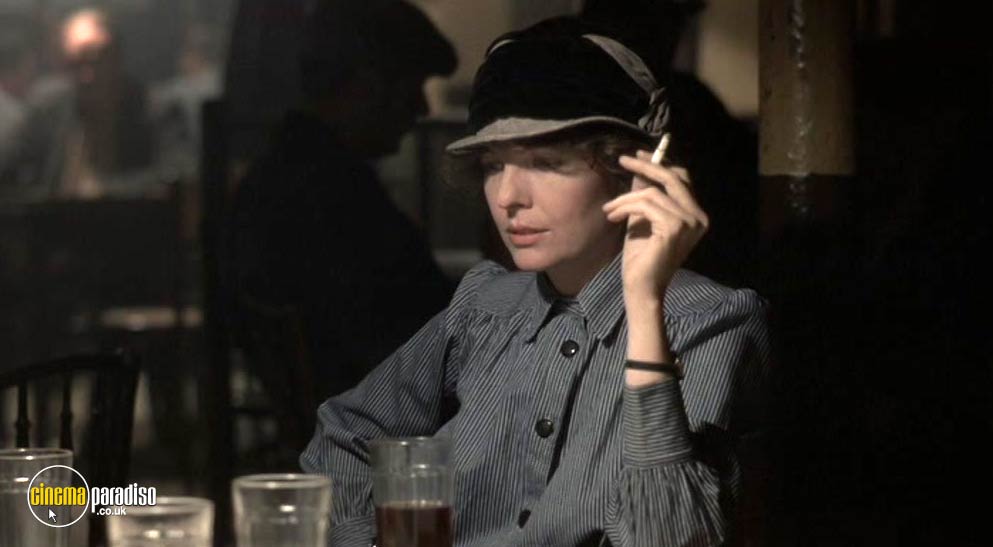
The role Beatty wrote for Keaton in Reds (1981) was Louise Bryant, the reporter and suffragist who leaves her husband to follow radical journalist John Reed (Beatty) to Russia to witness the Bolshevik Revolution of 1917. With Jack Nicholson as playwright Eugene O'Neill and Maureen Stapleton as anarchist Emma Goldman, the film brought all four acting nominations, but only Stapleton won. For a labour of love that he had started researching in the 1960s, Beatty did win Best Director, although he lost out on Best Picture to Hugh Hudson's Chariots of Fire.
Just as this committed performance is unavailable on disc, we are also unable to bring you some of Keaton's finest work, because of the vagaries of the UK distribution system. She excelled as Faith Parker whose marriage (to Albert Finney) falls apart in Alan Parker's Shoot the Moon (1982), while she sparked potently with Mel Gibson as the 1901 Pittsburgh prison warden's wife who falls in love and helps a condemned inmate escape in Gillian Armstrong's Mrs Soffel. She was less persuasively cast, however, as Charlie, an anti-Zionist American actress who is abducted by Mossad and duped into participating in an operation to flush out a Palestinian bomber in George Roy Hill's adaptation of John Le Carré's The Little Drummer Girl (both 1982).
Influential critic, Pauline Kael, was particularly impressed by Keaton's Golden Globe-nominated display in Shoot the Moon, which she claimed was 'perhaps the most revealing American movie of the era'. She continued that Keaton was 'a star without vanity: she's so completely challenged by the role of Faith that all she cares about is getting the character right. Very few young American movie actresses have the strength and the instinct for the toughest dramatic roles - intelligent, sophisticated heroines. Jane Fonda did, around the time that she appeared in Klute and They Shoot Horses, Don't They?, but that was more than 10 years ago. There hasn't been anybody else until now. Diane Keaton acts on a different plane from that of her previous film roles; she brings the character a full measure of dread and awareness and does it in a special, intuitive way that's right for screen acting.'
Around this time, Keaton tried to turn producer by setting up a project for herself about a 36 year-old who gets married just as her parents are getting divorced. Yet, despite script submissions by Nora Ephron and Alice Arlen, and John Sayles, Modern Bride never got off the ground. Another stalled project saw Keaton try to cast Madonna in a remake of Josef von Sternberg's The Blue Angel (1930). As a result, Keaton was off screen for four years. Looking back on this period, she claimed: 'I have such mixed feelings about acting. You go through so many phases. There was a time when I was really concerned about what I did. The buzz that happened with Annie Hall was extremely exciting and extremely terrifying. You're constantly thinking, "Wow", and then you're guilty for it. At the time, I denied that it rocked my life, but people paying too much attention to you does have an effect on you. It makes you more anxious. Now I feel I shouldn't be precious about the acting. It's a different time for me. I will never be that famous again. Those days are gone, and it's different things as you get older, different feelings about everything. It can't happen again. And the fun of it was never the obvious rewards - people are going to like you a lot, or whatever. The fun is when it goes, when the acting is alive. I loved being a sister. I always feel when I can focus on something outside myself that I'm better; I'm free from my own personal hair shirt.'
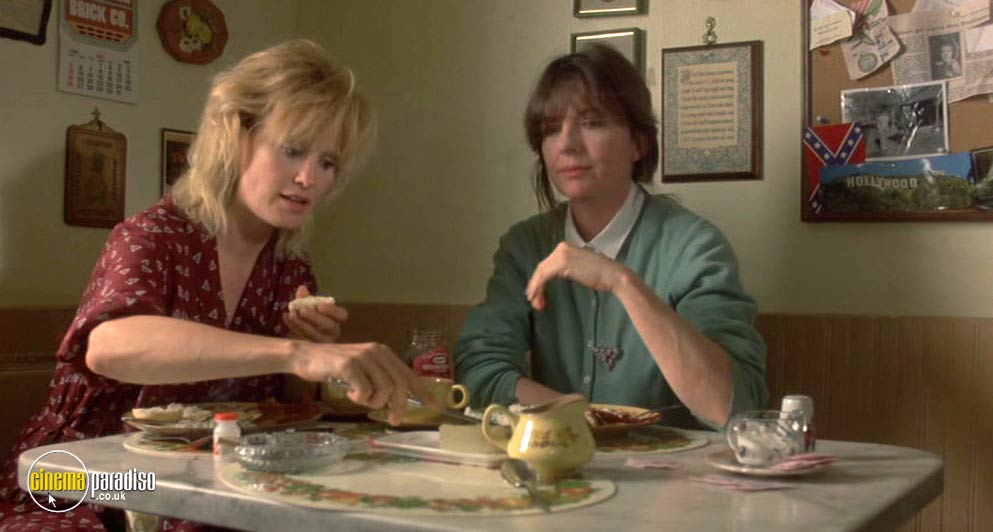
Despite initial reluctance to take the part, she played a sister in Bruce Beresford's adaptation of Beth Henley's Pulitzer Prize-winning play, Crimes of the Heart (1986). She was Lenny Magrath, who had stayed home in Hazlehurst, Mississippi to care for Old Granddaddy (Hurd Hatfield), while siblings Meg (Jessica Lange) and Rebecca (Sissy Spacek) had respectively got married and gone to Los Angeles to become a singer. Spacek won a Golden Globe to go with her Oscar nomination, but not everyone was seduced by this Dixieland variation on Hannah and Her Sisters.
Unfazed, Keaton moved on to Heaven (1987), a vox-pop treatise on the afterlife that included scenes from such films as Fritz Lang's Metropolis (1927) and Liliom (1934), Lloyd Bacon's Wonder Bar (1934), Marc Connelly and William Keighley's The Green Pastures (1936), Victor Fleming's A Guy Named Joe, and Michael Powell and Emeric Pressburger's A Matter of Life and Death (1946). Staying with the celestial theme, Keaton also directed the video for Belinda Carlisle's hit, 'Heaven Is a Place on Earth'. Into the next decade, Keaton also directed the 'Fever' episode of China Beach (1988-91) and the 'Slaves and Masters' instalment of Twin Peaks (1990-91), as well as the teleplay, Wildflower (1991), which was set in 1938 and centred on the efforts of siblings Sammy (William McNamara) and Ellie Perkins (Reese Witherspoon) to protect Alice Guthrie (Patricia Arquette) from her vicious stepfather.
Along Came Nancy
Just as it looked as though Hollywood had run out of ways to use Keaton's unique talents, she forged a partnership with writer-director Nancy Myers, who was, at the time, married to fellow writer-director, Charles Shyer. Together, they created Baby Boom (1987), in which Keaton played J. C. Wiatt, a New York management consultant who is given custody of a distant cousin's 14-month baby and promptly hits upon the idea to market gourmet apple sauce. Once again, Pauline Kael had nothing but praise for 'a glorious comedy performance that rides over many of the inanities in this picture. Keaton is smashing: the Tiger Lady's having all this drive is played for farce and Keaton keeps you alert to every shade of pride and panic the character feels. She's an ultra-feminine executive, a wide-eyed charmer, with a breathless ditziness that may remind you of Jean Arthur in The More the Merrier.'
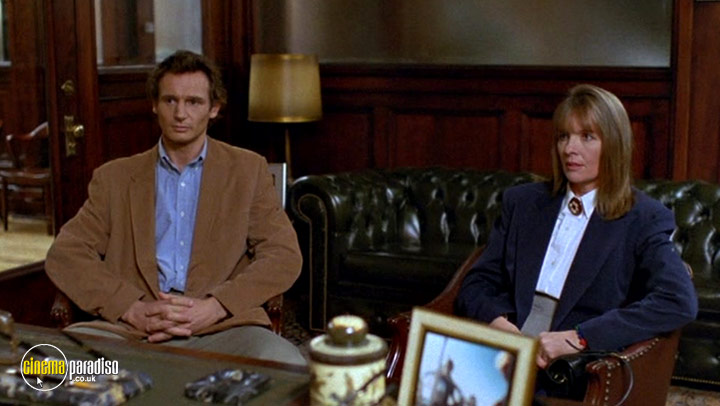
High praise, indeed. But the reviews were less positive for Leonard Nimoy's The Good Mother (1988), an adaptation of a Sue Miller novel that cast Keaton as Anna Dunlop, a piano teacher whose relationship with Irish sculptor Leo Cutter (Liam Neeson) prompts her ex-husband to accuse her of being unfit to raise their young daughter. The Washington Post felt Keaton's 'acting degenerates into hype - as if she's trying to sell an idea she can't fully believe in', while she considered the picture 'a Big Failure. Like, BIG failure.'
Despite taking a producing credit on Joyce Chopra's The Lemon Sisters (1990), it was scarcely better received after it was finally released after a year on the studio shelves. A long-planned treatise on friendship co-starring close pals Carol Kane and Kathryn Grody, the story of a trio singing 60s girl group hits in Atlantic City failed to find an audience. Luckily, however, Myers and Shyer wanted Keaton to team with Steve Martin in Father of the Bride (1991), a remake of a 1950 Vincente Minnelli classic that had paired Spencer Tracy and Joan Bennett as the couple approaching daughter Elizabeth Taylor's forthcoming wedding from very different vantage points.
Despite one critic opining that Keaton had acted 'as if her heart isn't in the project and she doesn't want to be noticed', the film was a popular success and not only led to a sequel, Father of the Bride II (1995), but also to a 2020 Covid spin-off, Father of the Bride, Part 3 (ish) , which required Myers to assemble her cast members around their computers for a face-time chat that went live on Facebook and YouTube (where it can still be found).
While the Myers/Shyer collaboration was proving commercially successful, Keaton remained wary of being typecast. 'Most often a particular role does you some good and Bang! You have loads of offers, all of them for similar roles...I have tried to break away from the usual roles and have tried my hand at several things.'
In 1992, she returned to television to play Aggie Snow, the partner of presidential candidate, Senator Hugh Hathaway (Ed Harris), who becomes involved in a scandal when her reputation is tarnished in Michael Lindsay-Hogg's Running Mates. She also signed up to play the pioneering aviator in Yves Simoneau's Amelia Earhart: The Final Flight (1994), which co-starred Bruce Dern as husband George Puttnam and Rutger Hauer as hard-drinking navigator, Fred Noonan. Keaton was nominated for a Primetime Emmy, a Golden Globe, and Screen Actors Guild Award for Best Actress in a Limited Series or Movie.
But she opted to remain off screen for the next couple of years, only joining Danny DeVito to voice the Ubriacco family pets, Rocks and Daphne, in Tom Ropelewski's Look Who's Talking Now! (1993) and remaining in the director's chair for Unstrung Heroes (1995), in which young Steven Lidz (Nathan Watt) drifts into the orbit of his eccentric uncles, Arthur and Danny (Maury Chaykin and Michael Richards), when inventor father Sid (John Turturro) can't cope with looking after him after wife Selma (Andie MacDowell) falls ill. Source author Franz Lidz wasn't impressed by Keaton switching the action from 1960s New York to the Southern California of her own childhood, and wrote scathingly in the New York Times that the cinematic Selma had not succumbed to cancer, but 'Old Movie Disease.' He concluded, 'Someday somebody may find a cure for cancer, but the terminal sappiness of cancer movies is probably beyond remedy.'
Suitably stung, Keaton bounced back in grand style as Bessie Wakefield, the dutiful daughter in Jerry Zaks's Marvin's Room (1996), who discovers that she is dying of leukaemia and needs sister Lee (Meryl Streep) to take care of their bedridden father (Hume Cronyn). With Leonardo DiCaprio as Streep's stroppy son and Robert De Niro as Keaton's doctor, this poignant adaptation of Scott McPherson's play earned Keaton an Academy Award nomination for Best Actress. Then, having proven Lidz resoundingly wrong, she took a sideways step into one of the most beloved roles of her entire career.
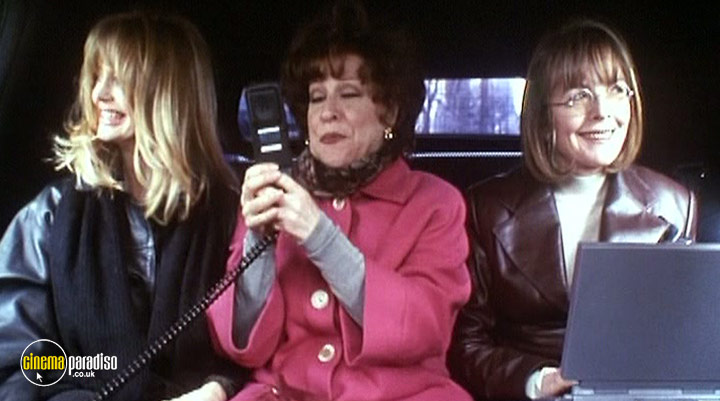
Following the suicide of their college best friend, Cynthia Swann-Griffin (Stockard Channing), neurotic housewife Annie MacDuggan-Paradis (Keaton), alcoholic Oscar winner Elise Eliot-Atchison (Goldie Hawn), and Sicilian-Jewish single mother Brenda Morelli-Cushman (Bette Midler) unite in Hugh Wilson's The First Wives Club (1996) to wreak vengeance on their unworthy spouses, Aaron Paridis (Stephen Collins), Bill Aitchinson (Victor Garber), and Morty Cushman (Dan Hedaya).
Such was the film's success and the cachet Keaton, Midler, and Hawn acquired that they were presented with the Women in Film Crystal Award for being 'outstanding women who, through their endurance and the excellence of their work, have helped to expand the role of women within the entertainment industry'.
Frustratingly, Keaton was unable to close out the century with another hit, even though she and Diane Lane give good accounts of themselves in Peter Masterson's The Only Thrill (1997), as mother and daughter, Carol and Katherine Fitzsimmons, who return to Texas after three decades to discover that father and son, Reece and Tom McHenry (Sam Shepard and Robert Patrick) have been regretting letting them leave for Canada in 1966. Then, in something of a departure, Keaton was cast in the supporting role of over-protective and snobbish mother Elizabeth Tate, who disapproves of daughter Carla (Juliette Lewis), who lives with learning difficulties, seeing polytechnic classmate, Danny McMahon (Giovanni Ribisi), in Garry Marshall's The Other Sister (1999). Critics were aghast at the cloyingly exploitative sentimental nature of the drama, with Lewis being nominated for a Golden Raspberry for Worst Supporting Actress, only to lose out to Denise Richards for Michael Apted's Bond movie, The World Is Not Enough (1999). Unfortunately for Keaton, she would also be singled out by the Razzie committee during the final phase of her extraordinary career.
Being Diane Keaton
By the millennium, it was clear that Keaton had established a niche in American cinema. The majority of the films she would make over the next quarter century had much in common, as a middle-aged woman refused to become set in her ways and either found love or discovered new talents in the course of her journey. Critics took little notice and the box-office was always modest. But Keaton continued to compel on screen, with her distinctive blend of ditz and determination enabling her to establish a one-woman genre when most actresses of her age were settling for character roles or moving into television.
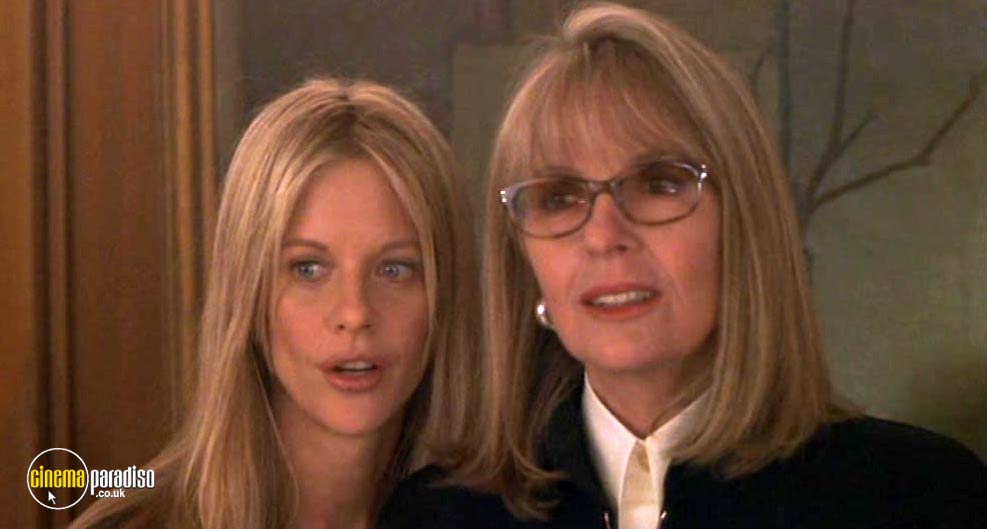
In Hanging Up (2000), Keaton directed herself for the only time, as sisters Georgia, Eve (Meg Ryan), and Maddy (Lisa Kudrow) rally to care for their father, Lou Mozell (Walter Matthau), when he starts showing signs of dementia. Respectively playing a magazine editor, party planner, and soap actress, the stellar trio relished the mix of wit and pathos in Delia and Nora Ephron's screenplay. But Keaton found the experience exhausting. ' I thought I could do it,' she said later, 'but really, it was rough. I don't mean [people] were rough or anyone, it was me. Sometimes it'd be a little easier, and then other times you'd be anxious. You need to really be on it and really smart about what you're delving into with the subject that you've been given. I get that as an actress more - or an actor type or whatever I am - just by being one of the characters.'
Seeking reassurance, she reunited with Warren Beatty on Peter Chelsom's Town & Country (2001), only to find herself ensconced in one of the biggest filmic fiascos of recent times. In a screenplay co-written by Buck Henry, interior designer Ellie Stoddard discovers that architect husband, Porter, is having an affair at the same time that best friend, Mona Morris (Goldie Hawn), finds out that spouse, Griffin (Garry Shandling), is cheating on her with a cross-dressing man. Reportedly costing $105 million, the picture took only $7 million and saddled Beatty with a companion flop to Elaine May's Ishtar (1987). He didn't make another film until he wrote, produced, and directed Rules Don't Apply (2016).
Keaton had Plan B (2001) lined up, although Greg Yitanes's comedy about bookkeeper Fran Varecchio becoming an assassin for a mob boss (Paul Sorvino) found few takers and is now perhaps the most obscure entry on her CV. Not that she was widely seen outside North America in the string of TV-movies that saw her play Roberta Blumstein in Linda Yellen's Northern Lights (1997), the eponymous nun in Marshall Brickman's Sister Mary Explains It All (2001), Beverly Lowry in Bobby Roth's Crossed Over (2002), Patsy McCartle in David Atwood's On Thin Ice (2003), and Natalie Swerdlow in Kevin DiNovis's Surrender, Dorothy (2006).
She had more luck as the executive producer of Gus Van Sant's Elephant (2003), however, as this intense school shooting drama won the Palme d'or at Cannes. But no one expected Keaton to bounce back in such spectacular fashion in Nancy Myers's Something's Gotta Give (2003), as playwright Erica Barry, who begins to fall for her daughter's old flame, Harry Sanborn (Jack Nicholson), while fending off the attentions of dishy doctor Julian Mercer (Keanu Reeves). Keaton received her fourth and final Oscar nomination for Best Actress. But, what was most gratifying was that Myers had shown the studios that had turned the project down that there was audiences wanted to see 'people of a certain age be sexy'. As Keaton later told Ladies' Home Journal: 'Let's face it, people my age and Jack's age are much deeper, much more soulful, because they've seen a lot of life. They have a great deal of passion and hope - why shouldn't they fall in love? Why shouldn't movies show that?'
She had enjoyed reuniting with Nicholson after Reds and was touched when he arranged for her to receive a share of his back-end percentage deal on the box-office, as the studio hadn't given her such a beneficial contract. In later years, she would claim that this was her favourite film. It also established a template for several later ventures, as Keaton remained glamorous in her distinctive style and she became something of a role model for older women by showing that there was still much life to be lived, in spite of the passing years. Frustratingly, not every director was as attuned as Nancy Myers, with some using Keaton's signature traits and quirks to keep substandard material afloat. Expertly avoiding self-caricature, she was invariably the best thing in a run of gentle comedies that are available to rent from Cinema Paradiso.
Among them is Thomas Bezucha's The Family Stone (2005), which sees Everett Stone (Dermot Mulroney) return to his New England town of Thayer for Christmas with girlfriend, Meredith Morton (Sarah Jessica Parker), in the hope he can persuade mother Sybil to let him use a family heirloom for an engagement ring. Playing a breast cancer survivor proved more of a stretch than mothering three daughters (Mandy Moore, Lauren Graham, and Piper Perabo) as Daphne Wilder in Michael Lehmann's Because I Said So or coping with the caprices of a stay-at-home 29 year-old son (Jon Heder), as Jan Mannus in Tim Hamilton's Mama's Boy (both 2007), which co-stars Jeff Daniels as the motivational speaker seeking a late-life romance. Frankly, either film could have earned Keaton a dreaded Golden Raspberry nomination, but it came for the former and she was relieved to be pipped to the Worst Actress award by Lindsay Lohan in Chris Siverton's I Know Who Killed Me.
Keaton was better served as Bridget Cardigan, the bourgeois housewife whose life falls apart before she hits upon a plan for recycling withdrawn dollar bills when she's forced to work as a janitor at the Federal Reserve Bank of Kansas City in Callie Khouri's Mad Money, which co-starred Katie Holmes and Queen Latifah as her cohorts. She even got away with wearing a terrible wig as suffocating, dog-loving mother, Marilyn Cooper, who comes to stay with her son and his wife (Dax Shepard and Liv Tyler) after suspecting that her husband is cheating on her in Vince De Meglio's Smother (both 2008).
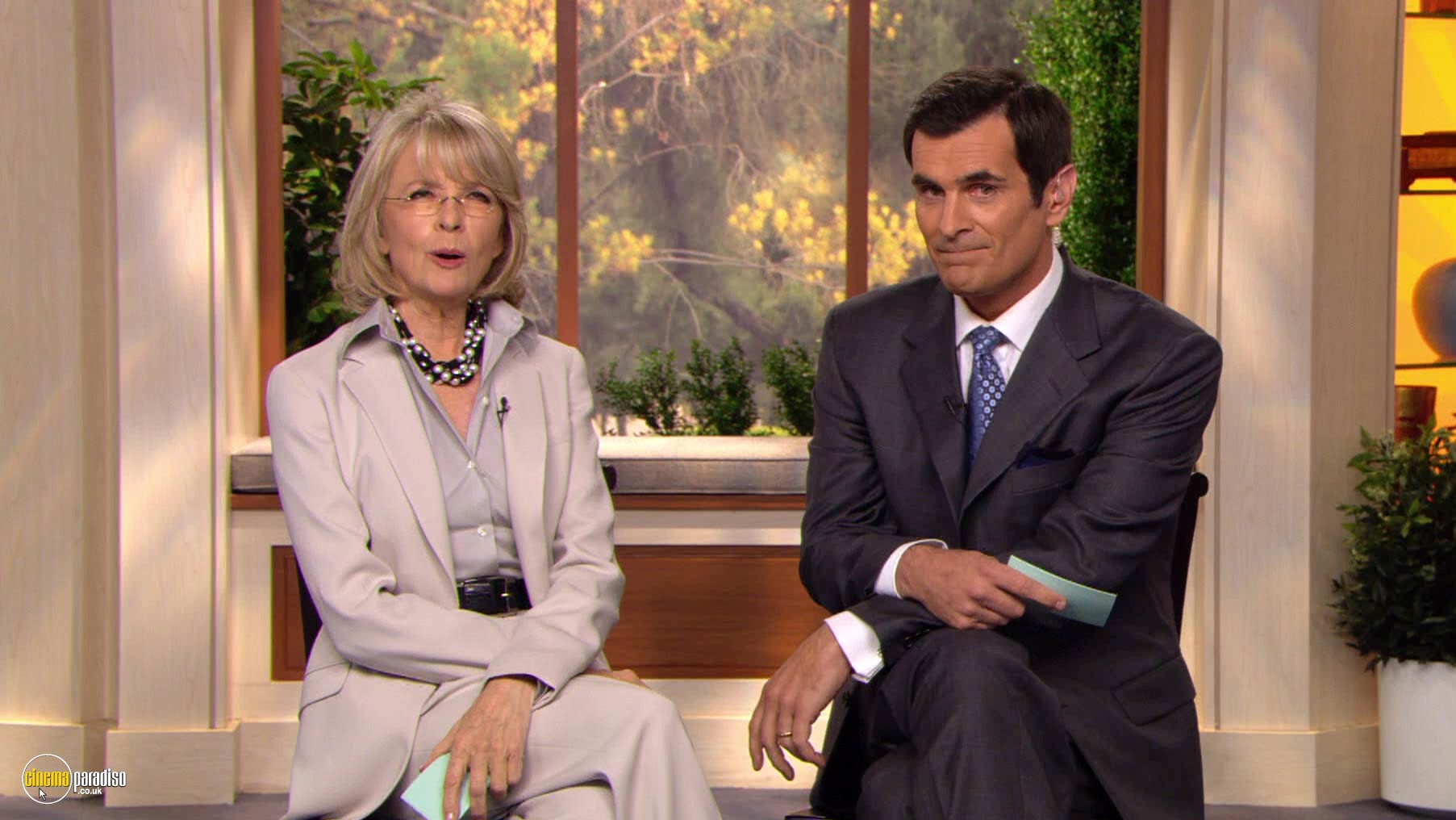
No one could pretend that these were anything other than middlebrow entertainments. But Keaton was determined to remain active. 'I feel just the same way I've always felt about whatever comes my way,' she told a reporter. 'If it's OK, then I can manage it. Or maybe if I feel like I'm not really that comfortable, I'm going to learn something from somebody.' Such positivity saw her relish the role of Colleen Peck ('the kind of woman you love to hate'), a self-serving host on the DayBreak morning show in Roger Michell's Morning Glory (2010). Intriguingly, her banter with Harrison Ford as a frustrated newshound was inspired by the bickering between Walter Matthau and George Burns in Herbert Ross's The Sunshine Boys (1975), which was remade by John Erman in 1995, with Woody Allen and Peter Falk playing Neil Simon's vaudeville veterans, Lewis and Clark. And speaking of Keaton's old friend, she cropped up in Robert B. Weide's Woody Allen: A Documentary (2012), as well as Adam Nimoy's For the Love of Spock (2016).
When Lawrence Kasdan returned to directing after nine years with Darling Companion (2012), he cast Keaton as Beth Winter, who insists on venturing into the Colorado Rockies after husband Joseph (Kevin Kline) loses her beloved dog, Freeway, at their daughter's Telluride wedding. The reviews were largely negative, but Keaton rose above them to join the stellar ensemble in another nuptial comedy, Justin Zackham's The Big Wedding (2013), which was based on Jean-Stéphane Bron's My Brother Is Getting Married (2006). Keaton plays Ellie Griffin, who returns to the former family home for her adopted son's wedding, only to find that ex-husband, Don (Robert De Niro), is romancing her best friend, Bebe (Susan Sarandon). However, she has to pretend that she and Don are still married because the birth mother of their Colombian-born son is fiercely religious. Despite Robin Williams, Katherine Heigl, and Amanda Seyfried also being in the cast, this failed to emulate the success of its Gallic predecessor and Keaton's trot of misfires continued when widowed lounge singer Leah fell under the spell of obnoxious realtor Oren Little (Michael Douglas) in Rob Reiner's And So It Goes (2014).
The critics were kinder to Richard Loncraine's Ruth and Alex (aka 5 Flights Up, 2014), which drew on Jill Ciment's novel, Heroic Measures, and paired Keaton and Morgan Freeman as retired teacher Ruth Carver and her painter husband, who enlist the help of niece Lilly (Cynthia Nixon) to sell their apartment in a Brooklyn brownstone. Fresh from the shoot, Keaton became the first woman to receive the Golden Lion Award at the Zurich Film Festival. She celebrated the achievement by taking an executive producer credit in reuniting with Because I Said So writer Jessie Nelson on Christmas With the Coopers (aka Love the Coopers, 2015), a seasonal comedy that is narrated by Rags the dog (Steve Martin) and follows what happens when Charlotte Cooper persuades husband Sam (John Goodman) to delay the announcement of their imminent divorce until the family has gathered for the festive season. With Amanda Seyfried, Timothée Chalamet, Olivia Wilde, Marisa Tomei, and Alan Arkin in the ensemble, this proved a commercial success. Yet it didn't help Netflix raise the funding for Divanation, a comedy that was supposed to reunite Keaton with First Wives Club alumni, Goldie Hawn and Bette Midler.
Undaunted, she voiced Jenny, the mother of the title character in Andrew Stanton's Finding Dory (2016), the sequel to Pixar's 2003 classic, Finding Nemo. Moreover, she scored a cult hit as Sister Mary, the nun who had raised Lenny Belardo in an orphanage before he became Pius XIII in Paolo Sorrentino's The Young Pope (2016), the eight-part mini-series that became the first Italian series to be nominated for a Primetime Emmy.
Coming to Britain, Keaton forged a winning relationship with Brendan Gleeson, as widow Emily Walters tries to help alternative liver Donald Horner save his heathland home in Joel Hopkins's Hampstead (2017). While this did tidy business, it was swamped by Bill Holderman's Book Club (2018), which amassed a worldwide gross of over $100 million, as lifelong friends, widow Diane, hotelier Vivian (Jane Fonda), judge Sharon (Candice Bergen), and restaurateur Carol (Mary Steenburgen) take unexpected life lessons from E.L. James's Fifty Shades trilogy - which were filmed as Sam Taylor-Johnson's Fifty Shades of Grey (2015) and James Foley's Fifty Shades Darker (2017) and Fifty Shades Freed (2018). The critics were scarcely convinced, but there was rejoicing among fans when the foursome reunited for a bachelorette trip to Italy in Book Club: The Next Chapter (2023), which saw Andy Garcia, Don Johnson, and Craig T. Nelson return as Diane, Vivian, and Carol's beaux.
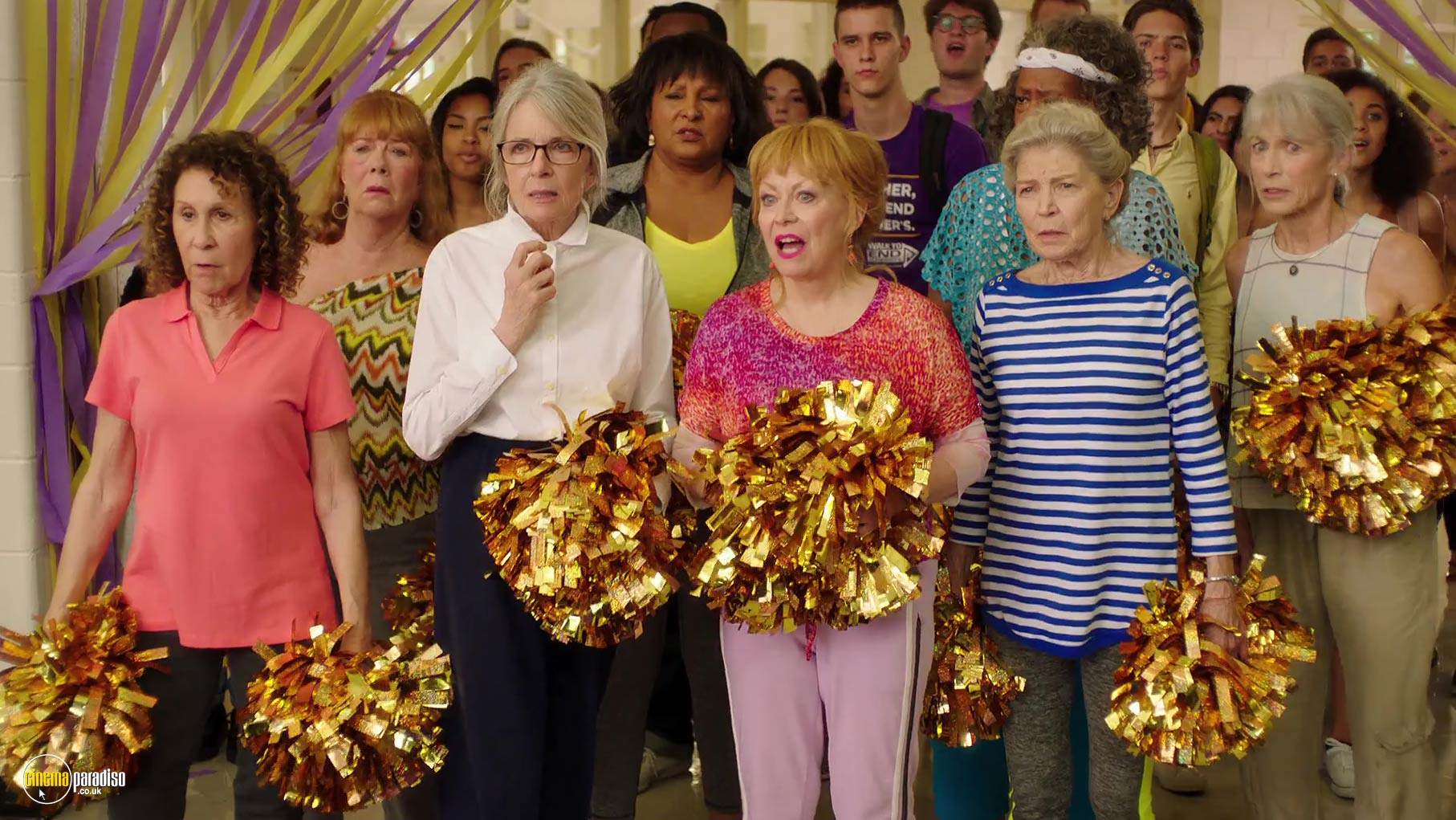
Keaton dabbled with teary feel-good in Zara Hayes's Poms (2019), which saw Martha leave New York for the Sun Springs retirement home in Georgia after she is diagnosed with terminal cancer. Finding the place a little tame, Martha starts a cheerleading team that includes Pam Grier, Jacki Weaver, and Celia Weston. However, Covid slowed Keaton's progress and she was off the screen for two years after completing Dennis Dugan's Love, Weddings & Other Disasters (2020), in which a blind woman named Sara has a transformative effect on stressed-out wedding planner, Lawrence Phillips (Jeremy Irons).
When she returned in 2022, Keaton played the older half of the eponymous pair in Katie Aselton's Mack & Rita, as 30 year-old Mackenzie Martin (Elizabeth Lail) realises that she has turned into her seventysomething self and passes herself off as Aunt Rita, who turns out to be super cool and trendy in all the ways that Mack is not. Keaton is irresistible, as she enjoys the irresponsibility of her situation and it's a shame that this is one of so many later outings that isn't available on disc. Another is Michael Jacobs's Maybe I Do (2023), which the debuting director adapted from his own novel about potential in-laws Grace and Howard (Richard Gere) and Monica (Susan Sarandon) and Sam (William H. Macy) discovering they are anything but the strangers they presume themselves to be when their children announce their engagement. Keaton followed this comedy of marital manners with Stephen Cookson's Arthur's Whisky, which sees widow Joan (Patricia Hodge) share her late husband's elixir of eternal youth with best friends, Linda (Keaton) and Susan (Lulu). She then moved on to Castille Landon's Summer Camp (both 2024), which takes besties Nora, Ginny (Kathy Bates), and Mary (Alfre Woodard) on an activities holiday that proves there is life in the old girls yet.
The sight of Keaton on a zip line suggested that there would be more films to come. Indeed, her IMDB entry lists Artist in Residence, Constance, and The Making Of as being in pre-production. But her health declined steadily over the course of 2025 and there was genuine surprise when her death at the age of 79 was announced on 11 October, as she had looked so good in her later films that it seemed as though she could have gone on forever. But we also realised that we had actually known very little about Keaton and there was much merit in Vanity Fair proclaiming her 'the most reclusive star since Garbo' back in 1985.
Having lost her father to brain cancer in 1990 and her mother to Alzheimer's in 2015, Keaton had dedicated herself to her adopted children, Dexter and Duke. 'I never found a home in the arms of a man,' she revealed, but she channelled her energies into a range of artistic activities. Her first book, Reservations (1980), focussed on hotel lobbies, while Still Life (1983) presented a series of postwar star poses on Hollywood film sets. Then, after she had archived sales course photographs in Mr Salesman (1994) and combined her own and her mother's stories in Then Again (2011), The House That Pinterest Built (2017) chronicled the construction of a dream home in Sullivan Canyon that was inspired by the brick house in The Three Little Pigs. She also continued to restore houses, notably the 1920s Pacific Palisades residence that had been designed by architect Lloyd Wright. But the album that Keaton started to record in 1977 went unfinished.
In its obituary, the Daily Telegraph wrote: 'Too often she was cast in second-rate films or chose parts that, while stretching her as a dramatic actress, offered little scope for her comic talents, and consequently she fell just short of the ranks of the truly great.' Charles Shyer disagreed, placing her 'in the mould of the iconic comedic actresses Carole Lombard, Irene Dunne and Rosalind Russell'.
Shortly before Woody Allen presented Keaton with the American Film Institute's Life Achievement Award, Sheri Linden wrote in The Hollywood Reporter that she had a 'singular mix of intellect and heart, innocence and yearning that has infused dozens of roles over the past 45 years'. She continued that Keaton's 'self-questioning honesty, familiar to anyone who has seen her interviewed or read her memoirs, is also essential to her distinctive work as an actor, whether she's spoofing it up in a wacky satire, bringing a historical figure to full-blooded life or exploring the recognizable challenges of parenthood and marriage. She doesn't need to stake a claim on centre stage, even when she's playing the title character.'
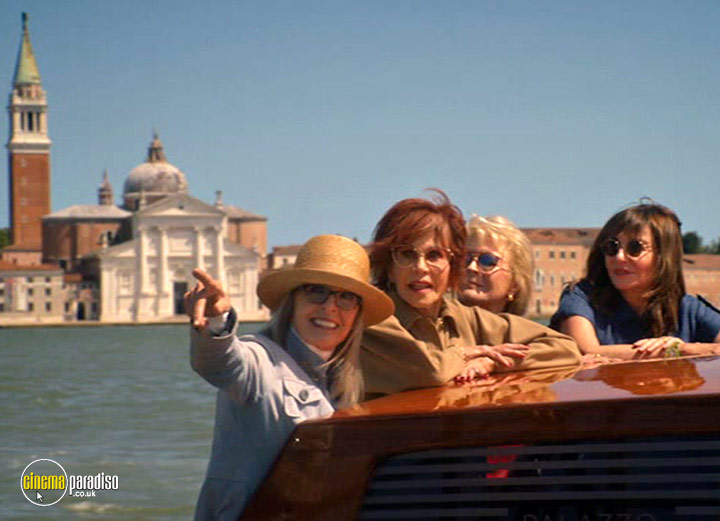
'Getting older hasn't made me wiser,' Keaton told People magazine in 2019, 'I don't know anything, and I haven't learned.' No wonder Candice Bergen spoke in Book Club: The Next Chapter about the about the 'delightful insanity' that was in each role Keaton played. Writing in The Free Press, Woody Allen suggested she had been unlike 'anyone the planet has experienced or is unlikely to ever see again'. When pressed about her comic gifts, he had said: 'My opinion is that with the exception of Judy Holliday, she's the finest screen comedienne we've ever seen. It's in her intonation; you can't quantify it easily. When Groucho Marx or W.C. Fields or [Judy] Holliday would say something, it's in the ring of their voices, and she has that. It's never line comedy with her. It's all character comedy.' Long may she continue to make us smile in the way that only she could!
Mentioned films