Rent The Mission (1986)
3.8 of 5 from 159 ratings
2h 0min

1987 BAFTA Best Supporting Actor

Spectacular historical epic loosely based on real-life events during the imperial Spanish and Portuguese expansion through South America. There is an immensely detailed production, led by Roland Joffé's enterprising direction. And the quality in every department led to seven Oscar nominations.
The only win was for Chris Menges' breathtaking location photography. This is elevated by Ennio Morricone's orchestral score, which he considered his best. The purpose is to draw attention to contemporary South American tribes still persecuted today.
This is set in 1750, when their ancestors are coaxed out of the rainforest by Jesuit priests, but then exploited by empire builders for slave labour... until they resist, with tragic consequences. Jeremy Irons is the naive missionary who looks to god to protect the Guarani natives....
Robert De Niro is a former slave trader who switches sides, a sort of proto-white saviour. And there's a huge cast of extras drawn from local people, who admittedly are mostly sidelined. This is an extreme, unorthodox drama made in difficult conditions, which has an imposing, artistic grandeur.
We have enjoyed the music from this for some time and have never seen the film until now. As a portrayal of a true historical event this was really well done, possibly because real Indian people from the forest played many key parts in the film.
Excellent and well worth seeing
A priest lashed to a cross goes hurtling over the Iguazú Falls. That's quite an introduction. Ennio Morricone's score makes the jungle sound like a cathedral, and Roland Joffé's images match it for two hours.
Jeremy Irons is the standout as Father Gabriel, gentle and immovable. Robert De Niro's Mendoza, a slave trader turned Jesuit, drags his armour up a cliff as penance, which makes ten Hail Marys look like a bargain. I bought the change, even if it felt a little too convenient. One answers violence with prayer, the other with a sword. The Guaraní are stripped of their land, freedom and spiritual traditions, then denied ownership of their own story for good measure.
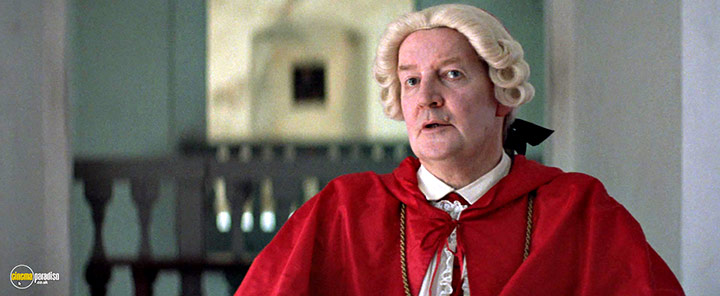
Then the soldiers arrive. The mission burns, the Guaraní are cut down, and Morricone's music carries on over the smoke. A Portuguese official shrugs that the world is simply thus, and Cardinal Altamirano admits he and men like him made it so.