Mike Leigh has announced that Tender Loving Care will be his final feature. So, with Nuts in May arriving on Blu-ray, Cinema Paradiso marks its 50th anniversary by looking back on a collaborative auteur's unique career on the small screen.
There's only one Mike Leigh. No one makes films quite like him. Critic John Russell Taylor wrote in Sight and Sound in 1982 that he was 'an auteur without, to all appearances, being an author'. Such is his famously collaborative method, that Leigh started out using the credit 'devised and directed by'. Yet, he has received five Oscar nominations for Best Original Screenplay. Surely, no one else has been recognised so often for scripts that don't exist at the time of shooting. 'I do it after the film's finished,' Leigh once explained. 'I don't draw any distinction between the script and the film.'
In his article, Taylor sought to define Leigh's idiosyncratic, highly individual, and enormously effective process. 'Despite the instant recognisability of his world,' he claimed, 'the unmistakable style of the dialogue in his films and plays, he stoutly denies any but the ultimate responsibility. He devises the basic situations, and puts the end result on film or stage, but in between he just supervises a group improvisation, leaving the actors to create their characters and dialogue.'
Being a self-confessed control freak, however, Leigh clearly does more than merely shepherd his actors from pre-rehearsal to wrap. Taylor noted that 'Leigh's forte is to make everything look so casual and accidental that only on reseeing it do you observe the precise calculation, that it is no accident the camera just happens to be in absolutely the right place at the right time.' Also writing in Sight and Sound a decade later - by which time Leigh had become as much known for his films as his stage and TV plays - academic Andy Medhurst suggested that Leigh's work aims to convey 'a sense of familiarity, though always with that slight edge of comic excess that saves them from the banality of realism'. However, he added that 'Detractors might argue that his films show not so much consistency as indistinguishability.' Moreover, 'Those who dislike Leigh complain of a tendency towards cultural snobbery, an invitation for superior viewers to mock the inadequates on screen.'
Medhurst dubbed Leigh 'a choreographer of awkwardnesses, a geometrician of embarrassments' who was 'able to orchestrate layers of accumulated tiny cruelties and failures of communication until they swell into a crescendo of extravagant farce'. He also detected 'an unswerving Englishness to the visual look and feel of Leigh's films, a mise en scene of man-made fibres, shot through filters of brick-dust and gravy'. Taylor had also decided that Leigh was critical of his characters; 'critical, probably, of the whole human race', he wrote. Yet, in creating the 'comedy of pain', Leigh succeeded in showing that 'everybody is a bit sad, and everybody a bit funny'. In other words, everybody is just like us and that's why his work has resonated with audiences home and abroad for almost 60 years.
Dirty Old Town
It's ironic that a film-maker renowned for exploring everyday life was born in a stately home. Brocket Hall in Hatfield, on the edge of Welwyn Garden City, was operating as a temporary maternity hospital for women evacuated from London during the Second World War when Michael Leigh was both there on 20 February 1943. His mother, Phyllis Pauline (née Cousin), had been staying with her parents in Hertfordshire while husband Alfred Abraham Leigh was serving as a captain with the Royal Army Medical Corps.

Cinema Paradiso users might be interested to know that several features and television programmes include scenes filmed at Brocket Hall, starting with Jacques Tourneur's Night of the Demon (1957). In addition to a couple of Agatha Christie whodunits - Murder With Mirrors (1985), with Helen Hayes as Miss Marple, and 'The Labours of Hercules' from Agatha Christie's Poirot, with David Suchet - the 1991 Inspector Morse case, 'Who Killed Harry Fields?', also dropped in. Elizabeth Bennet (Jennifer Ehle) and Mr Darcy (Colin Firth) first laid eyes on each other in the Netherfield Ballroom in Pride and Prejudice (1995), while the Drawing Room appeared in Stephen Frears's The Queen (2006) and the Morning Room stood in for Kensington Palace in The Crown (2016-23).
Russel Mulcahy's Highlander (1986), Ron Howard's Willow (1988), Oliver Parker's Johnny English Reborn (2011), and Dexter Fletcher's Rocketman (2019) all visited Brocket Hall, which also features in Belgravia (2020) and The Gentlemen (2024). Most fittingly, however, Victoria (2016-19) used it as the residence of Lord Melbourne (Rufus Sewell), which was only right, as he actually owned the neo-classical country house at the time.
Back in Lancashire, the Leighs lived above the surgery at 398 Great Cheetham Street East in the Higher Broughton district of Salford, where Phyllis was a midwife and Abe worked as a GP. Leigh later remembered the 'continuous sound of the bronchitic coughing of desperate men who were sacrificing their lives and their lungs to heavy industry'. His grandfather, Mayer Lieberman, was a Russian-Jewish immigrant who had settled in Manchester and worked as a commercial artist. As war clouds started to gather, he changed his surname to 'Leigh' in 1939 and did brisk business over the next few years colouring and framing photographs in his Cheetham Hill Road workshop, as his grandson recalled: 'In the war they did alright, because people wanted pictures of their lads that had signed up. They could take out some unknown female, or Blackpool Tower, and put in some swirly clouds around them...In the slump, nobody wanted those and grandpa couldn't feed the family. So my dad had a deep-seated fear and horror of anything to do with art.'
Leigh continued, 'I can draw and I was nothing but an artistic kid, and he did everything to dissuade me.' He was particularly upset about his son sketching visitors to the house. 'I was always drawing caricatures of people,' Leigh remembered, 'and he asked me to stop because he thought it might offend them. Even the word "artist" was very frightening to him, anathema. So the idea that I would be any sort of artist was terrifying to him.' Indeed, when Mike was 14, Abe took him to see an NHS psychiatrist. 'He decided I had something wrong with me mentally,' Leigh explained. 'So I went to see this extremely nice guy. And these were the first adult conversations I had had with another adult.'
The psychiatrist informed Abe, 'There is nothing wrong with him. He just doesn't like being at home.' Unsurprisingly, Dr Leigh was less than delighted by the diagnosis. 'My father was very angry and stopped me going. So I used to go along on my own to see him, and when my father found out about that he threatened to have him struck off the register.'
Leigh had attended North Grecian Street County Primary School and later declared, 'My warmest memories are of North Grecian Street School, presided over by a very tall headteacher, called Mr Small. This happy, generous, creative place treated us all with dignity and brought out the best in us.' He even wrote a couple of plays that were staged with his classmates. One was called Muddled Magic, but nothing is known about the rehearsal process!
He moved on to Salford Grammar School, which was the alma mater of Albert Finney, who left to study at the Royal Academy of Dramatic Art on a scholarship just before Leigh arrived. Indeed, there was a tradition of drama at the school, thanks to Mr Nutter, an English master, who placed newly published plays in the school library. Leigh acted in productions of George Bernard Shaw's Androcles and the Lion and Nikolai Gogol's The Government Inspector. He also contributed cartoons to a monthly magazine entitled The Young Elizabethan. Leigh was also a member of the Habonim organised by the Labour Zionist movement. His parents had met under its auspices and he travelled to Israel in 1960. Artist Colin Cina remembered how they had worked on satirical skits together. 'We reacted against anything that smacked of the red-faced colonel approach to running the country,' he told The Guardian in 2002. 'We tended to express this in little performances and funny little sketches and strange rhymes, much in the manner of The Goons.' The collaboratie nature of these exercises greatly influened Leigh's mature approach to working.
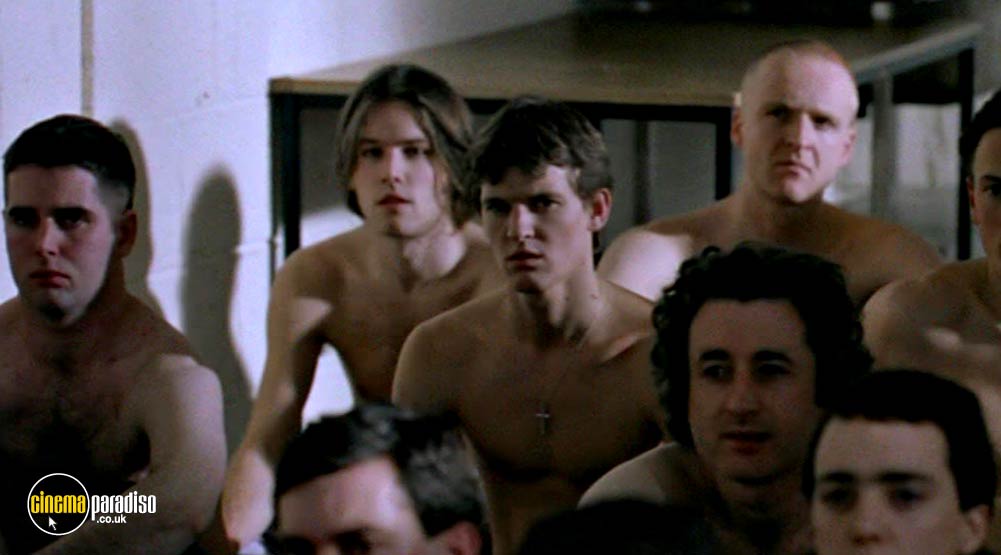
Among his school friends was Les Blair, a Mancunian who would go on to become a distinctive director in his own right. Cinema Paradiso users can start with 'Sunshine in Brixton' (1976) from ITV's Plays For Britain series before moving on to the controversial Law and Order (1978) and such later items as The Nation's Health (1983), Number One (1985), and H3 (2001).
'I wasn't good at the academic stuff at school,' Leigh once admitted. 'I was very diligent with history, but I was useless at maths, all that stuff. And, of course, I was good at art.' By now, the family had moved to Cavendish Road in Broughton Park and Leigh recalls his parents becoming more concerned with keeping up appearances and fitting in. 'I remember life at home becoming a battlefield every night. There were rows about nothing really. And what Dr Leigh was really doing, of course, was giving me a lifetime's ammunition for my film-making. But the screaming matches were awful, terrible, horrifying to remember.'
It wasn't all awful, though. 'Growing up in Higher Broughton I saw a lot of film, and I used to sit there thinking, "Wouldn't it be great if you could see a film where people were like real people."' He remembered some of his haunts with great affection: 'The poky Empire picture house, also called The County, where I and some lads slunk in illicitly to see our first X certificate - a horror movie, called The Fly, with Vincent Price. A bit further down stood the Rialto cinema - or as it was known the Riot Alto. This was my alma mater. Here I savoured and cherished and was inspired by all manner of movies. British and Hollywood - but never a film that wasn't in English.'
'Most of my ideas about film were formulated as an unconscious reaction to film,' he later reflected. 'But I wasn't just stimulated by film; I saw Laurel & Hardy at the Ardwick Hippodrome in 1952 when they did their tour, and that was pretty amazing, and we used to go and see Charlie Chaplin. All those things feed in.' He also enjoyed family trips to see the Hallé Orchestra and the D'Oyly Carte productions of the Savoy Operas of W.S. Gilbert and Arthur Sullivan. As a teenager, he also discovered Pablo Picasso, Surrealism, and The Goon Show on BBC radio.
Much to Dr Abe's exasperation, Leigh expressed an interest in becoming an actor, dismissing such leanings as 'the moonings of a stagestruck girly'. By 1960, however, Albert Finney had started to make his name on stage, while also appearing in Tony Richardson's The Entertainer, with Laurence Olivier, and Karel Reisz's Saturday Night and Sunday Morning. As they had the school connection, Leigh exploited the fact that 'everybody was talking about Albert and the influence of Albert. They all loved him. And so my dad, in a state, went off to see the headmaster, who, much to my dad's shock, said, "Well, if he wants to apply for drama school, that's what he must do. He'll have to leave at the end of this year, but I'll help him with his auditions." Which he did! I went off to London and applied to RADA. And, long story short, I passed the exam, the audition, and I got a scholarship to go there for free. It really was a shock for everybody.'
London: Swinging and Otherwise
Although the 17 year-old had been delighted to secure a place at RADA ('The most wonderful and the most mystifying thing that had ever happened to me.'), Leigh soon began to tire of being taught how to 'laugh, cry and snog' to fit him for weekly repertory productions. He was particularly disappointed by the lack of instruction on improvisation and creating characters. 'At that time it was sterile, uncreative, prescriptive,' he complained to The Guardian in 2002. 'The basic tenets were: "Learn the lines, don't fall over the furniture." You never talked about character or motivation or the world of the pieces or improvisation. So, I learned as lots of people do, by reaction.'
Far from convinced that he wanted to act, Leigh took his diploma in 1962 and set foot on his first film set to play an uncredited background figure in Michael Winner's West 11 (1963). He also made his TV debut, as Paul, a non-verbal witness, in 'The Flemish Shop', an episode of the BBC's Maigret (1960-63), starring Rupert Davies as Georges Simenon's methodical police detective. Two years later, he bowed out following Roy Ward Baker's Two Left Feet (1965), in which he had played a Teddy Boy menacing choristers Michael Crawford and David Hemmings. 'The great thing about making that film,' he recalled, 'I really had this part...I hardly spoke but I was in quite a lot of the scenes. I had to be around. But I actually went every day whether I was called or not. They used to get quite fed up with me actually, but...so I just attended the shoot for ten weeks and it was just a fantastic education really. It was before I actually went to the London Film School so all I'd really experienced was RADA at that stage, and it really was a huge revelation. It was a very conventionally-shot, old-fashioned, studio-based picture. But I learned a massive amount that I take seriously as part of the education.'
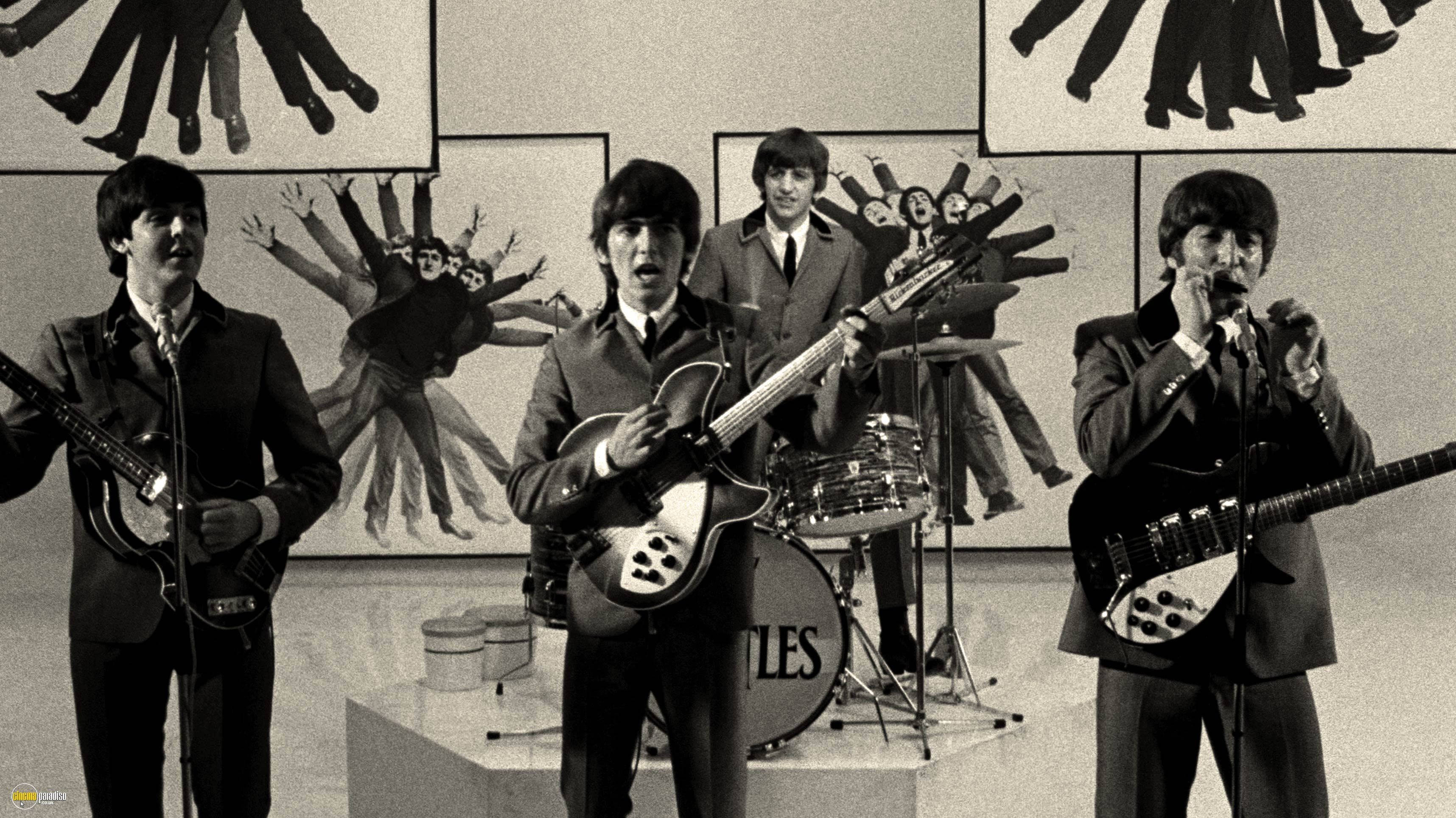
During this period, Leigh had the good fortune to see The Beatles filming A Hard Day's Night (1964). 'There was a theatre where they shot a lot of the stuff,' he reminisced, 'and loud hysterical teenage girls ran round and round the building. I lived in a flat on the corner, and you could see the shoot. At one point, The Beatles ran out of the stage door across the road into a courtyard, and I just stood there watching. I went to stand in the street...It was great! I mean, first of all, I'm exactly the same age as them - I think George Harrison was a few days younger than me. Then there was the film itself.'
Leigh had been an avid moviegoer in Salford. 'I know the first movie that I saw: Bambi. But here's the thing. I was born during the war, and in the forties and fifties there were movie houses of all shapes and sizes all over the place. I lived not very far from the centre of Manchester, but from our house you could walk to fourteen different movie houses. I went to the movies all the time. I never saw a film that wasn't in English till 1960, when I went to London, apart from that awful French short Le Ballon Rouge, which for some reason they screened at school.'
'In 1959, I watched Room At the Top. You suddenly realised that the world being depicted was a world you would actually find if you walked outside, a working-class community. A year or so later, you had Karel Reisz's Saturday Night and Sunday Morning, with Albert Finney, and that was a grounded and real kind of film. And then, of course, I went to London, and wham. There was world cinema, there was the Nouvelle Vague. Breathless was playing at that moment. Shadows was playing. I discovered the Russian cinema and the neorealist cinema and Ozu, Kurosawa, Bergman. The first week I was in London, somebody said, "There's an arts festival at St Pancras Town Hall. They're showing a film." So I went along. It was a film about a knight playing chess with Death. What?! Can you imagine what that was like [ The Seventh Seal ]? But, throughout it all, there was this thing about capturing the real world.'
In interviews, Leigh has listed Jean Renoir and Satyajit Ray among his favourite directors, as well as Frank Capra, Fritz Lang, Yasujiro Ozu, and Jean-Luc Godard. He has also cited the influence of the Ealing comedies ('despite their unconsciously patronizing way of portraying working-class people') and the social realism of the British New Wave of the early 1960s. It's also possible to detect the impact of the Czech films of Miloš Forman and the early realist works of Ermanno Olmi.
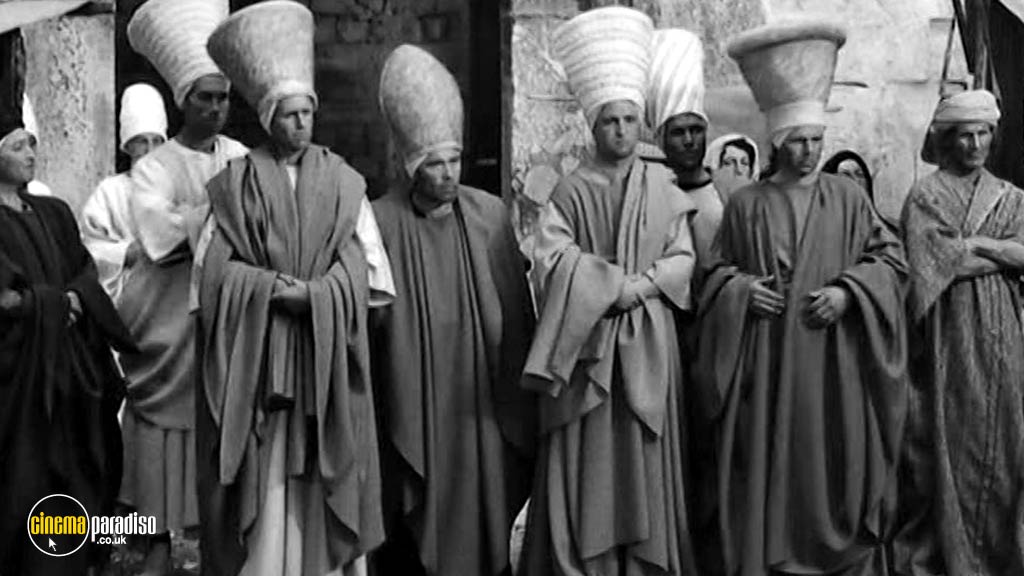
Leigh has been invited to list his Top 10 films twice for Sight and Sound's decennial poll. In 2012, he named Winsor McKay's How a Mosquito Operates (1912), Capra's American Madness (1932), Ozu's Tokyo Story (Japan, 1953), François Truffaut's Jules et Jim (1962), Mikhail Kalatazov's I Am Cuba (1964), Jan Troell's The Emigrants (1970), Olmi's The Tree of Wooden Clogs (1978), Stanley Kubrick's Barry Lyndon (1975), Woody Allen's Radio Days (1987), and Roy Anderson's Songs From the Second Floor (2000). When he redrafted the list in 2022, the latter, the silent cartoon, Tokyo Story, and Barry Lyndon had alone survived, with the new entries being Truffaut's The 400 Blows, Billy Wilder's Some Like It Hot (both 1959), Pier Paolo Pasolini's The Gospel According to St Matthew (1964), Forman's A Blonde in Love (1965), Troell's Here Is Your Life (1966), and Cristi Piu's The Death of Mr Lazarescu (2005). Plenty for Cinema Paradiso members to feast on there!
Leigh had been thinking about what was filmic since he was a small boy. He recalled being at a shiva for a Jewish neighbour and listening to the sounds of a family argument dying down as the coffin was carried carefully down a narrow staircase. Speaking to Alan Yentob for Imagine: The One and Only Mike Leigh (2014), the director had confided that he knew instinctively that this would make a great film. 'It was already a tragi-comic scene, you see,' he explained. In the early 1960s, however, the chances of making even the lowest-budget film were zero. So, Leigh had to find another outlet for his talents.
Quitting acting, Leigh enrolled on the foundation course at Camberwell College of Arts and Crafts in 1963, where the life classes proved something of a revelation. 'During life-drawing class,' he told a reporter, 'it suddenly came to me that what was going on was the one thing that had never happened at RADA - we were relating to something utterly real.' He also attended the Central School of Art and Design and took a production design course at the London School of Film Technique. When not studying artists as varied as William Hogarth, Picasso, George Grosz, and Ronald Searle, Leigh was reading the novels of Flann O'Brien and taking in the works of Samuel Beckett. A friend also worked as an usher at the Aldwych Theatre and used to let him in free to sit on the stairs. It was here that Leigh saw Peter Brook's legendary production of King Lear, starring Paul Scofield, who took the lead when they filmed their interpretation in 1971. Harold Pinter's The Caretaker ( filmed by Clive Donner in 1963 ) also left a deep impression, as did John Cassavetes's Shadows (1959), which captured 'living, loving and bickering' on the streets of New York and showed Leigh that 'it might be possible to create complete plays from scratch with a group of actors'.
Unfortunately, his first stab at directing went disastrously wrong. RADA friend David Halliwell asked Leigh to direct him in his own play, Little Malcolm and His Struggle Against the Eunuchs (1965). 'It was a very difficult time,' Halliwell told a reporter years later, 'and he didn't do a good job in directing it. However, he had an almost impossible task because he had the writer in the cast. We were all young and neurotic and we got in each other's way.' When Stuart Cooper filmed the ground-breaking play in 1974, George Harrison provided the funding and took an executive producer credit. The experience proved vital, however, as Leigh now knew how not to do things.
The Play's the Thing
Around this time, Leigh did something he had never done before and would never do again. He wrote a conventionally structured, scripted play. Entitled Waste-Paper Guards, it was performed by Birmingham Rep in 1966. But he found the production so unsatisfying that it's impossible even to discover what it's about.
Leigh had accepted the post of resident assistant director at the Midland Arts Centre in 1965 and he decided to use the opportunity to experiment with the notion that writing and rehearsing were one and the same. His inspiration came from a TV documentary about Peter Brook's 1964 production of Peter Weiss's play, The Persecution and Assassination of Jean-Paul Marat As Performed By the Inmates of the Asylum of Charenton Under the Direction of the Marquis de Sade, which revealed that the cast had visited a mental health institution and used their observations in creating their characters.
Leigh's first 'forced-bred' improvisation was The Box Play. 'There was a family in the box: a mother, father, son, and daughter,' he told The New Yorker in 2024. 'And every so often the son would go out, wander around, and meet different characters and then go back in. And that was it.' He developed the action by telling the cast, 'You're the dog; you're the Dad; you're the Mum, now improvise.' Staged in a cage, this radical piece 'absorbed all sorts of contemporary ideas in art such as the space frames of Roland Pichet...it was visually very exciting'.
Still inspired by Marat/Sade, Leigh 'did a play called My Parents Have Gone to Carlisle, which was about a teenage girl having a party when her parents had gone away. And then I did one called The Last Crusade of the Five Little Nuns, which was literally five nuns in a rowboat arriving on a desert island where there was a man and a monkey. So that was the furthest from the real world I ever got. But, then again, the girls were doing characters, and so was the monkey.'
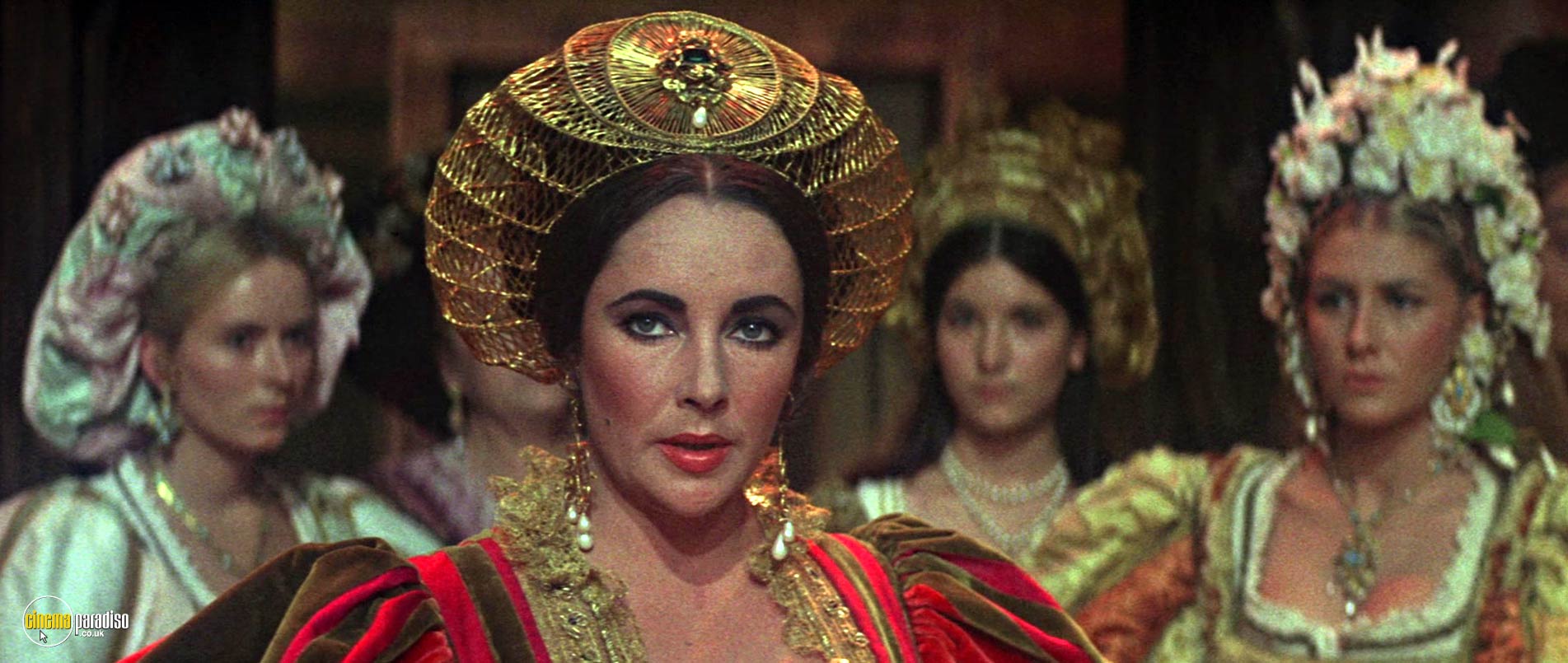
Returning to London in 1967, Leigh moved into the Euston flat that would be his home for a decade and joined the Royal Shakespeare Company as an assistant director. In addition to working on Peter Hall's Macbeth, John Barton's Coriolanus, and Trevor Nunn's The Taming of the Shrew, Leigh was also afforded the opportunity to produce his own piece, NENAA (aka North East New Arts Association). In order to depict the fantasy life of a worker at a Tyneside café, Leigh asked his players to shape their characters around such props as a coffin, an egg cup, and a bucket.
Leigh also started teaching at a number of drama schools, including Webber Douglas and East 15, where he first met Alison Steadman. Among the plays he staged was Thomas Dekker's The Honest Whore and his own Individual Fruit Pies, for which he asked the actors to base their characters on people they knew and this became a key facet of Leigh's improvisational approach.
Towards the end of the year, he returned north to Levenshulme in order to lecture part-time at a Catholic teacher training college for women in Sedgley Park. In addition to devising and directing Epilogue, about a doubting priest, he also staged Big Basil (1968) and Glum Victoria and the Lad With Specs (1969) for the Manchester Youth Theatre. By 1970, Leigh was convinced he had hit upon his modus operandi and wrote: 'I saw that we must start off with a collection of totally unrelated characters (each one the specific creation of its actor) and then go through a process in which I must cause them to meet each other, and build a network of real relationships; the play would be drawn from the results.' Let's explore this process in a bit more detail.
The Leigh Way
It's often claimed that Mike Leigh can't be an auteur because his work is based on collaboration from the outset. However, Leigh is not a director for hire and all of his projects start with an idea of his own. In 1991, he told an interviewer, 'I think one of the biggest mistakes of my career was to use that phrase and I wish to hell I had always put "Written and Directed by" earlier than I did. For various historical reasons, I thought because I didn't sit in a room and write it, it was better to say "Devised and Directed". Eventually I realised that this is the biggest single red herring of all.'
As Leigh revealed in the 1983 Arena documentary, 'Making Plays' - which can be found on Mike Leigh At the BBC: Special Features (2007) - once the basic premise for the play or film has been determined, he takes great pains over casting and insists on working with character actors rather than star names. He meets with them individually and starts by making a list of people they know, from which to draw the best inspiration for the character they are going to play. Leigh likes his actors to physicalise their ideas while devising a backstory, so that they know how their character moves, as well as thinks and behaves. Even if they only appear for a few moments, a character will have a complete history to ensure they are as authentic as possible. They will also know the tics and traits that Leigh calls their 'running condition'.
Characters with a shared past will craft their memories through improvisation, often coming up with details that don't appear in the finished work, but which are key to the characters' make up. Once the bedrock has been laid, Leigh introduces the characters to each other, starting with those they have known longest. Only then will he start to work on storylines and incidents, ensuring that actors only know about action that directly concerns their characters (as would be the case in real life). Moreover, he withholds details of how he wants the narrative to develop, so that the actors can respond to situations without preconceptions.
As he explained: 'When I ask an actor to take part in a film, I say, "O.K., please be in it. I can't tell you anything about the film because it doesn't exist. I can't tell you about the character because there is no character. You and I have got to collaborate to make the character. And here's the thing: You will never know anything about anything except what your character knows."' He continued, 'It takes time to develop a scene, time and patience, long improvisations in character, allowing things to just stay a little too long, not trying to make anything happen. This can result in fantastically boring improvisation, but that's part of the organic growth.'
Leigh also encourages his players to consult with the production designer, the costumier, and the hair and make-up team so that they will be reassured that the rooms they occupy, the clothes they wear, and the way they look will suit their character.
Having agreed backgrounds, Leigh will give his actors a setting and a set of circumstances from which a situation can develop. Each reaction and spoken line is improvised and refined through rehearsal, with Leigh noting things down that can be useful for a cohesive draft of the scene. During this intensive process, Leigh will also hit upon location ideas and camera positions, although he never uses storyboards. Indeed, there isn't always a completed screenplay when filming starts. But an extensive rehearsal period on the pre-built sets means that everyone knows precisely what they are going to do in any given scene, as does the cinematographer, who sits in on the later sessions to gauge how scenes will be blocked and lit.
'Certainly, the biggest myth about my stuff,' Leigh told The New Yorker, 'is that what you're looking at is improvised in front of the camera. It virtually never is. It's very, very tightly rehearsed and distilled.' On another occasion, he confirmed, 'I'll set up an improvisation...I'll analyse and discuss it...we'll do another and I'll...refine and refine...until the actions and dialogue are totally integrated. Then we shoot it.'
Leigh enjoys filming, as, having examined every eventuality, he knows things should go smoothly on set. He's not averse to the occasional spontaneous word or gesture, but expects his actors to be so intuned with their characters and the milieu they inhabit that they will give him what he's looking for. 'I make very stylistic films indeed,' he once said, 'but style doesn't become a substitute for truth and reality. It's an integral, organic part of the whole thing.' He confessed, 'I'm not an intellectual filmmaker. These are emotional, subjective, intuitive, instinctive, vulnerable films. And there's a feeling of despair...I think there's a feeling of chaos and disorder.' Yet, what emerges is invariably insightful, involving, and impeccable.
On the Beeb
There was a 12-year gap between Leigh's debut feature, Bleak Moments (1971), and his sophomore theatrical outing, High Hopes (1988). Fortunately, he was able to keep producing plays, including A Rancid Pong (1971), The Jaws of Death (1973), Babies Grow Old, and The Silent Majority (both 1974). None of this quartet has been adapted for the screen. But Leigh, like Ken Loach and Stephen Frears before him, was able to fill the intervening period by profitably developing his method at the BBC and several of the titles discussed in this section are available from Cinema Paradiso in double bills from 'Mike Leigh: The BBC Collection'.
Many of the preoccupations and techniques familiar from Leigh's features first appeared in his television plays. Some have worn better than others. But they help trace the evolution of Leigh's technique and many showcase members of his unofficial stock company. An exception is his small-screen debut, A Mug's Game, which was shown as part of the Scene series on 8 March 1973 and centres on Marty (Eric Allan), a maker of homemade wine who feels pressurised to share his friend's enjoyment of gambling.
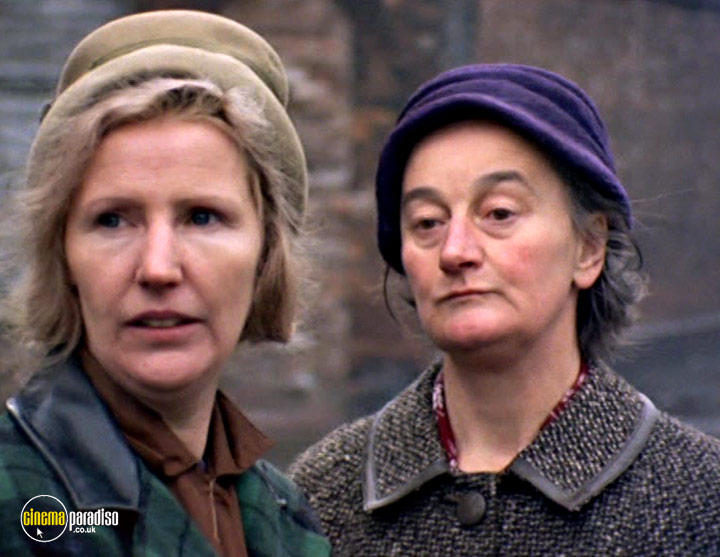
Transmitted as part of the Play For Today series on 12 March 1973, Hard Labour took Leigh back to Salford to compare the lives of Mrs Thornley (Liz Smith) and the woman she cleans for, Mrs Stone (Vanessa Harris). A Catholic who says little and receives less thanks from her employer or her husband (Clifford Kershaw), Mrs Thornley hides her loneliness from her mechanic son, Edward (Bernard Hill), who lives with wife Veronica (Alison Steadman) on a new housing estate.
Writing years later, Andy Medhurst scathingly wrote: 'Only in the early Hard Labour, made in 1973, is the humour left out, resulting in a piece of almost unwatchable grimness, a joyless film about a joyless life, that follows a middle-aged woman (the incomparably put-upon Liz Smith) from drudgery at work to drudgery at home. Originally shown as a BBC Play For Today, its failure now stands as a useful indictment of that tradition of television naturalism, with its assumption that to reproduce the hardship of a particular way of life with painstaking fidelity was somehow to inspire audiences to clamour for its amelioration.'
The Stone house was situated just two doors down from Leigh's childhood address and he revealed that Mrs Thornley had been modelled on his mother's cleaner. This was his most personal work, although he did agree to filming improvised scenes on location at the behest of producer Tony Garnett (and never used the technique again). Feminist and left-wing critics denounced Leigh at the time for making his anti-heroine so passively downtrodden, but he defended his choices, as her inarticulacy left room for others to betray their own attitudes. Liz Smith's profile was raised by her first leading role, while Bernard Hill made an impression on his professional debut and Ben Kingsley stole scenes as a friendly Pakistani taxi driver.
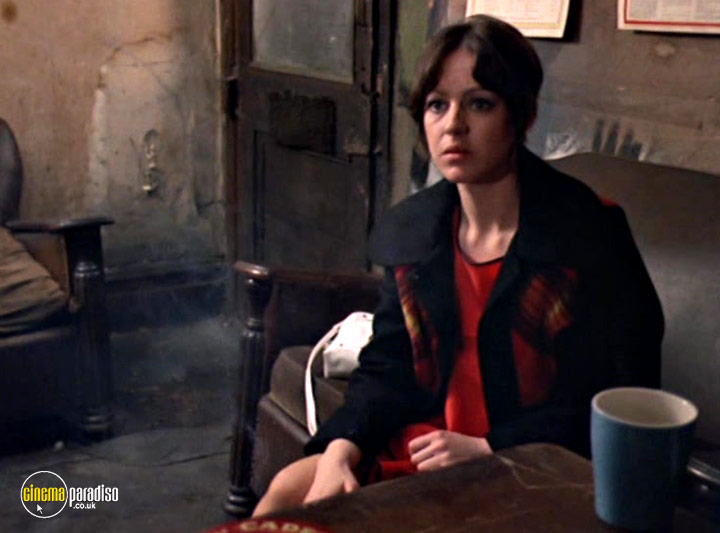
Running just 29 minutes, The Permissive Society was shown on 10 April 1975 as part of Second City Firsts, a series of short plays set in Birmingham. The action centres around Les (Bob Mason), a painfully shy man who is so nervous around first girlfriend Carol (Veronica Roberts) that she is relieved when his recently divorced sister, Yvonne (Rachel Davies), joins them at the family flat before going on a date of her own.
Reflecting the emotional immaturity of so many young men from working-class backgrounds, this also serves as a reflection on the growing emphasis on sex that had started during the permissive Sixties, when few Brits were quite prepared for it - hence Les resorting to an old George Formby song, 'When I'm Cleaning Windows', in order to express his emotions. Leigh would make a second film for the series, Knock For Knock (1976). But only those who caught the encounter between a drunk driver named Purvis (Anthony O'Donnell) and a canny insurance salesman called Bowes (Sam Kellu) on 21 November 1976 will have seen it, as the BBC wiped the tape and the 30-minute play is considered lost forever.
The same is most certainly not true of Leigh's other 1976 teleplay, Nuts in May, which aired on 13 January, and is now available from the BFI in a new Blu-ray edition. A study of becoming bogged down in rules that suit us and judging people who dare to be different, this classic Play For Today follows Keith Pratt (Roger Sloman) and Candice Marie (Alison Steadman) on a tenting holiday in Dorset. A vegetarian who likes to structure his days, Keith knows the Country Code backwards and has no truck with the charismatic Ray (Anthony O'Donnell) when he starts being friendly with his childlike wife. Taking out his fury on brash Brummies, Finger (Stephen Bill) and Honky (Sheila Kelley), when they keep him awake at night, Keith makes a decision that results in a further humiliation and a happy ending with a discomfiting twist.
Examining bourgeois self-righteousness and masculine insecurity, this was Leigh's first major success. It made a star of Alison Steadman, as the
naïve and submissive Candice Marie, although the focus falls more on Roger Sloman's Pratt, who chews his food 72 times before swallowing and who sings appalling folk songs with his wife strumming along and making much more racket than Ray's radio. Many have made comparisons with Chris (Steve Oram) and Tina (Alice Lowe) in Ben Wheatley's Sightseers (2012), which many critics felt was like Nuts in May the Tarantino way. But there are also dark themes moiling beneath the surface of this deceptively amusing parable.
Play For Today also provided a berth on 11 January 1977 for The Kiss of Death, which took Leigh back to Lancashire for the story of a bashful undertaker's assistant. Faint echoes of John Schlesinger's 1963 adaptation of Keith Waterhouse's Billy Liar can be heard, as Trevor (David Threlfall) struggles with the eagerness of Linda (Kay Adshead) to ask her on a date after they are set up by his friend, Ronnie (John Wheatley), and his girlfriend, Sandra (Angela Curran). Seemingly specked with autobiographical details, this is best known for the sofa kissing sequence, which biographer Michael Coveney claims is 'an entire catalogue of human emotions in the mating game: anxiety, cruelty, affection, wonder, contempt and playfulness', as Leigh shows how love scenes often play out in real life.
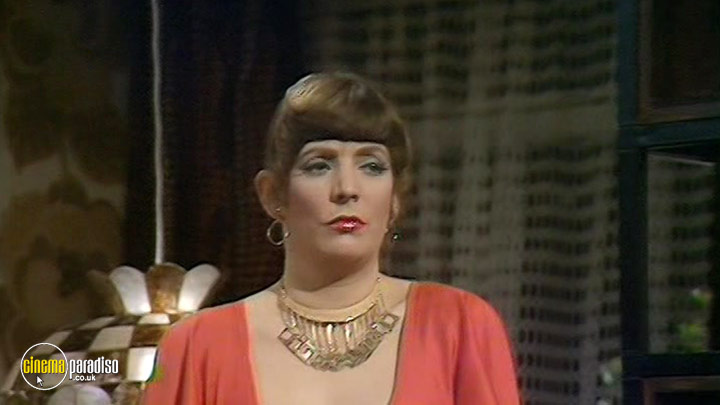
While Leigh reportedly retains a fondness for this slice of life, he has little time for the Play For Today taping of his April 1977 stage play, Abigail's Party, which was shown on the BBC on 1 November 1977. 'I hate it,' Leigh is on record as saying. 'I'm very happy with the play, which was fine in the theatre but we rushed into a television studio and it was one of those dreadful old-fashioned television studios with five cameras...and the light is all over the place, it looks hideous, we rushed at it, there are boom shadows here and there. It looks crude, it has no...I can't bear watching it.'
Audiences, however, were bowled over by the comedy of excruciation that played out as Beverly Moss (Alison Steadman) and her husband, Laurence (Tim Stern), invite neightbours Angela (Janine Duvitski) and Tony (John Salthouse) around for a drink, along with Sue (Harriet Reynolds), whose 15 year-old daughter is throwing her first party next door. Putting on airs and graces, belittling her spouse, and flirting with Tony, Beverly is one of the great characters of 1970s television. Alan Bennett called her 'a brutal hostess with shoulders like a lifeguard and a walk to match'.
Three decades later, Steadman told The Guardian how she came up with such a ghoulishly memorable character. 'I grew up on a nice private lower middle-class estate in Anfield in the Fifties and early Sixties,' she explained. 'There was this one very glamorous woman in her early thirties who lived nearby with her mother - the sort of woman everyone would whisper about: "I think she's going out with the doctor, don't know if he's married..." She had flame-red hair with a rinse on. Not tarty, very attractive. I was fascinated by her. Eventually Mike asked what sort of work I thought this woman might do and I immediately thought: beauty therapist.'
Brilliant as Steadman is, however, not everyone warmed to Beverly or the play. Leigh remembers Kenneth Williams ('dressed in black and with a face as long as a fiddle') leaving at the interval at The Hampstead Theatre. 'He thought it was awful. He saw it as sneering and braying at suburban people.' Playwright Dennis Potter was even more incensed and informed his Sunday Times readers that the play was 'based on nothing more edifying than rancid disdain, for it was a prolonged jeer, twitching with genuine hatred, about the dreadful suburban tastes of the dreadful lower middle classes...It sank under its own immense condescension.'
Academic Andy Medhurst later called it 'a Barrett-starter-home version of Who's Afraid of Virginia Woolf? ', while others saw in Tony a variation on Carter Brandon from the BBC's sitcom based on Peter Tinniswood's I Didn't Know You Cared (1975-79). Leigh defended the stage version passionately, 'The play is so in love with the characters...Abigail's Party is not a play about them, it's a play about us. Which is why it works for the audience.' To learn more about the production, check out Mike Leigh At the BBC: Special Features.
Having married Leigh in 1973, Steadman discovered she was pregnant during talks to transfer Abigail's Party to the West End. Leigh only agreed to the BBC adaptation as a consolation prize and son Toby was born just as Who's Who was being prepared for its Play For Today slot on 5 February 1979. A rare attempt at a satire, the storyline follows Alan Dixon (Richard Kane), a middle-aged clerk at a London brokerage who fervently admires the monarchy and the aristocracy. While wife April (Joolia Cappleman) rears cats that are photographed by Mr Shakespeare (Sam Kelly), Alan tries to hang with Kevin (Phil Davis) and a group of younger colleagues, while trying to impress senior partner, Francis (Jeffrey Wickham), who is handling a delicate matter for Lord and Lady Crouchurst (David Neville and Richenda Carey).
Despite anticipating the Loadsamoney ethos of the hateful eighties, this is not one of Leigh's more fluent works, as it remains stubbornly episodic. There's also a whiff of caricature about the office loudmouths and their female companions, the garrulous Samantha (Catherine Hall), and the timid Caroline (Felicity Dean). Geraldine James is also seen too briefly admiring April's moggies. In Mike Leigh on Mike Leigh (2008), he viewed the piece with mixed emotions. 'You just have to look at it for what it is. It is unquestionably full of ideas and notions of various kinds. I would say, looking at it now, that it was potentially a really interesting, original satirical film.' But he acknowledged certain factors that meant 'the whole thing didn't turn out as it might have done', including a persistent back problem and the fact 'We rehearsed Who's Who in a basement in Maida Vale with no air and no light. We ate our lunches in the Maida Vale canteen of the BBC studios, which also had no windows. It was winter.'
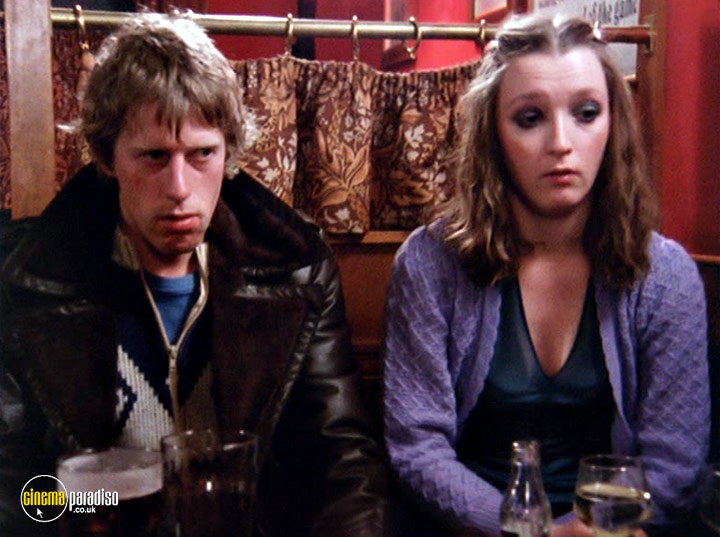
Having cancelled a project known as 'Ice Cream' after 10 weeks of rehearsal with the Royal Shakespeare Company, Leigh returned to Auntie later in the year to record Too Much of a Good Thing, which starred Phil Davis and Lesley Manville as a driving instructor and a student who embark upon an affair. However, it was deemed too sexually explicit for Radio 3 and can now be found on YouTube. He had no such problems in reuniting the actors in Grown-Ups, which was broadcast under the Playhouse banner on 28 November 1980, and saw Leigh plug 'back into a world I knew about, things that directly concerned me: hell in the suburbs'.
The first TV-movie to be screened at the London Film Festival, this unsettlingly funny family saga was inspired by Leigh's widowed Auntie Janey, who was forever popping round to the house in Salford. She was the model for Gloria (Brenda Blethyn), who keeps pestering childhood sweethearts and newlyweds Dick (Philip Davis) and Mandy (Lesley Manville), who have just moved into their new Canterbury home to discover their next-door neighbour is their old religious master, Ralph Butcher (Sam Kelly), and his neglected teacher wife, Christine (Lindsay Duncan). With Janine Duvitski as Mandy's mate, Sharon, this teleplay is renowned for a staircase sequence that is both heartbreaking and hilarious.
A sixth and final commission from Play For Today yielded Home Sweet Home, which went out on 16 March 1982. A treatise on isolation and the failure to communicate, the focus fell on three postmen, Gordon Leach (Timothy Spall), Stan (Eric Richard), and Harold Fish (Tim Barker), who have worked together for years, but know little about each other. Gordon is indifferent to wife Hazel (Kay Stonham), who flirts with Stan because she has just lost four stone in weight, while Harold has no idea that wife June (Su Elliott) is having an affair with Stan, who has raised his teenage daughter alone since his wife ran off with her lover when Tina (Lorraine Brunning) was six.
The reviews were largely positive, although playwright David Edgar questioned a methodology that generated 'work of extraordinary, naturalistic perception; but it also appears to produce an attitude to the character of little more than rank contempt'. Each has their own sadness and their means of coping, with Su devouring pulp romances and soap operas, while Gordon stuffs himself with food and booze. But Stan, who is completely lacking in self-knowledge, proves to be one of the most loathsome characters in the Leigh canon, as he neglects his child, betrays his workmates, and treats Janice with a contempt that leaves one relieved that editor Robin Sales cuts away when he does so after picking her up at a launderette.
More on Four
Throughout his time at the BBC, Leigh had continued producing plays on the London stage. He followed Ecstasy (1979) with Goose-Pimples (1981), which is discussed in Mike Leigh Makes Plays; Smelling a Rat (1988); Greek Tragedy (1989), which played the Edinburgh Festival after premiering in Sydney; It's a Great Big Shame! (1993); Two Thousand Years (2005); and Grief (2011). After a seven-year delay, the series of short films he had made for the BBC were broadcast in 1982. The titles in the Five Minute Films roster are The Birth of the Goalie of the 2001 F.A. Cup Final, Old Chums, Probation, A Light Snack, and Afternoon. Later in the decade, Leigh also made two shorts for Channel 4: The Short and Curlies (1987) and A Sense of History (1992).
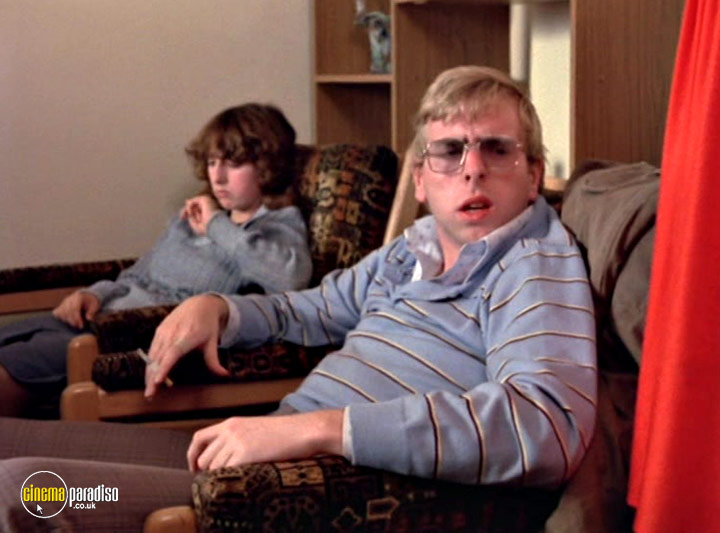
This is the last film that he has made for the small screen to date. But we shall end with his final BBC offering, Four Days in July, which was shown on 29 November 1984. It has never been repeated, but it is available on BBC disc and Cinema Paradiso users can judge for themselves whether critic Paul Clements is right in claiming, for all the months of research that Leigh did into the situation in Ulster, 'It is hard to identify any full length work by Leigh in which less of consequence seems to happen.'
Set in Northern Ireland during the Troubles, the story turns on two Belfast couples expecting their first child. Protestants Lorraine and Billy (Paula Hamilton and Charles Lawson) are due on 12 July, but Defence Regiment member Billy is too preoccupied with the upcoming celebrations to consider his wife's comfort. Having been disabled by a stray British bullet aimed at some joyriders, the Catholic Eugene (Des McAleer) is more aware of the pain that easy-going wife Collette (Brid Brennan) is experiencing. Ordinarily, their paths would not cross the Shankill or the Falls roads. But they find themselves together in hospital, where their different attitude to parenting and childcare come to the fore.
Featuring an early score by Rachel Portman and with Stephen Rea, Eileen Pollock, B.J. Hogg, and Shane Connaughton in supporting roles, this feels like a time capsule four decades on, with the Unionist stereotyping feeling particularly clumsy. But much remains pertinent, hence Kevin Maher writing in The Times in 2009 that this is 'a must-see movie for anyone with a compassionate interest in an 800-year-old political sore'.
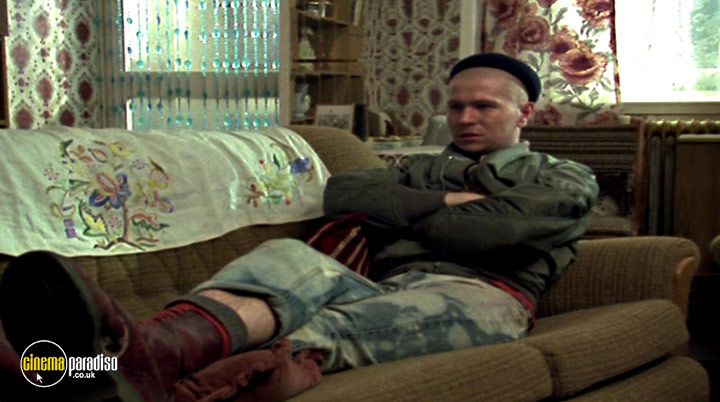
After almost a decade of working exclusively for the BBC, Leigh teamed with Central Television for Channel Four for Meantime, which was broadcast on 1 December 1983. Capturing the mood in Britain under Conservative Prime Minister Margaret Thatcher, the film follows the members of the Pollock family as the cope with a lack of work and a growing sense of disillusion. Only mother Mavis (Pam Ferris) has a job, leaving husband Frank (Jeffrey Robert) to slob around in the East End tower flat, while sons Mark (Phil Daniels) and Colin (Tim Roth) mooch between home, the street, the employment exchange, and the pub. The motormouthed Mark is pals with a skinhead named Coxy (Gary Oldman), while the more reticent Colin wishes he could tell the sweet-natured Hayley (Tilly Vosburgh) that he likes her.
By contrast with the Pollocks ennui, Mavis's sister, Barbara (Marion Bailey), lives in a nice house in Chigwell with her affluent, but emotionally distant husband, John (Alfred Molina). Taking pity on Colin, Barbara asks him to help her with some decorating. But Mark muscles his way into the job and Colin reacts in an unexpected manner.
Seen by some as London variation on Alan Bleasdale's Boys From the Blackstuff (1982), Meantime was shown at the London Film Festival and Cannes, but didn't get a theatrical release.When it was shown in the Big Apple, the critic from the New York Times opined that 'Leigh is apparently of the school that equates dreariness with truth' before going on to aver that he knew 'how people get along and don't get along in London's East End, but in this effort, at least, he has not managed to work that knowledge into a convincing movie'. While admitting that he might have missed some of the jokes because of the brisk Cockney dialogue, the critic concluded, 'The first hour is given to aimless glimpses of aimless existences, and the second, in which Colin finds a sort of deliverance, is contrived in concept and awkward in execution.' Biographer Michael Coveney couldn't have disasgreed more in stating, 'the sapping, debilitating and demeaning state of unemployment, the futile sense of waste, has not been more poignantly, or poetically, expressed in any other film of the period'. To make your own mind up, click on the Cinema Paradiso order link now.
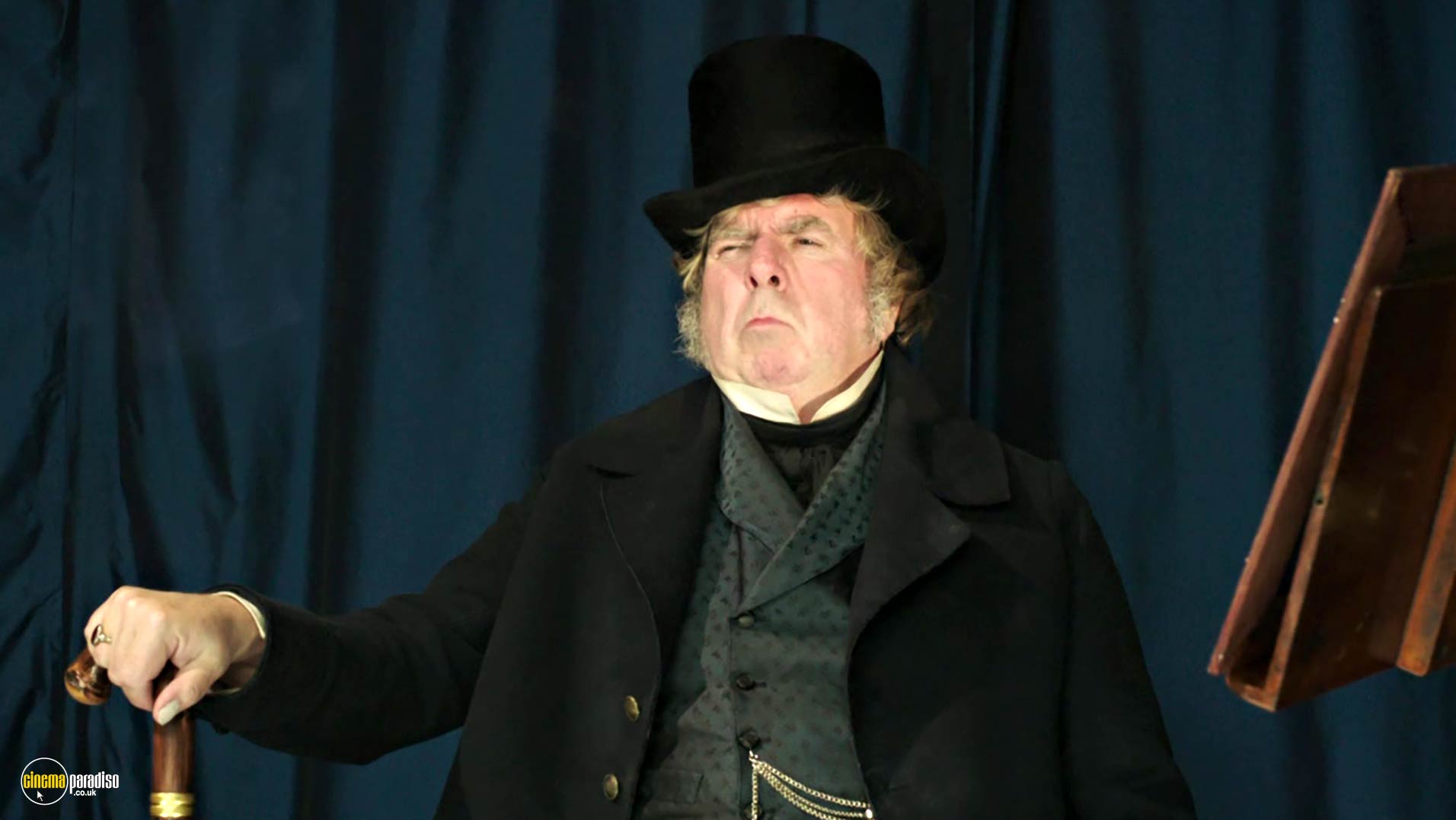
As it was shown in cinemas abroad, Meantime has come to be seen as part of Mike Leigh's feature canon. This is comprised of Bleak Moments (1971), High Hopes (1988), Life Is Sweet (1990), Naked (1993), Secrets & Lies (1996), Career Girls (1997), Topsy-Turvy (1999), All or Nothing (2002), Vera Drake (2004), Happy-Go-Lucky (2008), Another Year (2010), Mr Turner (2014), Peterloo (2018), and Hard Truths (2024). They are all available to rent from Cinema Paradiso and we shall return to assess them in greater detail some time soon.
In the meantime (no pun intended), we wish him well for his final release, Tender Loving Care, and for a long and contented retirement. British screens shall not see his like again, even though son Leo has directed such different films as Blackpool: Las Vegas of the North (2009), Swansea Love Story (2010), Beautiful Liverpool (2011), The Life and Times of a Ping Pong Hustler (2014), and Sweet Sue (2023).
Mentioned films