Rent A Separation (2011)
4.0 of 5 from 445 ratings
1h 57min

2011 Berlinale Silver Bear for Best Actress


This is a wonderful film. Very intelligently put together using an observant, sensitive, thoughtful script which between director and a superb cast makes the nicely paced 117 minutes engrossing as to how it will end. With the past few years seeing western societies closing off Iran, this film shows a country and society that is slowly changing, which copes by blending modern and traditional values shown through the family at the centre of this film. Five stars!
Quite simply one of the best films I have ever seen. I did not know what to expect. It started out as a simple yet touching story and layer on layer was added to produce a film of great complexity touching sad, moving, tragic and thought provoking it draws you in . The director describes it as a detective story shot in a documentary style but without a detective. It will keep you guessing to the end!
Deeply felt domestic drama about a marriage already in trouble, which cannot survive the stress of a parent's Altzheimer's disease and then is blown apart by the consequences of an accusation of assault. This is sensitive, intelligent, detailed, and eventually, explosive.
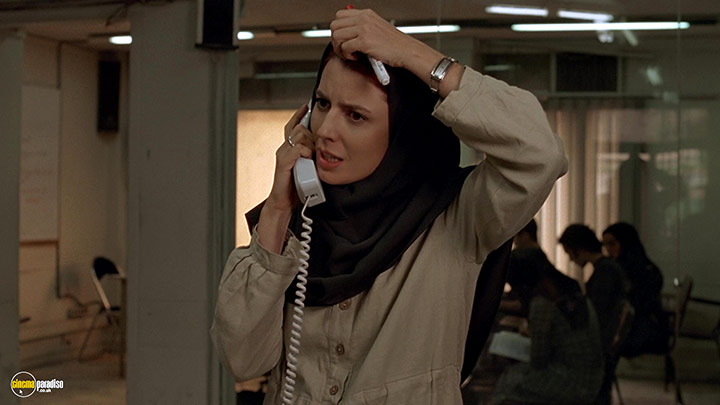
Asghar Farhadi also gives us a fascinating insight into another- Iranian- way of life, and of its women in particular. Scenes where citizens telephone the faith police for religious guidance on everyday occurrences will be deeply alien to most western viewers.
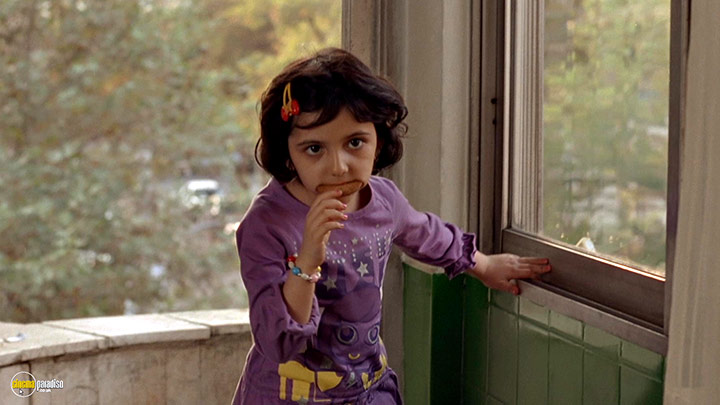
He organises the complex ethical situations with insight and technique, so they are rolled out with clarity, but also suspense. Increasingly we see the scenario through the eyes of a young daughter as she wakes up to the influence of hypocrisy on moral dogma.
This proves unexpectedly relatable, with a well chosen cast; and it won best foreign language film at the Oscars. But maybe it's a surprise the Iranian regime allowed its release, because this is an intense exposure of a society divided by sex, class, and yes, religion.
Nader and Simin are a young couple from Tehran, Iran. They’ve decided to migrate to another country with their 11-year-old daughter Termeh (Sarina Farhadi). But the husband Nader (Peyman Ma’adi) has a change of heart; he decides to stay to care for his Alzheimer’s-plagued father and this forces his wife Simin (Leila Hatami) to file for divorce. Simin still wants to leave but she can only do this with Nader’s consent – something he has no plan of giving away.
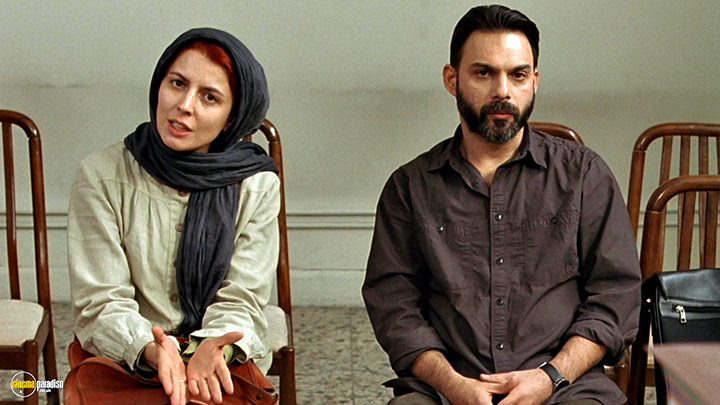
‘Nader and Simin: A Separation’ catapults the film’s plot with the divorce, Iranian style. In the film we are given an idea on how the courts work in Iran, mostly they speak before a judge and make their case. A great technique the film utilizes is the cast talking directly to camera when they’re supposed to be speaking to a judge. It’s a direct symbolism – we watch them, hence, we are the judge. From there the film moves forward with another issue at hand. As Nader remains in Iran and cares for his ailing father, he hires a young woman, Razieh (Sareh Bayat).
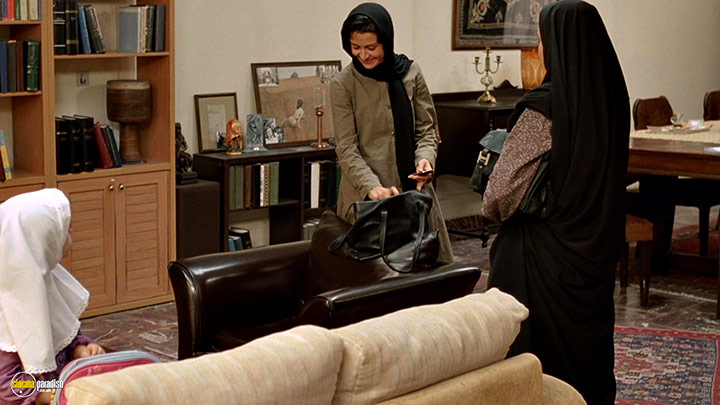
Unbeknownst to Nader, Razieh is ill-equipped to care for an old man, doubtful of what she must do when Nader’s father wets his trousers. Her husband, the hot-headed Hodjat (Shahab Hossein) is not too privy of his wife being in the same household with a married man, without another man present. But Razieh needs the money for her family and hiding her condition – she’s pregnant – she forges on.
The film is surprisingly very succinct in its message: People in Iran are just like us. They have a divide between the middle-class and the impoverished. They go through marriage dissolutions. They have to care for their elderly. But also, people in Iran are not just like us. They have strong ties with their religion to the point of irrationality. They treat women differently; at times oppressive and backwards. In the end, the film is a domestic-legal drama that speaks much in hushed tones.