One of the most reliable and relatable actors of recent times, Sam Neill leaves a legacy that will stand the test of time. Cinema Paradiso pays its respects.
'I'm not in any way frightened of dying,' Sam Neill told an Australian TV host in October 2023. 'That doesn't worry me. It's never worried me from the beginning. But I would be annoyed, because there are things I still want to do.'
Rather like his mentor, James Mason, Neill was both versatile and distinctive, capable of being intense, acerbic, amusing, malevolent, and moving. He accumulated over 160 credits and improved everything in which he appeared. There was the odd duff item. But, even then, it was more watchable when Neill was on screen.
Having battled to beat cancer, it seems unfair that he should have succumbed to pneumonia when he still fancied 'another decade or two'. At the age of 78, Neill was still producing impeccable performances in leading and supporting roles, on the big screen, on television, and on streamng platforms. But he could look back with quiet pride at over half a century of excellence, much of which is available for Cinema Paradiso members to enjoy at the click of a button.
Making Plans For Nigel
Nigel John Dermot Neill was born on the kitchen table of the family home in Omagh, County Tyrone on 14 September 1947. Mother Priscilla (née Ingham) had been raised in the Home Counties, while Kiwi father, Dermot Neill, had been educated at Harrow and Sandhurst before seeing action in the Second World War as a major in the Royal Irish Fusiliers.
The son of a wine importer, Neill's great-grandfather, Percy, had left Belfast for Australia, where he had worked for a firm of merchants in Melbourne before moving to Dunedin on the South Island of New Zealand in 1863. Dermot was keen to return home, even though young Nigel thought the Northern Irish countryside was 'my idea of the Garden of Eden'. Along with older brother, Michael, and younger sister, Juliet, the seven year-old embarked on a six-week voyage Down Under in 1954. Initially, the family resided in the Christchurch suburb of Cashmere and Neill later reflected: 'I sometimes think about my mother, who never complained about anything in her life. I don't think, when she signed up to marry Dad, that she imagined she'd be halfway across the world and have to leave her mother and all her friends, and start again. But I was seven years old; I didn't know any different.'
Nigel attended Cashmere Primary School before moving to Medbury School, a private prep school whose playground was 'devoted to a barbarity to which I was completely unsuited'. Neill later wrote, 'To land in a pretty rough playground in a New Zealand primary school with a plum in the voice and Nigel for a name was asking for trouble.' But Dermot upped sticks to settle in Macandrew Bay in Dunedin and, seizing on the fresh start, Neill started calling himself 'Sam' because he felt Nigel was 'a little effete for...a New Zealand playground'.
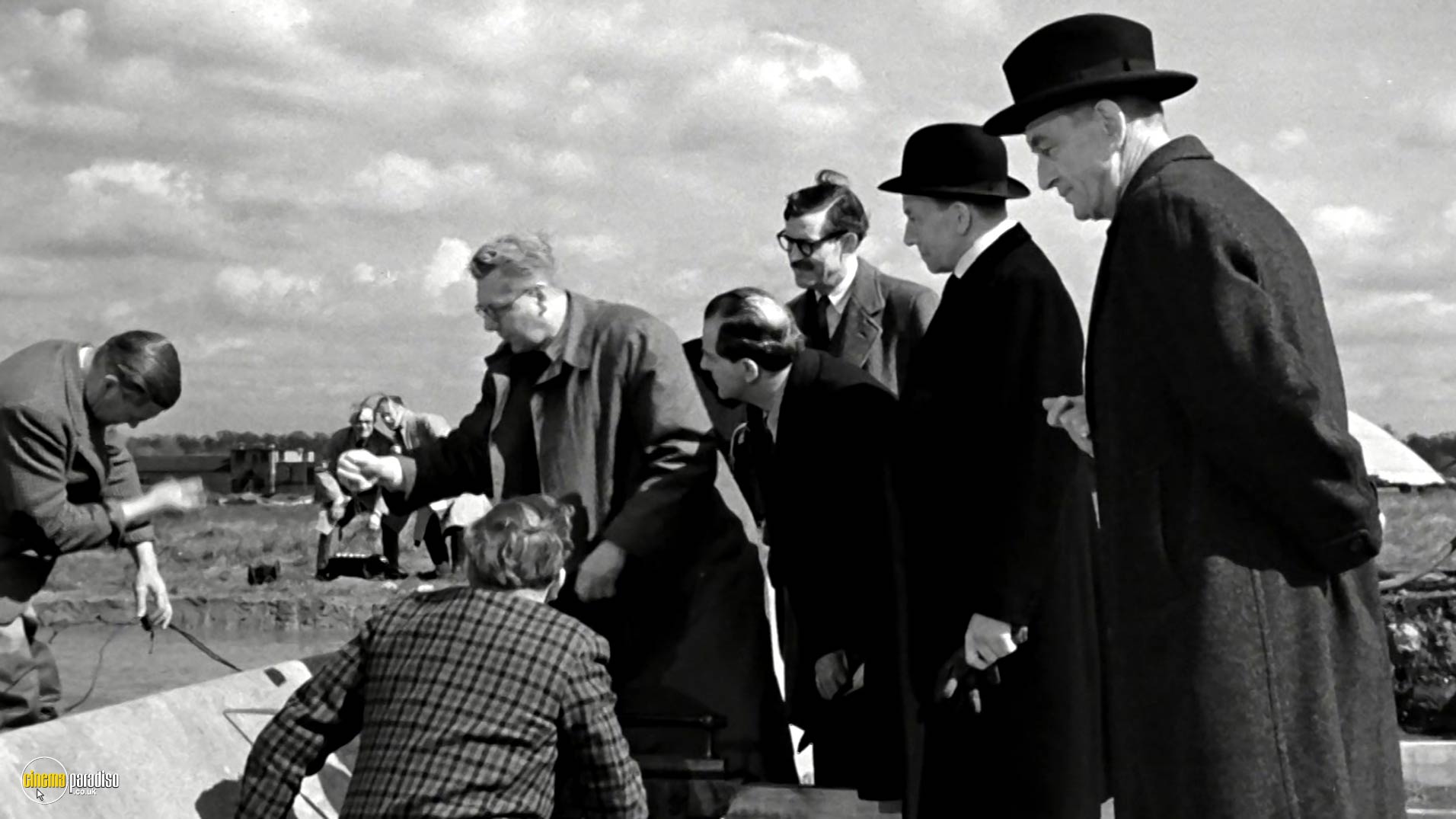
In his 2023 memoir, Did I Ever Tell You This?, Neill wrote, 'Western people were called things like Sam', and the name gave him a better chance of being accepted. He later claimed this was 'probably the best decision I made in my life. Sam is easy to say, sounds friendly, sounds a bit blokey and has a touch of the Labrador about it.' Nevertheless, he still had a stammer when he enrolled at Christ's College, an Anglican boarding and day school in Christchurch, where he considered himself 'a very ordinary student' who was 'irredeemably lazy'. Looking back in 2023, Neill noted, 'I was pretty silent as a child. I didn't really want adults to talk to me because I wouldn't be able to reply. And it wasn't until I got to about the age of 14 or 15 that the stutter started to go away. And that coincided with getting some sort of confidence in my life as well.'
He did have escape routes, however, as he told The Guardian just a few weeks before he died. 'Dunedin, where I grew up in New Zealand, may have had fewer than 100,000 people, but we had seven proper cinemas. On Saturday mornings our parents would dump us at one for the Chums Club: I'm sure they were pleased to get rid of us for an hour or two. We would watch serials - the one I remember clearly was Roy Rogers, who had a great steed called Trigger. It was a riot of uncontrolled kids, creating an unbelievable noise. Not a calm experience.' He also had a thing for wartime adventures like Michael Anderson's The Dam Busters (1955) and Lewis Gilbert's Reach For the Sky (1956), as there was 'something very reassuring about their bulldog spirit'.
Young Sam also enjoyed coming home to be with his siblings. 'I spent most of my childhood at boarding school,' he recalled, 'but when I was at home my older brother would read to me in the mornings. It fired my imagination.' Neill also developed a talent for people watching. 'I was in the shadows quite a bit,' he once confided, 'probably observing what other people were doing, how they acted, how they stood and how they behaved towards each other. That was a very formative experience for me.' It certainly came in useful when he overcame his stutter and started taking parts in school plays. 'Whenever I was on stage, I never missed a beat.' Despite growing in confidence, however, Neill insisted a part of him never changed. 'My exterior is undoubtedly Sam the New Zealander,' he wrote in his memoir. 'You might even recognise him. But inside, somewhere very deep, there lives a small shy boy who sounds very different, and his name is not Sam. It is Nigel.'
Absolute Beginner
While reading English at the University of Canterbury, Neill had conflicting ideas about his future. He knew he didn't want to follow his father into the military or into his hospitality business. He considered the law, but found the courses too dull. However, he had continued acting and played Theseus in a Drama Society production of A Midsummer Night's Dream that was directed by Ngaio Marsh, the crime novelist whose most famous sleuth was immortalised by Patrick Malahide in The Inspector Alleyn Mysteries (1994). Such was Neill's performance in Marat/Sade that he was invited to play Jacques Roux in its Wellington staging. He would claim the experience as 'the time of my life' and he transferred to the city's Victoria University to complete his Bachelor of Arts and headline Macbeth in a campus production.
On graduating in 1970, Neill joined the Downstage Theatre Company, which earned him NZ$35 a week and a plate of lasagna after each show. He then toured the country with the New Zealand Players Drama Quartet, in his words taking 'Shakespeare, Shaw and the like to mostly ungrateful schoolchildren'. Despite keeping busy, however, Neill still didn't feel he had found his vocation and would later say, 'I never imagined for a moment that I would be an actor, coming from a small, obscure town in the furthest away place. There was no moment. I'm surprised to this day.' Indeed, he spent the next six years writing, directing, and editing documentaries and shorts for the New Zealand National Film Unit. He debuted with Telephone Etiquette (1974), which was a training film that demonstrated how to handle awkward customers.
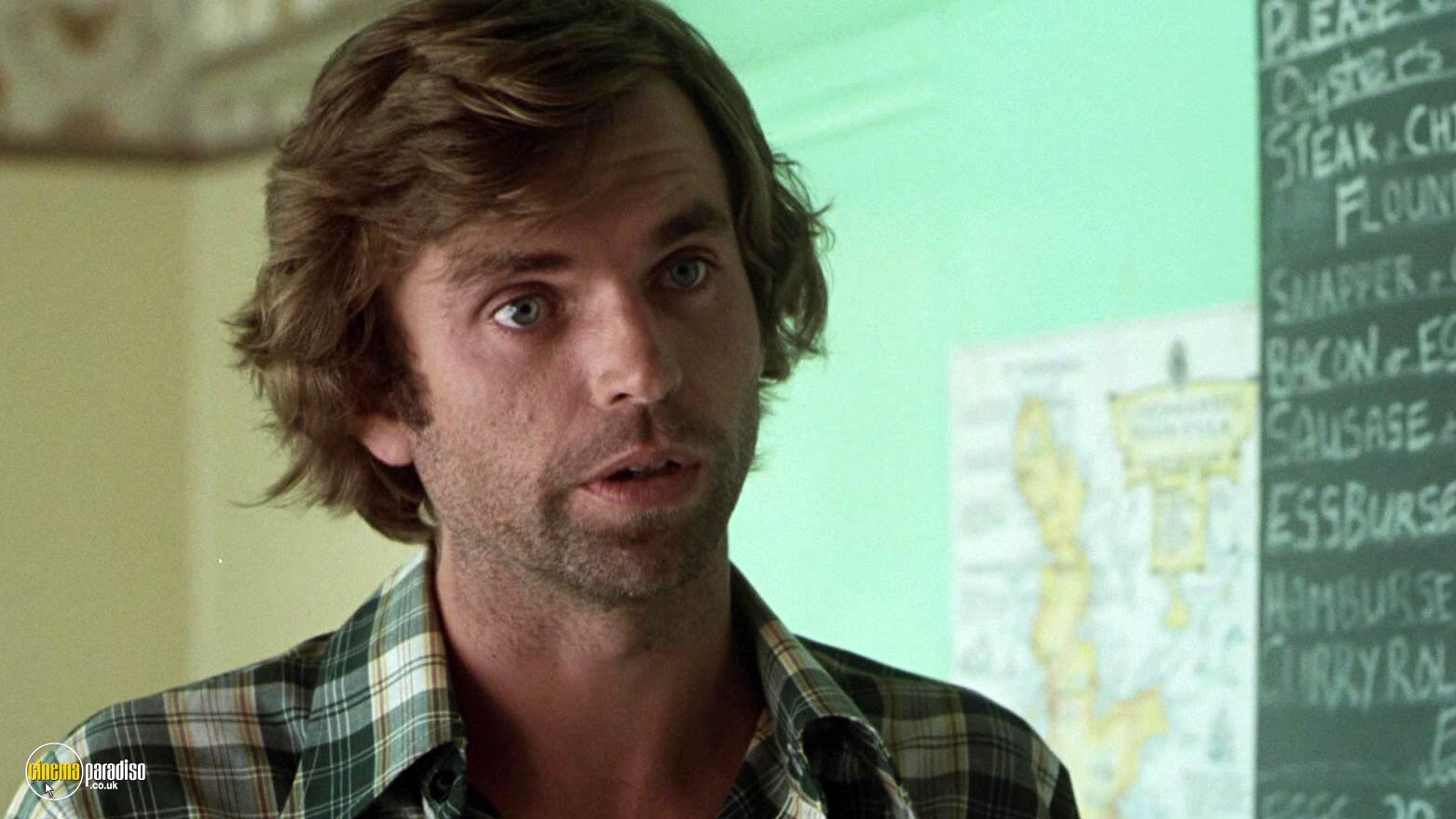
Neill remembered, 'The informal agreement there was that you'd make one film for the post office or the railways or the banana company and you'd make one for yourself. I wanted to make a film about skiing - I love skiing - but I had to dress it up and say that it would be really good for tourism.” This was Flare: A Ski Trip (1977), which he made the same year as Architect Athfield, a profile of Ian Athfield, who would later design Neill's house in Queenstown. His other titles were Four Shorts on Architecture (1975), New Country: New People, Surf Sail (both 1978), and Red Mole on the Road (1979). In 1995, he would direct Cinema of Unease: A Personal Journey By Sam Neill (1995), which formed part of a BFI collection to mark the centenary of cinema, and the hard-to-find noirish TV comedy, The Brush-Off (2004), which starred David Wenham. But that was the extent of Neill's directorial ambition. His focus thenceforth would remain squarely on acting.
He clearly cut something of a dash, as he recalled: 'I was a bit of a mod growing up, with button-down shirts and narrow trousers. I was quite smart, really. Soon, I deteriorated and eventually corroded into hippie gear with flared trousers and things that you wouldn't be seen dead in these days.' Every inch the long-haired and bearded bohemian, he had made his TV debut in The City of No (1971), which he followed with The Water Cycle (1972), a short that led to two more teleplays, Hunt's Duffer (1973) and Landfall (1975), which was banned because it depicted drug taking and the murder of a policeman.
Neill also continued to appear in the odd play while at the Film Unit, including Juno and the Paycock (1976), which was directed by Dick Campion, father of Jane. Despite the best efforts of John O'Shea, there was no New Zealand film industry to speak of at this time, but that was about to change and Neill was to play a vital part. He had so impressed director Roger Donaldson as a priest in a short entitled Ashes (1973) that he was cast as Smith, a nobody whose marriage is about to breakdown when he flees to an island off the Coromandel Peninsula, where an oil embargo has brought about a civil war. The first Kiwi film shot on 35mm colour stock, Sleeping Dogs (1977) caused a sensation and launched what would become known as New Zeaaland's 'cinema of unease'.
'I really had no idea what I was doing,' Neill confessed in an interview. 'In fact, none of us did. Apart from [cinematographer] Michael Seresin, who shot it, no one on that production had ever made a feature film before. In fact, there hadn't been a feature film made in New Zealand for something like 17 years.' Reminiscing in The Guardian in 2020, Neill said: 'I had no idea what I was doing and that's self-evident.' When the shoot ended, American maverick Warren Oates bade him farwell with a cheery, 'I'll see you in the movies, Sam,' and Neill joked, 'I thought: "Unlikely. But thanks for saying it."' Yet Sleeping Dogs became the first New Zealand film to play in US theatres and Donaldson went on to have another local hit with Smash Palace (1981) before becoming an established Hollywood director (tap his name into the Cinema Paradiso Searchline and get choosing). But it's a shame that no one has released his cult children's classic Nutcase (1980).
Neill was grateful for the chance to promote the film in Australia, as he had decided to leave his adopted homeland after discovering the only note in his casting file at the national broadcasting company read, 'Could be all right in homosexual roles.' As he later pointed out, 'I wasn't offended. I just knew that it wasn't going to be a big career. People weren't writing a lot of homosexual roles in New Zealand.' Not that things got off to a roaring start in Oz, as the only journalist to attend the Sleeping Dogs press junket in Melbourne was a sports writer who suggested they gave the whole thing up as a bad job and repair to a local hostlery. Neill's luck was about to change, however.
Oz and Beyond
As Mark Hartley's Not Quite Hollywood: The Wild, Untold Story of Ozploitation! (2008) explains, this was a boom period for Australian cinema. Not everything was an instant classic, however. Having played teacher-turned-poet Mike trying to deal with a self-destructive Lorna Lesley in Linda Blagg's Just Out of Reach, Neill moved on to Michael Thornhill's The Journalist (both 1979), in which he essayed Rex alongside Jack Thompson's libidinous reporter in a sex comedy that has a shocking reputation Down Under.
He made himself known, however, through a 40-episode stint as the philandering Ben Dawson in daytime soap The Sullivans (1979-80), which followed the travails of a middle-class Melbourne family against the backdrop of the Second World War. But it was rural Australia at the turn of the century that saw Neill come into his own, as the dignified Harry Beecham competes with sheep station jackaroo Frank Hawdon (Robert Grubb) for the affections of aspiring writer Sybylla Melvyn (Judy Davis) in Gillian Armstrong's acclaimed adaptation of Miles Franklin's classic feminist novel, My Brilliant Career (1979). 'That film transformed me into an actor, rather than just a part-time thespian,' Neill would later claim. It also earned him the life-long friendship of Judy Davis, who once spotted Neill at the wheel of a Porsche at some London traffic lights early one morning and tutted sternly, 'No, Sam. No. Not you, Sam. Not you.'
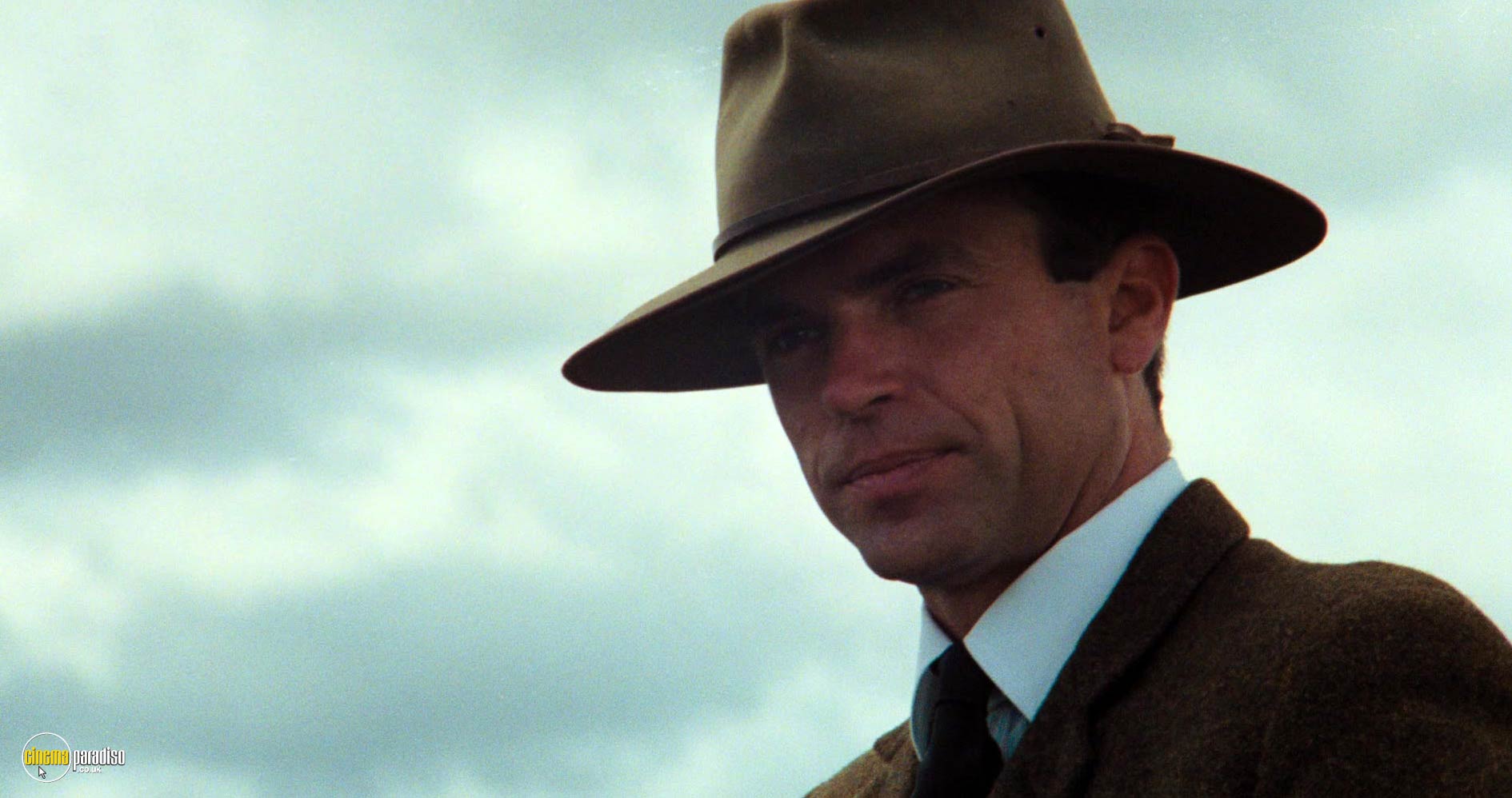
Receiving three times his National Film Unit salary for the role, Neill decided to base himself in Sydney, where there were plentiful roles in such miniseries as The Governor (1977), Young Ramsay, and Lucinda Brayford (both 1980). He also got to co-star with emerging talents like Mel Gibson, as he flew to Taiwan to play Sergeant D. J. Costello battling the Japanese in Tim Burstall's Attack Force Z (1981). Yet, even though he made a persuasive war hero, he did not impress his father, who didn't consider acting to be a man's profession. 'He never spoke about it much,' Neill later reflected. 'He'd say things like, "What are you up to?" and I'd say, "Well, I'm doing a film in France." And he'd say, "Oh, raining here again."' When Dermot died, however, Neill found two large scrapbooks full of press cuttings and admitted, 'I had no idea he was interested.'
One man who had no doubts about Neill's talent was James Mason. He had seen My Brilliant Career at Cannes and got hold of Neill's number. 'I picked up the phone,' he remembered, 'very puzzled, and a strangely familiar voice said, "Hello, this is James Mason. You don't know me, but my wife and I watched your film My Brilliant Career, and we think you're good. And what is more, we think you should be working beyond Australia. So I'm sending you an air ticket. We would like you to come and stay with us in Switzerland, and then go on to England and meet my agent. What do you say?"'
Mason had always been a hero, as Neill told The Guardian. 'I grew up loving British actors and British films - everything from Alec Guinness to John Mills and Alastair Sim. But the first one I really admired was James Mason, particularly after watching 20,000 Leagues Under the Sea, an absolute cracker. He had such tremendous charisma and became a mentor to me...He changed my life.' On the flight to Europe, Neill also got to see another idol at close quarters, David Niven. 'I was much too shy and nervous to say hello, but people were coming up from everywhere. I'm sure he just wanted to be left alone. But he was so courteous and delightful to each and every one of them. I thought, that's a lesson, right? That you treat people with proper civility even when you don't feel like it. He was wonderful.'
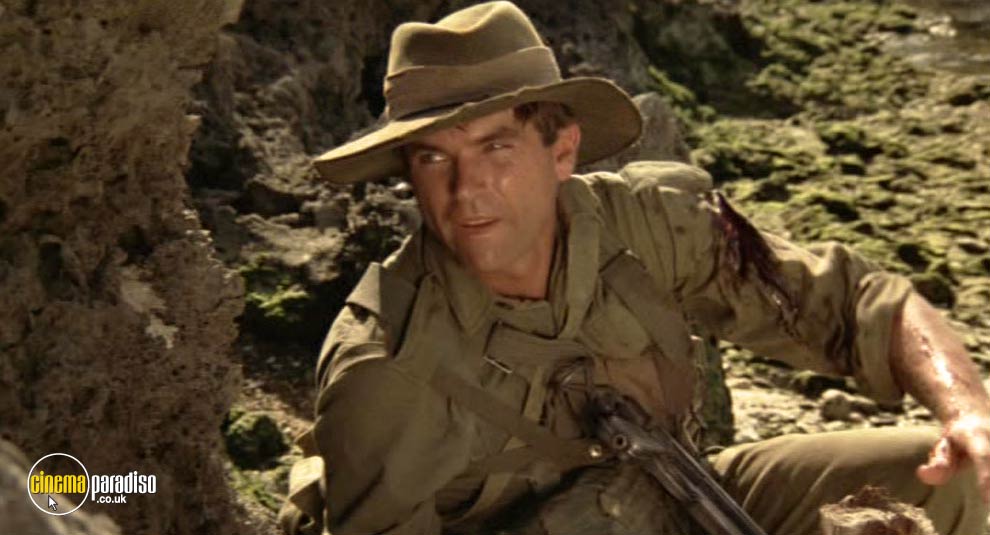
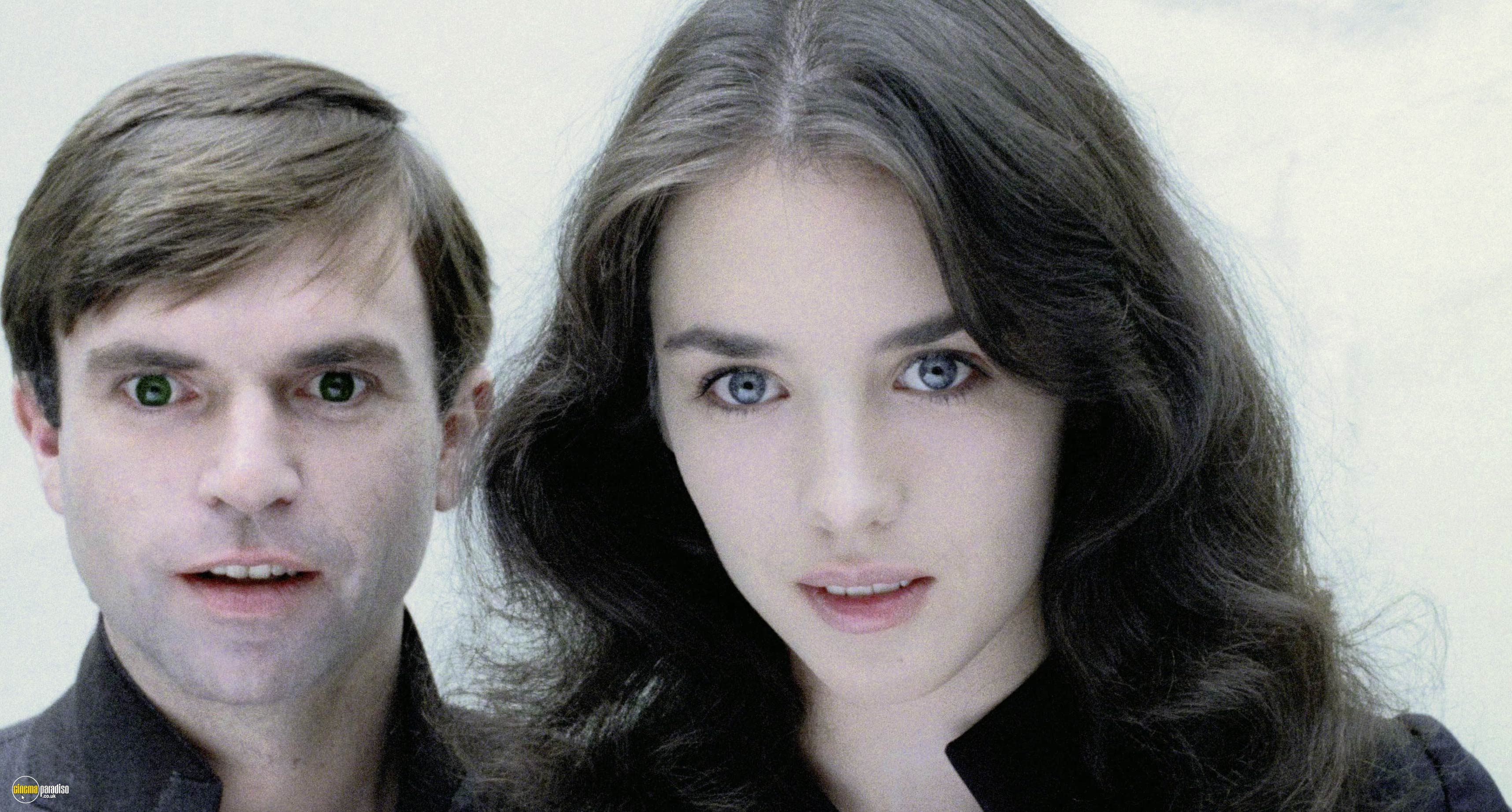
One of the first people to whom Mason introduced Neill was producer Harvey Bernhard, who promptly cast him as Damien Thorn in Graham Baker's Omen III: The Final Conflict. Looking back, Neill wrote, 'not the greatest film in the history of cinema, but I gave it a bash'. The reviews were mixed, but most agreed that Neill brought a dangerous charisma to the son of Satan. However, the scares were rather mild in comparison to those in Andrzej Zulawski's Possession (both 1981), in which Neill played Mark, a resistibly chauvinist spy, who returns to West Berlin to discover that wife Anna (Isabelle Adjani) has a taken a lover. However, he's infinitely preferable to the tentacled alien who comes between them.
'It's very extreme,' Neill explained years later, 'it's somewhere between arthouse, horror and action film, I don't know where it quite lies. It's very Polish and very brave, and Isabelle Adjani is astonishing in it. I was asked to go to places I'd never been asked to before, and certainly not since. It was straight after The Omen, and I found myself right in the middle of extreme arthouse European cinema. I couldn't have been happier.' Adjani won the prize for Best Actress at Cannes, but the film was treated as a 'video nasty' in the UK, although Cinema Paradiso users can rent the uncut version.
Another Pole, Krzysztof Zanussi, offered Neill a very different part in From a Far Country (1981), as he played new wife Lisa Harrow's brother, Marian, an Auschwitz survivor who becomes a Catholic priest and is protected from the Communist authorities by Karol Wojtyla (Cezary Morawski), who would go on to become Pope John Paul II. And to think, 1981 could have been an even bigger banner year if Neill had been chosen for the role of Indiana Jones in Steven Spielberg's Raiders of the Lost Ark. Harrison Ford got the nod, but Spielberg noted Neill for future reference.
He considered Jeannot Szwarc's Enigma to be 'one of the best films I was lucky to be in', as he was cast as KGB agent Dimitri Vasilikov opposite Martin Sheen's American-born East German dissident, who is duped by the CIA into going into East Berlin to steal a Soviet code scrambling device. Based in London during this period, Neill also got to work with James Mason in Douglas Camfield's take on Sir Walter Scott's Ivanhoe (both 1982), as they played the villainous Sir Brian de Bois-Guilbert and Jewish money-lender, Isaac of York, alongside Anthony Andrews's Sir Wilfred and Lysette Anthony's Lady Rowena in a teleplay that has become a New Year's Day tradition in Sweden.
Ace in the Pack
Up to this point, Neill had primarily been a supporting player, as he would be again as Mr Gentleman in Desmond Davis's TV-take on Edna O'Brien's The Country Girls, which co-starred Maeve Germanine as Kate and Jill Doyle as Baba. But he seized his opportunity to play a dashingly heroic lead in Reilly, Ace of Spies (both 1983), which was adapted by Troy Kennedy Martin from a book by Robin Bruce Lockhart about Russian-born adventurer and womaniser, Sidney Reilly, and his own father, Robert Hamilton Bruce Lockhart, the fellow agent who is played by Ian Charleson. Spanning the period 1901-25, the 12 episodes chronicle Reilly's involvement in the run-up to the Great War, the conflict itself, and the Russian Revolution and its aftermath. With a cast filled with famous faces, it makes for compelling viewing on an historical level, but also because Neill is so much at home as the man who was reportedly Ian Fleming's model for James Bond.
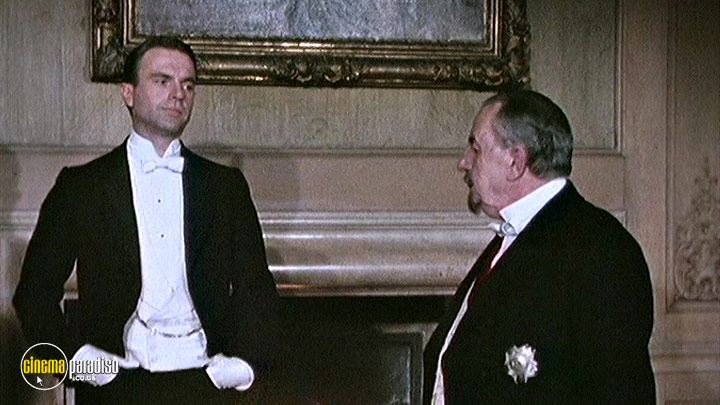
Neill received a Golden Globe nomination for Best Actor in a Miniseries or Television Film. However, he also came to the attention of Cubby Broccoli, who invited him to audition to replace Roger Moore as 007. 'I think I've done three auditions in my life,' Neill later averred, 'and the other two I failed. I was bullied into auditioning for James Bond by my bully agent, and failed that. The other - and I quite wanted to do this one, unlike Bond - was for Pretty Woman. They said someone else was better on both occasions, and they were right, of course.' He didn't seem to relish his brush with cinema's most celebrated spy. 'I felt so awkward all that day when we made that thing,' he later revealed. 'It went on and on and on. I'm so relieved they offered it to someone else. You really don't want to be the Bond that no one likes. That's a fate worse than death.'
Timothy Dalton landed the role in John Glen's The Living Daylights (1987), but the gossip put Neill firmly in the Fleet Street spotlight, although the columnists were soon to discover that he was a tricky customer to pin down. One even complained, 'He doesn't have a drink problem. He's not had to battle with drugs. He's no gambler. He's secure in his sexuality. He's not a hell-raiser and he eschews the celebrity lifestyle, which he considers somewhat distasteful.' Neill joked that his Presbyterian upbringing meant that he had 'feelings of guilt if I'm not in bed by midnight'. On being informed he was a sex symbol, he scoffed, 'most of us bumble and fumble about in bed as much as we do in the rest of our lives'.
Now a familiar face, Neill went to Paris to play Nazi administrator, Dieter Bergman, alongside Jodie Foster and Michael Ontkean in Claude Chabrol's The Blood of Others (1984), an adaptation of a Simone De Beauvoir novel that was released as a three-hour English-language mini-series and as a cut-down feature. He then teamed with Peter Strauss to play the patrician William Lowell Kane and the immigrant Abel Rosnovski in a mini-series version of Jeffrey Archer's bestseller, Kane and Abel (1985).
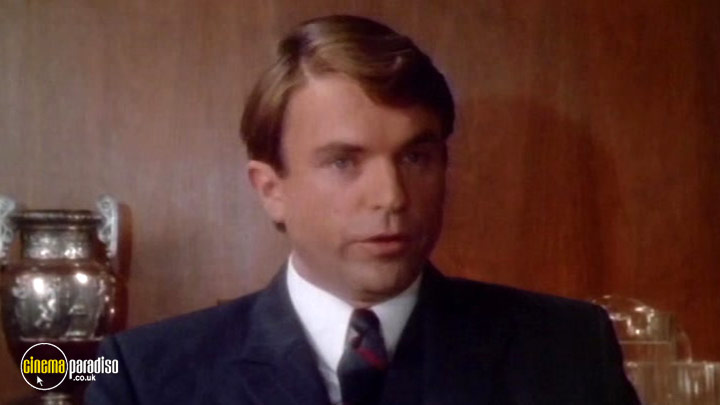
Returning to Australia, Neill followed Peter Finch in playing notorious bushranger Captain Starlight in Donald Crombie and Ken Hannan's remake of Robbery Under Arms (1985), Rolf Boldrewood's 1888 bush classic that had previous been filmed by Jack Lee in 1958. Making sure Neill earned his fee, a feature and a mini-series were shot simultaneously, but neither is on disc in the UK.
Cinema Paradiso can bring you Neill's two encounters with Meryl Streep, however, in which he more than held his own. In Fred Schepisi's adaptation of David Hare's play, Plenty (1985), Lazar and Susan Traherne have a one-night stand after being dropped into Occupied France during the war. Years later they meet again, when she is married to diplomat Raymond Brock (Charles Dance). Schepisi was also in the director's chair for A Cry in the Dark (aka Evil Angels, 1988), which retold the ordeal of Michael and Lindy Chamberlain after she was arrested for the murder of her baby after the police refused to believe her story that it had been snatched by a wild dingo. Streep's Aussie accent raised eyebrows, but she earned an Oscar nomination and many felt Neill was unlucky to miss out for his stoic display as her trustingly religious spouse.
In between these assignments, Neill joined Stephen Wallace's adaptation of Christina Stead's 1930s novel, For Love Alone (1986), in which Teresa Hawkins (Helen Buday) dallies with both Latin professor Jonathan Crow (Hugo Weaving) and liberal banker, James Quick (Neill). Naomi Watts made her debut in this involving drama, but it's currently out of reach, unlike Ken Cameron's The Good Wife (aka The Umbrella Woman, 1987), which sees lusty Neville Gifford seize his opportunity when the marriage of Sonny (Bryan Brown) and Marge Hills (Rachel Ward) comes under strain in pre-war Australia. He next played Vince Lord in the Arthur Haley adaptation, Strong Medicine (1986), KGB operative Colonel Andrei Denisov in a Soviet-run United States in Amerika (1987), and Oscar Ogg, the husband who supports his cancer-stricken wife (Anne Archer), in Stephen Gyllenhaal's teleplay, Leap of Faith (1988).
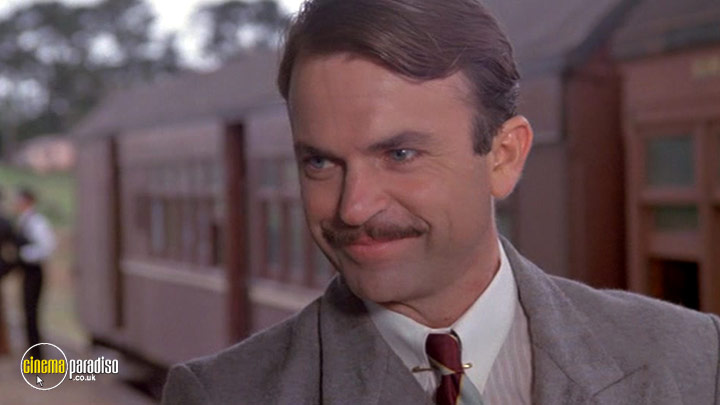
Having missed out Hans Gruber to Alan Rickman for Die Hard (1988), Neill landed a cult thriller of his own as naval officer John Ingram and his wife, Rae (Nicole Kidman), who go on a yachting trip while grieiving for the son who was killed in a car crash. However, life aboard the Saracen becomes complicated after the couple pick up the supposedly stranded Hughie Warriner (Billy Zane). Philip Noyce's Dead Calm (1989) would earn eight Australian Film Institute nominations, but none for the leads, who excelled in roles that Orson Welles had earmarked for Michael Bryant, Oja Kodar, and Laurence Harvey when he had attempted to adapt Charles Williams's novel as The Deep in the 1960s. Whatever you do, don't watch this in a double bill with Roman Polanski's Knife in the Water (1962) - you have been warned.
Mr Versatile
Having guested as Lafayette in the epic bicentennial saga, La Révolution française, Neill assumed the pseudonym John Dermot (from his birth name) to cameo as a TV reporter in Mitsuo Yanagimachi's Shadow of China (1989), as a favour to future wife, Noriko Watanabe, who was doing the make-up. He then found himself playing another Russian, Executive Officer Vasily Borodin, aboard the submarine skippered by rogue commander Marko Ramius (Sean Connery) in John McTiernan's thrilling adaptation of Tom Clancy's The Hunt For Red October (1990), which cast Alec Baldwin as CIA analyst Jack Ryan.
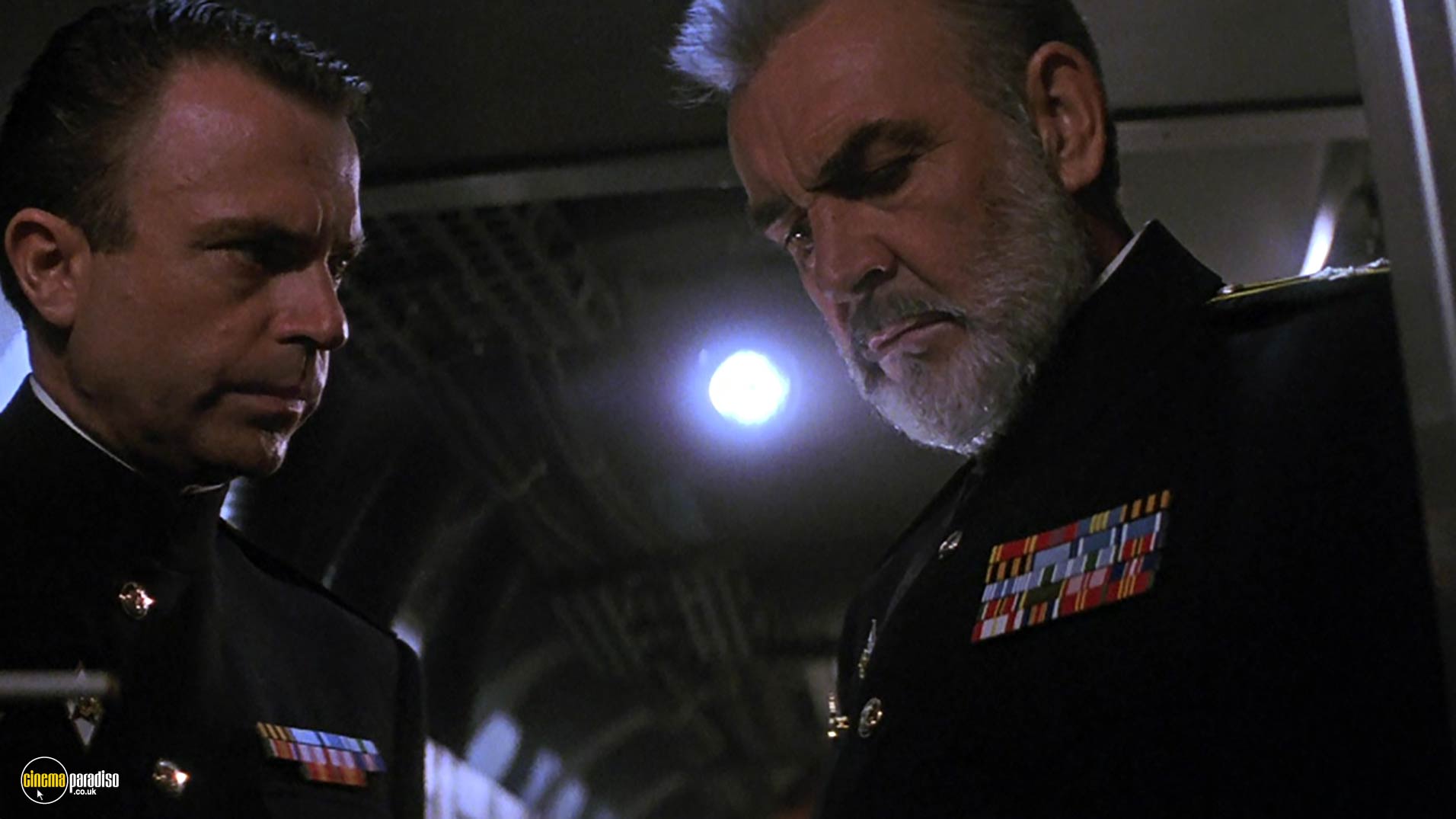
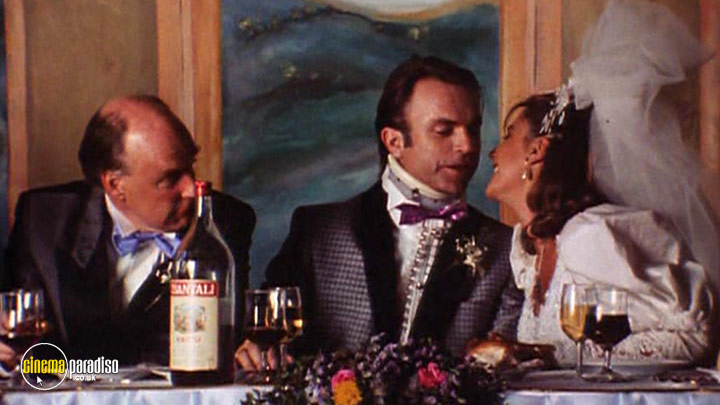
Heading homewards, Neill reminded audiences of his flair for comedy in John Ruane's take on Boyd Oxlade's cult novel, Death in Brunswick (1990), as Carl 'Cookie' Fitzgerald lands a job in a seedy Melbourne nightclub, begins a relationship with barmaid Sophie Papafagos (Zoe Carides), and tries to bury the body of the drug-dealing co-worker he has killed in self-defence with one of his kitchen knives. Pitch dark and deadpan, this is a gem that we recommend rather more enthusiastically than Wim Wenders's Until the End of the World (1991), in which Neill played Eugene Fitzpatrick, the cheating boyfriend of Claire Tourneur (Solveig Dommartin), who embarks upon a jaunt around the world after falling in with fugitive Sam Farber (William Hurt). Cinema Paradiso offers the 179-minute version of this meandering epic, although there is a director's cut that weighs in at 287 minutes. With its innovative dream sequences, this has its moments, but it requires patience.
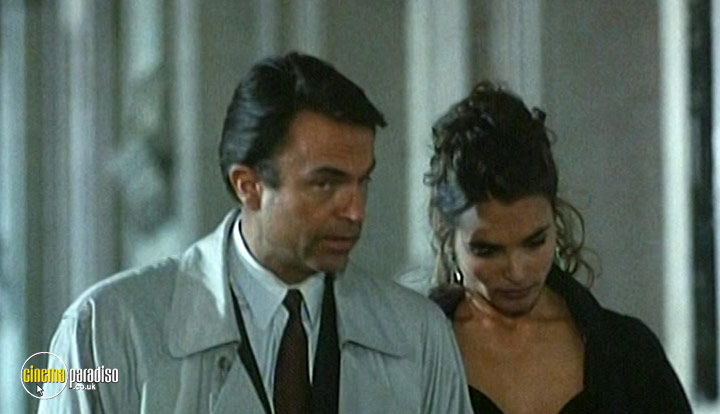
Neill's next two teleplays, Fever and One Against the Wind (both 1991), were directed by Larry Elikann and respectively cast him as Elliott (trying to rescue girlfriend Marcia Gay Harden from kidnappers) and as Major James Leggatt opposite Judy Davis, as true-life Great War nurse and Maquis fighter Mary Lindell. He drew another Golden Globe nod for the latter, but it's not on disc. We can, however, bring you John Carpenter's Memoirs of an Invisible Man (1992), which cast Neill as shady CIA agent David Jenkins opposite Chevy Chase's elusive San Francisco stock analyst. The comedy was widely slated, but it was more seen than Robert Young's Hostage (both 1992), in which Sectret Service eliminator John Rennie makes two fatal mistakes while on a mission in Argentina, where falling in love results in an error of judgement that makes him a hunted man.
Despite such assignments taking him to Hollywood, Neill resisted making a permanent move. 'I didn't love LA,' he told a reporter. 'I really didn't like living there. We went there for a year and a half and I wasn't happy. There was nothing but show business. No other conversations, no other interests. It bores the sh*t out of me. That's why my life now is half performance and half rural. I farm, I grow wine, and that keeps me sane. If I was only doing one, I'd go absolutely nuts.'
Annus Mirabilis
Sam Neill made four films in 1993. Few remember him being alongside Anjelica Huston, as Lainey and David Eberlin discover that their son has autism in two episodes of Philip Saville's Family Pictures or him playing Auckland police detective Alan Galbraith, investigating the 1985 bombing of a Greenpeace ship in Michael Tuchner's The Rainbow Warrior. The other two titles, however, have gone down in screen history.
Jane Campion became the first woman to win the Palme d'or at Cannes with The Piano, which shared the award with Chen Kaige's Farewell My Concubine (both 1993). Inspired by Emily Brontë's Wuthering Heights and C.S. Forester's The African Queen - which were memorably filmed by Emerald Fennell in 2026 and John Huston in 1951 - the story is set in a remote part of 19th-century New Zealand and follows electively mute Scottishwoman, Ada McGrath (Holly Hunter), and her daughter, Flora (Anna Paquin), for her arranged marriage to settler, Alisdair Stewart (Neill). He refuses to have her grand piano carried from the beach to his property, but neighbour George Baines (Harvey Keitel) is obsessed with the instrument and the change it brings in Ada when she plays.
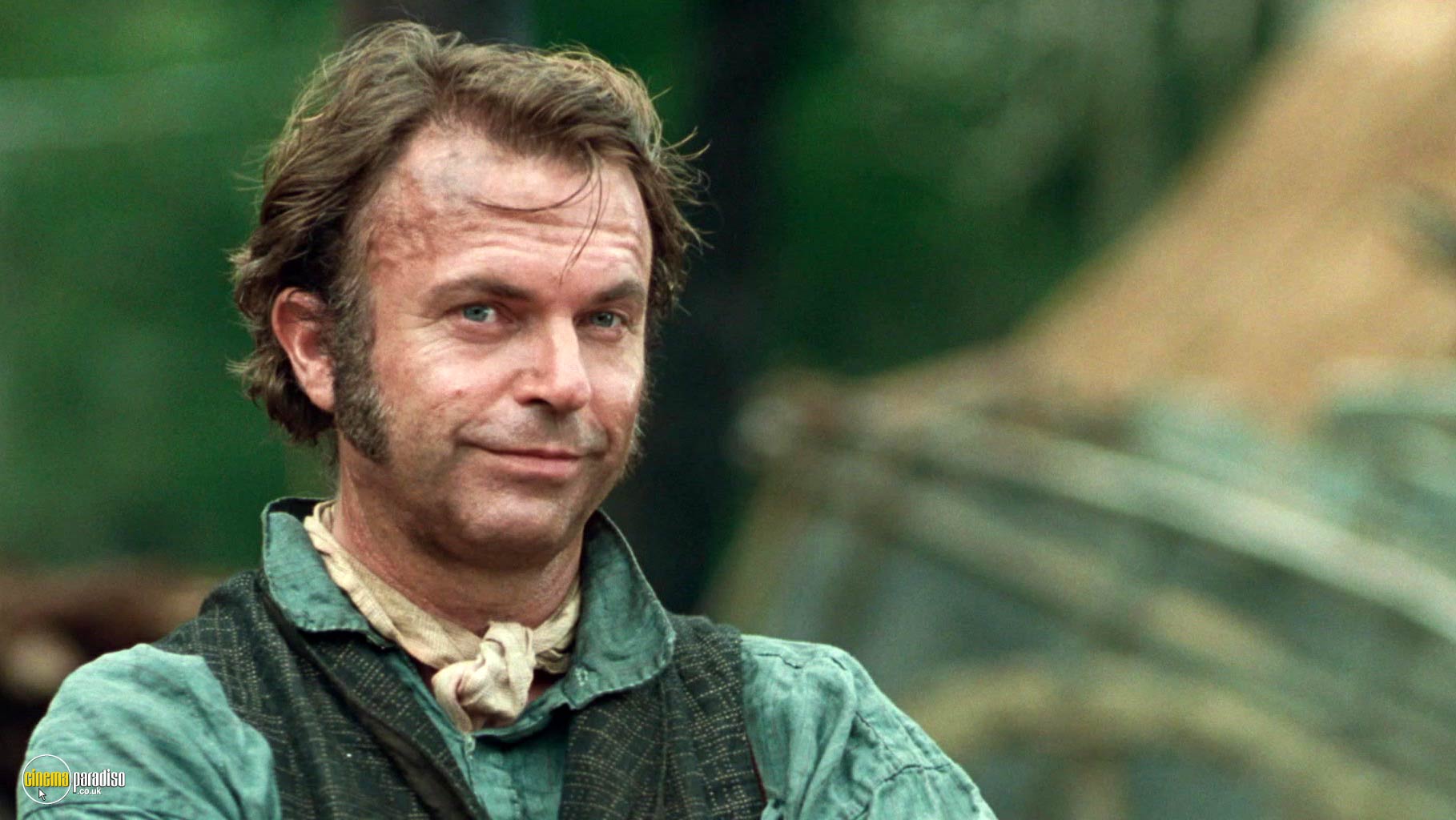
Remarkably, Neill managed to make an emotionally sterile and, at one point, furiously brutal, man seem sad and empathetic. 'His faults are manifest,' Neill explained. 'But, of course, it's the other dimensions you can bring to a character that give them depth and interest and, with luck, some humanity...I felt [that] instead of the usual six or seven layers of skin, he only has two. He is raw, tender and vulnerable. And there is pathos to be found in someone like that. That pathetic quality has a comic dimension as well.'
Neill tried to get to know his American co-stars during the shoot, but they were too wrapped up in their Method processes to respond. However, he greatly admired their work, as Hunter and Paquin won Oscars, along with Campion for her original screenplay. Neill remained immensely proud of his involvement in The Piano: 'It sits on my funny old CV like a medal on my chest,' he wrote. 'I was there in an important feminist film. I was there on the front line in an important New Zealand film. Neither of these labels does the film justice. It's a work of art. And look, that tiny little figure in the fabric - see down there on the right - that's me. It's a film that will always have a place in cinema history. And I served in it.'
Amusingly, Neill didn't expect the picture to make him a star. He told a reporter, 'If you're the bloke who takes off somebody's finger in a film, you are not going to be the pin-up for somebody who's 25 years old and lives in Delaware. Same thing if you're in a big Spielberg film in which the principal attraction is dinosaurs.'
Harrison Ford had been Steven Spielberg's first pick for paleontologist Dr Alan Grant in his adaptation of Michael Crichton's bestseller, Jurassic Park (1993). When he declined, William Hurt was pursued. He also opted out, so, with a month until the cameras started to role, the director remembered Neill's performance in Dead Calm and felt he could bring both a cranky edge and a dogged decency to the role, alongside paleobotanist Ellie Sattler (Laura Dern) and mathematician Ian Malcolm (Jeff Goldblum) at the theme park created by John Hammond (Richard Attenborough) on the tropical island of Isla Nublar, off the Costa Rican coast.
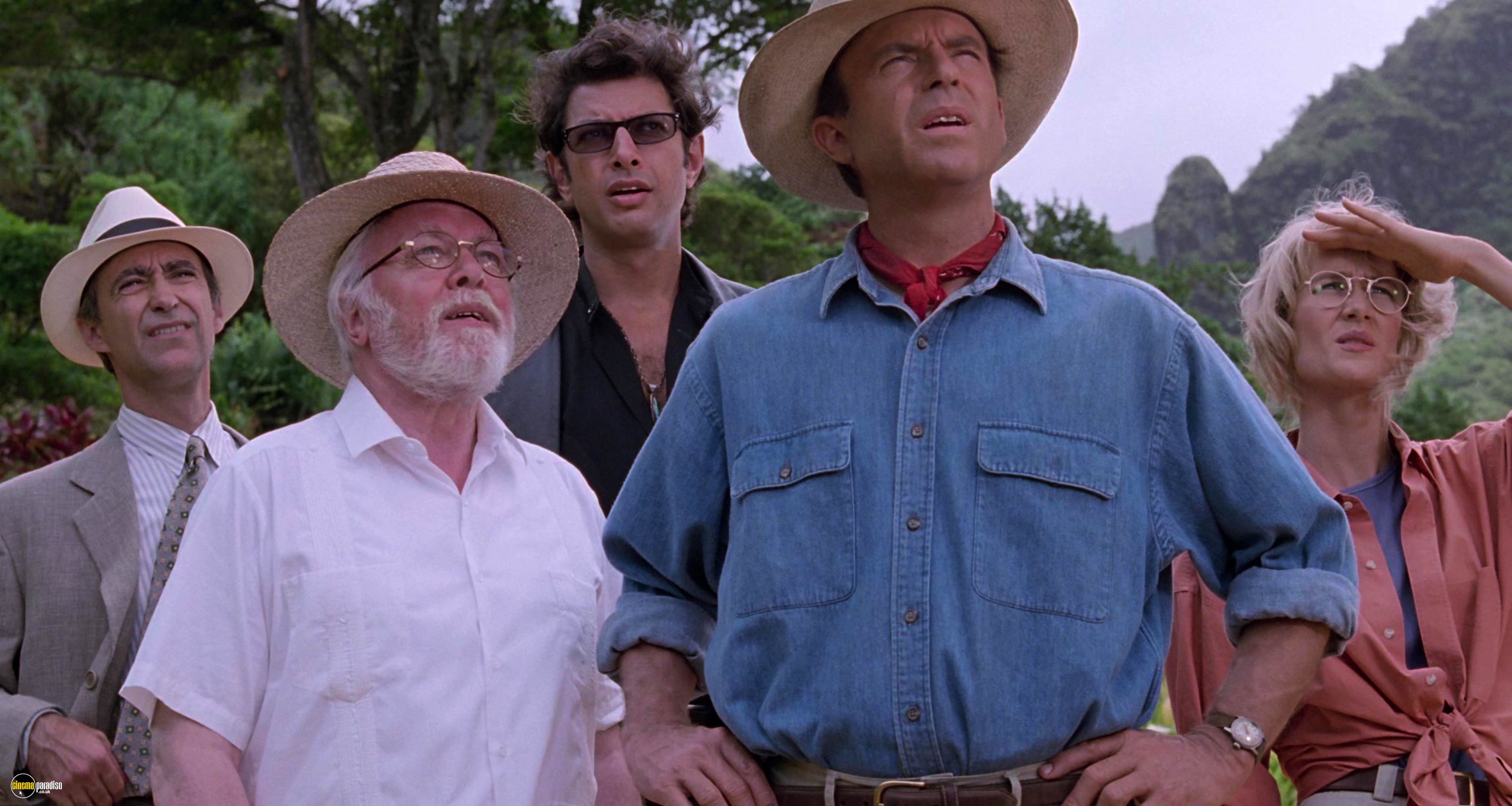
The role made Neill instantly recognisable to a generation of young moviegoers and he always joked that he preferred being called 'Dr Grant' by fans than being mistaken for Hugo Weaving. 'It all happened real quick,' Neill recalled. 'I hadn't read the book, knew nothing about it, hadn't heard anything about it, and suddenly I'm working with Spielberg.' He didn't enjoy the shoot, however, as Hurricane Iniki wreaked havoc on the Hawaiian island of Kauai, leaving the cast and crew to seek shelter in the ballroom of their hotel. As winds reached 225mph, the chandeliers shook and the power failed. 'We thought we'd be destroyed,' Neill confessed and remembered telling Laura Dern when she asked if they were going to die, 'Yes, I think we might, Laura.' Six people lost their lives in the storm, which levelled the film sets. But Spielberg used the hurricane footage in the finished film.
Neill was also frustrated because Spielberg couldn't decide which accent he should use. 'He came up to me halfway through the day,' he told The Guardian, 'and he said, "Hey, Sam, you know the accent we were talking about?" I said, "Yeah, I've been working on it for four weeks..." He said, "Don't worry about it, just use your own voice." I said, "That's great, Steven, thank you so much." And then four days later, he came up to me and said, "You know that voice you're using now?" I said, "Yeah, my voice?" He said, "Somewhere in between." It's an actor's nightmare! So that's why I get a lot of flak to this day: Sam Neill's American accent in Jurassic Park was a load of T.Rex poo.'
Topping E.T. The Extra-Terrestrial (1982), Jurassic Park became the highest-grossing film in cinema history. However, it only held the record for four years before it was swept aside by James Cameron's Titanic (1997). The blockbuster success led to new levels of recognition to which Neill was not accustomed. As he later reminisced, 'The offer to star in Jurassic Park was a red-letter day. Anything Spielberg touched was gold, yet I had no idea what a cultural phenomenon it would become. I'm now associated with dinosaurs, and the older I get, the more I look like one myself.'
He wasn't required for Spielberg's sequel, The Lost World: Jurassic Park (1997). Yet, he was forced to turn down an unspecified part in Peter Jackson's The Lord of the Rings cycle in order to return in Joe Johnston's Jurassic Park III (2001). Eleven years later, Neill would reunite with Dern and Goldblum for Colin Trevorrow's Jurassic World: Dominion (2022). He told an interviewer, 'I always think Alan Grant is like an old comfortable pair of boots. They've seen better days, but they're really comfortable, and there's no way you'll get rid of those. Of course, you put on the comfortable boots and the hat, and you're back in it.' He also noted, 'What was familiar is what's true of all the Jurassic films, they're not dinosaur films. These are films about people, ordinary people like a paleontologist or a mathematician, but in very, very extreme situations. It's the people that generate these films. You can't have a movie with a dinosaur as the lead because the dinosaurs have very limited interests. They just want to breed and eat things.'
Mr Versatile
Whether he liked it or not, Sam Neill was now a star. But he played down his fame. 'As an idle man, I seem to work a lot,' he once joked, 'but basically I'm an idler, I'm not sure I have the application.' He was certainly big enough to be included in David Thomson's fabled tome, The New Biographical Dictionary of Film. 'There's a Sam Neill.' he wrote, 'who seems always there in large films, watching Meryl Streep or the dinosaur with the basic common sense that knows all stars are alike. That actor has been a patient, loyal servant to great ladies...Then look again, and see what a wry, watchful actor he is, [of] considerable intelligence.'
Despite claiming, 'I'm just Mr Triviality, as shallow as my washbasin. No deep glacial lakes of profundity here,' Neill was aware of his talents. 'I'd like to think,' he said, 'I'm able to suggest ambiguities and complexities in the people I play, because I think all of us have hidden aspects or contradictory qualities. I think that's what makes us interesting as human beings, and that's what makes human beings interesting to play.' He was also delighted that his new status led to him being cast as Molloy in the 'Homer the Vigilante' episode of The Simpsons (1989-). 'I'm playing a cat burglar,' he confided to a reporter. 'I've made it. This is the high point of my career. I'm really chuffed.'
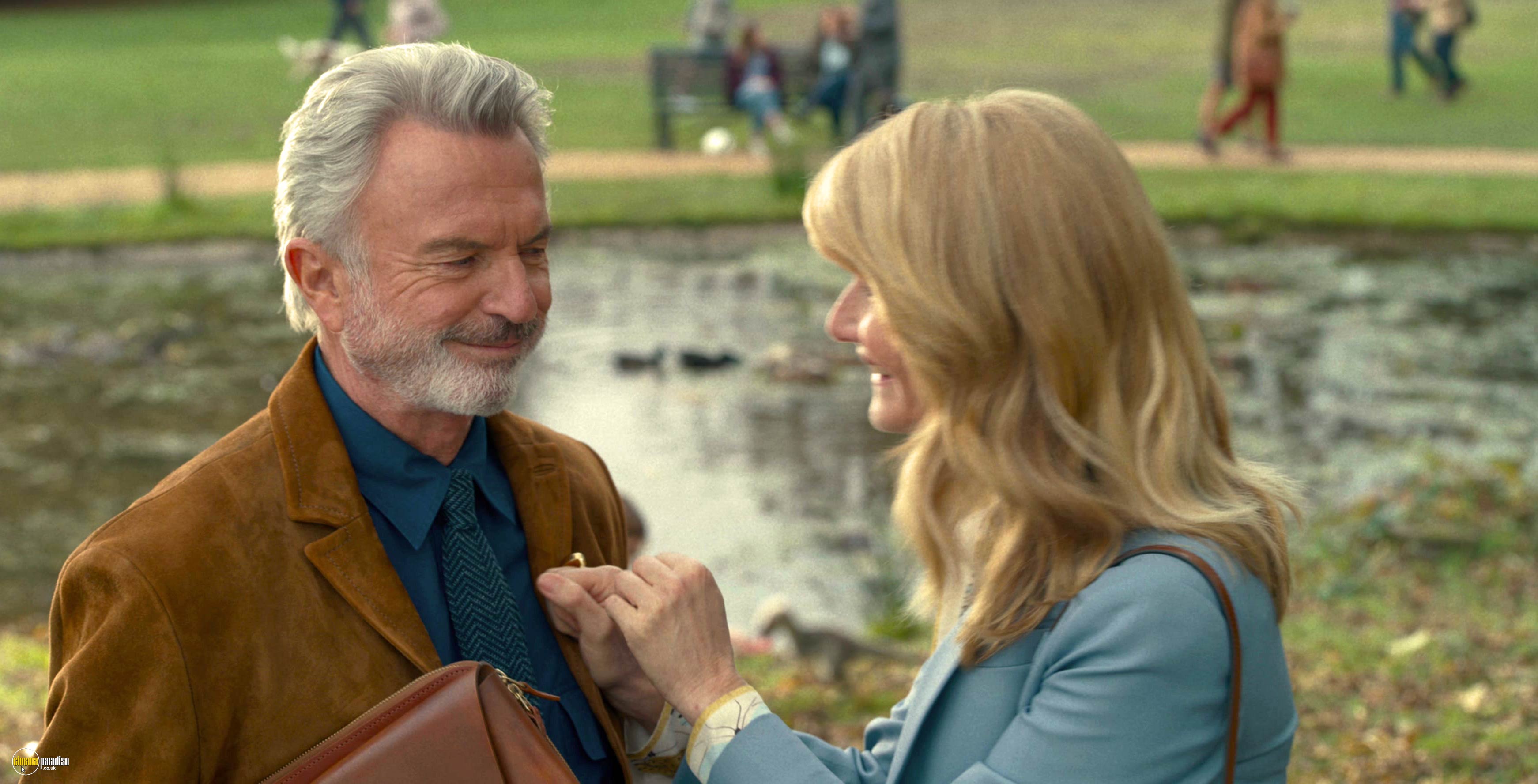
Returning to live-action, Neill oozed roguish charm as painter Norman Lindsay in John Duigan's Sirens, which sees 1930s Anglican vicar Anthony Campion (Hugh Grant) and his wife, Estella (Tara Fitzgerald), taking exception to the louche behaviour at the Blue Mountains compound, where wife Rose (Pamela Rabe), maid Giddy (Portia de Rossi), and models Sheela (Elle Macpherson) and Pru (Kate Fischer) all pose for the notorious artist. However, Neill was to be the one being taken aback in John Carpenter's In the Mouth of Madness (both 1994), as insurance agent John Trent believes that an outbreak of mass hysteria is a publicity stunt linked to the strange disappearance of major horror writer, Sutter Cane (Jürgen Prochnow). The critics weren't overly impressed by this Lovecraftian horror, which came between The Thing (1982) and Prince of Darkness (1987) in Carpenter's 'Apocalypse trilogy'. However, it has since acquired a cult following, with Neill's performance being highly valued.
Elsewhere in a busy year, Neill's Dr Max Askey competed with John Hargreave's Jack Dickens for the affections of Greta Scacchi's Deborah Voysey in Michael Blakemore's Country Life, an adaptation of Anton Chekhov's Uncle Vanya that was set in post-Great War Australia. He also narrated and played Colonel Geoffrey Brydon in Stephen Sommers's live-action retelling of Rudyard Kipling's The Jungle Book (1994). Back in Blighty, he had a ball playing Charles II in Michael Hoffman's Restoration (1995), later calling it 'A dream part, like a pavlova cake, and I consumed it with gusto. I looked so fabulous I hardly needed to act, but I acted my pants off anyway.'
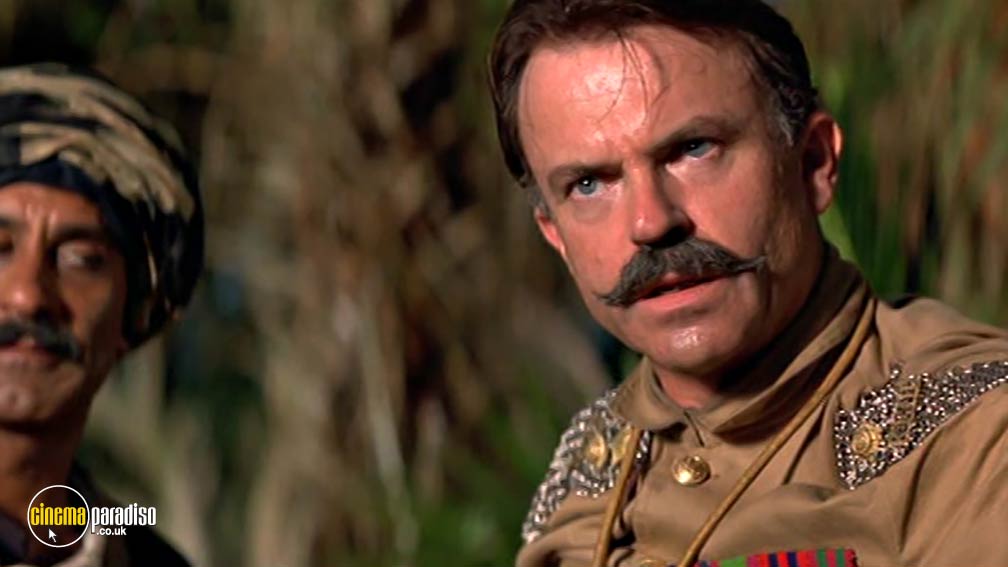
Sadly, this historical romp isn't currently on disc and the same goes for Neill's reunion with Judy Davis in Peter Duncan's Stalinist satire, Children of the Revolution, and Mark Peploe's handsome adaptation of Joseph Conrad's Victory, which cast Neill as the murderous Mr Jones seeking to teach drifter Axel Heyst (Willem Dafoe) a lesson on a remote Indonesian island. Regrettably, we also can't lay hands on Neill's turn as Agent Alvin Dewey in a mini-series remake of Truman Capote's In Cold Blood (all 1996) or two featurettes produced for the centenary of cinema. In addition to being the on-screen guide, Neill also co-wrote and directed Cinema of Unease: A Personal Journey By Sam Neill with Judy Rymer. And this invaluable survey of New Zealand cinema was accompanied by Peter Jackson and Costa Botes's mockumentary, Forgotten Silver (1995), in which Neill's narrator claims that Kiwi film pioneer, Colin McKenzie, accidentally invented the close-up, the tracking shot, colour, and sound. This is an absolute gem, but, as with so many key New Zealand titles, it's not available on disc. Why, people?
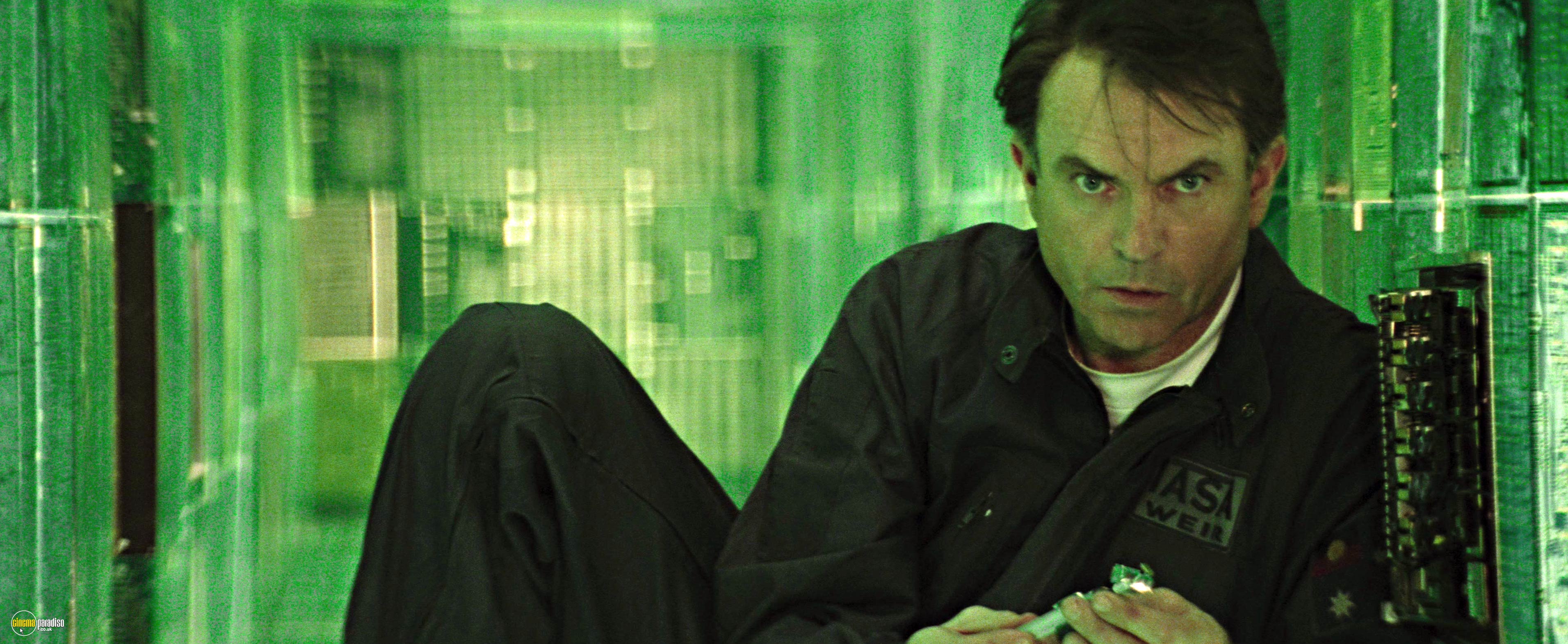
We get back on track with Michael Cohn's fairytale horror hybrid, Snow White: A Tale of Terror, which pairs Neill and Sigourney Weaver as 15th-century German nobleman, Lord Fredrick Hoffman, and his second wife, Lady Claudia Alvise, who takes a dislike to her teenage stepdaughter, Lilliana (Monica Keane). However, we leap forward to 2047 for Paul W.S. Anderson's Event Horizon (both 1997), which sees Dr William G. Weir board the Lewis and Clark under Captain S.J. Miller (Laurence Fisburne) in a bid to recover the eponymous spacecraft he had designed and which had appeared near Neptune after mysteriously disappearing seven years earlier. Much truncated after Paramount objected to the gore and the running length, the film flopped at the box office after disdainful reviews. But this sci-fi shocker has gathered a faithful following, who are fond of quoting Weir's eerie line, 'Where we're going, we won't need eyes to see.' Curiously, Neill stayed in A.A. Milne's old house during the shoot and he remarked that 'It was strange going from the stark space horror to the comfort of little bears at night.'
From sinister scientist to supportive spouse, Neill played Robert MacLean trusting wife Annie (Kristin Scott Thomas) to behave herself with Tom Booker (Robert Redford), while he helps their teenage daughter, Grace (Scarlett Johansson), get over a life-changing accident in Redford's adaptation of Nicholas Evans's bestseller, The Horse Whisperer (1998). On reuniting with Scott Thomas later in the year, Neill found himself half-naked and being tied to a bed by Helena Bonham Carter as Henry Bell in Malcolm Mowbray's Sweet Revenge, which was based on Alan Ayckbourn's The Revengers' Comedies. Apologies that this particular curio isn't on the Cinema Paradiso books.
We can, though, offer Paul Cox's Molokai: The Story of Father Damien, in which David Wenham plays the 1880s priest running the Kalaupapa Leprosy Settlement on the Hawaiian island of Molokai, with Neill being hissably prudish as Walter Murray Gibson, the newspaper editor-turned-Prime Minister who opposes the compound. Also available is Chris Columbus's Bicentennial Man (both 1999), which was based on two stories by Isaac Asimov and casts Neill as Richard Martin, the head of the household in which Andrew the robot (Robin Williams) works. Initially, Martin encourages Andrew to express the creative side that had not been pre-programmed into him, only for him to turn against him when Andrew requests his freedom.
On the small screen, Neill took on the challenge of playing Camelot's resident wizard in Merlin (1998), an origin story mini-series that sees Daniel Brocklebank taking the title role in the early episodes. John Gielgud, Rutger Hauer, Isabella Rossellini, and Helena Bonham Carter formed part of the splendid ensemble. But it was Neill who collected the Primetime Emmy and Golden Globe nods for Best Actor in a Miniseries or TV Film and he reprised the role (to less acclaim) in Merlin's Apprentice (2006), alongside a returning Miranda Richardson as the Lady of the Lake and John Reardon as their son, Jack.
Mr Reliable
Neill started the new millennium Down Under, playing Professor Frank Mortlock, a poetry tutor who hates mature students in Mark Lamprell's My Mother Frank, which co-stars Sinéad Cusack and Matthew Newton as a widowed mother and her son who attend the same university. However, Neill was far more affable as Cliff Buxton in Rob Sitch's The Dish (both 2000), as he and underlings Glenn Latham (Tom Long) and Mitch Mitchell (Kevin Harrington) help NASA bod Al Burnett (Patrick Warburton) broadcast the Apollo 11 moon landing from the Parkes Observatory in New South Wales.
Having played US president Thomas Jefferson opposite Carmen Ejogo in Charles Haid's four-hour drama, Sally Hemings: An American Scandal, Neill voiced Sam Sawnoff in The Magic Pudding (2000). He also narrated 50 one-minute episodes of Leunig Animated, which celebrated the work of cartoonist Michael Leunig, as well as hosting the six-part documentary series, Space (both 2001), before he went on to narrate two war series, Gallipoli: The Frontline Experience (2005) and World War 1: The Great War (2008).
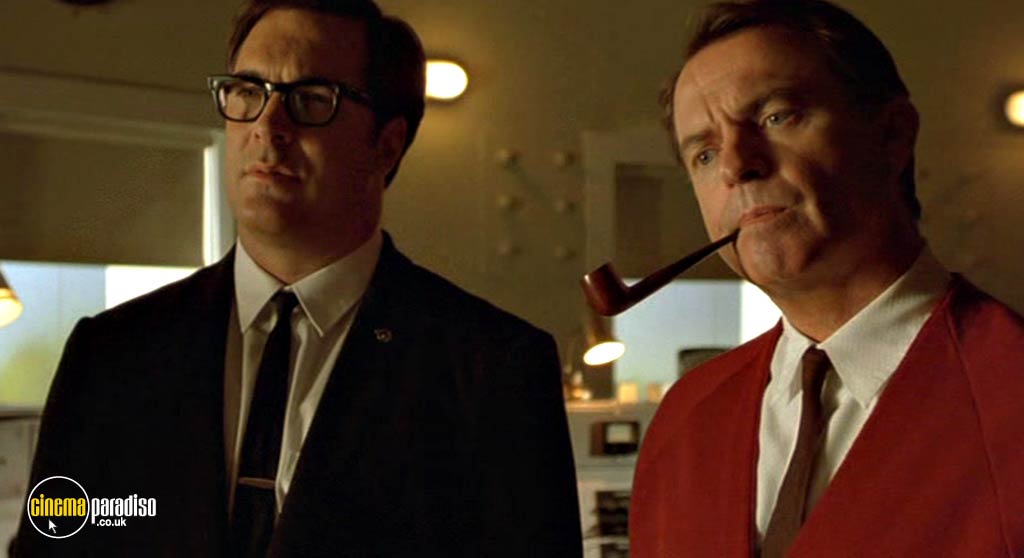
In demand for big- and small-screen projects, Neill played Lieutenant Commander Charles 'Swede' Momsen in James Keach's biopic, Submerged; ex-Communist official Jonah Ludovic helping to save animals after a civil war in Ralph Ziman's The Zookeeper (both 2001); the scheming Victor Komorowsky in Giacomo Campiotti's remake of Boris Pasternak's Doctor Zhivago, with Hans Matheson and Keira Knightley; and fugitive Eddie Meyers being brought in to testify in a money-laundering case in Daniel Petrie, Jr.'s Framed (both 2002).
He had fun with 'brother from another mother' Bryan Brown in David Caesar's Dirty Deeds (2002), in which detective Ray Murphy gives 1960s crime boss Barry Ryan and wife, Sharon (Toni Collette), plenty of grief. Then, he returned to New Zealand to play The Man, who abducts a woman (Rachel Blake) to his private island in Perfect Strangers (2003), an intense dramedy from Gaylene Preston, whose mini-series Bread & Roses (1993) really should be on disc. In Sally Potter's Yes (in which the dialogue is almost all in iambic pentameter), Neill was Anthony, the unfaithful husband of Irish-American microbiologist Joan Allen, who comes to regret having a fling with chef Simon Abkarian. Later that year, in Richard Loncraine's Wimbledon (both 2004), Neill was Dennis Bradbury, the father of rising tennis star Kirsten Dunst, who is being distracted en route to the final by journeyman pro, Paul Bettany.
Heading back to the Antipodes, Neill served as producer on John Clarke's teleplay, Stiff, a political thriller about a minister caught up in a murder, in which he took the minor role of Lionel Merricks. However, he was much more prominent in Peter Andrikidis's mini-series adaptation of Bryce Courtenay's novel, Jessica (both 2004), in which washed-up lawyer Richard Runche seeks to free a young woman (Leeanna Walsman) from an asylum at the turn of the last century. Earning Neill AACTA and Logie nominations, the mini-series also reunited him with Lisa Harrow, who played Jessica's mother.
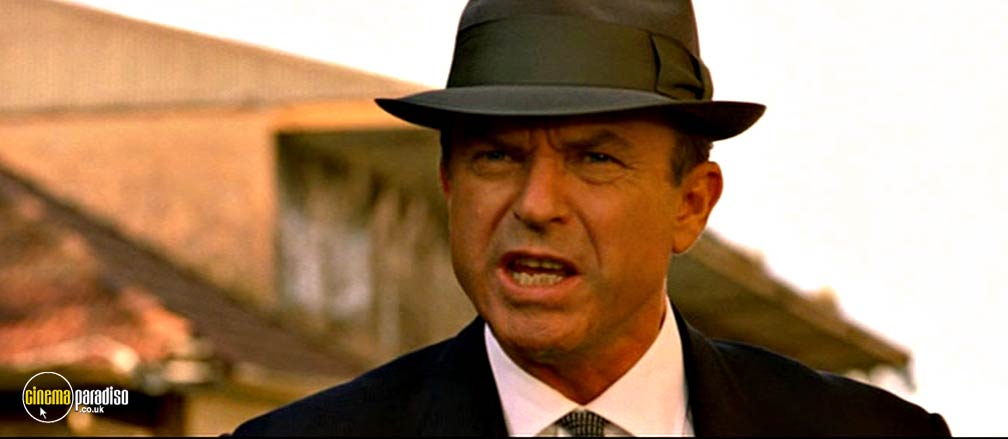
It's curious that this show isn't on disc in the UK, when Neill's next three small-screen assignments all are. Again directed by Peter Andrikidis, The Incredible Journey of Mary Bryant stars Romola Garai as the Cornish girl who is transported to Australia for shoplifting in 1787, but doesn't remain in Botany Bay for long under Governor Arthur Phillip. Although it tweaked the truth to make the heroine seem less criminous, this is a compelling odyssey and is well worth a watch. As is David Attwood's To the Ends of the Earth, which moves the scene to 1812 to show how Mr Prettiman impacts upon the life of the aristocratic Edmund Talbot (Benedict Cumberbatch) when he sails to Australia. Based on William Golding's novel trilogy, this BBC series was followed by Rockne S. O'Bannon's The Triangle (all 2005), in which Neill plays shipping magnate Eric Benirall, who has lost several vessels in the Bermuda Triangle. However, he has a hidden motive for mounting an expedition to uncover the zone's secrets.
The Cabramatta district of Sydney provides the setting for Rowan Woods's Little Fish, which cast Neill as Brad 'The Jockey' Thompson, a retiring crime boss who was once the lover of Lionel Dawson (Hugo Weaving), the ex-rugby league star whose stepdaughter, Tracy Heart (Cate Blanchett), is trying to help him kick his heroin habit. This uncompromising crime drama (in which Neill's barnet had to be seen to be believed) was followed by a reunion with Bryan Brown as Mick in 'Von Stauffenberg's Stamp', an episode of Two Twisted (both 2005), the overdue follow-up to Twisted Tales (1996), a collection of unexpected vignettes that was revisited by Tom Holland in Twisted Tales (2014).
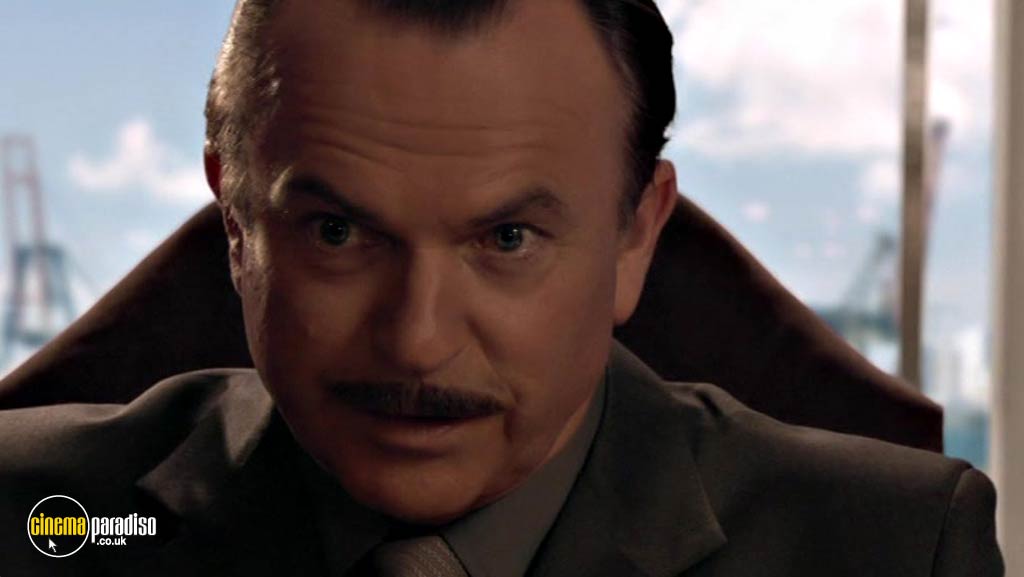
One of Australia's first female directors, Ann Turner paired Neill with Susan Sarandon in Irresistible (2006), in which book illustrator Sophie Hartley begins to suspect that husband Craig's new co-worker, Mara (Emily Blunt), is interfering in their lives. Another unpredictable young woman dominates François Ozon's Angel (2007), an adaptation of an Elizabeth Taylor Edwardian novel that sees London publisher Theo Gilbright take a chance on aspiring author, Angel Deverell (Romola Garai), against the advice of his partners and his wife (Charlotte Rampling). With Michael Fassbender as the caddish Esmé Howe-Nevinson, this was Ozon's first fully English-language feature, as the dialogue in Swimming Pool (2003) was partly in French.
Much of 2007 was taken with playing the son of an Ipswich butcher. The latest in a long line of films and TV series to delve into the life of Henry VIII, The Tudors (2007-10) sought to put a new spin on familiar events. Season One, therefore, follows the effort of Cardinal Thomas Wolsey (Neill), to persuade the pope to let Henry (Jonathan Rhys Meyers) marry his brother's widow, Katherine of Aragon (Maria Doyle Kennedy). Once the king becomes besotted with Anne Boleyn (Natalie Dormer), however, Wolsey's task becomes to convince Rome to annul the match so that the monarch can remarry. 'I have to say I really enjoyed making The Tudors,' he told a reporter. 'It was six months with a character that I found immensely intriguing, with a cast that I liked very much and with a story I found very compelling. It has elements that are hard to beat: revenge and betrayal, lust and treason, all the things that make for good stories.'
Staying on the small screen, Neill turned in a deliciously devious display as Jeremiah Blackthorn in 11 of the 13 episodes of Crusoe (2008-09), who is not sorry that Robinson Crusoe (Philip Winchester) has been lost at sea, as he is the rightful heir to the fortune that Blackthorn has wrongfully inherited from his late brother. He's just as resistible as contractor Alfred Nichol preventing son James (Luke Macfarlane) from romancing Little Tiger (Sun Li) in David Wu's mini-series, Iron Road (2009), which remembers the Chinese labourers who built the Canadian Pacific Railway.
Lord Dunsany's 1936 novella, My Talks With Dean Spanley, provided the inspiration for the film that contained what Neill insisted was 'My most difficult role ever.' Toa Fraser's Dean Spanley (2008) centres on the relationship between Henslowe Fisk (Jeremy Northam) and his crotchety father, Horatio (Peter O'Toole). However, Henslowe discovers a distraction when he and a wine conveyancer named Wrather (Bryan Brown) procure plentiful supplies of Hungarian Imperial Tokay because the amber libation persuades Anglican clergyman, Dean Spanley (Neill), to reminisce about his previous life as a Welsh Spaniel. Treasurably droll and filled with eccentric incidents, this is an utter delight that will improve the mood of anyone who has the good fortune to see it.
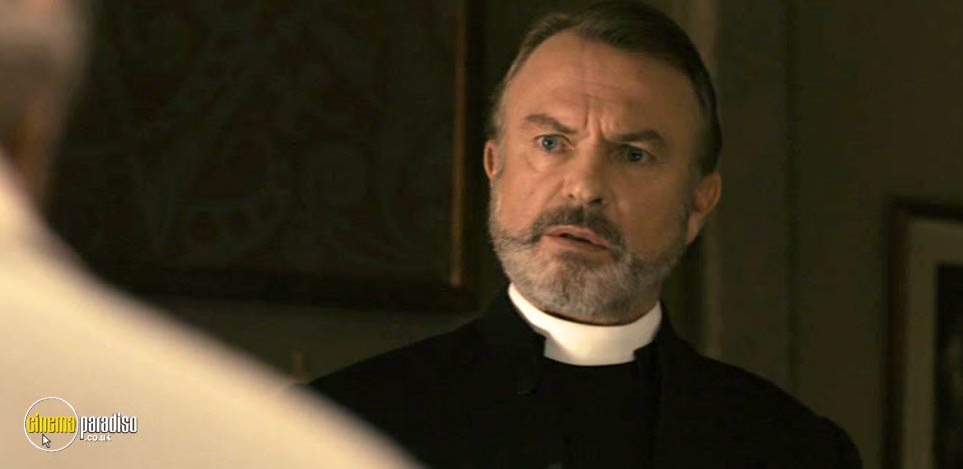
Anthony Fabian's Skin (2008) came next, telling the true story of Sandra Laing (Sophie Okonedo), a South African woman living under the apartheid regime who was classified as 'Coloured', even though parents Abraham (Neill) and Sannie (Alice Krige) are white Afrikaner shopkeepers from a remote corner of the Eastern Transvaal. While this harrowing story is available from Cinema Paradiso, another fact-based drama, Simone North's In Her Skin (2009), is not. Neill and Rachel Gibney played the parents of Caroline Reed Robertson (Ruth Bradley), the former babysitter of Melbourne dance student, Rachel Barber (Kate Bell), who goes missing in 1999 from the home she shares with parents, Mike (Guy Pearce) and Elizabeth (Miranda Otto).
For the second time, Neill played a character called Mr Jones in Jonathan King's Under the Mountain, an adaptation of a Maurice Gee novel that centres on the relationship that develops between Kiwi twins Rachel and Theo (Sophie McBride and Tom Cameron) and the old man they meet near the volcanic Lake Pupuke, who claims to belong to 'The People Who Understand'. But there's nothing welcoming about Charles Bromley in Peter and Michael Spierig's Daybreakers (both 2009), as he became a vampire in order to beat cancer and now runs the biggest blood supplier in an America in which the bulk of the population has become vampires because of a plague. Hematologist Edward Dalton (Ethan Hawke) is working on a blood substitute for the Bromley Marks corporation, but ex-vampire Elvis Cormac (Willem Dafoe) thinks he has found a cure. Revelling in his avaricious villainy, Neill was on the set for just three weeks and Peter Spierig told an interviewer that he was 'such a refined, articulate, intelligent guy' that it was tough to say, 'Now, I'm going to throw this bucket of blood all over you, is that all right?' and he's like 'Y-y-yeah...okay.'
Ever Busy
Fresh from voicing the villainous Allomere in Legend of the Guardians: The Owls of Ga'Hoole, Neill was seen in a clutch of documentaries, Jake West's Video Nasties: The Definitive Guide (2010), Mark Cousins's The Story of Film: An Odyssey, Cindy Meel's Buck (both 2011), and Sally Norris's River Deep, Mountain High: James Nesbitt in New Zealand (2013). Not all of his acting gigs from this period have made it to disc, however, so we can't bring you Neill's turns as Chris Chase in The Dragon Pearl, his eight episodes as Merritt Grieves in Happy Town, his guest slot as Dr Bruce Chandler in Rake (all 2010), his six episodes as DSS Jim Stockton in Harry, or his solid display as Governer Michael Thomas Riley in R.J. Cutter's Kennedyesque political saga, The Ordained (both 2013). But you know where to come if you want to see him earn an AACTA nomination for playing Tasmanian bush guide Jack Mindy facing off against ex-mercenary Martin David (Willem Dafoe) in Daniel Nettheim's The Hunter (2011).
 A still from Daybreakers (2009) With Sam Neill
Similarly, Cinema Paradiso can also bring you Neill's turn as Halo Oil chief Anthony Kavanagh causing an environmental calamity by drilling in the Arctic in the mini-series, Ice (2011). Staying on the small screen, he was Emerson Hauser, the FBI agent tasked with rounding up the 302 inmates who mysteriously reappear after going missing in 1963 from San Francisco's notorious island prison in Alcatraz (2012), which was co-produced by J.J. Abrams. In Michael Sucsy's fact-based drama, The Vow, Neill and Jessica Lange were cast as Bill and Rita Thornton, who help daughter Paige (Rachel McAdams) recover her memory after being involved in a car crash with new husband Leo Collins (Channing Tatum). He then played Dr Kyrie, the medic for The Tomb, the top secret prison housing Ray Breslin (Sylvester Stallone) and Emil Rottmayer (Arnold Schwarzenegger) in
Mikael Håfström's Escape Plan before turning up as treasure seeker Otto Luger trying to beat the Bureau of Antiquities into finding an ancient artefact that can turn anything into gold in Jonathan Newman's The Adventurer: The Curse of the Midas Box (both 2013).
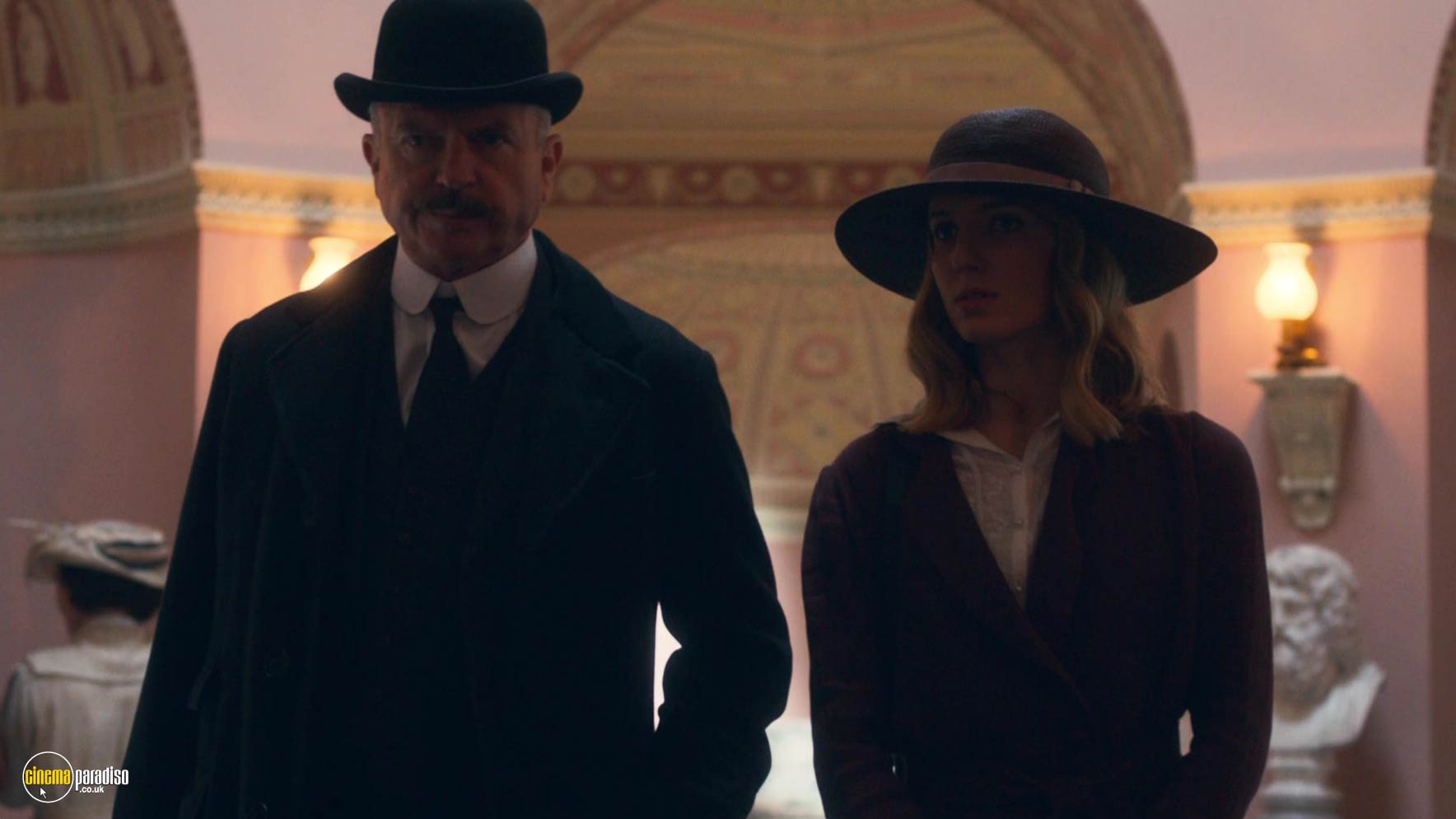
None of these projects was particularly successful, but they served to remind producers that Neill could handle roles across the generic spectrum. Hence, he was cast as Major Chester Campbell, a corruptly sadistic member of the Royal Ulster Constabulary with a personal grudge against Birmingham gang leader Tommy Shelby (Cillian Murphy) in the first two seasons of the hit BBC series, Peaky Blinders (2013-14). 'There's nothing about playing a borderline psychotic that I can identify with,' Neill explained after making headlines, 'but it's cathartic being able to act out violence.' Between series, he went back to Oz to join Bryan Brown in Old School, an eight-part crime drama that followed retired cop Ted McCabe and crook Lennie Cahill as they go in search of a stash hidden from a decade-old blag. This was followed by House of Hancock (both 2014), a wonderfully melodramatic mini-series that charts the relationships between Lang Hancock, the richest man in Australia, his daughter Gina (Mandy McElhinney), and his Filipina housekeeper, Rose (Peta Sergeant).
There was just time to play Mr Neal in an episode of Rhys Darby and Jermaine Clement's mockumentary sitcom, Short Poppies, before Neill landed himself in a rare turkey, as João Havelange in Frédéric Auburtin's misfiring FIFA history, United Passions, which co-starred Gérard Depardieu as Jules Rimet and Tim Roth as Sepp Blatter. However, he bounced back as Crichton, the politician father of Imogen Poots, who is one of a quartet of strangers (the others being Pierce Brosnan, Toni Collette, and Aaron Paul), who meet on the rooftop from which they had all planned to jump in Pascal Chaumeil's adaptation of Nick Hornby's A Long Way Down (2014). He also made a nice job of playing Duncan Stewart, the mentor of troubled psychologist Peter Bower (Adrien Brody) in Michael Petroni's tricksy thriller, Backtrack (2015).
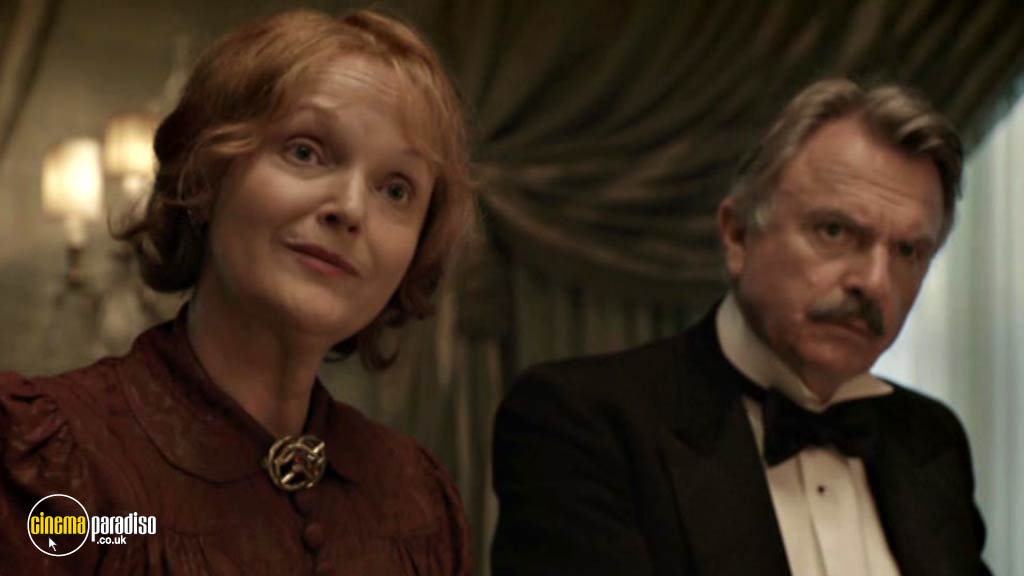
Bypassing Neill's turn as Kreutz in Andrew Goth's unobtainable MindGamers, we find him on AACTA-nominated form in Simon Stone's The Daughter, as Walter Finch, the father of the best friend of Christian Nielsen (Paul Schneider), who has returned to Australia for the marriage of his father, Henry (Geoffrey Rush), to his young housekeeper Anna (Anna Torv). This reworking of Henrik Ibsen's The Wild Duck was followed by another tele-variation on Agatha Christie's And Then There Were None (all 2015), in which Neill essayed General John Gordon MacArthur in an ensemble that included Charles Dance, Miranda Richardson, Toby Stephens, Noah Taylor, and Aidan Turner.
Having headed for Egypt in the 1920s as Lord Carnarvon to Max Irons's Howard Carter in Tutankhamun, Neill picked up an Emmy nomination for his narration of New Zealand: Earth's Mythical Islands (both 2016), a documentary that he followed with Why Anzac With Sam Neill (2017), a tribute to the Antipodean soldiers who had fought in the Great War that he also wrote and produced. Guesting duties followed in episodes of Country Calendar (2016), Get Krack!n, Julia Zemiro's Home Delivery (both 2017), and Rick and Morty (2013-25), in which he voiced the Monogatron Leader in the 2019 episode, 'The Old Man and the Seat'. He also fronted The Pacific: In the Wake of Captain Cook With Sam Neill (2018). But he was about to hit a purple patch in what would sadly prove to be the autumn of his career.
A Trouper to the Last
In 1993, Neill bought a vineyard in Gibbstown in Central Otago. His plan was to grow enough pinot noir grapes to make enough wine to supply himself and give the odd bottle to friends. However, he also acquired two more plots near Alexandra and Two Paddocks became a major concern. 'I'd like the vineyard to support me,' he told a reporter, 'but I'm afraid it is the other way round. It is not a very economic business. It is a ridiculously time- and money-consuming business. I would not do it if it was not so satisfying and fun, and it gets me p*ssed once in a while.'
In fact, Neill took oenology seriously, once declaring, 'I love that you can't tell a pinot noir what to do. It has to express itself. It's like watching a photograph develop. Wine is fascinating and multi-layered and akin to poetry.' It also provided him with a welcome distraction from the day job. 'The winemaking thing is absolutely half my life,' he said, 'and has been immensely rewarding, and it's very different from everything else that I do. I'm sort of...half-farmer, half-thespian, if you like.'
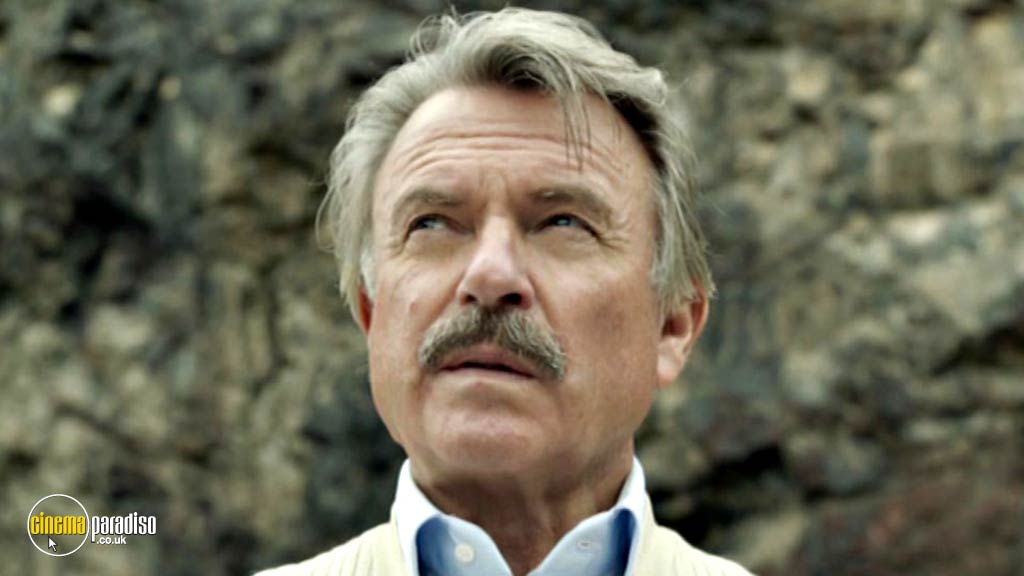
He certainly didn't think of himself as famous. 'I do hope I'm not a celebrity,' he revealed in 2022, 'because...I think it's two different jobs. You can be an actor - hopefully a very good actor - but it's another job to be a celebrity, and that's one you can sign up for or not. And I never signed up for that. I've avoided that like the plague.' This was partly out of personal preference, but also to protect his children, son Tim (with Lisa Harrow), and daughter Elena, with Noriko Watanabe. Neill also adopted the latter's daughter, Maiko, and was reunited in 1994 with Andrew, the son who had been put up for adoption a quarter of a century earlier. He described his personal life as 'somewhat haphazard' and admitted that he had treated his kids with 'benign neglect'. When Elena was asked at school what her father did for a living, she replied, 'My daddy sits in caravans.'
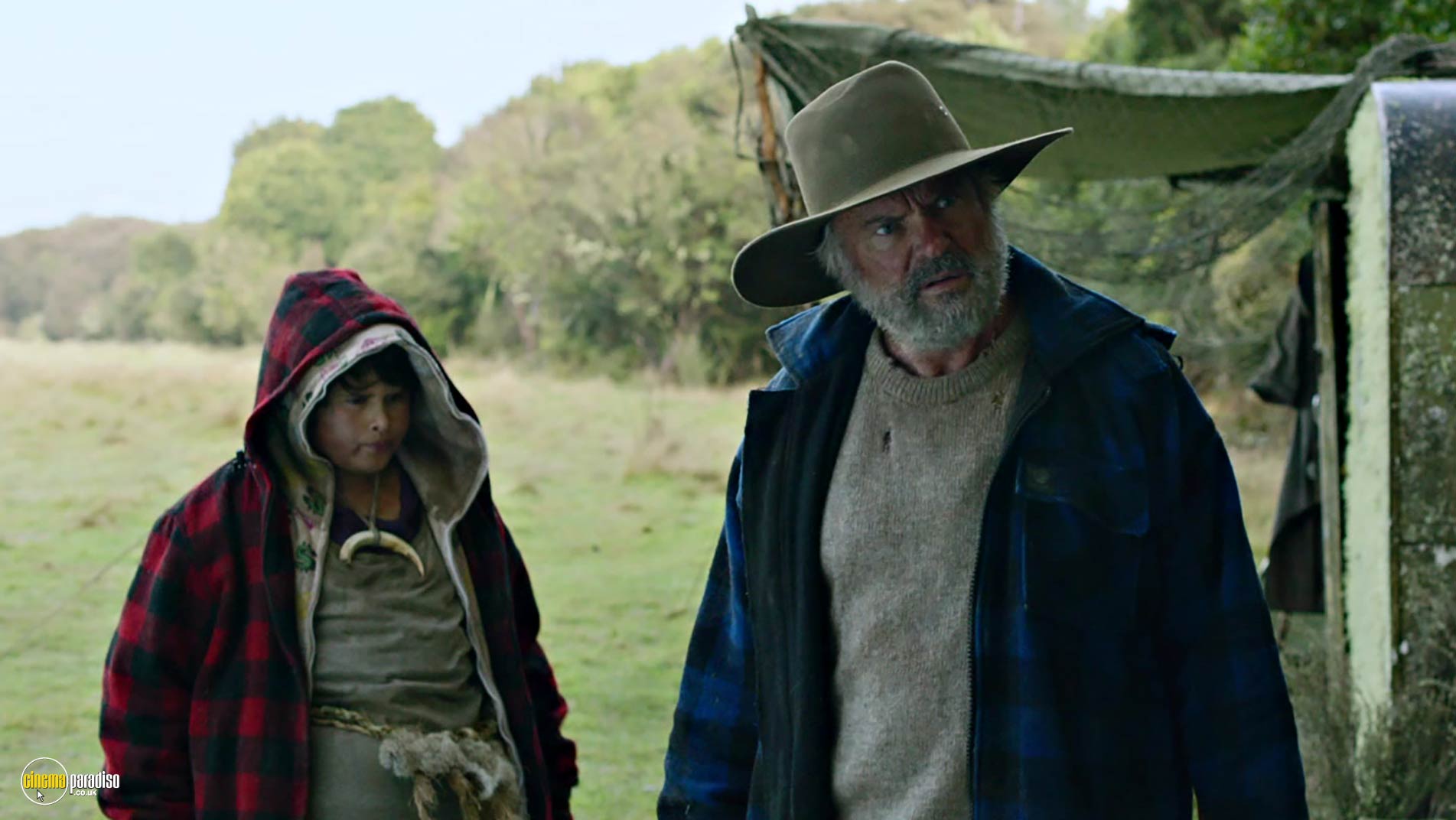
Few have sat in more, as Neill was always in demand. Following two episodes as Josephus in The Dovekeepers (2015), he signed up for Taika Waititi's Hunt For the Wilderpeople (2016), which was adapted from the Barry Crump novel, Wild Pork and Watercress. Exuding grouchy affection, Neill excels as Uncle Hector, the foster father of Ricky Baker (Julian Dennison), a troubled boy buffeted by the social care system who would rather perish in the bush than return to a home, after Hec's wife dies and the unlikely pair find themselves being hunted down after a series of mishaps and misunderstandings. The chemistry between the leads is irresistible and Neill repaid Waititi for such a choice role by twice guesting as an actor playing Odin in Thor Ragnarok (2017) and Thor: Love and Thunder (2022). He would later grumble, however, 'Now we're in the age of Marvel action films, people destroying entire cities on a whim, they're not particularly interesting to me.'
Neill next ventured into the wilds of Scotland to play Alexander Boothby, the captain of The Royal and Ancient Golf Club of St Andrews in Jason Connery's Tommy's Honour (2016), which starred Peter Mullan as pioneering golf champion Old Tom Morris. Thence, it was into Outback for Warwick Thornton's gripping Bush Western, Sweet Country (2017), in which Neill plays preacher Fred Smith, who seeks to ensure that Sergeant Fletcher (Bryan Brown) brings Aboriginal Australian stockman Sam Kelly (Hamilton Morris) home alive to answer a murder charge. Based on a true story and told from a First Nations perspective, this powerful drama won the Special Jury Prize at the Venice Film Festival and we can't recommend it enough.
Neill slipped down the cast list for Jaume Collet-Serra's The Commuter, as Captain David Hawthorne and Detective Luietenant Alex Murphy (Patrick Wilson) are called for advice when ex-cop Michael McCauley (Liam Neeson) becomes entangled in a murder conspiracy after Joanna (Vera Farmiga) makes him an offer he can't refuse on the train home. He then doubled up as Mr McGregor and the voice of Tommy Brock in Will Gluck's Peter Rabbit (both 2018) and he returned to reprise the grumpy badger in Peter Rabbit 2: The Runaway (2021). That year, he also voiced tetchy crocodile Frankie Scales in Ricard Cussó's Daisy Quokka: World's Scariest Animal, alongside Angourie Rice as the eponymous marsupial seeking to make her mark in Sanctuary City.
In 2019, Neill was chosen to play Denis Goldberg in Francis Annan's Escape From Pretoria, but shooting began with Ian Hart in the role. Instead, Neill joined old pal Bryan Brown in wife Rachel Ward's comedy, Palm Beach, as Leo and Frank enjoy an overdue reunion with the likes of Richard E. Grant, Greta Scacchi, and Jacqueline McKenzie. This currently eludes Cinema Paradiso's grasp, but we can bring you Neill as Paul helping wife Lily (Susan Sarandon) prepare for euthanasia in Roger Michell's Blackbird. However, a last weekend together proves too much to bear for daughters Jennifer (Kate Winslet) and Anna (Mia Wasikowska) in a remake of Dane Bille August's Silent Heart (2014). Having cameo'd as a wedding planner in Auckland director Stallone Vaiaoga-Ioasa's Take Home Pay, Neill earned an Australian Film Critics nomination for his performance as Paddy Payne, the racehorse trainer helping daughter Michelle (Teresa Palmer) become the first woman to win the prestigious Melbourne Cup in Rachel Griffiths's directorial debut, Ride Like a Girl (all 2019).
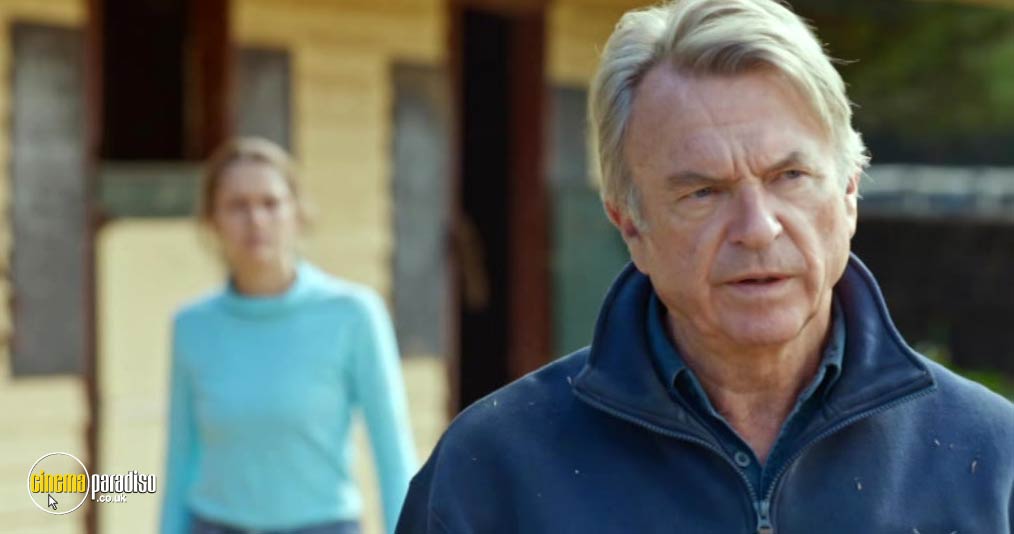
When Covid-19 struck, Neill was in New York playing Sheriff Jim Bell Tyson in an episode of the alien attack series, Invasion (2021). As New Zealand closed its borders, it took him almost a year to return to Two Paddocks, where the usually reclusive actor reinvented himself as a social media influencer. In addition to playing Randy Newman and Radiohead songs on the ukulele, Neill also read poems and children's books and produced several short filmic diversions: Cinema Quarentine: Das Leek, Cinema Quarantine: Das Bad, Cinema Quarantino: Das Bogroll, Cinema Quarantino: Das Underachiever, and Cinema Quarantino: Das Fone Hel (all 2020). 'I realised people were very frightened and isolated,' he later explained, 'and I thought if I can cheer up one person, that's not a bad ambition. But mostly I was entertaining myself. I'm easily bored.'
What delighted many were the names that Neill had given to the animals on his farm. They included the chickens, Michael Caine, Meryl Streep, Usain Bolt, Kristin Scott Thomas, and Holly Hunter, as well as Helena Bonham Carter the cow, pigs Anjelica Huston and Amy Adams, Kylie Minogue the duck, and a cockerel named Michael Fassbender. 'I have a number of friends who are real celebrities,' Neill once remarked, 'you'd know who they are, and I wouldn't swap my life for theirs for a moment, even though they're immensely rich and, you know, immensely famous. There's a complete lack of privacy for one thing, and privacy is very, very, very important, I can walk down the street in Surry Hills and get my coffee, and nobody bothers me, you know? And there's no paparazzi. My life is my own.'
Being able to do what suited him meant that Neill was always ready to take on pictures like Jeremy Sims's Rams (2020), a remake of Icelander Grímur Hákonarson's Rams (2015) that relocated the action to Mount Barker in Western Australia, where estranged brothers Colin and Les (Michael Caton) are forced to speak to one another when their flocks are stricken with Ovine Johne's disease. Surely, someone will release the Oz version on disc in the UK, as it contains Neill's last great performance. Not that he isn't good as lawyer Brett Colby in The Twelve (2022-25) or that he doesn't give his best as Duncan Paulson in a 2020 episode of Flack (2019-20), as himself in two episodes of Australia Story (2020-23), as an Australian caller in the podcast series, Dark Air With Terry Carnation (2021), or as the Audiobook Narrator in the short, Voice Activated (2022). But Rams showed Neill on peak form before he received a devastating diagnosis.
In March 2022, he was told he had stage 3 angioimmunoblastic T-cell lymphoma, a type of blood cancer that required a punishing regime of chemotherapy. During treatment, Neill would look in the mirror without recognition. 'I would look at this alien,' he said later. 'Really? Is that you? So that begs the question, who are you? And so I had to think about that. I mean, it's never really interested me to sort of reflect on myself. You know, sometimes you go, you f**king idiot, why would you do that? But that would be as bad as it would be.' However, he came to terms with his condition and developed a 'strong sense of being this little speck in the universe, of so little significance...but a unique speck'. This inspired him to write his memoir, Did I Ever Tell You This? (2023). 'The truth was, I didn't know how long I had to live. What I had was aggressive. I thought I'd better scribble down some stuff before I shuffle.'
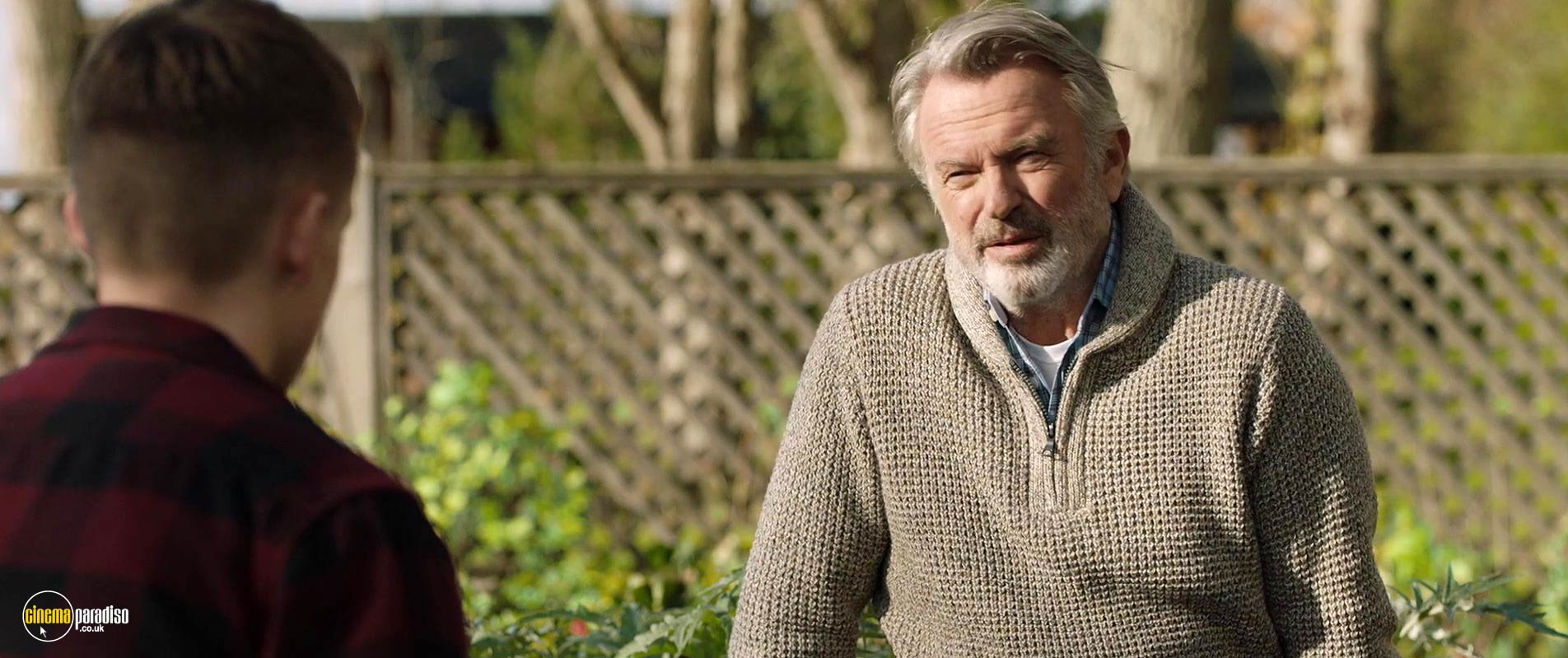
The hiatus also helped him appreciate how much he loved acting. 'Now that I'm out of action for at least a few months,' he wrote, 'it throws into sharp relief that deep need I have to act, how much I need to go to work. I love being on a film set...I love being with other actors: how stimulating, how funny, how sad, how vulnerable they can be. They are the best company I know. I love doing what I know how to do. It's a good job. I fit in.' Luckily, he got to return to what he loved doing, as he enrolled in an Australian clinical trial for CAR T-cell therapy after his chemo had stopped working. Scans revealed that the cancer had gone, although he continued to have monthly treatment. Seizing his second chance, Neill took his tally of appearances in The Twelve to 26 episodes (drawing another AACTA nomination), as well as narrating the documentary, T. REX, and being interviewd for the Australian version of The Assembly (both 2024). On the big screen, he joined with Christoph Waltz to play the villainous Dennis Tanner and Humphrey Wells trying to disrupt the world of magic in Jeremy Walker's The Portable Door. Then, he set the ball rolling in Camille Delamarre's Assassin Club (both 2023), as Ian Caldwell instructs hitman Morgan Ganes (Henry Golding) to liquidate people trafficker Luka Leszek (Bruno Bilotta).
Having voiced Dr Maybee in Ricard Cussó's Scarygirl, Neill turned nasty, as moneylender and pawnshop owner Frank McCarthy in Luke Sparke's Bring Him to Me (both 2023). He also came under suspicion when tennis coach Stan Delaney's wife (Annette Bening) goes missing in the mini-series, Apples Never Fall (2024). However, Yosemite ranger Paul Souter and prodigy Kyle Turner (Eric Bana) are the ones looking for clues in Untamed (2025), which centres on the work of the National Park Service Investigative Services Branch.
The last film released in Neill's lifetime saw him voice a chirpingly gossipy magpie in Dario Russo's directorial debut, The Fox (2025), in which a talking fox (Olivia Colman) offers to turn a hunter's cheating girlfriend into the perfect woman. But we'll have to wait a bit longer to see him play hotel scout Daisy Ridley's father, as she falls for pilot Alden Ehrenreich on a trip to the Philippines in Donald Petrie's The Last Resort. And next year is the due date for Grant Sputore's Godzilla x Kong: Supernova, which is why we don't yet even know the name of Neill's character.
It's a huge shame that he won't get to see it. But the effort of fighting cancer appears to have impacted on his immune system and he died of pneumonia in Sydney on 13 July 2026. He was 78 and cancer-free. As one obituary put it, Neill added 'quality to both blockbusters and cult indie productions', as he switched 'with scant fuss between suave villainy, wry heroism and a default human decency'. Looking at his filmography, it's easy to see how adventurous he was with his choices and how rarely he got it wrong. A fine actor and a sound chap, he leaves quite a hole to fill for mainstream and independent producers alike.
When asked about fame in his final Guardian interview, Neill tutted, 'I'm not famous. I'm in Melbourne for a few weeks, and occasionally someone stops me, but I'm never chased by autograph hunters. I'm just an everyday, reasonably useful actor who has been serving his time productively.' Who could possibly disagree, despite knowing he was so much more?
Mentioned films