With Toy Story 5 still riding high in the box-office charts, Cinema Paradiso brings you the second part of its celebration of four decades of Pixar magic.
As we saw in To Infinity...And All That, there have been few success stories in Hollywood history to match that of Pixar. The 31 features released by the animation studio have grossed over $17 billion and earned 23 Academy Awards, 10 Golden Globes, seven BAFTAs, and 11 Grammys. Since the Best Animated Feature category was inaugurated in 2001, Pixar has won 11 Oscars, including four in a row between 2008 and 2011. A remarkable three titles have also been nominated for Best Picture.
In the first part of this Pixar special, we chronicled the history of the company and its sometimes fractious dealings with Disney. We also told The Toy Story story, with insights into the five features, numerous shorts, and TV specials that have been spun-off from Pixar's most famous series.
Part Two brings the focus on to the other Pixar franchises, as well as the 14 features dating back to 1998 that have yet to spawn a second film.
Mostly Monsters
While working on Toy Story (1995), John Lasseter, Pete Docter, Andrew Stanton, and Joe Ranft went for lunch and came up with the ideas for A Bug's Life, Finding Nemo, WALL-E, and Monsters, Inc. The title for the latter was based on Burt Balaban's cult crime classic, Murder Inc. (1960), and was suggested by Disney veteran Joe Grant, who had worked on Snow White and the Seven Dwarfs (1937). Stanton co-wrote the scenario, which Docter directed using new CGI software that could make fur look more natural.
This proved handy, as James P. Sullivan (John Goodman) was a furry blue monster, whose job it was to frighten children in order to provide power for his home city of Monstropolis. Working with monocular partner, Mike Wazowski (Billy Crystal), Sulley has the reputation for being the best scarer in Monsters, Inc., the company run by Henry J. Waternoose (James Coburn) that also employs the reptilian Randall Boggs (Steve Buscemi), receptionist Celia Mae (Jennifer Tilly), and Scare Floor F administrator, Roz (Bob Peterson). One night, however, Sulley and Mike accidentally allow three year-old Boo (Mary Gibbs) to follow them and they have to smuggle her back to the human world before she's discovered.
Having the friends become attached to Boo makes this cleverly constructed conceit adorably cute. But it's also darkly droll, with Steve Buscemi on fine hissable form opposite the bear-like John Goodman and Billy Crystal, who had earlier turned down the chance to play Buzz Lightyear. The duo did a particularly fine job on 'If I Didn't Have You', which earned Randy Newman his first Oscar after 16 previous nominations. But there was disappointment when the winner of the inaugural award for Best Animated Feature was read out, as DreamWorks triumphed with Shrek, even though Monsters, Inc. bossed the box office, with a global take of $577.4 million against $488 million. Nickleodeon's Jimmy Neutron: Boy Genius was the other nominee in 2002, but there was no sign of Disney's Atlantis: The Lost Empire or Recess: School's Out. There was some consolation, though, as For the Birds, which was released on the same programme, won Best Animated Short and it can be found on The Pixar Short Film Collection, Vol.1, which also contains the spin-off short, Mike's New Car (2002).
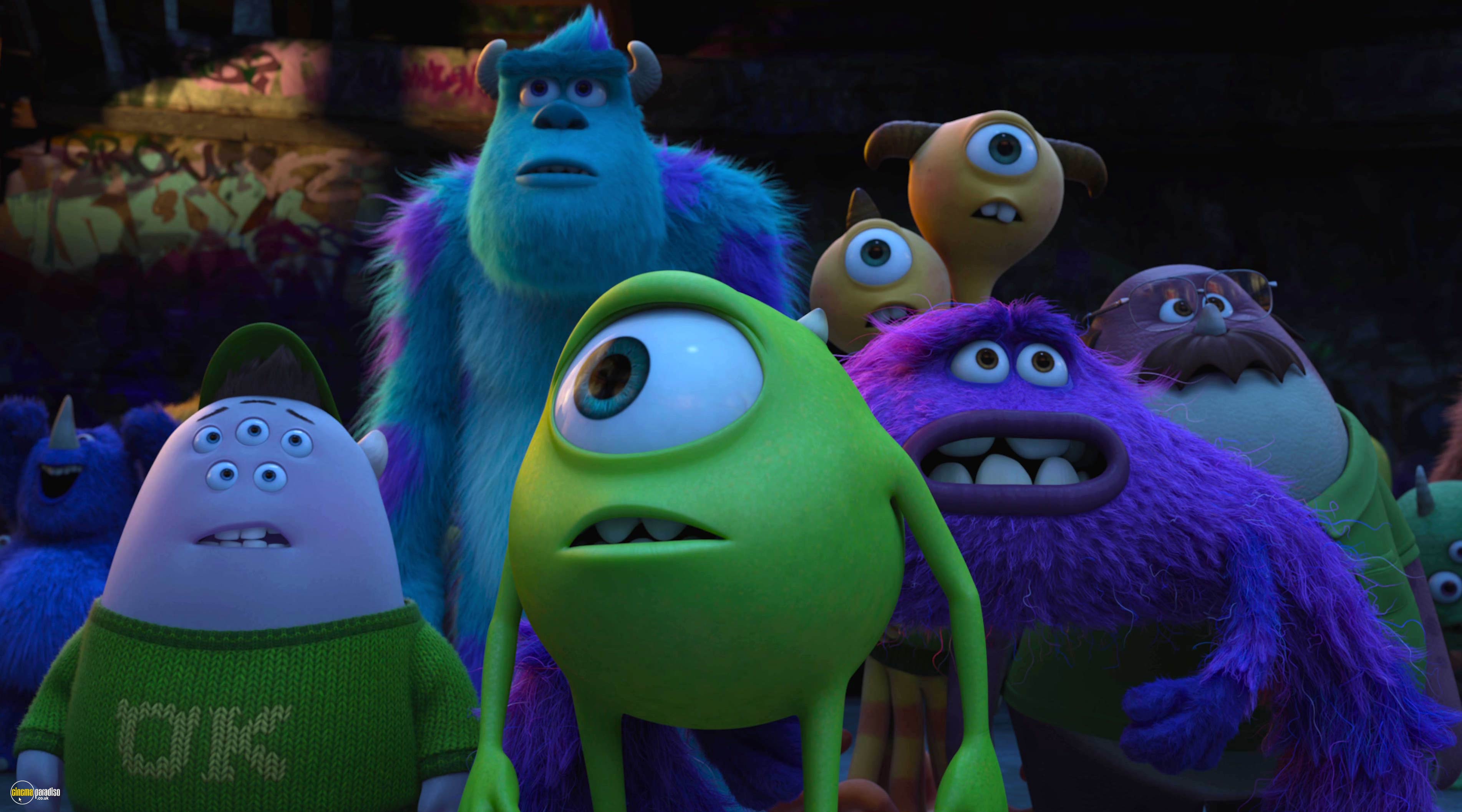
Disney was keen to rush release a sequel, but this was cancelled following the 2006 merger and Pixar paused before greenlighting its first prequel. Revealing how Sulley and Mike met, Monsters University (2013) was described in some quarters as National Lampoon's Animal House (1978) for toddlers. But there's much to enjoy, as Mike puts up with roommate Randall, while being anxious about flunking the scaring programme run by Dean Abigail Hardscrabble (Helen Mirren) and Professor Derek Knight (Alfred Molina).
The reviews were mostly welcoming. But, even though Monsters University earned a healthy $743.6 million, it became the first Pixar feature to miss out at both the Oscars and the Golden Globes. Even the accompanying short, The Blue Umbrella, only made the shortlist in its category. This is available on Volume 3 of the Pixar Short Film Collection, along with Party Central, a prequel to the prequel that was bundled in theatres with Muppets Most Wanted in 2014. It also missed out on the big awards, but it enabled Kelsey Mann to make his directorial debut and kept the franchise moving towards its spin-off TV series, Monsters At Work (2021-24), which saw Sulley and Mike return alongside such new characters as Tylor Tuskmon (Ben Feldman), Val Little (Mindy Kaling), and Fritz (Henry Winkler). A third feature is currently in the offing.
Something Fishy
Childhood visits to the dentist inspired Finding Nemo (2003), as Andrew Stanton was always mesmerised by the fish tank in the waiting room. Work began on the picture in 1997, with the animators taking crash courses in fish biology and oceanography to ensure authenticity. New software was employed to create the impression of being underwater, while special pastel drawings were made to demonstrate the play of light. Stanton also laced the action with movie references and the sharp-eyed and eared should be able to spot the nods towards Alfred Hitchcock's Psycho (1960), Steven Spielberg's Jaws (1975), Stanley Kubrick's The Shining (1980), and Nick Park's The Wrong Trousers (1993).
The storyline also reflects Stanton's concern that he was an overprotective father, as Marlin the clownfish (Albert Brooks) is so traumatised by the barracuda attack on the Great Barrier Reef that resulted in the loss of his wife and all but one of her eggs that he is excessively vigilant where Nemo (Alexander Gould) is concerned. Consequently, when his son disappears on his first day at school, Marlin begins a frantic search in the company of Dory (Ellen DeGeneres), a regal blue tang with short-term memory issues. Nemo, meanwhile, has been caught in a net and deposited in the aquarium at the Sydney surgery of dentist Philip Sherman. Here he meets Gill (Willem Dafoe), a scarred Moorish idol who introduces him to the rest of the Tank Gang: Peach the Sea Star (Allison Janney), Deb the striped damselfish (Vicki Lewis), Gurgle the royal gramma (Austin Pendleton), Bloat the pufferfish (Brad Garrett), Bubbles the yellow tang (Stephen Root), and Jacques the cleaner shrimp (Joe Ranft). Gill also warns Nemo about the dentist's awful niece, Darla, whose pet fish never seem to live very long.
Several Australian icons took guest roles, including Barry Humphries (Bruce the great white shark), Geoffrey Rush (Nigel the pelican), Eric Bana (Anchor the hammerhead shark), Bruce Spence (Chum the mako shark), and Bill Hunter (the dentist). And, in keeping with Pixar superstition, lucky charm John Ratzenberger kept up his record of appearing in every feature by voicing a school of monkfish. Easter egg collectors will also note the number on Shearman's camera when he's scuba diving, as A113 was the number of the classroom at CalArts where several Pixar animators learned their trade. It recurs in numerous other features, so do keep your peepers peeled.
William H. Macy had recorded Marlin's dialogue before Stanton decided he needed a lighter touch and Albert Brooks was hired. His performance was commended by the critics, as Finding Nemo returned $871 million around the world. Five million was invested in converting the footage for a 3-D release in 2012, which deposited another $69.3 million in the Pixar coffers. Beating off Brother Bear and Belleville Rendezvous, it became the first Pixar title to win the Oscar for Best Animated Feature, while also drawing nominations for Best Original Screenplay, Best Original Score, and Best Sound Editing.
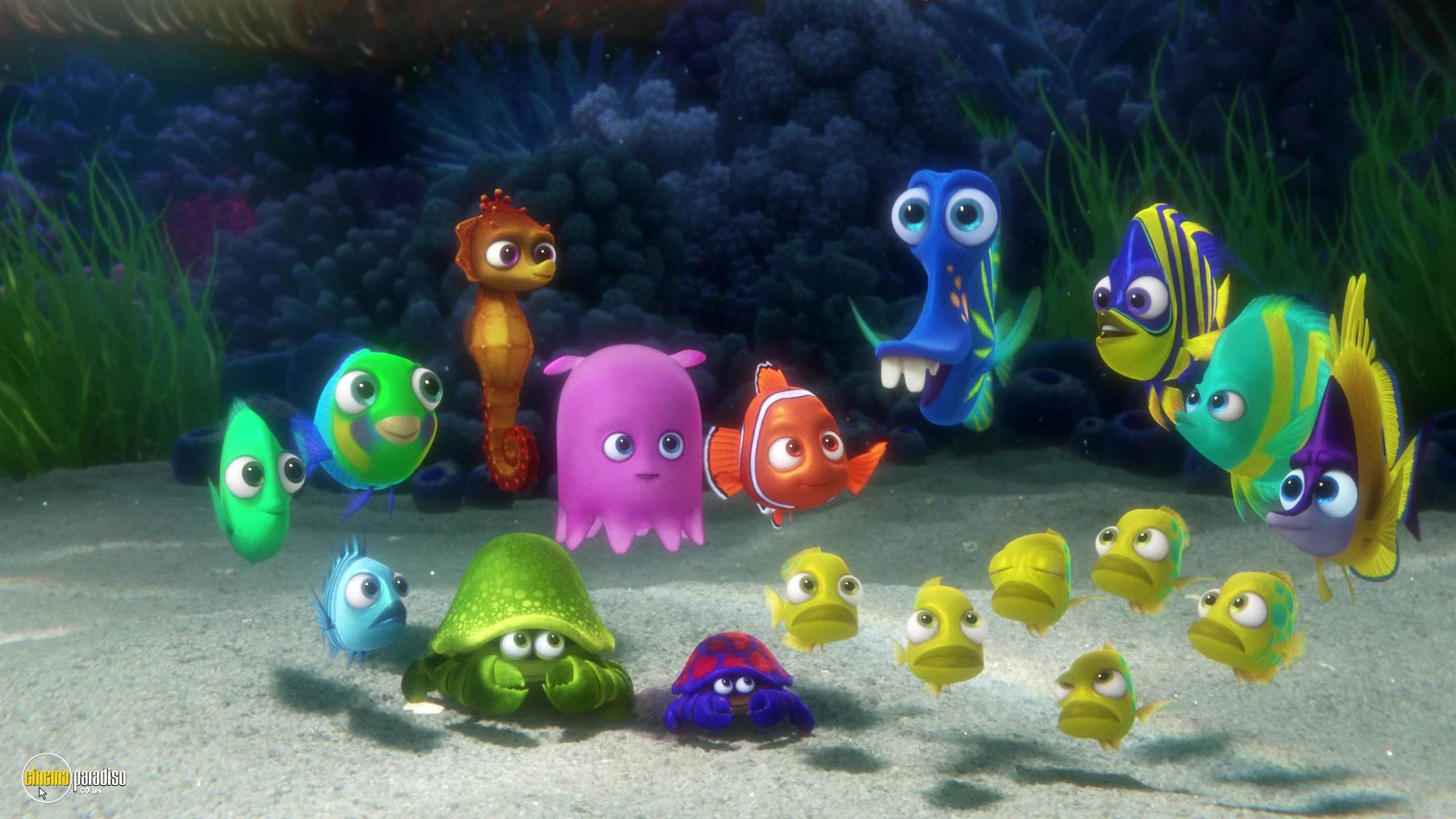
Released with Piper (PSFC, Vol.3), the sequel to Pixar's fifth feature, Finding Dory (2016), was its 17th release, although it might have come earlier in the roster had a proposed Circle Seven project not been quashed in 2006. Once again, Andrew Stanton called the shots and he incorporated elements from the Disney script into a scenario whose denouement was changed after members of the team saw Blackfish (2013), Gabriela Cowperthwaite's documentary about a performing killer whale named Tilikum.
In a rare moment of lucidity, Dory remembers living with her parents in California's Morrow Bay and sets off to find them. Marlin and Nemo (Hayden Rolence) accompany her, along with Crush the sea turtle (Andrew Stanton). However, they get separated and Dory winds up in the Marine Life Institute, where she encounters Hank the seven-limbed octopus (Ed O'Neill), Bailey the beluga whale (Ty Burrell), and short-sighted whale shark Destiny (Kaitlin Olsson). But Marlin and Nemo are determined to rescue Dory and team up with Becky the common loon (Torbin Bullock) and a pair of sea lions, Fluke (Idris Elba) and Rudder (Dominic West), so that she can be reunited with mum Jenny (Diane Keaton) and dad Charlie (Eugene Levy).
Earning $1.029 billion in becoming the fourth highest-grossing animation of all time, Finding Dory was admired rather than adored by the critics, who loved the visuals, the ready wit, and the touching pathos, while lamenting that the plot arc was so similar to that of its predecessor. Undaunted, Stanton has noted that there are lots of other oceanic destinations for Marlin, Nemo, and Dory to visit. In the meantime, however, fans can watch Marine Life Interviews (PSFC, Vol.3) and
look forward to Lou Hamou-Lhadj's upcoming short, Loving Dory, in which she mistakes a floating plastic bag for a gentle jellyfish.
Keeping Up With the Parrs
John Lasseter had known Brad Bird at CalArts in the 1970s and he hired him to become Pixar's first outside director when he pitched an idea about a family of superheroes trying to live a quiet life in suburbia. Coming off the commercial disappointment of his well-liked animation, The Iron Giant (1999), Bird combined a homage to the comic-books and spy thrillers he had enjoyed as a child in the 1960s with an existential subplot about a father juggling his personal ambitions with his family responsibilities.
Studio Ghibli legend, Hayao Miyazaki, visited Pixar during the production and commended Bird on the bravery of his concept, which sees Bob Parr (Craig T. Nelson) living in Metroville with wife Helen (Holly Hunter) and their children, Violet (Sarah Vowell), Dashiell (Spencer Fox), and baby Jack-Jack (Eli Fucile and Maeve Andrews), after he was ordered to stop using his Mr Incredible superpowers following an incident involving a bomb, a train, and a deranged fan. Fifteen years later, however, Buddy Pine (Jason Lee), has assumed the villainous identity of Syndrome in his bid to teach Mr Incredible and Elastigirl a lesson they will never forget.
Elizabeth Peña voiced Syndrome's sidekick, Mirage, alongside Samuel L. Jackson's Lucius Best (aka Frozone) and Brad Bird's hilarious costume maker, Edna E. Mode, a role that had been declined by Lily Tomlin, just as Jack Black had turned down Syndrome. New techniques were required to create the human characters, with Violet's long hair proving a real challenge as it blew in the wind or fanned out underwater. But the visual effects were overlooked by the Academy, which opted to reward the sound design and sound mixing, as well as the screenplay, as Pixar picked up another Best Animated Feature statuette, which helped the film and Bud Luckey's accompanying short, Boundin' (2003; PSFC Vol. 1), haul in $631.6 million.
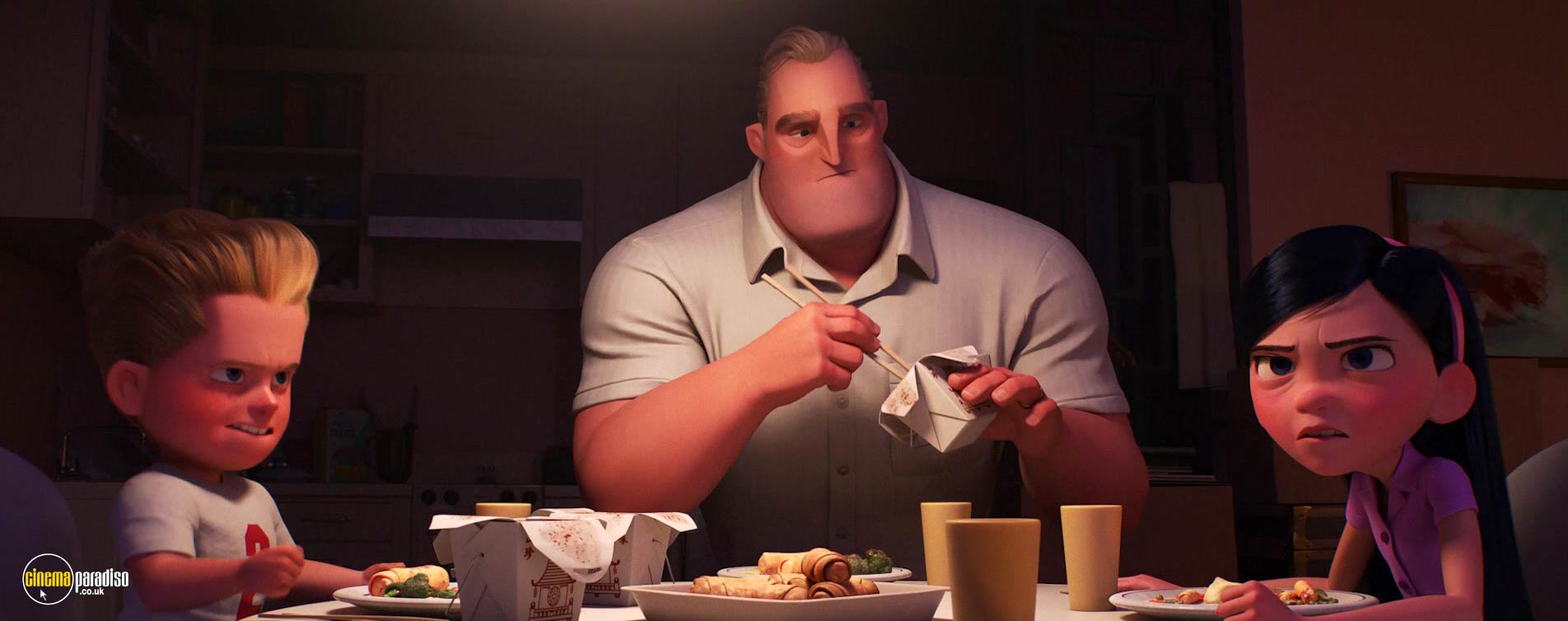
Although the short, Jack-Jack Attack (PSFC, Vol. 1), appeared in 2004, 14 years were to elapse before Bird was able to greenlight Incredibles 2 (2018). However, no time at all had passed as far as baby Jack-Jack was concerned, who finds himself being looked after by Bob after Helen is hired to work on a TV show designed to restore public trust in superheroes. Little does she know, however, but Evelyn, the sister of her boss, Winston Deavor (Bob Odenkirk), is living a double life as the hypnotic Screenslaver (Catherine Keener).
Huckleberry Milner took over as Dash, but it was business as usual for the other cast members, who included John Ratzenberger as the villainous Underminer, Usher as a limo driver, and Isabella Rossellini as pro-superhero diplomat, Henrietta Selick, who was named in honour of director Henry Selick, who had been responsible for such landmark animations as The Nightmare Before Christmas (1993), James and the Giant Peach (1996), Monkeybone (2001), and Coraline (2009).
Launched in cinemas with Domee Shi's Bao (which can be found on PSFC Vol.3 ), the sequel outperformed its predecessor by racking up a global gross of $1.242 billion in becoming the ninth most successful US film of all time. The reviews were also effusive, with several critics suggesting that it was more inventive than many DC and Marvel movies. At the Globes and the Oscars, however, Incredibles 2 lost Best Animated Feature to Spider-Man: Into the Spider-Verse. Maybe the second sequel will do better. It's booked in for a 2028 release, with Brad Bird confirming that lots of ideas were left over from Part 2. However, he will only write the script and exec produce, as he is so busy with Ray Gunn (2026) that Peter Sohn has been pencilled in to direct.
Get Your Motor Running
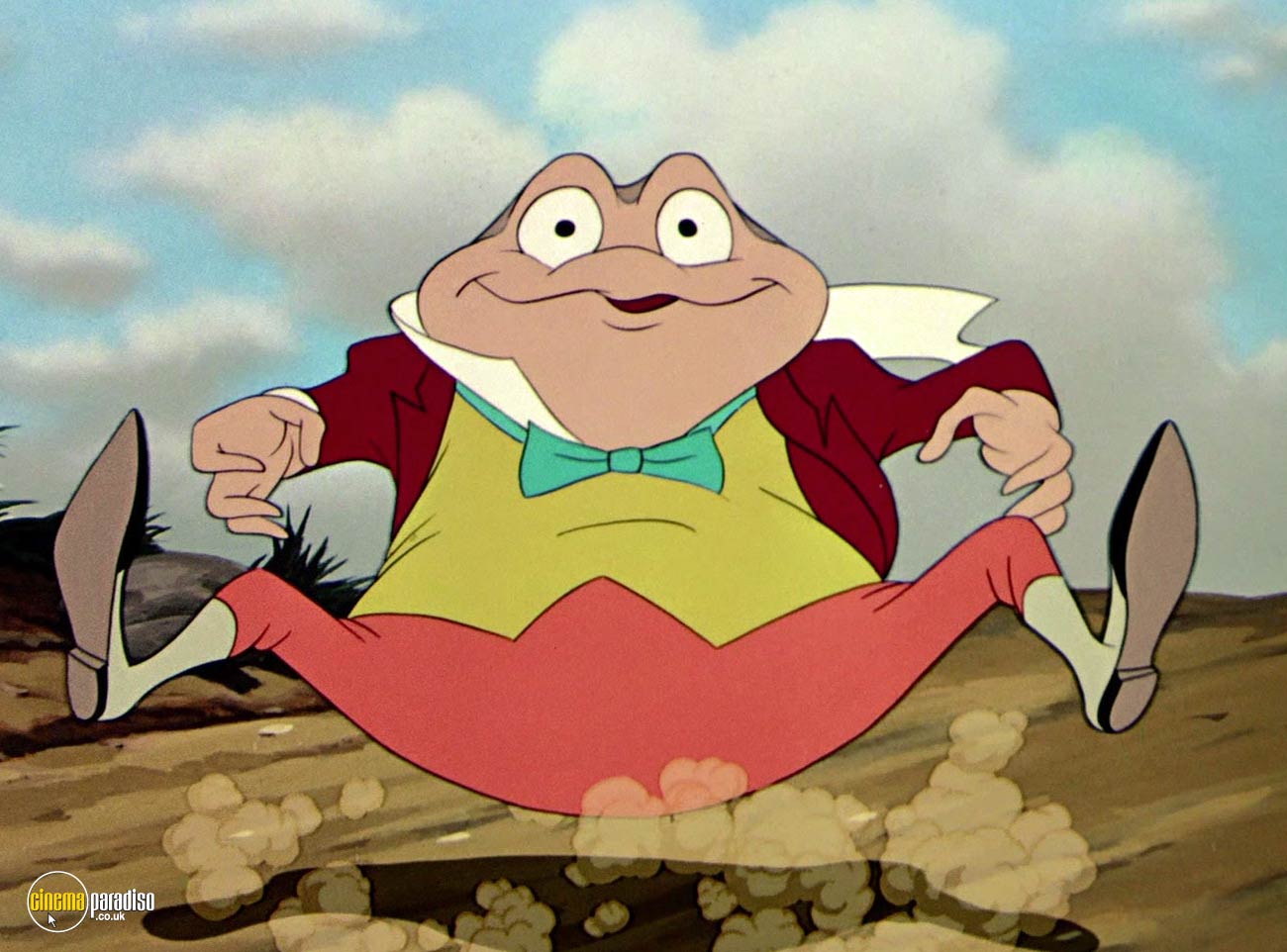
Beginning life as The Yellow Car, an eco film about an electric vehicle in a petrolheaded world, Cars (2006) was Pixar's seventh feature. Disney's 1952 cartoon, Susie the Little Blue Coupe, was a major influence, as Cinema Paradiso users can discover by renting The Adventures of Ichabod and Mr Toad (1949), as it can be found among the extras. But a series of Route 66 road trips made by Pixar animators shaped the core action, which centres on callow racing car, Lightning McQueen (Owen Wilson), who gets stranded in the backwater town of Radiator Springs and learns the life lessons that will help him in his bid to win the Piston Cup.
In his final non-documentary role, Paul Newman added stardust as Doc Hudson, the navy blue 1951 Hudson Hornet who had been a track star in his day. Among the other vehicular characters was Sally Carrera (Bonnie Hunt), Chick Hicks (Michael Keaton), Ramone (Cheech Marin), Luigi (Tony Shalhoub), and Tow Mater (Larry the Cable Guy). However, there are plenty of familiar voices to indentify in the closing moto-pastiches of beloved Pixar hits like Toy Story, A Bug's Life, and Monsters Inc. But this would be the last time that audiences would hear Joe Ranft, as the stalwart storyboard and occasional voiceover artist died in a car crash having recorded his lines as Red the fire engine.
Challenging animators to make engaging characters out of metal boxes on wheels, the film prompted the development of techniques to keep tyres on the road and make light bounce of paintwork, while a new digital matte system was devised to create the passing scenery as the cars motored along. Thank goodness computers were now 1000 times faster than they had been just a few years earlier when Lasseter made Toy Story, as even the accompanying short, One Man Band (PSFC Vol. 1), looked splendid.
The reviews were on the polite side of positive, with some noting the scenario's similarity to that of Michael Caton-Jones's Doc Hollywood (1991). There were also threats of a plagiarism suit from the makers of the Brazilian TV series, The Little Cars. But merchandising profits boosted the modest box-office take of $462 million and plans were soon afoot for a sequel, even though Cars lost out to Happy Feet for Best Animated Feature. Randy Newman was also pipped to Best Song, although 'Our Town' did earn him a Grammy.
Centred around the World Grand Prix, Cars 2 (2011) takes Lightning to Toyko, where Mater the tow truck accidentally gets entangled with spies Finn McMissile (Michael Caine) and Holly Shiftwell (Emily Mortimer), as well as the scheming Professor Zündapp (Thomas Kretschmann), who follows the pair to Paris and London in an effort to discredit a new environmentally friendly fuel marketed by Sir Miles Axelrod (Eddie Izzard). But all is not as it seems...as anyone familiar with such touchstone titles as Alfred Hitchcock's T The Man Who Knew Too Much (1956) and North By Northwest (1959), the TV series, The Man From U.N.C.L.E. (1964-68), and the Robert Ludlum trilogy of The Bourne Identity (2002), The Bourne Supremacy (2004), and The Bourne Ultimatum (2007) will know.
Setting a new record for the number of sets in a Pixar film (118), Cars 2 cost an estimated $200 million. But it only recouped $562.1 million amidst a raft of mediocre reviews. The Academy was equally unimpressed and the sequel became the first Pixar feature to be shut out. Nevertheless, Lasseter was keen to return the franchise to its roots and set Cars 3 (2017) in motion in 2011. Having spoken to veteran NASCAR drivers, the team decided to show how Lightning responded to the challenges posed by a new generation of gadet-laden cars to his retention of the Piston Cup title. Armie Hammer was hired to voice the cocky Jackson Storm, while Cristela Alonso was cast as Cruz Ramirez, a yellow sports car based at the Rust-eze Racing Center, where Lightning hopes to pick up some tips on the new rules of engagement.
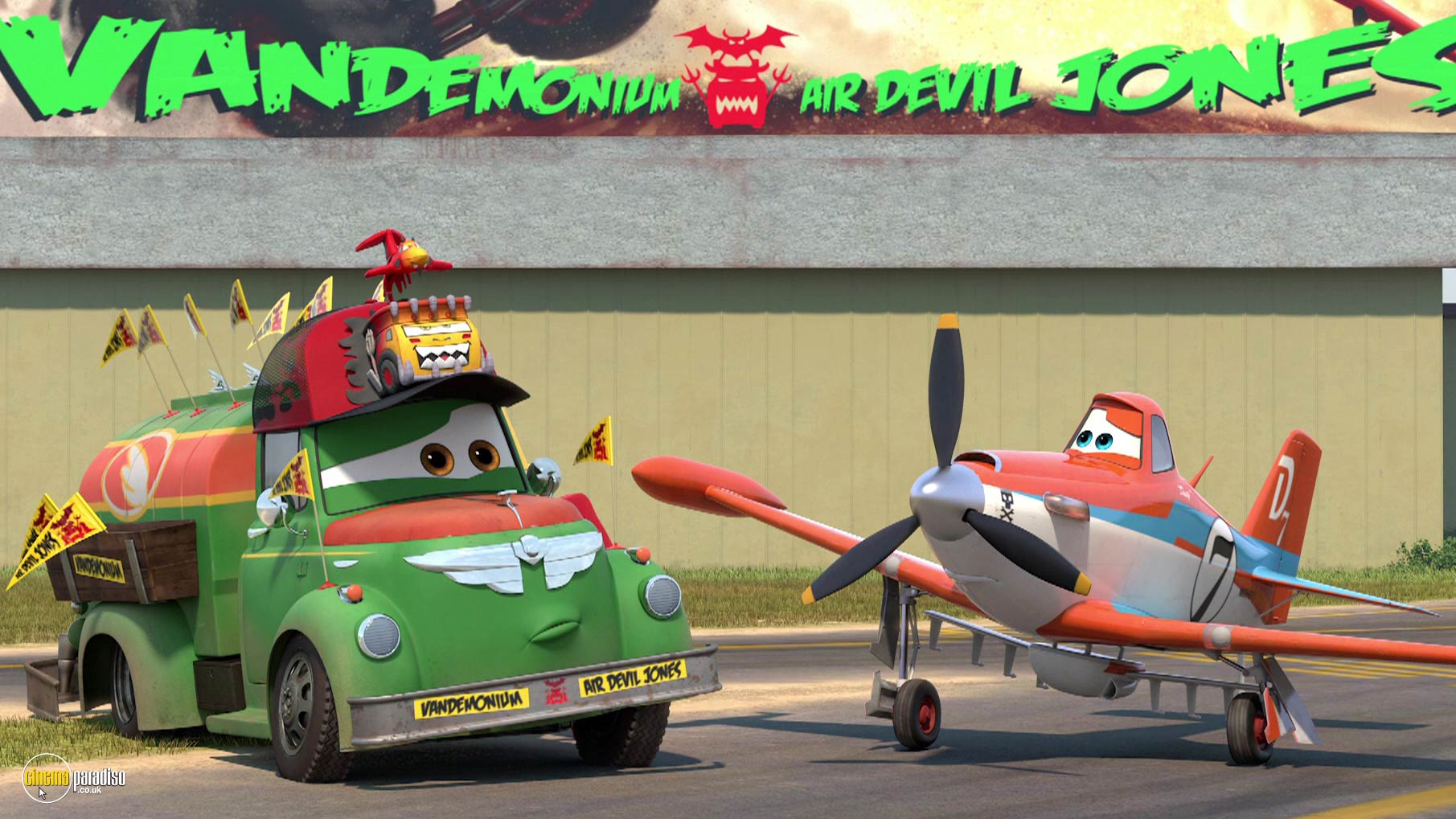
Despite a sly homage to Hayao Miyazaki's The Castle of Cagliostro (1979), Brian Fee's film failed to click with critics or audiences. The BBC and LEGO hooked up so that Lightning could meet Top Gear's mysterious driver, The Stig, but the resulting short was curiously omitted when Cars 3 was released on disc. However, the feature and accompanying short Lou (PSFC, Vol.3) made only $383.9 million on its $175 million budget and Disney decided to put the misfiring characters to work as guests in Planes (2013) and Planes: Fire & Rescue (2014). Following Mater and the Ghostlight (2006; PSFC Vol. 1), Pixar tried two more shorts, The Radiator Springs 500 1/2 (2014) and Miss Fritter's Racing School (2017; both PSFC Vol. 3), amidst rumours that it could provide the inspiration for a fourth instalment. For now, though, Pixar prefers to go down the small-screen route with Car Toons (2008-14), two of which, Air Mater (2011) and Time Travel Mater (2012), can be found on PSFC, Vol. 2. They were followed by the 2022 Disney+ show, Cars on the Road. Fans will have to wait another year for the Disney Jr. series, Cars: Lightning Racer. But, where features are concerned, the Cars franchise seems to have stalled.
All Getting a Bit Emotional
Those of a certain age will remember 'The Numskulls', a long-running comic strip in The Beezer (1962-79) that now has its home in The Beano. When many of them saw Pete Docter's Inside Out (2015), they felt on familiar territory, even though the story now revolved around tweenager Riley Andersen (Kaitlyn Dias) and her controlling emotions: Joy (Amy Poehler); Sadness (Phyllis Smith); Fear (Bill Hader); Anger (Lewis Black); and Disgust (Mindy Kaling).
Docter was inspired by the changes in his daughter Elie's personality as she grew up and a number of psychologists were consulted during the five-year development process to give what was obviously a fantasy a little emotional grounding in the real world that would be recognisable to younger and older viewers alike. Michael Curtiz's Casablanca (1942) was an influence on the visual style, while the physical comedy owed much to the classic Warner cartoons of Tex Avery and Chuck Jones. Pixar dependable Michael Giacchino composed the score, which was praised in many reviews after the film received an eight-minute standing ovation at Cannes. Released in cinemas with Lava - which can be found on PSFC Vol. 3 alongside Riley's First Date? - Inside Out drummed up a global gross of $859.1 million en route to winning Best Animated Feature and landing a Best Original Screenplay nomination.
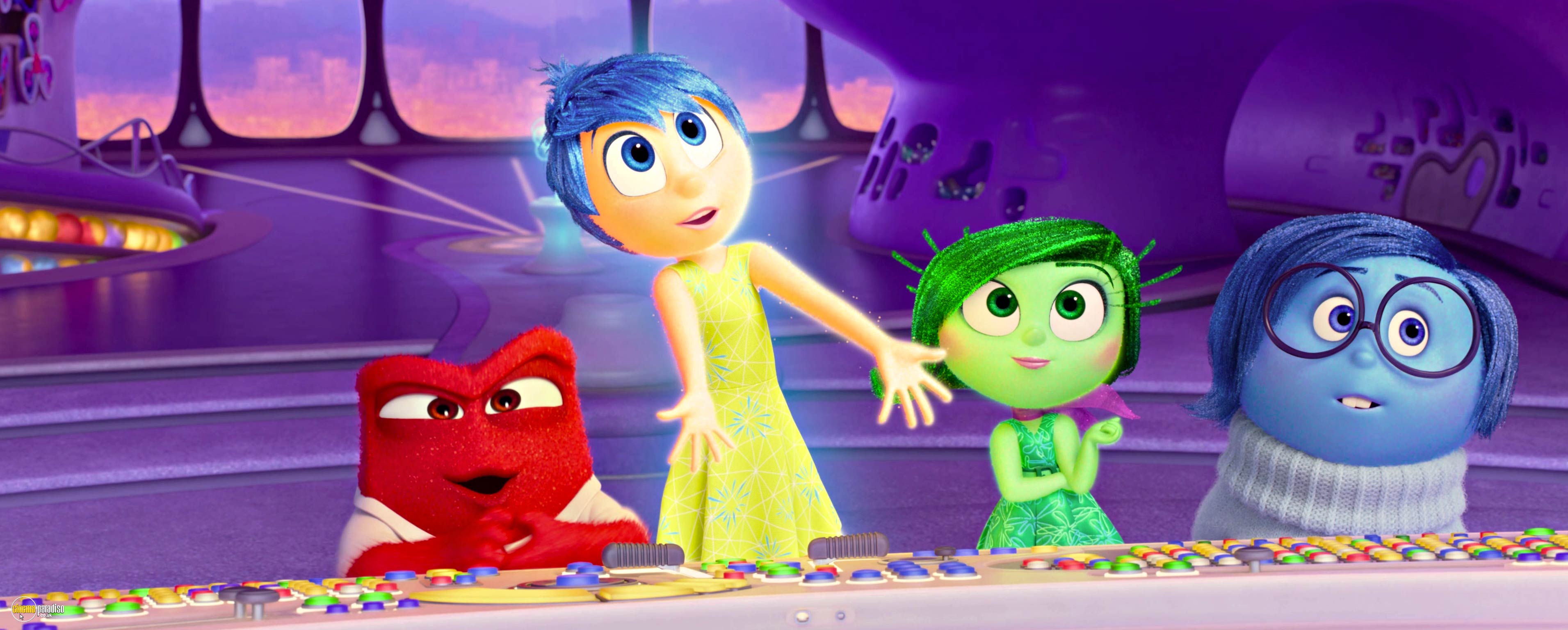
Kelsey Mann took the helm for Inside Out 2 (2024), which follows the teenage Riley (Kensington Tallman) to an ice-hockey camp, where her eagerness to fit in with the cool girls leads to her drifting apart from her true friends. Liza Lapira replaced Mindy Kaling as Disgust, while Tony Hale took over Fear from Bill Hader. But there were several new characters to take into consideration, as adolescence started to take a firm grip on Riley's emotions. Anxiety (Maya Hawke), Envy (Ayo Edebiri), Embarrassment (Paul Walter Hauser), Ennui (Adèle Exarchopoulos), and Nostalgia (June Squibb) were all well received by critics and punters alike and the sequel outdistanced the original at the box office by banking $1.699 billion. Yet, it drew a blank at the Golden Globes, the BAFTAs, and the Oscars, where it lost Best Animated Feature to Gints Zilbalodis's adorable Flow.
Linking the events of the two features, the four-part Disney+ series, Dream Productions, aired in December 2024, as gossip swirled that a third big-screen outing is already in development. Let's hope so, although some of us will still love to see a Numskulls movie.
The Stand-Aloners - The Hits
Fourteen Pixar pictures are currently stand-alone items, although that, of course, could easily change. Although all have done decent business and have mostly been well received by the critics, some have done better than others.
Pixar's second release, A Bug's Life (1998), was inspired by Aesop's fable, 'The Ant and the Grasshopper', which had been filmed by Walt Disney in 1934 and now forms past of Disney Treasures: Silly Symphonies (2001). However, it also had a little of Akira Kurosawa's Seven Samurai (1954) thrown in and owed its authenticity to the acclaimed French documentary, Microcosmos (1996). At its heart was Flik (Dave Foley), an inventor ant who wants to help Princess Atta (Julia Louis- Dreyfus) resist the bullying designs of Hopper the grasshopper (Kevin Spacey). Accompanied in cinemas by Jan Pinkava's Geri's Game (PSFC, Vol. 1), the film had the misfortune to coincide with the DreamWorks release, Antz, which led to a heated exchange of words between Steve Jobs and Jeffrey Katzenberg. Pixar had the last laugh, however, as its $363.3 million take far exceeded that of its rival. Moreover, in addition to Oscar, BAFTA, and Golden Globe nods, Randy Newman's score also won a Grammy.
By the time Brad Bird's Ratatouille (2007) was released alongside Lifted (PSFC, Vol.1), the Academy had introduced the Best Animated Feature category and the story of Remy the rat (Patton Oswalt) 's bid to become a chef at the Parisian restaurant owned by Auguste Gusteau (Brad Garrett) took the prize, as well as being nominated for its screenplay, score, and sound editing. Leading chefs were consulted about the kitchen ambience and animators took cookery classes to better understand the preparation of food. Never have pixels looked so delicious, but Bird has refused to consider a sequel, even though the film served up $623.7 million and has since been referenced in features as different as The Five-Year Engagement (2012), The Suicide Squad (2021), Everything Everywhere All At Once (2022), Teenage Mutant Ninja Turtles: Mutant Mayhem (2023), and Zootopia 2 (2025).
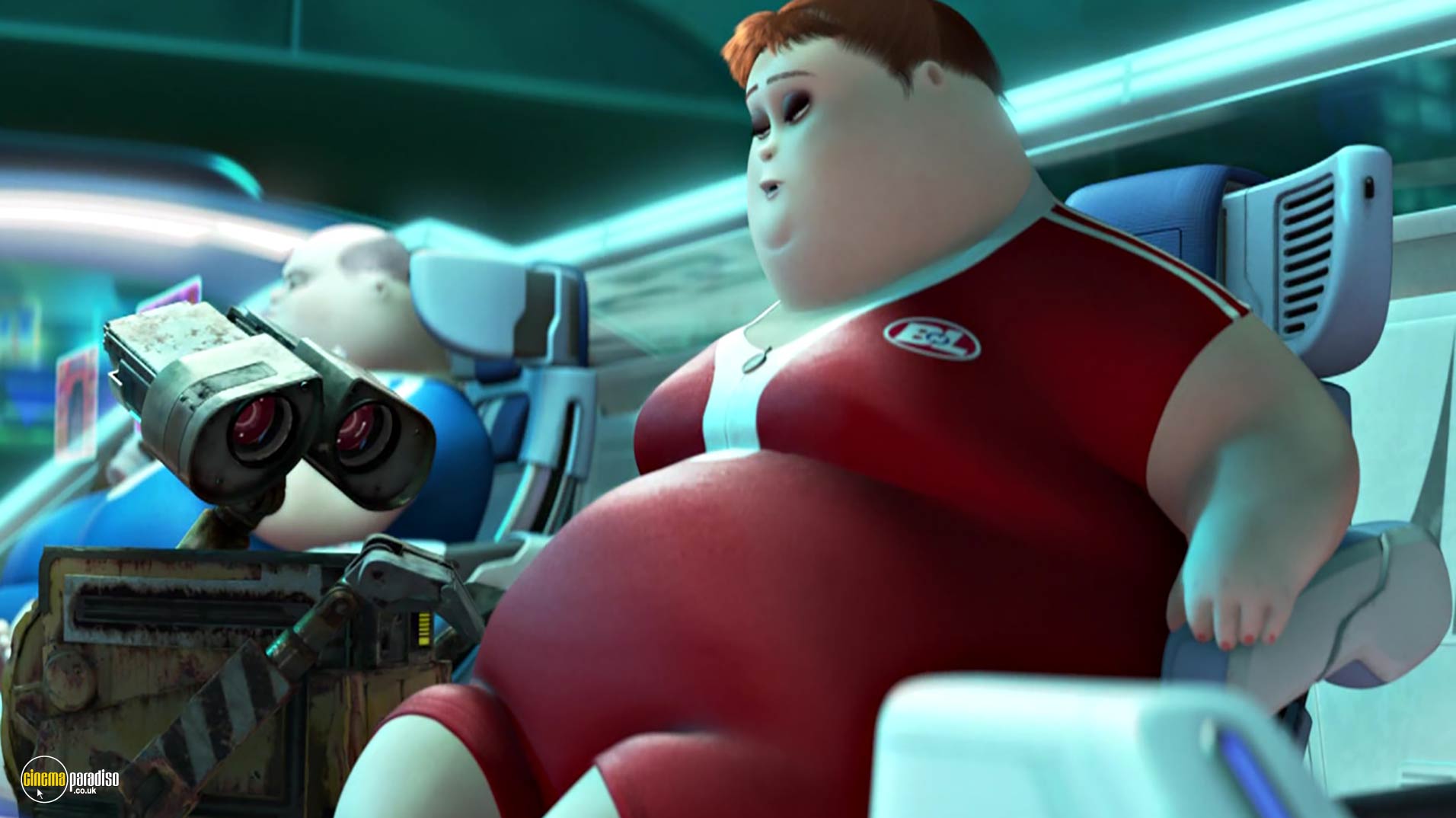
Remy also featured in Your Friend the Rat (2007), which can be found on PSFC Vol. 2, along with Presto, which was released with Andrew Stanton's WALL-E (2008), which was originally called Trash Planet. Set on an abandoned Earth in 2805, the action centres on WALL-E (Waste Allocation Load Lifter: Earth-Class), a litter-compacting robot who becomes smitten with EVE (Extraterrestrial Vegetation Evaluator) when she descends from the Axiom starliner in search of sustainable life. Fred Willard became the first live-action presence in a Pixar picture, via the video messages left behind by Shelby Forthright, the CEO of the Buy n Large Corporation and President of Earth. But all eyes are on the adorable WALL-E, whose noises were produced by Ben Burtt and whose movements were based on Buster Keaton, Charlie Chaplin, and Harold Lloyd.
William A. Wellman's Island in the Sky (1953), Stanley Kubrick's 2001: A Space Odyssey (1968), Gene Kelly's Hello, Dolly! (1969), Douglas Trumbull's Silent Running (1972), and Woody Allen's Sleeper (1973) all played a part in WALL-E amassing $521.3 million and adding nominations for Best Original Screenplay, Best Original Score, Best Original Song, Sound Editing, and Sound Mixing to its Academy Award for Best Animated Feature. Pixar believes the film tells a complete story and has no plans for a sequel and we can only heartily concur that this gem deserves its own space in screen history.
Pixar moved into 3-D with its next release, Up (2009), which was originally known as Heliums after the giant balloons that 78 year-old widower Carl Fredricksen (Ed Asner) ties to his house so he can keep a promise to his late wife, Ellie, and move to Paradise Falls in South America in order to track down missing explorer, Charles Muntz (Christopher Plummer). Young Wilderness Explorer scout Russell (Jordan Nagai) finds himself on the trip of a lifetime, in the company of Carl and Dug, a talking Golden Retriever (Bob Peterson), and a large tropical bird named Kevin. Director Pete Docter based Carl on his own grandfathers, as well as on actors Spencer Tracy, Walter Matthau, and James Whitmore and the Disney triumvirate of Frank Thomas, Ollie Johnston, and Joe Grant, who had inspired him. Muntz was a mix of Howard Hughes and Errol Flynn.
Disney's Dumbo (1941) and Peter Pan (1953) were also influential, as was Victor Fleming's The Wizard of Oz (1939), Casablanca, Werner Herzog's Fitzcarraldo (1982), and Roland Joffé's The Mission (1986). After the film became the first animation to open the Cannes Film Festival, composer Michael Giacchino made history of his own by winning a BAFTA, a Golden Globe, and a Grammy, while also earning Pixar its first Oscar for Best Score, as it reeled in $735 million.
Just as BURN-E (2008) was created for the Blu-ray release of WALL-E, so Partly Cloudy and Dug's Special Mission appeared on the Blu-ray of Up, although all three shorts can be rented on PSFC Vol. 2. Sadly, we can't bring you the six episodes in Dug Days (2021-23), even though Carl's Date was released with Elemental (see below). However, we can take you back to the Shady Oaks Retirement Village for George and A.J. (2009), as it's also on PSFC Vol.2.
The Stand-Aloners - The Lesser Hits
Dedicated to the late Steve Jobs, Mark Andrews and Brenda Chapman's Brave (2012) is the only Pixar film to boast a Disney Princess. Originally titled The Bear and the Bow, this is also the first Pixar picture with a female protagonist and a woman at the helm. On the technical side, it's also the first Pixar film with Dolby Atmos sound and was the first to use the new Presto animation process. Its effectiveness was reflected in the hat-trick of Oscar, Globe, and BAFTA nominations for Best Animated Feature and the global gross of $538.9 million.
Set in the Middle Ages, the story centres on Merida (Kelly Macdonald), the flame-haired and fierily independent Scottish princess of the Clan DunBroch, who causes chaos by refusing to obey her parents, King Fergus (Billy Connolly) and Queen Elinor (Emma Thompson), and marry a prince from one of the rival clans bonded in an uneasy alliance. In order to give the action an authentic feel, the company designed three new tartans for the DunBroch, Dingwall, and MacGuffin clans and, despite some protests from Scottish politicians, the first was approved by the Scottish Register of Tartans, just as the Clan McDuck design had been in 1942.
Released with the short, La Luna (PSFC Vol. 2) and coming between Tangled (2010) and Frozen (2013), Brave took Pixar into the realm of fairytales for the first time and it's interesting to note that it has not hurried back since the short, The Legend of Mor'du (PSFC, Vol.3). Kelly Macdonald was cast after Reese Witherspoon supposedly failed to master a Scottish accent, but while Merida's voice changed, her looks didn't, as Chapman was among thousands to sign an online petition to dissuade Disney from giving her a makeover to make her conform to Disney Princess norms.
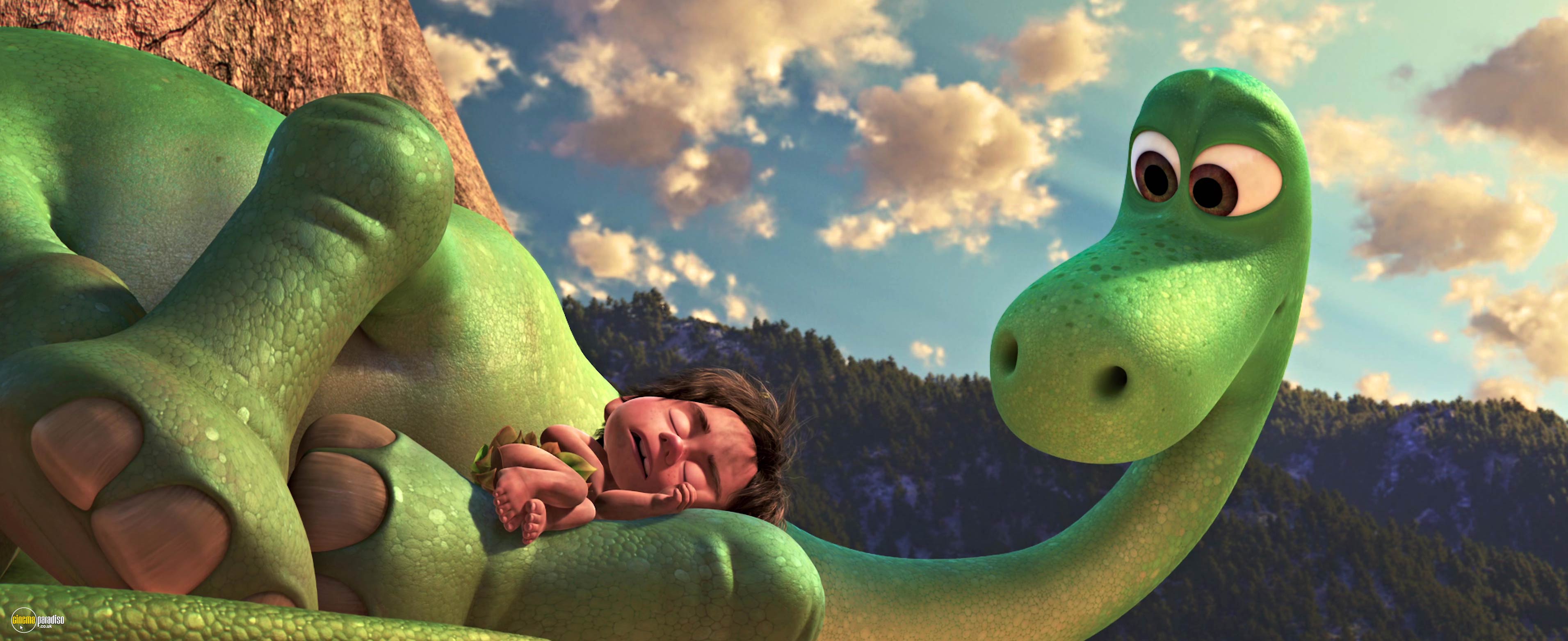
Switching from fable to alternative history, Peter Sohn's The Good Dinosaur (2015) posited the notion that non-avian dinosaurs had not become extinct and that a timid young Apatosaurus called Arlo (Raymond Ochoa) could strike up a friendship with a human caveboy named Spot (Jack Bright) while striving to make their way home after being washed downriver. However, problems with the last act led to a major revision that saw Lucas Neff, John Lithgow, Neil Patrick Harris, Judy Greer, and Bill Hader drop out of the voice cast. Indeed, only Frances McDormand was retained, as Jeffrey Wright, Sam Elliott, Anna Paquin, and Steve Zahn were drafted in.
The critics were reasonably upbeat, as the meticulously researched picture was released with the short, Sanjay's Super Team (PSFC Vol. 3). But Pixar fans had already had their 2015 fix with Inside Out and, as a consequence, The Good Dinosaur became the company's first flop, returning $332.2 million on its $175-200 million budget. There was a Golden Globe nomination, but Arlo,Tyrannosaurus siblings Nash and Ramsey, and kooky Styracosaurus, Forrest Woodbush, never caught on with youngsters as had Ice Age 's Manny the mammoth, Sid the sloth, and Diego the sabre-toothed tiger.
A curious combination of Hayao Miyazaki's Spirited Away (2001) and Howl's Moving Castle (2004) and Chad Stahelski's John Wick (2014) helped Lee Unkrich showcase the Mexican tradition of the Day of the Dead in Coco (2017). Disney's clumsy attempt to trademark the phrase 'Día de los Muertos' raised concerns about cultural appropriation. But Unkrich and his team made several trips to Mexico to ensure the film honoured the rituals and the nation that observed them.
Music has been banned in the family of 12 year-old Miguel Rivera (Anthony Gonzalez). But he longs to emulate his idol, Ernesto de la Cruz (Benjamin Bratt), and goes in search of him when he accidentally slips into the Land of the Dead. His great-great-grandmother, Imelda (Alanna Ubach), informs him that he can only return to his old life if he's given a blessing by a family member. But she only agrees to help him if he swears to give up music and Miguel hooks up with a shifty skeleton named Héctor (Gael García Bernal) in order to find Ernesto.
Although the short, Dante's Lunch: A Short Tail, was released online, Coco became the first Pixar feature not to be accompanied in cinemas by a Pixar short, as Disney saddled it with Olaf's Frozen Adventure. However, while highlighting the occasional creak in the plotting, critics credited its cultural integrity and emotional sincerity, as well as its willingness to explore the tricky topic (for kids) of death. Takings worldwide hit $823.3 million, as the Oscar for Best Animated Feature was joined by a triumph for songwriters Kristen Anderson-Lopez and Robert Lopez, who won for 'Remember Me'. A stage show and a sequel are currently in development.
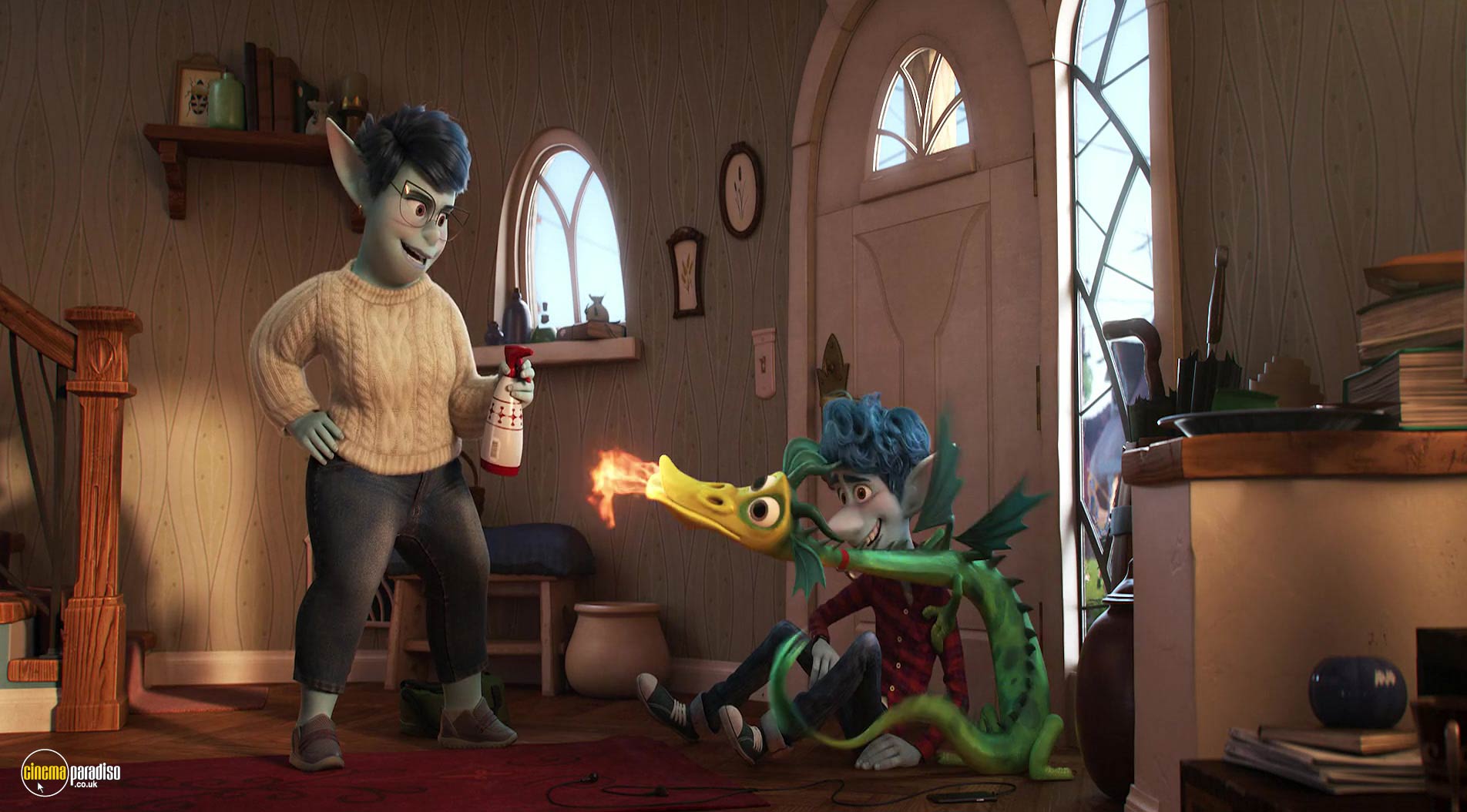
Hitting cinemas on the back of a raft of sequels, Dan Scanlon's Onward (2020) deserved a better fate than to run headlong into Covid-19. The closure of cinemas meant it only rustled up $142 million at the box office. But this deeply personal story, inspired by the director's own childhood, is both poignant, involving, and funny and Cinema Paradiso urges users to give it a second viewing.
Elf brothers Ian (Tom Holland) and Barley Lightfoot (Chris Pratt) have grown up without their late father, Wilden (Kyle Bornheimer). Mother Laurel (Julia Louis-Dreyfus) is now dating centaur cop Colt Bronco (Mel Rodriguez), whom the siblings dislike. On Ian's 16th birthday, he receives a gift from Wilden that will enable him to revive him for a day. However, Barley interrupts the visitation spell and only half of their father materialises. So, the boys set out to find another Phoenix gem in order to complete the process, with Laurel and Corey the manticore (Octavia Spencer) in hot pursuit to prevent them from awakening a dangerous curse.
Reviews were mixed, with many feeling that Onward was genial without being winning. Several countries took offence at the fact that cyclops cop Specter (Lena Waithe) made reference to her girlfriend's daughter and the dialogue was changed to bypass the censors. Despite earning Oscar, BAFTA, and Golden Globe nominations for Best Animated Feature, the film was unlucky enough to become the sole Pixar picture to come up against a stablemate and it went home with all the awards.
Four years in the making, Pete Docter's Soul (2020) was the first Pixar feature with a Black protagonist and Kemp Powers was appointed co-director to ensure the film's cultural authenticity. It premiered to great acclaim at the BFI London Film Festival, only for the pandemic to prevent its release into cinemas. Consequently, it started streaming on Disney+ on Christmas Day, accompanied by Burrow, a short about a rabbit trying to create the perfect home that formed part of the SparkShorts series alongside Purl (2019), Smash and Grab, Kitbull, Float, Wind (all 2019),
Loop, Out (both 2020), Twenty Something, Nona (both 2021), and Self (2024). Released alongside the series was Jason Sterman and Leanne Dare's A Spark Story (2021), a documentary showing artists Aphton Corbin and Louis Gonzales racing to complete a short to a tight deadline. Frustratingly, none of the SparkStory titles has been released on disc.
Part-time music teacher Joe Gardner (Jamie Foxx) dies in a freak fall down a manhole cover after just being invited to play piano for legendary saxophonist, Dorothea Williams (Angela Bassett). Finding himself in the Great Beyond as a disembodied soul, Joe needs the help of 22 (Tina Fey), a soul in the Great Before, who doesn't want to go to Earth and is willing to let Joe have her passage badge. But they need the help of a sign twirler named Moonwind (Graham Norton), if they are to find 22's missing passion in The Zone.
It all sounds a bit complicated and convoluted, but this mellow treatise on life, death, and taking your chances sweeps you along. Herbie Hancock and Quincy Jones advised on the music, while Jon Batiste composed a number of jazz tunes to stud the score composed by Trent Reznor and Atticus Ross of Nine Inch Nails. They won the Oscar for Best Score, although Soul missed out on the award for Best Sound Design. It repeated the Animated Feature/Score double at the Golden Globes and the BAFTAs. Following the prequel short, 22 vs Earth (2021), the film was finally given a US cinema release in 2024, which added $946,000 to the original global gross of $122 million.
Proving that there is never anything predictable about Pixar's stand-alone titles, Enrico Casarosa's Luca (2021) put a new spin on the fish-out-of-water storyline. Drawing on the Italian director's Genoese youth, the action is set in the 1950s in the coastal town of Portorosso, which was named as a nod to Hayao Miyazaki's Porco Rosso (1992), although the film is full of references to films by such Italian maestros as Luchino Visconti, Roberto Rossellini, Vittorio De Sica, and Federico Fellini. Indeed, the fishing boat is named Gelsomina after the anti-heroine of La strada (1954). Another major influence was Rob Reiner's Stand By Me (1986).
Teenage sea monster Luca Paguro (Jacob Tremblay) herds goatfish, but dreams of owning a Vespa. By the abandoned lighthouse, he meets Alberto Scorfano (Jack Dylan Grazer), who tells him that sea monsters can turn into humans on dry land and they go to explore Portorosso. They are befriended by fisherman's daughter, Giulia Marcovaldo (Emma Berman), who agrees to help them raise the money to buy a Vespa by beating five-time champion and notorious bully, Ercole Visconti (Saverio Raimondo), to the Portorosso Cup awarded to the winner of a triathlon that involves swimming, cycling, and pasta-eating.

Making his feature bow after earning an Oscar nomination for La Luna, Casarosa devoted five years to this project, supervising the actual animation remotely during lockdown. He turned down John Lasseter's suggestion that the film should end with a kraken attack, as he wanted to focus on small-town life and friendship. Some critics detected allusions to the ongoing migrant crisis in Europe, as they gave this right of passage a warm welcome. Restrictions, however, meant it only took $51.1 million on its initial release, but it added a further $1.3 million when it debuted in US cinemas in 2024, having been bested at the Oscars, the Globes, and the BAFTAs by Disney's Encanto.
Domee Shi became the next Pixar director to make an accomplished debut on the back of a successful short. She followed Bao with Turning Red (2022), another coming-of-age tale, although this time the setting was post-millennial Canada. The first Pixar feature to have been solo-directed by a woman, this was also the company's quickest-produced picture, as it took just four years from pitch to screen.
Thirteen year-old Meilin Lee (Rosalie Chiang) lives in Toronto with her parents, Ming (Sandra Oh) and Jin (Orion Lee), who look after a temple dedicated to their ancestor, Sun Yee. Mei hides things such as her love of the 4*Town boy band from her mother because she can be a bit controlling. But, when Ming finds about about her daughter's crush on a convenience store clerk she causes Mei such embarrassment that she turns into a large red panda. And she keeps doing this at times of emotional stress. Friends Miriam (Ava Morse), Priya (Maitreyi Ramakrishnan), and Abby (Hyein Park) like the new Mei, but she is desperate to find a way to regain control of her feelings.
Inspired by Shi's recollections of hitting puberty, this ambitious story was inspired by a range of anime and video games, as well as by Hayao Miyazaki's My Neighbour Totoro (1988) and Disney's A Goofy Movie (1995). Billie Eilish and Finneas O'Connell wrote the 4*Town numbers, but none were nominated for Best Song. Moreover, Guillermo del Toro's Pinocchio nabbed the Oscar for Best Animated Feature, as Turning Red earned positive reviews for tackling with wit and sensitivity what everyone agreed should no longer be a taboo topic. Once again, Covid kept the gross down to $20.1 million, but the film was widely seen on Disney+ before it added an extra $1.4 million from its belated US theatre release in 2024.
Keen to celebrate the multicultural New York neighbourhood in which he had grown up as the son of Korean immigrants, Peter Sohn came up with an ingenious variation on the Romeo and Juliet story for Elemental (2023). In order to capture what he called the 'salad bowl' atmosphere of the Bronx, he sought inspiration from such favourite movies as Guess Who's Coming to Dinner (1967), Moonstruck (1987), You've Got Mail (1998), Amélie (2001), My Big Fat Greek Wedding (2002), and The Big Sick (2017). Element City was based on the Big Apple, although there are bits of Venice and Amsterdam in there, too, while the Firish language was devised by David J. Peterson, who had performed a similar service for Game of Thrones (2011-19) and Dune (2021).
The story centres on Ember Lumen (Leah Lewis), a fire element whose parents, Bernie (Ronnie del Carmen) and Cinder (Shila Ommi), had left Fire Town to set up the Fireplace convenience store. Feeling guilty for bursting a basement water pipe that could result in the shop being shut down, Ember forges a friendship with Wade Ripple (Mamoudou Athie), a water element and city inspector who promises to help her fix the leak to the satisfaction of Gale Cumulus (Wendi McLendon-Covey ), an air element who works at City Hall.
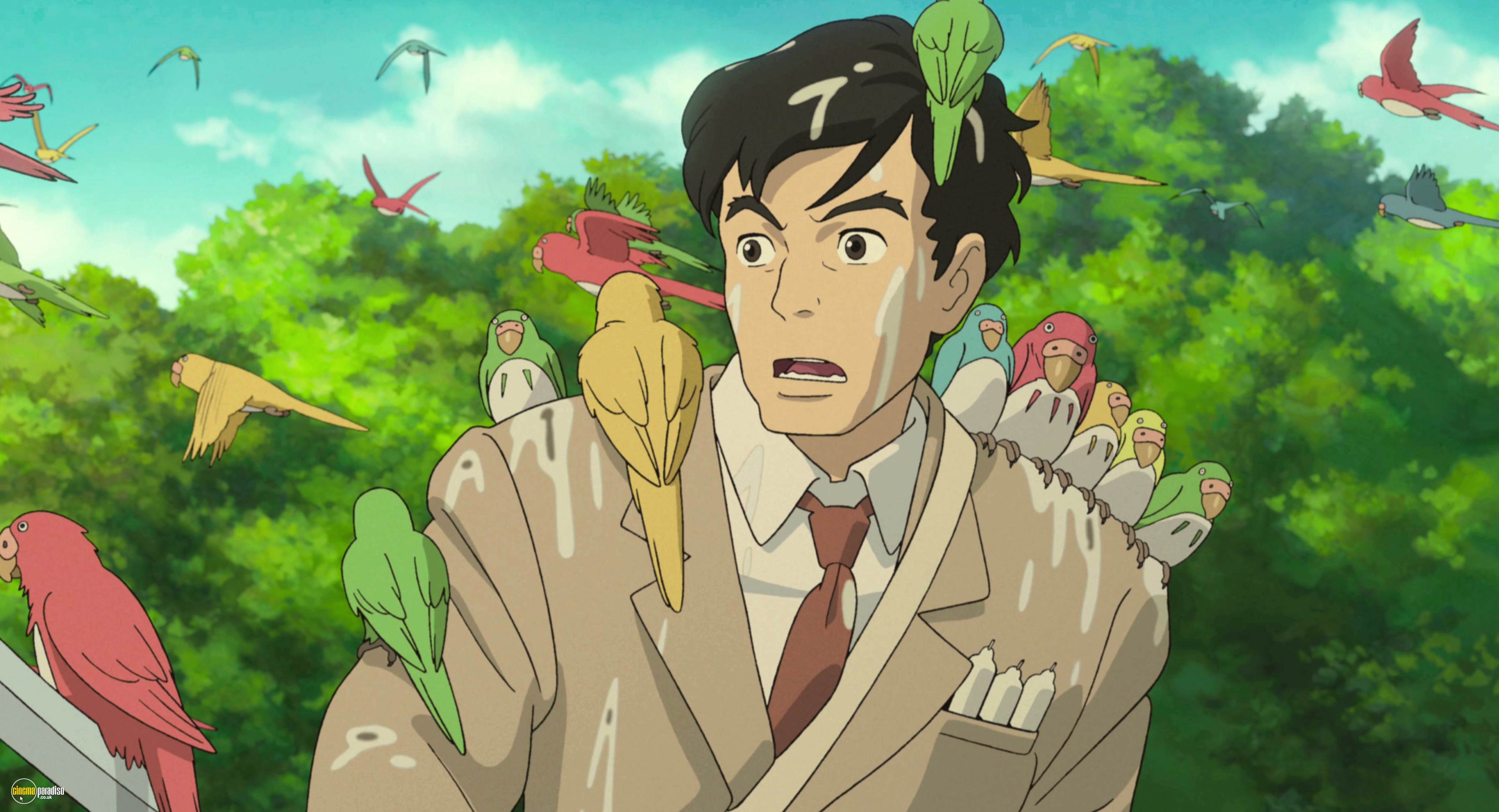
With Catherine O'Hara guesting as Wade's mother, Brook, this is a charming tale of opposites attracting and showing others how to get along. It's a bit gauche at times, but the chemistry between Ember and Wade is nicely judged, while the visual contrast between their physical appearance is fascinating. Critics declared Pixar back on form after a lean (ish) patch and it rattled up a worldwide gross of $496.4 million after picking up Oscar, BAFTA, and Golden Globe nominations in a Best Animated Feature field that was dominated by Hayao Miyazaki and Toshio Suzuki's The Boy and the Heron.
It took three directors to handle things, as Pixar ventured into science fiction with Elio (2025), which drew on such Hollywood genre gems as Steven Spielberg's Close Encounters of the Third Kind (1977) and E.T. the Extra-Terrestrial (1982), as well as Ridley Scott's Alien (1979) and John Carpenter's The Thing (1982). The idea came from Adrian Molina, who had grown up on a military base. However, creative differences (seemingly over the decision to remove queer-coded elements) left Domee Shi and Madeline Sharafian at the helm, while Molina went off to work on Coco 2. America Ferrera also departed after delays caused by rewrites meant she could no longer fit voice recordings into her schedule.
Zoe Saldaña took over as Olga, an Air Force major who doesn't understand her 11 year-old nephew, Elio Solís (Yonas Kibreab). When he's mistaken for the Earth's ambassador and abducted by some aliens, Elio is happy to get away from the base and learn about the Communiverse from a liquid supercomputer called Ooooo (Shirley Henderson). However, it is under threat from Lord Grigon (Brad Garrett), a worm-like warlord from the planet Hylurg, whose son, Glordon (Remy Edgerly), befriends Elio in a bid to prevent a war and to bring about better understanding between intergalactic communities.
A typically thoughtful treatise about self-discovery and finding somewhere to belong, this had the misfortune to have the lowest opening weekend takings of any Pixar feature. It eventually pulled in $154 million, but, while they admired the visuals, many critics felt the film lacked the edge and element of surprise that they had come to expect. The usual BAFTA, Globes, and Oscar nominations were logged, but the prizes went to KPop Demon Hunters, which is out of our reach, unfortunately.
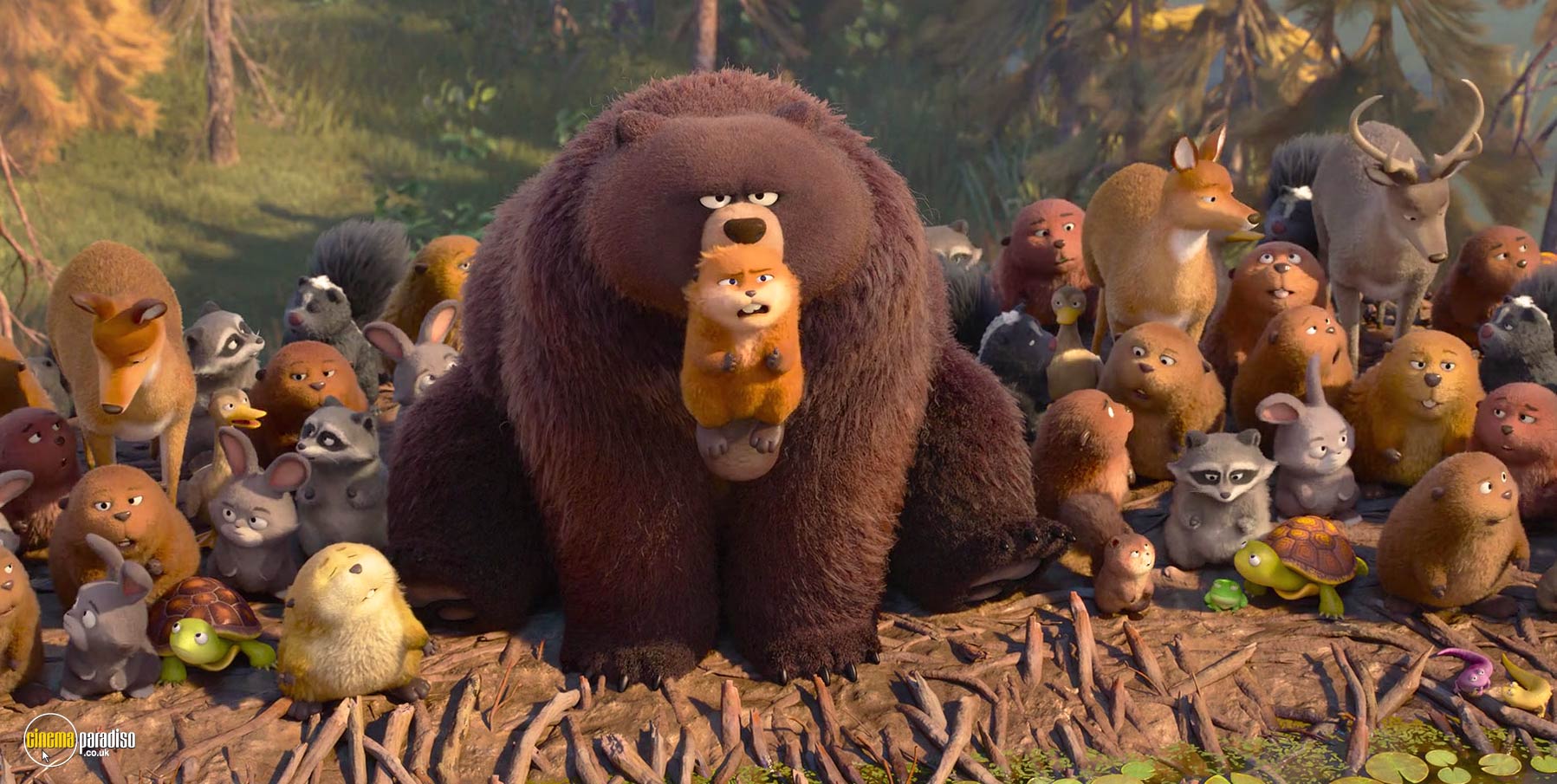
Which brings us to Pixar's 30th feature, which sought to alert audiences to the environmental issues facing the planet. Directed by Daniel Chong, the creator of We Bare Bears (2015-19) and We Bare Bears: The Movie (2020), Hoppers (2026) is slightly bonkers. Indeed, it would make a decent double bill with Mike Cheslik's Hundreds of Beavers (2022), although we might have had to list penguin pictures like Happy Feet (2006), Penguins of Madagascar (2014), and Wallace & Gromit: Vengeance Most Fowl (2024) if Pete Docter hadn't intervened and changed the species of the robotic anti-hero.
Animal-loving college student, Mabel Tanaka (Piper Curda) is so dismayed when Mayor Jerry Generazzo (Jon Hamm) announces his plans for a road through her beloved forest glade that she hits upon a scheme to rally the residentwildlife to her cause. As Professor Samantha (Kathy Najimy) has invented a method of transferring human consciousness into robots, Mabel uses the Hopper process to create a robotic beaver so that she can mingle with the woodland animals and persuade them to keep Beaverton beltway-free. However, her approach has a rabble-rousing effect and things get out of hand when she accidentally kills the Insect Queen (Meryl Streep).
Six years in development, Hoppers was well liked by critics for its mix of craziness and compassion. They also liked the friendship between Mabel and beaver king George (Bobby Moynihan). Indeed, Chong is eager to take their story on and rumours are circulating about a possible sequel. But much will depend on it upping its current take of $389.4 million and whether it can join Toy Story 5 in the end-of-year awards shake-up. Given how few recent Pixars have made it to a second film, we perhaps shouldn't hold our breath. But there's no doubt that another nifty idea is already in the pipeline to capture imaginations and steal hearts. Because that's what Pixar does and no one does it better.
Mentioned films