







Since the dawn of mythology, quests have exerted a fascination on young and old alike. Coming in many forms, stories about heroes and heroines enduring arduous journeys in order to achieve their goals continue to inspire film-makers. Now, we invite you to go on a quest of your own to discover some of the diverse tales of derring-do, steadfastness and fulfilment available from Cinema Paradiso.
Such is the versatility of the quest format that it can be used effectively across the generic range. Indeed, it could be argued that the majority of stories contain questing elements, as the protagonist has to overcome obstacles in order to attain a prized object, realise an ambition or complete a task. Quests can be historical, allegorical, exotic, grim or mundane. But, whatever their nature or setting, they invariably take both the characters and the audience on a journey.
Rooted in the tradition of the chivalric knights of old and the cowboys of the Wild West, most road movies are essentially quests. But, then so are tales about hunters, trackers, explorers and those seeking treasure, revenge, power or freedom. Whodunits and police procedurals are primarily quests for the truth, as are dramas centred on journalists after a scoop, scientists looking for a cure and inventors closing in on a breakthrough. Even stories about artists struggling to perfect their style and musicians striving to find their sound fit into the category, alongside athletes aiming for the top, survivors yearning for safety and obsessives pursuing a dream. Let's have a look at some of the examples that Cinema Paradiso has to offer.
Classic Quests
Quests figure prominently in mythology and folklore, with Homer's Odyssey having inspired films as different in tone as Joel and Ethan Coen's O Brother, Where Art Thou? (2000) and Theo Angelopoulos's Ulysses' Gaze (2005), which respectively follow chain gang prisoner George Clooney's pursuit of freedom and buried treasure and film-maker Harvey Keitel's bid to find the lost reels containing the first moving images produced in the Balkans by the Manaki brothers at the turn of the last century. Robert Zemeckis took a more traditional approach to the legend in Beowulf (2007), as the Geatish warrior played by Ray Winstone offers to rid Anthony Hopkins's King Hrothgar of the monstrous Grendel. But Disney's Wolfgang Reitherman and Terry Gilliam respectively opted against standard retellings of the Arthurian fable in The Sword in the Stone (1963), which was adapted from the first of TH White's The Once and Future King novels, and The Fisher King (1991), which earned Mercedes Ruehl the Oscar for Best Supporting Actress alongside Best Actor nominee Robin Williams.
Disney also tackled Welsh mythology, as it chronicled Taran's quest to prevent the Horned King from taking over the world in Ted Berman and Richard Rich's The Black Cauldron (1985), which contained the studio's first computer-generated animation. Ron Clements and John Musker reimagined another quest staple in Treasure Planet (2002), which took Robert Louis Stevenson's iconic pirate yarn into outer space. Disney also produced the best live-action version of Treasure Island (Byron Haskin, 1950), with Robert Newton excelling as Long John Silver, although Orson Welles pushed him close in Andrea Bianchi's 1972 retelling and who can forget Tim Curry's bravura turn in Brian Henson's Muppet Treasure Island (1996) ?
Quests abound in the Pirates of the Caribbean series (2003-17), as they do in Jon Turteltaub's National Treasure (2004) and National Treasure 2: Book of Secrets (2007), which follow Nicolas Cage's efforts to rewrite American history. Nobody did this kind of questing adventure better than H. Rider Haggard and two of his novels, King Solomon's Mines (1937, 1950, 1985 & 2004) and She (1935, 1964 & 1982), have each been filmed on numerous occasions. Breck Eisner's Sahara (2005) and Steven Spielberg's The Adventures of Tintin: The Secret of the Unicorn (2011) follow the template. But there's an added obsessive element to the quests depicted in such seafaring epics as John Huston's Moby Dick (1956), Peter Yates's The Deep (1977), Peter Weir's Master and Commander: The Far Side of the World (2003) and Wes Anderson's The Life Aquatic With Steve Zissou (2004).
Several fairy tales have quest components and their influence can be felt in films as different as Ralph Bakshi's The Lord of the Rings (1978), Nathan Greno and Byron Howard's Tangled (2010). Mark Andrews and Brenda Chapman's Brave (2012) and Chris Buck's Frozen (2013). But those seeking the most innovative twist on the fable formula should check out Rob Reiner's The Princess Bride (1987), Hayao Miyazaki's Princess Mononoke (1997) and Kevin Lima's Enchanted (2007), which confirm the enduring cinematic popularity of the quest in its various forms.
Frontier Quests
The search for new lands has inspired quest movies like Kevin Connor's Marco Polo (2007) and Ridley Scott and Gerald Thomas's markedly contrasting 1492: Conquest of Paradise and Carry On Columbus (both 1992). Spanish conquistadores dominated the action in Irving Lerner's The Royal Hunt of the Sun (1969) and Werner Herzog's Aguirre, Wrath of God (1972). Herzog and actor Klaus Kinski returned to the Americas for Fitzcarraldo (1982), in which an Irish rubber planter is forced to haul a steamship over a hill in his bid to build an opera house in a remote corner of Peru.
Such determination also informs the efforts of Germans Toni Kurz (Benno Fürmann) and Andi Hinterstoisser (Florian Lukas) to climb the Eiger in Philipp Stölzl's North Face (2008) and the attempt by Norwegian Thor Heyerdahl (Pål Sverre Hagen) to recreate an epic voyage from Peru to Polynesia in a balsa-wood raft in Kon-Tiki (2012). Heyerdahl's identically titled Oscar-winning account of this 4300-mile voyage is also available for rental, as are Michael Anderson's Best Picture-winning take on Jules Verne's Around the World in 80 Days (1956) and Frank Coraci's 2004 remake, which saw Steve Coogan take over from David Niven in the role of intrepid traveller Phineas Fogg, who is seeking to win a wager to circumnavigate the globe.
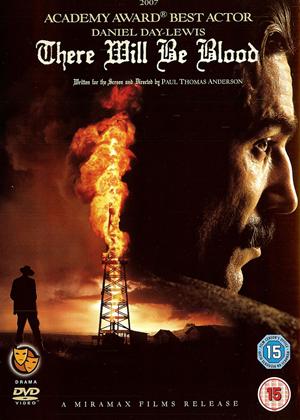
Marlene Dietrich and Frank Sinatra cameo in the saloon sequence, as Fogg and his companions make their way through cowboy country and the frontier has provided the setting for many a Questern, including Fritz Lang's Rancho Notorious (1952), Marlon Brando's One-Eyed Jacks (1961), Quentin Tarantino's Django Unchained (2012) and Anthony Mann's The Naked Spur (1953), whose focus on bounty hunter James Stewart impacted on such prisoner-and-escort movies as Hal Ashby's The Last Detail (1973) and Martin Brest's Midnight Run (1988). More modern variations on the Western can be found in Stanley Kramer's Bless the Beasts and Children (1971), Walter Hill's The Warriors (1979), Paul Weiland's City Slickers 2: The Legend of Curly's Gold (1994), the Coen brothers' There Will Be Blood (2007) and Albert Hughes's The Book of Eli (2010), while the scene shifts to the Mexican frontier for Alejandro Jodorowsky's Acid Western El Topo (1970), Sam Peckinpah's Bring Me the Head of Alfredo Garcia (1974) and Tommy Lee Jones's The Three Burials of Melquiades Estrada (2005).
Fantastical Quests
As Captain Kirk never tired of telling us, space is the final frontier and there's a quest facet to everything from George Lucas's Star Wars: Episode IV: New Hope, Steven Spielberg's Close Encounters of the Third Kind (both 1977) and Mike Hodges's Flash Gordon (1980) to Leonard Nimoy's Star Trek 4: The Voyage Home (1986), Dean Parisot's Galaxy Quest (1999) and Steven Soderbergh's Solaris (2002). Remaining in the realm of science fiction, challenges also have to be overcome as Harrison Ford goes in search of replicants in Ridley Scott's Blade Runner (1982) and Ryan Gosling seeks to track down the former LAPD officer in Denis Villeneuve's Blade Runner 2049 (2017).
Twelve-year-old Joey Cramer also goes missing in Randal Kleiser's Flight of the Navigator (1986), but nobody seems to notice that the four Pevensie children have been gone for a longish time in Andrew Adamson's Chronicles of Narnia: The Lion, the Witch and the Wardrobe (2005). The shadow of this beloved C.S. Lewis fantasy falls over Chris Weitz's adaptation of Philip Pullman's The Golden Compass (2007) and Spike Jonze's interpretation of Maurice Sendak's Where the Wild Things Are (2009). There are more fantastical creatures on show in Ridley Scott's Legend (1985), Jim Henson's Labyrinth (1986) and Ron Howard's Willow (1988), which did much to launch the vogue for sword and sorcery quests.
Staying with films aimed at younger viewers, gauntlets are also laid down for the heroes of Hamilton Luske and Ben Sharpsteen's Pinocchio (1940), Henry Selick's James and the Giant Peach (1996), Pete Docter and Bob Peterson's Up (2009) and Martin Scorsese's Hugo (2011), an adaptation of Brian Selznick's The Invention of Hugo Cabret, in which a 12-year-old boy (Asa Butterfield) vows to restore the reputation of pioneering film-maker Georges Méliès (Ben Kingsley), who has been reduced to running a toy store on the concourse at the Gare Montparnasse in the 1930s. Méliès was the father of screen sci-fi and it would be fascinating to know what he would make of the special effects that enable his heirs to produce such mind-bending quests as Kevin Smith's Dogma (1999), in which fallen angels Ben Affleck and Matt Damon seek to overthrow God, Darren Aronofsky's eternal life study, The Fountain (2006), Colin Trevorrow's time-travelling romp, Safety Not Guaranteed (2012), and Brad Bird's alternate dimension saga, Tomorrowland: A World Beyond (2015).
Dark Quests
Most war movies are based around the achievement of an objective and few capture the folly of a combat quest as compellingly as Francis Ford Coppola's Apocalypse Now (1979), in which Martin Sheen risks all to find rogue colonel Marlon Brando in 1960s Cambodia. The post-apocalyptic world has also thrown up some sobering survival sagas, such as John Hillcoat's adaptation of Cormac McCarthy's bestseller, The Road (2009), and George Miller's reboot Mad Max: Fury Road (2015). But the horror genre is also replete with quests for immortality or the creation of life, with Dracula and countless other vampires going in search of blood and Victor Frankenstein striving to animate his Creature. A touch of dark humour never goes amiss in such situations, as can be seen in Henry Sellick's The Nightmare Before Christmas (1993), Stephen Sommers's The Mummy (1999), Ruben Fleischer's Zombieland (2009), Jim Mickle's Stake Land and André Øvredal's Troll Hunter (both 2010).
The pursuit of big game has driven the action in such exposés of machismo as Clint Eastwood's White Hunter, Black Heart (1990) and Stephen Hopkins's The Ghost and the Darkness (1996). The former was based on the obsessions of director John Huston and he laid the foundations of film noir in following Humphrey Bogart's pursuit of 'the stuff that dreams are made of' in his seminal adaptation of Dashiell Hammett's hard-boiled masterpiece, The Maltese Falcon (1941).
Equally reckless pursuits are undertaken in such crime classics as John Boorman's Point Blank (1967), in which Lee Marvin goes after the crooks who double-crossed him and left him for dead. Robert De Niro embarks upon a one-man crusade against those who have wronged teenage prostitute Jodie Foster in Martin Scorsese's Taxi Driver (1976), while Michael Paré attempts to rescue rock star Diane Lane from a biker gang in Walter Hill's Streets of Fire (1984). Skip tracer Clint Eastwood cracks down on absconded lowlifes in Buddy Van Horn's Pink Cadillac (1989), while secret agent Val Kilmer accepts a mission to recover the kidnapped daughter of a top-ranking government official in David Mamet's Spartan (2004) and Nicolas Cage attempts to stop a religious cult from sacrificing his infant granddaughter in Patrick Lussier's Drive Angry (2011).
A climactic near miss on a winding road provides a nerve-shredding conclusion to the seething Liverpool-based action in Jack Gold's The Reckoning (1969), which both contains echoes of Hamlet (by that arch instigator of quests, William Shakespeare) and anticipates the respective efforts of Michael Caine and David Beames to avenge murdered brothers in Newcastle and Bristol in Mike Hodges's Get Carter (1971) and Christopher Petit's Radio On (1990). And there's more vigilante posturing in Michael Winner's Death Wish (1974) and Jacques Audiard's See How They Fall (1994).
Arthouse Quests
As one might expect, quest narratives are just as common in foreign film traditions. In Japan, for example, rookie cop Toshiro Mifune goes searching for his missing gun in Akira Kurosawa's masterly noir, Stray Dog (1949), while the members of a wronged aristocratic family seek vengeance on an 11th-century tyrant in Kenji Mizoguchi's Sansho Dayu (1954). The ancient custom of leaving aged villagers in the wilderness to die provides the impetus for one woman's bid to do right by her three children in Keisuke Kinoshita's Ballad of Narayama (1958) and Shohei Imamura's 1983 reworking of Shichiro Fukazawa's novel. By contrast, Takeshi Kitano finds the funny side of a nine-year-old boy's bid to reunite with his mother in the odd couple charmer, Kikujiro (1999).
A kid's quest also informs Majid Majidi's The Children of Heaven (1997), as an Iranian boy tries to find his sister's missing shoes before his parents realise he's lost them. Events take a more sober turn in Abbas Kiarostami's The Taste of Cherry (1997), as a middle-aged man drives around Tehran looking to find someone who will bury him after he commits suicide. A journalist living in Canada hopes to return to Afghanistan to prevent her sister from killing herself in Mohsen Makhmalbaf's Kandahar (2001) and Orpheus (Jean Marais) descends into the Underworld to deliver his pregnant wife Euridyce (Marie Déa) from the clutches of death in Jean Cocteau's update of the Greek myth to postwar Paris in Orphée (1950). Audrey Tautou also attempts to defy fate in tracking down the soldier boyfriend missing from the Great War trenches in Jean-Pierre Jeunet's A Very Long Engagement (2004), while 1950s insurance agent Romain Duris hopes his long search for a potential typing champion has ended when he hires secretary Deborah François in Régis Roinsard's gloriously stylised romcom, Populaire (2012).
The mood is bleakly monochrome as 14th-century Swedish peasant Max Von Sydow exacts revenge on the swineherd who raped and murdered his daughter in Ingmar Bergman's The Virgin Spring (1960). This film won the Academy Award for Best Foreign Film, as did Xavier Koller's Journey of Hope (1990), whose tale of a Turkish family struggling to cross the mountains into Switzerland finds echo in the efforts of some Kurdish children to raise the funds for the life-saving operation needed by their brother in Bahman Ghobadi's A Time For Drunken Horses (2000). Similarly seeking a fresh start, wealthy Argentinian Inés Efron plans to run away with her Paraguayan maid in Lucía Puenzo's The Fish Child (2009), while a West African boy standing only 10cm tall embarks upon an epic journey to confound the wicked witch who has placed a curse on his village in Michel Ocelot's sublime animation, Kirikou and the Sorceress (1998).
Intellectual Quests
Scientists with very different aims in mind come under the microscope, as a French chemist (Paul Muni) has a beneficial impact on agriculture and medicine in William Dieterle's The Story of Louis Pasteur (1935), while American theoretical physicist J. Robert Oppenheimer (Dwight Schultz) works on the atomic bomb in the New Mexico desert in Roland Joffé's Shadow Makers (1989). David Lean fictionalises the engineering feats and piloting skills that changed flight speeds in The Sound Barrier (1952), while teenpic maestro John Hughes enters the realms of juvenile wish fulfilment (and rampant chauvinism) in Weird Science (1985), as nerds Anthony Michael Hall and Ilan Mitchell-Smith's use their computer to turn a Barbie doll into a living, breathing Kelly LeBrock.
Obsession colours each of the five episodes in François Girard's The Red Violin (1998), which concludes with appraiser Samuel L. Jackson making a shocking discovery at the end of his search for an instrument made in tragic circumstances in 17th-century Cremona. Symbologist Tom Hanks and cryptographer Audrey Tautou also uncover unsettling facts during their global peregrinations in Ron Howard's adaptation of Dan Brown's bestseller, The Da Vinci Code (2006), while Philip Seymour Hoffman pursues contrasting obsessions, as a theatre director striving to mount an increasingly ambitious stage production in Charlie Kaufman's Synecdoche, New York (2008) and (in an Oscar-winning turn) as author Truman Capote investigating the Clutter family murder for his 'nonfiction novel', In Cold Blood, in Bennett Miller's Capote (2005).
Bob Balaban plays New Yorker editor William Shawn in this biopic and screen journalists have pursued stories with equal rigour in factual and fictional pictures either side of a News on the March reporter's bid to learn the significance of press baron Charles Foster Kane's last word, 'Rosebud', in Orson Welles's astonishing directorial debut, Citizen Kane (1941). The Washington Post has been well served by its scoops on Watergate in Alan J. Pakula's All the President’s Men (1976) and the Pentagon Papers in Steven Spielberg's The Post (2017), while the Boston Globe's exclusive on child abuse within the Catholic Church is recalled in Tom McCarthy's Spotlight (2015), which won the Academy Award for Best Picture.
Comic Quests
Not every quest is a solemn affair, although there is a serious side to train driver Buster Keaton's bid to warn his fellow Confederates about an impending attack in The General (1926), the silent Civil War caper he directed with Clyde Bruckman. Even Stan Laurel and Oliver Hardy play Great War veterans who vow to return a fallen comrade's daughter to her doting grandparents in George Marshall and Raymond McCarey's Pack Up Your Troubles (1932), while John Belushi and Dan Aykroyd stage a benefit gig for the Catholic orphanage where they were raised in John Landis's The Blues Brothers (1980).
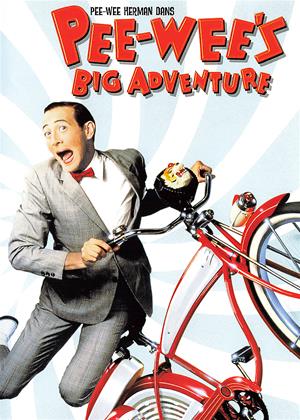
Paul Reubens's motives are more self-centred, as he goes in search of his missing bike in Tim Burton's feature bow, Pee-Wee's Big Adventure (1985), while Jeff Bridges seeks to track down the rug that held his room together in the Coen classic, The Big Lebowski (1998). Jack Black's dream is to form an awesome rock band in Liam Lynch's Tenacious D in the Pick of Destiny (2006), while a Parisian rat has hopes of becoming a great chef in Brad Bird and Jan Pinkava's CGI animation, Ratatouille (2007). Elsewhere, in the grand tradition of the epic odyssey, Richard Farnsworth embarks upon a six-week journey aboard a John Deere lawnmower to patch things up with his estranged and ailing brother in David Lynch's The Straight Story (1999), while Simon Pegg and Nick Frost try to complete a 12-stop pub crawl while being intimidated by androids in Edgar Wright's slice of 'social science fiction', The World's End (2013).
Unconventional Quests
Spencer Tracy earned the sixth of his nine Oscar nominations after being personally selected by Ernest Hemingway to play the Cuban fisherman who battles the elements to return his giant marlin to the shore after 84 days without a catch in John Sturges's The Old Man and the Sea (1958). The larger than life Anthony Quinn played the part with equal sincerity, but less subtlety in Jud Taylor's 1990 remake. Burt Lancaster might have approached the role in the same way, but he is the model of restraint as the Connecticut suburbanite returning home via his neighbours' pools in Frank Perry's The Swimmer (1968). However, friendship turns to rivalry as Jean Reno and Jean-Marc Barr begin competing in increasingly perilous freediving competitions in Luc Besson's cult gem, The Big Blue (1988).
Napoleonic army officers Keith Carradine and Harvey Keitel also take their feud to extremes in Ridley Scott's The Duellists (1977), while blind swordsman Rutger Hauer comes to the aid of a Vietnam buddy when his son is kidnapped in Philip Noyce's Blind Fury (1990), which is based on the long-running Japanese chambara series about a blind masseur played by Shintaro Katsu in 25 features between 1962-73. Takeshi Kitano assumed the role in the 2003 retool, Zatoichi. But, despite Robert Houston's American homage, Shogun Assassin (1980), there has yet to be a homegrown update of the five-strong Lone Wolf and Cub series, which starred Tomisaburo Wakayama as masterless samurai Ogami Itto and Tomikawa Akihiro as his young charge, Daigoro.
Once dismissed as a countercultural provocation, but now regarded as a landmark in American cinema, Dennis Hopper's Easy Rider (1969) sees bikers Wyatt (Peter Fonda) and Billy (Hopper) go looking for America and failing to find it anywhere. Their misadventure gave fresh impetus to the road movie, as disillusion with the American Dream fed into Monte Hellman's Two-Lane Blacktop, Richard C. Sarafian's Vanishing Point (both 1971), Hal Needham's Smokey and the Bandit (1977), Sam Peckinpah's Convoy (1978) and Alex Cox's Repo Man (1984). However, Harrison Ford declares 'Goodbye America! Have a nice day,' in uprooting wife Helen Mirren and children Martha Plimpton and River Phoenix to start again on a remote Caribbean island in Peter Weir's adaptation of Paul Theroux's modern variation on Swiss Family Robinson, The Mosquito Coast (1986).
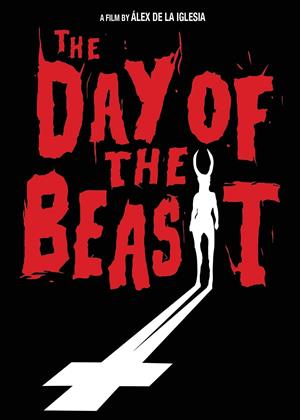
Heading even further afield, quirky quests also dominate such contrasting pictures as Jamie Uys's The Gods Must Be Crazy (1980), in which a Botswanan bushman tries to fathom the meaning of the Coca-Cola bottle that falls from the sky; Stephan Elliott's The Adventures of Priscilla, Queen of the Desert (1994), which follows drag artists Guy Pearce, Hugo Weaving and Terence Stamp on a bus tour across Australia; and Álex de la Iglesia's Day of the Beast (1995), which accompanies a Spanish priest in an attempt to avert the birth of the Antichrist by committing a series of grotesque sins in order to earn Satan's trust.
Modern-Day Quests
As audiences got younger in the blockbuster era, film-makers had to start finding ways to make stories relevant and quest pictures began featuring juvenile protagonists like buddies River Phoenix, Will Wheaton, Corey Feldman and Jerry O'Connell, who go on a two-day trek to find a teenager's body in Rob Reiner's rite-of-passage classic, Stand By Me (1986). In Simon Wincer's Free Willy (1993), 12 year-old Jason James Richter seeks to liberate a whale from a Pacific Northwest water park, while seven-year-old Abigail Breslin piles into a Volkswagen van with the rest of her eccentric family to compete in a Californian beauty pageant in Jonathan Dayton and Valerie Faris's Little Miss Sunshine (2006), which has much in common with Argentine Pablo Trapero's equally droll road trip, Rolling Family (2004).
Teenage runaway Thomas Turgoose and Polish migrant Piotr Jagiello also dream of seeing more of the world, as they debate how to get from London to Paris in Shane Meadows's Somers Town (2008). Raising cash is also the problem for graffiti writers Ty Hickson and Tashiana Washington in Adam Leon's Gimme the Loot (2012), as they need $500 to tag a New York landmark and wreak their revenge on the rivals who vandalised one of their tags. The Big Apple also provides the backdrop for 11 year-old Asperger's sufferer Thomas Horn's bid to discover the significance of the key that once belonged to the father who perished on 9/11 in Stephen Daldry's Extremely Loud and Incredibly Close (2011), an adaptation of Jonathan Safran Foer's novel that earned Oscar nominations for Best Picture and Best Supporting Actor for Max Von Sydow, as a traumatised man who communicates solely through written notes.
Back in 1974, Ellen Burstyn won the Best Actress award for her performance as a widow who travels West in seeking to relaunch her singing career and provide for tweenage son Alfred Lutter in Martin Scorsese's Alice Doesn't Live Here Anymore (1974). As an elderly woman tired of being bossed around by her son and daughter-in-law, Geraldine Page won the same Oscar for hopping on a bus bound for her own childhood home on the Texas Gulf coast in Peter Masterson's take on Horton Foote's hit play, The Trip to Bountiful (1985). Ageing harmonica player Joe Seneca also heads south in the company of aspiring blues guitarist Ralph Macchio, as they travel to Mississippi to break Seneca's ruinous deal with the devil in Walter Hill's Crossroads (1986).
Ageing lothario Bill Murray's past similarly catches up with him in Jim Jarmusch's Broken Flowers (2005), as he receives a letter on pink notepaper informing him that he has a 19-year-old son and he sets out to discover whether it was sent by Sharon Stone, Frances Conroy, Jessica Lange or Tilda Swinton. Echoes of Joseph L. Mankiewicz's A Letter to Three Wives (1949) can be heard throughout this offbeat road movie, but the influence of Fargo (1996) is even stronger on David Zellner's Kumiko, the Treasure Hunter (2014), as Rinko Kikuchi leaves her office job in Tokyo to locate the ransom money that she is convinced Steve Buscemi's character had buried in a Minnesota field in Joel and Ethan Coen's bleakly hilarious comic noir.
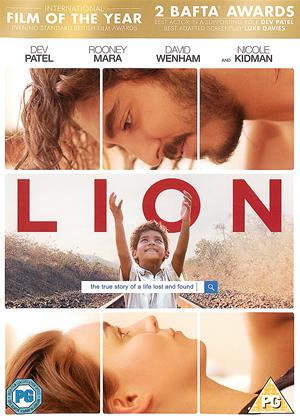
Having been raised by adoptive mother Nicole Kidman in Tasmania, fellow Oscar nominee Dev Patel also crosses continents in his bid to find his Indian roots in Garth Davis's Lion (2016), Will Forte seeks to reconnect with cantankerous father Bruce Dern, as they travel across the American Mid-West to collect a million dollar sweepstake win in Alexander Payne's moving monochrome odyssey, Nebraska (2013), which earned Dern the Best Actor prize at Cannes, as well as an Oscar nomination. Billionaire Jack Nicholson and mechanic Morgan Freeman similarly make light of their age and the fact they have both been diagnosed with lung cancer to embark upon the adventure of a lifetime in Rob Reiner's The Bucket List (2007).
However, getting home in time for Thanksgiving is all that bothers executive Steve Martin and travelling salesman John Candy in John Hughes's Planes, Trains and Automobiles (1987), another odd couple saga that would make a fine double bill with Barry Levinson's Rain Man (1988), the Best Picture winner that brought Dustin Hoffman his second Academy Award as the autistic savant who teaches fast-living, hot-headed brother Tom Cruise a few home truths. Brothers Robert Burke and Bill Sage are equally chalk and cheese, but come to appreciate the ties that bind them while searching for their estranged father in Hal Hartley's Simple Men (1992).
A couple of sporting quests shape the course of Phil Alden Robinson's Field of Dreams (1989) and Michael McGowan's The Miracle of Saint Ralph (2004), as Iowa farmer Kevin Costner is inspired by a disgraced ballplayer to turn his cornfield into a baseball diamond and 14-year-old Adam Butcher enters the Boston Marathon in the hope his efforts will cure his seriously sick mother. The great outdoors provides Emile Hirsch with an even greater physical challenge when he quits his comfortable lifestyle in 1990s America to explore the vast expanses of Alaska in Sean Penn's Into the Wild (2007). But slackers John Cho and Kal Penn set themselves the less strenuous task of getting a burger in Harold and Kumar Get the Munchies (2004), which was directed by Danny Leiner, who had sent party animals Ashton Kutcher and Seann William Scott on an equally laid-back escapade in Dude, Where's My Car? (2000).
If this overview has taught us anything, it's that quests don't always go according to plan. But folks have a habit of muddling through. Despite wandering out of the desert to reunite with brother Dean Stockwell and seven-year-old son Hunter Carson, amnesiac Harry Dean Stanton has a harder time seeking to atone for past misdeeds with estranged wife Nastassja Kinski in Wim Wender's Palme d'Or-winning odyssey, Paris, Texas (1984). Mystifyingly, Sam Shepard's script was denied an Oscar nomination, but Callie Khouri won the Best Original Screenplay category for Ridley Scott's Thelma and Louise (1991), which sees housewife Geena Davis and waitress Susan Sarandon seek to stay one step ahead of detective Harvey Keitel after the latter guns down the man attempting to assault her friend in a motel car park. But it's a message from the ghost of Elvis Presley that sends newlyweds Christian Slater and Patricia Arquette on a breakneck journey from Detroit to Mexico via Los Angeles - with gangsters and cops on their tail after a stash of cocaine - in Tony Scott's high-octane take on Quentin Tarantino's screenplay for True Romance (1993).